
 Justin D.
Introduction
Hey there, and welcome back to the Pool Nerd. I’m Justin, your resident pool aficionado, and today I’m taking you through my weekly pool maintenance routine to help you create your own pool maintenance schedule.
Even once you have mastered all of the essential components of pool maintenance, all of the tasks can seem overwhelming until you have created a schedule. I already have a video on all of the essentials of pool maintenance, so go check that out if you are still learning how to care for your pool. Now, let’s jump into what you should be doing every week to keep your pool clean!
Weekly Maintenance: What You Need Checklist
Sanitizer + occasional shock + tablets if you use a floater—plus a real kit so weekly checks aren’t guesswork.

Taylor K-2005 Test Kit
What it is: A professional drop (titration) kit for chlorine, pH, alkalinity, calcium hardness, and cyanuric acid.
Why you need it: You can’t SLAM or balance blind—especially CYA, which handcuffs chlorine. This kit gives numbers you can trust, not strip guesswork.

Champion Pool Shock (4 Pack)
What it is: A case of liquid pool chlorine (sodium hypochlorite)—not cal-hypo granules. Confirm strength on the listing and jug label (often around 10–12.5%).
Why you need it: Same upside as other liquid shock: no CYA from the product, easy to pour with the pump running—useful to keep stocked for openings, algae pushes, storms, or parties.
How to use: Treat it like any liquid shock (pour with circulation; big doses still work best at dusk). Store cool and shaded; opened jugs lose strength over time—plan to use them within a few weeks.

In The Swim 3" Chlorine Tablets
What it is: Slow-dissolving sanitizer pucks (usually trichlor) for feeders/floaters—adds CYA over time.
Why you need it: Fine for steady maintenance when CYA isn’t already high; back off if CYA creeps up.
HTH 1" Chlorine Tablets
What it is: Smaller tablets for compact feeders or finer dosing control.
Why you need it: Same CYA rules as 3" tabs—pick the size that matches your chlorinator.

In The Swim Calcium Chloride (hardness increaser)
What it is: Calcium chloride—raises calcium hardness (CH) without messing with CYA the way some other products can.
Why you need it: Plaster and equipment are happier when CH sits in range; very soft fill water, new plaster, or winter dilution often needs a bump. Test CH before you dose.

Pool Mate 7 lb Cyanuric Acid Stabilizer
What it is: Granular CYA (chlorine stabilizer)—protects free chlorine from sunlight.
Why you need it: New fills, heavy rain dilution, or unstabilized liquid programs often land below ~30–50 ppm CYA; without it, the sun burns chlorine fast. Add slowly per label (skimmer or predissolve) and retest after circulation.
Building Your Schedule
My pool is used most often on the weekend, so my schedule revolves around that. I recommend building your schedule around when your pool is used most, so it can always be the cleanest for those days. There are three key pieces of weekly pool maintenance: shocking your pool, testing your water, and scrubbing the walls, waterline, and floor.
1. Shocking Your Pool
I typically shock my pool on Sunday or Monday night, after it has seen a lot of use over the weekend. If you don't know how to shock a pool, follow along on my guide to shocking a swimming pool. Here’s how you should approach it:
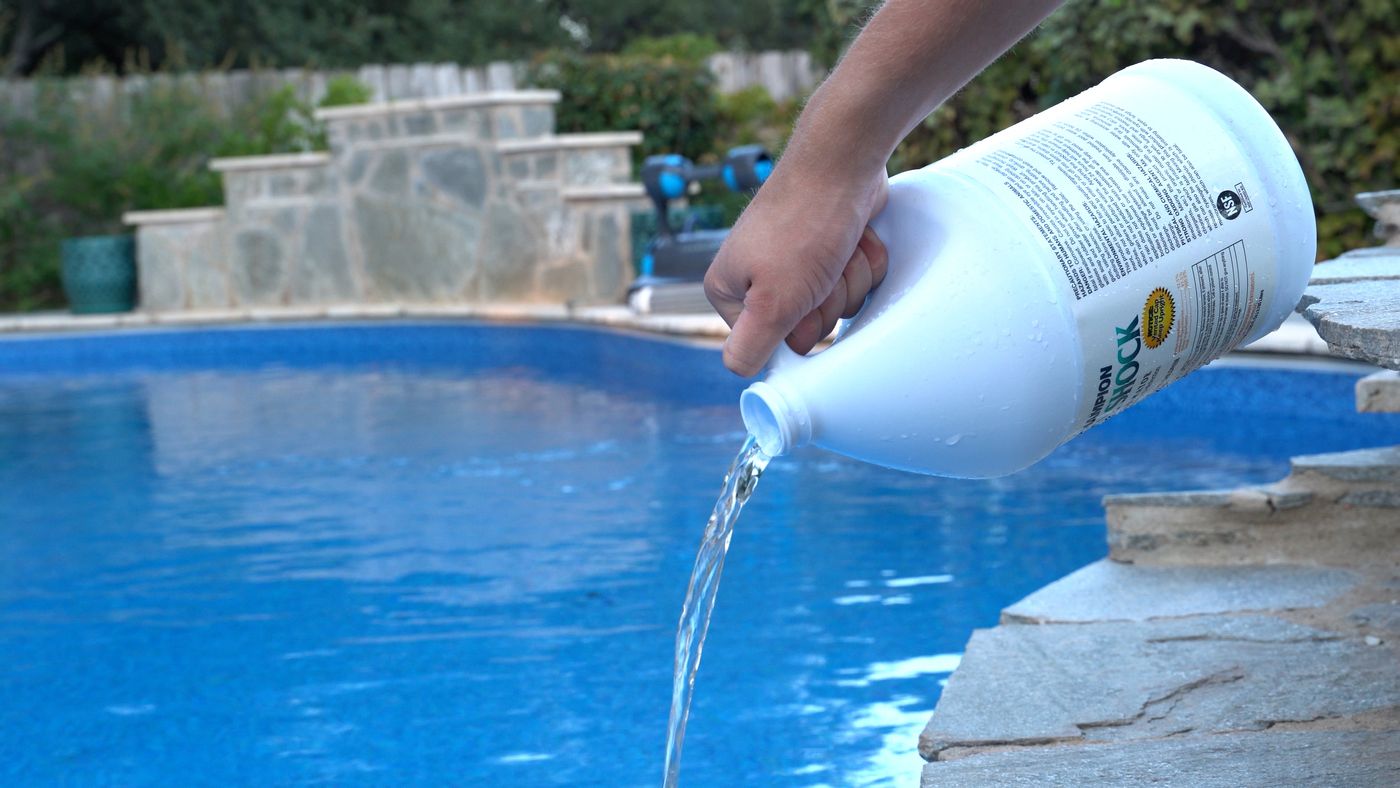
- When to Shock: Always shock your pool at night or near sunset. The reason? The sun’s UV rays can dissolve the chlorine before it has had time to properly sanitize your pool.
- How Much to Shock: The cost of weekly shocking can add up quickly. I personally use a little bit of pool shock weekly or even shock every other week, thanks to my Spectralight Ultraviolet light sanitation system. The Spectralight does the work of chlorine and other sanitizers but without chemicals, meaning your pool will be healthier and cheaper to maintain because you’ll use about 90% fewer chemicals.
- Alternative to Traditional Shock: If you’re not ready to make the upgrade, stick to shocking your pool weekly to ensure all contaminants that enter your pool are killed off.
2. Testing Your Water
Maintaining balanced water chemistry is crucial for a healthy pool. Here’s how I handle it:
-
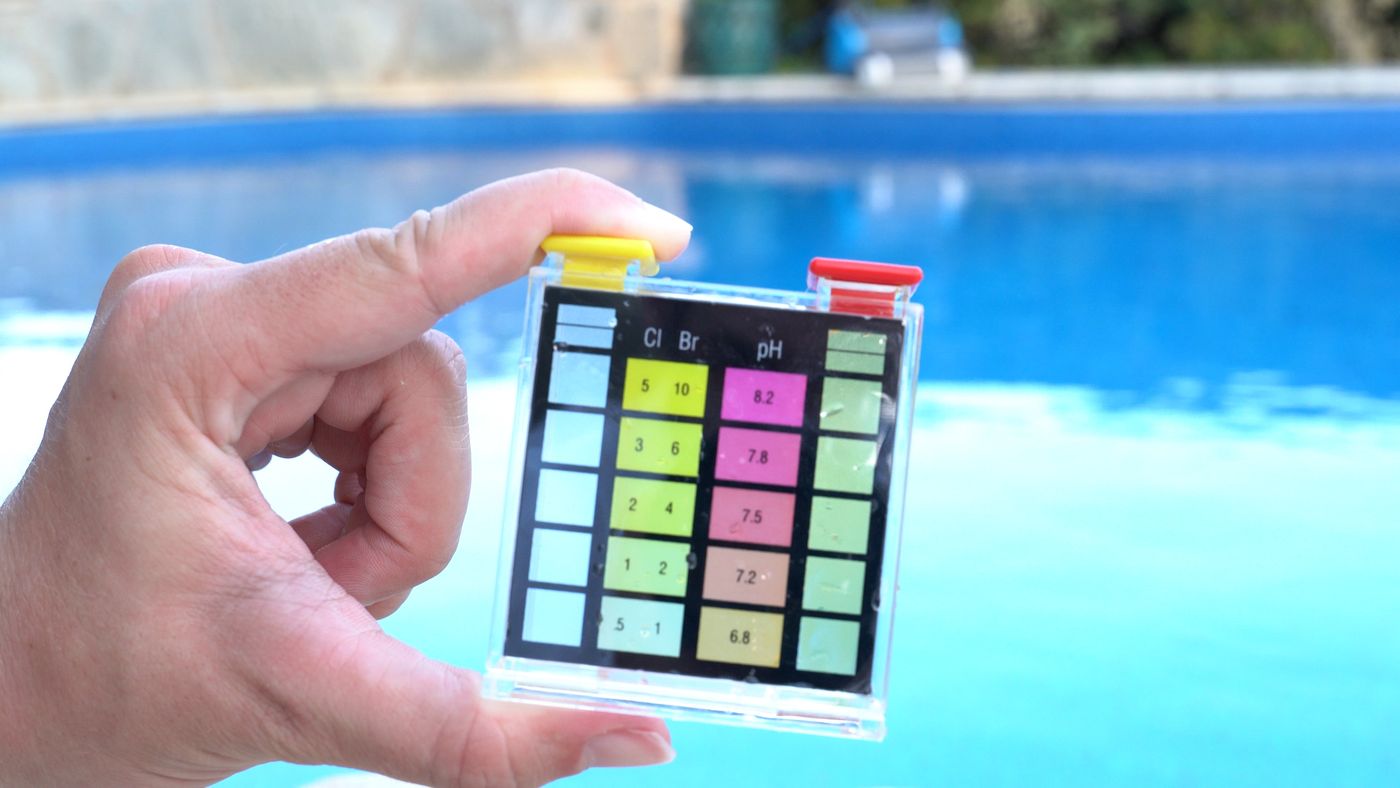
Frequency: I test my pool’s chemistry and make adjustments twice a week.
-
First Check: The day after shocking the pool to ensure that the water is balanced post-shock.
-
Second Check: The day before the weekend to ensure everything is good before heavy use.
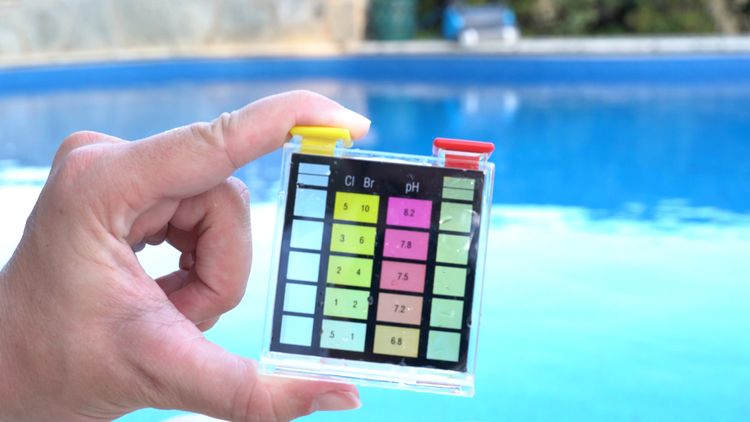
Test your pool water early and often // The Pool Nerd
-
-
Target Levels:
- pH: Between 7-7.5
- Alkalinity: Between 100-150 ppm
- Total Chlorine: Between 1-3 ppm (or just 0.5 ppm if you have a Spectralight UV System)
-
Additional Tips: Always check your water after a spill or a big storm to ensure everything is still balanced.
3. Scrubbing and Vacuuming
Keeping your pool surfaces clean is essential to preventing algae and other build-ups:
- Frequency: Ideally, you should scrub and vacuum your pool weekly. Daily skimming and scrubbing are even better if you have the time.
- Tools: Use a pool brush to scrub those pesky spots like the waterline. A vacuum will handle the bottom of your pool.
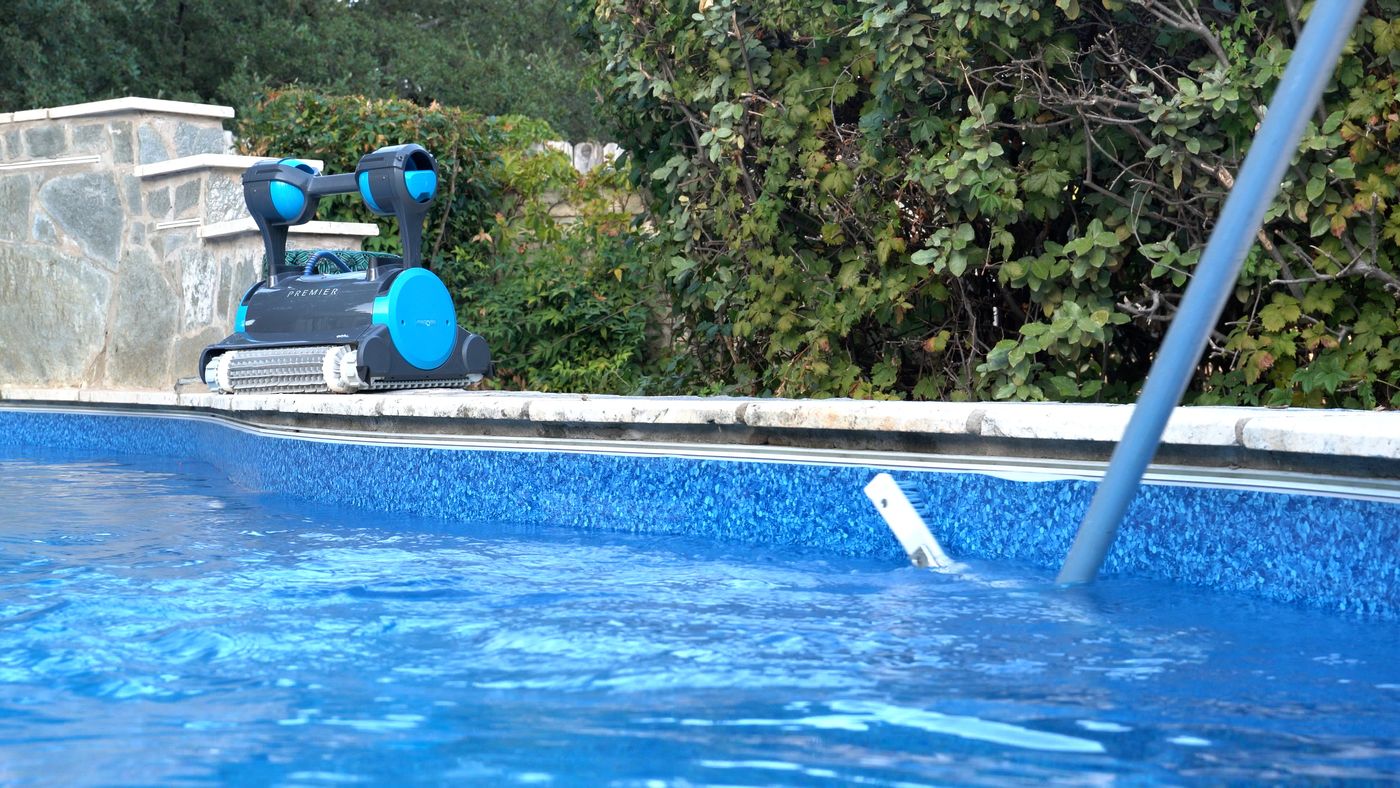
- Robotic Pool Cleaners: If you want to save time, consider switching to a robotic pool cleaner. These devices can scrub and vacuum for you, and some even clean the waterline. They run on 90% less energy than traditional pressure side cleaners, saving both time and money. For recommendations, check out my guide on the best robotic pool cleaners
Once you have fresh test results, use the pool chemistry calculator to work through the adjustments in the right order, or the pool chemical calculator when you only need one quick dose.
Conclusion
So there you have the basic components and timeline of weekly pool maintenance so that you can build your pool cleaning schedule! Start by figuring out when you use your pool the most, shock the day after heavy use, check your pool chemistry twice a week, and clean it as often as you can, preferably with a robotic pool cleaner!
If you want to keep nerding out over your pool, be sure to hit that subscribe button to keep learning how to make pool maintenance way easier. Head on over to thepoolnerd.com to view my comparison page and see all the differences between the many robotic pool cleaners out there. Until then, enjoy that pool and check back soon for more pool maintenance tips and insight.
Frequently Asked Questions (FAQs)
Q: How often should I shock my pool?
A: You should shock your pool weekly, preferably at night or near sunset. If you have a UV sanitation system like Spectralight, you might be able to shock less frequently.
Q: Can I test my pool water just once a week?
A: While testing once a week is better than nothing, testing twice a week is preferable to stay on top of any changes in your pool’s chemistry. Also, be sure to test after a storm or any spills.
Q: What is the benefit of a UV sanitation system like Spectralight?
A: A UV sanitation system reduces your reliance on chemicals by up to 90%, leading to a healthier pool environment and significant cost savings on pool chemicals.
Q: Do I really need a robotic pool cleaner?
A: While not essential, a robotic pool cleaner can save you hours of manual labor and ensure your pool is consistently clean. They also use significantly less energy than traditional cleaners.
Q: What are the ideal chemical levels for my pool?
A:
- pH: 7-7.5
- Alkalinity: 100-150 ppm
- Total Chlorine: 1-3 ppm (0.5 ppm if using a UV system)


Comments
Loading comments…