Introduction
Welcome back to The Pool Nerd, I'm Justin, your resident pool aficionado. And today, we're talking about an important part of pool maintenance: shocking your pool.
Shocking your pool is one of those things that sounds simple—until you realize most pool owners are doing it wrong. They're either shocking too often, not often enough, using the wrong product, or dumping it in at the worst possible time.
So, let's fix that.
In this ultimate guide to pool shocking, I'm breaking down exactly what pool shock does, when you need to use it, which type works best, and how to do it properly. And along the way, if you have any questions, drop a comment below and we'll do our best to help!
Shock Treatment: What You Need Checklist
Fix pH first (acid if high), then choose a shock that matches your pool—liquid, bagged packs, or cal-hypo granules.
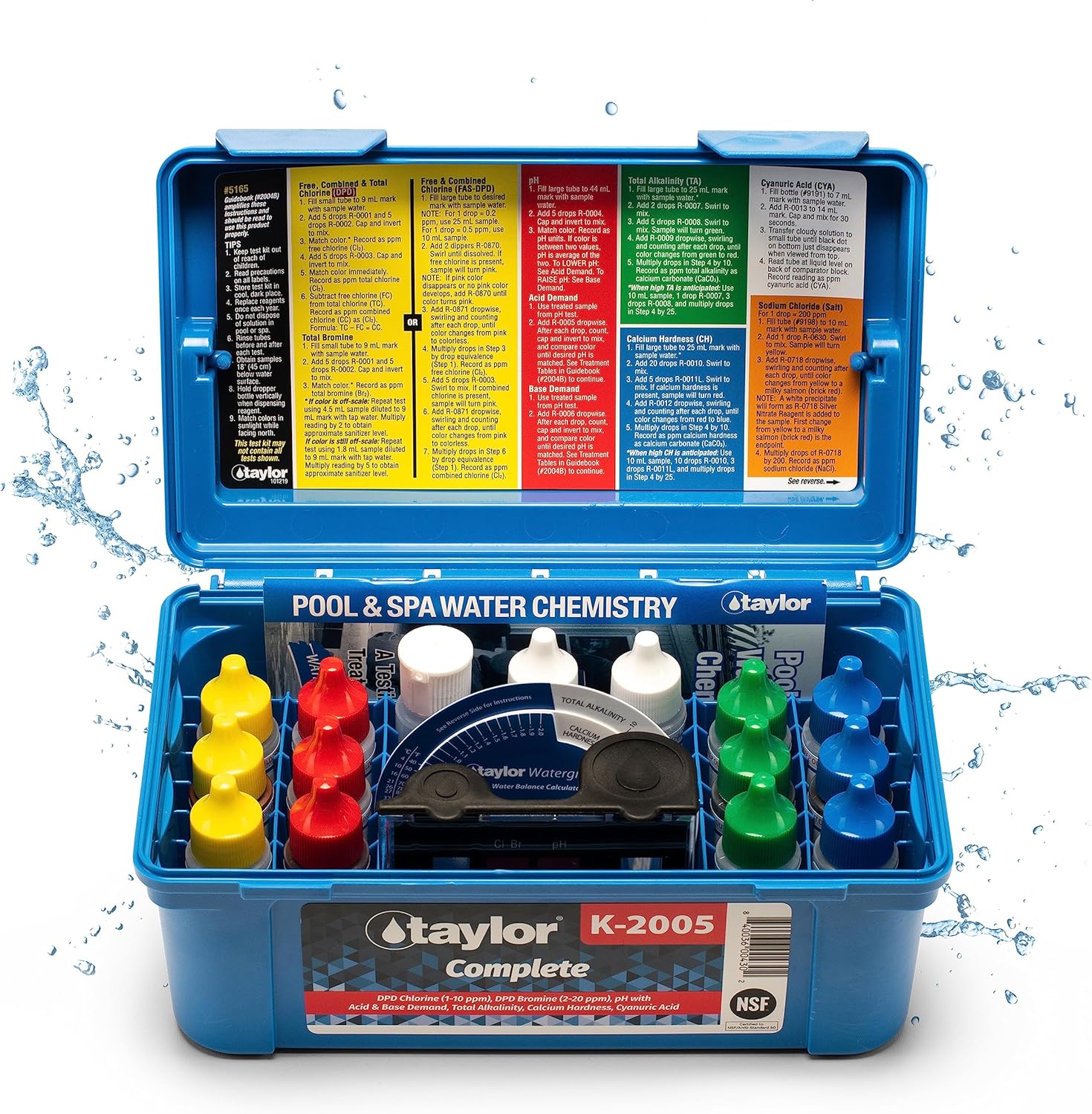
Taylor K-2005 Test Kit
What it is: A professional drop (titration) kit for chlorine, pH, alkalinity, calcium hardness, and cyanuric acid.
Why you need it: You can’t SLAM or balance blind—especially CYA, which handcuffs chlorine. This kit gives numbers you can trust, not strip guesswork.
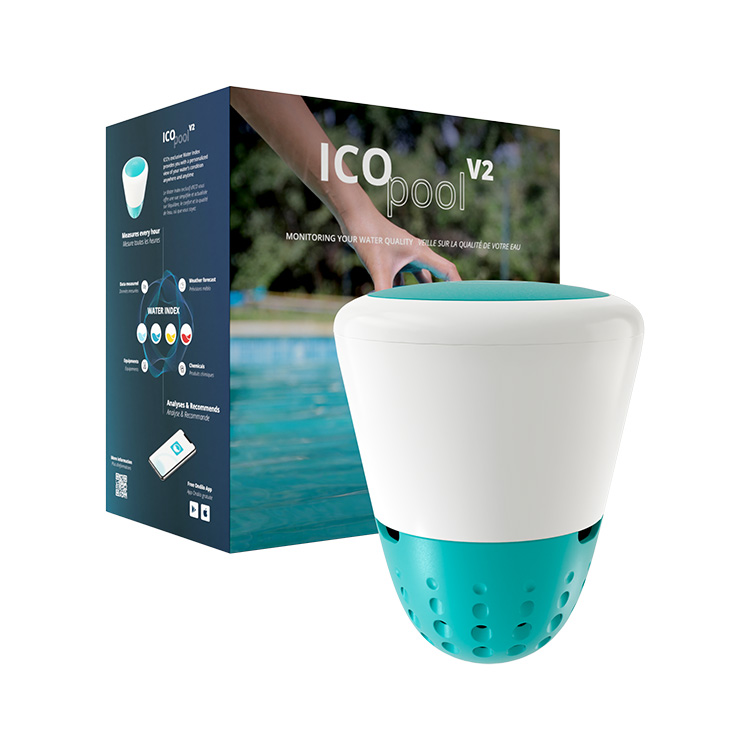
Ondilo ICO Pool Water Monitor
What it is: A floating smart monitor that samples pH, ORP (sanitizer effectiveness), and temperature on a schedule and sends trends to your phone.
Why you need it: You still need a real drop kit for parameters the ICO doesn’t replace (like TA and CYA), but hourly ORP/pH catches drift and dosing mistakes long before weekly strip checks do.
Read the full ICO review — Shop ICO direct (no Amazon listing for the hardware we run).
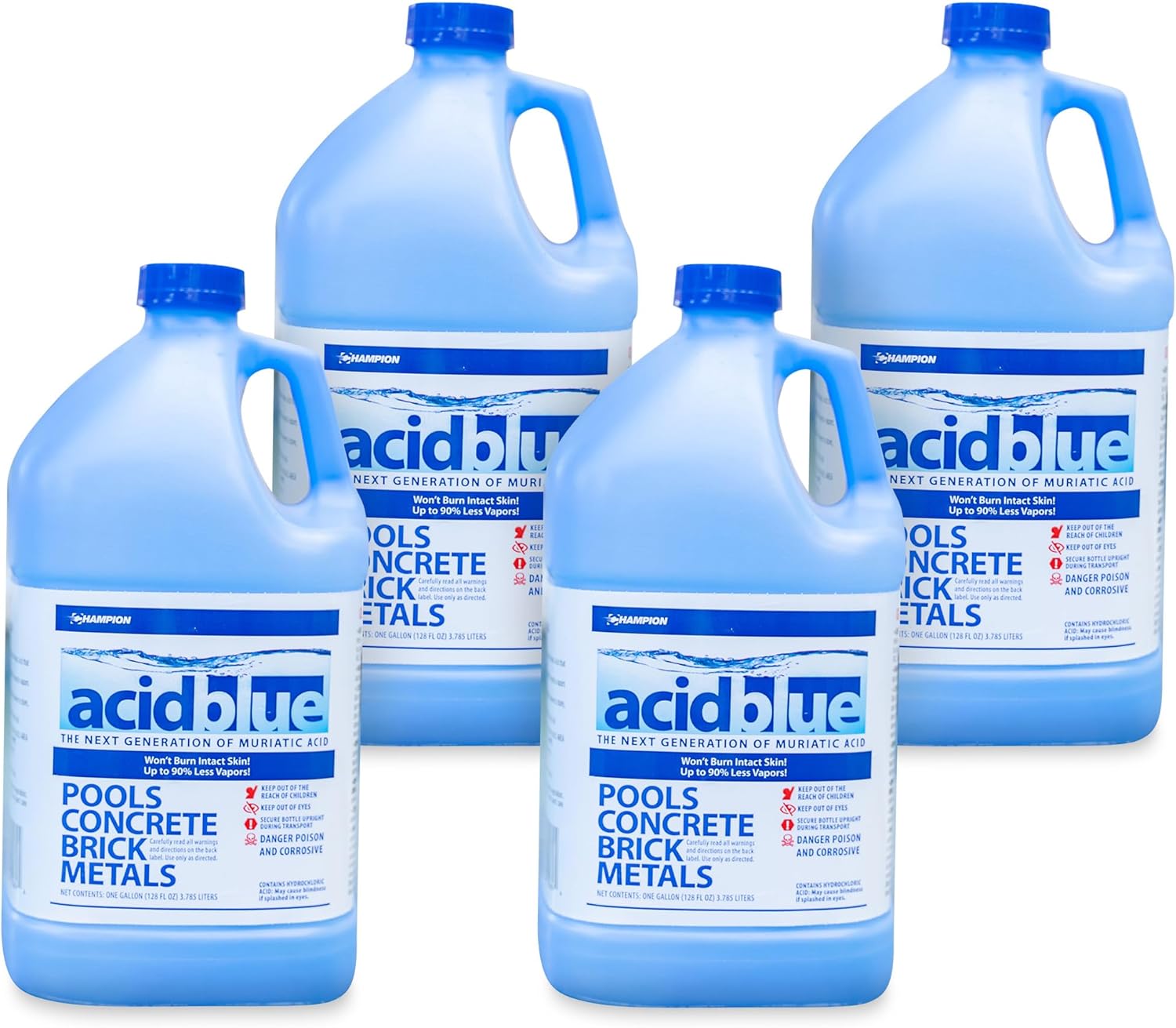
Champion Muriatic Acid
What it is: Dilute hydrochloric acid—standard for lowering pH and, with the right method, total alkalinity.
Why you need it: High pH destroys chlorine efficiency. Always follow the label; never mix acid with chlorine.
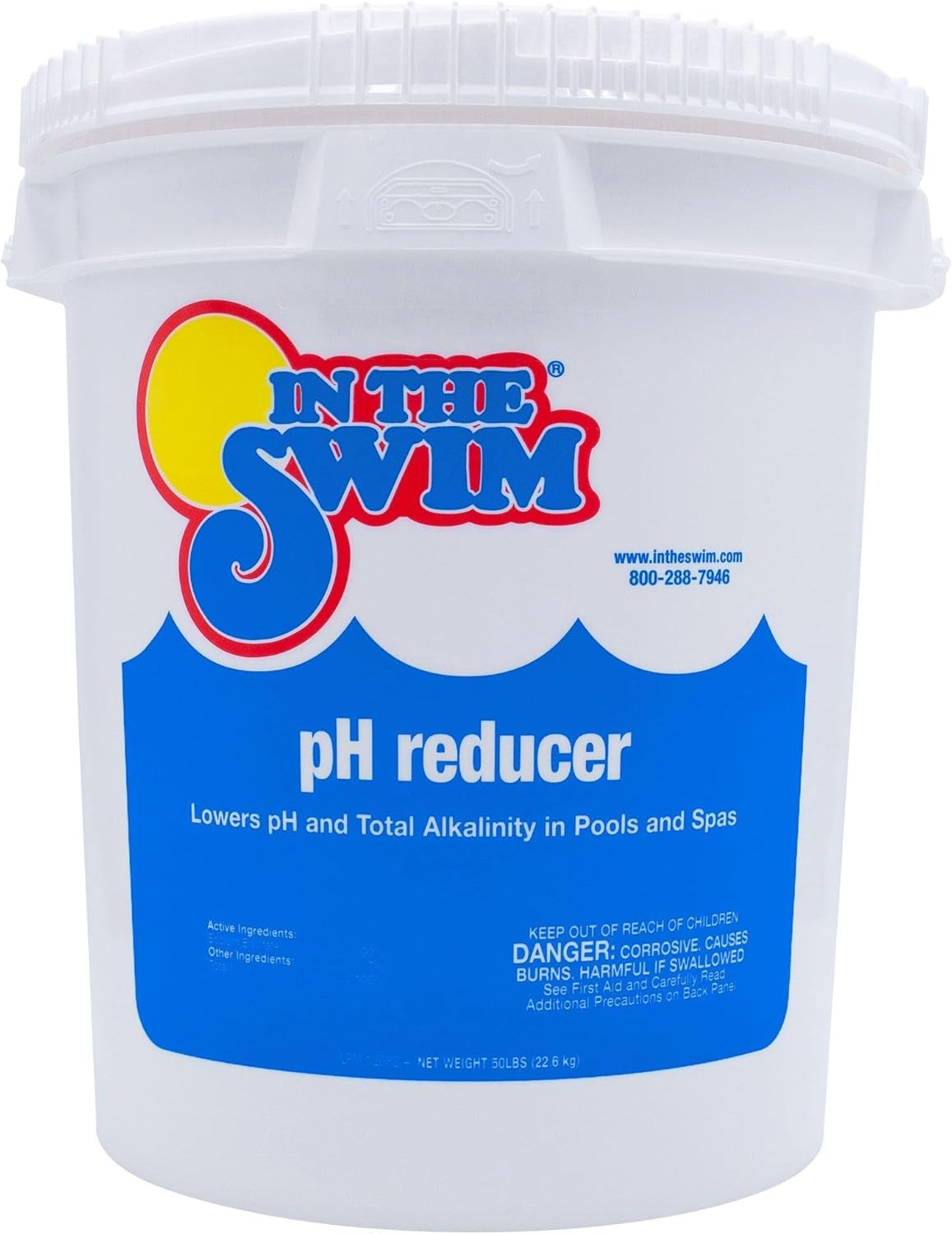
In The Swim pH Reducer (dry acid)
What it is: Sodium bisulfate (dry acid)—lowers pH (and can pull TA down when used in controlled steps).
Why you need it: Easier to handle and store than jugs of muriatic acid for small, precise corrections; still an acid—never mix with chlorine, follow the label, and retest after circulation.
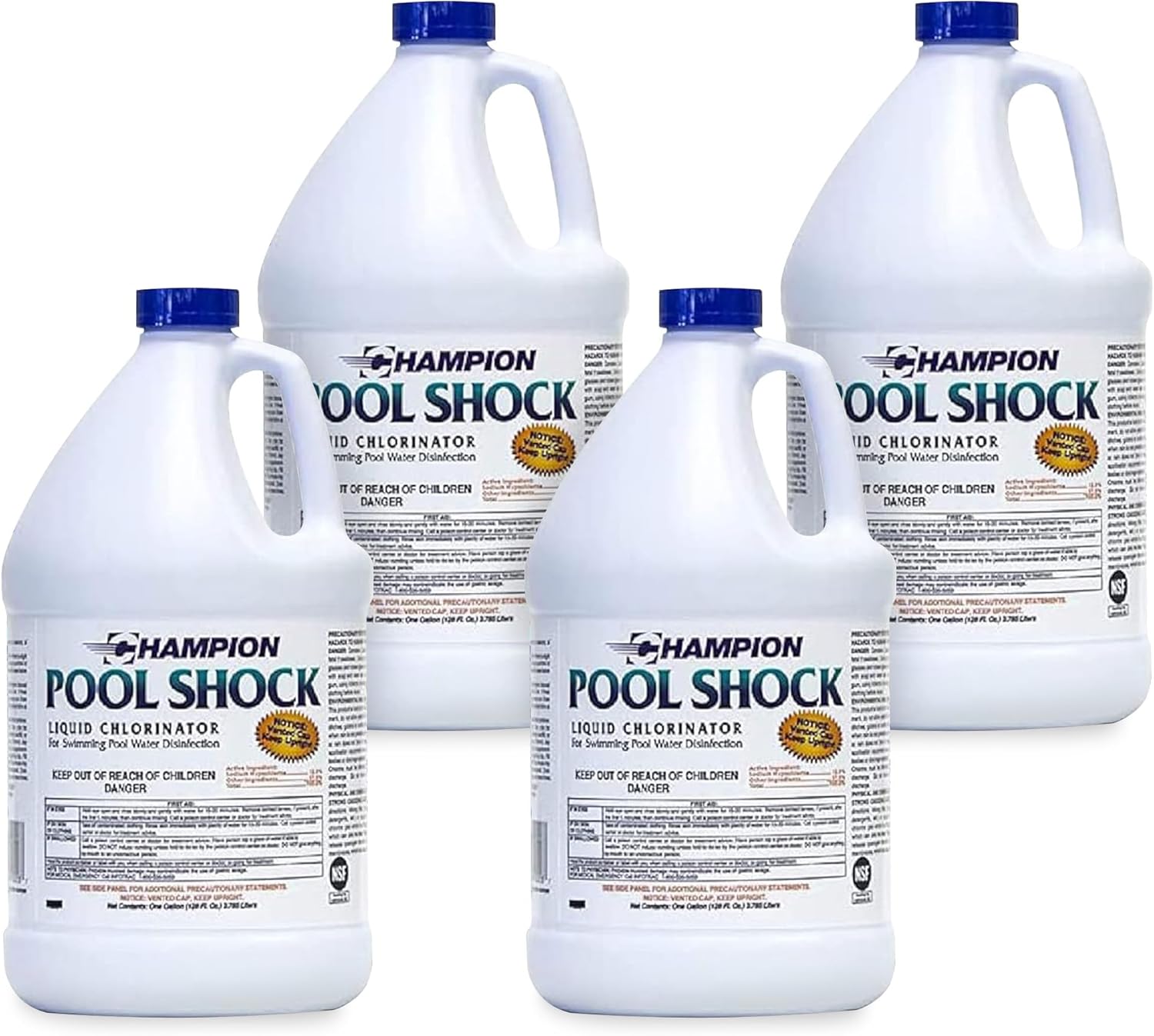
Champion Pool Shock (4 Pack)
What it is: A case of liquid pool chlorine (sodium hypochlorite)—not cal-hypo granules. Confirm strength on the listing and jug label (often around 10–12.5%).
Why you need it: Same upside as other liquid shock: no CYA from the product, easy to pour with the pump running—useful to keep stocked for openings, algae pushes, storms, or parties.
How to use: Treat it like any liquid shock (pour with circulation; big doses still work best at dusk). Store cool and shaded; opened jugs lose strength over time—plan to use them within a few weeks.
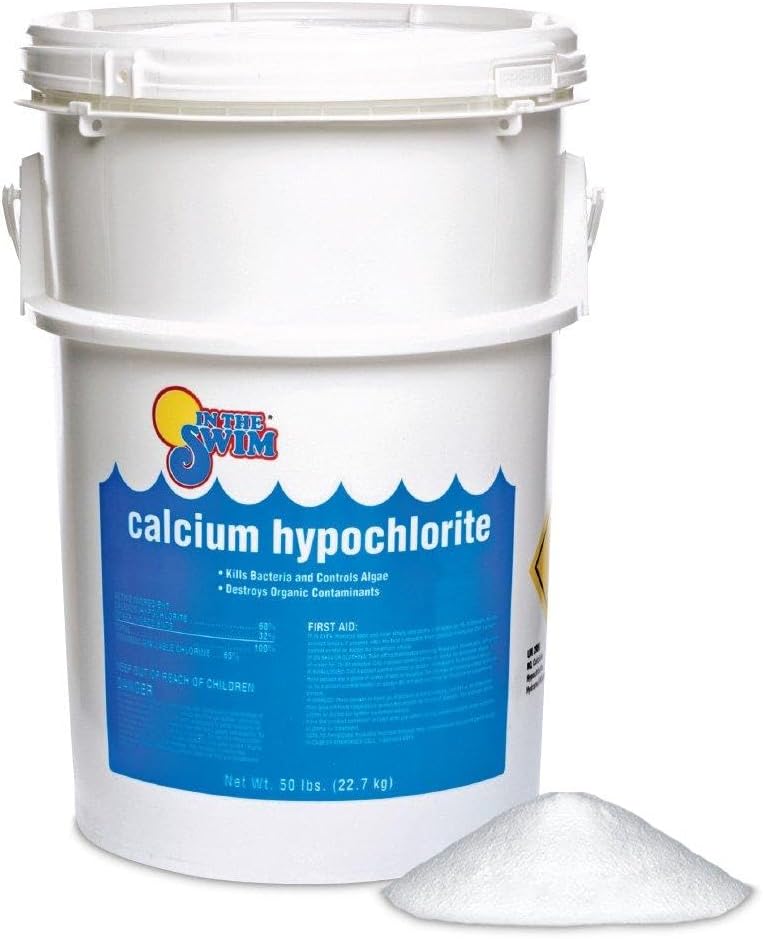
In The Swim Cal-Hypo Pool Shock
What it is: Calcium hypochlorite granular shock—high chlorine, adds calcium, no CYA.
Why you need it: Strong oxidizer for recovery and breakpoint; pre-dissolve; watch calcium if hardness is already high.
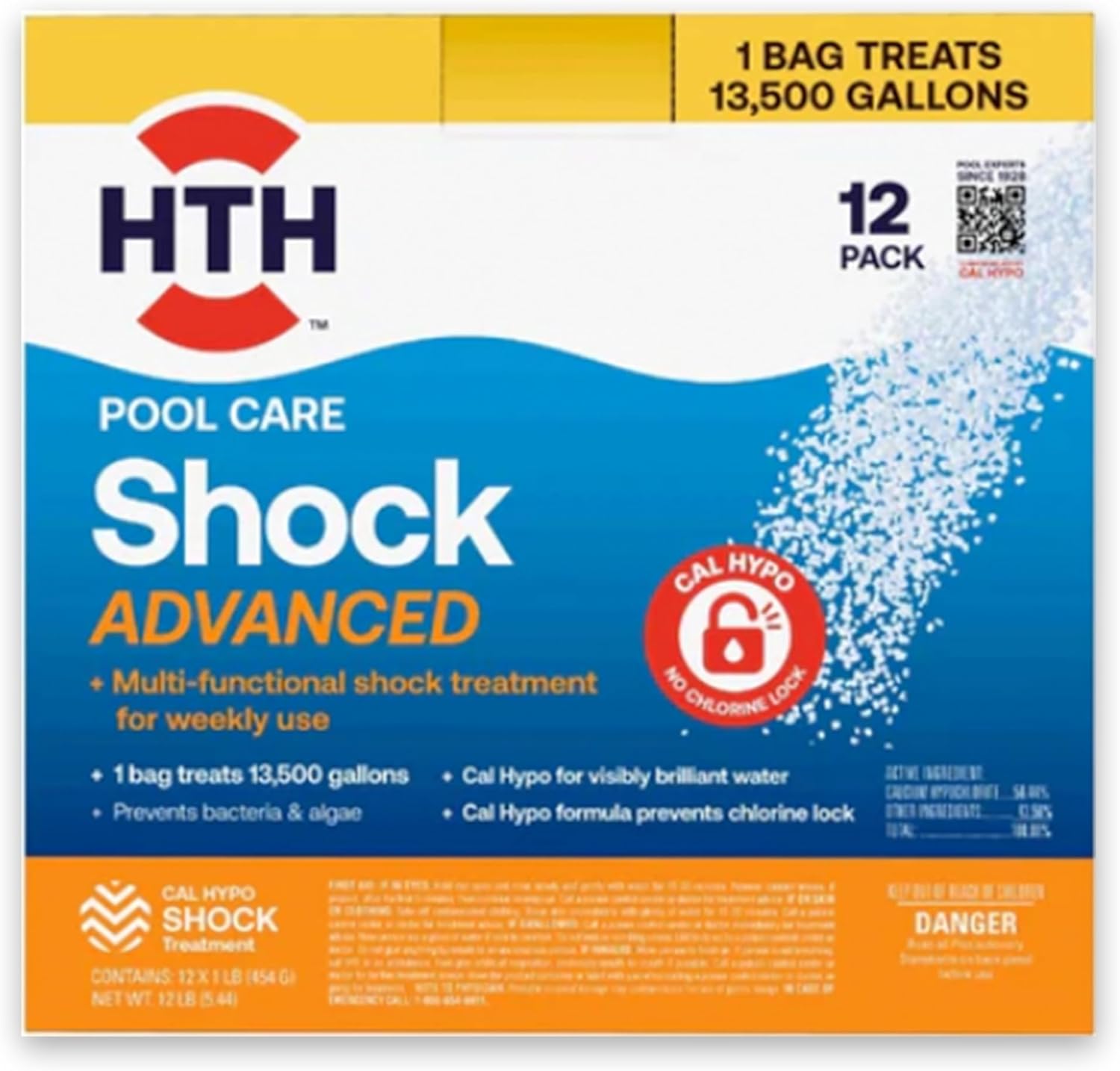
HTH Cal Hypo Pool Shock
What it is: Cal-hypo granular shock—same family as other cal-hypo products.
Why you need it: Alternative brand/size; compare % available chlorine and price per pound on the label.
What Pool Shock Does
Here's the thing—shock isn't just "extra chlorine." It serves a very specific purpose.
When chlorine sanitizes your pool, it binds to contaminants like sweat, urine, sunscreen, and organic debris. That bound-up chlorine is called combined chlorine or chloramines. This is the stuff that makes your pool smell like a public locker room and irritates your eyes.
Free chlorine is the good stuff—the chlorine that's available to kill bacteria and algae.
Shocking your pool means adding a massive dose of oxidizer to break apart those chloramines and restore your free chlorine levels. You're essentially resetting your pool's sanitization capacity.
Think of it like this: your chlorine is an army, and over time, soldiers get captured by the enemy (contaminants). Shocking is calling in reinforcements to free those soldiers and overwhelm the opposition.
When To Shock Your Pool
This is where most pool owners go wrong. You don't need to shock your pool every week like some outdated advice suggests. You shock when there's a reason to shock.
Opening Your Pool For The Season
After sitting dormant all winter, your pool has accumulated organic debris, potential algae spores, and who knows what else. A heavy shock treatment when you open is non-negotiable. This sets the foundation for clean water all season. Here is when you need to shock your pool:
Green Pool
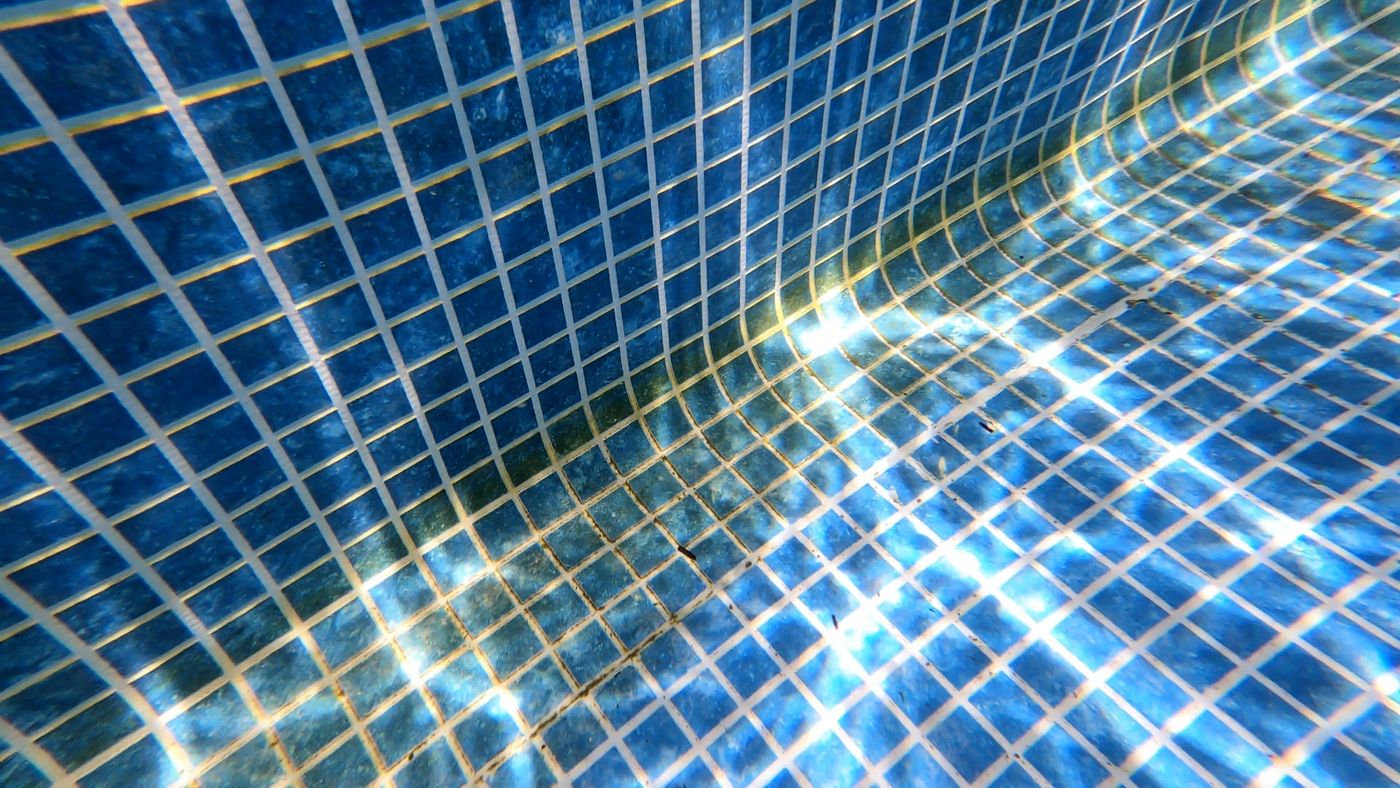
If you've got visible algae—whether it's light green haze or full-on swamp mode—you need to shock. And not just a little. A green pool requires aggressive shocking, often multiple treatments, combined with proper brushing and filtration.
After Heavy Use
Pool party with fifteen kids? Yeah, you're going to want to shock that night. Heavy bather loads introduce a massive amount of contaminants that your normal chlorine levels can't handle alone.
After A Major Storm
Heavy rain dilutes your chemicals and introduces contaminants. Wind brings in debris, pollen, and organic matter. Post-storm shocking gets your water back in balance fast.
When Combined Chlorine Is High
If your combined chlorine reading is above 0.5 ppm, it's time to shock. This means your free chlorine is getting bound up faster than it can sanitize.
The Real Answer: When Your ORP Drops
Now let me tell you what the professionals actually use—because this changed how I manage my own pool.
ORP (which stands for Oxidation Reduction Potential) measures your water's ability to oxidize and sanitize. It's measured in millivolts (mV) and gives you the real picture of your water's sanitization power—not just how much chlorine is floating around.
This is the gold standard in commercial pools, aquatic centers, and Olympic facilities worldwide. There's a reason professionals don't rely on basic chlorine test strips. And this is what I recommend using to maintain your pool.
Here's the breakdown:
- ORP above 700 mV: Excellent sanitization. Your pool is in great shape.
- ORP 650-700 mV: Acceptable range. Keep an eye on it.
- ORP under 650 mV: Time to shock. Your water's sanitization capacity is compromised.
- ORP under 600 mV: Shock heavily and immediately. This is concerning territory.
In my experience, monitoring ORP takes all the guesswork out of shocking. Instead of following arbitrary schedules, you shock when your water actually needs it.
Don't Forget About pH
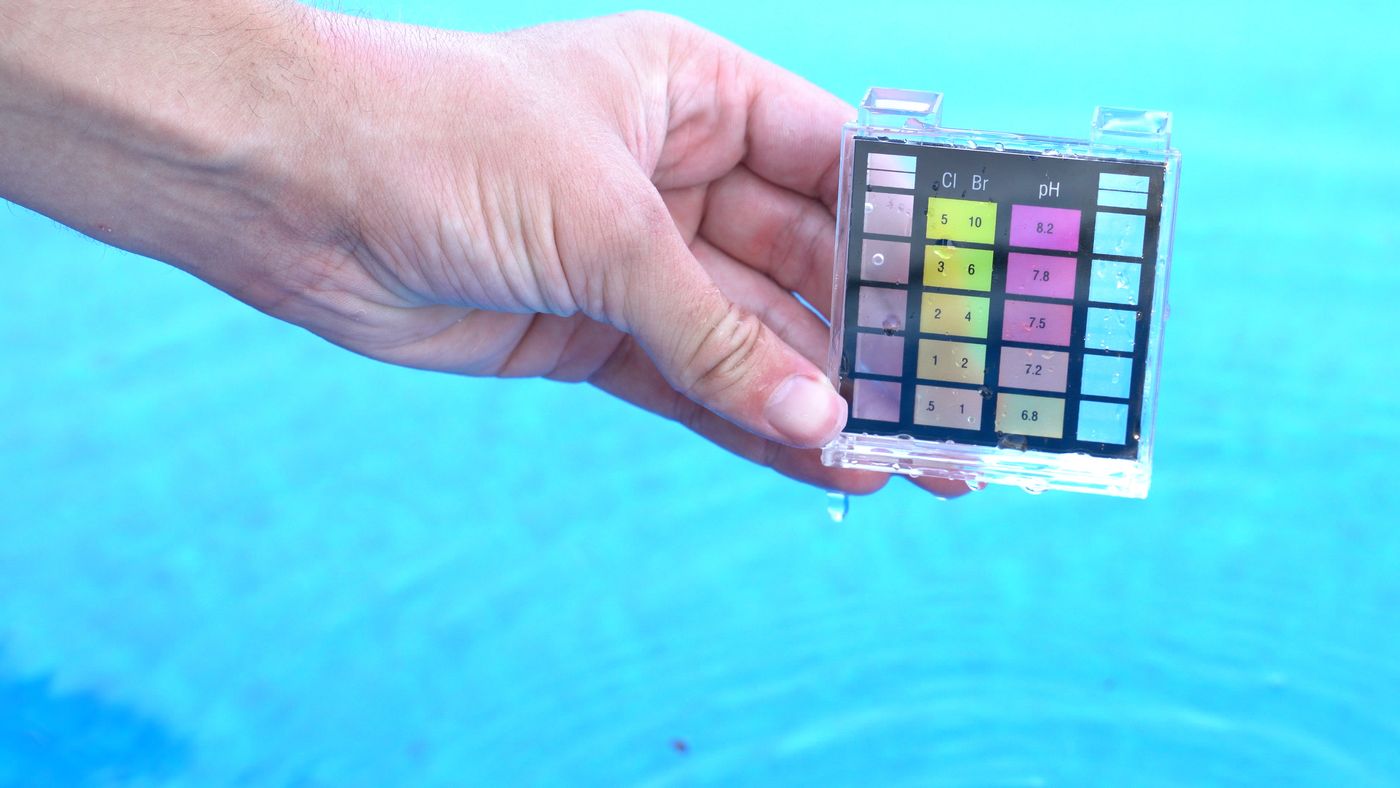
Before you add a drop of shock, you must check your pH. Chlorine's effectiveness is tied to your pH on a logarithmic scale; as your pH rises, your chlorine's "killing power" drops off a cliff.
At a pH of 7.2, your chlorine is about 65% active. By the time you hit a pH of 8.0, that activity plunges to roughly 20%. In simple terms: if your pH is too high, you are essentially throwing 80% of your shock money in the trash.
If you need to bring your levels down before shocking, check out my guide on How to Lower Pool pH. It's a straightforward process, but since you're handling acid, safety is the priority—I'll show you exactly how to do it without the risk.
Testing Your Pool's Water Chemistry
I use the Ondilo ICO to monitor my pool's ORP and pH continuously. It sits in the water and sends readings directly to my phone. No more wondering, no more guessing, no more over-shocking or under-shocking. If you haven't seen my review on the ICO, make sure to check it out or go direct to their website at mysmartpool.com.
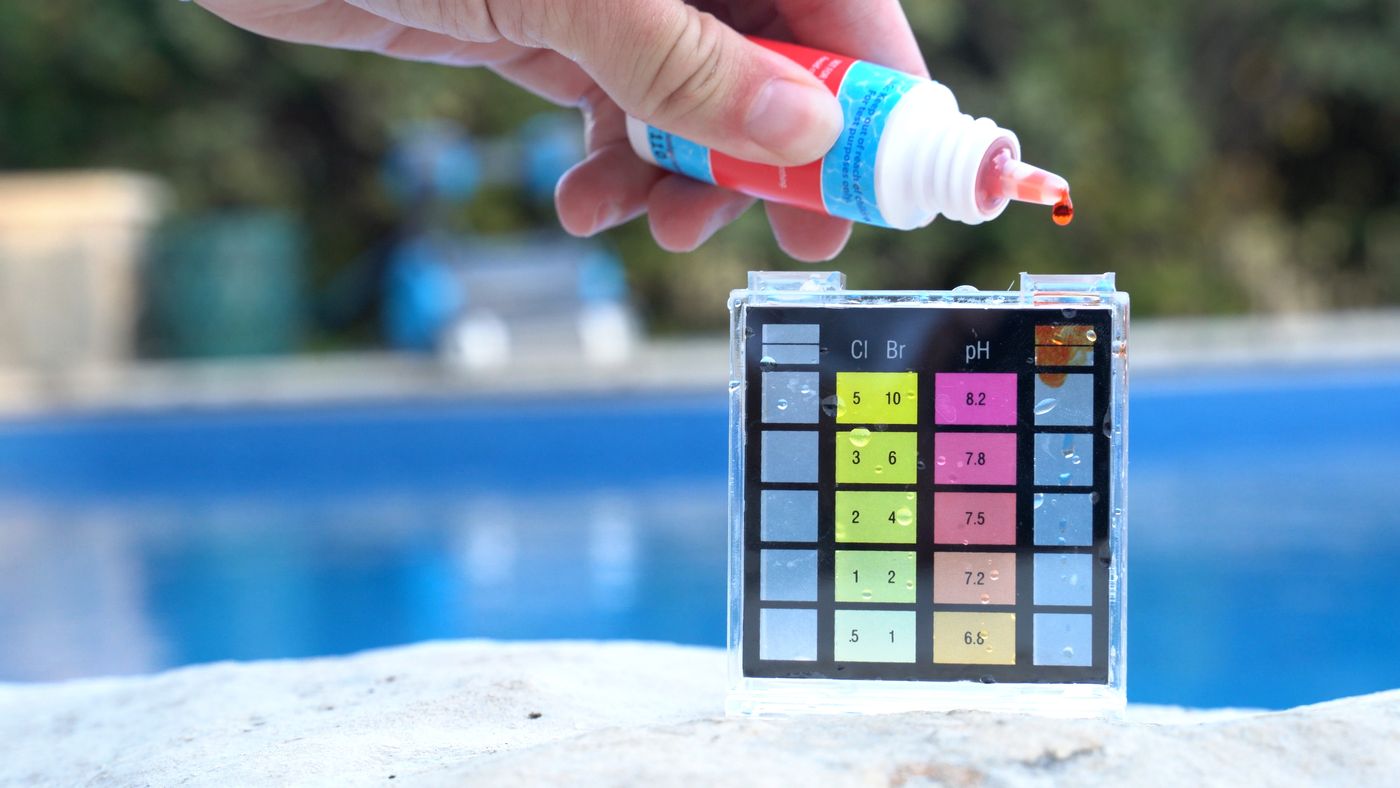
You can use a handheld digital ORP and pH meter if you want to test manually, but honestly, a smart pool water monitor that tracks ORP around the clock is the way to go.
Which Pool Shock Should You Use?
Not all shock is created equal. There are 2 main types of shock that you should be using:
Liquid Chlorine (Sodium Hypochlorite) — My Preferred Choice
This is what I use and recommend for most pool owners.
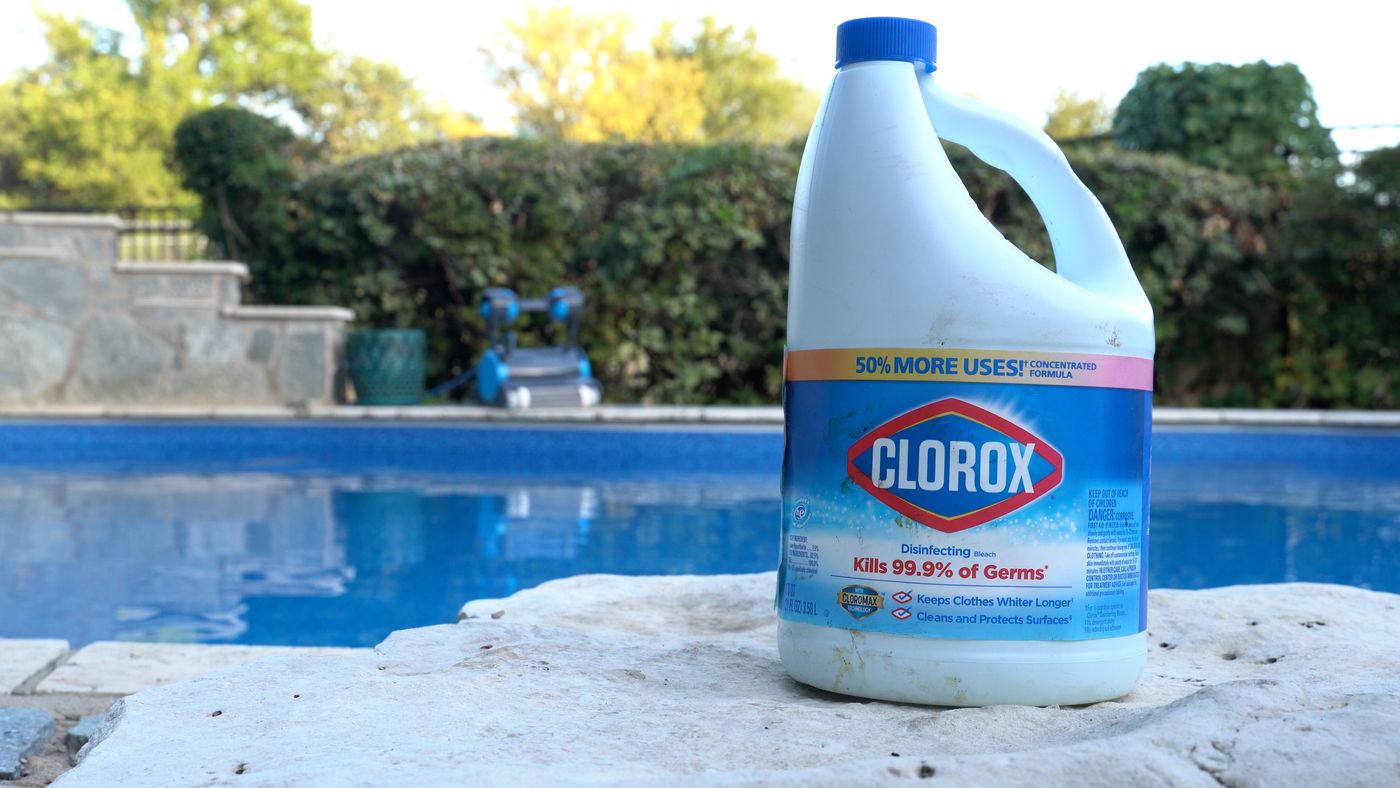
Liquid chlorine—also called liquid shock or bleach (at pool-grade concentrations of 10-12.5%)—has several advantages:
- No dissolving required. It's already in liquid form, so it gets to work immediately.
- No residue. Granular shock can leave undissolved particles that bleach your liner or stain your plaster.
- No added stabilizer. Cal-hypo and dichlor add cyanuric acid (CYA) to your water. Over time, this builds up and reduces chlorine effectiveness. Liquid chlorine doesn't contribute to CYA creep.
- Cost-effective. Gallon for gallon, it's usually the cheapest option.
- Fast-acting. It disperses and starts working almost instantly.
The downside? It's heavy and has a shorter shelf life than granular products. Buy it fresh and use it within a few weeks. And don't let it sit out in the heat, or it becomes less effective.
Granular Shock (Calcium Hypochlorite / Cal-Hypo)
Cal-hypo is the most common granular shock and works well when used properly.
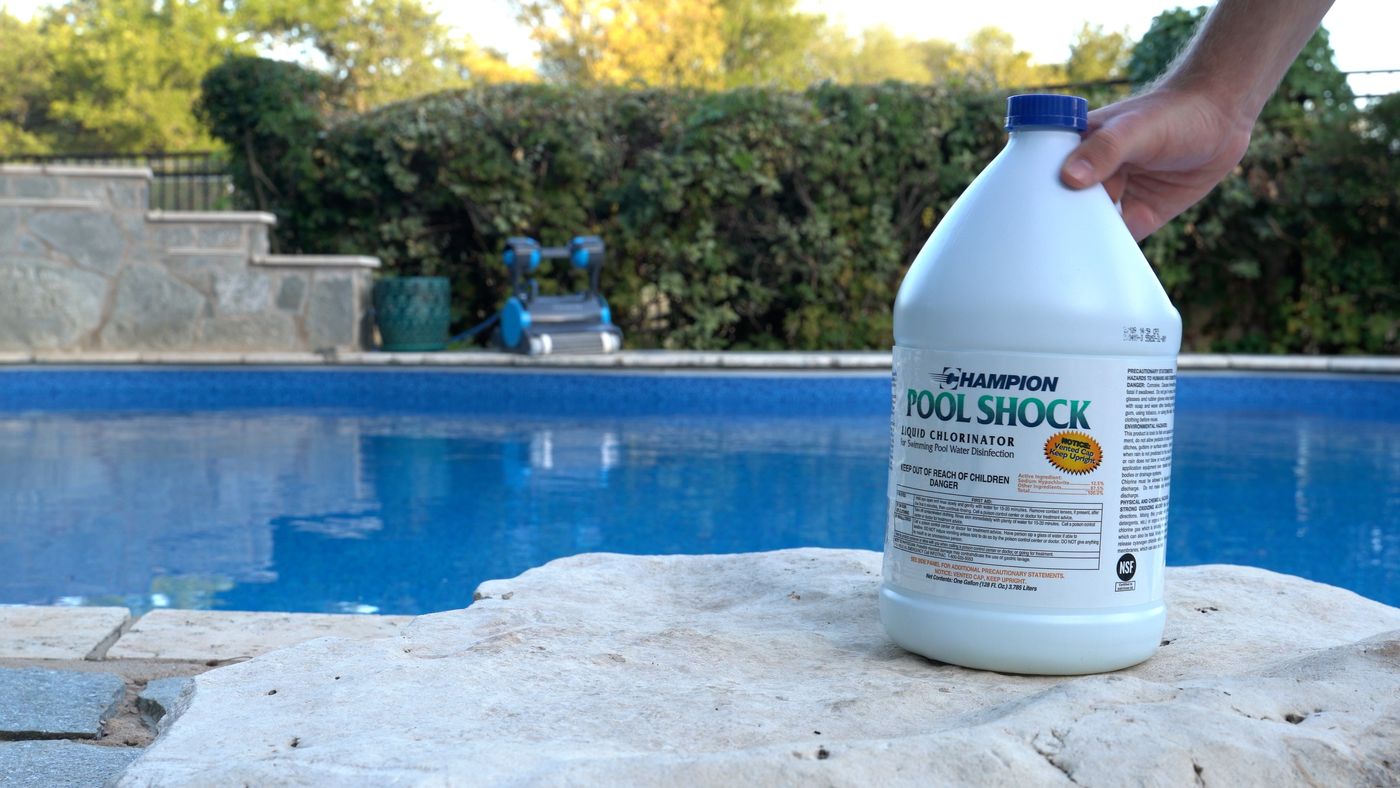
It's powerful—typically 65-73% available chlorine—and kills algae fast. However, it adds calcium to your water, which can be problematic if your calcium hardness is already high. It also needs to be pre-dissolved before adding to your pool to prevent bleaching and staining. I'll explain how to do this as well.
How Much Shock Do You Need?
This depends on your pool size and the severity of the problem.
For liquid chlorine (12.5% sodium hypochlorite):
- Routine shock: 1 gallon per 10,000 gallons of pool water
- Moderate algae or high combined chlorine: 2 gallons per 10,000 gallons
- Heavy algae (green pool): 3-4 gallons per 10,000 gallons, potentially more
For cal-hypo granular shock (73%):
- Routine shock: 1 pound per 10,000 gallons
- Moderate issues: 2 pounds per 10,000 gallons
- Heavy algae: 3-4 pounds per 10,000 gallons
Important: These are starting points. If you're dealing with a severe algae bloom, you may need to shock multiple times over several days until your water holds chlorine overnight without dropping significantly. This is called reaching breakpoint chlorination.
If you have a pool water monitor like the ICO, I recommend adding, watching your ORP and pH levels and adjusting accordingly. Keep adding until your ORP is 650-750.
What You'll Need
Before you start, gather your supplies—the what you need checklist earlier on this page covers the chemistry; add the basics below:
-
Pool shock (liquid or granular—your choice)
-
5-gallon bucket (if using granular shock)
-
Chemical-resistant gloves
-
Safety goggles
-
Old clothes you don't care about
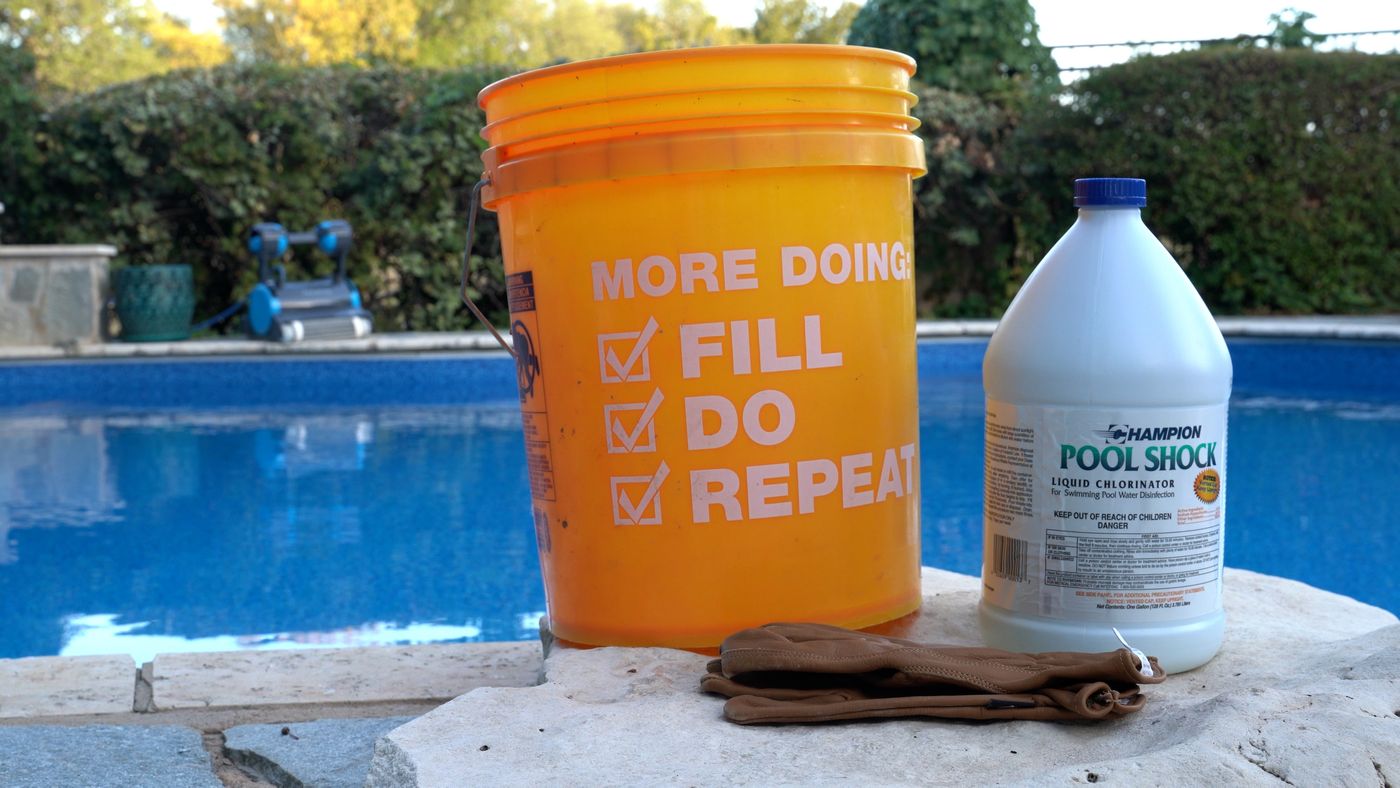
Gather your supplies: bucket, gloves, and pool shock // The Pool Nerd
Always remember, safety first. Don't skip the gloves and goggles. Pool shock is highly concentrated and will burn skin and eyes on contact.
How To Shock Your Pool — Step By Step
For Liquid Chlorine:
-
Test your water first. Know your starting chlorine and pH levels. Ideally, pH should be around 7.0-7.4 for maximum chlorine effectiveness.
-
Wait until evening if you can. Sunlight degrades chlorine rapidly. Shocking at dusk gives the chlorine all night to work without UV interference.
-
Turn on your pump. You want full circulation while adding shock and for at least 8 hours after.
-
Pour directly into the pool near a return jet. The jet helps disperse the chlorine throughout the water. Walk around the pool's perimeter while pouring for even distribution.
-
Keep the pump running overnight.
-
Test again in the morning to verify chlorine levels are holding.
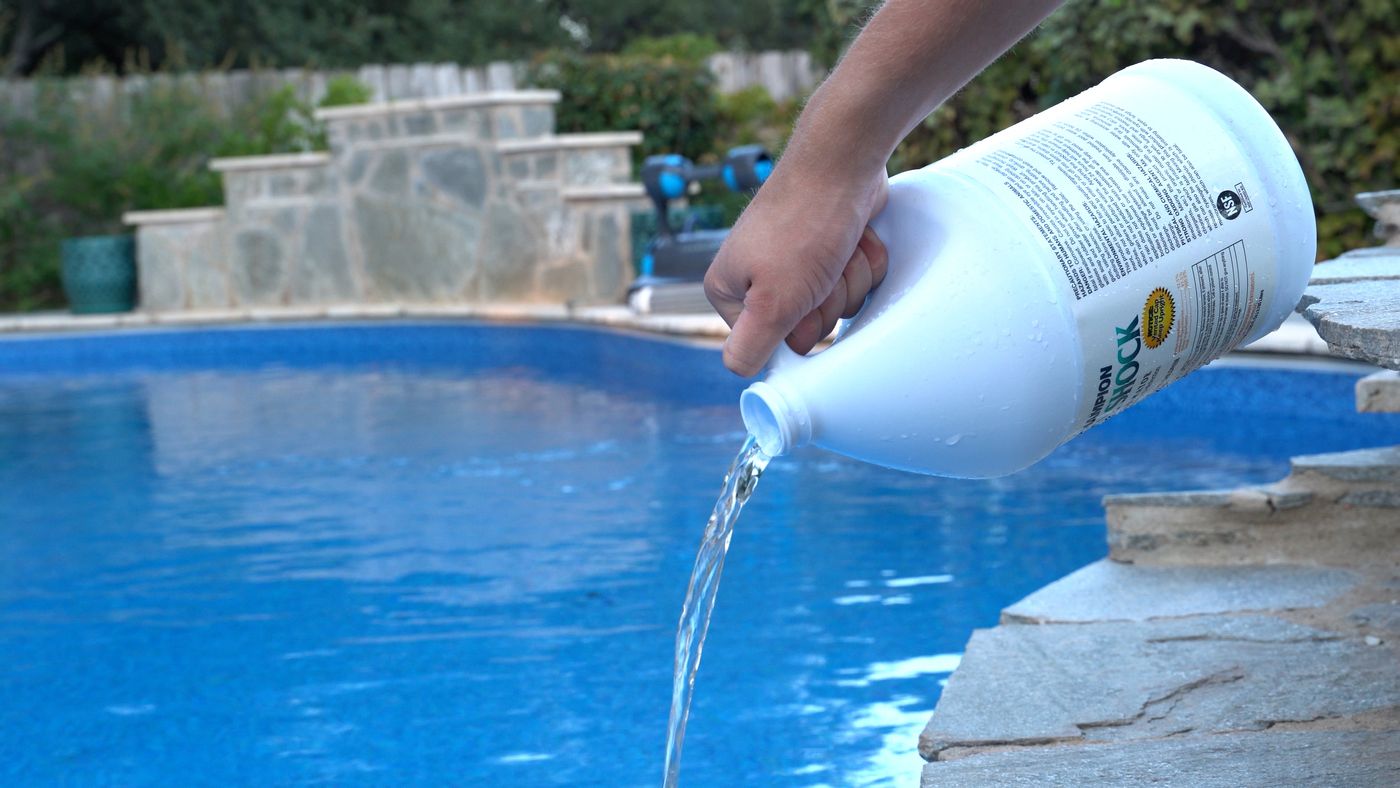
Pour shock near a return jet for even distribution // The Pool Nerd
For Granular Shock (Cal-Hypo):
-
Test your water and check pH.
-
Shock at evening.
-
Turn on your pump.
-
Fill a 5-gallon bucket about 3/4 full with pool water.
-
Slowly add the granular shock to the bucket, stirring continuously. Never add water to chemicals—always add chemicals to water.
-
Let it dissolve completely. This takes a few minutes of stirring.
-
Pour the dissolved solution into the pool near a return jet. Again, walk the perimeter for even distribution.
-
Rinse the bucket thoroughly.
-
Run the pump overnight and test in the morning.
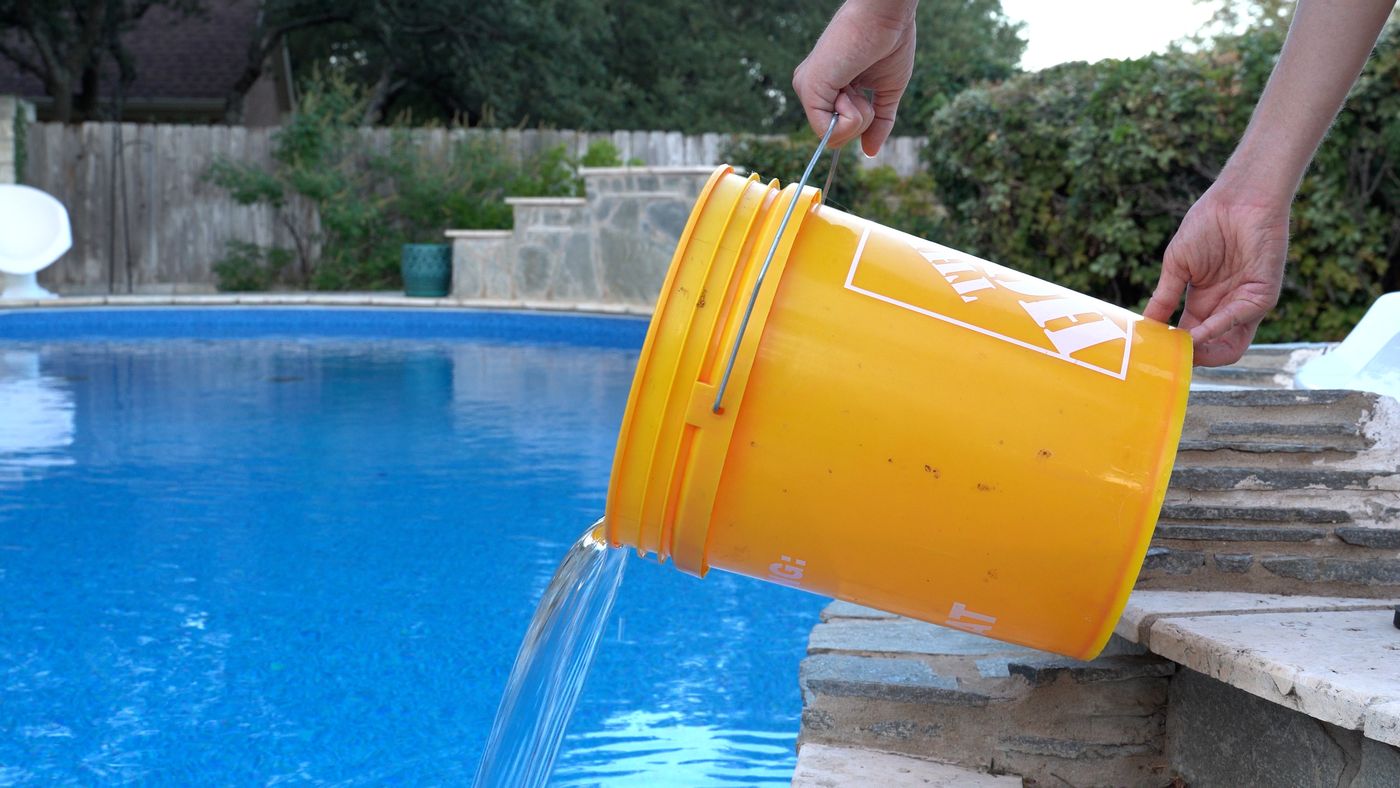
Pour the dissolved shock solution around the pool perimeter // The Pool Nerd
Never dump undissolved granular shock directly into your pool. It will sink to the bottom and can bleach vinyl liners or etch plaster surfaces. I've seen pool owners ruin their liners this way.
Common Shocking Mistakes To Avoid
-
Shocking during the day. You're wasting product. The sun will burn off a significant portion of the chlorine before it can do its job.
-
Not running the pump. If the water isn't circulating, the shock sits in one area and doesn't distribute properly.
-
Adding shock with pH too high. At a pH of 8.0, chlorine is only about 20% effective. Get your pH down to 7.0-7.4 before shocking for maximum impact.
-
Shocking too often. If you're shocking weekly "just because," you're probably wasting money and adding unnecessary chemicals to your water. Shock when there's a reason—use ORP to guide you.
-
Swimming too soon. Wait until chlorine levels drop below 5 ppm before swimming. This usually takes 8-24 hours depending on how heavily you shocked.
A properly shocked pool results in crystal clear water // The Pool Nerd
Want To Reduce The Amount of Shock? Consider UV Sanitation
Here's something most pool owners don't know: that strong "chlorine smell" isn't actually chlorine—it's chloramines. Those nasty byproducts that form when chlorine binds to sweat, oils, and organic matter. They're also what cause red, stinging eyes, dry skin, and that burning sensation in your nose and throat.
If you're tired of dealing with chloramines and want to dramatically reduce how often you need to shock, UV sanitation is worth looking into.
SpectraLight UV systems destroy chloramines and over 60 waterborne pathogens—including algae, bacteria, cysts, and viruses—using high-intensity ultraviolet light. The UV lamp installs inline after your filtration system and bombards passing water with germicidal rays that eliminate organic matter before it can create problems.
This is the same technology used in Olympic pools and over 200 commercial aquatic centers nationwide. Those crystal-clear underwater camera shots you see during the Olympics? That's UV sanitation at work.
The benefits are significant:
- Eliminates the "pool smell" by destroying chloramines at the source
- It can reduce chlorine usage by up to 80-90%
- No more red, stinging eyes or dry, itchy skin
- Reduces breathing irritation that can trigger asthma, especially in children
- Cleaner, clearer water without the chemical soup
The World Health Organization has even stated that lower free chlorine concentrations may be health protective when UV is used. You can run your pool at just 0.5 ppm chlorine—about the same level as tap water—when UV is doing the heavy lifting.
In my opinion, if you're constantly battling chloramine buildup, shocking frequently, or just hate that chemical smell, UV sanitation is one of the smartest upgrades you can make. It won't eliminate the need for chlorine entirely, but it dramatically reduces your reliance on it—and makes shocking an occasional task rather than a regular chore.
Frequently Asked Questions
What's the difference between regular chlorine and pool shock?
Let's get real—shock is chlorine, just in a much more concentrated form. Your daily chlorine maintains a baseline sanitizer level. Shock is like calling in the cavalry when things get out of hand. It's designed to rapidly raise chlorine levels high enough to break through chloramine buildup and kill off algae and bacteria that normal chlorine levels can't touch. Think of regular chlorine as maintenance and shock as intervention.
Can you shock a saltwater pool or a pool that doesn't use chlorine?
Yes, but with a caveat. If you're running a saltwater pool, you can absolutely shock it—your salt cell produces chlorine anyway, so liquid or granular shock works the same way. For pools using alternative sanitizers like biguanide (Baquacil), you'll want to use a non-chlorine shock like potassium monopersulfate. It oxidizes contaminants without adding chlorine to the mix. Just know that non-chlorine shock won't kill algae—it only handles oxidation. If you've got a green pool on a non-chlorine system, you've got a bigger problem to solve.
How long after shocking can I swim?
Wait at least 8 hours minimum, but I'd recommend testing before you get in rather than relying on a timer. Your chlorine needs to drop below 5 ppm before it's safe to swim. For a heavy shock treatment, this can take 12-24 hours depending on how much you added and your pool's circulation. Jumping in too early isn't just uncomfortable—high chlorine levels can irritate your skin, burn your eyes, and potentially cause respiratory issues. Test first, swim second.
Final Verdict
Shocking your pool isn't complicated, but doing it right makes a huge difference in water quality and how much money you spend on chemicals.
The biggest upgrade you can make is switching from guesswork to ORP-based decisions. When you know your water's actual oxidation potential, you stop over-shocking and start shocking precisely when it matters.
Get yourself some liquid chlorine, a pair of gloves, and ideally a way to monitor ORP continuously. Your pool—and your wallet—will thank you.
The information is for educational purposes only. Handling pool chemicals, specifically muriatic acid and chlorine, involves significant risk of injury or property damage. Always read the manufacturer's labels and MSDS sheets. Use this information at your own risk.
If you want to look into a pool water monitor like the ICO or UV system like the SpectraLight, head on over to my deals page, where I post all the best deals on top pool equipment and more.