

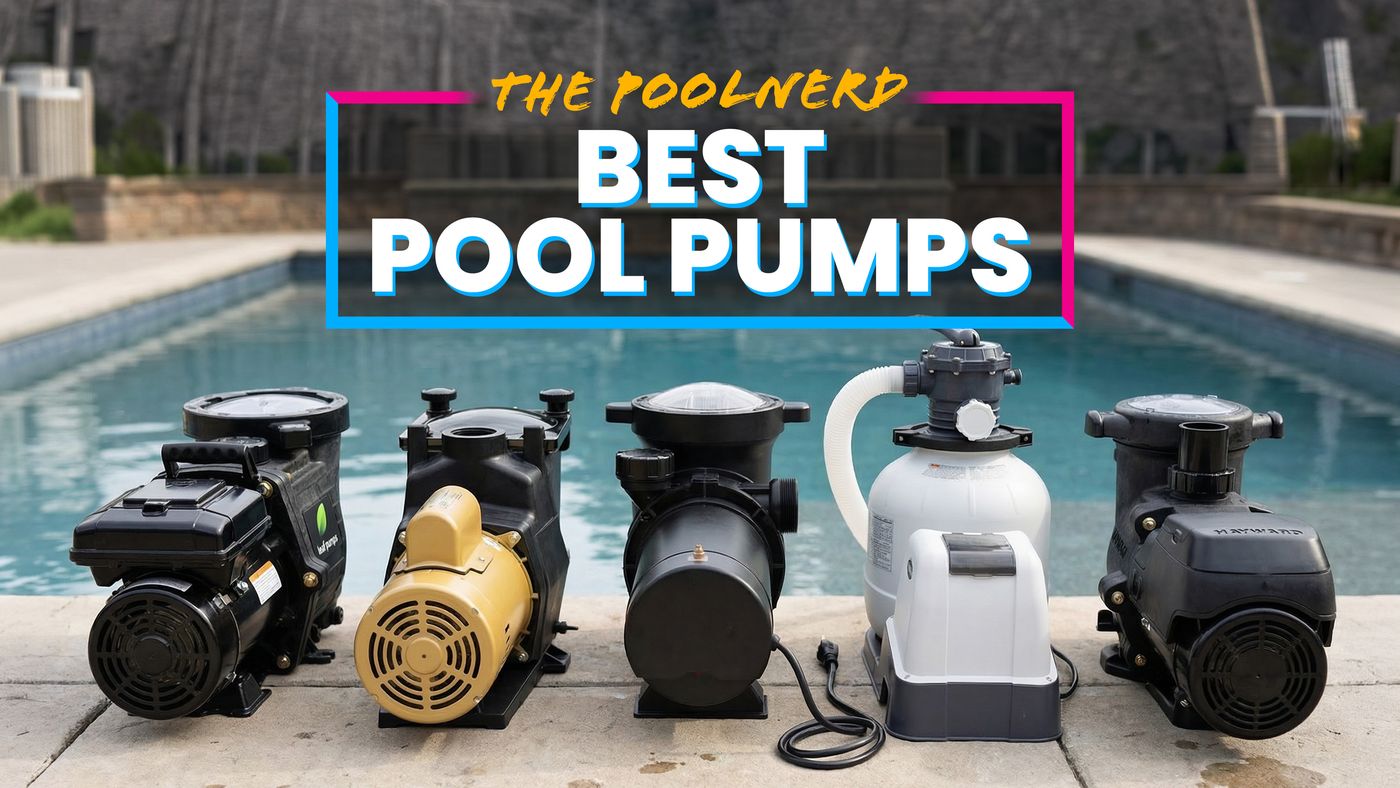
Looking for the best pool pump for your swimming pool? After testing and reviewing dozens of pumps over the past six years, I can tell you this up front: your pool pump is the heart of your entire filtration system. Choose the wrong one and you're looking at cloudy water, algae outbreaks, or electric bills that'll make your eyes water.
In this guide, I'll walk you through what to avoid, the features you want to look for, and my top picks for every type of pool—from above-ground pools to large inground setups.

If you're new here, welcome to The Pool Nerd. I'm your resident pool aficionado, and today we're diving into the best pool pumps on the market.
Best Pool Pumps at a Glance


If you want to browse our individual pump reviews, head over to our pool pump reviews page where we break down each model in detail.
And if you've never upgraded your pump before, it's easy to stick with what you know—that old single-speed humming away 24/7. But here's the truth: living with one means sky-high electric bills, loud operation, and zero flexibility. Variable-speed pumps don't have those compromises—they just work better.
What to Look for in a Pool Pump (And What to Avoid)
Before diving into specific models, let's talk about what matters when shopping for a pool pump. With so many terms and models, it can get confusing. So let me help cut through the noise and let you know what to look for.
Variable-Speed vs Single-Speed: The Most Important Decision
If you're still running a single-speed pump in 2026, you're burning money. This isn't an opinion. It is a fact. Single speed pumps aren't nearly as efficient as variable speed pumps. In fact, single speed pumps are illegal in many states.
What is a single-speed pool pump?
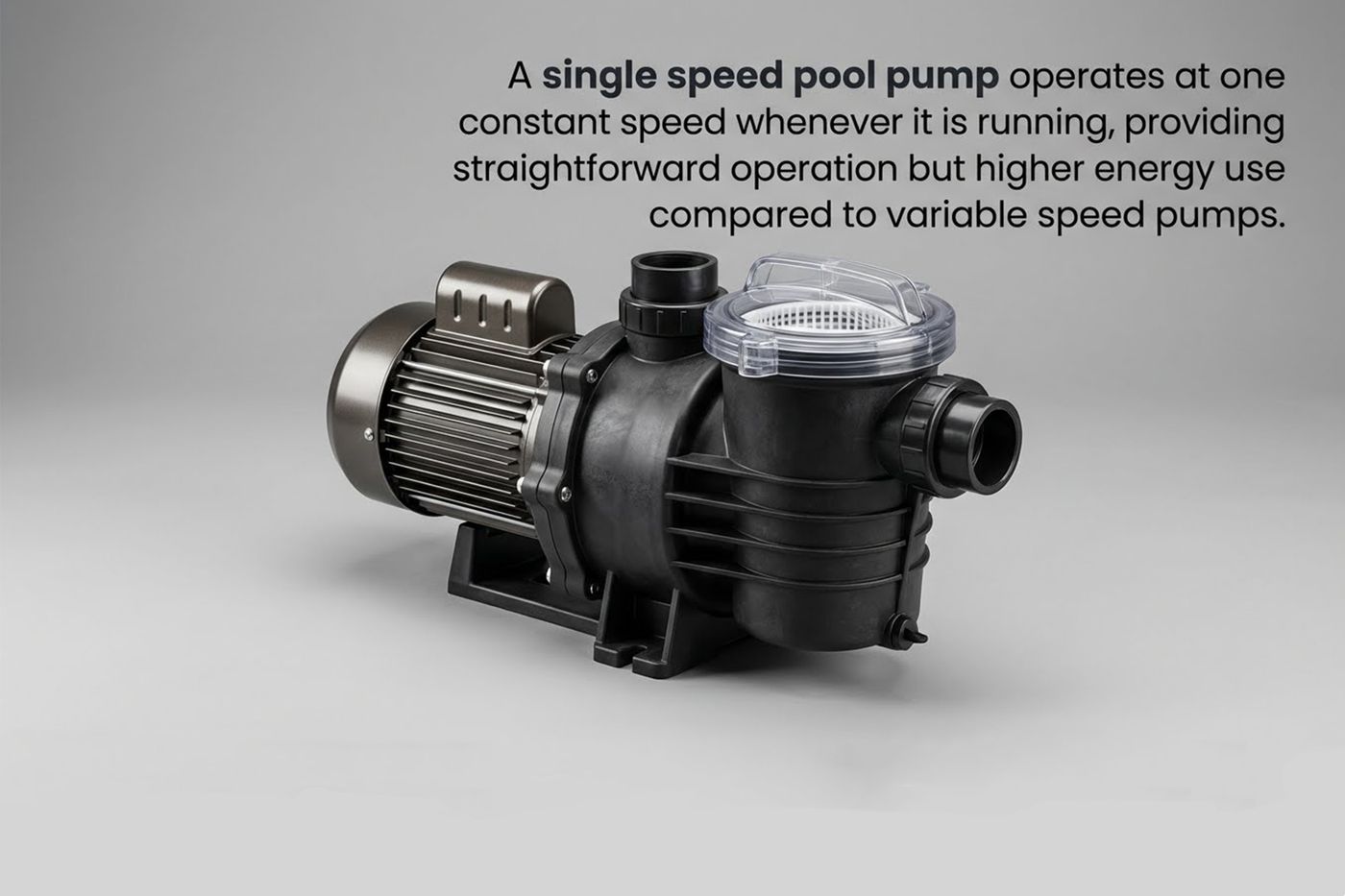
Single-speed pumps run at one fixed speed—full blast, all the time, typically around 3,450 RPM. They're simple, cheap upfront, and have been the standard for decades.
But here's the problem: they use a lot of electricity. A typical 1.5 HP single-speed draws around 1,500 watts continuously. Run that 8 hours a day at $0.15/kWh, and you're looking at roughly $55/month just for your pool pump.
In the past, you'd have to choose between running your pump for just 4-6 hours to save electricity or running it more often and spending a ton on electricity. But, that's not the case anymore.
What is a variable-speed pump?
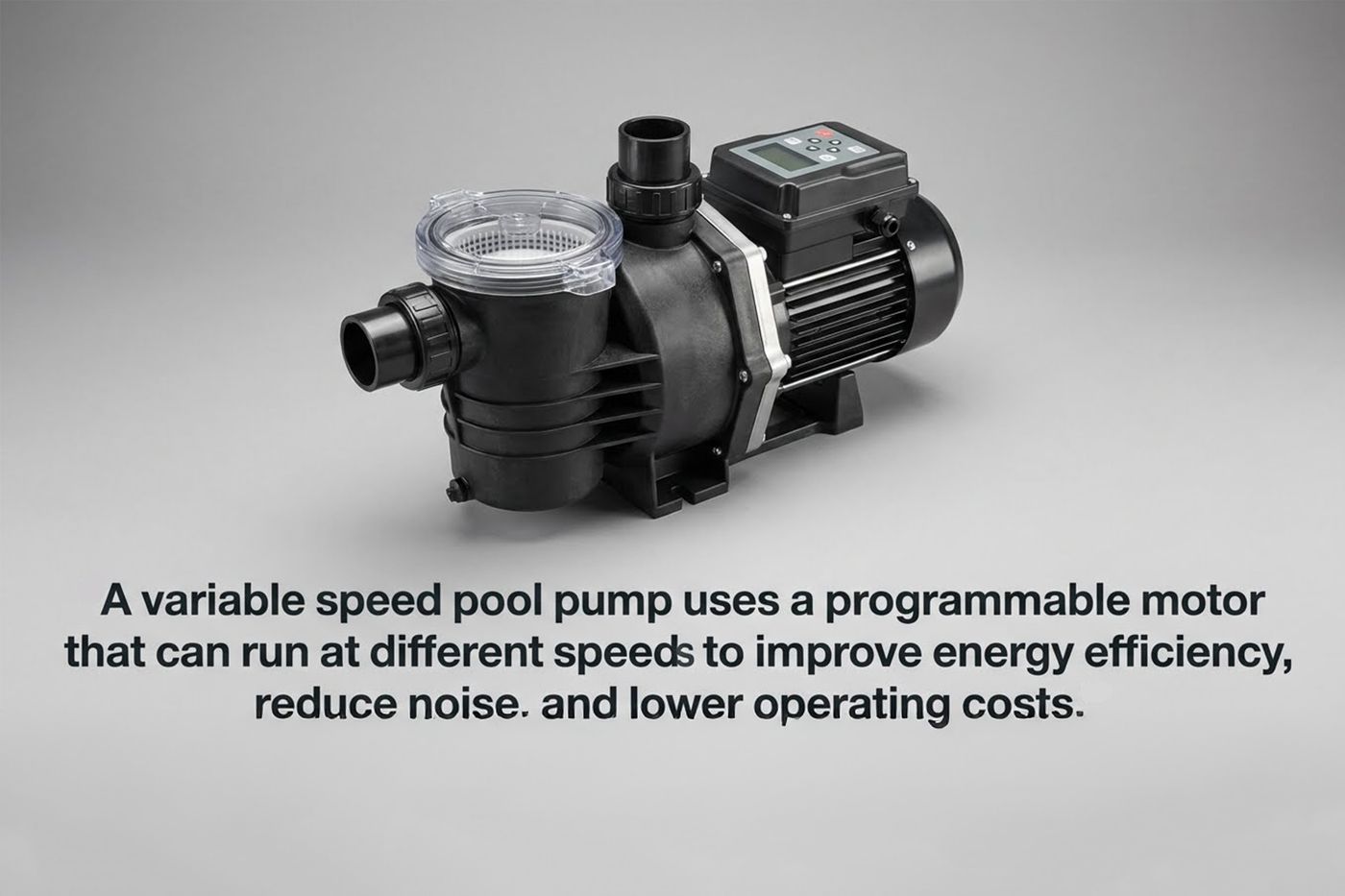
Variable-speed pumps use permanent magnet motors that let you dial in any speed you want. (They're the only category I recommend for most inground pools — I rank every model in my dedicated best variable speed pump guide.) Here's where it gets interesting: pump power consumption follows the "affinity laws," which means cutting the speed in half reduces power consumption by about 87%.
In my testing, running a VS pump at 1,400 RPM for daily filtration draws roughly 200 watts—compared to 1,500W for a single-speed doing the same job. That translates to 80-90% energy savings.
Variable-speed pumps are also dramatically quieter. At low RPM, most run around 40-50 decibels—about the level of a quiet conversation or a refrigerator humming. Single-speed pumps? Usually 70+ dB, which your neighbors may even notice. In my experience, this matters more than you realize, especially if your equipment pad is anywhere near your house (or your neighbors).
Many states now require variable-speed or multi-speed pumps for new installations and replacements. California, Arizona, Florida, and others have adopted these regulations because the energy savings are so significant. Even if your state doesn't require it yet, a variable speed pump typically pays for itself within 1-2 pool seasons through electricity savings alone.
Horsepower: Why Bigger Isn't Always Better
Here's where a lot of pool owners go wrong. More horsepower doesn't mean better performance—it often means wasted energy and potential problems.
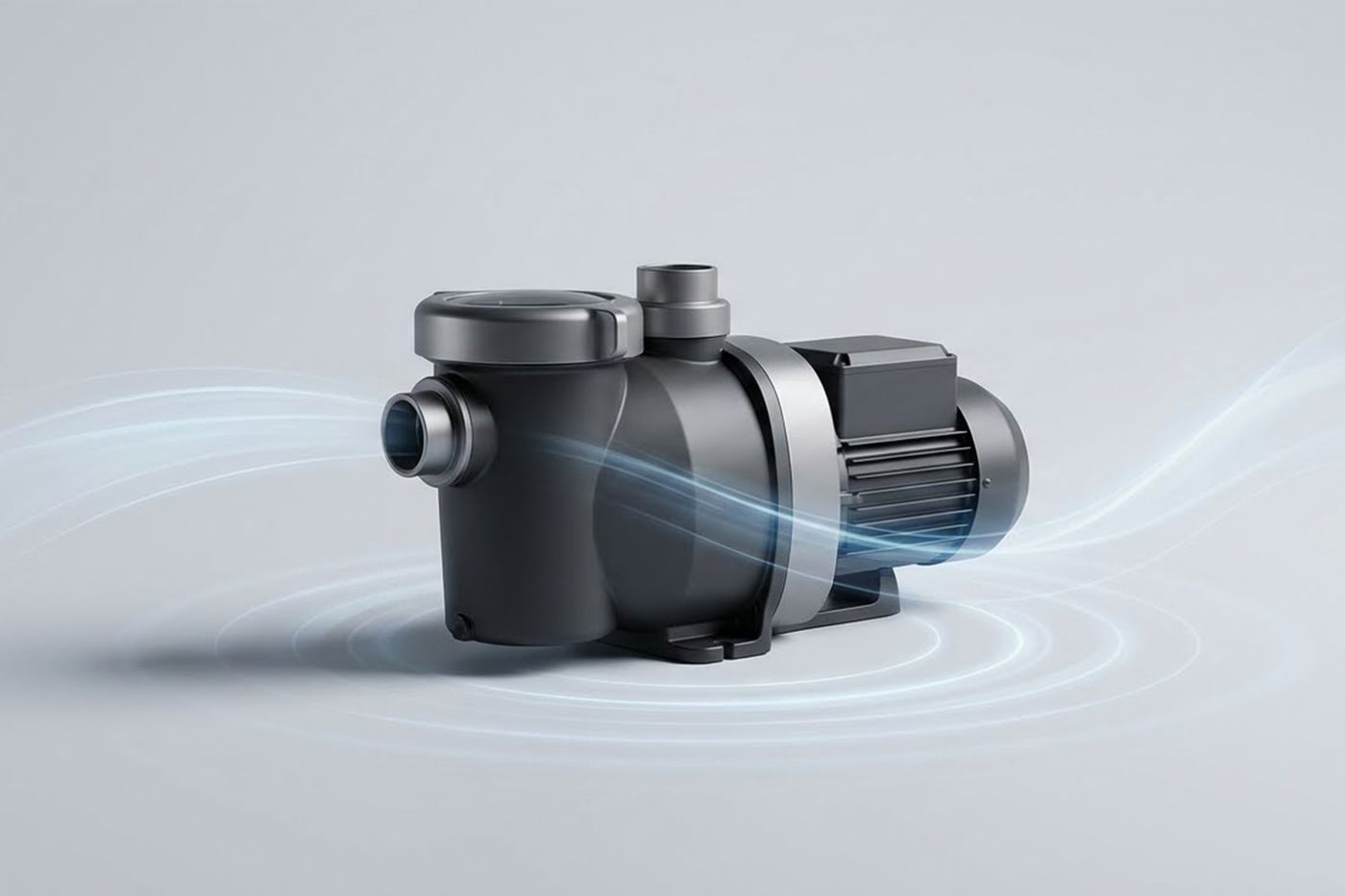
An oversized pump can overwhelm your filter, pushing water through so fast that particles slip right through instead of getting trapped. It can also create excessive pressure in your plumbing, stress fittings, and cause cavitation (air bubbles that damage the pump internals). And of course, a bigger motor draws more power even when you don't need it.
The goal is to turn over your pool's entire volume in about 6-8 hours. For most standard inground pools (10,000-20,000 gallons), a 1 to 1.5 HP pump is plenty. Larger pools (30,000+ gallons) or pools with multiple water features might need 2+ HP. Smaller above-ground pools often do fine with 0.5-1 HP.
Don't know how many gallons your pool is? Check out our pool volume calculator.
Pro tip: Don't pick a pump solely by HP without considering the flow curve. A well-designed 1.5 HP pump can actually outperform a cheap 2 HP in real-world circulation.
Matching Your Pump to Your Filter
Every pool filter has a maximum flow rate, usually listed in GPM (gallons per minute). Push too much water through it and you'll either defeat the purpose of filtration or damage the internals.
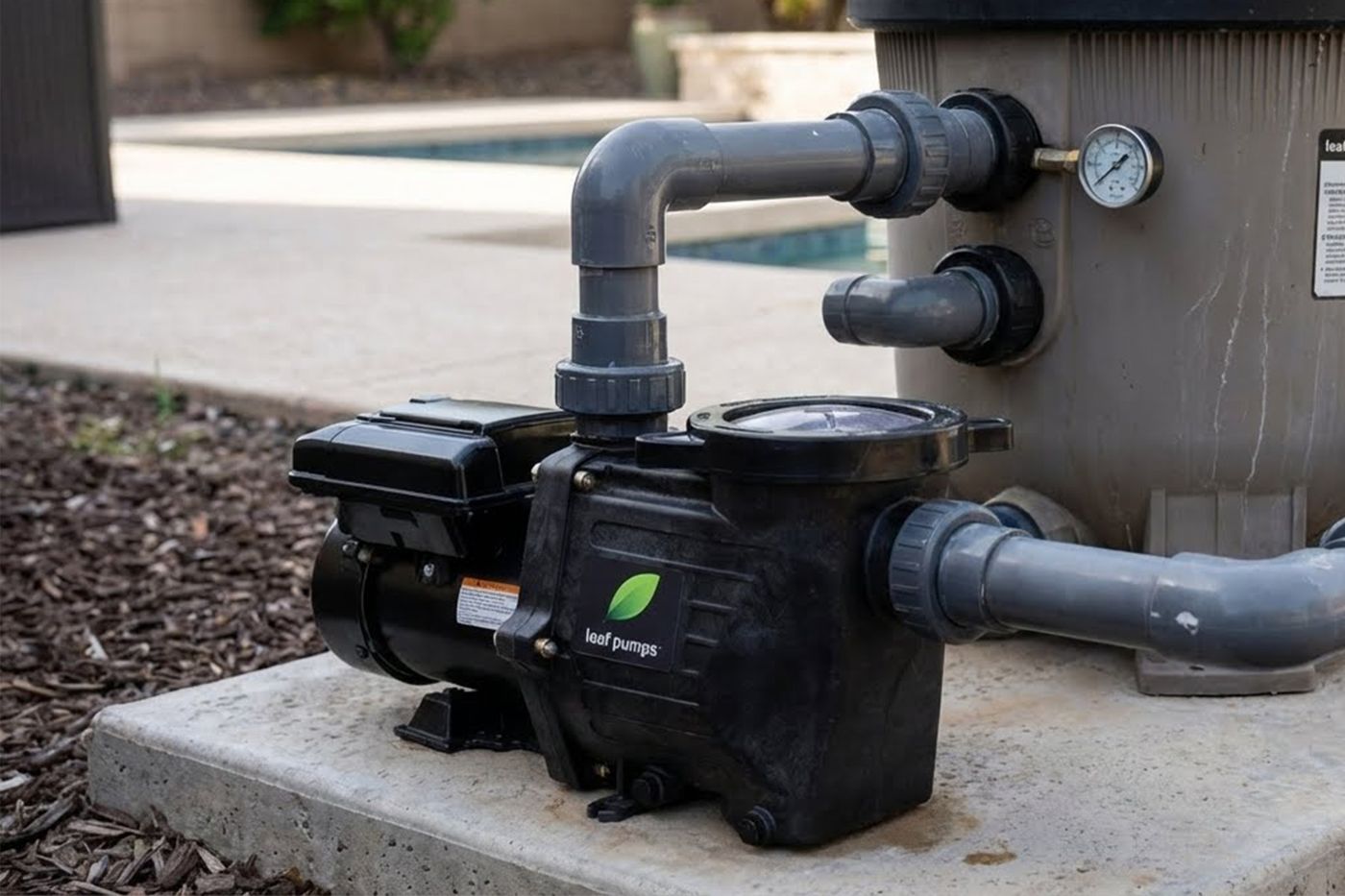
Sand filters typically max out around 50-75 GPM depending on size. DE filters have similar limits and actually filter best at lower flow rates. Cartridge filters vary widely but generally prefer moderate flow to maximize contact time with the filter media.
Your plumbing also matters. Standard 1.5" pool plumbing handles about 60 GPM effectively. 2" plumbing can manage around 100 GPM. If you have 1.5" pipes and a small filter, a massive pump will just fight against those restrictions—wasting energy and potentially causing damage.
This is another area where variable-speed pumps shine. You can program maximum RPM or flow limits to protect your filter system, then dial up higher speeds only when needed for vacuuming or running water features.
Brand Reliability: Stick with the Proven Names
Pool pumps are a significant investment, and you want one that'll last. In my experience, sticking with established brands—Hayward, Pentair, Leaf Pump, Jandy—generally means better build quality, easier parts availability, and actual warranty support when things go wrong.
The budget brands flooding Amazon and online marketplaces can work fine short-term, but I've seen enough failures and warranty headaches to be cautious. If you go that route, consider it a 2-3 year solution rather than a long-term investment. The money you save upfront might cost you more in replacements down the road.
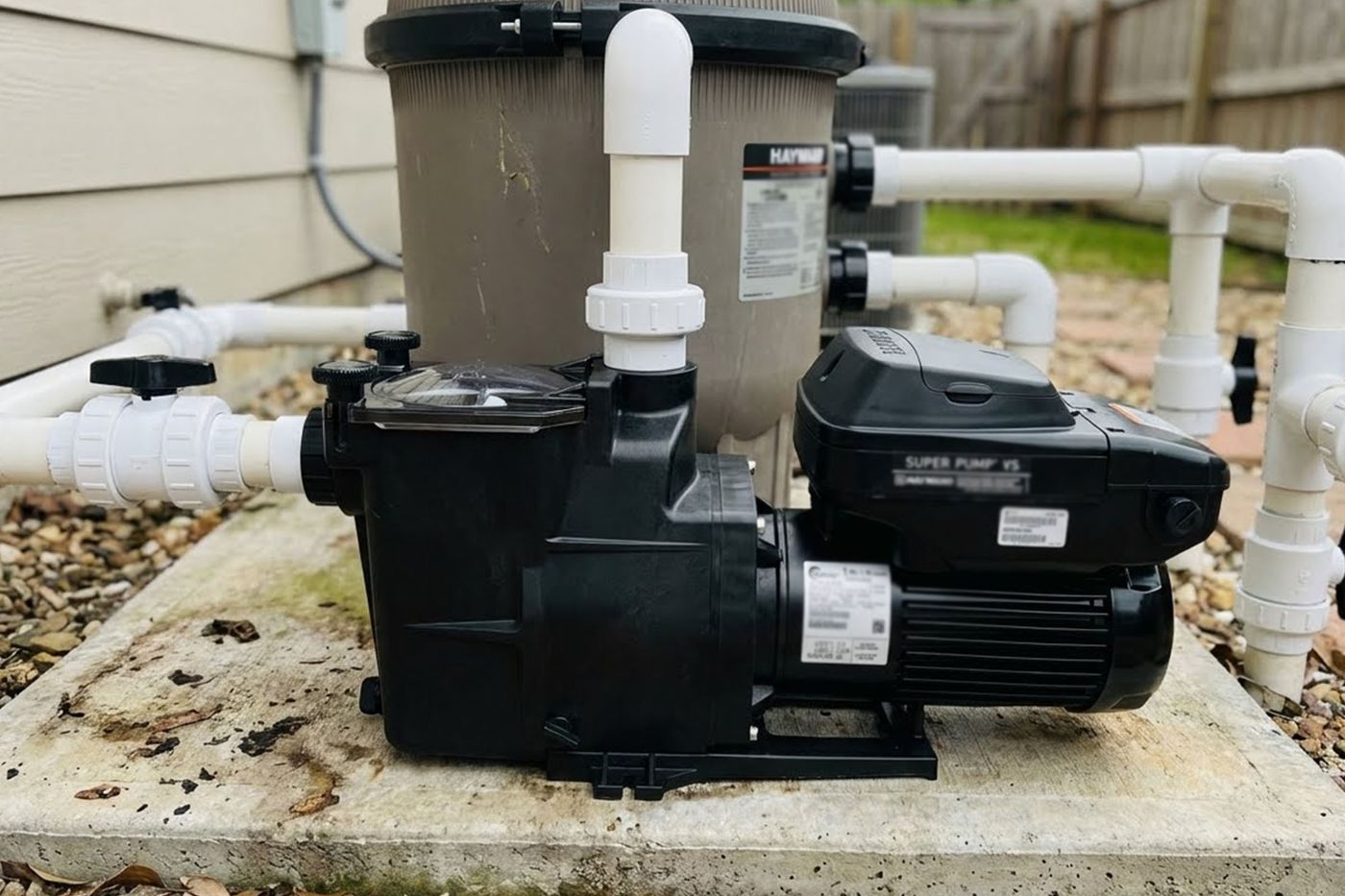
Best Overall Pool Pump: Hayward Super Pump Variable Speed (1.65 HP)
If I had to recommend one pump for most residential pool owners, this is it. Hayward took their legendary Super Pump—a model pool professionals have sworn by for decades—and modernized it with variable-speed technology. The result hits the sweet spot of efficiency, reliability, and ease of installation.
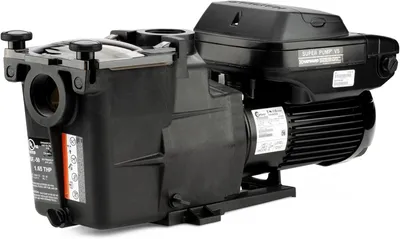
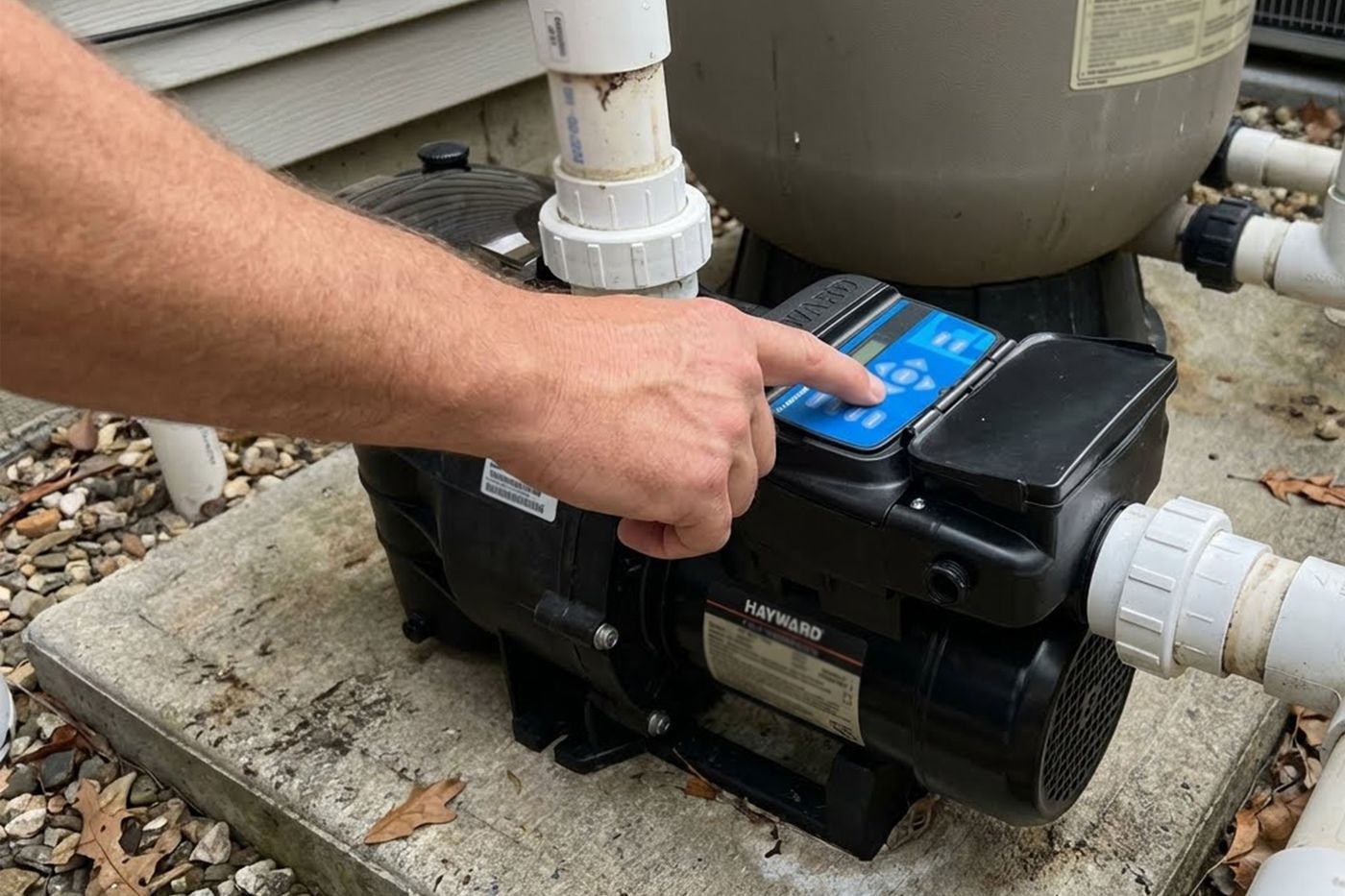
When I installed the Super Pump VS on a standard 16x32 inground pool, the improvement was immediate. At 2,400 RPM, it moved water just as well as the old single-speed, but much quieter and drawing about a third of the power. At 1,400 RPM for daily filtration, my watt meter showed roughly 200W—versus the ~1,500W the old pump drew constantly. That's real money back in your pocket every month.
What makes it great
The Super Pump VS is a true drop-in replacement for existing Super Pump setups. Same form factor, same 1.5" unions, no re-plumbing headaches. It has an intuitive digital interface on top for programming schedules and speeds—no separate timer or controller needed. It's dual-voltage (115V or 230V), which makes retrofit situations easier. And the build quality is classic Hayward: corrosion-proof thermoplastic housing, proven wet end design, solid motor.
Where it falls short
At 1.65 total HP, it may be undersized for very large pools (30,000+ gallons) or setups with multiple water features. It also lacks built-in WiFi or app control—you'd need the optional Hayward OmniHub add-on for smartphone integration.
Price: Around $750-$900 depending on retailer and promotions. Often eligible for utility rebates that can knock $200-$400 off the effective cost.
Best for: Mid-sized inground pools (10,000-25,000 gallons), especially if you're replacing an existing Super Pump or similar 1-1.5 HP single-speed and want an easy upgrade with major efficiency gains.
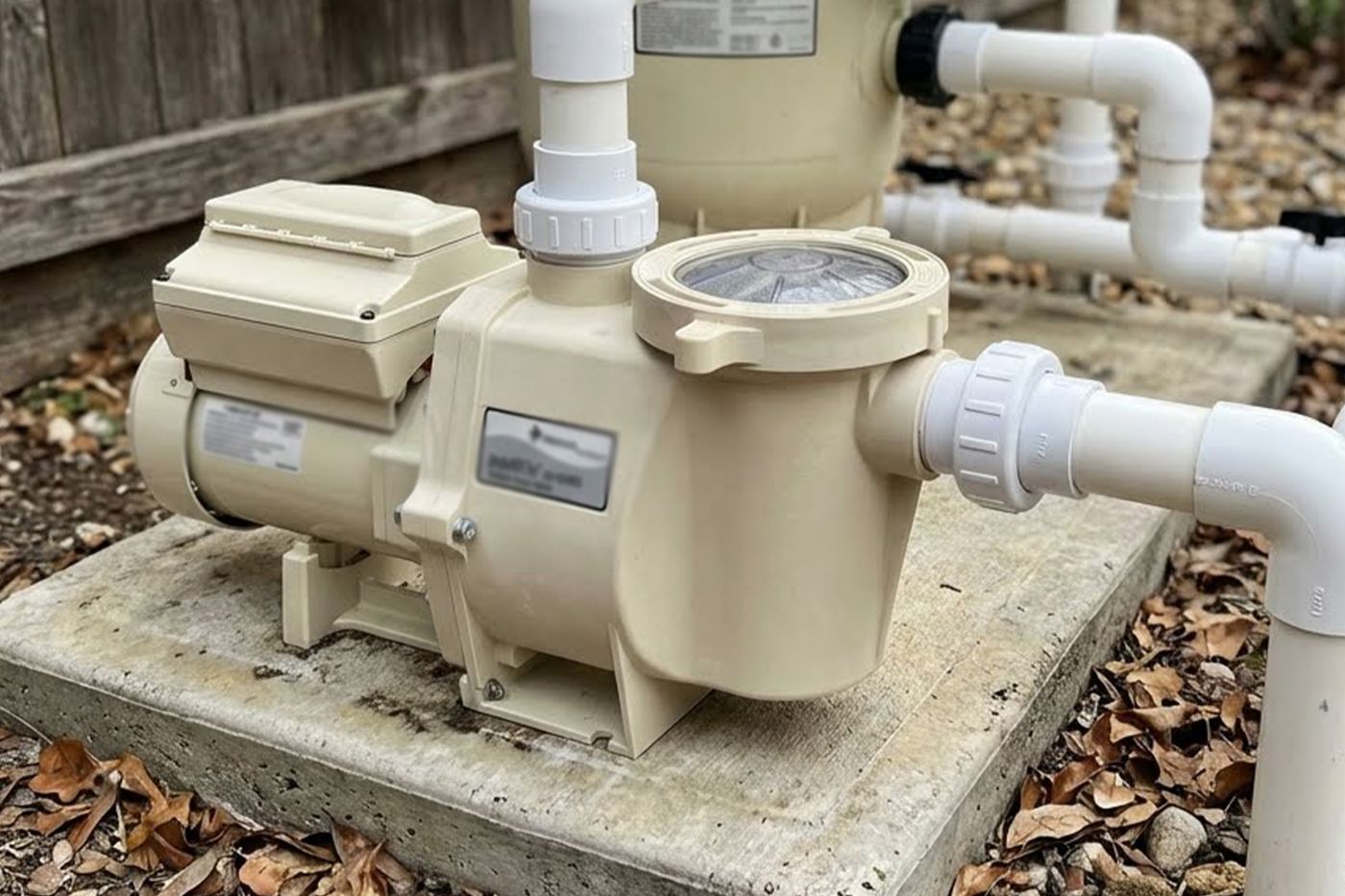
Best Premium Variable-Speed Pump: Pentair IntelliFlo VSF
If you have a large pool, complex setup, or simply want the most advanced pump technology available, the IntelliFlo VSF is the gold standard. It's like the luxury sports car of pool pumps—powerful, sophisticated, and packed with features that justify the premium price.
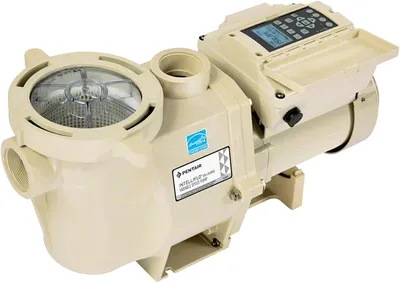
What sets the IntelliFlo apart is its "VSF" (Variable Speed and Flow) technology. Unlike standard VS pumps that just control speed, this one can maintain a constant flow rate regardless of changing conditions. Program it for 50 GPM, and it automatically adjusts speed if your filter gets dirty, valves turn, or anything else changes system resistance. That means your salt chlorine generator, heater, and other flow-dependent equipment always get exactly what they need.
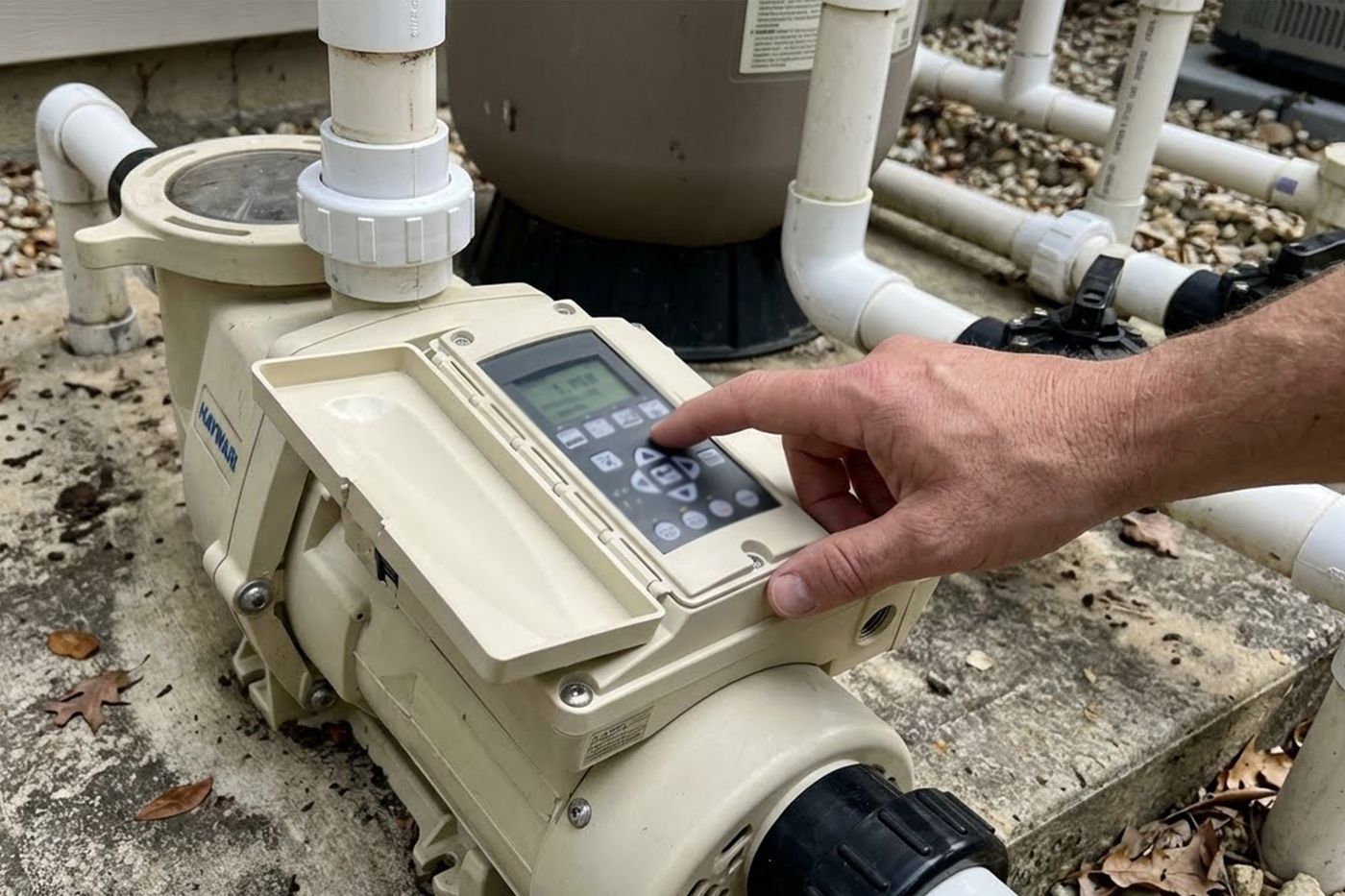
I installed an IntelliFlo VSF on a 25,000-gallon pool with a spa and deck jets. The intelligence of this pump immediately stood out. At 1,200 RPM, it draws only ~150W while moving about 30 GPM—enough to circulate the pool slowly and keep chemicals distributed. At that rate, running 24/7 in summer costs less than running a single-speed for 8 hours. And here's the thing: below 1,400 RPM, you literally have to put your ear next to it to tell it's running.
The TEFC (Totally Enclosed Fan Cooled) motor runs cooler and quieter than standard designs, which should translate to longer life. The latest models include WiFi connectivity for the Pentair Home app, letting you monitor and control the pump from anywhere. When I need to vacuum or run the spa jets, I can bump it to 3,000+ RPM from my phone—no walking out to the equipment pad.
Where it falls short
Price is the obvious one—expect to pay $1,200-$1,400. It's also a larger pump physically, so tight equipment pads might be challenging. And the electronics, while sophisticated, are more complex than a simple pump, meaning more potential failure points down the road.
Best for: Large pools (25,000+ gallons), pools with spas or water features, homeowners who want app control and smart home integration, or anyone who simply wants the best available technology.
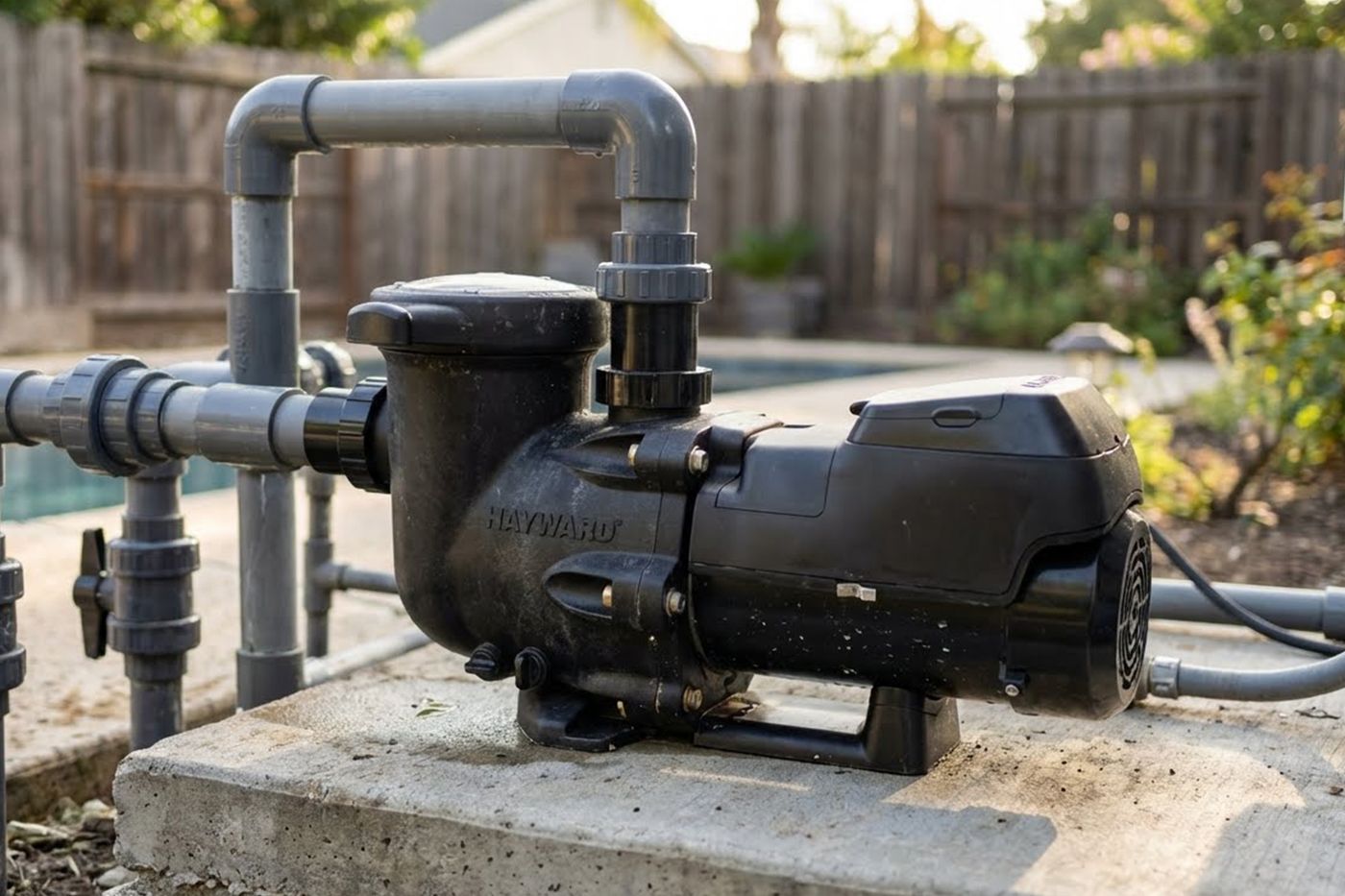
Alternative: Hayward TriStar VS 950
If you prefer Hayward or want the absolute highest efficiency rating, the TriStar VS is worth considering. It actually beats the IntelliFlo on paper with a WEF of 12.9—the highest in the industry. Hayward also claims it runs 30% quieter than their standard pumps, which matches what I've observed in installations.
The TriStar has a larger strainer basket than the IntelliFlo, which is nice if your pool collects lots of debris. The digital display rotates to accommodate different plumbing orientations. Performance-wise, it's essentially on par with the IntelliFlo—either will serve a large pool beautifully. Choose based on brand preference, existing equipment ecosystem, or whichever you find a better deal on.
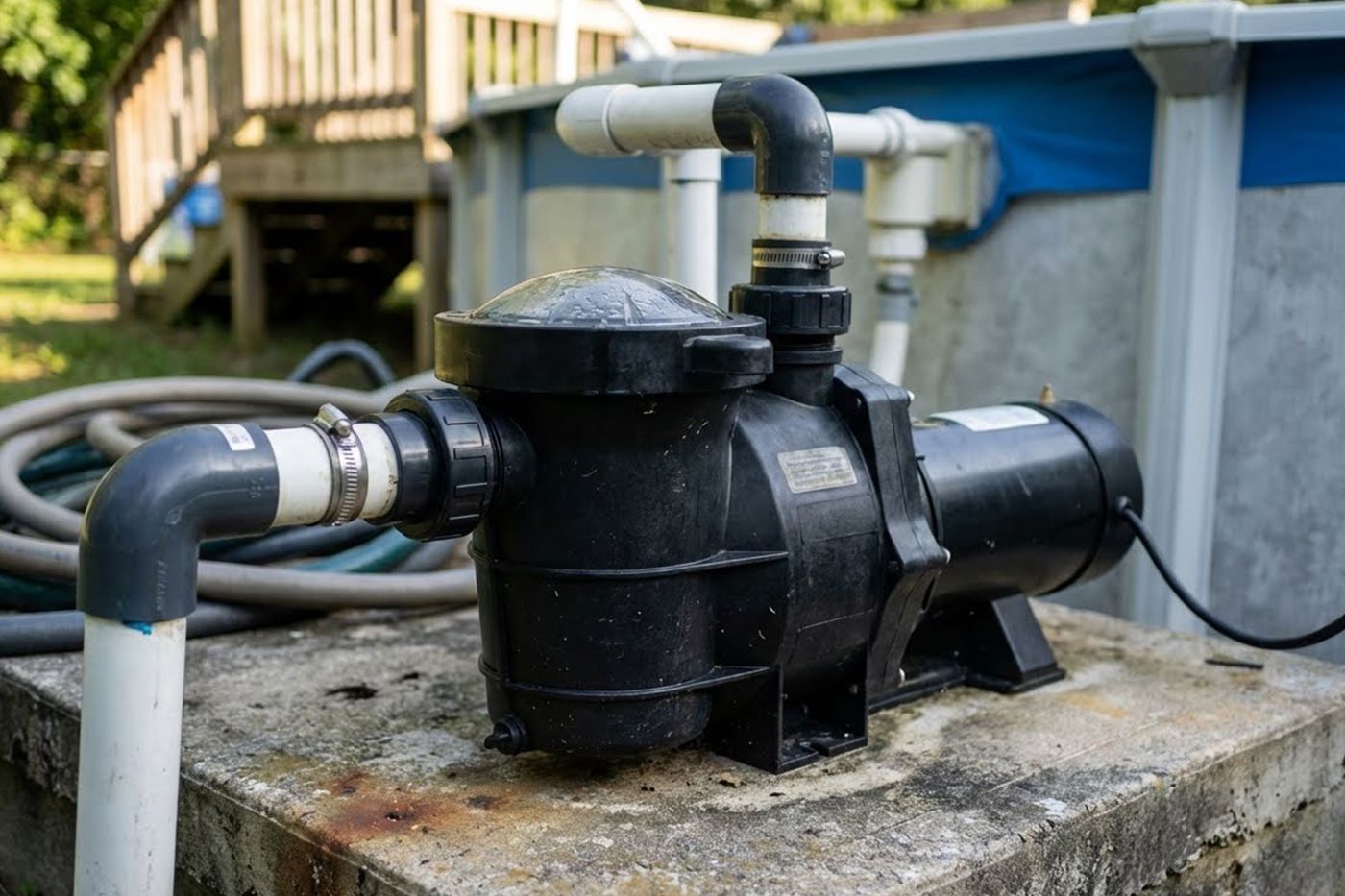
Best Budget Pool Pump for Above-Ground Pools: Blue Wave TidalWave NE6183 (1.5 HP 2-Speed)
Not everyone can drop $800+ on a pool pump, and I get it. If you need something that works without breaking the bank, the Blue Wave TidalWave is my pick. At around $200-$250, it gives you two-speed functionality—which is genuinely rare at this price point.
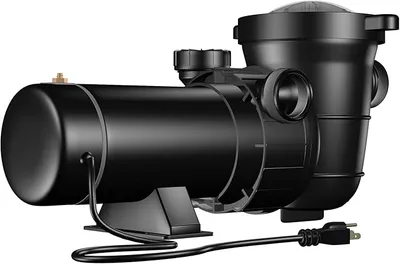
I installed one on a friend's 24' above-ground pool and was pleasantly surprised. It's a two-speed model, meaning you can flip a switch to run it on Low (~1,720 RPM) for everyday circulation, then kick to High (3,450 RPM) when vacuuming or after a pool party. That simple capability cuts energy costs significantly compared to a single-speed running full blast all the time.
It comes plug-and-play with a 6-ft cord for 115V outlets—no electrician needed for most above-ground setups. The dual discharge ports let you orient the plumbing vertically or horizontally to fit different filter configurations. It even meets the new energy codes requiring multi-speed pumps in many states.
The reality check
This is an above-ground pool pump, not designed for inground installations. Build quality is decent but not premium—expect a few years of service rather than a decade. If something fails, replacement parts aren't as readily available as with Hayward or Pentair. Think of it as a solid workhorse for budget-conscious above-ground pool owners, not a long-term investment.
Best for: Above-ground pool owners who need a reliable pump replacement without spending a fortune. Especially good for pools in the 10,000-15,000 gallon range where 1.5 HP provides ample flow.
Best Above-Ground Pool Pump and Filter Combos
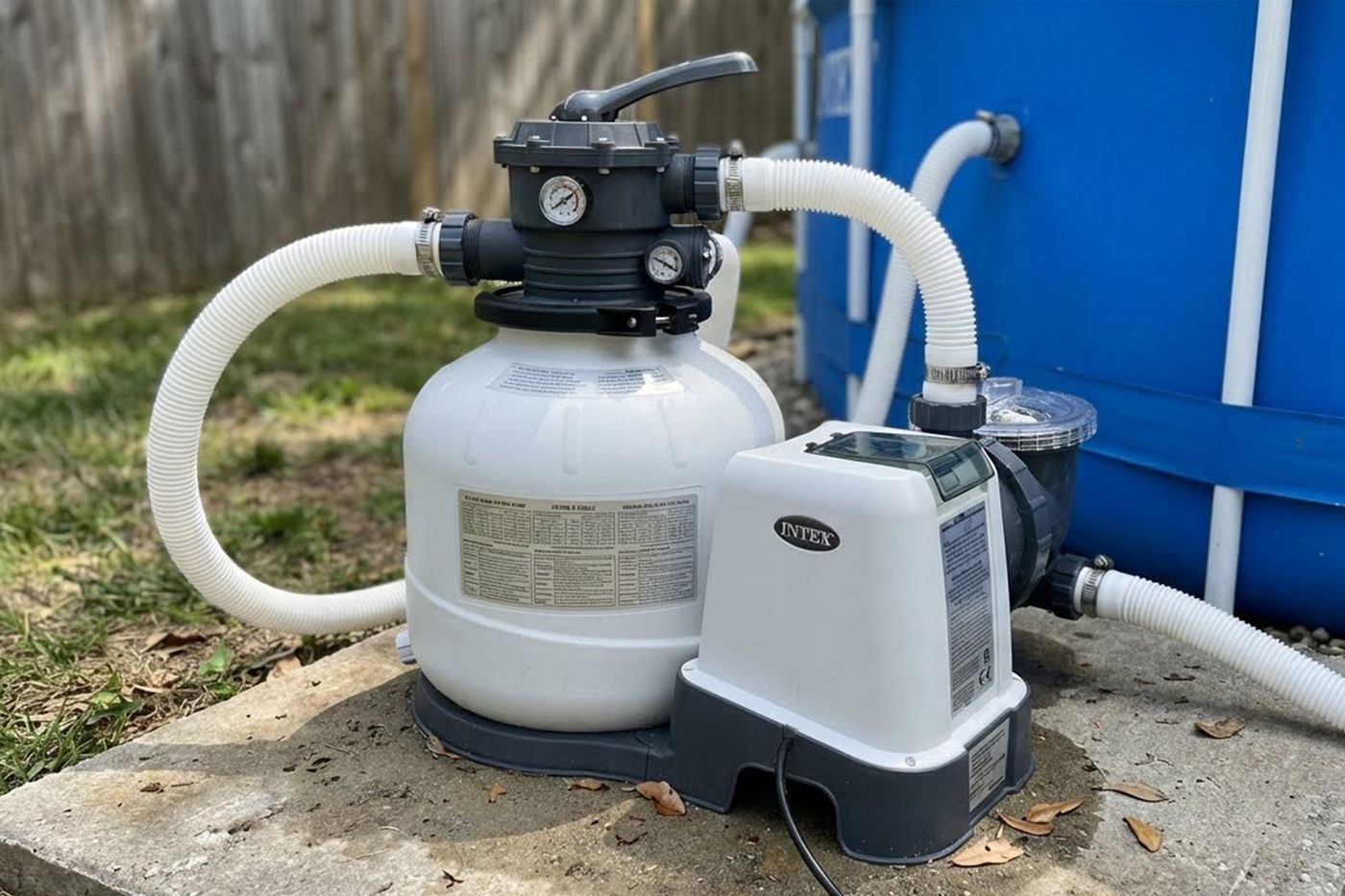
Above-ground pools have different needs than inground setups. They typically use integrated pump-and-filter systems, and many come with underpowered equipment from the factory. Upgrading to a proper pump/filter combo can dramatically improve water quality and reduce maintenance headaches.
Best Sand Filter Combo: Intex Krystal Clear Sand Filter Pump (2800-3000 GPH)
For most above-ground pool owners, this is my top recommendation. The Intex 16" Sand Filter Pump pairs a properly-sized sand filter with a pump powerful enough for pools up to about 17,000-19,000 gallons. It's the setup I've seen work reliably across dozens of installations.
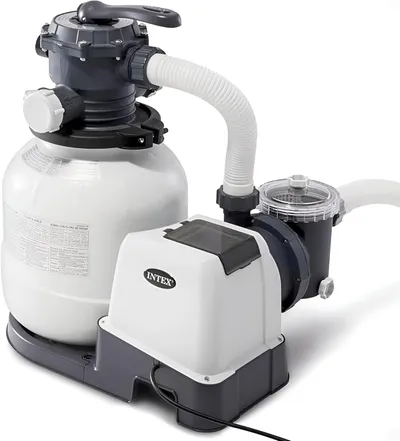
Sand filters are the sweet spot for above-ground pools because maintenance is minimal. Instead of cleaning or replacing cartridges every few days during peak season, you just backwash occasionally when pressure rises—maybe every 2-4 weeks. The sand itself lasts 5+ years before needing replacement. I used one on an 18x33' oval (~15,000 gallons) and it kept up beautifully even with heavy use.
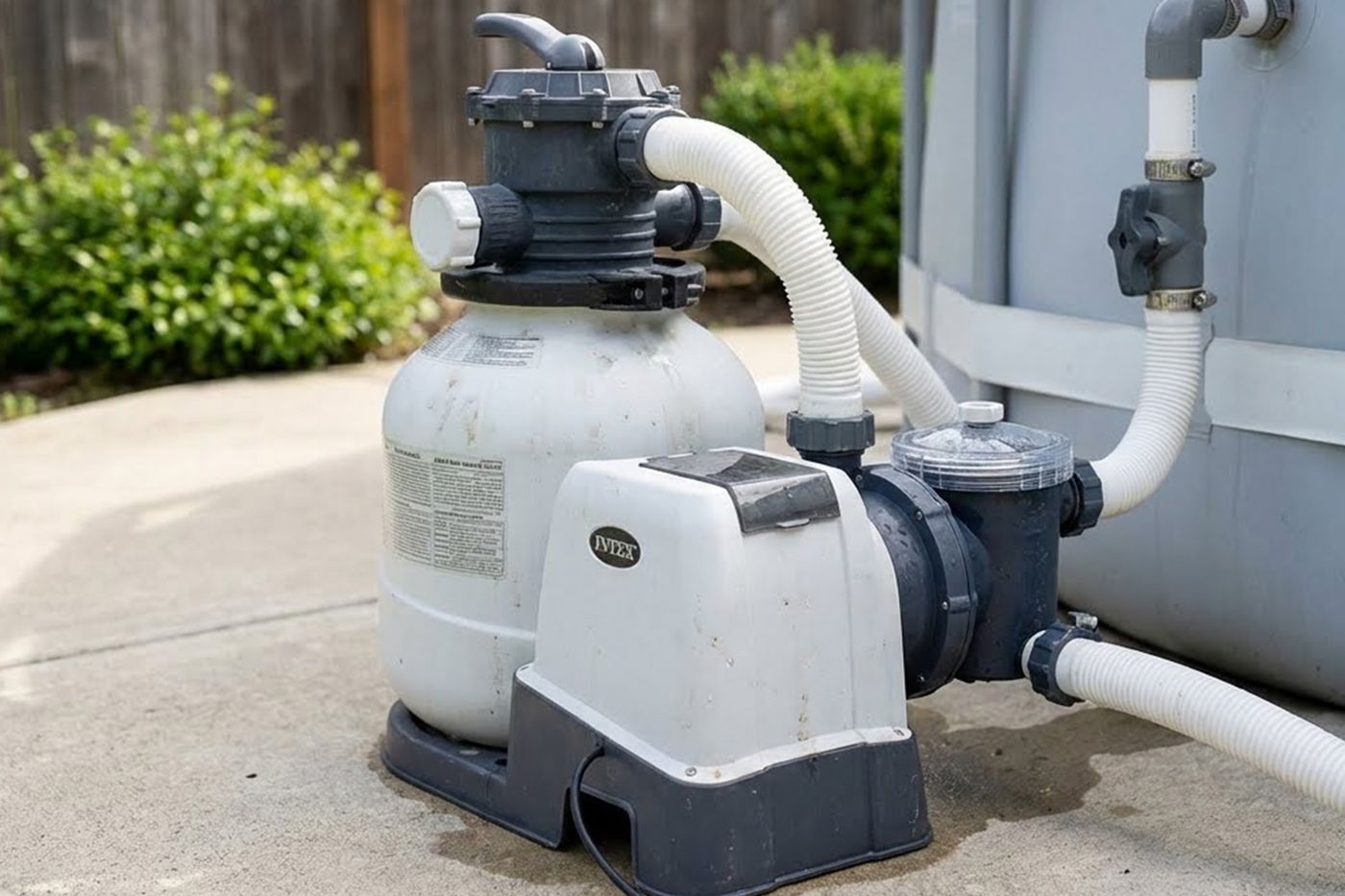
The 6-function valve handles all your needs: filter, backwash, rinse, recirculate, waste, and closed positions. It includes a 24-hour timer for automatic daily cycles. Setup is straightforward—you're basically connecting two hoses and filling with sand. Price runs around $300-$400 depending on model and retailer.
Pro tip: Add a small amount of DE powder (about 1/4 cup) through the skimmer occasionally. The sand traps it, essentially boosting filtration to near-DE quality. My water clarity improved noticeably with this trick.
Alternative: Intex Cartridge Filter Pumps (1500-2500 GPH)
For smaller pools or tighter budgets, the Intex cartridge filter pumps work fine. The 2500 GPH model is the sweet spot for most temporary pools (Easy Set, metal frame pools up to 18' round). They're cheaper ($100-$150), simpler to set up, and don't require backwashing.
The trade-off is maintenance. You'll need to clean cartridges every few days during heavy use and replace them every 2-4 weeks in peak season. For some people that's fine. For others, it gets old fast. If you're running a pool for more than a season or two, the sand filter is worth the upgrade in my experience.
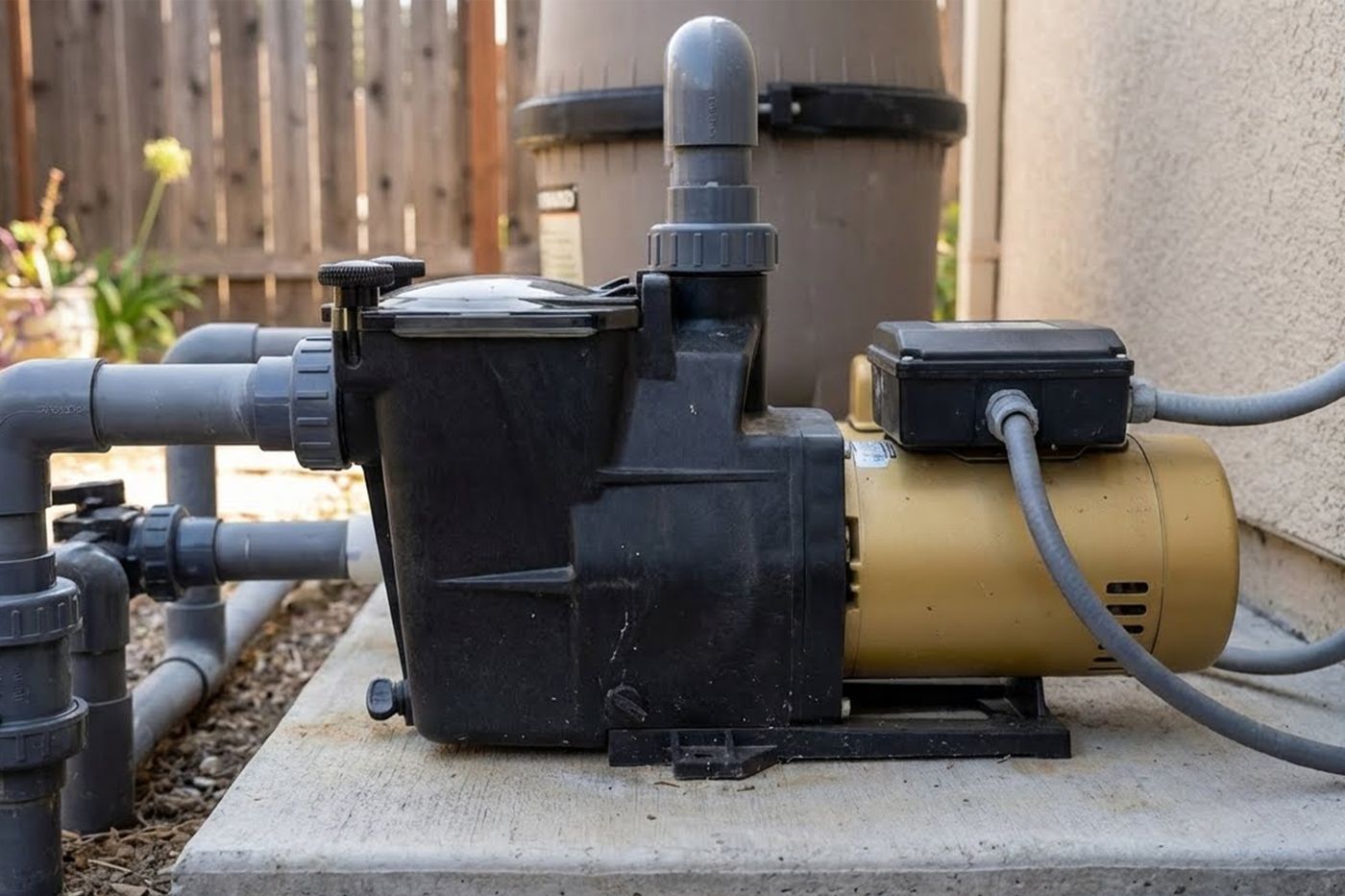
Best Single-Speed Inground Pump: Hayward Super Pump (1.5 HP)
I know I've been pushing variable-speed pumps hard, and for good reason. But I'd be doing you a disservice not to mention the classic single-speed Super Pump for situations where it still makes sense.
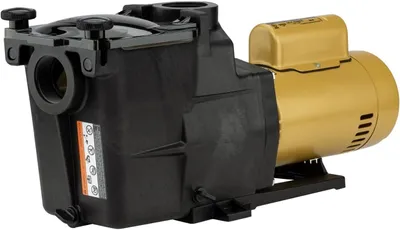
The Hayward Super Pump has been around forever and earned its reputation for a reason. It's simple, reliable, and built to last. I've personally seen units run 15+ years with nothing more than occasional seal replacements. The 1.5 HP version delivers around 80 GPM at standard head pressure—plenty for most pools.
When does a single-speed still make sense?
If you live somewhere without efficiency regulations, have very low electricity rates, only run the pump a few hours daily, or need a secondary pump for a waterfall that runs infrequently. Some older automation systems also don't play nice with VS pumps. And honestly, if budget is extremely tight, a $400-500 single-speed that lasts 10+ years beats a $200 off-brand that dies in two.
Just understand the trade-off: you'll pay more in electricity over time, and these pumps are loud compared to a VS running at low speed. If neither of those concerns you, the Super Pump remains a workhorse that won't let you down.
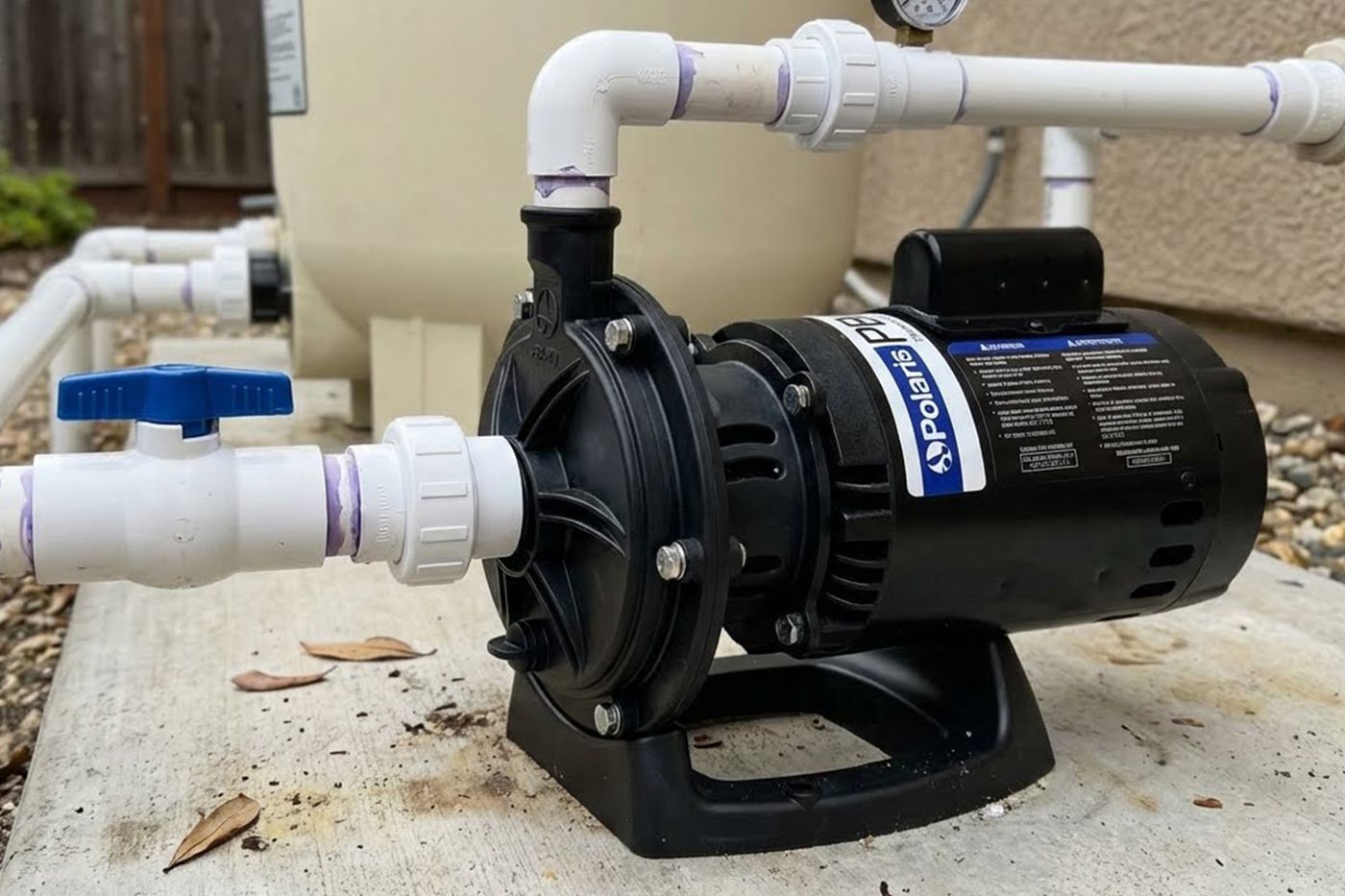
Best Booster Pump: Polaris PB4-60
If you run a pressure-side cleaner like the Polaris 280, 380, or similar, you need a booster pump to power it. The Polaris PB4-60 is the industry standard, and there's good reason it's been the go-to choice for decades.
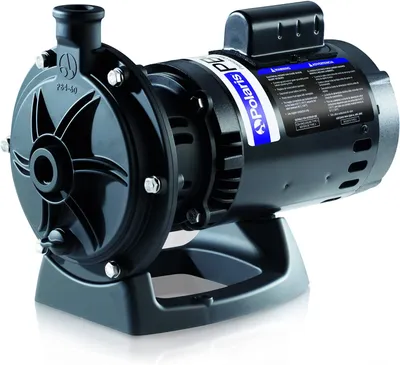
It's a 3/4 HP pump specifically designed to deliver the ~50 PSI these cleaners need to operate properly. The motor is efficient and relatively quiet for a booster. I've seen these run 7-10 years without issues. Installation is straightforward—tap into a return line, run the dedicated line to the cleaner, wire it to run with your main pump.
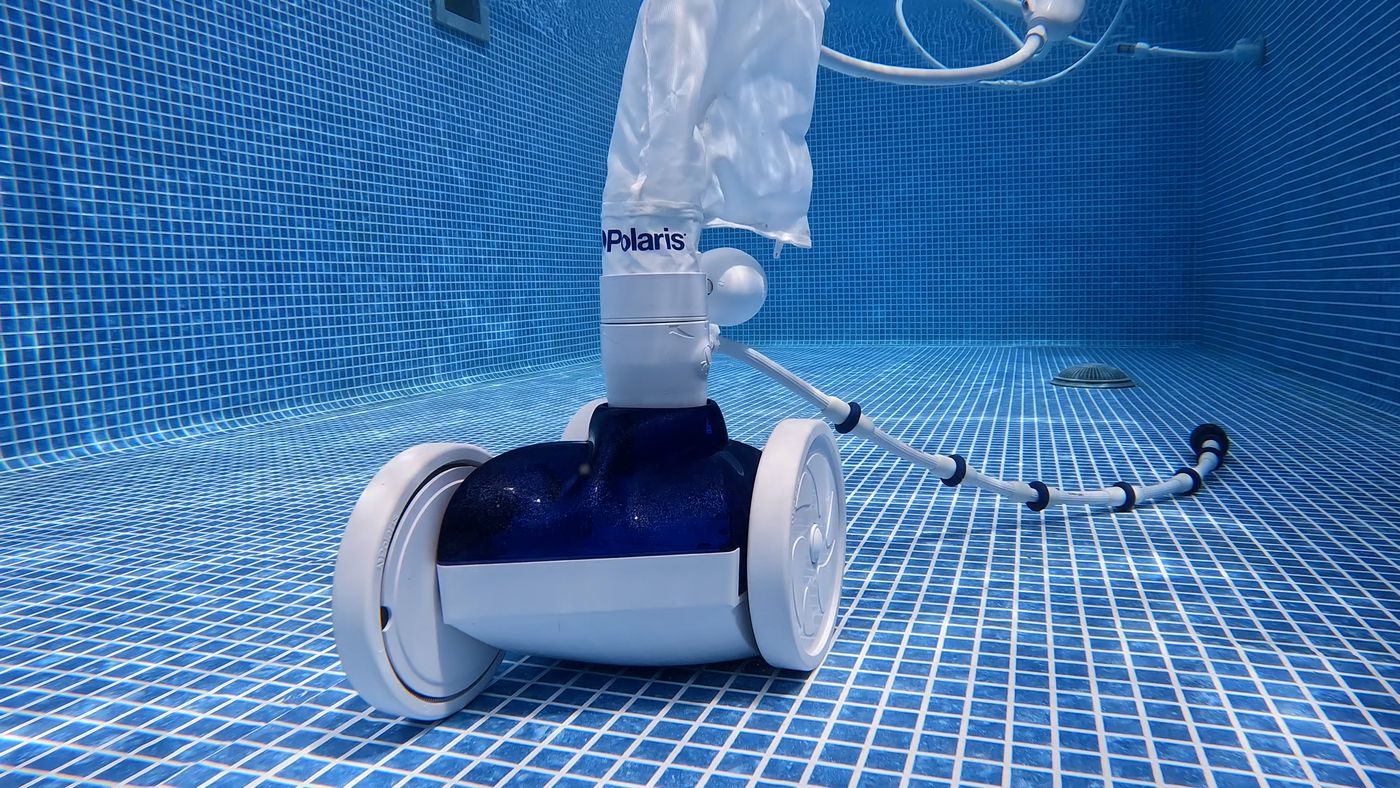
That said, here's my take: If you're shopping for a new pool cleaner and don't already have a pressure line plumbed in, I'd strongly recommend considering a robotic cleaner instead. In my testing, modern robots like the Dolphin Premier or Sigma clean just as effectively as pressure-side cleaners—often better. They're self-contained, don't require a booster pump, use less energy overall, and offer true automation with weekly timers. You'd skip the booster pump entirely and likely save money in both equipment and operating costs.
But if you already have a pressure cleaner setup and just need a reliable booster, the Polaris PB4-60 is the safe choice. The Pentair 3/4 HP booster is essentially equivalent if you prefer that brand.
Quietest Pool Pumps: When Noise Matters
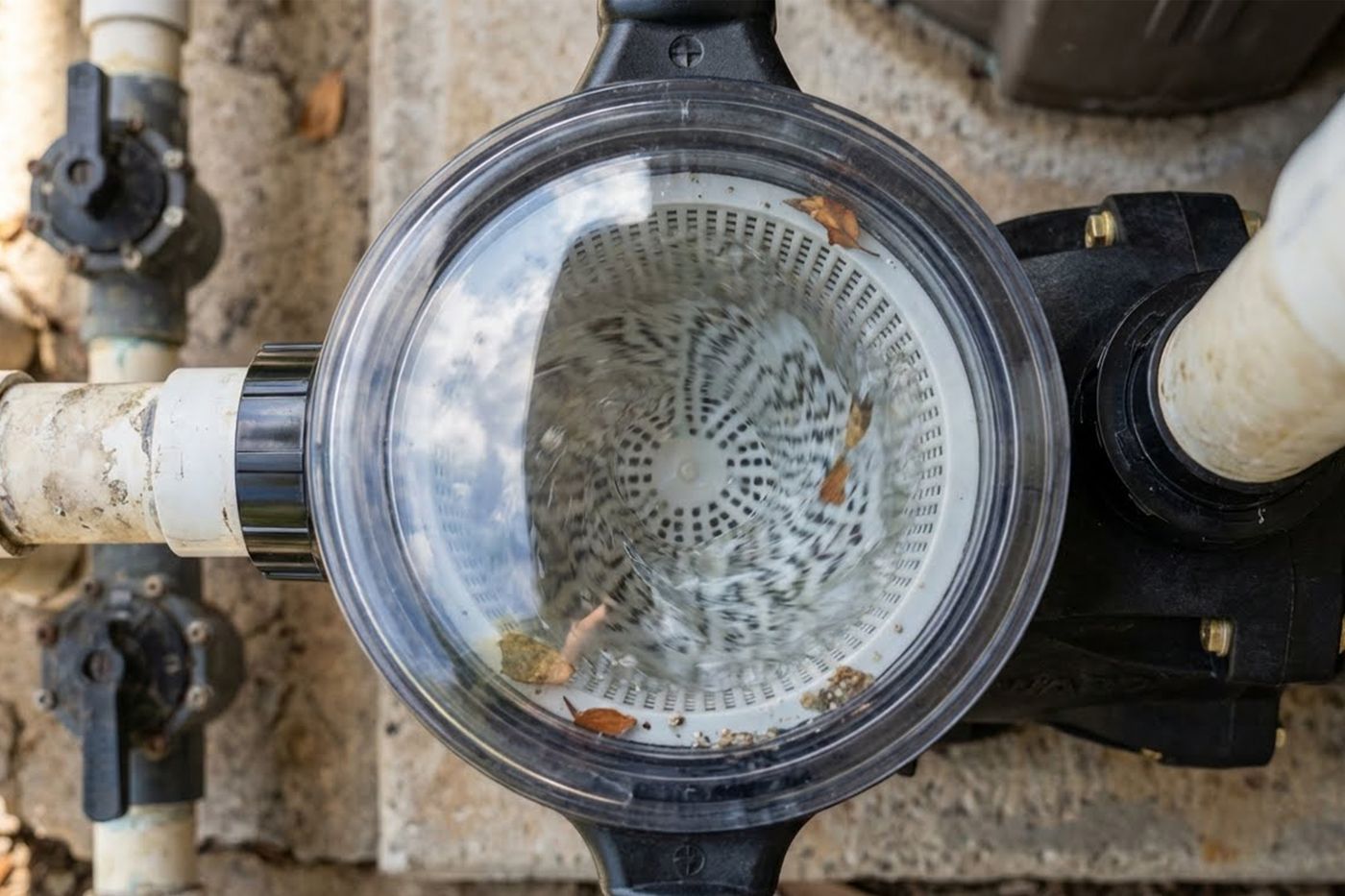
If your equipment pad is near a bedroom, patio, or property line, pump noise becomes a real quality-of-life issue. The good news: modern variable-speed pumps are dramatically quieter than old single-speeds, especially at lower RPMs.
The Pentair IntelliFlo VSF is the quietest pump I've tested. Below 1,400 RPM, it's essentially silent—around 45 dB, about the level of a quiet refrigerator. Even at moderate speeds, it's more of a gentle whoosh than a mechanical drone. The TEFC motor design and solid construction minimize vibration transfer.
The Hayward TriStar VS is comparably quiet. Hayward specifically engineered it for noise reduction, claiming 30% quieter operation than their standard pumps. In real-world use, I'd call them essentially tied—both are whisper-quiet at low speed and acceptable at high speed.
The key insight: Any quality VS pump running at 1,200-1,400 RPM will be very quiet. That's one of the underrated benefits of variable-speed technology—not just energy savings, but reclaiming peace and quiet in your backyard.
Pool Pump Maintenance: Making Your Investment Last
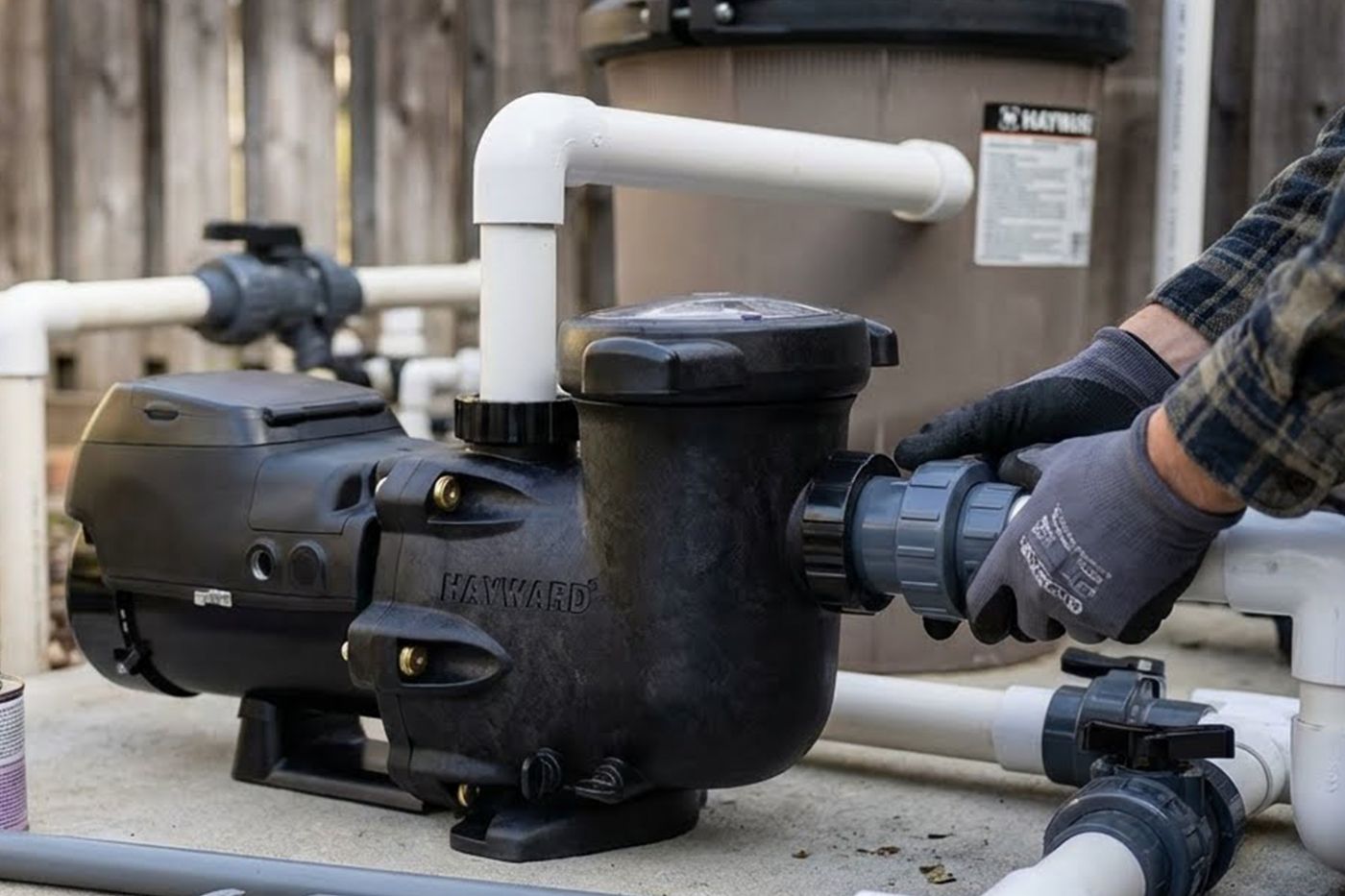
A well-maintained pool pump can last 10-15 years. Here's how to get the most life out of yours:
Clean the strainer basket weekly (or more during heavy debris season). A clogged basket starves the pump of water, causing strain and potential damage.
Check for leaks regularly. Water dripping from the seal plate (between pump and motor) means the shaft seal needs replacement. Catch it early before water damages the motor bearings.
Keep the pump lid O-ring lubed with silicone-based lubricant. This prevents air leaks that reduce efficiency and can cause priming problems.
Never run the pump dry. Even a few minutes without water can destroy seals and bearings. Always verify the pump is primed before walking away.
Winterize properly in cold climates. Drain all water from the pump (use the drain plugs) to prevent freeze damage.
Listen for unusual sounds. Grinding or screeching indicates bearing wear. Address it before complete failure.
Frequently Asked Questions
How long should I run my pool pump each day?
The goal is to turn over your pool's entire volume at least once every 24 hours—ideally once every 8-12 hours during swim season. For a 15,000-gallon pool with a pump moving 50 GPM, that's about 5-6 hours minimum. Most pool owners run 8-10 hours daily during summer, less in off-season. With a variable-speed pump, you can run longer at lower speed, which actually improves filtration and chemical distribution while using less energy than shorter runs at high speed.
Can I oversize my pool pump for better cleaning?
No—oversizing causes more problems than it solves. Too much flow can damage filters, stress plumbing, reduce filtration effectiveness (water moves too fast to filter properly), and waste energy. The right pump moves water efficiently through your system, not forcefully. If you feel you need more circulation, look at your plumbing for restrictions, clean your filter, or address the actual problem rather than throwing horsepower at it.
Are variable-speed pumps worth the extra cost?
In my experience, absolutely yes for most pool owners. The typical energy savings of 80-90% compared to single-speed pumps means you'll recoup the price difference within 1-2 seasons through lower electric bills. Add in rebates from many utilities ($200-$400), quieter operation, longer equipment life from reduced strain, and the ability to optimize flow for different tasks—it's not even a close call anymore. The only exceptions might be very small pools, extremely low electricity rates, or pumps that run very few hours.
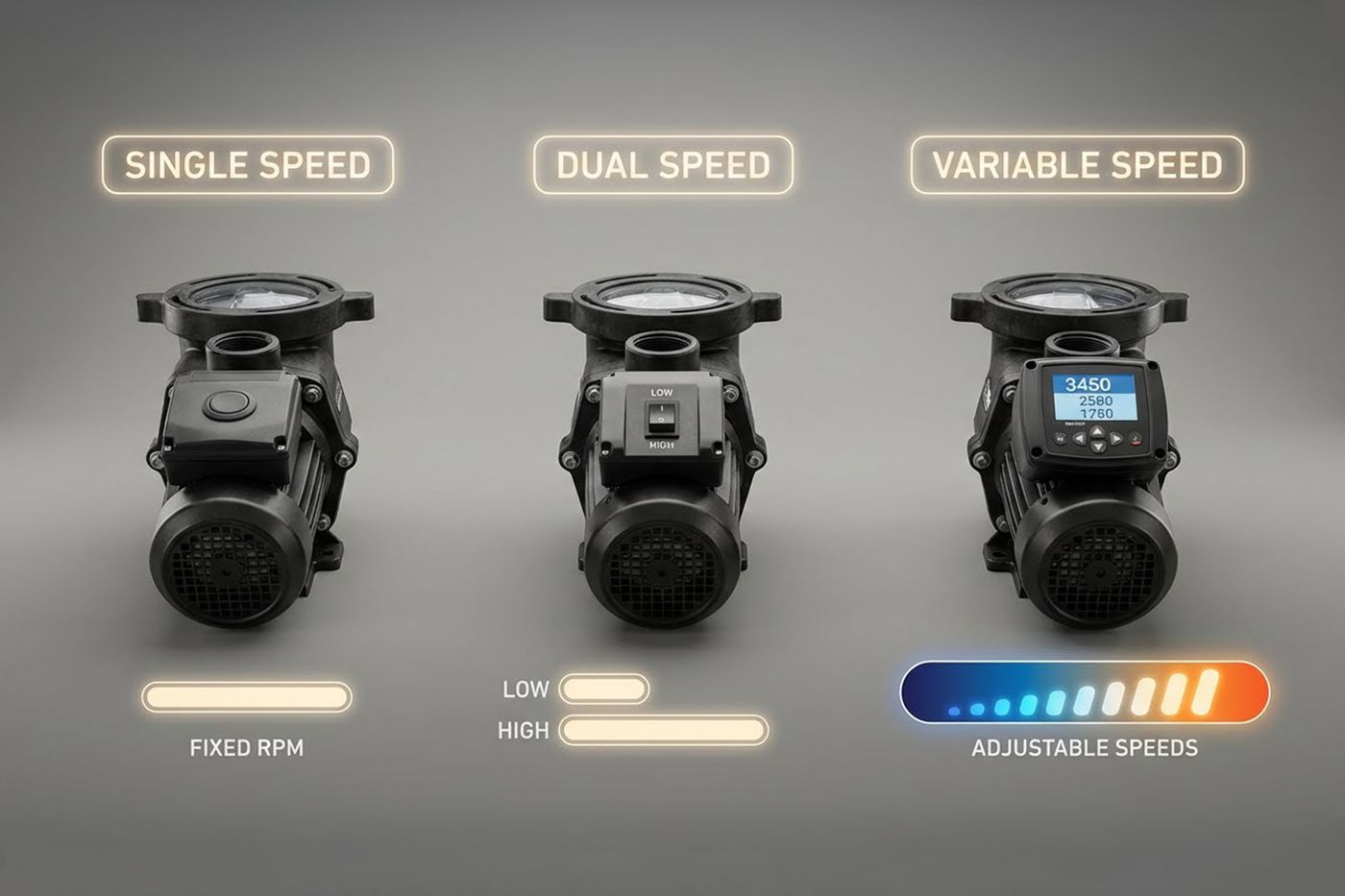
What's the difference between single-speed, dual-speed, and variable-speed?
Single-speed pumps run at one fixed speed (full blast) all the time. Simple and cheap, but energy hogs. Dual-speed pumps offer high and low settings—use low for daily filtration, high for vacuuming. They save some energy but lack flexibility. Variable-speed pumps let you dial in any speed, offering maximum efficiency and control. You can run at 1,200 RPM for gentle overnight circulation, 2,400 RPM for normal filtration, and 3,450 RPM when you need full power. The energy savings come from running at lower speeds most of the time.
How do I know what size pump I need?
Start with your pool volume and desired turnover time. Divide pool gallons by turnover hours, then by 60 to get required GPM. For a 20,000-gallon pool with 8-hour turnover: 20,000 ÷ 8 ÷ 60 = 42 GPM needed. Then check pump curves to find a model that delivers that flow at your system's head pressure (typically 40-60 feet for residential pools). For most standard inground pools, 1-1.5 HP handles it. Larger pools or those with features may need 2+ HP. When in doubt, a quality 1.5 HP variable-speed gives you flexibility to dial in exactly what you need.
How long do pool pumps last?
A quality pool pump typically lasts 8-12 years with proper maintenance. I've seen well-maintained Hayward Super Pumps go 15+ years. Variable-speed pumps have more electronics that could potentially fail, but the motors often last longer because they're not constantly running at full strain. The most common failures are shaft seals and motor bearings—both repairable without replacing the whole pump. Factors that shorten lifespan include running dry, chemical exposure, salt corrosion (in saltwater pools), and coastal salt air.
Should I repair or replace my failing pump?
It depends on the pump's age, what failed, and whether it's single or variable-speed. If your 8-year-old single-speed needs a new motor, that's often a good time to upgrade to a VS pump—you'll save money long-term through efficiency gains. If your 3-year-old VS pump just needs a new seal, definitely repair it. General rule: if repair cost exceeds 50% of replacement cost on an older pump, upgrade. If it's a newer pump or minor repair, fix it.
Can I install a pool pump myself?
Above-ground pump installations are typically DIY-friendly—most are plug-and-play with 110V cords. Inground pumps get more complex. The plumbing itself isn't difficult if you're comfortable with PVC, but the electrical work (especially 230V wiring for larger pumps) should be done by a licensed electrician in most jurisdictions. Many warranties also require professional installation. If you're handy and understand basic plumbing, replacing an inground pump with a similar model is manageable—just don't skip the electrical safety aspects.
My Final Verdict
Go variable-speed unless you have a specific reason not to. The energy savings are real, the noise reduction is dramatic, and you get actual control over your system. The higher upfront cost pays for itself within a couple seasons through electricity savings alone.
For most residential inground pools, the Hayward Super Pump VS is my top recommendation—it combines efficiency, reliability, and easy installation in a package that fits the majority of setups. For larger pools or those wanting the absolute best technology, the Pentair IntelliFlo VSF is worth the premium. For above-ground pools, grab an Intex Sand Filter combo and enjoy low-maintenance filtration all season.
Don't overthink horsepower—match it to your pool size and filter capacity. Don't fall for marketing gimmicks. And for the love of your electric bill, stop running that old single-speed 24/7 if you have other options.
Want to read more? Check out all of our pool pump reviews for in-depth breakdowns of individual pumps we've tested. Questions about which pump fits your specific setup? Drop a comment below or head over to ThePoolNerd.com/deals where I post the latest deals on pool equipment. Until next time—enjoy that pool.



Comments
Loading comments…