Swimming Pools: Plan It, Price It, Build the Right One
Most people start with a builder's quote and work backward. Start instead with what a pool really costs to build and own, pick the type that fits your yard and budget, and bring your own plan to the first meeting. We were quoted $100,000+ for a gunite pool, built a factory-built pool for about a third of that, and test pool gear in it year-round. Everything below comes from that.
Four Guides to Read Before You Call a Builder
Know the real numbers, know what shape fits your yard, and see how our own pool came together. That order saves the most money.

How Much Does a Pool Really Cost?
Gunite, fiberglass, vinyl, and factory-built pools priced line by line, plus what each costs to own over ten years.
Read the breakdown →
Pool Designs
29 shapes and layouts with the space, cost, and upkeep tradeoffs called out, each one openable in the 2D designer.
Browse designs →
Ecopool Container Pool Review
The pool we built and test in: what it cost, how it went from delivery to swimming in days, and what we would change.
Read the review →
Best Above-Ground Pools
From a $500 soft-sided setup to a $40,000 steel pool with ledges and windows, ranked after real use.
See the picks →What a Pool Costs to Build and Own
The raw structure of a typical gunite pool is roughly $7,000 to $10,000 in concrete, rebar, and plaster. The finished pool runs $75,000 to $150,000 because you pay for the process: excavation, subcontractor markups, and change orders. The table sums up our cost breakdown. The ten-year column adds heating, chemicals, and the resurfacing or liner swaps each type needs.
| Pool type | Installed price | Time to swimming | 10-year cost of ownership | What to know |
|---|---|---|---|---|
| Gunite (concrete)Custom inground | $75,000–$150,000+ | 6–9 months | $115,000–$165,000+ | Any shape you can draw. Plaster needs a $6,000–$25,000 resurface every 7–15 years and the shell has almost no insulation. |
| Fiberglass shellInground | $70,000–$95,000 | Several weeks | $85,000–$120,000 | Faster than gunite, but $5,000–$10,000 goes to shipping and crane fees, and you choose from the maker's molds (about 16 ft wide max). |
| Vinyl linerInground | $40,000–$60,000 | Several weeks | $60,000–$90,000 | Lowest entry price. Liners last 5–9 years and cost $3,000–$7,000 to replace, and a dog's claws or a dropped pole can puncture one. |
| Factory-built steelEcopool S-Series, inground or above | $25,000–$55,000 + site work | 1–2 weeks | $55,000–$100,000 | Insulated walls and floor, sizes from 8×8 to 40×40 ft, with benches, ledges, and deep ends as options. No replastering, no liner. |
| Container poolEcopool, inground or above | $30,000–$45,000 + install | 1–3 days after delivery | $50,000–$80,000 | 8×20 ft standard, up to 16×40. Craned onto a pad and plumbed the same day. It moves with you if you sell the house. |
National ballparks from our breakdown. In high-cost markets like Austin, a standard gunite build runs $100,000 to $200,000. Small-format pools (plunge $30,000–$60,000, cocktail $22,000–$35,000 installed) and above-ground pools ($500 to about $40,000) are covered in the pool types below.
Which Pool Fits Your Yard and Budget?
The build method decides most of the price, the timeline, and the upkeep. Match the pool to the yard and the way you will actually use it, then read the full guide for that type.
Quick fit guide
- Small backyard: a plunge pool or cocktail pool gives real swimming depth in a footprint a hot tub would envy.
- Want to swim this season: a container pool installs in days, and an above-ground pool in a weekend.
- Lowest lifetime cost: factory-built steel, insulated and with no replastering or liner swaps.
- Any shape you can draw: gunite, the most flexible and the most expensive to build and own.
- A view worth framing: an infinity edge, with a serious premium for the engineering.
- Less weekly dosing: a saltwater pool, where a salt cell makes the chlorine for you.

Plunge Pools
Compact and deep, $30,000–$60,000 installed

Container Pools
Swimming 1–3 days after delivery

Cocktail Pools
Small yards, $22,000–$35,000 installed
Above-Ground Pools
$500 to $40,000, no excavation

Infinity Pools
Vanishing edge, premium engineering

Saltwater Pools
How salt cells work and what they cost

Hot Tubs
Year-round soak for every budget
Cold Plunges
Tubs and chillers we would buy

Inflatable Pools
The cheapest way to cool off
Design and Plan It Before You Get Quotes
Three free tools, no account needed. Start with inspiration, configure your own concept in 2D, and compare it to example plans with equipment, plumbing, and deck notes. The builder conversation then starts from your brief instead of theirs.
Pool Designs
Compare 29 shapes, sizes, and styles with the space and upkeep tradeoffs shown for each.
Browse 29 designs →
Pool Designer
Set the dimensions, features, finishes, and equipment, drag items around the plan, and save a summary for builders.
Open the 2D designer →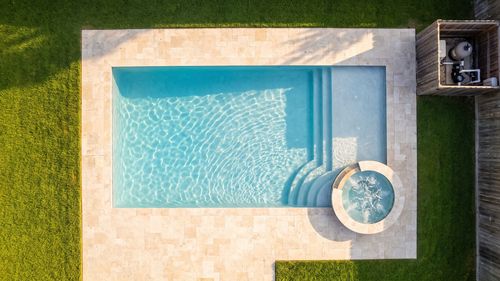
Pool Plans
Ten worked examples with layouts, equipment lists, deck notes, and the questions to ask a builder.
Compare 10 plans →The Equipment Every Pool Needs
Every pool runs on the same core: a pump, a filter, a sanitizer, and something to clean it. Add heating if you want a longer season, and an alarm or fence where code requires one. These are the guides we point new owners to first.

Must-Have Pool Equipment
The six upgrades that turned our pool from a weekend chore into a hands-off one.
See the list →
Best Variable-Speed Pool Pumps
The single biggest cut to a pool's power bill. Which models earn it and how to size one.
Compare pumps →
Best Salt Chlorine Generators
Salt cells that make chlorine on schedule, ranked by cell life, output, and price.
Compare salt systems →
Best Robotic Pool Cleaners of 2026
More than 30 robots tested in our pool, ranked by pool size, surface, and budget.
See our top picks →
Best Pool Heaters
Gas, propane, electric, and heat pumps compared on speed, running cost, and climate.
Compare heaters →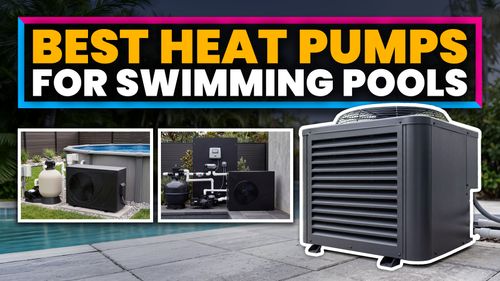
Best Pool Heat Pumps
The cheapest way to keep a pool warm through the shoulder seasons, sized by pool volume.
Compare heat pumps →Once the Water Is In
Upkeep is where the real cost of a pool shows up. A weekly routine, balanced chemistry, and a robot handle most of it. These four cover the first season. The full library lives on the Pool Maintenance hub.
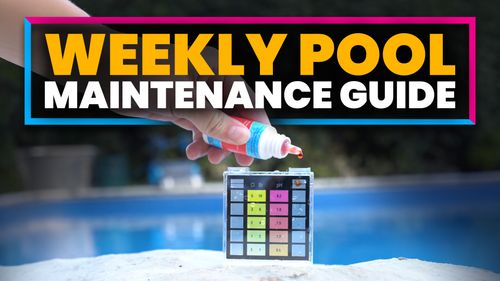
Weekly Pool Maintenance
The short weekly routine that keeps water clear and chemical bills down.
Read the guide →
How to Open an Inground Pool
Six steps from cover removal to clear water at the start of the season.
Read the guide →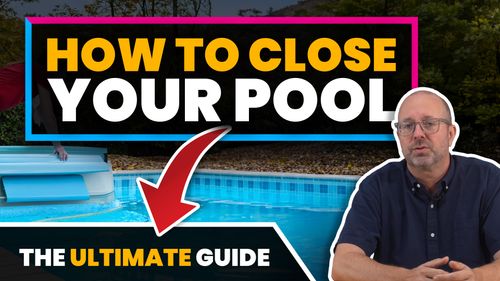
How to Close Your Pool
Balance, protect the plumbing and equipment, and cover it so spring opening is easy.
Read the guide →
Saltwater vs Chlorine Pools
Cost, corrosion, and feel compared, and who should switch.
Read the comparison →Pool Calculators for Planning and Water Care
Plan the build, equipment, energy, and ownership budget, then use the chemistry and seasonal tools once the water is in. All 30 are free and work on your phone.
Planning
Swimming Pool Planning Questions
How much does a swimming pool cost?
Most custom inground gunite pools land between $75,000 and $150,000, and in high-cost markets a standard build runs $100,000 to $200,000. Fiberglass typically runs $70,000 to $95,000 installed, vinyl liner $40,000 to $60,000, and factory-built steel pools like Ecopool $40,000 to $65,000 all-in. Above-ground pools run from a few hundred dollars for a soft-sided setup to about $40,000 for a container pool with windows and ledges. Our cost breakdown shows where each dollar goes.
Which type of pool is cheapest to own long term?
Over ten years, container pools ($50,000 to $80,000) and factory-built steel pools ($55,000 to $100,000) come out lowest because they are insulated and never need replastering or a new liner. Vinyl liner pools run $60,000 to $90,000 once liner swaps are counted, fiberglass $85,000 to $120,000, and gunite $115,000 to $165,000 or more with resurfacing, heating, and chemicals included.
How long does it take to build a pool?
Gunite typically takes six to nine months from excavation to swimming. Fiberglass and vinyl liner pools take several weeks once the shell or kit arrives. A factory-built steel pool installs in one to two weeks, and a container pool can be swimmable one to three days after delivery.
What is the best pool for a small backyard?
Plunge pools ($30,000 to $60,000 installed) and cocktail pools ($22,000 to $35,000 professionally installed) give you real swimming depth in a compact footprint, cost a third to a half of a full-size pool, and run on roughly $80 to $150 a month in upkeep. An 8 by 20 foot container pool is another strong small-yard option.
What equipment do I need to run a pool?
Every pool needs a pump, a filter, a sanitizer (chlorine, a salt chlorine generator, or UV with a low chlorine residual), and a way to clean it, ideally a robotic cleaner. A heater or heat pump extends the season, and most areas require a fence, safety cover, or alarm. Our must-have equipment guide ranks the upgrades that changed our own pool.
Do I need a permit or a fence to build a pool?
Almost always. Most cities require a building permit for an inground pool, and residential codes commonly require a barrier such as a fence with a self-closing gate, a safety cover, or an alarm for any pool more than 24 inches deep. Budget for both before you compare quotes, since permits and fencing can add thousands of dollars to a project.
Should I build a saltwater or chlorine pool?
A saltwater pool is still a chlorine pool. A salt chlorine generator makes chlorine from dissolved salt, so you skip weekly dosing and get softer-feeling water, in exchange for the cell's upfront cost and eventual replacement. Our saltwater vs chlorine guide covers cost, corrosion, and who should switch.
Is a robotic pool cleaner worth it?
For most owners, yes. A robot runs independently of the pump and filter, scrubs the floor, walls, and waterline, and turns cleaning into a button press. After testing more than 30 models, our best robotic pool cleaners guide ranks them by pool size, surface, and budget.