
 Justin D.
Introduction
Pool shock vs chlorine. What is the difference? Here's the short answer: in most pools, "shock" and "chlorine" are usually the same chemical doing two different jobs.
Chlorine is your everyday sanitizer — the workhorse that keeps water safe around the clock.
Shock is a high, fast dose of chlorine meant for emergencies: killing algae, clearing out combined chlorine, and rescuing water that has gotten away from you.
Hey there and welcome back to the Pool Nerd. I'm Justin, your resident pool aficionado.
Confusing the two is exactly why so many pool owners pour money into shock every week when what they need is steady chlorine. Below I'll break down what each one is, when you reach for it, and why leaning on shock is a sign something upstream is broken.
Shock Treatment: What You Need Checklist
Fix pH first (acid if high), then choose a shock that matches your pool—liquid, bagged packs, or cal-hypo granules.

Taylor K-2005 Test Kit
What it is: A professional drop (titration) kit for chlorine, pH, alkalinity, calcium hardness, and cyanuric acid.
Why you need it: You can’t SLAM or balance blind—especially CYA, which handcuffs chlorine. This kit gives numbers you can trust, not strip guesswork.

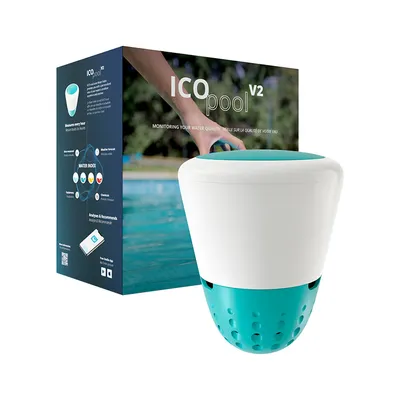
Ondilo ICO Pool Water Monitor
What it is: A floating smart monitor that samples pH, ORP (sanitizer effectiveness), and temperature on a schedule and sends trends to your phone.
Why you need it: You still need a real drop kit for parameters the ICO doesn’t replace (like TA and CYA), but hourly ORP/pH catches drift and dosing mistakes long before weekly strip checks do.

Champion Muriatic Acid
What it is: Dilute hydrochloric acid—standard for lowering pH and, with the right method, total alkalinity.
Why you need it: High pH destroys chlorine efficiency. Always follow the label; never mix acid with chlorine.

In The Swim pH Reducer (dry acid)
What it is: Sodium bisulfate (dry acid)—lowers pH (and can pull TA down when used in controlled steps).
Why you need it: Easier to handle and store than jugs of muriatic acid for small, precise corrections; still an acid—never mix with chlorine, follow the label, and retest after circulation.

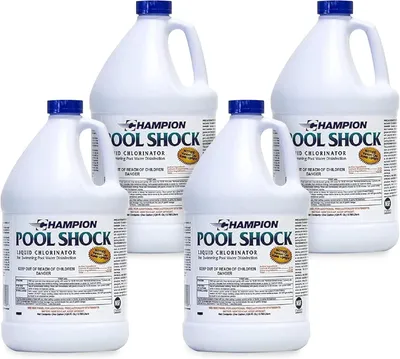
Champion Pool Shock (4 Pack)
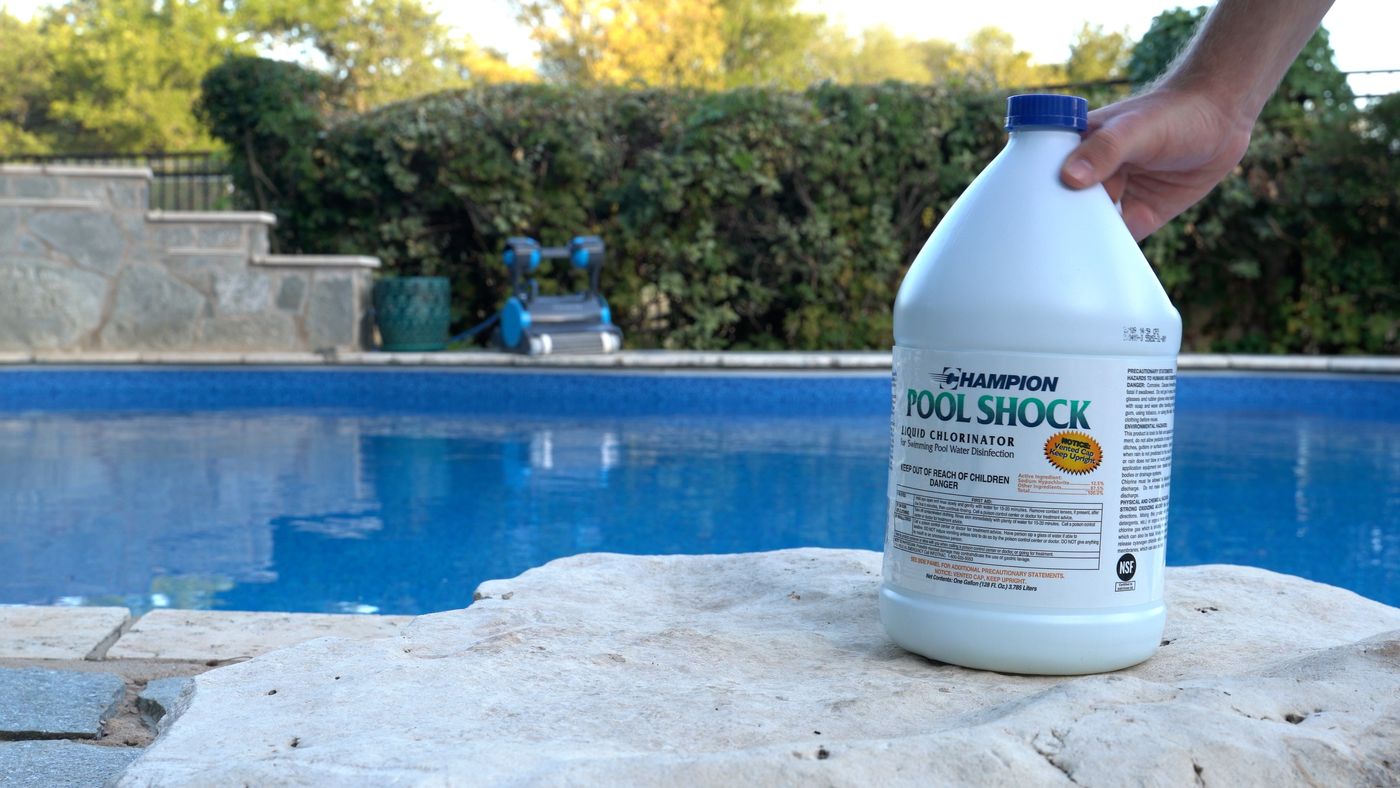
What it is: A case of liquid pool chlorine (sodium hypochlorite)—not cal-hypo granules. Confirm strength on the listing and jug label (often around 10–12.5%).
Why you need it: Same upside as other liquid shock: no CYA from the product, easy to pour with the pump running—useful to keep stocked for openings, algae pushes, storms, or parties.
How to use: Treat it like any liquid shock (pour with circulation; big doses still work best at dusk). Store cool and shaded; opened jugs lose strength over time—plan to use them within a few weeks.

In The Swim Cal-Hypo Pool Shock
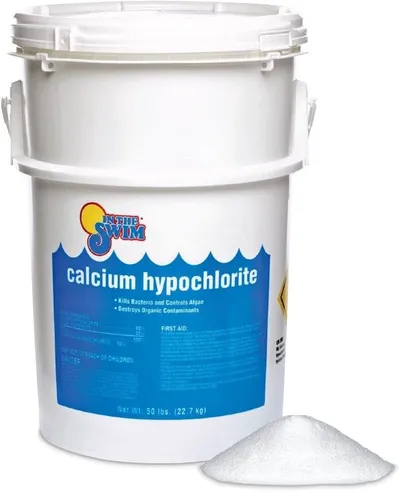
What it is: Calcium hypochlorite granular shock—high chlorine, adds calcium, no CYA.
Why you need it: Strong oxidizer for recovery and breakpoint; pre-dissolve; watch calcium if hardness is already high.

HTH Cal Hypo Pool Shock
What it is: Cal-hypo granular shock—same family as other cal-hypo products.
Why you need it: Alternative brand/size; compare % available chlorine and price per pound on the label.
Chlorine: Your Everyday Sanitizer
Chlorine is the sanitizer doing the daily work in your pool. Added to water, it forms hypochlorous acid — the active form that kills bacteria, viruses, and organic contaminants on contact. Hold a steady free chlorine level (2 to 4 ppm for most residential pools) and your water stays sanitized all day, every day.
You can add chlorine in a few forms:
- Liquid chlorine (sodium hypochlorite) — the form I run in my own pool and recommend to most owners. Champion 12.5% liquid chlorine is what I keep on hand.
- Trichlor tablets — convenient pucks, but every tablet adds cyanuric acid (CYA).
- Cal-hypo (calcium hypochlorite) — granular and strong, but it adds calcium to your water.
- Salt chlorine generators — make chlorine on-site from dissolved salt. My picks are in the best salt chlorine generators guide.
My guide to adding chlorine to your pool compares the liquid, granular, and tablet application methods. For the complete routine dose process, follow how to add liquid chlorine to your pool.
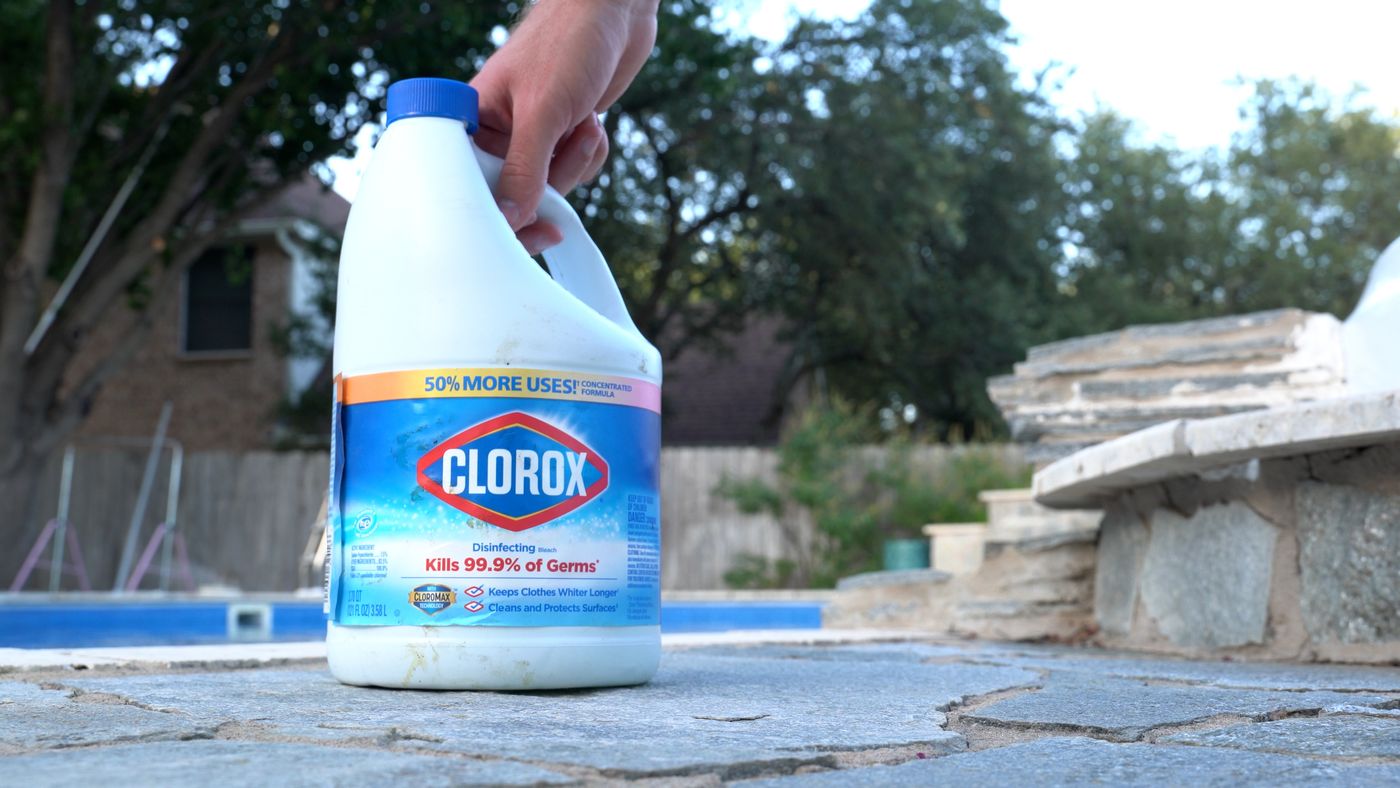
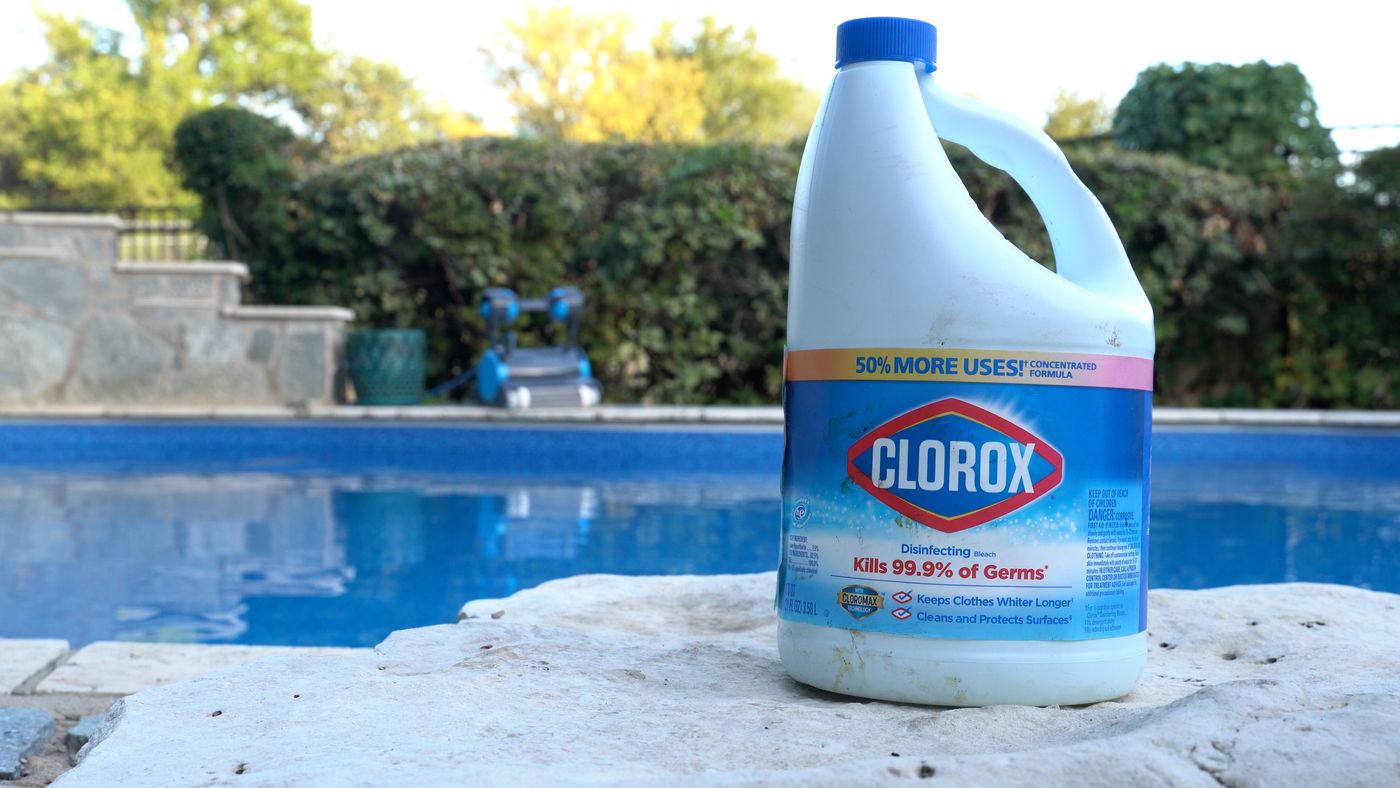
In my opinion, liquid chlorine is the cleanest way to sanitize a backyard pool. It works the moment it hits the water, leaves no residue, and — this part matters — it does not stack up CYA the way trichlor tablets do. CYA creep is one of the most common reasons a pool's chlorine quietly stops working, and tablets are usually the culprit. If your stabilizer has already climbed, here's how to lower CYA.
Shock: The Emergency Reset
Shocking is less a separate chemical than a method. You are raising free chlorine far above normal, fast, to reach what is called breakpoint chlorination — pushing chlorine high enough to blow past combined chlorine (chloramines) and oxidize everything in the water.
Most shock products are concentrated chlorine:
- Cal-hypo shock — high-strength granular chlorine, 65 to 73% available chlorine. Pre-dissolve it so it does not bleach a liner or etch plaster. In The Swim cal-hypo and HTH cal-hypo are the bags I point people to.
- Dichlor shock — granular chlorine that also adds CYA (In The Swim dichlor, Clorox Shock XtraBlue).
- Liquid chlorine at a high dose — what I use to shock our test pool.
There is also non-chlorine shock (potassium monopersulfate, or MPS). It oxidizes contaminants but does not sanitize — it will not kill algae or bacteria. The job of true shock is recovery: wiping out an algae bloom, clearing chloramines after a crowded weekend, or bringing a neglected pool back from the brink.
If you ever need to know how much to shock, head on over to the pool shock calculator where we break down how much to add and even which shock we recommend.
Non-chlorine shock (otherwise known as MPS) oxidizes but does not sanitize. It clears chloramines, but it will not kill algae or bacteria. If your pool is green, reach for chlorine — not MPS.
The Core Difference at a Glance
| Factor | Everyday Chlorine | Shock |
|---|---|---|
| Purpose | Continuous sanitation | Emergency oxidation and recovery |
| Typical dose | Low and steady (2-4 ppm free chlorine) | High and fast (breakpoint level) |
| Frequency | Daily / continuous | Only when there's a reason |
| What it does | Kills contaminants in real time | Resets water, clears chloramines, kills algae |
| Best form | Liquid chlorine | Liquid chlorine or cal-hypo |
When Do You Need Each?
You need chlorine every single day — there is no pool without it. The goal is a consistent free chlorine level so contaminants never get a foothold in the first place.
You only need to shock in specific situations:
-
You see visible algae.
-
You've had a heavy bather load — a pool party, a yard full of kids.
-
Combined chlorine climbs above 0.5 ppm.
-
Heavy rain has diluted your chemistry.
-
Your ORP drops and won't recover with normal chlorine dosing.
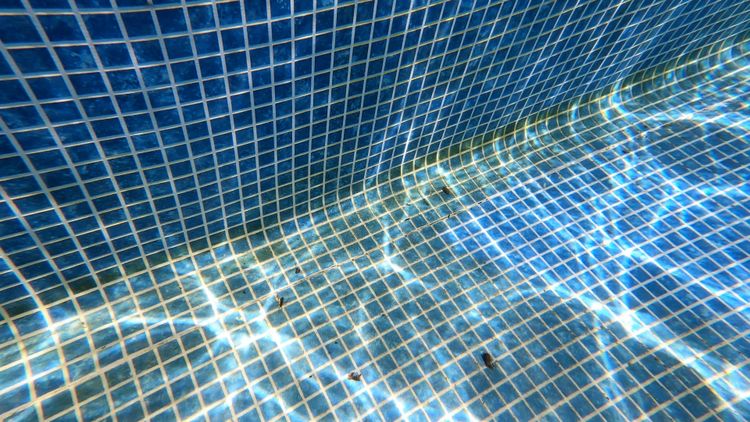
Visible algae is one of the few situations that genuinely calls for shock // The Pool Nerd
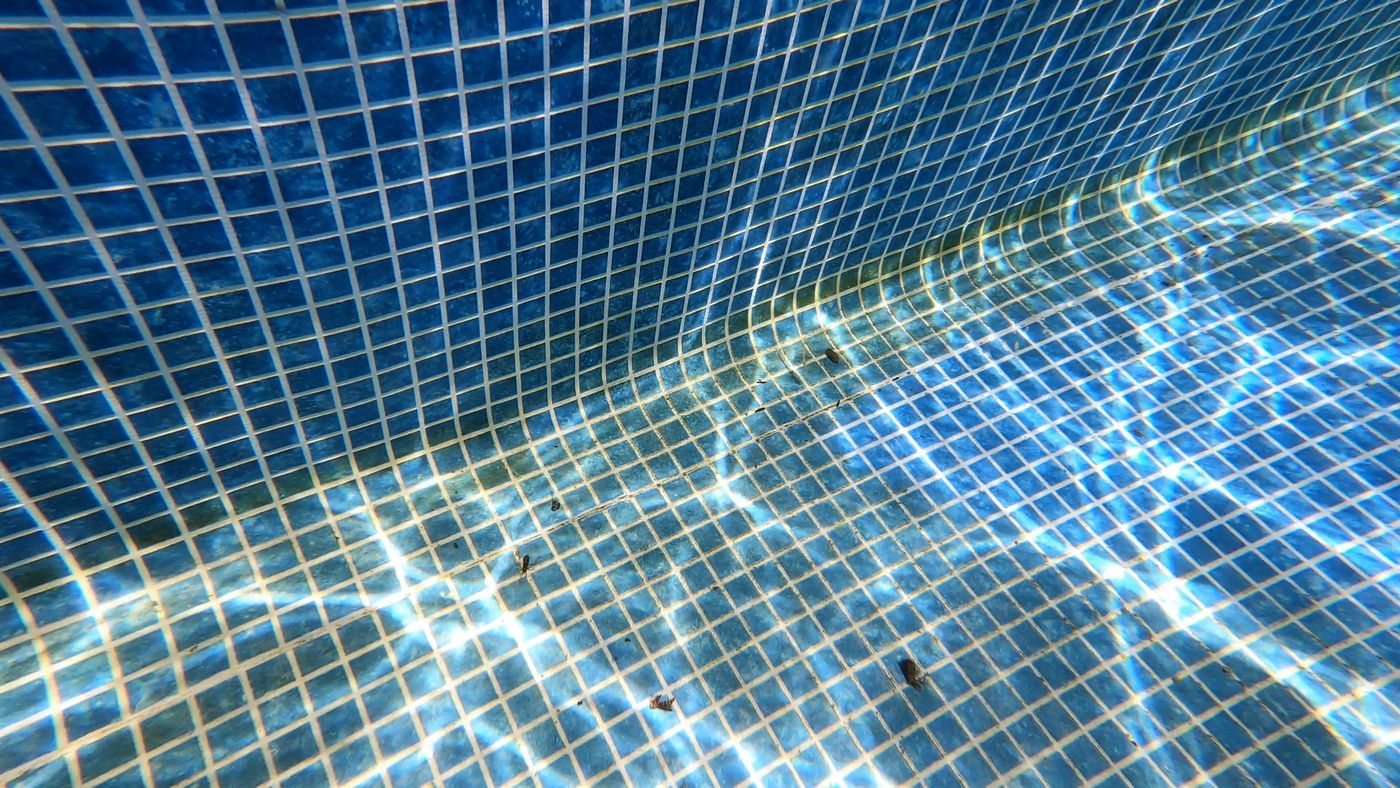
Notice what is not on that list: "because it's the weekend." If the calendar is your reason for shocking, the calendar is the problem.
When you do shock, do it right. Drop pH to 7.0-7.2 first, add the chlorine at dusk so sunlight doesn't burn it off, and run your pump all night. My how to shock a pool guide walks through the full step-by-step.
Why You Shouldn't Rely on Shocking
Here is where most pool owners go wrong. They treat shock as routine maintenance, and the pool store is happy to sell them a bag every week. But if your pool truly needs shock every week, you don't have a shock problem — you have a chemistry problem that shock is temporarily patching over.
It's expensive. Granular shock runs $20 to $50 a bag, and a season of weekly shocking can climb past $500 to $1,000. In my experience, that money buys almost nothing in real water quality — a Monday spike that is gone by Thursday.
It masks the root cause. Pools that "need" weekly shock usually have high pH crushing chlorine effectiveness, CYA overload locking chlorine up, or weak filtration leaving organics in the water. Shock hides those problems instead of fixing them.
It creates swings. A weekly shock spikes chlorine, then lets it crash back down — handing contaminants a window before the next dose. Steady sanitation beats a chlorine bomb every time.
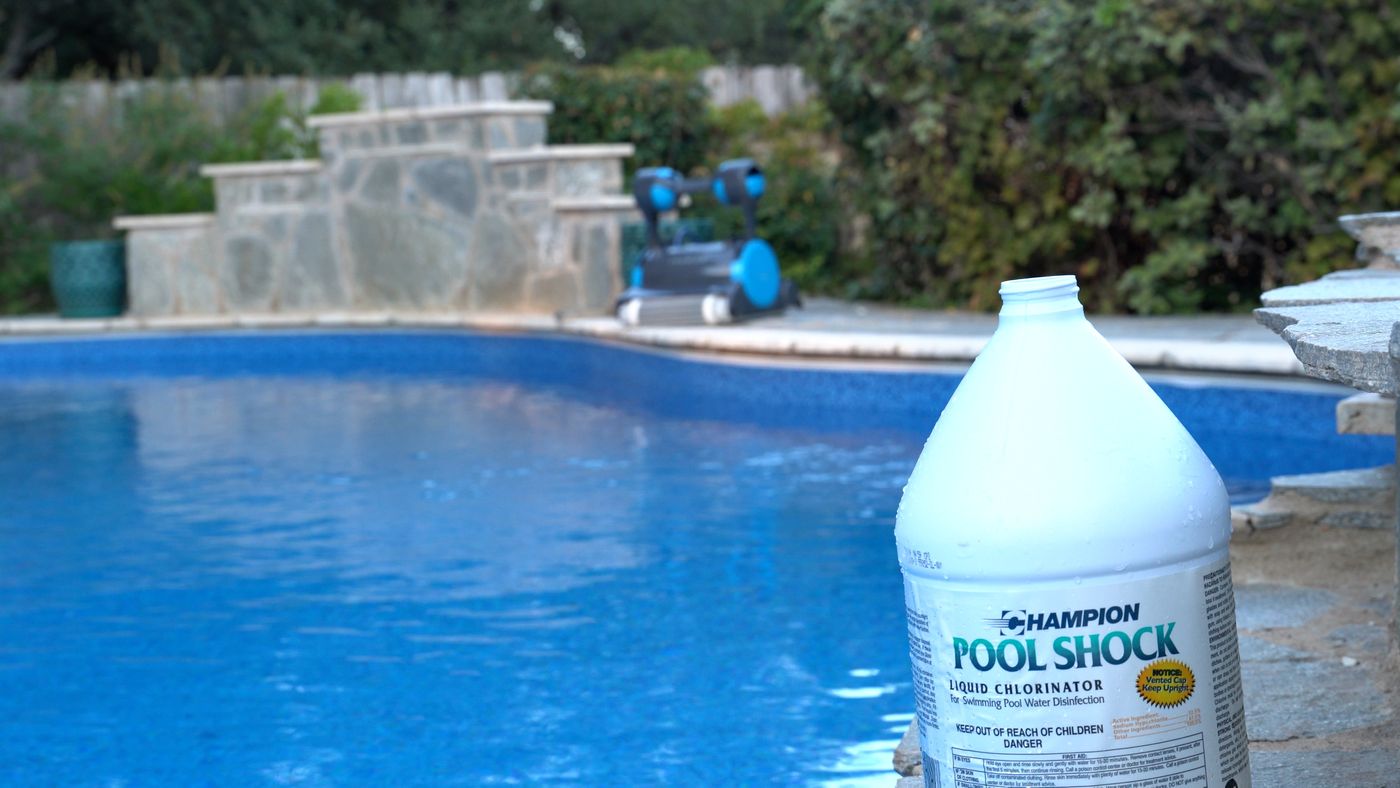
Weekly shocking as a maintenance routine. It's expensive, it masks pH, CYA, and filtration problems, and it creates chlorine swings. Shock is a tool, not a schedule. I go deeper on breaking the habit in stop shocking your pool.
The Better Way: Liquid Chlorine Injection
So if shock is the wrong crutch, what is the right approach? Consistent free chlorine. And the best way I've found to hold a steady level without babysitting the pool is a liquid chlorine injection system.
Here is the idea. Instead of hand-pouring chlorine every few days and riding the swings, an injection system uses a small peristaltic pump to meter liquid chlorine into your circulation line automatically. You are feeding the pool a steady trickle of sanitizer instead of a periodic flood. The result, in my testing, is a flatter, more stable free chlorine curve — exactly what you want.
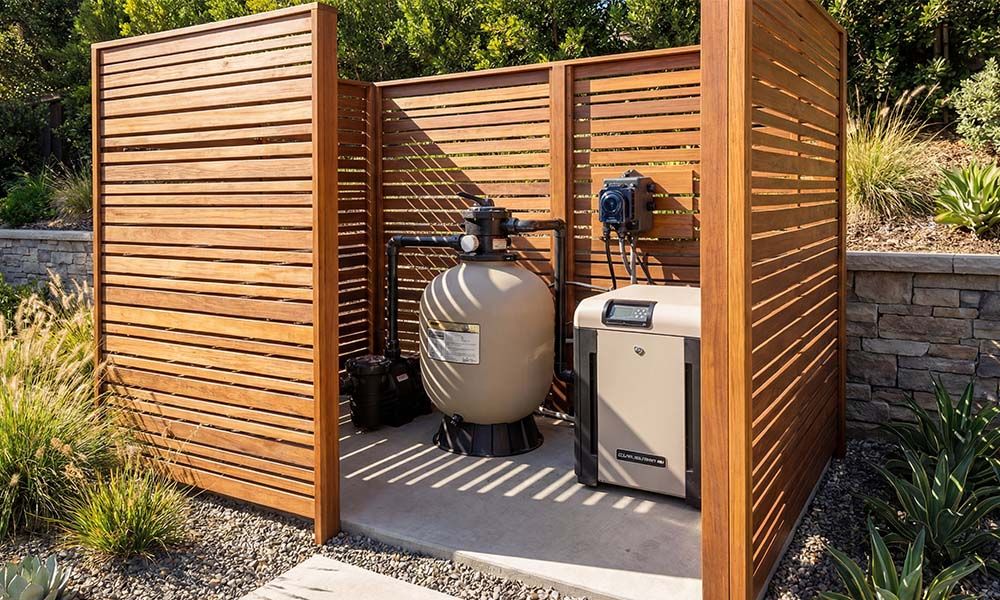
Why this approach wins:
- It runs on liquid chlorine, so there's no CYA creep the way tablets cause.
- It holds free chlorine steady instead of spiking and crashing.
- The better systems can dose based on ORP, so the pool sanitizes to a target killing power instead of a guess.
- Steady chlorine plus correct pH dramatically cuts how often you'll ever need to shock.
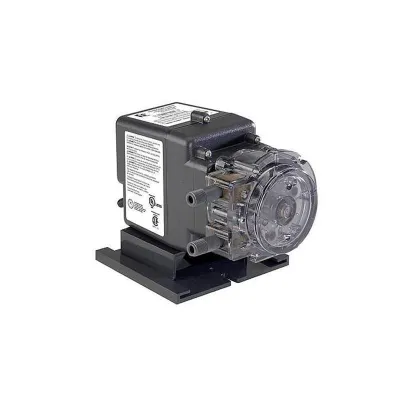
This is the closest thing to hands-off sanitation for a residential pool, and it is the foundation of the setup I trust: liquid chlorine dosing, ORP monitoring, strong filtration, and low CYA. I put together a full breakdown of the systems I recommend in the best liquid chlorine injection systems guide — if you're tired of chasing chlorine swings, that's where I'd start.
A liquid chlorine injection system. Steady free chlorine, no CYA creep, and ORP-based dosing on the better units. It's the closest a backyard pool gets to true hands-off sanitation. See my full injection system breakdown for the two systems worth your money.
Don't Forget pH and ORP
Two things make everything above work better.
pH controls how effective your chlorine is. At a pH of 7.2, chlorine is roughly 65% active; by the time you hit 8.0, that drops to about 20%. Keep pH in the Power Zone — 7.0 to 7.2 for vinyl and fiberglass, 7.2 to 7.4 for plaster — and you get far more sanitizing power out of the same chlorine. In my testing, dialing in pH is like doubling your chlorine without adding a drop. Start with my guide on the ideal pool pH level, and if you need to bring it down, here's how to lower pool pH safely.
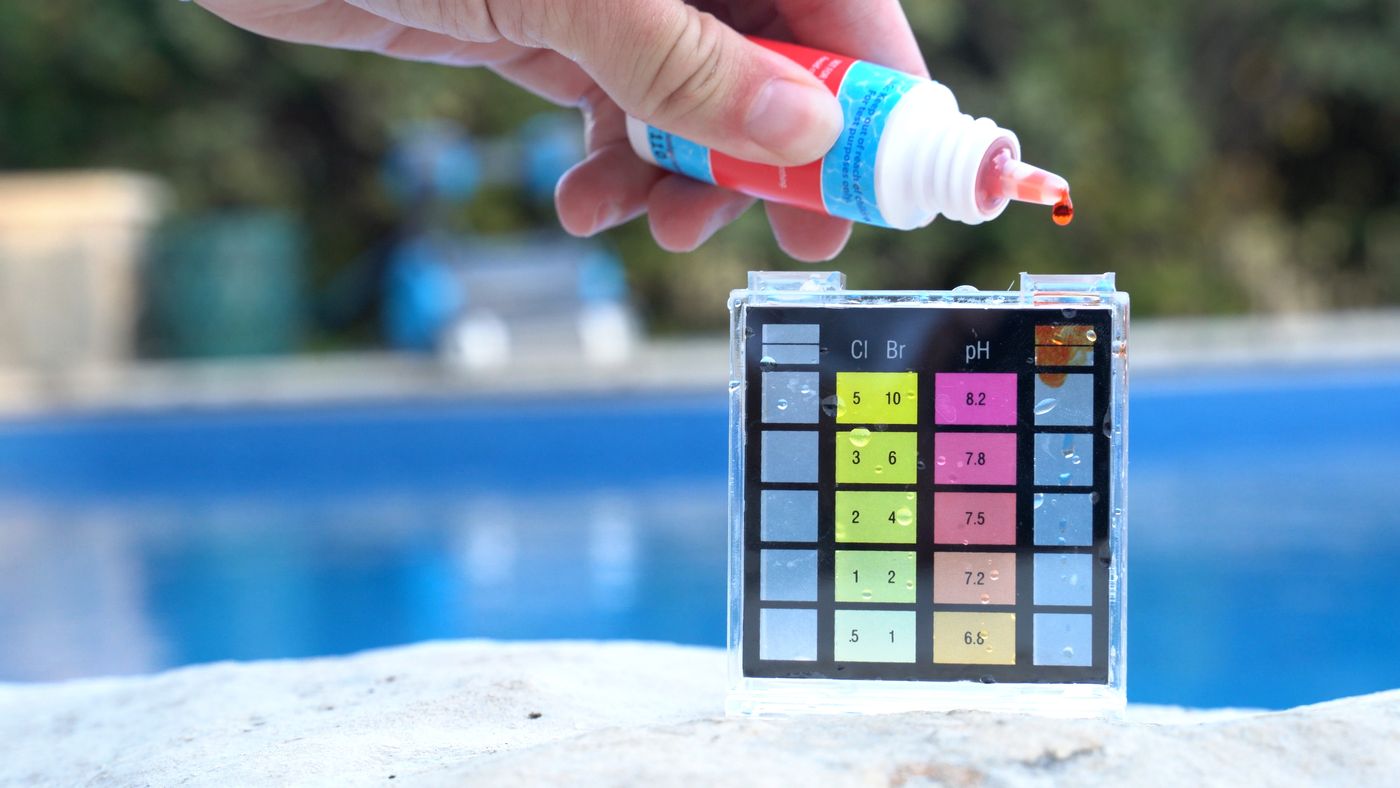
ORP is the real measure of sanitation. Oxidation reduction potential reads your water's killing power in millivolts instead of just how much chlorine is floating around. I aim for 650 to 700 mV and treat anything below 650 as a signal to act. Pair an ORP monitor like the ICO with a chlorine injection system and you've closed the loop — the pool reports its true sanitation level, and the system holds it there. My full list of monitors is in the best pool water monitors guide.
My Final Verdict
So what's my final verdict on pool shock vs chlorine?
Chlorine is the everyday job. Shock is the emergency tool. The industry blurs that line because weekly shock sales are good for business — but a well-run pool rarely needs to be shocked at all.
Dial in your pH, hold consistent free chlorine (ideally with automated liquid injection), and track ORP instead of the calendar. Do that, and shock goes back to being what it should be: something you reach for once in a while, not a habit you can't shake. That's not insider knowledge — it's what works.
GET THE BEST POOL GEAR DEALS
If you want to keep nerding out over your pool, head on over to ThePoolNerd.com/deals — that's where I post the best prices on the ICO, SpectraLight UV, and my favorite pool robots. Until next time, enjoy that pool — I'll see you in the next one.
This information is for educational purposes only. Handling pool chemicals — especially muriatic acid and chlorine — carries a real risk of injury or property damage. Always read the manufacturer's labels and SDS sheets, and use this information at your own risk.
Related Reading
- How To Shock Your Pool — The step-by-step for doing it right
- Best Pool Shock — Cal-hypo, liquid, dichlor, and MPS compared
- Stop Shocking Your Pool — Why weekly shocking is an expensive habit
- Best Liquid Chlorine Injection Systems — The automation that ends the shock cycle
- Pool Shock Calculator — Exact doses for your pool size
- What Is the Ideal Pool pH? — The Power Zone that makes chlorine work
- ICO Pool Water Monitor Review — The ORP and pH monitor I use


Comments
Loading comments…