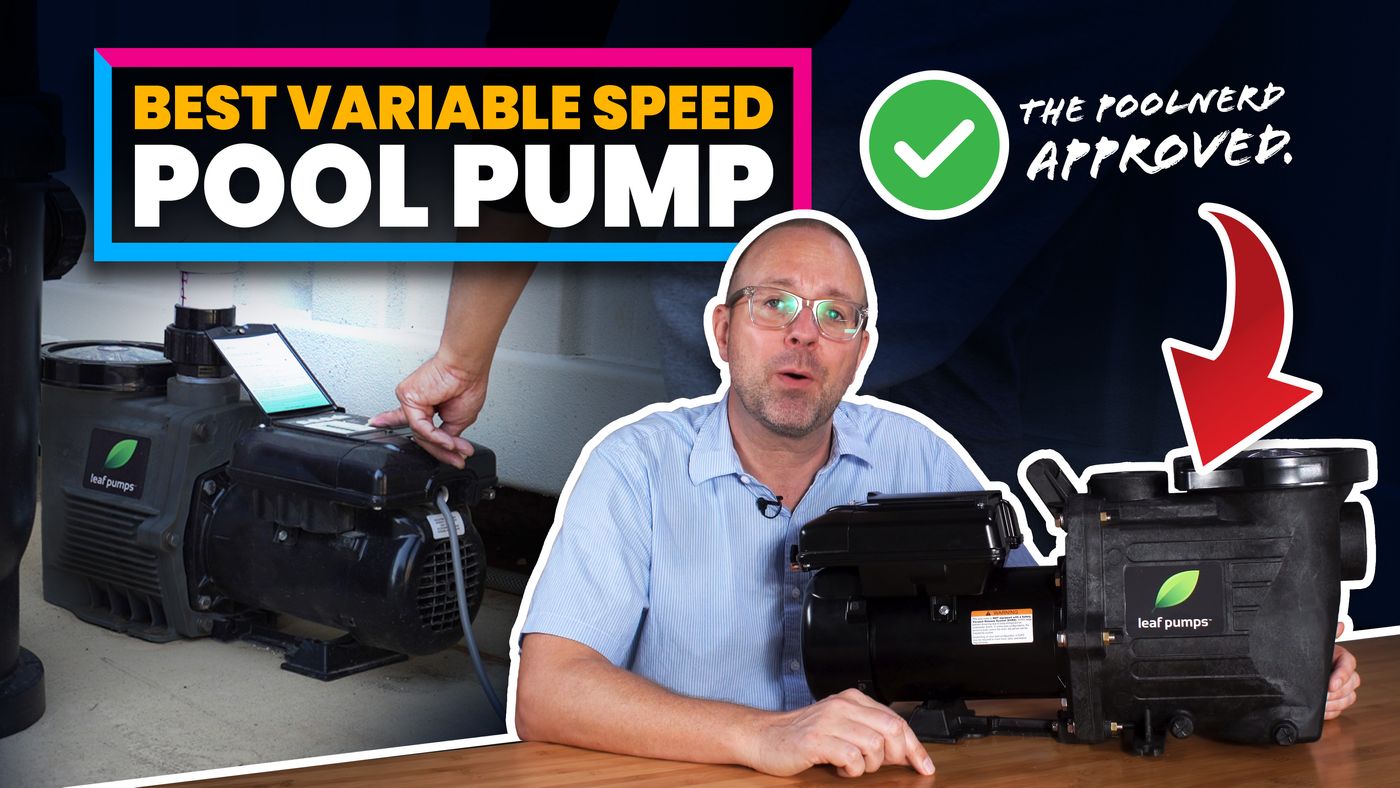
Hey there, welcome back to The Pool Nerd! For over 5 years, we've been testing all the top pool equipment. From robotic pool cleaners to UV lights, and today I am diving into variable speed pool pumps. These are one of the most important upgrades you can make to your pool. From the $$$ savings compared to a single speed pump, this is one of the essential upgrades your pool needs if you don't have one already. So let's dive into the best variable speed pumps of the year!
Best Variable Speed Pumps at a Glance
Why You Need a Variable Speed Pump
Here's the thing: your pool pump is one of the biggest energy users in your entire home — for many households, second only to heating and cooling. If you're still running a single-speed pump in 2026, you're paying a premium every single day for technology that peaked decades ago. And if you think that old pump is the smart buy because it was cheap upfront, you're dead wrong. It costs you more every month it keeps running.
The Physics Behind the Savings
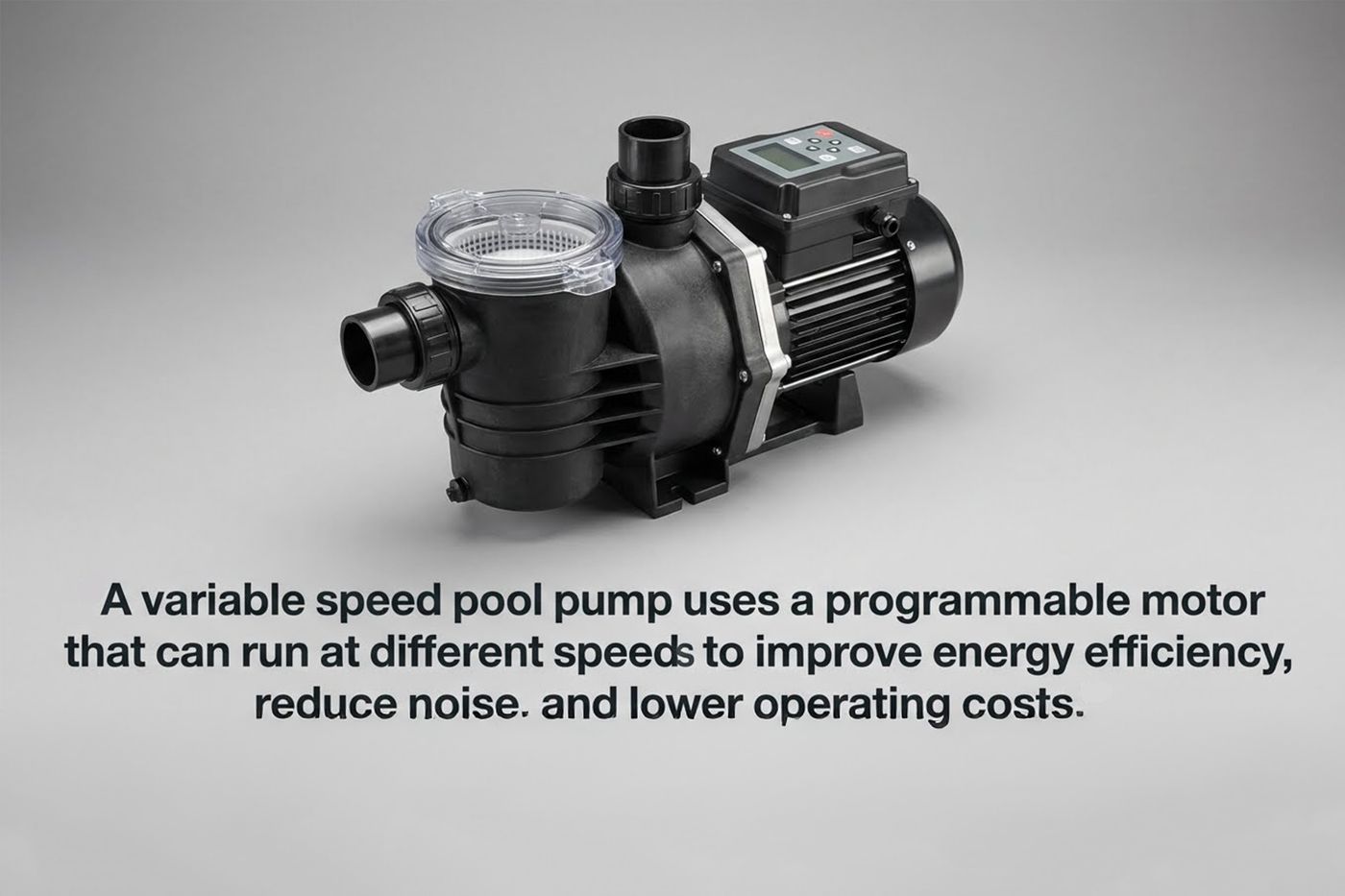
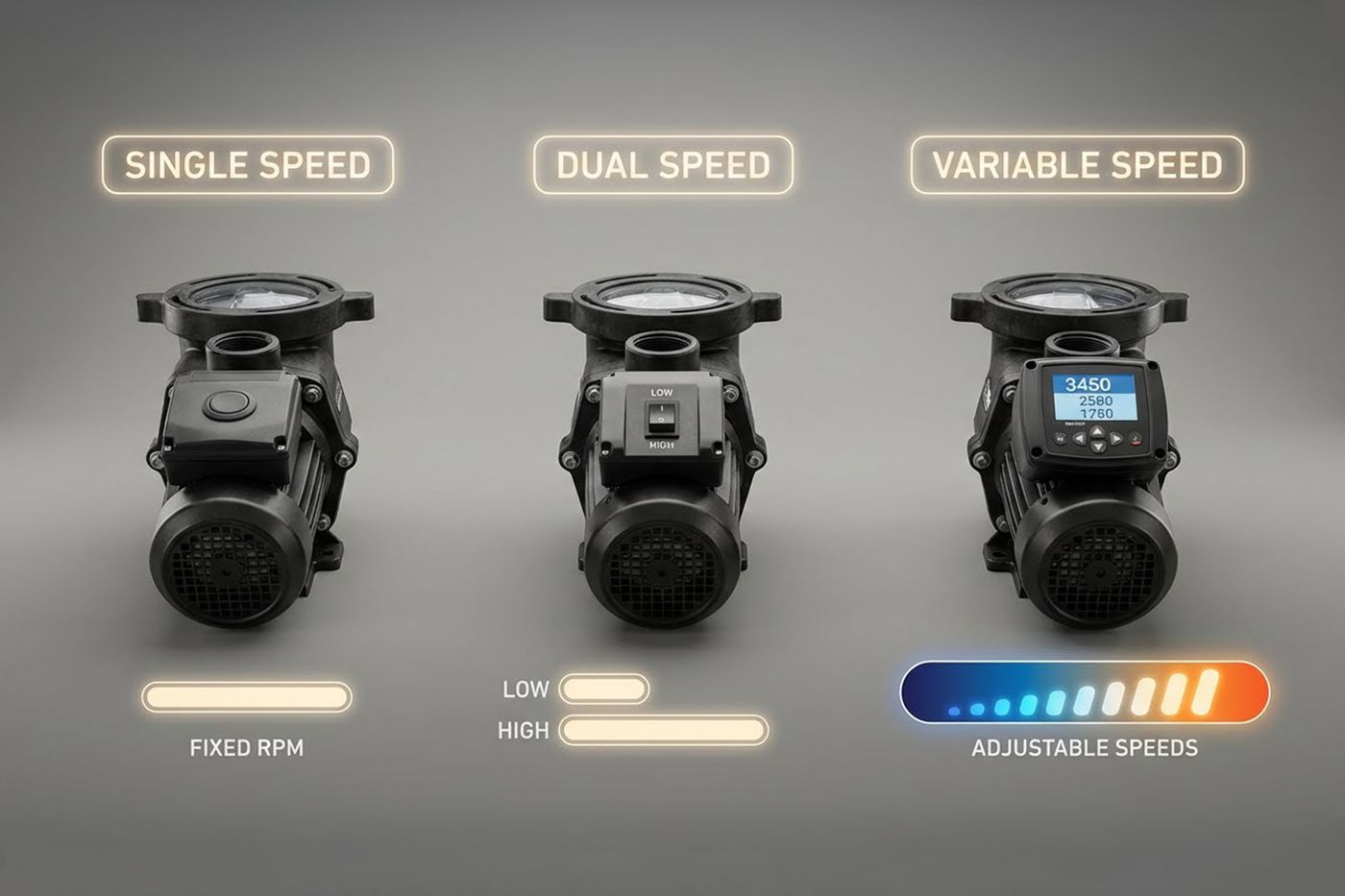
Variable speed pumps use permanent magnet motors — the same basic technology inside electric cars — that let you dial in any speed from about 600 to 3,450 RPM. Pump energy consumption follows what engineers call the affinity laws, and the short version is wild: cut the speed in half and power draw falls by roughly 87 percent.
I measured this myself with a watt meter. A typical 1.5 HP single-speed pump pulls around 1,500 watts at full blast. The same circulation job on a VS pump at 1,400 RPM? About 200 watts. Run each for 8 hours a day at $0.15 per kWh and the single-speed costs about $1.80 daily against $0.24 for the VS pump. That's over $45 a month, and $225-plus across a five-month swim season — with payback inside two to three seasons, before rebates.
Federal Law Already Settled This
Here's the kicker: the federal government settled this debate in 2021. The Department of Energy's Dedicated Purpose Pool Pump rule set efficiency standards strict enough that variable speed is the only mainstream technology that clears the bar for most inground filter pumps. Nobody will force you to rip out a working single-speed, but when it dies — and it will — a VS pump is what replaces it. The DOE pegs average life-cycle savings for inground pool owners around $2,140, so buying now just means the savings start sooner.
Whisper-Quiet Operation
At 1,200–1,400 RPM, a quality VS pump runs at roughly 40–50 decibels — about the hum of a refrigerator in the next room. Compare that to a single-speed screaming along at 70-plus decibels. If your equipment pad sits near a patio, a bedroom window, or the property line, the noise reduction alone can justify the upgrade. I've had neighbors thank me after a pump swap. No joke.
Better Filtration, Steadier Chemistry
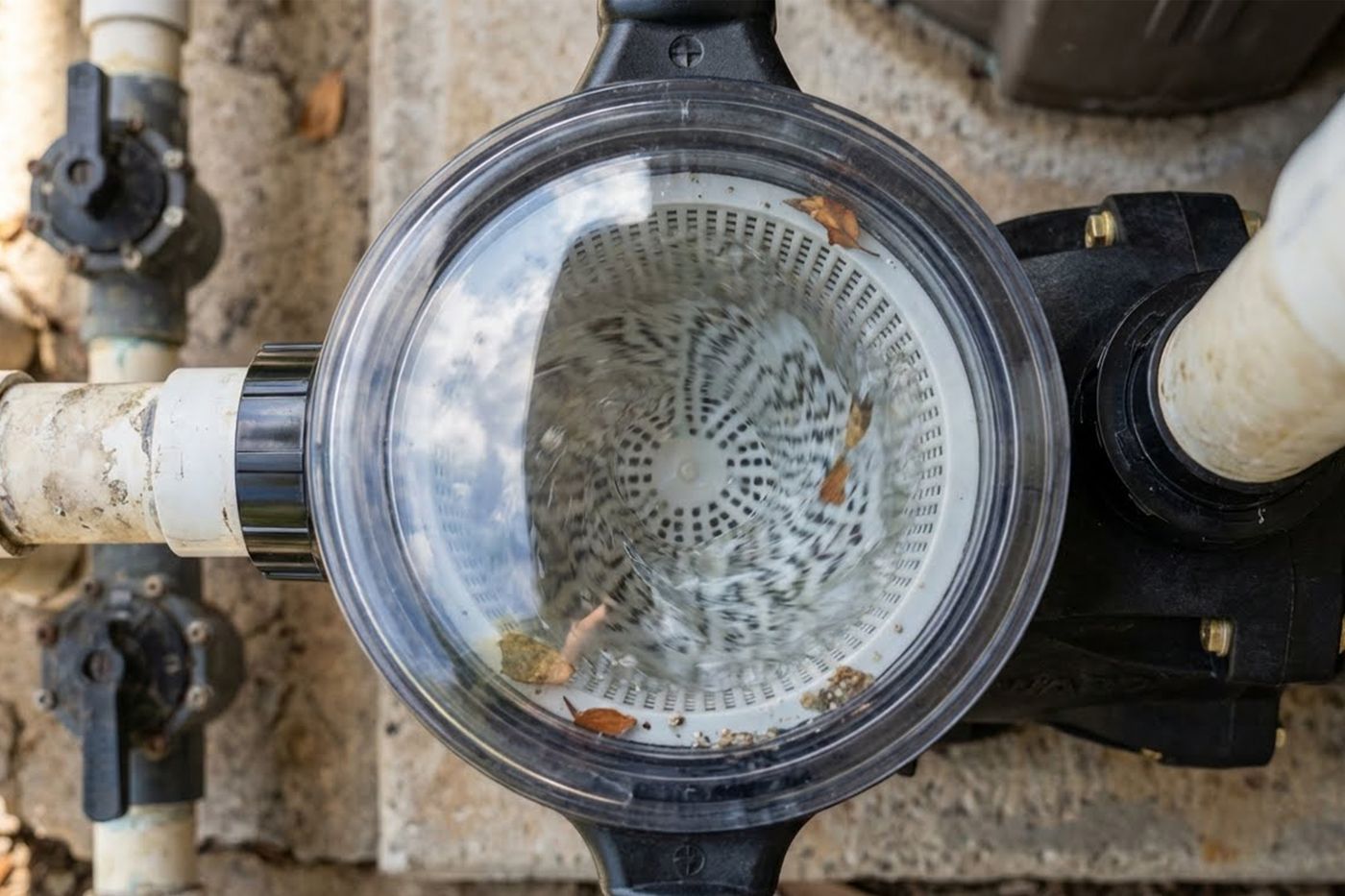
Running longer at lower speed improves water quality. Instead of blasting water through the filter for 6 hours, you circulate it gently for 12 to 16. Slower flow gives your filter media more contact time to trap fine debris, and constant turnover keeps chlorine mixed evenly instead of collecting in dead spots. In my experience, pools on long low-speed cycles hold clearer water and steadier chlorine — and if you run a monitor like the Ondilo ICO, you'll watch your ORP hold steady instead of sawtoothing.
How to Choose the Right VS Pump
Not every VS pump deserves your money. Five things separate the good from the great.
Motor Technology
The best VS pumps use permanent magnet motors, also sold as brushless DC or ECM. They run cooler, waste less energy, and outlast the variable-frequency-drive induction motors found in some bargain units. Every pick in this guide uses permanent magnet technology.
Programmability and Controls
At minimum you want an onboard digital interface with multiple programmable speeds and a real-time clock, so the pump schedules itself with no external timer. Better pumps store four to eight speed programs — daily filtration, cleaner cycle, spa jets — and the best add WiFi app control with live energy monitoring.
Speed Range and Flow Curves
Look past the horsepower number. You want a floor around 600–1,000 RPM for dirt-cheap overnight circulation and a ceiling of 3,450 RPM for vacuuming and water features. Then check the published flow curve against your pool's total dynamic head — plumbing length, pipe diameter, filter type, elevation changes.
Build Quality and Warranty
Pool pumps live outside in sun, rain, and chemical splash. Look for UV-stabilized thermoplastic housings, quality shaft seals, and continuous-duty motors. Warranties run from one year on budget units to three years on premium models, and VS electronics make that coverage matter.
Compatibility With Your Setup
Verify voltage (115V, 230V, or dual), union sizes, and footprint before you buy. Several of my picks are direct drop-in replacements for common single-speeds. If you run automation, confirm the pump talks to your controller — modern gear mostly cooperates, but older panels can be finicky.
The Pool Nerd Picks: The 5 Best Variable Speed Pumps
Best Overall: Hayward Super Pump VS (1.65 HP)
POOL NERD APPROVED — BEST OVERALL: Proven hardware, drop-in installation, and savings you'll see on your first electric bill.
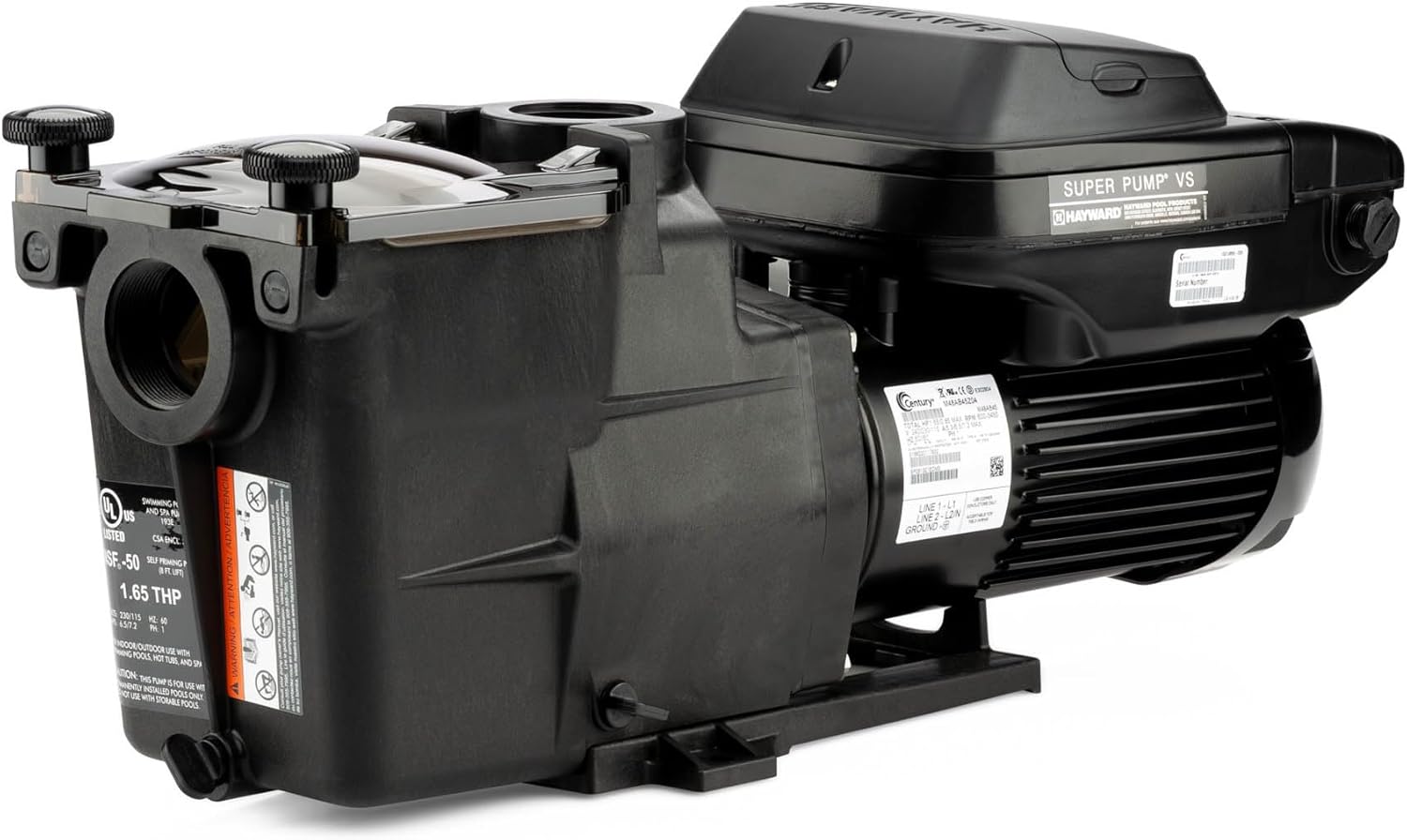
If I could recommend only one VS pump for the average pool owner, this is it. Hayward took the Super Pump — the most widely installed pool pump in America — and gave it a variable speed motor. The result is a reliable, efficient, low-drama upgrade for most pools.
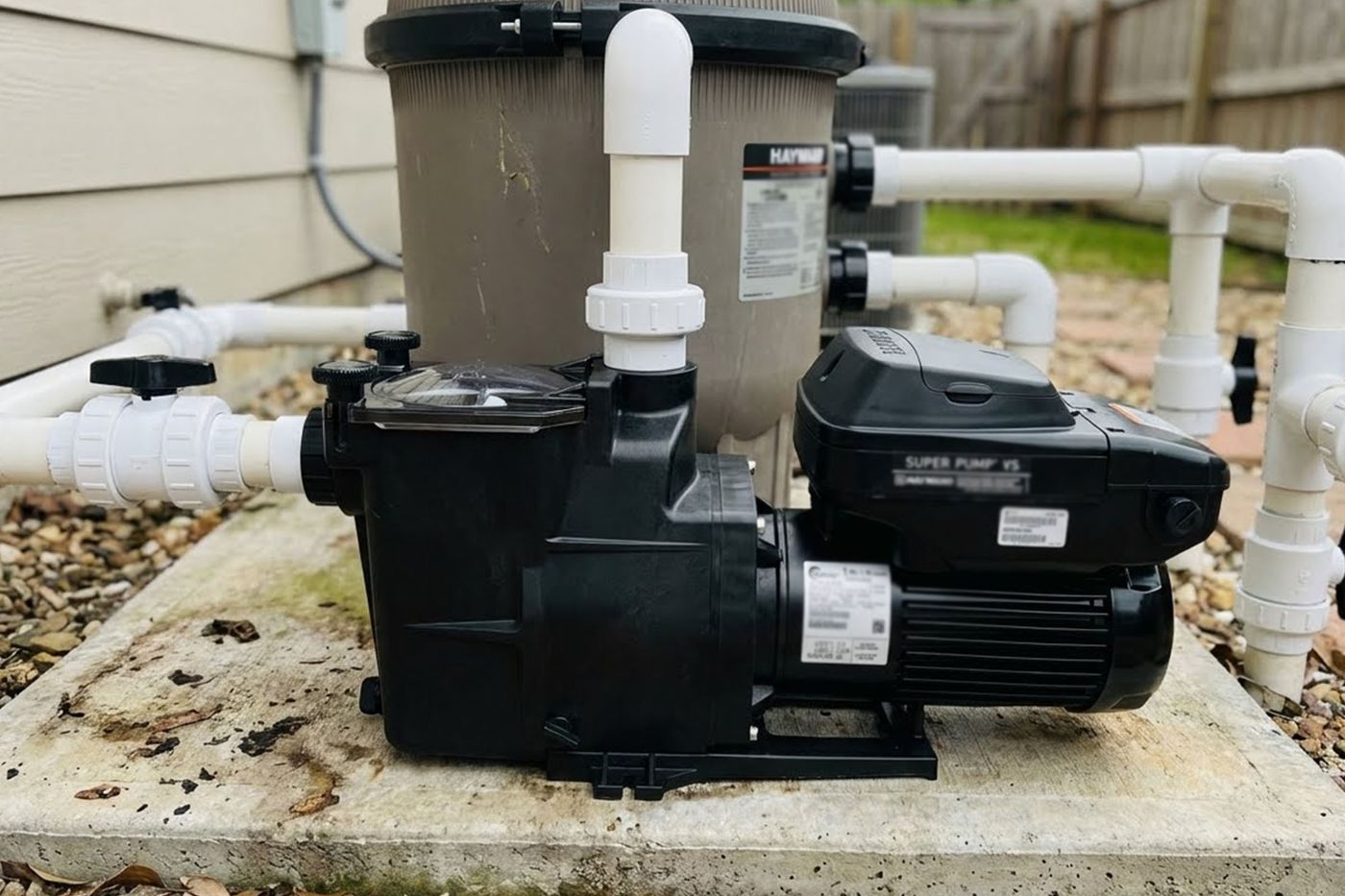
I've installed the Super Pump VS on multiple test pools, and the results are the same every time. At 2,400 RPM it matches the flow of the old single-speed Super Pump on about a third of the electricity. Drop it to 1,400 RPM for daily filtration and my watt meter reads around 200 watts. The top-mounted interface is simple: program a daily schedule, set a cleaner speed, and walk away. It self-primes, includes freeze protection, and alerts you when something's off.
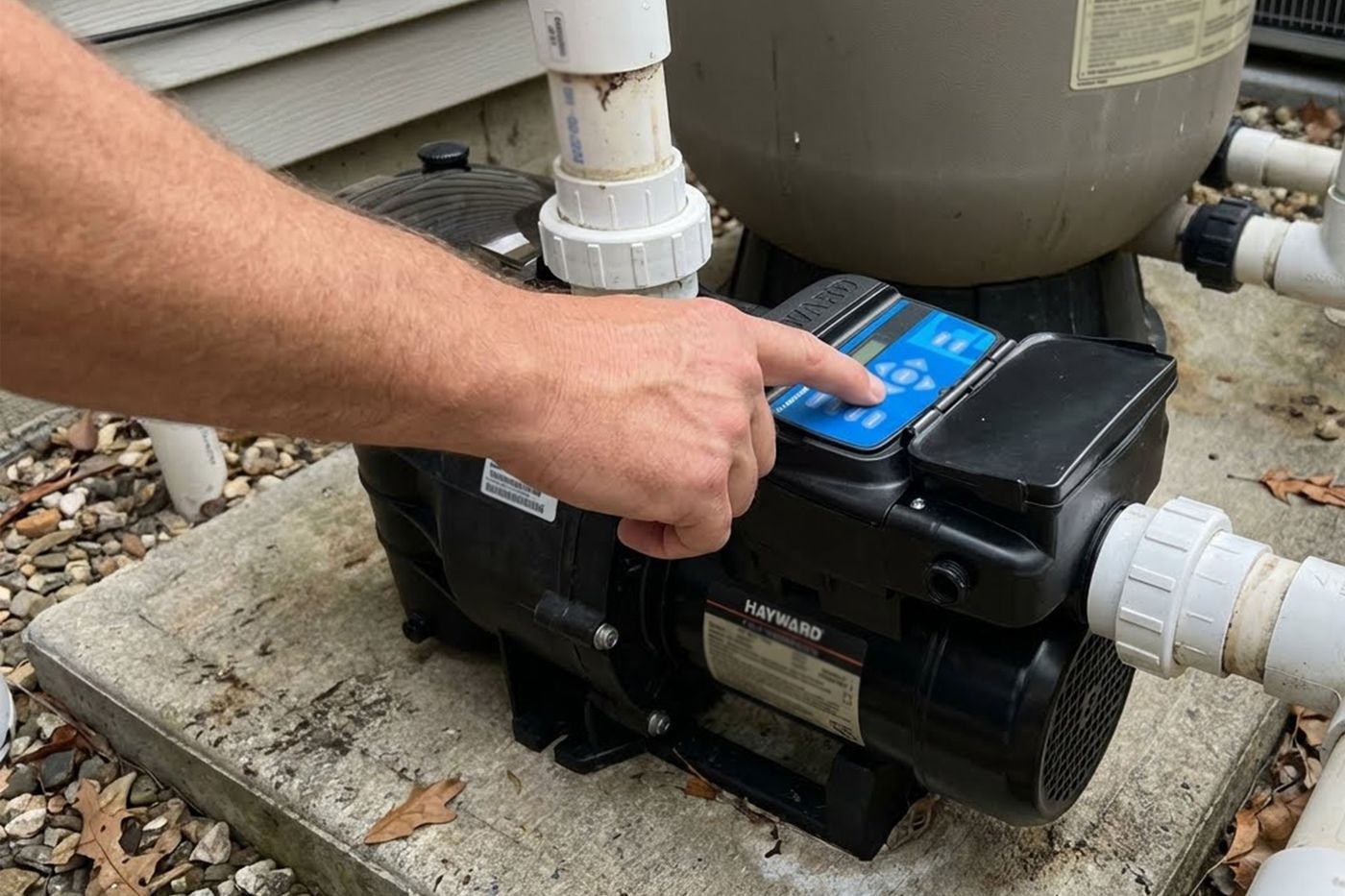
What makes it great: A true drop-in replacement for a standard Super Pump — same unions, same footprint, no re-plumbing on most installs. Dual voltage (115V/230V) keeps electrical hookup flexible. Classic Hayward build with a corrosion-proof thermoplastic housing and a proven wet end.
Where it falls short: At 1.65 total HP it can strain on very large pools (30,000-plus gallons) or systems running several water features at once. No built-in WiFi — app control requires Hayward's OmniHub add-on ($200–$300). The interface works fine but isn't as polished as Pentair's.
Price: Around $750–$900, before utility rebates.
Best for: Standard inground pools from 10,000–25,000 gallons — especially anyone replacing an existing Super Pump or similar 1–1.5 HP single-speed. Check the current price here.
Best Premium: Pentair IntelliFlo 3 VSF (3 HP)
POOL NERD APPROVED — BEST PREMIUM: Constant-flow control, built-in WiFi, and 3 HP of headroom. The one to buy when you want the best.
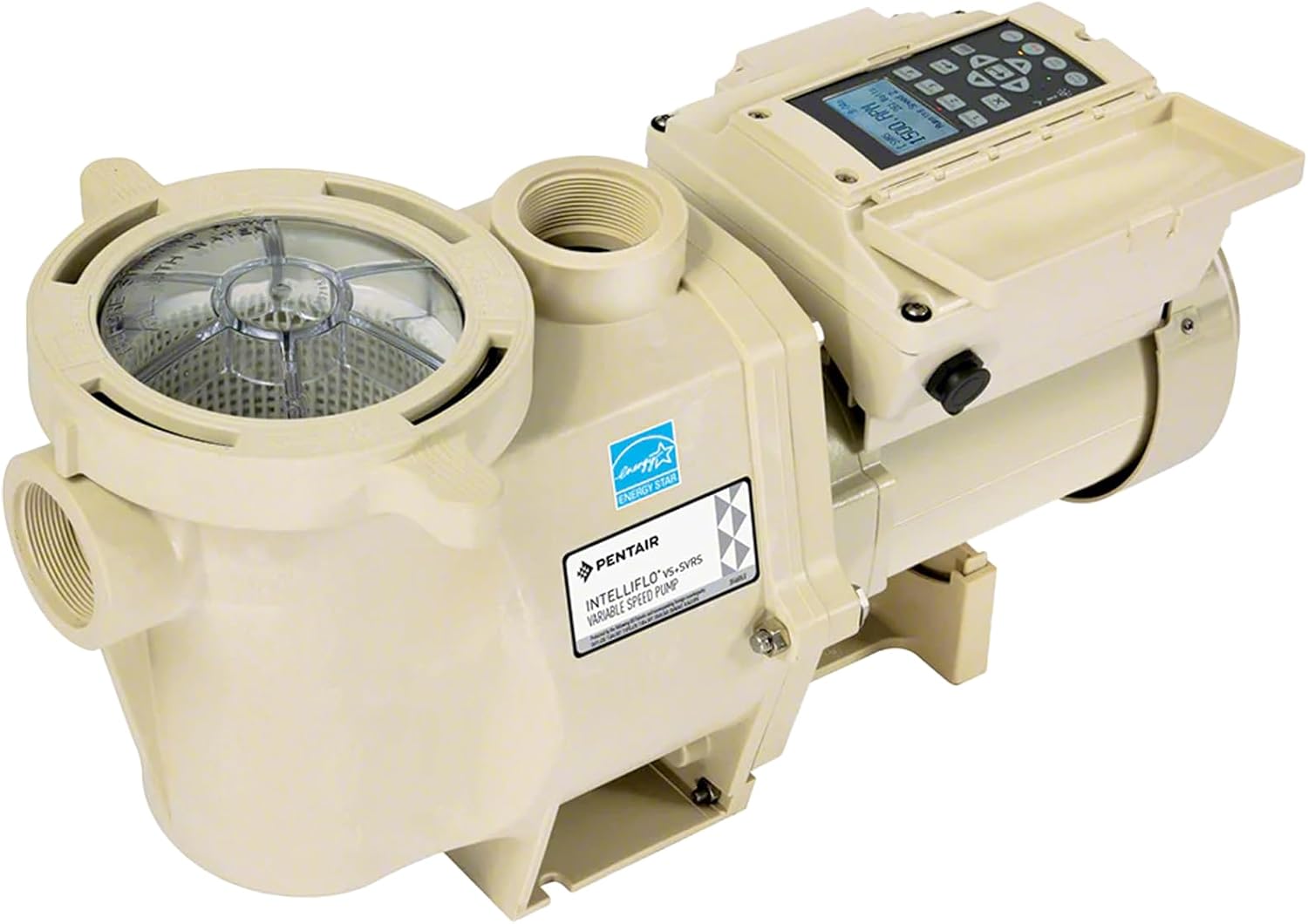
If you want the best variable speed technology money can buy, this is the answer — the pump I point to for large pools, pool/spa combos, and smart home setups. The VSF stands for Variable Speed and Flow: instead of holding an RPM, it can hold a flow rate. Program 60 GPM and it self-adjusts as your filter loads up, valves move, or anything else changes system resistance, so your heater, salt cell, and other flow-sensitive equipment always get exactly what they need.
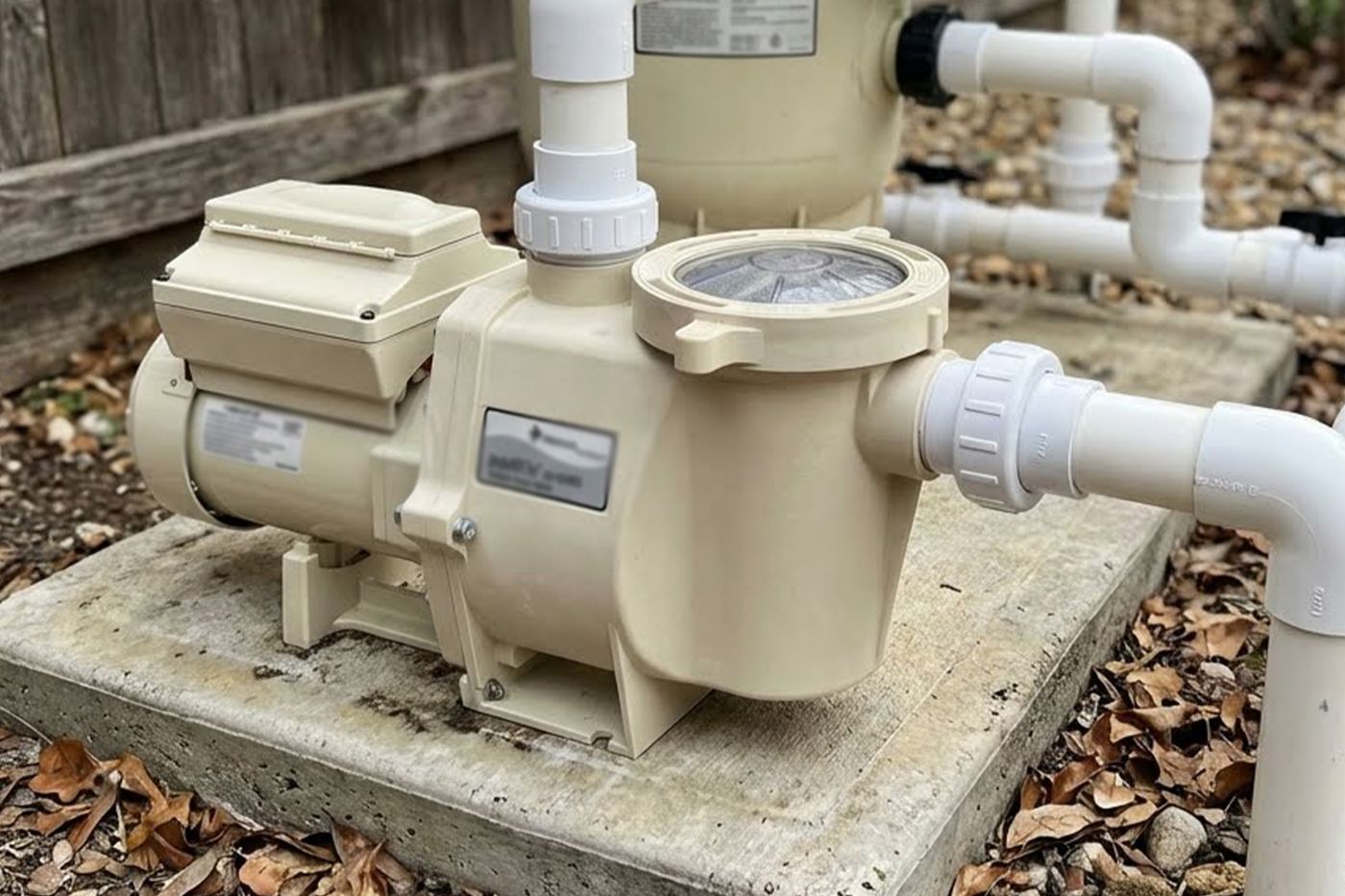
In my testing on a 28,000-gallon pool with a spa, waterfall, and deck jets, the numbers blew me away. At 1,100 RPM overnight, my meter read about 125 watts while holding 25 GPM. Daytime filtration at 1,800 RPM drew roughly 400 watts. When I fired up the spa and waterfall, it ramped smoothly past 3,000 RPM — triggered from the Pentair Home app without walking outside.
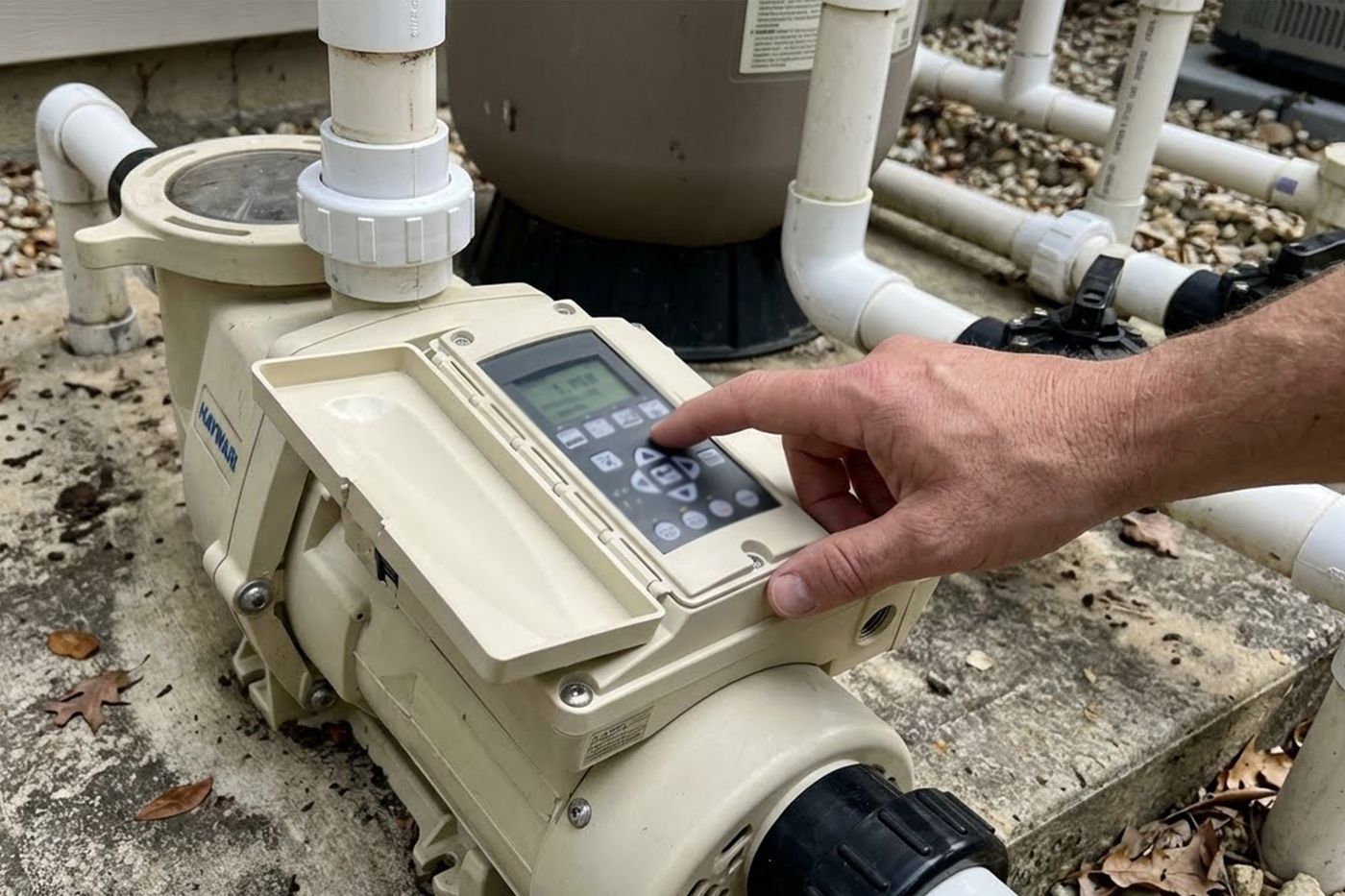
It's also the only major VS pump I know of with WiFi built into the unit itself — no hubs, no adapters. The app shows live speed, wattage, and flow, pushes alerts, and takes over-the-air updates. Check the current price here.
What makes it great: Class-leading efficiency with constant-flow smarts. The TEFC (totally enclosed, fan-cooled) motor runs cool and near-silent — at low speed I can't hear it from ten feet away. Three horsepower covers 25,000-plus gallon pools, vanishing edges, and multi-feature systems, and it ties directly into Pentair's automation, chlorinators, and heaters.
Where it falls short: The price — expect $1,200–$1,500. It's physically large, which matters on a cramped pad. More electronics means more that can eventually fail, though Pentair's track record here is strong.
Price: Around $1,200–$1,500.
Best for: Pools over 25,000 gallons, pool/spa combos, feature-heavy backyards, and anyone who wants app control with no aftermarket add-ons.
Best Compact Variable Speed Pump: Hayward MaxFlo VS 500 (1.65 HP)
POOL NERD APPROVED — BEST COMPACT: Super Pump VS efficiency in a smaller body, with a rotating control head that makes crowded pads livable.
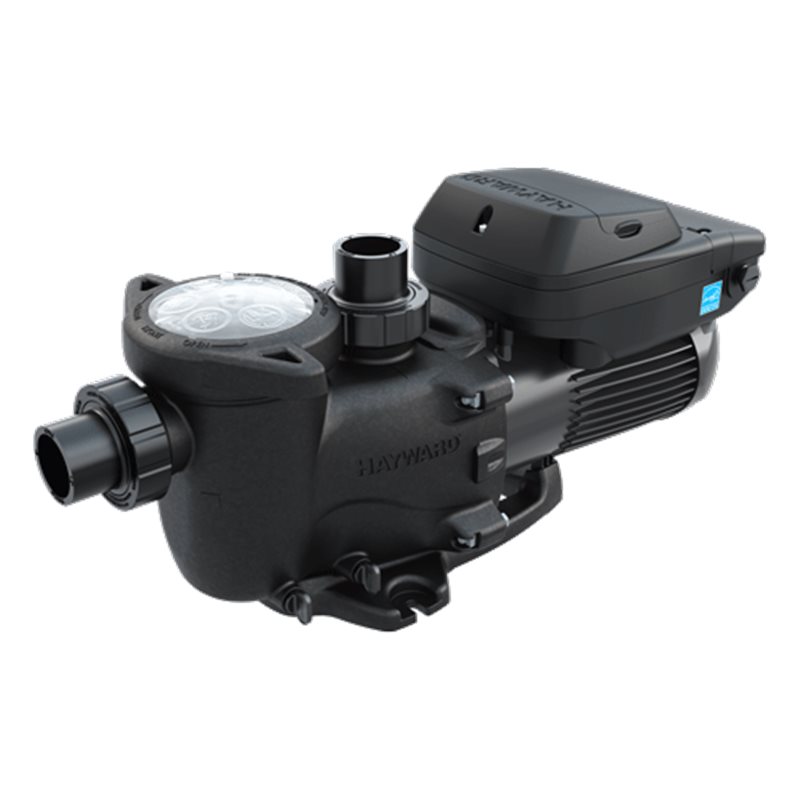
The MaxFlo VS sits between the Super Pump VS and the premium tier — the same efficiency class in a smaller body with a few extra conveniences. It's my go-to pick when the equipment pad is a shoebox.
The trick is the rotating drive head, which turns in 90-degree steps so the display and controls face you no matter how the plumbing runs. Small detail, big difference on a crowded pad. Performance mirrored the Super Pump VS in my testing — similar flow, similar wattage — with better freeze protection and onboard diagnostics that flag problems early. Check the current price here.
What makes it great: Compact footprint. Rotating control head. Built-in timer and scheduling. Efficiency and noise on par with pumps that cost more.
Where it falls short: No built-in WiFi (OmniHub required for app control). The 1.65 HP ceiling keeps it on small and mid-size pools. The interface is functional rather than fancy.
Price: Around $650–$800.
Best for: Small-to-medium inground pools (8,000–20,000 gallons) and pads where space is the constraint.
Best Budget Variable Speed Pump: Black+Decker 1.5 HP VS
POOL NERD APPROVED — BEST BUDGET: True variable speed savings for $200–$300 less than the big brands.
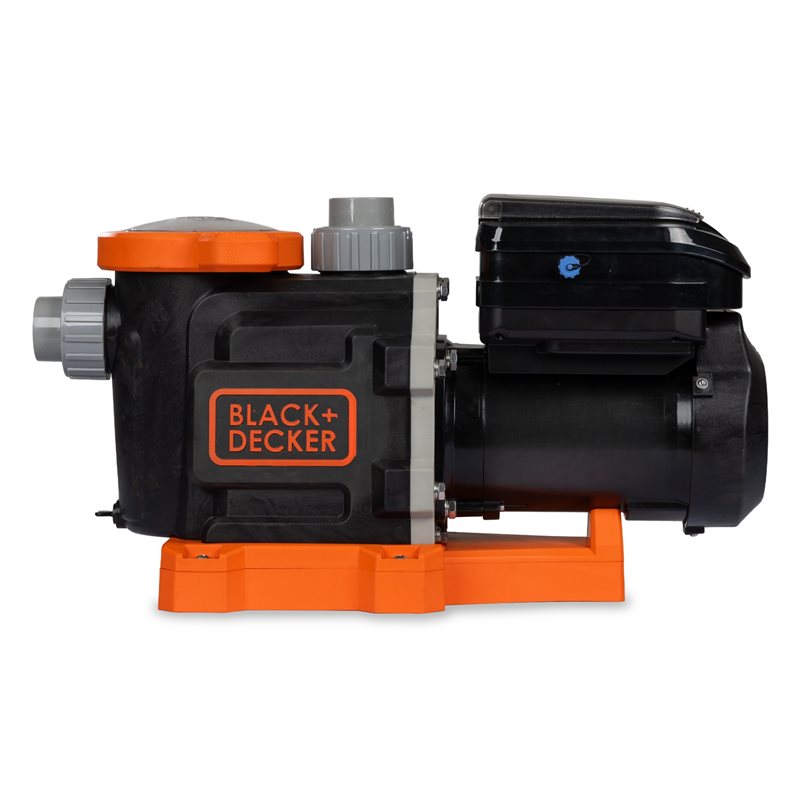
Let's get real: the big brands charge a premium partly because they can. This is the cheapest pump I've tested that delivers true variable speed without making you regret going budget.
Yes, the tool company makes pool pumps now. At around $500–$600 it undercuts the majors by $200–$300, and the permanent magnet motor covers a legitimate 750–3,450 RPM range. On my 12,000-gallon test pool it behaved exactly as the math predicts: big savings over single-speed, quiet at low RPM, adequate flow when opened up. It's Energy Star certified and meets efficiency rules in every state. Check the current price here.
The compromises sit where you'd expect. The housing is lighter than the Hayward or Pentair equivalents, the interface is basic, and there's no WiFi, no advanced diagnostics, and no ecosystem behind it. The parts and service network is thinner, and the long-haul reliability record is still being written.
What makes it great: True variable speed at the lowest price here, simple installation with standard connections, and measured savings that match the big names.
Where it falls short: Build quality, warranty coverage, parts availability, and an unproven long-term track record.
Price: Around $500–$600.
Best for: Budget-focused owners, secondary pumps for water features, or anyone who needs a working VS pump today.
Most Energy-Efficient Pool Pump: LeafPump (1.65 HP)
STILL IN TESTING: The LeafPump hasn't been through my long-term test cycle yet. The performance claims below come from the manufacturer, and I'll update this guide once I've logged a full season on one.
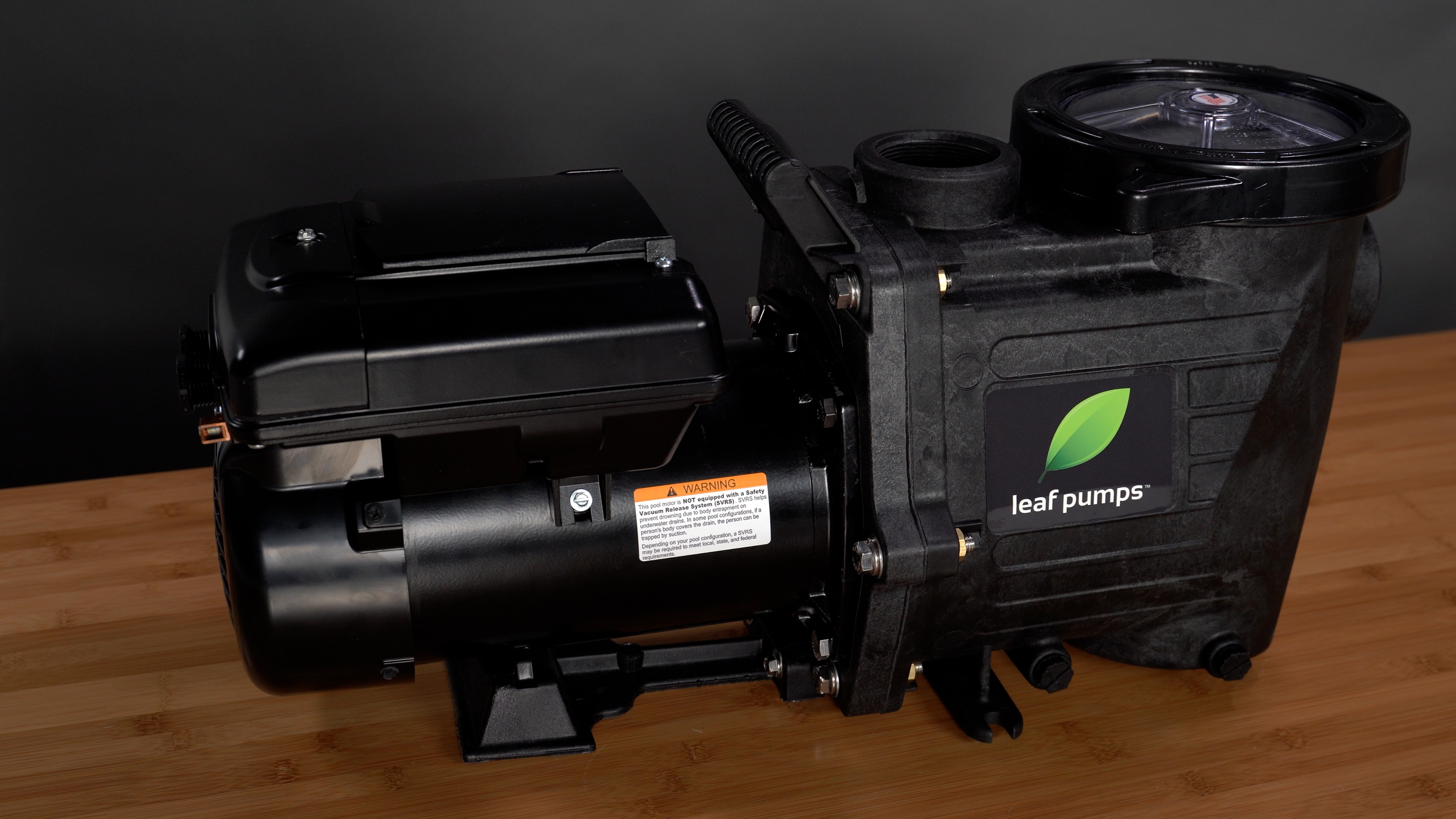
This one is for the efficiency obsessives — my people. The LeafPump is a 1.65 HP variable speed pump built around a single idea: run around the clock at the lowest possible wattage. The company claims as little as 21 watts at its most efficient speed and 3 watts on standby, and calls it the most energy-efficient pool pump made. It's Energy Star certified, spans 600–3,450 RPM on an ECM permanent magnet motor, and comes with a 2-year warranty and a 30-day trial through its dealer network.
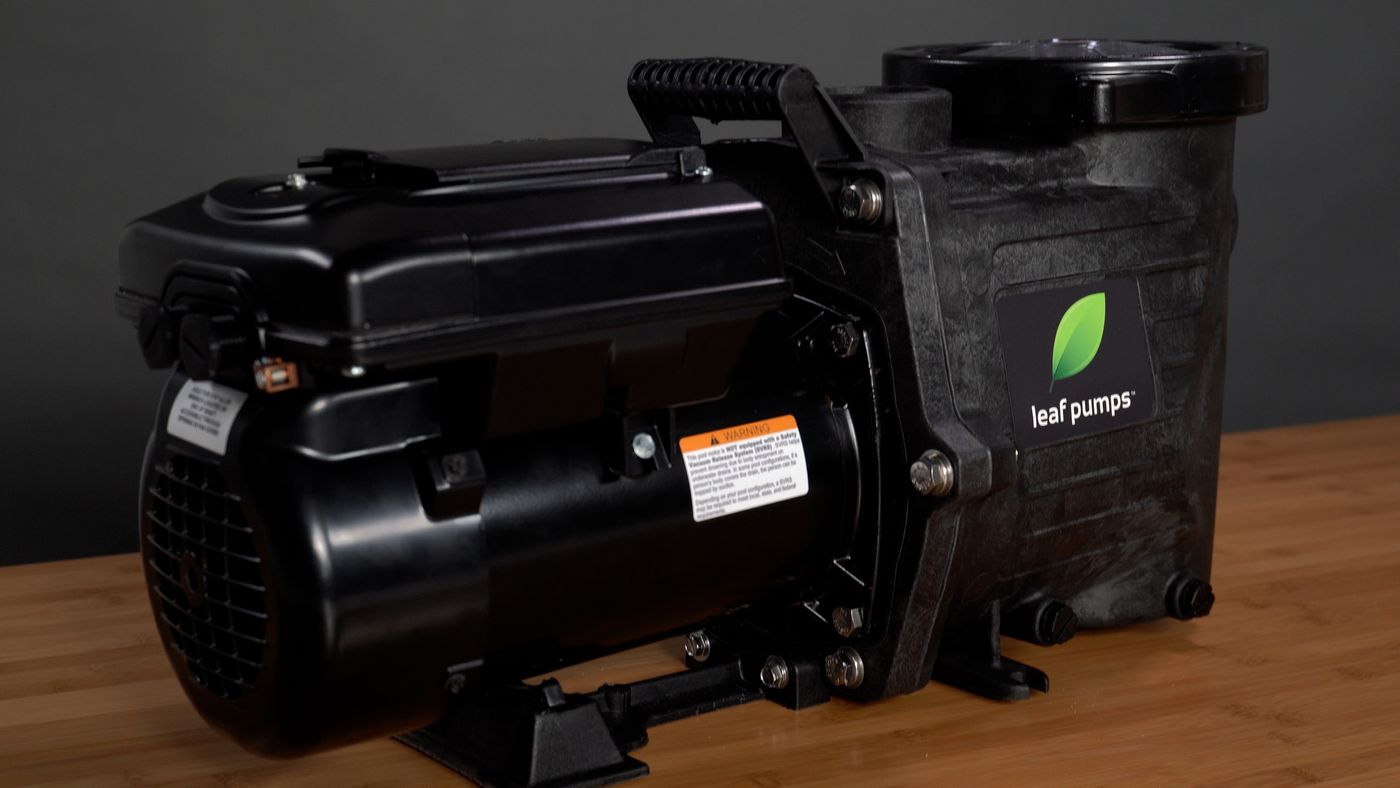
I like the philosophy because it matches how I tell people to run a VS pump anyway: slow and constant. Water that never stops moving doesn't stagnate, chemicals stay mixed, and by LeafPump's own math, 24 hours of continuous low-speed operation costs about what a single-speed burns in one hour. Specs read well too: 2-inch unions, an oversized 2.1-liter strainer basket, built-in freeze protection, a NEMA 3R weather rating, and digital inputs for third-party automation.
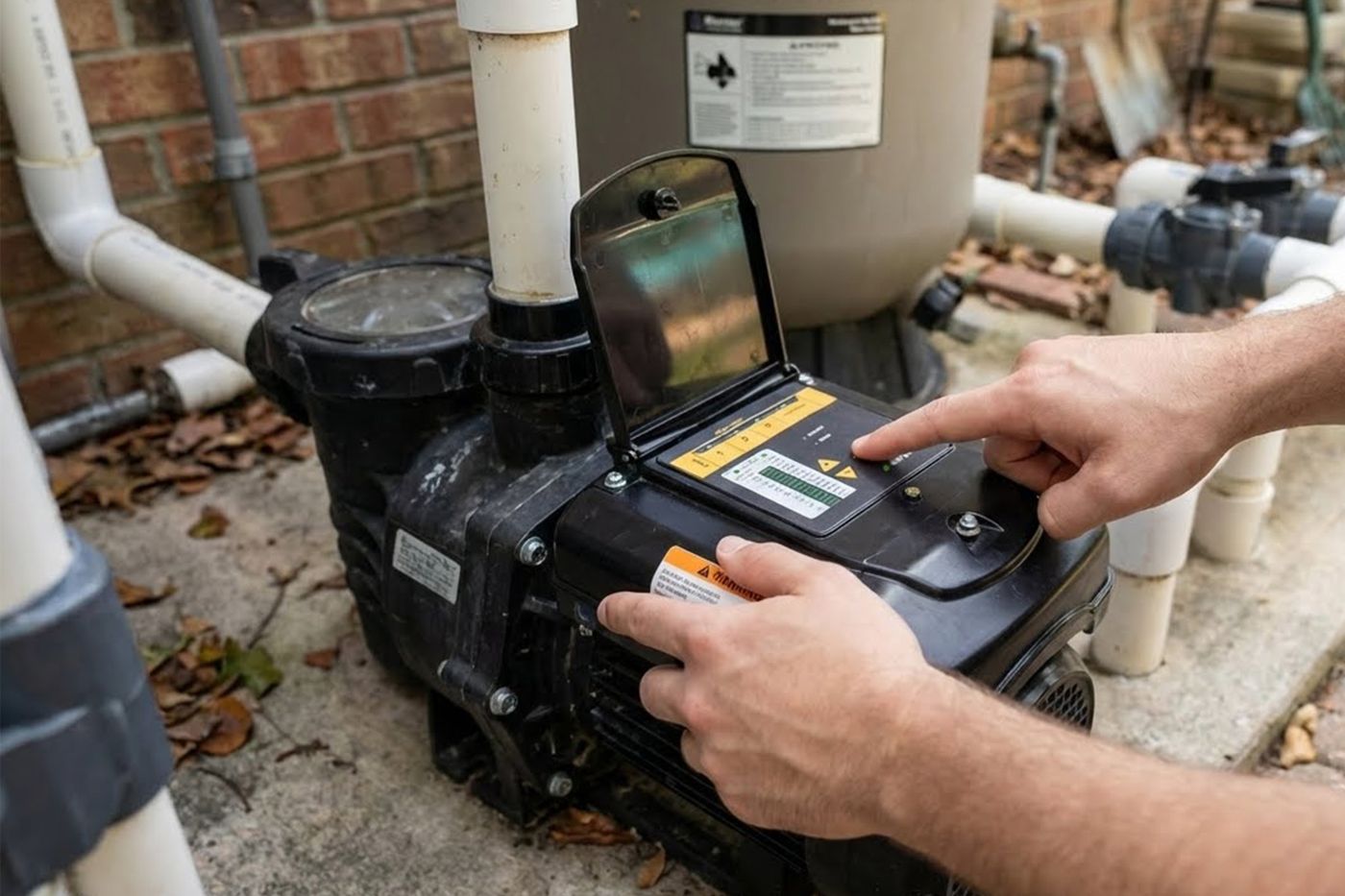
The caveats: it sells through a dealer network instead of big retail, it stores only three speed presets, and there's no app control. And keep in mind that 21-watt figure is the manufacturer's number at its lowest speed — your plumbing determines what you'll actually see.
What makes it great: Aggressive low-speed efficiency claims, Energy Star certification, solid hardware specs, and a 30-day trial that lowers the risk of trying a smaller brand.
Where it falls short: Limited dealer network, only three speed presets, no WiFi, and pricing varies by dealer, so you'll have to call around.
Price: Dealer pricing — see LeafPumps.com.
Best for: Owners committed to 24/7 low-speed circulation who want to chase the lowest possible operating cost.
Read my full LeafPump Review →
Which Variable Speed Pump Is Right for You?
| Your situation | My pick | Why |
|---|---|---|
| Standard inground pool, 10,000–25,000 gallons | Hayward Super Pump VS | Drop-in install, proven hardware, big savings |
| Over 25,000 gallons, spa, or water features | Pentair IntelliFlo 3 VSF | 3 HP headroom, constant flow, built-in WiFi |
| Cramped equipment pad | Hayward MaxFlo VS 500 | Compact body, rotating control head |
| Budget under $600 | Black+Decker 1.5 HP VS | True VS technology at the lowest price |
| Lowest possible operating cost with 24/7 circulation | LeafPump | Lowest claimed wattage of any pump here |
Torn between the two Haywards? Buy the Super Pump VS if you're replacing an existing Super Pump; buy the MaxFlo if space is tight. Torn between Hayward and Pentair? The IntelliFlo 3 earns its premium only if you'll use the flow control, the app, or the extra horsepower. If you won't, keep the difference.
Installation: What to Know Before You Buy
Electrical: Most VS pumps want 230V, though the Hayward picks run dual voltage. Swapping an existing 230V single-speed is straightforward; going from 115V to 230V means new wire and a breaker, which is a job for a licensed electrician. The good news: VS pumps draw less current at normal speeds, so existing wire gauge is usually adequate — verify on long runs.
Plumbing: Many VS pumps are drop-in replacements. The Super Pump VS matches the standard Super Pump, while the IntelliFlo and LeafPump use the 2-inch unions common on modern builds. Different connection sizes just mean adapters or light PVC work — manageable for a handy homeowner.
How Long Should You Run a Variable Speed Pump?
This is the question I get most, so let's nail it down. The goal is at least one full turnover of your pool's volume every day, and the cheapest way to get there is low and slow.
Do the math once: divide your pool volume by your target turnover time (8–12 hours) to get the GPM you need, then find the lowest RPM that delivers it. Use my pool pump size calculator if you want it done for you. For most pools that lands between 1,200 and 1,800 RPM — start at 1,400 and adjust based on water clarity.
In practice that means 12–16 hours a day at low speed, plus a 2–3 hour cycle at 2,400–2,800 RPM for cleaning duty. And because the affinity laws are so lopsided, running 24/7 at 600–1,000 RPM can cost less than four hours of single-speed operation. That's my favorite setup: water that never stops moving stays clearer, holds steadier chlorine, and never gives algae a chance to take hold.
Two programs cover most pools — low speed most of the day, a short medium-speed burst for cleaning. Skip the factory defaults; they're tuned to work everywhere, not to save money on your pool. The full reasoning is in how long to run your pool pump.
Variable Speed Pump FAQ
How much will a variable speed pump save me?
In my experience, most owners save $30–$50 a month during swim season after switching from single-speed — $200–$400 a year — with full payback inside two to three seasons before rebates. The DOE's own estimate puts average life-cycle savings for inground pool owners around $2,140.
What speed should I run my VS pump at?
Daily filtration: 1,200–1,800 RPM, starting at 1,400. Vacuuming, cleaners, and water features: 2,400–3,000 RPM.
Will a VS pump work with my suction-side cleaner?
Yes, with a dedicated higher-speed program. Most suction cleaners need roughly 40–50 GPM, which low-speed filtration won't supply, so schedule a 2,200–2,800 RPM cleaning cycle. Better yet, retire the suction cleaner for a corded robot like a Dolphin — it cleans better and doesn't rely on your pump at all.
Can I install a VS pump myself?
The plumbing side is basic PVC work if you're handy. The electrical side often means 230V, which belongs to a licensed electrician in most jurisdictions — and some warranties require professional installation. A like-for-like 230V drop-in is a reasonable DIY.
Do I need a separate timer?
No. Every pump in this guide has onboard scheduling. External timers are obsolete with VS technology.
How long do variable speed pumps last?
Expect 8–12 years with basic maintenance. The permanent magnet motor takes less stress than a single-speed running flat out; the electronics are the watch item, which is one more reason to favor established brands.
What's the difference between VS and VSF?
A VS pump holds a speed — you set the RPM. A VSF pump holds a flow — you set the GPM and it adjusts speed automatically as conditions change. VSF costs more and earns it on pools with heaters, salt cells, or resistance that changes often.
My pool store says I don't need a variable speed pump. Are they right?
Ask what's on the shelf behind them. In my experience, pool stores and builders tend to recommend what they stock and what pays them best. If they're steering you toward a major-brand VS pump, fine — take the local support. If they're pushing a single-speed to save you money, the math stopped supporting that argument years ago — and federal efficiency rules have mostly pulled those pumps off the market anyway.
My Final Verdict
Variable speed isn't an upgrade anymore — it's the standard, by physics and by federal rule. For most pool owners, the Hayward Super Pump VS is the pick: proven, efficient, and a painless swap. If your pool is big, complicated, or wired into a smart home, the Pentair IntelliFlo 3 VSF earns every dollar of its premium. Tight pad, take the MaxFlo VS 500. Tight budget, take the Black+Decker. And if you want to squeeze every last watt out of 24/7 circulation, give the LeafPump a look.
Whatever you pick, stop feeding that old single-speed. The technology moved on years ago — it's time your electric bill caught up.
GET THE BEST POOL GEAR DEALS
I post the freshest discounts on pumps, robots, and monitors at ThePoolNerd.com/deals. Want to keep nerding out on pool equipment? Subscribe to The Pool Nerd on YouTube for weekly reviews and head-to-heads. Until next time — enjoy that pool.
Related Reading
- Best Pool Pumps — The full guide: budget, above-ground, single-speed, and booster pumps
- How Long To Run Your Pool Pump — The variable speed schedule I actually run
- Pool Pump Size Calculator — Get your target GPM before you buy
- LeafPump Review — My full look at the VS pump built for 24/7 low-RPM operation
- Must-Have Pool Equipment — The 6 upgrades that cut my maintenance by 90%
- Best Chlorine Injection System — Pair steady circulation with automated dosing