
 Justin D.
Let's get real for a minute. Owning a pool is one of the best things you can do for your backyard. But it also comes with one of the most serious responsibilities a homeowner can carry. Drowning is the leading cause of unintentional death for children ages 1 to 4 in the United States, and most of those tragedies happen in residential pools.
Hey there, I'm Justin, your resident pool aficionado. After testing pool equipment for over five years in my own test pool, I've learned one thing about pool safety that most homeowners get wrong. Safety isn't about finding the one magic product that protects everyone. It's about layers. The more layers you put between the back door and the deep end, the more time you buy yourself to react when something goes wrong.
Today I want to walk you through every type of pool alarm on the market, what each one actually does, where each one falls short, and how to combine them into a setup that actually keeps your family safe. There's a ton of marketing fluff out there, so I'll cut through it and tell you what's worth your money in my experience.
Best Pool Alarms at a Glance


The short answer: the strongest setup pairs a camera-based system like the SwamCam with TECHKO S187D alarms on every door and gate, and a floating water alarm like the BCONE or KLOVRA as your final backup. No single alarm does it all — and anyone telling you otherwise is selling you something.
Why One Pool Alarm Isn't Enough
Here's the thing most pool owners get wrong. They buy one floating sensor, toss it in the deep end, and figure they're covered.
That's not how pool safety works.
The U.S. Consumer Product Safety Commission (CPSC) is pretty clear on this. Alarms are meant to be part of a broader safety system, not the only thing protecting your pool. Even the best alarm on the market is a reactive device. It tells you something has already happened. By the time it goes off, a child could already be in the water.
What you want is layers. Each layer catches a different scenario. Each layer gives you more reaction time. And when you stack them, you go from "I hope nothing bad happens" to "if something happens, I'll know about it before it becomes a tragedy."
The Five Layers of Pool Safety
In my opinion, every pool needs five layers of protection:
- A physical barrier — a fence with a self-closing, self-latching gate
- Door and gate alarms
- A camera-based alert system
- A water-entry alarm
- Active adult supervision
Notice that alarms are layers two through four. They surround the physical barrier and they back up adult supervision. They don't replace either.
If you can only afford one upgrade today, start with door and gate alarms. They alert you before anyone reaches the water — which is the most valuable warning you can buy.
Layer 1: The Physical Barrier (Non-Negotiable)
Before we even get into alarms, I have to say this. If your pool isn't fenced with a self-closing, self-latching gate, no alarm system is going to fix that. A four-foot minimum fence around the pool with a gate that latches above a child's reach is the single most effective drowning-prevention measure that exists.
Most states and HOAs already require this for new pool installations. If your pool was built before those codes existed, or if you've let the fence and gate fall into disrepair, fix that first. Everything else in this guide is meant to back up your fence, not replace it.
Layer 2: Door and Gate Alarms — TECHKO S187D
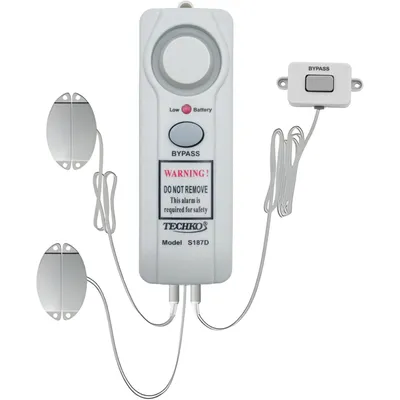
BEST DOOR & GATE ALARM: UL-compliant, around $50, and it screams the second a door opens. The cheapest insurance policy you can buy.
This is the most underrated layer in pool safety, and it's the one I think every pool owner should add today.
Here's the kicker. The vast majority of childhood drownings happen when a kid wanders out of the house unsupervised. They slip out the back door, head straight for the pool, and nobody knows they're missing for several minutes. A door or gate alarm closes that gap immediately.
You want an alarm that screams the moment that door opens. Loud. Annoying. Impossible to ignore. You also want one mounted tall enough that small kids can't reach the bypass button.
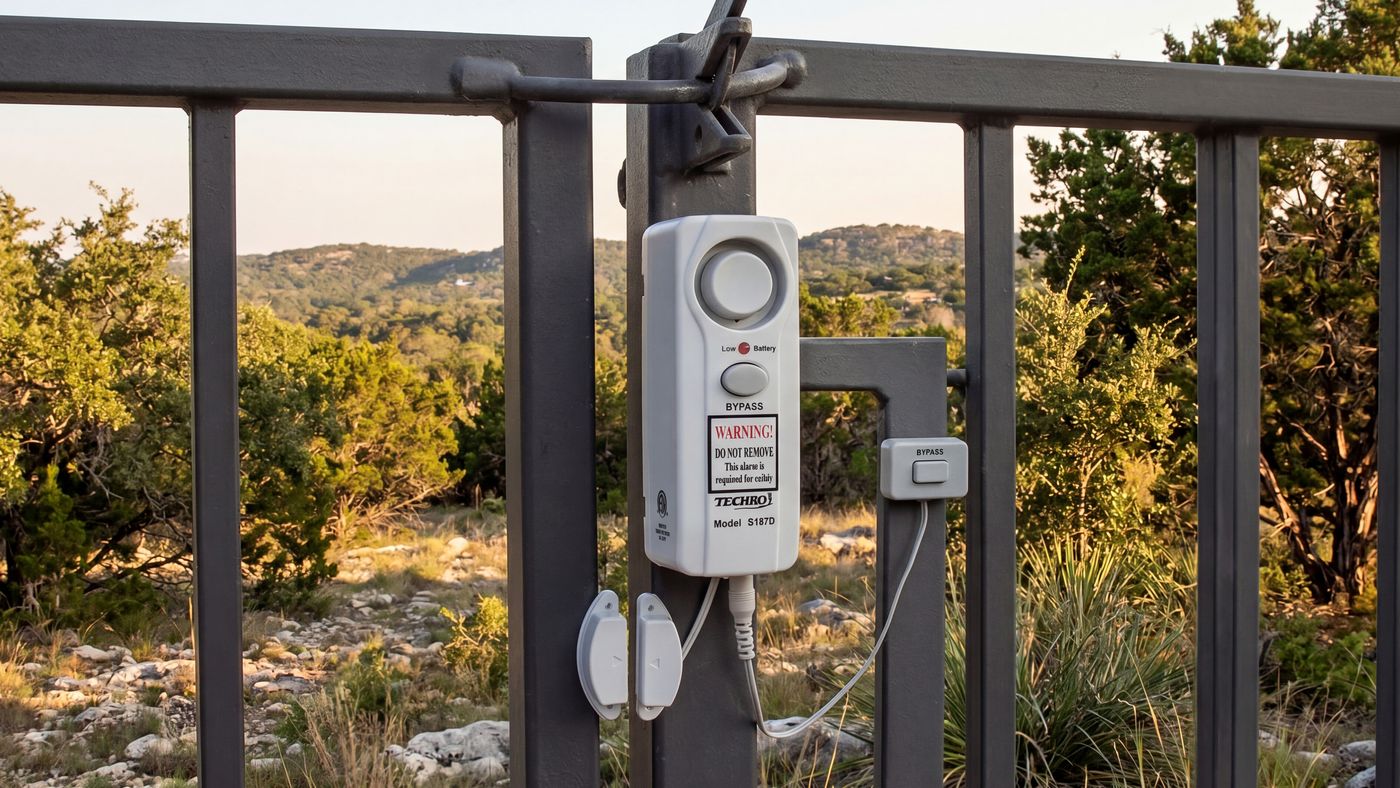
The TECHKO S187D is the one I keep recommending to friends who are adding their first safety layer. It's UL-compliant, runs around $50, and it's one of the easiest installs you'll ever do.
Why it works in my testing:
- Mounts high enough that small kids can't reach the bypass button
- Loud enough to hear from anywhere in the house
- Works on doors, gates, and even windows
- Battery-powered, so there's no wiring to mess with
- Meets ASTM safety standards for pool door alarms
If your back door opens straight to the pool deck, this is the cheapest insurance policy you can buy. In my opinion, you should put one on every door and gate that leads to the pool area, not just the main one. Kids are creative. If there's a side gate or a sliding door you forget about, that's exactly where they'll go. Check the current price here.
Covering Every Entry Point on a Budget
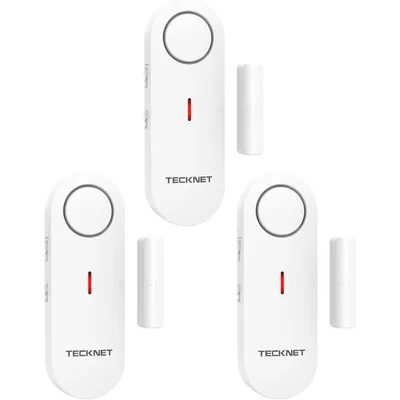
For the secondary doors, windows, and fence gates, a multi-pack of door and fence alarms gets the job done cheap. For a few hundred bucks total, you can cover every entry point in your house. That's incredible peace of mind for the price.
Layer 3: Camera Systems — SwamCam
BEST CAMERA SYSTEM: AI person detection, instant phone alerts, a loud onboard siren, and a built-in Wi-Fi repeater. The closest thing to a smart-home safety system built specifically for pools.
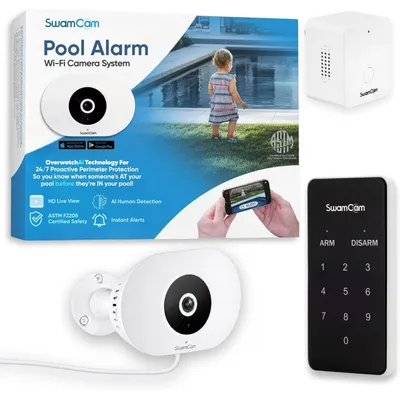
This is where pool safety has gotten genuinely exciting over the last few years. Modern camera systems use AI person detection to alert you before someone even gets in the water. That's a massive difference compared to old-school floating sensors that only trigger after the fact.
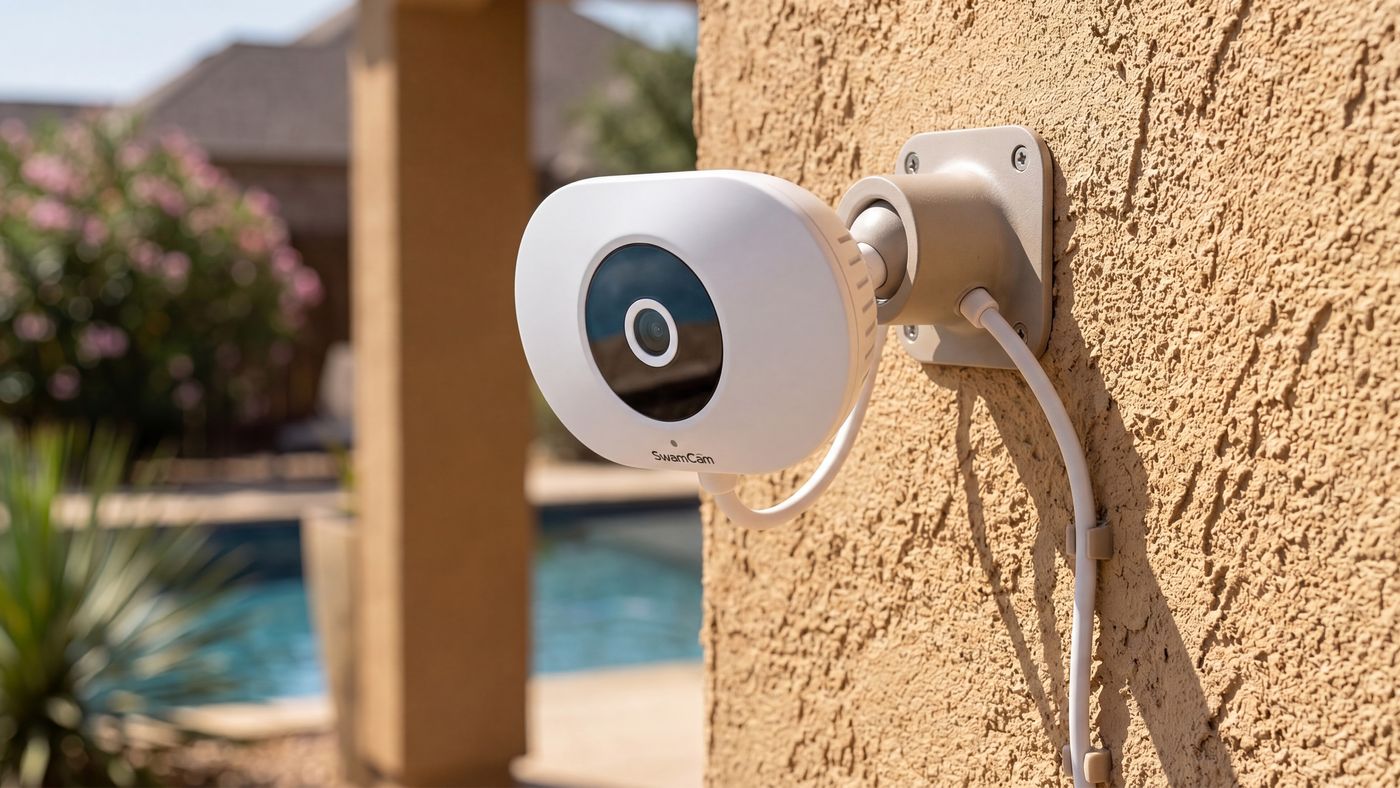
In my experience testing different camera-based pool monitoring options, SwamCam stands out as the most polished setup on the market right now. It's purpose-built for pool monitoring, which matters more than people realize. A generic security camera doesn't know the difference between a leaf blowing across the pool and a child walking up to it. SwamCam does.
What makes it different:
-
AI person detection that filters out wind, leaves, pets, and random motion
-
Real-time smartphone alerts the moment a person enters the pool zone
-
Live camera feed so you can verify what's happening from anywhere
-
Loud onboard siren that activates instantly on detection
-
Built-in Wi-Fi repeater, which is huge if your pool sits at the back of your yard
-
Way fewer false alarms compared to older wave-detection sensors
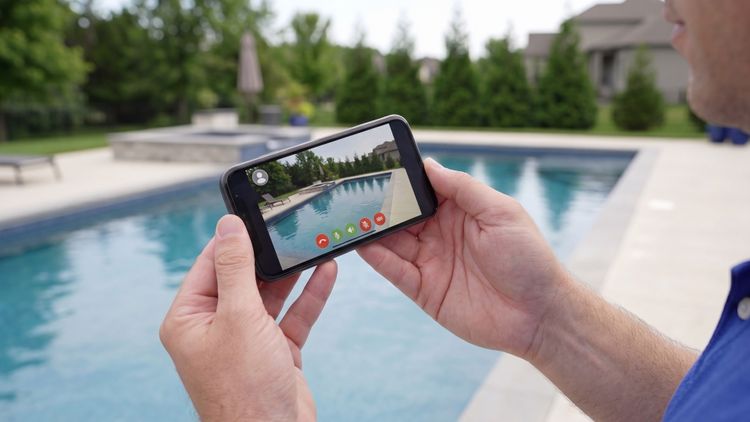
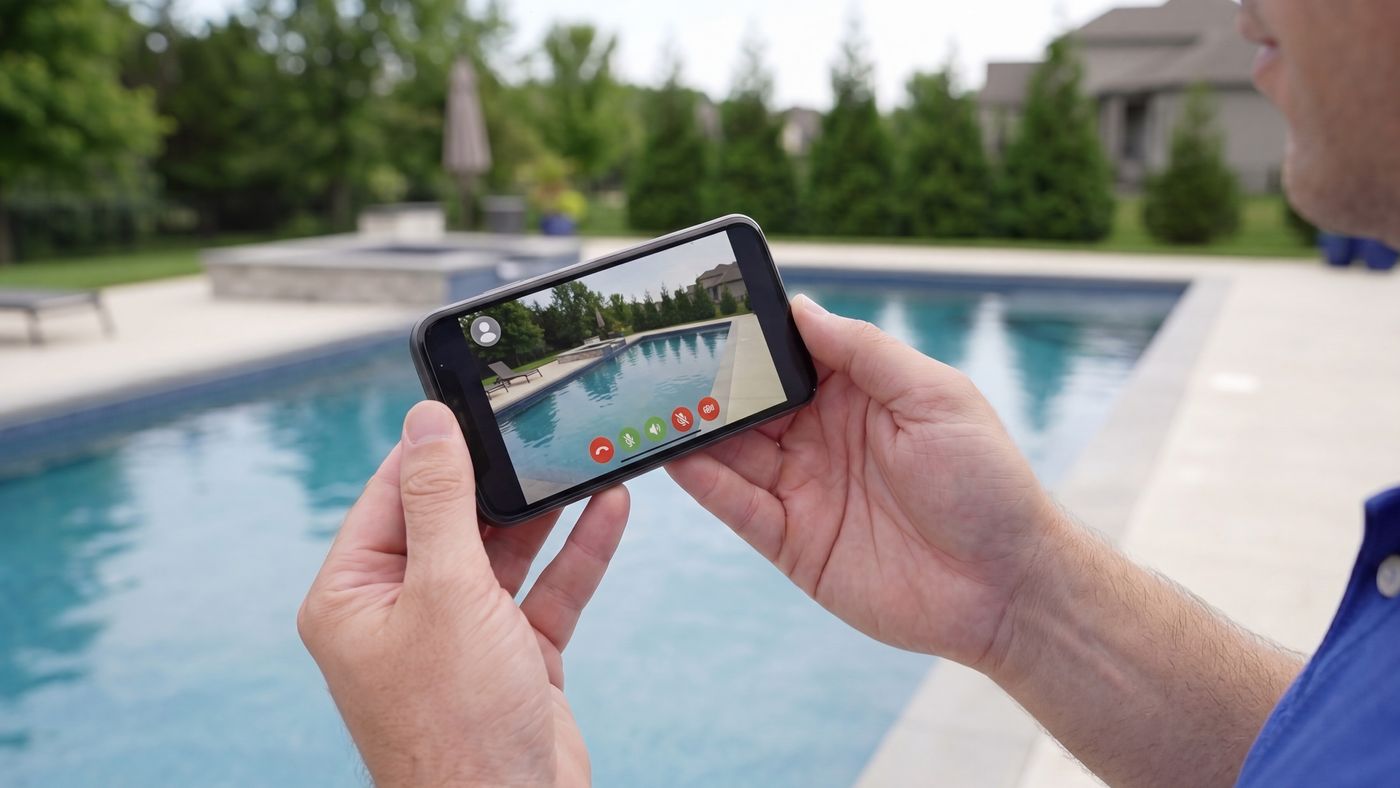
Real-time alerts and a live feed — visual confirmation of exactly what triggered the alarm // The Pool Nerd
SwamCam comes in two main configurations. The single-camera version handles smaller pools and tighter pool areas. The dual-camera system with a keypad covers larger pools and lets you arm and disarm the system right at the pool deck — which is a feature I really like because it removes the friction of pulling out your phone every time you want to swim.
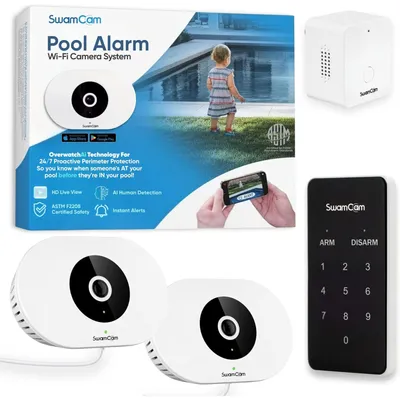
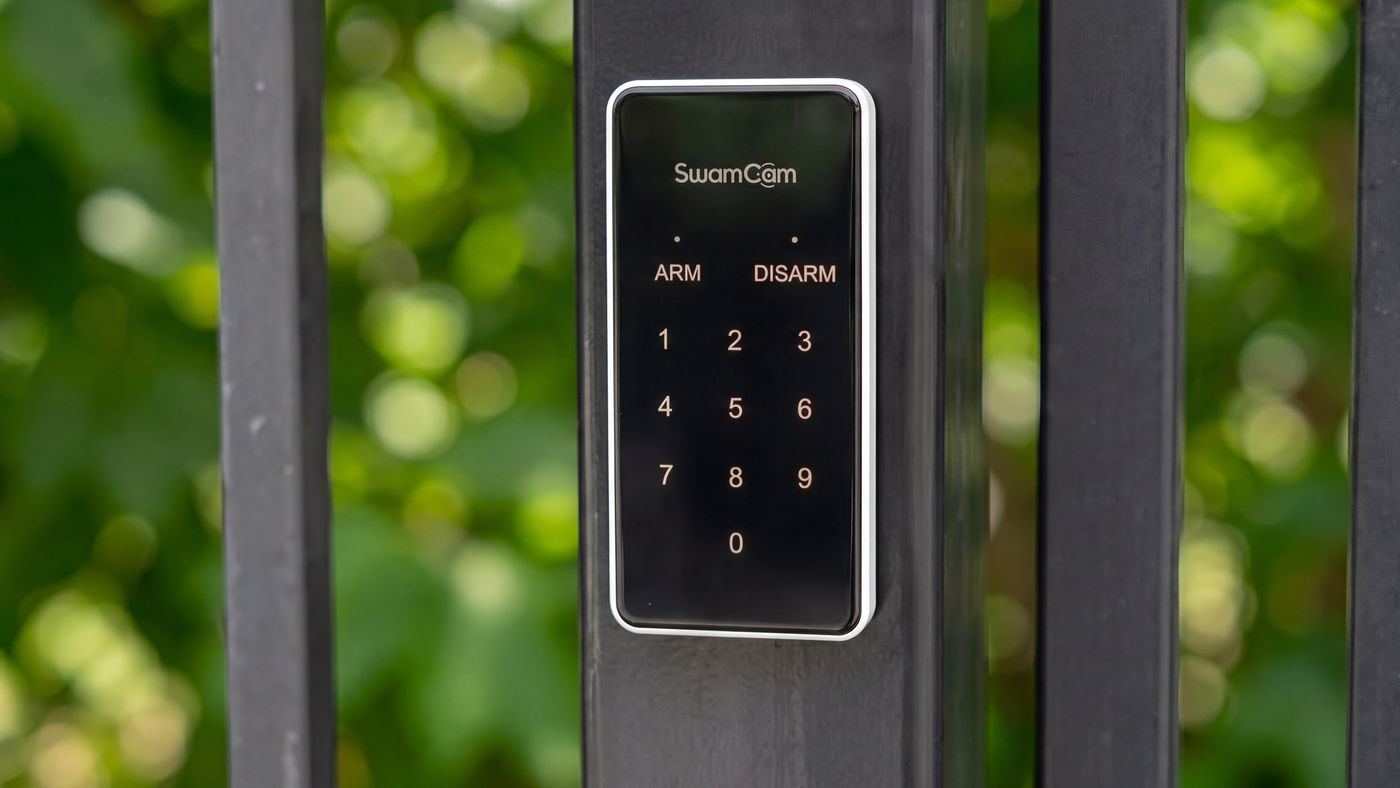
In my opinion, this is the closest thing pool owners have right now to a modern smart-home safety system built specifically for pools. The advantage over older wave-detection alarms is dramatic. Fewer false alarms. Faster alerts. And the visual confirmation lets you immediately see what triggered the alarm so you're not running outside every time a frog hops in.
If you have young kids, grandkids who visit often, or you're just the kind of pool owner who wants the strongest possible safety setup, a camera system like SwamCam should be at the top of your list. Check the current price on the single camera here, or the dual camera system with keypad here.
The Budget Camera: Ring Outdoor Cam
BEST BUDGET CAMERA: No pool-specific AI, but motion alerts, live video, and two-way talk for a fraction of the price. Dramatically better than nothing.
If a dedicated pool camera system isn't in the budget right now, even a good outdoor smart camera pointed at the pool is dramatically better than nothing. A lot of pool owners already have Ring, Nest, Wyze, or Blink cameras around their property. Repurpose one for the pool.
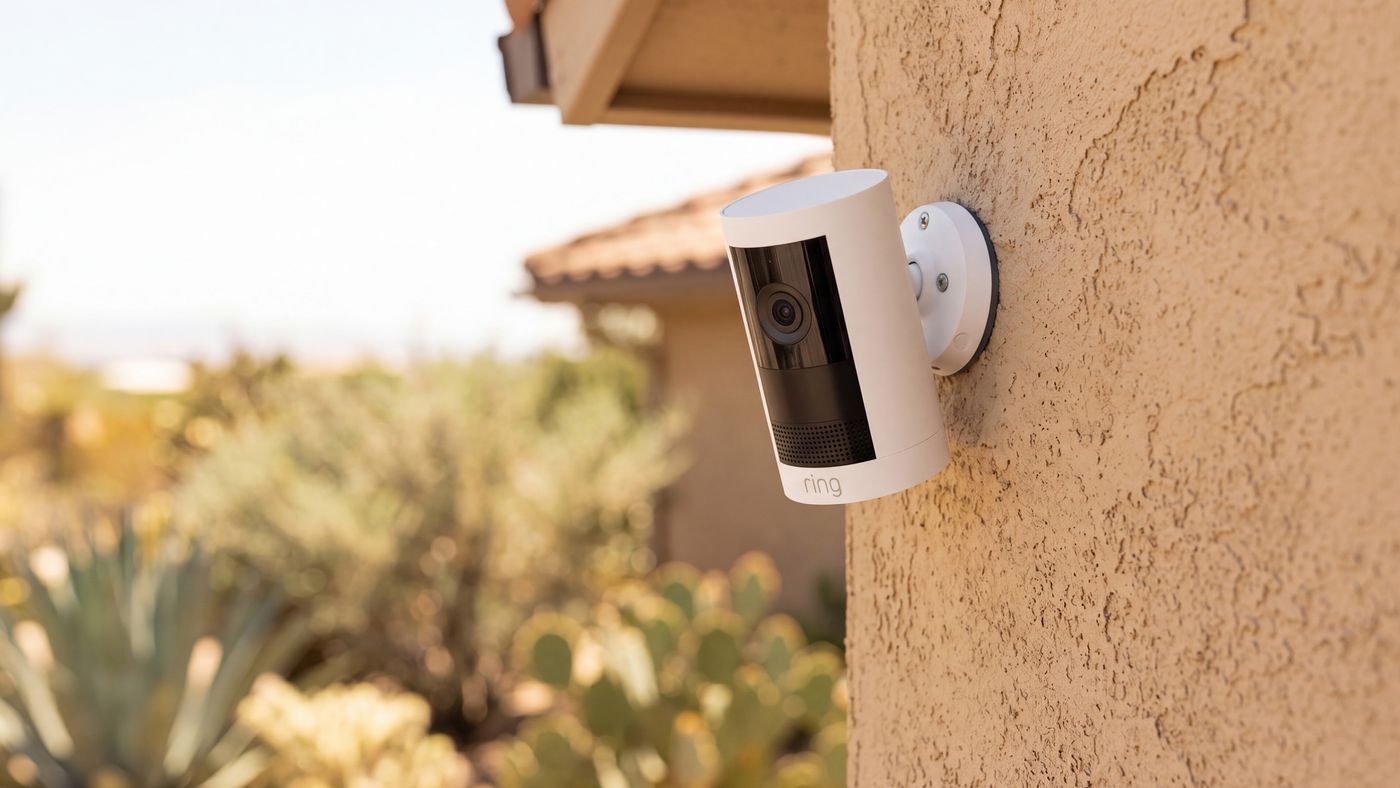
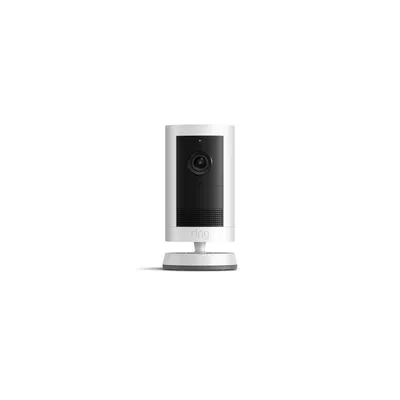
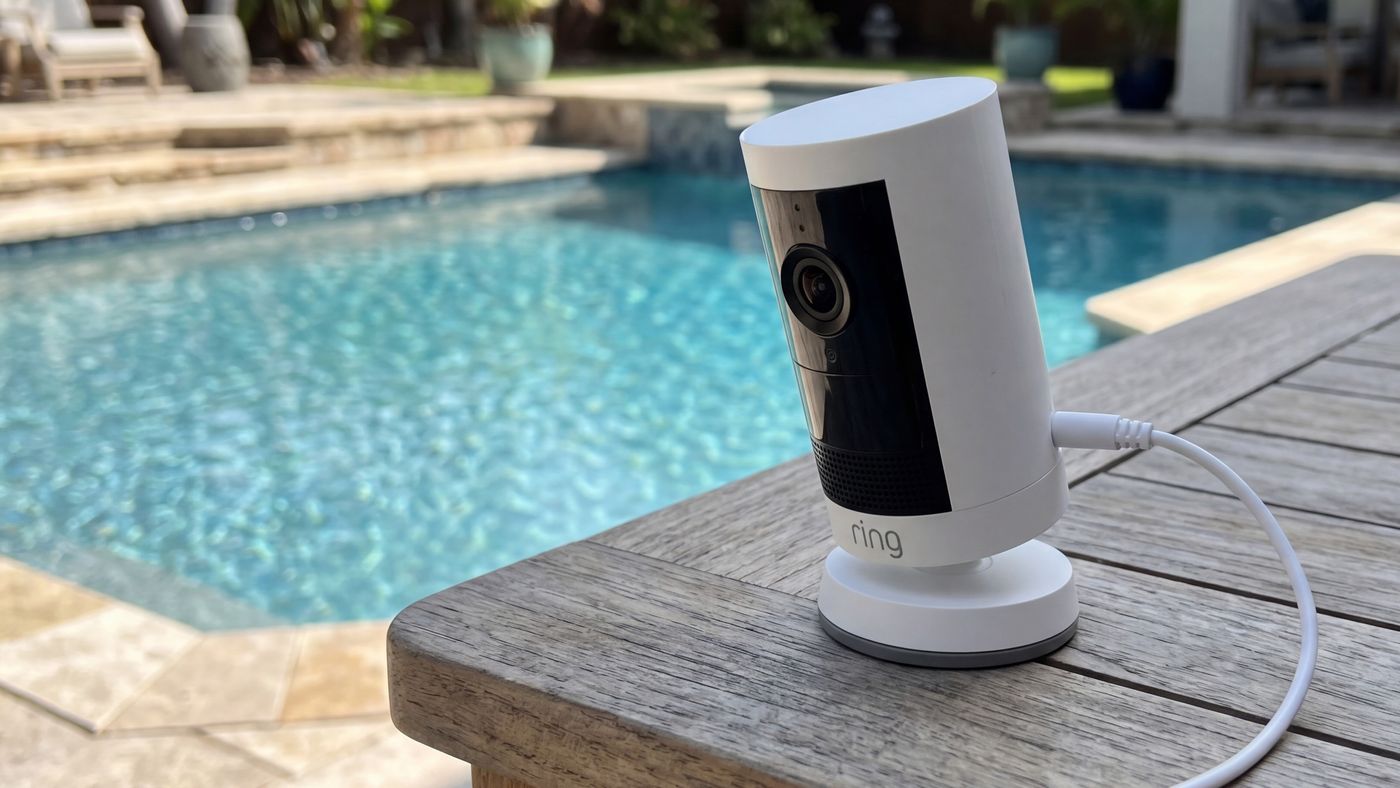
The Ring Outdoor Cam is a solid budget pick. You won't get pool-specific AI detection, but you will get:
-
Motion alerts pushed to your phone
-
Live video feed you can pull up anytime
-
Two-way talk so you can call out to a curious kid
-
Night vision for evening peace of mind
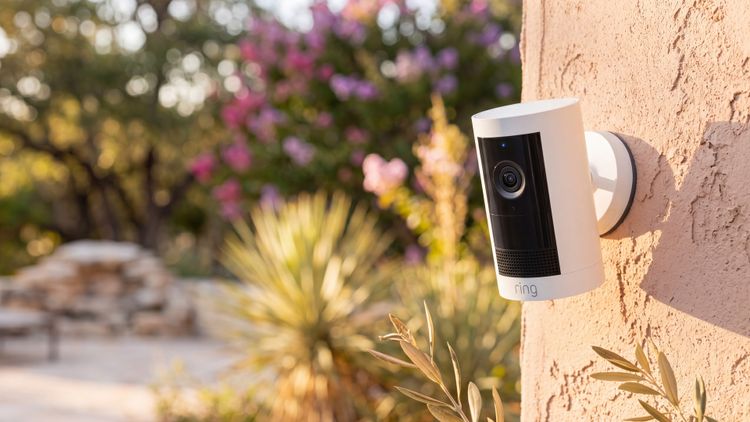
Mount it high with a clear view of the whole pool area // The Pool Nerd
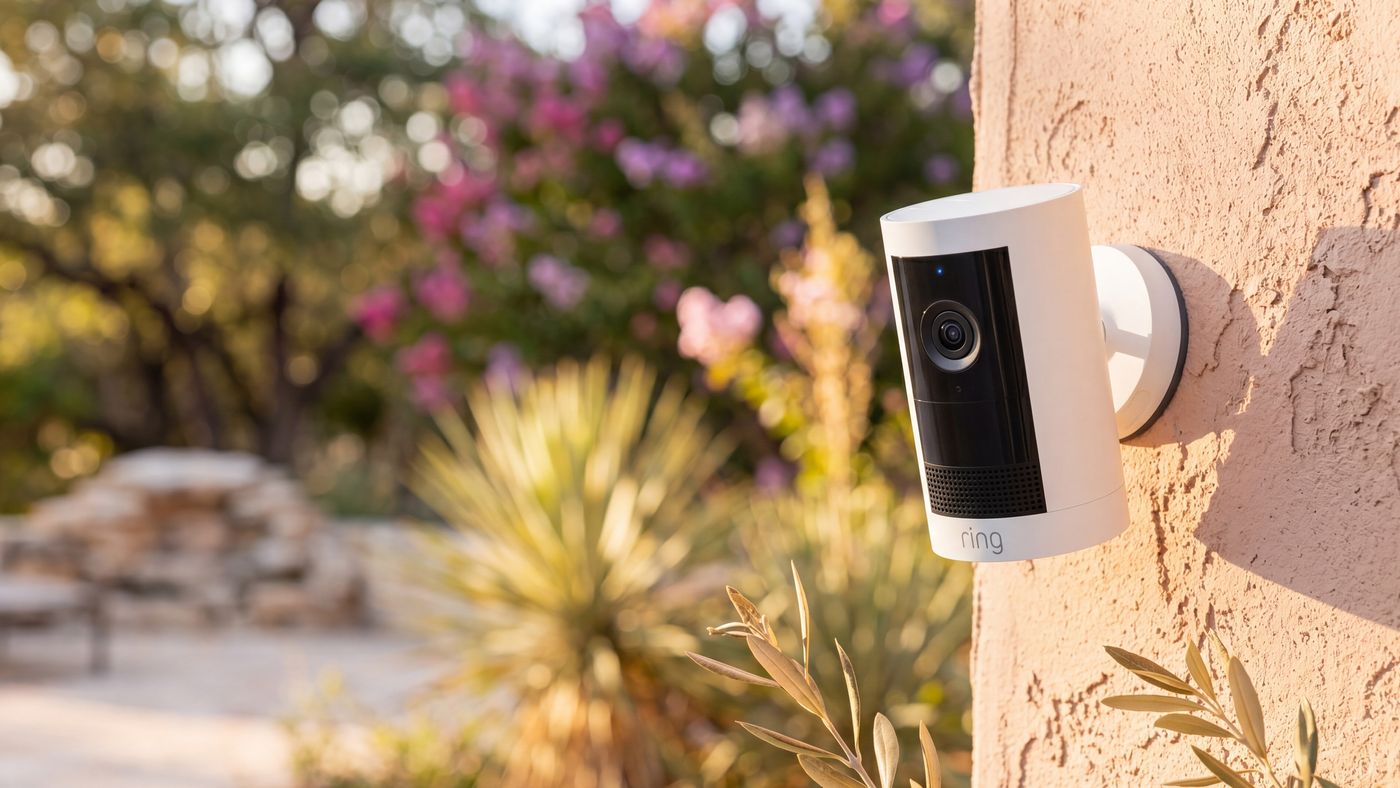
Pair a Ring with a gate alarm and a self-latching fence, and you've already built a meaningful safety setup for well under $200. That's not the ideal system, but it's a real one, and it's way better than what most pool owners have today. Check the current price here.
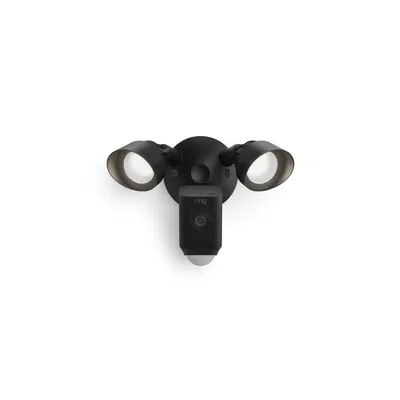
If you want a hardwired option with a brighter deterrent, the Ring Floodlight Cam Wired adds motion-activated floodlights on top of the same alerts — a nice fit if your pool area doubles as your backyard's main night lighting.
Layer 4: Water-Entry Alarms — BCONE and KLOVRA
These are the floating or surface-mounted alarms that detect when something actually breaks the water. They're the backup layer. The "if everything else failed" alert.
I want to be careful with how I talk about these. Floating alarms have real value, but they also have real limitations that I see overhyped in marketing all the time.
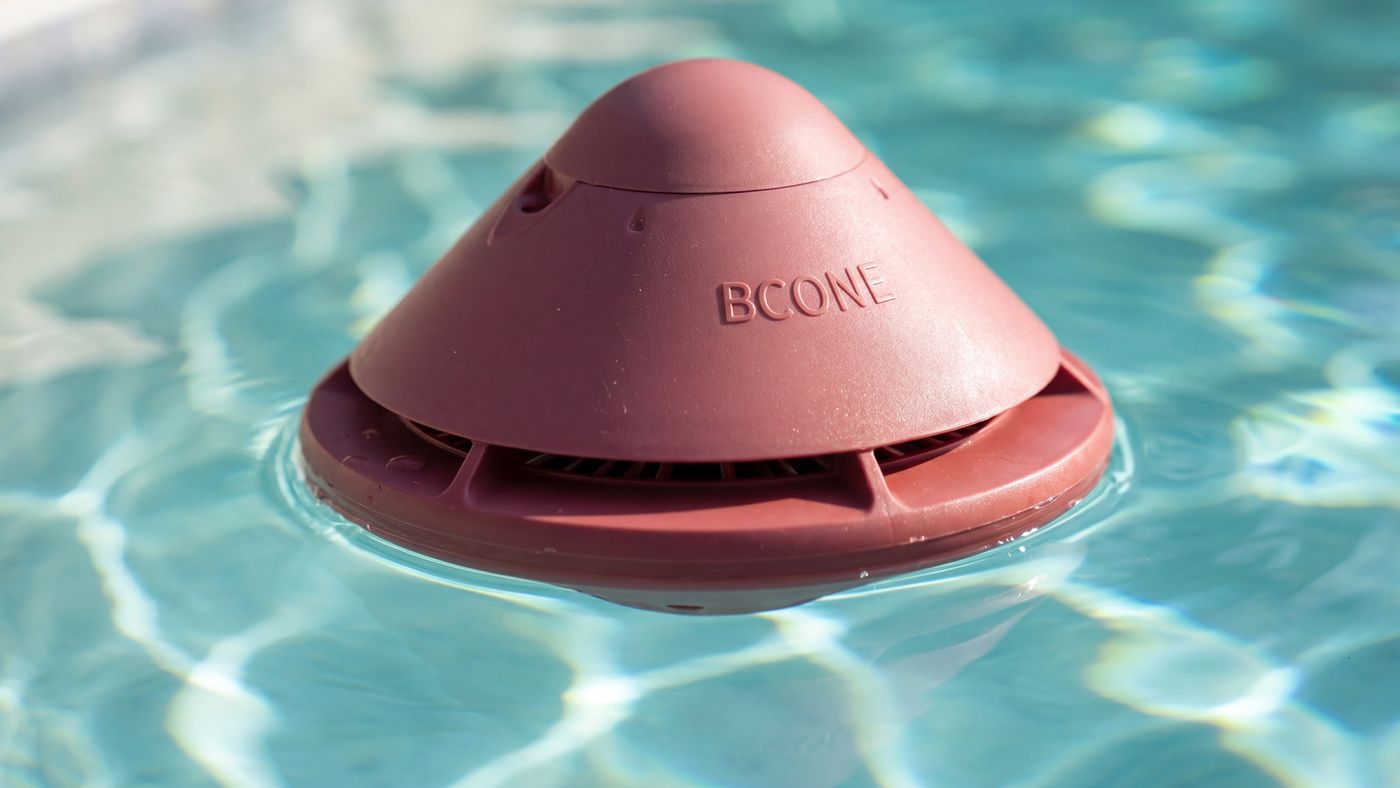
What I like about floating alarms:
- They're cheap — most run between $50 and $200
- Stupid easy to install — drop in pool, pair the receiver, done
- They give you a final safety net if a child somehow gets past everything else
Where they fall short:
- Wind and rain can trigger false alarms, which leads to alarm fatigue over time
- Placement matters a lot — a poorly placed sensor can miss entries on the opposite side of the pool
- They only alert you after entry, which means you've already lost the most valuable reaction time
- Easy to forget to re-arm after swim time
My Picks: BCONE and KLOVRA
BEST FLOATING ALARMS: Both get the job done at a reasonable price. Use one as your backup layer — never your only layer.
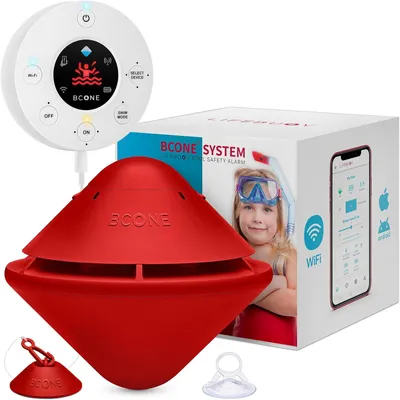
Both the BCONE and KLOVRA are solid floating pool alarms that get the job done at a reasonable price. The BCONE is a more traditional surface-mounted alarm with a loud onboard siren, and the KLOVRA offers a similar floating design with mobile alerts on certain models.
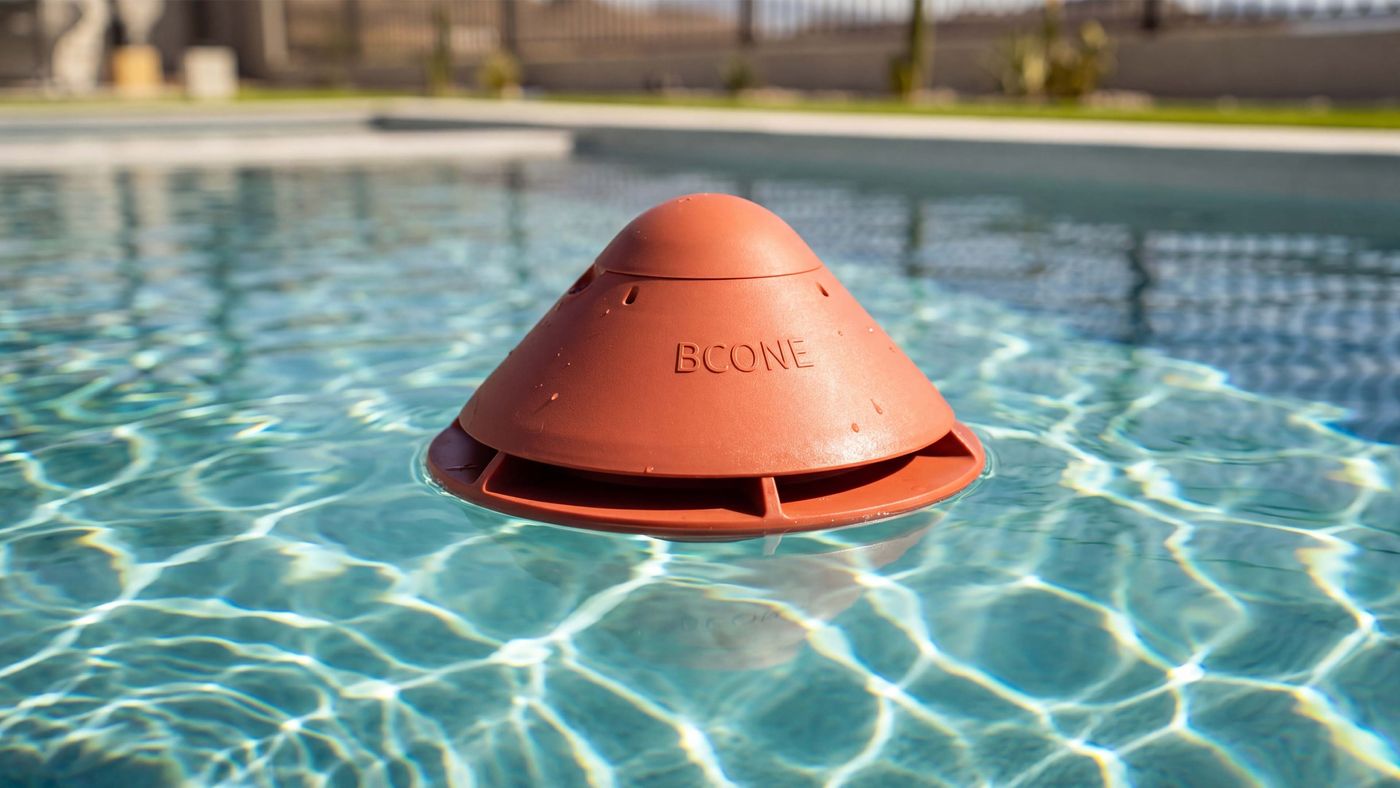
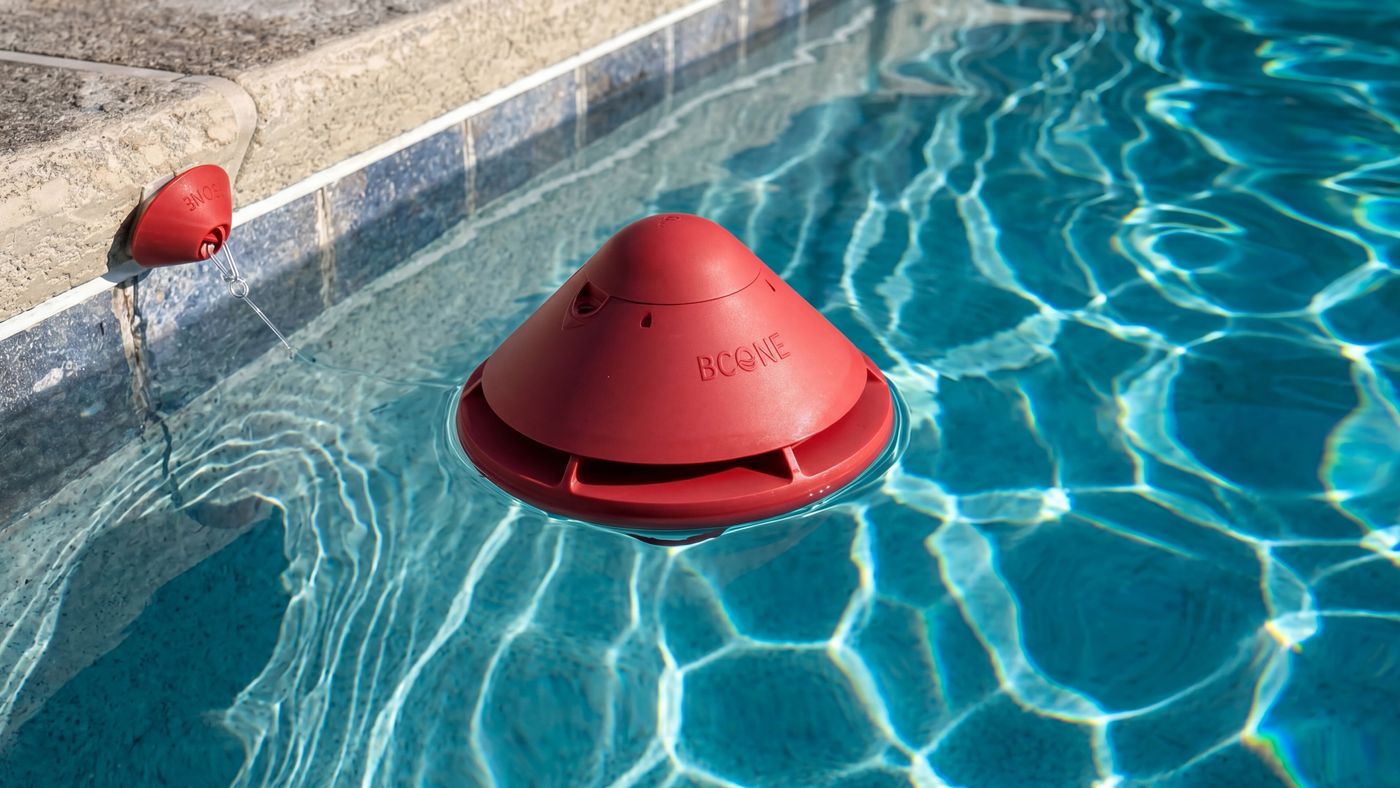
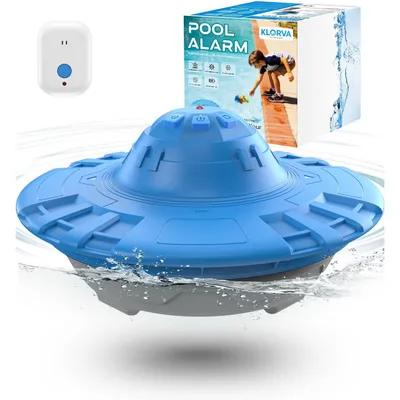
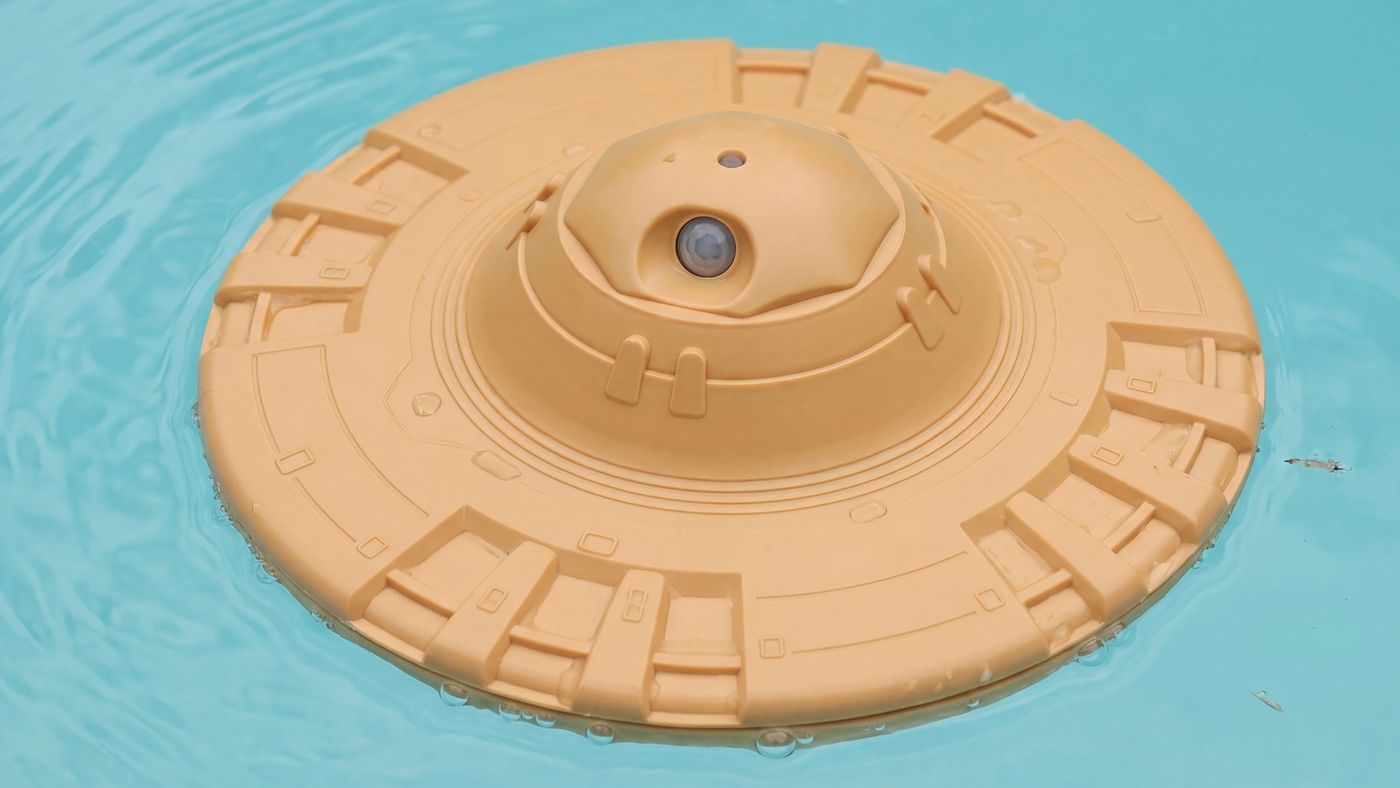
My take? Use one of these as your backup layer, not your primary one. Drop it in your pool, set the receiver inside the house, and treat it as the last line of defense. Don't ever let it be the only line. Check the BCONE's price here or the KLOVRA's price here.
Pool Alarm Comparison at a Glance
| Feature | SwamCam Camera System | TECHKO S187D Gate Alarm | BCONE / KLOVRA Floating Alarm |
|---|---|---|---|
| Type | AI camera system | Gate / door alarm | Floating water alarm |
| Smartphone alerts | Yes | No | Some models |
| Alerts before water entry | Yes | Yes | No |
| Detects water disturbance | No | No | Yes |
| False alarm resistance | High | High | Medium |
| Install difficulty | Medium | Easy | Very easy |
| Best use | Full pool monitoring | Fence / gate protection | Backup water detection |
| Price range | Premium | Budget | Mid-range |
Putting It All Together: My Recommended Setups
Here's how I'd build a safety system depending on your situation.
The Best Overall Setup (What I'd Personally Run)
- Self-closing, self-latching pool fence
- TECHKO S187D alarms on every door and gate
- SwamCam dual-camera system covering the pool
- BCONE or KLOVRA floating water alarm as a backup
- Active adult supervision any time the pool is in use
This gives you early warning before anyone reaches the water, immediate alerts if a gate opens, visual confirmation of what's happening, and a final backup if someone actually enters the pool. That's a real safety system.
The Smart Budget Setup
-
Self-closing, self-latching pool fence (already required in most areas)
-
TECHKO S187D alarms on every door and gate
-
Ring Outdoor Cam pointed at the pool
-
Optional floating water alarm as a final backup
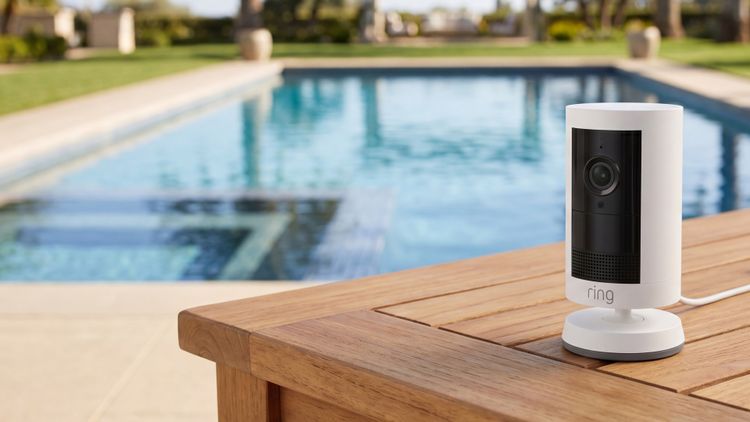
For under $300 in alarms and cameras, you've covered the three most important alert layers // The Pool Nerd
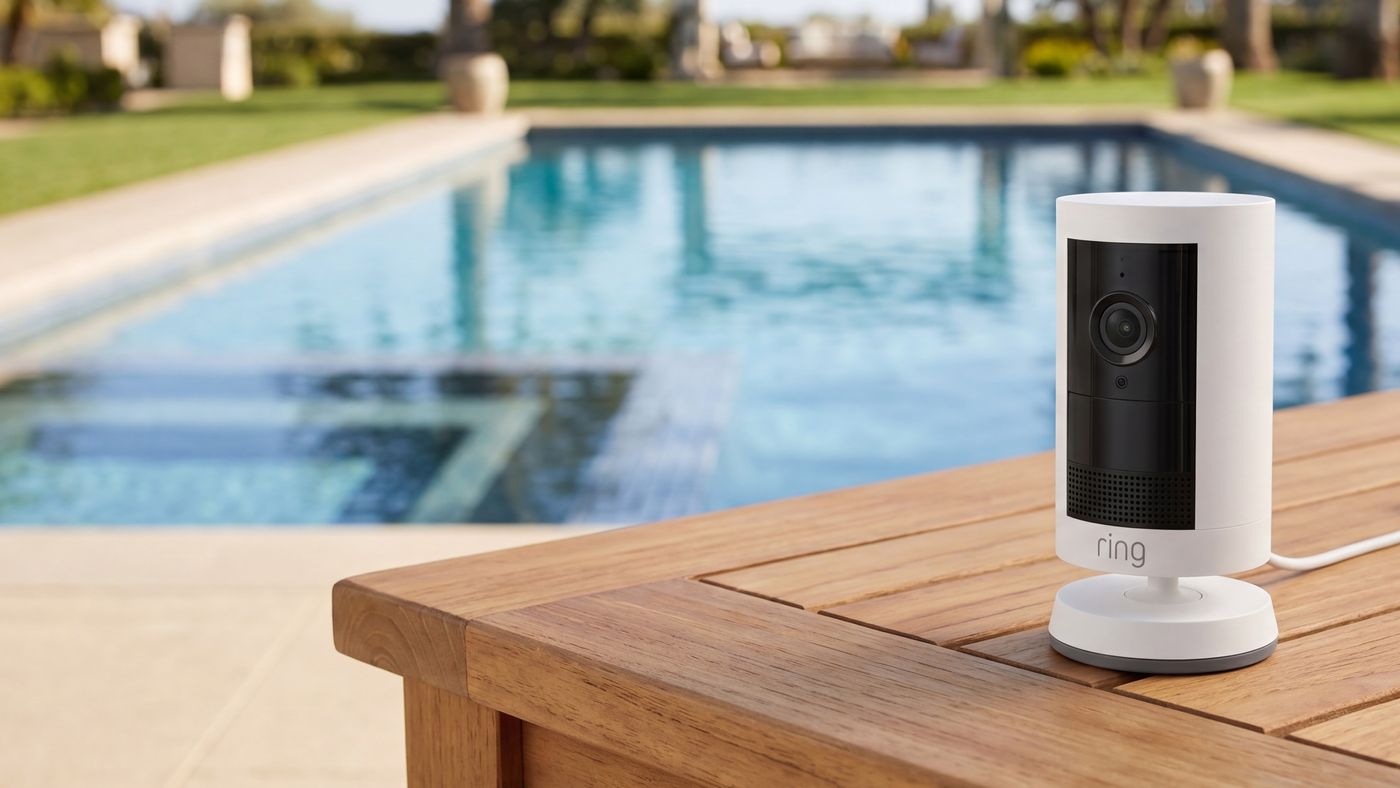
For under $300 in alarms and cameras, you've covered the three most important alert layers. This is a massive upgrade over what most pool owners have, and it's entirely doable on a real budget.
For Above-Ground Pool Owners
-
Lockable steps or a removable ladder when the pool isn't in use
-
Floating water alarm (BCONE or KLOVRA)
-
Outdoor camera pointed at the pool
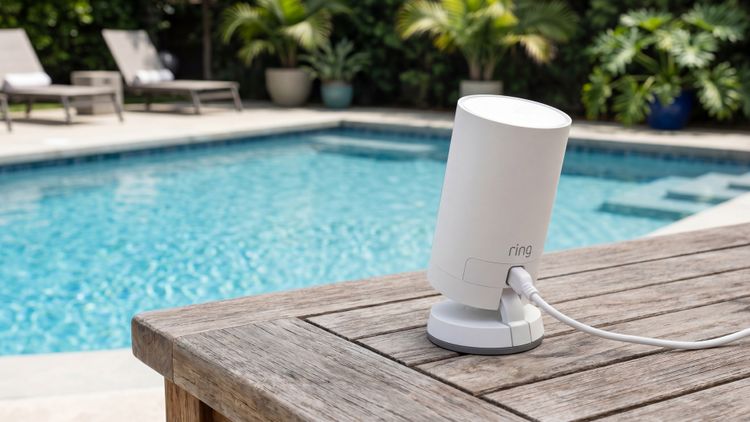
An outdoor camera plus a water alarm covers the main risks for above-ground pools // The Pool Nerd
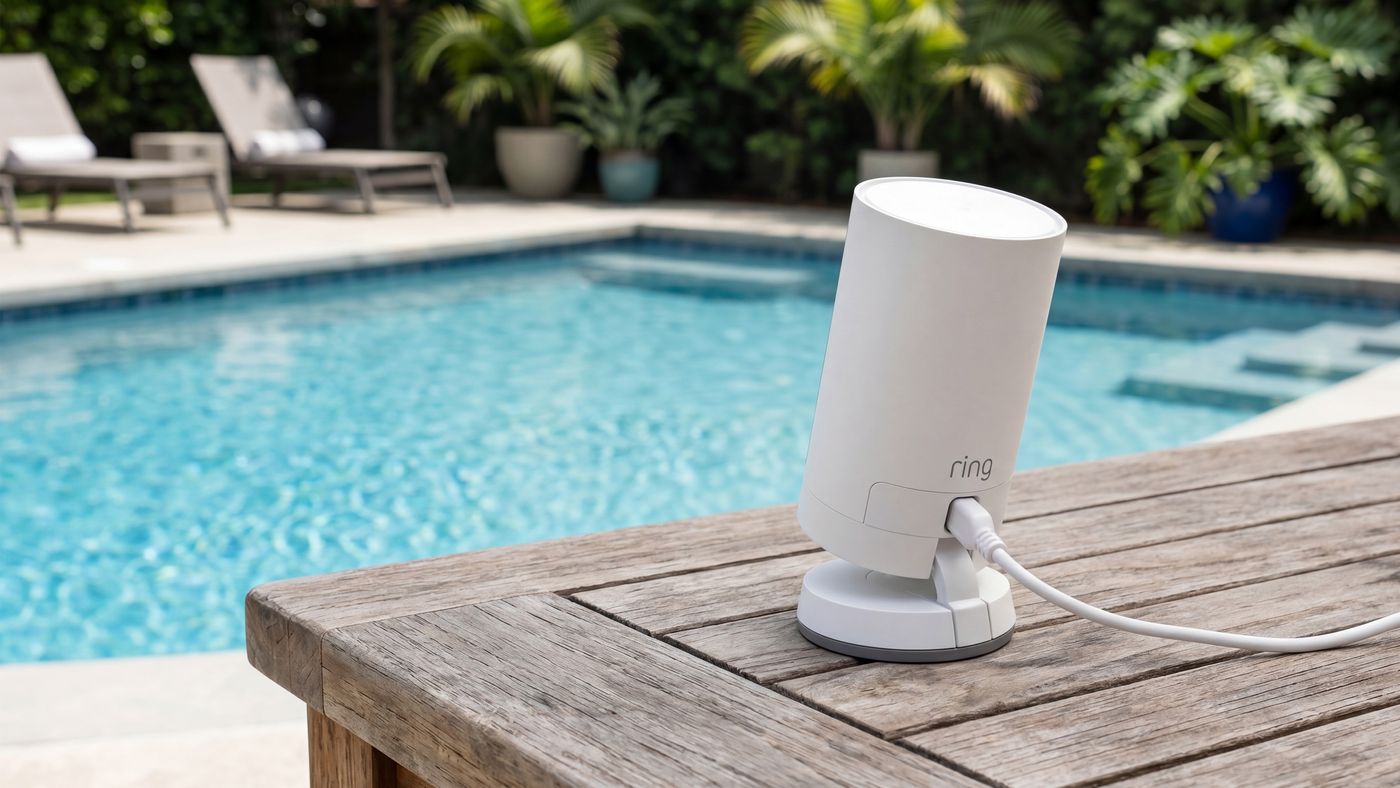
Above-ground pools have a different threat profile because the wall itself acts as a partial barrier. Locking down the access point and adding a water alarm plus a camera covers the main risks. If you're still shopping for the pool itself, my best above-ground pools guide covers the models worth buying.
For Pools Inside an Existing Fenced Yard
If your whole backyard is already fenced and the pool sits inside that, you still want alarms on every house door that opens to the yard. A fenced yard helps, but it doesn't help if a child slips out the back door unnoticed and the pool is the first thing they see.
The Biggest Pool Safety Mistake I See
I'll say this one more time because it really matters. The biggest mistake I see pool owners make is buying one alarm and calling it done.
A single floating sensor is not a safety system. A camera by itself is not a safety system. Even a fence by itself isn't a safety system. Each one of these is a layer. And layers only work when you stack them together.
The good news? You don't have to do it all at once. Start with a fence and gate alarms. Add a camera when you can. Drop in a floating alarm as the final backup. Build the system over time, but build it. Don't put it off.
No alarm replaces adult supervision. The CDC, CPSC, and every pool safety organization agree on this: active adult eyes on the pool is the single most effective drowning prevention measure that exists. Alarms buy you time. Supervision saves lives.
Pool Alarm FAQ
Can I just buy one pool alarm and be done?
No — and this is the single biggest mistake in this category. Every alarm covers one scenario: gate alarms catch the door opening, cameras catch someone approaching the pool, and floating alarms catch water entry. Stack at least two alert layers on top of your fence, and never skip supervision.
Which pool alarm should I buy first?
Door and gate alarms like the TECHKO S187D. They're around $50, take minutes to install, and they alert you before anyone reaches the water — which is the most valuable warning any alarm can give you.
Are camera systems really better than floating alarms?
For early warning, yes. A camera system like SwamCam alerts you when a person enters the pool zone — before they're in the water. A floating alarm only triggers after entry. That said, they're not competitors; the floating alarm is the backup layer behind the camera.
Do floating pool alarms have false alarms?
Yes. Wind, rain, and even large debris can trigger wave-detection sensors, and that alarm fatigue is how alarms end up unplugged in a drawer. Camera systems with AI person detection have far fewer false triggers, which is a big part of why I rank them higher.
How often should I test my pool alarms?
Test every alarm monthly and replace batteries on schedule — don't wait for the low-battery chirp. An alarm with a dead battery is worse than no alarm, because it gives you false confidence.
Do pool floats or swim aids count as safety layers?
No. Pool floats and inflatable swim aids are toys, not life-saving devices. If anything, floats left in the water attract curious kids to the pool edge — store them out of sight when swim time is over.
My Final Verdict
After testing pool equipment for years and watching this category evolve, here's where I land.
A camera-based alert system like the SwamCam, combined with door and gate alarms like the TECHKO S187D, plus a floating water alarm from BCONE or KLOVRA as your final backup, is the gold standard for modern residential pool safety. That layered setup gives you the early warning, the visual confirmation, and the reaction time that any one-product solution can't match.
It's Pool Nerd Approved.
Don't wait for a scary moment to start thinking about this. Pool safety is one of the few things in this hobby where the cost of being wrong is way too high. Build the layers. Test the alarms every month. Replace the batteries on schedule. Talk to your kids about pool rules. And every single time the pool is in use, make sure there's an adult whose only job is supervision.
GET THE BEST POOL GEAR DEALS
I post the freshest discounts on pool safety equipment, robotic pool cleaners, and all my favorite pool gear at ThePoolNerd.com/deals. Want to keep nerding out over your pool? Subscribe to The Pool Nerd on YouTube for weekly reviews and head-to-heads. Until next time — enjoy that pool, safely.
Related Reading
- Must-Have Pool Equipment — The 6 upgrades that cut my maintenance by 90%
- Best Robotic Pool Cleaners — Keep the pool clean without a human in the water
- Best Pool Water Monitors — Healthy, balanced water is part of a safe pool too
- Best Above-Ground Pools — Shopping for the pool itself? Start here
- Weekly Pool Maintenance Guide — My complete weekly routine
- Pool Mistakes Costing You Money — The other mistakes I see pool owners make



Comments
Loading comments…