
 Justin D.
Introduction
Welcome back to The Pool Nerd. I'm Justin, your resident pool aficionado. And today we're talking about the most underrated job in pool care: skimming.
Here's the thing — skimming sounds simple. Grab a net, drag it around, dump the leaves. But most pool owners do it with the wrong tool and the wrong technique, and they're working twice as hard for half the result. The difference between a quick five-minute pass and a frustrating mess comes down to two things: the net in your hands and how you move it through the water. Let's fix both.
The Short Version
Skip the flat skimmer net and use a deep leaf net on a quality telescopic pole. Move it with the cast-and-skim method instead of dragging. Skim before the debris sinks. And if you want to stop skimming by hand altogether, let a robotic skimmer handle the surface and a robotic cleaner handle the floor.
The Tool Most People Get Wrong
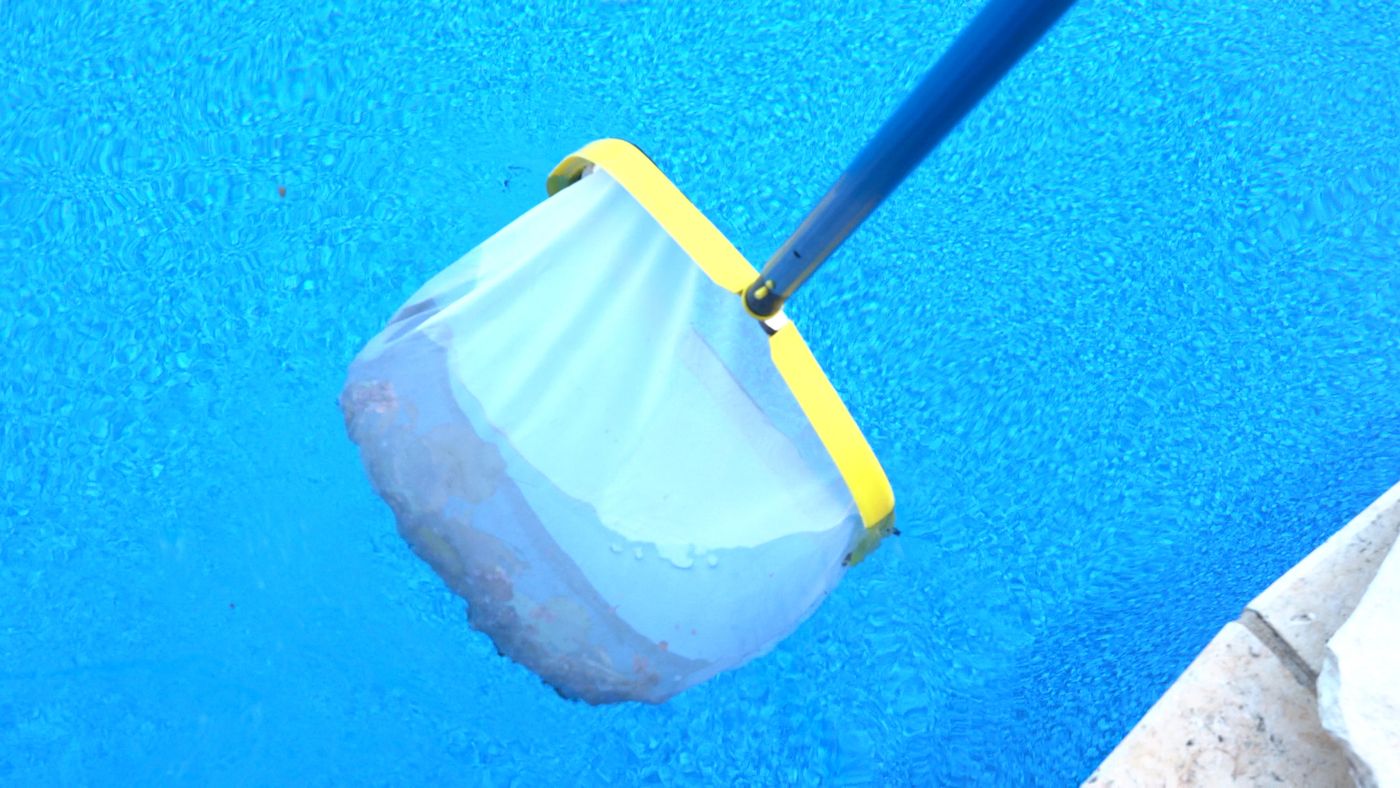
Walk into any big-box store and you'll grab the cheap, flat net hanging on the wall — the one that's basically a shallow mesh tray on a frame. That's a skimmer net, and in my experience it's the wrong tool for the job.
The problem is depth. A flat skimmer net holds almost nothing, so the second you lift it, half the debris slides right back into the water. And because the mesh sits flat against the surface, dragging it pushes a little wave of water ahead of it — and that wave shoves leaves and bugs away from the net instead of into it.

The Flat Skimmer Net
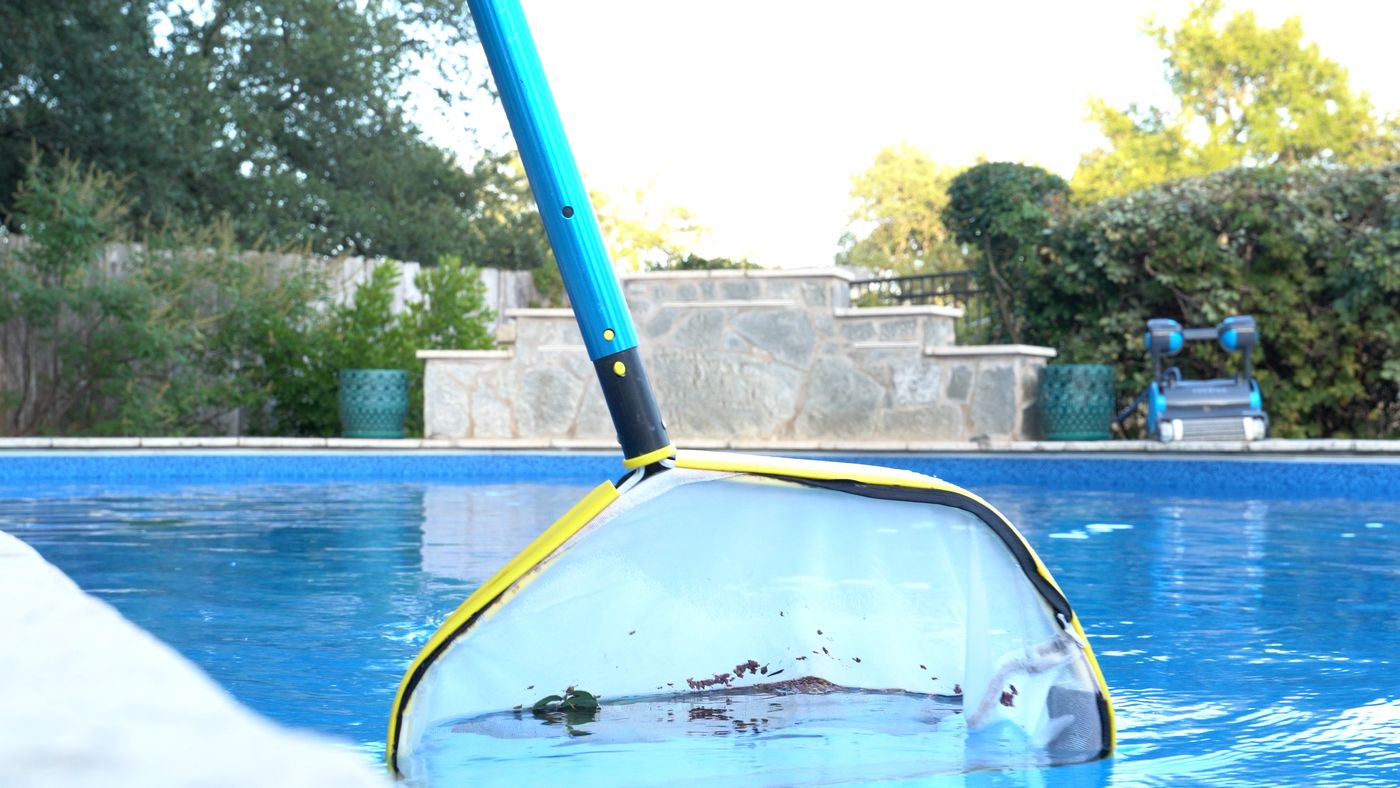
Too shallow to hold debris, too flat to scoop below the surface, and it pushes a bow wave that scatters everything you're chasing. Fine for a quick one-off grab; useless for an actual cleaning.What you want is a leaf net — sometimes called a leaf rake. It's a deep mesh bag instead of a flat tray, and that bag does two things the flat net can't. It holds a serious volume of debris so you're not emptying every three seconds, and it lets you dip below the surface to scoop up the stuff that's already started to sink.

Deep Leaf Net + Telescopic Pole
A deep-bag leaf net holds volume, scoops below the surface, and doesn't dump its load when you lift. Pair it with a sturdy telescopic pole and this is the only manual skimming setup you need.On the pole, spend a few dollars more for an anodized aluminum telescopic pole with solid cam locks. The flimsy twist-lock poles flex at full extension and slip mid-pull. A good one reaches the far side of the pool without you walking the whole perimeter.
The Cast-And-Skim Method
Here's the kicker — even with the right net, most people skim wrong. They drop the net in and drag it straight back toward themselves across the surface. That drag builds the same bow wave I mentioned, and you end up chasing debris around the pool like it's playing keep-away.
The fix is the cast-and-skim method. Instead of dragging, you cast the net out and skim it back just under the surface.
- Extend the pole and lower the leaf net flat to the water's surface in front of you.
- Glide the net away from you across the top of the water — like laying out a fishing cast. Don't push down; you're skating it across the surface, not plowing through it.
- At the far point of your reach, dip the leading lip of the net an inch or two below the surface.
- Draw the net back toward you in one smooth, steady pull. With the lip submerged, water flows over the edge and funnels debris straight into the bag instead of pushing it away.
- Lift the net straight up and out — don't drag it back across the surface, or you'll dump debris on the way.
- Empty it, then repeat in overlapping lanes until you've covered the whole surface.
Work With The Wind, Not Against It
Wind and your return jets push floating debris to one side of the pool, usually the downwind end. Start there and you'll collect the bulk of it in a few passes instead of fighting it across open water.Timing Beats Effort — Skim Before It Sinks
Let's get real about why skimming matters so much: it's all about timing.
Fresh debris floats. A leaf that just landed is a two-second scoop with your net. But leave it a day or two and it waterlogs, sinks, and settles on the floor — now it's a vacuuming or brushing job. Worse, that organic matter rots on the bottom, feeds algae, stains plaster, and drives up your chlorine demand as your sanitizer works overtime to break it down.
In other words, thirty seconds of skimming today saves you a real cleaning session — and chemical cost — later. During heavy debris season, a quick daily pass keeps everything floating long enough to grab. The rest of the year, a few times a week is plenty.

Don't Let It Sink
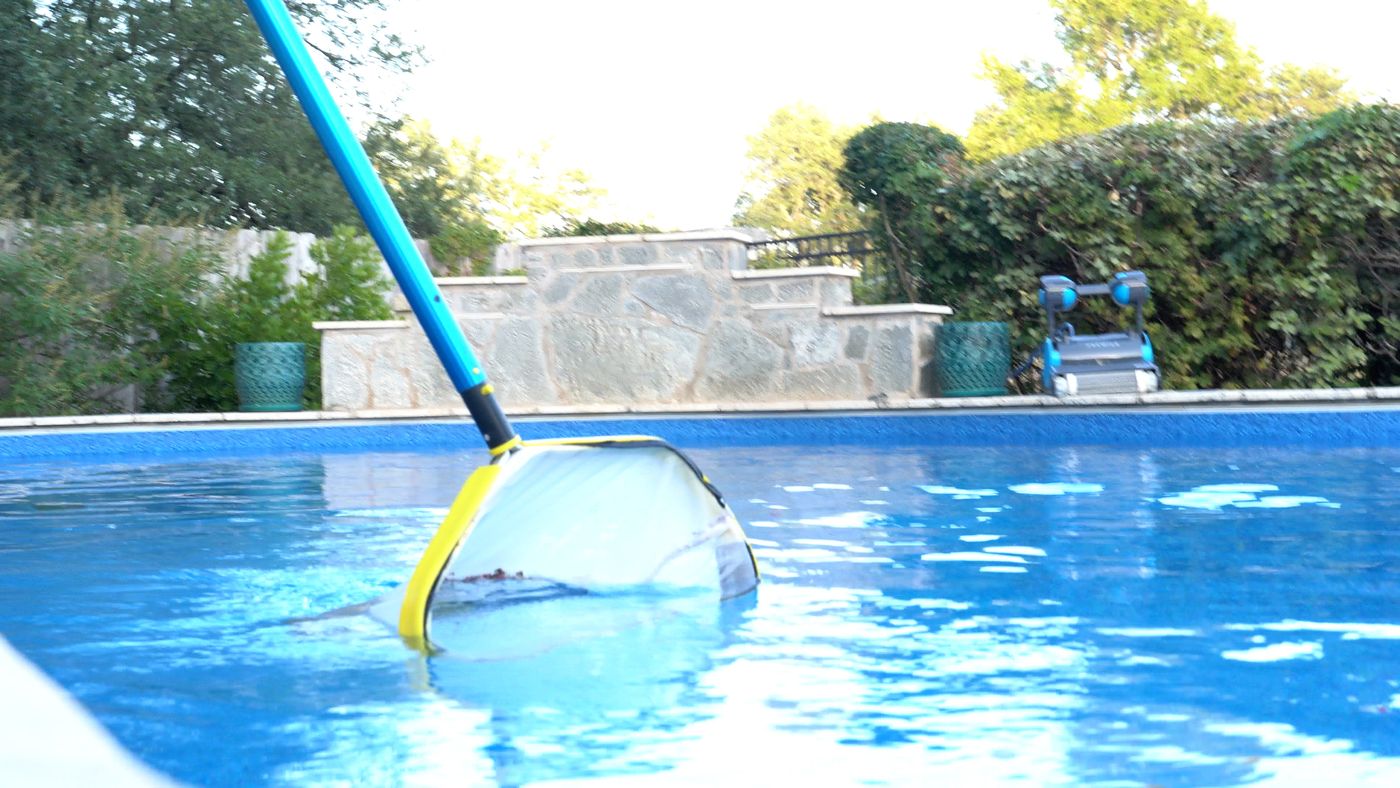
Once debris waterlogs and drops to the floor, skimming can't touch it. You're now looking at vacuuming, brushing, higher chlorine demand, and potential staining. Catch it while it floats.Want To Skim Less? Let The Robots Do It
Skimming by hand works, but there's a trade-off — in a yard full of trees, it's a daily tax. If you'd rather spend your time in the pool than over it, this is where automation earns its keep.
You can find all the best pool skimmers in my best pool skimmers guide.
For the surface, a robotic pool skimmer is the move. These solar- or battery-powered units roam the top of your water on their own, corralling floating leaves, pollen, and bugs into an onboard basket before any of it sinks. I've tested several — including the Betta SE — and in my testing they handle the majority of surface debris without you lifting a finger. They're not magic: solar units slow down on cloudy stretches, and they only work the surface. But for floating debris, they do the daily skimming for you.
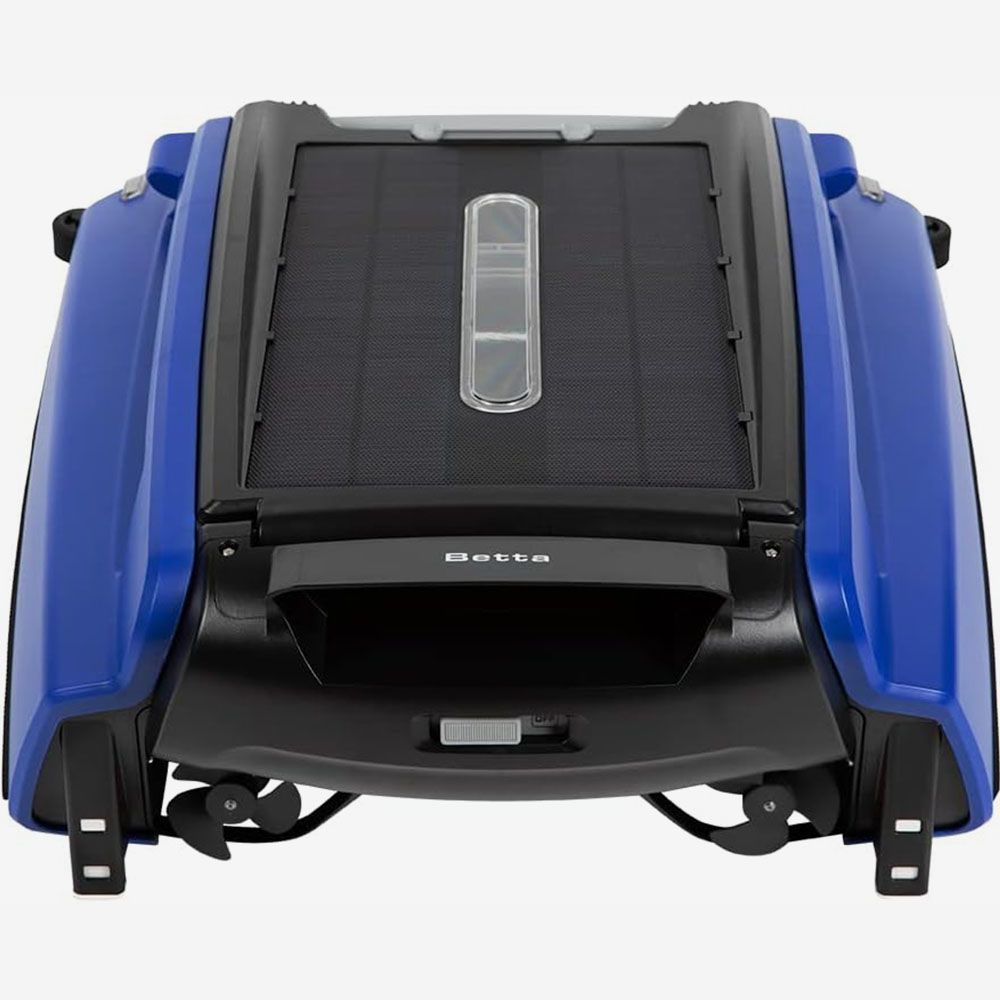
Here's the catch a surface skimmer can't solve: it never touches the floor or the walls. For that, you want a robotic pool cleaner. In my experience, a corded robotic cleaner is the gold standard. They scrub the floor, climb the walls, clean the waterline, and filter fine debris on every cycle. The Dolphin Premier is my top overall pick; the Dolphin Quantum is the value sweet spot for inground pools. And even newer brands like the Clear UV are excellent picks.
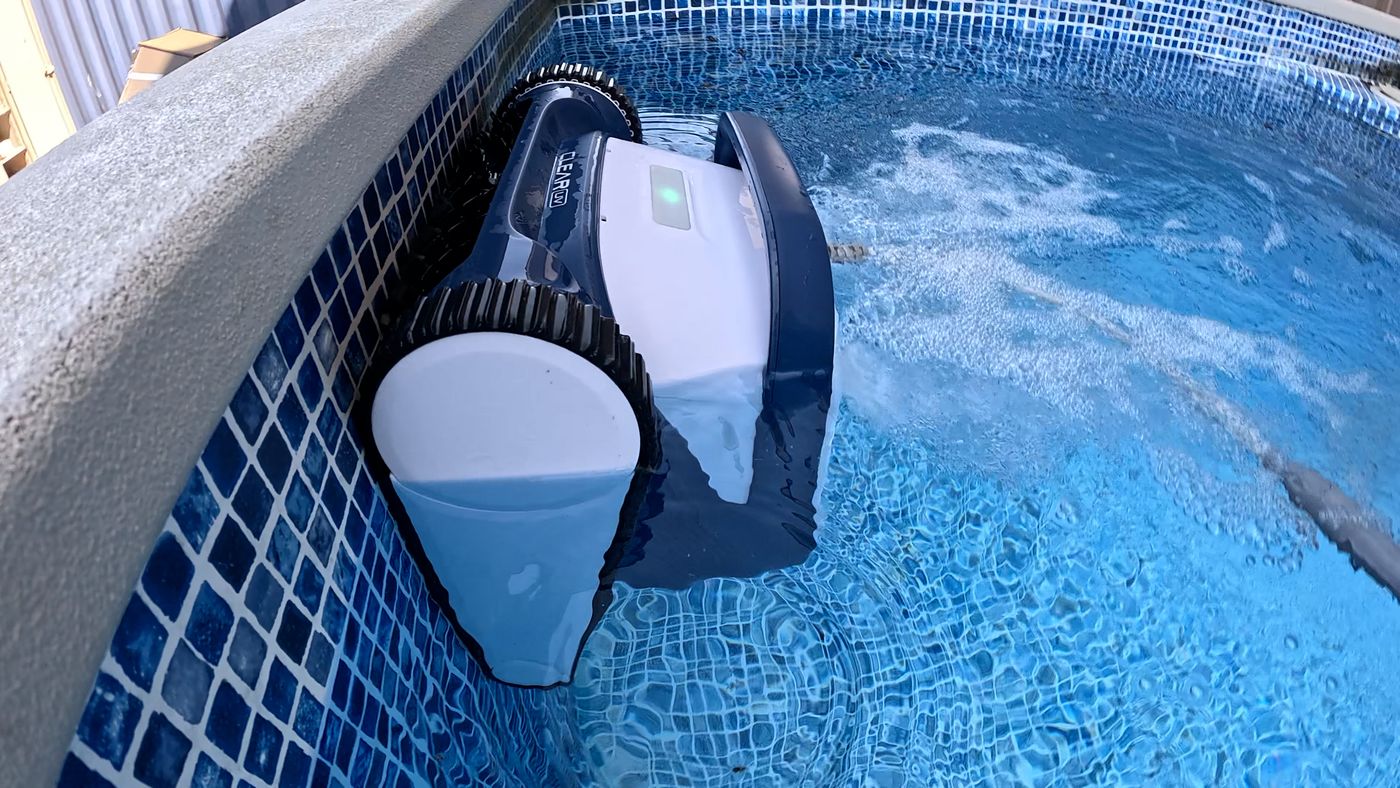
You can find a full list of my top robotic pool cleaners in my best robotic pool cleaners guide.
Run a robotic skimmer up top and a robotic pool cleaner down below, and you've covered both halves of the debris problem — the stuff that floats and the stuff that sinks — with almost no manual work.
Skimming Tools Compared
| Tool | What It Cleans | Effort | Best For |
|---|---|---|---|
| Leaf net + pole | Floating surface debris | Manual, daily–weekly | Everyone — the baseline setup |
| Robotic skimmer | Floating surface debris, 24/7 | Hands-off | Tree-heavy yards, surface debris |
| Robotic cleaner (Dolphin) | Floor, walls, waterline, fine debris | Hands-off | Sunken debris and deep cleaning |
Common Skimming Mistakes
- Using the flat skimmer net instead of a deep leaf net.
- Dragging the net straight back instead of casting and skimming.
- Skimming against the wind instead of starting downwind.
- Pushing the net down and plowing a bow wave ahead of it.
- Waiting until debris sinks, then wondering why skimming "doesn't work."
- Forgetting that your wall skimmer basket and pump basket still need emptying. Skimming the surface is only half the job.
Frequently Asked Questions
What's the difference between a skimmer net and a leaf net?
A skimmer net is the flat, shallow tray-style net — fine for a quick one-off grab. A leaf net (or leaf rake) is a deep mesh bag that holds far more debris and lets you scoop below the surface. For actual cleaning, the leaf net wins every time.
How often should I skim my pool?
During heavy debris season — spring pollen, fall leaves, windy stretches — a quick daily pass keeps everything floating and easy to grab. The rest of the year, two or three times a week is usually enough. The goal is always to catch debris before it sinks.
Do I still need to skim if I have a robotic pool cleaner?
Less, but the two do different jobs. A floor-crawling robotic cleaner handles the floor, walls, and waterline, not floating debris on the surface. For the surface, you'll still want a quick manual pass or a robotic skimmer. They're a team, not a substitute for each other.
Can't I just rely on my pool's built-in skimmer?
Your wall skimmer only catches debris that happens to drift into its mouth, and only while the pump is running. Plenty of leaves sink before they ever reach it. Manual skimming — or a robotic skimmer — grabs the rest before it drops to the floor.
Final Verdict
So what's my final verdict on how to skim a pool? Skimming isn't complicated, but a few small things separate a clean pool from a frustrating chore:
- Use a deep leaf net, not the flat skimmer net.
- Use the cast-and-skim motion instead of dragging.
- Skim before debris sinks — timing beats muscle.
- Want it hands-off? Pair a robotic skimmer for the surface with a pool robot for the floor.
Get the tool and the technique right, and skimming becomes the easy, satisfying five-minute job it's supposed to be. Pick up a leaf net, a good pole, and maybe a robotic skimmer and pool robot to make your life even easier.
Want to see my current picks on leaf nets, telescopic poles, robotic skimmers, and Dolphin cleaners? Head over to my deals page, where I post the best deals on top pool equipment.
Until then, enjoy that pool — I'll see you next time.


Comments
Loading comments…