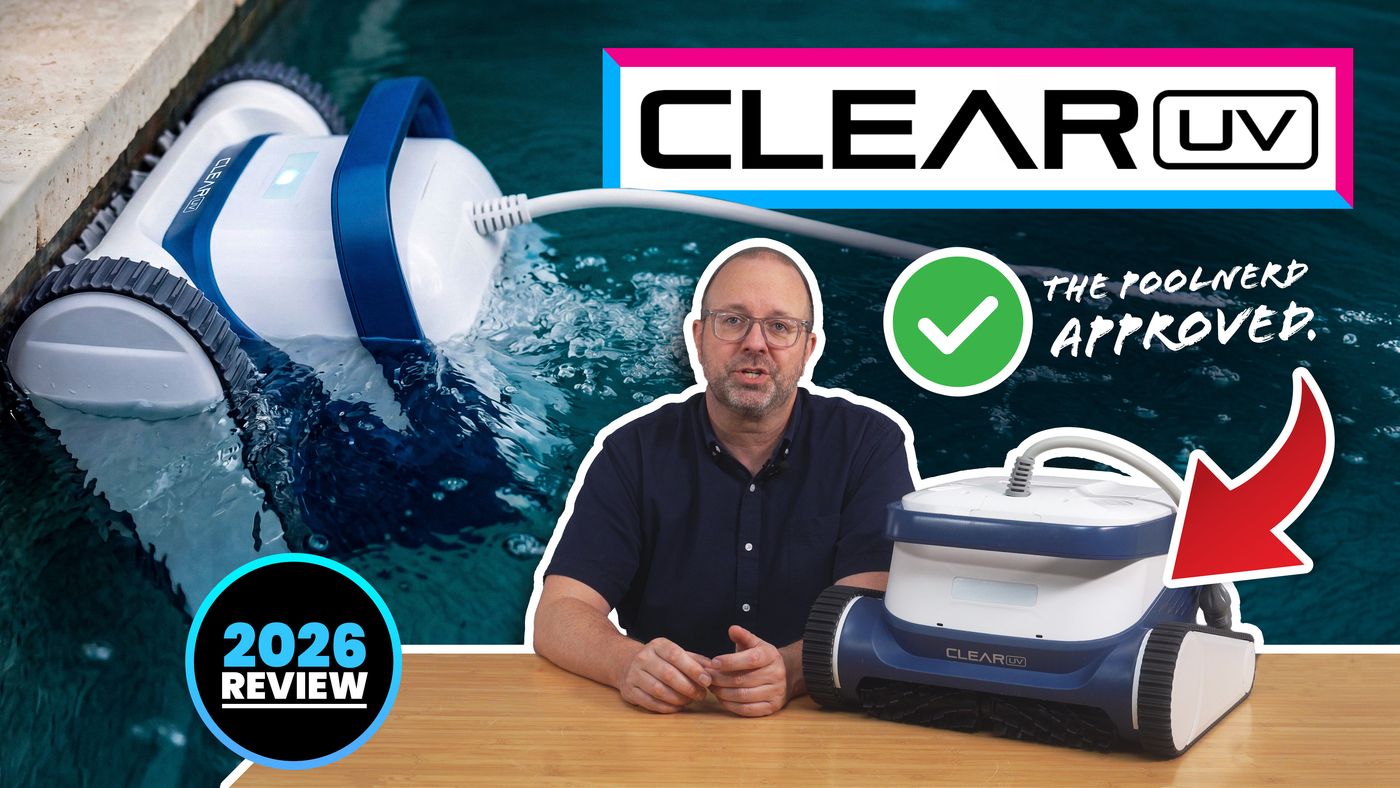
Clear UV Review: The first pool robot with built-in UV-C (and why it blew me away).
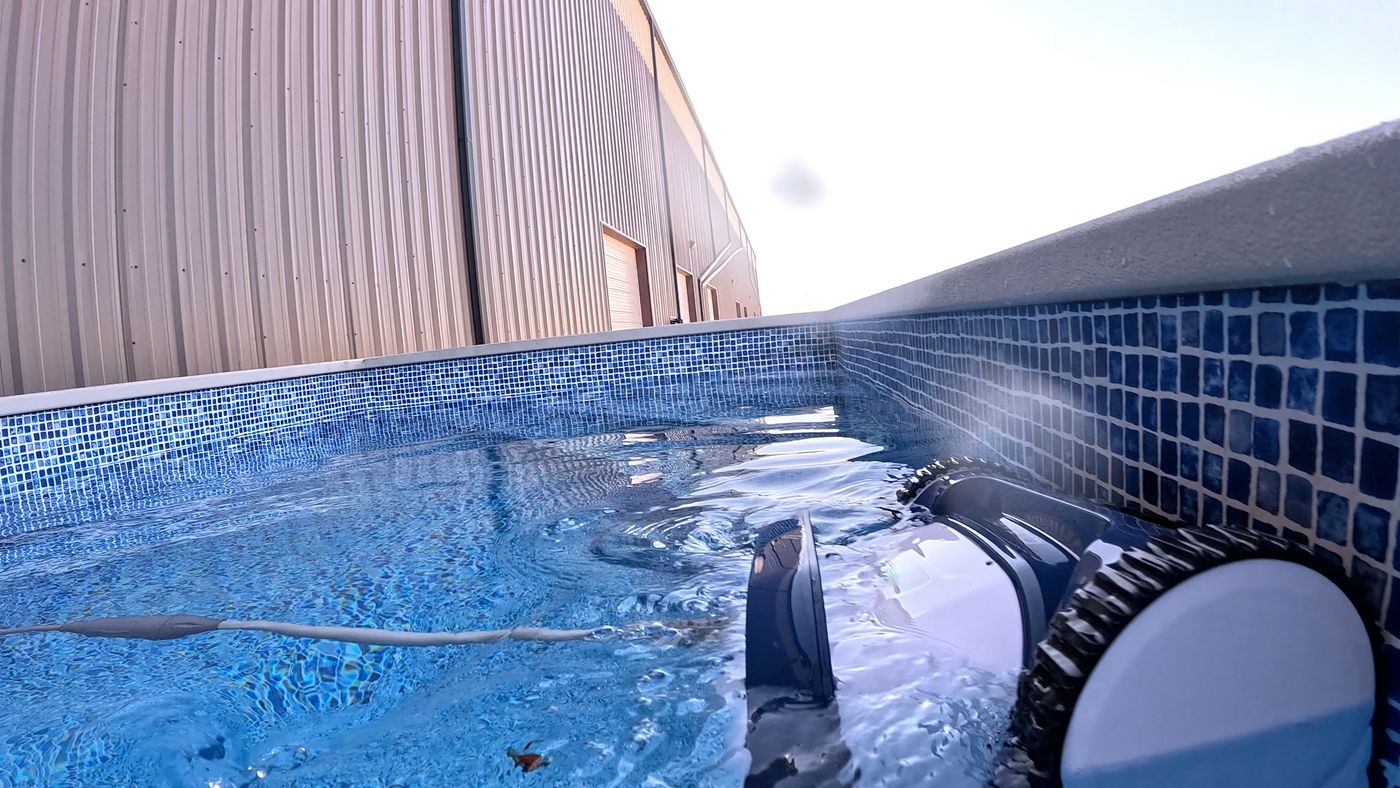
This is the Clear UV robotic pool cleaner. And it is the most innovative pool robot I've tested in years. It has something no other robot on the market has: ultraviolet light.
Hey there, and welcome back to the Pool Nerd. I'm Justin, your resident pool aficionado, and today I'm diving into the Clear UV. After testing 40+ pool robots in our test pool, this is the best one yet. I've spent the past few weeks putting it to the test, and it is seriously impressive. I've been let down by a lot of the new releases from brands lately, but not this one.
Want to learn more? See the Clear UV on the official Clear site, or browse all Clear pool robots. You can also shop the Clear UV at PoolRobots.com, an authorized Clear dealer.
Most "new" pool robots seem to be the same machine with a new shell and a bigger marketing budget. The Clear UV is the rare exception that actually does something completely new, innovative, and actually helps clean your pool better. So let me walk you through everything: what it is, how it cleans, how the UV light works, and whether it earns a spot in your pool. Let's dive in.
What Is the Clear UV?
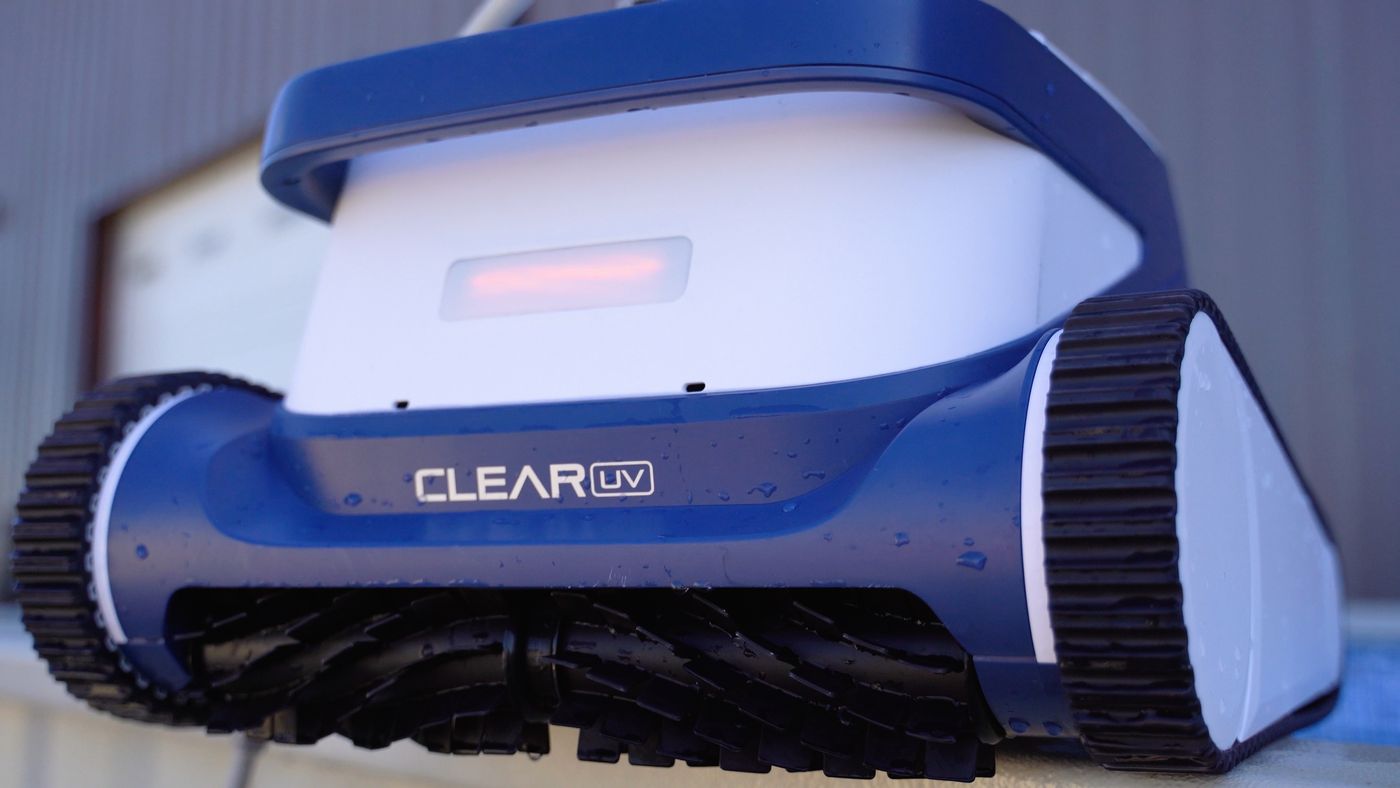
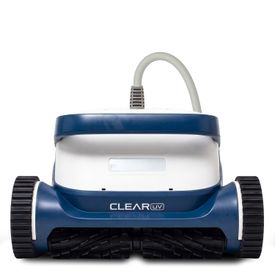
The Clear UV is a high-powered, commercial-grade corded robotic pool cleaner with a UV-C lamp built into the bottom of the unit. That light actively turns on while the robot cleans your pool, so you're getting two things at once: physical debris removal and surface-level disinfection. Essentially, it's a 2-in-1. It vacuums up the leaves, pollen, and silt like a normal robot, and the ultraviolet light works to mitigate organic growth as it drives around.
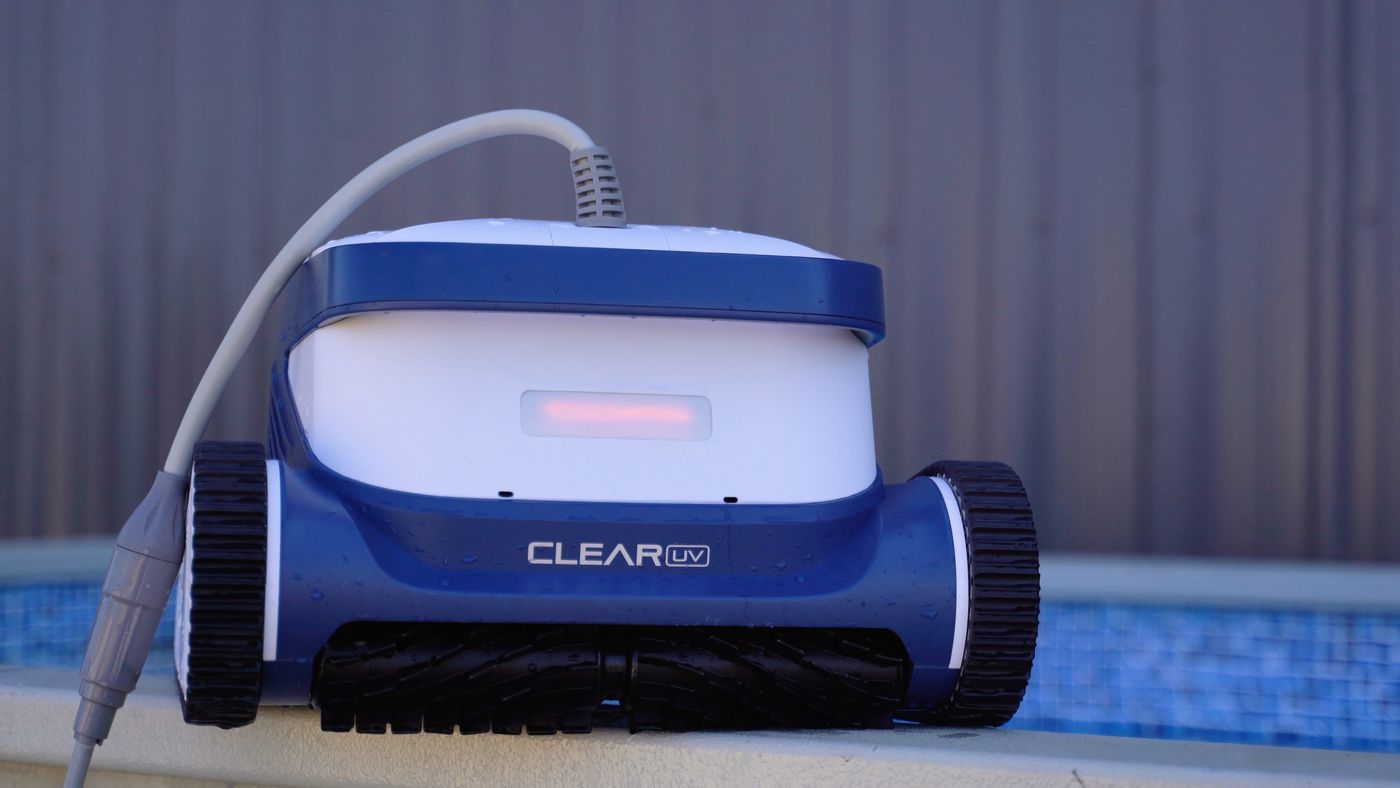
Now, if you've followed my stuff for any length of time, you know I'm a big fan of ultraviolet light in pools. We run a SpectraLight UV system on our own test pool, and in my experience it's one of the smartest chemistry upgrades a pool owner can make. So, when we saw a robot claiming to bring that same UV technology in a pool robot, I was super curious.
Combine the UV-C light with quad motors that output over 8500 GPH and one of the most powerful cleaning performances I've seen in a pool robot, and you've got something special.
Pool Coverage and the Swivel Cable
The dirtiest part of any pool is the waterline — that's where the vast majority of oils, bacteria, and algae like to set up shop. If your cleaner skips it, you're still out there scrubbing by hand, which defeats the entire point of buying a robot like this. Luckily, the Clear UV cleans the floor, the walls, AND the waterline. And it even has a dedicated mode if you want to just clean the walls, which I'll dive into later.
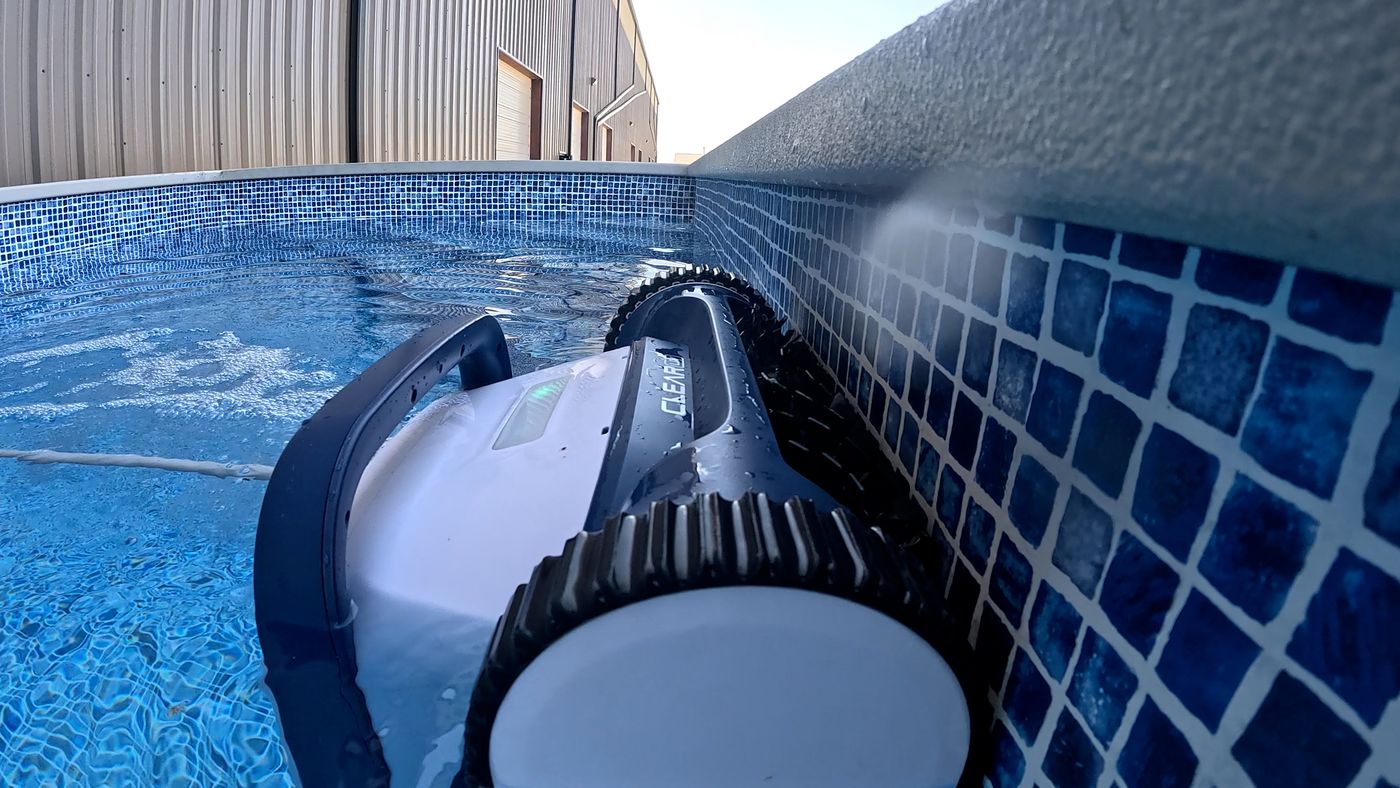
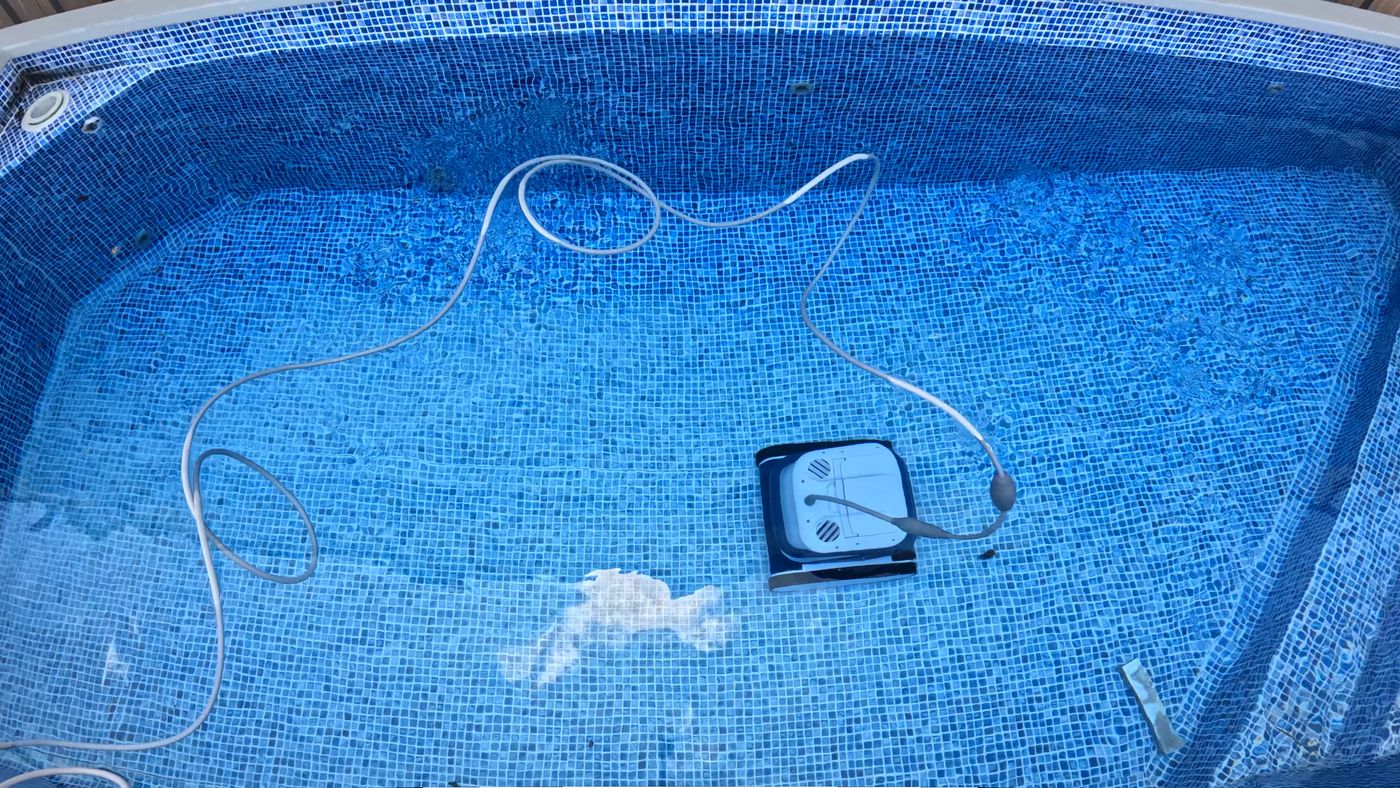
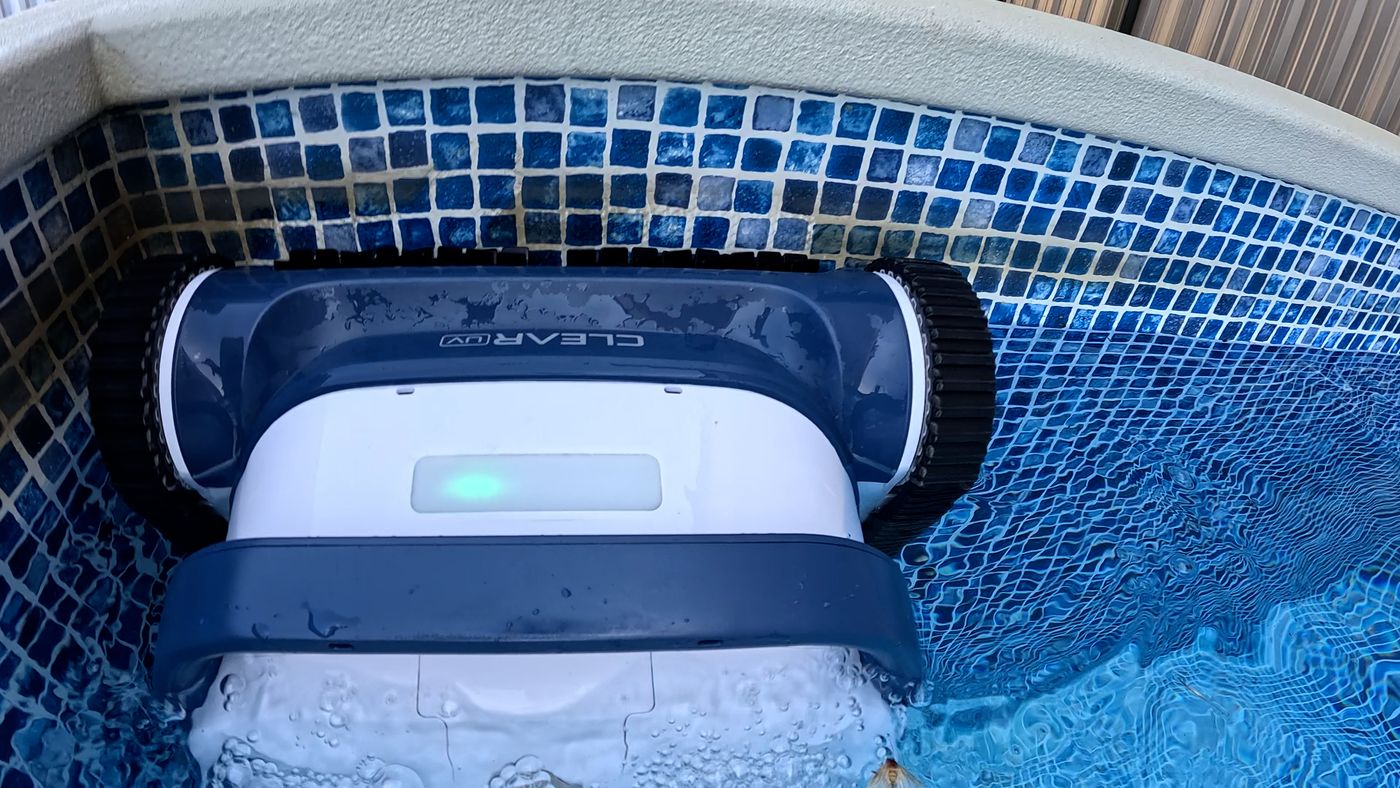
In my testing, it climbed the walls confidently and held its grip along the tile line instead of sliding back down halfway like a lot of cheaper units do. It tracks across the floor in a deliberate pattern, climbs, scrubs the waterline, and comes back down for another pass. You will see it pause, reverse, repeat a section, or change direction.
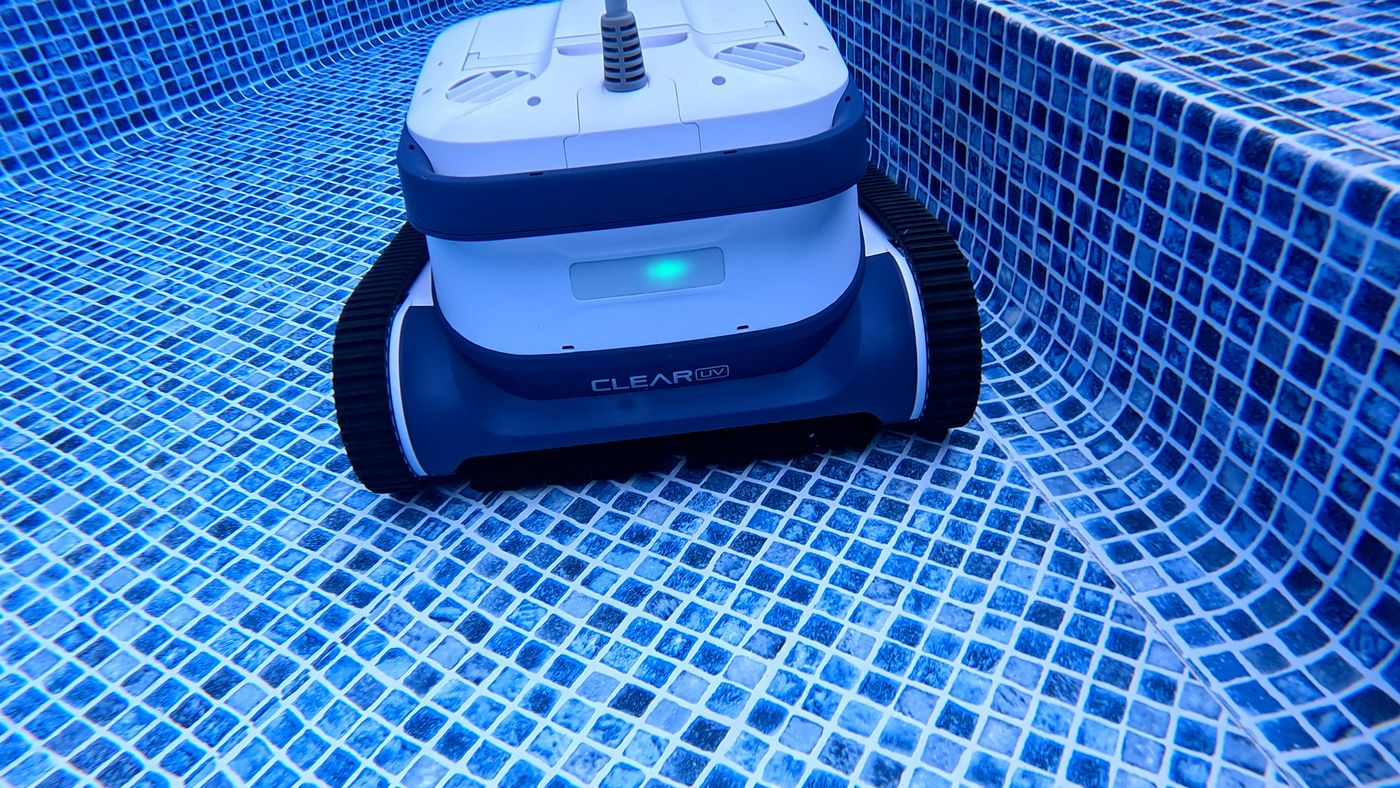
One detail I always look for is the swivel. The Clear UV uses a tangle-free cable with a swivel connector at the top of the unit, and the 59-foot cable is rated for pools up to 50 feet long. In the weeks I've run it, I haven't fought a single tangled cable — and if you've ever owned a robot with a cheap cable, you know how much of a daily headache that solves. Lay it out flat, work out the twists once, and it pretty much manages itself after that.
Ultraviolet Light
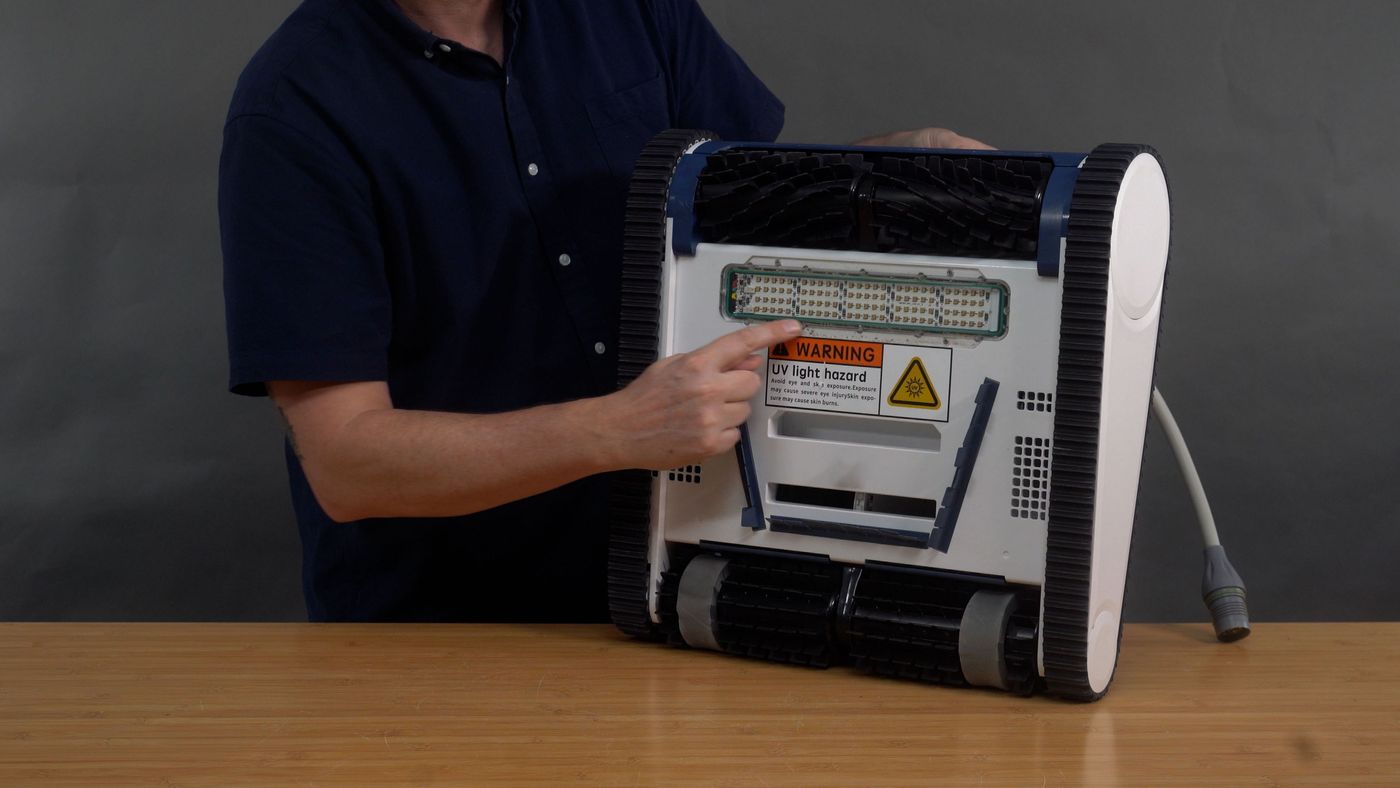
This is the headline feature, so let's get into it. UV-C is short-wavelength ultraviolet light, and it's the same germicidal technology used in Olympic pools and commercial aquatic centers to keep the water crystal clear. It disrupts the DNA of bacteria, algae, and other organic matter so they can't reproduce. The Clear UV mounts a UV-C lamp on the underside of the robot, and as it drives, it bombards the pool surface with that light.
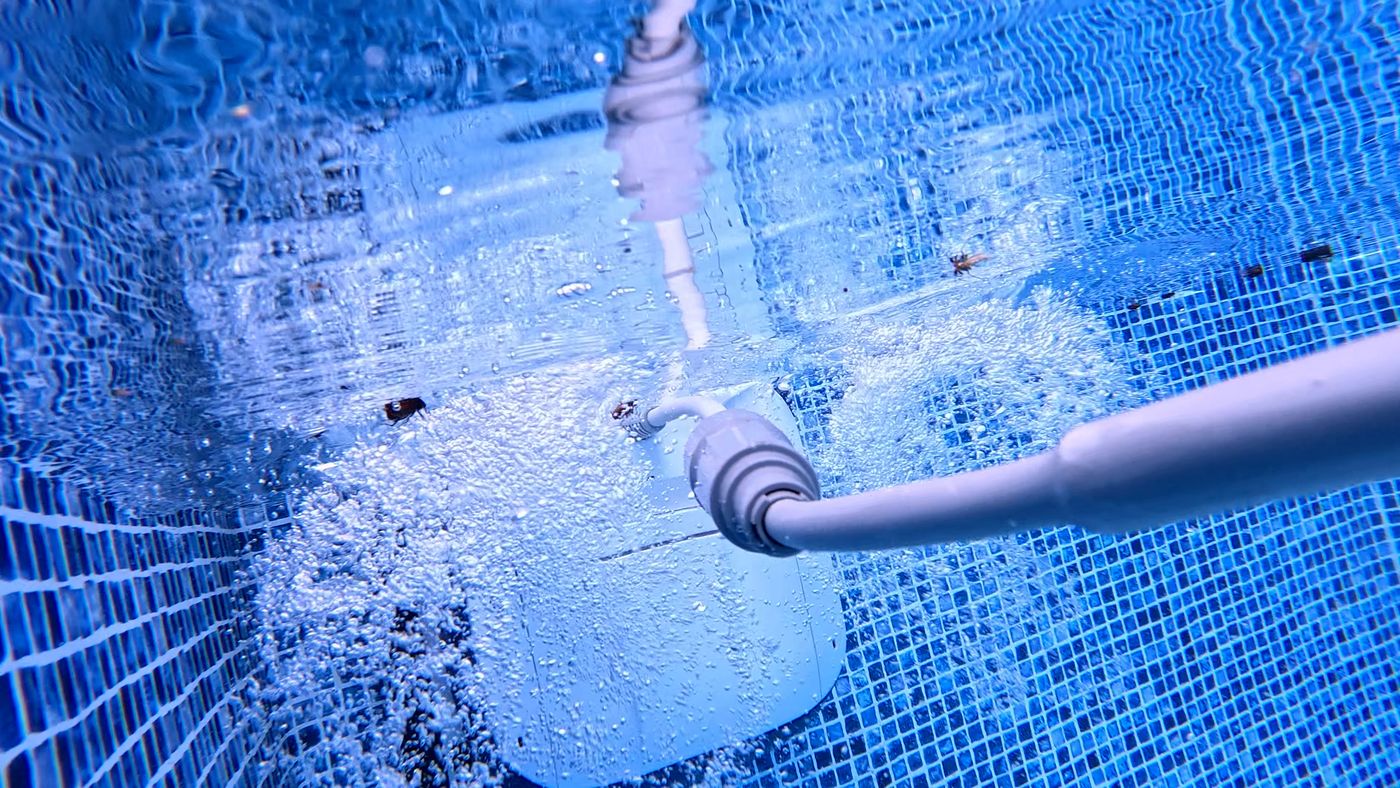
In my opinion, this is the most innovative things I've seen on a residential pool robot, and I don't say that lightly. Most "new technology" in this space is marketing fluff or something that doesn't really add to the robot like sensors. This is real, proven sanitation technology that I already trust on my own pool, now riding along on a cleaner.
A few important things you need to know about using it. The UV lamp can only run when the cleaner is fully submerged. It has safety methods built in so that you can't turn it over and accidentally look at it.
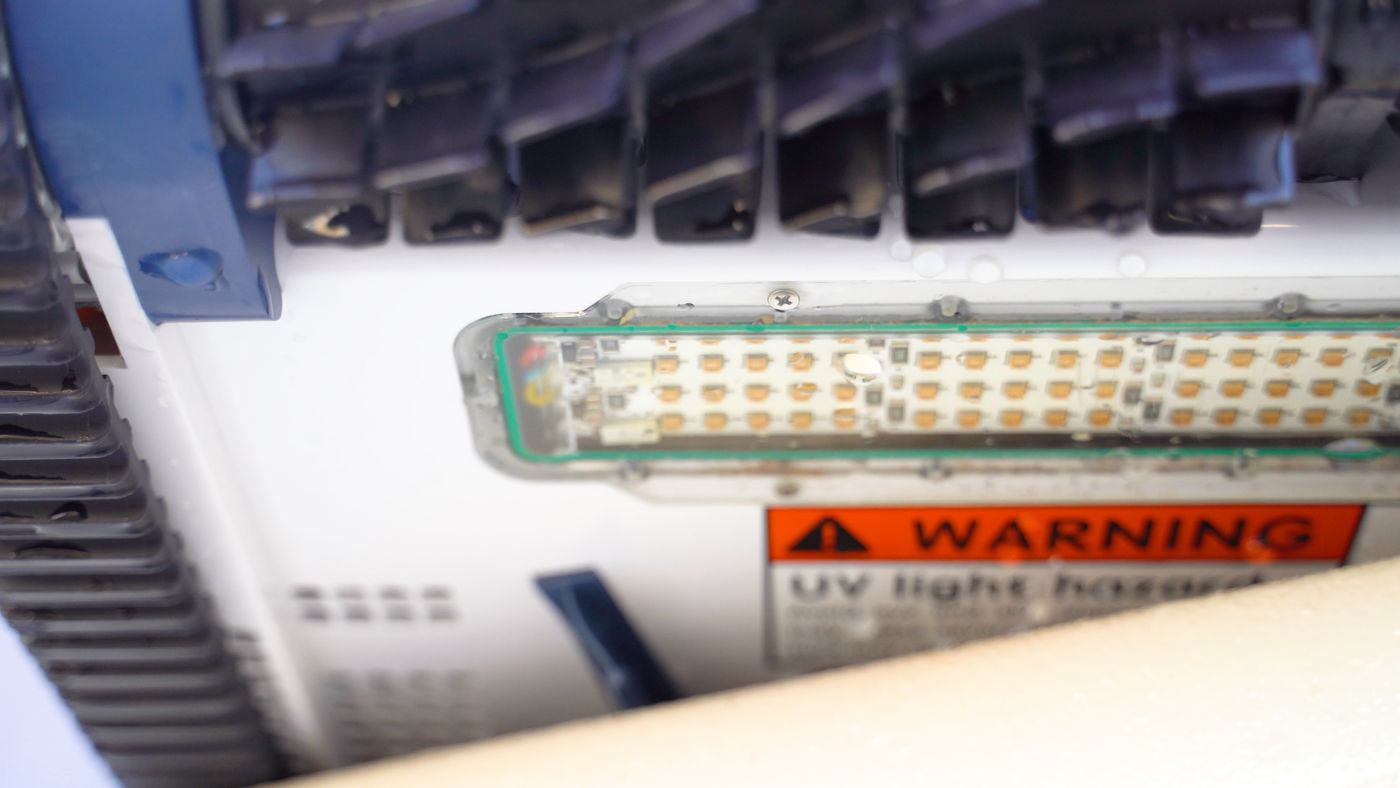
Clear built smart safety into this: you turn UV on through the app, and the first time you use it, you have to acknowledge a safety warning before the controls even appear. The lamp shuts off automatically when the cycle ends, when the robot stops, or if it detects an unsafe condition. You can run it as a one-time manual session or set it to run automatically during your scheduled daily cleanings.
This UV light is a fantastic addition to your pool, but it is not a replacement for proper sanitation. You still need to maintain your chlorine and run your chemistry by ORP like I always preach. Think of the robot's UV as a helpful extra layer working alongside your sanitizer, not instead of it. Used that way, it's a useful feature that fits right into the way I like to run a low-chemical pool.
The UltraBin
The filter basket on the Clear UV is what they call the UltraBin, and it loads from the top. I'm a big fan of top-loading baskets, and here's why: maintenance takes about ten seconds. You pull the robot out of the water, pop the top cover, and lift the basket straight up and out. No flipping the robot over, no wrestling it onto its back, no water dumping all over your deck.
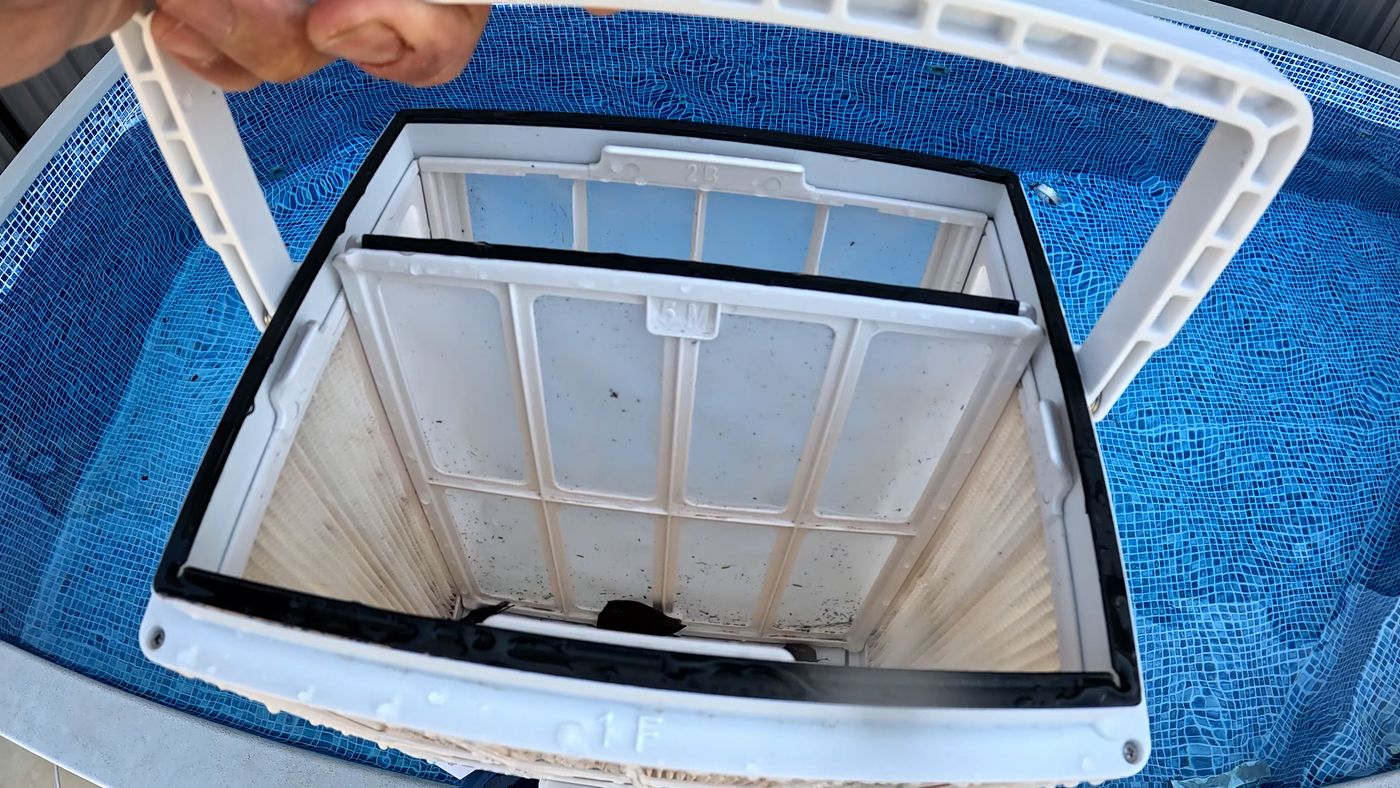
The basket itself is big, and like I mentioned, in my testing it filled to the brim on nearly every run. That tells you two things — the suction is strong, and the filtration is actually capturing what it picks up instead of blowing it back into the water. Rinse it with a garden hose when it's full or whenever suction starts to drop.
My tip, and this applies to every robot I review: rinse it more often than you think you need to, even if it doesn't look full. Fine debris like silt, pollen, and dust clogs the media and chokes your suction long before the basket looks packed. A 30-second rinse keeps this thing pulling at full strength.
UltraFilters
Inside the UltraBin you've got Clear's proprietary filtration system: the UltraFilter panels. The robot ships with two full sets — one pre-installed and one spare — and there are four panels per set that slide into the basket frame in a specific order. They're easy to swap once you've done it once.
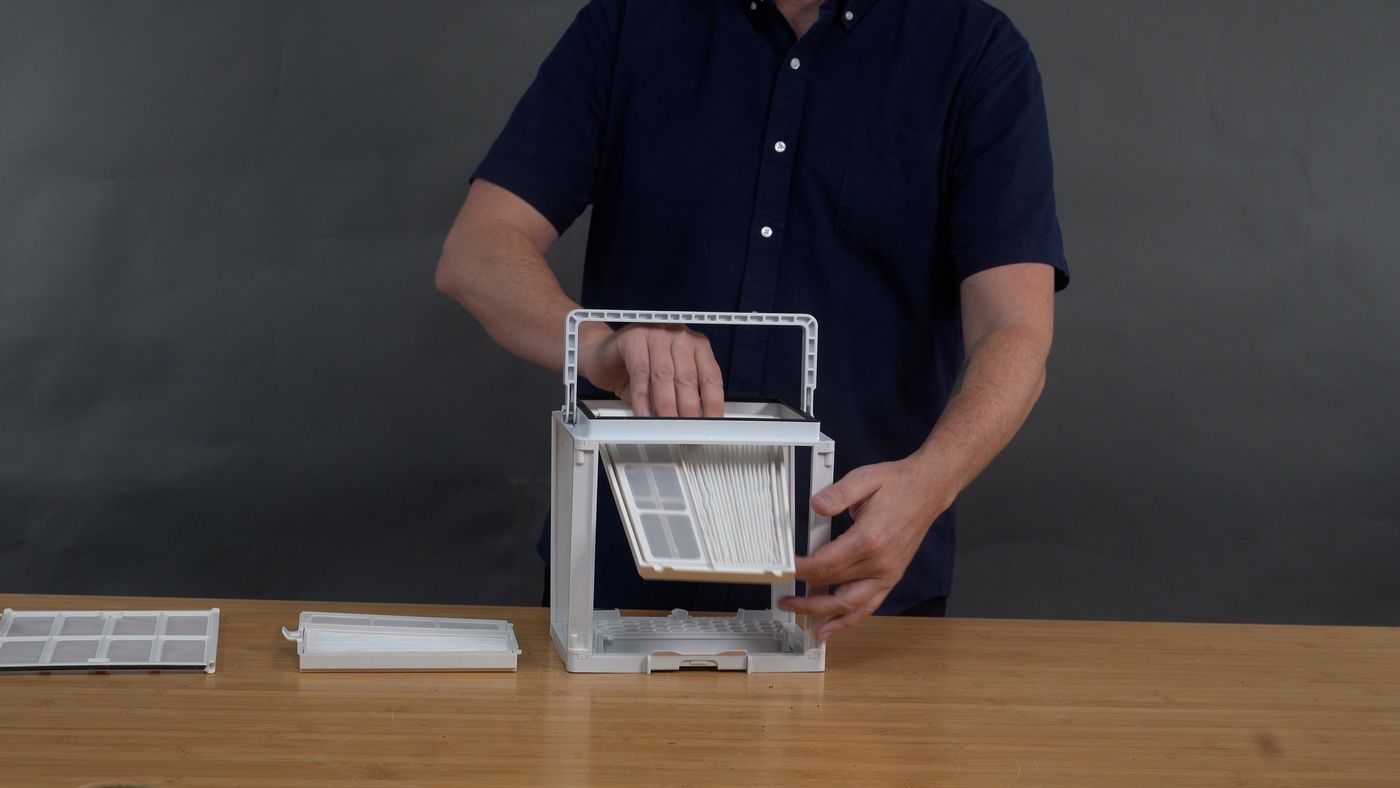
Here's the kicker, and this is the spec that impressed me: the filtration precision is rated down to 1 micron. To put that in perspective, a human hair is around 70 microns. Most standard pool robot cartridges filter coarse debris and let the fine stuff slip right through and back into your water. Filtering to 1 micron means this thing is pulling out the fine particulate — the pollen, the silt, the algae spores — that makes water look hazy. In my side-by-side experience, fine-filtration media like this is the single biggest difference between water that looks "clean" and water that looks truly clear. It's the same reason I'm such a stickler about NanoFilters on the Dolphin lineup.
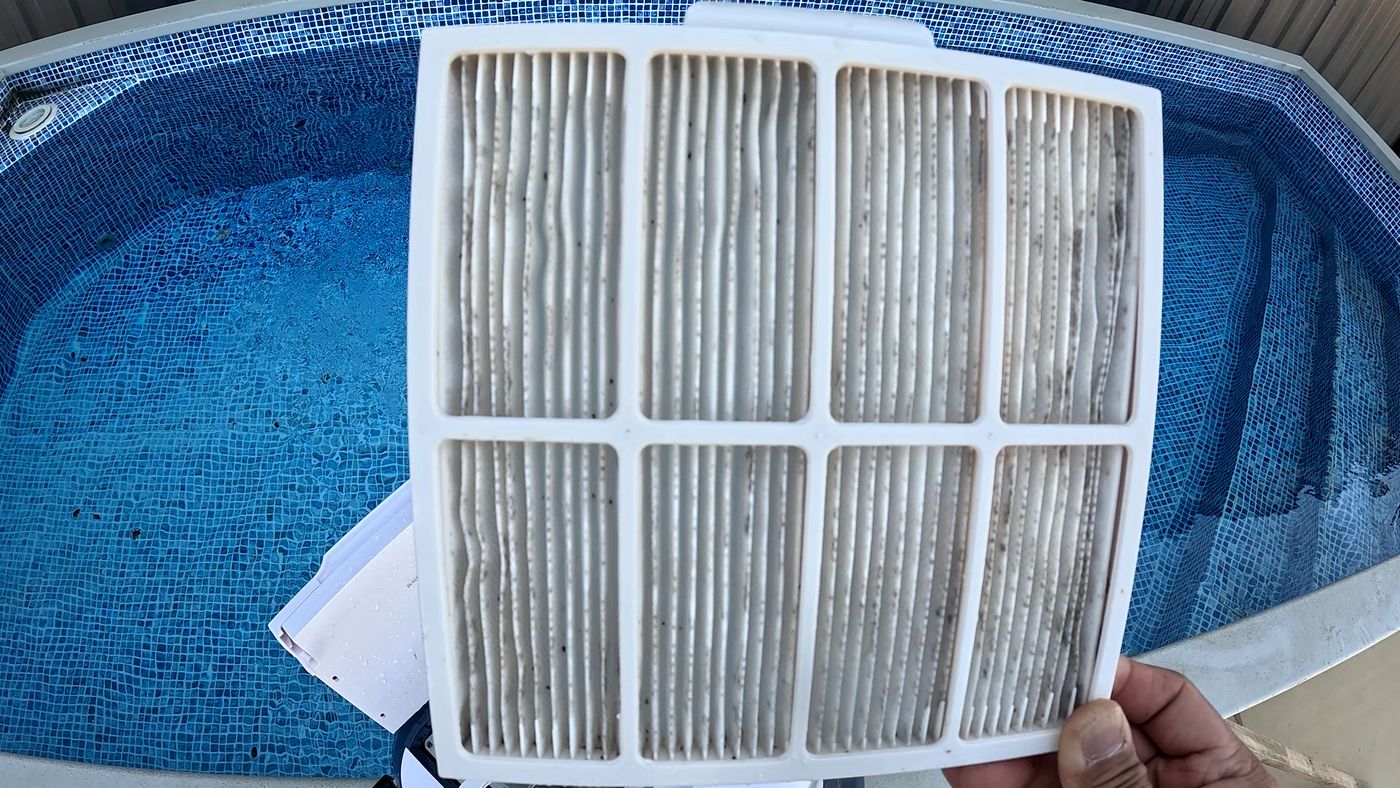
Clear recommends replacing the UltraFilter panels every 3 to 6 months depending on your pool conditions, which is reasonable for a fine-filtration media that's working this hard. Just handle them with care — fine filters are more delicate than coarse mesh by nature.
The Smartphone App
This is where a lot of newer brands fall flat, and where the Clear UV actually shines. The app is polished, and more importantly, it works while the robot is in the water — which is exactly when you need it to. I'll get on my soapbox about this in a second, but app control that drops the moment the robot submerges is useless, and that's a problem I run into constantly with cordless units.
Setup is painless. You download the Clear UV app, enable Bluetooth and Wi-Fi, select your model, and connect. From the home screen you get your cleaning mode selection, the UV lamp toggle (which is available when the cleaner is in the pool), a start button, your power supply connection status, and a live water temperature readout. That temperature display is a nice touch — it's handy to glance at before you decide to take a swim.
Remote Control is one of my favorite features here. Tap into it, flip the manual switch, and you get a virtual joystick to steer the robot straight to a specific spot in the pool. Got a pile of debris in one corner after a storm? Drive right over to it. You'll need to create a Clear UV account to use this feature, but it's worth it. In my experience, manual drive-to-spot control is the kind of thing you don't think you need until you have it.
The Weekly Timer
If you've watched my reviews before, you know the weekly timer is the feature I harp on the most — and for good reason. It's the difference between owning a robot and owning a chore.
With the Clear UV, you leave the robot in the pool, open the app, set a recurring schedule, pick your cleaning mode, and save. From then on, it cleans on its own. No dropping it in, no pressing start, no babysitting. You can even pair it with Automatic UV so the disinfection light runs during those scheduled cycles. This is true set-it-and-forget-it automation, and it's the single biggest reason I steer people toward corded robots over cordless ones. A cordless robot can't do this — you have to recharge it, retrieve it, and reset it after every single cycle, sometimes twice a day. The Clear UV just handles it. The only regular maintenance you'll do is rinsing the filter.
Cleaning Modes and Focus Cleaning
The Clear UV gives you real flexibility on how it cleans, and you can run the basic modes right from the buttons on the power supply or dial them in through the app. Here's the rundown:
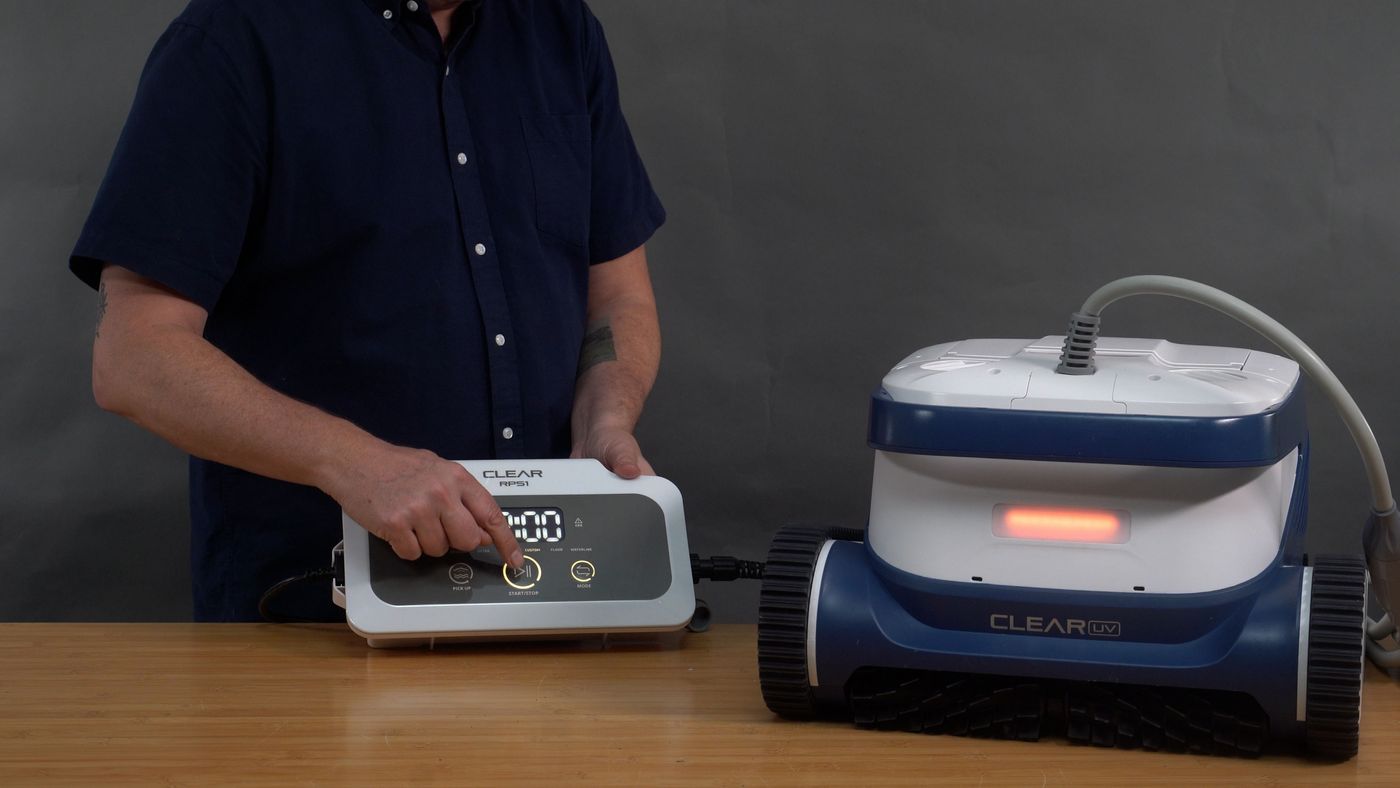
- Regular Mode — a 2-hour cycle covering floor, walls, and waterline. Your everyday go-to.
- Ultra Mode — a 3-hour deep clean of the full pool for when things have gotten away from you.
- Fast Mode — a 1-hour quick cycle of the full pool for a fast touch-up.
- Floor Mode — a 2-hour cycle that focuses only on the pool floor.
- Waterline Mode — a 2-hour cycle that focuses on the walls and waterline.
- Custom Mode — configured through the app, where you can dial in your pool shape and target exactly the areas you want.
The reason I like this is the focus cleaning. The Floor and Waterline modes let you point the robot's full effort at exactly the zone that needs it. If your floor is spotless but you've got a grime ring building at the tile line, you don't waste two hours and your power bill cleaning the whole pool — you run Waterline mode and target it directly. In my experience, that kind of targeted control is something most budget robots simply don't offer, and it's a sign Clear actually thought about how people use these things in the real world.
Smart Navigation and the C9 Microprocessor
Underneath all that cleaning power is the brain running the show — the C9 microprocessor paired with onboard navigation sensors. The unit carries both a gyroscope and an accelerometer, which is the same class of sensor hardware I look for in the premium Dolphin models. That's what lets the robot understand its orientation, track where it's been, and adjust as it moves rather than just bouncing around at random.
In practice, this is what separates a robot that cleans your whole pool from one that misses entire sections. As I mentioned, you'll still see it pause, reverse, and re-attempt walls — that's expected, and the navigation system uses that behavior to work the pool methodically. In my testing over the past few weeks, coverage was consistently strong; I wasn't finding neglected zones after a cycle, which is more than I can say for a lot of the cordless units I've reviewed that rely on bump-and-turn guesswork. Smart hardware running smart navigation — that's the combination that actually gets your whole pool clean.
Quad Scrubbing Brushes
Vacuuming pulls up loose debris, but scrubbing is what breaks the stuck-on grime, biofilm, and algae loose so it can be captured. The Clear UV attacks your pool surfaces from four points of contact. Up front you've got the active scrubbing brush spinning at speed, working like a powered scrub brush across the floor and walls. There's a rear brush following behind to catch what the front brush kicks up. And the two aggressive textured drive tracks grip and scour the surface as the robot moves — they're not just for traction, they're scrubbing the whole time too.
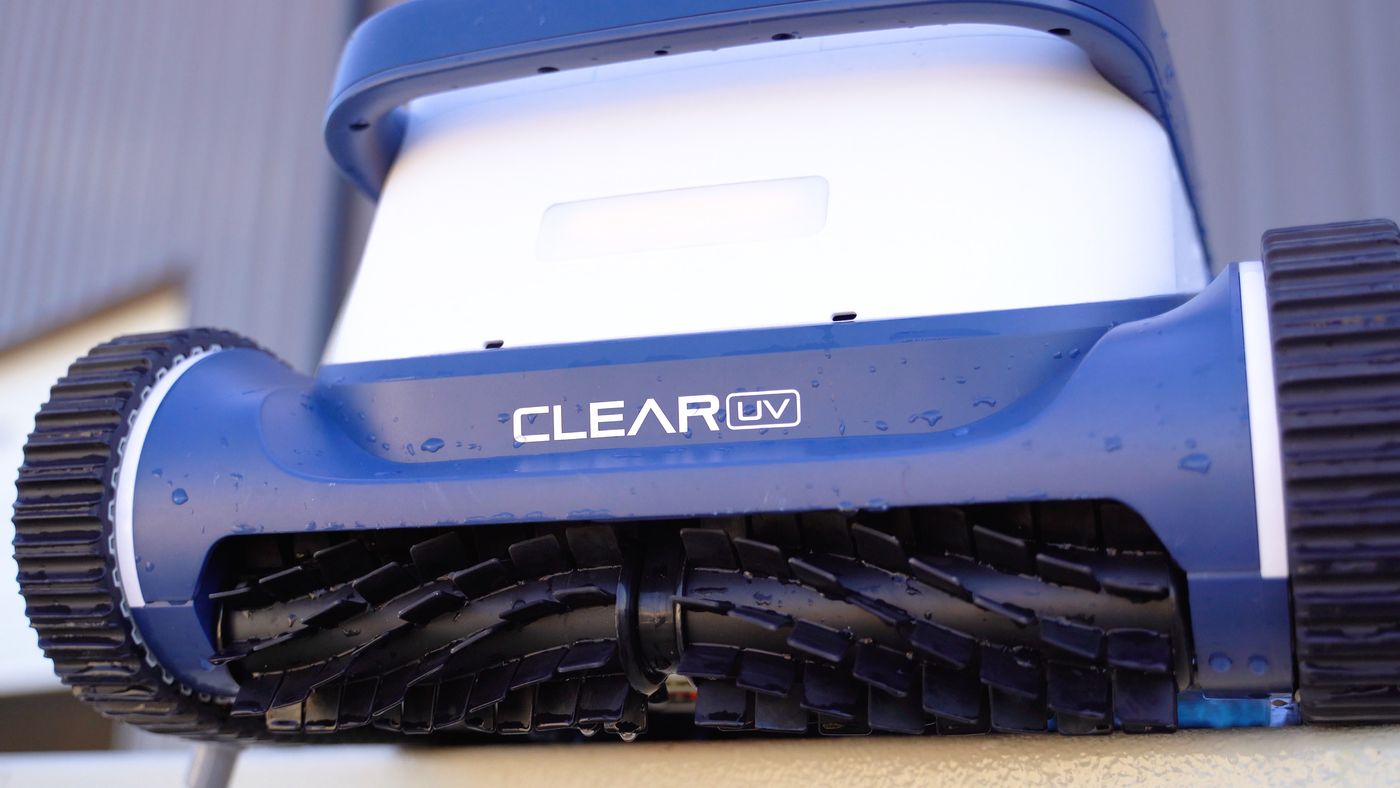
The result, in my testing, was a noticeably brighter pool after a single cycle, especially along the waterline where buildup loves to hide. Pair that mechanical scrubbing with the 1-micron UltraFilters catching everything it loosens and the UV-C light working on the organics, and you've got a thorough clean. This is what powerful cleaning is supposed to look like.
Quad Motors and Raw Power
Let's talk about what's actually driving all of this. The Clear UV runs on four motors — two pump motors for suction and two drive motors for movement. That's the "quad motor" setup, and it's a big part of why this robot pulls so hard. In my testing, the suction was among the strongest I've felt in a residential robot, which lines up perfectly with that brim-full basket on every run.
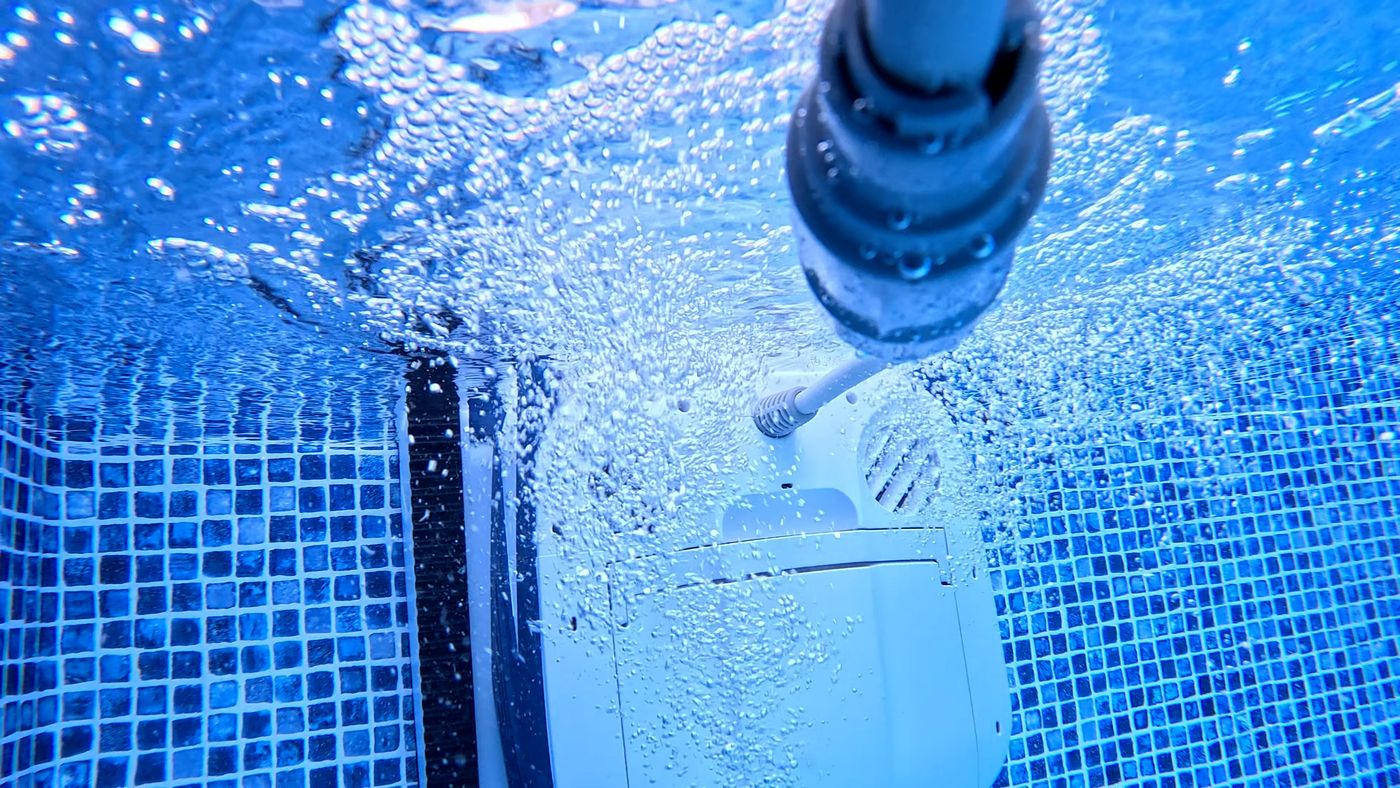
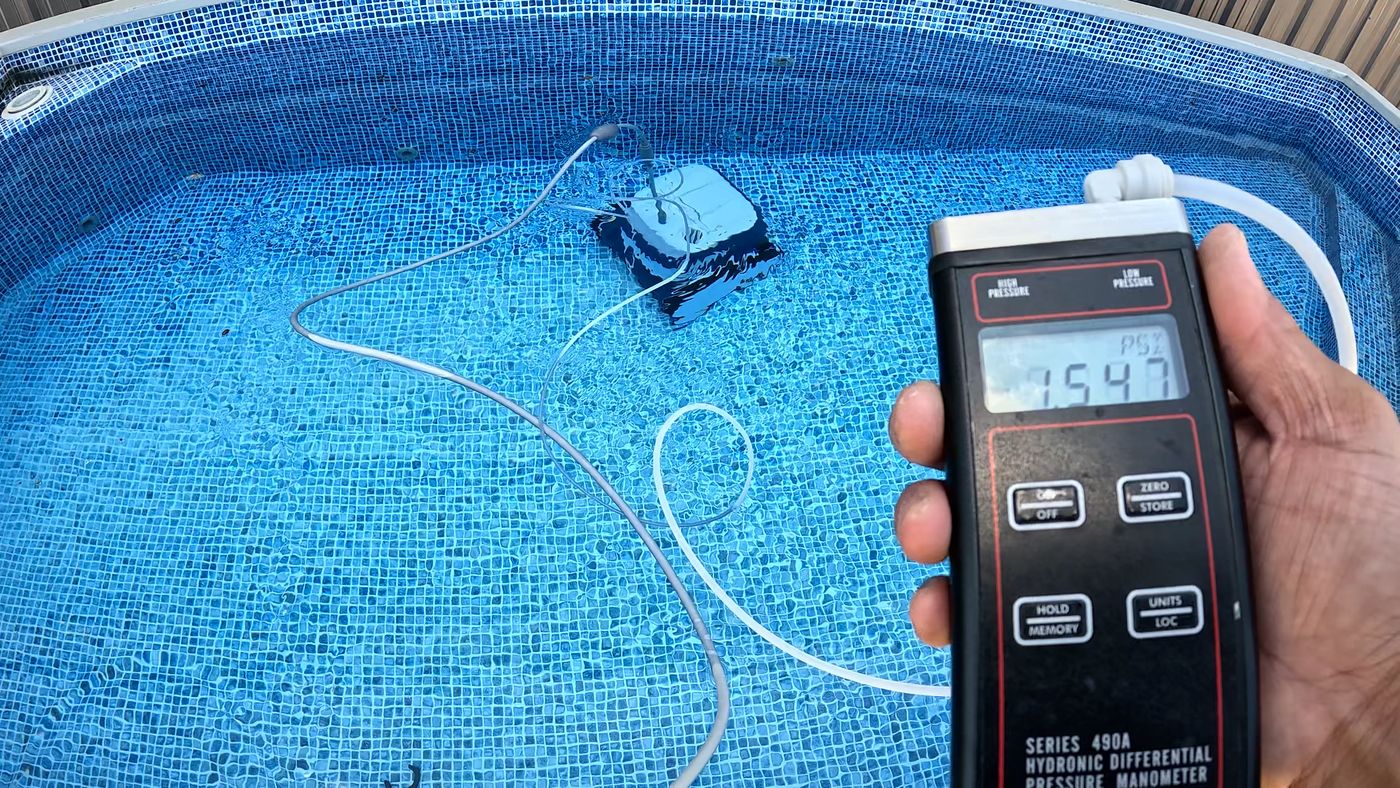
A few specs worth knowing: the cleaner is rated IP68 (fully submersible) while the power supply is IP54 (water-resistant, not waterproof, so keep it at least 10 feet from the pool and out of direct sun). It runs on standard household power, averaging around 250 watts. It handles working depths from 2.5 up to 16.4 feet, operates between 50 and 95°F, and is rated for pools with pH from 7.0 to 7.8, free chlorine up to 4 ppm, and salt up to 5,000 ppm — so yes, it's fully saltwater compatible. One real note from the manual that's worth repeating: don't run it right after adding flocculants or clarifiers, because that fine sediment can clog the filtration. Let the water clear first.
The one honest knock? It's heavy. At 27.6 pounds without the cable, this is a bigger, beefier unit than most of the robots on my list. You feel it when you lift it out. The good news is the pick-up mode does most of the work — it drives the robot to the waterline so you're just grabbing the handle and lifting, and if you hold it above the surface for a few seconds the water drains out and it gets a lot lighter. And one more time for the people in the back: never, ever lift this robot out by the cable. Always use the handle. Pulling the cable can damage the internal wires and it's not covered under warranty.
What About the Clear S?
Quick note for anyone weighing their options: there's also a Clear S, which is the same robot without the UV light and runs about $250 less. If you want the cleaning power, the quad motors, the 1-micron filtration, and the app features but don't care about the UV disinfection, that's your model — it's mechanically identical minus the lamp, and I've got a full Clear S review breaking down exactly who it's for. For my money, though, the UV is the whole reason this robot stands out — so if you can swing it, get the Clear UV.
Final Verdict
So what's my final verdict on the Clear UV?

It's Pool Nerd Approved.
After testing 40+ robots in my pool, this is the most impressive new cleaner I've put in the water in a very long time. The cleaning power is exceptional, the 1-micron filtration is a step above, the app actually works the way an app should, the weekly timer delivers true automation, and the UV-C light is the kind of real innovation I almost never see in this category. From the swivel cable to the focus modes to the pick-up function, this thing was a pleasure to use.
Now, full transparency — and you know I don't do paid reviews, so this is just my read on it: I'm not ready to crown it my #1 robot overall yet, and that has nothing to do with how it performs. It's about longevity. Reliability over months and years is a huge part of how I evaluate a cleaner, and a few weeks isn't enough to speak to that. The corded Dolphin lineup has earned my top spots by proving itself over years of testing, and the Clear UV needs to put in that same time. I'll update this review as I keep running it through the seasons.
But make no mistake: if you want the most innovative and most powerful robot I've tested, the Clear UV is absolutely at the top of that conversation. It's a beast, it's a joy to own, and it's earned its spot as my pick for the most exciting pool robot of the year. Pool Nerd Approved, without hesitation.
If you want to keep nerding out over your pool, head over to my deals page at ThePoolNerd.com/deals, where I post the best deals on robotic pool cleaners and other pool equipment.
Related Reading
- Best Robotic Pool Cleaners — Our top picks after testing 40+ robots
- All Robotic Pool Cleaner Reviews — Every robot we've tested
- SpectraLight UV System Review — Our take on UV-C for your whole pool
- NanoFiltration Explained — Why fine filtration makes water truly clear
- Clear S Review — The same robot without the UV-C lamp, for less
- Clear UV — Official Site — Specs, pricing, and ordering direct from Clear
- Clear UV at PoolRobots.com — Shop the Clear UV from an authorized dealer
- Clear S at PoolRobots.com — Shop the non-UV version from an authorized dealer