
 Justin D.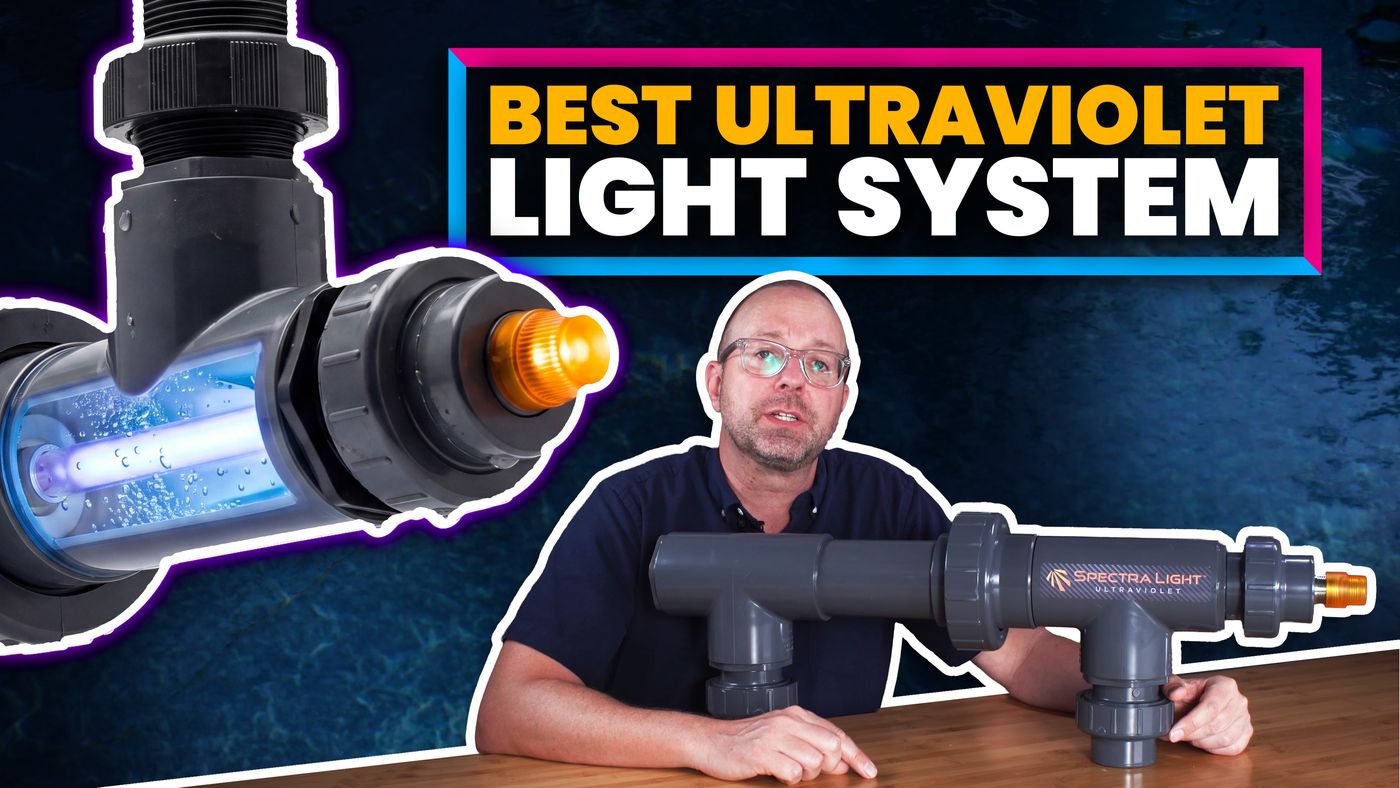
If you're still relying on chlorine alone to sanitize your pool, you're working twice as hard as you need to. UV pool sanitation is the single biggest upgrade I've ever installed on my pool — and once you understand what it does, you'll wonder how the pool industry has gotten away with the old way for so long.
I'm Justin from The Pool Nerd. After 5+ years of testing pool equipment, I've researched every UV system worth talking about and ranked the best ones for residential pools. Spoiler: there's a clear winner, and it's not even close.
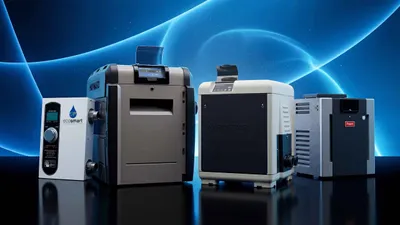
Best UV Pool Systems at a Glance

The short answer: the SpectraLight UV is the most powerful UV pool system in its class, and it's the one I run on my own pool — I go deep on it in my full SpectraLight review. The Paramount Ultra UV2 and Delta Ultraviolet are credible alternatives, but neither matches SpectraLight on raw output, lamp technology, or build quality.
What Is a UV Pool System?
A UV pool system — also called an ultraviolet pool sanitizer, UV-C sterilizer, or UV swimming pool light — is an inline disinfection device that uses high-intensity ultraviolet light to kill bacteria, viruses, algae, parasites, and cysts as water passes through it. The system installs between your pool filter and the return line, so every gallon of water gets sanitized on its way back to the pool.
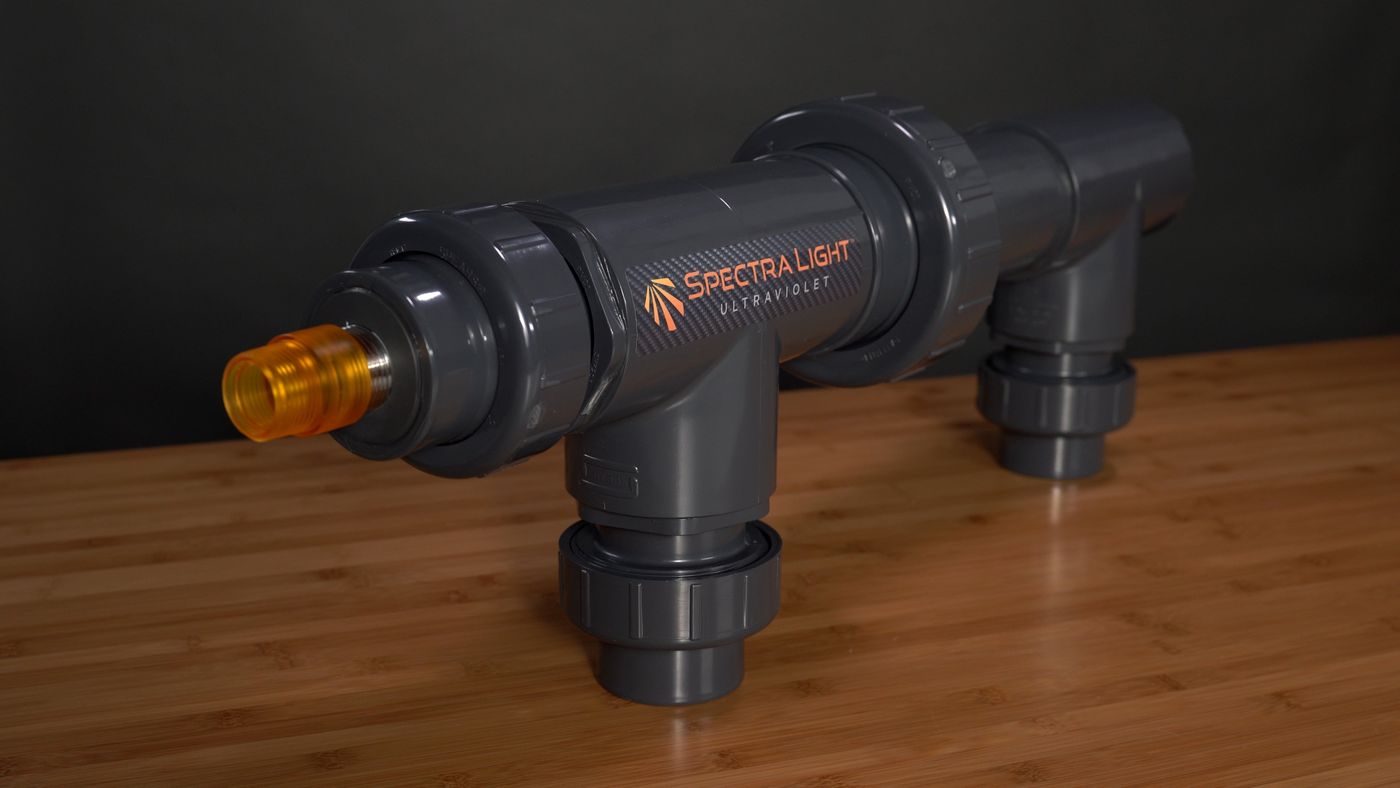
UV technology isn't new. It's the same technology New York City uses to purify its drinking water, the same technology deployed at the Beijing Olympics for unprecedented water clarity, and the same technology used at hundreds of commercial swimming pools across the country. What IS new is that it's now affordable, compact, and easy enough to install on any residential pool.
Here's the kicker: UV doesn't replace chlorine. It works alongside chlorine, doing the heavy lifting of pathogen destruction so your pool needs dramatically less chemical sanitizer to stay clean. The result is softer water, fewer chemicals, and a pool that's actually safer to swim in.
How Does UV Pool Sanitation Work?
As pool water flows through the UV chamber, a high-intensity UV-C germicidal light ray penetrates each microorganism and targets its DNA and RNA. This permanently disables the pathogen's ability to reproduce, killing it within roughly two seconds of exposure. No chemicals are added. No byproducts are created. The water comes out the other side biologically clean.
Even better, UV light breaks down chloramines — the toxic chlorine byproducts responsible for that harsh "chlorine smell," red eyes, and respiratory irritation at indoor pools. When you smell chlorine at a pool, you're not actually smelling chlorine. You're smelling chloramines, and that smell is your nose telling you the water chemistry is off. UV destroys those compounds before they ever reach you.
How UV Changes Pool Care Forever
Let's get real about what UV does once you install it. This isn't a marginal upgrade — this is a completely different way of running a pool.
1. You'll Use Up to 90% Less Chemicals
With UV doing the heavy lifting on pathogen destruction, your chlorine demand drops dramatically. Most owners report cutting sanitizer use by 80-90% in the first season — fewer trips to the pool store, less chemical storage, and a chunk of change saved every month.
2. No More Algaecide. Ever.
Algae spores die the instant they pass through a UV chamber. With a properly sized UV system, algaecide becomes completely unnecessary — one less specialty chemical to buy and one less product disrupting your water chemistry.
3. Easier pH and Chemistry Management
Fewer chemicals means less chemistry to balance. Your pH stops yo-yoing. Alkalinity stays in range longer. CYA creep becomes a non-issue. In my experience, this is one of the most overlooked benefits — your pool just becomes less work overall.
4. Crystal-Clear Water You Can See Through
If you watched the Beijing Olympics swimming events, you saw what a UV-treated pool looks like — you could see clearly across a 100-meter pool. UV doesn't just kill pathogens; it eliminates the microscopic organic load that causes haziness.
5. Healthier, Safer Swimming
Scientific studies have linked chronic chlorine byproduct exposure to increased rates of allergies, asthma, and even some cancers. UV dramatically reduces those byproducts. For families with kids who swim daily, that matters.
6. Your Equipment Lasts Longer
Lower chlorine means less corrosion on your heater, less liner degradation, less fading on fabrics, and gentler chemistry on your salt cell. UV essentially extends the service life of everything downstream of your filter.
UV pairs beautifully with ORP monitoring. When you can actually measure your sanitizer demand in real time (with something like the ICO by Ondilo) and your UV system is handling 90% of the pathogen load, you can dial your chlorine residual down to 0.5-1.5 ppm and still have a pristine, safe pool. That's how commercial aquatic centers run — and now you can run yours the same way.
Are Pool Chemicals Actually Safe?
Most pools rely on the same chemical sanitation playbook that's been in use for over 40 years. The problem? Multiple peer-reviewed studies have now linked elevated pool chemical exposure — particularly chloramines and other disinfection byproducts — to increased risks of allergies, asthma, and certain cancers.
The pool industry has been slow to acknowledge this because chemicals are a recurring revenue stream and UV isn't. This is why UV is gaining traction with commercial facilities and informed residential owners — less chemical exposure isn't a luxury, it's a meaningful health upgrade.
What to Look For in a UV System
1. UV Power Output (Microwatts)
UV systems are measured in microwatts of UV-C output. More power means faster, more thorough pathogen destruction. Entry-level systems output 15,000-20,000 microwatts. Premium systems hit 60,000 microwatts or higher — and the difference in real-world performance is massive.
2. Lamp Technology
Standard UV lamps are charged with mercury alone. The best systems use proprietary gas blends (Xenon, Neon, Argon) that produce up to 4x the UV-C output of first-gen lamps while drawing less power.
3. Housing Material
UV systems live in a corrosive environment. Look for industrial-grade non-corrosive polymers reinforced with Titanium Dioxide for UV resistance. Avoid budget plastic housings — they degrade quickly and crack under sun exposure.
4. Seal Quality
UV chambers run pressurized water and concentrated UV-C. A failed seal means water in your electronics. The best systems use aerospace-developed double seals with fluoroelastomers and EPDM O-rings.
5. Installation and Maintenance
A good UV system installs in 30 minutes between your filter and return line. Look for modular construction with tool-free lamp changes. Annual lamp replacement should be a 60-second job, not a service call.
Best Overall: SpectraLight UV
BEST OVERALL UV SYSTEM: 60,000 microwatts of UV-C power, patented Xenon/Neon/Argon lamps, aerospace-grade construction, and a 30-day money-back guarantee. The system I run on my own pool.
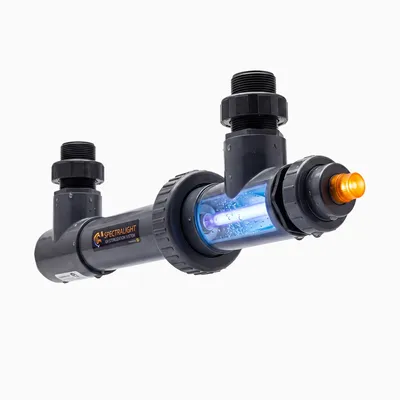
There's no contest here. SpectraLight is the most powerful UV pool system in its class, period. It's the system I put on my own pool — you can read the full hands-on review here — and the system I recommend to every Pool Nerd reader who asks about UV. The spec sheet alone tells you why it's in a different league than anything else on the market.
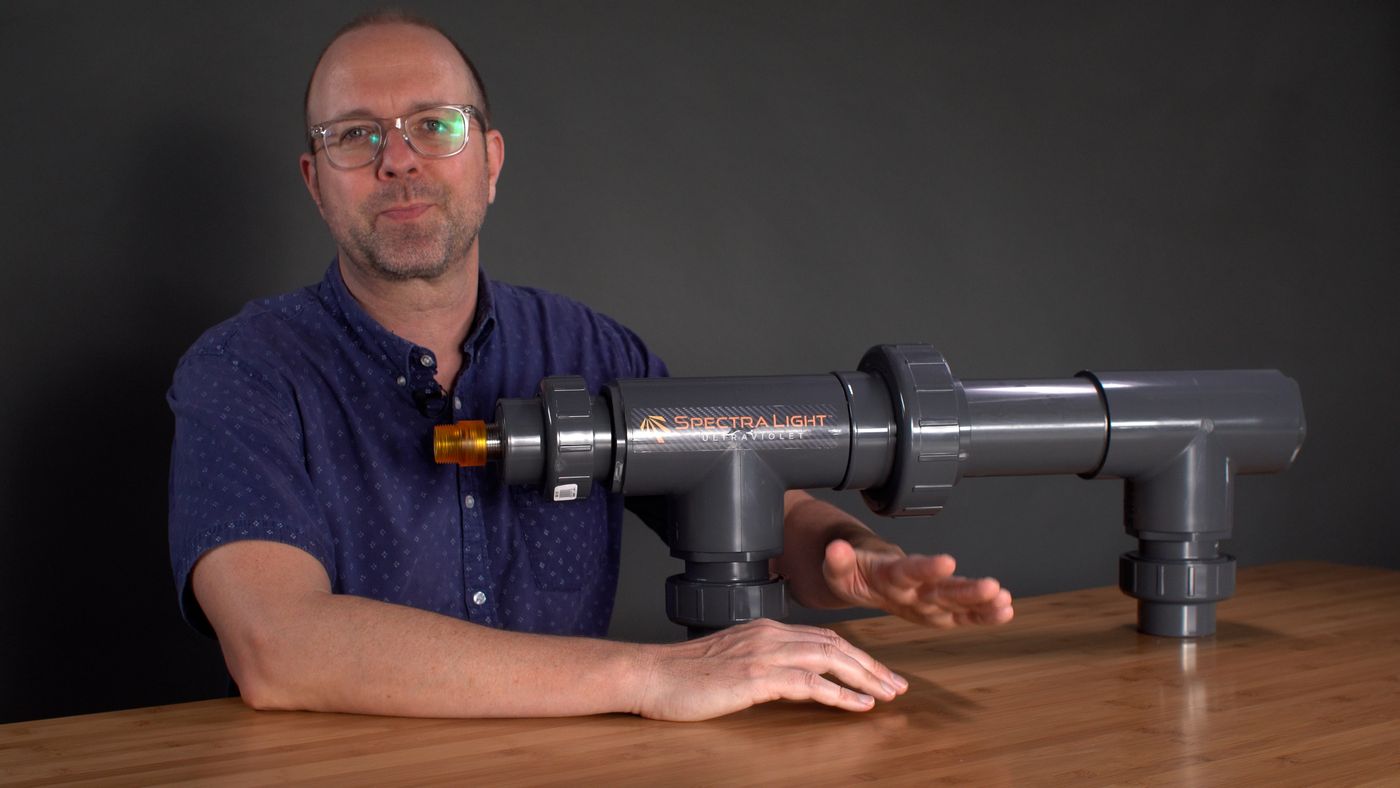
Why SpectraLight wins:
-
60,000 microwatts of UV-C power — the most powerful UV pool system in its class
-
Ultra high-output patented lamps charged with proprietary Xenon, Neon, and Argon blend
-
4x the UV output of first-generation lamps while using 30% less power
-
Destroys over 99.5% of pool pathogens within 2 seconds of exposure
-
Reduces chemical demand up to 90%
-
Industrial graphite housing with Titanium Dioxide for maximum UV resistance
-
Aerospace-developed double seal with fluoroelastomers and EPDM O-rings
-
IntelliVolt solid-state electronic ballasts save up to 30% over standard ballasts
-
Modular construction — fully assembled or disassembled in under 3 minutes
-
Quick-release sleeve removes and reinstalls in under 60 seconds, no tools required
-
Compatible with all pool types — fresh water, salt water, chlorine, and hybrid systems
-
30-day money-back satisfaction guarantee
-
Trusted by the US Navy and deployed at hundreds of public swimming pools
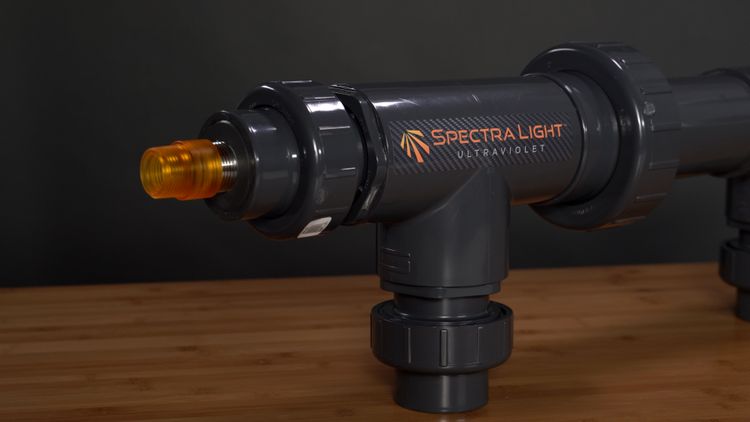
Industrial graphite housing, aerospace-grade double seals, and tool-free lamp changes // The Pool Nerd
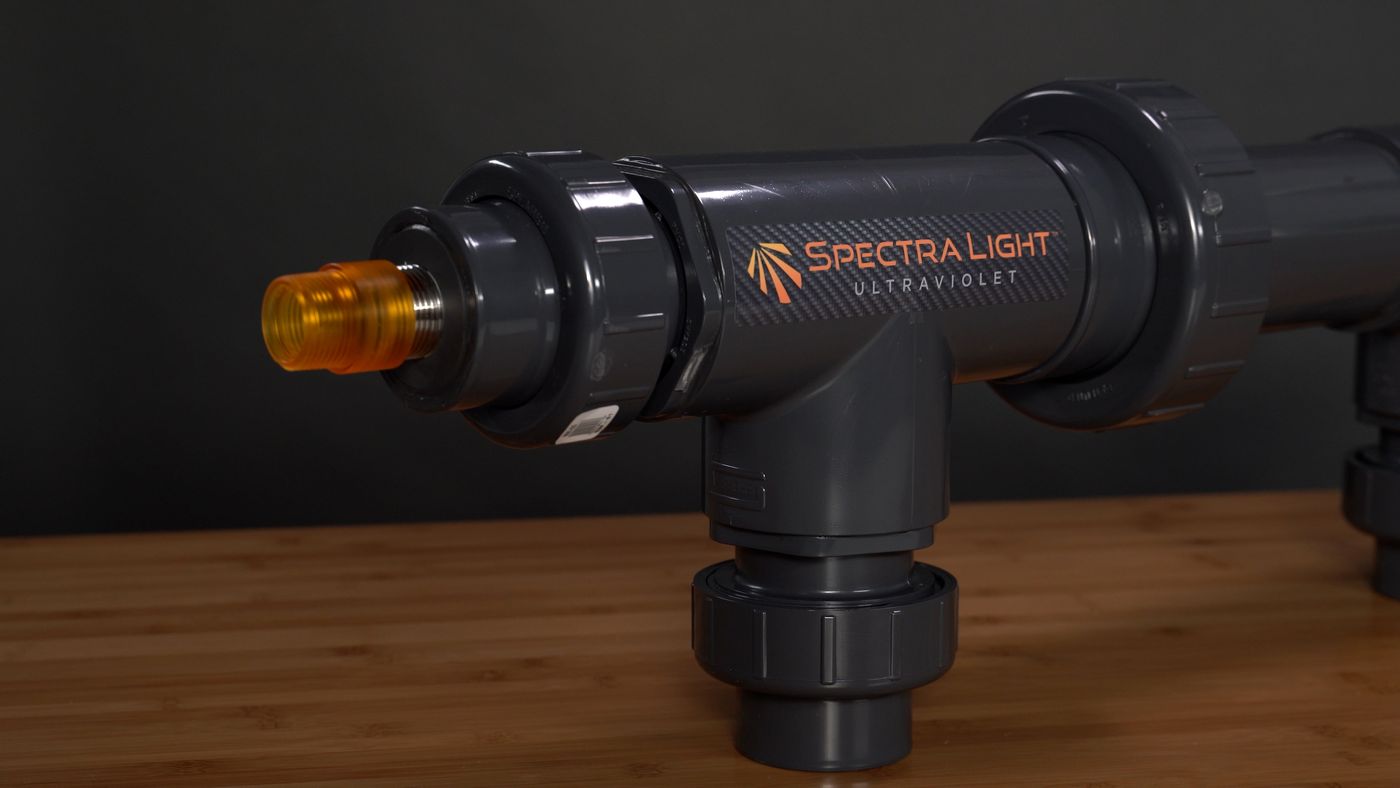
In my opinion, what really sets SpectraLight apart isn't just the raw power — it's the engineering discipline behind every component. The lamp gas blend, the housing material, the seal technology, the ballast efficiency — every piece is over-engineered for residential pool use. That's why it's been adopted by commercial aquatic facilities and military installations, not just backyard pools.
Installation is genuinely simple: three steps, 30 minutes or less. Cut the return line between filter and pool, plumb the SpectraLight chamber in, plug in the ballast. Any homeowner who can handle a basic PVC repair can install one.
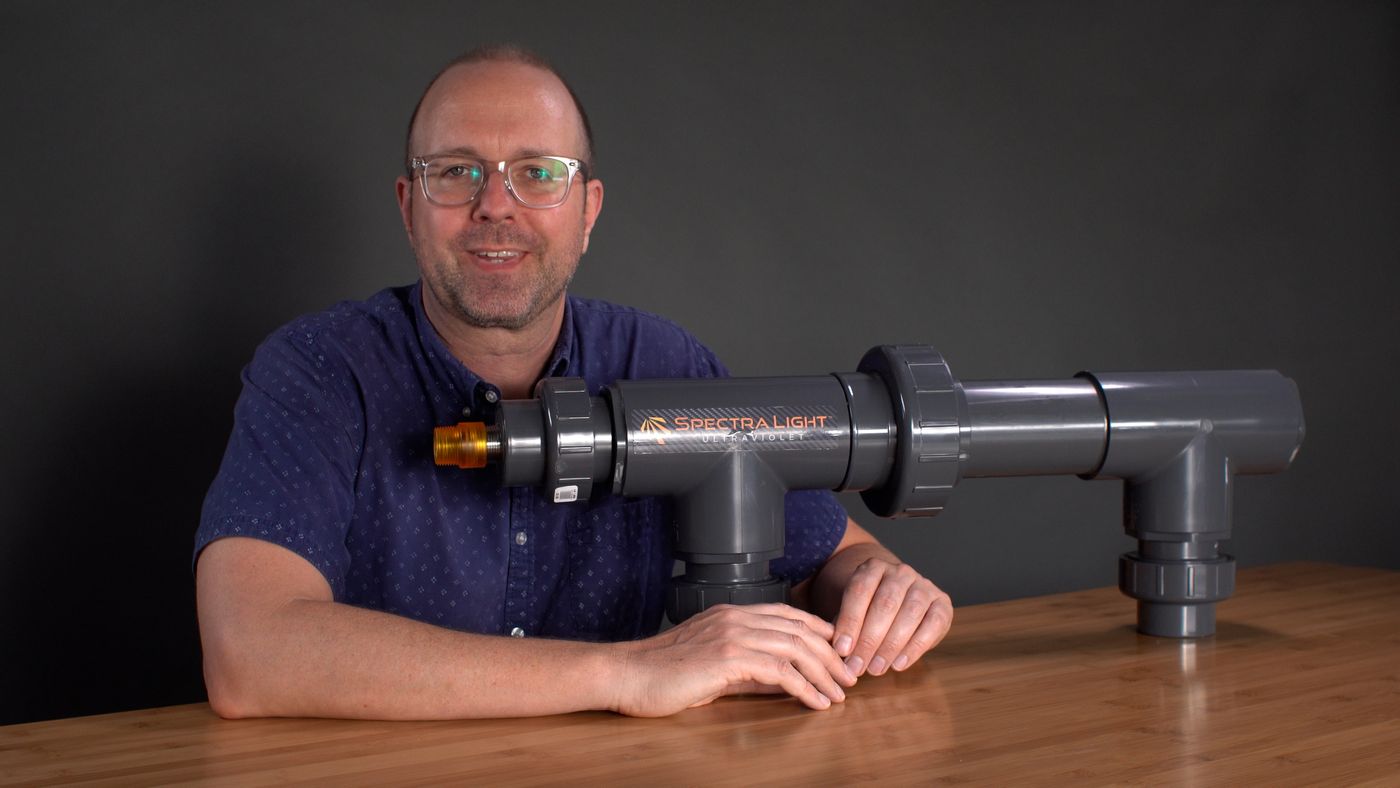
You can get current Pool Nerd pricing on the SpectraLight over at ThePoolNerd.com/deals, or shop directly at SpectraLight.
Runner-Up: Paramount Ultra UV2
If you can't get SpectraLight for some reason, the Paramount Ultra UV2 is a respectable alternative. Paramount is a well-established pool equipment company with broader brand recognition, and the Ultra UV2 has been on the market long enough to have a track record. It uses medium-pressure UV lamps and is generally compatible with most inground pool plumbing setups.
That said, in my opinion the Paramount system falls short of SpectraLight on raw UV output, lamp efficiency, and housing durability. The lamp replacement process is more involved, and you'll typically need a pool tech for annual maintenance. Warranty terms are also shorter. It's not a bad system — it's just not the best.
WORTH KNOWING
Established brand with a broader dealer network and medium-pressure UV technology — but lamp replacement typically requires a service tech, and long-term operating costs run higher than SpectraLight.
Also Consider: Delta Ultraviolet EA/ELC Series
Delta UV has been making ultraviolet water treatment systems for decades and has a legitimate engineering pedigree in commercial aquatic applications. The EA and ELC residential series are solid, reliable units that get the job done. If you find one on sale or already installed at a home you're buying, you don't need to rip it out.
Where Delta falls short for new buyers is form factor and lamp tech. The units are physically larger, the lamps are first-generation low-pressure designs, and the housings haven't kept pace with modern UV-resistant materials. For a new install, the SpectraLight platform is simply more advanced. But Delta UV is a credible name in the space and worth mentioning.
WORTH KNOWING
Long-standing commercial UV pedigree and reliable residential units — but bulkier form factor and older lamp technology than SpectraLight. A reasonable choice if you find one at the right price.
UV vs. Other Pool Sanitation Methods
| Method | Kills Pathogens | Eliminates Chloramines | Residual Sanitizer | Chemical Use |
|---|---|---|---|---|
| UV (SpectraLight) | 99.5%+ in 2 sec | Yes | No (needs low-level chlorine) | Up to 90% less |
| Chlorine alone | Yes (slower) | No (creates them) | Yes | High |
| Salt chlorination | Yes (via chlorine) | No | Yes | Moderate |
| Ozone | Yes | Partial | No | Reduced |
| Mineral ionizers | Partial | No | Partial | Reduced |
The honest truth: no sanitation method is a complete solution by itself. UV is unmatched at pathogen kill and chloramine destruction but doesn't leave a residual sanitizer in the water. Chlorine leaves a residual but creates toxic byproducts. The smartest modern pool runs UV as the primary disinfectant with a small residual of chlorine (about 0.5-1.5 ppm) to handle anything UV doesn't catch immediately. That hybrid setup is how commercial aquatic centers achieve their water clarity, and it's the setup I run on my own pool.
UV Pool System FAQ
Does a UV system eliminate chlorine completely?
No — and you don't want it to. UV destroys pathogens instantly inside the chamber but doesn't leave a residual sanitizer in the pool itself. You still need a small amount of chlorine (0.5-1.5 ppm) for anything between UV passes. The benefit is you use roughly 90% less chlorine than a chlorine-only pool.
How long do UV lamps last?
Most UV pool lamps last 8,000-14,000 hours, or roughly one full season. Lamps gradually lose UV output over time, so annual replacement is standard. SpectraLight makes lamp changes a 60-second job with no tools.
Will UV work with my saltwater pool?
Yes. UV pairs especially well with salt systems — salt for residual chlorination, UV for pathogen destruction and chloramine elimination. It's one of the most effective sanitation setups available.
Is UV pool sanitation safe?
Completely. The UV-C light is fully contained inside the sealed chamber and never reaches the pool itself. You can't be exposed during normal operation.
How big does my UV system need to be?
UV systems are sized by pool gallons and pump flow rate. A standard residential pool (15,000-25,000 gallons) needs a mid-range UV system. SpectraLight makes models for every pool from small backyard pools to Olympic-size aquatic facilities.
Can I install a UV system myself?
Absolutely. SpectraLight installs in three steps in 30 minutes or less. Cut the return line between filter and pool, plumb in the UV chamber with unions, plug in the ballast. Basic PVC and electrical skills are all you need.
How much does UV save in chemicals?
Most owners report cutting chemical spending by 80-90% in the first season — dramatically less chlorine, no algaecide, less shock, easier pH balance. UV systems typically pay for themselves in saved chemicals within 2-3 seasons.
The Final Verdict
UV pool sanitation is one of those rare upgrades where the marketing and the reality actually line up. It really does cut chemicals by 90%. It really does destroy 99.5% of pool pathogens. It really does eliminate the chloramines that cause red eyes and chlorine smell. And it really does pay for itself in saved chemicals.
The question isn't whether you should install UV — it's which UV system. And on that question, SpectraLight is in a class by itself. The 60,000-microwatt output, patented lamp technology, aerospace-grade construction, and 30-day money-back guarantee combine into the strongest residential UV package available. It's what commercial pools use, what the US Navy uses, and what I'd put on my own pool without a second thought.
It's Pool Nerd Approved.
GET THE BEST POOL GEAR DEALS
I post the freshest discounts on UV systems, robotic pool cleaners, and all my favorite pool gear at ThePoolNerd.com/deals. Want to keep nerding out over your pool? Subscribe to The Pool Nerd on YouTube for weekly reviews and head-to-heads. Until next time — enjoy that pool.
Related Reading
- SpectraLight UV System Review — My full hands-on review of the top pick
- Must-Have Pool Equipment — The 6 upgrades that cut my maintenance by 90%
- Best Pool Water Monitors — Pair UV with ORP monitoring to dial in your chlorine
- Best Swimming Pool Pumps — A variable speed pump lets you run UV around the clock
- Weekly Pool Maintenance Guide — My complete weekly routine
- Pool Mistakes Costing You Money — The other mistakes I see pool owners make


Comments
Loading comments…