
How to use
Pool Salt Calculator
Salt Needed
0 lbs
0 bags (40 lb bags)
0 kg
Enter your pool volume and current salt level above to get a personalized recommendation.
What you need next
Salt, then verify the level
Add pool-grade salt a couple of bags at a time, then confirm the reading with a salt-specific test before trusting the cell display.


Products are picked independently. The Pool Nerd may earn a commission on orders placed through these links, at no extra cost to you. Learn more
Where To Buy Pool Salt & Testing Gear
What you need
Run the calculator above to get your exact dose, then grab pool-grade salt (99.8%+ pure NaCl) and a reliable way to test. Add no more than 2 bags at a time and wait 24 hours between additions.

Morton Pool Salt (40 lb)
What it is: A 40 lb bag of high-purity (99.8%+) sodium chloride made specifically for saltwater pools—no iodine, no anti-caking agents that stain.
Why you need it: This is the salt the calculator above tells you to add. Use the result to grab the right number of bags, pour it around the perimeter, and brush it in. Pool-grade salt dissolves clean and keeps your cell producing chlorine.

Digital Salt Meter
What it is: A handheld digital tester that reads your pool's salt level (ppm) instantly—far more accurate than test strips, which can be off by 500+ ppm.
Why you need it: The calculator is only as good as your current salt reading. A $30 meter pays for itself by stopping you from over- or under-dosing—and from chasing false "low salt" alarms on your generator.

Taylor K-2006 Salt Test Kit
What it is: The K-2006 line for salt pools—salt level plus the core tests you still need.
Why you need it: Wrong salinity means weak chlorine, cell alarms, and shortened cell life. Confirm salt and balance on paper, not vibes.
Pick your version: K-2006 Salt (salt pools) or the standard K-2006 (chlorine pools) if you don't need the salt test.

Salt Test Strips
What it is: Budget dip-and-read strips that give you a ballpark salt level in seconds.
Why you need it: Fine for a quick gut-check between precise tests. Just know they're less accurate than a digital meter—use them to spot big swings, then confirm with a meter before dumping bags of salt.

EverCrystal Zinc Anode
What it is: A sacrificial zinc anode that bonds to your pool's grounding system and corrodes on purpose—so the salt eats the zinc instead of your heater, handrails, and light niches.
Why you need it: Salt water accelerates galvanic corrosion, and heaters are usually the first big-ticket casualty. A zinc anode is cheap insurance against a $4,000 repair—in my book it's non-negotiable on any saltwater pool.

Ondilo ICO Pool Water Monitor
What it is: A floating smart monitor that samples pH, ORP (sanitizer effectiveness), and temperature on a schedule and sends trends to your phone.
Why you need it: You still need a real drop kit for parameters the ICO doesn’t replace (like TA and CYA), but hourly ORP/pH catches drift and dosing mistakes long before weekly strip checks do.
How Much Salt Does a Pool Need?
Whether you're converting to a saltwater system for the first time or topping off after a heavy rainstorm, getting the right salt level is the single most important factor in keeping your salt chlorine generator running efficiently. Too little salt and your cell can't produce enough chlorine. Too much and you risk corrosion, error codes, and wasted money. The calculator above gives you the exact amount — here's the knowledge behind the math.
I've maintained saltwater pools for years and the number one issue I troubleshoot is salt levels that are either too low from neglect or too high from guessing instead of testing. Both are preventable with a $30 digital salt meter and the math this calculator handles for you.
Ideal Salt Level for Saltwater Pools
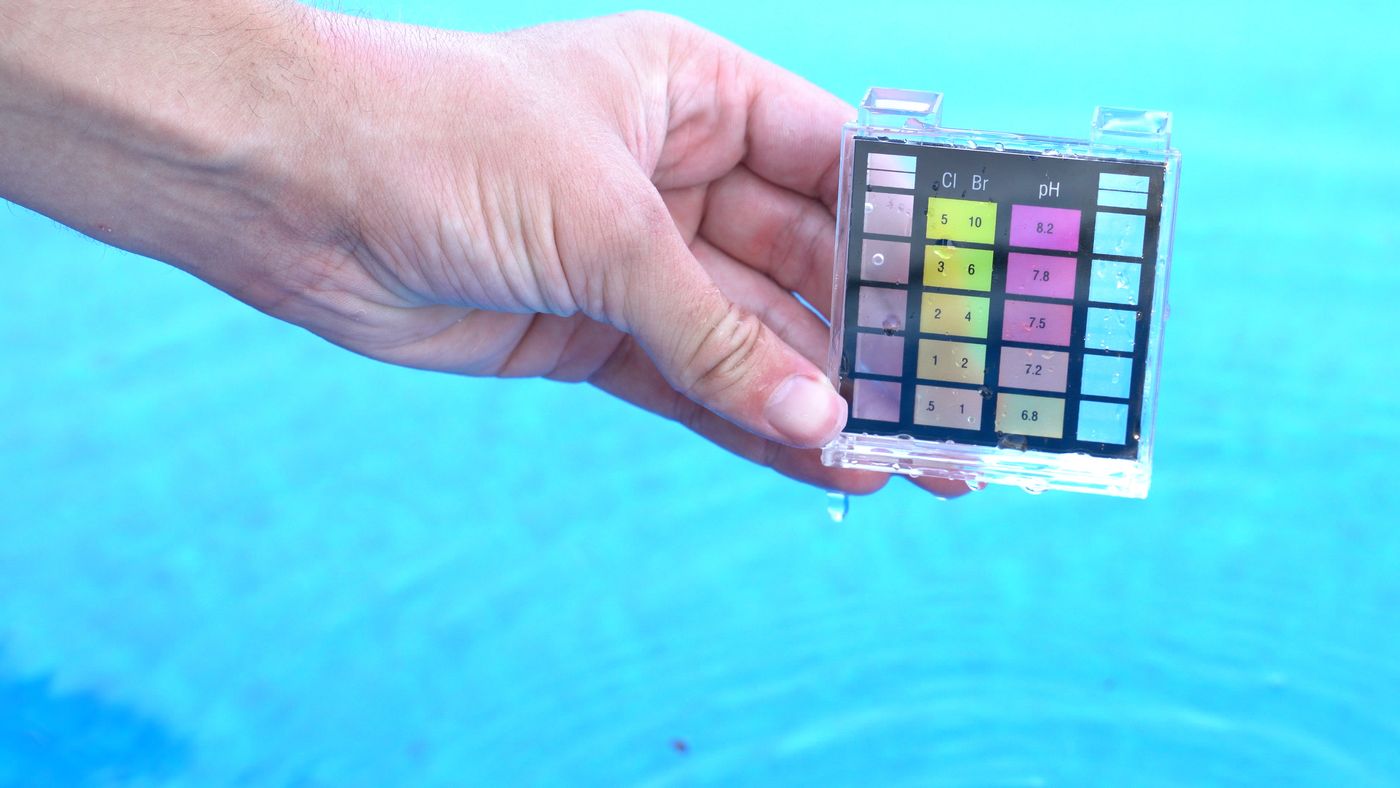
Most saltwater chlorine generators operate best between 2,700 and 3,400 ppm (parts per million), with 3,200 ppm as the sweet spot recommended by the majority of manufacturers. That range exists for a reason:
- Below 2,700 ppm — The salt cell struggles to generate adequate chlorine. Many units display a "low salt" warning and reduce output or shut down entirely.
- 2,700–3,400 ppm — The optimal operating window. Chlorine production is consistent, the cell runs efficiently, and water feels smooth on skin.
- Above 3,400 ppm — You won't taste salt at this level (ocean water is around 35,000 ppm), but excess salt accelerates wear on metal fixtures, pool equipment, and the cell itself. Some generators lock out above 4,000 ppm.
How the Salt Calculation Works
The formula is straightforward: for every 120,000 gallons of pool water, 1 pound of salt raises the salt concentration by 1 ppm. So if you have a 20,000-gallon pool and want to raise your salt by 1,000 ppm, the math is:
1,000 × 20,000 ÷ 120,000 = 167 lbs of salt
That's roughly 4 bags of standard 40 lb pool salt. The calculator above handles this automatically — just plug in your pool volume, current reading, and target level. Don't know your exact pool volume? Use our pool volume calculator first — being off by even a few thousand gallons changes your salt dose meaningfully.
How Much Salt for a New Saltwater Pool
If you're converting a freshwater pool to saltwater, you're starting from near zero. Here's what a first fill typically looks like for common pool sizes:
| Pool Volume | Salt to Reach 3,200 ppm | 40 lb Bags Needed |
|---|---|---|
| 10,000 gallons | 267 lbs | 7 bags |
| 15,000 gallons | 400 lbs | 10 bags |
| 20,000 gallons | 533 lbs | 14 bags |
| 25,000 gallons | 667 lbs | 17 bags |
| 30,000 gallons | 800 lbs | 20 bags |
| 40,000 gallons | 1,067 lbs | 27 bags |
Pro tip: Buy one or two extra bags. It's far easier to top off than to make a second trip to the store.
Salt Water Pool Salt Charts
Not everyone has a test kit handy when they're planning a salt purchase. These reference charts help you estimate how much salt to buy based on your pool size and how far off your current reading is.
Salt Needed by Pool Size (Pounds to Add)
This chart shows the pounds of salt required to raise your pool's salt level by a specific amount. Find your pool volume on the left and the ppm increase you need across the top.
| Pool Volume | +500 ppm | +1,000 ppm | +1,500 ppm | +2,000 ppm | +2,500 ppm | +3,200 ppm |
|---|---|---|---|---|---|---|
| 5,000 gal | 21 lbs | 42 lbs | 63 lbs | 83 lbs | 104 lbs | 133 lbs |
| 10,000 gal | 42 lbs | 83 lbs | 125 lbs | 167 lbs | 208 lbs | 267 lbs |
| 15,000 gal | 63 lbs | 125 lbs | 188 lbs | 250 lbs | 313 lbs | 400 lbs |
| 20,000 gal | 83 lbs | 167 lbs | 250 lbs | 333 lbs | 417 lbs | 533 lbs |
| 25,000 gal | 104 lbs | 208 lbs | 313 lbs | 417 lbs | 521 lbs | 667 lbs |
| 30,000 gal | 125 lbs | 250 lbs | 375 lbs | 500 lbs | 625 lbs | 800 lbs |
Salt Generator Manufacturer Recommendations
Different salt chlorine generator brands specify slightly different ideal ranges. Always check your owner's manual first, but here are the most common targets:
| Salt System Brand | Recommended Range (ppm) | Ideal Target (ppm) | Low Salt Warning |
|---|---|---|---|
| Hayward AquaRite | 2,700–3,400 | 3,200 | Below 2,700 |
| Pentair IntelliChlor | 3,000–3,400 | 3,200 | Below 2,800 |
| CircuPool | 2,500–3,500 | 3,000 | Below 2,500 |
| Jandy AquaPure | 3,000–3,500 | 3,200 | Below 2,500 |
| CompuPool | 2,800–4,000 | 3,200 | Below 2,500 |
| ControlOMatic | 3,000–4,000 | 3,500 | Below 2,800 |
40 lb Bags of Salt by Pool Size
A quick-reference chart when you just want to know how many bags to grab at the store:
| Pool Size | Bags for +500 ppm | Bags for +1,000 ppm | Bags for Full Fill (3,200 ppm) |
|---|---|---|---|
| 10,000 gal | 1 | 2 | 7 |
| 15,000 gal | 2 | 3 | 10 |
| 20,000 gal | 2 | 4 | 14 |
| 25,000 gal | 3 | 5 | 17 |
| 30,000 gal | 3 | 6 | 20 |
Always round up — a slightly higher salt level (within range) is better than running low.
How To Add Salt to Your Pool
Dumping all your salt in one pile next to the skimmer is one of the most common mistakes pool owners make. Here's how to do it right so the salt dissolves evenly, your readings are accurate, and your cell starts producing chlorine as fast as possible.
Step-by-Step Salt Addition Process
- Test your current salt level using a digital salt meter or liquid drop test kit. Test strips for salt can be off by 500+ ppm, so a dedicated meter is worth the investment.
- Calculate the amount needed using the calculator above or the charts in this guide.
- Turn on your pump and make sure the system is circulating before you add any salt.
- Pour salt around the perimeter of the pool, spreading it as evenly as possible. Avoid dumping it directly into the skimmer or onto the salt cell.
- Brush undissolved salt on the pool floor to speed up the dissolving process.
- Wait 24 hours before retesting. Salt needs time to fully dissolve and circulate throughout the water. Running the pump continuously during this period helps.
- Retest and fine-tune. If you're still below target, add the remaining amount in smaller increments.
What Type of Salt to Use
Not all salt is created equal. Pool salt should be:
- At least 99.8% pure sodium chloride (NaCl) — food-grade or pool-grade
- Free of anti-caking agents like Yellow Prussiate of Soda (YPS), which can stain pool surfaces
- Free of iodine — iodized table salt should never go in your pool
- Evaporated or solar salt — both work well; avoid rock salt, which contains impurities
Popular pool salt brands include Morton Pool Salt, Clorox Pool Salt, and Salt Depot. They're all mined or evaporated NaCl — the differences are mostly in purity and packaging.
How Long Does Pool Salt Take to Dissolve?
Under normal conditions with the pump running:
- Fine-grain salt dissolves in 4–8 hours
- Coarse or pellet salt can take 12–24 hours
- Cold water (below 65°F) slows dissolving significantly
Don't turn on your salt chlorine generator until the salt is fully dissolved. Running the cell through a cloud of undissolved salt can cause inaccurate readings and unnecessary wear.
Salt Water Pool Maintenance Tips
Adding salt is just the first step. Keeping your levels stable throughout the season is where consistent pool care pays off. Salt doesn't evaporate with water, but it does leave your pool through splash-out, backwashing, leaks, and dilution from rain or fresh water additions. For the complete routine, see our saltwater pool maintenance guide.
When to Test Your Salt Level
- Weekly during swimming season as part of your regular water testing routine
- After heavy rain — a major storm can dilute your pool by hundreds of ppm
- After adding fresh water — topping off drops your concentration
- After backwashing your filter — each backwash removes salt-laden water
- At the beginning and end of the season — baseline and closing readings help with planning
How Salt Gets Depleted
Salt itself doesn't get "used up" by the chlorine generator — the cell splits salt into chlorine and sodium, then recombines them. But physical water loss removes salt from the pool:
- Splash-out from swimmers and play
- Backwashing sand or DE filters
- Leaks in plumbing, equipment, or the shell
- Draining for winterization or maintenance
- Dilution from rain, snow melt, or hose refills
A typical pool loses 200–500 ppm of salt per month during heavy use season. Budget for 1–3 bags of salt monthly to stay in range.
Protecting Your Salt Cell
Your salt cell is the most expensive consumable part of a saltwater system, typically costing $400–$800 to replace (see our best salt cells guide for the OEM and aftermarket replacements worth buying). Keeping salt levels in the ideal range extends cell life dramatically:
- Salt levels below 2,700 ppm force the cell to work harder, shortening its lifespan
- Salt levels above 4,000 ppm can cause scale buildup inside the cell
- Inspect and clean the cell every 3 months with a diluted muriatic acid solution (4:1 water to acid) — see our pool acid calculator for safe handling guidelines
- Most cells last 3–7 years with proper salt maintenance
Common Salt Level Problems
Even experienced saltwater pool owners run into salt-related issues. Here are the most common problems, what causes them, and how to fix them without overreacting.
Salt Level Too Low
Symptoms: "Low salt" warning on the control panel, reduced chlorine production, cloudy water
Common causes:
- Recent heavy rain diluting the pool
- Excessive backwashing
- Water leak you haven't noticed
- Never added enough salt after filling
Fix: Test your salt level, use the calculator above to determine how much to add, and follow the step-by-step addition process. If your salt keeps dropping without explanation, check for leaks.
Salt Level Too High
Symptoms: Salty taste in the water (above 5,000+ ppm), "high salt" error on the generator, corrosion on metal ladders or fixtures
Common causes:
- Added too much salt at once without waiting to retest
- Inaccurate initial test reading
- Salt from a previous owner or treatment you weren't aware of
Fix: The only way to lower salt is to drain a portion of the pool and refill with fresh water. Drain approximately the percentage equal to how far over target you are. For example, if you're at 4,000 ppm and targeting 3,200 ppm, that's 20% over — drain about 20% and refill. Retest after 24 hours.
Salt Reading Doesn't Match Reality
Symptoms: Generator says salt is fine but water test shows low (or vice versa)
Common causes:
- Built-in salt sensors drift over time and need calibration
- Water temperature affects readings — cold water reads lower
- Salt hasn't fully dissolved or circulated yet
- Cheap test strips giving inaccurate results
Fix: Use a reliable digital salt meter as your ground truth. If the built-in sensor is consistently off, clean the cell and check if your unit supports sensor calibration. Always wait 24 hours after adding salt before trusting any reading.
Salt Stains on Pool Surfaces
Symptoms: White residue on the pool floor or walls, especially after salt addition
Common causes:
- Adding too much salt in one spot without brushing
- Using impure salt (rock salt) with insoluble minerals
- Water chemistry imbalance (high calcium hardness + high salt)
Fix: Brush affected areas aggressively. Switch to 99.8%+ pure solar or evaporated salt. If staining persists, check calcium hardness — it should be 200–400 ppm in saltwater pools.
Pool Salt FAQ
How often do I need to add salt to my pool?
Most saltwater pools need a salt addition every 4–8 weeks during swimming season, depending on water loss from splash-out, backwashing, and dilution. A monthly test tells you exactly when and how much.
Can I use water softener salt in my pool?
Water softener salt pellets can work if they're 99.8%+ pure NaCl without additives. However, they dissolve more slowly than pool-grade salt and may contain resin-cleaning agents. Pool-specific salt is the safer choice and costs roughly the same.
Does rain lower my pool's salt level?
Yes. Rainwater has zero salt, so it dilutes your pool's concentration. A 1-inch rain on a 20,000-gallon pool can add around 1,200 gallons of fresh water, dropping your salt by roughly 200 ppm. Test after any significant rainfall.
Why does my pool taste salty?
If you can taste salt, your level is likely above 5,000 ppm — well above the operating range. At the ideal 3,200 ppm, saltwater pools should feel smooth and silky with no noticeable salt taste. Drain and dilute until you're back in range.
How much does pool salt cost?
A 40 lb bag of pool salt typically costs $5–$8 at home improvement stores. For a 20,000-gallon pool, an initial fill to 3,200 ppm runs about $70–$110 in salt. Annual maintenance salt costs average $30–$60 depending on water loss.
Is a saltwater pool cheaper than chlorine?
Over a 5-year period, most saltwater pool owners spend less on sanitization than traditional chlorine users. The upfront cost of the salt system ($500–$2,000 — compare options in our best salt chlorine generators guide) and cell replacement ($400–$800 every 3–7 years) is offset by lower annual chemical costs, less skin and eye irritation, and reduced chemical handling.
Can I add salt and shock at the same time?
It's best to add them separately. Add salt first, let it dissolve for 24 hours, then shock if needed. Adding both simultaneously can create temporary chemical imbalances and makes it harder to get accurate readings afterward.
What happens if I swim right after adding salt?
Undissolved salt on the pool floor won't hurt you, but it's better to wait until the salt is fully dissolved and circulated (at least 4–8 hours) before swimming. Walking on undissolved salt can also scratch vinyl or fiberglass surfaces.
Maintaining the right salt level is the foundation of a healthy saltwater pool. Test regularly, add gradually, and let the calculator do the math for you.
Keep in mind that salt is just one piece of saltwater pool chemistry. You still need to manage pH (salt cells push it high), total alkalinity, calcium hardness, and CYA. Our pool chemical calculator covers the full balance for saltwater systems. And since your salt cell is doing the heavy lifting on chlorine production, making sure your pump is properly sized ensures adequate flow through the cell for consistent output.
For the full week-to-week routine that keeps a saltwater pool running clean, check out our weekly pool maintenance guide.
More Pool Calculators
All Calculators Chemistry Calculator Chemical Calculator Chlorine Calculator Volume Calculator Shock Calculator SLAM Calculator pH Calculator Acid Calculator Alkalinity Calculator Calcium Hardness Calculator LSI Calculator Salt Calculator CYA Calculator Borate Calculator Dilution Calculator Pump Size Calculator Pump Runtime Calculator Pump Schedule Calculator Filter Size Calculator Heater Calculator Salt Cell Calculator Fill Time Calculator Evaporation Calculator Winterizing Calculator Hot Tub Calculator Pool Cost Calculator Loan Calculator Maintenance Cost Calculator Pool Deck Calculator Resurfacing Calculator
More from The Pool Nerd
Keep Reading


Disclaimer: This information is for educational purposes only. Handling pool chemicals involves significant risks, and this calculator cannot cover every product, pool, or possible hazard. Always follow the manufacturer’s label, safety data sheet, and applicable requirements. Seek qualified help whenever you are uncertain.