
Pool Chemical Calculator
Enter your water test results and get exact dosages for every pool chemical
Use the calculatorHow to use
Pool Chemical Calculator
Select a chemical below, enter your pool details, and get a precise dosing recommendation.
Don't know? Use our pool volume calculator.
Ideal: 1–3 ppm (with CYA: 5–7% of CYA)
Ideal: 7.2–7.6
Ideal: 80–120 ppm
Ideal: 200–400 ppm. Surface-specific targets and drain math: calcium hardness calculator
Ideal: 30–50 ppm
What you need next
The products behind these doses
The first card swaps to whatever the calculator just told you to add. Test with a drop kit before and after every dose.




Matched to your result Raise calcium hardness · calcium chloride In The Swim Calcium Hardness Increaser
Buy Now 
Matched to your result Raise CYA · stabilizer / conditioner In The Swim Cyanuric Acid Stabilizer (25 lb)
Buy Now 

Products are picked independently. The Pool Nerd may earn a commission on orders placed through these links, at no extra cost to you. Learn more
| Parameter | Ideal Range |
|---|---|
| Free Chlorine | 1–3 ppm |
| pH | 7.2–7.6 |
| Total Alkalinity | 80–120 ppm |
| Calcium Hardness | 200–400 ppm |
| Cyanuric Acid (CYA) | 30–50 ppm |
Need to find your pool volume first? Try our Pool Volume Calculator. For more chlorine strengths, CYA-based targets, and metric units, use the Pool Chlorine Calculator. Looking to shock? Use the Pool Shock Calculator.
How to Balance Pool Water Chemistry
Balancing your pool water isn't about dumping chemicals in and hoping for the best — it's about understanding the relationship between five key parameters and adjusting them in the right order. Get this process down and you'll spend less money on chemicals, fewer hours troubleshooting cloudy water, and more time actually swimming.
I've worked through every combination of chemical imbalance you can imagine, and the pattern is always the same — owners who follow the correct adjustment order (outlined below) fix their water faster and cheaper than those who just reach for the chlorine jug first.
The Correct Order to Balance Pool Chemicals
The order you adjust chemicals matters more than most pool owners realize. Changing one parameter often shifts another, so working in the right sequence saves you from chasing your tail.
- Total Alkalinity (TA) first — TA acts as a buffer for pH. If your alkalinity is off, your pH will swing wildly no matter what you do. Adjust TA to 80–120 ppm before touching anything else. Our alkalinity calculator gives you precise baking soda or acid dosing.
- pH second — Once alkalinity is stable, bring pH into the 7.2–7.6 range. This is the sweet spot where chlorine works most efficiently and your pool surfaces stay protected. Use our pH calculator for exact muriatic acid or soda ash amounts.
- Calcium Hardness third — Target 200–400 ppm. Low calcium eats away at plaster and grout; high calcium causes scale buildup on your tile line and equipment. Use our pool calcium hardness calculator for surface-specific targets and calcium chloride dosing.
- Cyanuric Acid (CYA) fourth — If you use an outdoor pool with chlorine, CYA at 30–50 ppm shields your chlorine from UV breakdown. Without it, you'll burn through chlorine in hours.
- Free Chlorine last — With everything else dialed in, adjust free chlorine to 1–3 ppm (or 7.5% of your CYA level for the best sanitation efficiency). For shock-level doses, use our shock calculator.
Why pH and Alkalinity Must Be Balanced First
Chlorine's sanitizing power is directly tied to pH. At a pH of 7.2, about 63% of your chlorine is in its active killing form (hypochlorous acid). At pH 8.0, that drops to just 21%. You could double your chlorine dose and still have an algae problem if your pH is too high.
Total alkalinity keeps pH from bouncing around after every rainstorm, splash-out, or chemical addition. Think of TA as the shock absorber for your pH — without it, a single cup of acid can crash your pH way below where you want it.
Ideal Pool Chemical Levels Chart
Knowing your target numbers at a glance eliminates guesswork and helps you spot problems before they escalate. Print this chart or bookmark this page — it's the reference you'll reach for every time you test your water.
| Parameter | Ideal Range | Too Low Risk | Too High Risk |
|---|---|---|---|
| Free Chlorine | 1–3 ppm | Algae, bacteria growth | Skin/eye irritation, bleached swimsuits |
| pH | 7.2–7.6 | Corrosion of metal parts, etching of plaster | Scale formation, reduced chlorine effectiveness |
| Total Alkalinity | 80–120 ppm | pH instability, corrosive water | Cloudy water, scaling, difficult to adjust pH |
| Calcium Hardness | 200–400 ppm | Pitting of concrete/plaster, foaming in vinyl | Scale on tile, clogged heater tubes, cloudy water |
| Cyanuric Acid (CYA) | 30–50 ppm | Rapid chlorine loss in sunlight | Chlorine lock — sanitizer becomes ineffective |
| Combined Chlorine | Below 0.5 ppm | N/A | Chloramine smell, eye burn — time to shock |
Saltwater Pool Chemical Levels
Saltwater pools still need balanced chemistry. The salt chlorine generator produces chlorine for you, but you're still responsible for pH (which tends to drift high with salt cells), alkalinity, calcium, and CYA. Salt level should stay between 2,700–3,400 ppm — use our pool salt calculator for precise dosing.
Pool Chemical Dosage Guide
The calculator above handles the math for you, but understanding the general dosage rules helps you sanity-check results and make adjustments on the fly when you're standing poolside without your phone.
Chlorine Dosage Rules of Thumb
- Liquid chlorine (12.5%): ~10 fl oz per 10,000 gallons raises FC by 1 ppm
- Cal-hypo granular (68%): ~2 oz per 10,000 gallons raises FC by 1 ppm
- Dichlor granular (56%): ~2.4 oz per 10,000 gallons raises FC by 1 ppm
- Trichlor tablets (90%): ~1.5 oz per 10,000 gallons raises FC by 1 ppm (slow release)
pH Adjustment Dosages
- To lower pH: 6.4 fl oz of muriatic acid (31.45%) per 10,000 gallons lowers pH by ~0.1
- To lower pH (dry): 9.6 oz of sodium bisulfate per 10,000 gallons lowers pH by ~0.1
- To raise pH: 6 oz of soda ash per 10,000 gallons raises pH by ~0.2
Alkalinity Adjustment Dosages
- To raise TA: 1.5 lbs of baking soda per 10,000 gallons raises TA by ~10 ppm
- To lower TA: Use muriatic acid — add in one spot with the pump off, then aerate to bring pH back up without raising TA
Calcium Hardness and CYA Dosages
- To raise CH: ~1.92 oz of 77% calcium chloride per 10,000 gallons per 1 ppm increase
- To raise CYA: 13 oz of cyanuric acid per 10,000 gallons raises CYA by ~10 ppm
- To lower CH or CYA: There's no chemical shortcut — partial drain and refill with fresh water is the only reliable method (the calcium hardness calculator works out how much water to replace)
How Pool Chemicals Work Together
Pool water chemistry is an interconnected system. Adjusting one parameter nearly always affects another. Understanding these relationships helps you avoid the frustrating cycle of "fix one thing, break another."
The pH–Alkalinity Relationship
When you add muriatic acid to lower pH, it also lowers total alkalinity. When you add soda ash to raise pH, it bumps alkalinity up too. That's why it's critical to get TA right first — once it's stable, pH adjustments become much smaller and more predictable.
If your TA is high but pH is in range, add acid in one concentrated spot with the pump off. This drops TA without tanking pH as severely. Then aerate (run a fountain, waterfall, or point returns upward) to naturally raise pH back up without adding more TA.
The CYA–Chlorine Relationship
Cyanuric acid protects chlorine from UV degradation, but too much CYA locks up chlorine so it can't sanitize effectively. The industry rule: keep your free chlorine at a minimum of 7.5% of your CYA level. At 40 ppm CYA, that means maintaining at least 3 ppm FC. At 80 ppm CYA, you'd need 6 ppm FC — expensive and impractical, which is why keeping CYA under 50 ppm is so important.
The Calcium–pH Connection
High pH and high calcium together are the recipe for scale buildup. Calcium precipitates out of solution faster as pH rises, forming that white crusty line on your tile and inside your heater. If your source water is already hard (above 300 ppm), be extra vigilant about keeping pH on the lower end of the ideal range (7.2–7.4).
Common Pool Chemistry Mistakes
Even experienced pool owners fall into these traps. Avoiding them will save you hundreds of dollars in wasted chemicals and unnecessary drain-and-refills.
Adding Chemicals in the Wrong Order
Raising chlorine before fixing a low alkalinity and high pH will waste most of that chlorine. The sanitizer can't work efficiently when pH is out of range. Always stabilize TA → pH → then add chlorine.
Over-Relying on Test Strips
Test strips give a ballpark reading, but they're notoriously inconsistent for CYA and total alkalinity. Invest in a quality drop-based test kit (Taylor K-2006 or TF-100 — salt pools want the K-2006 Salt) for accurate results. Use strips for quick daily checks, but verify with drops at least once a week.
Ignoring Calcium Hardness
Many pool owners obsess over chlorine and pH but completely forget calcium hardness. In plaster pools, low calcium slowly dissolves your pool surface, leading to expensive resurfacing. In vinyl pools, low calcium can cause foaming. Test calcium at least monthly.
Using Dichlor as a Daily Sanitizer
Dichlor (granular chlorine) contains 9 ppm of CYA for every 1 ppm of chlorine it adds. Use it daily and your CYA will skyrocket within weeks, leading to chlorine lock. Dichlor is fine for initial startup or occasional shocking — use liquid chlorine or a salt system for daily sanitation.
Adding Chemicals Without Knowing Pool Volume
Every dosage recommendation is based on gallons. If you're guessing your pool holds 15,000 gallons but it actually holds 22,000, you're consistently under-dosing by 30%. Use our pool volume calculator to get your exact number.
Pool Chemical Safety Tips
Pool chemicals are powerful oxidizers and acids. Handling them carelessly can cause chemical burns, toxic fumes, or even fires. Follow these safety rules every time you treat your pool.
Storage and Handling Rules
- Never mix chemicals — especially chlorine and acid. The reaction produces toxic chlorine gas.
- Always add chemicals to water, never water to chemicals — adding water to concentrated acid causes a violent exothermic reaction.
- Store chemicals in a cool, dry, ventilated area away from direct sunlight and away from each other.
- Use dedicated measuring cups — don't reuse a cup that held acid for chlorine.
- Wear chemical-resistant gloves and safety glasses when handling any pool chemical.
Application Best Practices
- Add chemicals with the pump running so they disperse evenly
- Never add more than one chemical at the same time — wait at least 30 minutes between different chemicals
- Add acid and chlorine at opposite sides of the pool if you must treat both in the same session
- Broadcast dry chemicals across the deep end to prevent surface staining
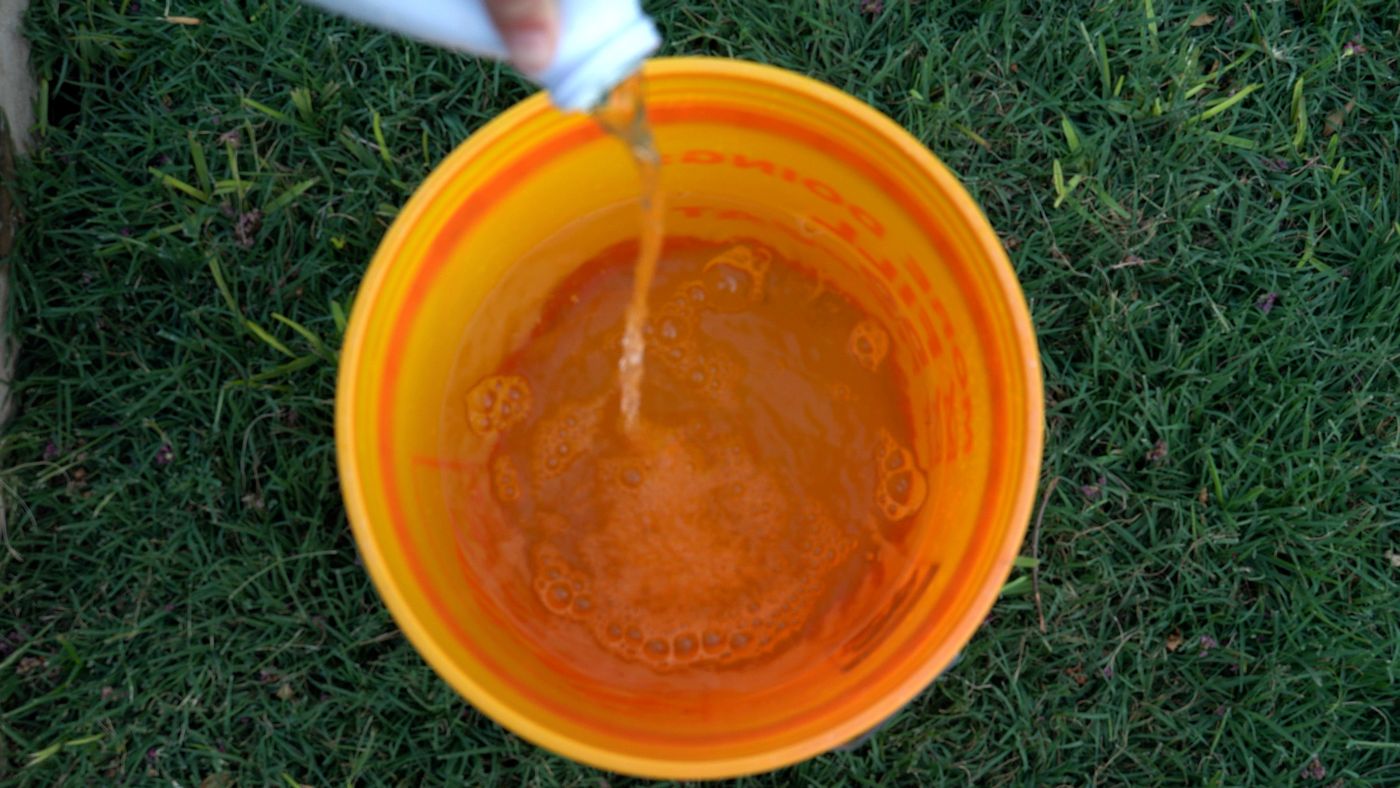
- Pre-dissolve granular calcium chloride and cyanuric acid in a bucket before adding to the pool
When to Test Your Pool Water
Consistent testing is the backbone of pool chemistry. The right testing schedule catches problems early, before they become visible (and expensive).
Recommended Testing Schedule
| Test | Frequency | Why |
|---|---|---|
| Free Chlorine & pH | 2–3 times per week | These change fastest and directly affect swimmer comfort |
| Total Alkalinity | Weekly | TA is the foundation — catch drift before pH goes haywire |
| Calcium Hardness | Monthly | Changes slowly unless you're adding water frequently |
| CYA (Stabilizer) | Monthly | Only changes when you add stabilized chlorine or drain water |
| Salt Level (saltwater pools) | Monthly | Ensures your salt cell generates chlorine efficiently |
| Combined Chlorine | Weekly | High combined chlorine means it's time to shock |
After These Events, Test Immediately
- Heavy rain or a major storm (dilution changes everything)
- Pool party or heavy bather load (sweat, sunscreen, and organics spike chlorine demand)
- After adding any chemical (verify the dose worked as expected)
- When water looks cloudy, green, or has an unusual smell
- After a fill-up or partial drain-and-refill
Staying on top of testing means you catch small imbalances before they cascade. A 30-second test today prevents an afternoon of troubleshooting tomorrow. Pair regular testing with this calculator, and you'll always know exactly what your pool needs and exactly how much to add.
For our complete testing and treatment schedule, see the weekly pool maintenance guide. If you're dealing with a specific issue right now — green pool, cloudy water, or need to shock — those guides cover the full fix. And for precise dosing of individual parameters, we have dedicated calculators for pH, alkalinity, acid, salt, shock, and pool volume.
More Pool Calculators
All Calculators Chemistry Calculator Chemical Calculator Chlorine Calculator Volume Calculator Shock Calculator SLAM Calculator pH Calculator Acid Calculator Alkalinity Calculator Calcium Hardness Calculator LSI Calculator Salt Calculator CYA Calculator Borate Calculator Dilution Calculator Pump Size Calculator Pump Runtime Calculator Pump Schedule Calculator Filter Size Calculator Heater Calculator Salt Cell Calculator Fill Time Calculator Evaporation Calculator Winterizing Calculator Hot Tub Calculator Pool Cost Calculator Loan Calculator Maintenance Cost Calculator Pool Deck Calculator Resurfacing Calculator
More from The Pool Nerd
Keep Reading


Disclaimer: This information is for educational purposes only. Handling pool chemicals involves significant risks, and this calculator cannot cover every product, pool, or possible hazard. Always follow the manufacturer’s label, safety data sheet, and applicable requirements. Seek qualified help whenever you are uncertain.