
 Justin D.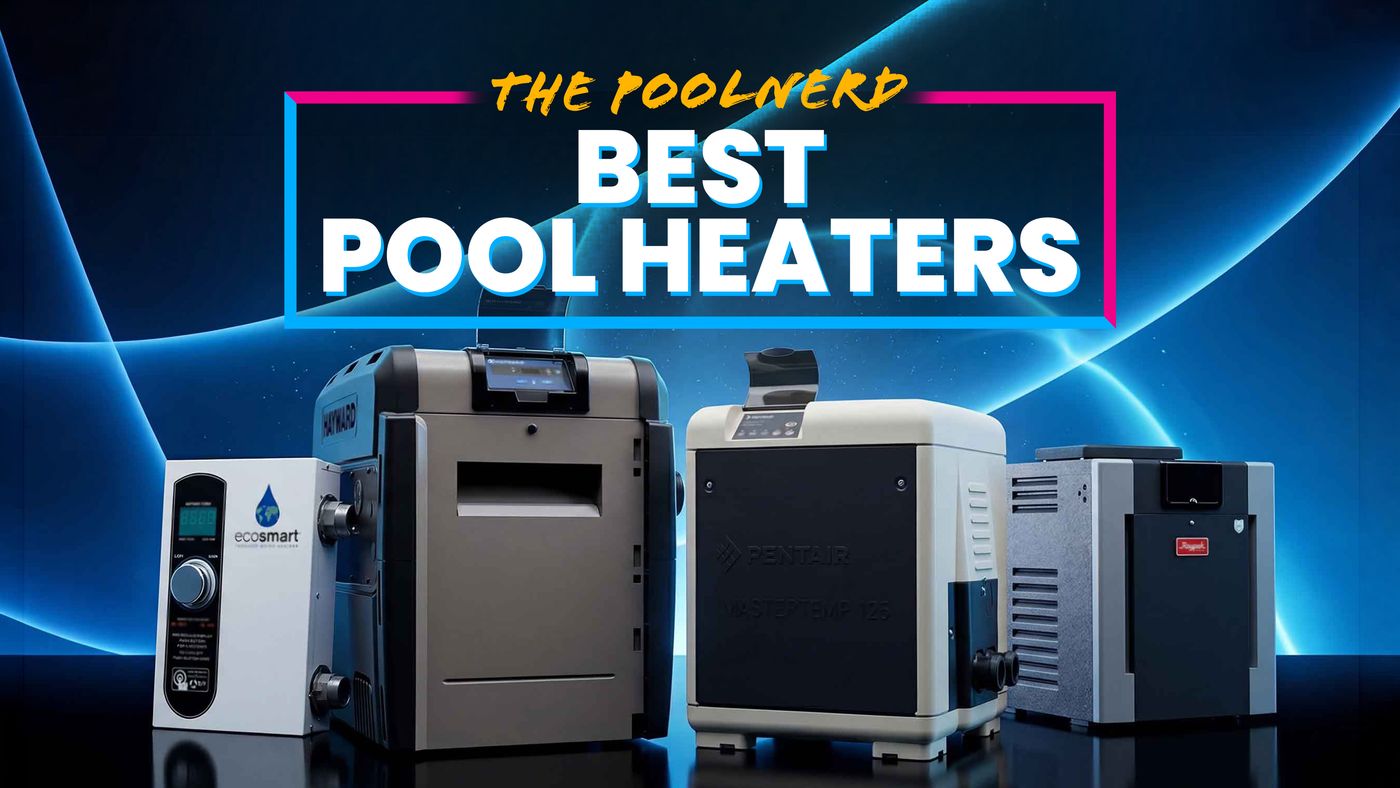
Hey there, and welcome back to The Pool Nerd! I'm Justin, your resident pool aficionado. Today we're tackling one of the most common questions I get: what's the best pool heater, and do I actually need one?
Short answer: if you want to swim comfortably for more than a couple of months out of the year, yes – you absolutely need one. A pool heater is exactly what it sounds like: a device that heats your pool water so you're not doing the shiver-and-gasp every time you hop in. Without one, you're completely at the mercy of the weather. With one, you control when swim season starts and when it ends.
In this guide I'll break down the different types of pool heaters, what actually matters when shopping, what to avoid, and my top picks with honest pros and cons. Let's get into it.
Best Pool Heaters at a Glance


Why You Actually Need a Pool Heater
Here's the thing – most people spend thousands on their pool and then let it sit unused for half the year because the water's too cold. A pool heater changes the game. It lets you open your pool earlier in the spring, swim later into the fall, and in some cases use your pool year-round. For spa owners, it's basically non-negotiable – nobody wants a lukewarm hot tub.
A heater also protects your investment. Consistent water temperature means more predictable chemistry, fewer algae blooms from temperature swings, and more time actually enjoying what you paid for.
Types of Pool Heaters – What's the Difference?
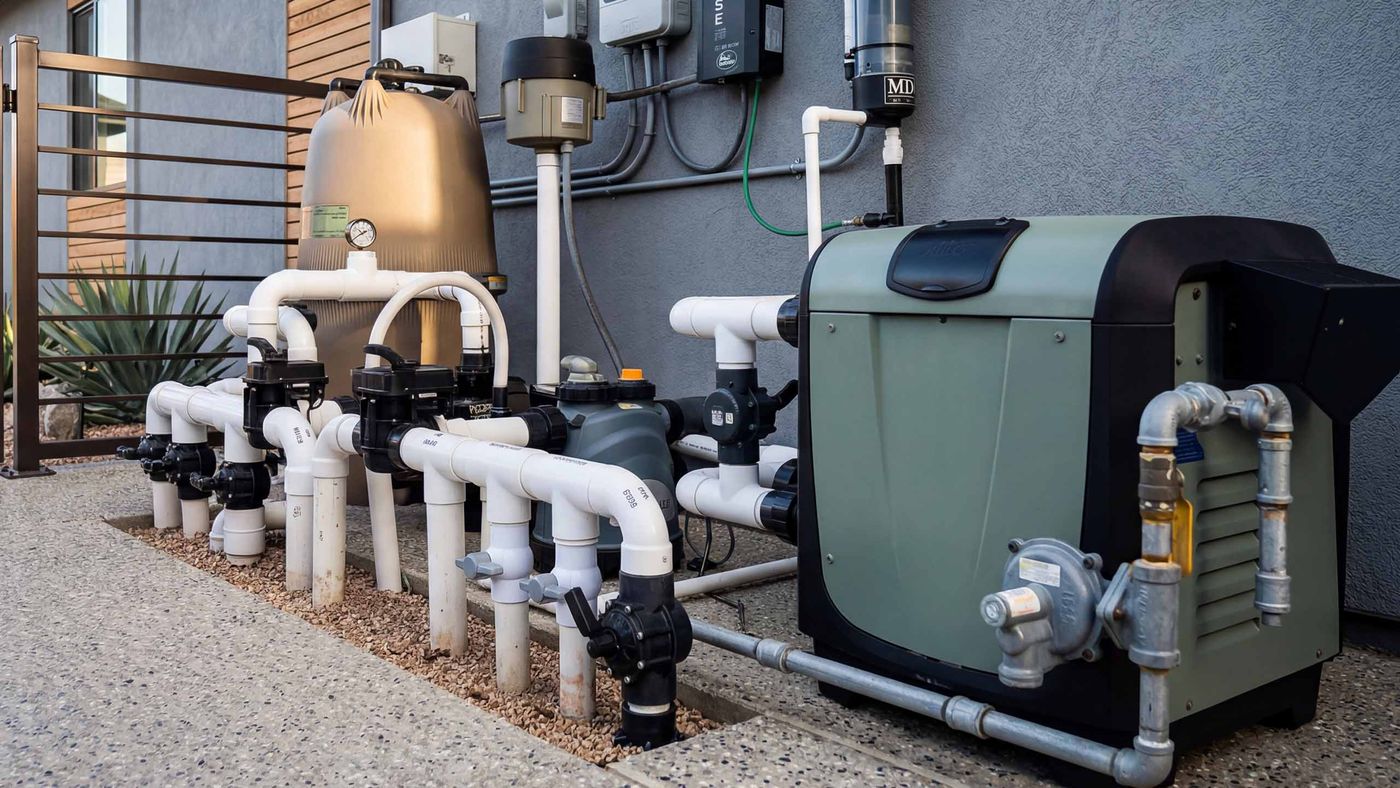
Pool heaters come in four main flavors, and each one has a very different personality. Here's the breakdown:
Natural Gas Heaters
These connect to your home's natural gas line and deliver fast, powerful heating – we're talking 100,000 to 400,000+ BTU. They're the go-to for on-demand heat, especially in cooler climates. You can fire one up on Friday evening and have a warm pool by Saturday morning. The trade-off is you need a gas line run to your equipment pad, and professional installation is a must.
Propane Gas Heaters
Same heating power as natural gas, but they run off a propane tank instead. Perfect for areas without city gas service. Performance is identical – the only real difference is that propane fuel typically costs more per BTU, and you'll need to keep an eye on your tank level so you don't run dry mid-season.
Electric Tankless Heaters
These are compact, affordable units that heat water using electric elements. No gas lines, no exhaust venting – just plumb them inline and wire to a breaker. Here's the kicker: they have far lower BTU output than gas heaters, which means they're really only practical for spas, hot tubs, and very small pools. Trying to heat a full-size pool with one of these is like trying to boil a bathtub with a hair dryer.
Heat Pumps
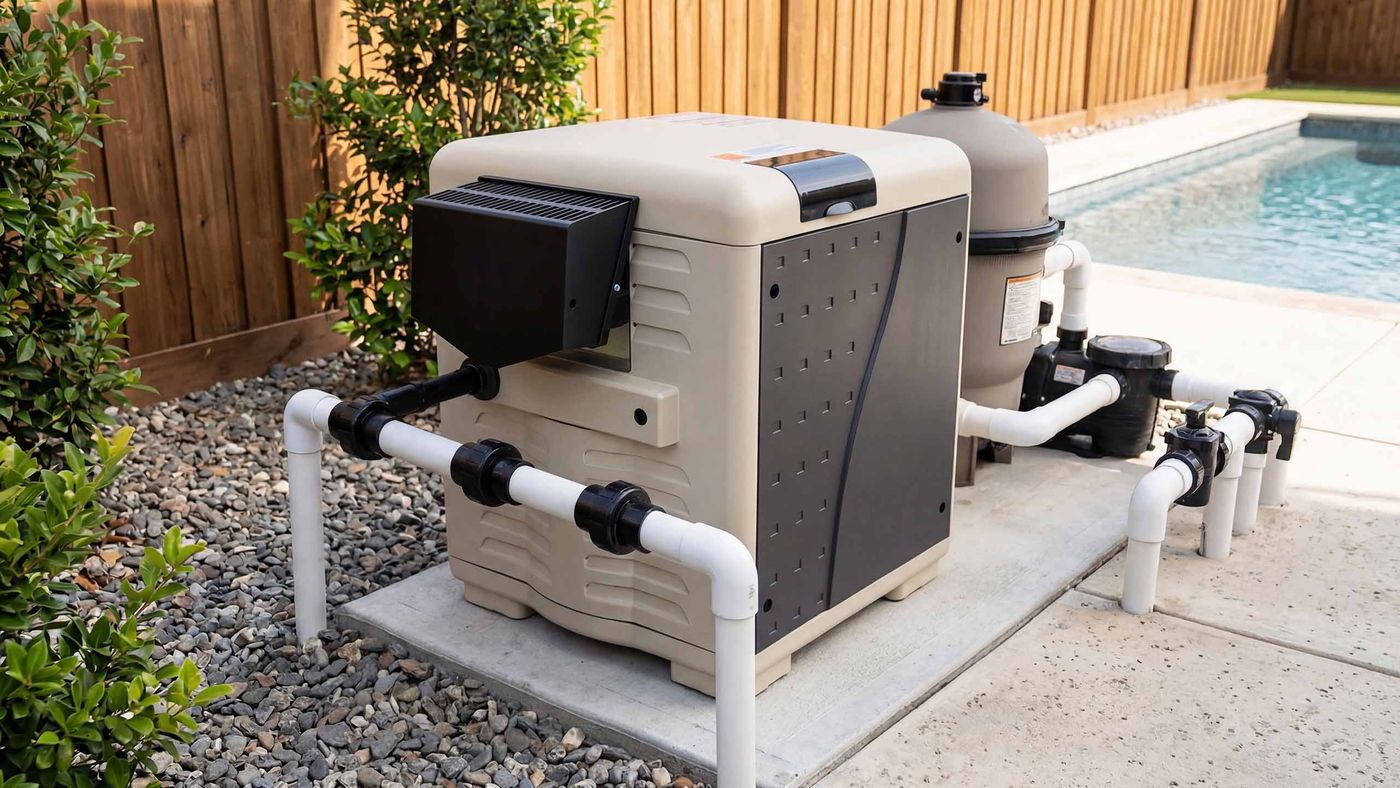
Heat pumps extract warmth from the air (like an A/C in reverse) and are extremely energy-efficient. Great for maintaining temperature in warm climates where outdoor air stays above 50°F. The downside? They heat slowly and struggle in cold weather. Worth knowing about if you're in the South or Southwest.
Solar Heaters
Solar panels or blankets use free energy from the sun. Zero fuel cost is hard to beat, but they depend entirely on sunny weather and won't get you to hot-tub temps on their own. Most people use solar as a supplement alongside another heater rather than a standalone solution.
Here's how the five types stack up at a glance:
| Natural Gas | Propane | Electric Tankless | Heat Pump | Solar | |
|---|---|---|---|---|---|
| Heating Speed | Fast | Fast | Slow | Slow | Very Slow |
| BTU Range | 100K–400K+ | 100K–400K+ | 5K–40K | 50K–140K | Varies |
| Operating Cost | Moderate | High | High | Low | Free |
| Upfront Cost | $1,500–$4,500 | $1,500–$4,500 | $300–$700 | $2,500–$5,000 | $300–$3,000 |
| Best Climate | Any | Any | Any (small pools) | Warm (50°F+) | Sunny |
| Best Pool Size | Any | Any | Spas / tiny pools | Small–Large | Any (supplement) |
| Installation | Pro required | Pro required | DIY possible | Pro recommended | DIY possible |
| Needs Gas Line? | Yes | No (tank) | No | No | No |
What to Look For When Shopping
Size it right. Heater output is measured in BTUs. The bigger your pool, the more BTUs you need. If a heater is undersized, it'll run constantly and may never actually reach your target temperature. Experts always recommend erring on the higher side so you minimize heat-up time. Go big or swim cold.
Match the fuel to your setup. If you have a natural gas line, use it – it's typically the cheapest fuel per BTU. No gas line? Propane works great but costs more. Electric is best reserved for spas and small pools.
Think about your climate. Gas heaters dominate in cooler climates because they deliver heat fast regardless of air temperature. Heat pumps shine in warm climates where you're just maintaining a comfortable baseline. Pick the heater that fits where you live and how you use your pool.
Check the heat exchanger. This is the guts of the heater. Cupro-nickel exchangers resist corrosion far better than standard copper, especially in saltwater pools or if your chemistry drifts. If you run a salt system or liquid chlorine, cupro-nickel is worth the upgrade.
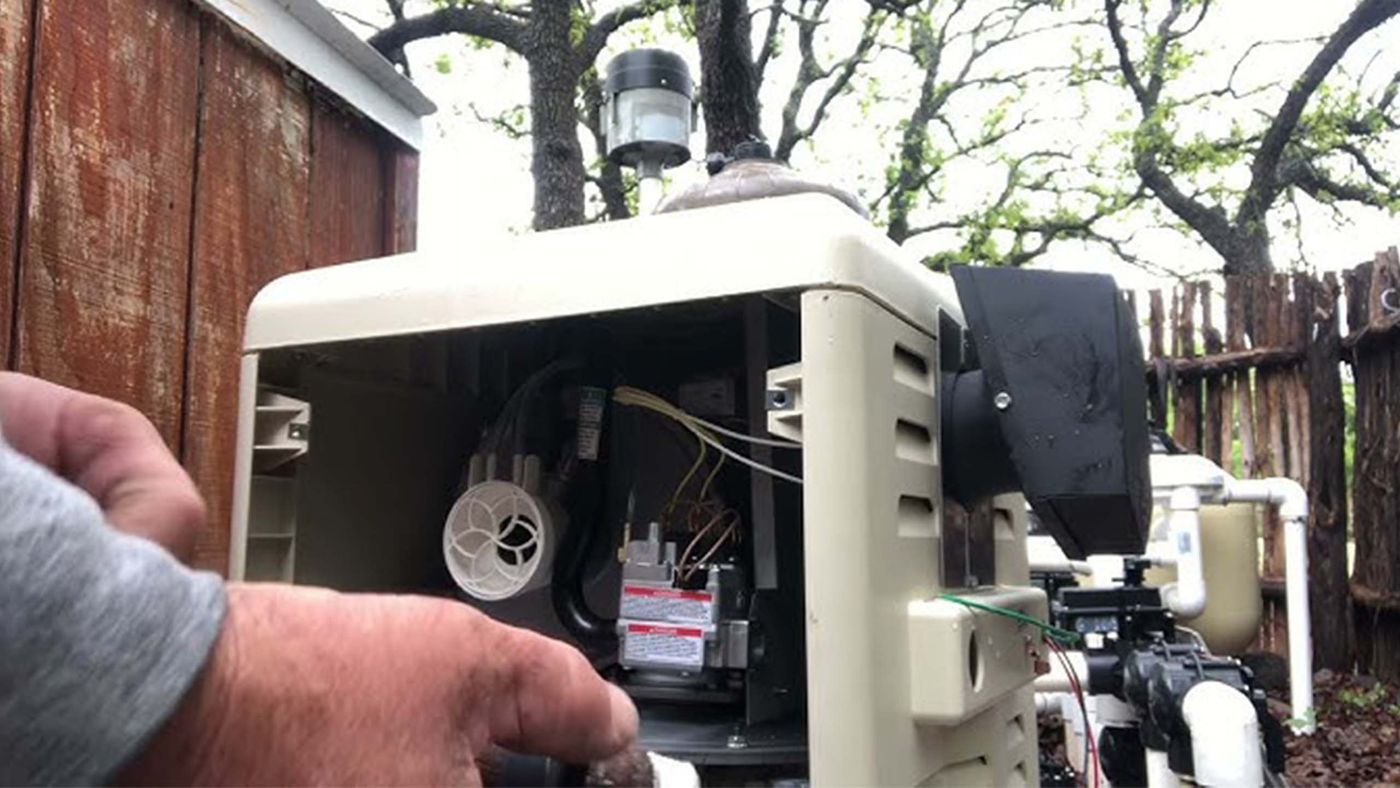
Factor in installation costs. Gas heaters require professional installation – no exceptions. Some brands like Pentair even slash the warranty from one year down to just 60 days if you self-install. Electric heaters are more DIY-friendly, but a 240V/60A circuit is still serious electrical work. Budget accordingly.
What to Avoid
Undersizing the heater. This is the number one mistake. A heater that's too small will run non-stop, wear out faster, and still leave you with lukewarm water. Always size at or above the manufacturer's recommendation for your pool volume.
Believing unrealistic efficiency claims. If a no-name gas heater on Amazon claims 97% efficiency without being a known condensing unit, be skeptical. Standard gas heater efficiency runs 80–85%. And if someone tells you a small electric heater will heat your 20,000-gallon pool "for pennies" – dead wrong.
Falling for fake reviews. I've seen this across the entire pool equipment market. Unknown brands with suspiciously perfect five-star ratings and generic "It's great!" comments are a massive red flag. Stick with established manufacturers (Hayward, Pentair, Raypak) or do serious homework before trusting a brand you've never heard of. Tools like Fakespot can help you spot inflated ratings.
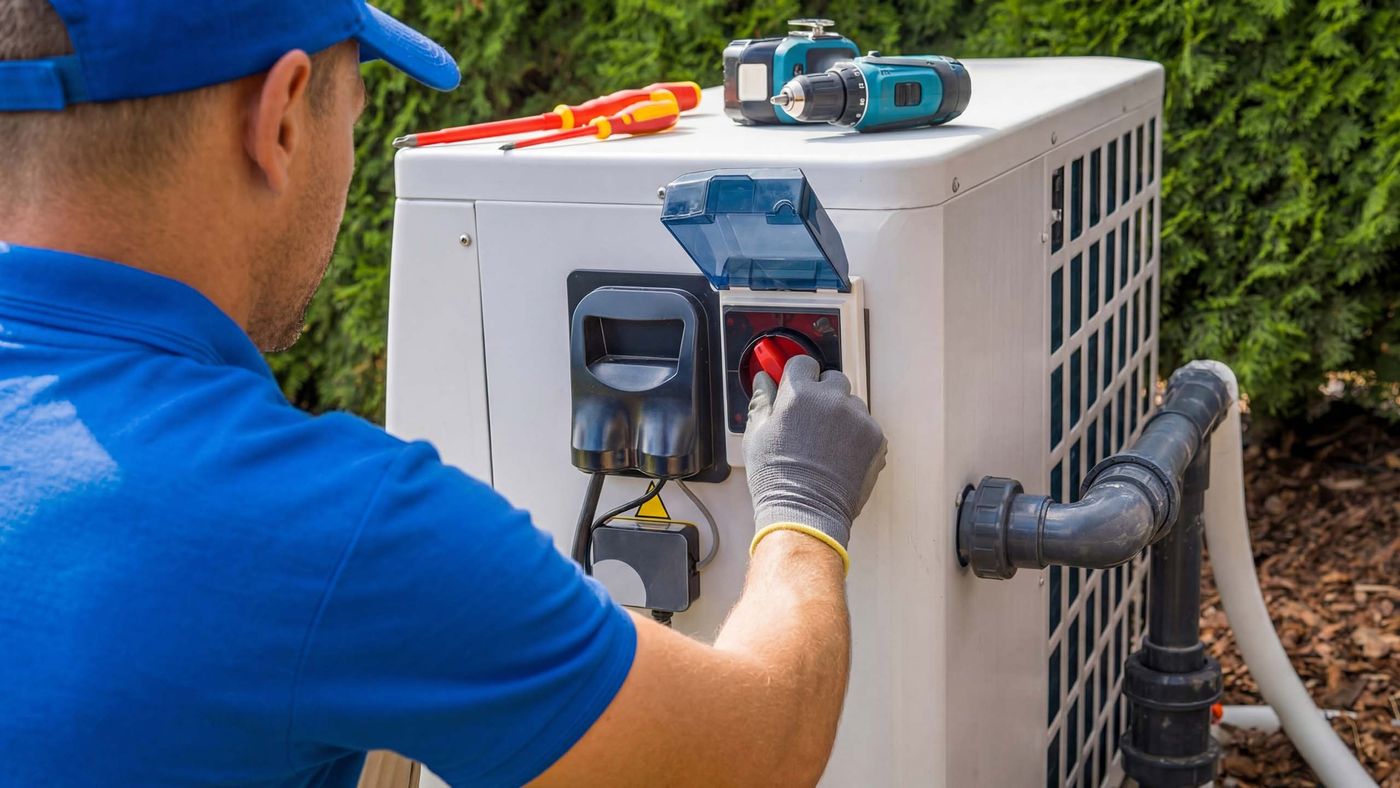
Skipping safety and codes. Never install a gas heater indoors without proper venting (carbon monoxide risk), never use undersized gas lines or wrong regulators, and always follow local electrical codes for wired units. If a product doesn't clearly state its installation requirements, steer clear.
Which Heater is Right for You?
Not sure where to start? Here's a quick decision guide based on your setup:
You have a natural gas line and a small-to-medium pool (under 15K gallons): Go with the Pentair MasterTemp 125 (Natural Gas). Compact, efficient, plug-and-play electrical, and natural gas is the cheapest fuel per BTU. Hard to beat for smaller setups.
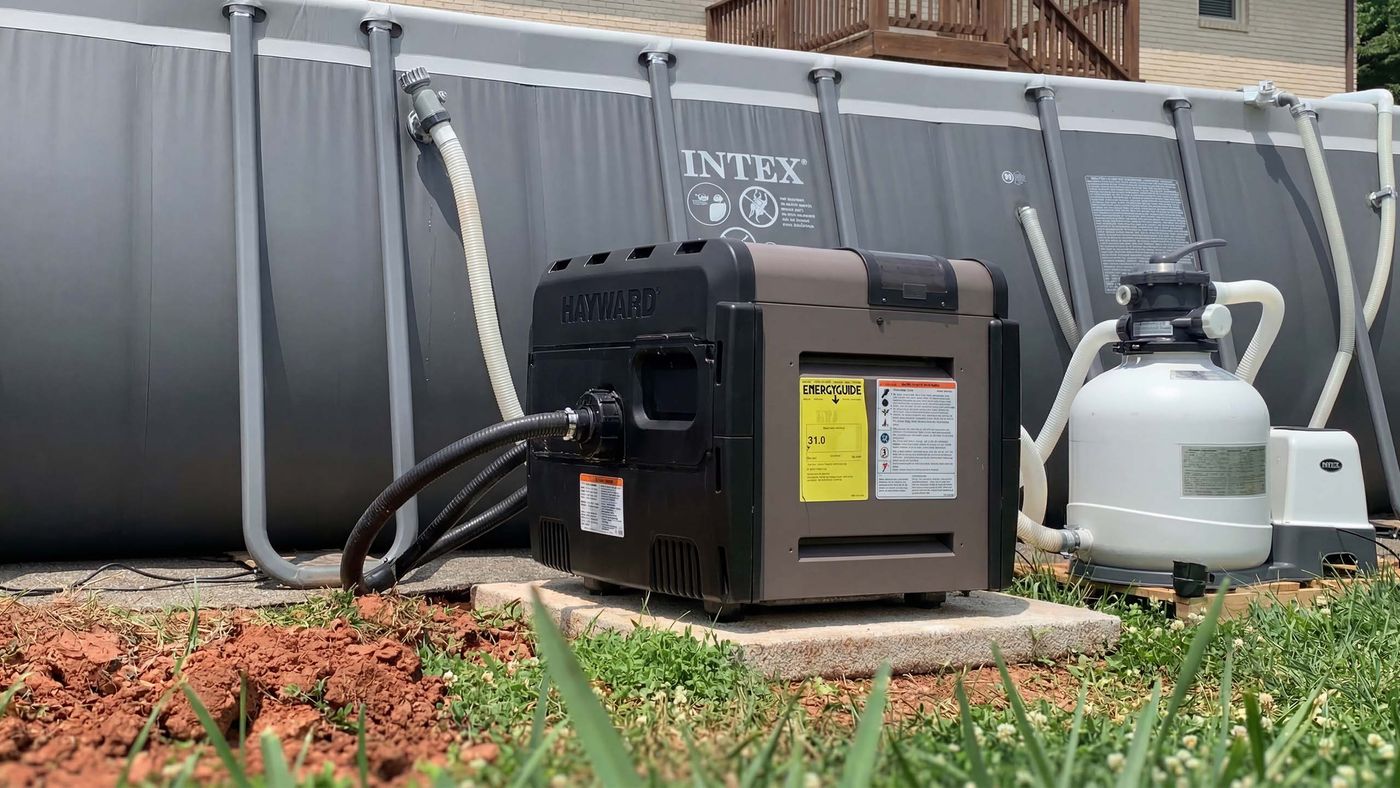
You have no gas line and a medium in-ground or large above-ground pool: The Hayward H-Series 150K (Propane) is your best bet. Fast heating, cupro-nickel heat exchanger for durability, and propane means no gas line required. Need more power? The H-Series scales to 200K, 250K, and 400K BTU.
You have a large pool (15K–25K+ gallons) and want serious heating power: Pick up the Raypak Digital 266K or step up to the Hayward H-Series 400K. Both are built for big pools and deliver fast temperature rises. The Raypak has excellent wind tolerance; the Hayward 400K is the raw BTU king.
You just need to heat a spa, hot tub, or very small pool (under 5K gallons): The EcoSmart Electric Spa Heater is the move. No gas infrastructure, compact, near-silent, and the upfront cost is a fraction of gas heaters. Just make sure you have a 60A circuit available.
You're in a rural area or vacation property without gas service: The Pentair MasterTemp 125 (Propane) gives you Pentair quality with a propane tank – no gas line needed. Lightweight, portable fuel, and the same plug-and-play electrical convenience.
The Pool Nerd's Top Pool Heater Picks
Here's a quick comparison of my recommended models, followed by the full breakdown on each:
| Heater Model | BTU | Fuel | Best For | Price | Install |
|---|---|---|---|---|---|
| Hayward H-Series 150K | 150,000 | Propane | Medium in-ground / large above-ground | ~$2,500–$3,000 | Pro |
| Hayward H-Series 200K | 200,000 | Propane | Large in-ground pools | ~$2,800–$3,200 | Pro |
| Hayward H-Series 250K | 250,000 | Propane | Large in-ground (15K–25K gal) | ~$3,000–$3,500 | Pro |
| Hayward H-Series 400K | 400,000 | Propane | XL in-ground pools (25K+ gal) | ~$3,500–$4,500 | Pro |
| Raypak Digital 266K | 266,000 | Propane | Large in-ground pools (15K–25K gal) | ~$2,500–$3,500 | Pro |
| EcoSmart Spa Heater | ~40,000 | Electric | Spas & very small pools (≤5K gal) | ~$400–$600 | DIY OK |
| Pentair MasterTemp 125 (NG) | 125,000 | Nat. Gas | Small pools, above-grounds, spas | ~$1,800–$2,000 | Pro |
| Pentair MasterTemp 125 (LP) | 125,000 | Propane | Small pools, above-grounds (no gas line) | ~$1,800–$2,000 | Pro |
Hayward H-Series 150,000 BTU (Propane) – Reliable Workhorse
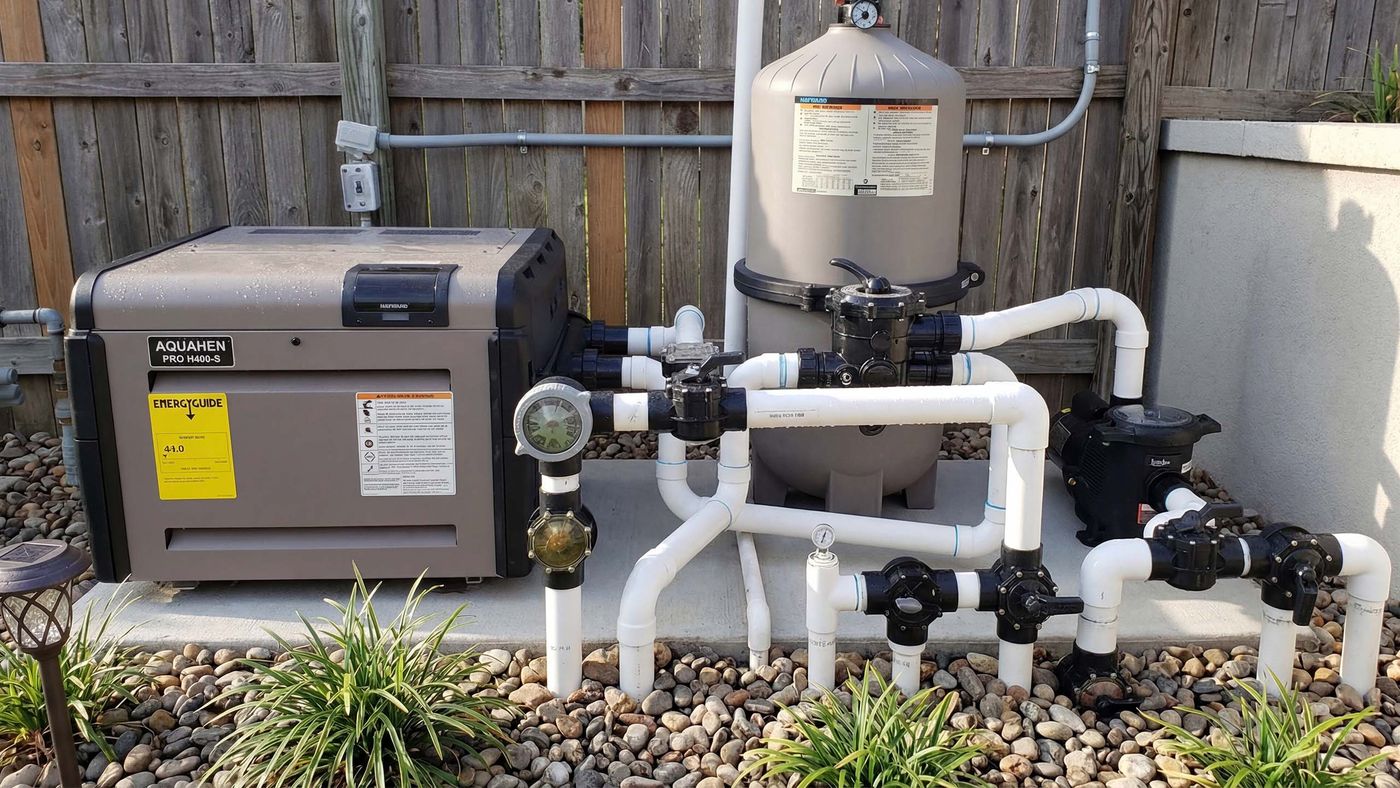
The Hayward H-Series is the Honda Civic of pool heaters – it just works. This 150,000 BTU propane model is built for medium in-ground pools (up to about 15,000 gallons) and large above-ground setups. What I love about this unit is the speed. It raises water temperature in a hurry, so you're not waiting all day for a warm dip.
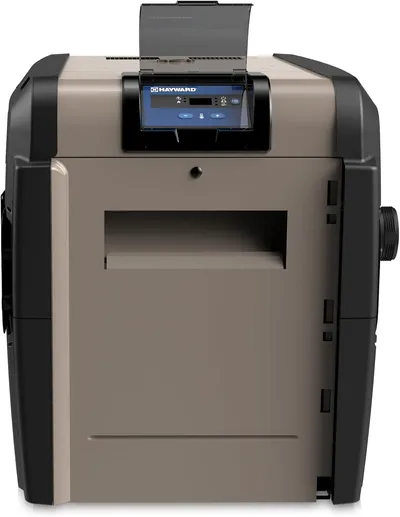
The standout feature here is the cupro-nickel heat exchanger. This provides exceptional corrosion resistance, which is a big deal if you run a saltwater system or if your water chemistry isn't always dialed in perfectly. Hayward also engineered this with a low-restriction hydraulic design that reduces pressure drop through the heater, meaning your pump doesn't have to work as hard – that saves energy over time.
The front-panel digital controls are intuitive with easy front access for servicing. It's also Low-NOx certified for areas with strict emissions standards.
Pros: Fast heating, cupro-nickel durability, energy-efficient flow design, low emissions, easy front-panel access.
Cons: Propane fuel costs add up, requires professional gas installation, higher upfront price, and the 150K BTU output may be undersized for pools over 20,000 gallons.
Ideal for: Medium in-ground pools, large above-ground pools, saltwater systems, and owners who want fast on-demand heating for weekends and season extension.
Need More Power? The H-Series Comes in Bigger Sizes
The Hayward H-Series lineup is available in multiple BTU sizes – same great build quality, just scaled up for larger pools. Here's how they compare:
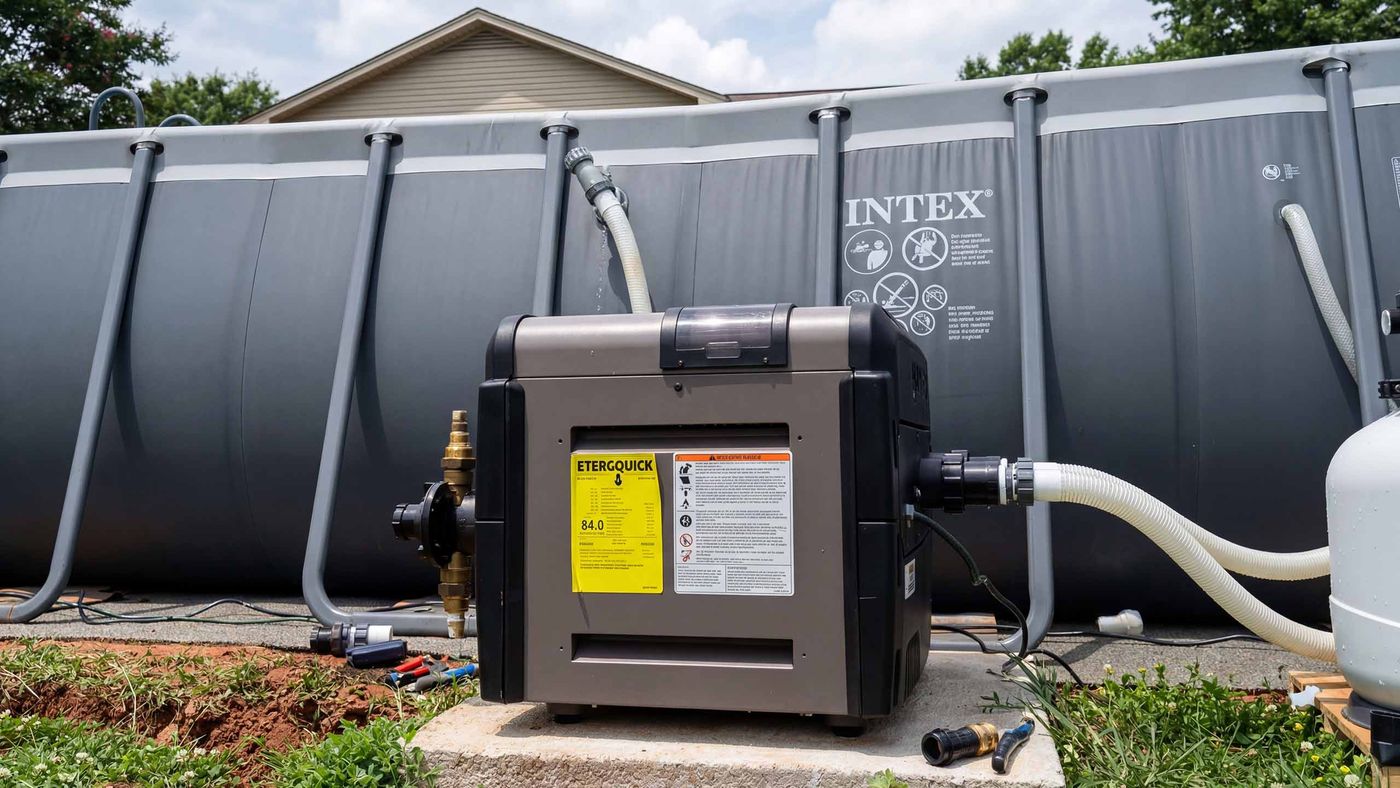
Hayward H-Series 200,000 BTU – A solid step up for pools in the 15,000–20,000 gallon range. Same cupro-nickel exchanger and digital controls, just more heating power for faster warm-ups.
Hayward H-Series 250,000 BTU – The sweet spot for larger in-ground pools. If you have a 20,000+ gallon pool and want to cut your heat-up time significantly, this is the one.
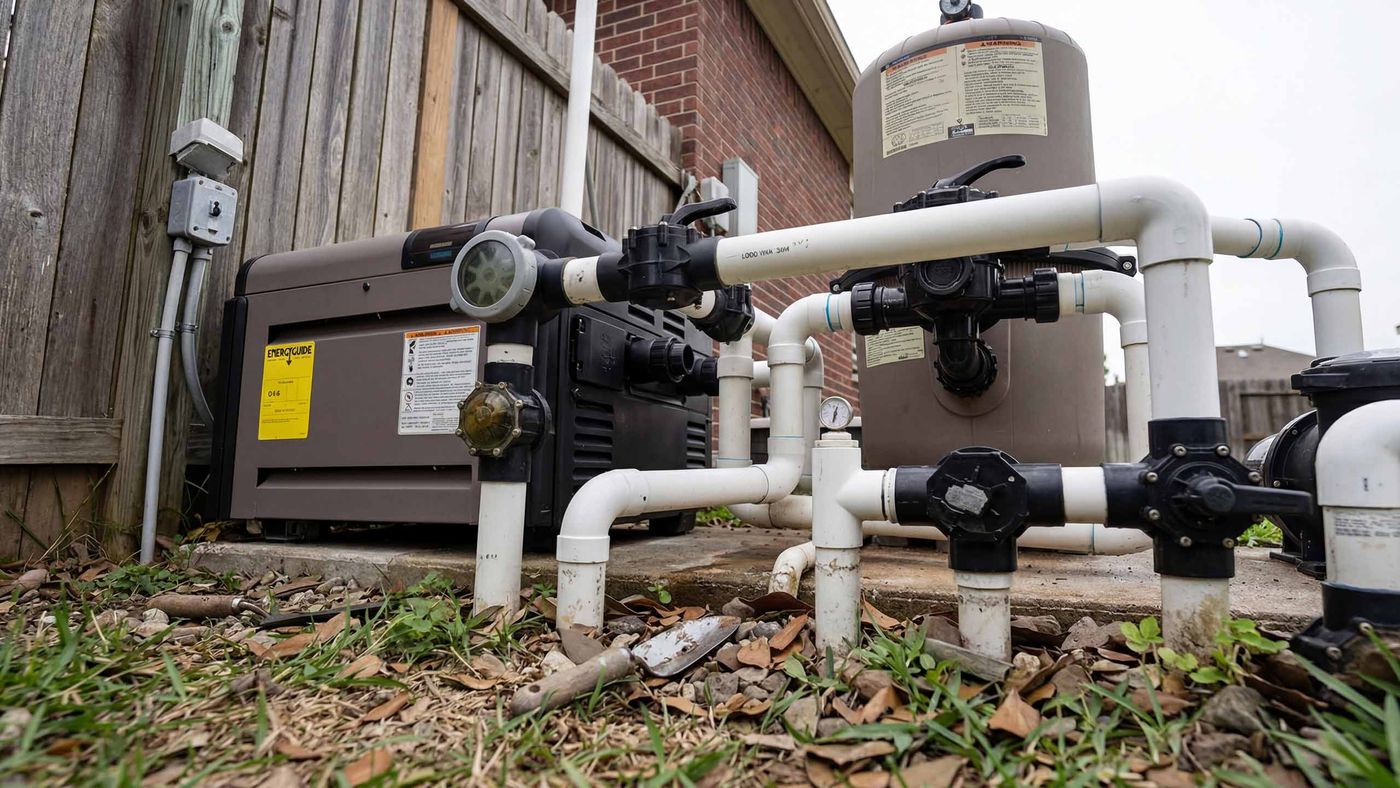
Hayward H-Series 400,000 BTU – The big dog. For pools over 25,000 gallons or if you simply want the fastest possible heating, the 400K model delivers roughly 4–6°F per hour on a standard residential pool. Serious power for serious pools.
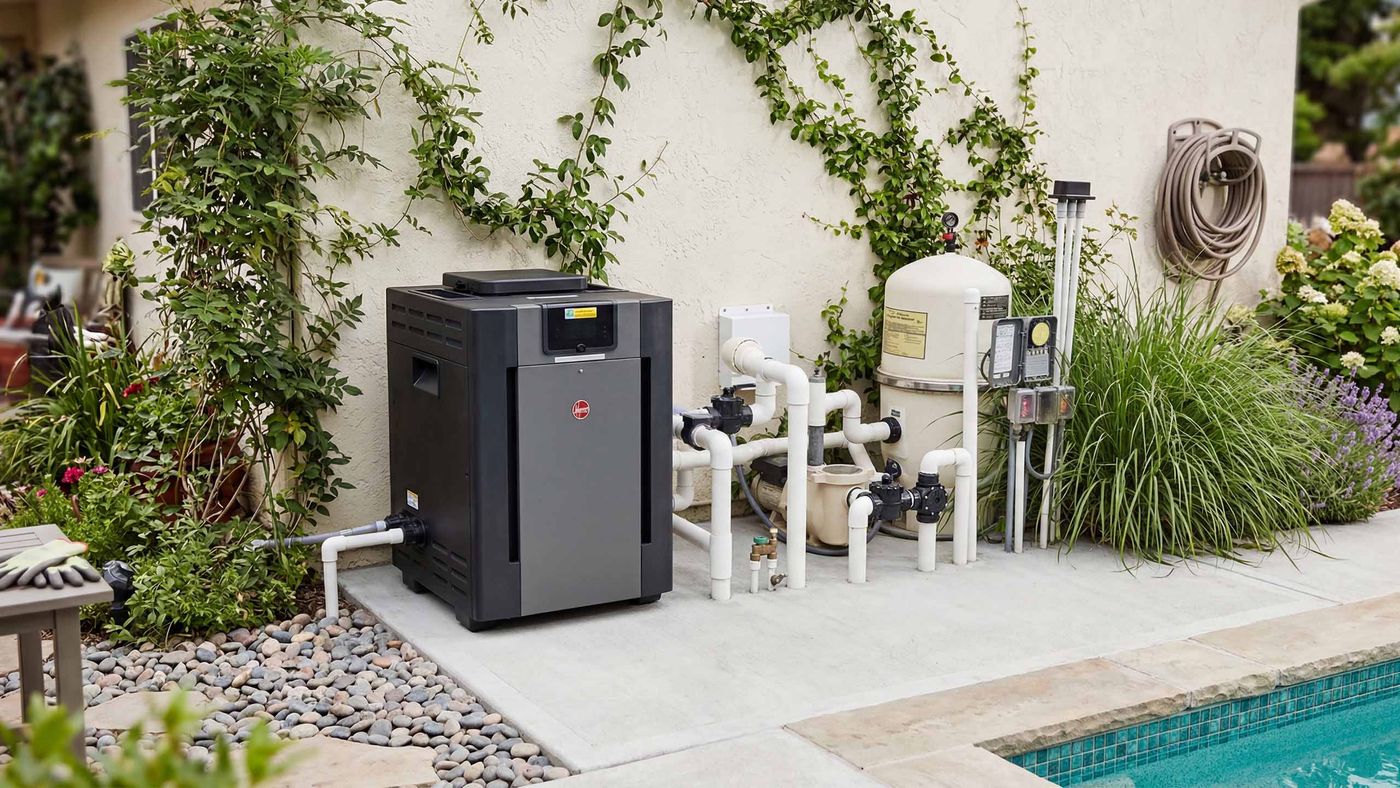
Raypak Digital 266,000 BTU (Propane) – The Beast
If you have a big pool and big heating demands, the Raypak 266K is a serious machine. At 266,000 BTU, it delivers plenty of power for large residential pools in the 15,000–25,000 gallon range. I've seen these raise water temperature steadily and reliably with a solar cover, getting you from a chilly 70°F to a comfortable 85°F without breaking a sweat.
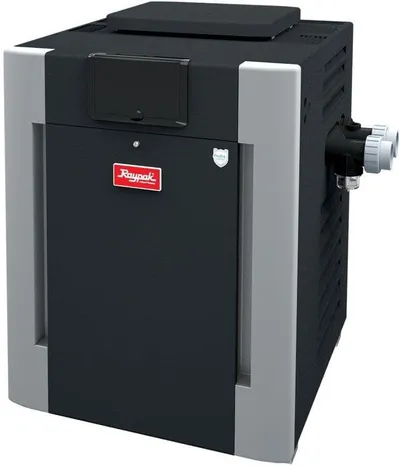
The build quality is outstanding. The cabinet is non-corrosive with a polymer-coated steel jacket that handles outdoor weather. Raypak heaters also have excellent wind tolerance – the protected combustion chamber won't flame out in breezy conditions. The digital thermostat gives you precise, set-it-and-forget-it control.
Pros: Serious heating power for large residential pools, extremely durable construction, precise digital controls, wind-resistant design, and readily available replacement parts.
Cons: Burns through propane fast at full fire, expensive upfront, heavy and requires professional installation with proper gas line sizing, and takes up more space than smaller heaters.
Ideal for: Large in-ground pools (15,000–25,000 gallons), pool/spa combos, cold-climate owners who want rapid heating, and anyone who refuses to wait for warm water.
EcoSmart Electric Spa Heater – Budget Spa Solution
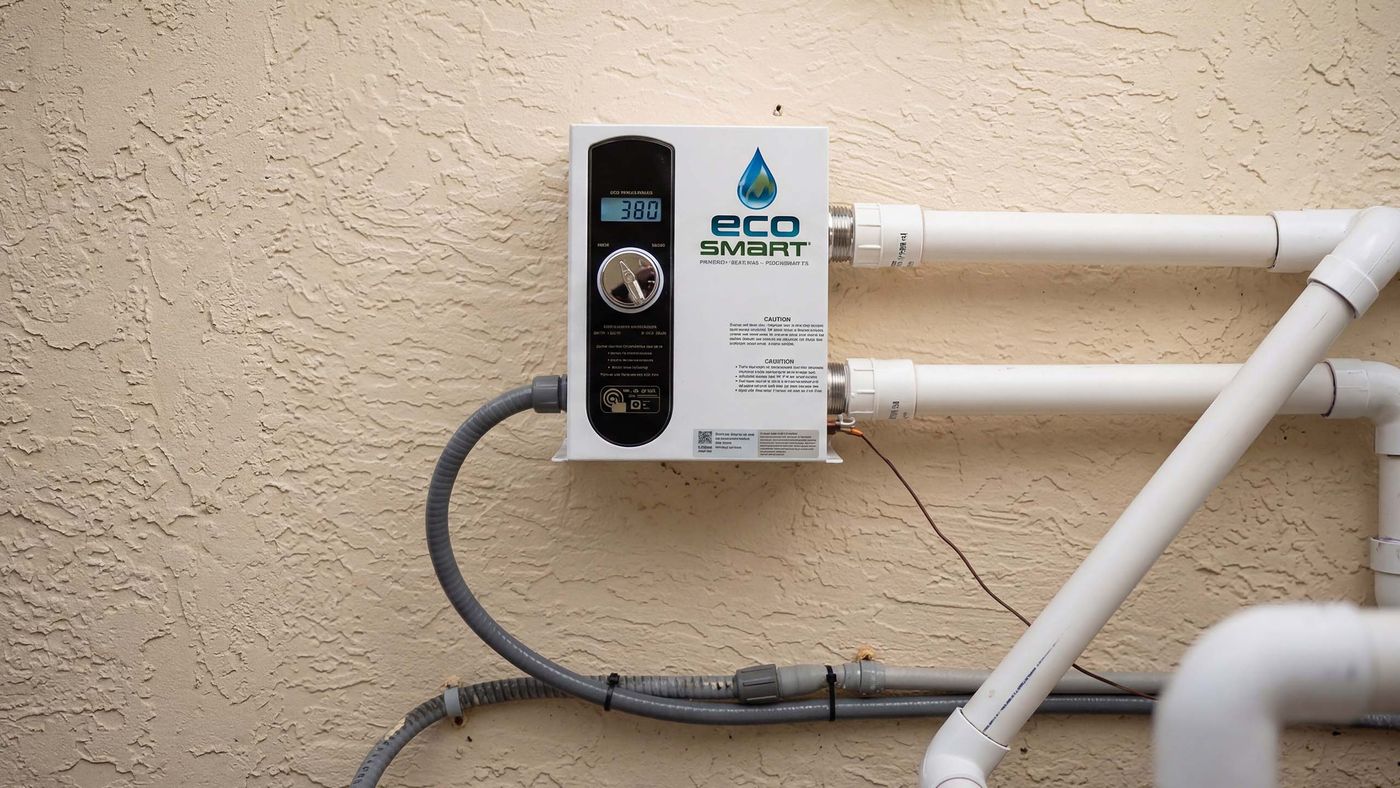
Not everyone needs a gas-powered monster. The EcoSmart Electric Spa Heater is a compact, tankless electric unit rated at 11 kW (about 40,000 BTU equivalent). It's a small box that plumbs inline with your equipment and heats water on the fly using electric elements. No gas lines, no exhaust venting, no combustion worries.
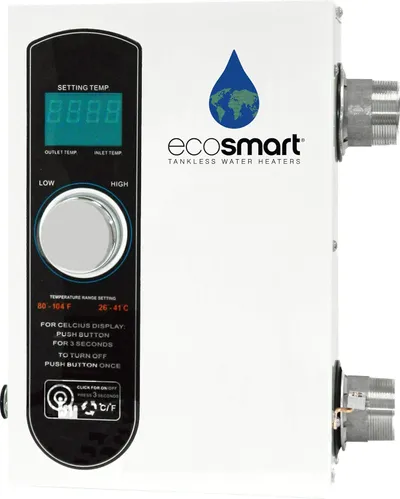
Let me be straight: this is not for full-size pools. At 40K BTU, it's designed for spas, hot tubs, and very small above-ground pools up to about 5,000 gallons. But for its intended use, it's great – precise digital temperature control, nearly 100% energy efficiency, and an upfront cost that's a fraction of any gas heater.
One thing to watch: it requires a minimum 10 GPM flow rate to activate, so make sure your pump delivers that. It also draws about 54 amps at 240V, which means a dedicated 60A circuit. The unit itself is cheap, but you may need an electrician for the wiring.
Pros: Low upfront cost, compact and lightweight, no gas infrastructure needed, nearly silent operation, precise temperature control, minimal maintenance.
Cons: Very limited heating capacity (spas and tiny pools only), high electrical demand (50–60A dedicated circuit), requires 10+ GPM flow, and the unit should be sheltered from direct weather.
Ideal for: Spa and hot tub owners, very small above-ground pools, retrofit for tubs with failed built-in heaters, and anyone who wants to avoid gas entirely on a budget.
Pentair MasterTemp 125 (Natural Gas) – Compact Powerhouse
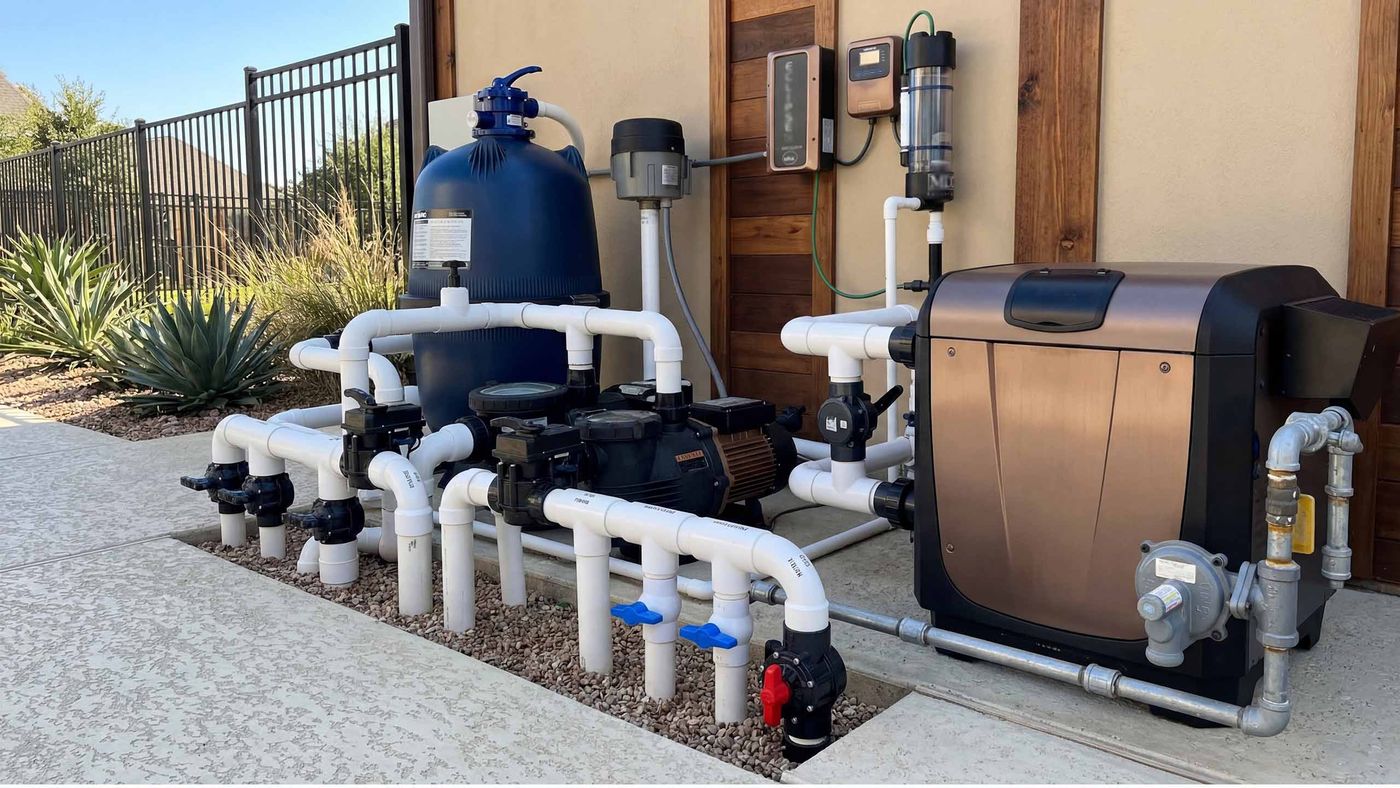
The MasterTemp 125 is Pentair's smallest gas heater, and it punches way above its weight. At 125,000 BTU in a package that weighs only about 100 pounds, it's specifically designed for smaller pools, above-ground pools, and spas up to 15,000 gallons. It delivers 82% thermal efficiency, which Pentair says is the highest in its class.
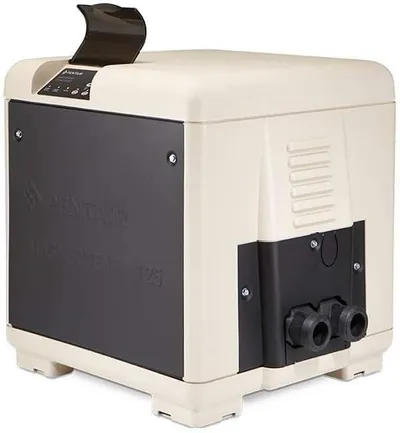
What makes this one stand out for above-ground pool owners is the plug-and-play electrical setup. Many versions come with a standard 120V cord – you literally plug it into a regular outlet to power the controls and blower. That's almost unheard of for a gas pool heater. The 1.5-inch plumbing connections also match typical above-ground setups.
It features hot-surface ignition (no standing pilot), pre-mixed combustion for fast heat-up, digital controls, and is certified for both outdoor and indoor installation with an optional vent kit. Low-NOx certified as well.
Pros: High efficiency in a compact package, lightweight and easy to position, 120V plug cord for simple electrical hookup, quiet operation, versatile installation options, Pentair brand reliability.
Cons: Still requires professional gas line installation, limited output for pools over 15,000 gallons, warranty drops to just 60 days if not professionally installed, and the tight heat exchanger design can be prone to scaling in hard water.
Ideal for: Above-ground pool owners, small in-ground pools, spas, vacation homes with natural gas service, and anyone who needs a compact, high-quality gas heater.
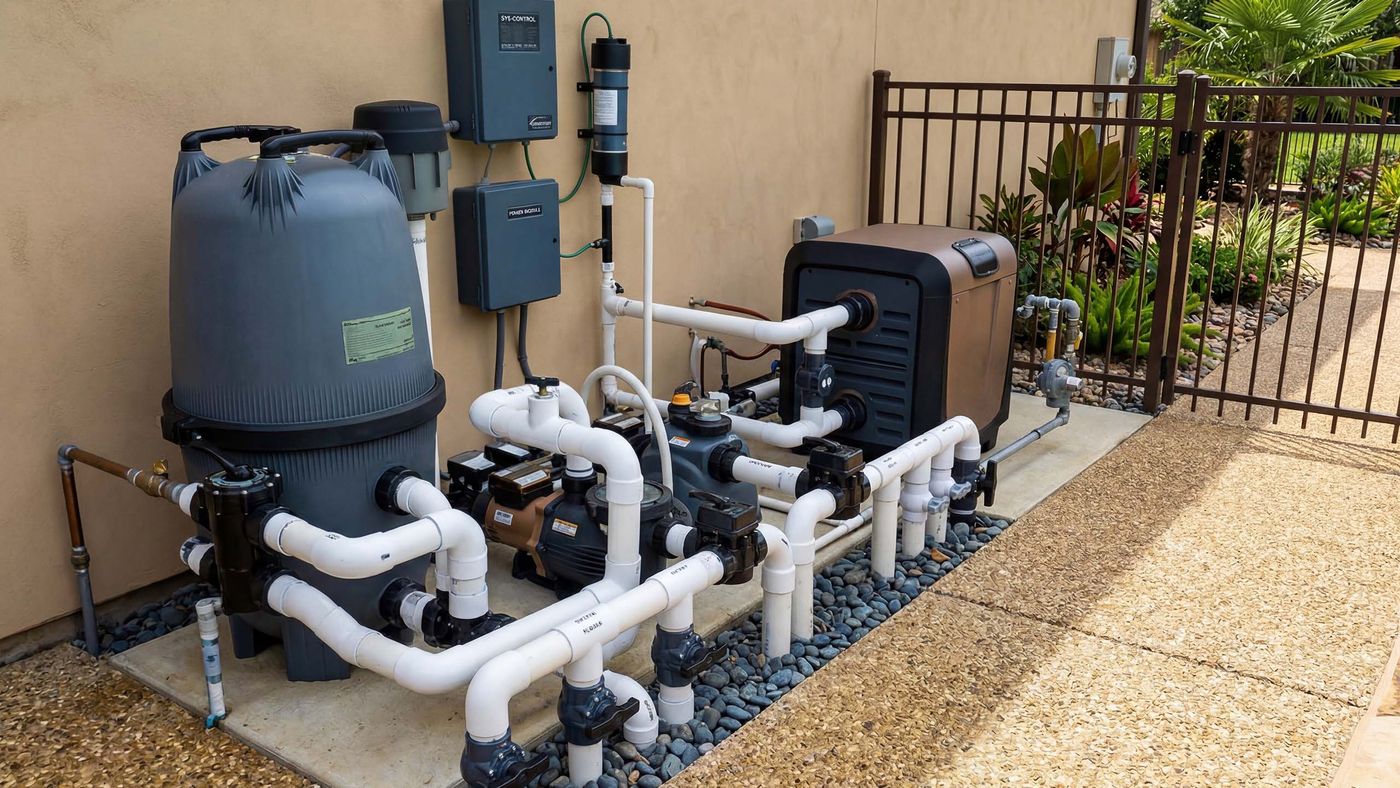
Pentair MasterTemp 125 (Propane) – Same Heater, Off the Gas Grid
This is the same MasterTemp 125 in every way – same 125,000 BTU output, same 82% efficiency, same compact design – but configured for propane fuel. It's the pick for anyone who loves what the MasterTemp offers but doesn't have a natural gas line.
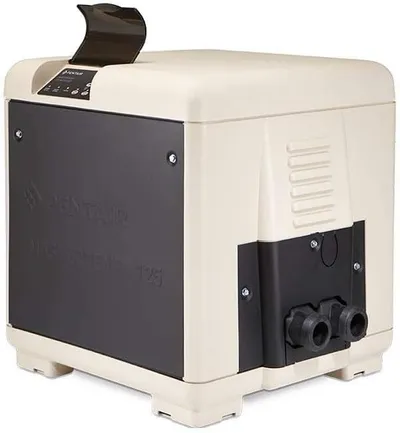
Propane gives you flexibility. You can place a tank where you need it and run a heater at a remote pool, vacation cabin, or any setup where running a gas line would be cost-prohibitive. The unit consumes roughly 1.2–1.4 gallons of propane per hour at full fire, so a pair of 100-pound tanks gives about 35 hours of heating – plenty for weekend use.
All the same plug-and-play electrical features apply. You still get the 120V cord, 1.5-inch unions, and digital controls. The only difference is the gas inlet and the regulator you'll need for your propane supply.
Pros: All MasterTemp 125 benefits without needing a natural gas line, portable fuel supply, great for remote or seasonal pool setups, minimal electrical demand.
Cons: Propane costs more than natural gas per BTU, requires tank monitoring and refills, professional propane hookup strongly advised, same 60-day warranty if self-installed.
Ideal for: Rural homes, above-ground pools without gas service, vacation properties, and anyone who wants Pentair quality with propane flexibility.
Final Thoughts
Choosing the right pool heater comes down to three things: your pool size, your fuel options, and how you actually use your pool. A medium in-ground pool with a gas line? The Hayward H-Series 150K is rock solid – and the lineup scales all the way up to 400K BTU for serious pools. Need a high-capacity alternative? The Raypak 266K is a beast. Spa or tiny pool on a budget? The EcoSmart Electric Spa Heater gets the job done without the gas infrastructure. And for the above-ground crowd or small pool owners, the Pentair MasterTemp 125 – in either natural gas or propane – is tough to beat for its combination of performance, size, and efficiency.
One last reminder: don't cheap out on installation, and always use a solar cover when the pool isn't in use. A cover retains heat overnight and makes every heater's job easier and cheaper. And keep your water chemistry balanced – corrosive or scaling water will destroy any heater, no matter how well it's built.
If you want to keep nerding out over your pool, head on over to ThePoolNerd.com/deals where I post the best deals on pool equipment. Stay warm out there!
Pool Heater Terms & FAQs
Some of the terminology in this guide might be unfamiliar. Here's a quick reference:
BTU (British Thermal Unit) – The standard measurement of heating power. One BTU raises one pound of water by 1°F. Higher BTU = more heat. A 150K BTU heater can raise a 10,000-gallon pool roughly 1.5–2°F per hour.
Heat Exchanger – The internal component where heat transfer happens. Pool water flows through it and picks up heat from the burner or element. Typically made of copper, cupro-nickel, or titanium.
Cupro-Nickel – A copper-nickel alloy used in premium heat exchangers. Highly resistant to corrosion from salt and chemicals. If you run a saltwater pool or liquid chlorine, cupro-nickel is worth the upgrade.
Thermal Efficiency – The percentage of fuel energy that makes it into your pool water. Standard gas heaters run 80–85%. Higher is better – less fuel wasted out the exhaust.
Low-NOx – Heaters producing lower nitrogen oxide emissions. Required in some states (especially California). Check your local codes before buying.
GPM (Gallons Per Minute) – Water flow rate through your plumbing. Every heater has a minimum GPM requirement – if flow is too low, it won't fire. Most gas heaters need 25–40+ GPM; electric units like the EcoSmart need at least 10 GPM.
Pressure Switch – A safety device that detects water flow. If flow is too low, it prevents the heater from firing to avoid overheating. A common reason heaters won't ignite.
kW (Kilowatt) – A unit of electrical power. To convert: 1 kW ≈ 3,412 BTU. An 11 kW heater produces roughly 37,500 BTU per hour.
GFCI – Ground Fault Circuit Interrupter. A breaker that cuts power if it detects a ground fault. Required by code for any electrical pool equipment.
Solar Cover – A floating cover that traps heat and reduces evaporation. The cheapest way to boost any heater's performance. Every heated pool should have one.
Frequently Asked Questions
How long does it take to heat my pool?
Depends on pool size, BTU output, and starting temp. Rough rule: a 150K BTU gas heater raises a 10,000-gallon pool about 1.5–2°F per hour. A 400K BTU unit does 4–6°F per hour. Electric heaters are much slower – plan in days for anything bigger than a spa.
Can I install a pool heater myself?
Electric heaters are the most DIY-friendly, but you still need a 240V/50–60A circuit. Gas heaters should always be professionally installed – gas work is dangerous and self-installation voids most warranties.
What size heater do I need?
Match BTU to pool volume. Up to 10,000 gallons: 100–150K BTU. 15,000–25,000 gallons: 200–300K BTU. Over 25,000 gallons: 300K+ BTU. When in doubt, size up.
Gas or electric – which is cheaper?
Natural gas is typically cheapest per BTU. Heat pumps are efficient but slow. Propane costs more than natural gas. Electric resistance is the most expensive – fine for a spa, costly for a full-size pool.
Do I need a special heater for a saltwater pool?
Same heater types work, but get a cupro-nickel or titanium heat exchanger. Standard copper corrodes faster in salt water.



Comments
Loading comments…