
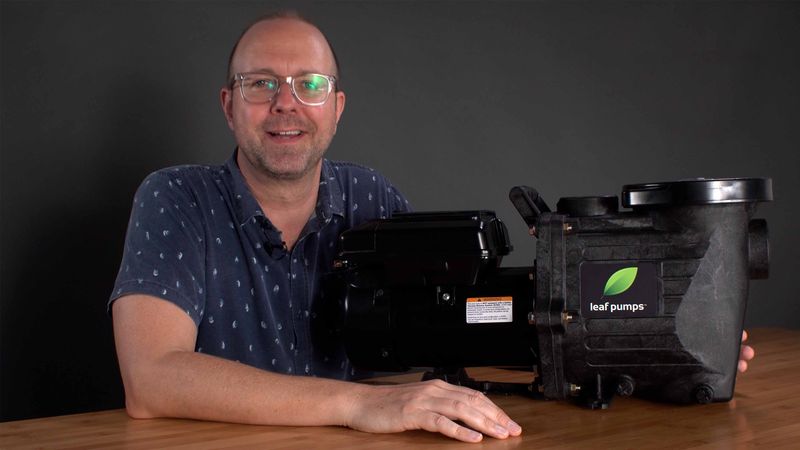
Performance, noise, and efficiency tested
Pool Pump Reviews
Your pool pump is the heart of your entire filtration system. We test variable speed, single speed, and booster pumps so you can find the right one for your pool — no guesswork, no marketing fluff.
Watch Before You Buy
Tested hands-on in our own pool.
The Pool Pump Mistake Most Pool Owners Make
127K viewsHow long you should actually run your pool pump, and the variable-speed setting that cuts the power bill without cloudy water.

Your Reviewer: Justin D.
Hey, I'm Justin — The Pool Nerd. I've tested and installed pool pumps from Hayward, Pentair, Leaf, and more. From variable speed to single speed, I'll help you find the right pump for your pool.
Editor's Choice: Hayward Super Pump VS
The Hayward Super Pump VS (1.65 HP) is our top pick for many residential pools, especially as a replacement for an existing Super Pump. Its variable-speed motor can run much quieter and use substantially less energy than a single-speed pump when it is sized and scheduled correctly.
Find the Right Pump for Your Pool
Not sure which type of pump you need? Here's a quick breakdown.
Pool Pump Guides, Reviews & Calculators
Compare pump types, size the complete circulation system, calculate runtime and cost, and build a schedule from one hub.
All Pool Pump Reviews
Browse our in-depth pool pump reviews below.
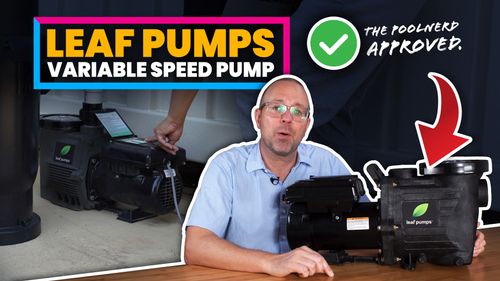
How We Test Pool Pumps
No shortcuts — here's how every pump review gets done.
Installed on Pool Systems
Each pump is plumbed, wired, and evaluated during everyday operation on a working pool system rather than a lab fixture.
Energy & Performance Measured
We measure wattage draw, flow rates, and noise levels, then compare each pump head-to-head against competitors.
Clear Verdicts
We publish what we find — good and bad. If a $750 pump outperforms a $1,400 one for your setup, we'll tell you.
Not Sure Which Pump is Right for You?
Check out our complete buying guide where we break down every pump type, size, and brand.
Read the Best Pool Pumps Guide →Frequently Asked Questions
What is the best pool pump?
For most residential inground pools, we recommend the Hayward Super Pump VS. It combines variable-speed efficiency, reliable build quality, and easy drop-in installation. For larger or more complex setups, the Pentair IntelliFlo VSF is our premium pick.
Variable speed vs. single speed — which is better?
Variable-speed pumps are the better fit for most new installations. They can run quieter and reduce energy use by operating at lower speeds for longer periods. Savings and payback depend on pump sizing, runtime, plumbing, and local electricity rates. Read our full guide for the breakdown.
How much should I spend on a pool pump?
A quality variable-speed pump runs $750-$1,400 depending on features. Above-ground pump combos start around $200-$400. The higher upfront cost of a VS pump pays for itself quickly through electricity savings.
How long do pool pumps last?
A quality pool pump typically lasts 8-12 years with proper maintenance. We've seen well-maintained Hayward Super Pumps go 15+ years. Variable-speed motors often last longer because they're not constantly running at full strain.
What size pump do I need?
For most standard inground pools (10,000-20,000 gallons), a 1 to 1.5 HP pump is plenty. Larger pools (30,000+ gallons) or pools with water features may need 2+ HP. Above-ground pools often do fine with 0.5-1 HP.
Can I install a pool pump myself?
Above-ground pumps are typically DIY-friendly — most are plug-and-play. Inground pump electrical work (especially 230V) should be done by a licensed electrician. Many warranties also require professional installation.
Explore More from The Pool Nerd
We test and review more than just one product — here's everything we cover.
Browse by Product Type
Independent, Hands-On Reviews
Why Pool Owners Trust The Pool Nerd
We're not a big media company. We're a small, independent team that gets in the water and tests the products we cover.
Tested in Our Pool
Every robot, pump, and skimmer runs through repeated cycles in our test pool with dirt, leaves, algae, and other everyday debris—not a lab or demo tank.
Side-by-Side Comparisons
We don't review products in isolation. We test them head-to-head so you can see exactly how they stack up against the competition.
5+ Years of Experience
We've been testing pool products since 2020 — through every season, firmware update, and product launch. That depth of experience means we know what holds up and what doesn't.
Our Testing Process
We run each product through multiple cleaning cycles in our test pool — floors, walls, waterlines, and filtration all get evaluated.
Products go up against their direct competitors so you can see the performance differences, not just marketing specs.
We publish what we find — good and bad. If a $500 robot beats a $2,000 one, we'll tell you.