
 Justin D.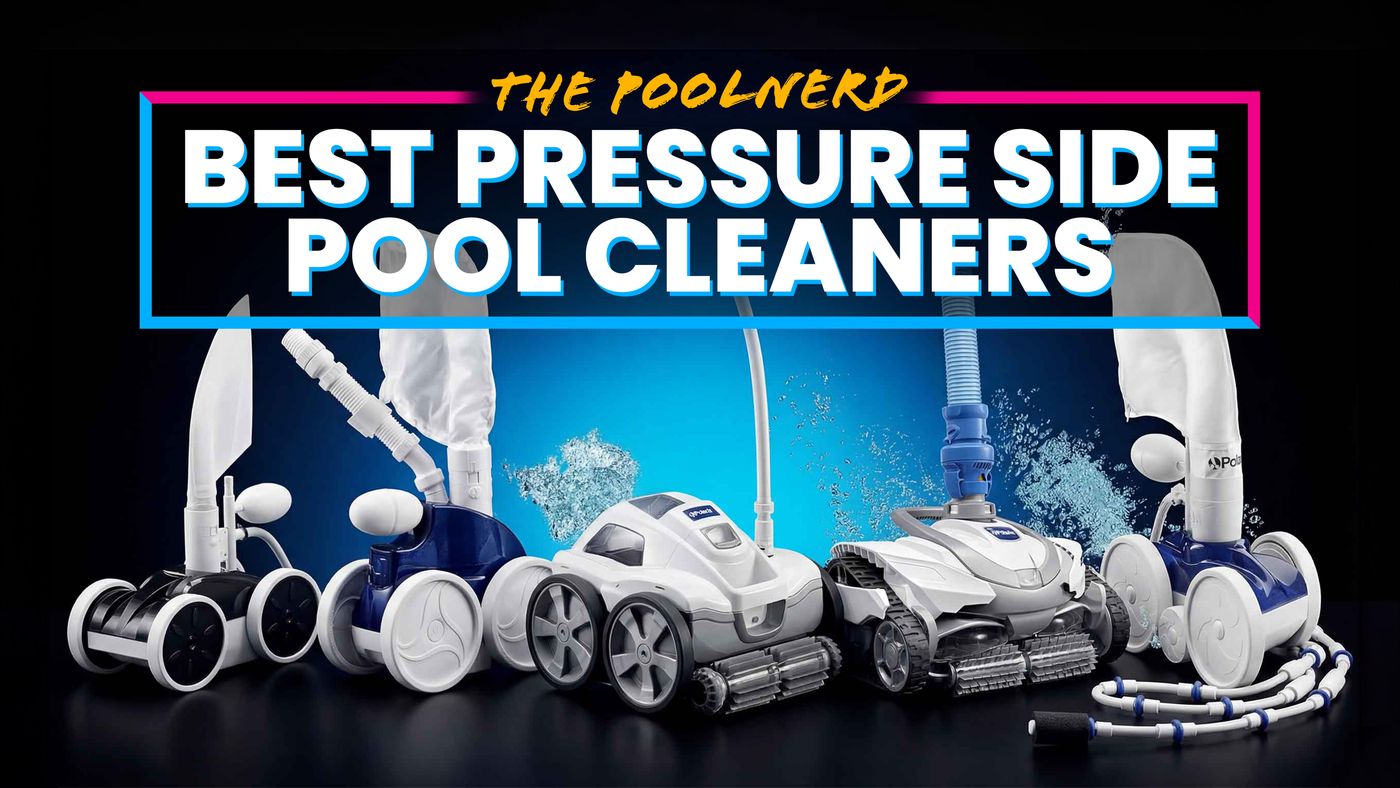
Pressure side cleaners are the workhorses of the pool cleaning world. They're tough, they're proven, and they handle leaves like nothing else. They've been around since the 1960s. But are they still the right choice in 2026? Or should you make the switch to a robotic pool cleaner?
Hey there, and welcome back to The Pool Nerd. I'm Justin, your resident pool aficionado. And today, we're diving into the Best Pressure-Side Pool Cleaners—which models are the best, and if you should consider making the switch to a robotic pool cleaner instead.
I've spent the last few years obsessing over pool equipment. Here at The Pool Nerd, we've tested all the major pressure-side cleaners on the market—from the "bulletproof" Polaris that we've all seen to the latest 4WD models—right here in our test pool.
For years, I was a believer in the dedicated pressure system that came with our test pool. And to be fair, it did the job. These machines are durable, easy to repair, and excellent for heavy debris loads. But as I tested more modern robotic pool cleaners on my channel, I had to face reality: robotic pool cleaners now deliver better cleaning performance, better filtration, and significantly lower operating costs.
You don't need a booster pump. They're easier to clean. And they even scrub your pool for you.
That said, pressure side cleaners still have their place. They're workhorses with proven track records, and if you already have the infrastructure in place, you may not want to make the switch—which is why I also cover my favorite pressure-side cleaners in this guide. I'll help you understand the trade-offs, show you which pressure side models are worth your money, and explain why I ultimately recommend most people consider robotic pool cleaners in 2026.
Want the best of the best? Read the Best Robotic Pool Cleaner of 2026
After testing nearly 30+ robotic pool cleaners in my pool, I'll let you know what to look for and what to avoid.
Best Pressure Side Pool Cleaners at a Glance


Understanding Pressure Side Pool Cleaners
The Technology
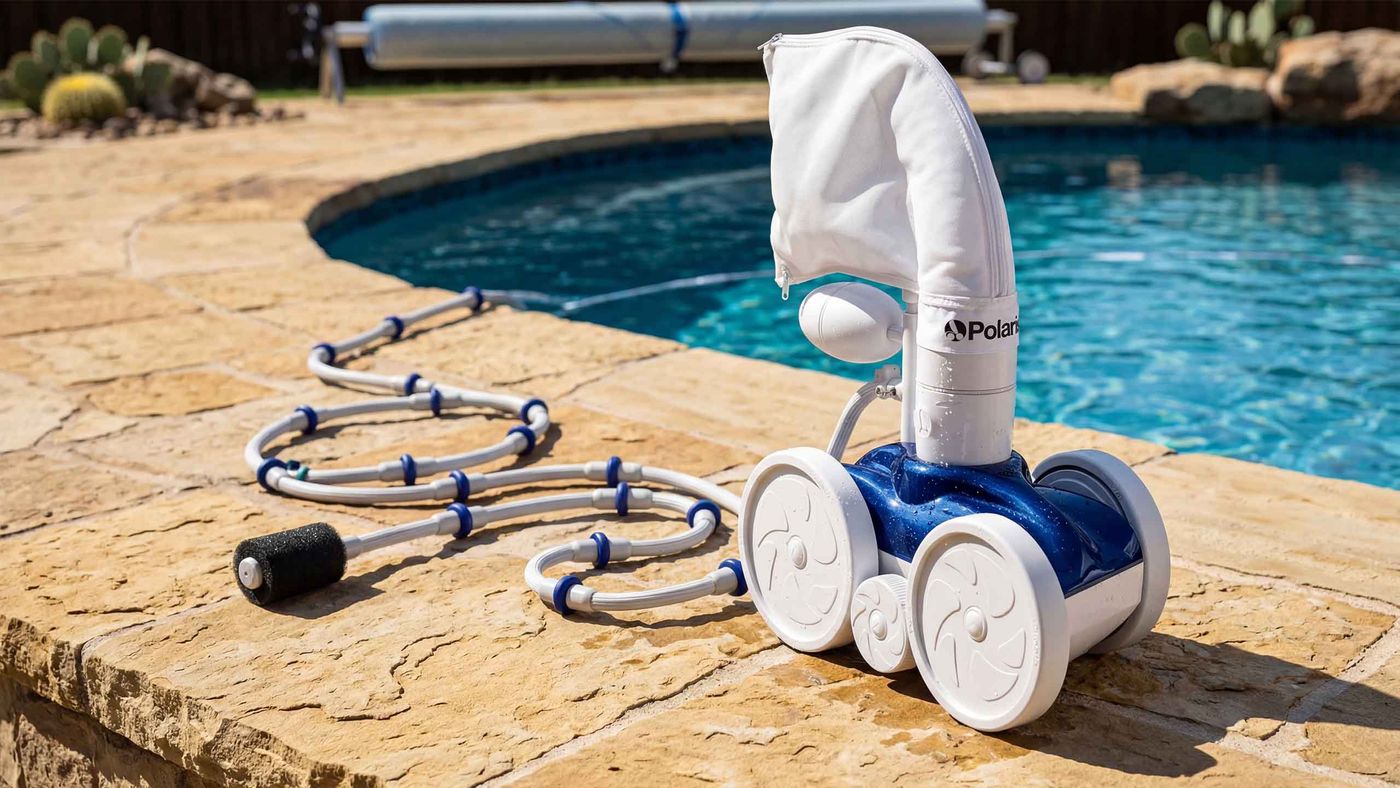
Pressure side pool cleaners have been around since the 1960s, making them one of the most established automatic pool cleaning technologies. These cleaners operate by connecting to your pool's return line (or a dedicated pressure line) and using water pressure to create movement and collect debris into an attached bag.
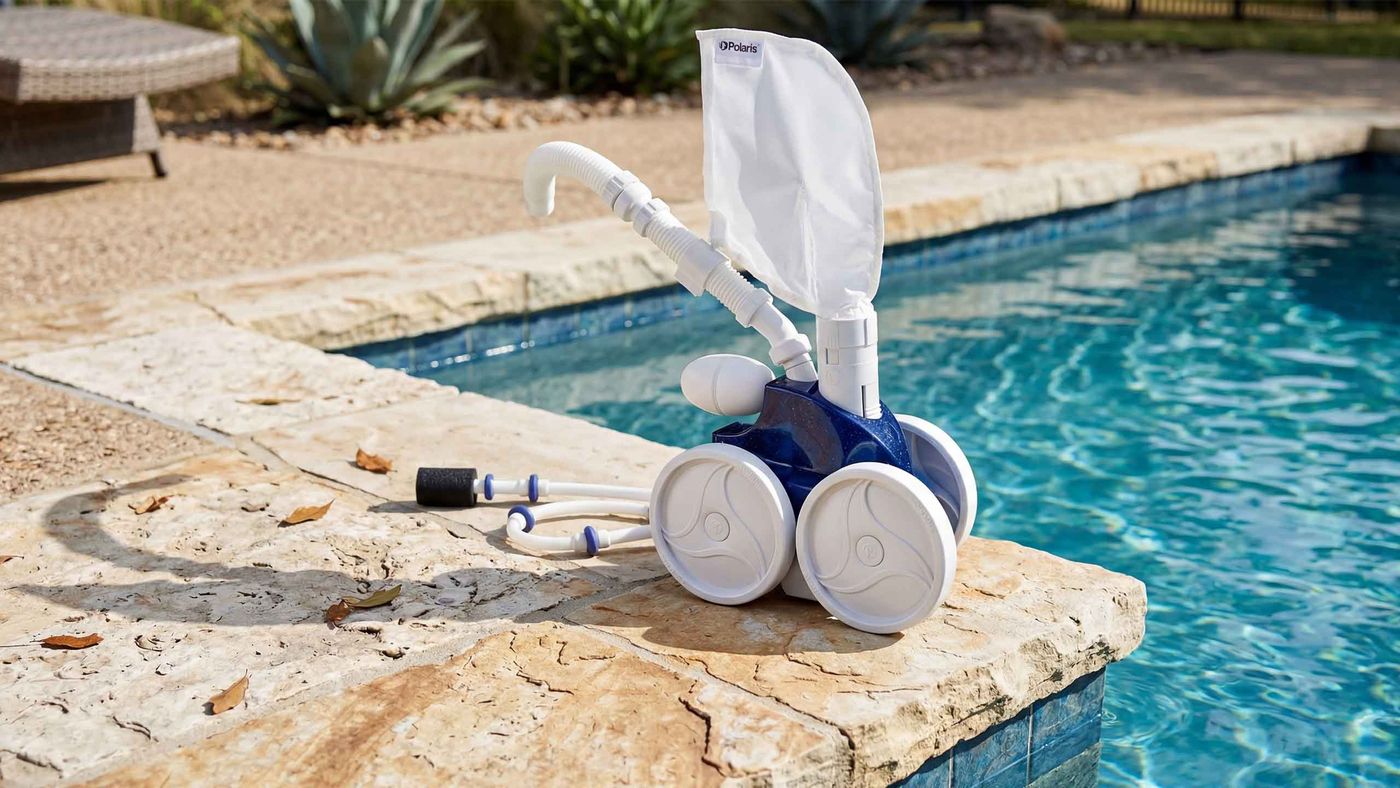
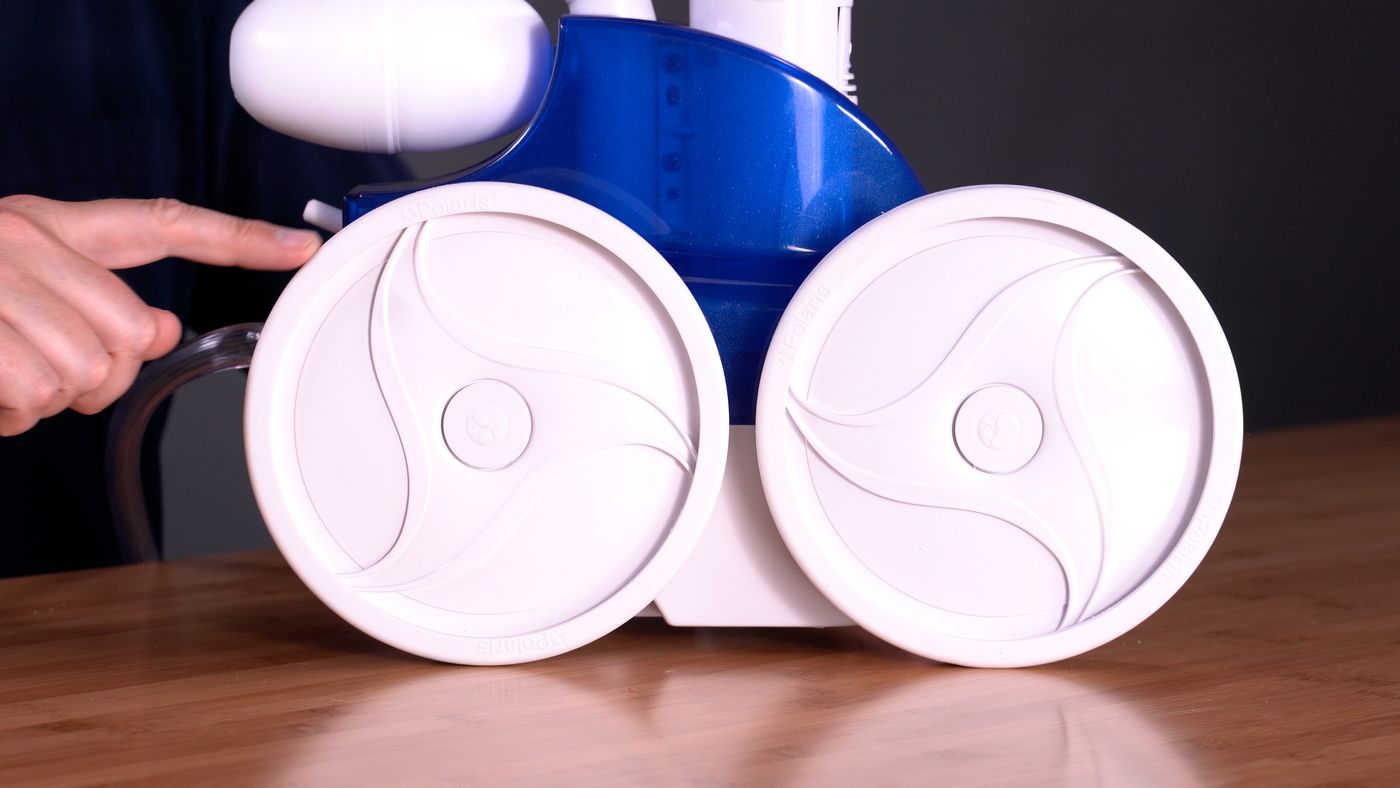
The classic three-wheeled design that Polaris popularized has remained largely unchanged for over 40 years. The fundamental mechanics work well—there have been refinements to drive systems (shafts to belts to chains) and bag designs, but the core approach has remained the same.
The Pros of Pressure Side Cleaners
Before diving into comparisons, let's talk about what pressure side cleaners do well:
Exceptional durability: These machines are built like tanks. Many owners report 10+ years of service with basic maintenance.
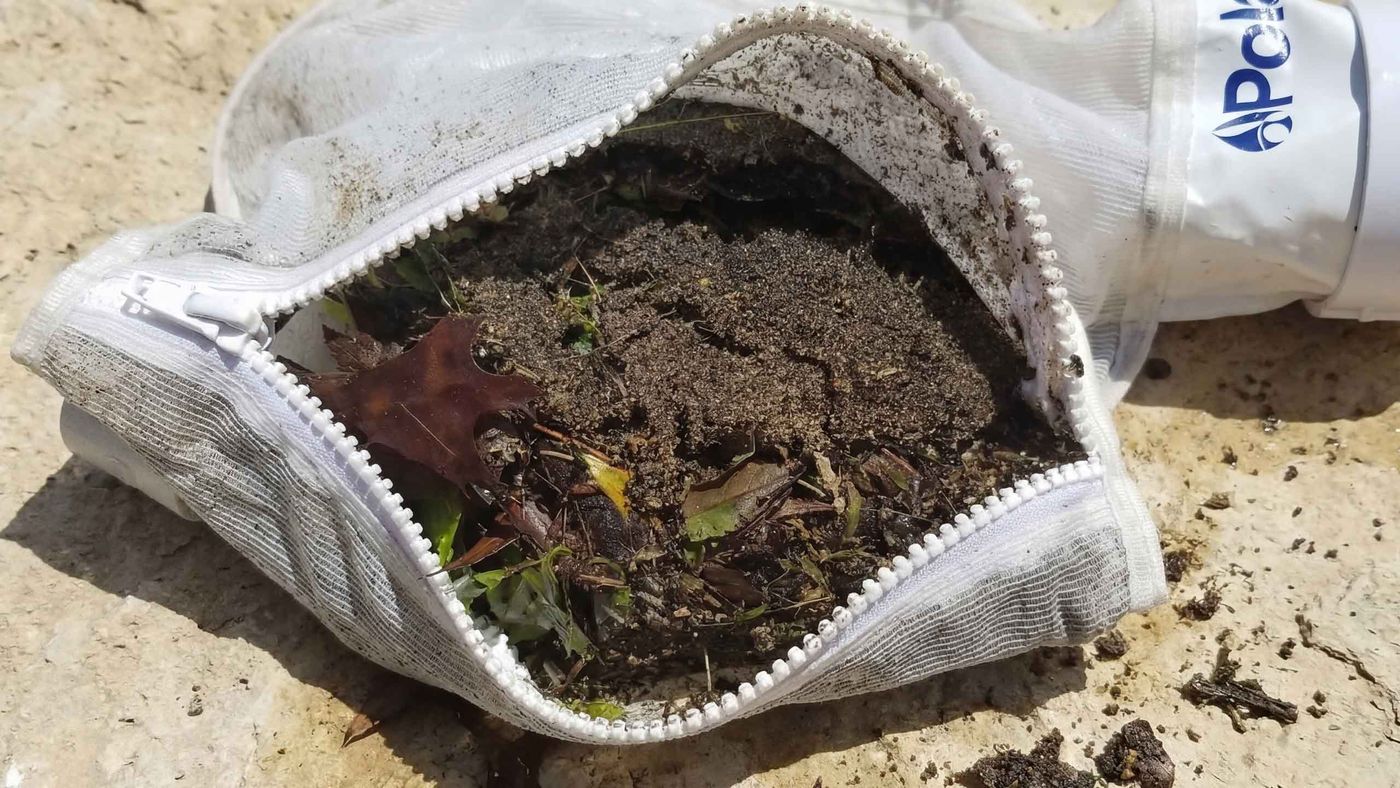
Heavy debris handling: The large intake and bag design excels at collecting leaves, acorns, and larger debris that can clog other cleaner types.
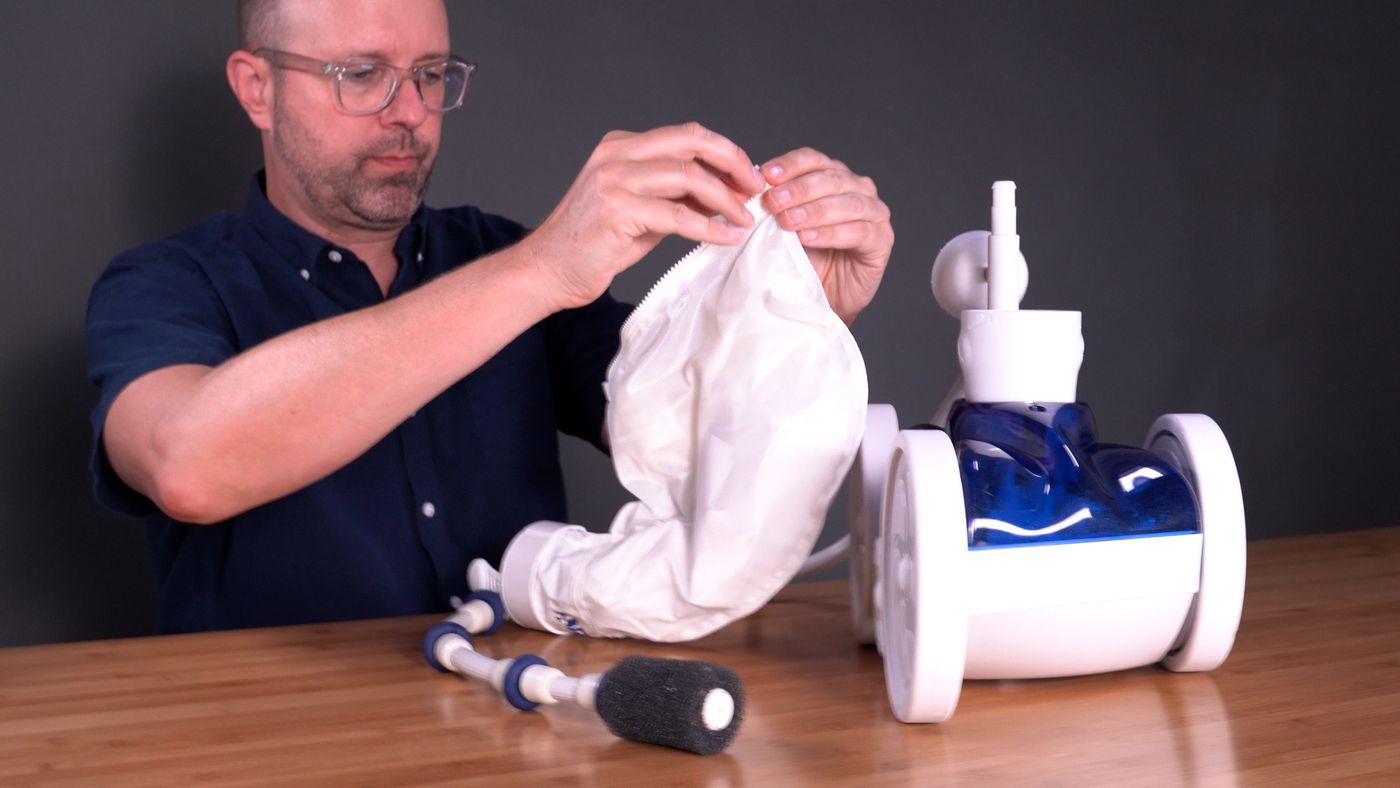
Simple mechanics: Fewer electronic components means fewer potential failure points. Repairs are often DIY-friendly.
Independent filtration: The debris bag keeps collected material out of your main filter system, reducing maintenance on your pool's primary filtration.
Proven reliability: Decades of real-world use have proven these designs work.
The Booster Pump Consideration
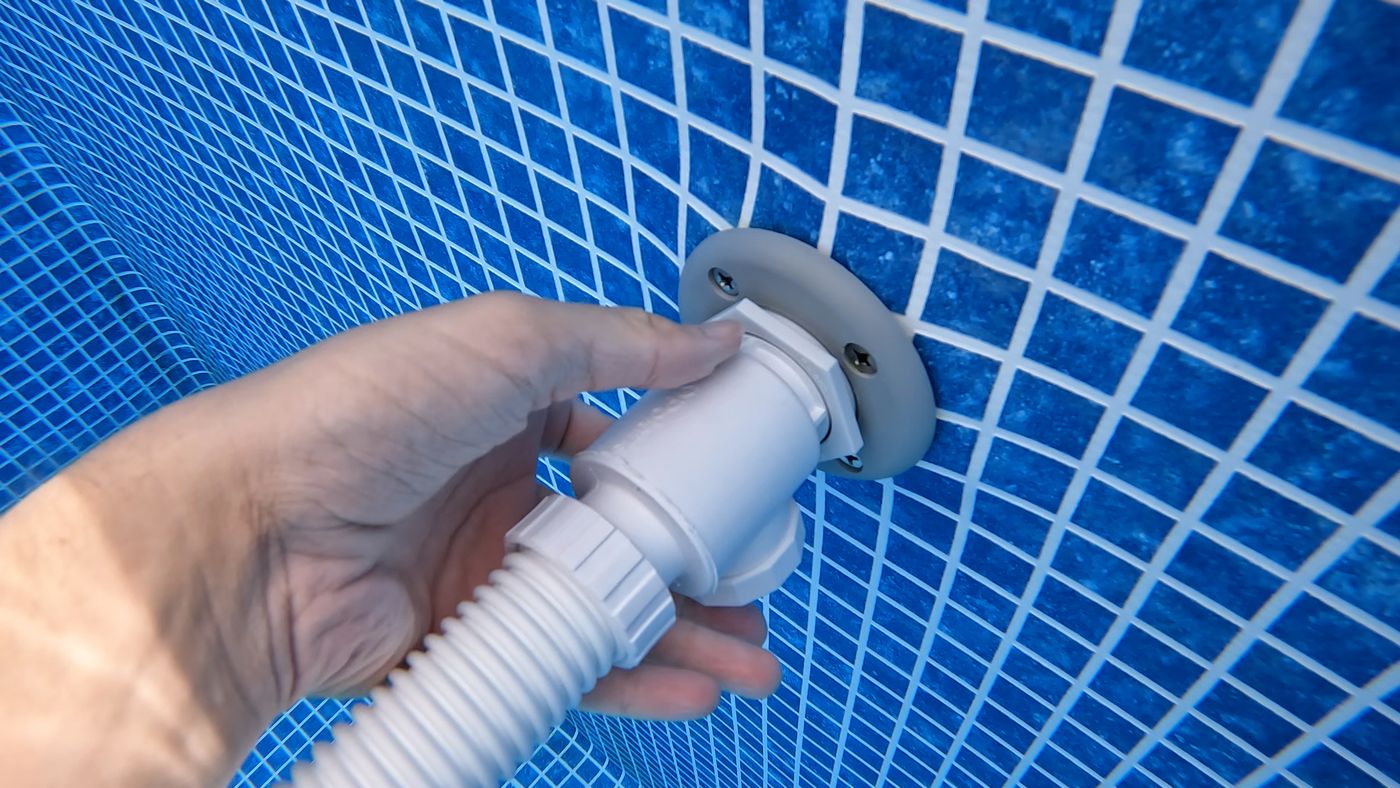
Here's what you need to understand upfront: many pressure side cleaners require a separate booster pump to operate effectively. This is a significant factor in both cost and installation complexity.
The Cost Breakdown:
- Booster pump purchase: $400–$600
- Professional installation: $250–$500
- Electrical work (if needed): $200–$400
- Total additional cost: $850–$1,500
This means a Polaris 280 advertised at $450 may actually cost $1,300–$1,950 when properly equipped. Some models (like the Polaris 360) operate without a booster pump, but you'll get significantly weaker cleaning performance.
Energy Consumption
Pressure side cleaners with booster pumps consume more energy than robotic pool cleaners. A typical pressure side system draws 700–1,000 watts, while modern robotic cleaners like the Dolphin Escape use approximately 180 watts.
Annual energy cost comparison (assuming 3 hours daily operation, 180 days per season, $0.15/kWh):
- Pressure side cleaner: ~$81/year
- Robotic cleaner: ~$15/year
- Difference: ~$66/year
Over a 10-year ownership period, this adds up to around $660 in additional electricity costs. It's a real consideration, though not necessarily a deal-breaker depending on what you want. But once you factor in the better cleaning performance, it's hard to still recommend a pressure-side cleaner.
What to Look For in a Pressure Side Cleaner
So you still want a pressure-side cleaner? Well, here are some popular features to look for:
Dual or Multi-Stage Filtration: Look for models like the Polaris Quattro P40 that offer dual-stage filtration to capture both large and fine debris.
Active Brushing: Some newer models include rotating brushes. While not as aggressive as robotic pool cleaners, they do help with stuck-on debris.
Four-Wheel Design: Four-wheel models offer better stability and coverage than traditional three-wheel designs.
No Booster Pump Required: Models like the Polaris 360 operate without a booster pump, significantly reducing total system cost and complexity.
Limitations to Understand
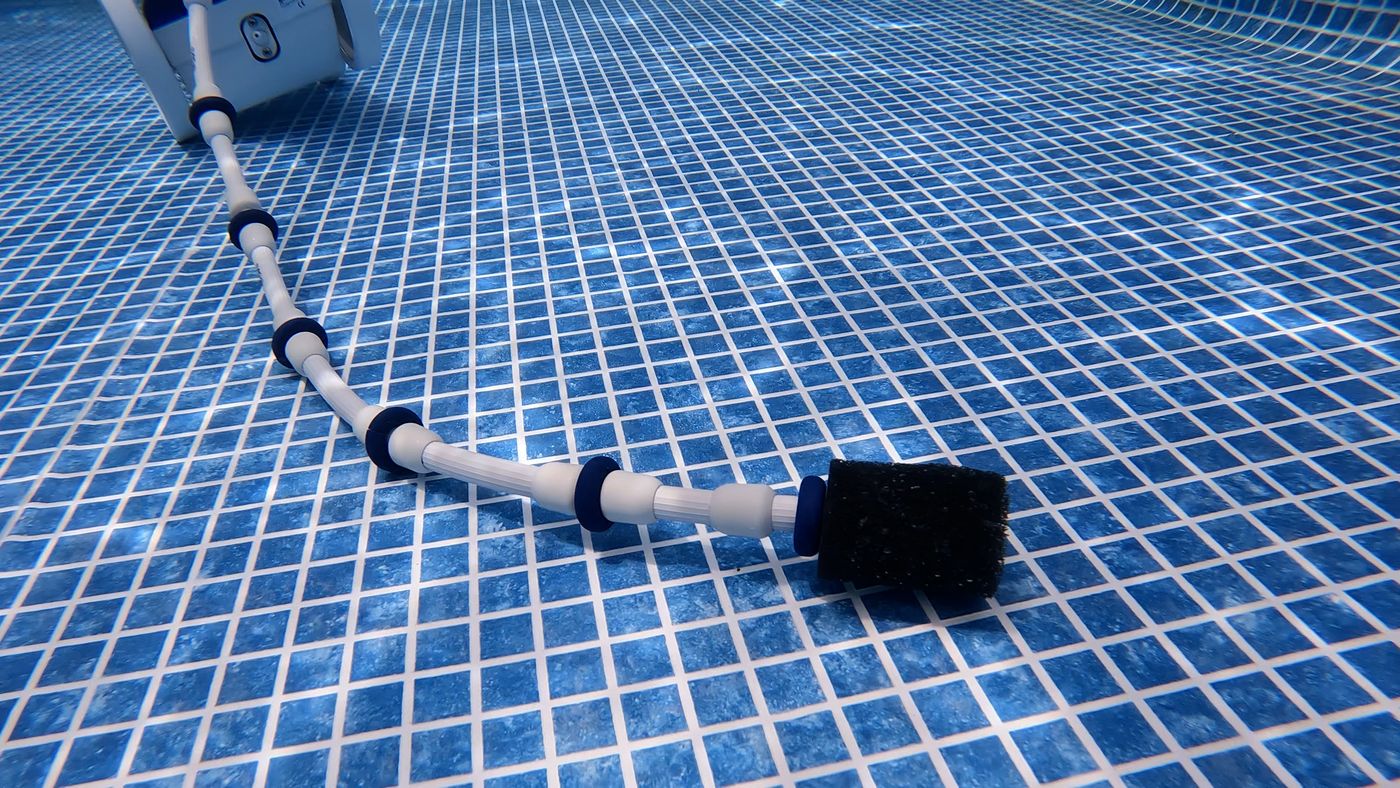
Limited Scrubbing: Most pressure side cleaners lack rotating brushes, relying on water jets and suction alone. Manual brushing may still be needed for algae, especially on the walls and waterline.
Basic Filtration: Standard mesh bags capture large debris effectively but miss fine particles. Your main filter handles what the bag misses.
Random Navigation: Without programmable navigation systems, these cleaners move somewhat randomly. Coverage is complete over time, but less efficient than mapped robotic paths.
Installation Complexity: Particularly for models requiring booster pumps, installation involves plumbing, electrical work, and ongoing calibration.
1. Polaris Vac-Sweep 280: The Industry Standard
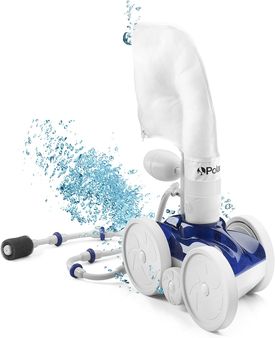
Price: $450 (plus $1,000+ for booster pump and installation) Total Cost: $1,450–$1,950
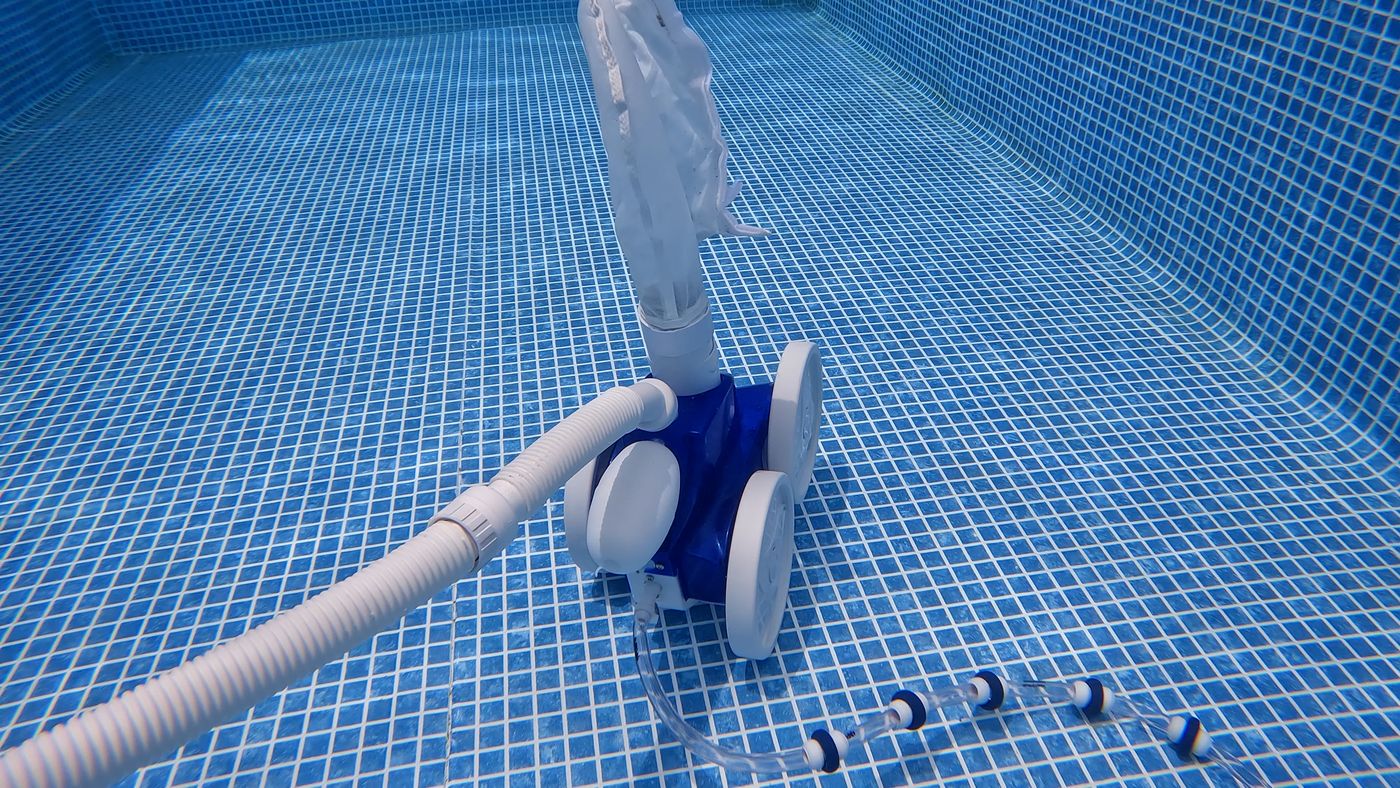
The Polaris 280 is the most popular pressure side cleaner for good reason. It's proven, parts are universally available, and countless pool technicians know how to service it.
Strengths:
-
Exceptional durability and parts availability
-
Large debris inlet handles leaves and acorns well
-
Double venturi jets provide solid suction
-
Decades of proven performance
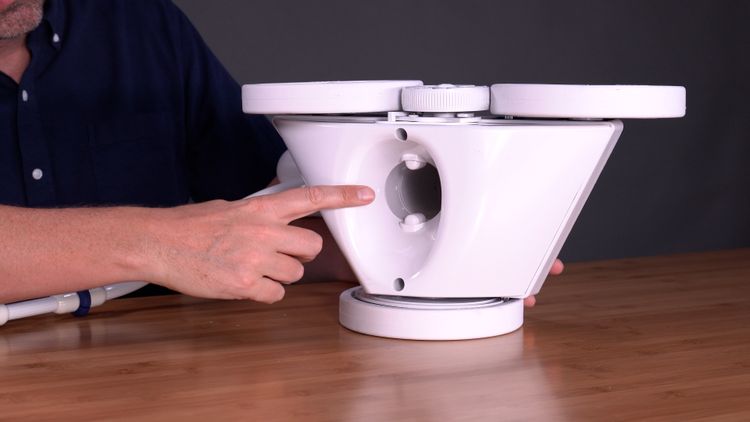
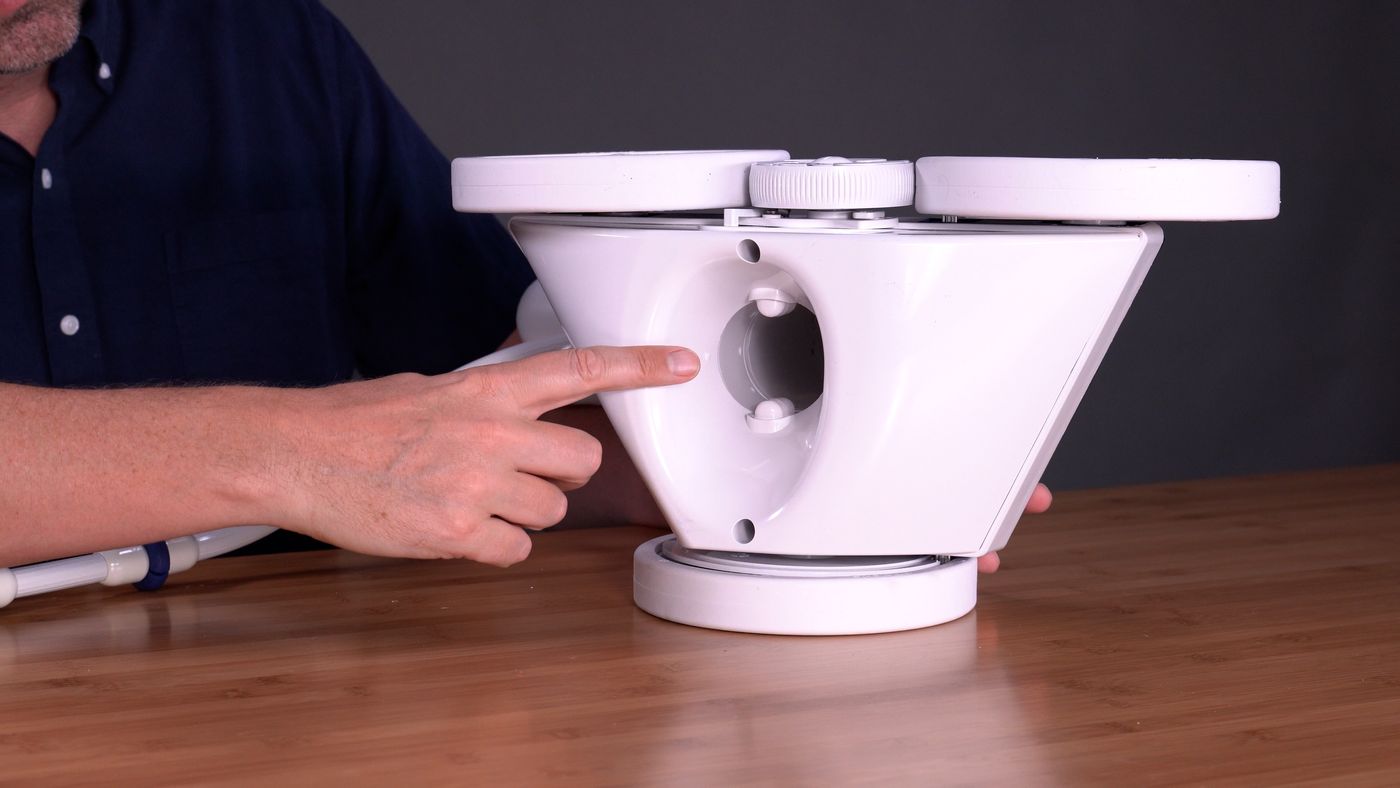
The 280's large intake handles big debris, but lacks any scrubbing brush // The Pool Nerd
Limitations:
-
No scrubbing brushes—relies on suction alone
-
Single filter bag captures large debris only
-
Random navigation pattern
-
Requires booster pump for optimal performance
-
Does not clean the waterline
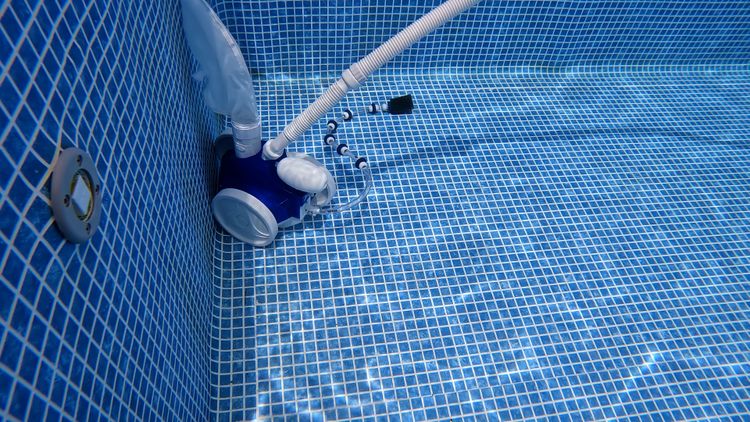
Without navigation software, the Polaris 280 wanders randomly // The Pool Nerd

The Bottom Line: The 280 is a workhorse that will reliably clean your pool floor for years. However, at the total system cost of ~$1,500–$2,000, you're in the same price range as premium robotic cleaners that offer active scrubbing, smart navigation, and multi-stage filtration. For most buyers, the robotic option delivers more cleaning performance per dollar.
Read my full review on the Polaris 280 →
2. Polaris Quattro P40: The Most Advanced Pressure Side Option
Price: $600–$700 (plus booster pump) Total Cost: $1,600–$2,200
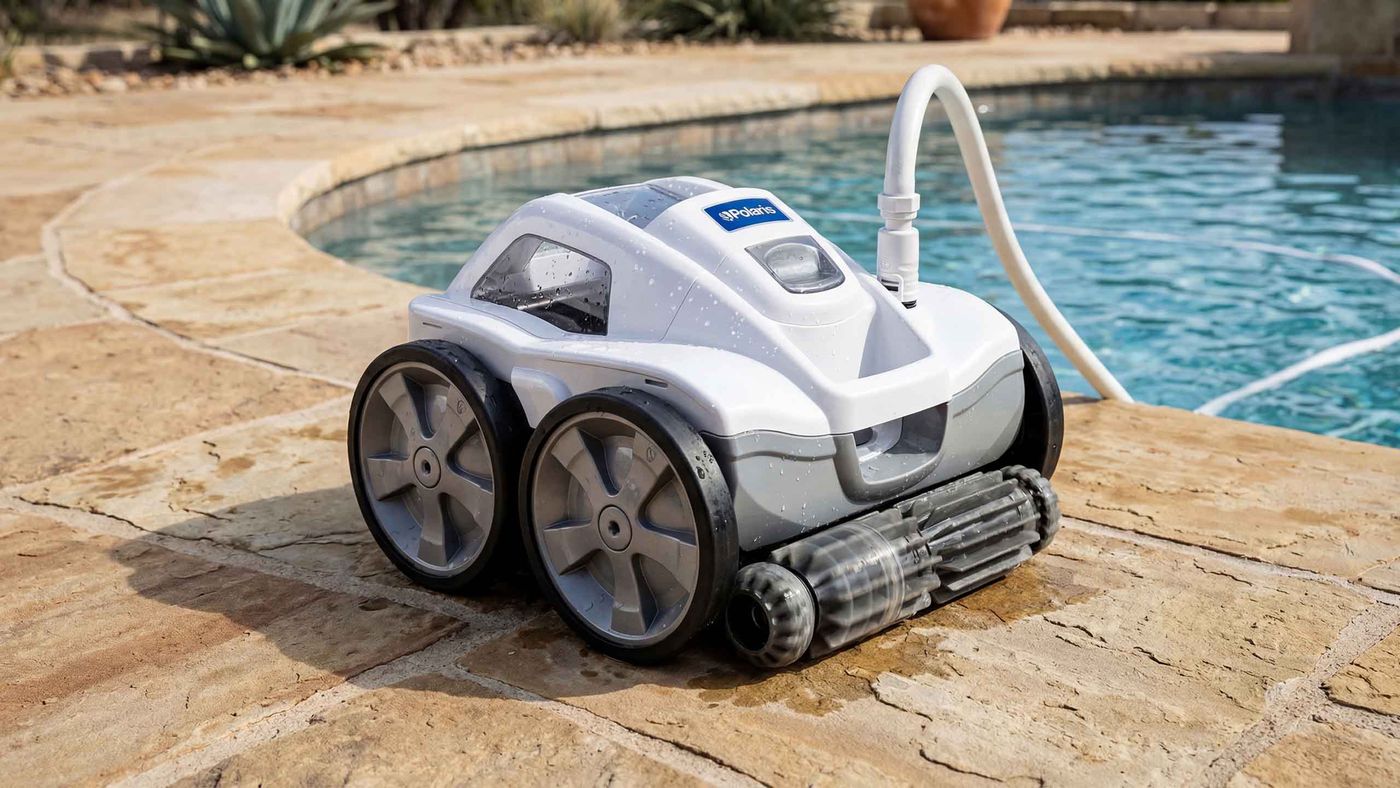
The Quattro P40 represents Polaris's most significant update to pressure side technology in decades. It addresses many traditional weaknesses while maintaining the durability pressure side fans appreciate.
Key Improvements:
- 4WD Design: Better stability and maneuverability than three-wheel models
- Dual-Stage Filtration: Captures both large debris and fine particles
- Active Brushing: Rotating brushes finally address stuck-on debris
- Transparent Canister: Easy to see when it needs emptying
- Aggressive Wall Climbing: Better coverage than traditional models
Limitations:
- Still requires a booster pump
- No smart navigation—cleaning pattern remains random
- Premium price puts it in robotic territory
The Bottom Line: If you're committed to pressure side technology, this is the one to buy. It addresses the traditional weaknesses (no brushes, poor filtration) while maintaining the durability and heavy debris handling that pressure side fans love. That said, for similar money, robotic cleaners like the Dolphin Sigma offer app control, multiple cleaning modes, and lower operating costs.
3. MAKHOON Upgrade Pool Sweeper: Budget Option
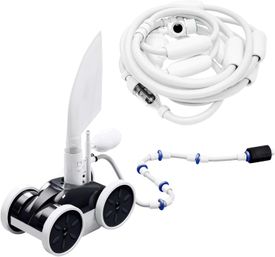
Price: $200–$250 (plus booster pump) Total Cost: $1,200–$1,750
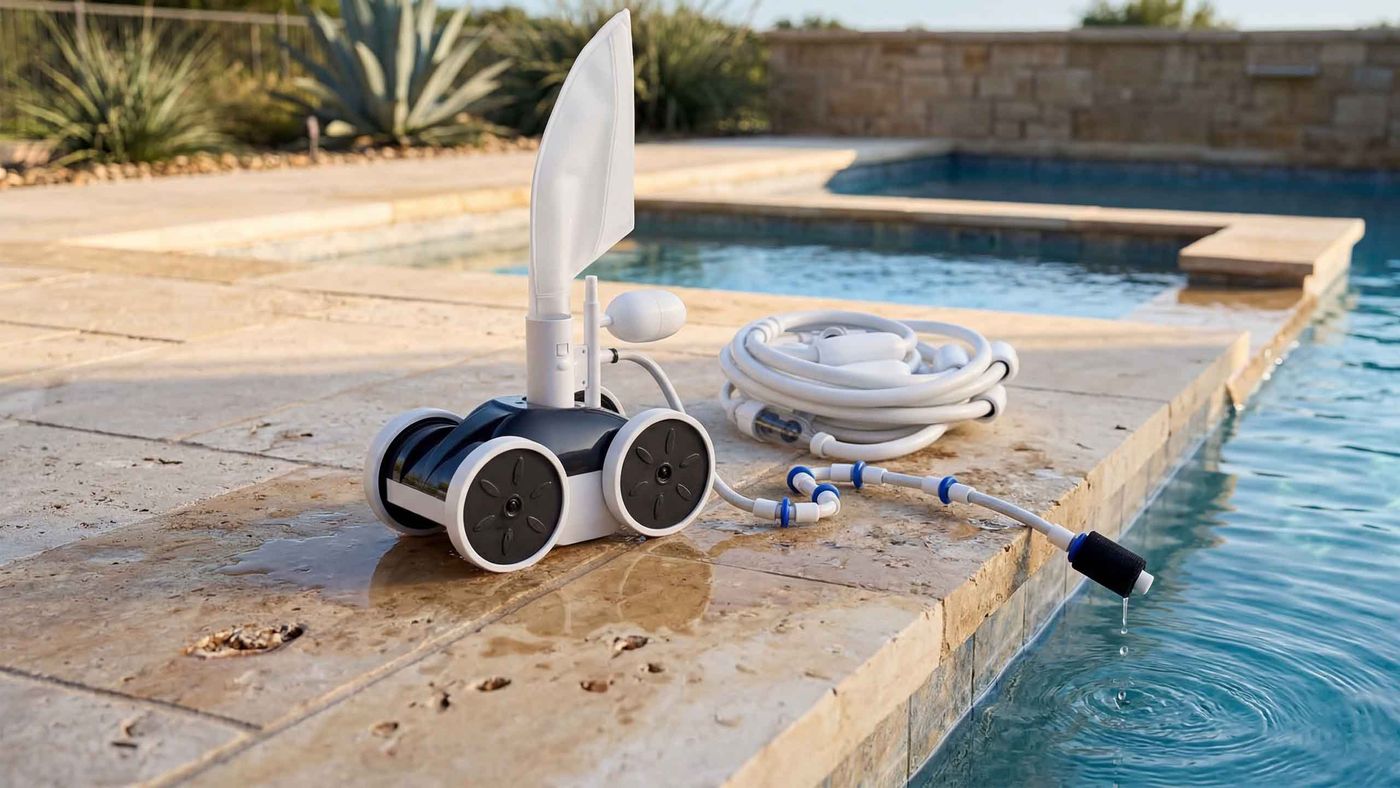
MAKHOON's four-wheel pressure side cleaner offers a lower entry point for those committed to pressure side technology.
The Good:
- Significantly cheaper than name-brand alternatives
- Four-wheel design for stability
- Comes with two filter bags
- Replacement parts available
The Concerns:
- Mixed reviews on long-term durability
- Reports of component failures within the first year
- Quality control appears inconsistent
The Bottom Line: The initial savings can be attractive, but factor in the booster pump cost and potential reliability issues. At the total system cost of $1,200+, you might be better served by either a name-brand pressure side cleaner or an entry-level robotic like the Dolphin Escape.
4. Polaris MAXX: Actually, a Suction-Side Cleaner
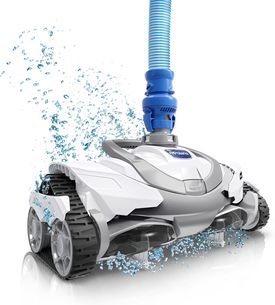
Price: $400–$500 Note: This is a SUCTION-side cleaner, not pressure-side
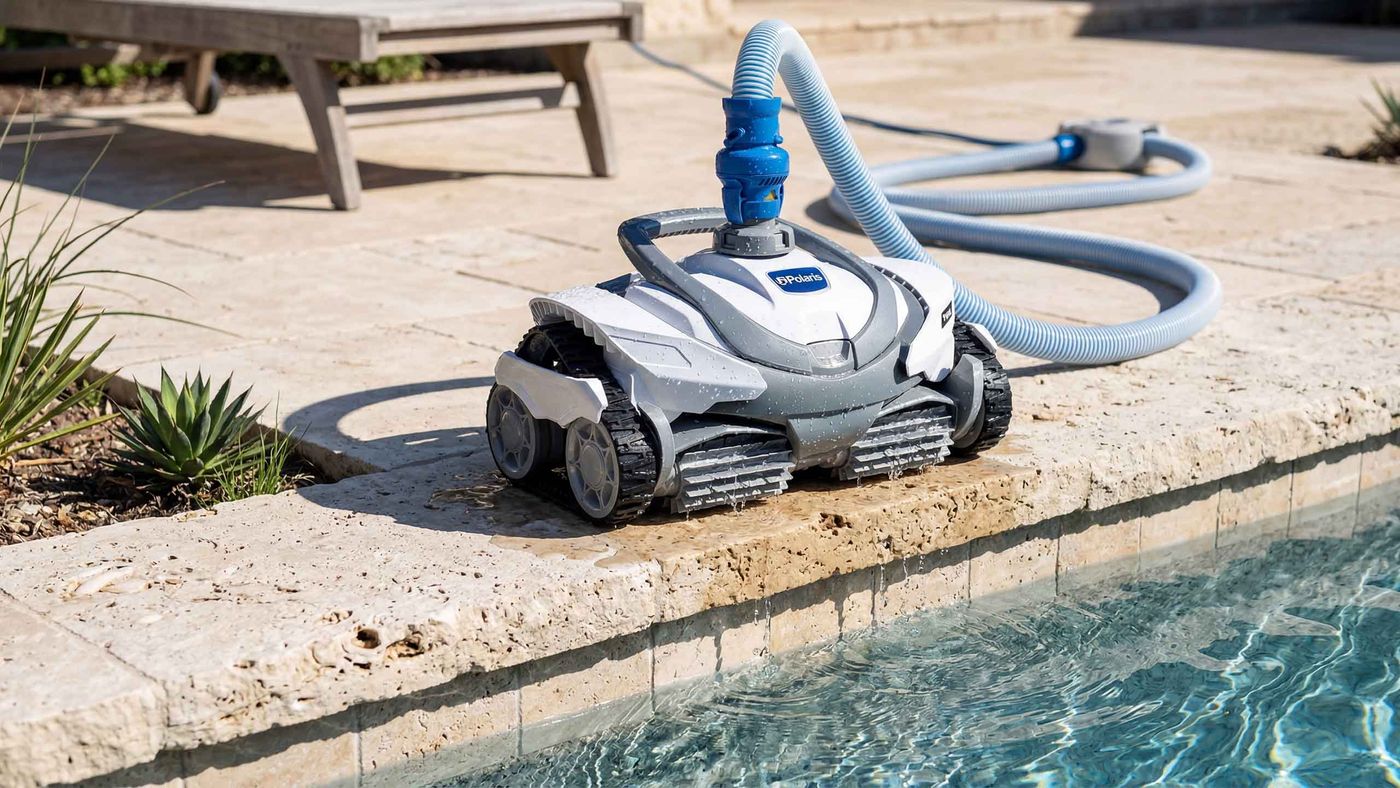
Including this for clarity since it's often confused with pressure side models. The MAXX uses your pool's existing suction line rather than pressure.
Key Features:
- HALO technology for various debris sizes
- Active scrubbing brushes
- Multi-directional navigation
- No booster pump required
- Lower total cost than pressure side systems
The Trade-Off: Suction-side cleaners put additional strain on your main pump and filter system. They can't operate independently and reduce filtration effectiveness while running.
The Bottom Line: Wrong category for this comparison, but worth noting as a lower-cost alternative to both pressure side and robotic systems.
5. Polaris Vac-Sweep 360: Best No-Booster-Pump Option
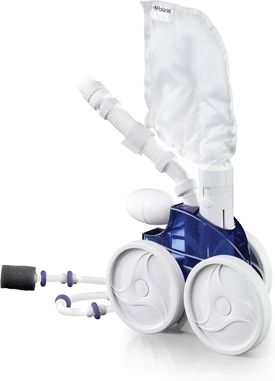
Price: $400–$500 Total Cost: $400–$500 (no booster pump required)
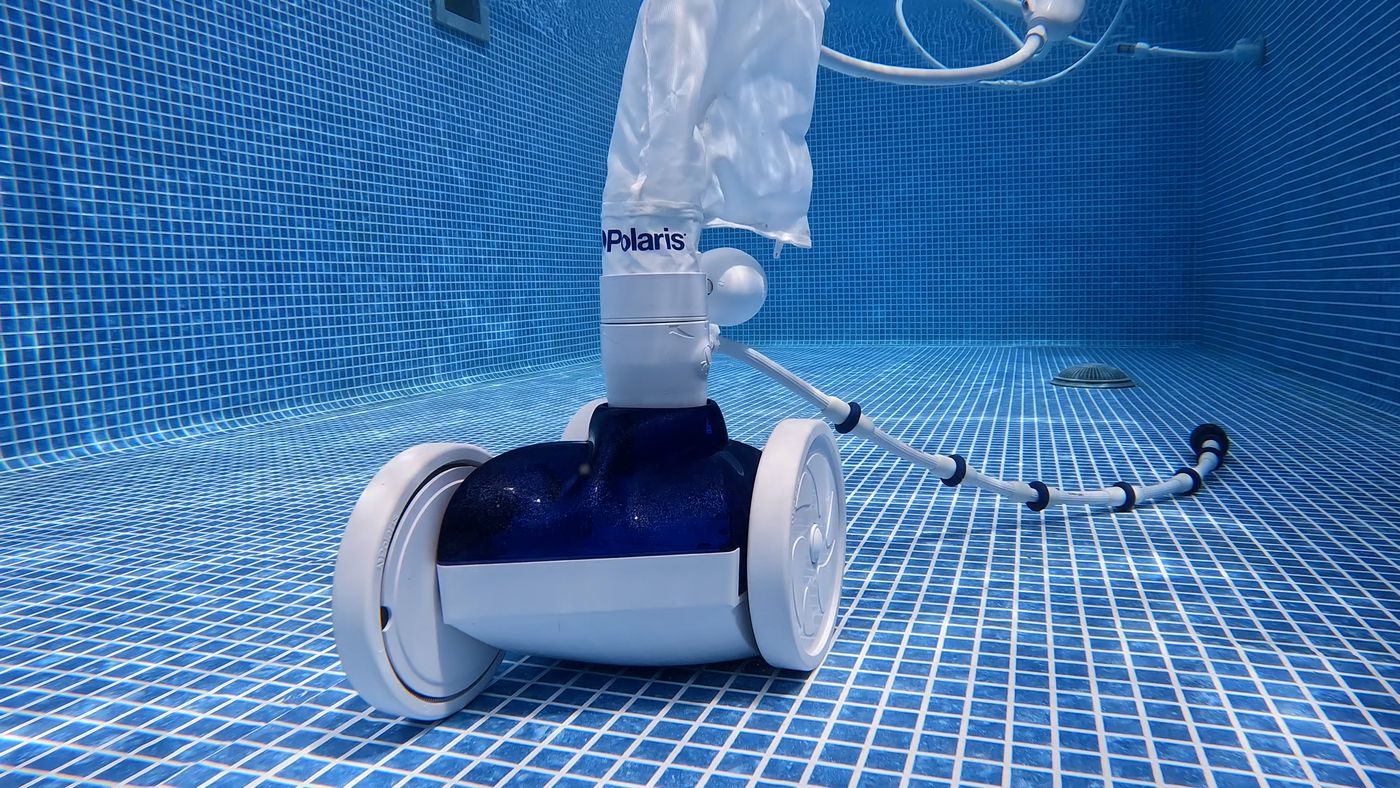
The Polaris 360 operates without a booster pump, connecting to a dedicated return line powered by your main circulation pump. This is the most cost-effective pressure side option.
Advantages:
-
No booster pump purchase or installation
-
Significantly lower total investment
-
Triple venturi jets for solid suction
-
All-wheel drive system
-
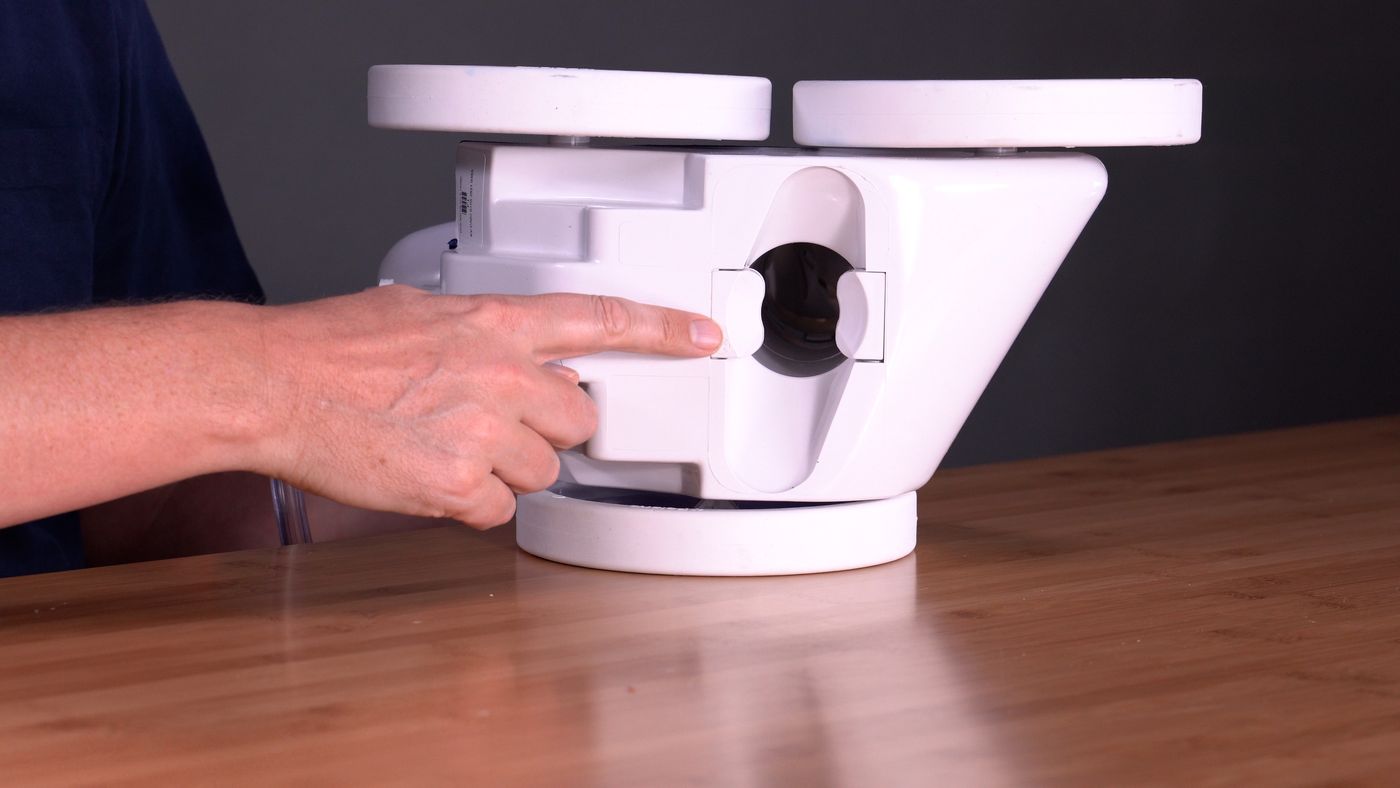
Large 2.25" debris inlet
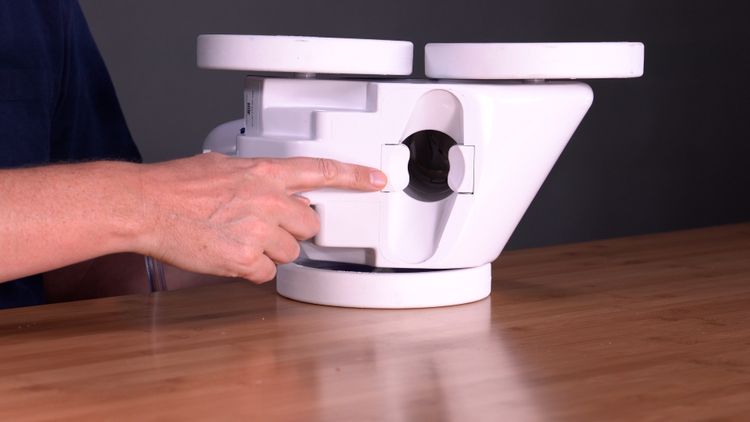
The 360's large intake port handles big debris // The Pool Nerd
Considerations:
-
Redirects pressure from your main circulation system
-
May require running your pump longer for adequate filtration
-
Still uses more energy than robotic alternatives (through your main pump)
-
No scrubbing brushes or smart navigation
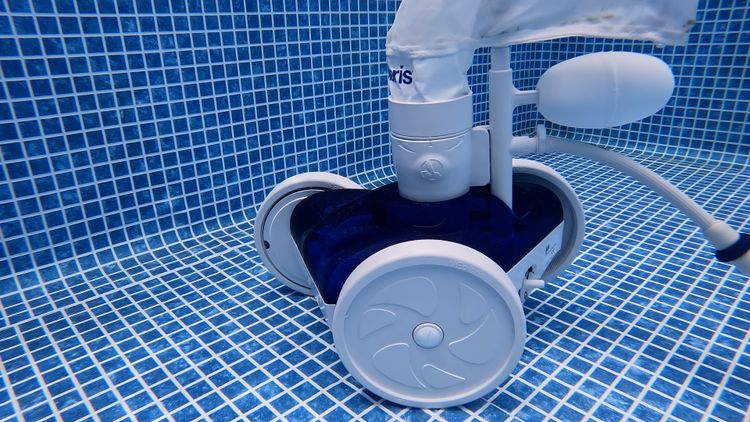
The 360 cleans floors and walls, but lacks active scrubbing // The Pool Nerd

The Bottom Line: At $400–$500 total, this is the best value in pressure side cleaning. If you want the durability and heavy debris handling of pressure side technology without the booster pump expense, the 360 delivers. However, for just $50 more, the Dolphin Escape offers active scrubbing, superior fine filtration, and significantly lower energy consumption.
Read my full review on the Polaris 360 →
How Robotic Cleaners Compare
For context, here's what modern robotic technology offers at similar or lower price points:

The Technology Advantages
Energy Efficiency: DC motors consume approximately 80–90% less energy than pressure systems with booster pumps.
Active Cleaning: Dual scrubbing brushes physically remove debris and algae rather than relying on suction alone.
Smart Navigation: Programmed cleaning patterns ensure complete coverage in less time.

Programmable Scheduling: Weekly timers and smartphone apps enable true set-and-forget automation.
Multi-Stage Filtration: Options range from large debris to ultra-fine particles without burdening your main filter.
Cost Comparison Over 5 Years
Pressure Side System (with booster pump):
- Initial cleaner: $450
- Booster pump + installation: $1,000
- Additional energy costs: ~$330
- Replacement parts: ~$300
- Total: ~$2,080
Robotic Cleaner (Dolphin Escape):
- Installation: $0
- Energy costs: ~$75
- Replacement parts: ~$150
The robotic cleaner costs significantly less over five years while providing superior cleaning performance.
Robotic Models Worth Considering

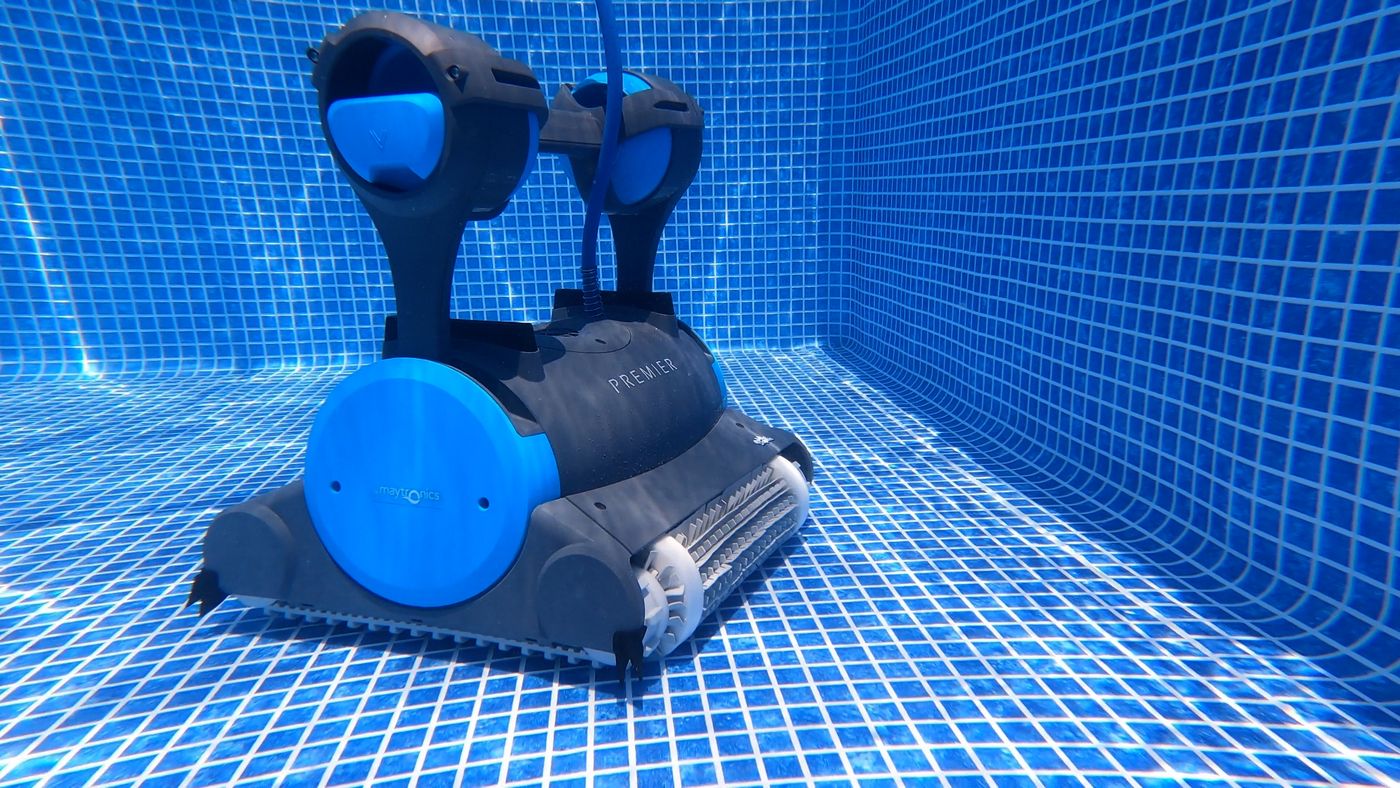
Dolphin Premier

- Multi-media filtration with three options
- Commercial-grade motors (4,500 GPH)
- 3-year warranty
- Weekly timer for automation
Read my full review on the Premier →
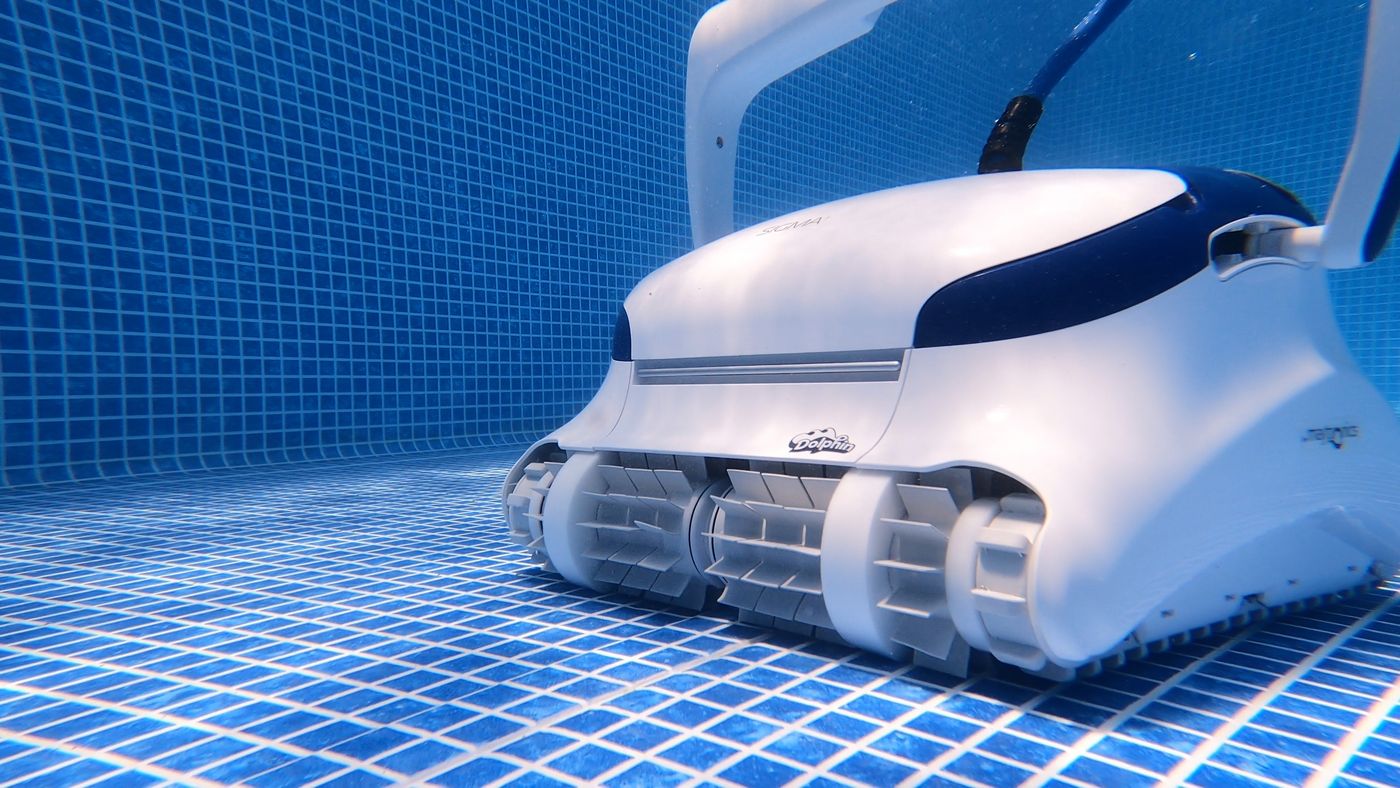
Dolphin Sigma
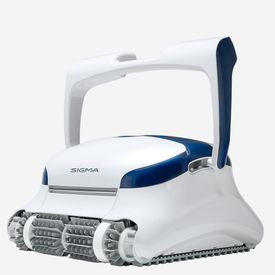
- Smartphone app control
- Multiple cleaning modes
- Advanced gyroscope navigation
- Commercial-grade performance
Read my full review on the Sigma →
Dolphin Quantum
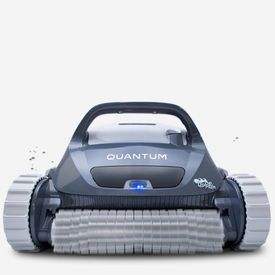
- PowerJet 3D mobility
- XXL MaxBin capacity
- NanoFilters included
- Excellent value-to-performance ratio
Read my full review on the Quantum →
Dolphin Cayman

- Full pool coverage including waterline
- Weekly timer
- HyperBrush for active scrubbing
- Solid choice for most residential pools
Read my full review on the Cayman →
Dolphin Escape
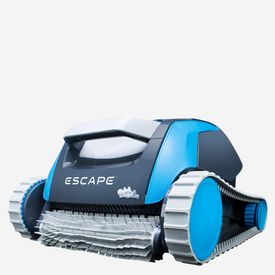
- Ideal for above-ground and smaller in-ground pools
- HyperBrush at 2x speed
- 180-watt energy consumption
- Outstanding entry-level option
Read my full review on the Escape →
Making the Right Choice
When Pressure Side Makes Sense
- You already have a booster pump and dedicated line installed
- Heavy leaf or debris loads are your primary concern
- You value proven durability and simple mechanics
- You prefer DIY-serviceable equipment
- You're getting a quality used unit at a significant discount
When Robotic Makes More Sense
-
You're starting fresh without existing infrastructure
-
Fine filtration and water clarity are priorities
-
You want active scrubbing for algae prevention
-
Energy efficiency matters to you
-
You prefer true automation with scheduling
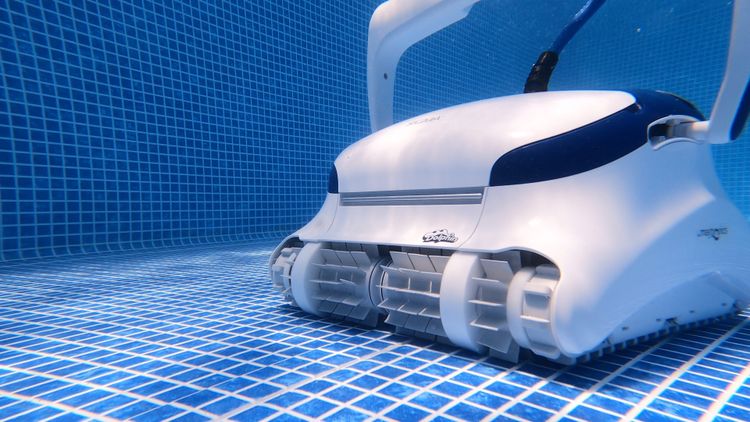
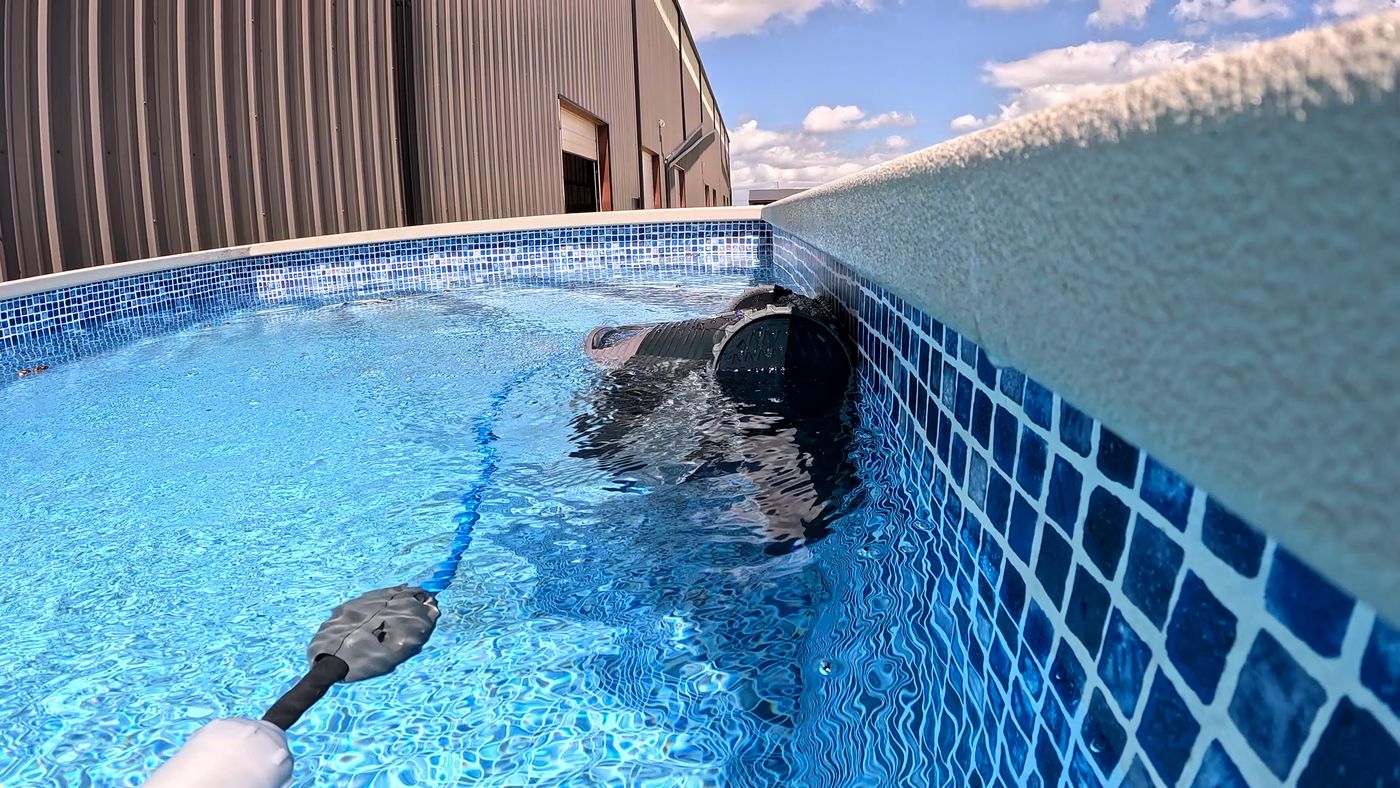
For most pool owners, robotic is the smarter long-term investment // The Pool Nerd
My Recommendations
If you have pressure side infrastructure already: Consider the Polaris 360 ($400–$500) if you want to use it, but also do the math on capping that line and going robotic—energy savings often pay back the investment within 2–3 years.
If you're starting fresh:
- Tight Budget: Dolphin Escape
- Standard Pools: Dolphin Cayman
- Best Value: Dolphin Quantum
- No Compromise: Dolphin Premier or Dolphin Sigma
My Final Verdict
Pressure side pool cleaners are proven, durable machines that have served pool owners well for decades. They excel at handling heavy debris, offer simple mechanics, and deliver reliable performance.
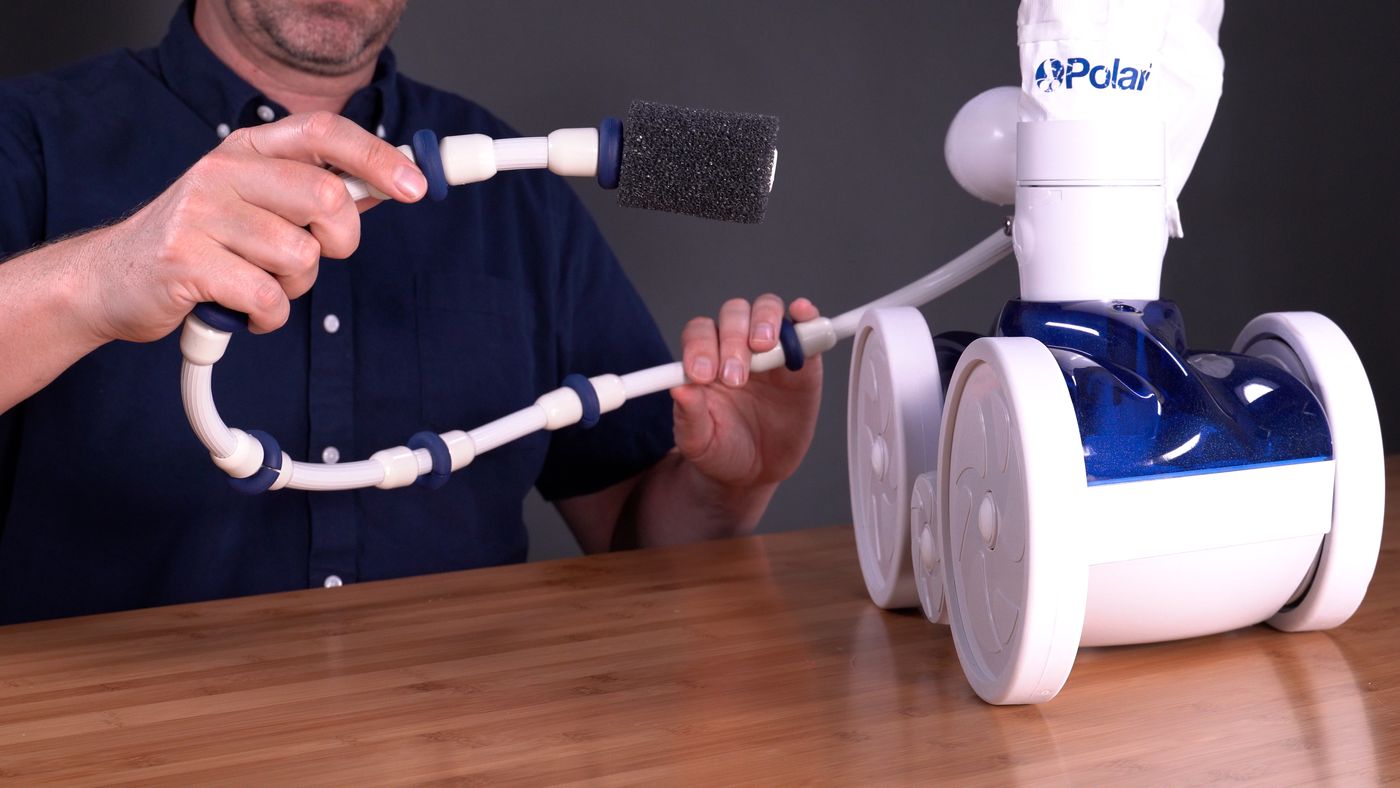
However, the honest assessment is this: when you factor in total cost of ownership—including booster pumps, installation, and energy consumption—pressure side cleaners often cost as much or more than robotic alternatives while delivering less effective cleaning. Modern robotic cleaners provide active scrubbing, superior filtration, smart navigation, and dramatically lower operating costs.
For pool owners with existing pressure side infrastructure, there's no urgent need to replace a working system. But if you're buying new or replacing an aging unit, robotic technology delivers significantly better performance per dollar invested.
The choice ultimately depends on your priorities, existing setup, and budget. But for most pool owners making a fresh decision in 2026, robotic cleaners represent the smarter long-term investment.
If you wanna keep nerding out over your pool, head on over to my website at ThePoolNerd.com/deals where I post the best deals, news, reviews, and comparisons on the top robotic pool cleaners and other pool equipment.


Comments
Loading comments…