
 Justin D.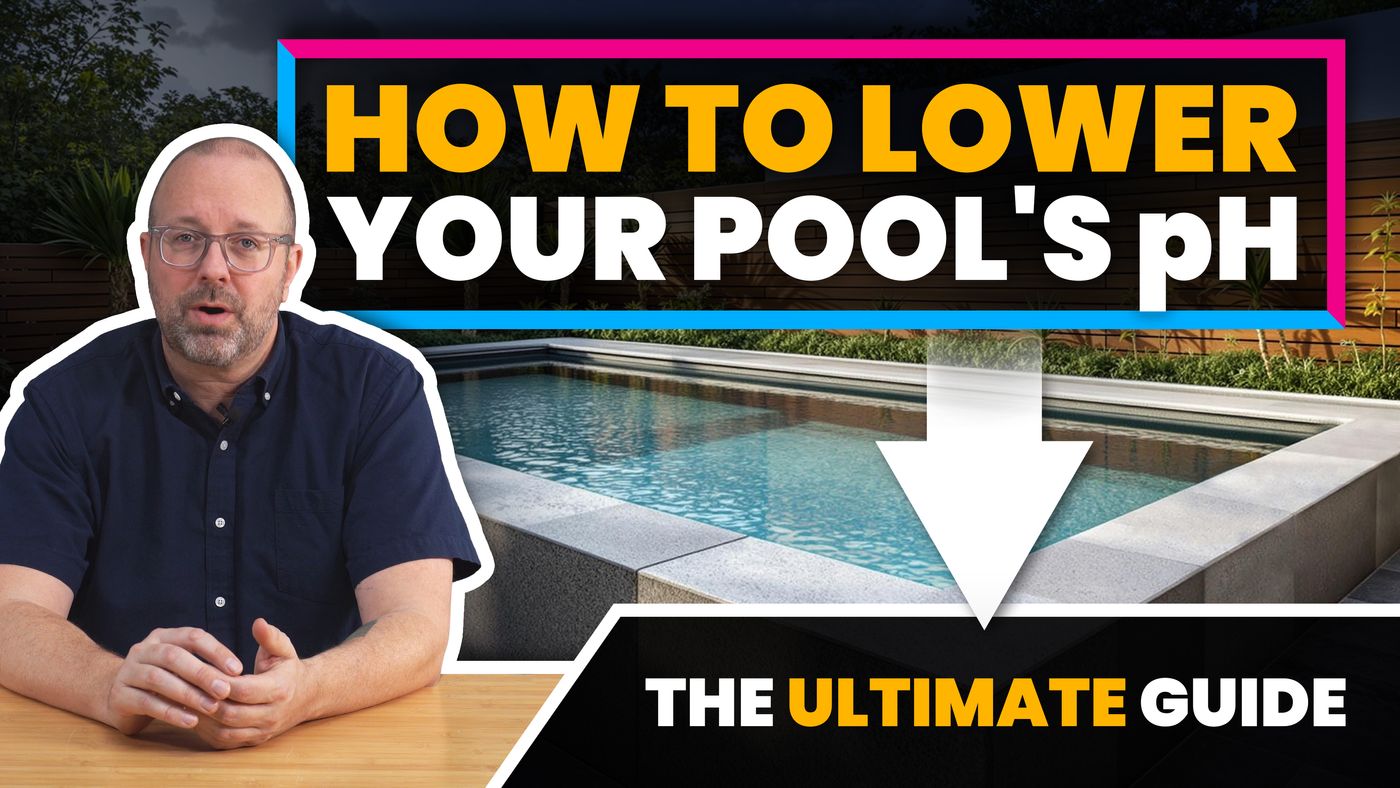
Welcome back to The Pool Nerd. I'm Justin, your resident pool aficionado. And today, we're talking about pH, how to lower it, why it matters, and what you'll need to fix it.
If your pool's pH is too high, you've got a problem—and it's costing you way more than you realize. High pH doesn't just make your water uncomfortable. It's destroying your chlorine's effectiveness and wasting your money on chemicals that aren't doing anything.
So, let's dive into why it matters, how to fix it, and what you'll need. Along the way, I'll give you tips on how to save money on chlorine as well.
Lowering pH: What You Need Checklist
Muriatic acid is the workhorse; a drop kit confirms pH and TA so you don’t overshoot.

Taylor K-2005 Test Kit
What it is: A professional drop (titration) kit for chlorine, pH, alkalinity, calcium hardness, and cyanuric acid.
Why you need it: You can’t SLAM or balance blind—especially CYA, which handcuffs chlorine. This kit gives numbers you can trust, not strip guesswork.

Ondilo ICO Pool Water Monitor
What it is: A floating smart monitor that samples pH, ORP (sanitizer effectiveness), and temperature on a schedule and sends trends to your phone.
Why you need it: You still need a real drop kit for parameters the ICO doesn’t replace (like TA and CYA), but hourly ORP/pH catches drift and dosing mistakes long before weekly strip checks do.

Champion Muriatic Acid
What it is: Dilute hydrochloric acid—standard for lowering pH and, with the right method, total alkalinity.
Why you need it: High pH destroys chlorine efficiency. Always follow the label; never mix acid with chlorine.

In The Swim pH Reducer (dry acid)
What it is: Sodium bisulfate (dry acid)—lowers pH (and can pull TA down when used in controlled steps).
Why you need it: Easier to handle and store than jugs of muriatic acid for small, precise corrections; still an acid—never mix with chlorine, follow the label, and retest after circulation.
Pool pH Calculator
Already know your numbers? Enter your pool details below for exact chemical dosing based on your pool size and current pH reading.
Why pH Is The Most Important Number In Your Pool
Here's the thing most pool owners don't understand: pH controls everything.
You can dump chlorine into your pool all day long, but if your pH is off, that chlorine is basically useless. This isn't an exaggeration either — it's chemistry.
The relationship between pH and chlorine is logarithmic.
At a pH of 7.0, your chlorine operates near peak effectiveness.
At a pH of 7.5, chlorine drops to about 50% effectiveness. You just lost half of your sanitizing power.
At a pH of 8.0, chlorine is only about 20% effective. You're throwing money into your pool and watching it do nothing.
Let that satisfying sink in. A pH swing of just one point can cost you 80% of your chlorine's killing power. That means that at higher pH levels, you'll need 3-5x MORE chlorine for it to be just as effective as it would've been at a lower pH.
This is why most pool owners over-chlorinate by 200-300%. They keep dumping in more chlorine trying to fix cloudy water or algae, when the real issue is pH. Fix the pH, and suddenly chlorine works exactly like it should.
Ideal pH: 7.0-7.2. That's where chlorine works best. Most pool industry advice says 7.4-7.6 is fine—in my opinion, that's outdated. Olympic pools and commercial aquatic centers target the lower end because they understand the chemistry behind maintaining a pool. If it's good enough for Olympic facilities, it's good enough for your backyard. I break down the science behind this in my full guide on the ideal pool pH level.
What Happens When pH Climbs Too High?
Chlorine stops working. At pH 8.0, your chlorine is barely doing anything. You'll burn through chemicals and your water still won't be properly sanitized.
Cloudy water. High pH causes calcium and minerals to fall out of solution, creating that hazy look no amount of clarifier will fix. If you're already dealing with this, check out my guide on how to clear cloudy pool water.
Scale buildup. Calcium deposits form on your tile, inside your pipes, on your heater elements, and in your salt cell if you have one. Replacing a heater costs thousands. A scaled-up salt cell? Another few hundred dollars.
Skin and eye irritation. High pH water feels slippery and causes itching, dryness, and red eyes. Most people blame chlorine, but it's usually pH.
What Causes High pH?
Outgassing. Your pool water naturally contains dissolved carbon dioxide that keeps pH down. When CO2 escapes—through water features, spillovers, jets pointed upward, or surface agitation—pH rises. The more aeration, the faster pH climbs.
Salt chlorine generators. If you have a salt pool, your cell produces sodium hypochlorite with a pH around 13. Every time it runs, it pushes pH upward. Salt pool owners need acid far more frequently.
High total alkalinity. When TA is above 120 ppm, it tends to push pH upward over time. If you're constantly battling high pH, check your alkalinity first. Use our pool alkalinity calculator to figure out exactly how much acid you need to bring TA down.
Your fill water. Municipal water is often treated to be slightly alkaline (pH 7.5-8.5). Every time you top off, you might be adding high-pH water.
How To Test Your pH
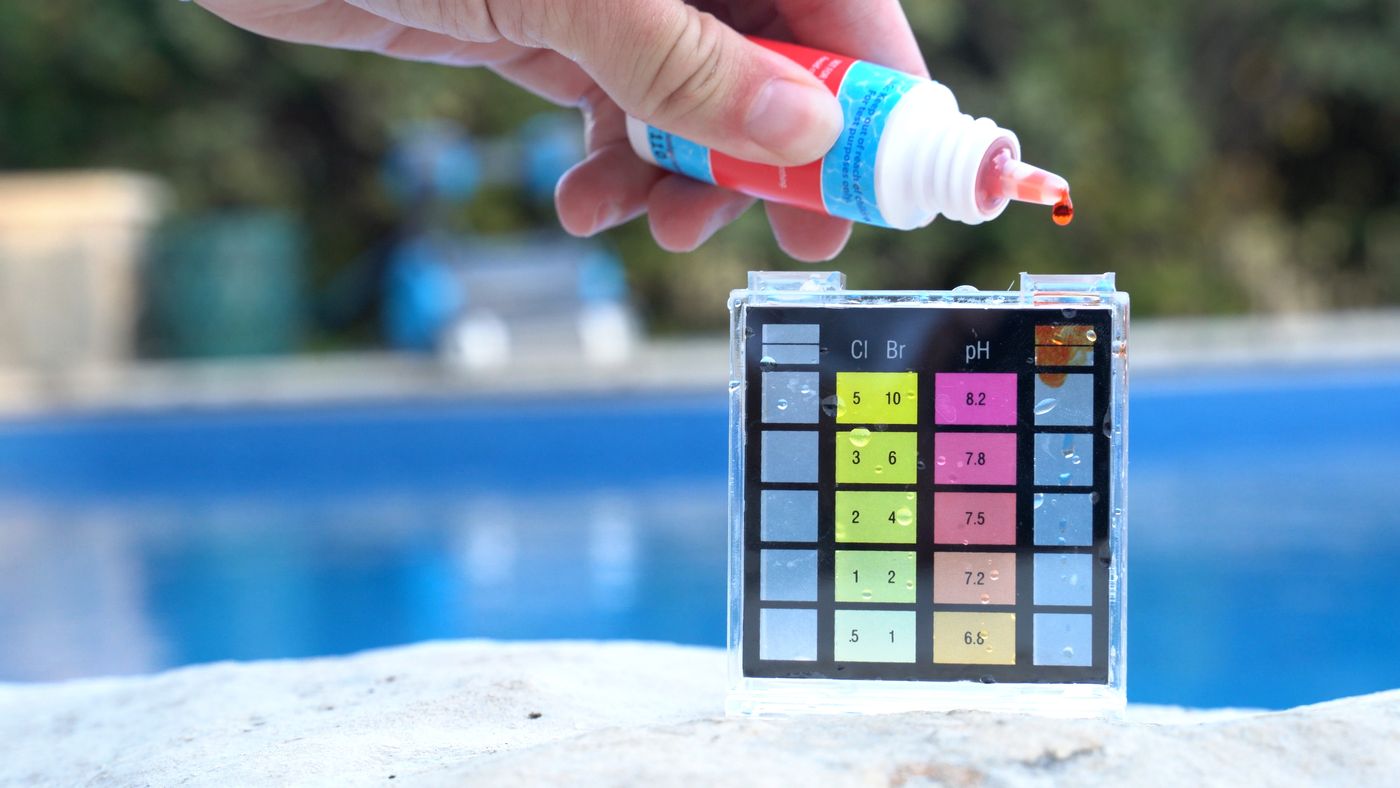
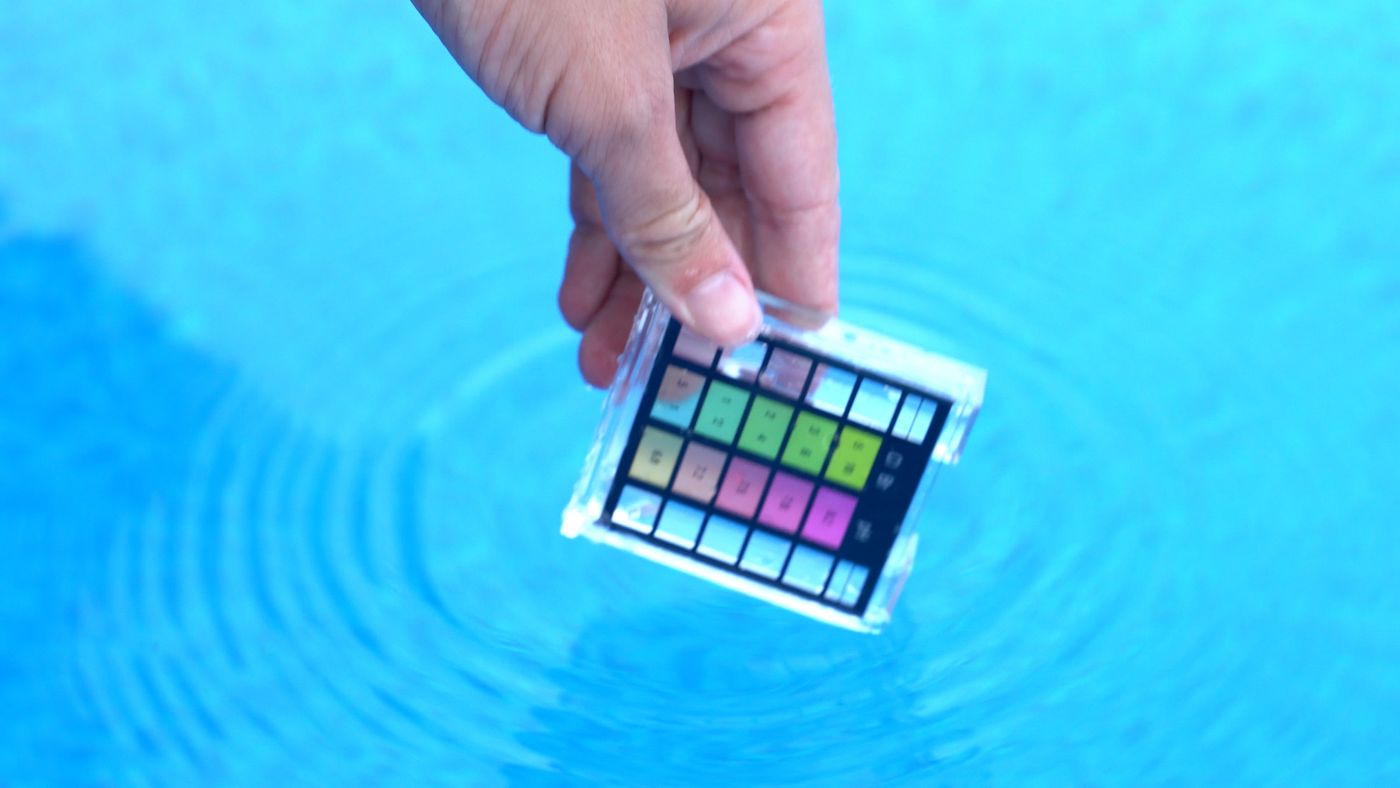
Test strips are cheap but least accurate. Fine for a quick check, not for precise adjustments.
Liquid test kits like the Taylor K-2006 (or the K-2006 Salt for salt pools) are better—the gold standard for serious pool owners.
Digital testers give precise numerical readings but require calibration.
Smart pool monitors—this is what changed the game for me.
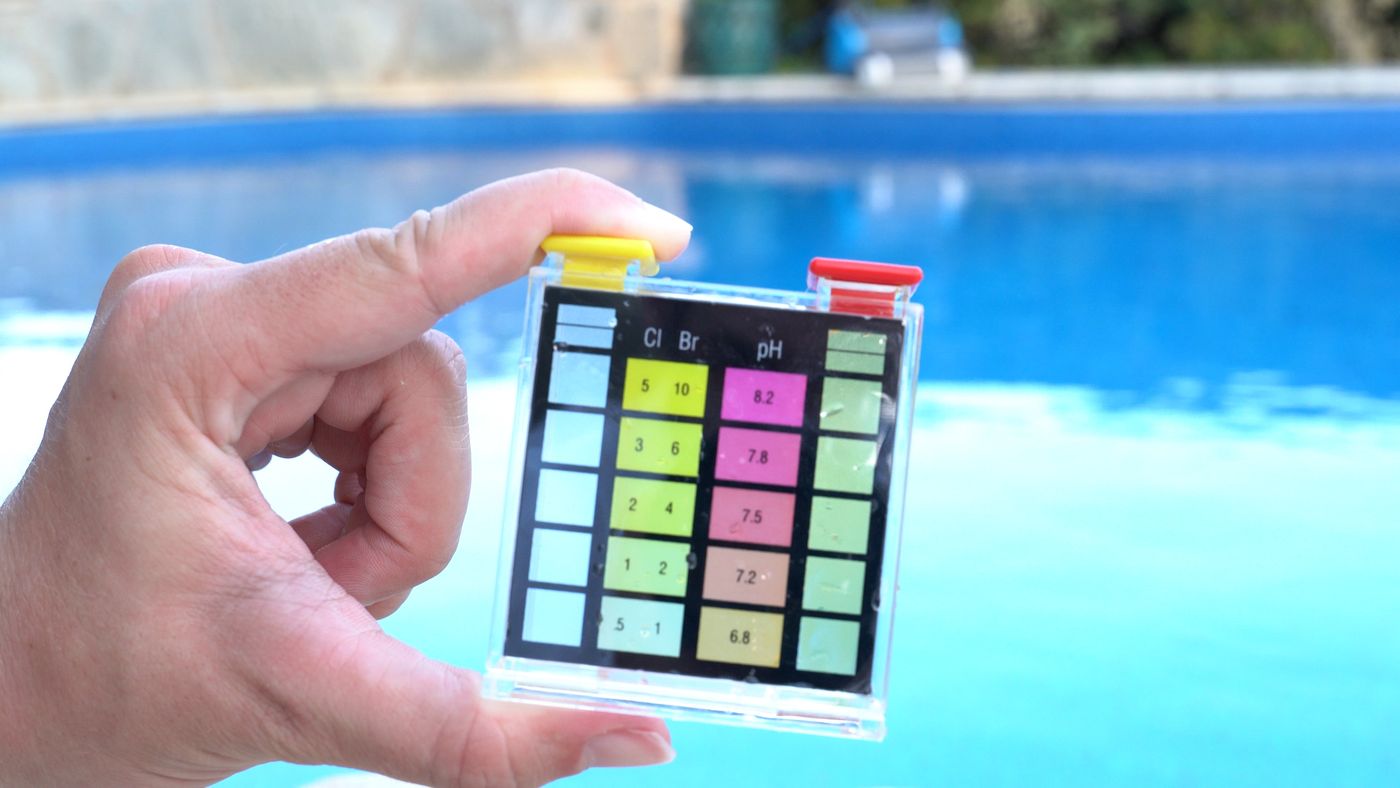
We use the Ondilo ICO, which sits in our test pool and measures pH every hour, sending data straight to my phone. No more guessing, no more weekly testing that misses what happened Tuesday. I see exactly when pH starts climbing and catch it before it becomes a problem.
The ICO also tracks ORP (Oxidation-Reduction Potential), which tells you how effectively your chlorine is actually working. Watch your pH climb from 7.2 to 7.6, and you'll see your ORP drop in lockstep. It's eye-opening. And worth every penny.
The best part? It helps tell you how much acid to add based on your pool size and current readings. No guesswork. If you want to learn more about ORP, why pH matters so much, and check out the ICO pool water monitor – go to their website at mysmartpool.com.
Read our full review: ICO Pool Water Monitor Review
What You Need To Lower pH
There are two things that you can use to lower pH. Quick links live in the what you need checklist earlier on this page. Muriatic acid or dry acid. Let's dive into each of them.
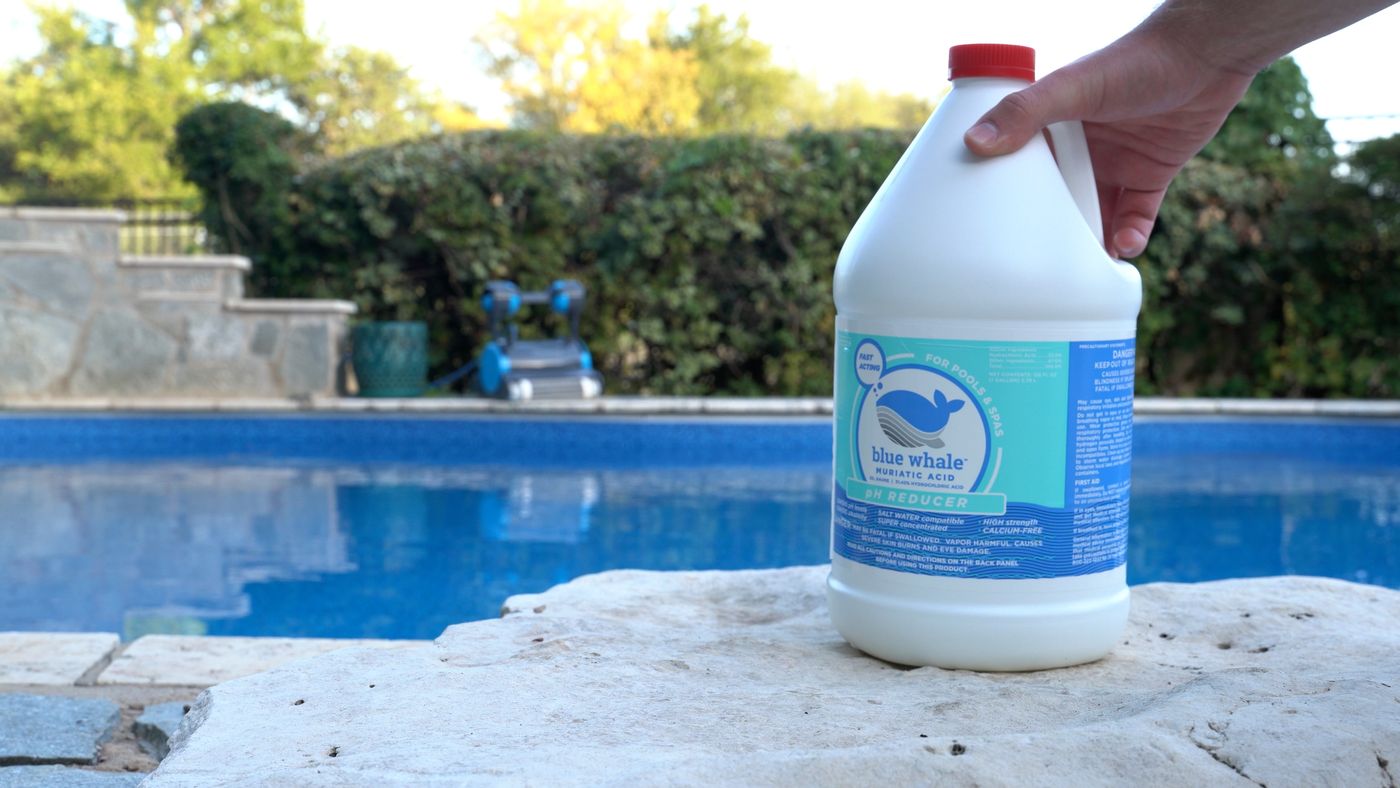
Muriatic Acid — My Preferred Choice
It's powerful, fast-acting, and cost-effective. It is acid in a liquid form and usually sold by the gallon. About $10-15 per gallon at any hardware store. It's what the pros use, and what we use.
Pros: Works immediately, very economical, precise control, doesn't add anything else to your water.
Cons: Produces fumes— you'll want to add in a well-ventilated area. It can damage surfaces if poured directly. It requires careful handling, so make sure to read the instructions, wear eye protection, and wear gloves. You'll ALWAYS want to add acid before chlorine.
Dry Acid (Sodium Bisulfate)
Comes in granular form, easier to handle, no strong fumes.
Pros: Safer to handle and store, easier to transport.
Cons: More expensive per pH point lowered, adds sulfates that build up over time.
For regular pH management, muriatic acid is what I would go with.
The "Golden Rule" of Safety: Never Mix Chemicals
Before we go any further, we have to talk about safety. Muriatic acid is a powerful chemical that can cause permanent injury if you don't respect it. There are two rules you must follow to protect yourself and your pool.
1. The "AA" Rule: Add Acid to Water
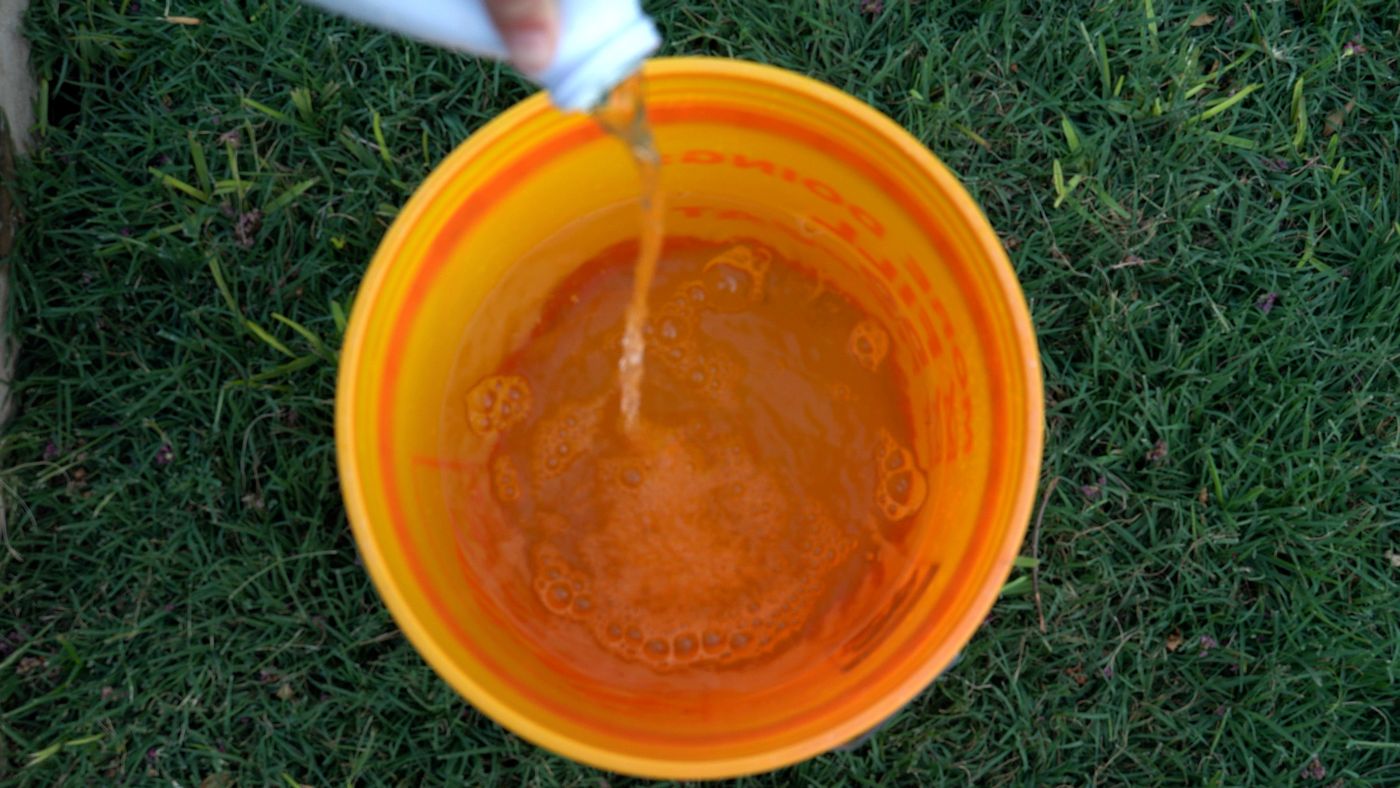
When diluting acid, ALWAYS add the acid to the water. Never, under any circumstances, pour water into a bucket of acid.
The Danger: Adding water to acid can cause a violent exothermic reaction, causing the acid to splash or "volcano" out of the bucket and onto your skin or eyes.
Pool Nerd Tip: Think A&W (like the root beer)—Acid into Water.
2. The "Deadly Cloud" Warning: Never Mix Acid AND Chlorine
This is the big one. Never mix muriatic acid and chlorine. Even a few drops of these two mixing in a bucket—or even their fumes meeting in a storage shed—creates chlorine gas that can seriously injure or even kill you.
The Injury: Breathing this gas can cause immediate respiratory distress, fluid in the lungs, and permanent lung damage.
The Protocol: If you are shocking your pool and lowering your pH on the same day, add the acid first, let the pool circulate for at least 30–60 minutes, and then add your chlorine. Never pour them into the pool at the same time or in the same spot.
3. Proper Safety Protection
Muriatic acid produces a "smoking" fume that can burn your throat and lungs.
Stay Upwind: Always stand so the wind is at your back, blowing the fumes away from your face.
Gear Up: Wear chemical-resistant gloves and safety goggles. One splash in the eye can cause blindness. If you do get it on your skin, rinse immediately with fresh water for at least 15 minutes.
How Much Acid Do You Need?
Typically, for muriatic acid (31.45%) to lower pH by about 0.2 points:
- 10,000 gallons: approximately 6-8 oz
- 15,000 gallons: approximately 10-12 oz
- 20,000 gallons: approximately 12-16 oz
This is just a general starting point. For exact dosing based on your pool size and current readings, use our pool pH calculator or the more detailed pool acid calculator. Don't know your pool's volume? Start with our pool volume calculator.
Always follow the instructions. And always add less than you think you need, wait, retest, and add more if necessary. You can always add more—you can't take it out.
How To Lower pH
Test your water first. You have to know your starting pH.
Turn on your pump. Your pool should be circulating before, during, and after.
Add acid to the deep end. Slowly pour while walking along the edge to distribute it. Keep it away from skimmers, returns, and metal fixtures.
Let it circulate overnight.
Retest the next day and adjust if needed.
Never pour acid directly onto pool surfaces. It can etch plaster, bleach vinyl, and damage grout. Always add to moving water.
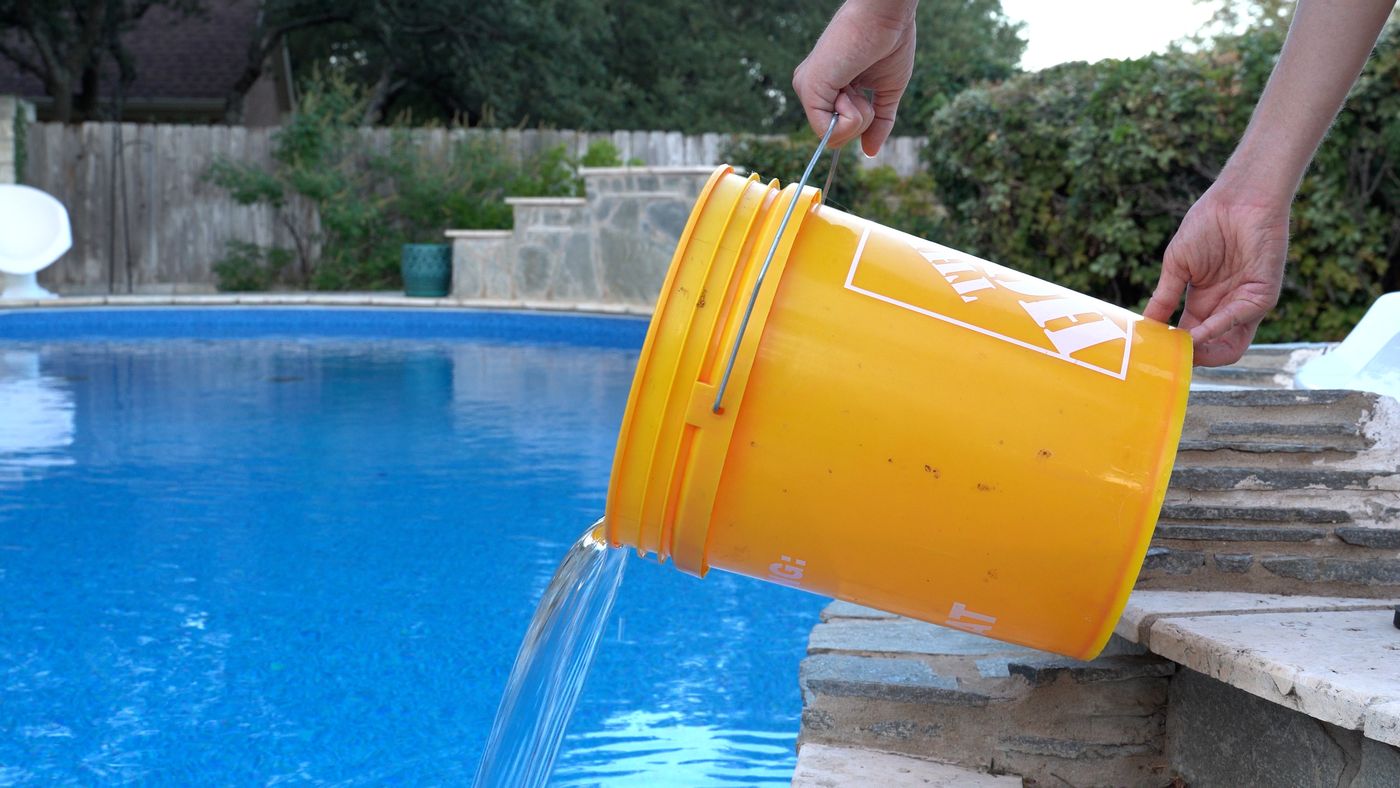
For vinyl or fiberglass pools, pre-dilute: fill a bucket 3/4 with pool water, slowly add the acid, then pour the diluted solution near a return jet.
Why Your pH Keeps Climbing (And How To Stop It)
If you're adding acid every few days and pH keeps bouncing back, address the root cause:
Reduce aeration. Point return jets downward. Turn off water features when not using them.
Lower your total alkalinity. If TA is above 120 ppm, bring it down to 80-100 ppm. This usually requires larger acid doses over time. Our alkalinity calculator walks you through the acid-and-aerate method.
Consider UV sanitation. Here's something most pool owners don't think about: reducing your chlorine reliance can reduce your pH battles.
SpectraLight UV systems use high-intensity ultraviolet light to destroy pathogens, algae, and organic matter—the same technology used in Olympic pools and over 200 commercial aquatic centers. When UV handles sanitation, you can run much lower chlorine levels and keep the same level of effectiveness.
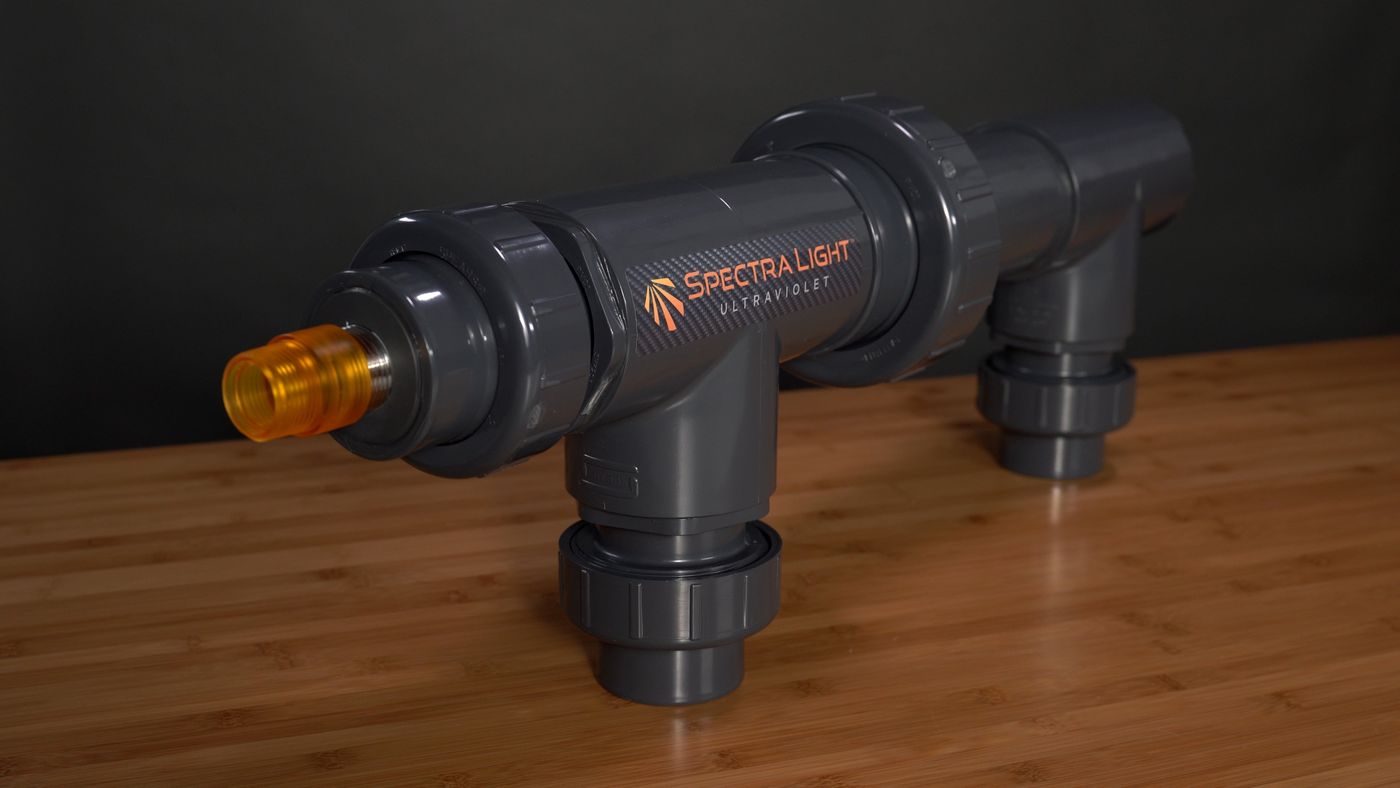
Why does this help pH? When you're using less chlorine, you remove one of the biggest pH-raising factors. UV also destroys chloramines (the stuff that causes "chlorine smell," red eyes, and skin irritation) without adding chemicals. Better water quality, lower chemical costs, fewer chloramine problems, and more stable pH. That's a lot of wins from one upgrade.
Read our full review: SpectraLight UV Review
Frequently Asked Questions
How often should I check pH?
Twice a week minimum during swimming season. But pH can swing significantly in 24-48 hours. Continuous monitoring with something like the ICO beats weekly testing every time. For a complete testing schedule, check out my weekly pool maintenance guide.
Can I use vinegar to lower pH?
Technically yes—but don't. You'd need absurd quantities, and you'd add organic compounds that feed bacteria and algae. Stick with muriatic acid or dry acid.
What if I add too much acid?
Low pH (below 7.0) is corrosive and can damage plaster, metal, and equipment. If you overcorrect, raise pH with sodium carbonate (soda ash)—I cover exactly how in my guide on how to raise your pool's pH. This is why I recommend adding less than you think and retesting.
Why does pH rise overnight with no one swimming?
Outgassing. Your pool constantly loses dissolved CO2, especially with any surface water movement. That CO2 loss removes acidity, causing pH to rise. Point returns downward and minimize unnecessary water features.
Final Verdict
pH management isn't glamorous, but it's the foundation of everything else. Get this right, and your chlorine works, your water stays clear, your equipment lasts longer, and you spend less on chemicals.
The biggest upgrades you can make:
- Monitor continuously with a smart device like the ICO
- Target 7.0-7.2 pH instead of the outdated 7.4-7.6 range
- Address root causes like high alkalinity or excessive aeration
- Consider UV sanitation with SpectraLight to reduce chemical load and stabilize chemistry
Your pool is an investment. Treat the water right, and everything else gets easier. For a complete walkthrough of how pH fits into your full water balance, check out our pool chemistry calculator, which covers all five key parameters in the correct adjustment order. Then use the pool LSI calculator to confirm the combined readings are not scale-forming or corrosive.
The information is for educational purposes only. Handling pool chemicals, specifically muriatic acid, involves significant risk of injury or property damage. Always read the manufacturer's labels and MSDS sheets. Use this information at your own risk.
If you want to look into a pool water monitor like the ICO or UV system like the SpectraLight, head on over to my deals page at ThePoolNerd.com/Deals, where I post all the best deals on top pool equipment and more.
Until then, enjoy that pool—I'll see you next time.


Comments
Loading comments…