Introduction
Hey there, I'm Justin, your resident pool aficionado. And today, I'm talking about opening your inground swimming pool. A lot of people get confused about how to do this — but opening your pool doesn't have to be hard. And that's why I'm here to help.
It is a sequence. You can't do it in any random order. Most pool owners skip steps, do things out of order, or dump chemicals in before the water is circulating — then wonder why they're still fighting cloudy water three weeks into pool season.
Here's the thing: follow these 6 steps in order and you'll be swimming in no time. Skip around and you'll still be fighting a green swamp into June.
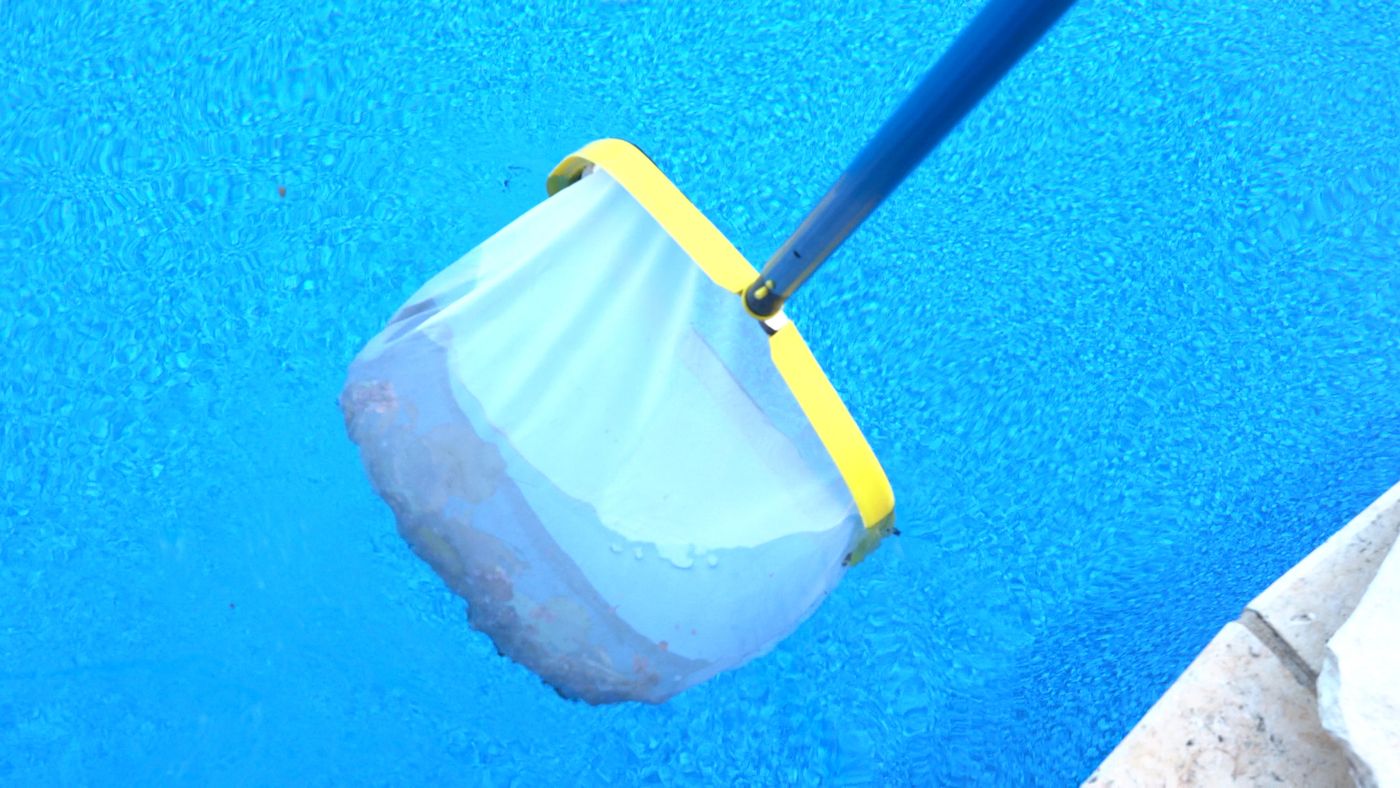
Opening Your Pool: What You Need Checklist
Shock + balance (pH/TA) + CYA-aware chlorine plan—test before you dump so opening weekend isn’t a chemistry roulette.
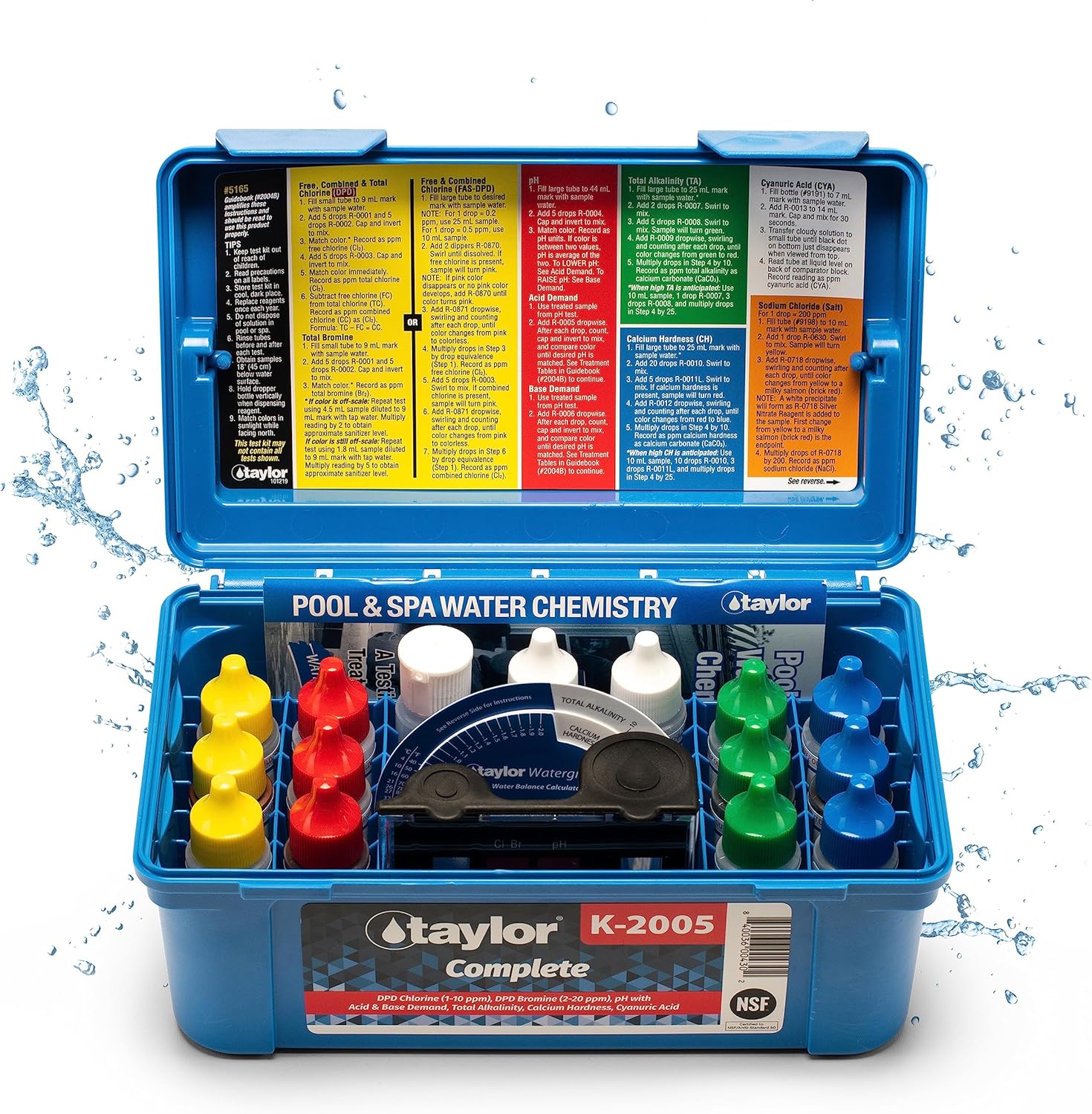
Taylor K-2005 Test Kit
What it is: A professional drop (titration) kit for chlorine, pH, alkalinity, calcium hardness, and cyanuric acid.
Why you need it: You can’t SLAM or balance blind—especially CYA, which handcuffs chlorine. This kit gives numbers you can trust, not strip guesswork.
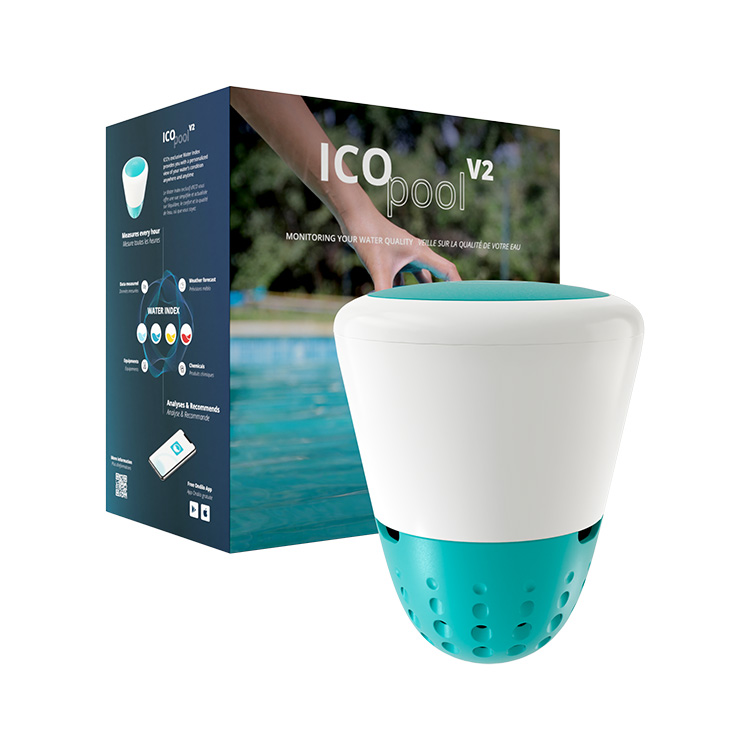
Ondilo ICO Pool Water Monitor
What it is: A floating smart monitor that samples pH, ORP (sanitizer effectiveness), and temperature on a schedule and sends trends to your phone.
Why you need it: You still need a real drop kit for parameters the ICO doesn’t replace (like TA and CYA), but hourly ORP/pH catches drift and dosing mistakes long before weekly strip checks do.
Read the full ICO review — Shop ICO direct (no Amazon listing for the hardware we run).
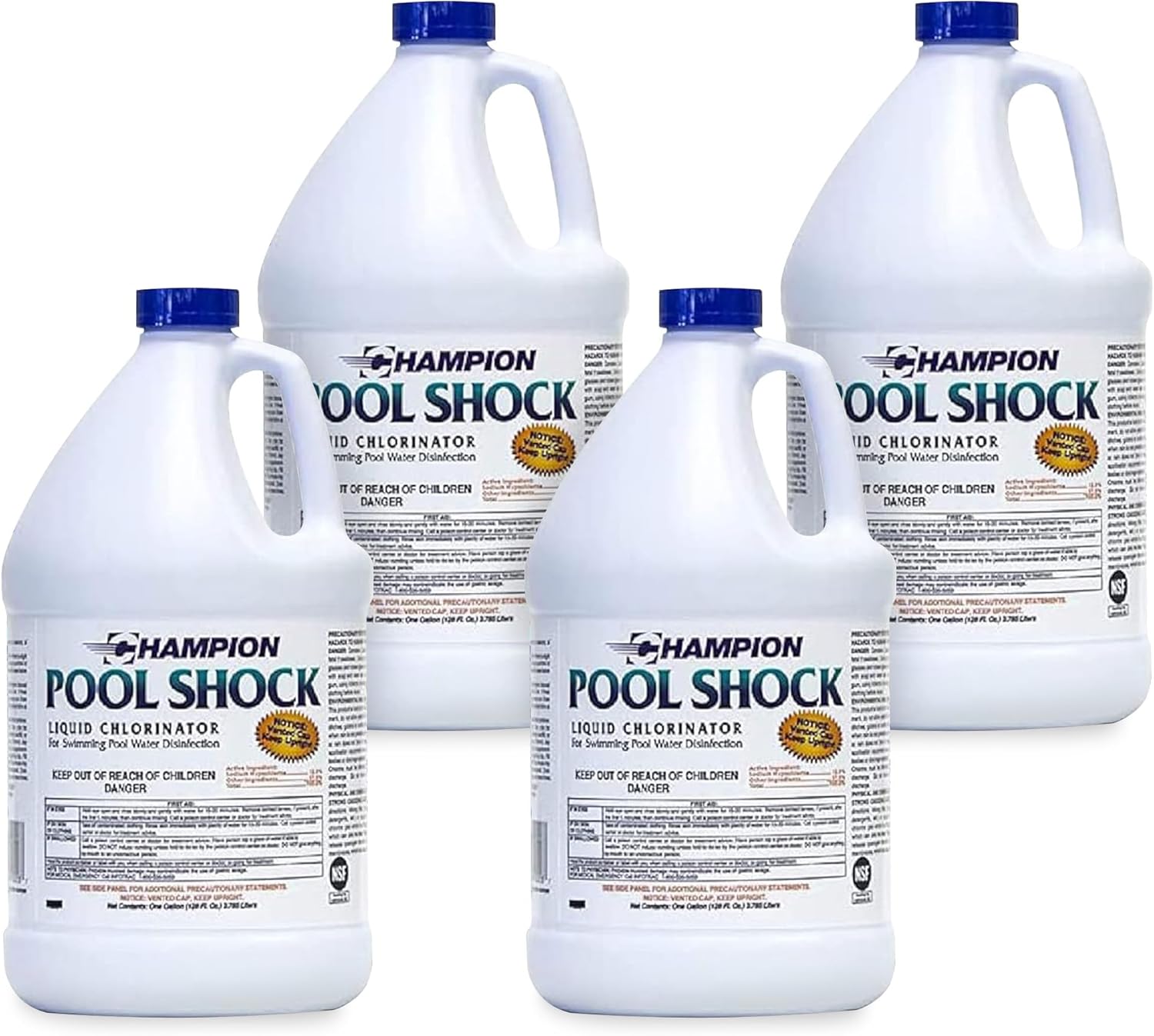
Champion Pool Shock (4 Pack)
What it is: A case of liquid pool chlorine (sodium hypochlorite)—not cal-hypo granules. Confirm strength on the listing and jug label (often around 10–12.5%).
Why you need it: Same upside as other liquid shock: no CYA from the product, easy to pour with the pump running—useful to keep stocked for openings, algae pushes, storms, or parties.
How to use: Treat it like any liquid shock (pour with circulation; big doses still work best at dusk). Store cool and shaded; opened jugs lose strength over time—plan to use them within a few weeks.
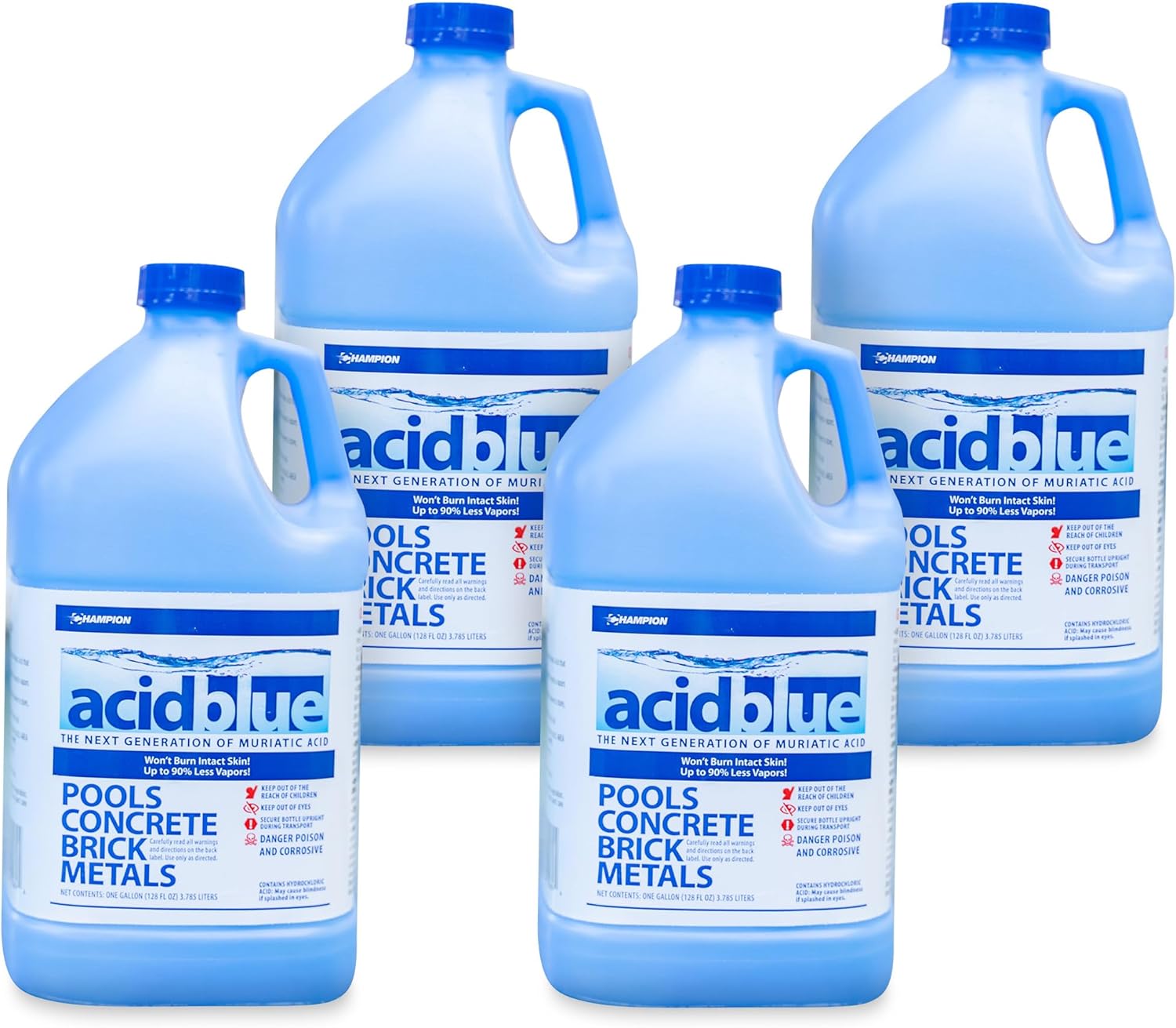
Champion Muriatic Acid
What it is: Dilute hydrochloric acid—standard for lowering pH and, with the right method, total alkalinity.
Why you need it: High pH destroys chlorine efficiency. Always follow the label; never mix acid with chlorine.
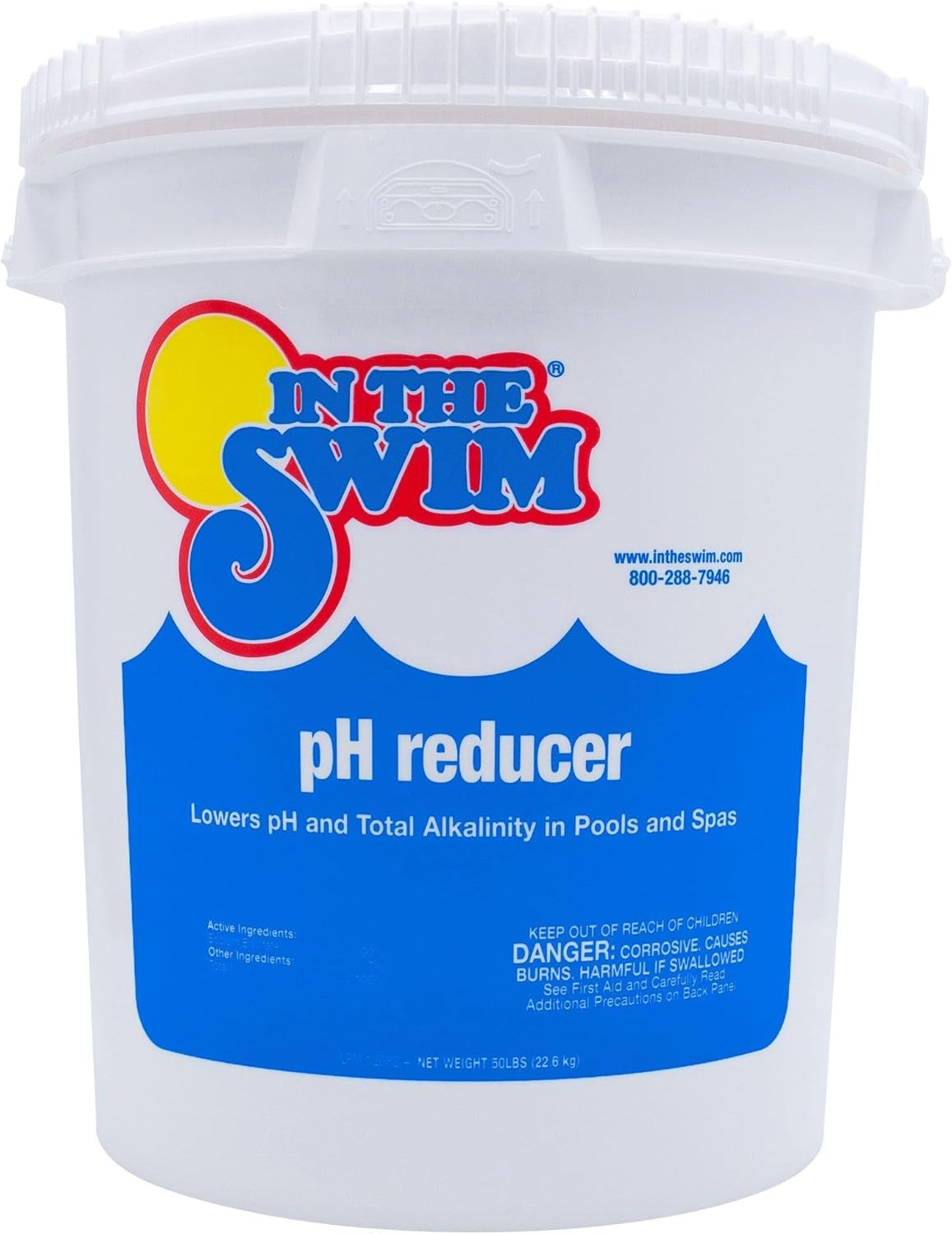
In The Swim pH Reducer (dry acid)
What it is: Sodium bisulfate (dry acid)—lowers pH (and can pull TA down when used in controlled steps).
Why you need it: Easier to handle and store than jugs of muriatic acid for small, precise corrections; still an acid—never mix with chlorine, follow the label, and retest after circulation.
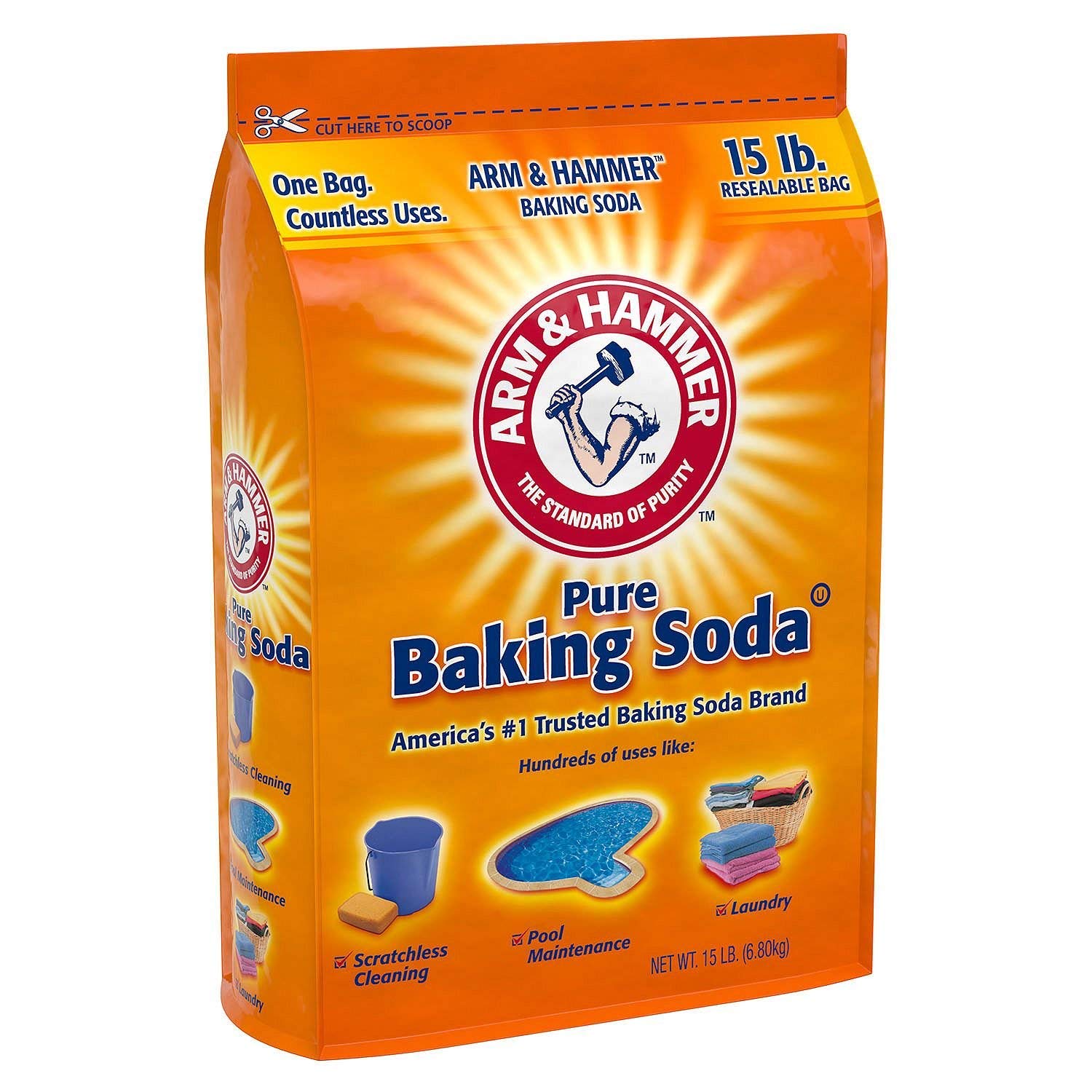
Baking soda (alkalinity increaser)
What it is: Sodium bicarbonate—the same compound as pool-store “alkalinity increaser.” Arm & Hammer 15 lb is a practical mid-size bag; USP pure 50 lb bucket is the usual pick when you want the lowest $/lb; grocery or pool-store bags work if the label is plain bicarbonate.
Why you need it: It raises total alkalinity with a gentler pH bump than soda ash. Do not use soda ash here if you only need TA up.
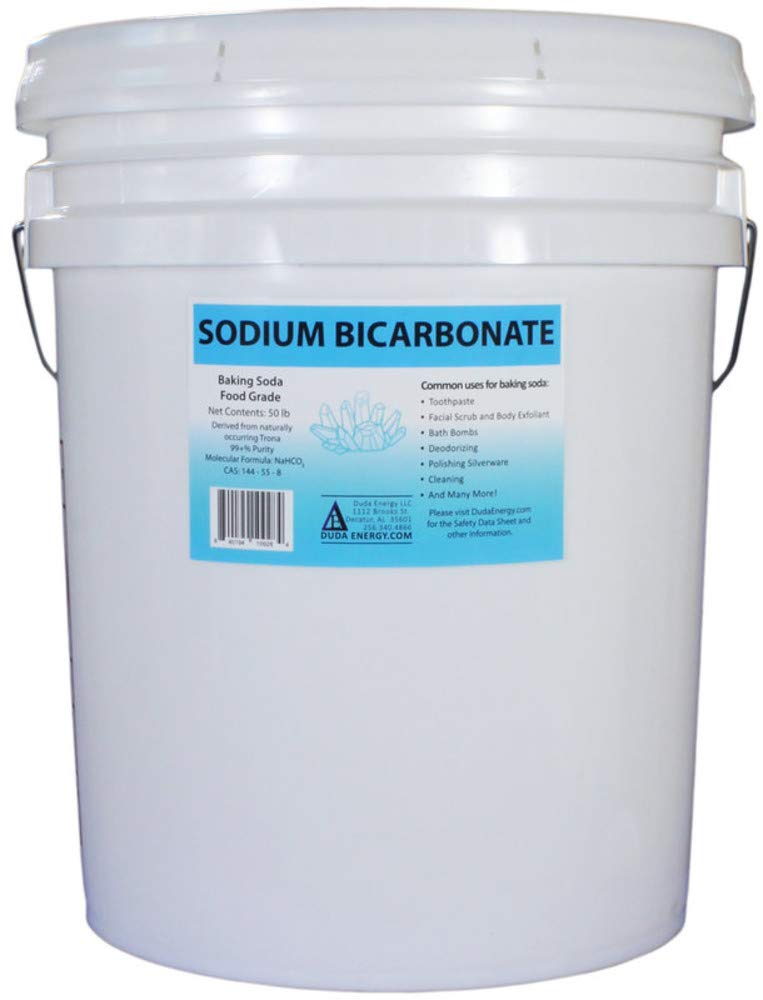
USP Pure Baking Soda (50 lb bucket)
What it is: Sodium bicarbonate in a large sealed bucket—often labeled USP/food-grade pure bicarbonate.
Why you need it: When you correct TA often or run a big pool, the cost per pound usually beats small retail boxes. Same dosing rules as any pure bicarbonate: add in stages, circulate, and retest.
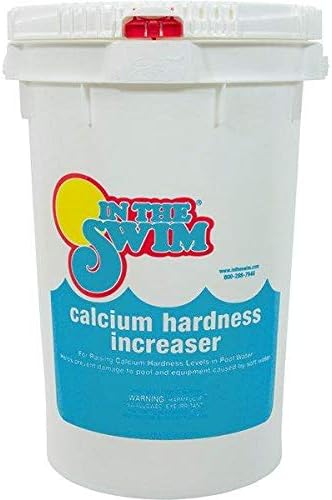
In The Swim Calcium Chloride (hardness increaser)
What it is: Calcium chloride—raises calcium hardness (CH) without messing with CYA the way some other products can.
Why you need it: Plaster and equipment are happier when CH sits in range; very soft fill water, new plaster, or winter dilution often needs a bump. Test CH before you dose.
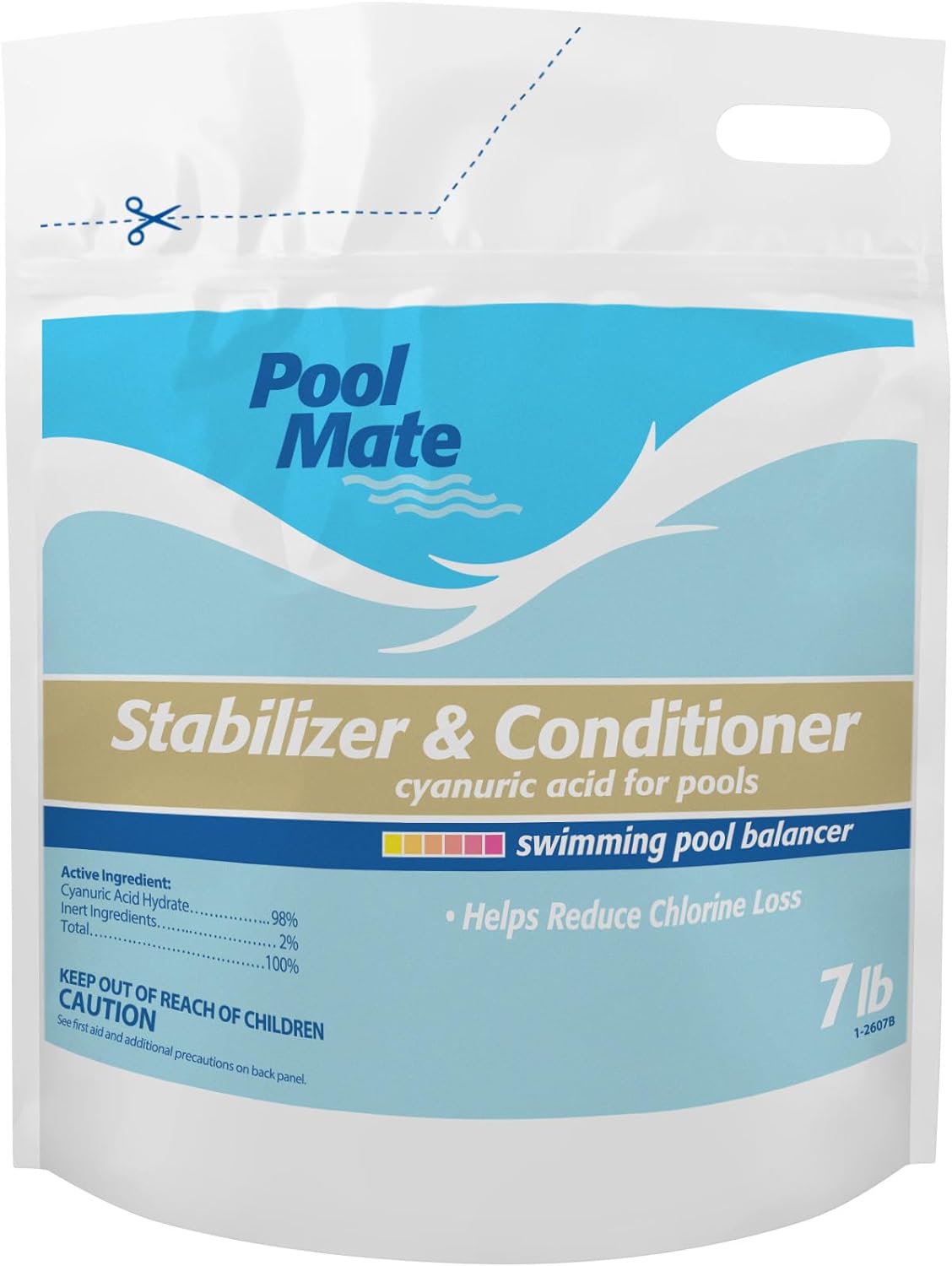
Pool Mate 7 lb Cyanuric Acid Stabilizer
What it is: Granular CYA (chlorine stabilizer)—protects free chlorine from sunlight.
Why you need it: New fills, heavy rain dilution, or unstabilized liquid programs often land below ~30–50 ppm CYA; without it, the sun burns chlorine fast. Add slowly per label (skimmer or predissolve) and retest after circulation.
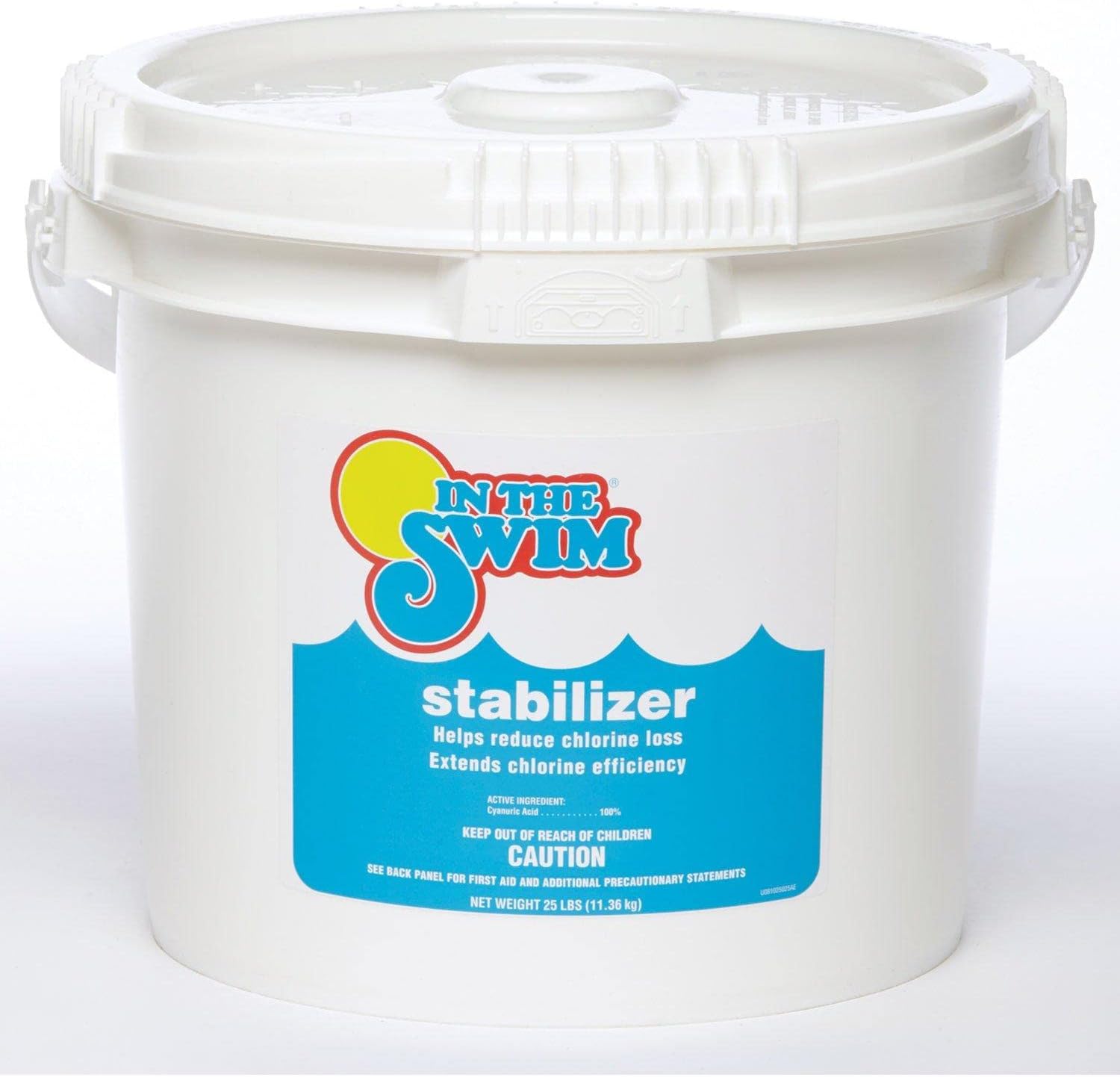
In The Swim Cyanuric Acid Stabilizer (25 lb)
What it is: Bulk granular stabilizer for larger pools or owners who prefer fewer restocks.
Why you need it: Same job as smaller bags—raise CYA into range so daily chlorine survives UV. Weigh or measure carefully; CYA is hard to remove without dilution.
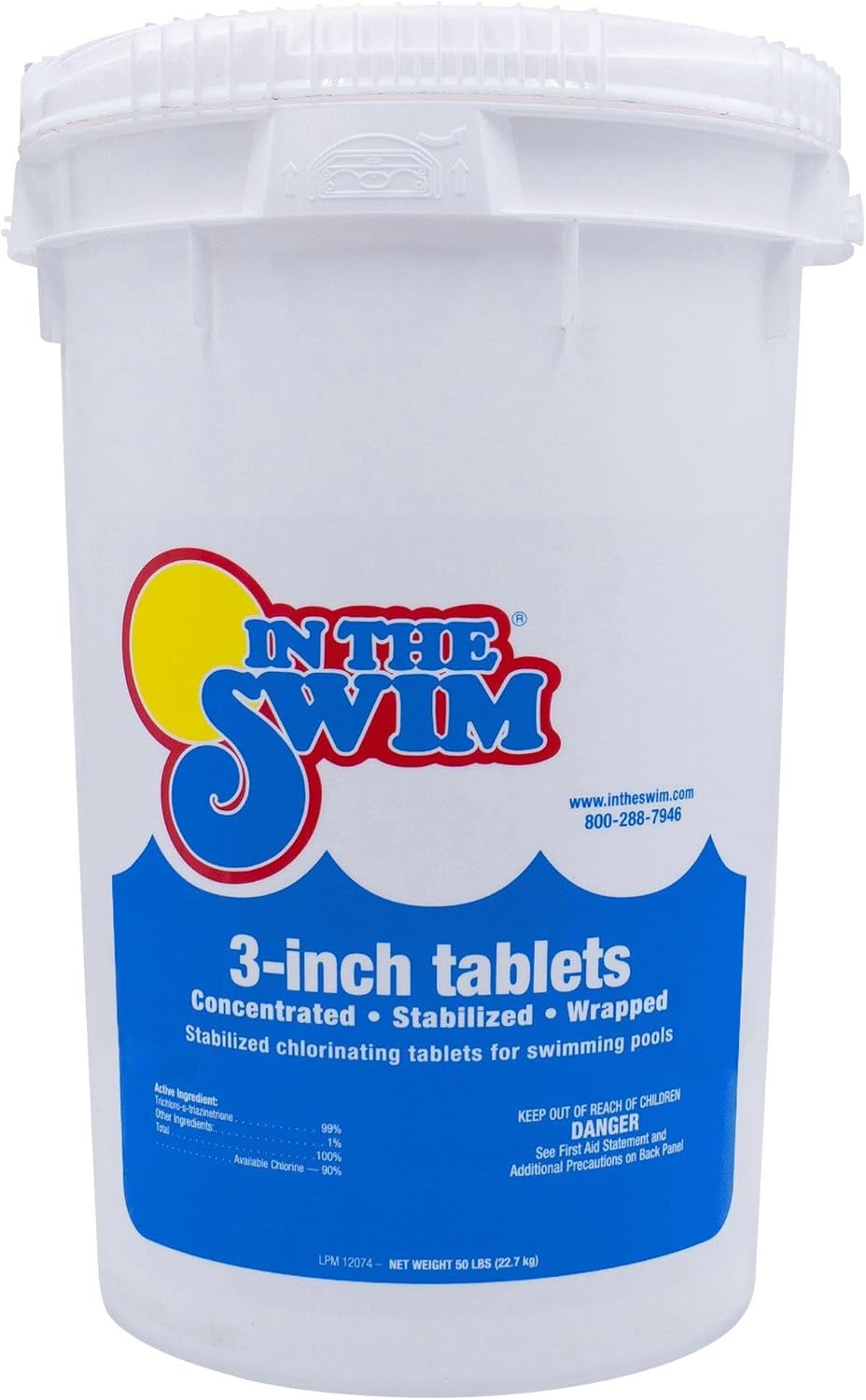
In The Swim 3" Chlorine Tablets
What it is: Slow-dissolving sanitizer pucks (usually trichlor) for feeders/floaters—adds CYA over time.
Why you need it: Fine for steady maintenance when CYA isn’t already high; back off if CYA creeps up.
What You Need
Get everything together before you pull the cover. The what you need checklist above has quick shop links; below is the full checklist so nothing gets missed.
Water Testing Equipment
-
Smart Water Monitor — this is your primary testing tool. You want one that is ORP-based, because ORP tells you how effective your sanitizer actually is—not just how much chlorine is in the water. Two pools can have the same chlorine level but completely different ORP, which means one is clean and one isn't. We use the ICO in our test pool, which continuously tracks ORP and pH every hour and pushes alerts directly to your phone so you're not guessing or reacting too late. I have a full review on it if you want to check it out. Or you can learn more at mysmartpool.com
-
Handheld digital ORP meter — your second option if you prefer a manual approach. It still gives you accurate ORP readings so you know how well your sanitizer is working, but you'll need to test it yourself regularly instead of having continuous monitoring
-
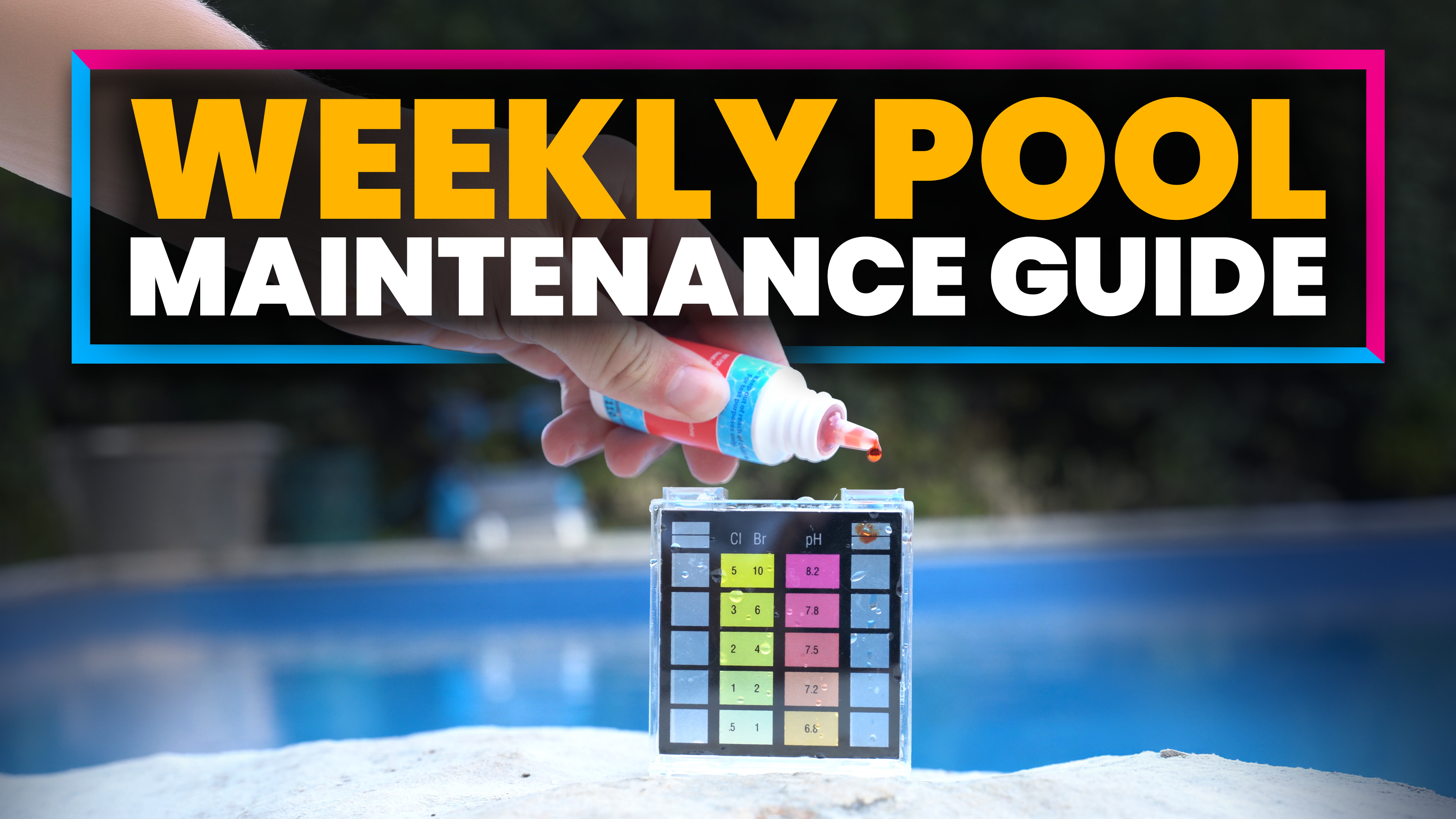
Taylor K-2005 liquid test kit — use this as a backup for alkalinity, calcium hardness, and CYA readings that your ORP sensor or smart monitor doesn't cover
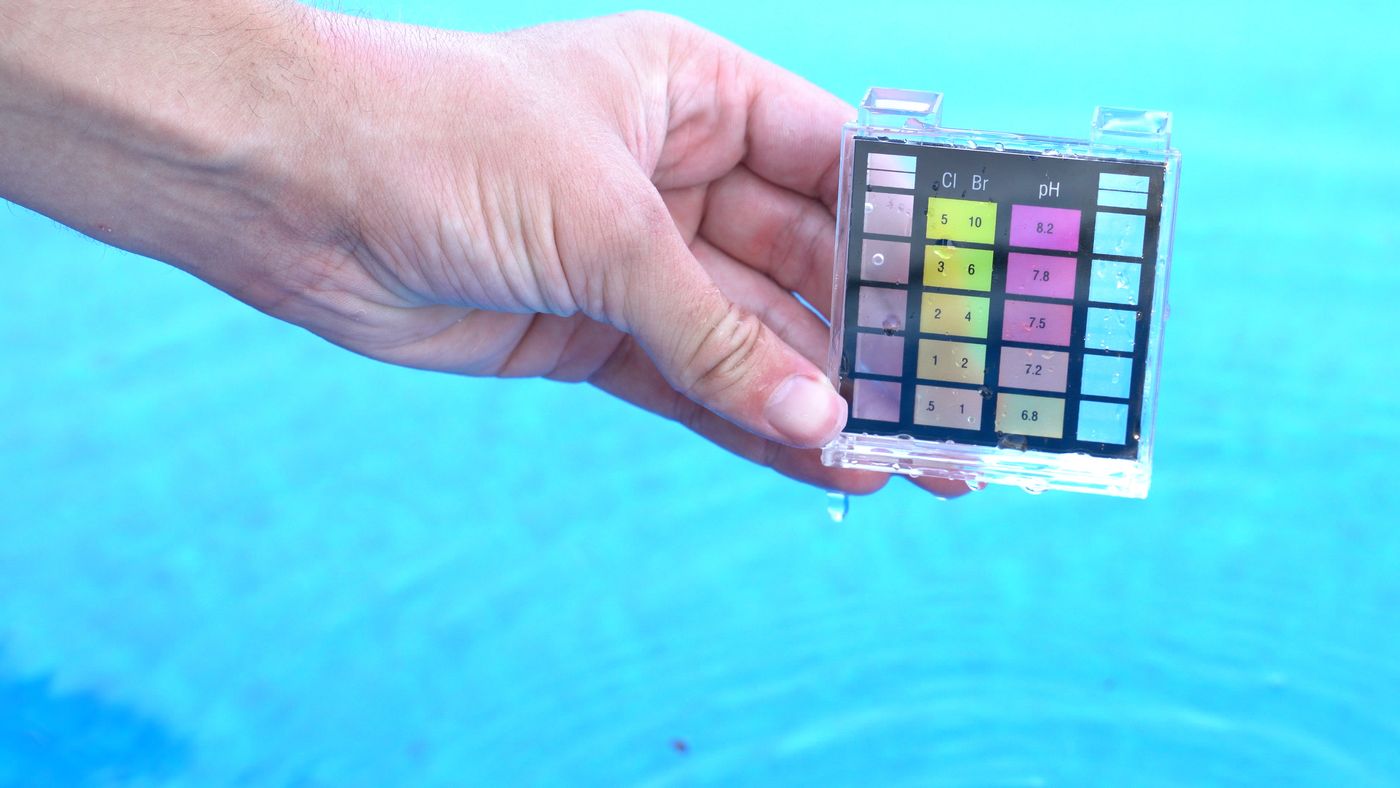
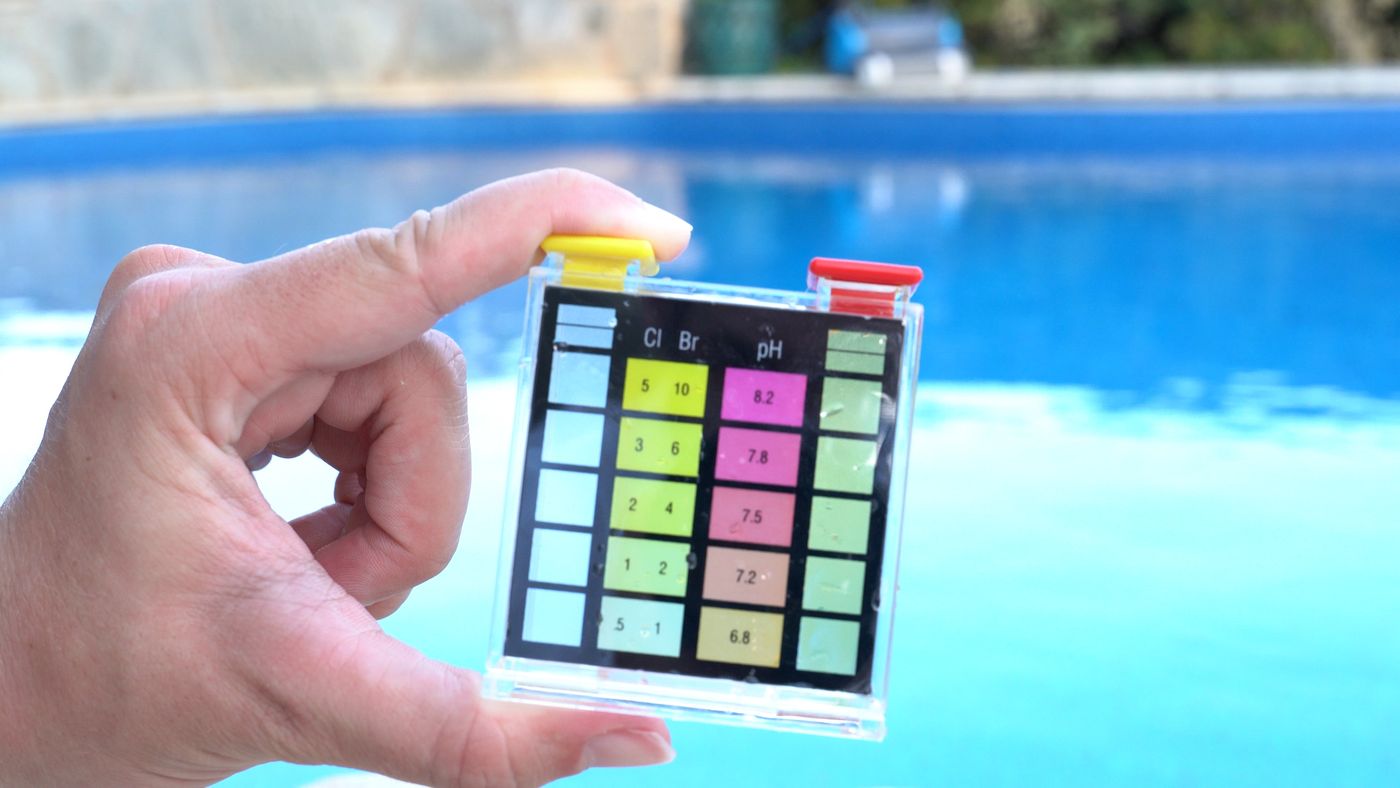
A quality test kit is essential for pool opening // The Pool Nerd
Cleaning Tools
- Leaf net, pool brush, and a pool pole
- Manual vacuum or robotic cleaner
- Submersible pump — if you have a solid cover sitting in standing water
Equipment Pad Supplies
- Silicone-based O-ring lubricant — never petroleum. Petroleum destroys rubber seals.
- PTFE/Teflon tape for threaded fittings
- Spare O-rings for pump and filter lids
- Replacement skimmer and pump baskets if yours are cracked or warped
- Fresh pressure gauge if yours is fogged or cracked
Chemicals
-
Liquid chlorine (12% sodium hypochlorite)
-
pH decreaser (muriatic acid) and pH increaser (soda ash)
-
Alkalinity increaser (sodium bicarbonate)
-
Calcium hardness increaser (calcium chloride)
-
Trichlor tablets
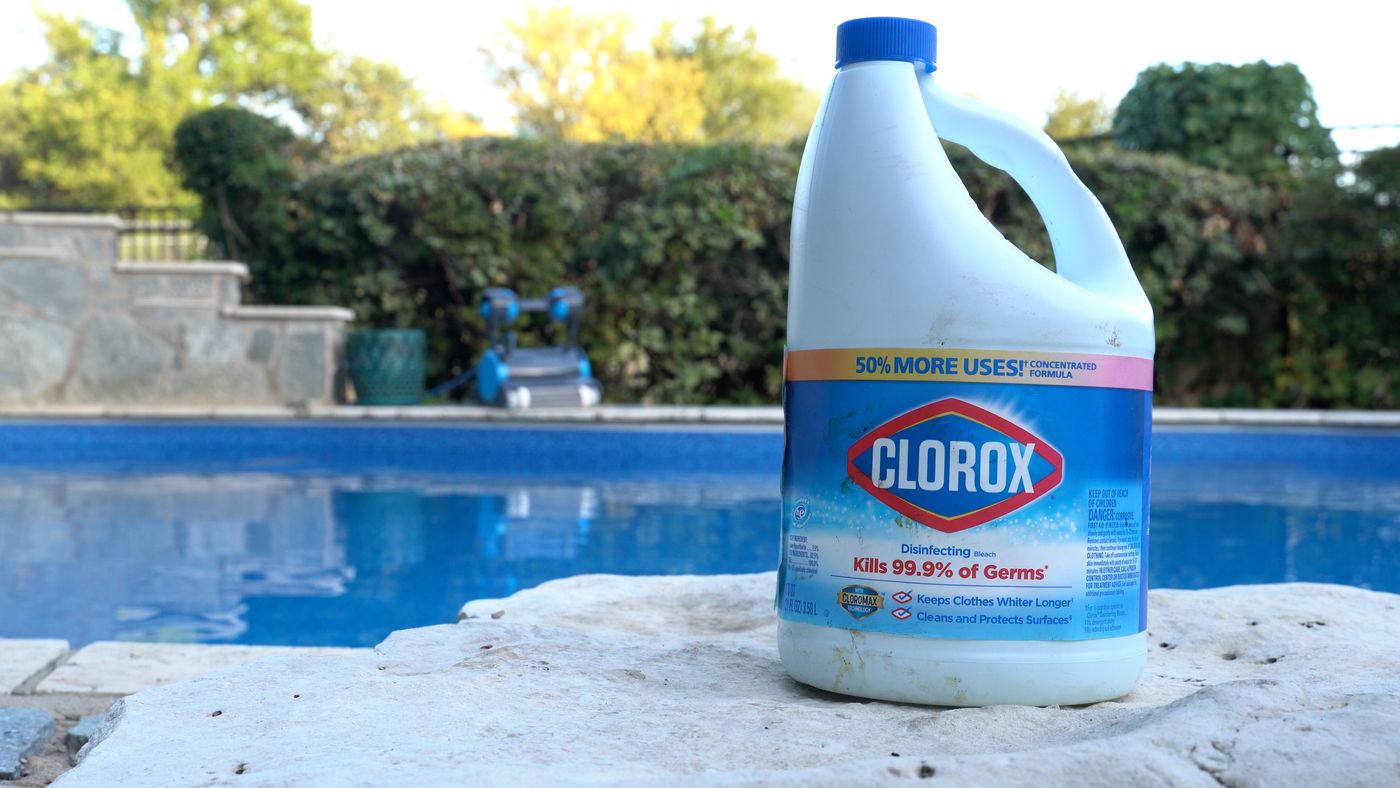
Liquid chlorine is the foundation of your pool opening chemical kit // The Pool Nerd
Step 1: Remove Cover
If you have a solid cover, pump off standing water first. Don't drag the cover across the pool — you'll dump months of accumulated leaves and debris straight in.
Remove the cover carefully, rinse it off, let it dry fully, and store it folded in a dry place. Storing a wet cover invites mold and shortens its life significantly.
Some debris will fall in no matter how careful you are. Accept it — you'll deal with it in Step 5.
Step 2: Fill Your Pool
Bring the water level to mid-skimmer before starting any equipment. Low water starves the skimmer, pulls air into the system, and risks running the pump dry — which can damage your pump and seals.
Step 3: Reconnect
Before touching anything electrical: test your GFCI. Pool pump circuits sit dormant all winter and outdoor outlets can corrode without any visible warning. Press TEST — circuit should cut. Press RESET — power should restore. If it won't reset or trips immediately when the pump starts, stop and call an electrician. A tripping GFCI is telling you something is wrong. Take it seriously.
Now reinstall everything you pulled last fall: return eyeballs, skimmer baskets, ladder and handrail plugs, pump drain plugs, filter drain plugs. If you winterized with expansion plugs in the returns or gizmos in the skimmers, swap them out now. Physically touch every fitting before starting the pump — one missed plug means a geyser later.
Inspect O-rings and lid gaskets. Cracked, flattened, or chalky means replace. Good ones get a coat of silicone lubricant before reassembly.
Prime and start the pump: fill the strainer pot with water, open suction and discharge valves, open the air relief valve on top of the filter tank, start the pump, and close the air relief only after a steady stream of water — not air — shoots out. Trapped air causes pressure buildup and prevents proper priming. Don't skip this valve.
If the pump doesn't prime within a couple of minutes, shut it down. Don't let it run dry.
Filter Reconnect By Type
Sand: Backwash 2 minutes → Rinse 30–60 seconds → Filter. Always shut the pump off before rotating the multiport valve. If the pool came out of winter green, use a sand filter cleaner additive during that first backwash — fouled sand develops channels where water bypasses filtration entirely.
Cartridge: Remove and hose off pleats inside and out. If the pool was rough last season, start with a chemically soaked or brand new cartridge. Body oils and sunscreen don't rinse out — they clog the media and kill flow rate. Reassemble with silicone on the O-ring.
D.E.: Start up, then add D.E. slurry through the skimmer within the first couple of minutes. Running without D.E. damages grids fast. Precoat is roughly 1 lb per 10 sq ft of filter area.
Step 4: Test — And Why ORP Changes Everything
Here's where most pool owners are still doing it wrong — and I want to fix that.
The standard advice is: test your chlorine. But here's the problem. Your chlorine level can be perfectly high and your water can still have zero sanitizing power. How? Because pH and CYA are chlorine's kryptonite. The wrong pH or too much CYA renders chlorine completely ineffective — it's just sitting there doing nothing. You'd never know that from a chlorine test.
This is why I monitor ORP — Oxidation-Reduction Potential. ORP doesn't measure how much chlorine is in the water. It measures whether that chlorine is actually working. It's a direct measurement of your water's sanitizing power, in millivolts. If your ORP is above 650 mV, your pool is actively killing bacteria and algae. If it's below 650, things are getting questionable. Below 600? You've got a problem.
This isn't some backyard experiment. Olympic facilities and commercial aquatic centers worldwide rely on ORP monitoring — not chlorine test kits. The reason most backyard pool owners have never heard of it is because traditional test strips aren't designed to measure it, and the pool store business model depends on you staying confused.
ORP is the one number to rule them all. Everything else — pH, alkalinity, CYA, chlorine — those are the inputs that drive your ORP. Nail your ORP and your water is genuinely safe.
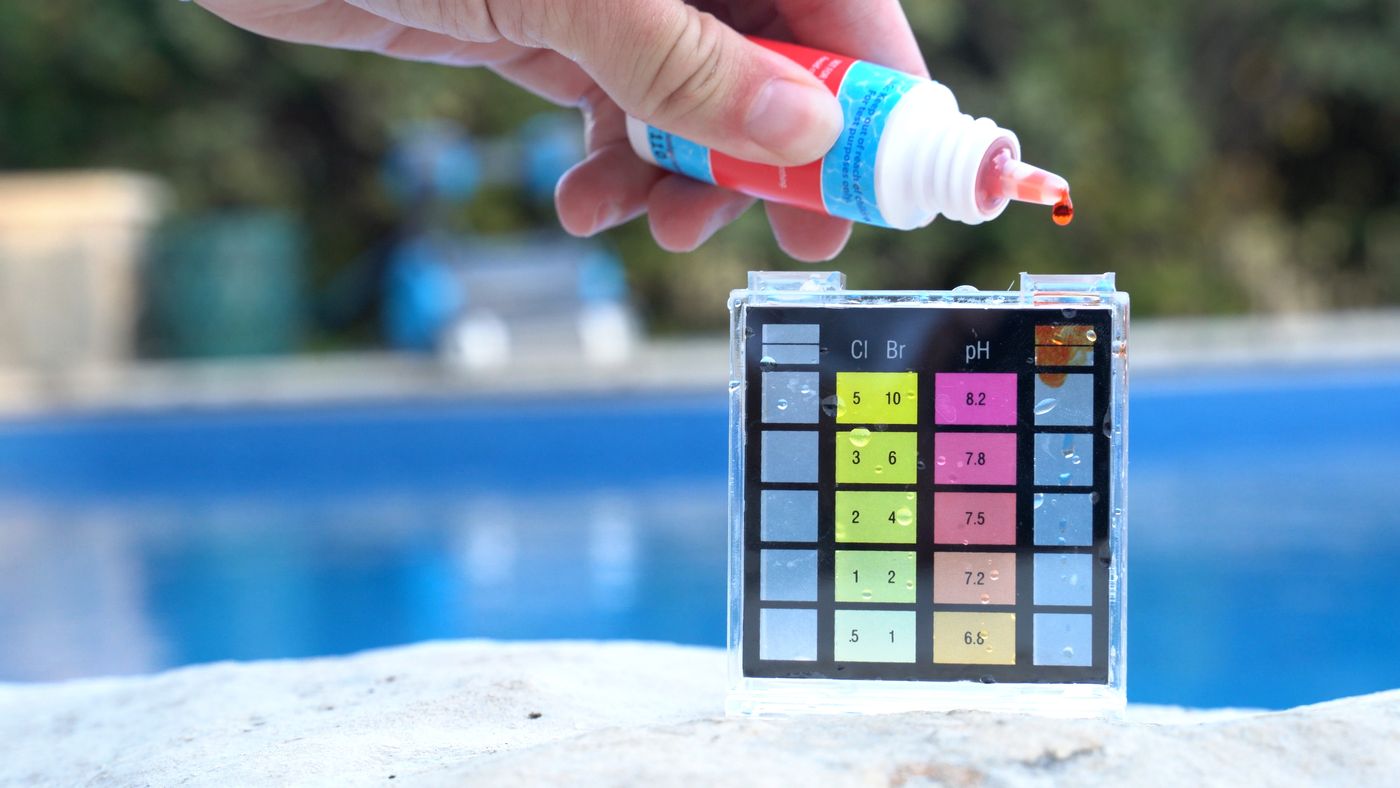
The tool I use to monitor ORP is the ICO Smart Monitor by Ondilo. It sits in my pool, measures ORP and pH once an hour, and sends the data straight to my phone. No test strips, no color charts, no guessing. When ORP starts dropping, I know immediately — before it becomes a green pool problem. I have a full review of the ICO on the channel, and you can check it out at mysmartpool.com.
Now — run a full baseline test before adding anything. The order you adjust chemistry matters. Total Alkalinity is the anchor. Get it right first and pH becomes much easier to hold. Fix pH before worrying about chlorine — and watch your ORP respond once pH is dialed in.
Your primary ORP target: 650–700 mV
| Parameter | Target | Why It Matters |
|---|---|---|
| ORP (Sanitizing Power) | 650–700 mV | The number that actually tells you your water is safe. This is your primary target. |
| pH | 7.0–7.2 | The biggest driver of ORP. A half-point pH rise cuts chlorine power by 50%. Fix pH and ORP climbs. |
| Total Alkalinity (TA) | 80–120 ppm | The anchor for pH stability — fix this first or pH will keep swinging. |
| Calcium Hardness (CH) | 175–225 ppm (vinyl/fiber) / 200–400 ppm (plaster) | Too low and water leaches plasticizers from vinyl liners, making them brittle. |
| CYA (Stabilizer) | 30–50 ppm | Sunscreen for your chlorine. Too much and chlorine gets locked up — ORP tanks. |
| Free Chlorine (FC) | 2–4 ppm | The chemical doing the work. Dial this in last — ORP confirms it's actually working. |
Need exact dosing amounts? Use my pool chemical calculator to plug in your current readings and pool volume — it tells you exactly what to add. I also have dedicated calculators for pH, alkalinity, and muriatic acid.
A few critical callouts:
-
pH above 7.4: your chlorine is losing serious power. At pH 8.0, you're down to roughly 20% effectiveness. This is exactly why your ORP will be tanked even if your chlorine test looks fine. Fix pH first — always. Check out my guide on How to Lower Pool pH if you need help.
-
Calcium Hardness below 175 ppm in a vinyl pool: water gets chemically hungry and leaches plasticizers from the liner, making it brittle over time.
-
CYA above 80 ppm: chlorine gets so locked up it barely sanitizes — and your ORP will show it, even if free chlorine reads high. Trichlor tablet users, test this before adding any stabilizer. If CYA is already high, partial drain and dilute is the only fix.
Always handle pool chemicals carefully and add them in the right order // The Pool Nerd
Dosage Reference — Scale Linearly By Pool Volume
| Goal | 10k gal | 15k gal | 20k gal | 25k gal | 30k gal |
|---|---|---|---|---|---|
| Raise FC by 10 ppm — 12% liquid chlorine | 3.3 qt | 4.95 qt | 6.6 qt | 8.25 qt | 9.9 qt |
| Raise FC by 10 ppm — 67% cal-hypo | 13 oz | 19.5 oz | 26 oz | 32.5 oz | 39 oz |
| Raise TA by 10 ppm — sodium bicarbonate | 1.4 lb | 2.1 lb | 2.8 lb | 3.5 lb | 4.2 lb |
| Raise CH by 10 ppm — 77% calcium chloride | 1.2 lb | 1.8 lb | 2.4 lb | 3.0 lb | 3.6 lb |
| Raise CYA by 10 ppm — cyanuric acid | 13 oz | 19.5 oz | 26 oz | 32.5 oz | 39 oz |
| Lower TA by 10 ppm — 31.4% muriatic acid | 26 fl oz | 39 fl oz | 52 fl oz | 65 fl oz | 78 fl oz |
Dose in stages — especially with acid. Circulate and retest before adding more. Watch your ORP come up as you get pH into range. If you don't know your exact pool volume, run it through my pool volume calculator first — every dosage depends on it.
Step 5: Clean & Filter
With the pump running and chemistry adjusted, now you physically clean. Net out everything visible first. Don't vacuum yet if the water is still cloudy — you'll blast debris back up and load the filter instantly.
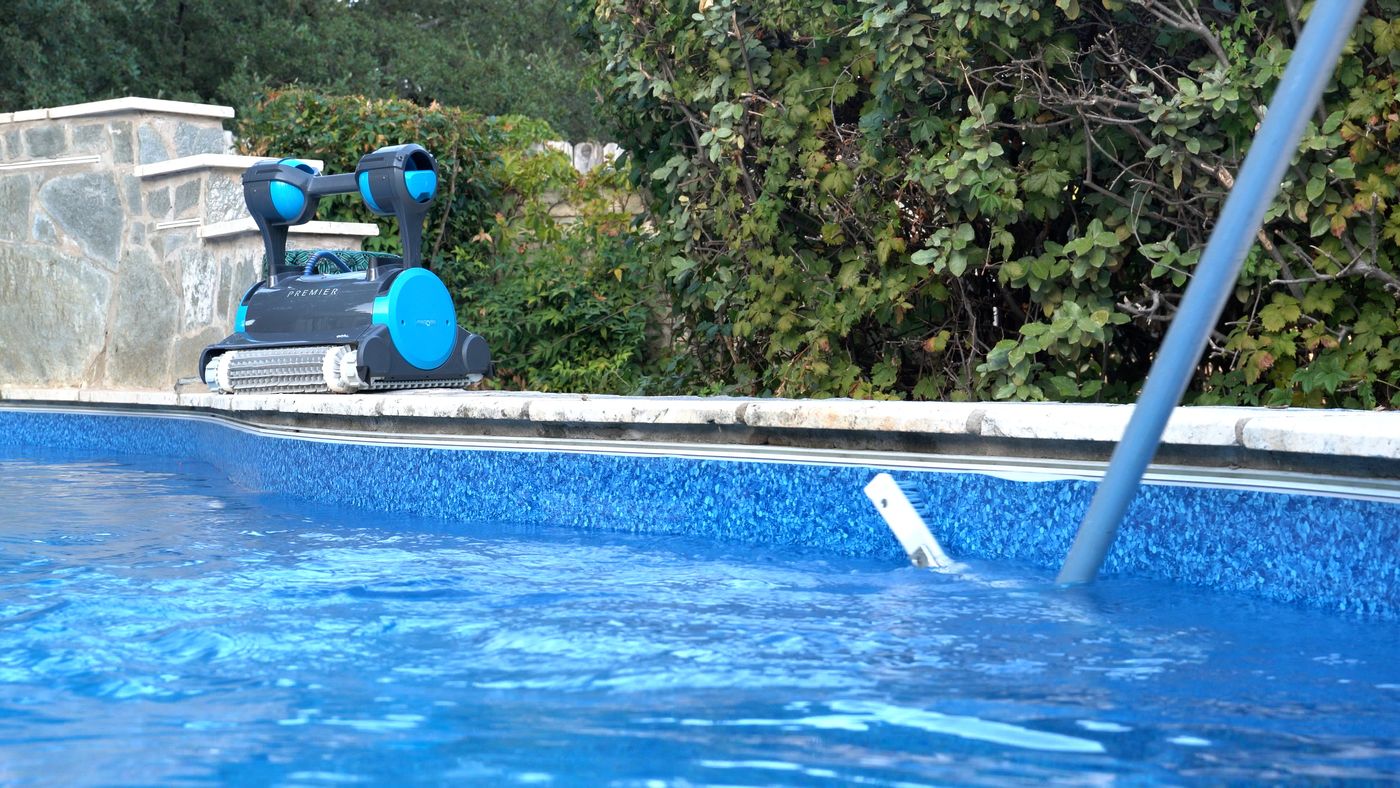
Brush walls and floor to knock settled debris into suspension. Let the filter run. Backwash or clean when pressure rises 6–10 psi above your clean baseline — and expect to do it at least twice during the opening clear-up.
Aim your return jets downward and angled to one side to create a slow whirlpool effect that pushes debris toward the drain. If there's a dead spot in your pool where debris always settles, adjusting that eyeball fitting fixes it.
Run the pump 24 hours a day until the water clears. Once you've got clear water holding, dial back to your normal schedule.
Step 6: Shock
Shock last — after chemistry is in range and the filter is clean. Shocking into a dirty filter or a pool with pH out of range wastes product and time. If you want a deep dive on shocking, check out my full guide on How To Shock Your Pool. Or use my pool shock calculator to get the exact dose for your pool size.
And here's the thing about knowing when to shock: stop guessing. If you're monitoring ORP with your ICO, this becomes obvious. ORP under 650 mV? Time to shock. ORP under 600 mV? Shock heavily and immediately. That's the professional standard — and now you have access to it.
If you don't have an ORP monitor yet, the traditional triggers still apply: water is green or cloudy, combined chlorine is elevated, or you just want a hard oxidation reset after winter. If the water looks clear and chemistry tested clean, a normal chlorine dose to bring FC into the 2–4 ppm range is often enough.
Shock in the evening. UV burns off unstabilized chlorine fast — morning shocking is money down the drain.
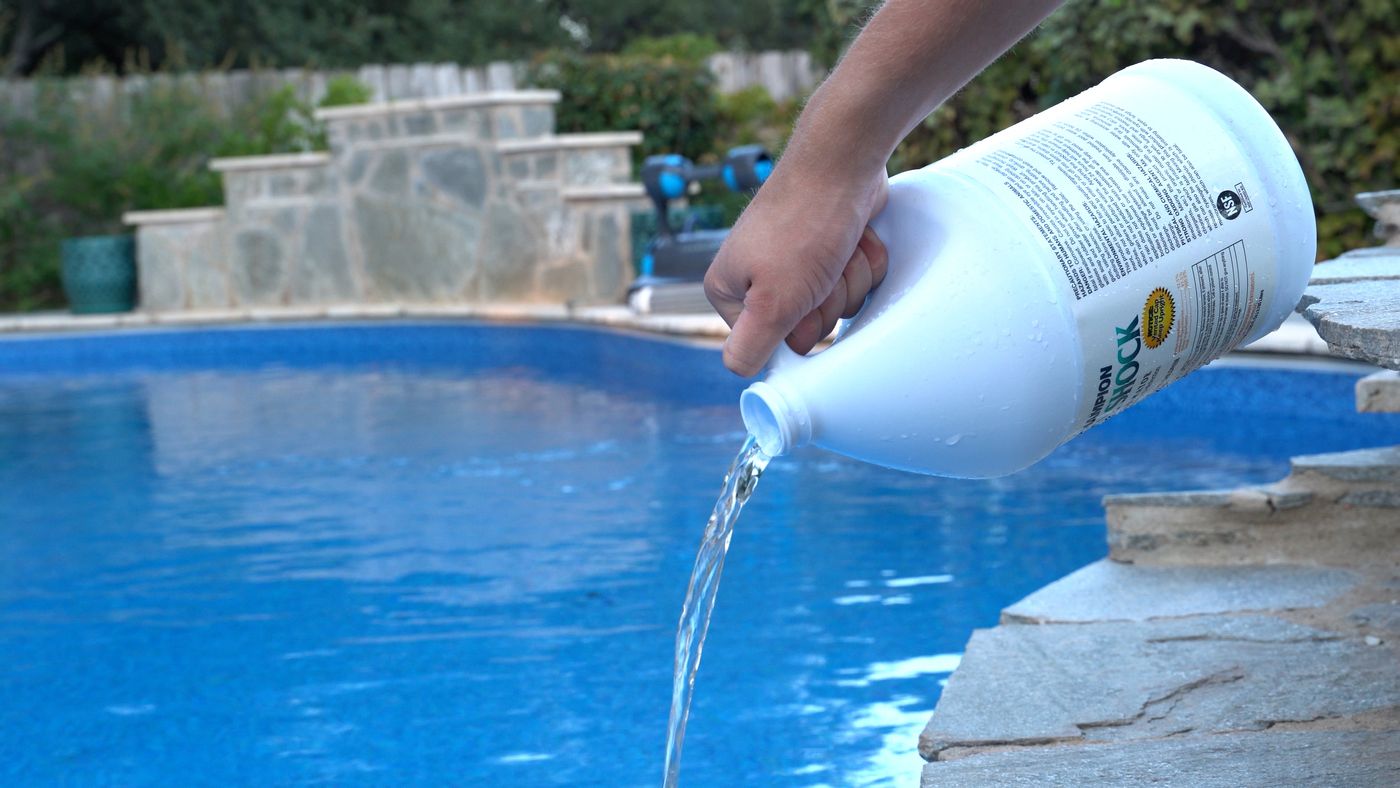
Add liquid chlorine near a return jet while the pump is running. Walk the perimeter as you pour for even distribution. Run the pump overnight and test ORP in the morning.
Wait until FC drops below 5 ppm before swimming — typically 8–24 hours depending on how much you added.
That's It
6 steps, in order. Cover off, water level right, everything reconnected, chemistry tested and adjusted with ORP as your guide, filter running clean, then shock when ORP tells you to. Do it in that sequence and you'll have clear water while your neighbors are still pulling their covers.
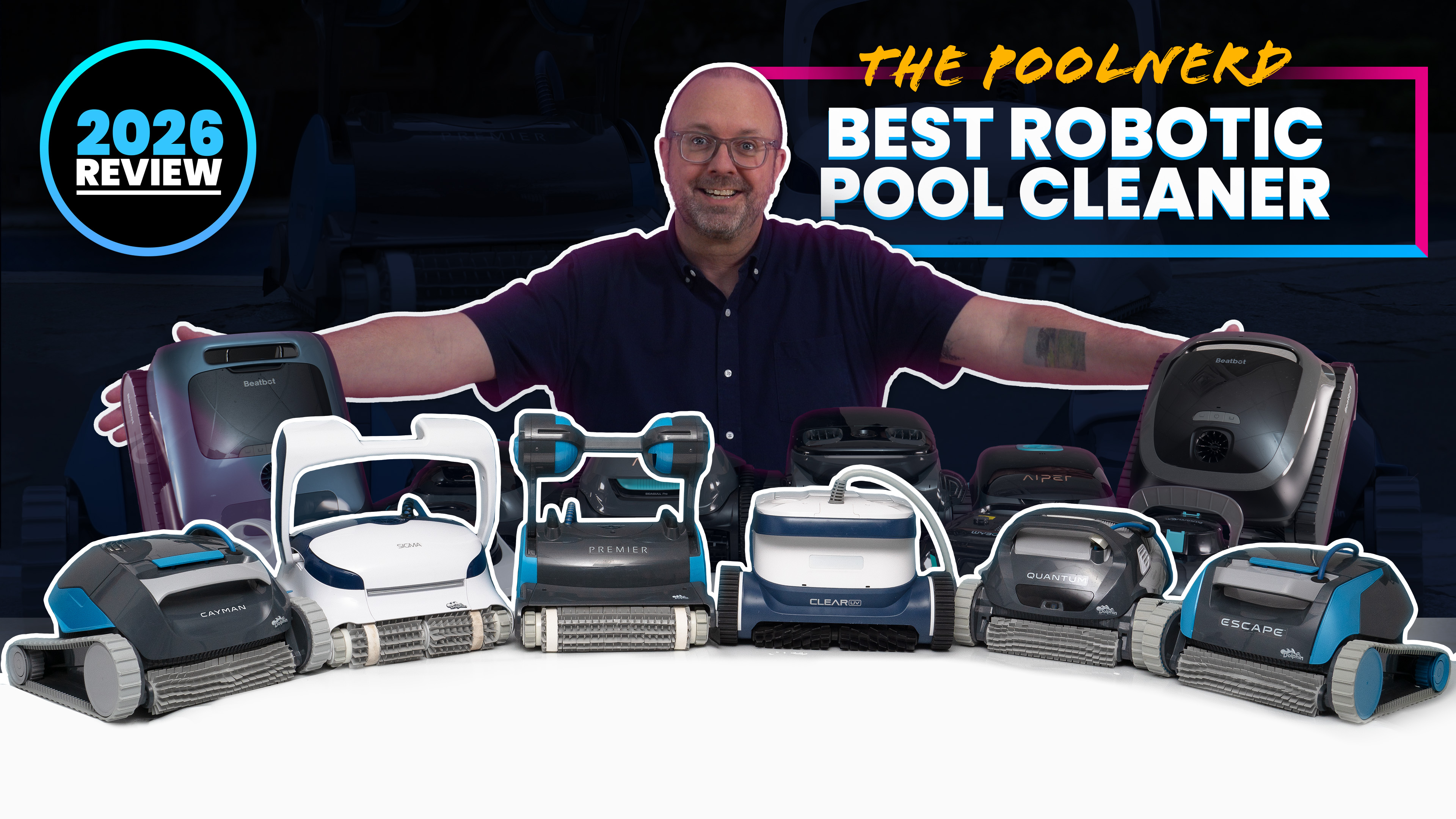
For the best deals on smart monitors like the ICO and robotic cleaners like the Dolphin Premier or Sigma, head to ThePoolNerd.com/deals. Questions? Drop them in the comments. Enjoy that pool.
Frequently Asked Questions
What month should I open my pool?
You should open your pool before water temps hit 60°F.
- South (Texas, etc.): March–April
- Most of U.S.: April–May
The exact month doesn't matter nearly as much as temperature. Algae starts growing fast once water gets above ~60°F. If you wait too long, you're not opening a pool — you're fixing a problem.
Pool Nerd tip: Opening early is the single easiest way to save money and time all season.
What temperature should I open my pool at?
Around 55–60°F water temperature.
- Below 60°F → algae is mostly dormant
- Above 60°F → algae starts growing quickly
If you open at 70°F+, expect more chemicals, more brushing, and more frustration.
How long does it take to open a pool?
Hands-on time: 2–6 hours | Total time to clear: 1–7 days
Typical timeline:
- Day 1 → equipment + circulation
- Day 2–3 → chemistry adjustment
- Day 3–7 → filter clears water
Opening is quick. Clearing is what takes time.
What chemicals do you need to open a pool?
Core chemicals:
- Liquid chlorine (preferred over granular)
- pH decreaser (muriatic acid)
- Alkalinity increaser (sodium bicarbonate)
Depending on your water:
- Stabilizer (CYA) if low
- Calcium hardness (plaster pools)
What order should I add pool chemicals when opening?
This is where most people mess up. Correct order:
- Get pump running
- Test water
- Adjust Total Alkalinity
- Adjust pH — watch your ORP climb as you hit the 7.0–7.2 range
- Add chlorine
- Add stabilizer (if needed)
Rule: Always fix pH before dumping chlorine. Your ORP will confirm when you've got it right.
Do I need to shock my pool when opening it?
Not always. Let your ORP reading guide you.
Shock if:
- ORP is below 650 mV
- Water is green or cloudy
- High combined chlorine
- Lots of debris went in over winter
Skip shock if:
- ORP is above 650 mV and water is clear
- Chemistry is already close
Pool Nerd truth: Shock is just concentrated chlorine. Don't overthink it — and don't add it blindly. Let your ORP tell you when.
How much shock do I need to open a pool?
Target about 10 ppm chlorine.
- 10,000 gallons → ~1 gallon liquid chlorine
- 20,000 gallons → ~2 gallons
- 25,000 gallons → ~2.5 gallons
My pool shock calculator will give you the exact amount based on your pool size and current chlorine level. If your pool is green and ORP is tanked, you'll likely need more over several days. Monitor ORP and keep dosing until you're above 650 mV and holding.
Should I run my pool pump continuously after opening?
Yes — at least at first. Run 24/7 for the first 2–3 days. After that, you can dial it back. Your filter is doing the real work of clearing the pool.
How long does it take a pool to clear up after opening?
- Clear water → 1–2 days
- Cloudy → 2–4 days
- Green → 3–7 days
Chemicals kill algae. The filter removes it. ORP tells you when the job is actually done.
Why is my pool still cloudy after opening?
Common causes:
- Filter is dirty or undersized
- Not running pump long enough
- Low chlorine — confirmed by low ORP
- pH out of range — kills chlorine effectiveness and tanks ORP
Fix:
- Get pH into the 7.0–7.2 range first
- Clean/backwash filter
- Run pump longer
- Maintain chlorine and watch ORP climb
For more help, check out my full guide on How to Clear Cloudy Pool Water.
Why is my pool green after opening?
Almost always: opened too late, not enough chlorine, or poor circulation.
Fix:
- Get pH right — then add chlorine aggressively
- Brush daily
- Run pump nonstop
- Monitor ORP — you're aiming for above 650 mV and holding
For a full walkthrough, see my guide on How to Clean a Green Swimming Pool.
Do I need to add algaecide when opening my pool?
No. It's optional and most pros don't bother. Chlorine is the best algaecide ever invented. Keep your ORP above 650 mV and algae doesn't stand a chance.
Do I need to backwash my filter when opening?
- Sand → Yes (backwash + rinse)
- DE → Yes (and recharge DE)
- Cartridge → No (clean instead)
How often should I clean my filter when opening my pool?
More than usual. Expect to clean/backwash every 1–3 days if the pool is dirty. A dirty pool means the filter clogs fast.
Should I vacuum my pool before or after adding chemicals?
Remove debris before adding chemicals so you don't waste them.
How full should my pool be before turning on the pump?
Water should be at mid-skimmer level. Too low → pump sucks air. Too high → skimmer doesn't work properly.
Can I swim right after opening my pool?
Only if ORP is above 650 mV, water is clear, free chlorine is 1–4 ppm, and pH is in range. If you can't confirm all of those — wait.
What happens if I open my pool too late?
- Green water
- Higher chemical cost
- Longer cleanup time
What happens if I open my pool too early?
Not much. Slightly higher heating cost. Better early than late — every time.
How much does it cost to open an inground pool?
- DIY: ~$50–$150
- Professional: ~$200–$500+
Can I open my pool myself or should I hire a professional?
DIY if you understand your equipment and the pool is in decent shape. Hire someone if it's your first time, you've got equipment issues, or the pool is very dirty.
Why won't my pool pump prime after opening?
Common causes:
- Low water level
- Air leak
- Clogged basket
- Closed valve
Why is my pool filter pressure high after opening?
Filter is dirty — lots of debris in the water. Solution: clean or backwash the filter.
Do I need to add stabilizer (CYA) when opening my pool?
Only if it's low. Target 30–50 ppm. Important: if CYA climbs above 80 ppm, your ORP will tank even with plenty of chlorine — the CYA locks up the chlorine. Trichlor users, test before adding any stabilizer.
How do I know if my pool water is safe to swim in?
The real answer: check your ORP. Above 650 mV, your water is actively sanitizing. Combined with clear water and a pH of 7.0–7.2, you're good to go. If you're using a traditional test kit, target free chlorine 1–4 ppm, pH 7.0–7.2, and clear water.
What is the ideal pool chemistry after opening?
- ORP: 650–700 mV (your primary target)
- pH: 7.0–7.2
- Total Alkalinity: 80–120 ppm
- CYA: 30–50 ppm
- Free Chlorine: 2–4 ppm
- Calcium Hardness: 175–225 ppm (vinyl/fiberglass), 200–400 ppm (plaster)
How do I calculate how many gallons my pool holds?
Basic formula (rectangle): Length × Width × Average Depth × 7.5
For round, oval, kidney, or L-shaped pools, use my pool volume calculator — it handles all common shapes and gives you an accurate gallon count instantly.
What's the fastest way to clear a green pool?
- Get pH into the 7.0–7.2 range first — otherwise the chlorine you're about to add is wasted
- Add chlorine aggressively — aim for ORP above 650 mV and hold it there
- Brush daily
- Run pump 24/7
- Clean filter often — expect multiple backwashes
Should I use liquid chlorine or shock bags?
Liquid chlorine. It works faster, it's cleaner, and it's more predictable. Shock bags are convenient but often overpriced and harder to dose accurately.
How often should I test my pool water during opening week?
If you have an ICO: your ORP and pH are being checked every hour automatically. You'll know the moment something shifts without lifting a finger.
If you're using a test kit: test daily during opening week, sometimes twice. Focus on pH first — then add chlorine and watch chlorine do its job.
The information is for educational purposes only. Handling pool chemicals, specifically muriatic acid and chlorine, involves significant risk of injury or property damage. Always read the manufacturer's labels and MSDS sheets. Use this information at your own risk.
If you want to look into a pool water monitor like the ICO, head on over to my deals page, where I post all the best deals on top pool equipment and more.