
Pool Pump Size Calculator
Find the right pump horsepower, flow rate, and type for your pool
Use the calculatorHow to use
Pool Pump Size Calculator
Enter your pool and plumbing details below for a personalized pump recommendation.
Your Pump Sizing Results
Enter your pool details above
Fill in your pool volume and plumbing information to get a personalized pump recommendation.
Use the result
Follow the calculation with the right how-to guide
How to Size a Pool Pump
Choosing the right pool pump isn't about grabbing the most powerful option on the shelf — it's about matching the pump to your specific pool. An oversized pump wastes energy and can damage your filter, while an undersized one leaves your water cloudy and undertreated. Getting pump sizing right means cleaner water, lower electric bills, and equipment that actually lasts.
I've seen too many pool owners spend $1,500 on a pump that's completely wrong for their setup because they sized by pool volume alone and ignored their plumbing. The calculator above accounts for the factors most sizing charts skip — here's how to figure out exactly what your pool needs.
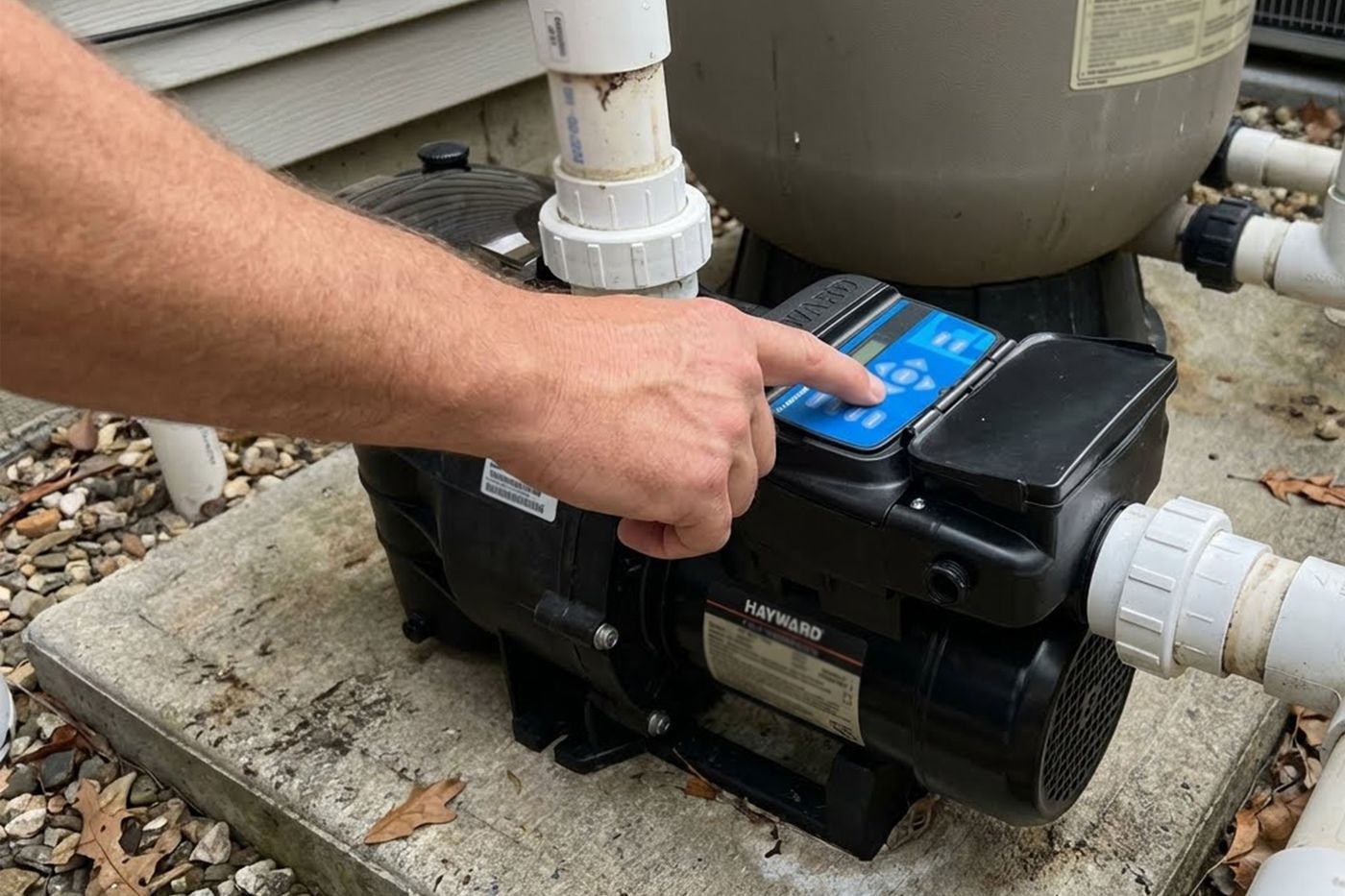
Step 1: Know Your Pool Volume
Everything starts with knowing how many gallons of water your pool holds. If you haven't measured this yet, use our pool volume calculator to get an accurate number. Every sizing calculation depends on this figure, so don't guess.
Step 2: Determine Your Required Flow Rate
Your pump needs to circulate all the water in your pool within a set period — called the turnover rate. For most residential pools, you want a full turnover every 8 hours.
Flow Rate Formula:
- Flow Rate (GPM) = Pool Volume (gallons) ÷ Turnover Time (minutes)
- Example: 20,000 gallons ÷ 480 minutes = 41.7 GPM
Step 3: Calculate Total Dynamic Head
Total Dynamic Head (TDH) is the total resistance your pump has to push against. It includes vertical lift, pipe friction, and equipment resistance. The calculator above handles this math for you, but understanding the concept helps you make smarter decisions.
Step 4: Match Pump HP to Your Numbers
With your required GPM and TDH, you can find the right horsepower. The goal is a pump that delivers your target flow rate at your specific head pressure — not one that's simply "big enough."
Understanding Flow Rate and Turnover
Flow rate — measured in gallons per minute (GPM) — is the single most important number in pump sizing. It tells you how much water your pump moves through the filtration system every minute. Get this wrong and your pool's chemistry, clarity, and sanitation all suffer.
What Is Turnover Rate?
Turnover rate is the time it takes for your pump to circulate the entire volume of your pool through the filter. Industry standards call for at least one complete turnover every 8 hours for residential pools, though some situations call for faster circulation.
Recommended Turnover Rates
| Pool Type | Turnover Time | Why |
|---|---|---|
| Residential (standard) | 8 hours | Balances filtration with energy cost |
| High-use residential | 6 hours | More swimmers = more contaminants |
| Hot tubs / spas | 30 minutes | Small volume, high bather load per gallon |
| Commercial / public | 6 hours | Health code requirements |
| Wading / kiddie pools | 1–2 hours | Safety regulations for shallow water |
Flow Rate Quick Reference
| Pool Volume (gallons) | 8-Hour Turnover (GPM) | 6-Hour Turnover (GPM) |
|---|---|---|
| 10,000 | 20.8 | 27.8 |
| 15,000 | 31.3 | 41.7 |
| 20,000 | 41.7 | 55.6 |
| 25,000 | 52.1 | 69.4 |
| 30,000 | 62.5 | 83.3 |
| 40,000 | 83.3 | 111.1 |
Pipe Diameter and Maximum Flow
Your plumbing limits how much water can safely flow through your system. Push too much GPM through too small a pipe and you get excessive friction, noise, and potential damage.
| Pipe Diameter | Maximum Safe Flow (GPM) | Best For |
|---|---|---|
| 1.5 inches | 45 GPM | Small pools under 15,000 gal |
| 2 inches | 73 GPM | Most residential pools |
| 2.5 inches | 115 GPM | Large residential / small commercial |
| 3 inches | 160 GPM | Large commercial pools |
Total Dynamic Head Explained
Total Dynamic Head (TDH) is the total amount of resistance — measured in feet of water — that your pump must overcome to circulate water through your entire system. Think of it as how hard your pump has to work. The higher the TDH, the more powerful a pump you need to maintain your target flow rate.
Components of TDH
1. Static Head (Vertical Lift) This is the vertical distance between the water surface and the center of your pump. If your pump sits 3 feet above the waterline, that's 3 feet of static head. For most in-ground pools with nearby equipment pads, this is typically 2–5 feet.
2. Friction Loss (Pipe Resistance) Water flowing through pipe creates friction against the pipe walls. This friction increases with:
- Higher flow rates (more GPM = more friction)
- Smaller pipe diameters
- Longer pipe runs
- More fittings (elbows, valves, tees)
Each 90° elbow adds roughly 4–7 feet of equivalent pipe length depending on diameter, and every foot of extra pipe adds resistance.
3. Equipment Resistance Every piece of equipment the water passes through adds head loss:
- Sand filter: 5–8 feet
- Cartridge filter: 3–6 feet
- DE filter: 5–10 feet
- Pool heater: 3–5 feet
- Salt chlorinator: 1–3 feet
- Check valves: 2–4 feet each
Typical TDH Ranges
| Setup | Typical TDH | Notes |
|---|---|---|
| Simple above-ground pool | 15–25 ft | Short pipe runs, basic filtration |
| Standard in-ground pool | 30–50 ft | Typical residential installation |
| Extended plumbing runs | 45–60 ft | Equipment pad far from pool |
| Pool + spa combination | 40–65 ft | Multiple bodies, extra valves |
If your calculated TDH exceeds 60 feet, review your plumbing layout. Long pipe runs and undersized plumbing are the usual culprits.
Pool Pump Size Chart
Use this chart as a starting point to narrow down the right pump horsepower for your pool. These recommendations assume standard 2-inch plumbing, an 8-hour turnover, and typical TDH values for residential installations.
Recommended Pump HP by Pool Size
| Pool Volume | Pipe Size | Typical TDH | Recommended HP | Flow Rate Needed |
|---|---|---|---|---|
| 8,000–12,000 gal | 1.5" | 25–35 ft | 0.75–1.0 HP | 17–25 GPM |
| 12,000–18,000 gal | 2" | 30–40 ft | 1.0–1.5 HP | 25–38 GPM |
| 18,000–24,000 gal | 2" | 35–50 ft | 1.5–2.0 HP | 38–50 GPM |
| 24,000–35,000 gal | 2" | 40–55 ft | 2.0–2.5 HP | 50–73 GPM |
| 35,000–50,000 gal | 2.5"–3" | 40–55 ft | 2.5–3.0 HP | 73–104 GPM |
Popular Pool Pump Models by Size
| HP | Pump Model | Type | Max GPM | Max TDH | Best For |
|---|---|---|---|---|---|
| 1.0 HP | Pentair SuperFlo VS | Variable Speed | 80 GPM | 56 ft | Small to mid pools |
| 1.5 HP | Hayward MaxFlo VS | Variable Speed | 100 GPM | 62 ft | Most residential pools |
| 1.65 HP | Pentair IntelliFlo VSF | Variable Speed | 120 GPM | 68 ft | Mid to large pools |
| 2.0 HP | Hayward Super Pump VS | Variable Speed | 113 GPM | 65 ft | Large residential pools |
| 2.7 HP | Pentair IntelliFlo3 VSF | Variable Speed | 140 GPM | 72 ft | Large pools with features |
| 3.0 HP | Hayward TriStar VS | Variable Speed | 150 GPM | 75 ft | Very large / commercial |
Pump performance varies by manufacturer. Always check the pump curve for your specific model to verify it delivers your required GPM at your calculated TDH.
Variable Speed vs Single Speed Pumps
If you're shopping for a pool pump today, the variable speed vs single speed question is largely settled — but understanding why matters for making the best choice for your budget and pool.
Department of Energy (DOE) Regulations
Since 2021, federal regulations require that all new replacement pool pumps 1 HP and above be variable speed. This applies to in-ground residential pool pumps and means that single speed pumps are essentially phased out for most pools. If your pump is 1 HP or larger, you're going variable speed whether you planned to or not.
Why Variable Speed Wins
| Feature | Single Speed | Variable Speed |
|---|---|---|
| Speed control | One speed (high) | Multiple programmable speeds |
| Energy cost | $75–$150/month | $15–$40/month |
| Annual savings | Baseline | $500–$1,200/year |
| Noise level | Loud (70+ dB) | Quiet at low speed (45 dB) |
| Filter performance | Good | Better (slower flow = finer filtration) |
| Equipment life | Standard | Extended (less stress on plumbing) |
| Upfront cost | $300–$600 | $800–$1,600 |
| Typical payback | — | 1–2 years |
How Variable Speed Saves Money
The key insight is the affinity law: reducing pump speed by half cuts energy use by roughly 87%. A variable speed pump running at low RPM for 12+ hours filters better and costs less than a single speed pump blasting at full power for 8 hours.
When Single Speed Still Makes Sense
- Pools under 10,000 gallons with pumps under 1 HP
- Above-ground pools with small filtration systems
- Temporary or seasonal setups where the pump won't run daily
Even in these cases, a variable speed pump is still the better long-term investment — you'll just see a longer payback period.
Pool Pump Sizing by Pool Type
Not every pool has the same pump requirements. Pool type, features, and how you use your pool all affect what size pump you actually need.
In-Ground Pool Pump Sizing
Most in-ground residential pools hold 15,000–30,000 gallons and use 2-inch plumbing. A 1.5 to 2.0 HP variable speed pump handles the vast majority of in-ground installations. Key factors:
- Longer plumbing runs than above-ground pools
- More equipment in the loop (heaters, chlorinators, cleaners)
- Often have dedicated suction and return lines
- May have water features requiring additional flow
Above-Ground Pool Pump Sizing
Above-ground pools typically hold 5,000–15,000 gallons with 1.5-inch plumbing and shorter pipe runs. This means lower TDH and smaller pump requirements:
- 0.75 to 1.5 HP covers most above-ground setups
- Shorter plumbing runs mean less friction loss
- Simpler equipment setups keep TDH low
- Many above-ground pumps come as part of a filter system package
Pools with Water Features
If your pool has a waterfall, fountain, deck jets, or spillover spa, you need additional flow beyond basic filtration. Options include:
- Oversized main pump — a larger variable speed pump that runs at high speed when features are active and low speed for daily filtration
- Dedicated booster pump — a separate pump specifically for water features, keeping your main pump sized purely for filtration
- Plan for an additional 20–50 GPM per water feature depending on size
Pool + Spa Combinations
Combo setups need a pump that can handle the combined volume and the extra plumbing:
- Additional valves and diverters increase TDH by 5–10 feet
- Spa mode requires higher flow to a smaller body of water
- A variable speed pump excels here — high speed for spa jets, low speed for pool filtration
- Size the pump for the higher demand (spa mode) and program the lower speed for daily pool circulation
Common Pump Sizing Mistakes
Oversizing your pool pump is the most common — and most expensive — mistake pool owners make. Here's what to watch for.
Mistake 1: Bigger Is Better
A 3 HP pump on a 15,000-gallon pool doesn't mean cleaner water. It means:
- Wasted electricity (potentially $1,000+ per year)
- Excessive flow that can damage your filter
- Higher pressure on plumbing joints and seals
- Turbulent water that actually reduces filtration efficiency
Mistake 2: Ignoring Pipe Diameter
Your plumbing is the bottleneck. Even the best pump can't push 80 GPM through 1.5-inch pipe without creating dangerous friction and potential cavitation. Always match pump output to what your pipes can safely handle.
Mistake 3: Forgetting About TDH
Two pools with the same volume can need very different pumps. A pool with a 20-foot equipment pad run and minimal fittings has a much lower TDH than one with 80 feet of plumbing and a dozen elbows. The calculator above accounts for this — a GPM-only calculation doesn't.
Mistake 4: Sizing for Peak Demand
Your pump runs all day, every day. Sizing it for the rare occasion when you need maximum flow (backwashing, running all features) means overspending the other 99% of the time. Variable speed pumps solve this by running at the lowest effective speed and ramping up only when needed.
Mistake 5: Not Accounting for Future Equipment
If you're planning to add a heater, salt system, or water features in the next year or two, factor that into your TDH calculation now. Adding equipment after the fact increases resistance, and your current pump may struggle to maintain adequate flow.
When to Upgrade Your Pool Pump
Pool pumps don't last forever, and sometimes the best financial move is replacing an aging pump before it fails completely.
Signs Your Pump Is Undersized or Failing
- Water stays cloudy despite proper chemical balance
- Filter pressure is consistently low (not enough flow)
- Pump runs hot or shuts off on thermal overload
- Unusual noise — grinding, screeching, or cavitation sounds
- Visible leaks at the pump housing or shaft seal
- Your energy bills are creeping up season over season
- The pump is more than 8–10 years old
Upgrading from Single Speed to Variable Speed
If you still have a working single-speed pump, here's the real math on upgrading:
- Average single speed energy cost: $100–$150/month during swim season
- Average variable speed energy cost: $20–$40/month
- Typical variable speed pump cost (installed): $1,200–$2,000
- Payback period: 1–2 swim seasons
After the payback period, every month of savings goes straight into your pocket. Most variable speed pumps also come with longer warranties (typically 3 years vs 1 year for single speed).
Choosing a Replacement Pump
When selecting a new pump:
- Use the calculator above to determine your actual GPM and TDH requirements
- Pick a pump that delivers your target GPM at your calculated TDH (check the pump curve)
- Choose variable speed — it's required by law for 1 HP+ and saves money regardless
- Match the pump's plumbing connections to your existing pipe diameter
- Consider WiFi-enabled models for remote scheduling and diagnostics
- Factor in the warranty length and local service availability
The right pump, properly sized, will keep your pool crystal clear while costing you the least amount possible to operate. Take a few minutes with the calculator above, and you'll have the confidence to make the right choice.
For our top pump recommendations by pool size and budget, check out our best pool pumps guide. And once your pump is running properly, the rest of pool maintenance becomes much more predictable — see our weekly pool maintenance guide for the full routine.
Pool Pump Sizing FAQ
What size pump do I need for a 15,000-gallon pool?
Most 15,000-gallon pools with standard 2-inch plumbing and typical TDH (30–40 feet) do well with a 1.0–1.5 HP variable speed pump. At low speed, that delivers the 31 GPM needed for an 8-hour turnover while keeping energy costs in the $15–$30/month range. Use the calculator above with your actual TDH for a precise recommendation.
Can I use a bigger pump than I need?
You can, but you shouldn't. An oversized pump pushes more water than your pipes and filter can handle safely, which causes excessive pressure, noisy operation, shortened filter life, and higher energy bills. Variable speed pumps partially solve this since you can dial down the RPM, but you're still paying for capacity you don't need.
How many hours a day should I run my pool pump?
Enough to complete at least one full turnover of your pool volume. For most residential pools, that's 8–12 hours per day. With a variable speed pump running at low RPM, you can run longer (12–16 hours) for better filtration at a lower energy cost than a single-speed pump running 8 hours at full blast.
Does my pump need to match my filter size?
Yes. Your filter's maximum flow rate (in GPM) must be equal to or greater than your pump's output at normal operating speed. An undersized filter restricts flow and creates excessive pressure. Most filter manufacturers list the maximum GPM in their specifications — match it to your pump's output at your calculated TDH.
How do I know my pool's TDH?
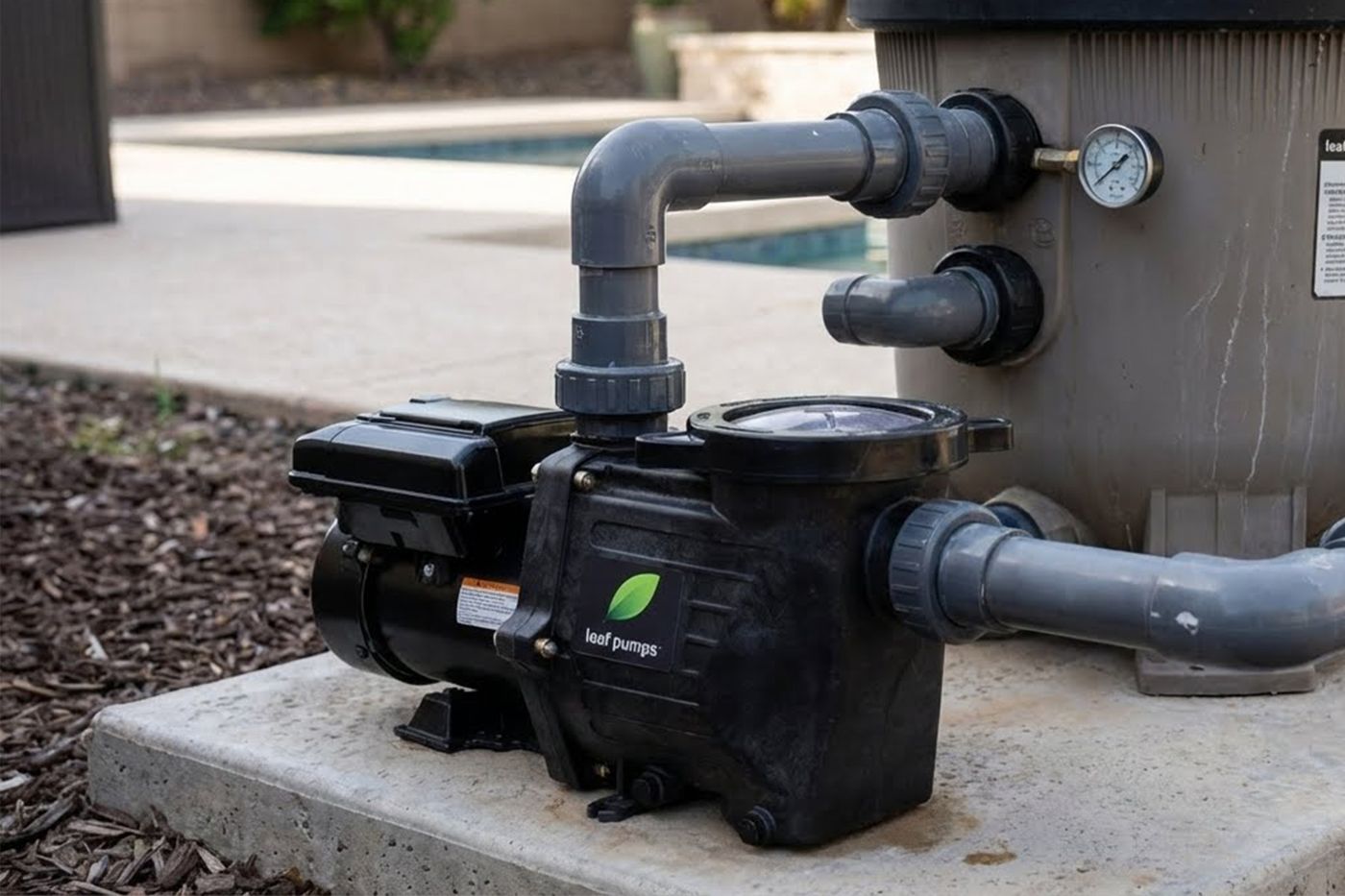
TDH (Total Dynamic Head) combines vertical lift, pipe friction, and equipment resistance. You can estimate it using the guidelines in the TDH section above, or the calculator handles it for you. If you want a precise number, a pressure gauge on the pump discharge and suction side gives you actual readings — the difference (converted to feet of head) is your real-world TDH.
When should I replace my pool pump?
Replace when repair costs exceed 50% of a new pump's price, when your pump is older than 8–10 years, or when energy costs have become unreasonable. Upgrading from a single-speed to a variable-speed pump typically pays for itself within 1–2 swim seasons through energy savings alone. See our best variable speed pump guide for current recommendations.
More Pool Calculators
More from The Pool Nerd
Keep Reading


Disclaimer: This information is for educational purposes only. Handling pool chemicals involves significant risks, and this calculator cannot cover every product, pool, or possible hazard. Always follow the manufacturer’s label, safety data sheet, and applicable requirements. Seek qualified help whenever you are uncertain.