
 Justin D.
Introduction
Most pool owners are treated like ATM machines by their local stores—sold bucket after bucket of "magic" chemicals when the real fix is simply understanding the foundation.
If you've been struggling with cloudy water, burning eyes, or chlorine that just doesn't seem to work no matter how much you dump in, you don't have a chlorine problem. You have a pH problem.
Hey, I'm Justin, your resident pool aficionado. And today I'm going to show you exactly how to fix it. Along the way, I'll share insider tips that make maintenance effortless, save you money, and help you fully understand how your pool's water chemistry works.
pH isn't just a random number on a test strip. It's the master switch that determines if your pool remains a crystal-clear oasis or becomes a frustrating money pit.
Let's break it down.
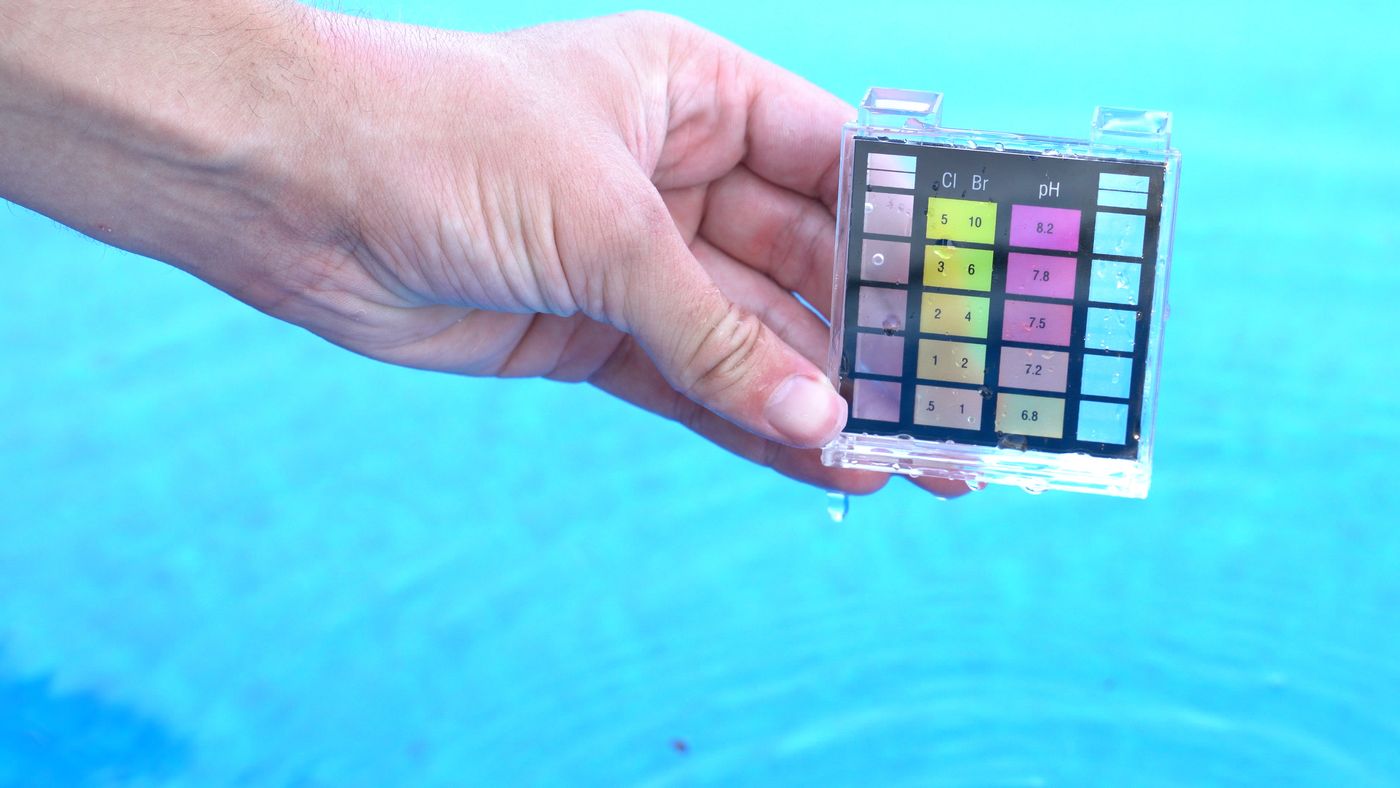
Raising pH: What You Need Checklist
Soda ash is the usual fix when you need pH up without baking-soda-level alkalinity creep—confirm TA first. Borax (laundry aisle) is another option if you already keep it on hand.

Taylor K-2005 Test Kit
What it is: A professional drop (titration) kit for chlorine, pH, alkalinity, calcium hardness, and cyanuric acid.
Why you need it: You can’t SLAM or balance blind—especially CYA, which handcuffs chlorine. This kit gives numbers you can trust, not strip guesswork.

Ondilo ICO Pool Water Monitor
What it is: A floating smart monitor that samples pH, ORP (sanitizer effectiveness), and temperature on a schedule and sends trends to your phone.
Why you need it: You still need a real drop kit for parameters the ICO doesn’t replace (like TA and CYA), but hourly ORP/pH catches drift and dosing mistakes long before weekly strip checks do.

In The Swim Soda Ash
What it is: Sodium carbonate—raises pH faster than baking soda with less alkalinity bump.
Why you need it: Use when pH is low and you need pH up without overshooting TA; check TA first.
Pool pH Calculator
Already know your numbers? Enter your pool details below for exact chemical dosing based on your pool size and current pH reading.
The "Power Zone": Why 7.2 Beats 7.6
Traditional pool stores will tell you that the ideal pH range is 7.4 to 7.6. While that range is perfectly comfortable for human eyes and skin, there's a better approach most people don't know about: 7.0 to 7.2 is the "Power Zone" for maximum chlorine effectiveness.
Here's why this matters.
In water without stabilizer, if your pH moves from 7.0 to 7.5, your chlorine loses roughly 50% of its sanitizing power. If it drifts up to 8.0, your chlorine becomes sluggish and weak. You could have a "perfect" 3 ppm chlorine reading on your test kit, but at that high pH, the chlorine is basically doing nothing to stop an algae bloom.
Pro tip: If you're not planning to swim for a few days—say, after a heavy storm or a big pool party—aim for a pH of 7.1 to 7.2. This makes your chlorine hyper-aggressive against algae, bacteria, and biofilm. Then you can just let it drift back up naturally before your next swim.
What You Need
Before you touch a single chemical, gather these essentials—the what you need checklist earlier on this page has the shop links:
Testing Equipment (pick one):
-
A reliable liquid test kit (the Taylor K-2006 is the gold standard; salt pools want the K-2006 Salt)
-
A digital pool meter for pH and chlorine
-
A smart monitor like the ICO by Ondilo for continuous tracking — this is what I use and I highly recommend it
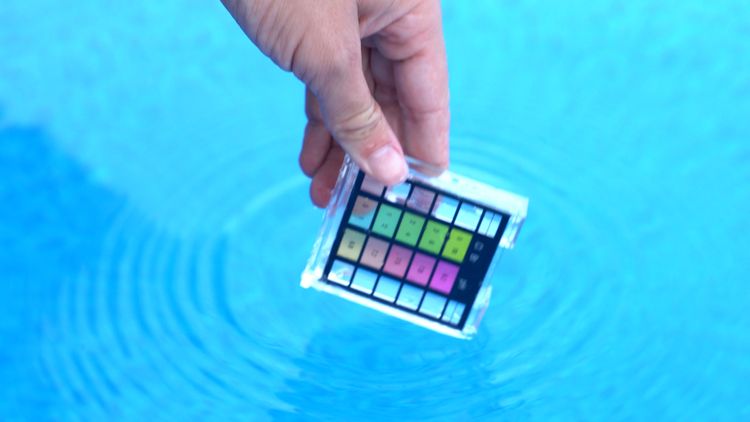
Filling a pool water test kit // The Pool Nerd
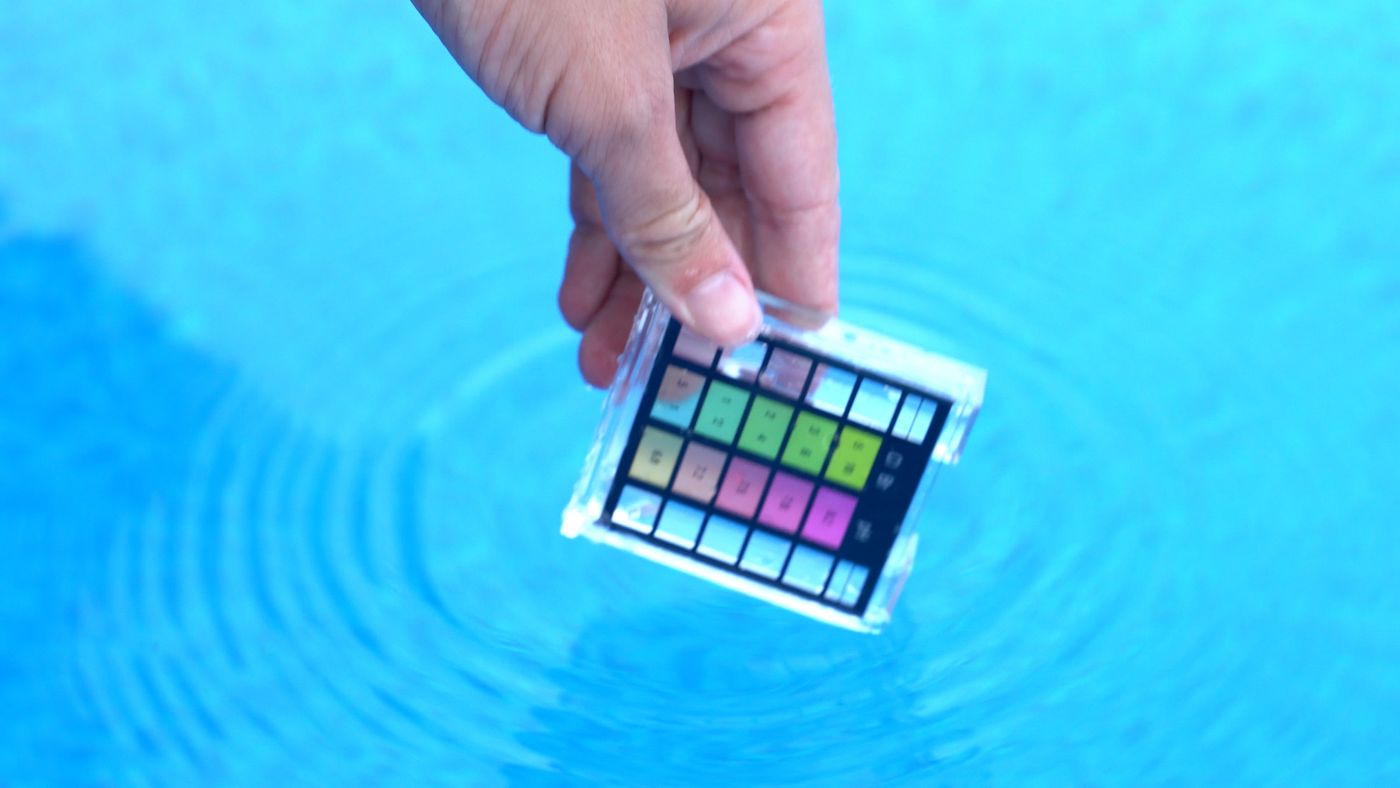
Chemicals (based on your situation):
- Soda Ash (sodium carbonate) – sold as "pH Up" or "pH Increaser"
- 20 Mule Team Borax – found in the laundry aisle
- A 5-gallon bucket for pre-dissolving chemicals
- A wooden stir stick (the reaction generates heat—don't use your hand)
Information you'll need:
- Your pool's exact volume in gallons (use our pool volume calculator)
- Your current pH reading
- Your current Total Alkalinity (TA) reading
That last one is critical. The chemical you choose depends entirely on where your Alkalinity sits. If you need to adjust alkalinity first, our pool alkalinity calculator gives you exact dosing. We'll cover the pH chemicals in detail below.
Test Your Water
Never add chemicals without knowing your water chemistry. Here's how to get an accurate reading:
Step 1: Collect your sample from elbow-deep in the water, away from return jets and skimmers. Surface water gives misleading results.
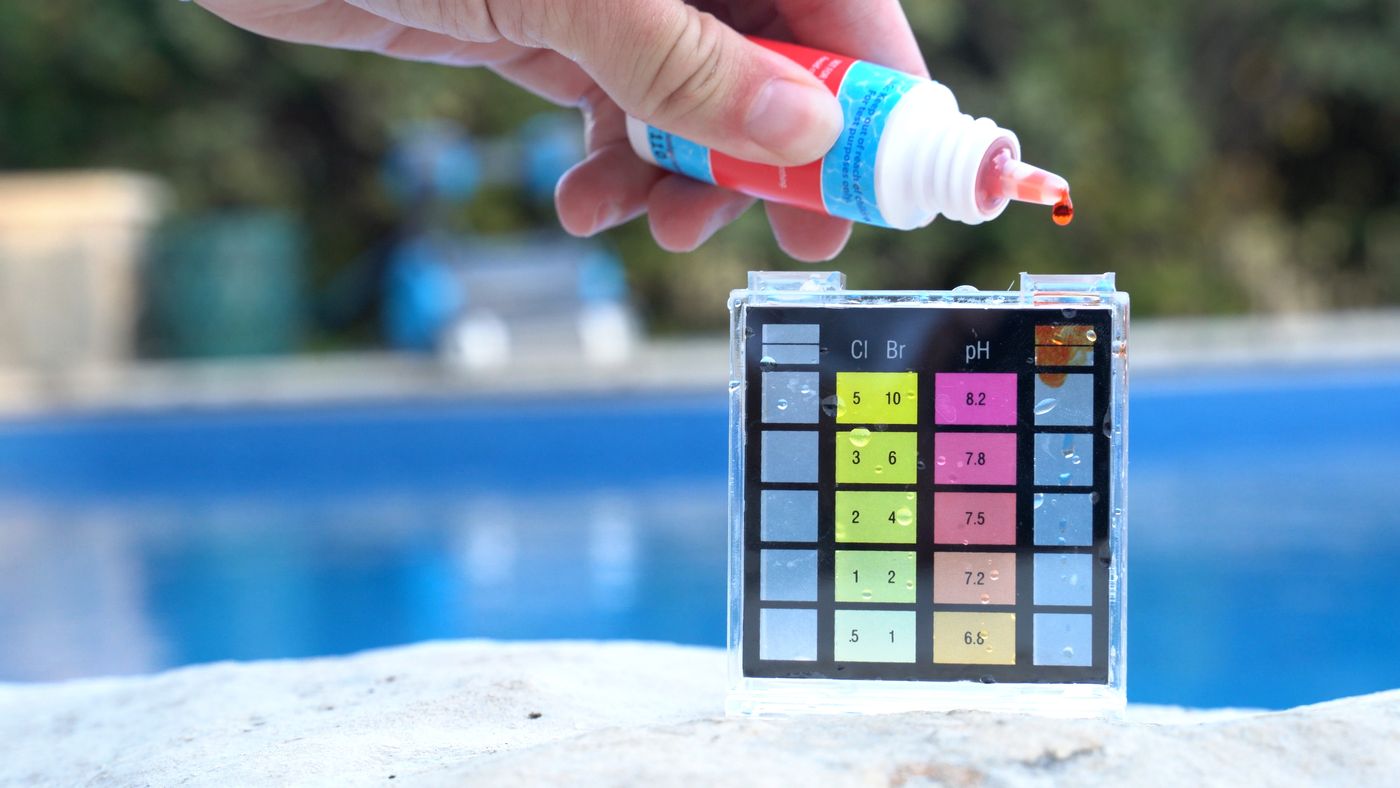
Step 2: If using a liquid test kit, follow the drop count exactly. More drops doesn't mean a better test—it means a wrong result.
Step 3: Record both your pH and your Total Alkalinity. You need both numbers to choose the right fix.
Step 4: Test at the same time each day for consistency. Morning readings before heavy sun exposure tend to be most stable.
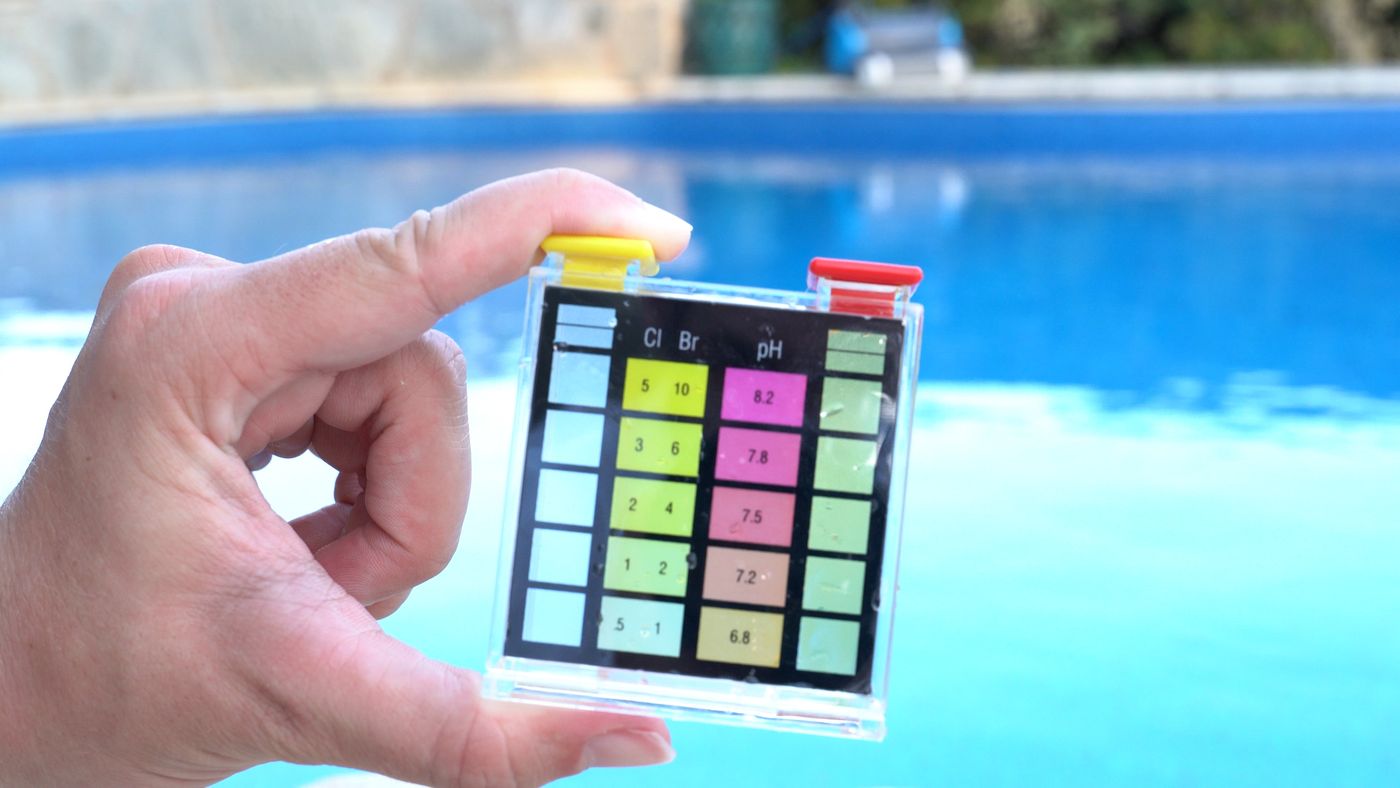
Step 5: If your results seem off or you're getting inconsistent readings, it's time to upgrade your testing method.
Here's the thing about standard chlorine tests: they tell you how much chlorine is present in the water, but not whether that chlorine is actually working.
Stop Guessing: Why ORP Changes Everything
Here's the thing about standard chlorine tests: they tell you how much chlorine is present in the water, but not whether that chlorine is actually working.
That's where ORP comes in—Oxidation-Reduction Potential. It's a direct measurement of the "killing power" of your water.
Olympic pools and professional aquatic centers don't rely on basic chlorine readings. They monitor ORP instead. It's the professional gold standard, yet most backyard pool owners have never heard of it because traditional test kits aren't designed to measure it.
This is exactly why I recommend investing in a smart monitor like the ICO by Ondilo. It tracks both ORP and pH continuously and sends the data straight to your phone. You'll know exactly when your water is safe, when it needs help, and precisely how much chemical to add. You can learn more about ORP and ICO at their website: mysmartpool.com
It has a ton of good information on ORP, why it matters, and the technology behind pool water monitoring.
Why do I love my pool water monitor so much?
No more guessing. No more test strips. No more dumping in extra chlorine "just to be safe." Most people find it pays for itself in chemical savings within the first year—and that's before you factor in the equipment damage you'll avoid by catching problems early.
Why Your pH Drops in the First Place
Before we talk about how to raise your levels, you need to understand why they drop. Preventing the problem is always cheaper than fixing it.
Heavy rainfall: Rain is naturally acidic, usually falling between pH 5.5 and 6.5. It also dilutes your Total Alkalinity, which acts as your water's buffer against pH swings.

Trichlor tablets: Those convenient pucks you toss in a floater? They have a pH around 2.8. They're essentially acid bombs. If you use them regularly, your pH will constantly crash.
Organic debris: Leaves, grass, and pollen decomposing in your pool release acids as they break down. If it gets bad enough, you'll end up with green pool water. This is why keeping your pool clean isn't just about aesthetics—it directly impacts your chemistry. A robotic pool cleaner like the Dolphin Premier or Sigma removes this organic matter before it has a chance to decompose and throw off your pH. Less debris means more stable water and fewer chemical corrections.
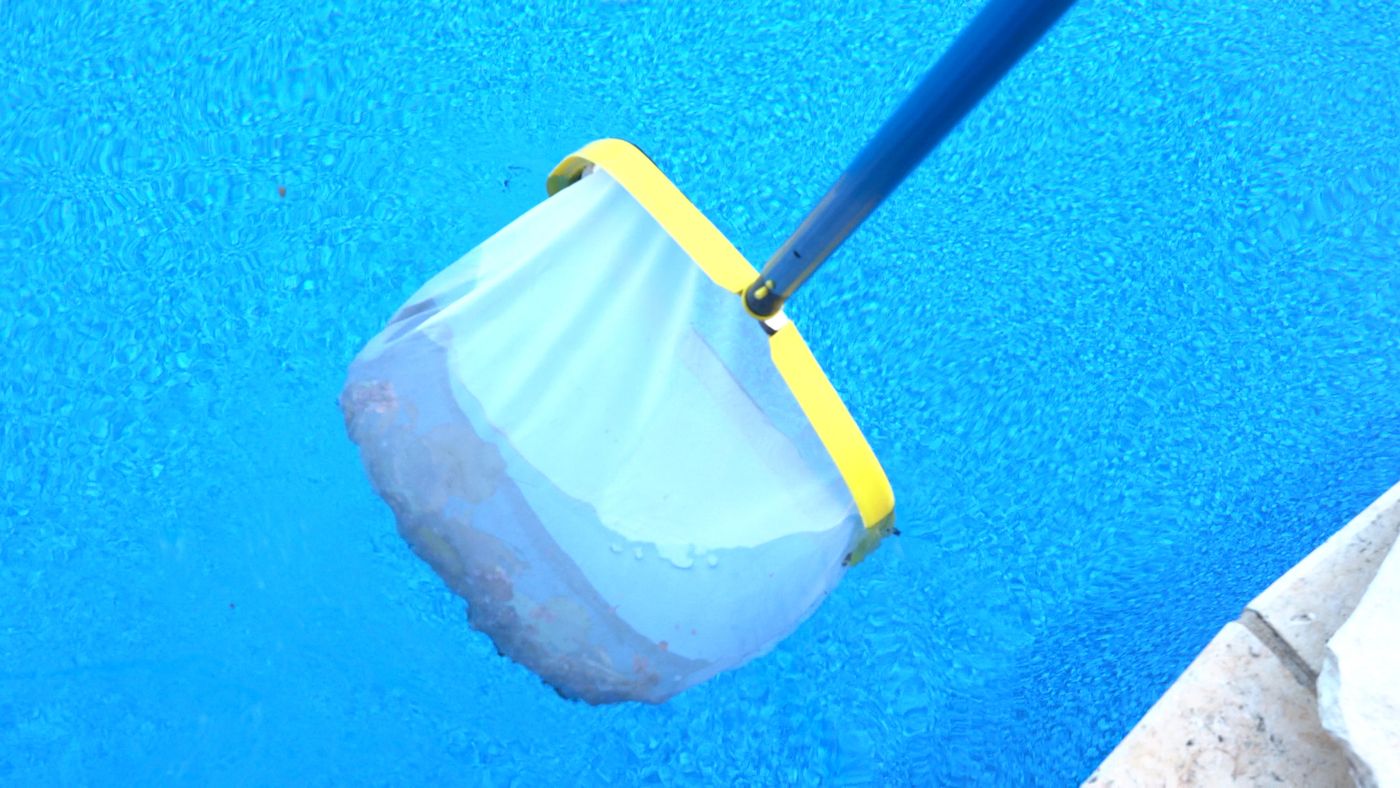
High swimmer load: Sweat, body oils, and sunscreen all introduce organic acids that eat away at your pH balance.
What to Use: Matching the Chemical to Your Situation
The product you choose depends entirely on your Total Alkalinity (TA). Getting this match right is the key to stable water.
Option 1: Soda Ash (Sodium Carbonate)
This is what most stores sell as "pH Up" or "pH Increaser." It raises pH quickly.
Best for: When both your pH and your Alkalinity are low.
Dosage: 6 ounces per 10,000 gallons raises pH by approximately 0.2. For exact dosing based on your pool size and current readings, use our pool pH calculator.
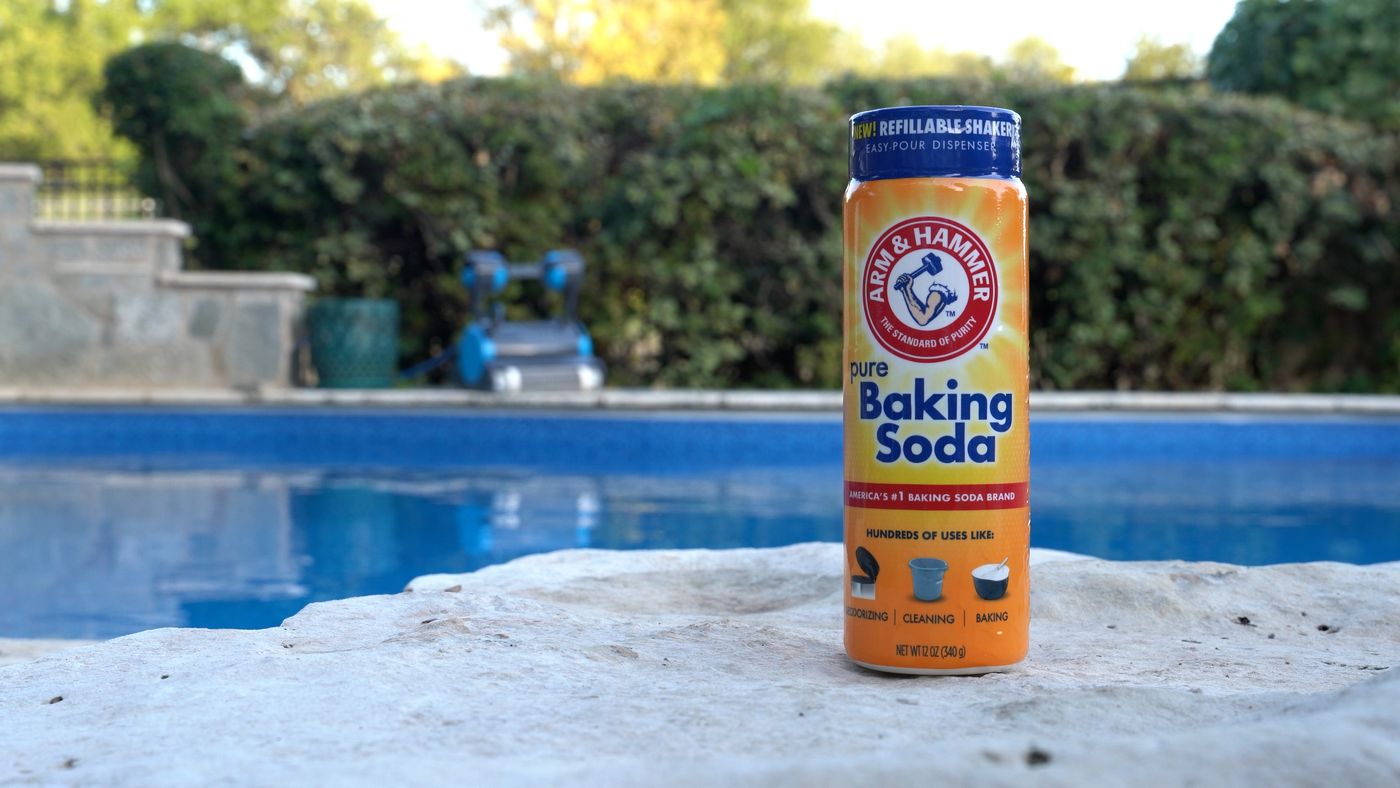
Option 2: 20 Mule Team Borax
Here's an insider trick. You can find this in the laundry aisle of almost any grocery store. It raises pH with a much smaller impact on Alkalinity than Soda Ash.
Best for: When your pH is low but your Alkalinity is already high (over 120 ppm). Using Soda Ash in this scenario can cause cloudy water or calcium scaling. Borax solves the problem cleanly.
Option 3: Aeration
You can raise pH without adding a single chemical. By creating surface turbulence, you force CO2 to off-gas from the water. As the CO2 leaves, pH naturally rises.
How to do it: Turn on waterfalls and fountains, or aim your return jets upward to break the surface.
Best for: A slow, natural rise with zero increase in Alkalinity.
Important caveat: Aeration only works reliably when your Total Alkalinity is already in a healthy range (80-120 ppm). If your TA is crashed, you could run your waterfall for days and see minimal results. Fix the Alkalinity first.
How to Add Chemicals Like a Pro
Know your exact volume. Use our pool volume calculator to get an accurate gallon count. Guessing leads to "yo-yoing" numbers that are hard to correct.
Dissolve first. Always mix Soda Ash in a bucket of pool water before adding it to the pool. Use a stick to stir—the chemical reaction generates heat.
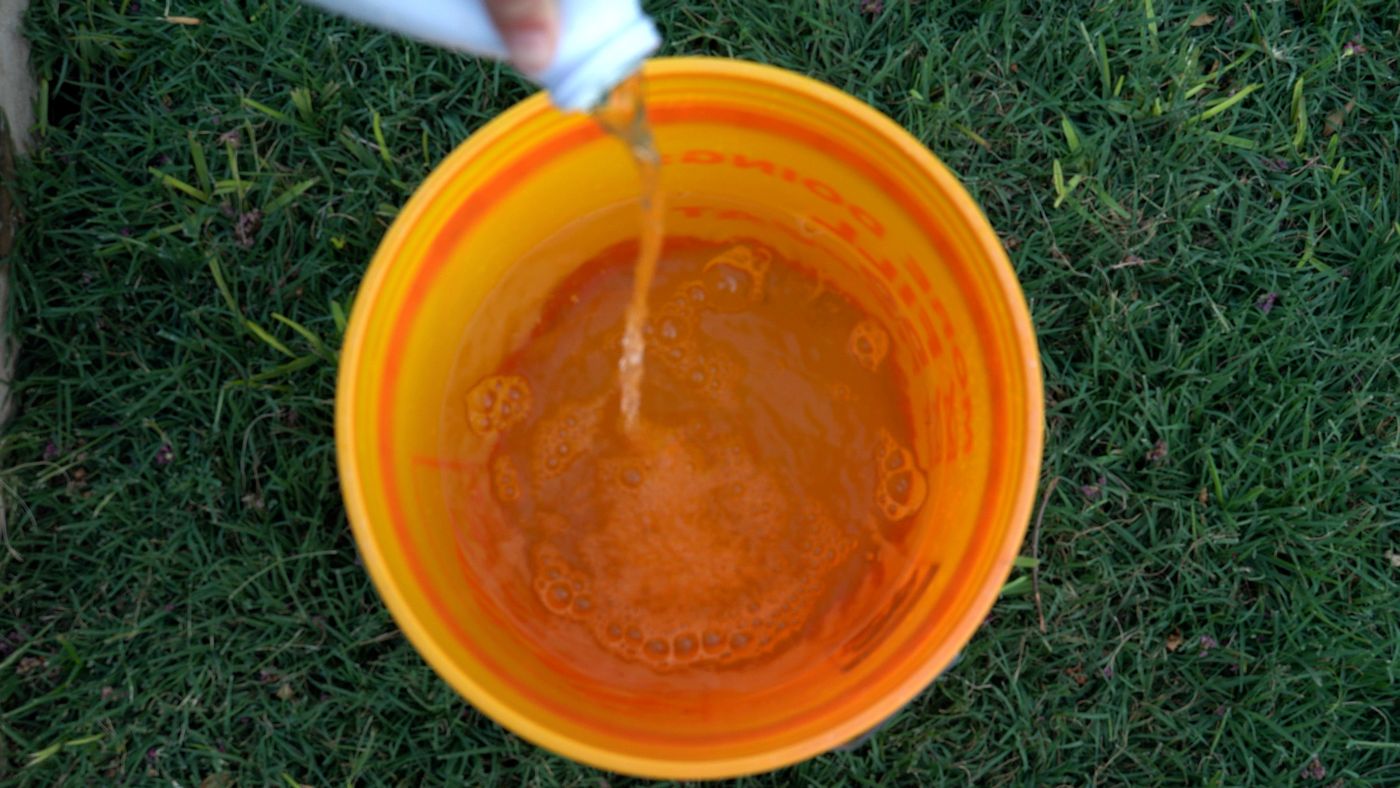
Add slowly. Pour the dissolved solution around the perimeter while the pump is running. Never dump chemicals directly into the skimmer.
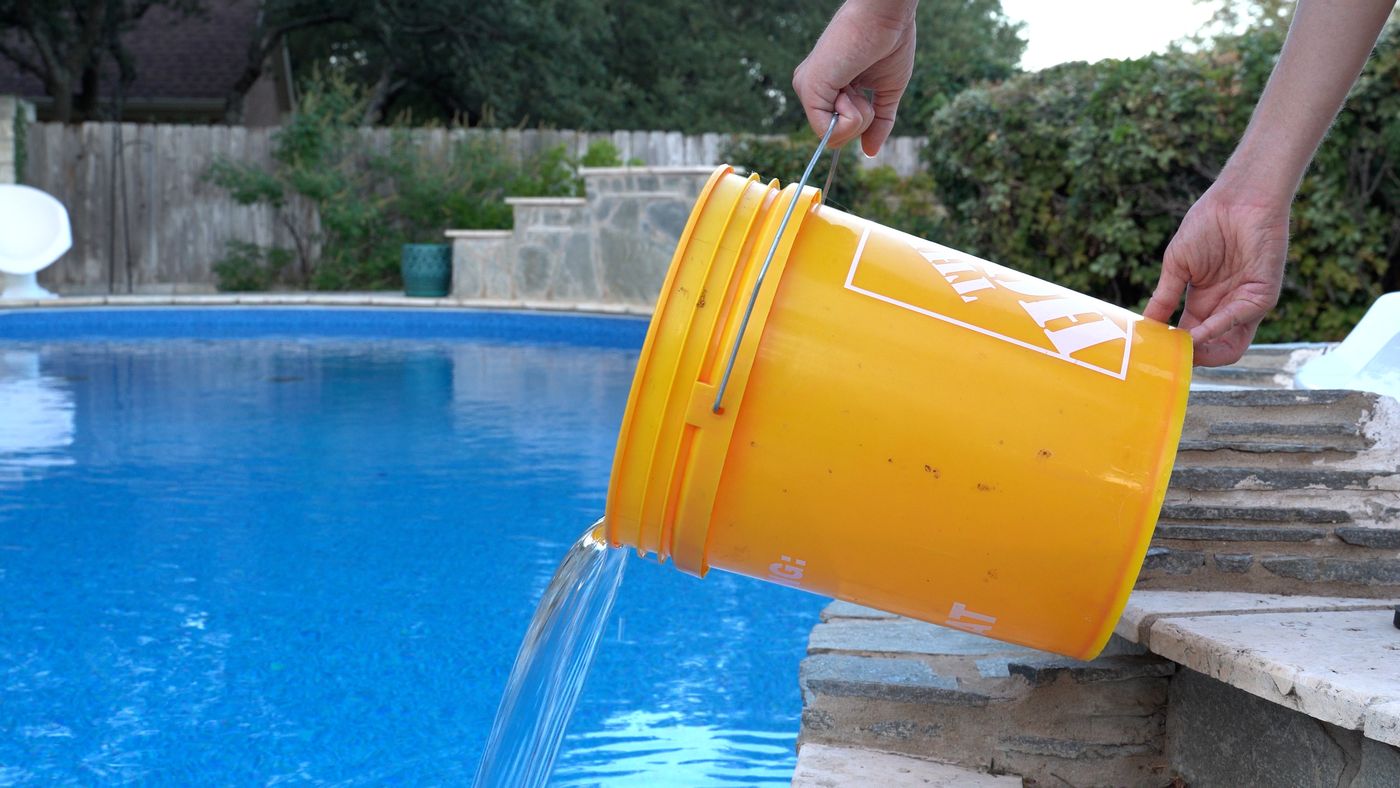
Follow the "One Pound Rule." Don't add more than one pound of product per 10,000 gallons in a single dose. Wait four to six hours for the water to circulate, then retest. Patience prevents overcorrection.
What About High pH?
While this article focuses on raising pH, high pH is equally common—especially with new plaster, heavy aeration, or high-alkalinity fill water.
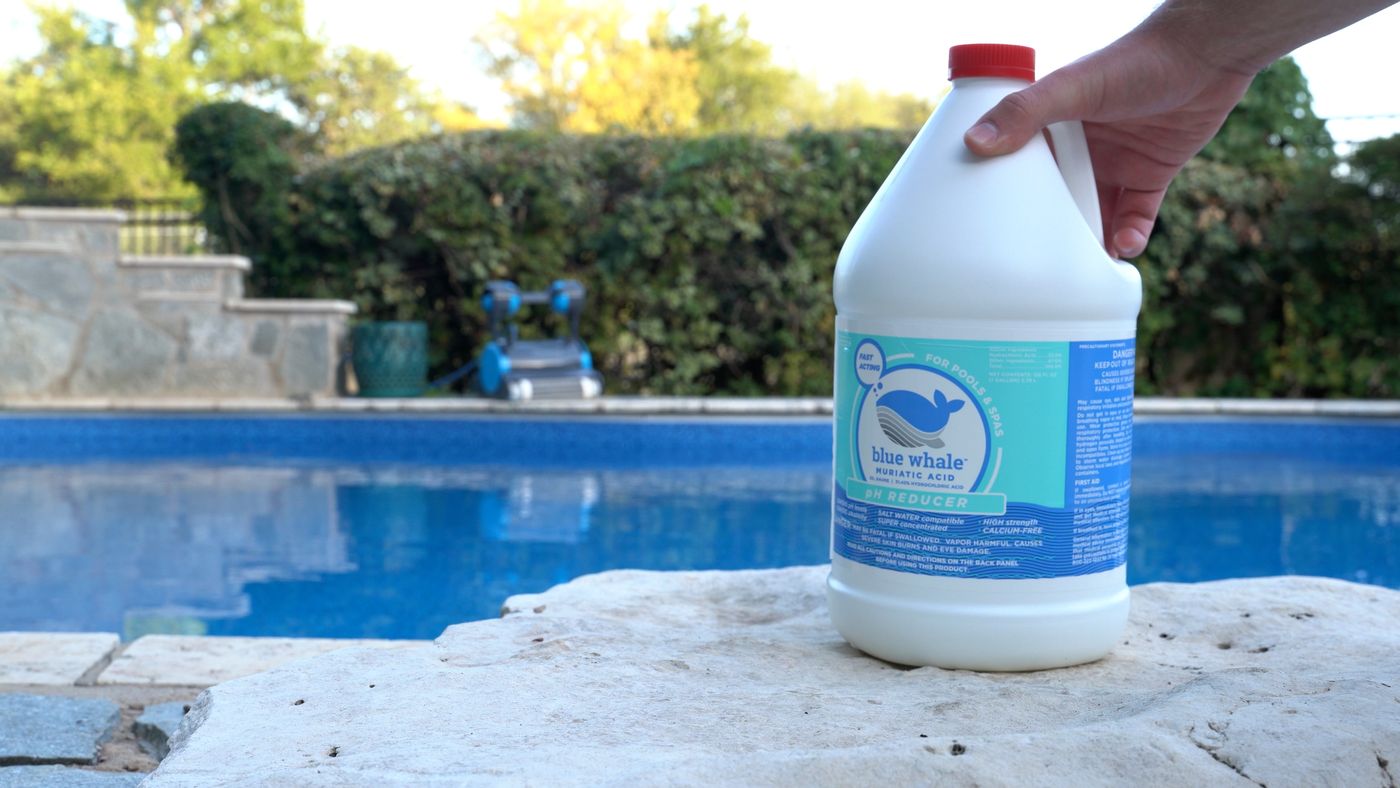
The fix is usually muriatic acid or dry acid (sodium bisulfate). I cover the complete process—including safety, dosing, and step-by-step instructions—in my guide on how to lower pool pH. You can also use our pool acid calculator for exact dosing. The key point: whether your pH runs high or low, a continuous monitor like the ICO catches the drift before it becomes a problem. You'll get an alert on your phone instead of discovering green water on Saturday morning.
Why pH Matters: The Real Cost of Ignoring It
A bad pH reading isn't just an inconvenience. It's actively damaging your property.
Corroded equipment: Acidic water is aggressive and eats metal. It will eventually destroy your pool heater—a repair that runs $4,000 or more—and damage pump components.
Surface etching: Low pH pits your plaster and degrades grout. This leads to rough surfaces and expensive resurfacing jobs.
Swimmer discomfort: That "chlorine smell" and burning eyes? Almost always caused by pH imbalance, not too much chlorine.
Wasted chemicals: At the wrong pH, you're essentially pouring money into water that can't use it. This is where most pool owners hemorrhage cash without realizing it.
The Smart Setup: Three Tools That Pay for Themselves
You don't have to babysit your pool chemistry. Here's how to automate the headache away:
1. ICO Smart Pool Monitor by Ondilo
This is the single best investment you can make for your pool. It continuously tracks pH, ORP, chlorine effectiveness, temperature, and TDS—then sends actionable recommendations to your phone.
Instead of reactive maintenance (discovering a problem after your water turns), you get proactive alerts. Most owners report cutting their chemical spending by 30-50% in the first season because they stop over-treating.
Bottom line: It removes the guesswork entirely and usually pays for itself within a year.
Read our full review: ICO Pool Water Monitor Review
2. Dolphin Robotic Pool Cleaner (Premier or Sigma)
Debris isn't just ugly—it's a pH wrecking ball. Every leaf and grass clipping that decomposes in your water releases acids that crash your levels.
A quality robotic cleaner like the Dolphin Premier or Dolphin Sigma runs independently of your main pump, scrubbing floors and walls while filtering out organic matter before it breaks down. Cleaner water means more stable chemistry and fewer corrections.
It's not just about convenience. It's about removing the root cause of half your chemical problems.
3. SpectraLight UV Sanitization
Here's where the pros have a major advantage. UV systems kill 99.9% of pathogens using ultraviolet light—before they ever reach your pool water.
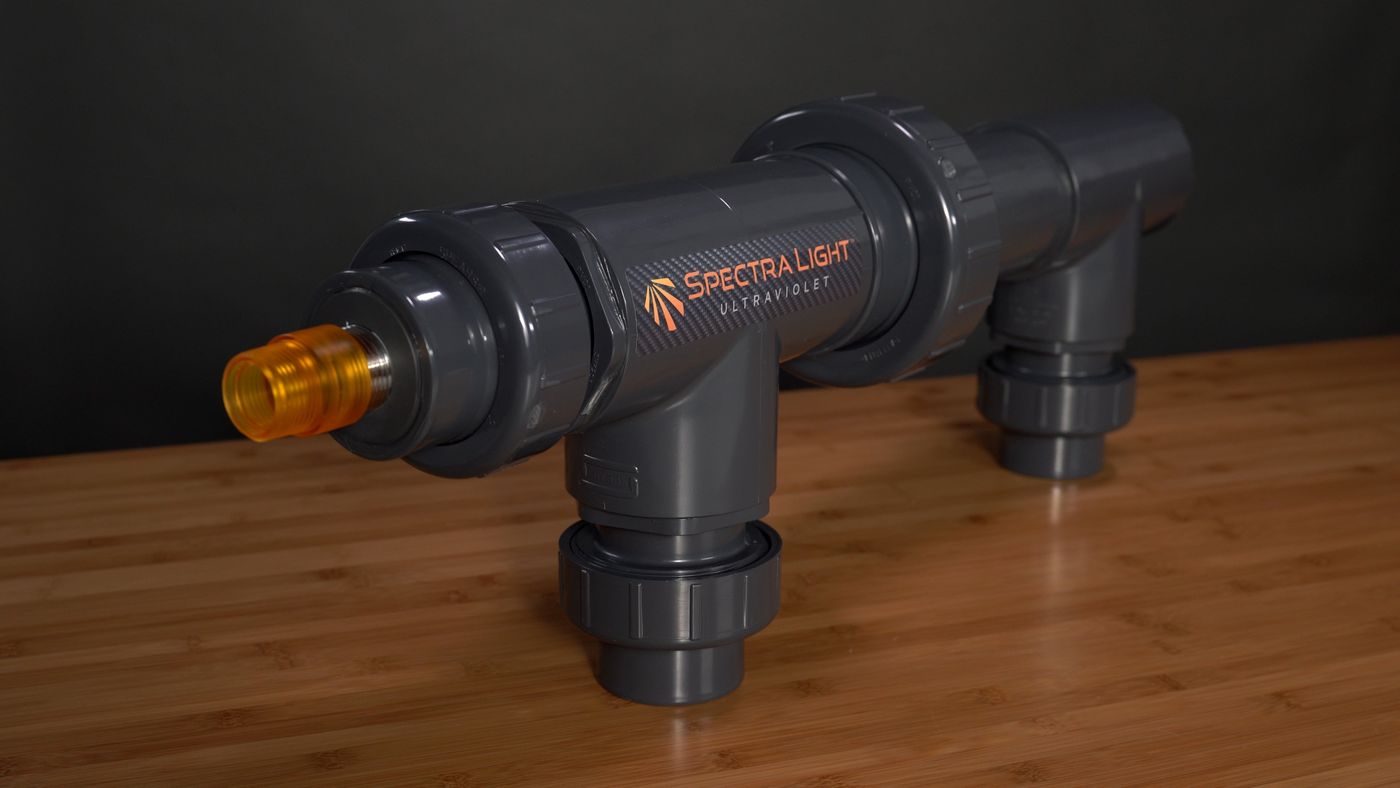
The result? You can maintain the same ORP (killing power) with significantly less chlorine. Lower chlorine demand means more stable pH and eliminates that harsh chemical feel that drives people out of the water.
If you're tired of the constant pH roller coaster, UV sanitization flattens the ride.
Read our full review: SpectraLight UV Review
Quick Recap
Test accurately: Use a smart monitor or high-quality digital meter. Strip tests are fine for a quick check, but precision matters for corrections.
Aim for the Power Zone: 7.0 to 7.2 for aggressive cleaning, 7.4 for swimming.
Match the chemical to your Alkalinity: Borax if TA is high, Soda Ash if it's low, aeration for a gentle rise.
Address root causes: If you're using Trichlor tablets, consider switching to liquid chlorine or a salt system to stop constant pH crashes. Keep debris out of the water with a robotic cleaner.
Monitor continuously: An ICO takes you from reactive to proactive and saves money in the process.
pH is truly the unsung hero of a clear pool. When you get the balance right, your chlorine works efficiently, your equipment lasts longer, and your water stays sparkling. For a deeper dive into the ideal pH level for your pool and how pH fits into your complete water balance, check out our pool chemistry calculator and weekly pool maintenance guide.
If you want to look into a pool water monitor like the ICO or UV system like the SpectraLight, head on over to my deals page at ThePoolNerd.com/Deals, where I post all the best deals on top pool equipment and more.
Until then, enjoy that pool—I'll see you next time.

Comments
Loading comments…