
 Justin D.
Introduction
Welcome back to The Pool Nerd. I'm Justin, your resident pool aficionado. And today we're diving into one of the most common upgrades pool owners ask me about: converting a chlorine pool to saltwater.
You've heard the sales pitch — "It's like swimming in a spa," or "You'll never have to buy chlorine again." But as with everything in the pool industry, the marketing rarely tells the whole story. So I'm going to cover what a saltwater pool actually is, what you need to convert, how the process works, and whether switching to salt is genuinely worth it.

Once you've owned a traditional chlorine pool for a while, the idea of salt starts sounding tempting. No more hauling heavy liquid chlorine jugs. No more babysitting tablet feeders. You want softer water and more automation. And honestly? There are some great reasons people love salt pools. But there are also a lot of things you should know before you convert.
Saltwater Pools Are Still Chlorine Pools
This is the biggest misunderstanding in the industry: a saltwater pool is not a "non-chlorine" pool.
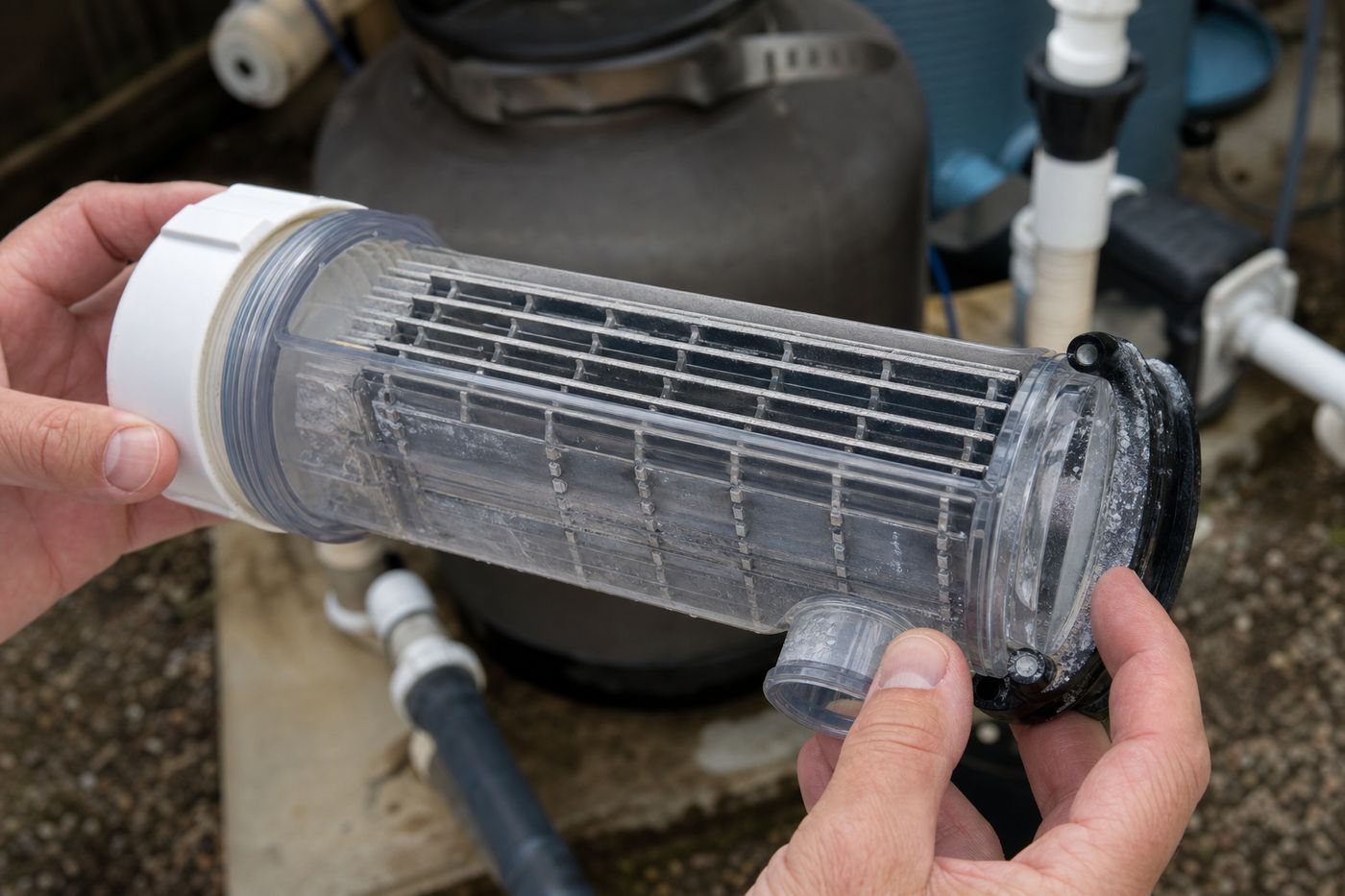
Here's the mechanics. You add salt to the water (sodium chloride). You run electricity through a salt chlorine generator (SWG) cell. The electrolysis process converts that salt into chlorine right there in the cell. So you are still swimming in chlorinated water — it's the exact same sanitizer keeping things safe from bacteria and algae. The only difference is that the "factory" sits on your equipment pad instead of at a chemical plant.
If you want the full side-by-side on how these two systems stack up, read my saltwater vs chlorine pools breakdown first — it sets the stage for everything below.
Why People Convert To Salt: The Real Benefits
Let's be fair, because salt pools earned their popularity for real reasons.
1. Less Daily Maintenance
This is the hook. Instead of pouring liquid chlorine every few days or managing trichlor tabs (which, as we know, send your cyanuric acid through the roof), the salt cell makes chlorine automatically while the pump runs. For busy homeowners or anyone who travels, this effectively "vacation-proofs" the pool.
2. Softer-Feeling Water
This one isn't a myth. Saltwater pools typically run a salinity of around 3,000 to 3,500 ppm. For context, the ocean is about 35,000 ppm — so a salt pool is only about a tenth as salty as the sea. That mild salinity acts like a natural water softener: smoother on the skin, less eye irritation, and none of that "crusty" feeling in your hair after a swim.
So do saltwater pools feel like the ocean? No — not even close. You can barely taste the salt.
3. More Consistent Chlorine Production
Salt systems generate chlorine continuously and slowly. Instead of the "spike and dip" of manual dosing, you get a steady baseline. That means fewer algae outbreaks during high swimmer loads or heat waves — provided your settings are dialed in.
Why Some People Regret Going Salt
Before you rip out your old feeder, we need to talk about the Pool Nerd side of the equation — the stuff that hits your wallet five years down the road.
1. The Corrosion Factor
Salt is a corrosive agent, and it accelerates galvanic corrosion. If you have natural stone like travertine or limestone, salt slowly works into the pores, crystallizes, and causes the stone to "spall," or flake away. It also attacks gas heater exchangers (copper is especially vulnerable), stainless handrails and ladder cups, and the screws inside your light fixtures.

2. The Constant pH Climb
The byproduct of electrolysis in a salt cell is sodium hydroxide, which has a very high pH. That means your pool's pH naturally and constantly drifts upward. High pH pulls calcium out of suspension, leading to scaling on your tile line and inside your expensive salt cell. So you trade "adding chlorine" for "adding muriatic acid."
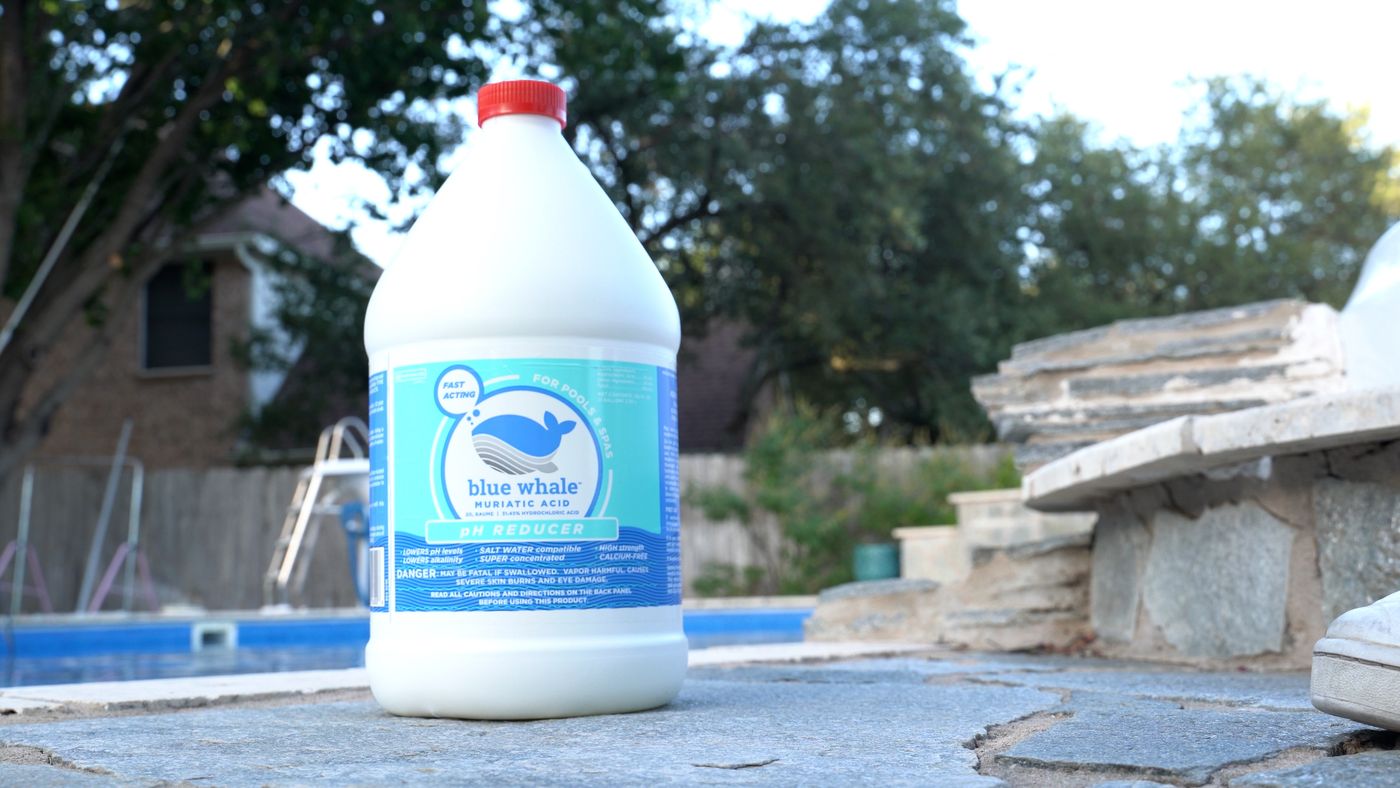
If you find yourself fighting that climb, my guides on how to lower your pool's pH and the ideal pool pH level cover exact dosing and why the target matters so much.
3. Salt Cell Lifespan
A salt cell is a wear item. Most cells are rated for 8,000 to 10,000 hours of operation, so depending on your run time you'll be replacing it every 3 to 7 years — and a replacement commonly runs $700 to $1,500+ (my best salt cells guide covers replacements that cost far less than that). When you factor that in, salt isn't actually "cheaper" than liquid chlorine. It just shifts the cost from a small monthly expense to a big lump-sum equipment failure later.
Salt Doesn't Sleep
At pool concentrations salt is far weaker than seawater, but it never stops working. The damage shows up slowly on the most expensive stuff you own — heaters, rails, niches, and soft stone — which is exactly why it's so easy to ignore until the repair bill lands.
What You Need For The Conversion
If you've weighed the pros and cons and decided salt is the way to go, do it right. Don't just grab the cheapest cell you can find. Here's the Pool Nerd gear list for a professional-grade conversion.
1. The Salt Chlorine Generator (SWG) Kit
You need a power center (the brain) and the electrolytic cell. Pro tip: oversize your cell. If you have a 20,000-gallon pool, buy a cell rated for 40,000 gallons. Running a larger cell at 50% output lasts significantly longer than running a small cell flat-out at 100%. I rank the systems worth buying — from the OEM Hayward AquaRite to budget above-ground setups — in my best salt chlorine generators guide.
Best Salt Chlorine Generators at a Glance


One more thing while you're budgeting: the cell inside whichever system you buy is a wear item, and in 3 to 7 years you'll be replacing it. Buying a system with cheap, proven replacement cells available (like the Hayward T-Cell platform) saves you serious money on the second half of ownership. These are the replacement cells I recommend in my best salt cells guide:
Best Salt Cells at a Glance


2. Pool-Grade Salt
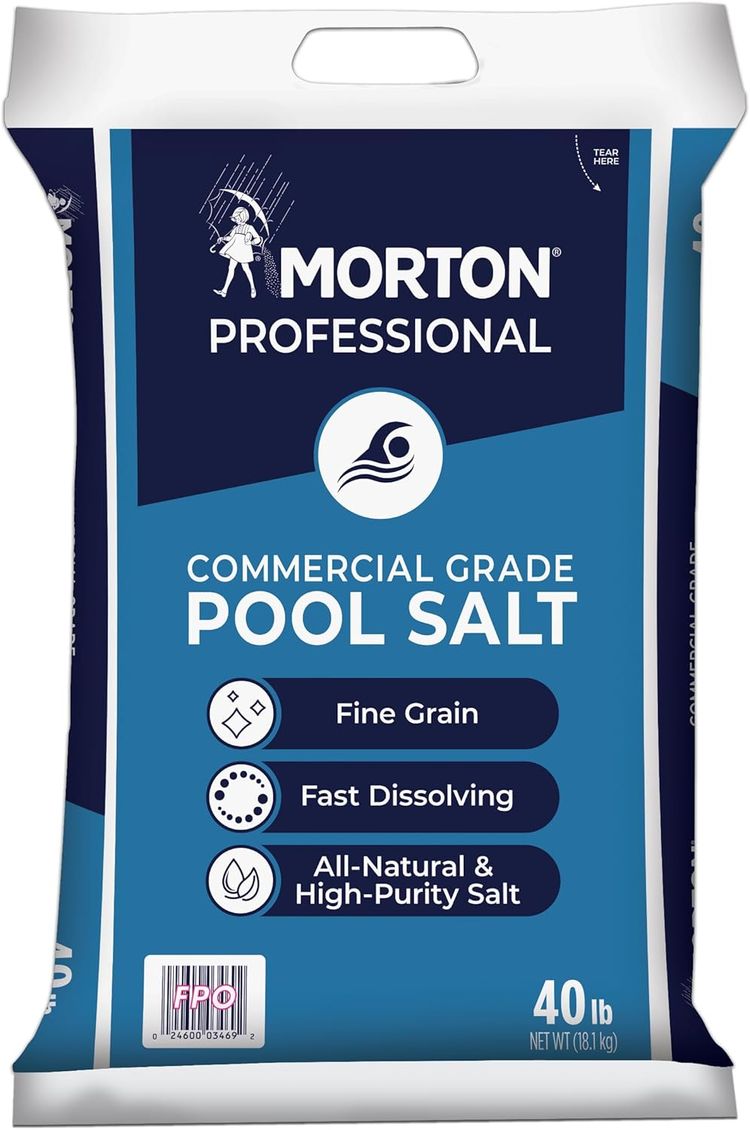
You want high-purity (99%+) sodium chloride. Avoid "rock salt" or "ice melt" — those contain impurities and minerals like iron and manganese that will stain your plaster.
3. A Zinc Sacrificial Anode
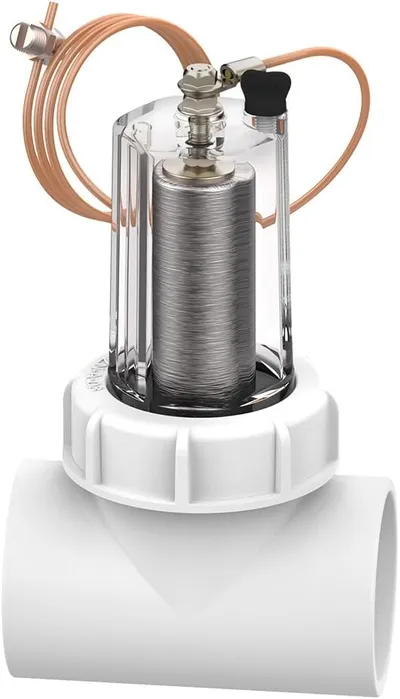
If you're going salt, this is non-negotiable in my book. A zinc anode is a piece of metal that's more "active" than the other metals in your pool, so the salt attacks the zinc instead of your heater or handrails. It's cheap insurance against expensive corrosion.
4. Digital Water Monitoring
Because salt systems drive pH up and output changes with water temperature, you can't truly "set it and forget it." A water monitor like the ICO Pool Water Monitor floats in the pool and sends real-time ORP (oxidation reduction potential) and pH data to your phone — and some brands even make a saltwater-specific model that also reads TDS.
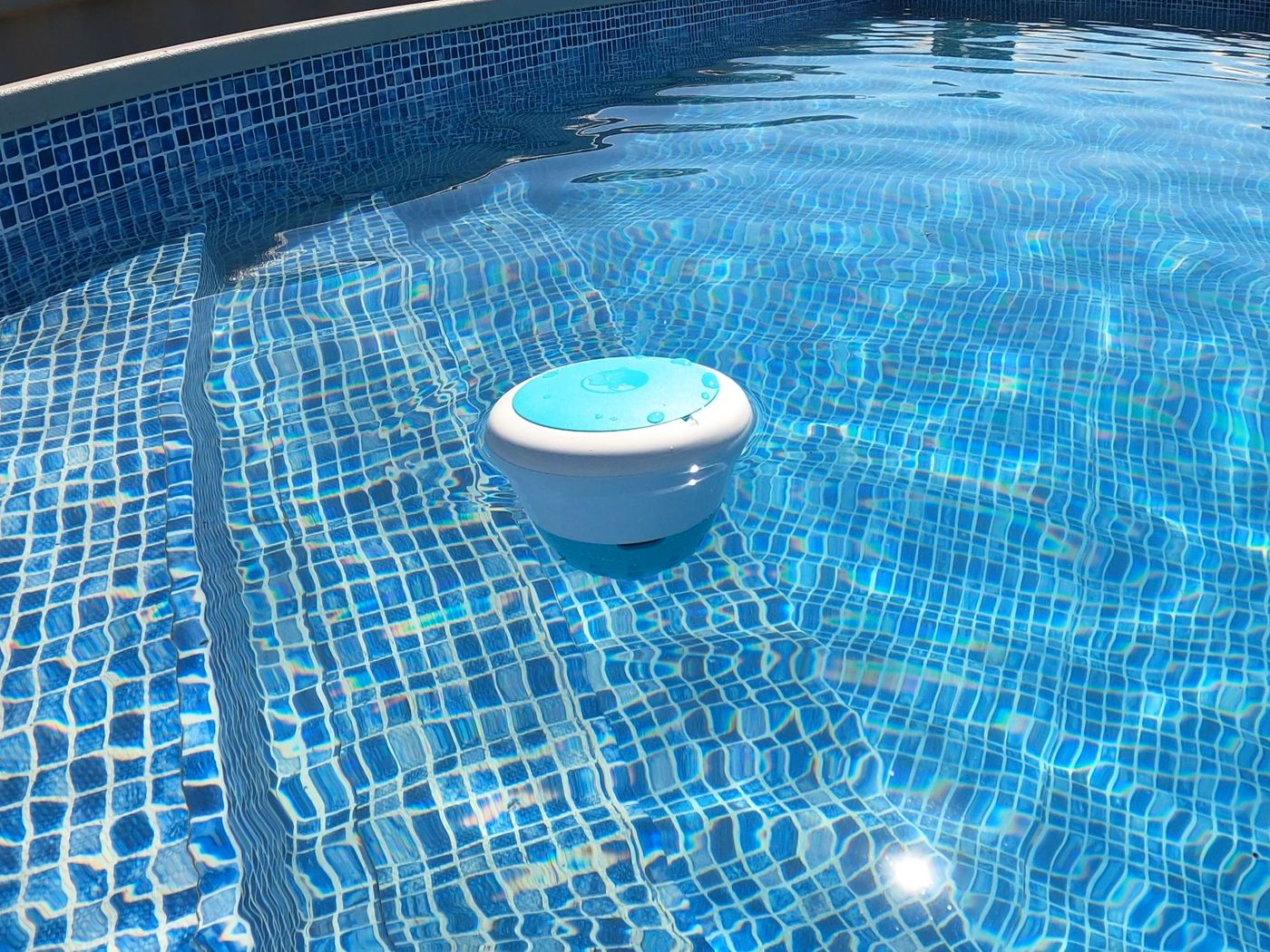
Why ORP? Because 3.0 ppm of chlorine at a pH of 8.2 is far less effective than 3.0 ppm at a pH of 7.5. ORP tells you whether the water is actually sanitized, not just how much chemical is floating in it. Compare your options in my guide to the best pool water monitors.
5. PVC Plumbing Supplies
You'll need 2" or 1.5" PVC pipe, heavy-duty primer and glue, and a hacksaw or PVC cutter.
How To Convert A Chlorine Pool To Saltwater: Step-By-Step
Step 1: Deep-Clean The System
Before you add salt, start with a clean slate. Backwash your sand filter or deep-clean your cartridges. You don't want the salt cell fighting existing organics or debris during the initial calibration.
Step 2: The Plumbing Install
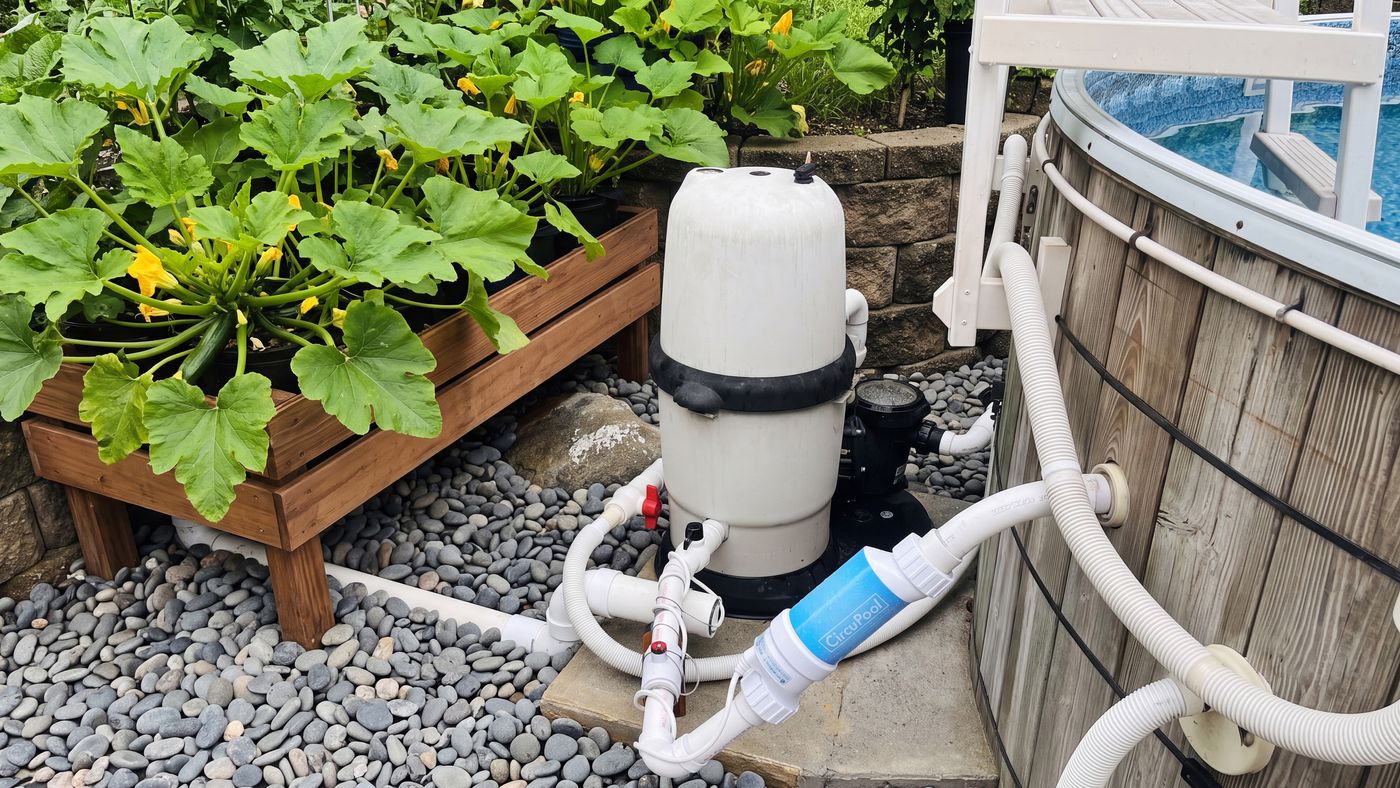
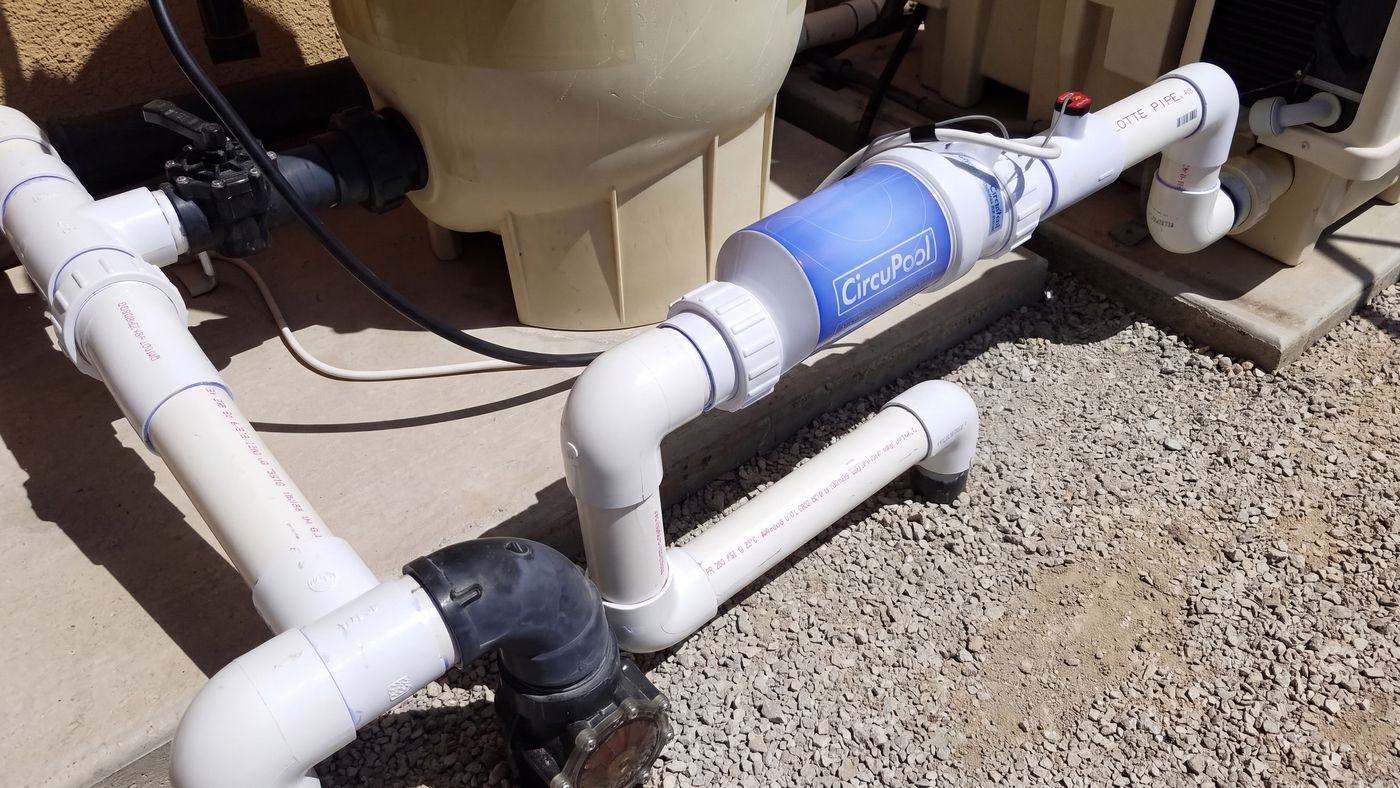
The salt cell must be the last piece of equipment in your plumbing line before the water heads back to the pool.
-
Cut the PVC pipe after the heater or filter.
-
Install the cell unions.
-
Ensure a straight run — most cells need 6–12 inches of straight pipe before the cell to create "laminar flow" (smooth water) so the flow switch reads correctly.
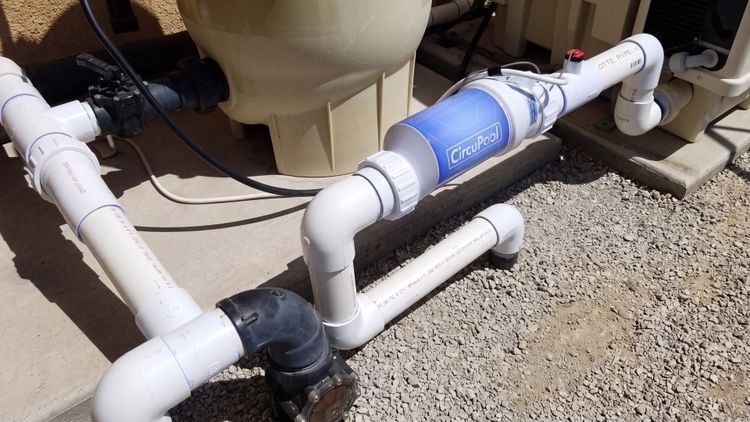
The cell installs as the last piece of equipment in the line — after the filter and heater, right before the water returns to the pool // The Pool Nerd
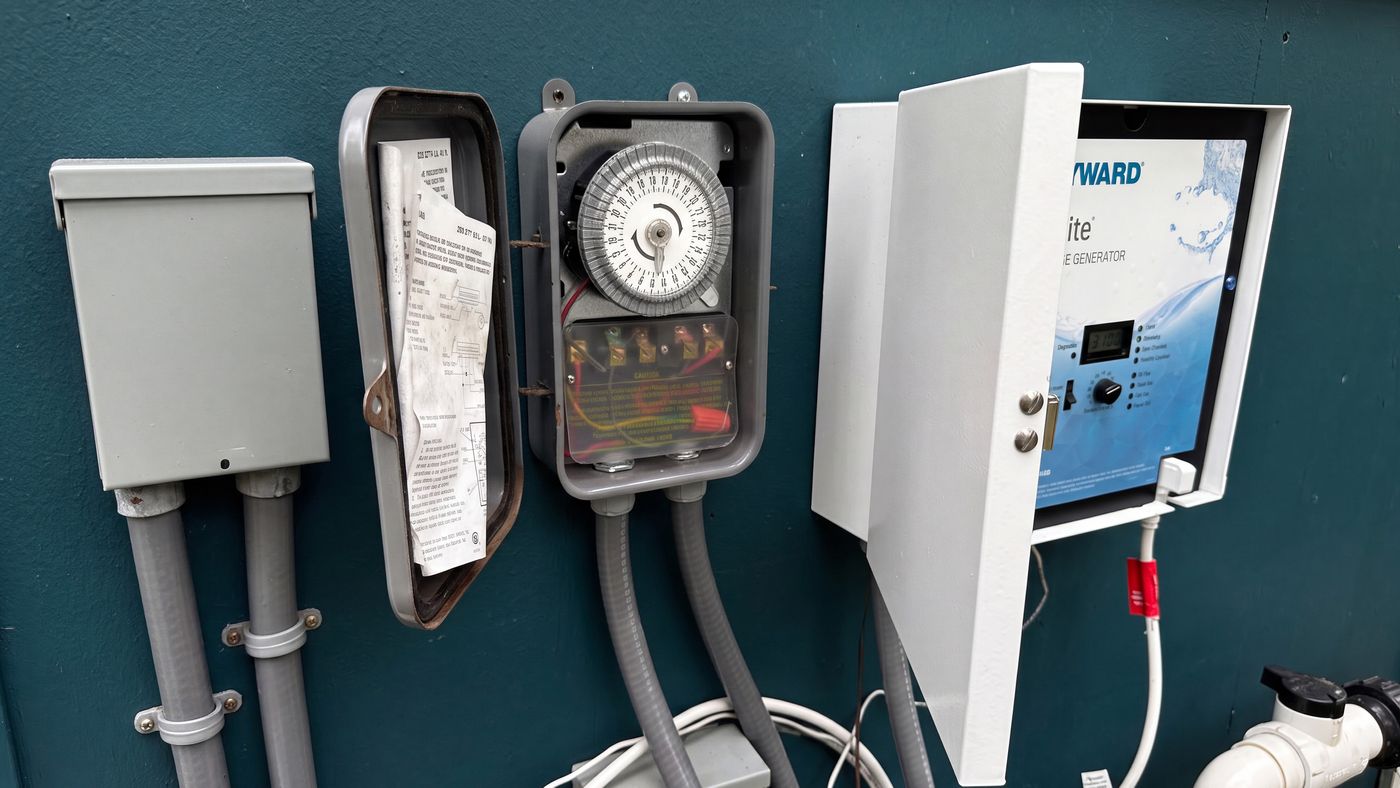
Step 3: Electrical Wiring
The power center gets wired to your pool timer or automation system. Critical safety note: the salt cell must only have power when the pump is running. If the cell stays on while the water is stagnant, it can create explosive hydrogen gas.
Step 4: Calculate And Add Salt
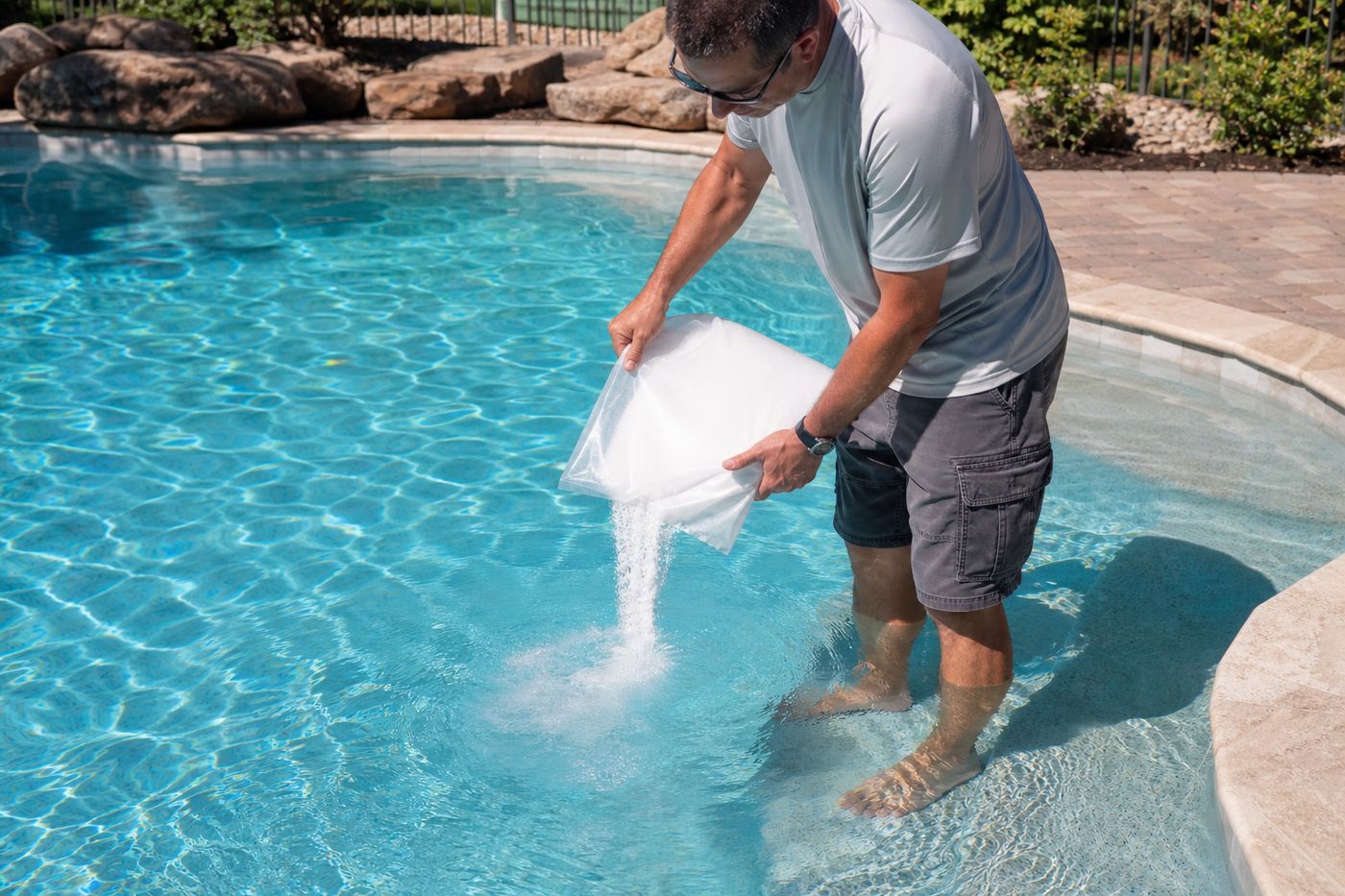
Check your current salt level first — even chlorine pools carry some salt from liquid chlorine buildup. Target around 3,200 ppm. Add the salt to the shallow end and brush it around until it dissolves, then leave the salt cell off for 24 hours so the salt fully incorporates and won't "slug" the cell with a high-concentration burst. Not sure how much to add? Run your numbers through our pool salt calculator.
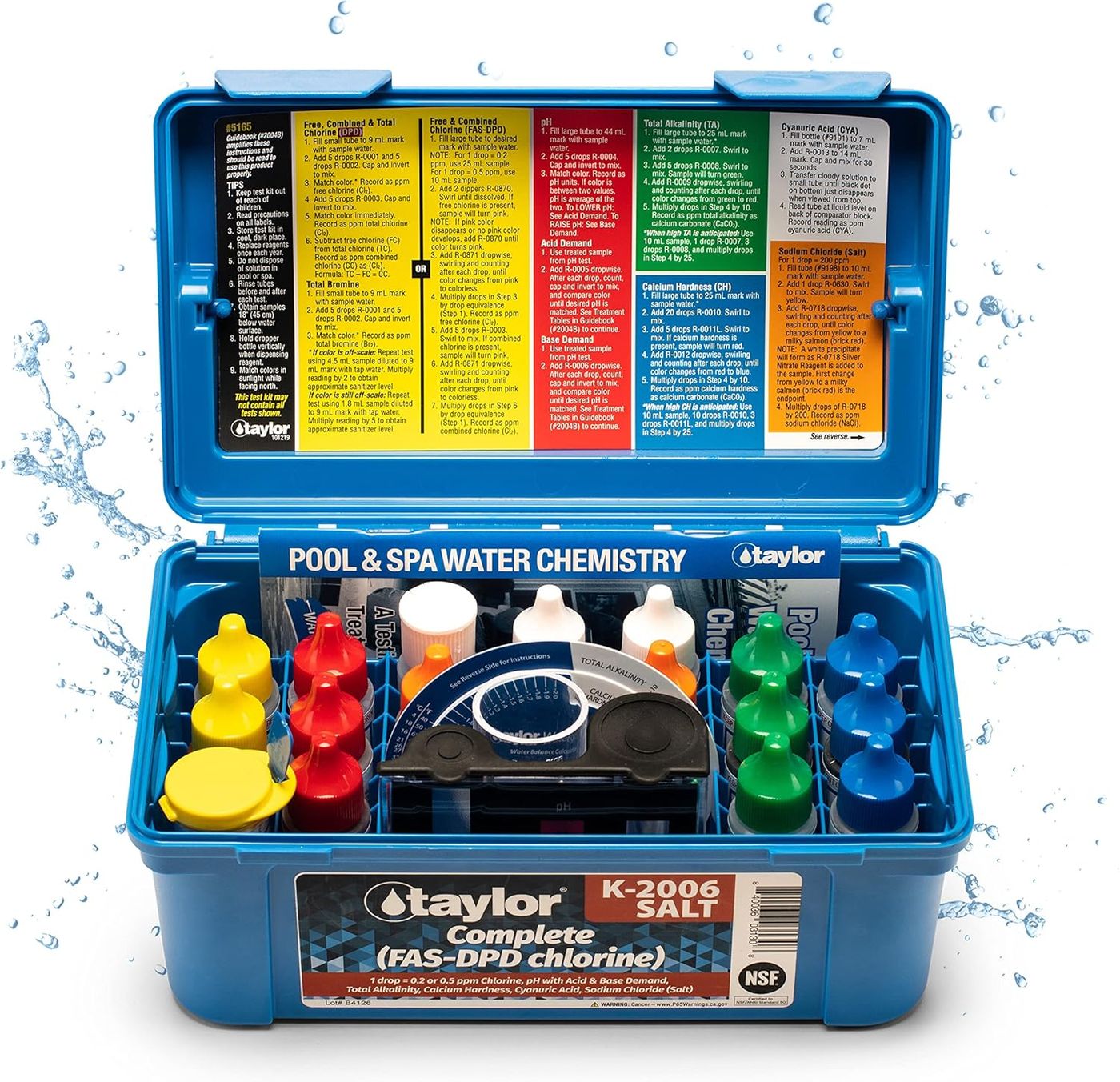
Step 5: The Pool Nerd Chemistry Balance
Before you flip the switch, your chemistry has to be dialed:
-
pH: 7.2–7.6
-
Alkalinity: 80–120 ppm
-
Cyanuric acid (CYA): 60–80 ppm — salt pools need higher CYA to protect the slowly generated chlorine from the sun.
-
Calcium hardness: 200–400 ppm
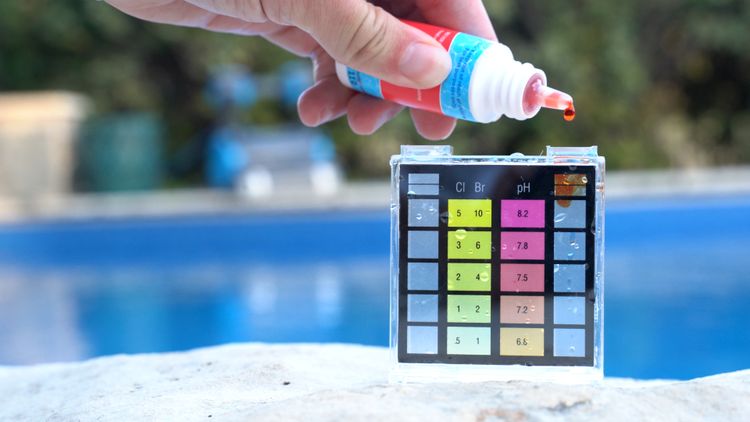
Balance pH, alkalinity, CYA, and calcium hardness before powering on the cell // The Pool Nerd
Step 6: Power On And Dial In
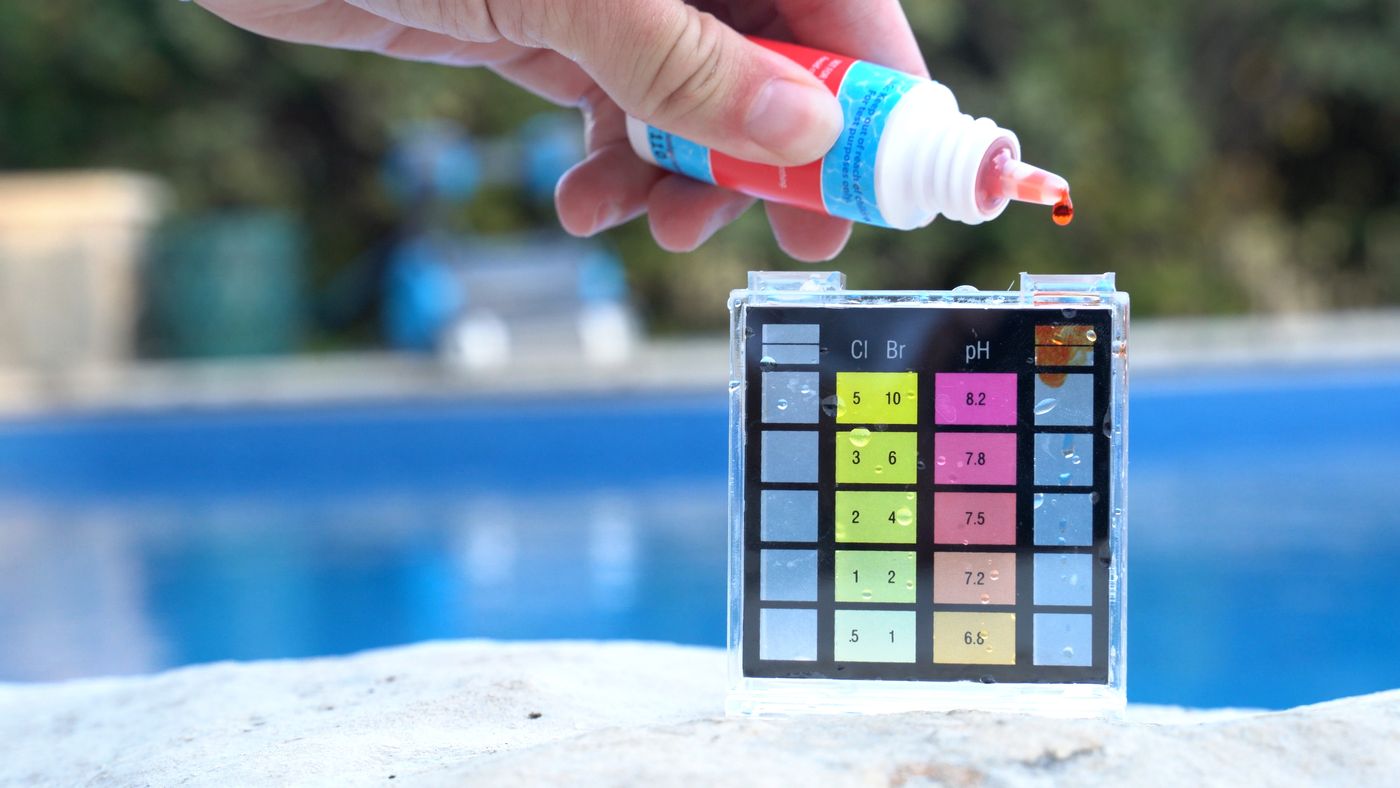
Start the cell at 50% output. Test your chlorine daily for the first week — if it's running high, drop the percentage; if it's low, bump it up. Your goal is a steady 3.0–5.0 ppm.
Leveling Up: The Super-Pool Setup
If you want the ultimate water quality, don't stop at salt. If I were building my dream automated system today, I'd integrate two more technologies.
1. SpectraLight UV (Ultraviolet Disinfection)
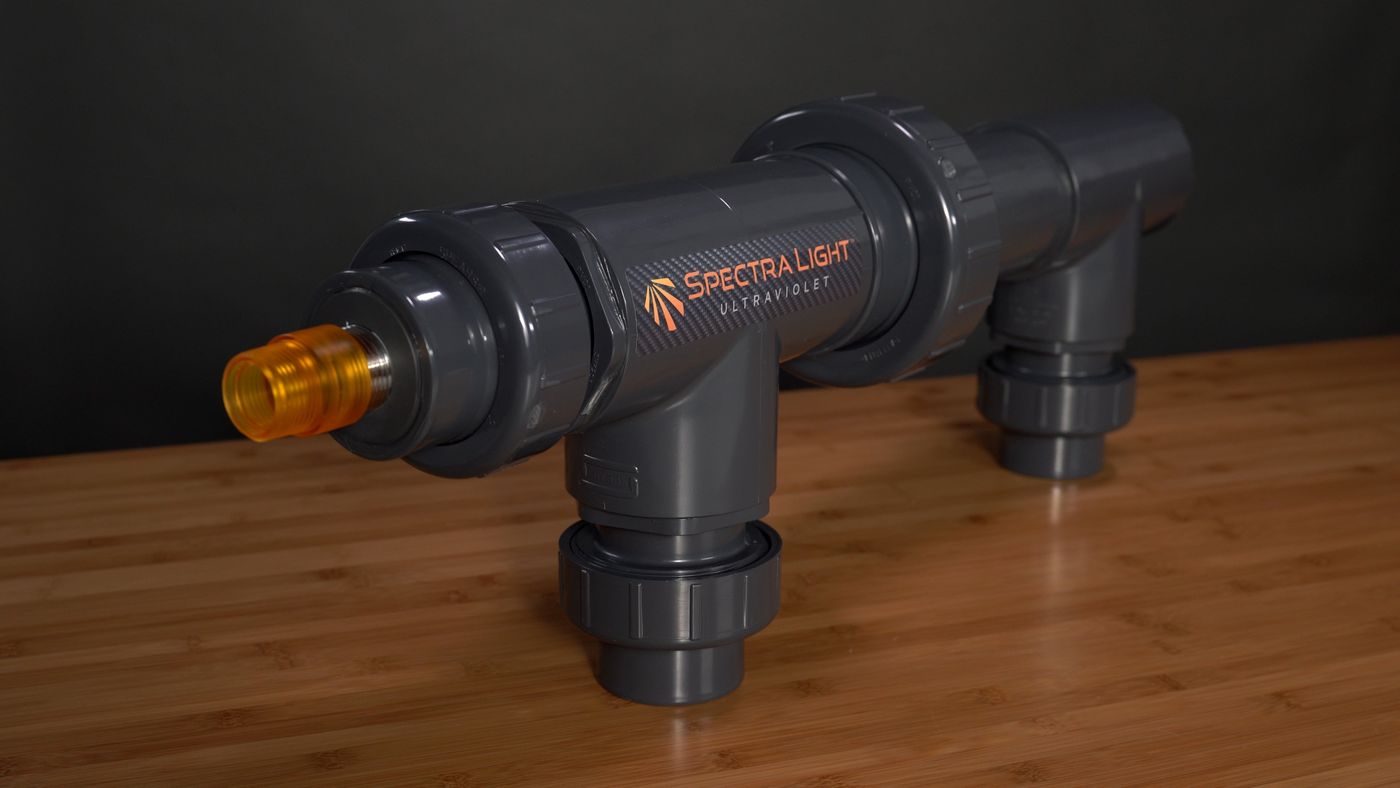
Chlorine is great, but it struggles with certain pathogens like Cryptosporidium. As water passes through a SpectraLight UV chamber, a high-intensity UV-C lamp blasts the DNA of those pathogens and renders them harmless. It also destroys chloramines — the stuff that makes eyes red and smells like "pool." With UV doing the heavy lifting, you can hold a much lower chlorine residual (1.0–2.0 ppm) for the safest water with the least chemical bite.
2. Real-Time ORP Monitoring
A salt system is a "dumb" device — it pumps out chlorine whether the pool is clean or filthy. An ORP monitor like the ICO tells you the truth about your water's ability to kill bacteria. If your ORP drops below 650mV, you know your pH is too high or the cell isn't keeping up — even if a test kit says you have "some" chlorine.
The Third Way: Liquid Chlorine Injection
Before you commit to salt, I have to mention my personal favorite for purist water quality: automated liquid chlorine injection.
Instead of a salt cell that creates corrosion and pushes pH up, you use a dosing pump to pull liquid chlorine from a tank and inject it into the pool. The pros: no salt corrosion, no relentless pH climb, and much cheaper equipment maintenance. The con: you still have to refill a chlorine tank every few weeks.
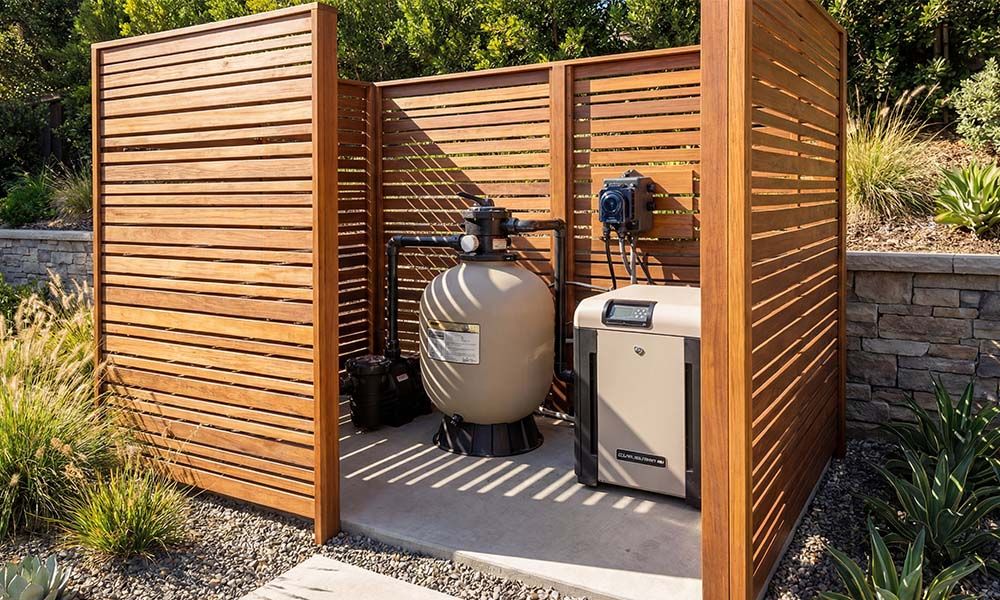
Paired with UV and an ORP monitor, this is about as close as you'll get at home to how high-end commercial pools are run. I break down the full setup in my best chlorine injection system guide, and I keep my current picks on the deals page.
Saltwater vs Traditional Chlorine Compared
| Feature | Saltwater Pool (SWG) | Traditional Chlorine Pool |
|---|---|---|
| Daily effort | Very low once dialed in | Higher if manually dosing |
| Automation | Excellent | Excellent with liquid injection |
| Water feel | Softer / silkier | Standard pool feel |
| Corrosion risk | Higher | Lower |
| pH stability | Poorer — pH constantly rises | More stable overall |
| Equipment wear | Higher long-term | Easier on equipment |
| Initial cost | Higher ($1,500–$2,500+) | Lower ($0 manual / $500–$1,000 injection) |
| Long-term cost | Higher (cell + corrosion) | Moderate to low |
| Chlorine source | Salt cell generates it | Added manually or injected |
| Biggest downside | Corrosion, scaling, cell replacement | More hands-on without automation |
| Pool Nerd take | Convenient, but overhyped | Best with liquid injection + ORP + UV |
When I talk about "traditional chlorine," I'm not just talking about manually pouring chlorine in every day — I'm including liquid chlorine injection systems that automate dosing without a salt cell. And honestly, that's one of my favorite setups. You get most of the automation people want from salt, without the corrosion and long-term equipment headaches. If you've already got a salt pool, my saltwater pool maintenance guide covers the full routine.
Final Verdict
So, are saltwater pools worth it? Yes — if you prioritize convenience over equipment longevity.
If you travel often, hate handling chemicals, and have a pool with standard tile and plaster (no expensive natural stone), salt is a fantastic lifestyle upgrade. But if you have a high-end outdoor oasis with stone waterfalls, travertine decking, and a $5,000 heater, I'd stay away from salt. In those cases I recommend the Pool Nerd setup instead: a SpectraLight UV system for primary disinfection, liquid chlorine injection for a consistent baseline, and an ICO water monitor for real-time ORP and pH. That combination gives you the soft, safe water of a salt pool without the corrosive side effects.
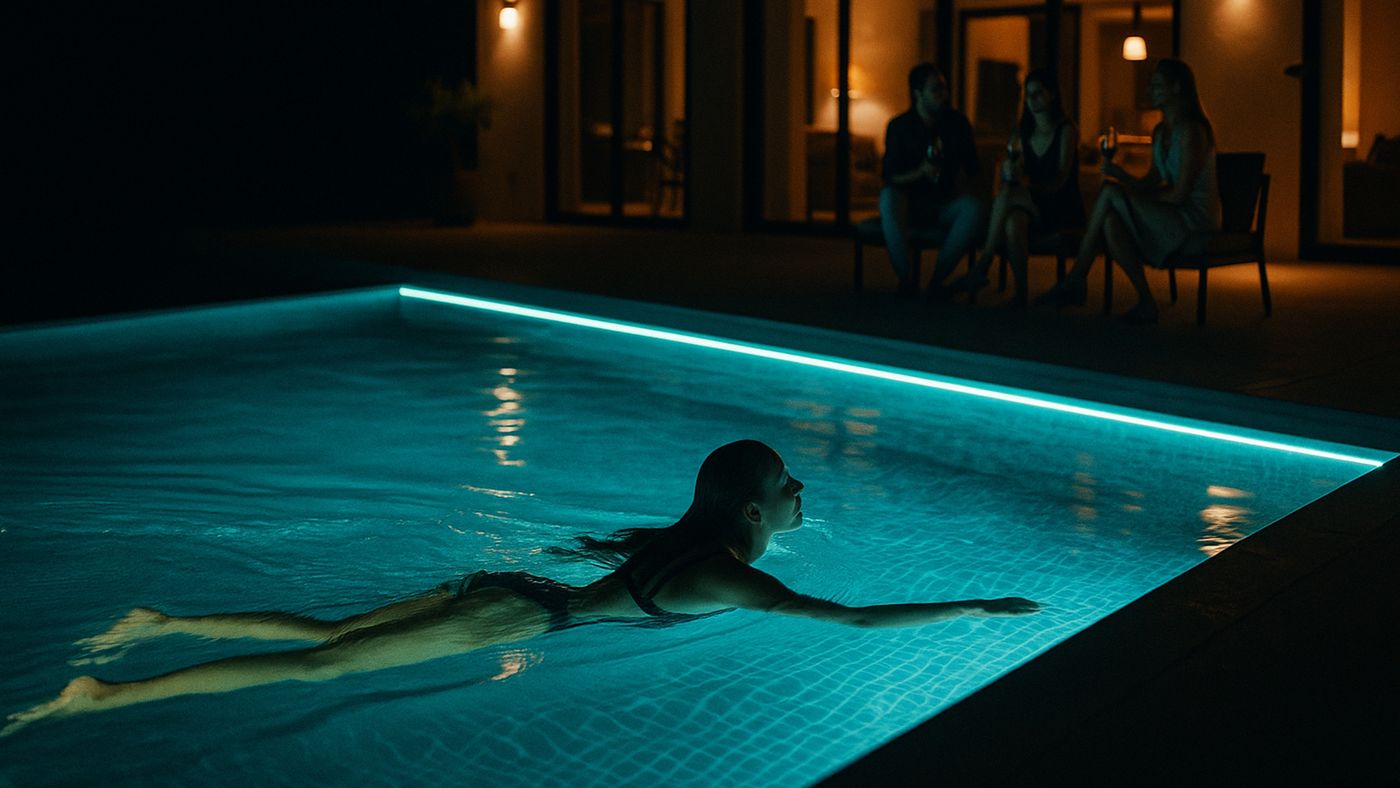
The biggest mistake people make is thinking "saltwater means easier forever." In reality it just shifts where the maintenance happens — instead of carrying jugs, you'll be cleaning calcium off titanium plates and replacing expensive cells.
If you want to keep nerding out over your pool equipment and chemistry, head over to my deals page, where I post the best deals on the smart monitors, UV systems, and injection gear I run myself.
Until next time — keep your LSI in check, watch your ORP, and enjoy your pool!
This article is for educational purposes only. Handling pool chemicals — specifically muriatic acid, liquid chlorine, and pool salt — involves real risk of injury or property damage. Always read manufacturer labels and SDS sheets, and never mix chemicals. Use this information at your own risk.


Comments
Loading comments…