
 Justin D.
Hey guys, welcome back to The Pool Nerd. I'm Justin, your resident pool aficionado. Today I'm diving into saltwater pools — how they work, what they really cost, and where they shine vs. fall short. I want to give you the balanced picture so you can decide if a salt system is right for your backyard.
You've probably heard the pitch: "Saltwater pools are chlorine-free." And honestly, that's one of the most misunderstood things in the entire pool industry. Here's the truth most people never hear up front: a saltwater pool is still a chlorine pool. It just makes its own chlorine on-site through electrolysis. Once you understand that one fact, the rest of the conversation gets a lot more honest.

Quick Take
A saltwater pool is a chlorine pool with the chlorine factory built into your equipment pad. It uses dissolved salt and a salt chlorine generator (SCG) to produce chlorine continuously through electrolysis.
- Pros: automated chlorination, silkier water feel, fewer chemical runs.
- Trade-offs: constant pH drift, salt cell replacement every 3–7 years, potential corrosion on metals and porous stone.
- Bottom line: in my opinion, salt systems are a great fit for owners who prioritize convenience — just go in with eyes open.
What Is a Saltwater Pool?
A saltwater pool is a pool sanitized by chlorine that's generated on-site from dissolved sodium chloride (pool salt) rather than added manually as liquid chlorine, granular shock, or tablets. The system that does this is called a salt chlorine generator (SCG), saltwater chlorinator, or salt cell system. (If you're shopping for one, I rank the systems worth buying in my best salt chlorine generators guide.)
Best Salt Chlorine Generators at a Glance


The key thing to internalize: saltwater pools are not chlorine-free. The water you swim in still contains the same active sanitizer (hypochlorous acid) as a traditional chlorine pool — the delivery method is just different. I like to describe a salt cell as a chlorine printer with a countdown timer. It prints sanitizer as water passes through, but eventually the coating on the internal plates wears out and the cell needs replacing.
ORP Checkpoint
ORP (Oxidation-Reduction Potential) measures the actual sanitizing power of your water — not just how much chlorine is present. Whether you run salt or traditional chlorine, ORP is the number that tells you if your pool is actually safe to swim in.
How Salt Generators Work
Saltwater pools maintain a salt level between 2,700 and 4,500 parts per million (ppm), with most systems targeting around 3,200–3,500 ppm. For context, the ocean is around 35,000 ppm and human tears are around 9,000 ppm — so you won't taste pool salt or feel it sting your eyes.
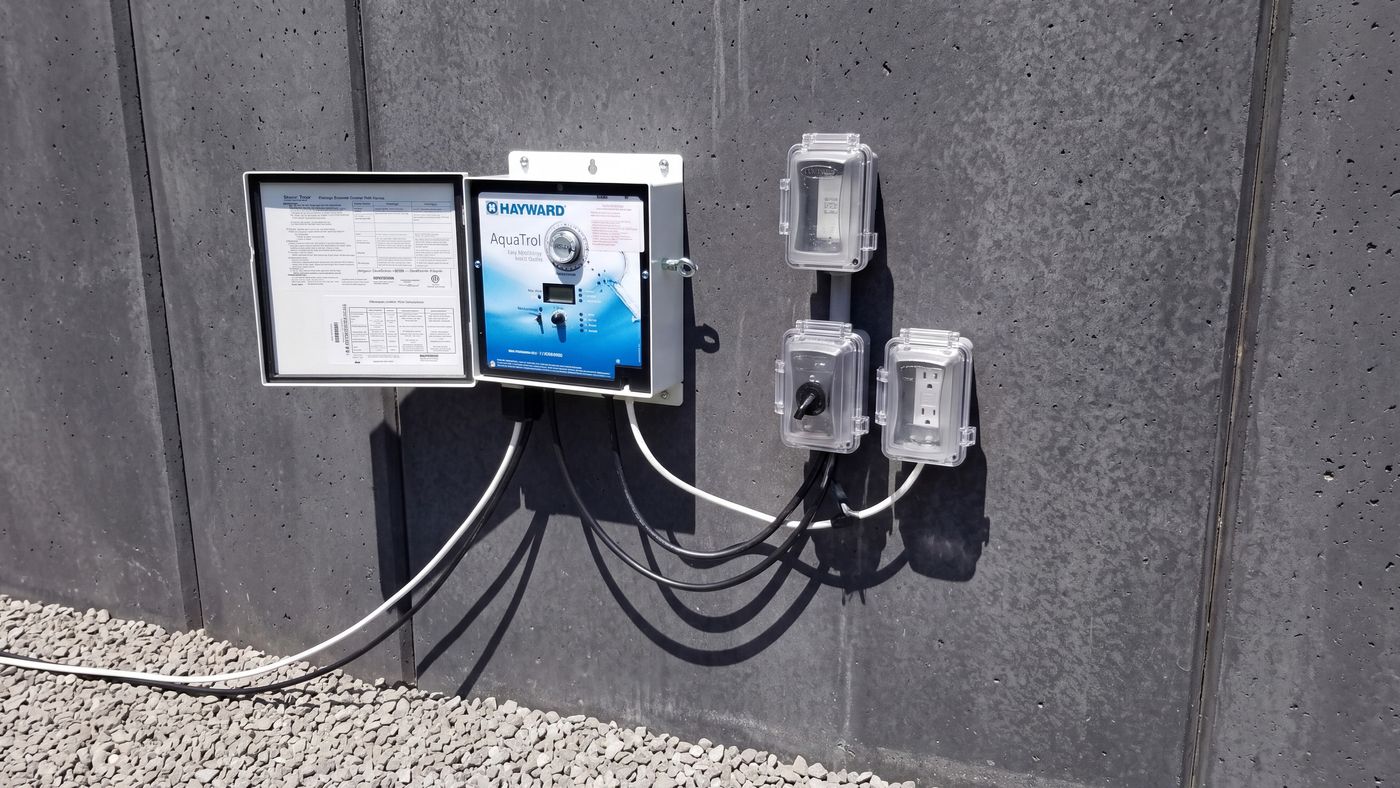
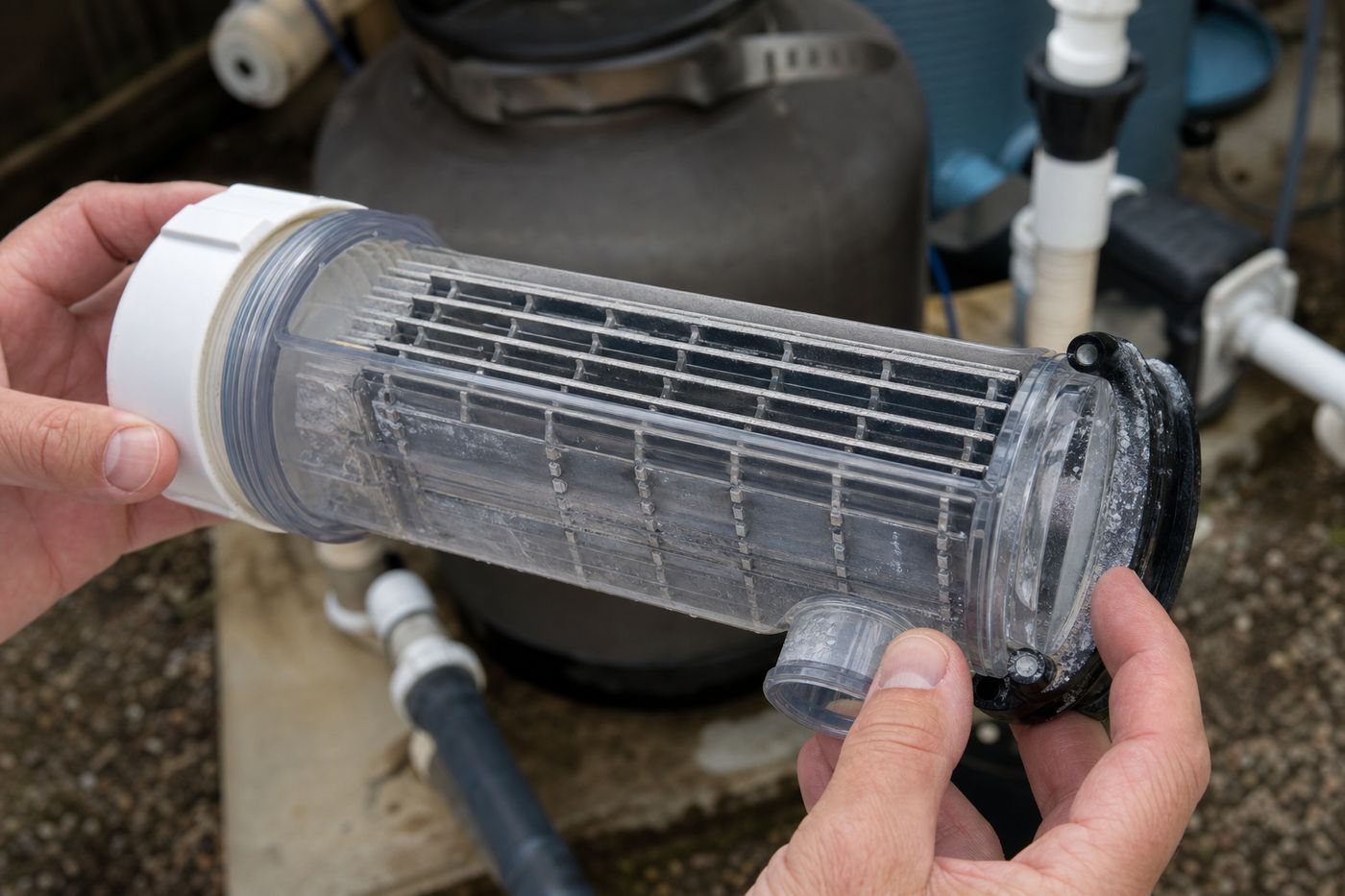
Inside your plumbing, the salt cell contains titanium plates coated with ruthenium or iridium. As water flows through, the power center sends a low-voltage DC current across the plates, performing electrolysis that splits sodium chloride (NaCl) and water into sodium hypochlorite (NaClO) — the same active chlorine you'd add from a jug — plus sodium hydroxide (NaOH) and hydrogen gas.
Once chlorine does its job, the sodium and chloride recombine and the cycle repeats. In theory it's a near-closed-loop system. In practice, that sodium hydroxide byproduct has a pH around 13, which is what makes salt pools notoriously pH-heavy to manage.
Repeat Trigger
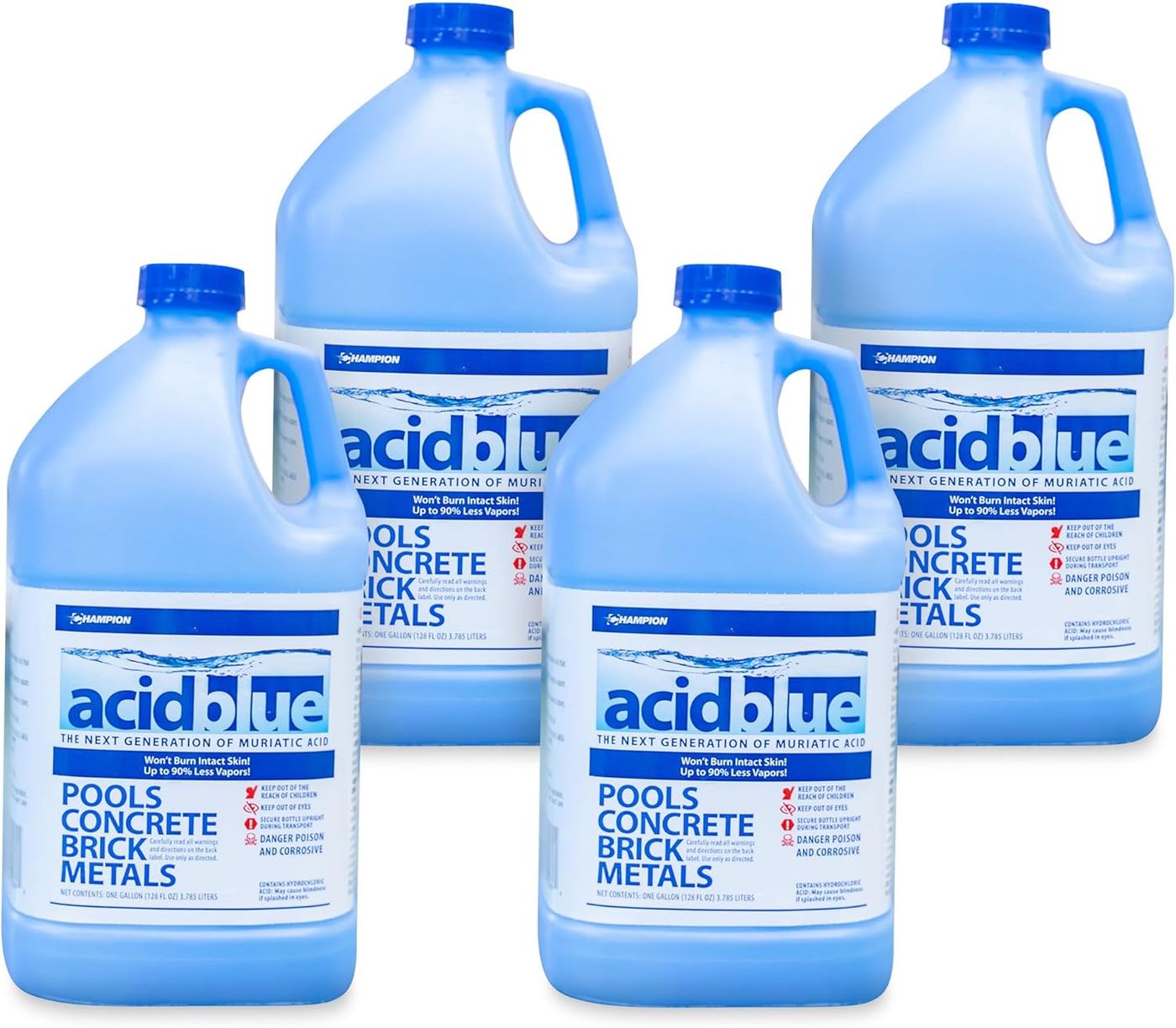
Every time your salt cell fires, it pushes pH upward. The longer your pump runs, the more often you'll need to add acid. This is the #1 surprise for new saltwater pool owners.
Benefits of a Saltwater Pool
People don't buy saltwater pools because they're "natural." They buy them because they're tired of hauling 2.5-gallon jugs of liquid chlorine in 100-degree heat. The reason is convenience, and salt systems deliver on that.
- Automated chlorination — the cell generates chlorine whenever your pump runs.
- Consistent sanitizer levels — no more spike-and-dip cycle of manual dosing.
- Softer water feel — dissolved salt acts as a mild water softener; most swimmers describe the water as smoother and gentler on skin and eyes.
- Vacation-friendly — keeps the pool sanitized for weeks unattended.
- Reduced chemical handling — a real safety win for families with kids and pets.
These are genuine wins. I won't pretend otherwise — plenty of pool owners run beautiful saltwater pools with minimal headaches for years.

The Maintenance Reality
This is where reality and marketing part ways. In some respects, a saltwater pool requires more chemistry attention than a well-managed traditional pool.
The Constant pH Climb
Because your cell fires for hours every day, pH is under constant upward pressure. Without monitoring, it can drift to 8.0 or higher within a couple of weeks. And here's why that matters — pool chemistry isn't linear, it's logarithmic:
- pH 7.0–7.2 → chlorine near peak effectiveness.
- pH 7.5 → chlorine drops to roughly 50% effective.
- pH 8.0 → chlorine only about 20% effective.
Meanwhile calcium falls out of solution and plates onto your tile line, heater, and the titanium ribbons inside the cell. Most owners respond by cranking cell output higher, accelerating wear and driving pH up even faster. It's a feedback loop that's easy to fall into.
You Still Need to Test and Balance
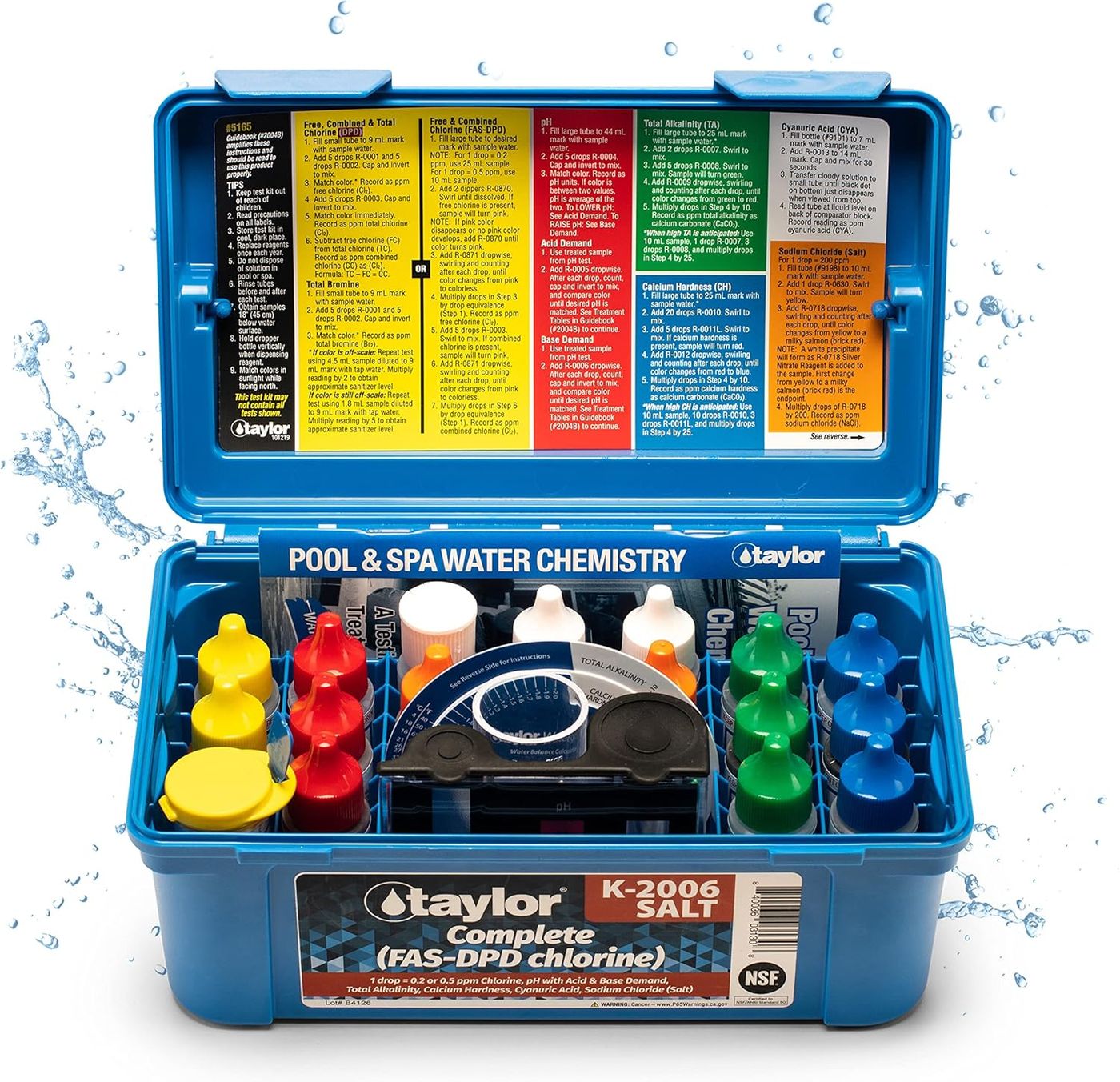
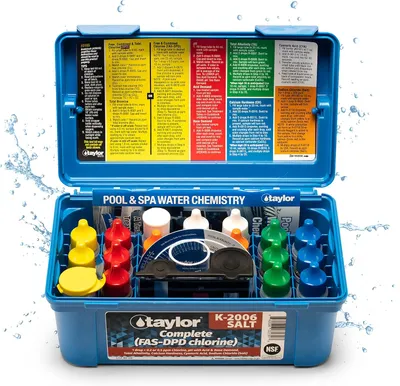
A saltwater pool still requires regular testing for pH, total alkalinity, calcium hardness, cyanuric acid (CYA / stabilizer), salt ppm, and free chlorine residual. Many owners also occasionally shock with liquid chlorine to handle high bather loads or chloramine buildup.
ORP Checkpoint
If your salt pool looks great by chlorine reading but you're still battling cloudy water or algae, check pH and CYA first. An ORP-based monitor like the ICO tells you immediately whether your chlorine is actually working.
Salt Cells Are Consumables
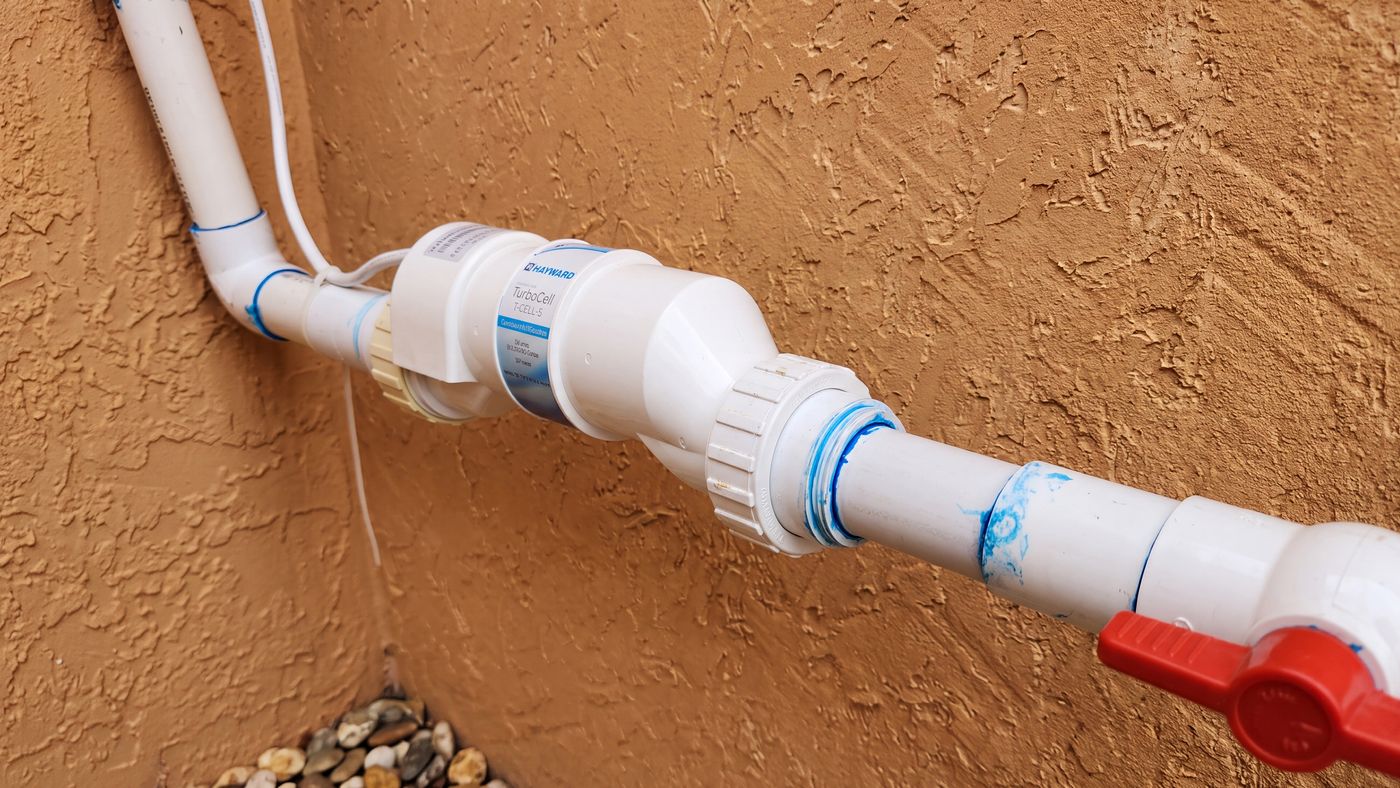
A salt cell is not a permanent piece of equipment — it's a wear item. Most residential cells are rated for 8,000–10,000 hours of operation, which typically works out to 3 to 7 years. Replacement cost runs $700–$1,500 for most residential cells — though quality aftermarket cells can cut that roughly in half. When yours dies, replace the cell, not the whole system: my best salt cells guide covers the OEM and aftermarket replacements worth buying.
Best Salt Cells at a Glance


In other words: you're still buying chlorine — just pre-paid in the form of a titanium-and-rare-earth-coated cell you replace every few years instead of by the jug.
Corrosion & Materials
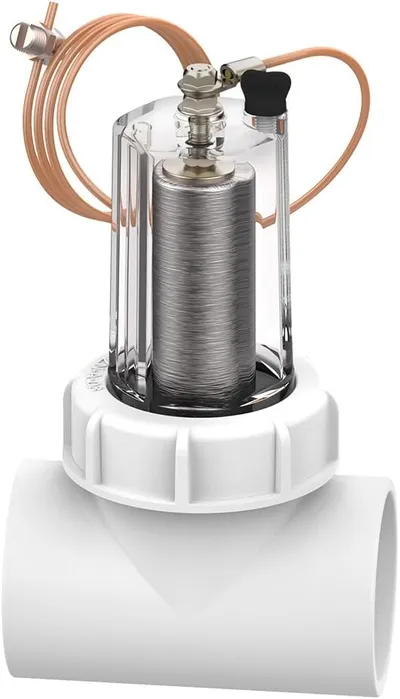
"Salt never sleeps." Salt is an electrolyte, which accelerates galvanic corrosion. That doesn't mean a saltwater pool will destroy your backyard — modern builders have gotten much better at specifying salt-compatible materials. But you do need to plan for it. The main areas of concern:
-
Heaters — specifically copper heat exchangers. Salt accelerates wear on gas heater internals.
-
Pool ladders, rails, and hardware — lower-grade stainless can tea-stain; 316-grade marine stainless holds up much better.
-
Pool light niches and screws — worth periodic inspection.
-
Natural stone coping — limestone and soft travertine are vulnerable to spalling/salt efflorescence. Granite, porcelain, and concrete pavers hold up much better.

Salt-induced corrosion is real but manageable when you design for it // The Pool Nerd

Critical Protection: The Sacrificial Anode
If you have a saltwater pool, install a zinc sacrificial anode. It bonds to your pool's grounding system and corrodes preferentially so your heater, light niches, and other metals don't. It's one of the highest-ROI add-ons for any salt pool.
A balanced reading: salt-induced corrosion is real but manageable when you design for it. Where I've seen the worst damage is on older salt conversions — pools built for chlorine that were switched to salt without upgrading the materials around them.
The True Cost
Let's total it up honestly:
- SCG system: $1,500–$2,500+ installed (my rankings cover options from budget Intex setups to the OEM Hayward AquaRite).
- Salt cell replacement: ~$20–$25/month amortized over 4 years.
- Acid usage: salt pools consume 2–3x more muriatic acid annually.
- Hidden equipment wear: if salt shortens your heater's life from 12 years to 7, that's a $3,000–$5,000 cost spread invisibly across the life of the pool.
A saltwater pool isn't dramatically cheaper to operate than a well-run traditional chlorine pool. The real win is convenience and consistency, not raw chemical savings.
Why ORP Matters More Than Chlorine PPM
Every major Olympic and commercial aquatic facility runs on ORP-based sanitation control, because it's a more accurate measure of actual sanitizing power than free chlorine alone.
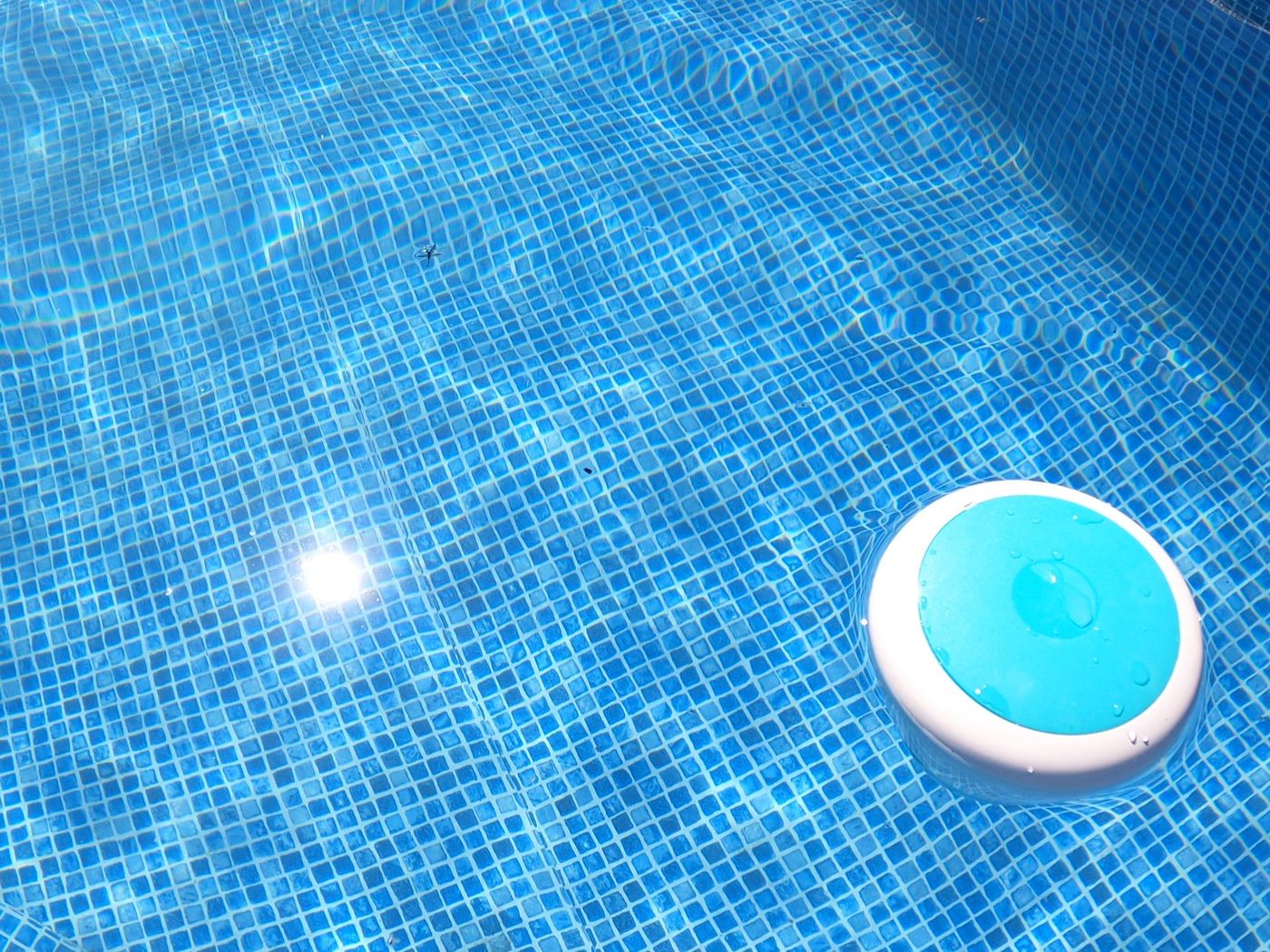
Here's the catch with salt: a salt cell is a "dumb" device. Set to 50%, it stays at 50% whether you have twenty kids in the pool or zero swimmers all week. That leads to over-chlorination on quiet weeks and under-chlorination after heavy use. This is why I rely on the ICO smart pool monitor, which tracks ORP, pH, temperature, and TDS hourly and sends alerts straight to my phone.
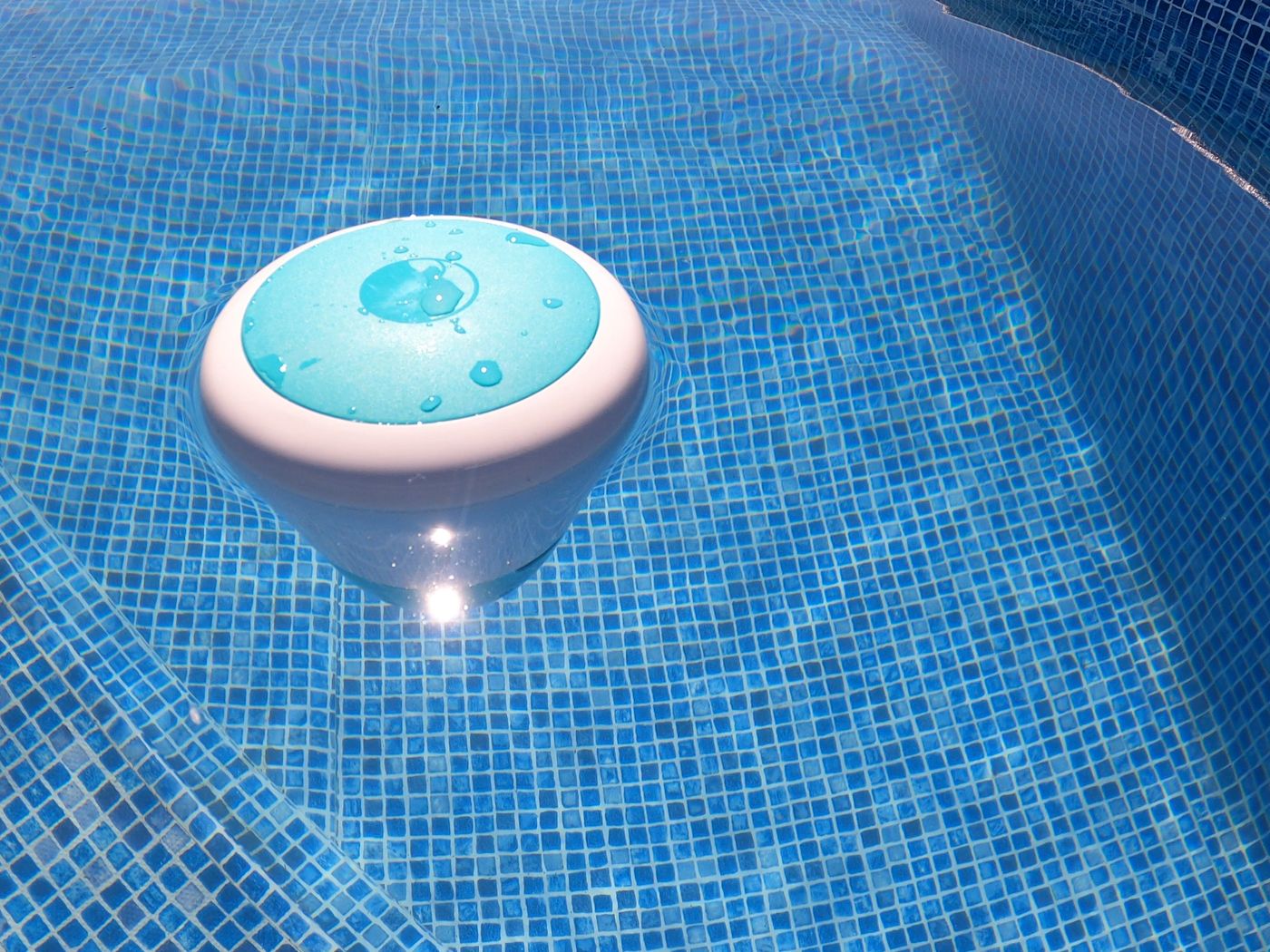
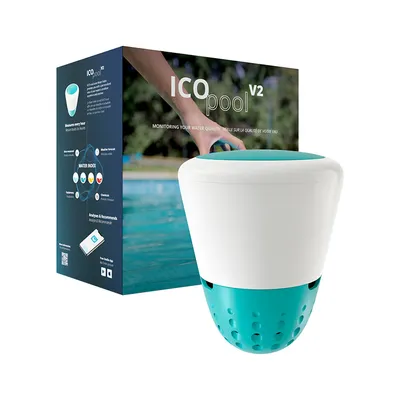
Pairing a salt system with continuous ORP and pH monitoring is the single highest-leverage upgrade for a saltwater pool. It catches drifts that destroy salt cells and heaters — long before they show on a test strip.
Is a Saltwater Pool Worth It?
Probably Worth It If…
- Convenience is your top priority and you travel often.
- You have salt-friendly materials — tile, concrete pavers, granite coping, vinyl liner, or fiberglass.
- You'll monitor pH closely or use a smart monitor like the ICO.
- You install a zinc anode and use 316-grade stainless hardware.
Probably NOT Worth It If…
- You're trying to minimize total long-term cost.
- You have limestone or soft travertine coping/decking.
- Your older gas heater is something you're hoping to keep for another decade.
The Super-Pool Alternative
If what you actually want is the soft water and automation people associate with saltwater — without the corrosion risk or cell replacement cycle — there's a setup I've been recommending more often. I call it the Pool Nerd Special:
- Automated liquid chlorine injection — same hands-off automation as a salt system, no salt in the water.
- SpectraLight UV sanitation — destroys chloramines, algae, viruses, bacteria, and cysts inline. Same technology used in Olympic pools.
- ICO ORP monitoring — tells the dosing pump when to fire and gives real-time visibility.
With UV doing the heavy lifting, you can safely run 0.5–1.0 ppm free chlorine. The water feels gentler than most salt pools, with virtually no chemical smell — and no salt cell to replace.
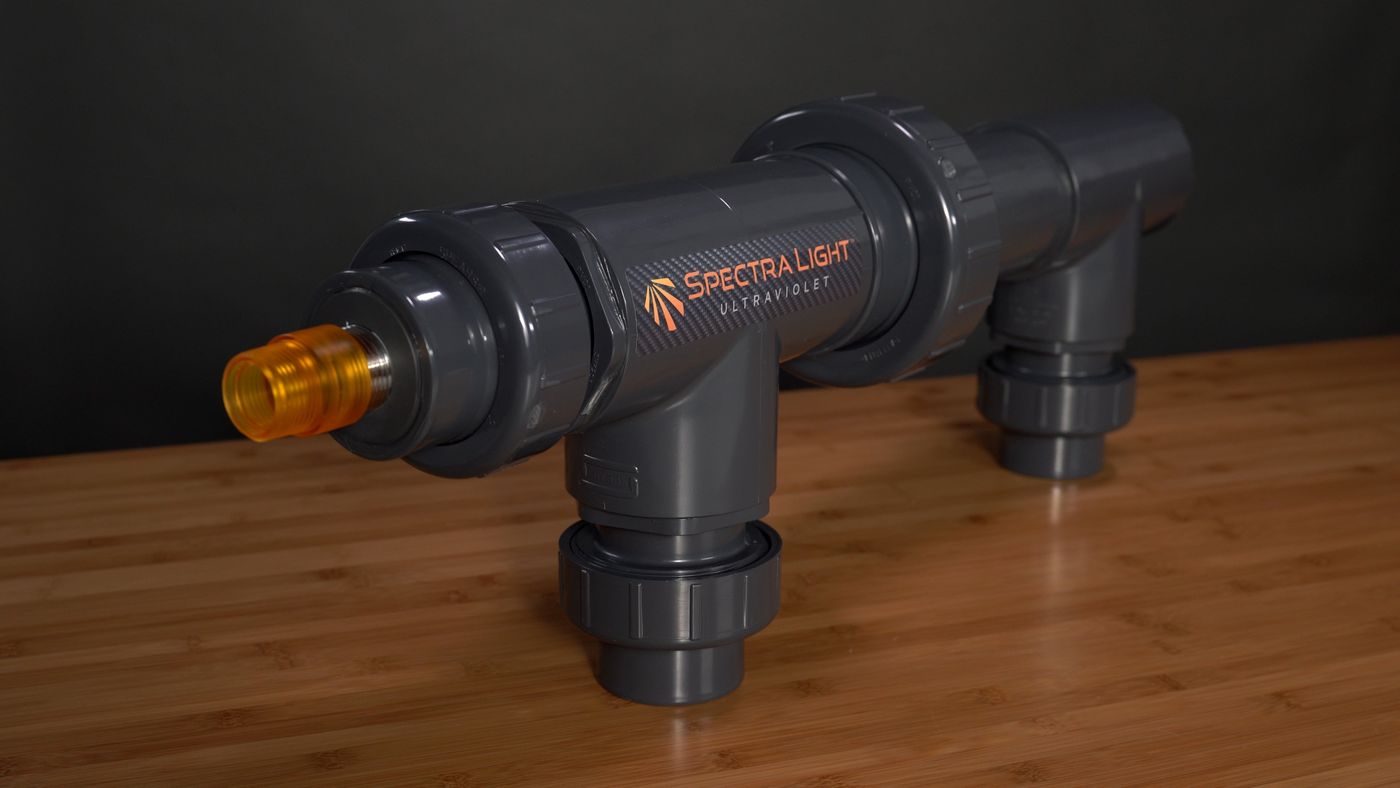
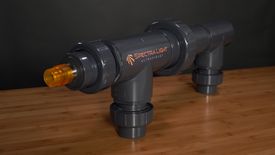
SpectraLight UV
Shock Less, Swim Cleaner
UV on the return line cuts chloramines and organic load so you pour less chlorine and shock over the season—not a sanitizer replacement, but a serious upgrade next to good circulation and testing.
Saltwater vs. Liquid Chlorine + UV + ORP
| Feature | Saltwater Pool (SWG) | Liquid Chlorine + UV |
|---|---|---|
| Daily Effort | Very Low | Very Low (auto-dosing) |
| Water Feel | Silky, slightly saline | Soft when balanced |
| Equipment Wear | Accelerated by salinity | Standard wear |
| pH Stability | Constant upward drift | Generally stable |
| Upfront Cost | $1,500–$2,500 | $1,000–$2,500 |
| Hidden Costs | $700–$1,500 cell / 3–7 yrs | Liquid chlorine refills |
| Best For | Hands-off owners | Tech-forward owners |
Biggest Mistake to Avoid
If you take one thing from this article: don't use chlorine tablets in a saltwater pool.
Tablets contain cyanuric acid (CYA). Salt cells need some CYA (60–80 ppm) to protect chlorine from UV, but CYA never breaks down on its own. Add tabs on top of that and levels can creep past 150 ppm — a phenomenon called "chlorine lock," where chlorine is bound so tightly almost none of it is bioactive. Your cell burns itself out chasing a goal it can't reach, and you end up with the mysterious "green pool that has plenty of chlorine."
The Tab + Salt Death Spiral
If you're running a salt system and supplementing with tabs, stop. Test your CYA. If it's over 100 ppm, the only fix is partial drain-and-refill. Use the cell as your primary sanitizer and shock occasionally with liquid chlorine — never with stabilized products.
Saltwater Pool FAQs
Can I convert my chlorine pool to saltwater?
Yes — conversion is straightforward. Inspect your coping and metal hardware first, and plan on a zinc sacrificial anode.
Does saltwater taste like the ocean?
No. A pool at ~3,200 ppm is one-tenth as salty as the ocean — closer to the salinity of a human tear.
How long do salt cells last?
3 to 7 years, or 8,000–10,000 operating hours. Well-balanced pools push the long end; constantly scaling, high-pH pools cut it in half. When it's time, see my best salt cells guide — replacing just the cell saves 50-70% versus buying a whole new system.
Does the salt cell work in winter?
Most cells stop producing effectively below 50–60°F. In cold climates you'll need to dose with liquid chlorine manually during colder months or close the pool seasonally.
Can I shock a saltwater pool?
Yes. Most cells have a "super-chlorinate" boost mode, or you can add liquid chlorine directly. Never use stabilized shock (dichlor) — it raises CYA.
How often do I add salt?
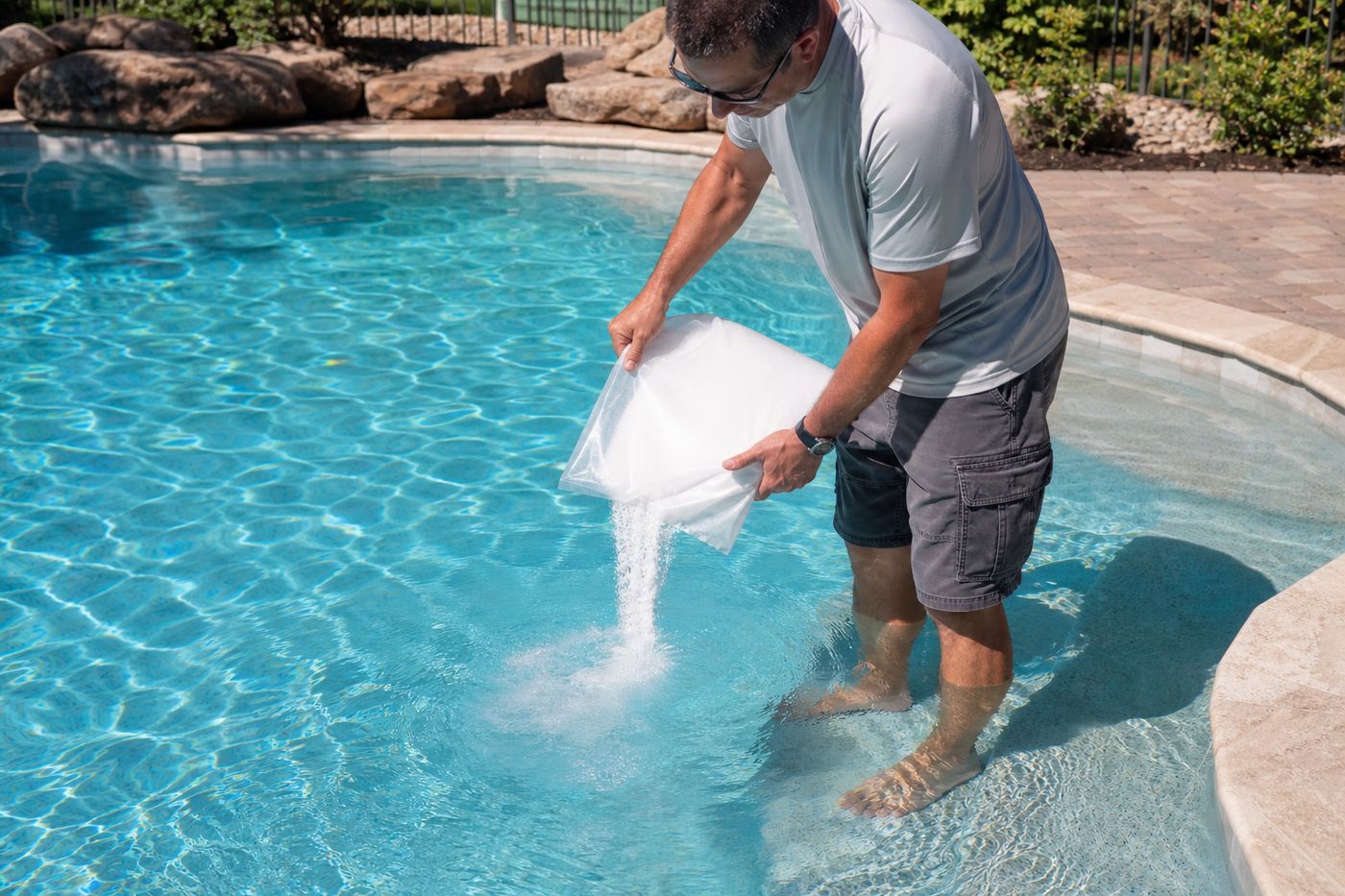
Salt mostly stays in the water year-round. You'll lose small amounts through splash-out, backwashing, and rain overflow — figure on adding 20–40 lbs of salt per year for an average residential pool, plus a larger top-off after heavy rain dilution.
Is saltwater better for your skin?
Generally yes — most swimmers report less skin and eye irritation in a properly balanced saltwater pool. That said, a well-managed traditional chlorine pool with controlled CYA and low chloramines feels nearly identical. The "silky" feel is as much about low chloramines as the salt itself.
Final Verdict
Are saltwater pools bad? Absolutely not. They're a legitimately convenient way to sanitize a pool, and for thousands of families they're the right answer.
Are they magical, chlorine-free, maintenance-free systems? No. They have real upsides and real trade-offs, both of which deserve to be on the table before you write the check. If you go saltwater, go in with a zinc anode, a smart water monitor, and a plan for pH management. If you want the same convenience without salt, build a liquid chlorine + UV + ORP system. Both can produce excellent water.
With Caution
Saltwater pools earn the Pool Nerd stamp when paired with disciplined water management and salt-compatible materials. Buy the right cell, install a zinc anode, monitor ORP and pH continuously, and never mix tabs with a salt system.
As always, if you want to keep nerding out on pool chemistry, equipment, and water monitors, head over to ThePoolNerd.com for deep dives, and check ThePoolNerd.com/deals for current prices on the salt systems, UV units, and smart monitors I've tested in our test pool.
This is for educational purposes only. Handling pool chemicals — specifically muriatic acid, liquid chlorine, and pool salt — involves real risk of injury or property damage. Always read manufacturer labels and SDS sheets. Use this information at your own risk.



Comments
Loading comments…