
 Justin D.
A saltwater pool sounds simple, right? "Just add salt and the pool takes care of itself." That's the pitch — and it's about half true. There are a lot of things you need to know to keep a saltwater pool clean.
Hey guys, welcome back to The Pool Nerd. I'm Justin, your resident pool aficionado. Today we're breaking down saltwater pool maintenance for beginners — what these pools need, how often you need to do it, and how to keep your salt system from quietly destroying itself over a few summers. I'm laying it all out in 8 simple habits so anyone can keep a saltwater pool clean.
Here's the thing most people don't realize: saltwater pools still need maintenance. In some ways they need more chemistry attention than a traditional chlorine pool, because salt systems constantly push pH upward and create scaling if you're not careful. The good news? Once you understand the rhythm, it's a short list of habits.
Quick Take
A saltwater pool is a chlorine pool with the chlorine factory built into your equipment pad. To keep it clean, you'll trade chlorine dosing for three new chores: chasing pH, caring for the salt cell, and preventing corrosion. Nail the 8 habits below on the right schedule and a salt pool is genuinely low-effort.
Do Saltwater Pools Still Need Chlorine?
This is the question I get more than any other, so let's clear it up before we go any further.
A saltwater pool still uses chlorine — it just doesn't use chlorine pucks and jugs. A salt pool has its own chlorine factory built into the equipment pad. The salt cell makes chlorine from dissolved salt through electrolysis. You're not escaping chlorine; you're automating it.
- Easier than a tab-and-jug pool? Yes, in day-to-day effort.
- Maintenance-free? Not even close. You'll trade chlorine dosing for pH chasing, salt cell care, and corrosion prevention.
If you want the full deep-dive on how these systems work, what they cost, and whether salt is right for your backyard, read my complete saltwater pools guide. This article is about keeping one clean.
Are Saltwater Pools Easier to Maintain?
Most people buy a salt system specifically to make pool care easier. And in some ways, salt pools are easier:
- You're not hauling 2.5-gallon jugs of liquid chlorine or stacking tabs in a floater.
- Chlorine levels stay more consistent because the cell produces continuously instead of spiking when you dose.
- The water tends to feel softer on skin and eyes.
- Vacation-proofing is built in — your pool stays sanitized for a week or two unattended.
But here's the trade-off: saltwater pools require more pH management, more scaling vigilance, and more corrosion awareness than a well-run traditional pool. The work doesn't go away — it shifts. Once you understand what shifted, the maintenance becomes pretty predictable.
What Is a Saltwater Pool?
A saltwater pool uses a salt chlorine generator (SCG) — also called a salt cell — to convert dissolved pool salt into chlorine through electrolysis. The end result in the water is still chlorine: the same chlorine that sanitizes a traditional pool. The system just makes it for you on-site instead of you adding it from a jug. (Still shopping for a system, or replacing a dead one? My best salt chlorine generators guide ranks the ones worth buying.)
Salt levels usually sit around 3,000–4,000 ppm — about a tenth as salty as the ocean, closer to a human tear. You won't taste it. You won't feel it sting your eyes. But it's constantly running through your equipment, and that has real implications for maintenance.
The 8 Habits That Keep a Saltwater Pool Clean
Here are the 8 things you need to do to keep your saltwater pool clean.
1. Keep the Salt Level in Range
Every salt system has a target salinity — usually somewhere between 2,700 and 3,400 ppm, depending on the manufacturer. Check your owner's manual for the exact target.
- Too low? The cell can't produce chlorine efficiently and will throw a "low salt" warning.
- Too high? You accelerate corrosion on metals and can damage the cell.
Use pool-grade salt only — not water softener salt, not road salt, not whatever's cheapest at the hardware store. Cheap salt brings impurities like iron and copper that'll stain your plaster and shorten your cell's life.
Not sure how many bags you need? Run your numbers through our pool salt calculator before you buy.
2. Maintain Strong Water Circulation
Salt cells only make chlorine when water is flowing through them. Weak circulation means weak sanitation — even if your test strip looks fine.
Run your pump long enough to turn the entire pool volume over at least once per day, ideally 1.5–2x in peak summer. A variable-speed pump is the smartest upgrade you can make here — it gives you long, low-cost runtime instead of short, energy-hungry bursts. Point your return jets to push water in a circular pattern across the surface, not straight at each other.
How long should you run your pump? I always recommend running it as long as possible, especially on a saltwater pool. If you have a variable-speed pump, run it 24/7 if you can. Otherwise, 12–18 hours a day is the floor for a clean, healthy salt pool.
3. Watch for Calcium Scaling and Corrosion
This is the silent killer of salt systems. Two things to watch for:
-
Scaling — white, crusty buildup on tile lines, inside the salt cell, on heater elements, and on hardware. Caused by high pH, high calcium, or both.
-
Corrosion — rust-staining on ladders or rails, pitting on light niches, green/blue stains around metal fixtures.

Salt-induced scaling and corrosion are manageable when you stay ahead of them // The Pool Nerd

Install a Zinc Sacrificial Anode
If you don't have one, get one. A zinc sacrificial anode bonds to your pool's grounding system and corrodes preferentially — so the salt eats the zinc instead of your $4,000 heater. It's one of the cheapest, highest-ROI upgrades for any saltwater pool.
4. Inspect and Clean Your Salt Cell Every 2–3 Months
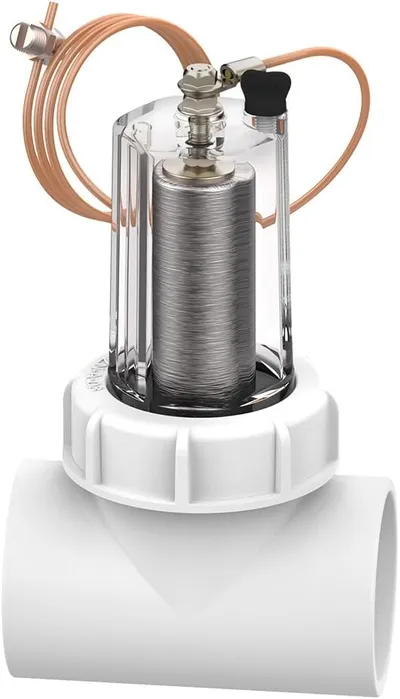
Salt cells are wear items — they don't last forever. Most residential cells are rated for 8,000–10,000 hours, which works out to 3–7 years of life. Replacement runs $700–$1,500, depending on brand and size — though if your control box still works, my best salt cells guide covers OEM and aftermarket replacements that cost far less than a new system.
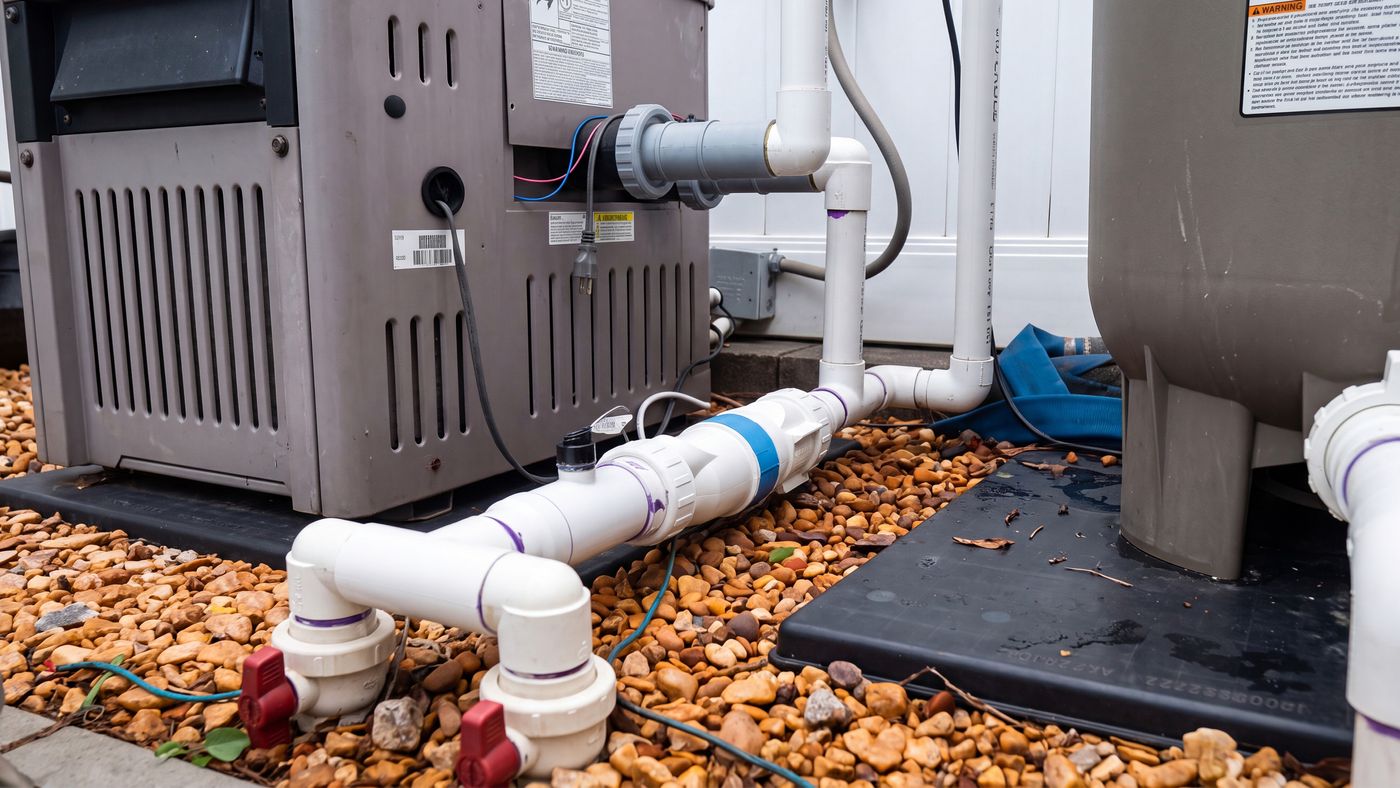
Every couple of months, pull the cell, look through it, and check for white calcium buildup on the plates. Only acid-clean it if you actually see scale. Pre-emptive acid washing is the fastest way to shorten a cell's life — the acid slowly strips the ruthenium/iridium coating that does the work.
- Power down the salt system and shut off the pump.
- Remove the cell and inspect it in good light.
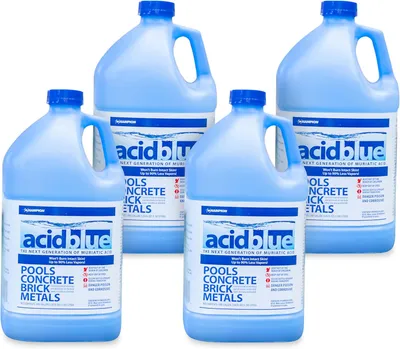
- If you see white buildup, mix a 4:1 water-to-muriatic-acid solution in a bucket. SAFETY FIRST: always add acid to water, never water to acid. Wear gloves and eye protection and follow every instruction on the label.
- Soak the cell for 10–15 minutes — no longer.
- Rinse thoroughly with a hose and reinstall.
Skip this step entirely if the plates look clean. Less is more.
Muriatic acid does double duty here — it cleans the cell and it's your go-to for taming salt-pool pH drift (more on that next). It's the one chemical I always keep on the shelf.
5. Keep Your pH, Chlorine, and CYA Balanced
This is where most beginners get burned. Salt systems naturally push pH upward because the electrolysis process produces sodium hydroxide as a byproduct — a base with a pH around 13. Every hour the cell runs, your pH is climbing a little.
The target ranges I run in my own pool:
- pH: 7.0–7.2 for vinyl/fiberglass; 7.2–7.4 for plaster/gunite. This is slightly lower than what most pool stores recommend, because lower pH means more effective chlorine. (Here's exactly why in my ideal pool pH guide.)
- Free chlorine: 1–3 ppm (lower is fine if you run UV — more on that later).
- Cyanuric acid (CYA): 60–80 ppm — enough to protect chlorine from the sun without locking it up.
- Total alkalinity: 80–120 ppm — your pH buffer.
- Calcium hardness: 200–400 ppm depending on pool surface.
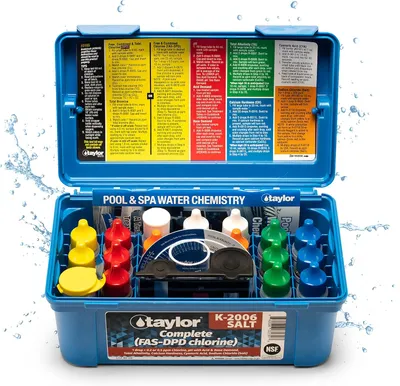
A salt-specific test kit makes dialing all of this in painless — it tests salt level right alongside pH, alkalinity, calcium, and CYA.
When your pH creeps up — and on a salt pool it will — bring it down with muriatic acid. I walk through exact dosing and the full safety protocol in my guide on how to lower your pool's pH, or you can use our pool chemistry calculator for precise amounts.
The ORP Game-Changer
Chlorine ppm tells you how much sanitizer is in the water. ORP (Oxidation-Reduction Potential) tells you how well it's actually working. A salt pool with high CYA and drifting pH can show a "good" chlorine reading and still let algae bloom. A continuous monitor like the ICO tracks ORP, pH, temperature, and salt/TDS hourly — it's how I catch drift before it becomes a problem.
6. Shock the Pool When Organics or Chloramines Build Up
Even with a salt cell, you'll occasionally need to shock the pool with liquid chlorine. The signs:
- That "chlorine smell" — ironically a sign you have too little active chlorine and too many chloramines.
- Burning or red eyes after swimming.
- Cloudy water that won't clear up with normal filtration.
- Heavy bather load (pool party, kids all weekend) or a major storm.
Use liquid chlorine to shock — not granular shock, and never stabilized shock (dichlor or trichlor). Stabilized products dump cyanuric acid into your water, and your salt pool already has all the CYA it needs. Most salt systems also have a "boost" or "super-chlorinate" mode that runs the cell at maximum output for 24 hours, which works for lighter shocking needs. For the full walkthrough, see my guide on how to shock a pool.
7. Skim, Brush, and Vacuum the Pool Every Week
Salt or chlorine, this part doesn't change. Debris isn't just ugly — it's a chemistry wrecker. Every leaf and bug that decomposes in your pool consumes chlorine, releases acids, and feeds algae.
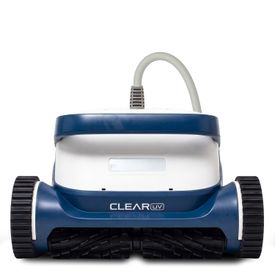
The easiest way to nail this step: stop doing it yourself. A robotic pool cleaner like the Dolphin Premier, Sigma, or the new Clear UV runs independently of your main pump — scrubbing floors, walls, and waterlines while filtering organic matter down to 2 microns. Set the weekly timer once and the pool stays clean automatically. For above-ground or smaller inground pools, the Dolphin Escape or Cayman does the same job at a lower price point.
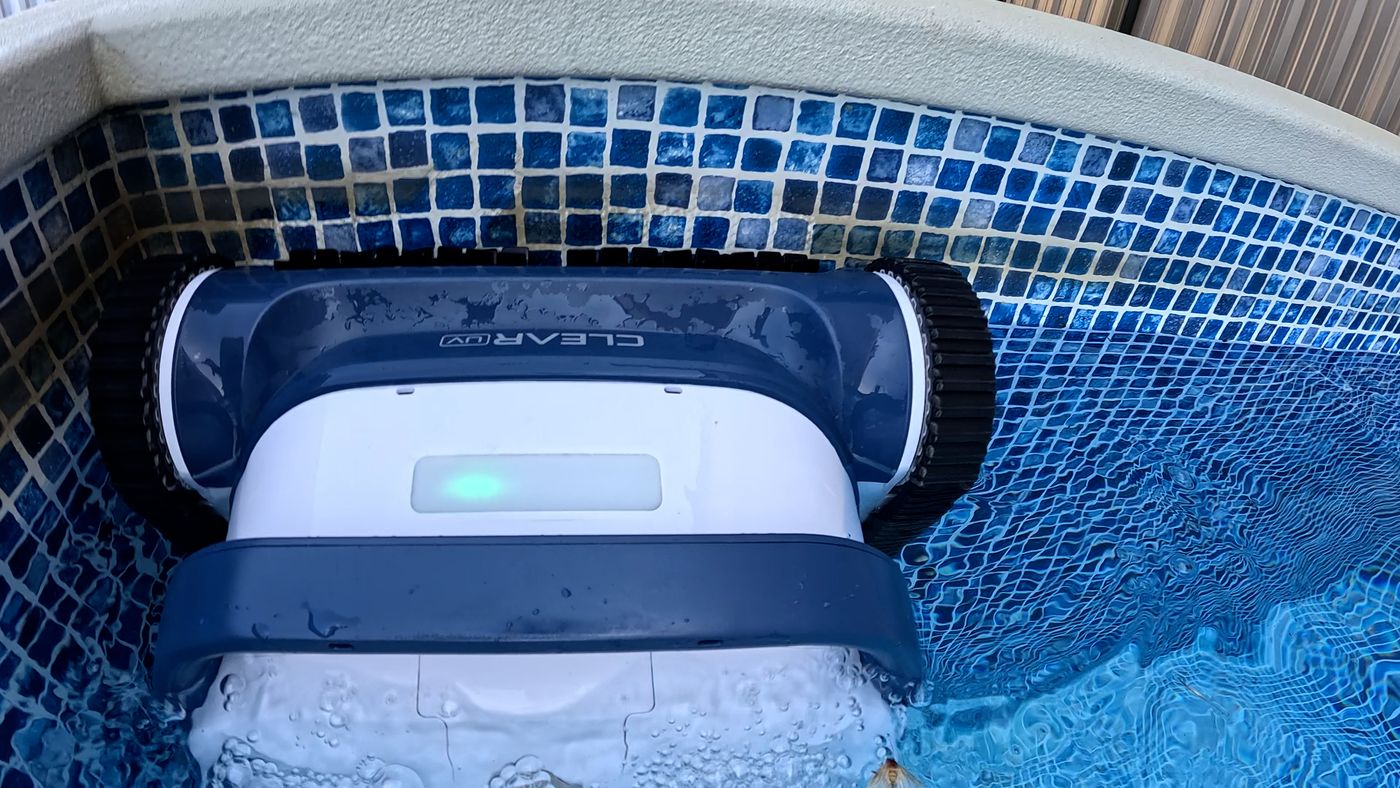
And robots like the Clear UV bring a new twist: with a UV-C light on the bottom, it actively uses ultraviolet light to help clean your pool — alongside vacuuming and scrubbing. It's one of the best upgrades I've made to my test pool. A clean pool barely needs chlorine. That's the secret most salt pool owners never figure out.
8. Use a Smart Water Monitor to Remove the Guesswork
This is the upgrade that ties everything else together. Test strips tell you where your pool was when you walked outside. They don't tell you what happened overnight, after the rainstorm, or when the pH started climbing on Tuesday afternoon.
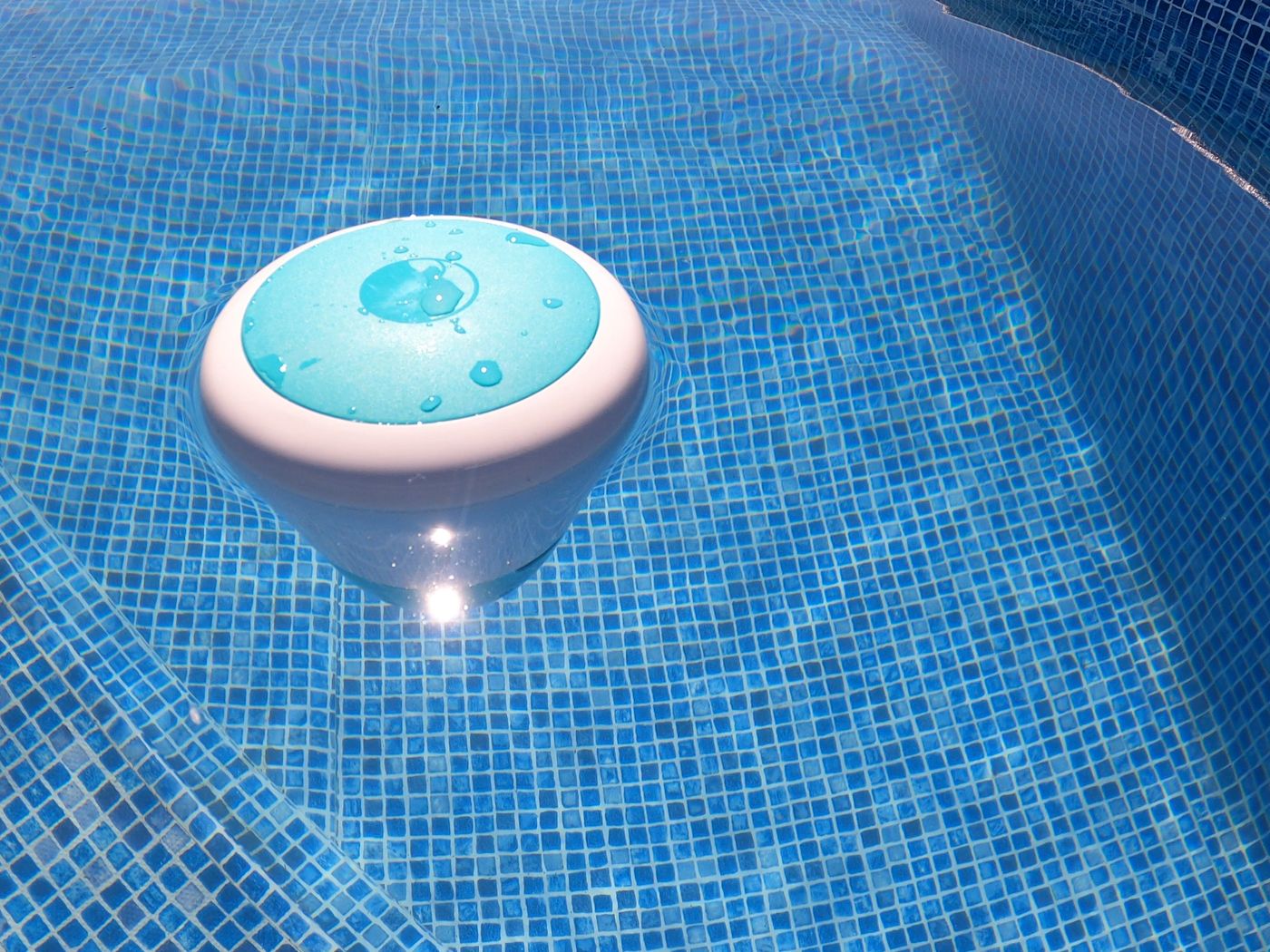
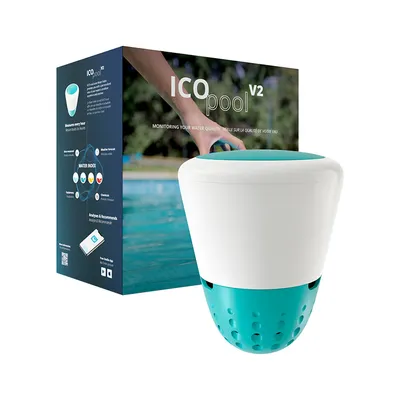
The ICO Pool Water Monitor sits in the water and tracks pH, ORP, temperature, and salt/TDS every hour, sending alerts straight to your phone. The saltwater-specific version is built for exactly this use case — it watches the things salt pools struggle with most. I've been running one in my test pool for years and it's flat-out the single biggest upgrade I've made.
For homeowners ready to go a step further, automated liquid chlorine injection paired with ORP monitoring delivers true demand-based chlorination — the system only adds chlorine when ORP says it's needed. That's how Olympic pools and commercial aquatic centers run, and I'll show you how to build that setup below.
Your Saltwater Pool Maintenance Schedule
Here's the realistic frequency for each task. Print it, screenshot it, tape it to your equipment pad — whatever works.
| Frequency | What to Do |
|---|---|
| Daily | Quick visual check, empty skimmer baskets, scan for debris and equipment alarms. Extra attention after rain or storms. |
| Weekly | Test pH and chlorine, brush walls, run your robotic cleaner, rinse the pump basket and skimmer, give the filter a quick rinse if pressure is up. |
| Monthly | Test salt level, CYA, calcium hardness, and total alkalinity. Inspect the salt cell viewing window for scale. Look for early corrosion on rails or fixtures. |
| Quarterly | Pull the salt cell and clean off calcium buildup if needed. Deep-inspect the heater, plumbing connections, and automation panel. Check the zinc anode. |
| Seasonal | Deep clean, rebalance, and either winterize (cold climates) or open up (spring). Drain partially if CYA or TDS has climbed too high. |
Daily care is less work than it sounds: walk the pool, look at the water, empty floating debris, and glance at the salt system display for warning lights. After heavy rain, do a slightly deeper check — storms dump organic load and dilute your chemistry.
Weekly care is testing and balancing, brushing, and clearing baskets so circulation stays strong (back to habit #2). If a robotic cleaner runs on a weekly timer, the vacuuming is already handled — you just rinse the filter cartridge. If you're running an ICO, you're mostly verifying what it's already told you. For a full routine that works on any pool, see my weekly pool maintenance guide.
Monthly care is the deeper chemistry markers plus a walk of the equipment pad looking for early corrosion on rails, light niches, or heater fittings — and a check on that sacrificial zinc anode.
Quarterly care is when you pull and inspect the cell, deep-check the heater for scale, look at plumbing for salt creep, and rinse your robot's filters thoroughly.
Seasonal care happens twice a year for most owners — once at open, once at close. Deep clean, rebalance everything from scratch, inspect every piece of equipment, and check TDS and CYA. If either has climbed too high, a partial drain-and-refill resets your water without starting over.
The Biggest Saltwater Pool Mistake
If you only remember one thing from this article, make it this: don't use chlorine tablets in a saltwater pool.
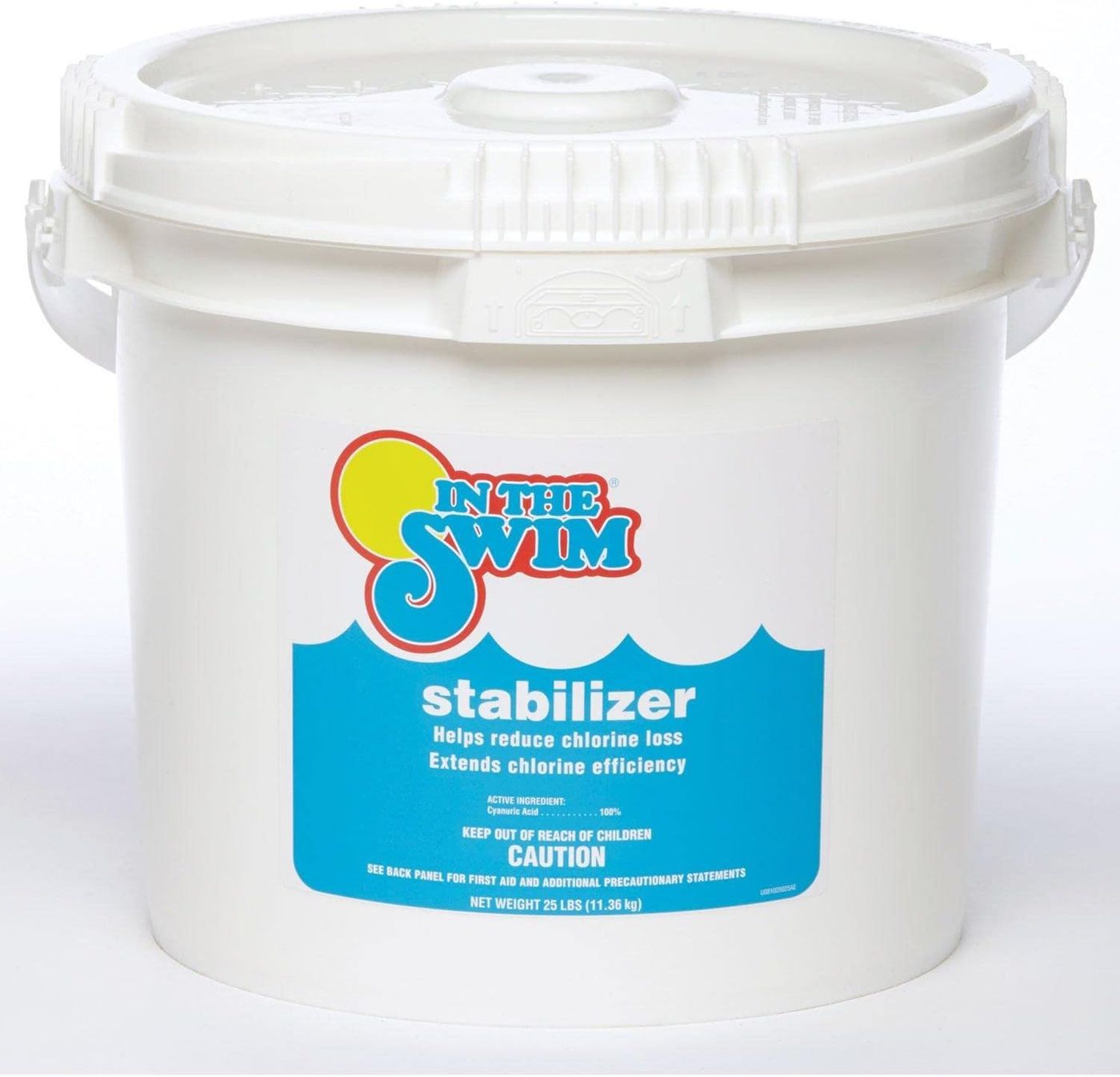
Chlorine tabs (trichlor) contain cyanuric acid (CYA). Salt cells already need some CYA — around 60–80 ppm — to protect chlorine from UV breakdown. But CYA doesn't evaporate. Every tab you add stacks more on top, and your levels creep past 150 ppm before you notice. At that point you hit "chlorine lock": your free chlorine reading looks fine on a strip, but the CYA is binding it so tightly almost none of it is bioactive.
Your salt cell then runs overtime chasing a goal it can't reach. The cell wears out faster. Scaling accelerates. The pool turns green even though the strip says 3 ppm chlorine. It's the classic "green pool with chlorine in it" mystery that wrecks so many salt systems.
The Tab + Salt Death Spiral
If you're currently running tabs in a salt pool, stop and test your CYA. If it's over 100 ppm, the only fix is a partial drain-and-refill. Switch to liquid chlorine for any supplemental shocking and let the cell do the routine work.
The Smart Setup: How I'd Build a Pool Today
After testing every kind of pool equipment setup over the years, this is the rig I run in our 8 x 20ft Ecopool test pool — and what I'd build into any new pool tomorrow:
- Automated liquid chlorine injection — a small dosing pump that feeds liquid chlorine on demand based on ORP readings. Same hands-off automation as a salt system, with none of the corrosion or cell-replacement cycle.
- SpectraLight UV-C sanitation — a UV lamp installed inline after your filter destroys chloramines, algae, bacteria, viruses, and cysts as water passes through. Same technology used in Olympic pools and over 200 commercial aquatic centers. UV doesn't replace chlorine — it dramatically reduces how much you need.
- ICO smart pool monitor — the brain. It tracks ORP, pH, temperature, and TDS hourly. With UV doing the heavy lifting, you can run 0.5–1.0 ppm free chlorine. The water feels gentler than most salt pools, with virtually no chemical smell.
- A robotic cleaner like the Clear UV, Dolphin Premier, or Sigma — removes organics before they consume chlorine, the single biggest lever for keeping chlorine demand low.
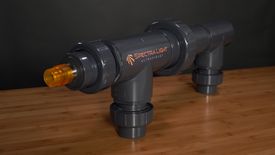
SpectraLight UV
Shock Less, Swim Cleaner
UV on the return line cuts chloramines and organic load so you pour less chlorine and shock over the season—not a sanitizer replacement, but a serious upgrade next to good circulation and testing.
If you've already got a saltwater pool, you can layer in the ICO + UV + a Dolphin robot without ripping out your salt system. You'll see lower chlorine demand, fewer chloramines, longer cell life, and dramatically more stable pH — the salt cell becomes a backup workhorse instead of a stressed-out lone gun.
Final Verdict
Are saltwater pools easier? Yes — in day-to-day chlorine handling. The cell does that work for you, which is a real win.
Are they maintenance-free? No. You're trading the chore of dosing chlorine for the chores of chasing pH, fighting scale, and protecting metals from corrosion. Once you understand that trade-off, salt pools are a great option for a lot of homeowners.
In my opinion, the best decision for a beginner is the informed one. If you go saltwater: install a zinc anode, get a smart monitor, never mix tabs with salt, and stay on the schedule above. If you want the same convenience without salt, build a liquid chlorine + UV + ORP setup. Both can produce excellent water — the right choice depends on your pool, your priorities, and how hands-on you want to be.
As always, if you want to keep nerding out on pool chemistry, robotic cleaners, UV systems, and smart water monitors, head over to ThePoolNerd.com for deep dives and reviews. For current deals on the Ondilo ICO, SpectraLight UV, Dolphin robots, and everything else I've tested in my own pool, check ThePoolNerd.com/deals. See you at the next one.
This article is for educational purposes only. Handling pool chemicals — specifically muriatic acid, liquid chlorine, and pool salt — involves real risk of injury or property damage. Always read manufacturer labels and SDS sheets. Use this information at your own risk.


Comments
Loading comments…