
 Justin D.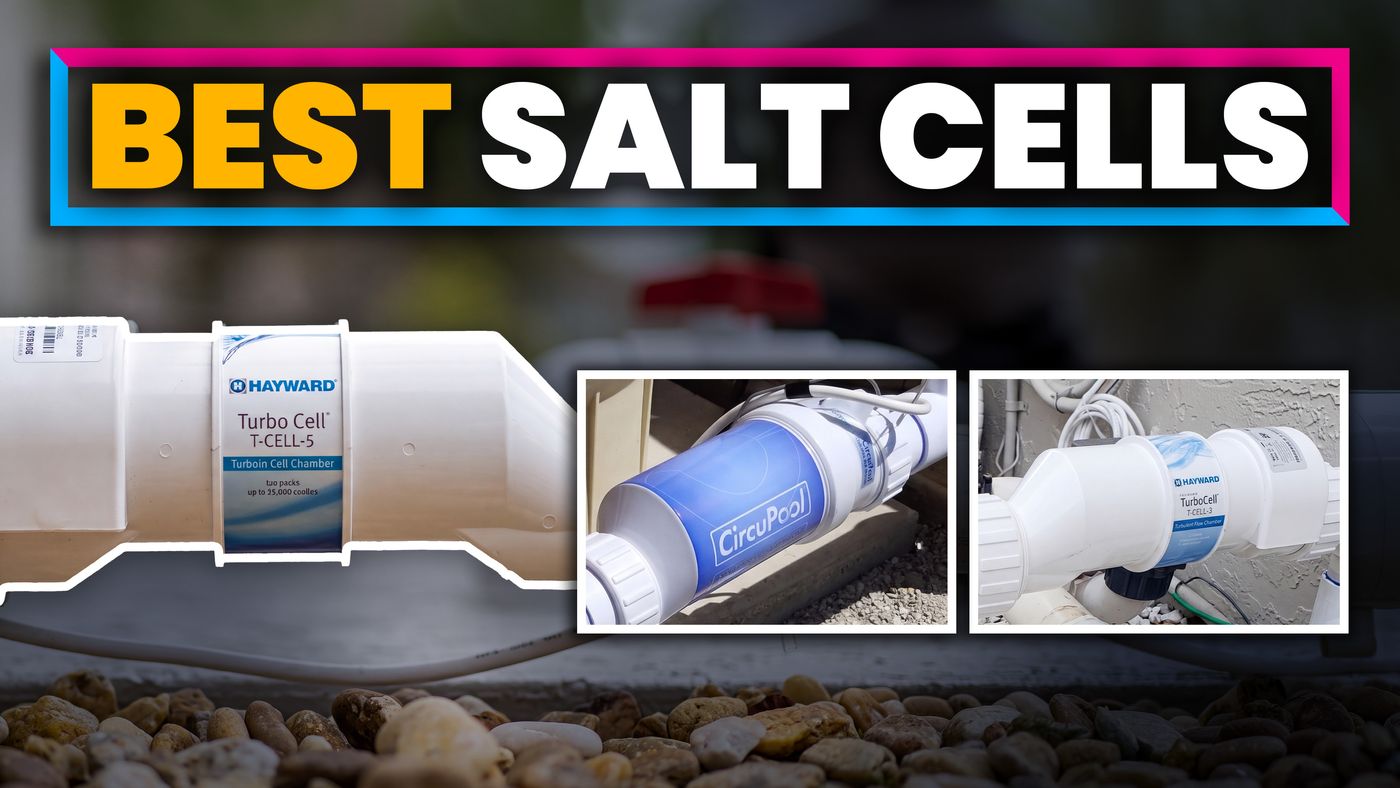
If your salt cell is dying, your pool is on borrowed time. When chlorine output drops, algae moves in fast — and most pool owners get blindsided by a $1,000+ bill at the pool store. Here's the thing: you don't have to pay retail, and you don't have to settle for a no-name cell that dies in 11 months.
I'm Justin from The Pool Nerd. After 5+ years of testing pool equipment and running ORP-monitored salt systems, I've ranked the four best salt cell replacements you can actually buy right now — the ones that hold up in real pools.
Best Salt Cells at a Glance


The short answer: if you want proven 5-7 year performance, buy the OEM Hayward W3T-CELL-15 (or the W3T-CELL-9 for pools under 25,000 gallons). If you want to cut the cost roughly in half without trading down to a no-name brand, the XHHEZQ T-Cell-15 is the smartest value play on the market right now.
Before you buy ANY salt cell, check your control board firmware. Hayward AquaRite systems need firmware revision r1.50 or newer to recognize most T-15 replacement cells. Press the diagnostics button 7 times to see your current revision. If you're below 1.50, the cell will work — but the controller may default to the wrong type.
What Is a Salt Cell (And Why You Need One)
A salt cell — also called a chlorine generator cell or TurboCell — is the heart of every saltwater pool. It's a sealed chamber with electrically charged titanium plates coated in a precious-metal mix. When salty pool water flows through the cell and the plates energize, electrolysis splits the salt into sodium and chlorine.
That chlorine sanitizes your pool. The salt regenerates. The process repeats — as long as the cell is healthy.
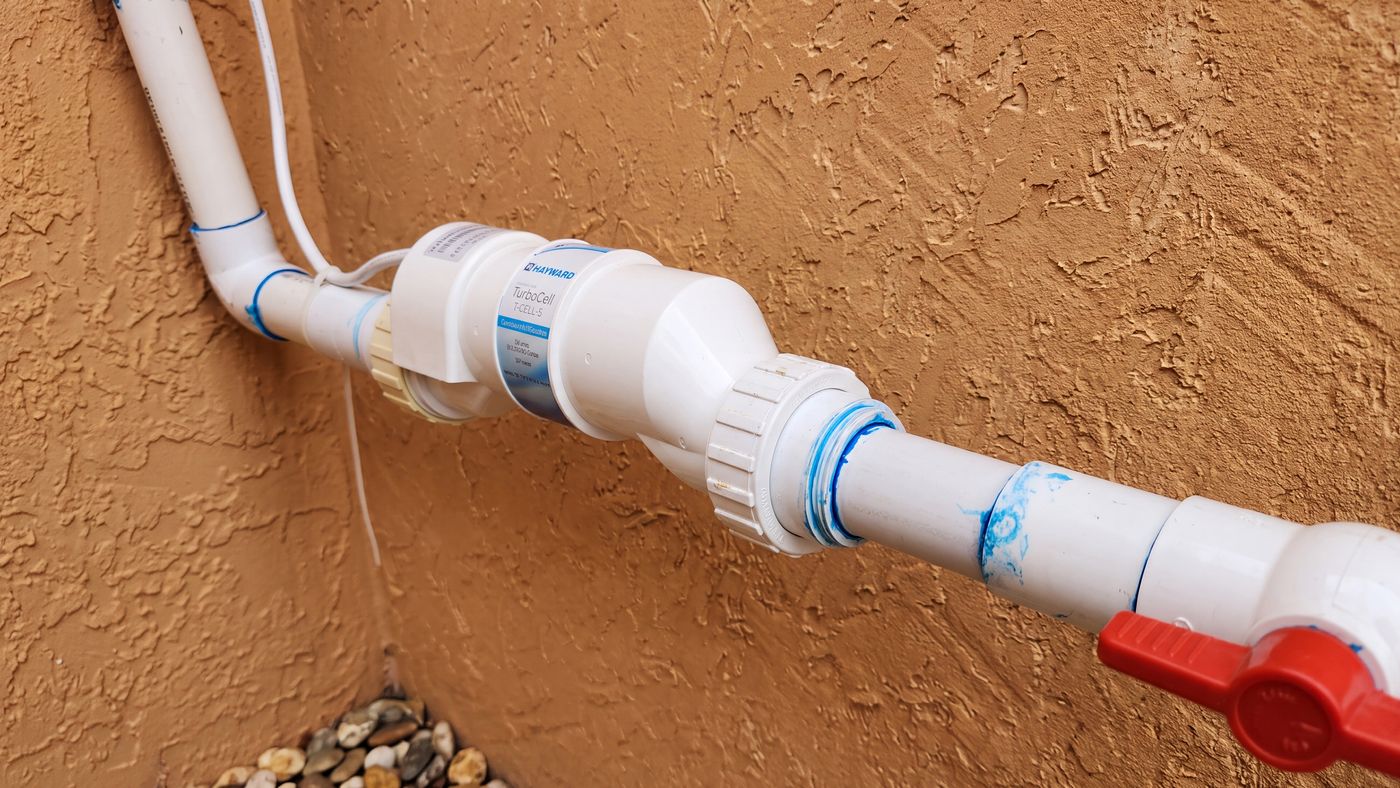
Here's what most pool owners get dead wrong: a saltwater pool is NOT chlorine-free. It's a chlorine pool with a chlorine factory built into it. The salt cell IS the factory. When it dies, your pool turns green within days. I break that whole story down in saltwater vs chlorine pools.
Why You Can't Skip a Salt Cell Replacement
If you run a salt system, replacing the cell isn't optional — it's inevitable. Every salt cell has a finite lifespan because the titanium plate coatings slowly wear during electrolysis. Once they degrade past a certain point, the cell can't generate adequate chlorine no matter how high you crank the output.
Trying to limp along on a dying cell is one of the most expensive mistakes in pool ownership. Low chlorine output leads to algae blooms, which lead to shock treatments, which lead to chemical costs that quickly exceed the price of a new cell.
One caveat before you buy: make sure it's actually the cell that died. If your control box won't power on, won't display diagnostics, or has board-level faults, a new cell won't fix it — at that point you're shopping for a complete system, and my best salt chlorine generators guide breaks down the ones worth buying.
How Often Should You Replace a Salt Cell?
The honest answer: 3 to 7 years, depending on how you treat it.
Manufacturers like Hayward officially rate the T-Cell-15 at roughly 10,000 hours of operation, which translates to about 5 years of typical use. But real-world numbers vary wildly based on three things: water chemistry, run hours, and how often you acid-wash the cell.
What kills salt cells fastest:
- Aggressive acid-washing. Acid strips the titanium coating. Reserve acid baths for serious calcium buildup — never as routine maintenance.
- High CYA (cyanuric acid) levels. When CYA climbs above 60-80 ppm, your chlorine becomes less effective. Most owners compensate by cranking the cell to 100% output — which burns through plate life. Already stuck? Here's how to lower CYA.
- Running the cell at 100% all the time. A properly sized cell should run between 30-60% output. If yours is maxed out daily, the cell is undersized for your pool or your chemistry is off.
- Hard water and high calcium. Scale builds up on plates, blocks electrolysis, and forces the cell to work harder.
- Freezing temperatures. If you live in a freeze zone, pull the cell for winter. A cracked cell housing from frozen water is not covered by warranty — and that's a real-world denial I see constantly in customer reviews.
Hayward and most other manufacturers explicitly deny warranty claims for freeze damage. If you're in a cold climate, removing the cell before the first freeze is non-negotiable. Store it indoors, dry, with the unions capped.
What Actually Matters When Buying a Salt Cell
Forget the marketing copy. Here's what I look at — in this order — before I'd put a salt cell on my own pool.
1. Compatibility With Your Existing Controller
Biggest screw-up I see: not every cell labeled "fits Hayward" actually works with every Hayward system. Confirm your control board model (AquaRite, AquaTrol, ProLogic, OmniLogic) and firmware version (r1.50+ for most aftermarket T-15 cells).
2. Titanium Plate Quality
The plates are where the magic happens — or doesn't. OEM Hayward uses thicker precious-metal coatings, which is why they typically last 5-7 years. Aftermarket cells vary wildly. The good ones use comparable titanium tech. The cheap ones cut corners on coating thickness, and that's why some "budget" cells fail in under a year.
3. Warranty Length and Honor Rate
Most quality cells offer a 3-year warranty — but a warranty is only as good as the company behind it. Check reviews specifically for warranty claim experiences, not just day-one performance.
4. Proper Sizing for Your Pool Gallons
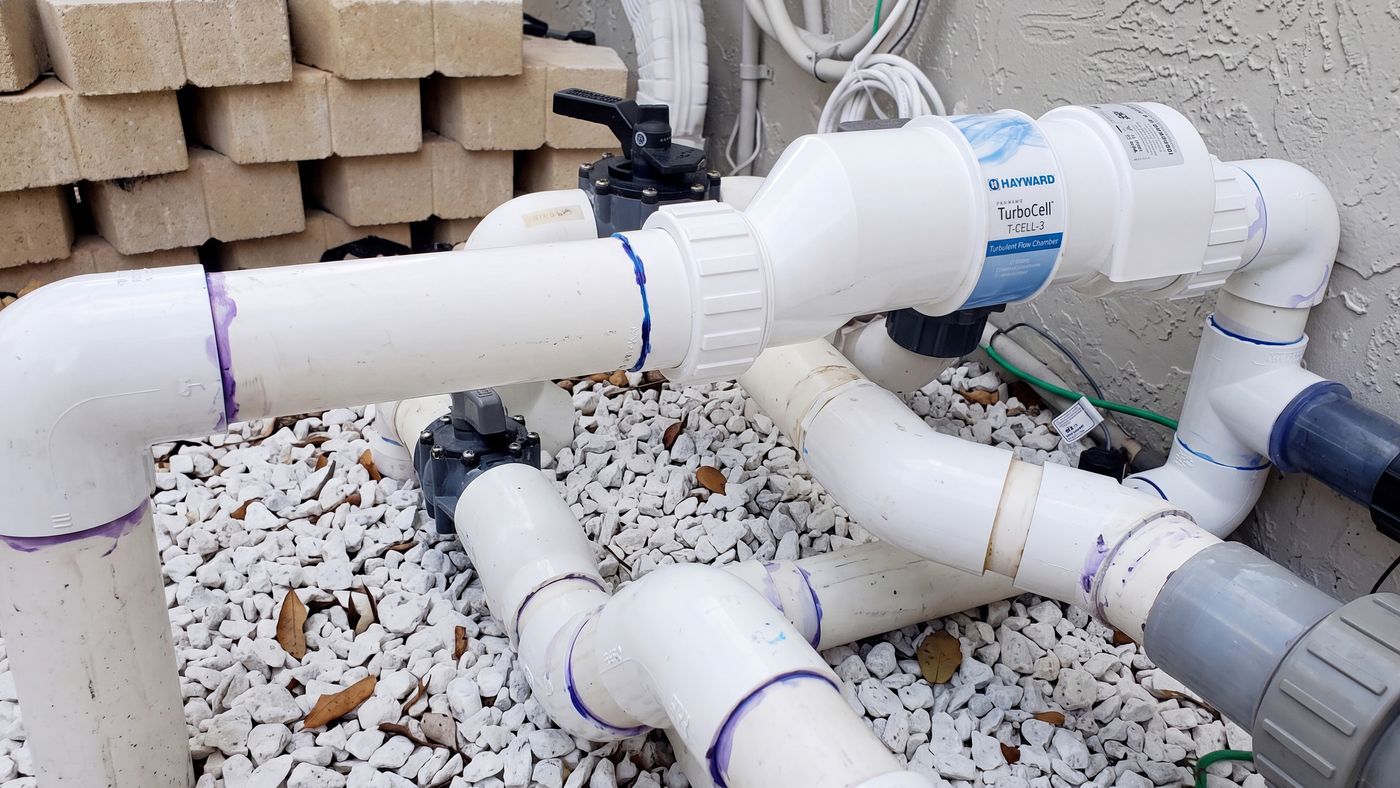
A T-15 handles up to 40,000 gallons. A T-9 handles up to 25,000. A T-3 covers up to 15,000. Buy one size larger than you think you need — an oversized cell running at 40% will outlive an undersized cell running at 100%.
5. NSF Certification (For OEM)
NSF/ANSI 50 certification means the cell has been independently tested for safety and performance in recreational water applications. OEM Hayward cells carry it. Most aftermarket cells do not — which doesn't necessarily mean they're unsafe, but it's worth knowing.
#1 Best Overall: Hayward W3T-CELL-15 TurboCell (40,000 Gallon)
BEST OVERALL: The OEM cell every pool pro defaults to. NSF certified, 3-year warranty, and a realistic 5-7 year lifespan with proper care.
Price: ~$1,099 | Warranty: 3 years | Rating: 4.3/5 stars (3,400+ reviews)
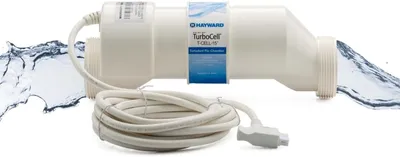
The Hayward W3T-CELL-15 is the OEM cell every pool pro defaults to — and for good reason. It's the same exact cell Hayward ships with new AquaRite systems, just sold as a replacement. NSF certified, 15-foot cable, 3-year warranty backed by the largest pool equipment company in North America.
In customer reviews and from my own experience, the OEM Hayward consistently delivers 5 to 7 years of service when paired with disciplined water chemistry. One reviewer reported nearly 7 years out of his original cell before swapping in this exact replacement. That's longevity you simply don't see in aftermarket cells without verified plate coatings.
The downside? You're paying premium retail. Pool stores often charge $1,300-1,500 for the same part. Amazon's price is actually one of the better deals available — and it ships free.
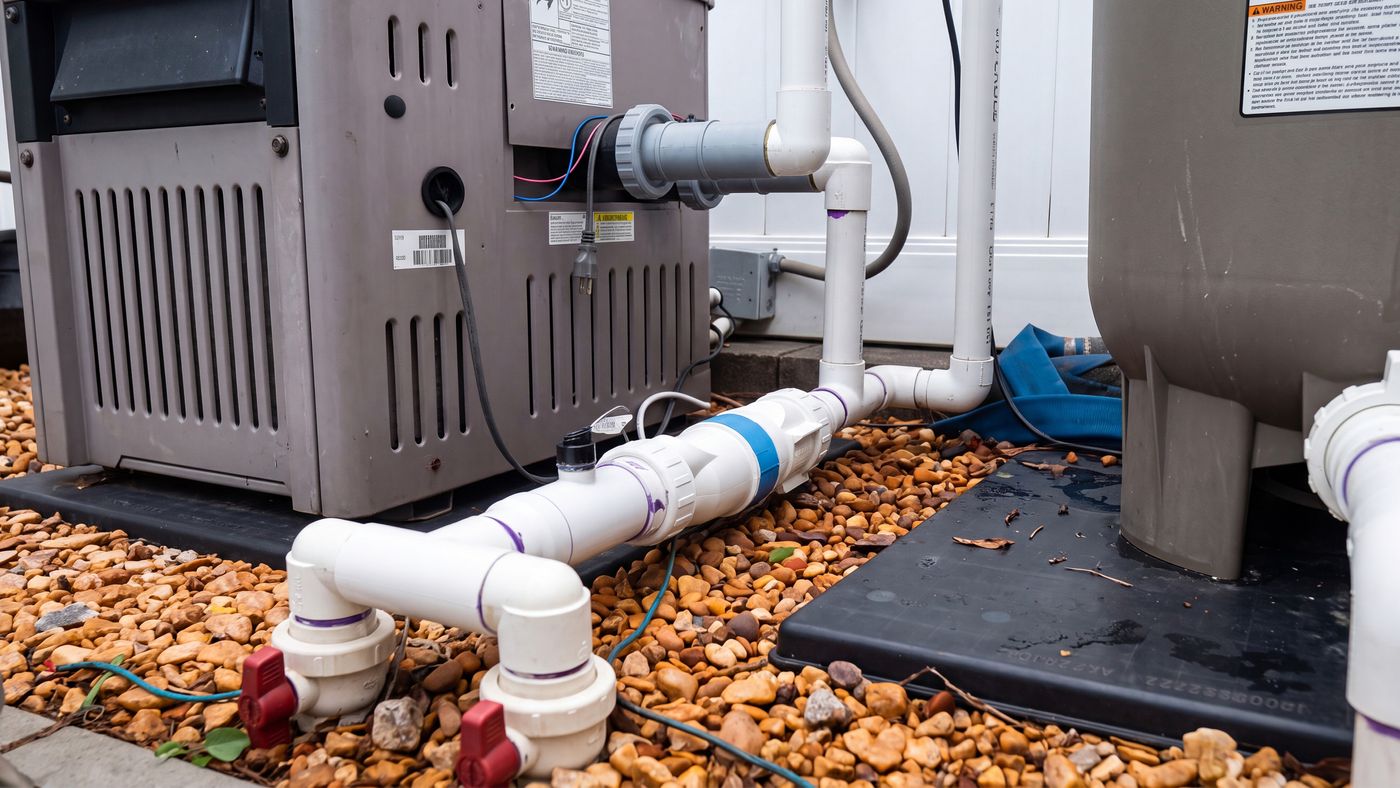
Why it earns the top spot:
- OEM quality with thick titanium plate coatings
- NSF/ANSI 50 certified
- 3-year manufacturer warranty (Hayward honors it)
- Drop-in compatibility with all Hayward salt systems
- Realistic 5-7 year lifespan with proper care
Check the current price on Amazon here.
#2 Best Value: XHHEZQ T-Cell-15 Replacement (40,000 Gallon)
BEST VALUE: Roughly half the cost of OEM Hayward, titanium core construction, and a 3-year warranty. The smartest budget play that isn't a gamble.
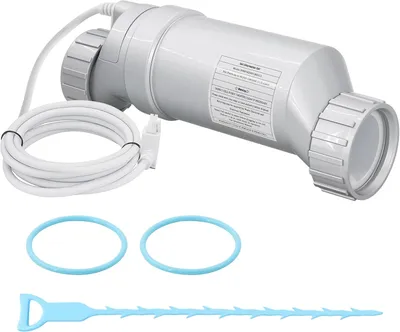
Price: ~$499.99 | Warranty: 3 years | Rating: 4.9/5 stars
If you've owned a saltwater pool for any length of time, you've winced at OEM prices. The XHHEZQ T-Cell-15 is the best value alternative on the market right now — roughly half the cost of OEM Hayward, with comparable build quality reported by verified Amazon Vine reviewers.
One thorough Amazon Vine reviewer ran electrical diagnostics on this cell against two known-working OEM cells, comparing voltage and amperage at recommended salt levels, and confirmed it operated within spec. That's the kind of verification you almost never see for an aftermarket cell. It also ships with new union nuts and O-rings — a nice touch for a clean install.
In my opinion, the XHHEZQ hits a sweet spot: titanium core construction, drop-in fitment, 3-year warranty, and a price that doesn't make your wallet cry. The trade-off is you're trusting a smaller brand. Long-term data is limited, but early returns look promising.
Why it's the value pick:
- Roughly $600 cheaper than OEM Hayward
- Titanium plate construction with claimed 3+ year lifespan
- Includes new unions and O-rings
- 3-year replacement warranty
- Requires AquaRite firmware r1.50+ (check yours first)
Check the current price on Amazon here.
#3 Best for Mid-Sized Pools: Hayward W3T-CELL-9 (25,000 Gallon)
BEST FOR MID-SIZED POOLS: Same OEM titanium plates and NSF certification as the T-15, correctly sized for pools up to 25,000 gallons — and $200 cheaper.
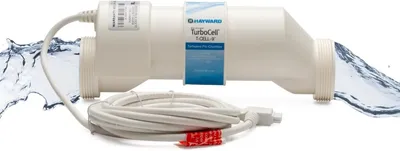
Price: ~$899 | Warranty: 3 years | Rating: 4.3/5 stars (3,400+ reviews)
If your pool is 25,000 gallons or smaller, you don't need a T-15 — buying one anyway just throws money away. The W3T-CELL-9 is the OEM cell sized specifically for mid-range pools. Same titanium plate technology, same NSF certification, same 3-year warranty as the T-15 — just right-sized for smaller volumes.
Here's the kicker: a properly sized T-9 running at 40-50% output will typically outlast a T-15 running at the same output on a 35,000-gallon pool. Why? Because the T-9 is engineered for that flow rate and water volume. Oversizing isn't a hack — it's an option for larger pools, not a free upgrade for smaller ones.
Reviews on this model consistently show 4-7 year lifespans with reasonable water chemistry. Same trusted Hayward platform, just at a more reasonable price for the right pool.
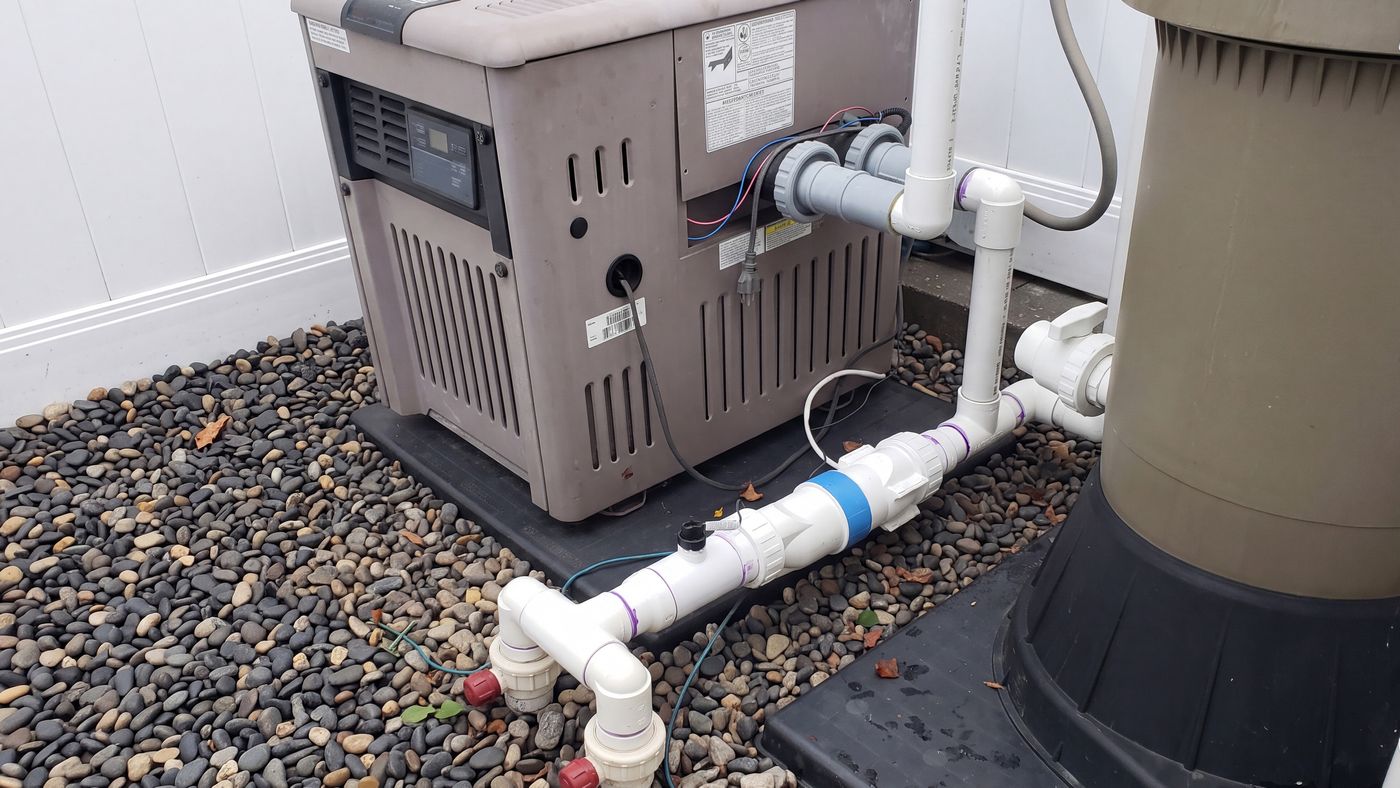
Why it's the mid-sized pick:
- Correctly sized for 25,000-gallon pools
- Same OEM titanium plate quality as the T-15
- NSF certified, 3-year warranty
- $200 cheaper than buying an oversized T-15
- Drop-in replacement for any T-Cell-9 system
Check the current price on Amazon here.
#4 Best Budget: Maureen T-15 Replacement (40,000 Gallon)
WORTH KNOWING — BEST BUDGET OPTION: About a third of OEM pricing and it drops in cleanly, but aftermarket plate coatings mean you should expect 1-3 years — a backup or short-term play, not a long-term primary cell.
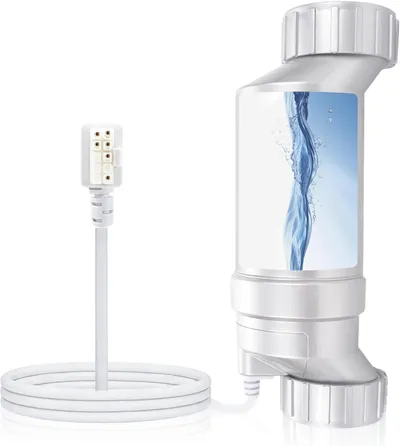
Price: ~$436.97 (often ~$397 with coupon) | Warranty: 3 years | Rating: 4.7/5 stars
If you're on a tight budget and just need to get your pool back online, the Maureen T-15 is the cheapest viable option on this list. At $400-$437 with coupon, it's about a third of OEM Hayward pricing, and verified buyers report it drops in cleanly and gets recognized by the controller without modification.
Real trade-offs, though. One reviewer flagged that the cell housing is slightly shorter than the original Hayward T-15, which caused a leak on his install. Aftermarket plate coatings are generally thinner than OEM, which in my opinion means you should expect 1-3 years of service rather than the 5-7 you'd get from Hayward.
Bottom line: this is a "get me through this season" play. If you need a temporary fix, a backup cell, or you're flipping a house with a salt pool, it makes sense. For your long-term primary cell, spend the extra on the XHHEZQ or OEM Hayward.
Worth knowing before you buy:
- Lowest price on this list
- Some reports of slightly shorter housing causing fit issues
- Aftermarket plate coatings — expect a shorter lifespan than OEM
- Best suited as a backup cell or short-term replacement
Check the current price on Amazon here.
Salt Cell Comparison Table
| Model | Pool Size | Price | Warranty | OEM? | Best For |
|---|---|---|---|---|---|
| Hayward W3T-CELL-15 | Up to 40,000 gal | ~$1,099 | 3 years | Yes | Best overall |
| XHHEZQ T-Cell-15 | Up to 40,000 gal | ~$499.99 | 3 years | No | Best value |
| Hayward W3T-CELL-9 | Up to 25,000 gal | ~$899 | 3 years | Yes | Mid-sized pools |
| Maureen T-15 | Up to 40,000 gal | ~$436.97 | 3 years | No | Tight budgets |
Salt cells last dramatically longer when they aren't running at 100% output all season. A continuous water monitor with ORP tracking lets you dial in your actual sanitizer demand and run the cell at 40-60% instead — which is the single biggest lifespan extender there is. See my best pool water monitors guide for the monitors I run on my own pool.
Salt Cell FAQ
How long do salt cells last?
OEM Hayward cells typically last 5-7 years with proper water chemistry. Aftermarket cells generally run 1-3 years, though quality models like the XHHEZQ claim 3+ year lifespans. Biggest factors: CYA levels, run hours, and how often the cell is acid-washed.
Can I install a salt cell myself?
Yes — and you should. Shut off the pump, disconnect the unions on either end of the old cell, unplug the cable, and reverse the process with the new one. Whole job takes about 10 minutes.
What firmware does my Hayward controller need?
Most aftermarket T-15 cells require AquaRite firmware r1.50 or newer. Press the diagnostics button 7 times to check yours. OEM Hayward cells work with older firmware too.
Should I winterize my salt cell?
If you live anywhere that freezes — absolutely yes. Disconnect, drain, and store indoors. Hayward and most manufacturers explicitly deny warranty claims for freeze damage. A $500-$1,100 cell ruined by one cold night isn't a risk worth taking.
OEM vs. aftermarket — which is better?
Depends on priorities. OEM offers proven 5-7 year lifespans, NSF certification, and warranty support from the largest pool company in North America. Aftermarket costs half as much but typically has shorter lifespans. In my opinion, OEM makes sense for your primary cell; aftermarket makes sense as a backup.
Why is my cell reading "low salt" when my pool is fully salted?
Most misunderstood thing in salt pools. Hayward AquaRite doesn't actually measure salinity — it estimates it from amperage. As plates degrade, amperage drops, and the controller reports falsely low salt. Before adding salt, verify with a Taylor K-1766 or Taylor K-2006 salt test kit. If the manual test shows salt is fine, your cell is nearing end of life.
My Final Verdict
If you want the best long-term value and don't mind paying for proven performance, the Hayward W3T-CELL-15 is the cell I'd put on my own pool. NSF certified, backed by a real warranty, and reviewers consistently report 5-7 years of service. For a piece of equipment that runs your entire sanitization system, that's worth the premium.
If you want to cut your cost roughly in half without trading down to a no-name brand, the XHHEZQ T-Cell-15 is the smartest budget play. The Amazon Vine review verification of its electrical performance is exactly the evidence I want to see before recommending an aftermarket cell.
Whichever cell you choose, the bigger truth is this: most salt cells fail prematurely because of bad water chemistry, not bad manufacturing. Keep CYA under 50 ppm, pH between 7.2-7.4, and run the cell at 40-60% output instead of 100%. You'll dramatically extend its life regardless of model. My saltwater pool maintenance guide walks through the exact routine.
Before adding salt for a replacement cell, use the pool salt calculator to convert the difference between your measured and target salinity into pounds and bags.
It's Pool Nerd Approved.
GET THE BEST POOL GEAR DEALS
I post the freshest discounts on salt cells, ICO monitors, robotic pool cleaners, and all my favorite pool gear at ThePoolNerd.com/deals. Want to keep nerding out over your pool? Subscribe to The Pool Nerd on YouTube for weekly reviews and head-to-heads. Until next time — enjoy that pool.
This article contains affiliate links. The Pool Nerd may earn a commission on qualifying purchases at no extra cost to you. All opinions and product recommendations are based on personal testing and research.
Related Reading
- Best Salt Chlorine Generators — If the control box is dead too, start here
- Pool Salt Calculator — Calculate pounds and bags from your current reading
- Saltwater Pool Maintenance — The routine that makes salt cells last
- Saltwater vs Chlorine Pools — The honest comparison, corrosion and all
- Converting Chlorine to Saltwater — Thinking about switching? Start here
- Converting Saltwater to Chlorine — Done with salt cells entirely
- Best Pool Water Monitors — The ORP data that extends your cell's life
- Pool Mistakes Costing You Money — Running a cell at 100% is one of them


Comments
Loading comments…