
 Justin D.
Introduction
Hey there, welcome back to The Pool Nerd. I'm Justin, your resident pool aficionado. After five-plus years of hands-on pool care and more water tests than I can count, I can tell you that "super chlorinating" is one of those phrases the pool industry loves to make sound complicated.
Here's the thing — it's not. Super chlorinating just means temporarily blasting your free chlorine way above its normal level to break apart chloramines and wipe out the stuff your everyday chlorine can't touch. Algae, bacteria, that locker-room smell after a big pool party — this is how you reset your water.
In this guide I'll show you exactly what you need, how much to add, and the step-by-step process I use in our pool. So, let's dive in.
Shock Treatment: What You Need Checklist
Fix pH first (acid if high), then choose a shock that matches your pool—liquid, bagged packs, or cal-hypo granules.

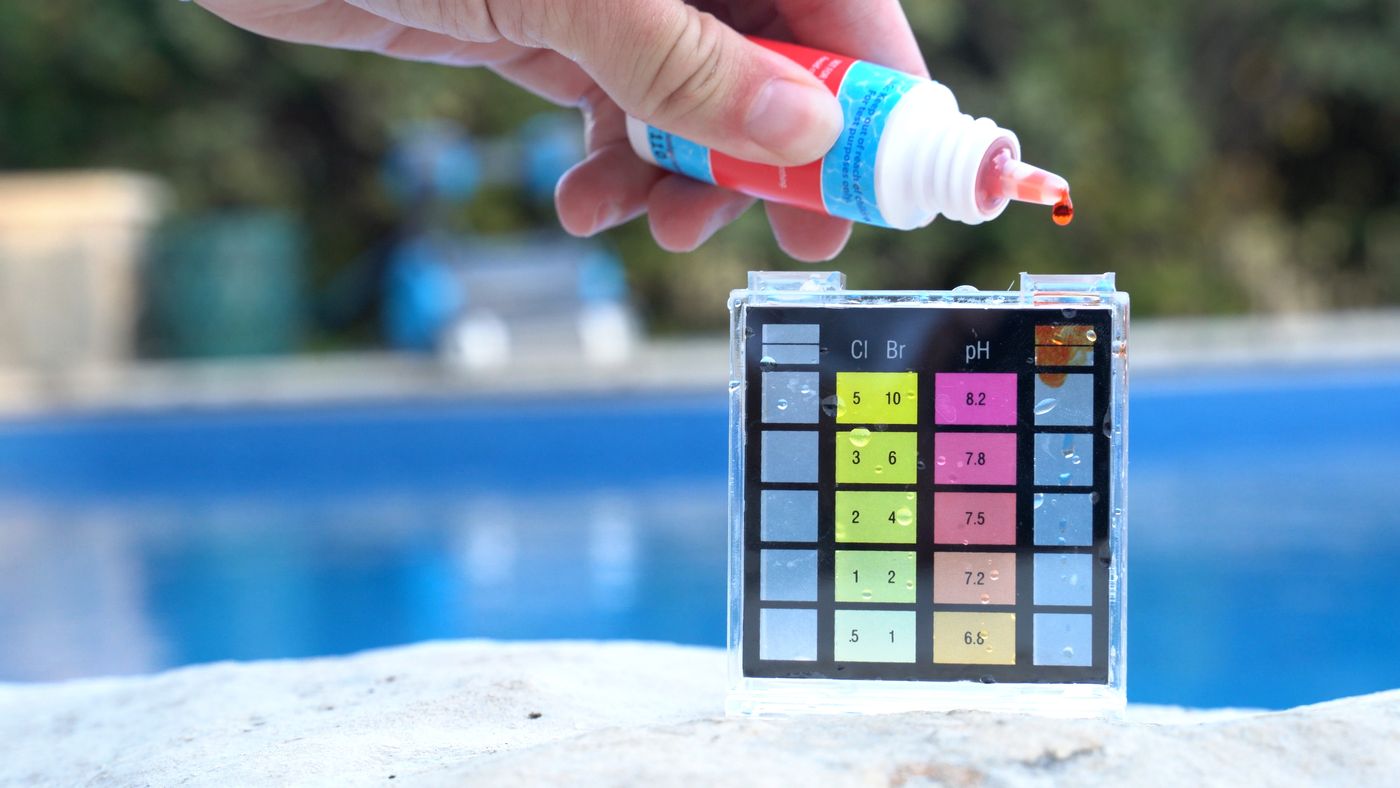
Taylor K-2005 Test Kit
What it is: A professional drop (titration) kit for chlorine, pH, alkalinity, calcium hardness, and cyanuric acid.
Why you need it: You can’t SLAM or balance blind—especially CYA, which handcuffs chlorine. This kit gives numbers you can trust, not strip guesswork.

Ondilo ICO Pool Water Monitor
What it is: A floating smart monitor that samples pH, ORP (sanitizer effectiveness), and temperature on a schedule and sends trends to your phone.
Why you need it: You still need a real drop kit for parameters the ICO doesn’t replace (like TA and CYA), but hourly ORP/pH catches drift and dosing mistakes long before weekly strip checks do.

Champion Muriatic Acid
What it is: Dilute hydrochloric acid—standard for lowering pH and, with the right method, total alkalinity.
Why you need it: High pH destroys chlorine efficiency. Always follow the label; never mix acid with chlorine.

In The Swim pH Reducer (dry acid)
What it is: Sodium bisulfate (dry acid)—lowers pH (and can pull TA down when used in controlled steps).
Why you need it: Easier to handle and store than jugs of muriatic acid for small, precise corrections; still an acid—never mix with chlorine, follow the label, and retest after circulation.

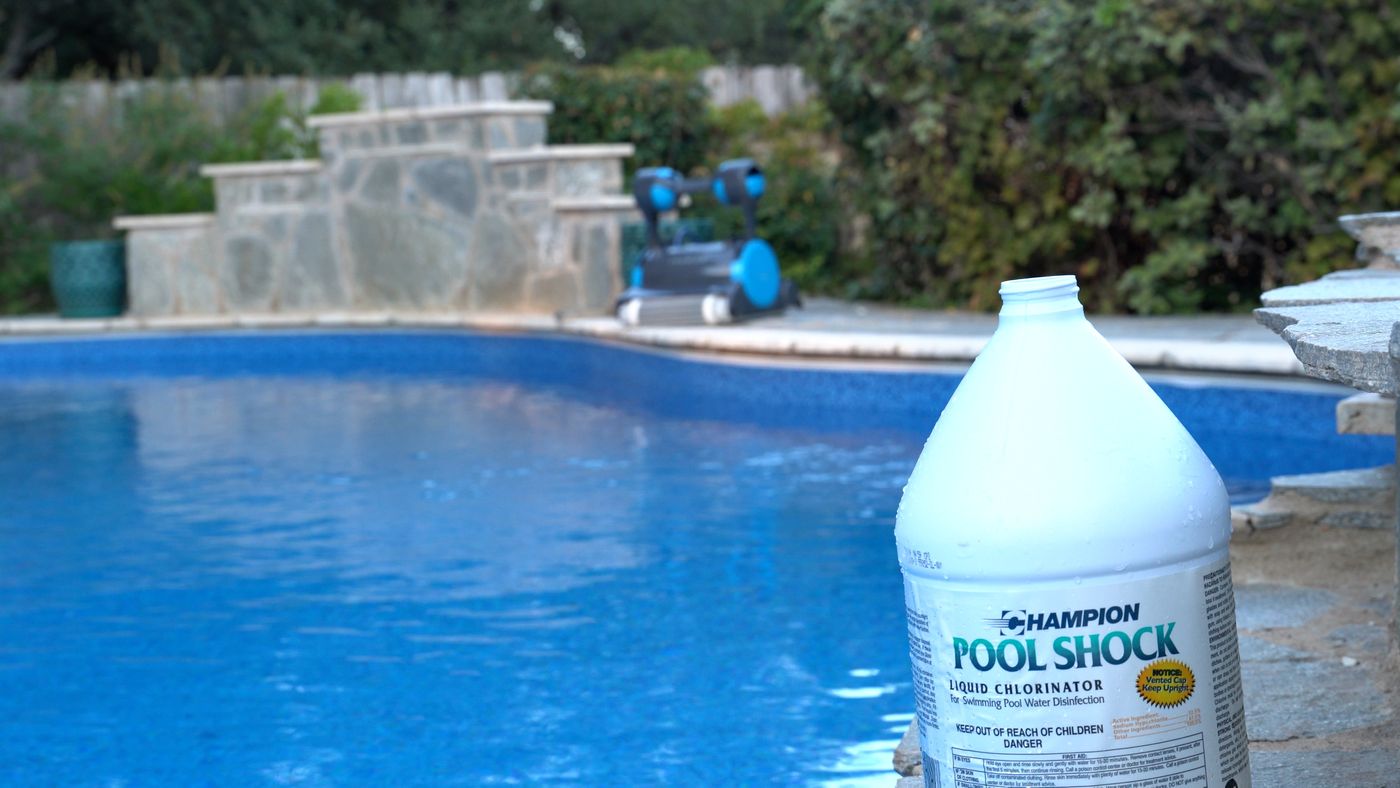
Champion Pool Shock (4 Pack)
What it is: A case of liquid pool chlorine (sodium hypochlorite)—not cal-hypo granules. Confirm strength on the listing and jug label (often around 10–12.5%).
Why you need it: Same upside as other liquid shock: no CYA from the product, easy to pour with the pump running—useful to keep stocked for openings, algae pushes, storms, or parties.
How to use: Treat it like any liquid shock (pour with circulation; big doses still work best at dusk). Store cool and shaded; opened jugs lose strength over time—plan to use them within a few weeks.

In The Swim Cal-Hypo Pool Shock
What it is: Calcium hypochlorite granular shock—high chlorine, adds calcium, no CYA.
Why you need it: Strong oxidizer for recovery and breakpoint; pre-dissolve; watch calcium if hardness is already high.

HTH Cal Hypo Pool Shock
What it is: Cal-hypo granular shock—same family as other cal-hypo products.
Why you need it: Alternative brand/size; compare % available chlorine and price per pound on the label.
Super Chlorinate vs. Shock — What's The Difference?
Let's get real — for most pool owners, "super chlorinate" and "shock" describe the same action: adding a big dose of chlorine to spike your free chlorine (FC) and oxidize contaminants. You'll hear the terms used interchangeably all the time. If you want the full rundown on shocking specifically, check out my guide on how to shock a pool.
If we want to split hairs, there are two specific meanings worth knowing:
Breakpoint chlorination — raising FC high enough (the classic rule is roughly 10x your combined chlorine) to fully break the chloramine bonds instead of making the smell worse. This is the technical definition of super chlorinating.
Salt system boost mode — many saltwater systems have a literal "Super Chlorinate" or "Boost" button that runs the cell at 100% output for about 24 hours. More on that below.
Either way, the goal is the same: get your FC high, get it there fast, and let it do the heavy lifting overnight.
Pool Nerd Approved — Liquid Chlorine (Sodium Hypochlorite)
This is what I use and recommend for super chlorinating. It's already in liquid form, so it works immediately, leaves no granular residue to bleach your liner, and — most important — adds zero stabilizer to your water. Buy it fresh at 10–12.5% and use it within a few weeks.
The One Rule That Makes Super Chlorinating Work
If you remember nothing else, remember this: super chlorinating only works if you hit a high enough FC level in one shot.
Dribbling chlorine in over a few days won't break through chloramines — it just feeds the problem and makes the smell worse. You have to overwhelm it. That's breakpoint chlorination, and the old rule of thumb is to push FC to about 10 times your combined chlorine reading in a single dose.
But here's the kicker most pool stores won't explain: your cyanuric acid (CYA) level decides how high you need to go. CYA is pool sunscreen — it shields chlorine from the sun, but it also holds chlorine back. The more CYA in your water, the more FC you need to land the same sanitizing punch.
That's where the "chlorine lock" myth comes from. There's no such thing as locked-up chlorine — your CYA is simply set too high for the FC you're running. The fix isn't some miracle bottle off the pool-store shelf. It's matching your FC to your CYA. If your CYA is sky-high, the real fix is lowering your CYA.
FC Target To Super Chlorinate, Based On Your CYA
| Your CYA (ppm) | Super Chlorinate FC Target (ppm) |
|---|---|
| 30 | 12 |
| 40 | 16 |
| 50 | 20 |
| 60 | 24 |
| 70 | 28 |
| 80 | 31 |
Test your CYA before you super chlorinate — especially if you use trichlor tablets. Tabs quietly add CYA every week (that's CYA creep), and once it climbs, you can't chemically remove it. You can't unring that bell. The only fix is draining and replacing some of your water. So if your pool is outside this chart, it may be time to drain and refill — here's how to lower CYA the right way.
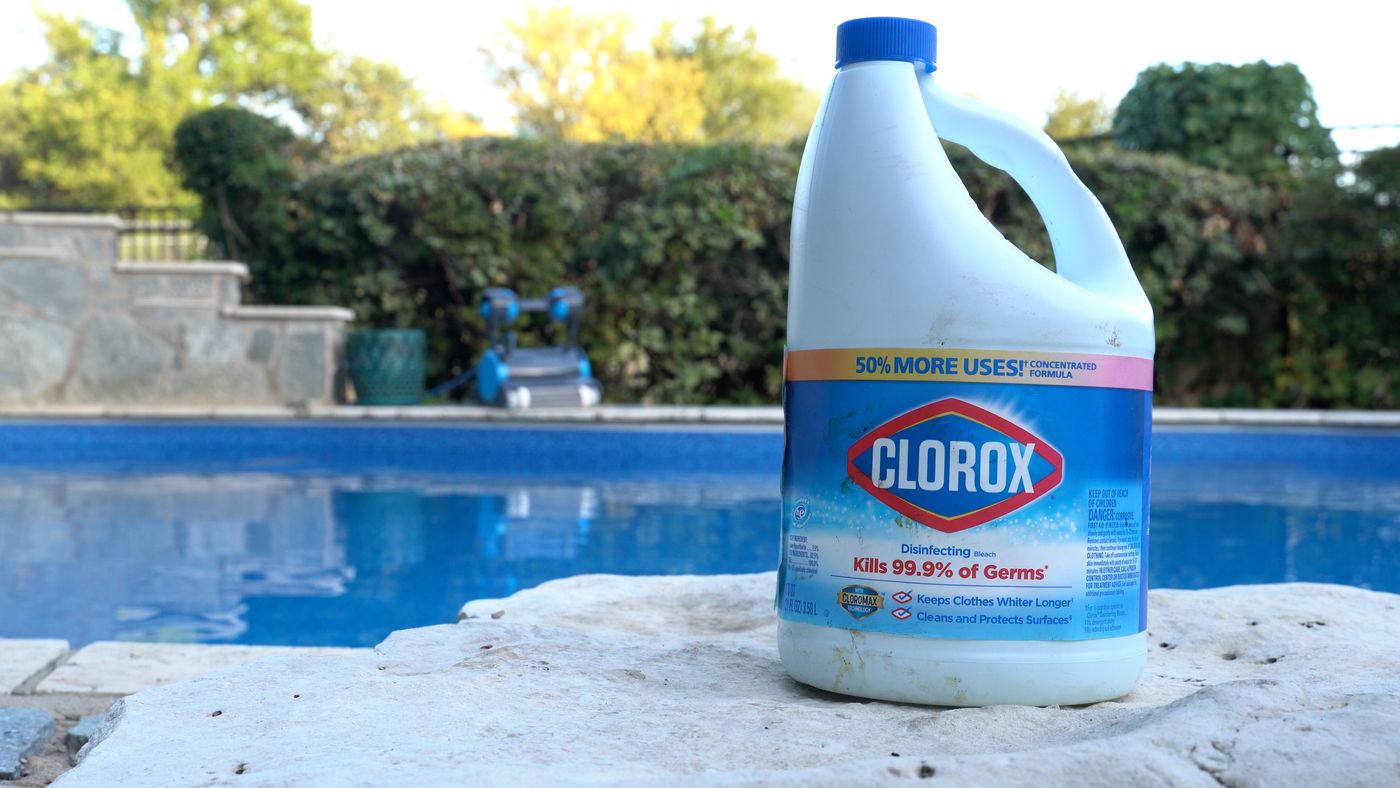
Warning — never use dichlor to super chlorinate. Dichlor and trichlor both add CYA every single time you use them. Use them to shock and you'll send your stabilizer through the roof, which means you'll need even more chlorine the next time around. For super chlorinating, stick with liquid chlorine or pre-dissolved cal-hypo.
What You'll Need
Keep it simple. Here's the short list:
-
Liquid chlorine (10–12.5% sodium hypochlorite) — your main weapon
-
A reliable test kit — the Taylor K-2006 is the gold standard (salt pools: the K-2006 Salt), or a smart pool water monitor like the ICO for continuous readings
-
Chemical-resistant gloves and safety goggles — non-negotiable; this stuff burns on contact
-
Old clothes you don't mind bleaching
-
Your pool's exact volume in gallons — use our pool volume calculator
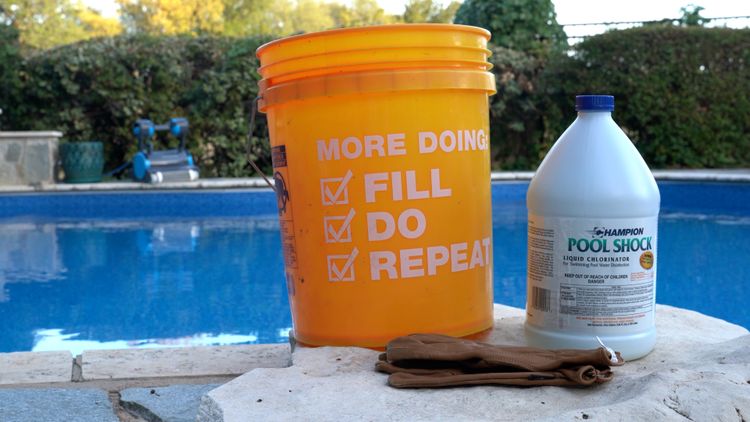
Gloves and goggles are non-negotiable when handling chlorine // The Pool Nerd
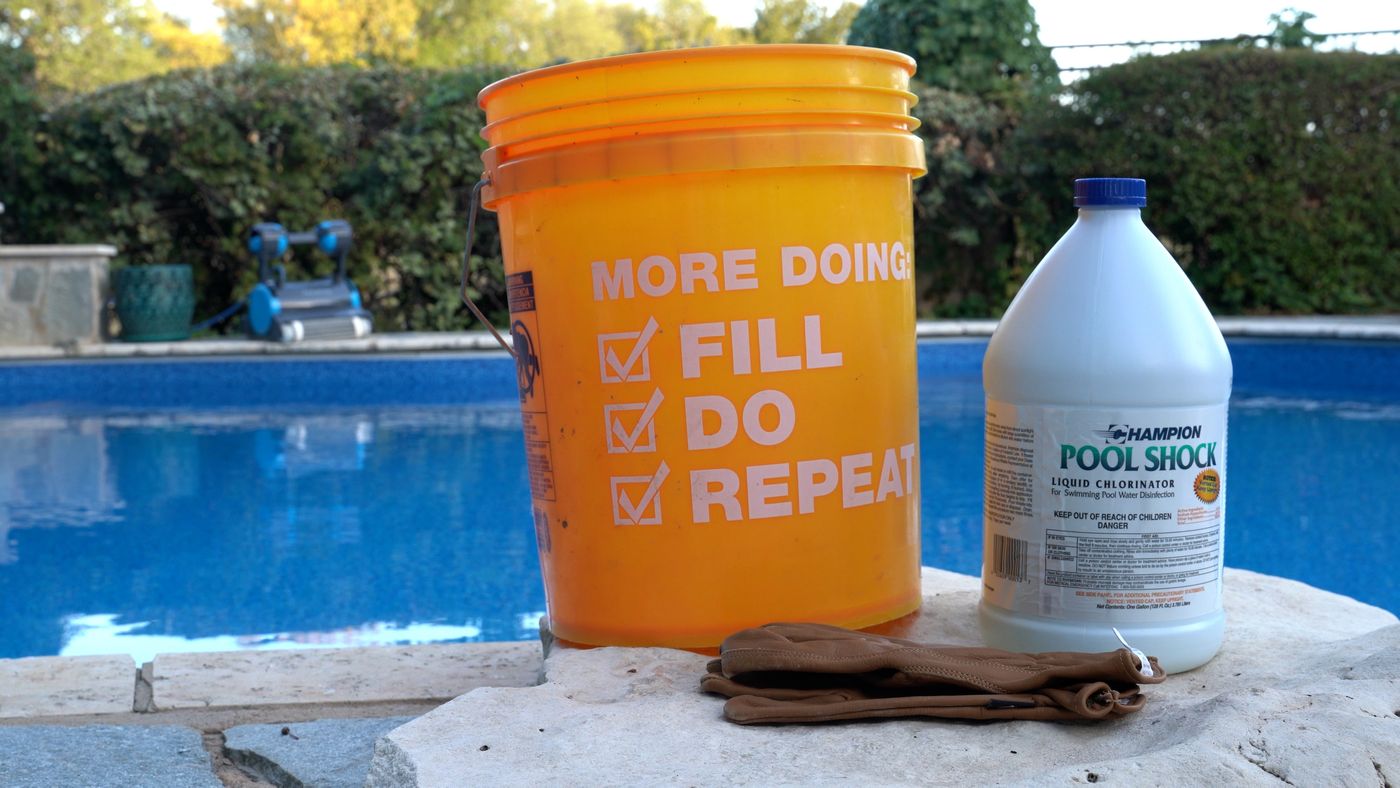
Safety first, every time. Chlorine at these concentrations will burn skin and eyes, so glove up and keep kids and pets clear while you work.
How To Super Chlorinate Your Pool — Step By Step
Here's the exact process. Six steps, start to finish.
-
Test your water. Get your current FC, combined chlorine, pH, and CYA. You can't dose right if you're flying blind.
-
Drop your pH to 7.0–7.2. Chlorine's killing power falls off a cliff as pH rises — it's roughly 80% active at 7.0 and only about 20% active at 8.0. Low pH makes every drop hit harder. Need to bring it down? Check out my guide on how to lower your pool's pH.
-
Calculate your dose. Use the CYA table above to find your FC target, then the dosing chart below to figure out how much liquid chlorine to add. As a baseline, one gallon of 12.5% liquid chlorine raises 10,000 gallons by about 12 ppm.
-
Add it at dusk. The sun burns off unstabilized chlorine fast, so always super chlorinate in the evening. Turn the pump on first, then pour the chlorine slowly along the perimeter near a return jet for even mixing.
-
Run the pump overnight. Full circulation for at least 8 hours keeps the chlorine moving and working everywhere, instead of pooling in one corner.
-
Retest in the morning. If your FC held steady overnight and the water is clear, you're done. If it dropped hard or the water's still cloudy or green, you've still got demand — repeat until it holds.
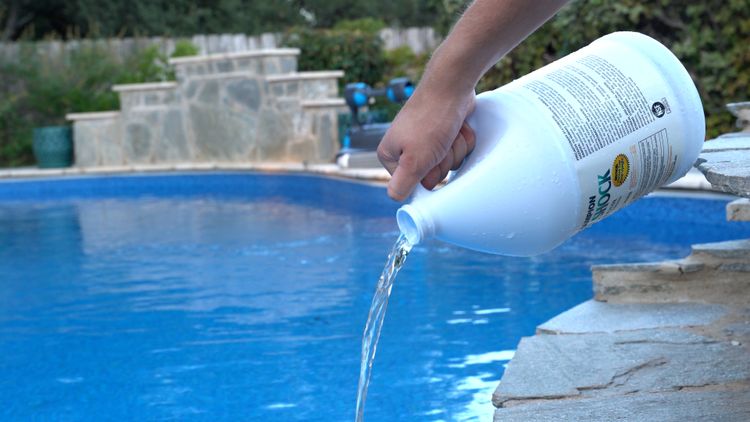
Pour liquid chlorine near a return jet at dusk // The Pool Nerd
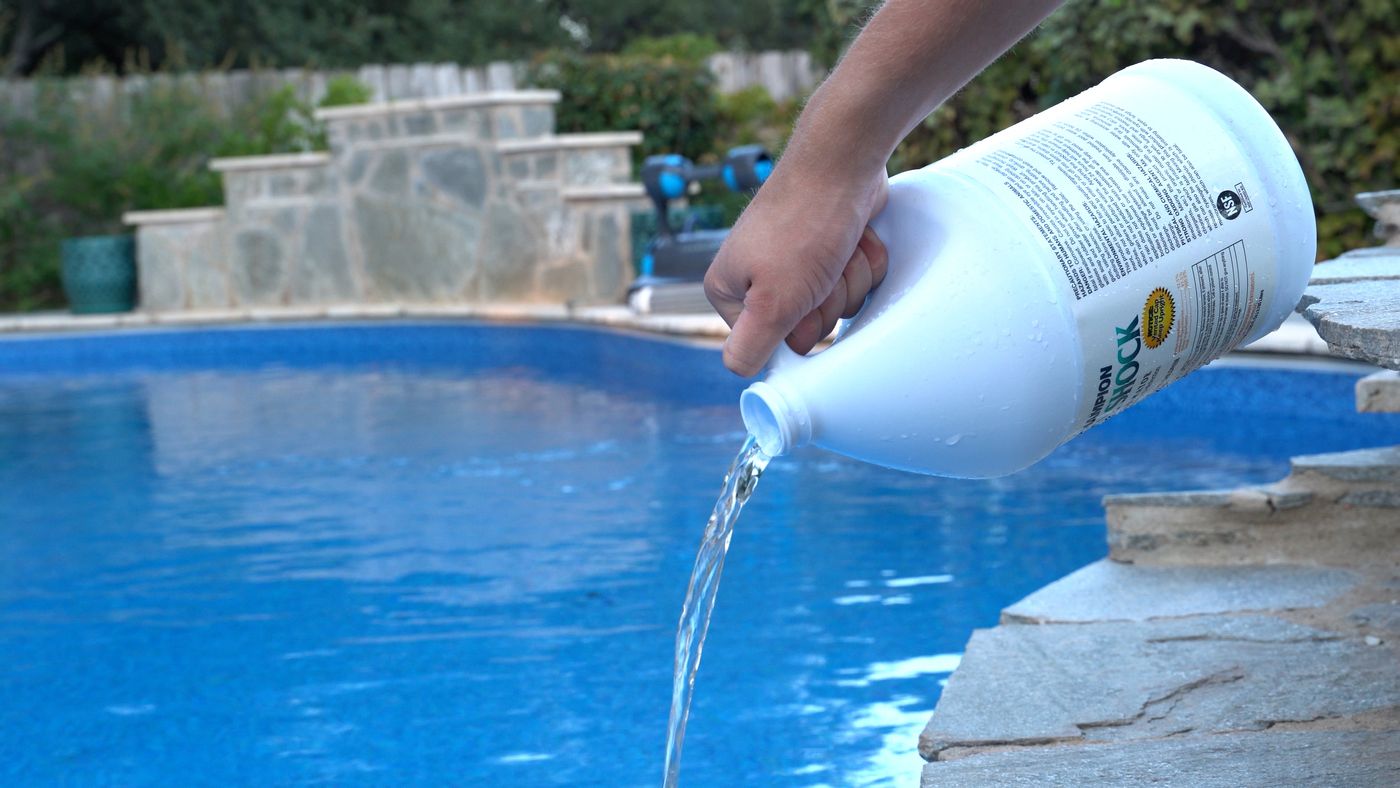
Quick Dosing Reference For 12.5% Liquid Chlorine
| Pool Size | Raise FC ~10 ppm | Raise FC ~20 ppm |
|---|---|---|
| 10,000 gal | ~0.8 gallon | ~1.7 gallons |
| 15,000 gal | ~1.3 gallons | ~2.5 gallons |
| 20,000 gal | ~1.7 gallons | ~3.3 gallons |
| 25,000 gal | ~2.1 gallons | ~4.2 gallons |
Not sure how many gallons your pool holds? Run the numbers with our pool volume calculator before you dose.
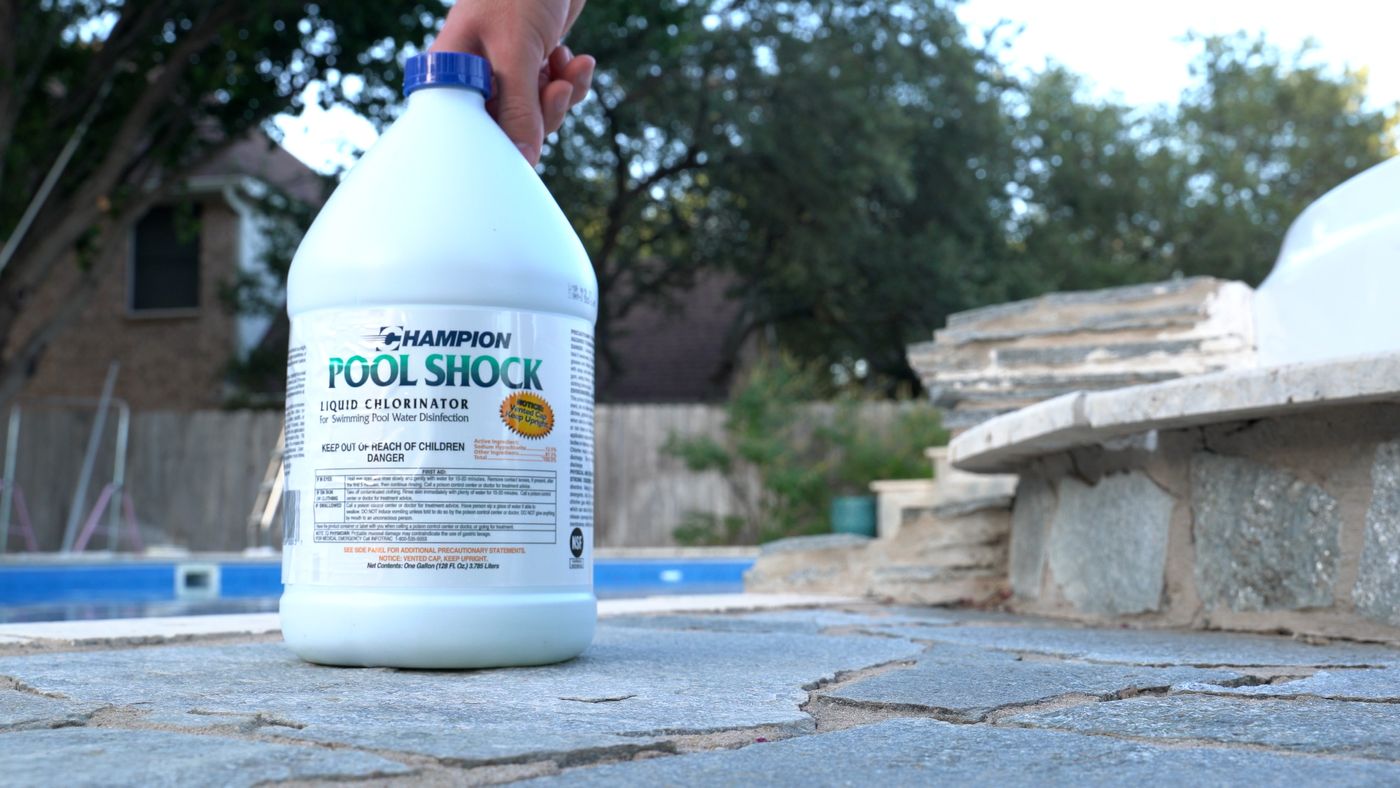
Saltwater Pool? Use The Boost / Super Chlorinate Mode
If you run a salt pool, your system likely has a "Super Chlorinate" or "Boost" setting built right into the controller. Flip it on and the cell runs at 100% output for around 24 hours to push your chlorine up.
That works fine for a small maintenance bump or after a busy weekend. But here's the thing — for a real problem like an algae bloom or high combined chlorine, your cell can't generate chlorine fast enough to keep up. In my experience, the faster fix is to add liquid chlorine directly to hit your target, then let the cell maintain it from there. Salt or not, chlorine is chlorine.
One salt-specific note: salt pools run best with a higher CYA target, usually 60–80 ppm, versus 30–50 for a traditional pool. Bump your super chlorinate FC target up to match. For more on keeping a salt pool dialed in, see my saltwater pool maintenance guide.
Don't Make These Mistakes
Pool Nerd Disapproved — Common Super Chlorinating Mistakes:
-
Adding it during the day. The sun destroys a big chunk before it can work. Always dose at dusk.
-
Going too small. A timid dose won't reach breakpoint. Commit to the target or don't bother.
-
Skipping the pump. No circulation means the chlorine sits in one spot doing nothing.
-
Dosing with high pH. At pH 8.0 you're throwing away most of your chlorine's power.
-
Using tabs or dichlor. You'll spike your CYA and make the next round harder.
-
Swimming too soon. Wait until FC drops below 5 ppm — test, don't guess.
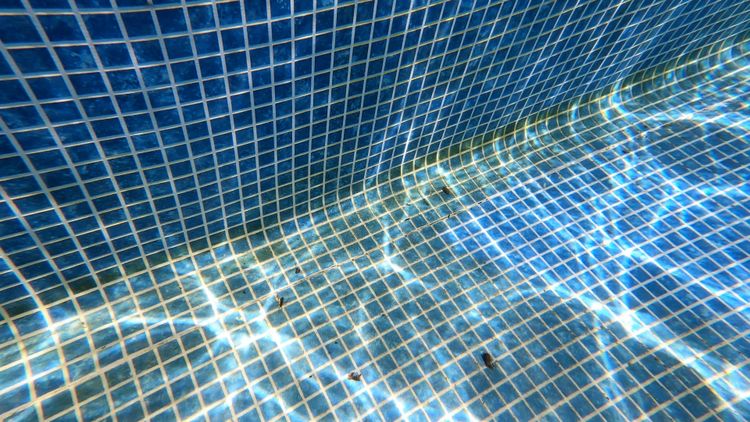
A timid dose won't clear a green pool — commit to the target // The Pool Nerd
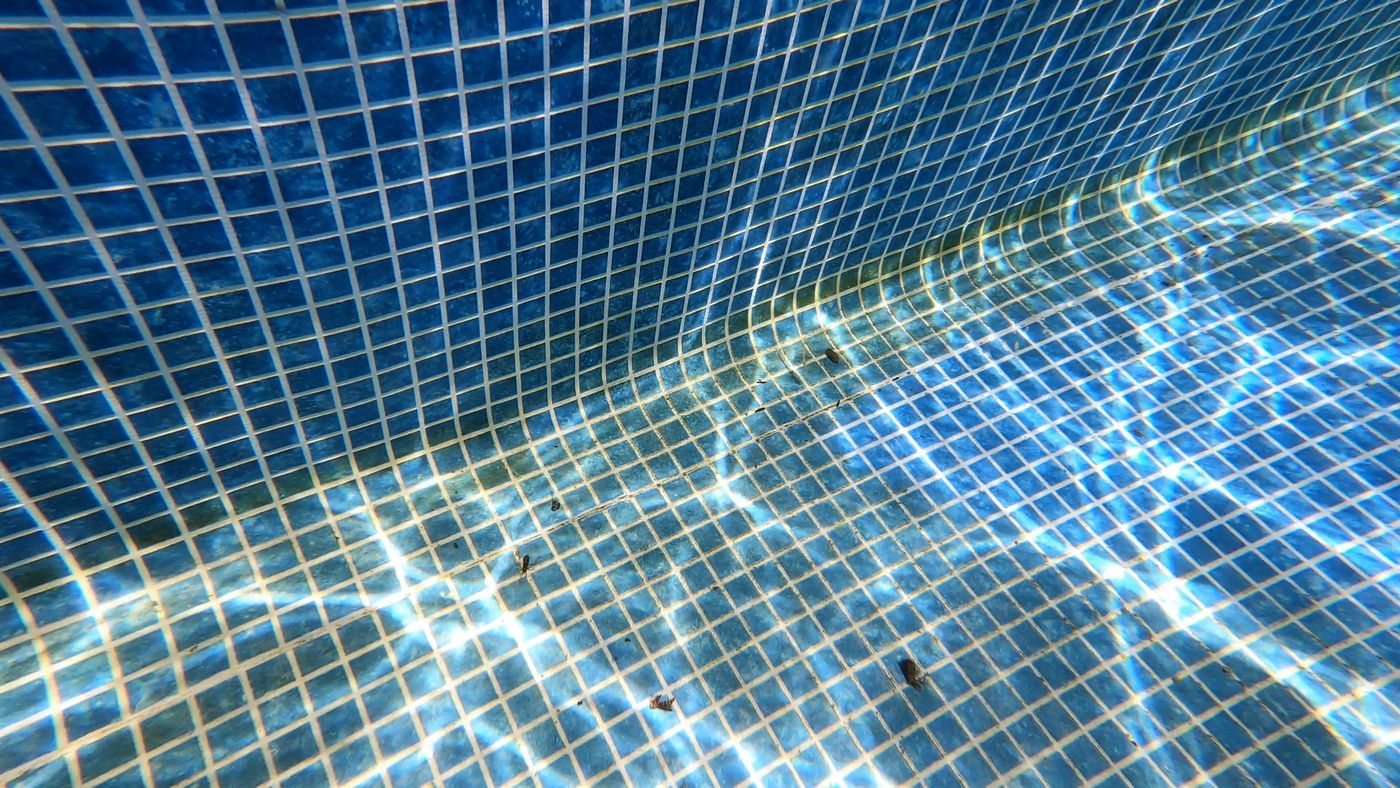
Want To Super Chlorinate Less Often? Two Upgrades
Here's something the pool industry won't tell you: if your water is dialed in, you'll barely need to super chlorinate at all. Most pools don't have a chlorine problem — they have an organic load problem. Two upgrades changed the game for me.
A continuous pool water monitor like the ICO. Instead of guessing, I watch my ORP — the real measure of sanitizing power, with a target of 650–700 mV — and my pH around the clock from my phone. No more over- or under-treating. It's rechargeable, has no subscription fees, and pays for itself in saved chemicals. You can grab it at mysmartpool.com.
Read our full review: ICO Pool Water Monitor Review
A UV system like SpectraLight. UV destroys chloramines and over 60 waterborne pathogens as water passes through your plumbing — the same technology used in Olympic and commercial pools. In my testing it cut chlorine demand dramatically, which turns super chlorinating from a regular chore into a rare event.
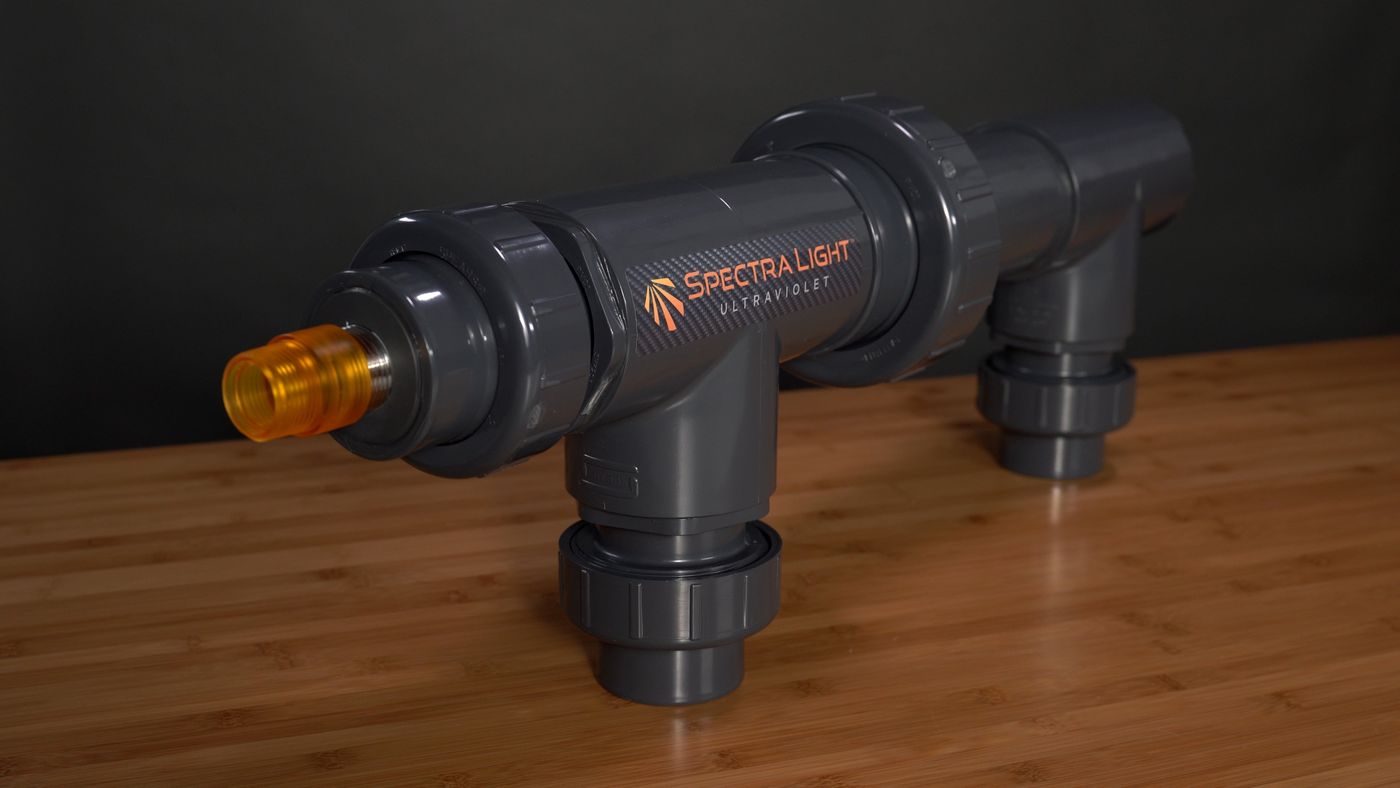
Read our full review: SpectraLight UV Review
Frequently Asked Questions
Is super chlorinating the same as shocking?
For practical purposes, yes. Both mean adding a heavy dose of chlorine to spike FC and oxidize contaminants. "Super chlorinate" technically refers to hitting breakpoint (about 10x combined chlorine) or running a salt system's boost mode, but you'll see the terms used interchangeably. Same action, same result.
How high should I take my free chlorine?
It depends entirely on your CYA. Use the table above — the higher your CYA, the higher your FC target. As a baseline, your super chlorinate FC sits around 40% of your CYA reading, and you need to hit that level in one dose for it to count.
How long after super chlorinating can I swim?
Wait until your FC drops below 5 ppm, which usually takes 8–24 hours depending on how much you added. Test before you get in rather than trusting a timer. High chlorine can irritate skin, sting eyes, and bother your lungs.
Can I super chlorinate a saltwater pool?
Absolutely. Use the boost mode for small bumps, or add liquid chlorine directly for anything serious. Just remember salt pools want a higher CYA range, so adjust your FC target up to match.
My Final Verdict
So what's my final verdict on super chlorinating your pool?
Super chlorinating isn't complicated, and it shouldn't cost you a fortune in pool-store products. Test your water, drop your pH, match your FC target to your CYA, add liquid chlorine at dusk, and let it work overnight. That's the whole game.
The biggest upgrade you can make is trading guesswork for real data. Once you're watching ORP instead of chasing chlorine numbers, you'll super chlorinate only when your water needs it — and your wallet will thank you.
Want to grab a pool monitor like the ICO or a UV system like the SpectraLight? Head over to my deals page, where I post the best deals on top pool equipment.
This information is for educational purposes only. Handling pool chemicals — especially chlorine and acid — carries a real risk of injury or property damage. Always read the manufacturer's labels and MSDS sheets, and use this information at your own risk.
Until then, enjoy that pool — I'll see you next time.


Comments
Loading comments…