
 Justin D.
Introduction
Did you know that most pools only cost around $10,000 to $15,000 in raw structural materials? So why on earth are pool builders charging $75,000 to $150,000 or more to put one in your backyard?
Hey there, and welcome back to The Pool Nerd. I'm Justin, your resident pool aficionado. Today we're going to talk about something the pool industry really doesn't want you to understand — where your money actually goes when you buy a pool.
When we were looking for a test pool here at The Pool Nerd, we spent months getting quotes, comparing options, and trying to figure out which route made the most sense. So today, we're doing a deep-dive guide on what a pool really costs.
We'll break down the main pool types — gunite, fiberglass, vinyl liner, and factory-built options like the Ecopool S-Series and Container Pool — line by line, part by part. You'll see exactly what each piece costs, what your builder is marking it up to, and how choosing the right build method can save you $50,000 or more on a new pool.
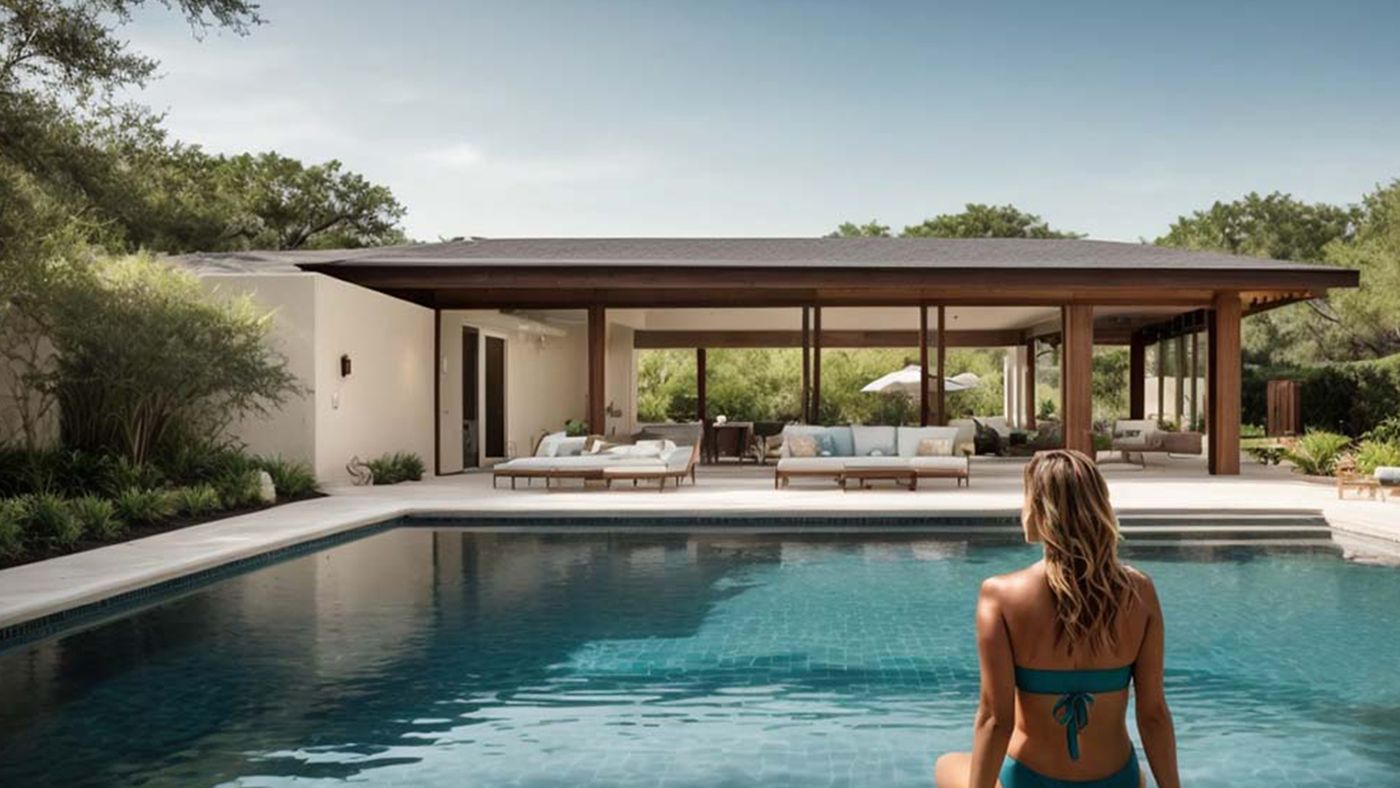
Here's the reality: most custom inground pools land somewhere between $75,000 and $150,000. Here in Austin, a standard pool easily runs $100,000 to $200,000. And the wild part? The raw structural materials in a typical gunite pool — the concrete, rebar, and plaster — only cost roughly $7,000 to $10,000.
So where does the other $90,000+ go? It goes into the process, not the pool. Once you see the line items, you'll never look at a pool quote the same way again.
If you already know the approximate dimensions, construction type, site access, decking, and features, use the inground pool cost calculator to turn those choices into an itemized planning range. Then compare that scope—not just the headline total—against builder proposals.
The short version
- Gunite: Ultimate custom shapes, but the priciest to build and own — $115,000–$165,000+ over 10 years.
- Fiberglass: Faster install, but you pay heavily for shipping and crane logistics.
- Vinyl liner: Cheapest up front, but mandatory liner swaps make it expensive forever.
- Factory-built (Ecopool): Your money goes into the pool, not the process — insulated, fast, and dramatically lower lifetime cost.
The Builder Markup Chain Nobody Talks About
A traditional gunite pool build is an absolute circus of subcontractors. Here's the cast of characters that all need to get paid before you can ever take a swim:
- Excavation crew
- Rebar crew
- Plumbing crew
- Gunite/shotcrete nozzlemen
- Tile and coping installers
- Electrical crew
- Plaster crew
- Equipment-pad crew (pump, filter, heater)
- Decking crew
- And the General Contractor (GC) sitting on top of all of them
Now, let's be fair: heavy machinery, fuel, and highly skilled manual labor aren't free. Excavation requires massive equipment, and spraying gunite takes real craftsmanship.
But here's the catch: every single one of those subcontractors charges their own retail rate, plus their own built-in markup. Then the general contractor adds another 15% to 25% on top of every sub's invoice. That extra fee isn't going into better materials for your pool — it's a premium you pay for them to make phone calls and manage a chaotic schedule.
By the time your final check clears, roughly 80% to 90% of what you paid was consumed by cumulative labor, scheduling overhead, subcontractor markups, and GC profit — not the physical pool structure itself. That's the dirty little secret of pool construction.
And here's the kicker — because a traditional build takes 3 to 6 months, you're also eating the cost of time. Weather delays, scheduling conflicts, and a yard that looks like a bomb went off for half a year. If you financed the project, you're stuck paying interest on a construction loan for months before your feet even touch the water.
If a builder won't give you a transparent, line-item breakdown of subcontractor costs, they're likely hiding massive fee stacking. A reputable, transparent builder has nothing to hide. Always ask for an itemized bid — and if they refuse to provide one, walk away.
Gunite: A $10K Pool Wrapped in $90K of Process
Let me be completely fair — gunite pools exist for a reason. If you want a pool shaped like a Fender Stratocaster wrapped around a custom rock formation with a hidden grotto and a swim-up bar, gunite is your only option. It's the money-is-no-object choice for true one-of-one luxury builds.
But here's the reality for the rest of us: 95% of homeowners just want a beautiful, clean, functional pool. Yet they're paying full "custom lifestyle" markups for what amounts to a standard rectangle. Let's tear down the actual receipt.

What You're Actually Paying For (Typical $100K Gunite Build)
| Line Item | Typical Cost |
|---|---|
| Excavation & dirt hauling | $3,000–$8,000 |
| Rebar & steel framing | $1,500–$3,000 |
| Plumbing rough-in (pipes, returns, skimmers, main drain) | $3,000–$6,000 |
| Gunite/shotcrete shell material | $4,000–$8,000 |
| Tile & coping | $5,000–$15,000 |
| Plaster interior finish | $4,000–$10,000 |
| Equipment pad (pump, filter, heater, sanitizer) | $4,000–$10,000 |
| Electrical & structural bonding | $2,000–$5,000 |
| Concrete decking | $8,000–$20,000 |
| Permits & engineering | $1,000–$3,000 |
| GC markup (15–25% stacked on top) | $15,000–$25,000+ |
Add it all up, and you're easily north of $100,000. And that's just day one. Gunite is truly the gift that keeps on taking.
The Hidden Lifetime Costs
- Concrete cancer (ASR): A massive issue here in Austin. Water seeps through the porous concrete shell and reaches the structural rebar. The rebar corrodes, expands, and cracks the pool from the inside out. Once ASR starts, it's brutally expensive to fix — and almost no builder covers it under a standard warranty.
- Mandatory resurfacing: Traditional plaster only lasts about 7 to 15 years before it delaminates, stains, or gets so rough it shreds your swimsuits. A complete replaster job can run $6,000 to $25,000 depending on interior area, finish, preparation, tile, and market. Use the pool resurfacing cost calculator to estimate the actual scope.
- Zero insulation = brutal heating bills: Raw concrete has an insulation value of roughly R-0.5 to R-1 — essentially nothing. An uninsulated concrete shell constantly bleeds heat straight into the cold surrounding earth. Heating a gunite pool to 85°F during the shoulder seasons can easily add $400 to $600 per month to your energy bill.
- Higher chemical costs: Porous plaster acts like a microscopic breeding ground for algae. You'll burn through more chlorine, acid, and shock, and spend more time brushing the walls. Industry data puts concrete pool maintenance at roughly $2,700 per year — that's $27,000 over a decade.
- Change orders: The moment a contractor hits unexpected rock during excavation, or a plumber needs an extra pipe run, you get hit with a change order. Change orders are where builders make serious, high-margin profit. I've seen standard builds go $15,000 to $30,000 over budget from surprises alone.
Fiberglass: Faster Build, But You're Paying for Logistics
Fiberglass pools were supposed to fix the gunite headache: a pre-molded shell dropped right into a hole, completely finished in a few weeks. In many ways, they do achieve that. The installation is much faster, the gelcoat surface is non-porous so it blocks algae, and you never have to replaster.
You've probably seen fiberglass shells advertised online or on Facebook Marketplace for $15,000 to $25,000. But by the time a pool builder quotes you an actual installed project, it still lands in the $70,000 to $95,000 range. Why is that? Let's look at the numbers.
Where Your Fiberglass Dollars Go (Typical $85K Build)
| Line Item | Typical Cost |
|---|---|
| Pre-molded fiberglass shell | $15,000–$25,000 |
| Flatbed freight shipping | $1,000–$4,000 |
| Wide-load permits & police escorts | $500–$1,500 |
| Crane rental (to lift and set the shell) | $2,000–$5,000 |
| Excavation & hauling | $3,000–$8,000 |
| Gravel backfill (required to support the shell) | $1,500–$4,000 |
| Plumbing rough-in | $2,000–$5,000 |
| Coping installation | $2,000–$5,000 |
| Equipment pad | $4,000–$10,000 |
| Electrical & bonding | $2,000–$5,000 |
| Concrete decking | $8,000–$20,000 |
| GC markup | $10,000–$15,000 |
As you can see, you're burning $5,000 to $10,000+ in pure shipping and crane logistics before a single drop of water hits the pool. Furthermore, you're entirely locked into the manufacturer's pre-made mold catalog. You can't get custom shapes, and the width is strictly limited to around 16 feet due to highway travel regulations.
And the insulation? The shell is only about a quarter to a half-inch of fiberglass composite, giving it a weak R-value of roughly R-0.7. Your heating bills are going to look almost identical to a gunite pool.
Vinyl Liner: Cheap Up Front, Expensive Forever
Vinyl liner pools come in at the lowest initial price point, usually running $40,000 to $60,000 fully installed. That sounds like an incredible deal up front — until you realize that a vinyl liner is a ticking financial time bomb.
Where Your Vinyl Dollars Go
| Line Item | Typical Cost |
|---|---|
| Steel or polymer wall panels | $3,000–$6,000 |
| The vinyl liner sheet | $1,500–$3,000 |
| Vermiculite or grout floor base | $1,000–$3,000 |
| Coping & liner track | $1,000–$2,000 |
| Excavation | $3,000–$8,000 |
| Plumbing rough-in | $2,000–$5,000 |
| Equipment pad | $3,000–$8,000 |
| Electrical & bonding | $2,000–$4,000 |
| Concrete decking | $8,000–$15,000 |
| GC markup | $6,000–$10,000 |
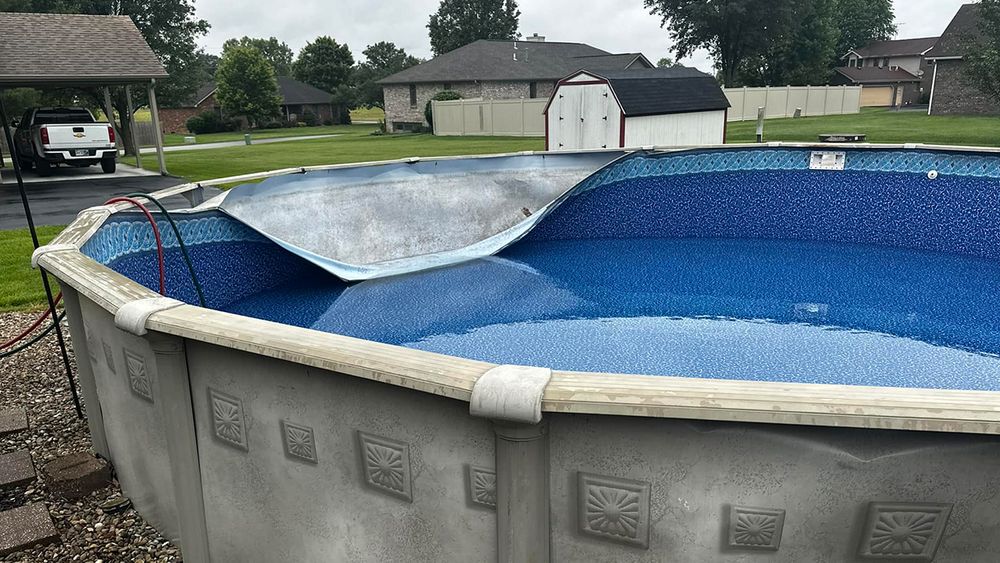
The catch? Most vinyl liners only last 5 to 9 years before UV rays and pool chemicals cause them to fade, crack, or tear brittlely. Every replacement liner costs $3,000 to $7,000 between materials and labor. Over 15 years, you're virtually guaranteed to do two or more liner swaps, adding thousands to your lifetime total. Worse yet, a dog's claws, a dropped pool pole, or a sharp toy can puncture the liner instantly — turning a standard Tuesday afternoon into an unexpected $4,000 repair bill.
Vinyl works if you're on a tight initial budget, but it's the pool equivalent of leasing a car — there's always another major payment waiting just around the corner.
Factory-Built Pools: Your Money Goes Into the Pool, Not the Process
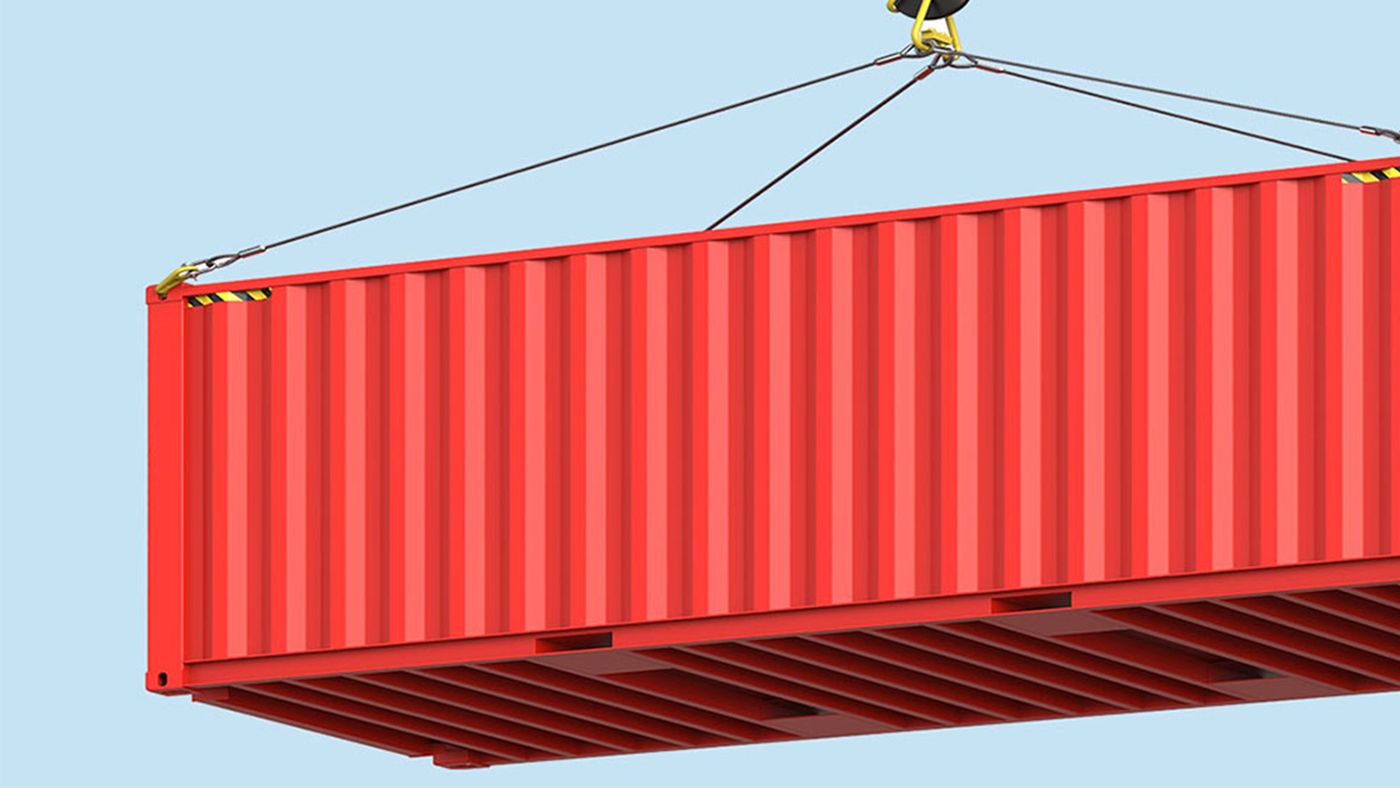
Here's where the game completely changes. Factory-built engineered pools — like the Ecopool S-Series and Ecopool Container Pools — flip the traditional cost model on its head. Instead of hiring 8 to 10 separate subcontractors to manually construct a pool in your backyard over four months, these pools are built 90% to 95% complete inside a highly efficient, quality-controlled factory. The pool ships directly to your house and installs in a matter of days, not months.
By shifting production to a factory, you completely bypass the sub-on-sub markup chain, weather delays, and unpredictable change orders. Your hard-earned money actually goes directly into high-grade structural steel, robust insulation, and commercial-grade finishes — rather than paying for a dozen crews to stand around waiting for concrete to dry.
Two Products, Two Use Cases
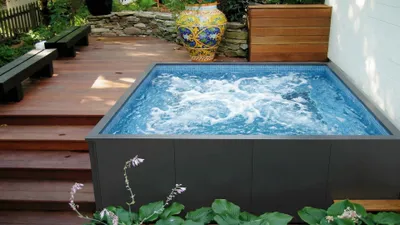
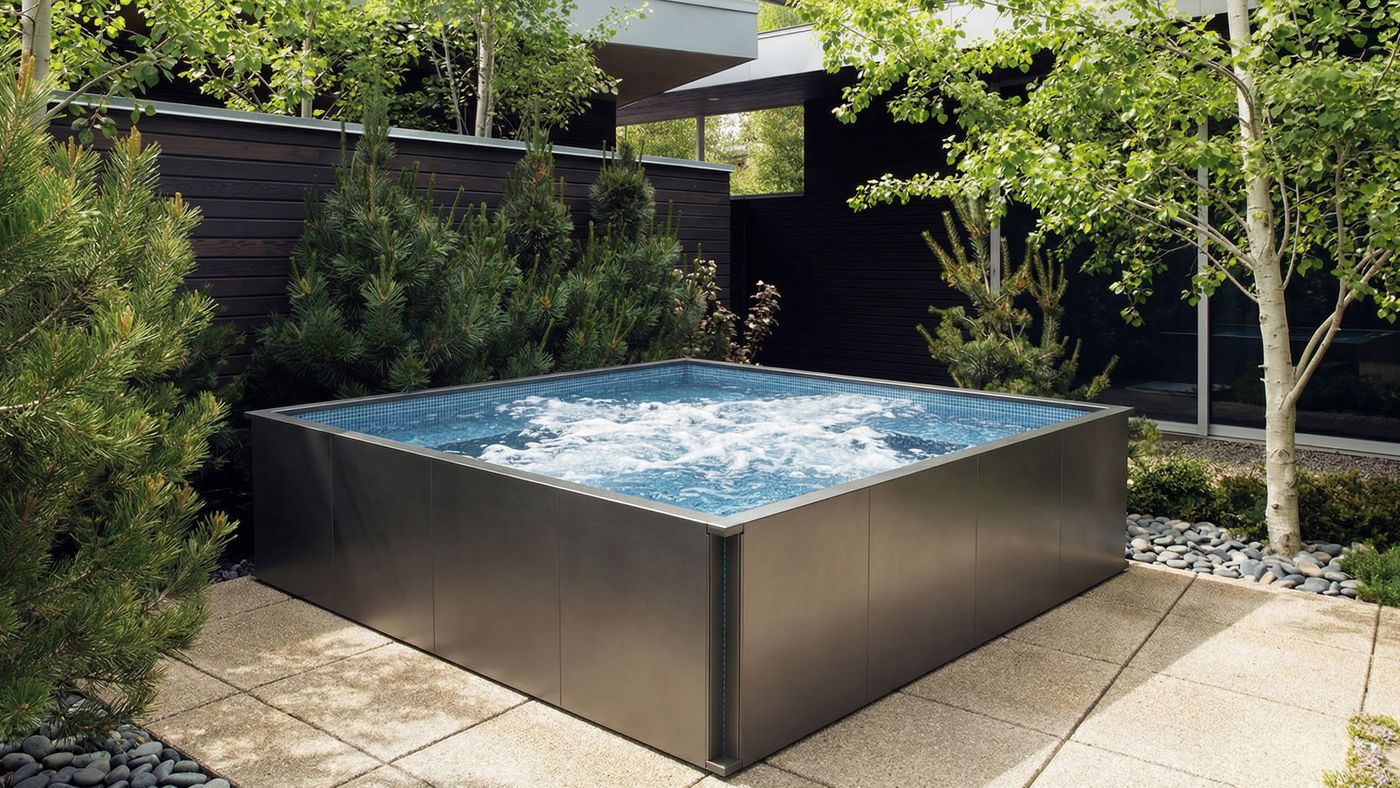
Ecopool S-Series: Your full-sized backyard centerpiece. Built from structural steel, this factory-crafted pool is fully customizable. You can specify bench seating, deep ends, swim-up bars, baja ledges, and tanning shelves — allowing it to go head-to-head with any luxury gunite or fiberglass design. Ranging from a compact 8x8 feet up to a massive 40x40 feet, it gives you ultimate flexibility. The complete pool costs roughly $25,000 to $55,000 depending on options.
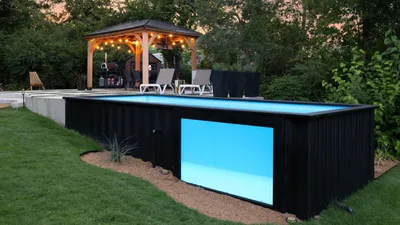
Ecopool Container Pool: The ultimate option for a plunge pool, lap pool, or backyard sport pool. It typically uses an 8x20 foot footprint but can be ordered all the way up to a 16x40 foot configuration. It's the absolute fastest path to water — a flatbed truck pulls up, a crane drops it onto a prepped pad, and you can realistically be swimming within 1 to 3 days. The complete pool runs roughly $30,000 to $45,000 plus installation.
Both lines share the exact same elite engineering. The only differentiator is the scale and architectural footprint of the design, not the build quality.
What You're Actually Paying For
When you buy an Ecopool, you're purchasing an advanced piece of backyard engineering:
-
Structural steel walls: Engineered to be up to 6 times stiffer than a standard 8-inch concrete pool wall. Because there's zero concrete involved, you have a 0% risk of concrete cancer, ASR, or catastrophic hydrostatic cracking.
-
2 inches of closed-cell foam insulation (R-8.5 to R-10): While roughly 70% of pool heat loss occurs at the surface through evaporation, an uninsulated concrete pool loses the rest straight into the freezing earth. Ecopool seals the walls and floor with premium insulation. Paired with a quality solar or thermal cover, Ecopool owners report heating costs dropping to the $50 to $100 per month range — an immediate savings of $2,000 to $3,000+ every year.
-
Zycore 70-mil commercial PVC membrane: The same ultra-durable membrane technology trusted by Olympic training facilities. It's smooth to the touch, highly resistant to algae growth, completely UV-stable, and rated to last 25+ years. Say goodbye to acid washing, plaster rough patches, and $15,000 resurfacing bills.
-
Optional architectural panels: Premium exterior panels wrap the entire container shell, giving an above-ground or partially exposed pool an incredibly clean, modern look.
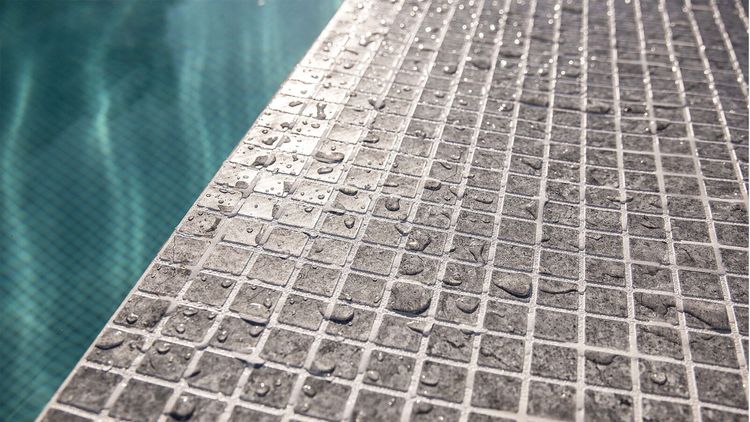
The Zycore 70-mil membrane is rated to last 25+ years with no resurfacing // The Pool Nerd
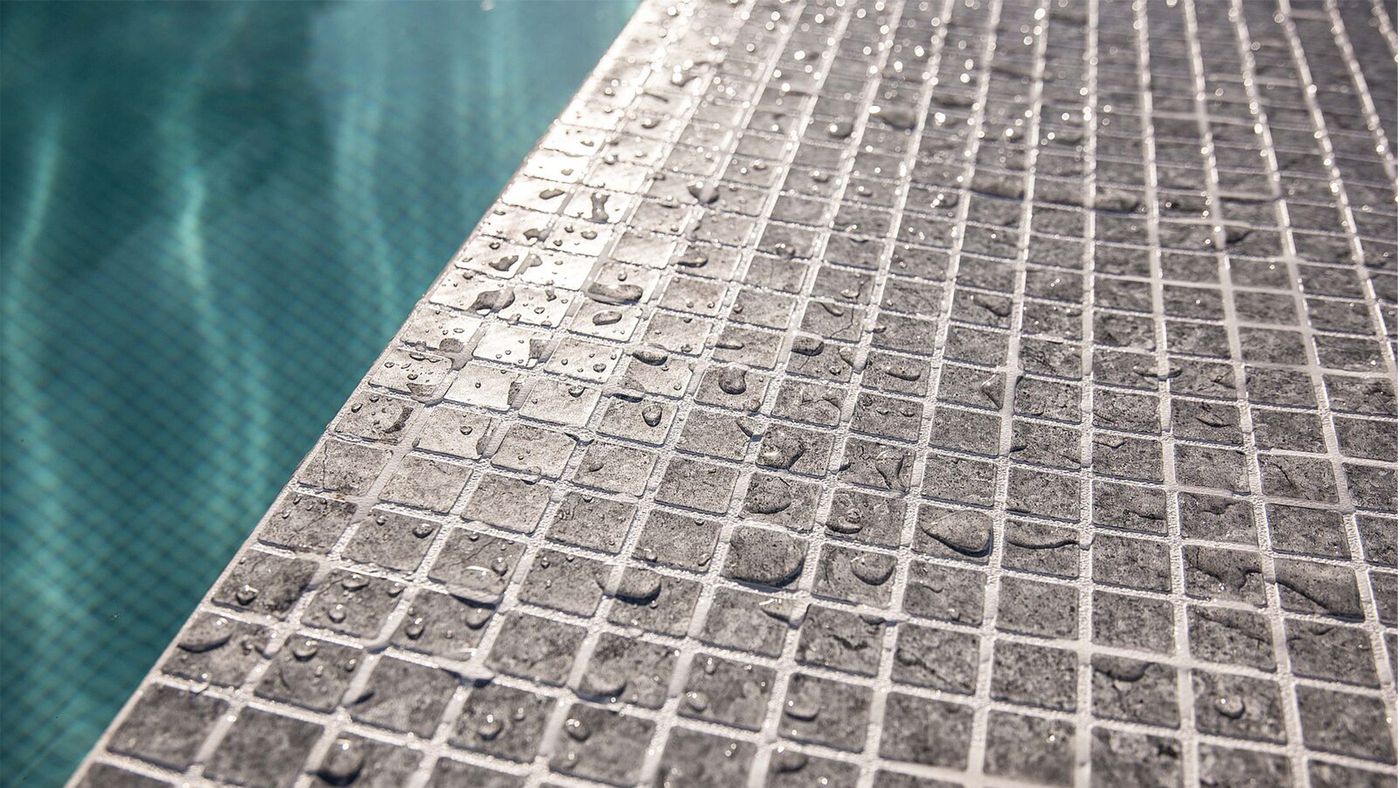
And don't let traditional builders tell you that you need gunite to get the fun features. Ecopool integrates swim-up bars, water features, baja ledges, and custom steps right into the design. The difference is that these features are precision-engineered at the factory under perfect conditions, rather than being tacked on by a subcontractor charging an inflated field-assembly rate.
Ecopool is Pool Nerd Approved
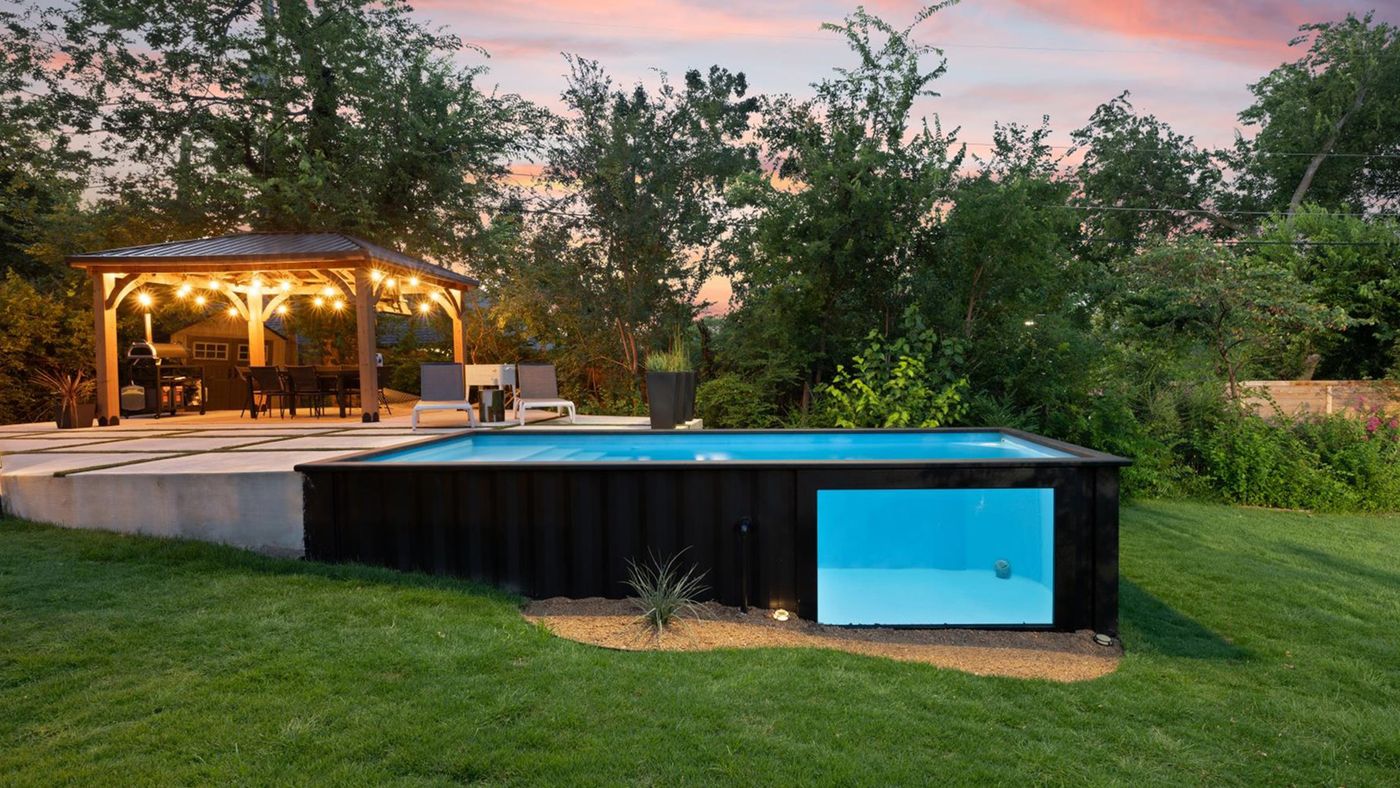
Full transparency: this is the exact test pool we went with for our channel. We chose an Ecopool container pool, and it's not just a product I recommend on paper — it's the pool we use every single day to test over 30 different robotic pool cleaners.
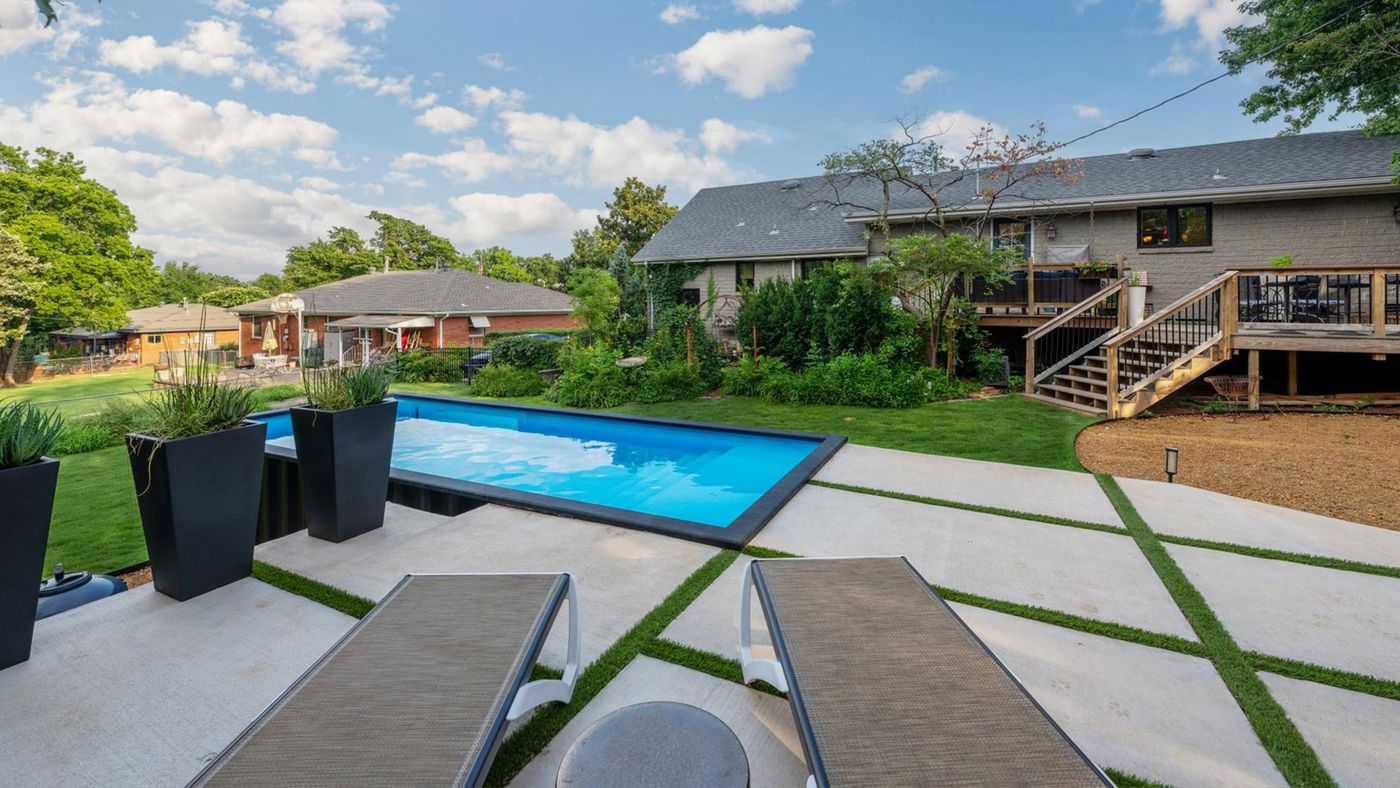
Now let's look at the math clearly. An Ecopool costs $30,000 to $45,000. You still have to account for site work — excavation or a gravel foundation pad, delivery, electrical hookups, and surrounding decking — which adds another $10,000 to $20,000 depending on your yard. Because we chose an above-ground setup on a clean concrete pad, our site logistics were minimal, bringing our total all-in installed price right around $32,000. That's roughly a third the cost of a standard gunite build, for a better-engineered product with vastly lower operating costs. We've never looked back.
The 10-Year Reality Check
Sticker price is only half the equation. The true cost of pool ownership is determined over time. Here's how the long-term math plays out over a decade when you factor in shell costs, installation logistics, and real-world maintenance:
| Pool Type | Shell / Material | Install & Site | 10-Yr Maintenance | Total 10-Yr Cost | Time to Swim | Major Financial Drains |
|---|---|---|---|---|---|---|
| Gunite | $10,000–$15,000 | $65,000–$100,000+ | $35,000–$50,000 | $115,000–$165,000+ | 6–9 months | Replastering, ASR repairs, high chemical use, uninsulated heating, change orders |
| Fiberglass | $15,000–$25,000 | $55,000–$70,000 | $15,000–$25,000 | $85,000–$120,000 | 4–8 weeks | Crane & shipping logistics, uninsulated heating, zero shape flexibility |
| Vinyl Liner | $5,000–$9,000 | $35,000–$50,000 | $20,000–$30,000 | $60,000–$89,000 | 3–6 weeks | 1–2 mandatory liner replacements ($3K–$7K each), puncture risk, zero insulation |
| Ecopool S-Series | $30,000–$55,000 | $20,000–$35,000 | $5,000–$10,000 | $55,000–$100,000 | 1–2 weeks | Routine maintenance only. Big energy savings from insulation, 25+ year membrane |
| Ecopool Container | $30,000–$45,000 | $15,000–$25,000 | $5,000–$10,000 | $50,000–$80,000 | 1–3 days | Minimal install overhead. Fully insulated, steel body, low chemical demand |
Here's the real ten-year story behind those numbers:
- Gunite usually ends up the most expensive long-term, with total ownership costs often reaching $115,000 to over $165,000 after installation, maintenance, replastering, chemicals, and heating. It also takes the longest to build — typically six to nine months.
- Fiberglass costs a little less overall, usually around $85,000 to $120,000 over ten years. It installs faster than gunite, but still comes with shipping limitations, crane costs, and limited design flexibility.
- Vinyl liner has the lowest upfront cost, but liner replacements, punctures, and ongoing maintenance still push ten-year ownership into the $60,000 to nearly $90,000 range.
- Ecopool S-Series is designed around lower long-term ownership costs, with insulated construction, lower utility usage, and no replastering. Total ten-year costs typically range from $55,000 to $100,000, with install times around one to two weeks.
- Ecopool Container pools are one of the fastest and simplest options available, with installs sometimes completed in just days. Total ten-year ownership costs are typically $50,000 to $80,000 thanks to low installation overhead, insulation, and reduced maintenance.
When your pool shell doesn't require thousands in cosmetic resurfacing, doesn't constantly bleed heat into the ground, and doesn't rely on a fragile vinyl sheet, your 10-year cost is restricted to basic, routine maintenance. Compare that to gunite, where the true cost of ownership can easily double over a decade once you add up energy bills, chemical demand, and major structural upkeep.
Frequently Asked Questions
How much does an inground pool cost in 2026?
Most custom inground gunite pools land between $75,000 and $150,000, and in higher-cost markets like Austin a standard build can run $100,000 to $200,000. Fiberglass typically runs $70,000–$95,000 installed, vinyl liner $40,000–$60,000, and factory-built pools like Ecopool come in around $40,000–$65,000 all-in.
Why are pools so expensive?
Because you're mostly paying for the process, not the pool. The raw structural materials in a gunite pool only cost about $7,000–$10,000. The rest goes to a chain of subcontractors, each with their own markup, plus a general contractor adding another 15–25% on top, plus months of scheduling overhead and weather delays.
What is the cheapest type of inground pool?
Vinyl liner has the lowest upfront price (roughly $40,000–$60,000 installed). But it's the most misleading "cheap" option, because you'll replace the liner every 5–9 years at $3,000–$7,000 a pop, which makes it expensive over time.
What is the cheapest pool to own long-term?
Factory-built, insulated pools like the Ecopool Container tend to have the lowest 10-year cost of ownership (roughly $50,000–$80,000) thanks to low install overhead, full insulation that slashes heating bills, and a 25+ year membrane that never needs resurfacing.
How long does it take to build a pool?
Gunite takes 6–9 months, fiberglass 4–8 weeks, vinyl liner 3–6 weeks, and factory-built pools install in 1 day to 2 weeks depending on the model and site prep.
How can I save money on a new pool?
Get multiple quotes across build types (not just three local gunite builders), demand an itemized line-item bid, calculate the true 10-year cost including heating and resurfacing, and get a factory-built quote as a baseline to pressure-test every other bid.
My Final Verdict
Please do your homework before you sign a contract with a traditional pool builder. I'm not here to tell you what to buy; I'm here to make sure you know exactly what you're paying for. The pool industry is incredibly talented at making a $100,000 quote sound completely reasonable, even when $50,000 of that quote is pure process markup.
Before you commit to a build, follow these three steps:
-
Get multiple quotes. Don't just talk to three local gunite builders. Get a factory-built quote. Get a fiberglass quote. Compare the build processes side by side.
-
Calculate the true 10-year cost. Ask the tough questions. What will resurfacing cost in a decade? What's the actual insulation R-value of the walls? What's a realistic monthly heating bill in spring and fall? If financing is part of the plan, compare the monthly payment and total interest with the pool loan calculator.
-
Look seriously into factory-built pools. I'm not saying Ecopool is the only choice out there, but their pools represent exactly where the modern pool industry is heading — industrial efficiency, superior structural materials, and dramatically lower lifetime costs. At the very least, getting a quote gives you a powerful baseline to pressure-test every other contractor who bids on your backyard.
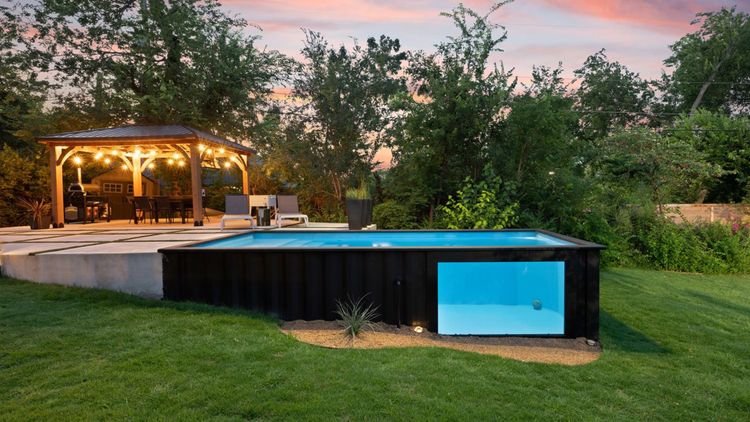
Know exactly what you're paying for before you sign a pool contract // The Pool Nerd
The real question shouldn't be "how much does a pool cost?" The real question is: "Am I paying for a high-quality pool, or am I paying for an inefficient construction process?"
Do your homework, check the line-item pricing, and don't sign a single document until you know exactly where every dollar is going. Head over to ThePoolNerd.com/deals for the latest discounts on premium pool equipment and my personal top picks. Thanks for reading, and I'll see you in the next one.
This article is for educational and informational purposes only. Pool pricing varies widely by region, site conditions, and contractor. Always get itemized, written quotes before making any purchasing decisions.

Comments
Loading comments…