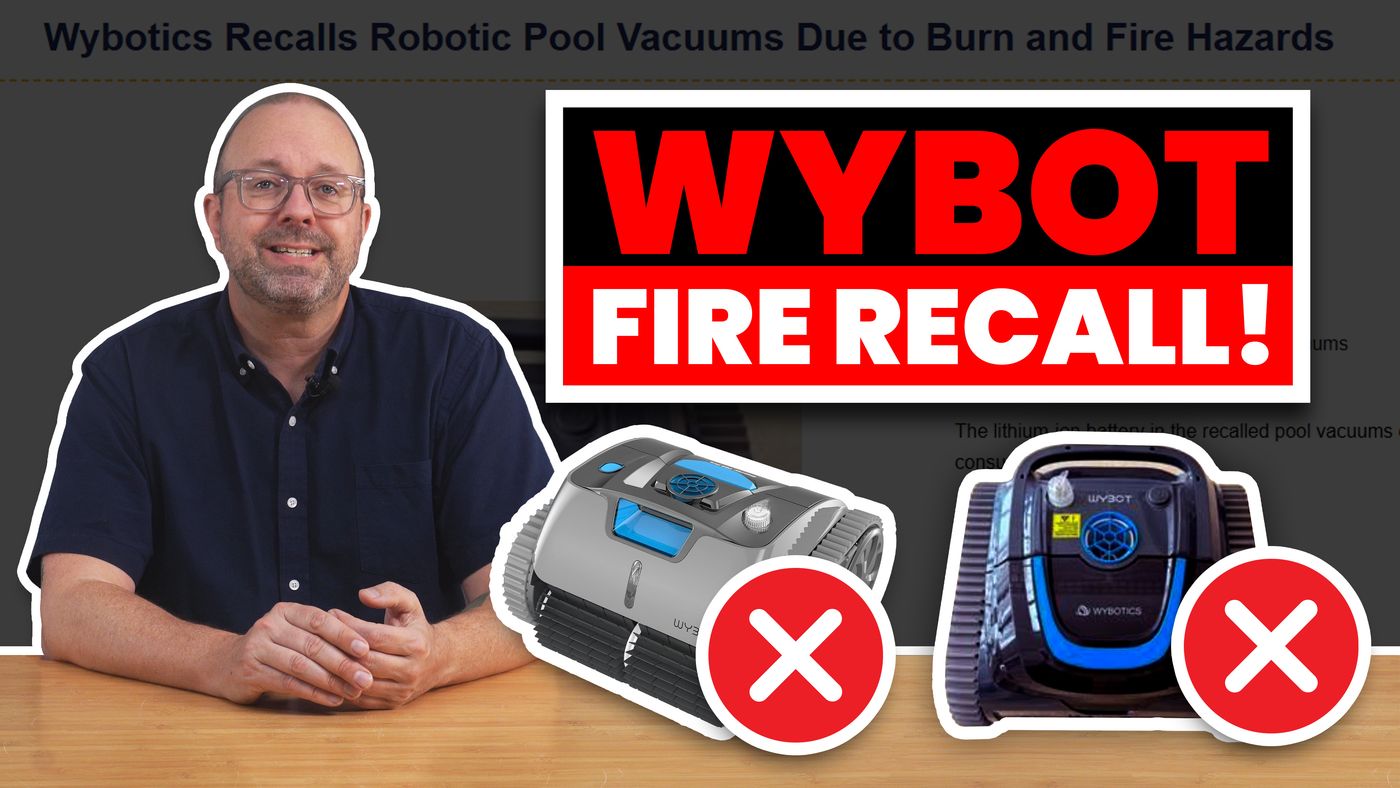
Amazon just sent us a recall warning for a pool cleaner — because of fire risk.
Hey guys, welcome back to the Pool Nerd. I'm Justin, your resident pool aficionado. And today, we need to talk about something serious.
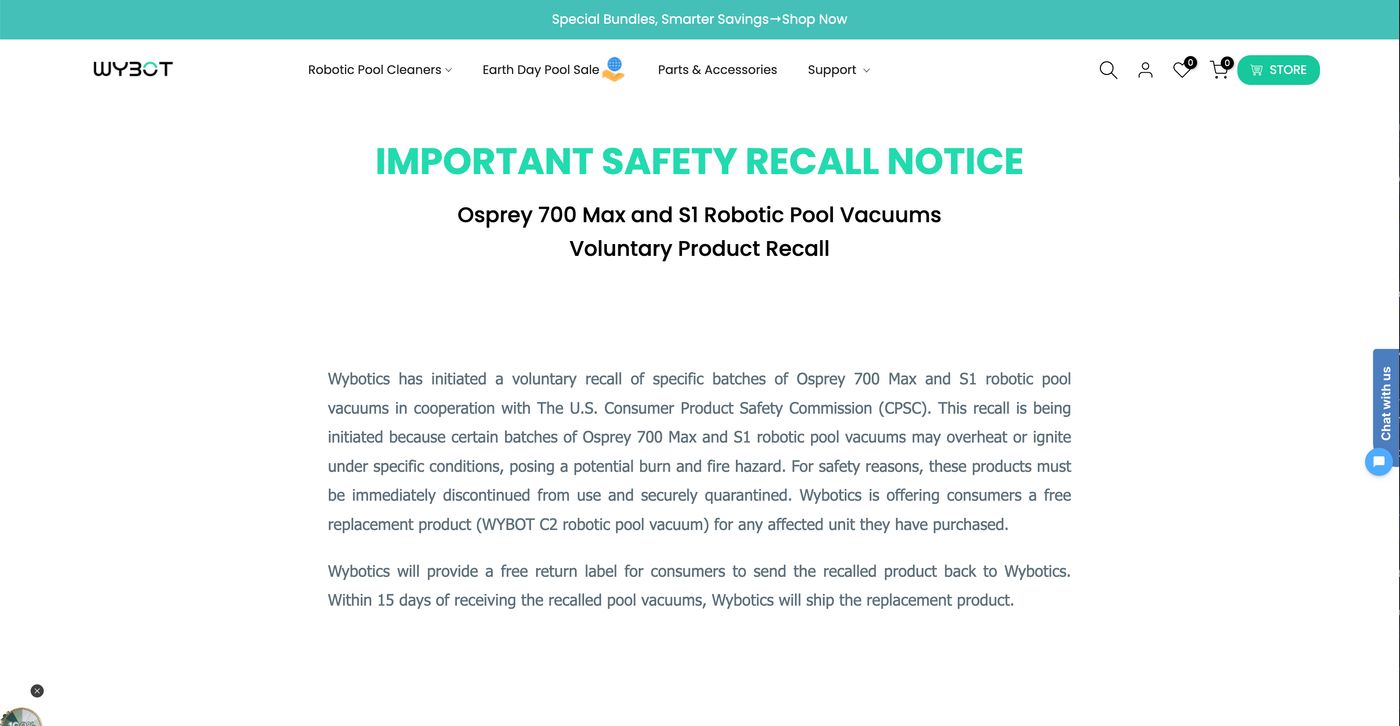
A few days ago, we got an alert from Amazon, and it was about something no one wants to hear: a product safety recall for "burn and fire hazards" on a pool cleaner that's been sold to consumers across the country. The brand? Wybot.
If you own one — or you're thinking about buying one — this is something you need to understand. So let's dive into the details.
Why This Recall Matters
According to the U.S. Consumer Product Safety Commission (CPSC), two Wybot robotic pool cleaner models were recalled on April 9, 2026 (recall number 26-372) due to a burn and fire hazard.
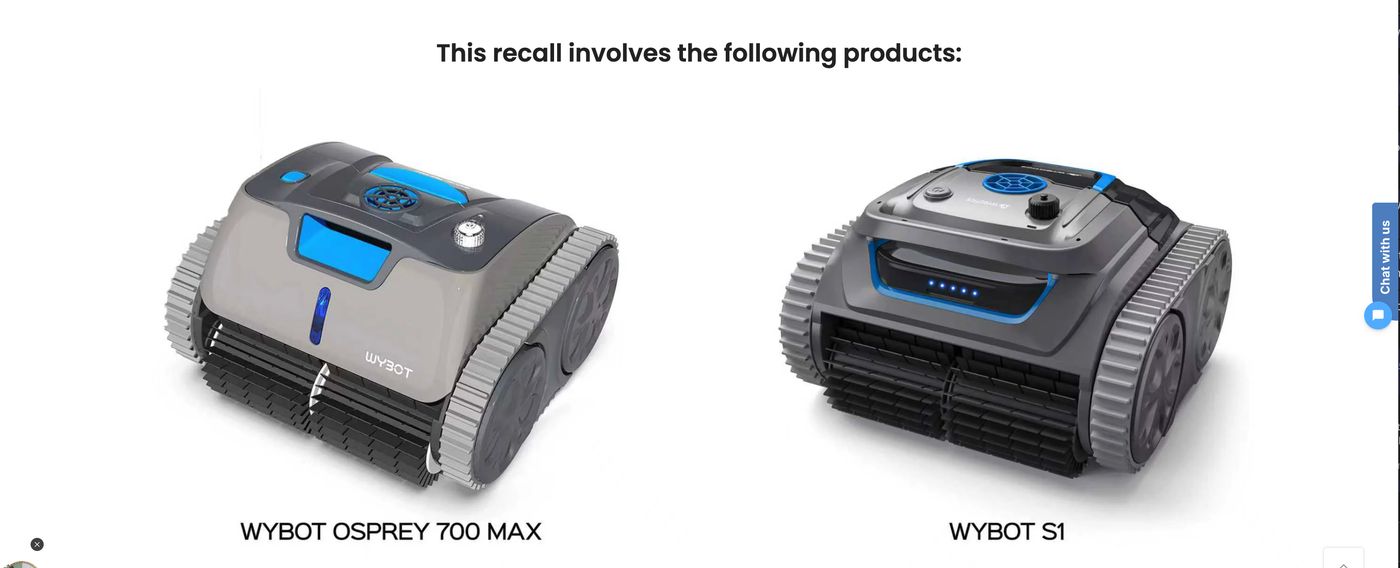
Wybot has recalled about 5,000 units of the Wybot Osprey 700 Max and the Wybot S1, with the hazard described as:
"The lithium-ion battery in the recalled pool vacuums can overheat, posing burn and fire hazards to consumers."
The issue comes back to the lithium-ion battery — which, if you've been following along, is something I've talked about a lot in my videos. In some cases, the battery can overheat, creating a risk of fire or property damage.
This recall applies to specific models and serial numbers, not every Wybot cleaner ever made. But if your unit falls within those ranges, you need to take this seriously.
According to the CPSC, Wybotics has received ten reports of the pool vacuums overheating or catching fire — both while charging and while not charging — resulting in nine incidents of property damage. Thankfully, no injuries have been reported. But when you're talking about fire risk on a product that sits in your backyard charging unattended, even a small number of incidents matters.
Is Your Robot Affected?
The official April 2026 recall affects approximately 5,000 units of the Osprey 700 Max and Wybot S1. Both were sold online at Amazon.com, BestBuy.com, and Wybotpool.com for between $500 and $700 — the S1 from April 2023 through September 2024, and the Osprey 700 Max from April 2023 through November 2024.
Where to find your serial number:
- Open the top cover of the unit.
- Remove the filter basket.
- Look for a label on the inside panel — the serial number is a 10-digit code following the model name.
Affected Serial Numbers
Only the specific serial number prefixes listed below are subject to the recall. The "XXXX" represents any four numeric digits.
| Affected Model | Serial Number Prefix (S/N) |
|---|---|
| Wybot Osprey 700 Max (Models: WY3312MAX, WY100MAX) |
WY100M230117XXXX |
| WY100M230127XXXX | |
| WY100M230130XXXX | |
| WY100M230318XXXX | |
| Wybot S1 (Model: WY200) |
WY200-230328XXXX |
| W200**230330XXXX |
If your serial number matches one of these prefixes, stop using the unit immediately and follow the manufacturer's instructions for a replacement.
Where To Find The Recall Info
After we got the alert, we went straight to Wybot's website to see what they were telling customers. And here's the thing — the information is there, but it's not exactly easy to find.
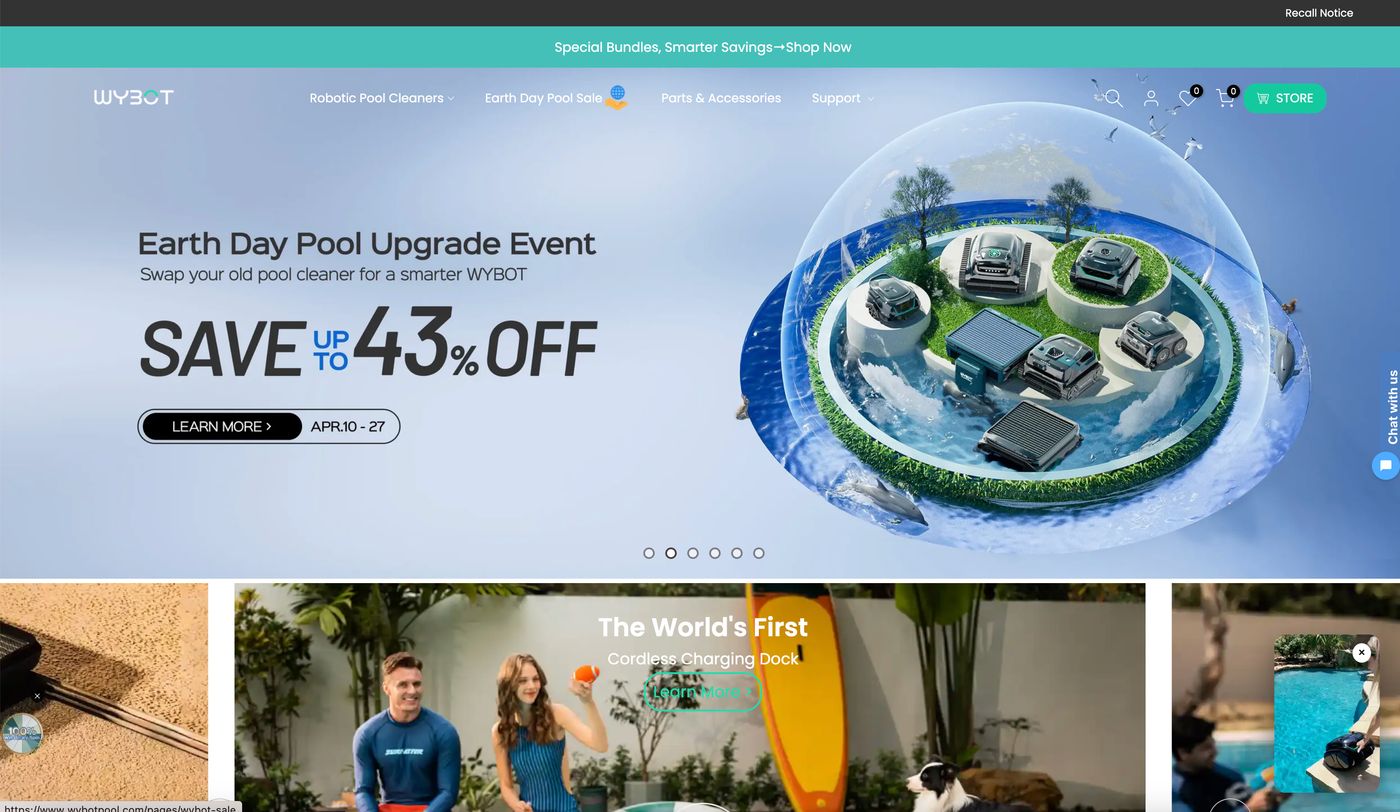
There's a small banner at the very top of their homepage. You have to actually be looking for it. Click through, and it takes you to their recall notice page at:
https://www.wybotpool.com/pages/recall-notice
While the info is technically on the site, I personally believe safety notices like this should be the first thing a visitor sees, rather than being tucked away in a top-line banner.
Official CPSC Recall Details
For the full official record, here are the complete details straight from the U.S. Consumer Product Safety Commission.
| Detail | Information |
|---|---|
| Name of Product | Osprey 700 Max and S1 robotic pool vacuums |
| Hazard | The lithium-ion battery in the recalled pool vacuums can overheat, posing burn and fire hazards to consumers. |
| Remedy | Replace |
| Recall Date | April 09, 2026 |
| Units | About 5,000 |
| Recall Number | 26-372 |
| Sold Online At | Amazon.com, BestBuy.com and Wybotpool.com for between $500 and $700. The S1 was sold from April 2023 through September 2024 and the Osprey 700 Max was sold from April 2023 through November 2024. |
| Manufacturer(s) | Wybotics, Co. Ltd. of Tianjin, China |
| Importer(s) | Wybotics Inc. of Arcadia, California |
| Manufactured In | China |
Consumer Contact: Wybotics toll-free at 888-991-5006 from 9 a.m. to 5 p.m. PT Monday through Friday, email at safety@wybotpool.com, or online at https://www.wybotpool.com/pages/recall-notice and click "Product Recalls" at the top of the page for more information.
Description: This recall involves Osprey 700 Max with model numbers WY3312MAX and WY100MAX and S1 model number WY200) robotic pool vacuums. Only products with serial numbers listed in the table below are subject to recall. Note: "XXXX" represents any four numeric digits.
| Product Details | Osprey 700 Max | S1 |
|---|---|---|
| Model Number(s) | WY3312MAX and WY100MAX | WY200 |
| Product Color(s) | Grey and blue | Grey and blue |
| Brand Name Location | The "Wybot" brand name is printed on the top/front of the pool vacuums | The "Wybot" brand name is printed on the top/front of the pool vacuums |
| Weight (approximate) | 17 pounds | 17 pounds |
| Measurements (approximate) | 14.6 x 14.1 x 9.4 inches | 18 x 17 x 11.5 inches |
| Serial Number Location | Inside the top cover | Inside the top cover |
| Serial Number (a 10-digit number following the model name) | Represented by "WY100M**" | Represented by "WY200-" and "W200**" |
| Serial Numbers Subject to Recall | WY100M230117XXXX; WY100M230127XXXX; WY100M230130XXXX and WY100M230318XXXX | WY200-230328XXXX and W200**230330XXXX |
Remedy: Consumers should stop using the recalled robotic pool vacuums immediately and contact Wybotics to receive a free replacement WYBOT C2 robotic pool vacuum. Wybotics will provide a free return label for consumers to send the recalled product back to Wybotics. Within 15 days of receiving the recalled pool vacuums, Wybotics will ship the replacement product. Wybotics is contacting all known purchasers directly.
Incidents/Injuries: The firm has received ten reports of the pool vacuums overheating or catching fire while charging and not charging, resulting in nine incidents of property damage. No injuries have been reported.
The CPSC notice also provides reference photos of the recalled units:
- Recalled Wybot S1 (Top)
- Recalled Wybot S1 (Side)
- Recalled Wybot S1 (Front with Top Cover Open)
- Recalled Wybot S1 (Front with top cover open—after the filter box has been taken out (to show consumers the location of the serial number label))
- Recalled Wybot S1 (Serial Number)
- Recalled Wybot Osprey 700 Max (Back)
- Recalled Wybot Osprey 700 Max (Top)
- Recalled Osprey 700 Max (Side)
- Recalled Wybot Osprey 700 Max (Front with Top Cover Open)
- Recalled Wybot Osprey 700 Max (Removed filter to expose serial number label)
- Recalled Wybot Osprey 700 Max (Serial Number)
The Replacement: A Wybot C2
Wybot's solution is that they'll send affected owners a Wybot C2.
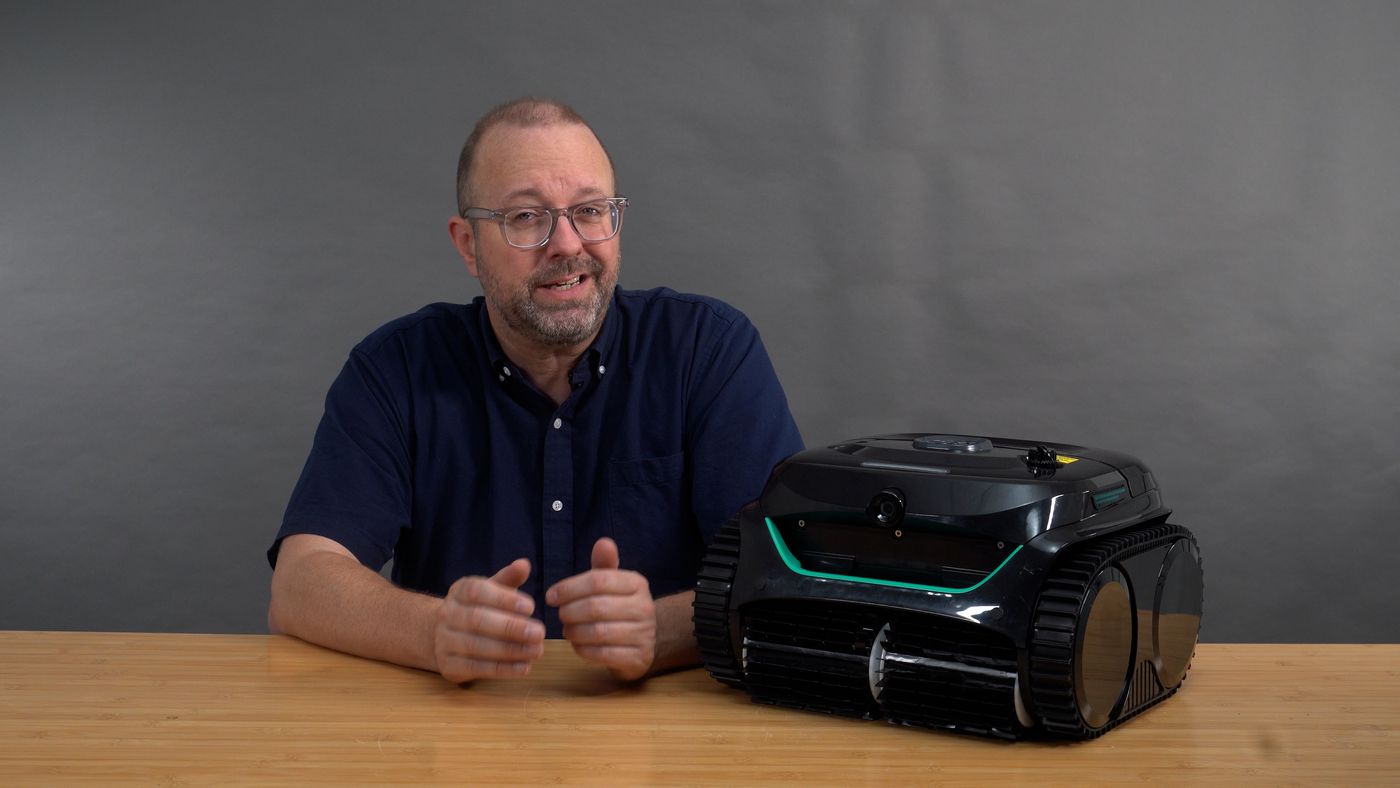
We've tested the Wybot C2 before, and it's worth noting that this is the model Wybot is sending out as the official replacement for the recalled units. So while it's not part of the hazard, it's the unit they're betting on to fix the problem.
Per the CPSC notice, Wybotics will provide a free return label for you to send the recalled product back, and within 15 days of receiving it they'll ship out the replacement C2. Wybotics says it's contacting all known purchasers directly.
It wasn't my favorite unit — mostly due to constant recharging and performance issues that I covered in my full Wybot C2 review. But it is nice to know Wybot will replace your robot if you have an affected unit.
Where It Got Confusing
Now here's where it got weird. We actually got the recall notice from Amazon tied to our Wybot A1 order. But here's the catch: the A1 isn't on the official CPSC recall list.
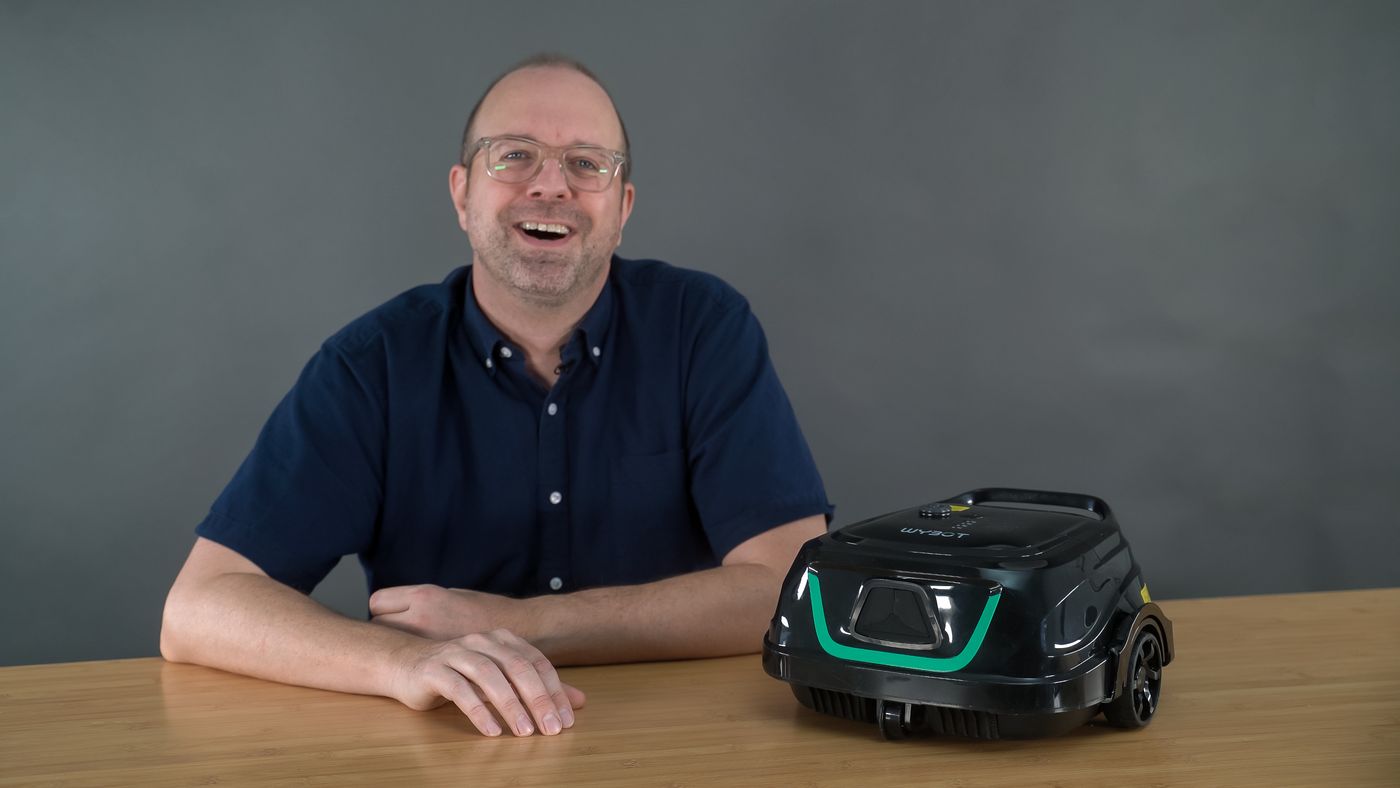
It looks like Amazon might be sending these alerts to anyone who bought a Wybot product recently, just to be safe. So if you have an A1, don't panic yet — but definitely check your serial numbers regardless.
This Isn't Just a Wybot Problem
Here's where the story gets bigger than one brand. If you've watched my other videos, you already know this isn't the first time we've seen this in the pool cleaner space.
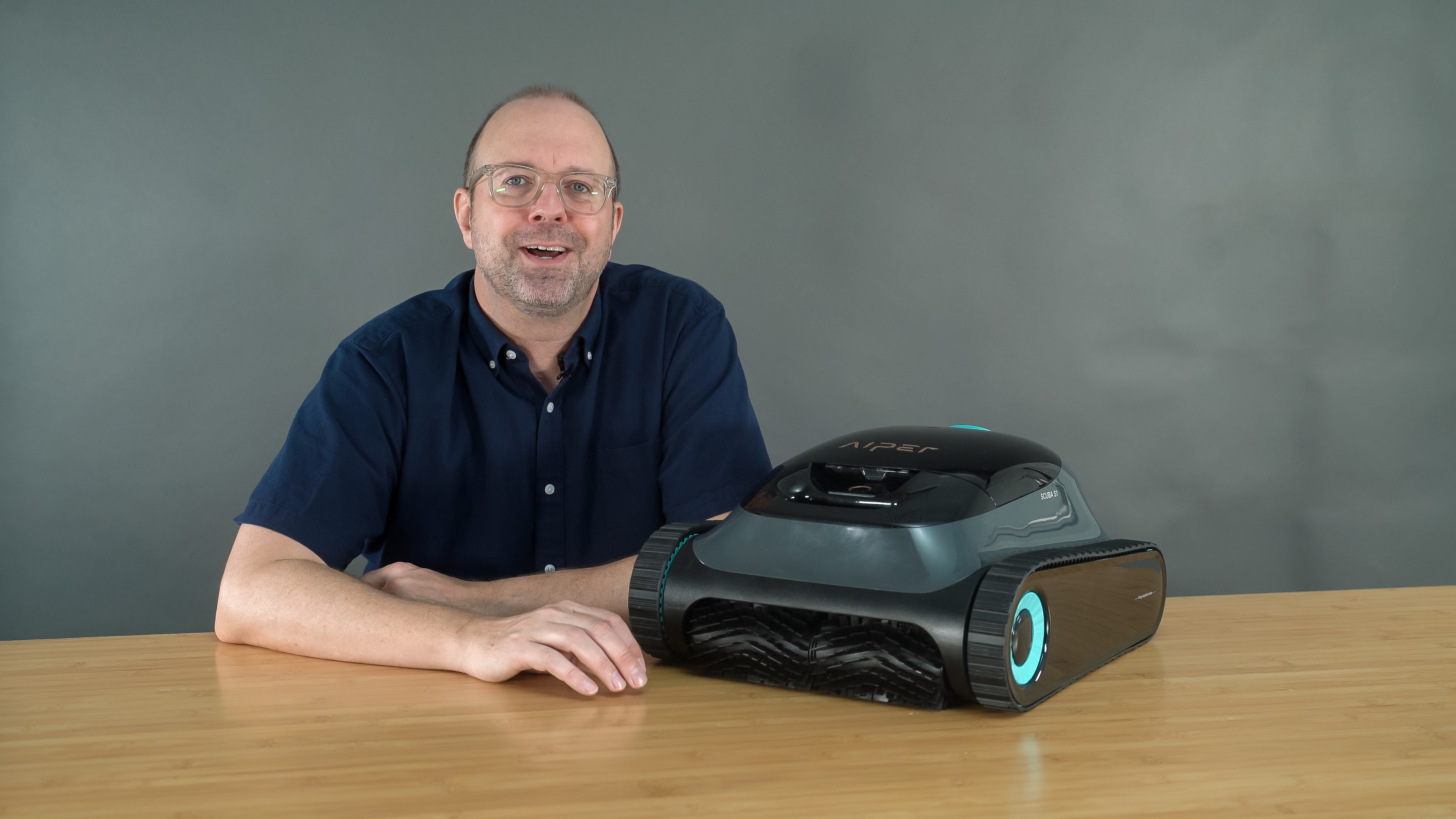
Aiper has had it happen too. Over 22,000 Elite Pro units were recalled due to overheating and short-circuiting risks. And later, around 35,000 Seagull Pro units were recalled after reports of smoking, melting, or catching fire while charging.
So to be clear — I'm not saying every product from these brands has issues. These recalls were specific to certain models and timeframes, and I'm not saying every cordless cleaner is dangerous.
But when you see multiple recalls, across different companies, for the exact same type of issue, you start to notice a pattern. And that pattern keeps coming back to one thing: lithium-ion batteries.
Why Lithium-Ion Is the Common Thread
These batteries are everywhere — phones, laptops, electric cars. They're powerful and efficient, but they come with real risks when something goes wrong.
If a battery overheats, it can enter what's called thermal runaway. That's where the temperature climbs uncontrollably, and in rare cases, that leads to fire.
Now add in the environment these pool cleaners actually live in. They're outdoors, exposed to heat, sun, and water. And they're often left charging unattended — sometimes overnight, sometimes in a garage attached to the house.
And if you've ever been scuba diving, you know pressure builds up as you go deeper underwater. The same kind of pressure works on these robots, just at a different scale. So having watertight seals that don't break down over time is really important.
What We Saw Testing Wybot
Let's talk about Wybot specifically, because we've had hands-on time with their lineup.
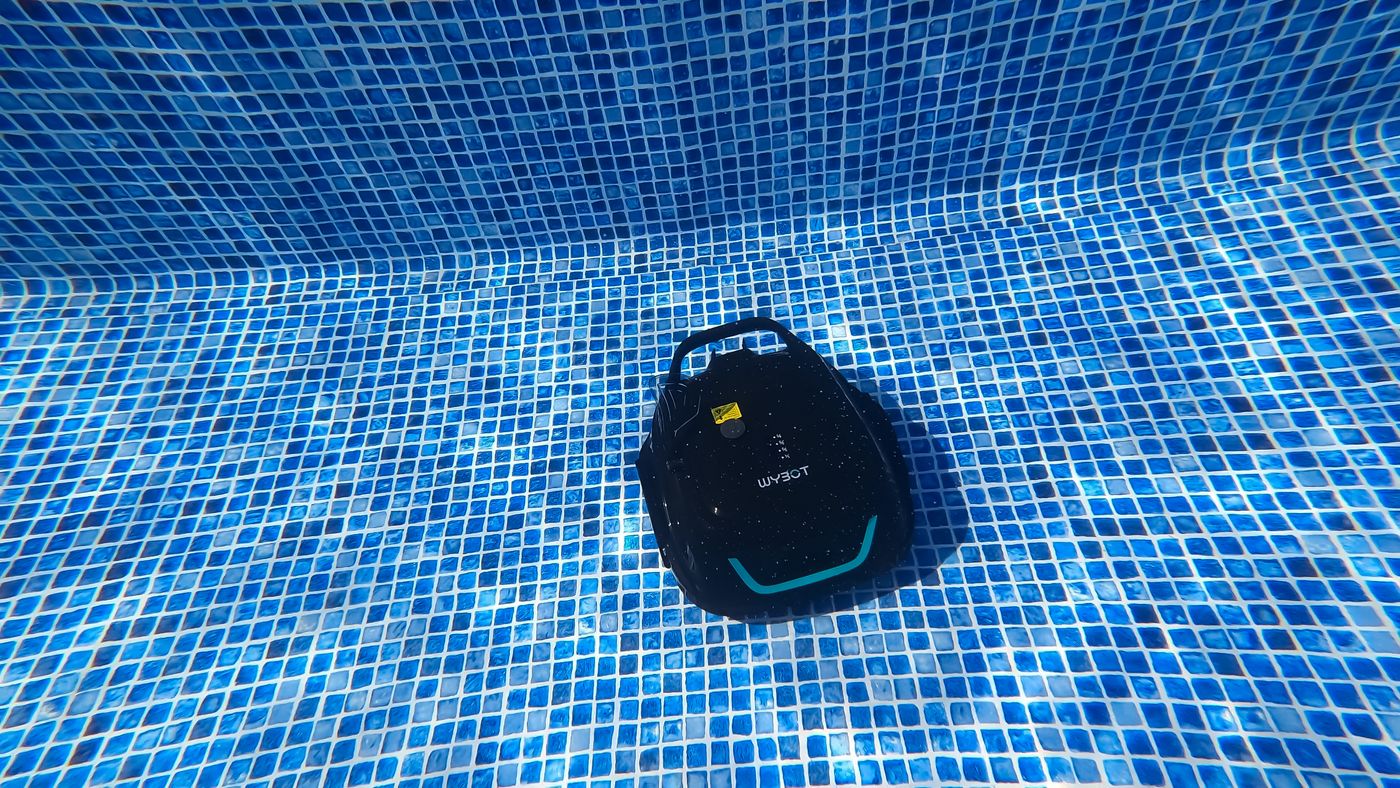
In my experience, models like the Wybot A1 fall into the budget cordless category. What we saw in testing was pretty standard for cordless cleaners at that tier:
-
Limited battery life
-
Weaker suction
-
More hands-on work than you'd expect from something marketed as "automatic"
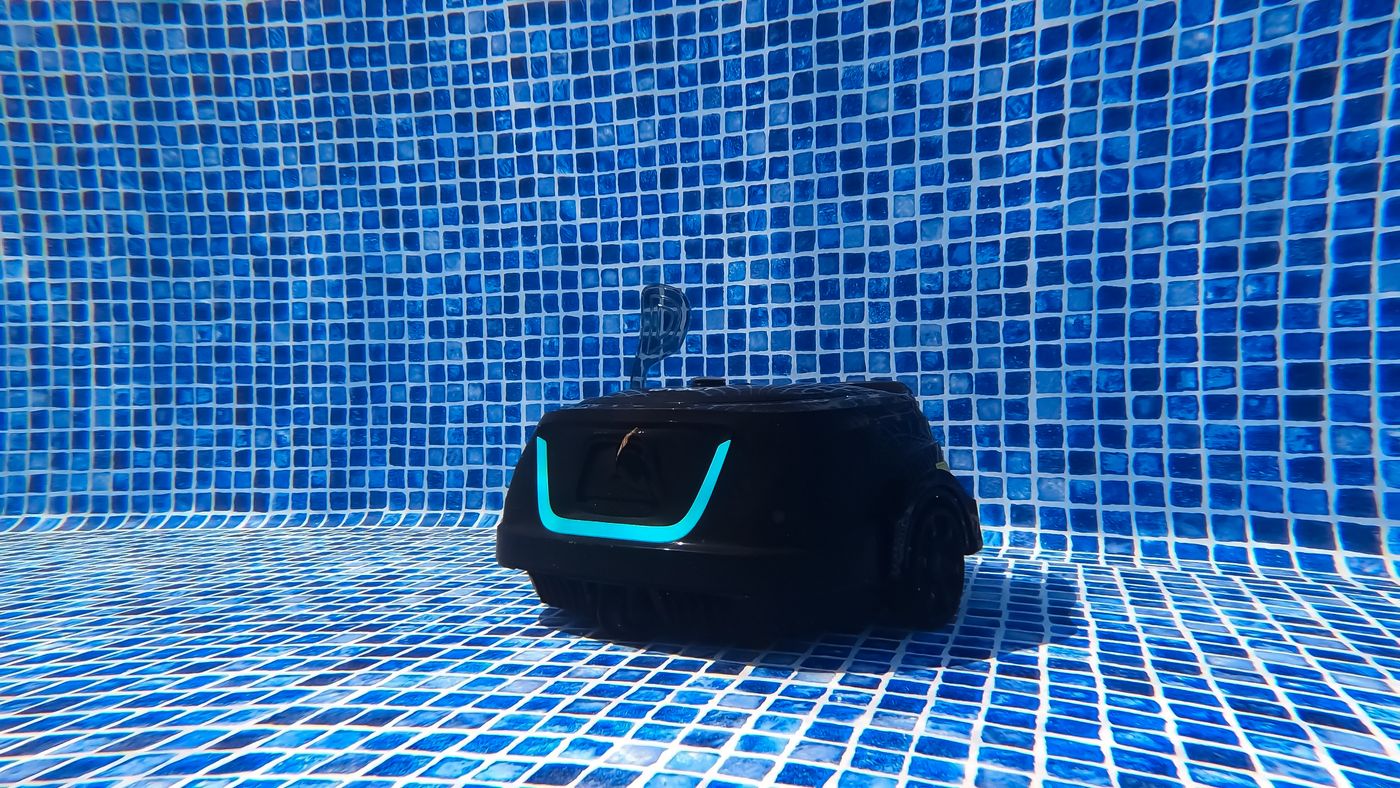
The Wybot A1 performed in line with other budget cordless models in our test pool // The Pool Nerd
In my testing, they performed in line with other budget cordless models. So when a recall like this hits, it raises a bigger question — not just about one product, but about the whole category.
My Take: Corded vs. Cordless
After testing over 30 pool robots, cordless cleaners still come with trade-offs:
- Daily charging
- Limited runtime
- Weaker motors
- And now, in some cases, safety concerns
Compared to that, corded robots are a completely different experience. They plug in and run at full power the entire time. Many include a weekly smart timer, so they clean automatically without you ever touching them.
No charging. No babysitting. No battery degradation over time. And they eliminate battery-related fire risk — because they don't have a battery.
That's why, personally, I lean toward corded models, and that's what I recommend on this channel.
If You Own a Wybot — Do This Now
If you own one of the affected units, take these steps immediately:
- Check your model number and serial number against the affected list above.
- If your unit is on the list, stop using it immediately.
- Go to the official Wybot recall page: https://www.wybotpool.com/pages/recall-notice
- Read the full CPSC recall notice: Wybotics Recalls Robotic Pool Vacuums Due to Burn and Fire Hazards
- Contact Wybotics to claim your free replacement: toll-free at 888-991-5006 (9 a.m.–5 p.m. PT, Monday–Friday) or by email at safety@wybotpool.com.
That is the single most important step in this entire article. If you take nothing else away, take that — if you own one of these units.
And if you're shopping for a new cleaner right now, here's the bigger takeaway. Don't just look at price, and don't just look at features. Look at:
- Safety certifications
- Brand track record — how long they've been around, and their history
- How transparent the company is when issues come up
Because at the end of the day, this isn't just about cleaning your pool. It's about having something you can trust running in your backyard, around your home, and possibly around your family.
My Final Verdict
In my opinion, this raises questions about battery-powered pool cleaners that are worth paying attention to. If you own one or are looking into a pool cleaner, this isn't something to panic over — but it's definitely something you shouldn't ignore. You should be informed and know what to look for when choosing a pool robot.
Because the more informed you are, the better decision you'll make when it's time to buy.
If you found this helpful, make sure to subscribe. I cover tons of pool tips, how-to's, and find the best pool products around. And if you want my top picks, check out my list of the best robotic pool cleaners of the year.
Then head over to ThePoolNerd.com/deals where I post all the top deals for robotic pool cleaners, pool equipment, and more.
Thanks for reading. I'll see you guys in the next one.
Related Reading
- Wybot C2 Review — The cordless model Wybot is sending as the recall replacement.
- Wybot A1 Review — Our hands-on testing of Wybot's budget cordless cleaner.
- Aiper Seagull Pro Recall — Over 35,000 units recalled for the same fire and burn hazards.
- Corded vs Cordless Robotic Pool Cleaners — Why corded still wins.
- Best Robotic Pool Cleaners — Our top picks after testing 30+ robots.
Legal Disclaimer
This article is for informational and educational purposes only. The opinions expressed are based on publicly available information, personal testing, and reports from the U.S. Consumer Product Safety Commission. All statements about specific products, incidents, or brands are allegations unless officially confirmed by the manufacturer or regulatory authorities. This content is not intended to defame or harm the reputation of any brand or product. Viewers are encouraged to conduct their own research and refer to official sources for the most accurate information. We assume no responsibility for how the content is interpreted or used.