
 Justin D.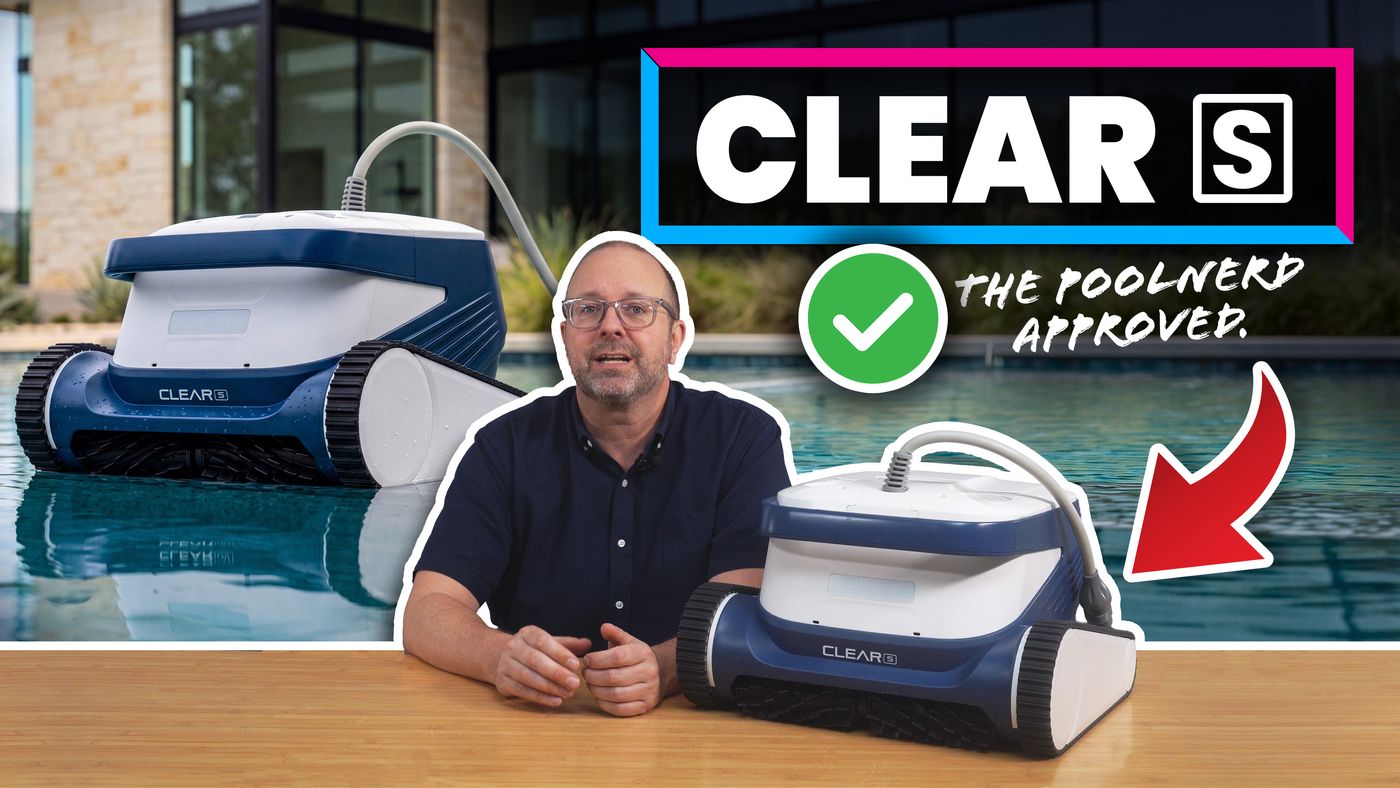
Clear charges roughly $250 for one decision: do you want a UV-C lamp underneath the robot? The Clear S and Clear UV share the four-motor cleaning platform, UltraBin, claimed 1-micron filters, navigation, app, and weekly timer. Paying more does not buy stronger suction or broader pool coverage.
I spent weeks running the UV version in my test pool, and the platform's cleaning hardware is the reason I recommend it. The S removes the lamp, a component that treats the surface beneath the robot but does not drive the tracks or move debris. For an owner who already has sanitation under control, the S keeps the parts that affect cleaning and leaves about $250 in the budget.
The UV model is the better fit when you specifically want that added surface-treatment layer. The S is the value choice when you do not. My only reservation applies to both: this newer platform still has to build the multi-season reliability record of the best-established corded Dolphins.
What Is the Clear S?
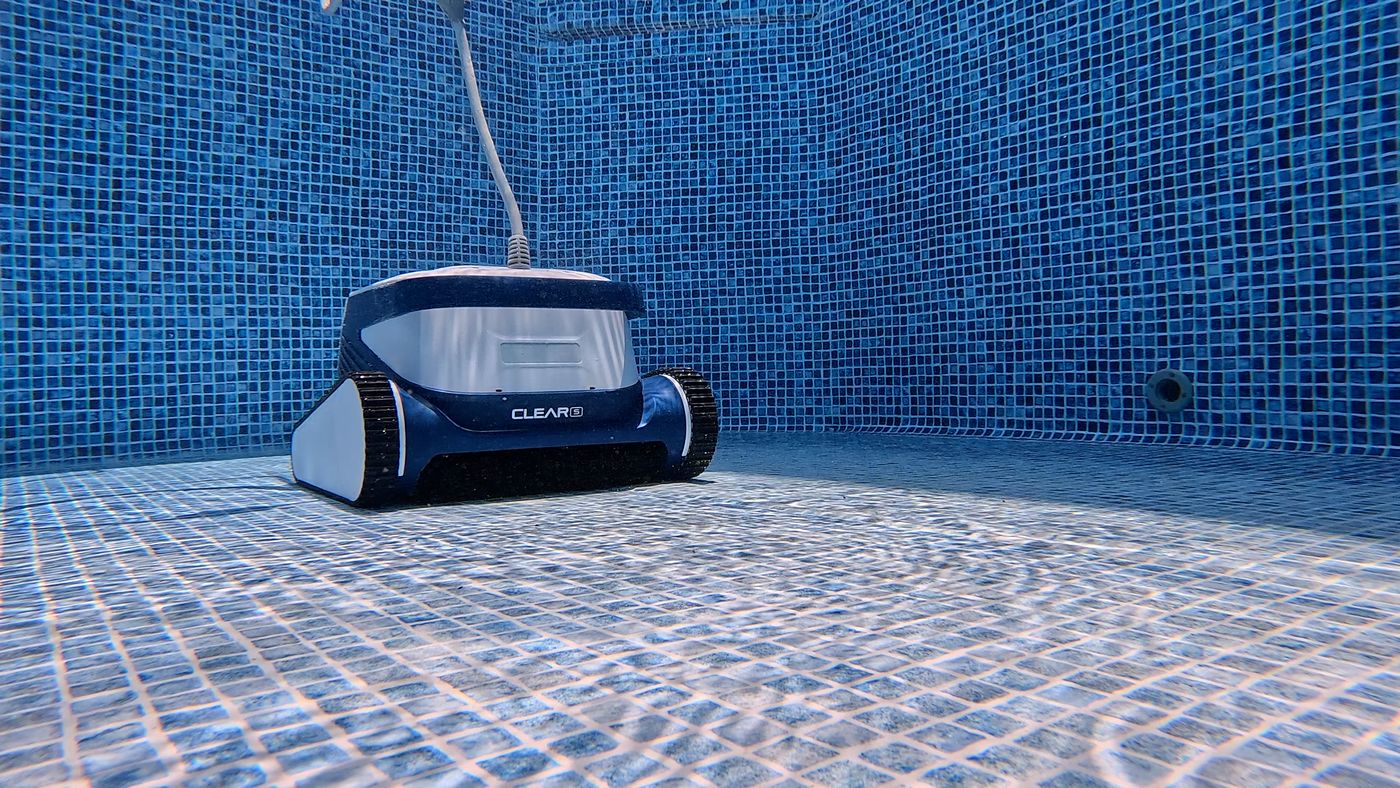
The Clear S is a corded, commercial-grade robotic pool cleaner designed for the floor, walls, and waterline. Its shared platform with the Clear UV includes four motors, UltraFilter media rated by Clear to 1 micron, smart navigation, active scrubbing, a smartphone app, and a weekly timer. The S omits the UV-C disinfection lamp.
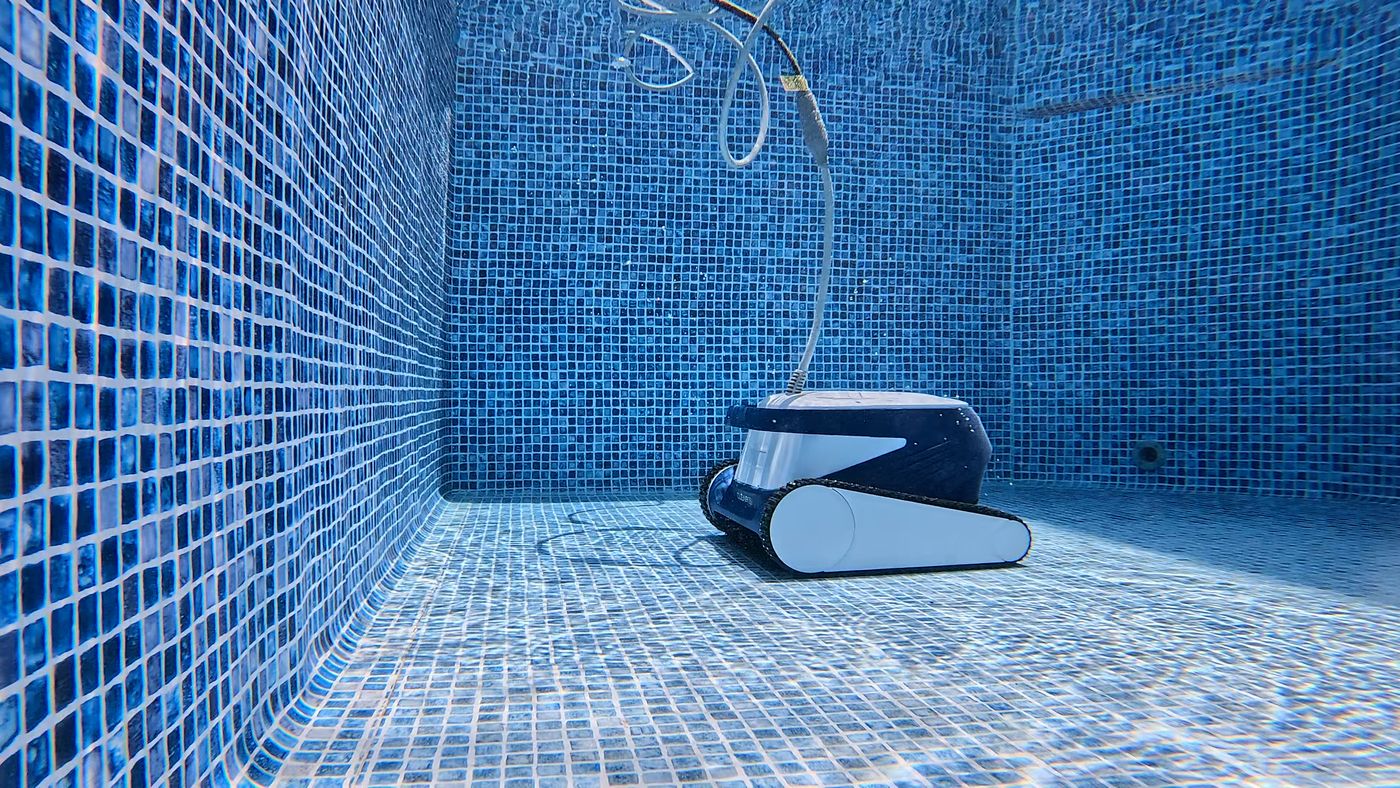
Across my test cycles on the shared Clear platform, the basket repeatedly filled to the brim, suction ranked among the strongest I've felt in a residential cleaner, wall climbing was confident, and the water looked noticeably clearer. The S uses the same shell, cleaning internals, filtration, navigation hardware, and software. The open question is how this newer model will age through multiple seasons.
Pool Coverage: Floor, Walls, Waterline, and the Swivel
Coverage is one of the Clear S's main advantages over floor-only cleaners. Oils, bacteria, and algae collect around the waterline; if the robot cannot reach it, that band still needs manual scrubbing.
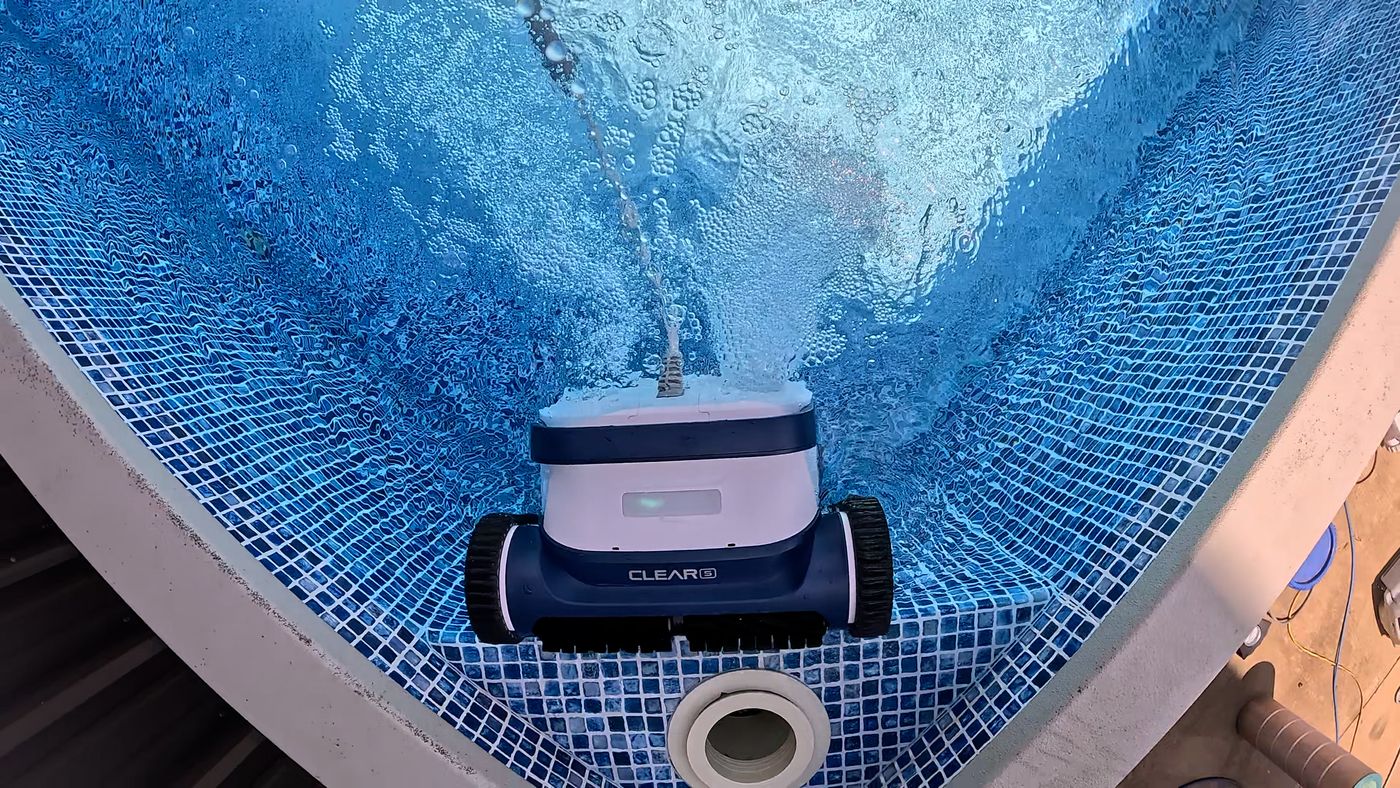
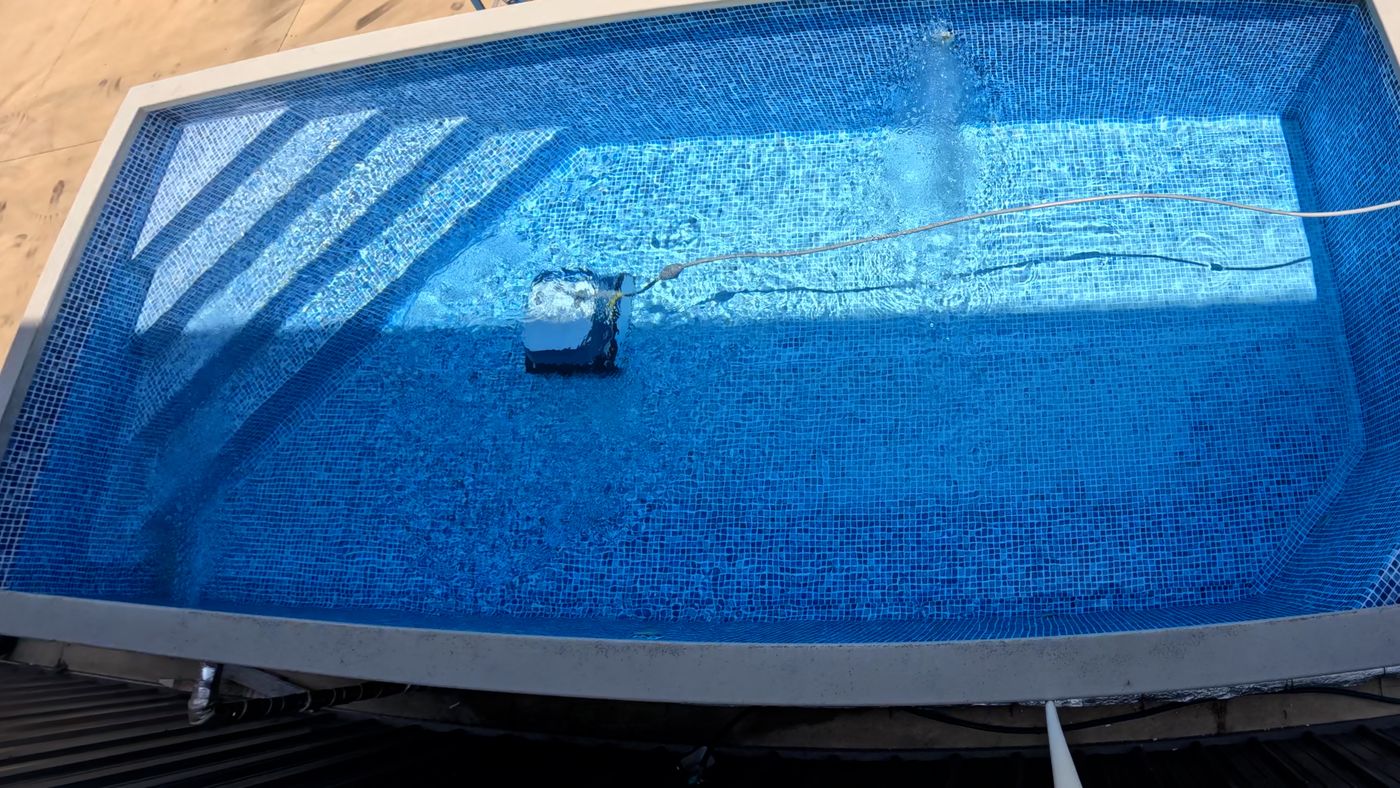
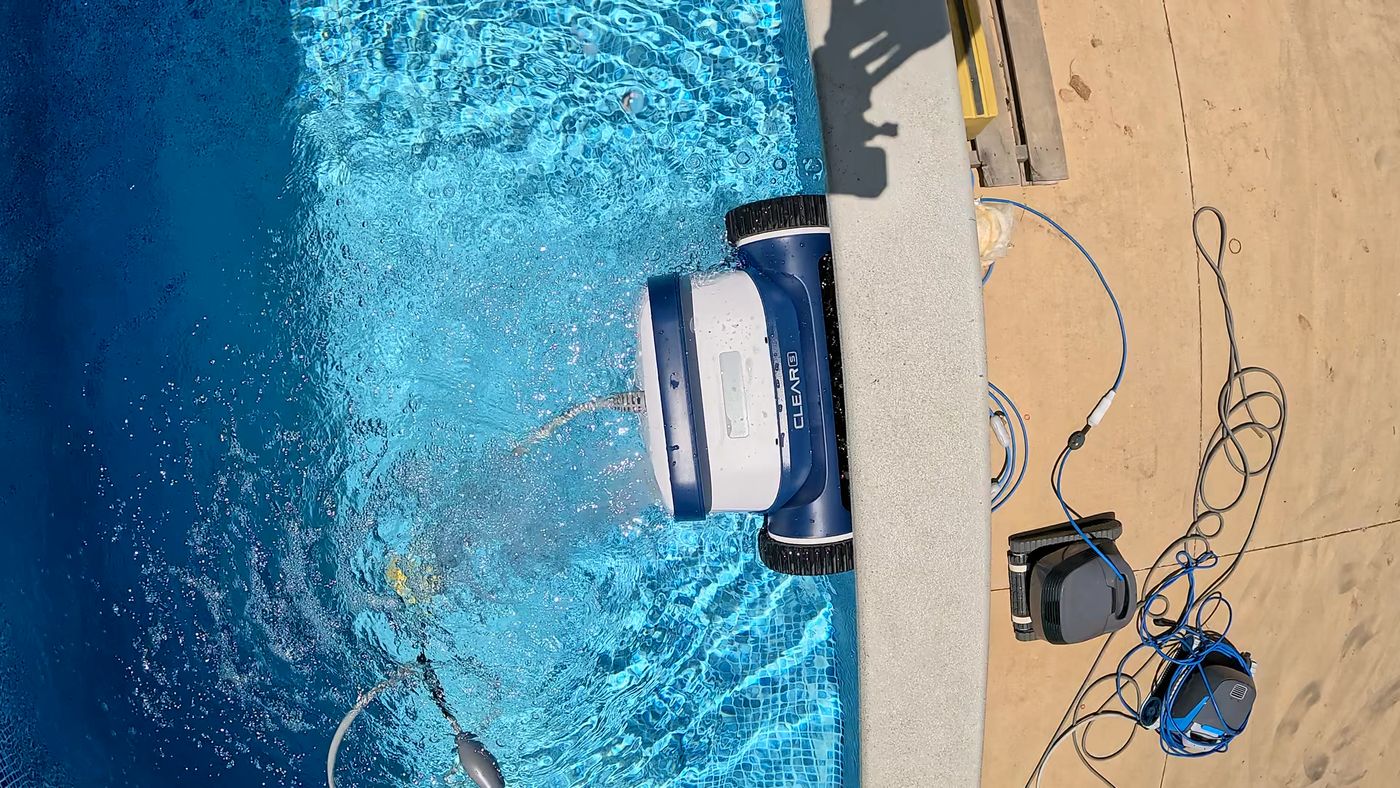
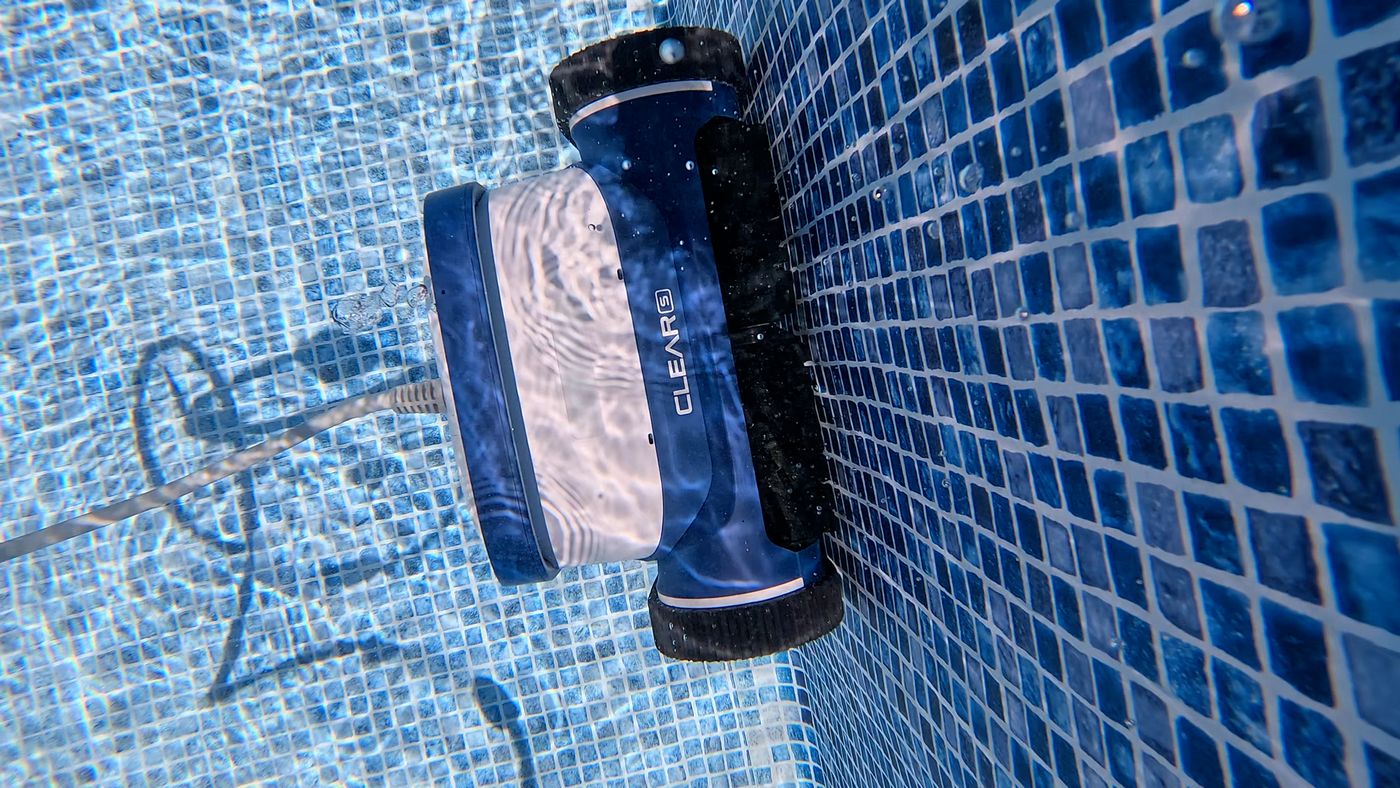
The Clear S is specified to clean the floor, walls, and waterline. In testing the shared platform, I watched it climb with a firm grip and hold the tile line instead of sliding down halfway. It follows a deliberate route but will sometimes pause, reverse, and retry a wall. That behavior is part of its navigation, and the route became more efficient after the first couple of cycles.
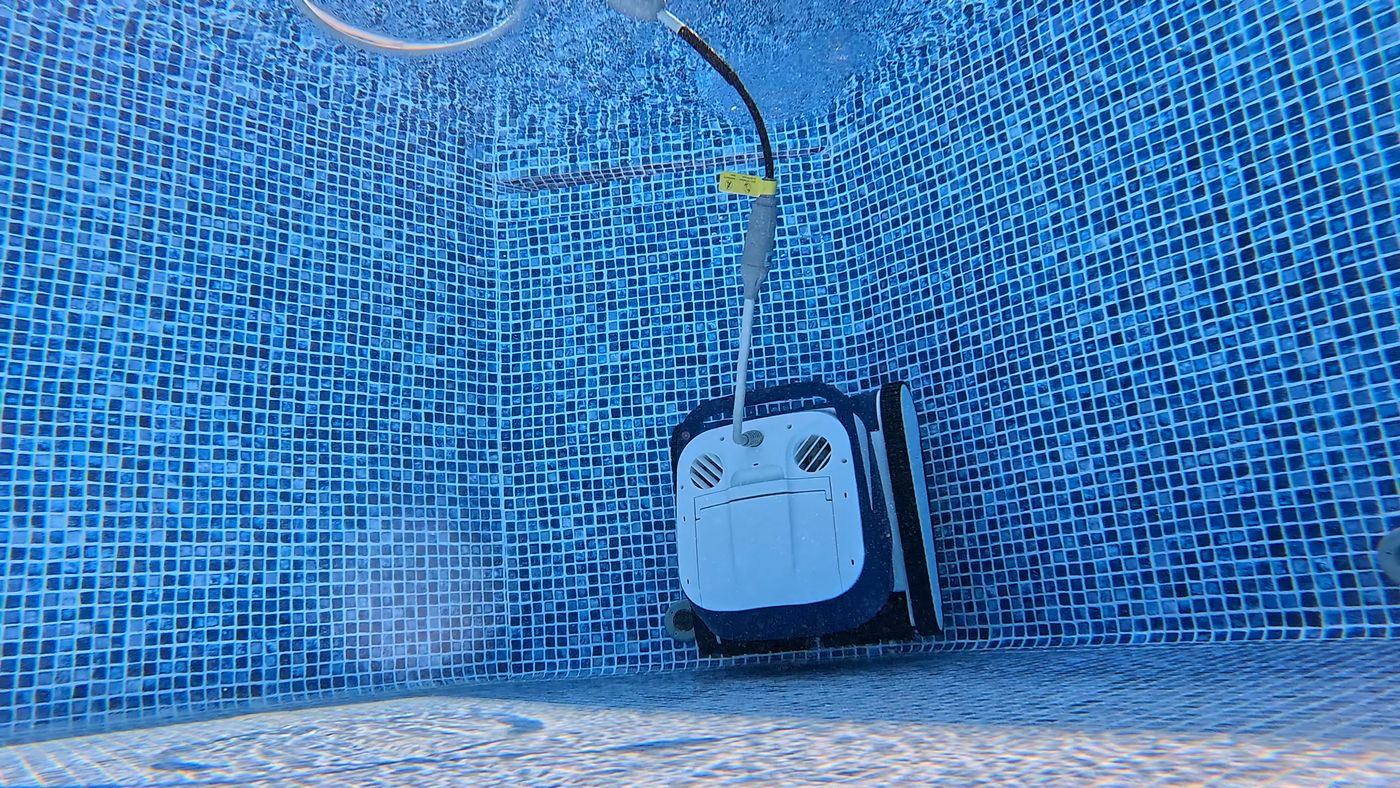
The tangle-free swivel cable has a 59-foot reach and is rated for pools up to 50 feet long. I did not have to untangle the cable during platform testing. Lay it out flat and work out any twists before the first cycle; after that, the swivel manages rotation as the robot changes direction.
The UltraBin
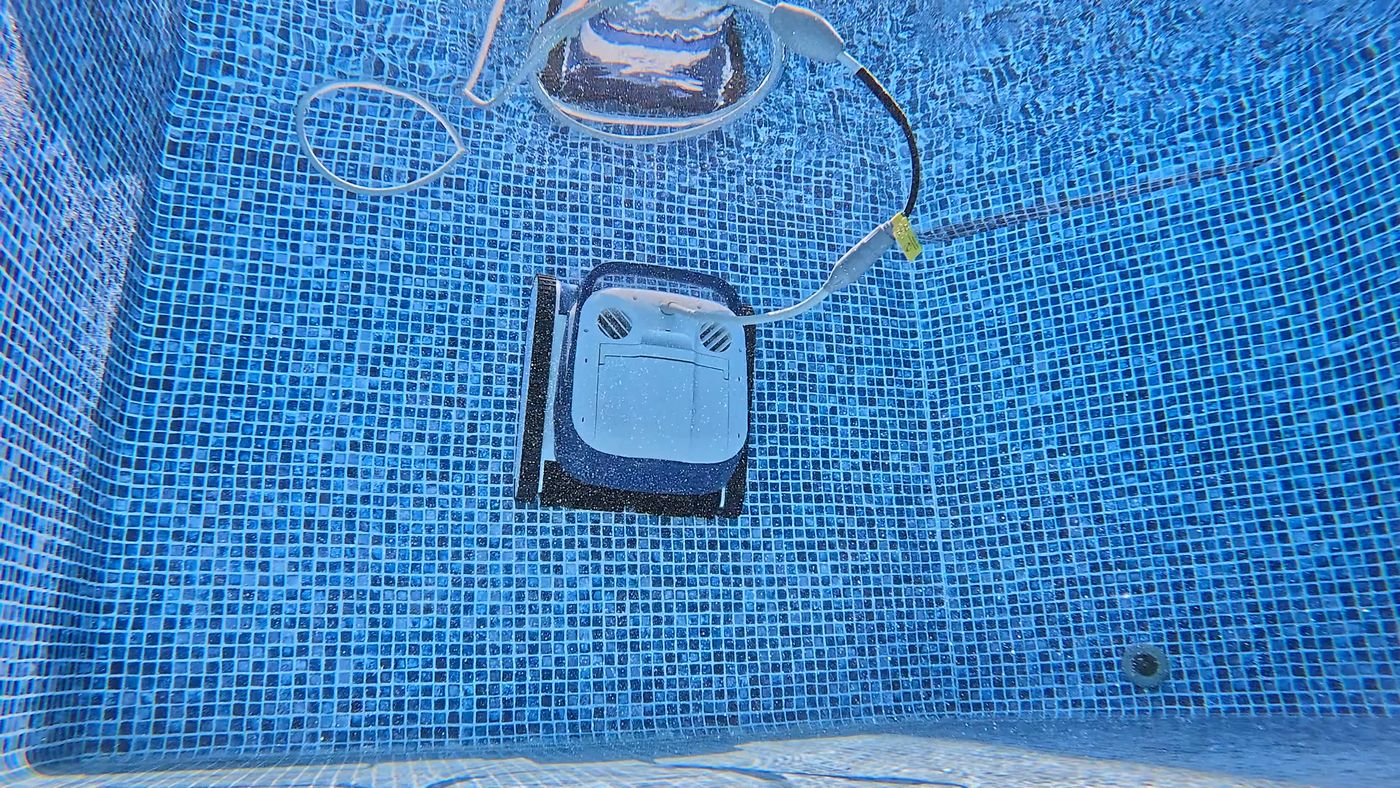
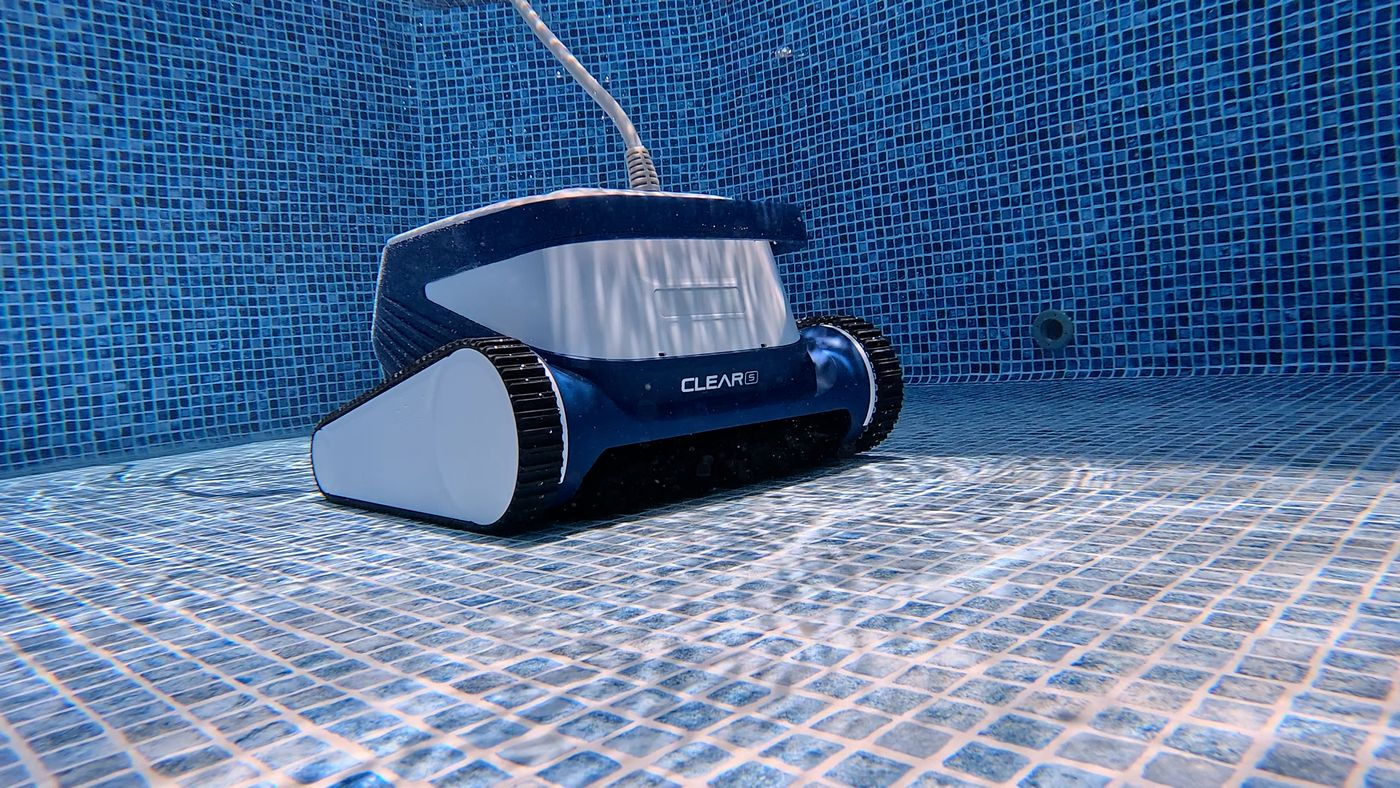
The Clear S uses a top-loading UltraBin filter basket. Routine access takes about ten seconds: unplug the power supply, open the top cover, and lift the basket straight out. There is no need to turn the 27.6-pound robot onto its back.
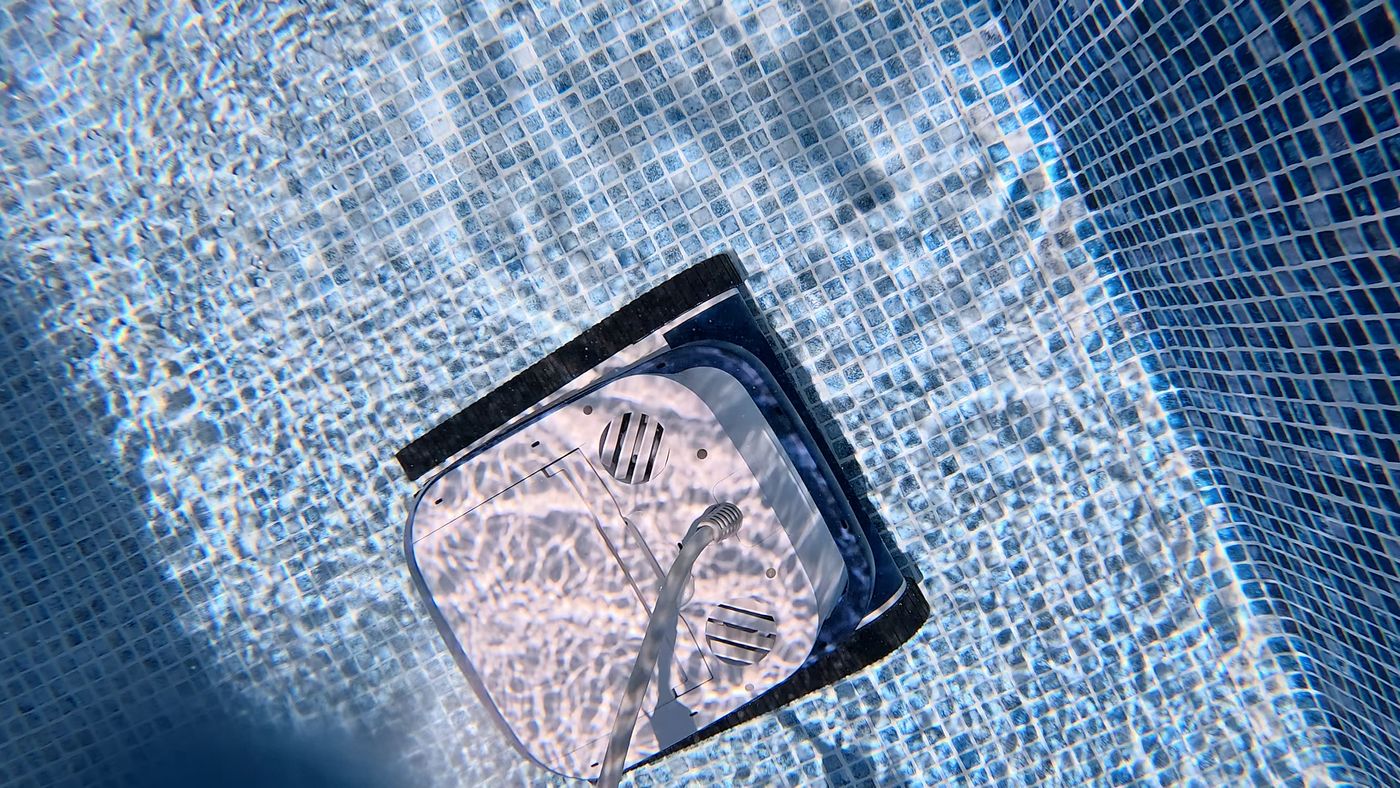
The basket has substantial capacity. On the tested Clear UV platform, it filled to the brim on nearly every run, consistent with strong pickup and filter media that retained the captured load. Rinse it with a hose when it is full or whenever suction drops. Fine silt, pollen, and dust can restrict the media before the basket looks packed, so rinse it more often than the visible debris level alone suggests.
UltraFilters and 1-Micron Filtration
Inside the UltraBin are Clear's proprietary UltraFilter panels. The robot ships with two complete sets — one installed and one spare — with four panels per set that slide into the basket frame in sequence.
Clear rates the UltraFilter media down to 1 micron. For scale, a human hair is around 70 microns. That nominal rating is intended to retain fine pollen, silt, dust, and algae spores that coarser robot cartridges can return to the pool. Actual capture depends on filter condition, flow, and how well the panels are seated, so the 1-micron figure should be read as the manufacturer's media rating rather than a guarantee that every 1-micron particle is removed. Fine filtration still has a visible payoff, which is why I put so much weight on fine-filter media across the Dolphin lineup.
Plan to replace the UltraFilter panels every 3 to 6 months, depending on the debris load in your pool. Handle them carefully because fine filter media is more delicate than coarse mesh.
Quad Motors, Scrubbing, and Smart Navigation
The Clear S uses four motors: two pump motors for suction and two drive motors for movement. Separating pumping from drive lets the robot maintain water flow while the tracks handle propulsion. On the tested platform, that architecture corresponded with strong pickup and repeatedly full baskets.
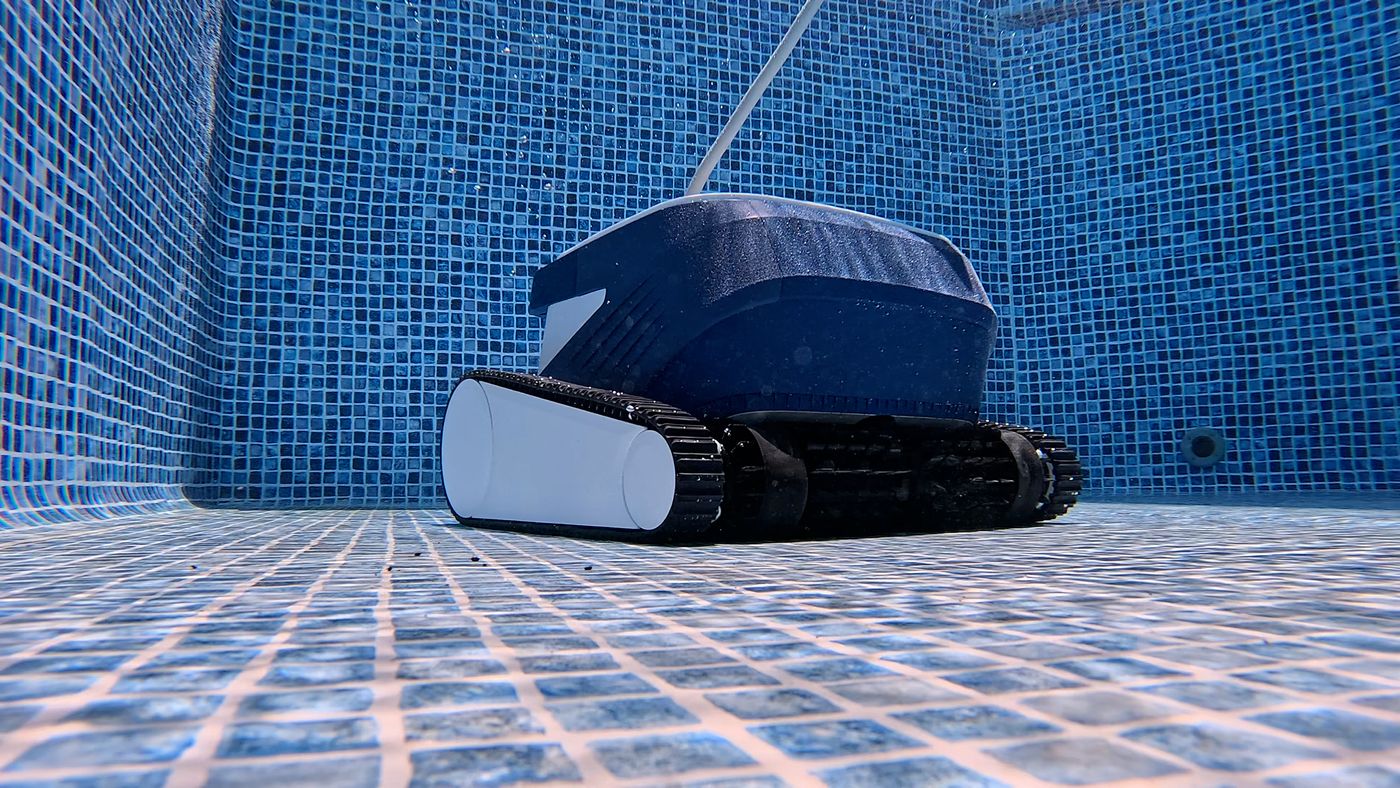
Surface contact comes from a fast active front brush, a rear brush, and two textured drive tracks that scrub as the robot moves. In platform testing, the pool looked noticeably brighter after a full cycle, with the clearest difference along the waterline where buildup collects.
Navigation uses a C9 microprocessor with a gyroscope and accelerometer. Those sensors give the controller orientation and movement data, allowing it to plan coverage instead of relying only on bump-and-turn direction changes. Across completed platform test cycles, I found consistent coverage and no persistent neglected zones. That is a meaningful advantage over cordless cleaners that navigate primarily by contact and reversal.
The Smartphone App and Weekly Timer
The Clear app is polished and remains useful while the robot is underwater. That matters because controls that lose their connection as soon as a robot submerges cannot adjust an active cleaning cycle.
Setup is direct: download the Clear app, enable Bluetooth and Wi-Fi, select the model, and connect. The home screen shows cleaning modes, a start button, power-supply connection status, and a live water-temperature reading. Remote Control adds a virtual joystick for steering the robot to a specific debris pile after a storm. That feature requires a Clear account.
The weekly timer is the more consequential feature. Leave the Clear S in the pool, choose a recurring schedule and cleaning mode in the app, and save it. The corded power supply can then start each cycle without the recharge, retrieval, and reset required by a battery robot. That recurring automation is a central advantage of corded robots over cordless. Regular upkeep is primarily rinsing the filter and following the handling limits covered below.
Cleaning Modes and Focus Cleaning
The power-supply controls and app provide six cleaning modes:
- Regular Mode — a 2-hour full-pool clean. Your everyday go-to.
- Ultra Mode — a 3-hour deep clean for when things have gotten away from you.
- Fast Mode — a 1-hour quick cycle for a fast touch-up.
- Floor Mode — a 2-hour cycle that focuses only on the pool floor.
- Waterline Mode — a 2-hour cycle that focuses on the walls and waterline.
- Custom Mode — configured in the app for your pool's shape.
The focused modes have a practical use. If the floor is already clean but a grime ring is forming at the tile line, Waterline Mode directs the cycle to the walls and waterline instead of repeating full-pool coverage. Most budget robots do not provide that level of targeting.
Clear S vs. Clear UV: Should You Upgrade for the Light?
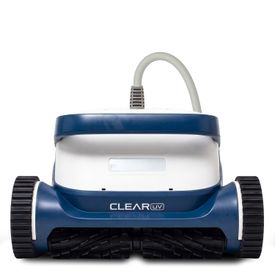
The stated product difference between the Clear S and Clear UV is the UV-C lamp. Their motors, filtration, brushes, navigation, app, and scheduling are shared, so there is no specified cleaning-hardware upgrade with the UV model. The decision comes down to whether the lamp's added surface treatment is worth roughly $250.
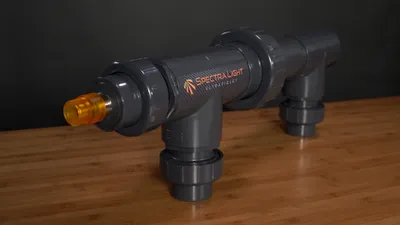
The Clear UV mounts a UV-C lamp underneath the robot and activates it during cleaning, exposing the surface beneath it to germicidal ultraviolet light. UV-C technology is used in Olympic pools and commercial aquatic centers to mitigate bacteria, algae, and other organic growth. We also run a SpectraLight UV system on our test pool, so I value UV as an additional treatment tool. A moving robot lamp, however, delivers surface passes rather than the continuous whole-water treatment of an inline system.
The robot's UV is a supplement, not a replacement for sanitizer. It treats the surface during a cleaning pass; it is not a whole-pool inline system like the SpectraLight UV unit that runs on our pool 24/7. Chlorine and ORP-managed chemistry still need to be maintained with either robot. The upgrade adds another layer of organic-growth control, but it does not eliminate normal sanitation.
The Clear UV makes the most sense for an owner who already manages chemistry by ORP, values an extra surface-treatment layer, and is comfortable paying the premium without reducing sanitizer. For that use case, the lamp has a clear role.
The Clear S is the better value when sanitation is already handled and the UV layer is not a priority. It keeps the same suction architecture, filtration, navigation, app features, and automation while removing only the lamp. Its shorter ownership history matters when judging long-term durability, which I cover below.
Choose the Clear UV for the added surface treatment. Choose the Clear S for the shared cleaning system at the lower price.
Weight, Handling, and Track Record
At 27.6 pounds without the cable, the Clear S is heavier than most robots on my list. That matters if the pool is far from storage or the person maintaining it has lifting limitations. Pick-up mode drives the robot to the waterline so you can reach the handle. Hold it just above the surface for a few seconds to let the water drain before lifting it fully onto the deck. Never lift the robot by its cable; always use the handle. Cable lifting can damage internal wires, and that damage is not covered under warranty.
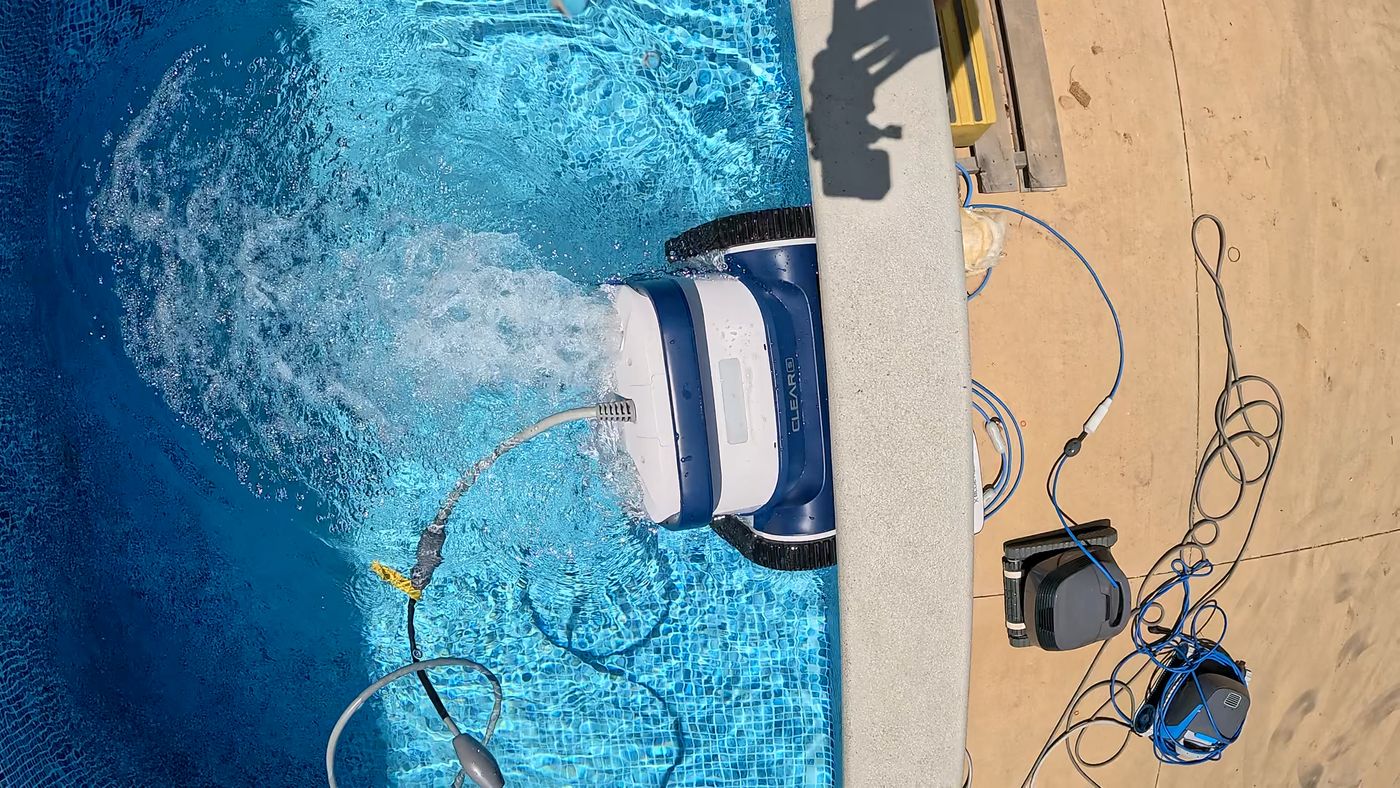
The cleaner is rated IP68, meaning fully submersible, while the power supply is IP54. Keep the power supply at least 10 feet from the pool and out of direct sun. The system runs on standard household power and is rated for working depths from 2.5 to 16.4 feet, water temperatures from 50 to 95°F, pH from 7.0 to 7.8, free chlorine up to 4 ppm, and salt up to 5,000 ppm. That makes it saltwater compatible. Do not run it immediately after adding flocculants or clarifiers; the resulting fine sediment can clog the filter, so let the water clear first.
Long-term reliability is still the open question
The Clear S is a newer release and has not accumulated the multi-season reliability record of the top corded Dolphin models. Strong current cleaning does not yet answer how the motors, seals, cable, filters, and app support will hold up over years of ownership. That shorter record is why I am not ranking either Clear model number one overall yet. I will keep updating the review as the platform runs through additional seasons.
Final Verdict: Pool Nerd Approved
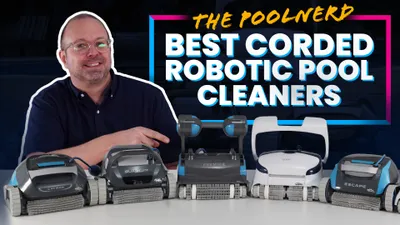
The verdict is Pool Nerd Approved for buyers who want corded automation and the Clear platform's cleaning hardware without paying for UV-C. See how the corded competition stacks up in my best corded pool robots guide. The qualification is longevity: its present capability is strong, but the ownership record is still developing.
Current pricing on robotic cleaners and other pool equipment is on ThePoolNerd.com/deals.
Related Reading
- Clear UV Review — The same robot with the built-in UV-C lamp
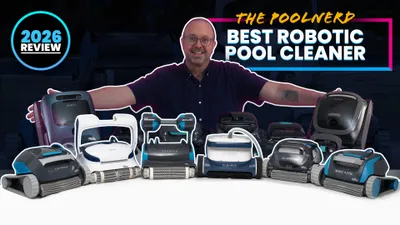
- Best Robotic Pool Cleaners — Our top picks after testing 40+ robots
- Best Corded Pool Robots — Every corded model we recommend, ranked
- All Robotic Pool Cleaner Reviews — Every robot we've tested
- Corded vs Cordless Robotic Pool Cleaners — Why corded automation wins
- Clear S — Official Site — Specs, pricing, and ordering direct from Clear
- Clear UV — Official Site — The UV-C version of this robot
- Clear S at PoolRobots.com — Shop the Clear S from an authorized dealer
- Clear UV at PoolRobots.com — Shop the UV-C version from an authorized dealer

Comments
Loading comments…