
 Justin D.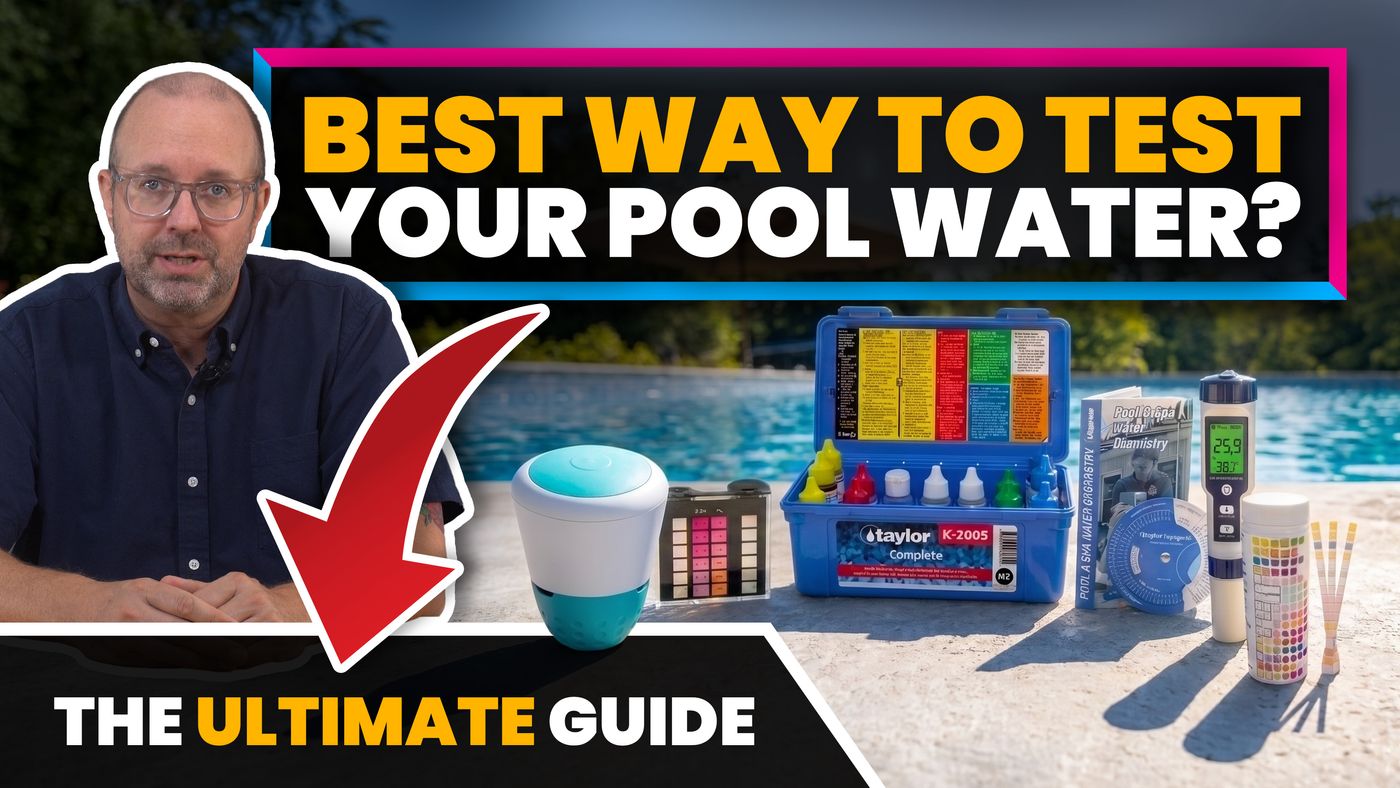
A perfect chlorine reading on Saturday morning cannot tell you what happened during Tuesday's storm or Friday's pool party. Sun, swimmers, rain, and changing pH keep moving the chemistry between manual tests, so the best way to test pool water is a routine—not a single gadget.
In my test pool, an Ondilo ICO smart monitor tracks ORP, pH, and temperature around the clock. I keep a Taylor K-2006 for monthly CYA and calcium checks and to verify any reading that looks wrong. That combination gives me trends between tests and a dependable manual baseline when I need one.
Test strips still earn a place as a 15-second screening tool. Cheap digital probes usually do not: calibration, storage, and sensor care can make a precise-looking display less trustworthy than a careful drop test. The comparison below shows where each method belongs. For the larger routine around those tests, see my pool maintenance guide.
Pool Water Testers: Quick Comparison
Pool Water Testers: Quick Comparison
Use strips for fast screening, a Taylor K-2006 for precise baseline tests, and the Ondilo ICO for continuous ORP and pH monitoring.

Ondilo ICO Pool Water Monitor
What it is: A floating smart monitor that samples pH, ORP (sanitizer effectiveness), and temperature on a schedule and sends trends to your phone.
Why you need it: You still need a real drop kit for parameters the ICO doesn’t replace (like TA and CYA), but hourly ORP/pH catches drift and dosing mistakes long before weekly strip checks do.

Taylor K-2006 Test Kit
What it is: The FAS-DPD drop kit the pros carry—free and combined chlorine, pH, alkalinity, calcium hardness, and CYA, all from drops instead of guess-strips.
Why you need it: Use it every few weeks to confirm your smart monitor, and a couple times a season to check CYA—the one number the float doesn't track. Drops over strips, every time.
Pick your version: Taylor K-2006 (chlorine pools) or the K-2006 Salt (salt pools)—same kit, the salt version adds a salinity test.

EASYTEST Pool Test Strips
What it is: Fast multi-parameter strips for quick checks.
Why you need it: Not as precise as a Taylor kit—use for mid-week spot checks (“did FC crash overnight?”) between full drop tests.
The Numbers That Matter: FC, pH, CYA, and ORP
Here's the fundamental truth about pool testing: the tool you buy matters a whole lot less than understanding the numbers you are measuring. Before we talk about gear, we have to talk about the chemistry. If you understand these four numbers, you will never walk out of a pool store with a box of expensive mystery chemicals again.
First is Free Chlorine—or FC. This is your active sanitizer. It is the chlorine that is available right now in the water to kill algae, neutralize bacteria, and wipe out everything a swimmer brings into the pool. It is measured in parts per million, or PPM. For most standard residential pools, you generally want this sitting in the 3 to 6 PPM range. But that number completely depends on your stabilizer level.
That brings us to number two: Cyanuric Acid, or CYA. This is your stabilizer. I want you to think of CYA as sunscreen for your chlorine. Down here in the blazing Texas sun, UV rays will absolutely destroy unprotected chlorine. Without CYA, your free chlorine would burn off in a single afternoon. But here is the catch that trips up so many people: CYA protects your chlorine by binding to it, which actively slows the chlorine down. The more CYA you have in your water, the more free chlorine you need to get the exact same sanitizing job done.
This is the golden ratio I bring up in almost every single chemistry video on this channel: you need to keep your free chlorine at roughly 7.5 percent of your CYA level. If your CYA is at 30 PPM, your free chlorine needs to be around 2 to 3 PPM at an absolute minimum. If your CYA climbs to 60 PPM, you suddenly need 4 to 5 PPM of free chlorine just to maintain the same baseline protection. If you’ve ever had a pool store tell you your chlorine levels were "fine" on paper, but you still woke up to a green pool, a messed-up CYA-to-chlorine ratio is usually the exact reason why.
The third number is pH. Your pH level dictates how hard your free chlorine is actually allowed to work. If you keep your pH at 7.2, your chlorine is operating at about 65 percent efficiency. But if you let that pH drift up to 8.0—which happens naturally as water aerates—your chlorine's effectiveness plummets to roughly 20 percent. It is the exact same amount of chlorine in the water, but most of its sanitizing punch is completely gone. That's why keeping your pH in the right range is so critical. If the reading will not stay there, diagnose rising pH or falling pH instead of seesawing between chemicals.
Finally, we have the number the professionals watch, and it’s the most important one on this list: ORP. It stands for Oxidation-Reduction Potential, and it’s measured in millivolts. My clear-but-not-sanitized test-pool example shows why that reading can expose a problem long before the water looks dirty.
Here is the difference: Free Chlorine tells you how much chlorine is physically floating in the water. ORP tells you how well that chlorine is actually working after your pH, your CYA, the water temperature, and bather contaminants all take their cut. Olympic facilities, public water parks, and high-end commercial pools do not run on basic free chlorine tests—they run on ORP.
If your ORP is above 700 millivolts, your water is in fantastic shape. Nothing is going to grow in that. If it's between 650 and 700, you're in the acceptable range. But the moment it dips under 650 millivolts, your sanitizing power is severely compromised and an algae bloom is right around the corner.
Free chlorine, pH, and CYA work together as a complex system. ORP is the single number that proves whether or not that system is actually working.
Now that we know what we are looking for, let's match the tools to the job, starting with the most basic and working our way up.
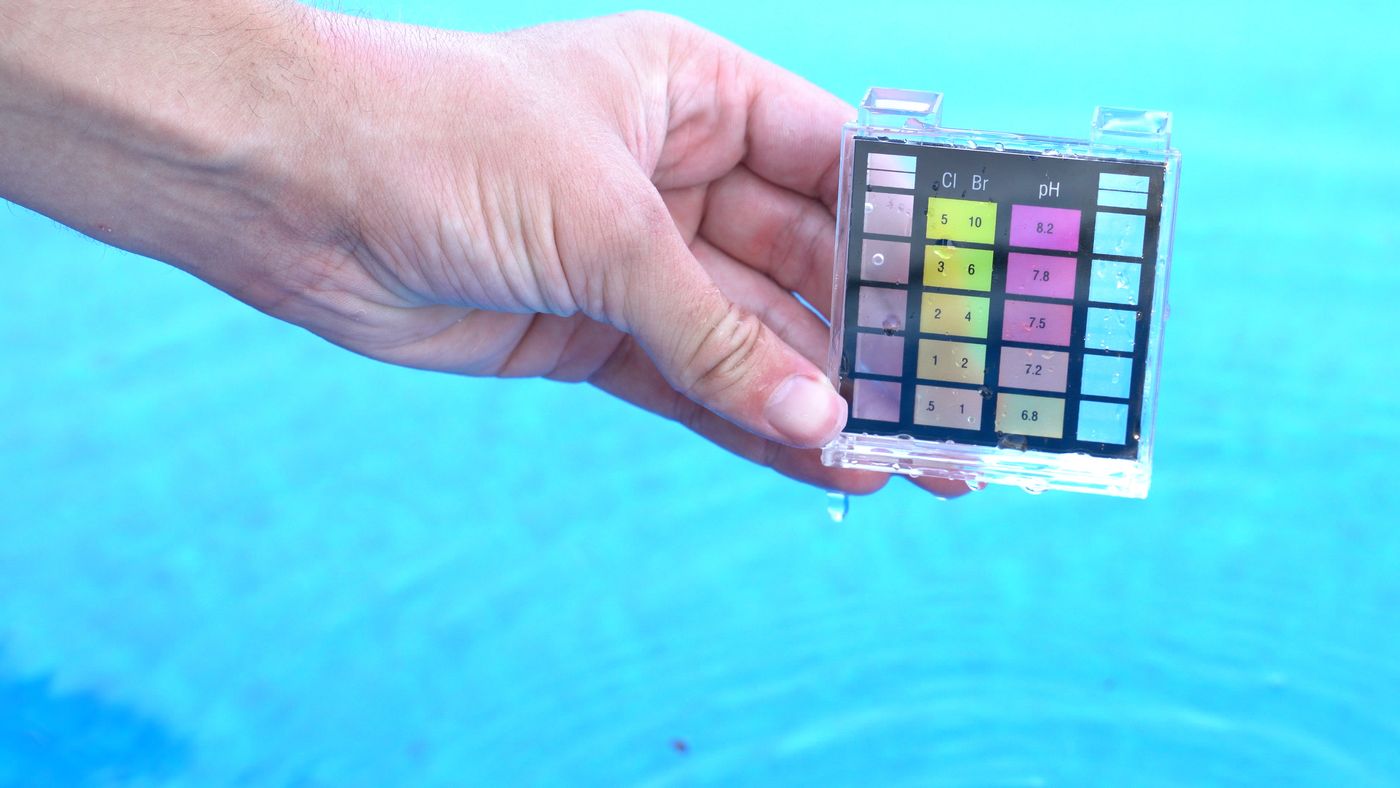
Test Strips: The 15-Second Screening Tool
First up, the tool that absolutely everybody owns: standard test strips.
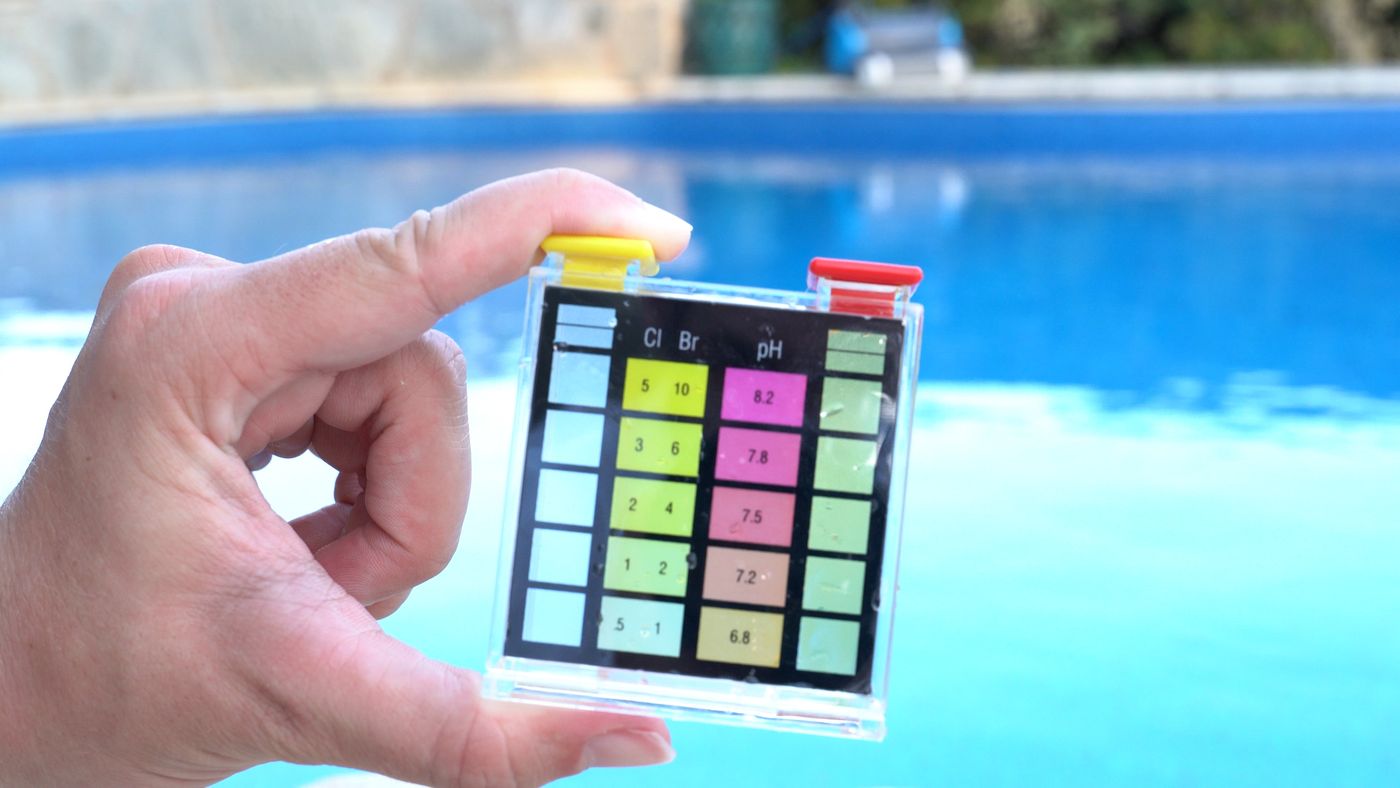
Strips are the fastest, cheapest, and easiest way to check your water. You dunk the strip elbow-deep in the pool, pull it out, hold it level for about 15 seconds, and match the little colored pads to the chart printed on the side of the bottle. Personally, I keep AquaChek or EasyTest 7-Way strips on hand. In one single dip, you get a reading on free chlorine, total chlorine, pH, total alkalinity, stabilizer, and total hardness. For a quick "is anything horribly wrong" check, they are incredibly hard to beat.
But we need to be very real about their limitations. Test strips are a screening tool. They are not a precise measurement tool.
Think about the user experience here. You are trying to match a tiny square of color against a faded printed label on a plastic bottle. You’re doing this while standing outside, which means the lighting is constantly changing. A 3 PPM free chlorine reading and a 5 PPM free chlorine reading can often look like the exact same shade of purple, depending on whether you are standing in direct sunlight or the shade of your patio.
Furthermore, moisture is the absolute enemy of a test strip. If you accidentally leave the cap slightly loose, or if you store the bottle poolside through a humid August, ambient moisture will ruin the entire bottle. The pads will activate in the air, and they will lie to you the next time you dip one in the pool.
Where test strips actually shine is basic trend-spotting. A quick dip after a massive pool party, or the morning after a heavy rainstorm, will tell you if your levels have completely crashed. But here is my golden rule: if a test strip surprises me with a weird result, I never immediately dump chemicals into the pool based on that reading. I always confirm it with a more accurate tool first.
Digital Meters: The Middle Ground You Can Skip
This brings us to the digital meters. If you type "pool water tester" into Amazon right now, you will get absolutely flooded with electronic pH pens, TDS meters, and digital photometers. The sales pitch is incredibly tempting: just take a water sample, add a reagent or stick a probe in the water, and a digital screen feeds you the exact number. No guessing shades of pink or purple.
Honestly? I highly recommend skipping these entirely.
There is a huge misconception that digital meters eliminate the work of testing a pool. They don't. With the vast majority of consumer-grade digital photometers, you are still doing the manual labor of scooping water, crushing up little reagent pills, cleaning out glass test tubes, and wiping away fingerprints so the optical sensor can read the sample correctly. It takes just as long as a liquid drop test.
And if you buy the cheap electronic probe pens, you are buying a maintenance nightmare. To keep an electronic pH probe accurate, you have to constantly calibrate it using special buffer solutions. If you let the glass bulb on the probe dry out in storage, it’s ruined.
You end up spending fifty to a hundred and fifty dollars on a middle-ground gadget that still requires you to go out to the pool, scoop water, and do manual testing. The digital screen gives you a false sense of extreme precision—it might say your pH is 7.34—but if the probe isn't calibrated perfectly, that number is garbage. Save that money. Put it back in your wallet, or put it toward a smart monitor instead.
Liquid Test Kits: The Baseline Backup
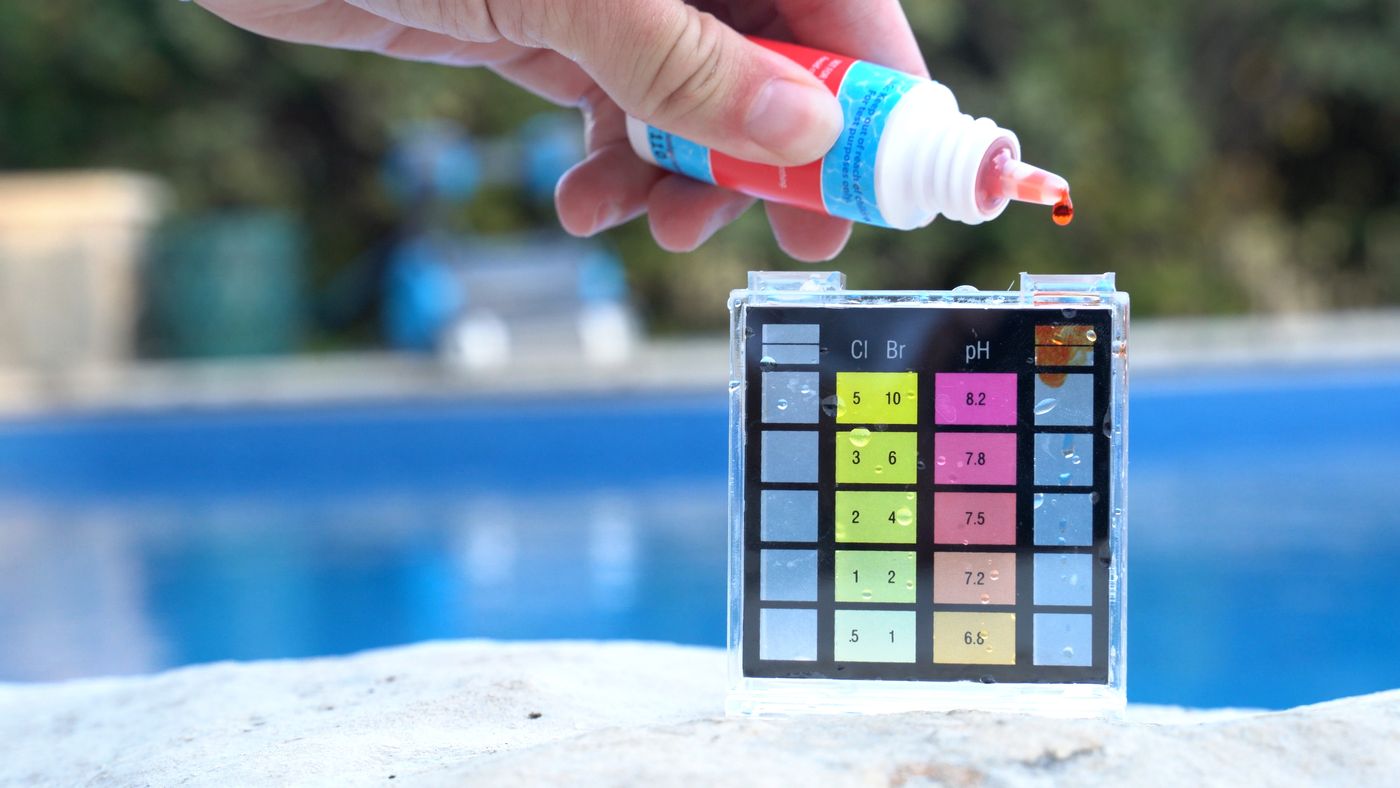
If you are going to do a manual test, you need to do it right. That brings us to liquid drop kits. The absolute gold standard in the pool industry is the Taylor K-2006.
Do not accidentally buy the K-2005, which relies on matching shades of pink against a plastic block. You want the K-2006 because it uses a testing method called FAS-DPD. This is where we get to nerd out on the chemistry for a second.
With the K-2006, you scoop a tiny bit of DPD powder into your vial of pool water. If there is free chlorine present, the water instantly turns bright pink. The deeper the pink, the more chlorine is in the water. Then, you take your liquid reagent and add it into the vial one drop at a time, swirling the water as you go. Each single drop of reagent neutralizes a very specific amount of chlorine.
You just count the drops until the exact moment the pink water turns completely clear.
There is no squinting at colors. There is no guessing if the hue matches the chart. The endpoint is clear, and clear is clear. If you use a 25-milliliter sample of pool water, every single drop equals 0.2 PPM of free chlorine. Ten drops means you have exactly 2.0 PPM. It is brilliantly simple, incredibly accurate, and it doesn't wash out even at extreme shock levels. The kit also includes professional-grade tests for your total alkalinity, calcium hardness, and CYA levels.
Now, you might be thinking: "Justin, do I really need to be out by the pool like a mad scientist doing advanced chemistry every single Saturday?"
Honestly, no. I don't love spending my Saturday mornings playing chemist any more than you do. A few years ago, I would have told you that you need to use this kit every single week. But technology has advanced, and a smart pool monitor can handle almost all of your daily and weekly testing now.
But here is the catch: you still need to own a Taylor K-2006.
You use this kit for your monthly deep dives to check your stabilizer (CYA) and calcium hardness, because smart monitors do not track those specific metrics. Or, if your smart monitor throws a weird warning to your phone, you break out the Taylor kit to manually verify the baseline. It is the ultimate diagnostic backup tool. You might not use it every week, but when you need to know exactly what is happening in your water, nothing beats it.
Smart Monitors: The 24/7 Solution
Here is the fundamental flaw with test strips, digital meters, and even the amazing Taylor drop kit: they only give you a snapshot of your water at one specific moment in time. And your pool does not live in snapshots.
Your pool is a dynamic, living environment. Chlorine demand changes by the hour. As the sun climbs overhead at noon, UV rays start eating away at your free chlorine. If you have six kids cannonballing into the water at two in the afternoon, bather load destroys your sanitizer. If a massive summer storm rolls through at six in the evening and dumps organic debris into the water, your chemistry shifts again.
If you run a liquid test on Saturday morning, you know exactly what your water looked like on Saturday morning. But by Tuesday afternoon, your water chemistry is a total mystery. And algae absolutely loves a mystery.
That is exactly why the biggest upgrade I have ever made to my pool care routine wasn't a fancier test kit. It was continuous, 24/7 monitoring. And like I said with digital test meters, you want to avoid the cheap ones and find one with “commercial-grade” sensors. These work a whole lot better in my experience.
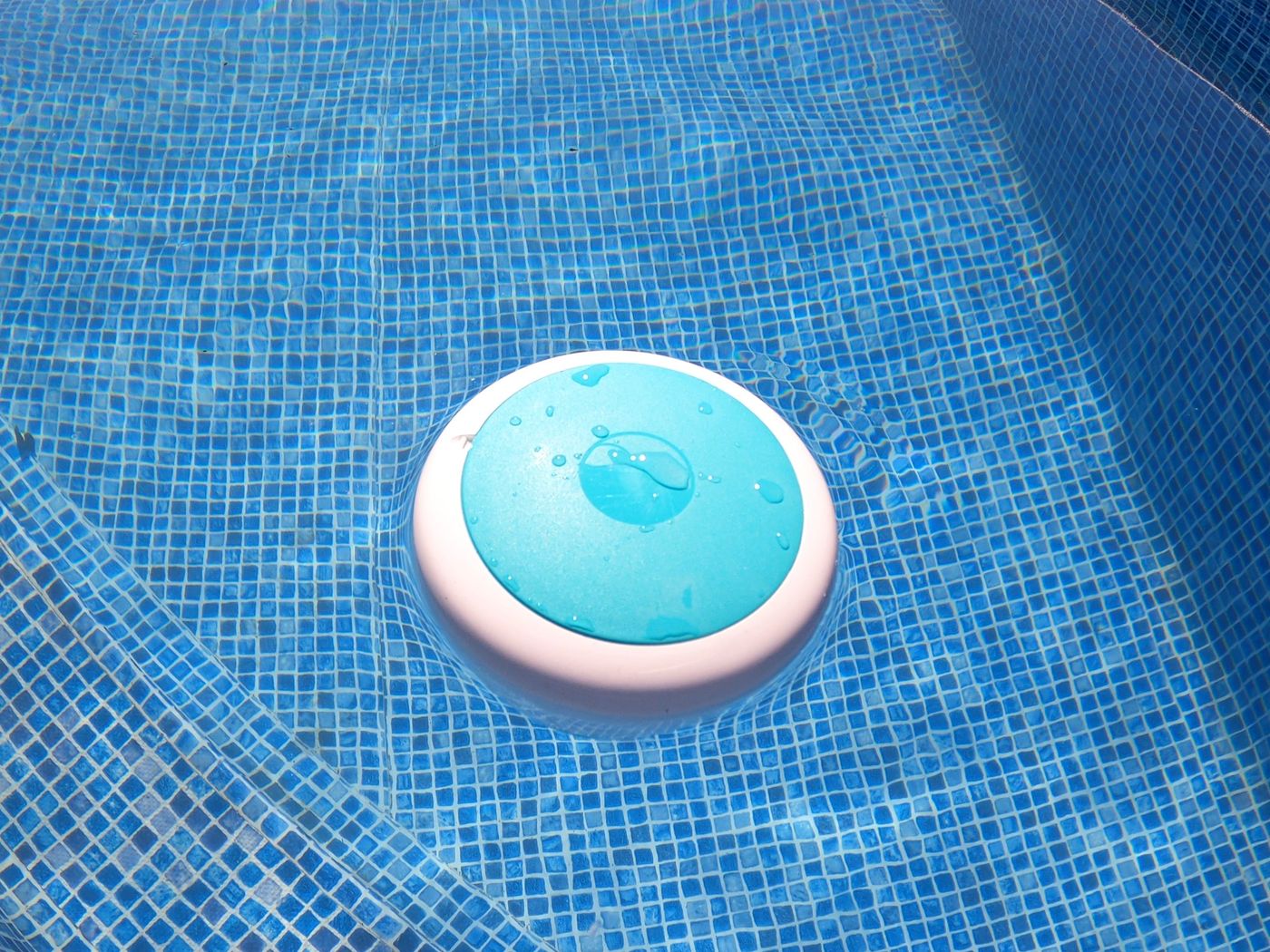
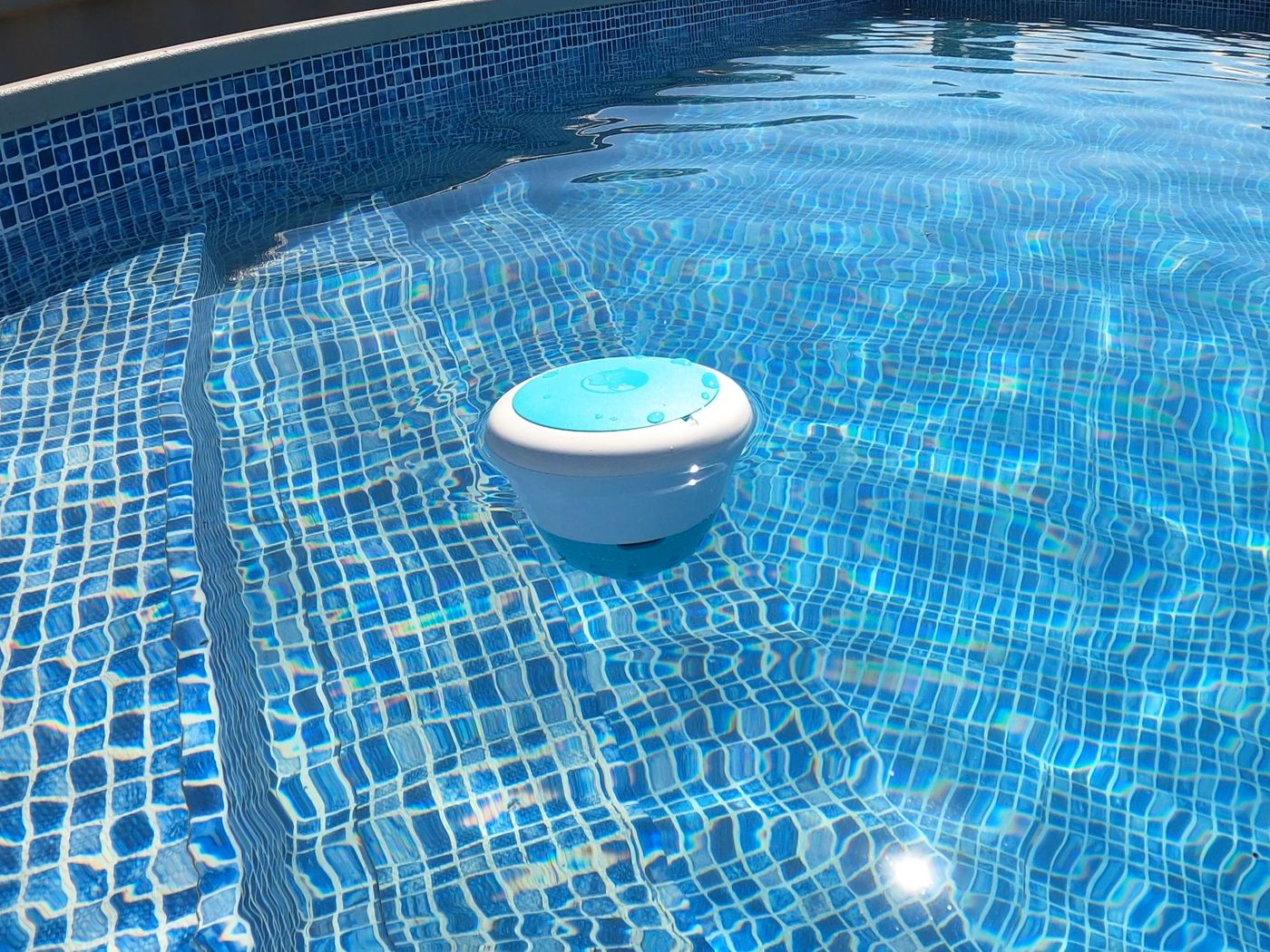
I run the Ondilo ICO in my own pool. This is the exact same container pool where I test thirty-plus robotic pool cleaners every single season. The ICO simply floats in the skimmer or the main pool area, and it continuously measures ORP, pH, and water temperature around the clock. It connects to my Wi-Fi and sends every single reading straight to an app on my phone. There is a saltwater version available as well, there are zero monthly subscription fees to use the app, and you only have to charge the battery once every few months. Plus, you can buy replacement sensors and recalibration kits as needed – it's super easy to swap the sensors out too.
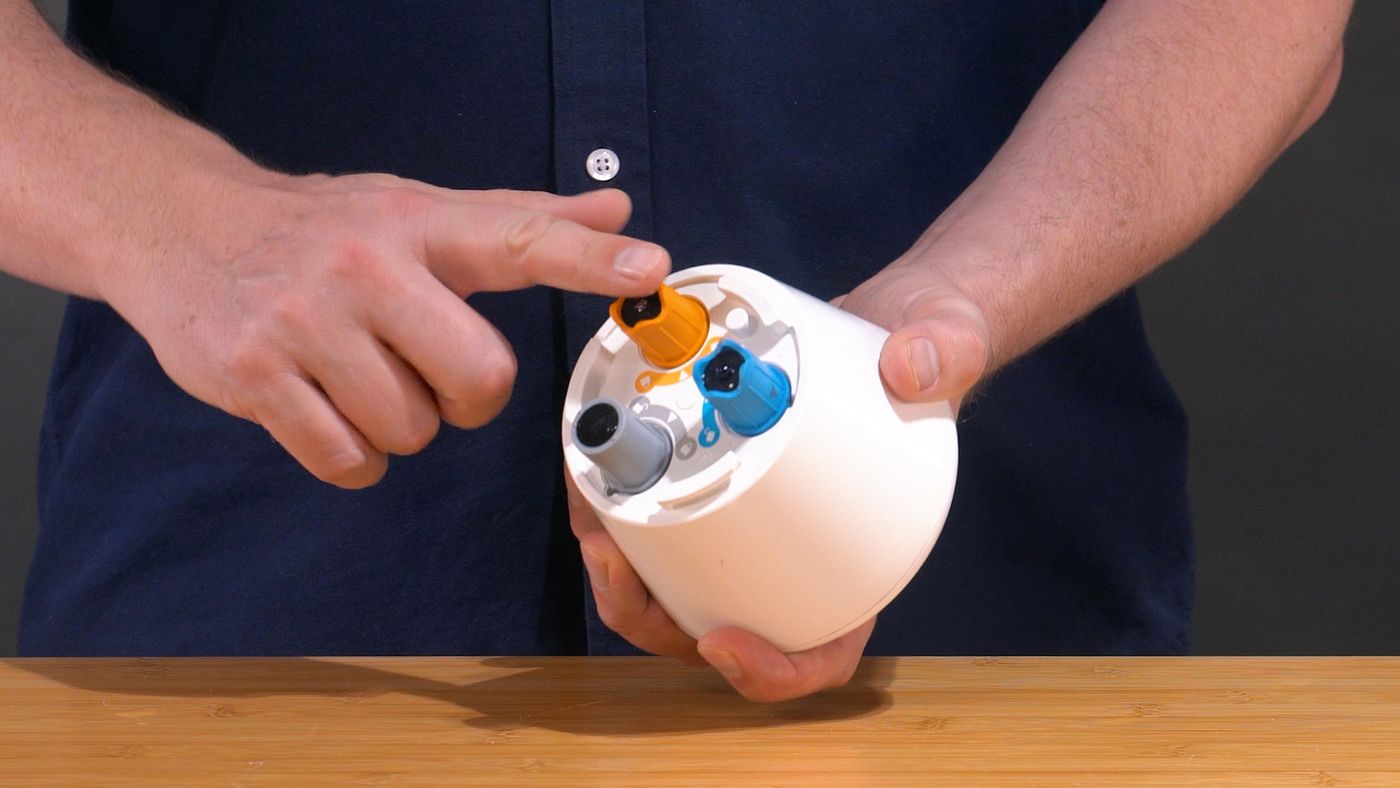
Remember what we talked about earlier with ORP? It is the real-time measurement of your water's actual killing power.
If your CYA spikes, or if your pH drifts up too high, your ORP is going to drop heavily, even if a basic test strip shows that you still have chlorine in the water. The ICO catches that slide the second it happens. In my own testing, I have watched the Ondilo app flag a rapidly falling ORP after a heavy rainstorm hours before a standard test strip showed any noticeable change in the free chlorine color pad.
Being alerted to that drop in real-time is the difference between going out and pouring a few cups of liquid chlorine into the pool on a Tuesday night, versus having to fight a massive, expensive green algae bloom on a Friday morning. It is the ultimate canary in the coal mine for your backyard.
Instead of wandering out to the pool every morning wondering if the water is safe, you just wake up, drink your coffee, glance at your phone, and know exactly where your chemistry stands.
The Final Verdict
So, what is my final verdict on the best way to test your pool’s water?
At the end of the day, all of these manual testing methods technically work. If you are on a strict budget, you can absolutely rely on basic test strips or a Taylor kit to keep your pool perfectly safe and balanced. People have been doing it for decades.
But if you want the absolute best, most hands-off, and most precise system possible, you really only need to invest in two things.
First, get a smart monitor like the Ondilo ICO. Let it float in the water to watch your ORP and pH twenty-four hours a day, seven days a week. Let it do the heavy lifting and send the alerts to your phone. You don’t have to get the ICO though – that is just what I use. I cover all the top pool water monitors I’ve tested at ThePoolNerd.com/best-pool-water-monitors
Second, keep a liquid drop kit like the Taylor K-2006 in the garage. Pull it out once a month to check your baseline calcium and CYA levels, or to manually verify your chemistry if the weather has been totally out of control.
That two-tool combination is all you really need.
After testing, enter the full set of readings in the pool chemistry calculator. If calcium hardness is the number you need to correct, use the dedicated pool calcium hardness calculator.
When you have access to real-time, accurate data, everything changes. You completely stop guessing. You stop over-dosing your pool with harsh chemicals. And I promise you, you will be amazed at how little money you actually need to spend in the pool store aisle once you stop treating your water blind.
Every single tester I covered in this video is linked over on my deals page at ThePoolNerd.com/deals, where I constantly update and post the absolute best prices I can find on the gear that we use in our pool.
If this video cleared up the confusion around pool water testing for you, hit that subscribe button. Drop your pool's current ORP reading or any testing questions you have down in the comments below, and I will see you in the next one.
Until then, keep nerding out — and enjoy that pool.

Comments
Loading comments…