
 Justin D.
If muriatic acid pulls your pH down and the number is back where it started a few days later, the acid worked. Your pool is still doing whatever pushed the pH up in the first place.
I check five causes in this order: aeration, high total alkalinity, a saltwater chlorine generator, curing plaster, and the chemicals already going into the water. The pattern matters. A spillover that runs all day creates a different problem from a new gunite surface, even when both pools read 8.0.
Test pH and total alkalinity together, note how quickly the pH rebounds, and then match that trend to the causes below. Use the pool pH calculator for the correction itself; use this guide to stop making the same correction every week. If your number keeps moving in the opposite direction, see why pool pH keeps falling.
What Does High pH Actually Mean?
Quick refresher.
pH tells you how acidic or basic your water is on a scale from 0 to 14.
For my pools, I generally like to run:
Vinyl and fiberglass around 7.0 to 7.4.
And gunite or plaster around 7.2 to 7.4.
I run plaster a little higher because you don’t want the water becoming aggressive toward the surface.
But pH isn’t just about swimmer comfort or whether the water feels nice.
It has a huge impact on how well your chlorine works.
As pH rises, less of your chlorine is in its strongest sanitizing form.
That means you can have the same free-chlorine reading on your test kit, but noticeably less sanitizing performance in the water.
This is one reason I like monitoring ORP along with chlorine.
Free chlorine tells you how much sanitizer is present.
ORP tells you how much sanitizing power the water actually has.
And when pH starts climbing, ORP tends to move in the opposite direction.
So if your pool keeps drifting toward 7.8 or 8.0, fixing the pH isn’t just about hitting a prettier number on a test kit. You’re helping the chlorine you already paid for work more efficiently.
What You Need
What You Need
Test accurately, watch the trend, and make small acid corrections while you fix the cause.

Taylor K-2006 Test Kit
What it is: The FAS-DPD drop kit the pros carry—free and combined chlorine, pH, alkalinity, calcium hardness, and CYA, all from drops instead of guess-strips.
Why you need it: Use it every few weeks to confirm your smart monitor, and a couple times a season to check CYA—the one number the float doesn't track. Drops over strips, every time.
Pick your version: Taylor K-2006 (chlorine pools) or the K-2006 Salt (salt pools)—same kit, the salt version adds a salinity test.

Ondilo ICO Pool Water Monitor
What it is: A floating smart monitor that samples pH, ORP (sanitizer effectiveness), and temperature on a schedule and sends trends to your phone.
Why you need it: You still need a real drop kit for parameters the ICO doesn’t replace (like TA and CYA), but hourly ORP/pH catches drift and dosing mistakes long before weekly strip checks do.

Champion Muriatic Acid
What it is: Dilute hydrochloric acid—standard for lowering pH and, with the right method, total alkalinity.
Why you need it: High pH destroys chlorine efficiency. Always follow the label; never mix acid with chlorine.

SpectraLight UV
What it is: Inline UV-C on the return line—knocks down pathogens and helps with chloramines as water passes the lamp.
Why you need it: Cleaner water with less organic load means you reach for shock less often while staying comfortable. Read the full SpectraLight review for sizing and install notes.
You don’t need much for this.
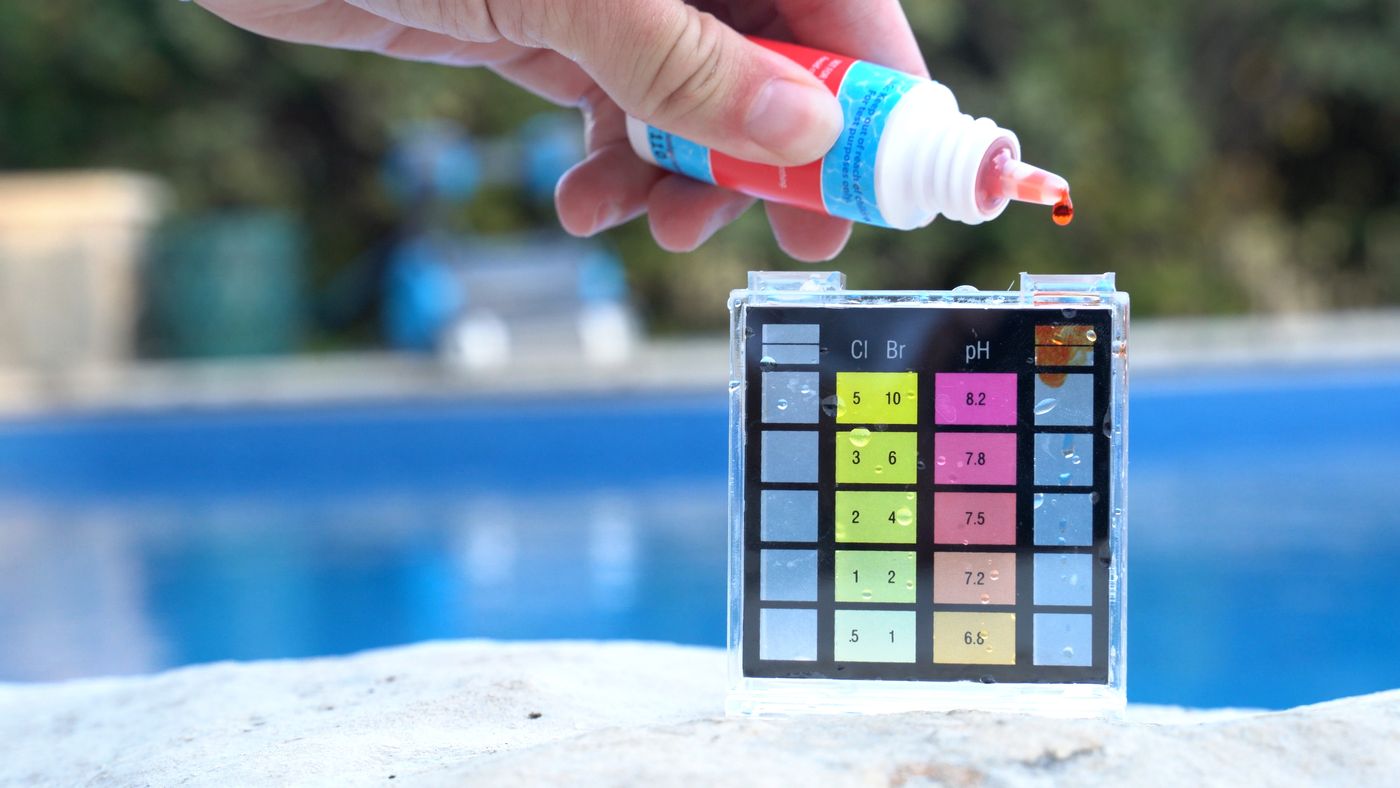
You need an accurate way to test pH and total alkalinity. A quality test kit like the Taylor K-2006 works great. My pool-water testing guide explains where drop kits, strips, and continuous monitors each fit.
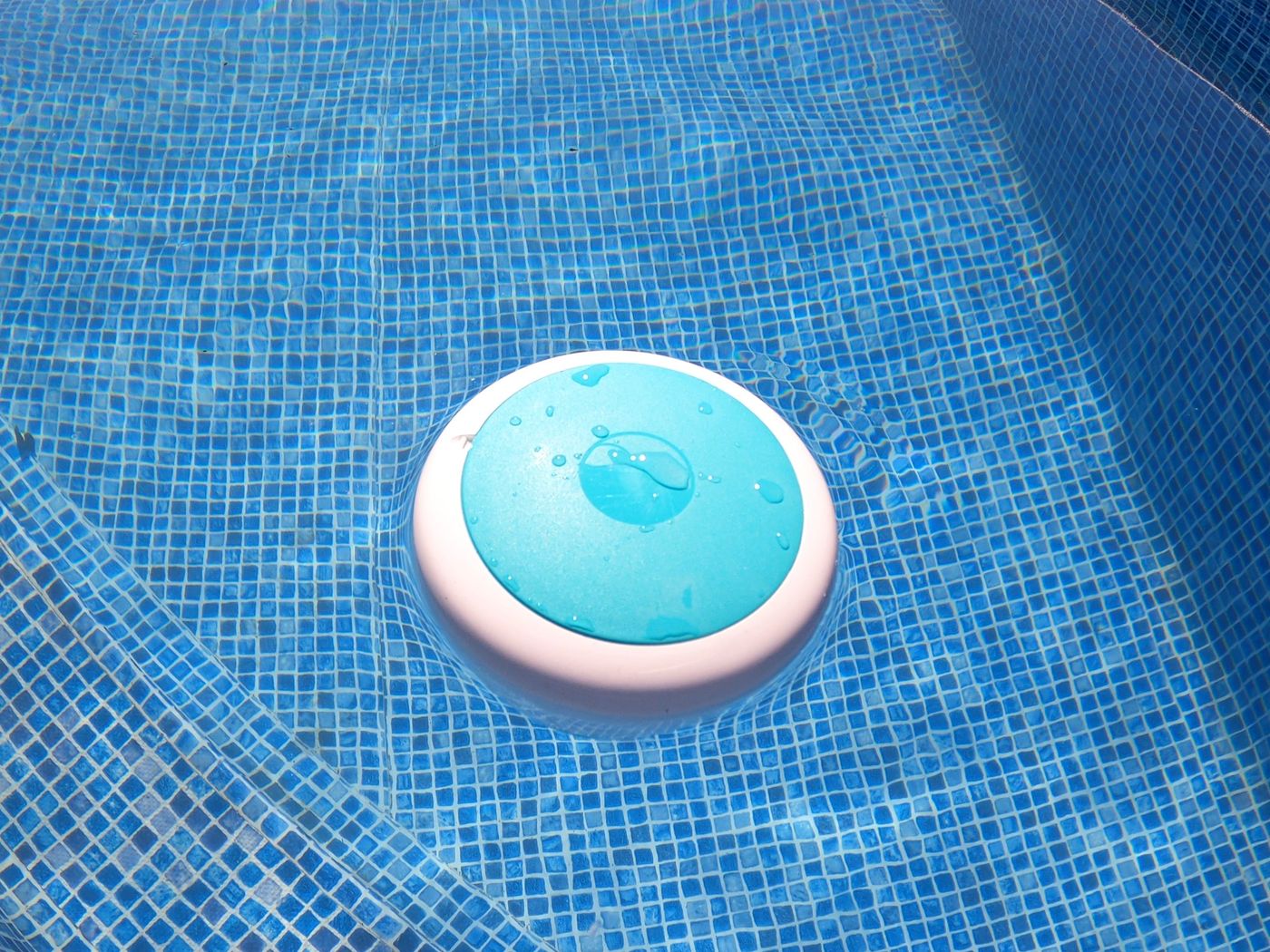
But if your pH keeps rising and you’re trying to figure out why, I really like using a pool water monitor because it shows you the trend throughout the day. You can actually see whether something like a waterfall, salt cell, or fresh fill water is changing the pH.
My favorite is the Ondilo ICO, but there are several options worth looking at.
I tested the top ones at ThePoolNerd.com/best-pool-water-monitors, so head there if you want the full list and my reviews.
Cause #1: Aeration
This is probably the most overlooked cause of rising pH.
Your pool water contains dissolved carbon dioxide.
Some of that CO2 forms carbonic acid, which helps hold the pH down.
When you aggressively move the surface of the water, you drive that carbon dioxide out into the air.
As CO2 leaves the water, pH rises.
It’s basically the same idea as opening a soda. As the carbon dioxide leaves, the chemistry changes.
Now think about everything on your pool that moves or splashes water.
Waterfalls.
Deck jets.
Bubblers.
A spillover spa.
Return jets pointed upward.
Anything constantly disturbing the surface is creating aeration.
And that can explain why you add acid on Monday, get the pH exactly where you want it, and by Friday you’re right back where you started.
The acid worked.
Your pool just continued doing the thing that caused the pH to rise in the first place.
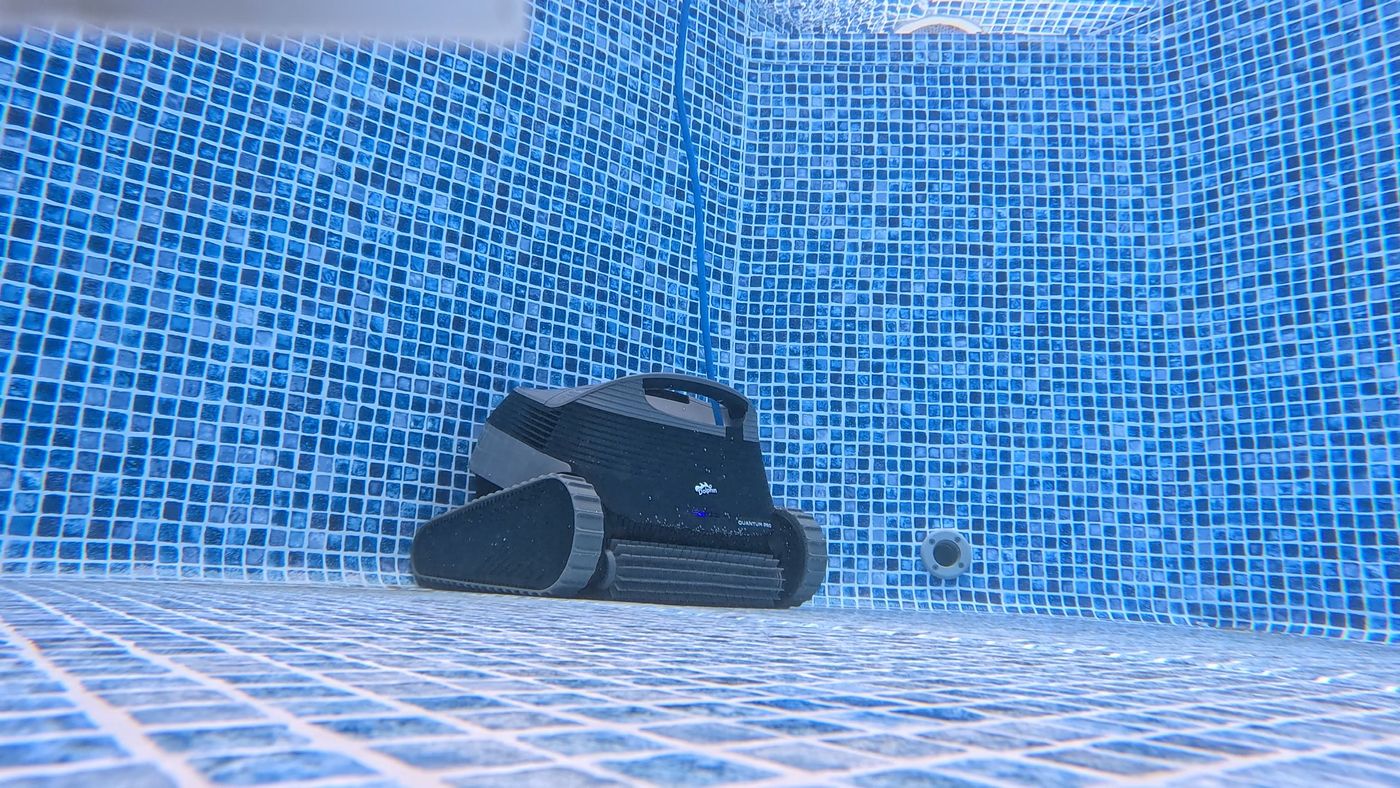
Take a look at your return jets.
If they’re pointed toward the surface and constantly creating ripples, angle them slightly downward.
And if you have waterfalls or a spa spillover running all day, put them on a schedule instead.
You don’t necessarily have to stop using the features you paid for.
You just probably don’t need them aerating the pool twelve hours a day.
Cause #2: High Total Alkalinity
This one goes hand in hand with aeration.
People often treat pH and total alkalinity as completely separate numbers, but they’re closely related.
The easiest way I explain it is this:
pH tells you where the water is right now.
Total alkalinity tells you how strongly the water resists changes in pH — and how much carbonate chemistry is sitting behind it.
A higher alkalinity level gives the water more buffering, which can be useful.
But if your alkalinity is too high and your pool is constantly being aerated, it can also help feed that upward pH drift.
So if you have a spillover spa running all day and your total alkalinity is sitting at 130 or 140, you may find yourself adding acid constantly.
For a liquid-chlorine pool that keeps struggling with rising pH, I like total alkalinity closer to 60 to 80 ppm.
If your pool is stable at a slightly higher number, that’s fine.
The point isn’t to chase one magical TA number.
The point is that if your pH is climbing constantly, high alkalinity is one of the first things I’d investigate.
And lowering TA is pretty straightforward.
Muriatic acid lowers both pH and total alkalinity.
So you bring the pH down with acid, then allow the pH to rise again through aeration without raising the TA.
Repeat that process until the alkalinity settles where you want it.
Interestingly, this is one of the few situations where I’ll actually tell you to intentionally aerate the pool.
You’re using the aeration to bring pH back up while the alkalinity stays lower.
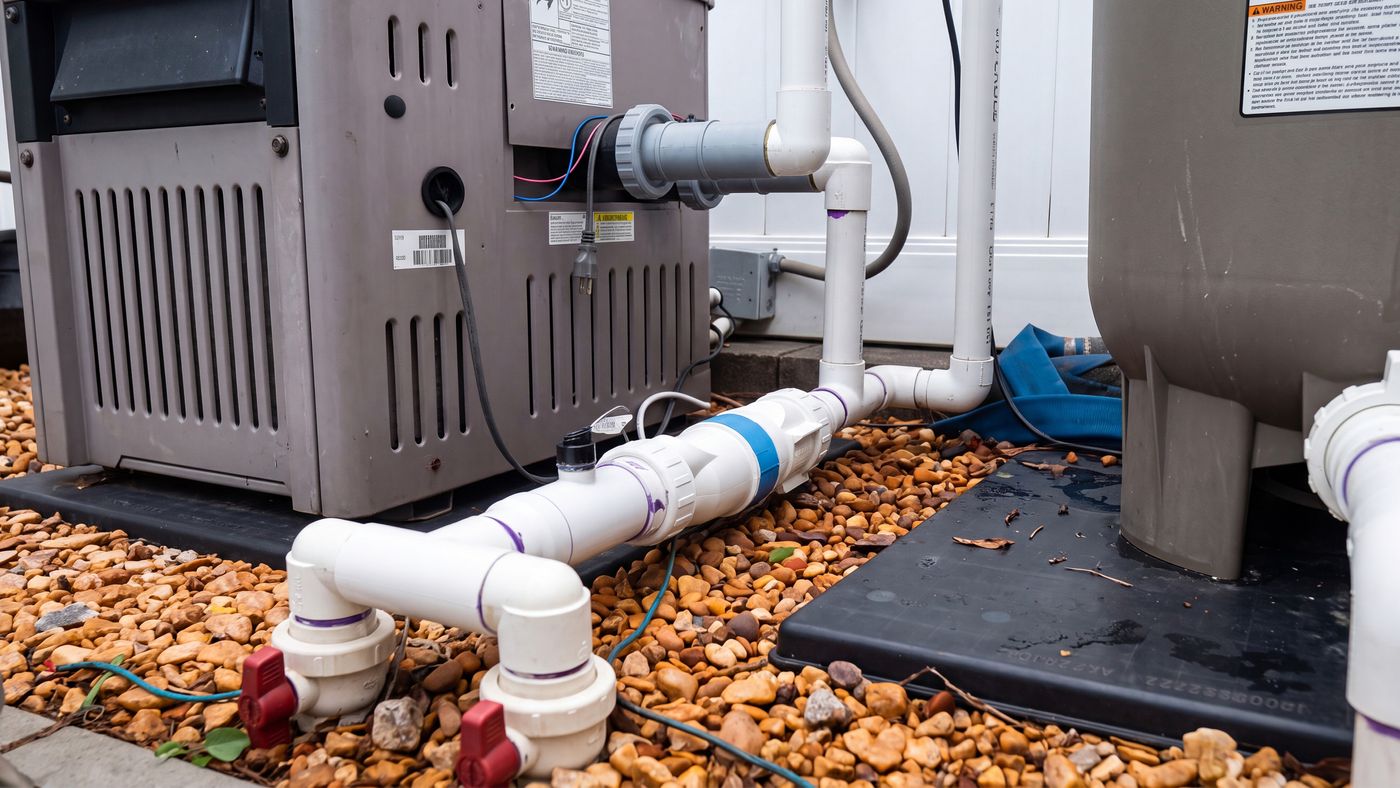
Cause #3: Saltwater Chlorine Generators
If you own a saltwater pool and your pH is always climbing, that isn’t particularly unusual. My saltwater pool maintenance guide covers the rest of the chemistry and cell-care routine.
Salt systems tend to create upward pH pressure.
You have activity inside the salt cell, and you also have tiny hydrogen bubbles being created while the system is producing chlorine.
Those bubbles create additional aeration in the plumbing.
So even if you don’t have a waterfall or a bubbler, your salt system itself can contribute to the same CO2 loss we just talked about.
That’s why salt pool owners often find themselves adding muriatic acid more frequently.
And high pH creates another problem for the salt system itself: calcium scale.
Once pH gets too high, calcium becomes more likely to come out of solution and build up on surfaces — including the plates inside the salt cell.
Then the cell becomes less efficient, output drops, and eventually you’re cleaning or replacing an expensive piece of equipment.
If you’re keeping a salt system, I’d pay close attention to both pH and alkalinity.
I’d generally run TA toward the lower end — somewhere around 60 to 70 ppm — and check pH regularly instead of letting it get away from you.
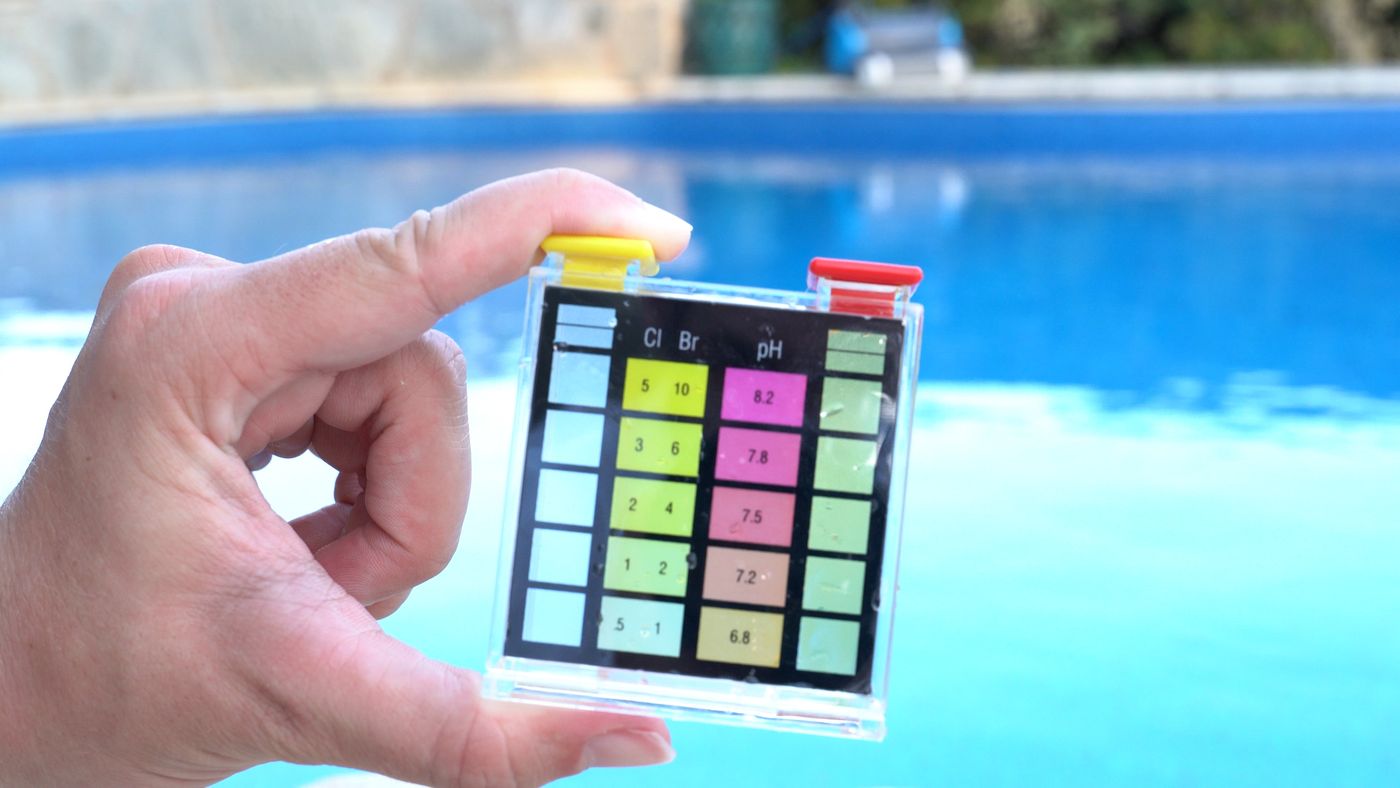
Small corrections are much easier than waiting until you’re sitting at 8.2 with scale forming everywhere.
Cause #4: New Plaster or Gunite
If your pool was recently built or resurfaced, high pH can simply be part of the curing process.
Fresh plaster releases calcium hydroxide as it cures.
And that can push pH upward pretty aggressively.
The strongest rise is usually early in the startup period, especially during those first several weeks, but the pool can continue drifting upward for quite a while as the surface finishes curing.
This is one of those situations where there may not be a clever fix.
You manage it.
Test frequently.
Use small acid doses.
And keep the water where your builder or startup procedure recommends.
For fresh plaster, I generally don’t want to get overly aggressive trying to force the pH down.
Running the water too acidic can create its own problems and damage the surface you just paid for.
So if the pool is brand new and you’re wondering why the pH rises every time you turn around, the answer may simply be that the plaster is doing what new plaster does.
As the surface cures, the acid demand should gradually settle down.
Cause #5: The Chemicals You’re Adding
Sometimes the answer is much simpler.
You may be raising the pH yourself.
That’s why I always want to know exactly what went into the pool before I start troubleshooting.
Liquid chlorine has a high pH when you pour it in, so you can see a temporary increase after dosing.
But as that chlorine is consumed, much of that effect comes back down again.
That’s why I don’t recommend adding chlorine and immediately panicking over the next pH reading.
Give it time to circulate and settle.
Calcium hypochlorite shock can also push pH upward, while adding calcium at the same time.
Soda ash is specifically designed to raise pH, so obviously that can move the number quickly.
And baking soda primarily raises total alkalinity, but that can also contribute to future pH drift if you keep pushing TA higher and higher.
This is why I prefer making one change at a time.
Add one chemical.
Let it circulate.
Retest.
If you dump three different products into the pool in one afternoon, figuring out which one caused the next problem becomes almost impossible.
Why High pH Matters
So why do I care if the pool is sitting at 7.8 instead of 7.2?
The biggest reason is sanitizer performance.
As pH rises, chlorine becomes less effective.
So now you may find yourself adding more chlorine to compensate for water that isn’t using it efficiently.
Then there’s scale.
Higher pH encourages calcium carbonate to come out of solution.
That’s where you start seeing the white crust around the waterline, rough surfaces, scale inside heaters, and buildup on salt cells.
It can also contribute to cloudy water because some of that mineral content is no longer staying dissolved.
And over time, those deposits can become a lot more expensive than a bottle of acid.
How to Lower High pH
Actually lowering pH is the easy part.
Here’s how I’d do it.
Step 1: Test pH and Total Alkalinity
Don’t look at pH by itself.
I want to know alkalinity too because that helps explain how much the water is resisting the change and whether high TA may be part of the recurring problem.
Step 2: Add Muriatic Acid
Use the amount appropriate for your pool size and current chemistry.
As a rough starting point, a small correction of around 0.2 pH may take somewhere around 6 to 8 ounces per 10,000 gallons, but your total alkalinity and starting pH affect the actual dose.
Use the pool pH calculator for a volume-based estimate. I’d rather undershoot slightly, circulate, and add a little more than overshoot and have to fix the opposite problem.
Step 3: Add the Acid Safely
Run the pump.
Add the acid slowly according to the product instructions and keep it away from metal fixtures and other chemicals.
And remember the easiest rule in pool chemistry:
A&W — Acid into Water.
If you’re diluting acid, add acid to water.
Never water into concentrated acid.
Step 4: Circulate and Retest
Give the pool time to mix.
I don’t make a second correction five minutes later.
Let it circulate, then test again after the chemistry has had time to settle.
Step 5: Then Judge the Chlorine
Get the pH where you want it before deciding the pool needs a bunch more chlorine.
If the pH was the reason your sanitizing performance was poor, you may find the chlorine you already have works much better once the water is corrected.
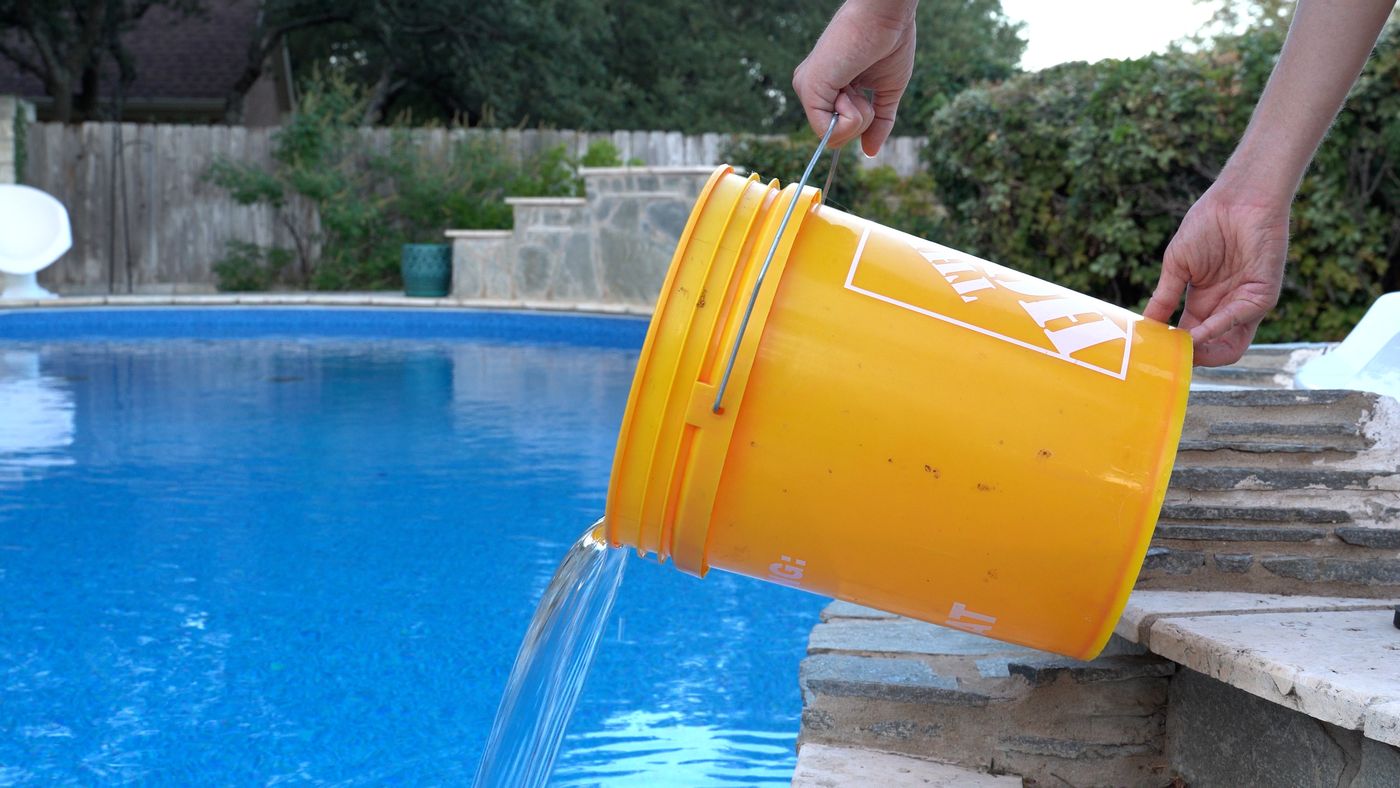
Muriatic acid is not something to get casual with.
Wear gloves and eye protection, stay out of the fumes, and follow the label.
Most importantly, never mix acid and chlorine.
Not in a bucket.
Not in a feeder.
Not in storage.
Mixing those chemicals can release dangerous chlorine gas.
If I’m adjusting both on the same day, I separate the additions and let the pool circulate between them.
If Your pH Keeps Coming Back Up
This is the part that actually solves the problem.
If you lower the pH and it’s right back up a few days later, go through this list.
Step 1: Check Your Total Alkalinity
If your TA is over 100 and you have water features or a salt system, I’d start there.
Work it down gradually toward 60 to 80 ppm and see whether the pH rise slows.
Step 2: Look for Aeration
Turn off anything that doesn’t need to run continuously.
Point the returns down.
Reduce the hours on waterfalls and spillovers.
Then watch the pH over the next week.
Step 3: If You Have Salt, Expect Some Drift
You may not eliminate pH rise completely with a salt system.
The goal is to slow it enough that you’re making small corrections rather than constantly fighting the water.
Step 4: If the Pool Is New, Be Patient
If you have fresh plaster, the surface itself may be causing the rise.
Manage it rather than trying to eliminate it overnight.
Step 5: Check Your Fill Water
If you’re constantly topping off the pool and your tap water has a high pH or high alkalinity, you may be adding part of the problem every time you refill.
And finally, watch the trend.
Don’t obsess over one reading.
If the pool rises 0.1 in a week, that’s very different from climbing 0.1 every day.
That rate of change tells you much more than a single test ever will.
This is one reason I like continuous monitoring.
I use an Ondilo ICO in my pool because it tracks pH and ORP throughout the day and gives me the trend on my phone.
So instead of wondering whether something helped, I can actually see it.
If I reduce the hours on a spillover spa and the pH rise starts flattening over the next several days, I know the change worked.
For the monitor setup and calibration details, read my Ondilo ICO review.
My Final Verdict
What’s my final verdict on high pH in your pool? It is one of the core building blocks of maintaining your pool.
If you’re adding muriatic acid every week, I wouldn’t automatically assume you just own a pool that “likes acid.”
High pH is usually telling you something.
Maybe you have too much aeration.
Maybe your alkalinity is too high.
Maybe the salt cell is contributing to the drift.
Maybe the plaster is still curing.
Or maybe something you’re adding to the pool is moving the chemistry more than you realized.
The acid fixes the number.
Finding the cause fixes the pool.
So if your pH keeps coming back, start with three things:
Check your total alkalinity.
Cut unnecessary aeration.
Then watch how quickly the pH rises.
Do that, and you’ll usually get a much clearer picture of what’s actually happening.
And once the pH settles down, your chlorine works better, your ORP improves, and you reduce the risk of scale building up in the equipment you paid a lot of money for.
When testing shows that acid is actually needed, use the pool acid calculator to calculate the dose from your pool volume, pH, alkalinity, and product strength. Afterward, check the combined balance with the pool LSI calculator.
If this helped, subscribe to The Pool Nerd for more straightforward pool-maintenance videos.
For the Taylor K-2006, Ondilo ICO, SpectraLight UV, and the other pool equipment I use and recommend, head over to ThePoolNerd.com/deals.
And if you want to keep going, read Your Pool Is Clear—But Is It Sanitized?, where I show how pH changes sanitizing power even when the chlorine reading stays the same.
Until next time, keep nerding out and enjoy that pool.


Comments
Loading comments…