
 Justin D.
How Much Chlorine Is Enough?
How much chlorine is enough? How much is too much? And is your pool's water safe to swim in?
Hey there, I'm Justin, your resident pool aficionado. Today we're tackling the question that lands in my inbox more than any other: how much chlorine should be in your pool?
The quick answer: keep free chlorine between 1 and 3 ppm, with your pH between 7.0 and 7.2 for vinyl and fiberglass pools, or 7.2 to 7.4 for gunite. That's the textbook number, and it's a fine place to start.
But here's the thing — that ppm reading only tells you how much chlorine is floating around in your water. It doesn't tell you whether that chlorine is working. The better answer, the one Olympic training facilities and commercial aquatic centers run on, is a target most backyard pool owners have never heard of: ORP between 650 and 700 millivolts, ideally above 700. When your ORP sits in that zone, your water has real sanitizing power — no matter what the test strip says.
By the end of this guide you'll know the standard chlorine targets, why those numbers can mislead you, what ORP is and why it matters so much, and how a pool water monitor turns all of this from guesswork into a live number on your phone.
Raising Free Chlorine: What You Need Checklist
Test first, fix pH if it's high, then raise free chlorine with liquid chlorine (or cal-hypo)—plus the gear that keeps your chlorine demand low.

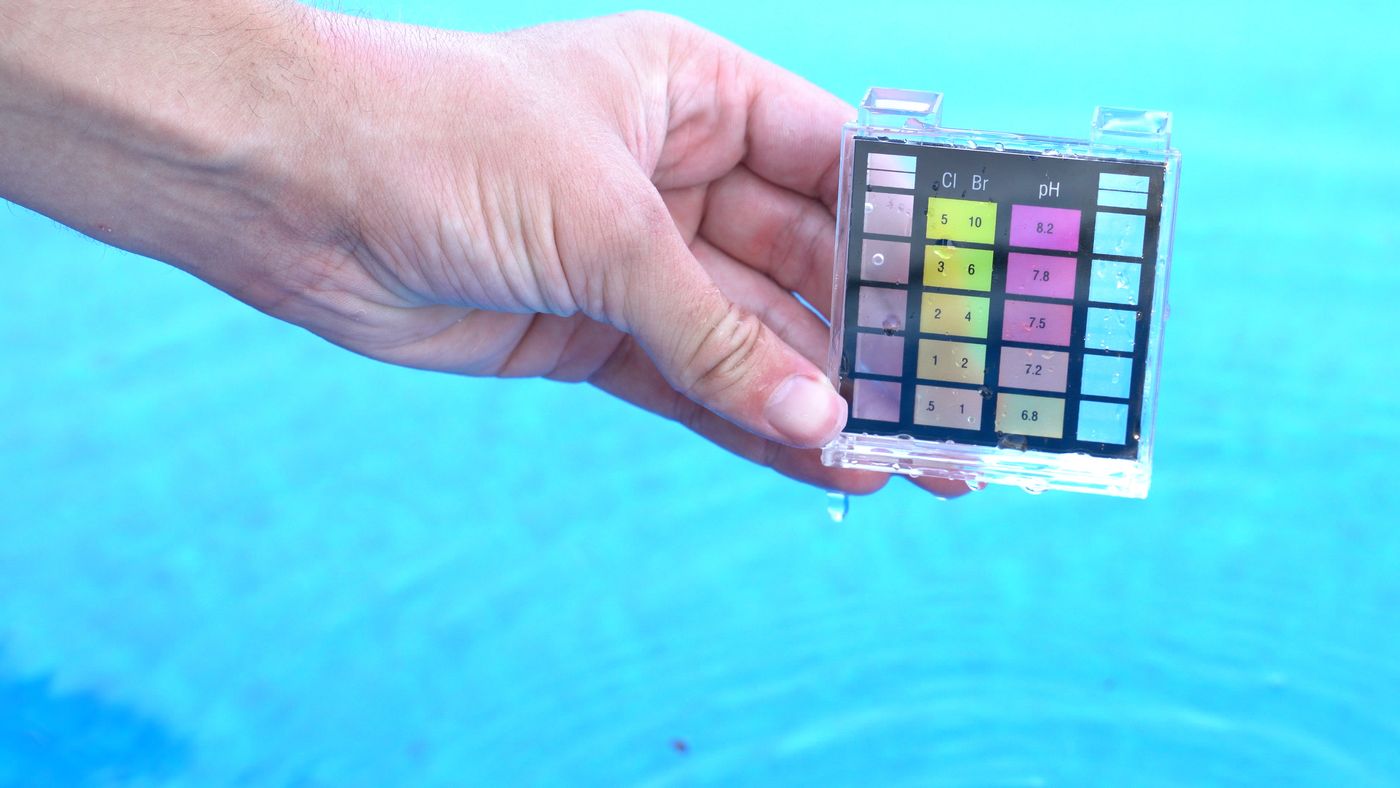
Taylor K-2005 Test Kit
What it is: A professional drop (titration) kit for chlorine, pH, alkalinity, calcium hardness, and cyanuric acid.
Why you need it: You can’t SLAM or balance blind—especially CYA, which handcuffs chlorine. This kit gives numbers you can trust, not strip guesswork.

Ondilo ICO Pool Water Monitor
What it is: A floating smart monitor that samples pH, ORP (sanitizer effectiveness), and temperature on a schedule and sends trends to your phone.
Why you need it: You still need a real drop kit for parameters the ICO doesn’t replace (like TA and CYA), but hourly ORP/pH catches drift and dosing mistakes long before weekly strip checks do.
Read the full ICO review — Shop ICO direct (no Amazon listing for the hardware we run).

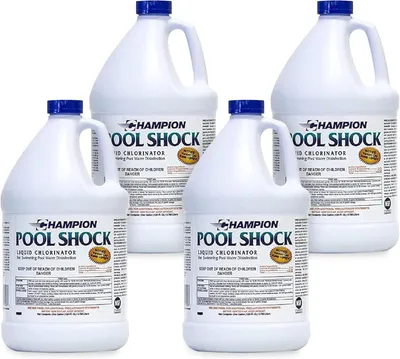
Champion Pool Shock (4 Pack)
What it is: A case of liquid pool chlorine (sodium hypochlorite)—not cal-hypo granules. Confirm strength on the listing and jug label (often around 10–12.5%).
Why you need it: Same upside as other liquid shock: no CYA from the product, easy to pour with the pump running—useful to keep stocked for openings, algae pushes, storms, or parties.
How to use: Treat it like any liquid shock (pour with circulation; big doses still work best at dusk). Store cool and shaded; opened jugs lose strength over time—plan to use them within a few weeks.

In The Swim Cal-Hypo Pool Shock
What it is: Calcium hypochlorite granular shock—high chlorine, adds calcium, no CYA.
Why you need it: Strong oxidizer for recovery and breakpoint; pre-dissolve; watch calcium if hardness is already high.

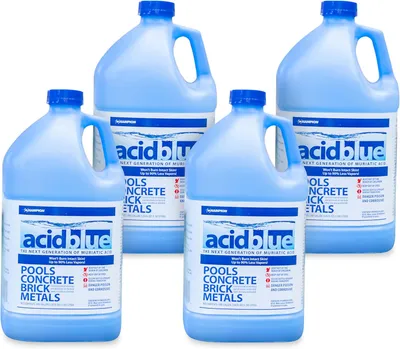
Champion Muriatic Acid
What it is: Dilute hydrochloric acid—standard for lowering pH and, with the right method, total alkalinity.
Why you need it: High pH destroys chlorine efficiency. Always follow the label; never mix acid with chlorine.

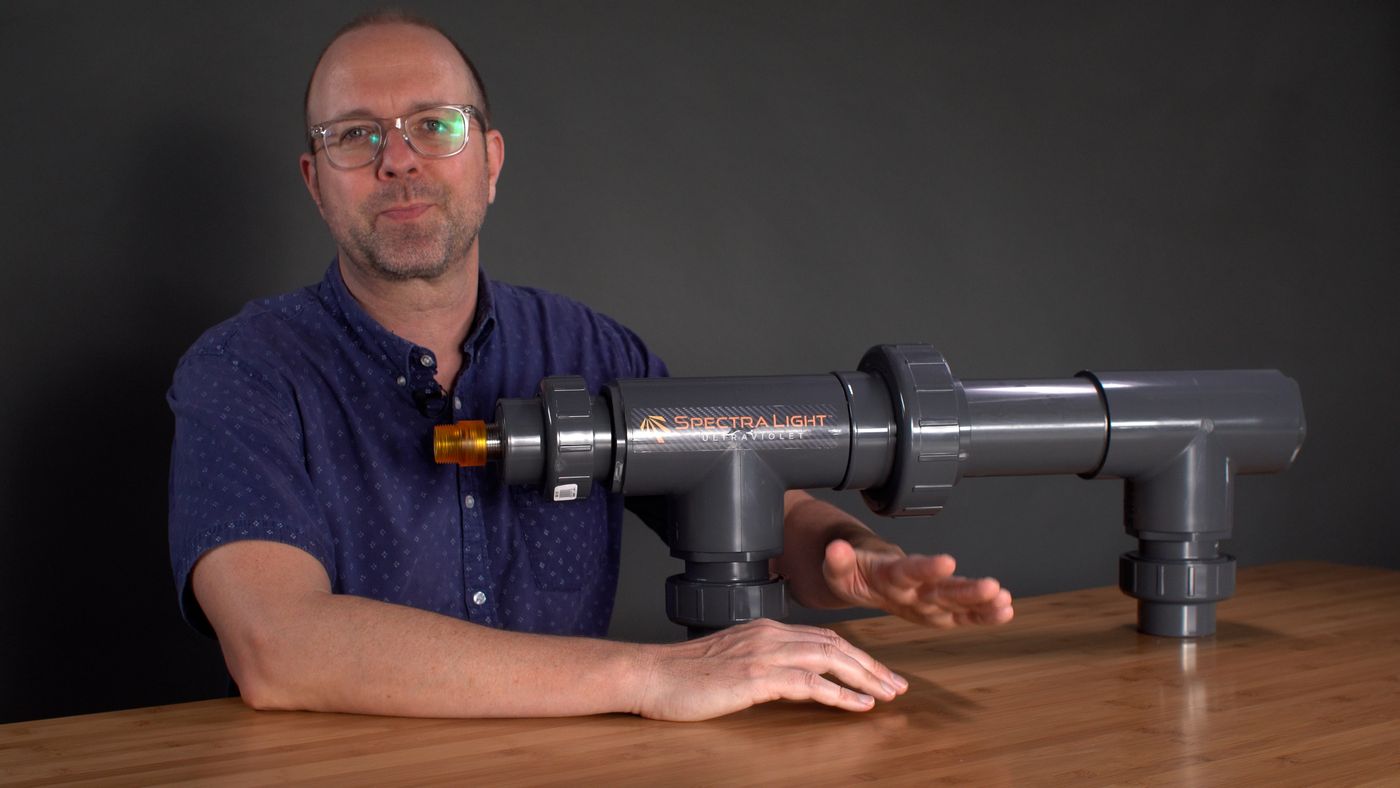
SpectraLight UV
What it is: Inline UV-C on the return line—knocks down pathogens and helps with chloramines as water passes the lamp.
Why you need it: Cleaner water with less organic load means you reach for shock less often while staying comfortable. Read the full SpectraLight review for sizing and install notes.

Dolphin Premier
What it is: A corded robotic cleaner with dual scrubbing brushes and strong filtration—built to pull debris and biofilm off surfaces so your sanitizer is not fighting mulch and leaves first.
Why you need it: Shock oxidizes what is in the water—leaves, pollen, and biofilm burn sanitizer too. A strong robot pulls debris off surfaces and into the filter so your chlorine works on algae and organics, not mulch. See the Dolphin Premier review for why it is our test-pool scrubber of choice.
The Standard Chlorine Levels (Your Starting Point)
| Parameter | Pool Nerd Target |
|---|---|
| Free Chlorine | 1–3 ppm |
| Combined Chlorine | Below 0.5 ppm |
| pH | 7.0–7.2 (vinyl/fiberglass) · 7.2–7.4 (gunite) |
| Cyanuric Acid (CYA) | 30–50 ppm |
| ORP (sanitizing power) | 650–700 mV — ideally above 700 |
Quick vocabulary so we're speaking the same language:
- Free chlorine is the available, working sanitizer — the part killing bacteria and algae.
- Combined chlorine (chloramines) is chlorine that has already bound to sweat, oils, and other contaminants. It's mostly spent, it smells terrible, and it's what causes red eyes and itchy skin. It's also what causes that classic "chlorine smell" you may know.
- Total chlorine is the two added together.
When people ask "how much chlorine," they typically mean free chlorine. Keep it between 1 and 3 ppm as your baseline, and if combined chlorine climbs above 0.5 ppm, it's time to shock. I cover that whole process in my guide on how to shock your pool.
So we're done, right? Aim for 1 to 3 ppm and go swim?
Not quite yet. There's more you need to know before you dive in.
Why the PPM Number Can Lie to You
If you think a 3 ppm reading on a test strip means your pool is safe, you're wrong. I've tested plenty of pools sitting at 3, 4, even 5 ppm of chlorine with water that had almost no killing power left. Here's the kicker: chlorine has two natural enemies living in your own pool water, and either one can shut your sanitizer down while the test strip keeps flashing a passing grade.
Enemy #1: High pH
Chlorine's active, germ-killing form is hypochlorous acid, and how much of your chlorine converts into that form depends almost entirely on pH. The relationship is brutal:
| pH Level | Active Chlorine |
|---|---|
| 7.2 | ~65% active |
| 7.5 | ~50% — half your killing power gone |
| 8.0 | ~20% active |
Same ppm reading. Wildly different results. That's why I tell people to hold pH at 7.0 to 7.2 (7.2 to 7.4 for gunite) — it keeps your chlorine near maximum strength, which means you need less of it. Here's the full breakdown in my ideal pool pH guide, and if yours is riding high, my guide on how to lower pool pH walks you through fixing it.
Enemy #2: High CYA
Cyanuric acid — stabilizer — protects chlorine from sunlight, and a little is a good thing: 30 to 50 ppm is the sweet spot. But CYA binds to chlorine, and as it climbs past that range, more and more of your "free" chlorine gets locked up and sidelined. At high enough levels, your water can test fine and still grow algae. That's the mechanism behind chlorine lock.
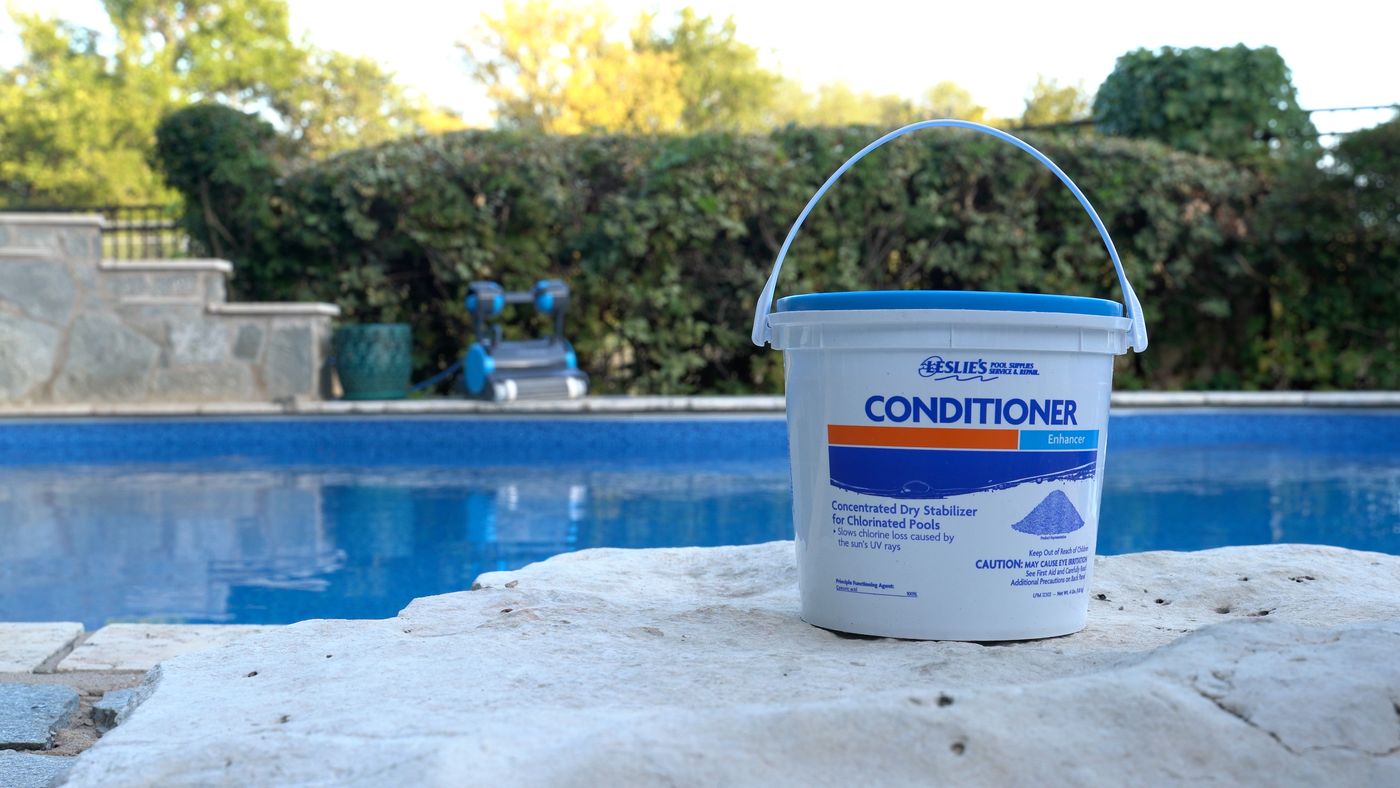
Trichlor Tablets
Those convenient pucks are about half stabilizer by weight. Every tablet you float pushes CYA higher, and CYA doesn't evaporate — the only practical way to bring it down is draining and refilling water. Rely on tabs all season and you're slowly choking out your own chlorine. Liquid chlorine adds zero CYA — that's the biggest reason it's what I use and recommend. Full breakdown in my guide on how many chlorine tablets to use.
So pH and CYA are the kryptonite of chlorine. The wrong level of either one can make a "perfect" chlorine reading meaningless. Which raises the obvious question: if ppm can't tell you whether your water is safe, what can?
What Is ORP and Why Is It So Important?
ORP stands for Oxidation-Reduction Potential. It sounds like a chemistry final, but the concept is simple: ORP measures your water's sanitizing power — its real-world ability to oxidize and destroy bacteria, algae, and biofilm. Think of it as the BioPower of your water. It's measured in millivolts (mV) with an electronic sensor.
Here's what makes ORP different from a chlorine test: a chlorine test measures an ingredient. ORP measures the outcome. It doesn't care how much chlorine is floating around — it responds to how hard that chlorine is working right now, with your current pH, your current CYA, and your current contaminant load all factored in automatically.
That's why ORP is the gold standard in commercial pools, aquatic centers, and Olympic facilities worldwide. The professionals responsible for water quality in front of thousands of swimmers don't run their operations on test strips — they run automated controllers that dose chlorine based on ORP. If it's good enough for an Olympic venue, it's good enough for your backyard.
Here's the breakdown I use:
| ORP Reading | Status | What To Do |
|---|---|---|
| Above 700 mV | Excellent sanitization | Your pool is in great shape. |
| 650–700 mV | Acceptable range | Keep an eye on it. |
| Under 650 mV | Time to act | Check pH first, then add chlorine or shock. |
| Under 600 mV | Concerning territory | Shock heavily and immediately. |
In my experience, ORP is the one number to rule them all. If your ORP is 650 to 700 or better, your water is doing its job — whether your chlorine reads 1 ppm or 3. If your ORP is low, no ppm reading should make you feel safe.
Why ORP Is One of the Most Important Numbers in Pool Care
Let me put this as plainly as I can, because in my opinion this is the single most important idea in this entire guide.
Every problem your pool can develop — cloudy water, algae, that harsh chemical smell, stinging eyes — traces back to one root cause: the water's sanitizing power fell below what the contaminant load demanded. ORP is the only measurement you can take at home that reads that sanitizing power directly. Everything else is a proxy.
It also solves the opposite problem, the one almost nobody talks about: over-chlorination. In my experience, most residential pool owners over-chlorinate — often by 200 to 300 percent — because they're dosing blind. They add chlorine "just to be safe," the pool store cheers them on, and hundreds of dollars a year get poured into water that never needed it. Meanwhile the swimmers deal with red eyes, bleached suits, and dry skin.
The pool store's business model depends on you guessing. Guessing sells test strips, specialty chemicals, weekly water-analysis visits, and shock you didn't need. A pool managed by ORP buys exactly the chlorine it requires and not an ounce more. In my opinion, that's a big reason the industry doesn't talk about digital monitoring: an informed pool owner is a cheaper customer.
When you manage by ORP:
- You stop paying for chlorine your pool doesn't need
- You catch falling water quality a day or two before the pool turns
- You know the water is safe before your kids jump in — not after a strip test "looks close enough"
How To Test Your Chlorine (From Worst to Best)
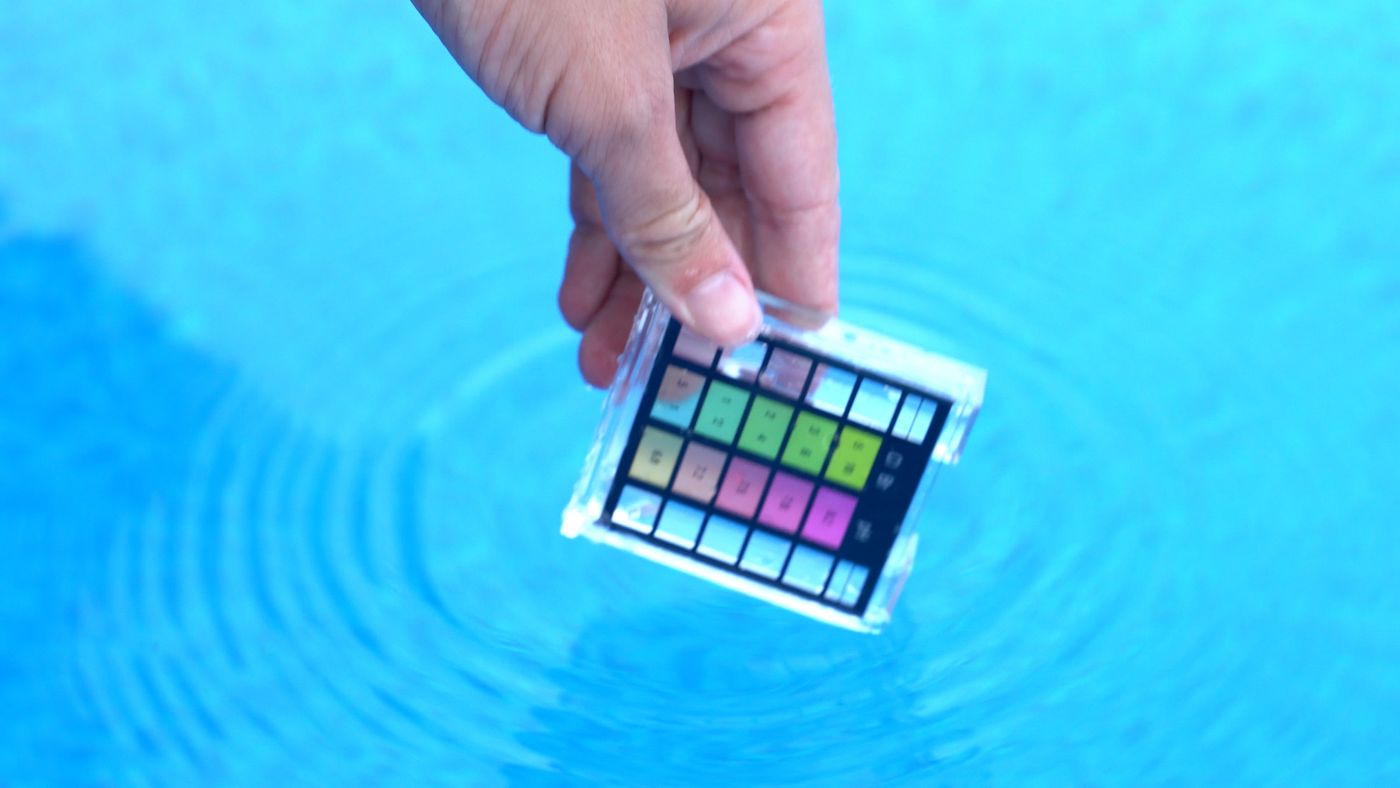
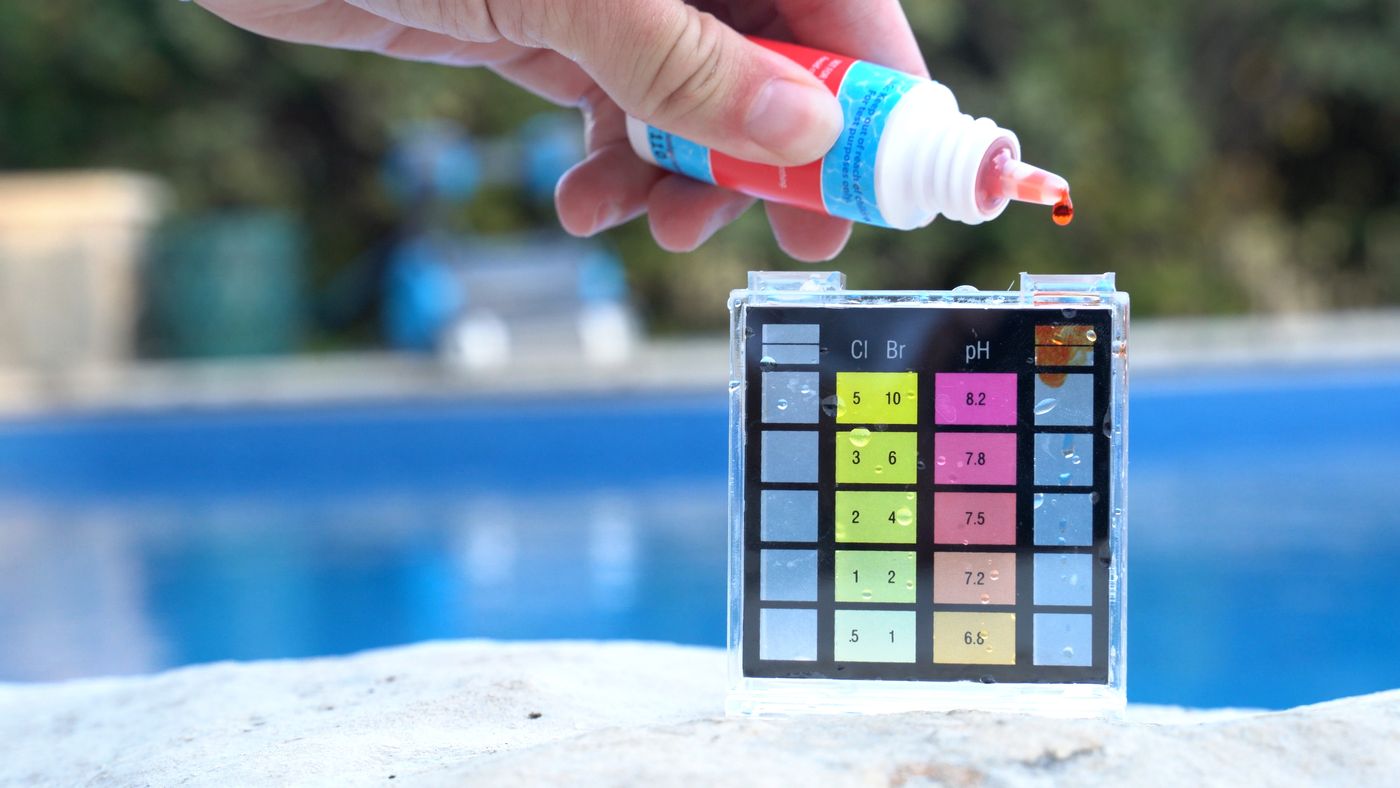
Test strips. Cheap and fast, and fine for a ballpark reading. But they fade, they expire, humidity ruins them, and reading color blocks in bright sunlight is more art than science. I keep some around for quick sanity checks and nothing more.
Liquid drop kits. A proper FAS-DPD kit like the Taylor K-2006 (or the K-2006 Salt for salt pools) is the manual testing standard, and it's what I reach for when I want a precise free and combined chlorine number. The catch: it takes time, you have to do it consistently, and it's still a snapshot.
Digital handheld meters. A handheld ORP and pH meter gets you into the professional metrics at a reasonable cost. Better — but still a snapshot.
And that snapshot problem is the true weakness of every manual method. Your pool's chemistry is not static. In hot weather, water quality can swing meaningfully in 24 hours. A Tuesday-evening test tells you nothing about Thursday afternoon's pool party. Which brings me to the upgrade that changed how I run my own pool.
The best way to test chlorine in your pool? A pool water monitor.
Pool Water Monitors: Stop Guessing, Start Knowing
A smart pool water monitor floats in your pool and measures your water around the clock, sending readings and dosing recommendations straight to your phone. No strips, no color charts, no wondering.
After testing the top pool water monitors on the market, I rated the ICO by Ondilo the Best Pool Water Monitor, and it's the one sitting in my pool right now. Here's why it wins:
-
It measures ORP and pH — the two numbers that matter. ICO reports ORP, your water's sanitizing strength, and tracks pH down to the decimal point, taking readings every hour.
-
Smart recommendations. The app doesn't just show data — it tells you what to add and how much.
-
Reliable, accurate sensors with a rechargeable battery that lasts up to six months per charge.
-
No subscription fees. You buy it once. I can't say that about most of its competitors — no constantly replacing cartridges, either.
-
Early warnings. ICO flags a falling ORP or drifting pH before your water turns. It's the canary in the coal mine for pool care.
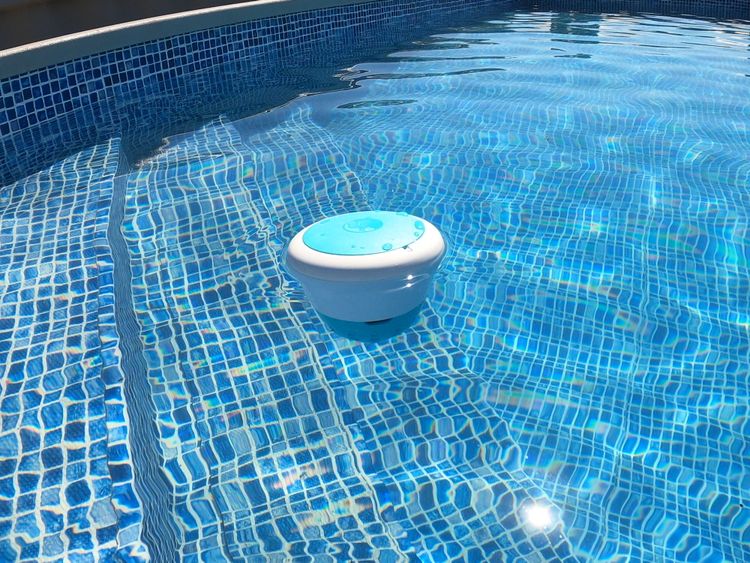
The ICO floats in the pool taking hourly ORP and pH readings and sends everything to your phone // The Pool Nerd
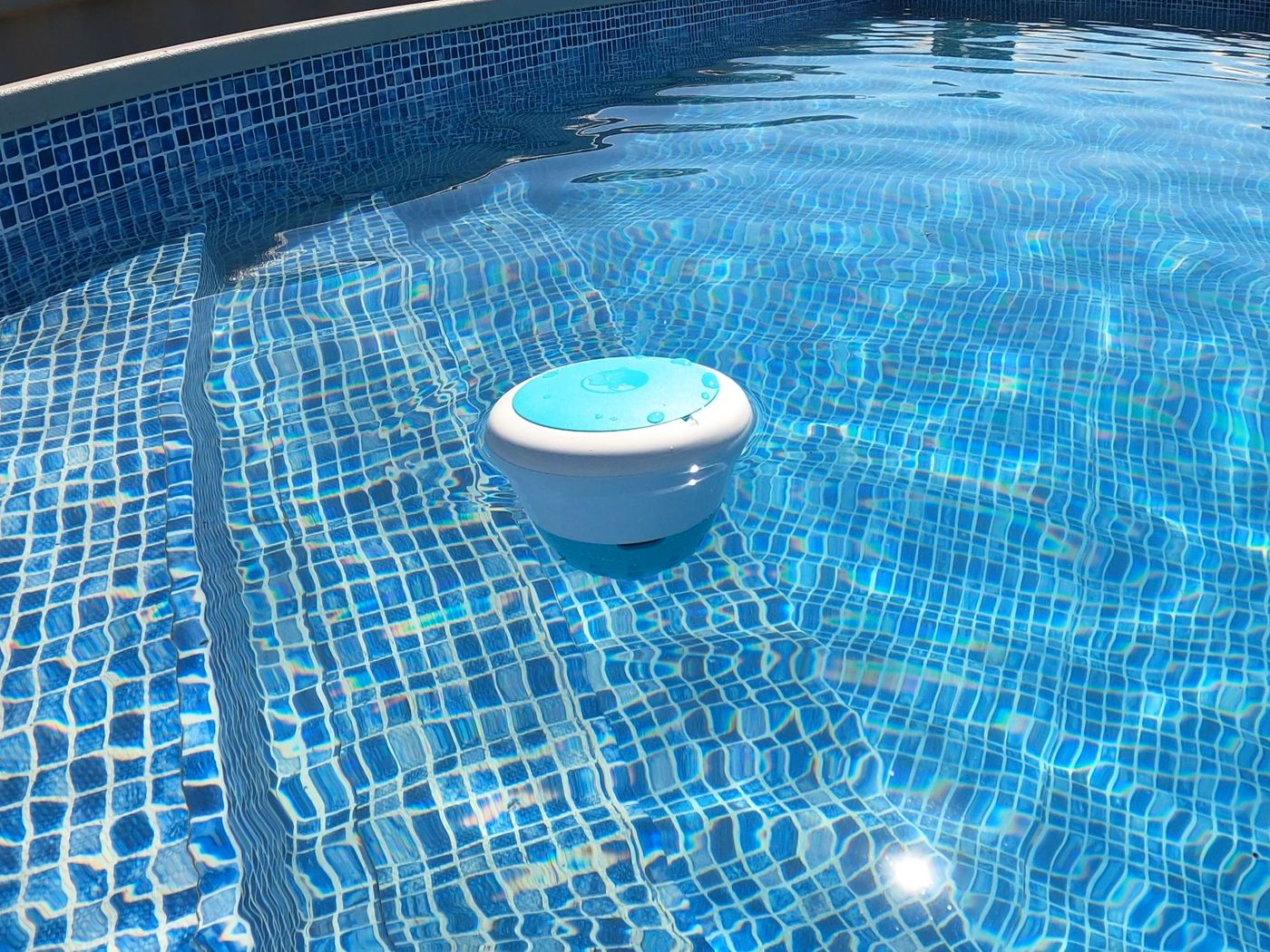
You might notice the ICO doesn't test chlorine ppm — and that's on purpose. By now you know why: ppm tells you what's floating in the water; ORP tells you whether it's working. Ondilo built the ICO around the measurement Olympic and commercial facilities trust, instead of the number printed on a strip bottle.
The Two-Number System
For daily pool care, you only need to watch two numbers: ORP (650–700 mV, ideally above 700) and pH (7.0–7.2 for vinyl/fiberglass, 7.2–7.4 for gunite). If ORP drops while pH looks normal, test your CYA — high stabilizer is usually the hidden culprit. Otherwise, checking CYA every 6 to 12 months is plenty.
Here's the money math: chlorine you don't buy is chlorine you don't pay for. In my experience, pool owners who switch to ORP-based dosing cut their chemical spending noticeably in the first season — many report 30 to 50 percent — because they stop over-treating. The monitor quits being a gadget and starts being the cheapest employee you've ever hired.
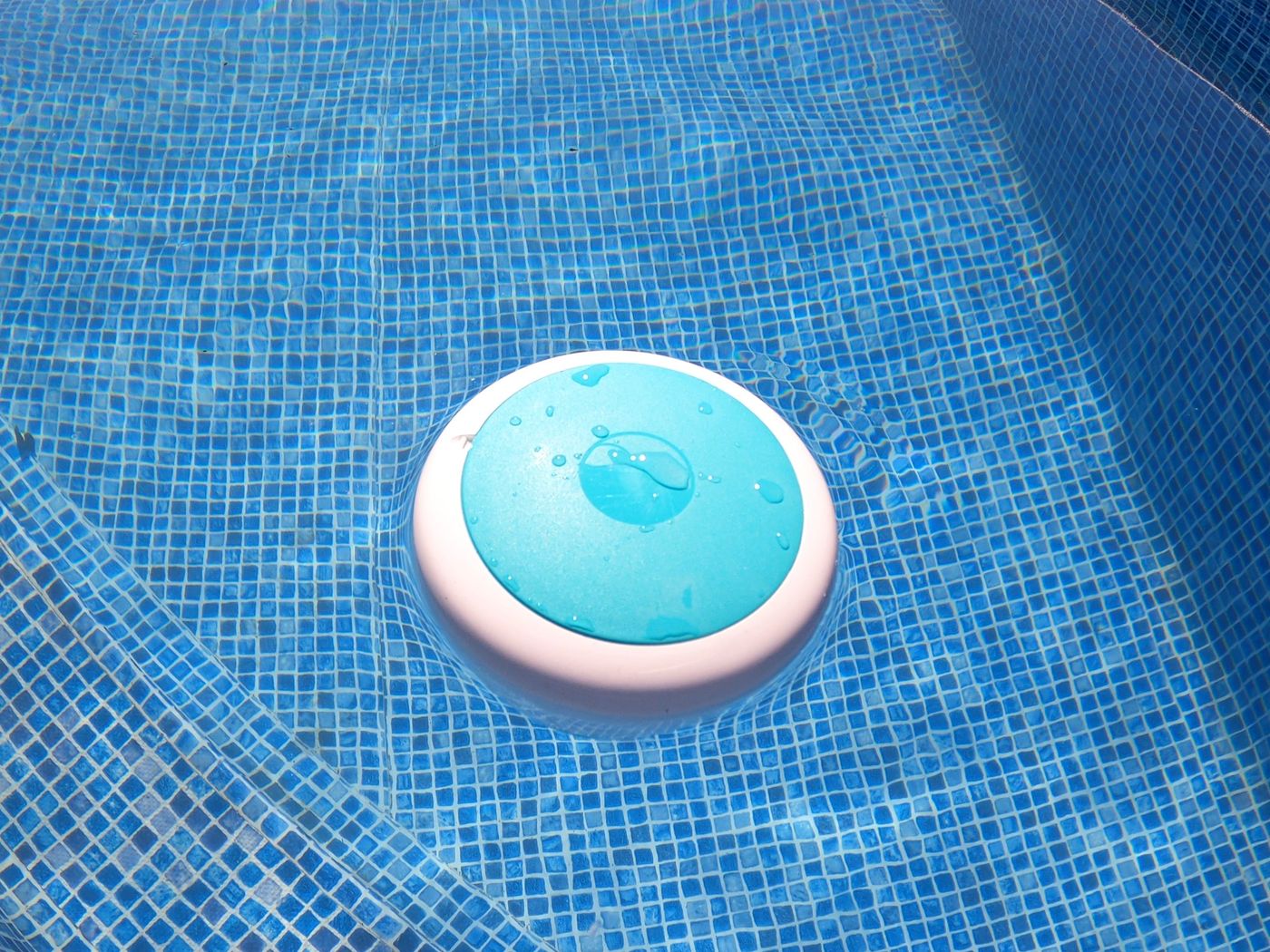
Ondilo ICO
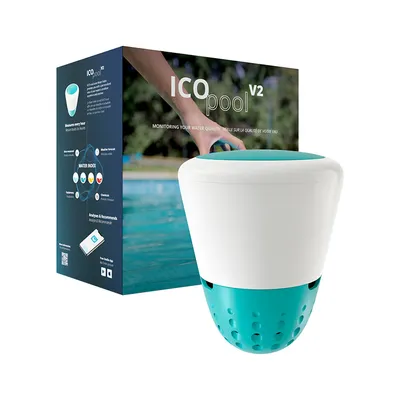
Continuous ORP and pH monitoring, hourly readings, smart dosing recommendations, rechargeable battery, no subscription. This is the tool that turns "how much chlorine does my pool need?" from a weekly guess into a real-time answer. Learn more about ORP and the technology behind the ICO at mysmartpool.com.
How Much Chlorine To Add (And What Kind)
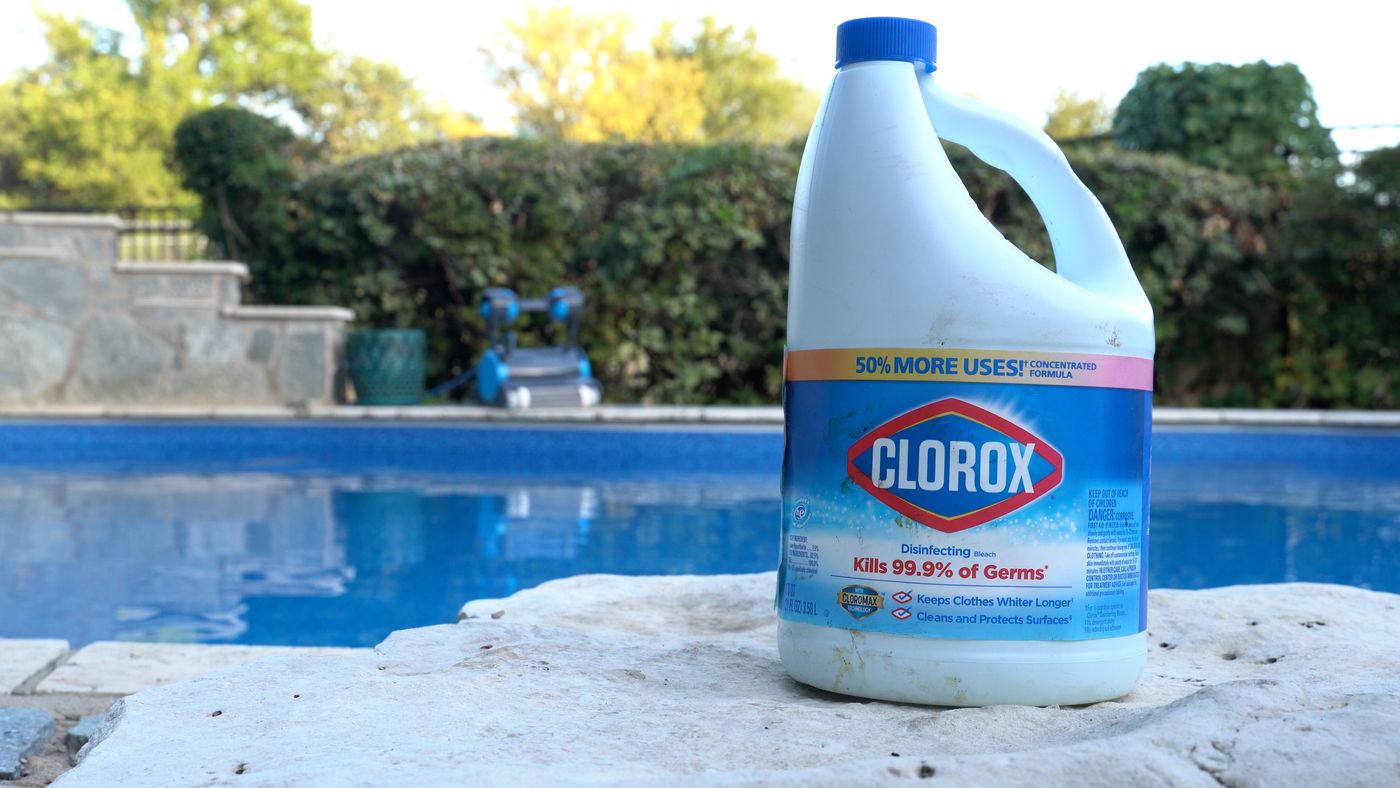
Once you're watching ORP, dosing gets simple. My sanitizer of choice is liquid chlorine (sodium hypochlorite, 10–12.5%), for four reasons: it works immediately, it leaves no residue, it adds zero CYA, and gallon for gallon it's usually the cheapest option on the shelf.
Rules of thumb I use:
- Raising free chlorine: roughly 10 ounces of 12.5% liquid chlorine raises 10,000 gallons of water by about 1 ppm. So if your 15,000-gallon pool needs to come up 2 ppm, that's roughly 30 ounces — about a quart. Don't know your gallons? Run them through my pool volume calculator first.
- Daily demand: in my experience, a summer pool burns through 1 to 2 ppm of chlorine per day — more with intense sun, low CYA, high heat, or a weekend full of swimmers.
- When to add: dusk is best. Sunlight destroys chlorine, so evening dosing gives it all night to work. Pour near a return jet with the pump running.
- When to shock: when combined chlorine tops 0.5 ppm or ORP falls under 650 mV. Full walkthrough in my shock guide.
For the exact amount based on your pool size, current and target readings, chlorine type, and product strength, use the pool chlorine calculator.
Want to take yourself out of the loop entirely? Pair the ICO with an automatic chlorine injection system. A chlorine injection system delivers a steady, adjustable dose of chlorine that you set; the ICO verifies the result in real time. In my opinion, that combination — liquid chlorine, automated injection, ORP verification — is the closest thing to a self-managing pool you can build, without the corrosion baggage that comes with a salt system. You can find my current rankings in my guide to the best chlorine injection systems.
What Changes Your Pool's Chlorine Demand
Two identical pools can need wildly different amounts of chlorine. The variables:
-
Sunlight and CYA. UV rays destroy unstabilized chlorine within hours. Keep CYA at 30 to 50 ppm to shield it — no more than that.
-
Heat. Warm water speeds up chlorine loss and speeds up everything trying to grow in your pool.
-
Bather load. Every swimmer adds sweat, sunscreen, and body oils that consume chlorine. A big pool party can wipe out your free chlorine overnight.
-
Rain and debris. Storms dilute your chemicals and dump in organic matter. Every leaf that rots in your water is a chlorine bill.
-
Filtration and circulation. Clean, constantly moving water needs less sanitizer. Most pools don't have a chlorine problem — they have an organic load problem.
-
UV sanitation. A SpectraLight UV system destroys pathogens and chloramines with light, slashing how much chlorine your water demands. The World Health Organization has stated that lower free chlorine concentrations may be health protective when UV is used — with UV doing the heavy lifting, a pool can run as low as 0.5 ppm, about the level of tap water.
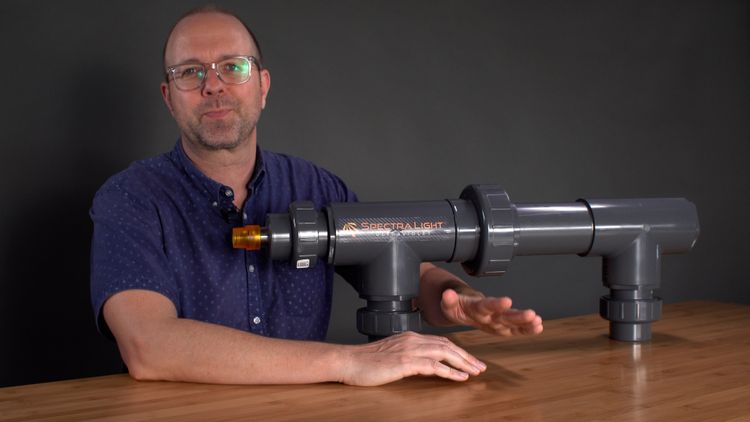
A SpectraLight UV system slashes chlorine demand by destroying pathogens and chloramines with light // The Pool Nerd
SpectraLight UV
Shock Less, Swim Cleaner
UV on the return line cuts chloramines and organic load so you pour less chlorine and shock over the season—not a sanitizer replacement, but a serious upgrade next to good circulation and testing.
Frequently Asked Questions
Is 5 ppm of chlorine too much to swim in?
Hold off. Wait until free chlorine falls below 5 ppm before swimming — high levels irritate skin, eyes, and airways. And if you find yourself constantly riding above 3 ppm "just to be safe," that's a dosing problem, and it's exactly what ORP-based management fixes.
My chlorine reads fine but the pool is turning green. How?
This is the classic chlorine-inhibitor story. Either your pH has drifted high and gutted your chlorine's killing power, or your CYA has crept up and locked your chlorine away — usually after a season of trichlor tabs. An ORP reading would have flagged the problem weeks earlier. Test pH and CYA, fix them, then shock.
Do saltwater pools follow different chlorine rules?
No — and this surprises people. A saltwater pool is a chlorine pool; the salt cell just manufactures the chlorine on site. Same free chlorine targets, same pH math, same CYA limits, and the same ORP ranges apply. The saltwater version of the ICO even adds a TDS reading, so it keeps an eye on your salt level too.
How often should I test?
With manual testing: two to three times a week minimum during swim season, and always before adding chemicals. With a monitor like the ICO: glance at your phone. It checks hourly and pings you when something needs attention — that's the whole point.
My Final Verdict
So, how much chlorine should be in your pool? Keep free chlorine between 1 and 3 ppm — that's the correct textbook answer, and it's where every pool owner should start.
But the number that tells you the truth is ORP. Hold your water at 650 to 700 millivolts or better with pH at 7.0 to 7.2, and your backyard pool will be managed the same way Olympic venues manage theirs — usually on less chlorine than you're using today. In my opinion, a continuous monitor like the Ondilo ICO is the highest-value upgrade in pool care: it turns chlorine dosing from a weekly guessing game into a live answer on your phone, and the chemical savings do the rest.
Test less. Know more. Swim in water you trust.
If you want to look into a pool water monitor like the ICO or a UV system like the SpectraLight, head over to my deals page, where I post all the best deals on top pool equipment and more.
Until next time, keep nerding out about your water — and enjoy that pool. I'll see you in the next one.
Related Reading
- How To Shock Your Pool — The full step-by-step shocking walkthrough
- Best Pool Water Monitors — My full rankings of every monitor worth buying
- ICO Pool Water Monitor Review — The ORP and pH monitor I use in my own pool
- Best Chlorine Injection Systems — Automate your liquid chlorine dosing
- What Is the Ideal Pool pH? — Why your pH decides how well your chlorine works
- Chlorine Lock — What happens when CYA locks up your chlorine
- SpectraLight UV Review — The UV system that slashes chlorine demand
The information above is for educational purposes only. Handling pool chemicals, including chlorine and muriatic acid, involves significant risk of injury or property damage. Always read the manufacturer's labels and MSDS sheets. Use this information at your own risk.

Comments
Loading comments…