
Pool Heater Calculator
Size a heater, estimate warm-up time, and see what one heating cycle may cost
Calculate heater sizeHow to use
Size and Price Your Pool Heat
The result combines the energy needed to warm the water with an outdoor heat-loss allowance. It is a planning range, not a substitute for the heater manufacturer's sizing worksheet.
Use the pool volume calculator if needed.
For a rectangle, multiply length by width.
Use the efficiency shown on the heater specification sheet.
Use the energy charge from your utility bill when possible.
For gas or propane, enter nameplate input BTU/hr.
How the estimate is built
Use the result
Follow the calculation with the right how-to guide
How the Pool Heater Calculator Works
A useful pool-heater estimate has to answer three different questions:
- How much energy does the water need?
- How quickly do you want to add that energy?
- How much heat will the pool lose while the heater is running?
The exact part is the energy stored in the water. One gallon of pool water weighs about 8.34 pounds, and one BTU raises one pound of water by one degree Fahrenheit. That gives us:
Water-heating energy = gallons × 8.34 × temperature rise
A 20,000-gallon pool going from 70°F to 84°F needs roughly 2.34 million BTUs delivered to the water before accounting for heat lost along the way.
Outdoor heat loss is less exact. Surface area, water-to-air temperature difference, wind, humidity, cover use, plumbing, rain, and sunlight all matter. The calculator applies a transparent surface-loss allowance based on the conditions you choose. It intentionally reports a planning class rather than pretending an outdoor pool can be modeled to the last BTU.
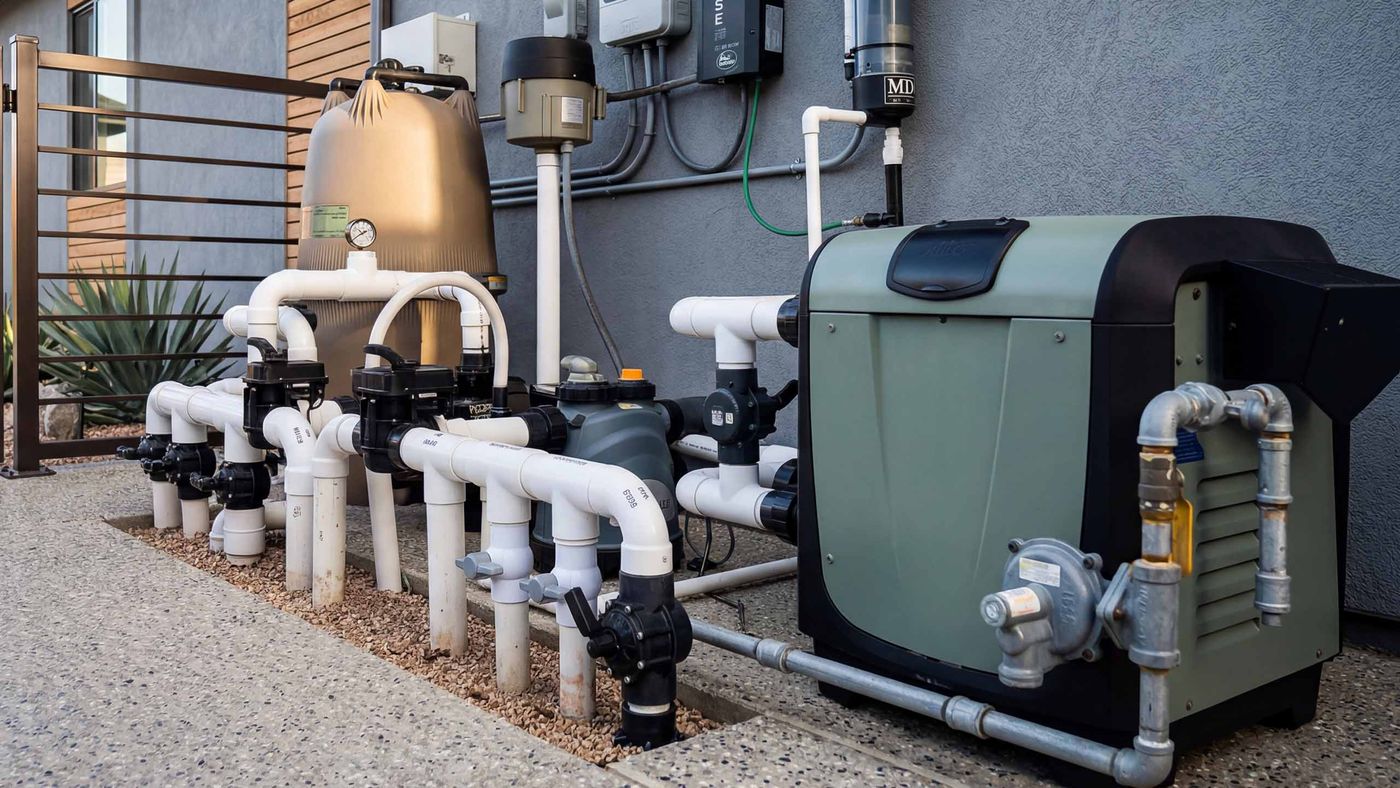
What Size Pool Heater Do You Need?
Pool volume determines the energy needed for a temperature change, but surface area determines much of the ongoing outdoor heat loss. That is why sizing from gallons alone can mislead you.
The calculator first divides the water-heating energy by your desired warm-up time. It then adds the estimated heat being lost while the pool warms. Finally, it accounts for gas-heater efficiency or heat-pump output derating and moves the result up to a common equipment class.
Inputs That Increase the Recommended Size
- More gallons
- A larger temperature increase
- A shorter warm-up deadline
- Colder outdoor air
- More exposed water surface
- Wind
- Leaving the pool uncovered
Why the Result Is a Starting Point
A 250,000 BTU gas heater does not put all 250,000 BTU into the water. Some energy leaves through the exhaust, so delivered output depends on thermal efficiency. A heat pump is different: its published output changes with outdoor air temperature and humidity. Manufacturer performance tables and an installer’s hydraulic and electrical checks still control the final selection.
Do not automatically buy the largest heater available. A larger gas unit heats faster, but it may require a larger gas line, venting changes, additional electrical work, and higher installation cost. Compare the recommended class with the models in our best pool heaters guide.
How Long Does It Take to Heat a Pool?
The basic heat-up formula is:
Hours = water-heating BTUs ÷ net delivered BTUs per hour
“Net” is the important word. If a heater delivers 200,000 BTU per hour but the exposed pool is losing an estimated 50,000 BTU per hour, only about 150,000 BTU per hour remains to raise the water temperature.
This explains why two owners with the same pool and heater can report very different warm-up times. A covered pool on a calm, mild day can warm much faster than an uncovered pool in cold wind. Heat pumps also lose output as outdoor conditions move away from their published test conditions.
If you already own a heater, enter its rating in the optional field. For gas and propane heaters, use the nameplate input rating. For heat pumps, use the manufacturer’s rated heating output and choose an air temperature close to the conditions in which you plan to run it.
Ways to Shorten Warm-Up Time
- Cover the pool before and during heating
- Heat during the warmer, calmer part of the day
- Keep the filter clean so the heater receives its required flow
- Use realistic target temperatures
- Repair bypass valves or plumbing problems that reduce heater flow
How Much Does Pool Heating Cost?
The calculator converts the heater’s energy consumption into the billing unit used by your fuel:
- Natural gas: therms, with 100,000 BTU per therm
- Propane: gallons, with approximately 91,502 BTU per gallon
- Electricity: kilowatt-hours, with approximately 3,412 BTU per kWh
- Heat pumps: electrical input estimated from delivered heat and the entered coefficient of performance (COP)
Use the energy charge from your current bill instead of a national average. Delivery fees, taxes, tiered pricing, and demand charges can make the final bill higher than the calculator’s energy-only estimate.
The “one warm-up cost” is the estimated energy used to reach the target once. The “hold-temperature cost” is an hourly estimate of the energy needed to offset the selected outdoor heat loss after the water reaches the target. It is not a promise that the heater will run continuously or cycle at a fixed rate.
Gas Heater vs. Heat Pump
Gas or Propane Heater
Gas heaters provide high output and are generally better when you want fast, on-demand heating. They work across a wider range of air temperatures, but fuel cost can be substantial. Confirm that the property’s gas meter, regulator, supply line, venting, and clearances can support the selected unit.
Electric Heat Pump
Heat pumps move heat from the surrounding air instead of creating all of it directly. That can make them economical for maintaining temperature in mild weather. They heat more slowly, and both capacity and COP fall in colder air. Our best pool heat pumps guide covers climate and sizing differences in more detail.
Electric Resistance
Resistance heaters are compact and predictable but usually impractical for heating a full-size outdoor pool. They make more sense for spas, small plunge pools, or installations where gas is unavailable and the electrical service can support the load.
Why a Pool Cover Changes the Math
Evaporation is one of the largest heat-loss paths from an outdoor pool. A fitted cover interrupts that loss, especially overnight when the water is warmer than the air.
Cover performance varies. A cover used only occasionally cannot deliver the same savings as one kept on whenever nobody is swimming. Fit also matters: uncovered gaps continue releasing warm, humid air.
The calculator offers three planning cases:
- Uncovered
- Covered overnight or roughly half the time
- Covered whenever the pool is idle
Use the choice that matches your actual routine, not the routine you hope to follow. A smaller heater selected on the assumption of constant cover use may disappoint if the pool regularly sits open in wind.
Pool Heater Calculator FAQ
Is pool-heater size based on gallons or surface area?
Both. Gallons determine how much energy is required to raise the water temperature. Surface area strongly affects how quickly an outdoor pool loses heat. A responsible sizing estimate uses both values.
What BTU heater do I need for a 20,000-gallon pool?
There is no single rating for every 20,000-gallon pool. The correct range depends on surface area, desired temperature rise, warm-up time, air temperature, wind, cover use, and heater type. Enter those conditions rather than choosing from gallons alone.
Why is my real heat-up time longer than the estimate?
Common causes include colder or windier weather, an uncovered pool, lower gas pressure, scale in the heat exchanger, low water flow, dirty filters, long exposed plumbing runs, or a heat pump operating below its published test conditions.
Should I oversize a pool heater?
Moving up one standard class can shorten recovery time, but bigger is not automatically better. Gas supply, venting, plumbing flow, electrical service, breaker size, equipment clearances, and manufacturer limits all need to support the unit.
Can a heater be too small to warm the pool?
Yes. If the heater’s delivered output is close to or below the pool’s heat loss, the water may warm extremely slowly or level off below the target temperature. A cover can materially change that balance.
Does this calculator work for indoor pools?
The water-heating energy still applies, but the outdoor loss model does not. Indoor-pool sizing must account for the building’s air temperature, humidity control, ventilation, and dehumidification system. Use an indoor-pool HVAC professional.
More Pool Calculators
More from The Pool Nerd
Keep Reading

Disclaimer: Planning estimate only. Actual flow and equipment requirements vary by pool, plumbing, filter condition, valve position, and manufacturer. Confirm settings on your system and follow every equipment manual.