
 Justin D.
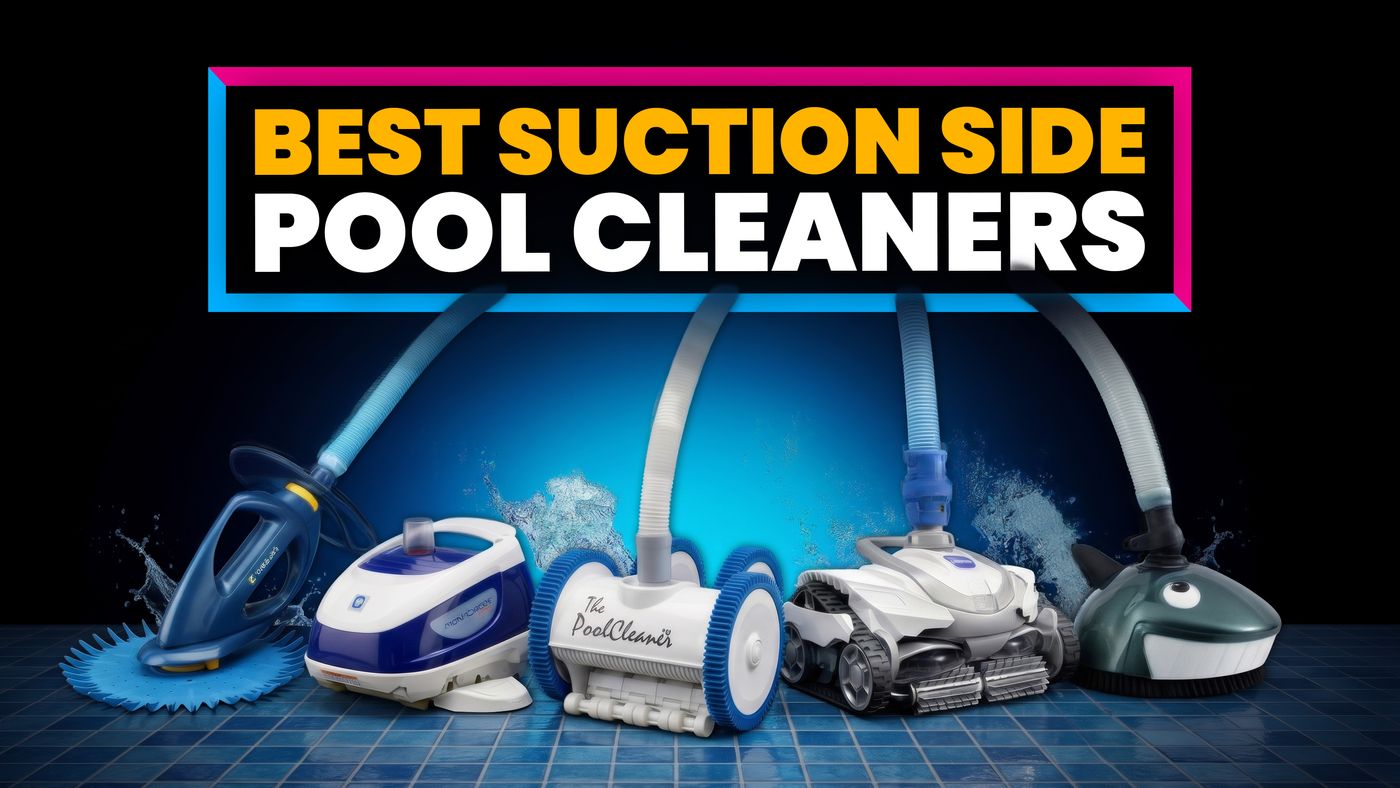
Watching your pool cleaner sit under the ladder while dirt collects across the deep end gets old fast. So does turning up the pump just to get it moving.
A good suction-side pool cleaner can take vacuuming off your list. But the cleaner has to work with your pool's pump, plumbing, surface, and shape. Buy the wrong combination, and you'll spend more time adjusting hoses than you expected.
The Zodiac G3 is my best overall suction-side pick for a typical inground pool. Its straightforward design makes sense for someone who wants routine debris pickup without a complicated cleaner. For above-ground pools, I'd start with the Zodiac Ranger, provided the skimmer and pump are compatible.
My preferred upgrade is a corded robotic pool cleaner. Independent filtration, powered brushing, and scheduling on equipped models make a stronger package for owners who want less involvement. Here's where each suction cleaner makes sense, and when I'd spend the money on a robot.
Shopping for a pressure-side cleaner instead? Read my Best Pressure-Side Pool Cleaners guide.
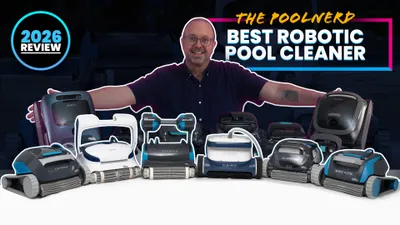
Want the strongest cleaner, period? Start with the Best Robotic Pool Cleaners of 2026.
Best Suction Side Pool Cleaners at a Glance


Which suction cleaner for which pool
| Cleaner | My pick for | Main consideration |
|---|---|---|
| Zodiac G3 | Best overall suction cleaner for inground pools | Simple design; best suited to routine debris |
| Zodiac MX6 | Compact tracked cleaner for variable-speed setups | Needs properly calibrated flow |
| Hayward The PoolCleaner 4-Wheel | Larger inground pools | More drive components to maintain |
| Hayward PoolVac XL / Navigator Pro | Traditional gunite pool vacuuming | Buy the correct surface-specific version |
| Polaris MAXX | Premium suction-side scrubbing | Compare its price with a robotic upgrade |
| Pentair Kreepy Krauly Kruiser | Simple Pentair inground option | Wide intake still needs clear hoses and baskets |
| Zodiac Ranger | Best suction cleaner for above-ground vinyl pools | Designed for floor cleaning |
| Pentair Kreepy Krauly Lil Shark | Above-ground alternative with bristles | Pump and pool compatibility still matter |
These are recommendations by use case. A cleaner that works beautifully in one pool can struggle in another with different plumbing or floor transitions.
How Suction Side Pool Cleaners Work
A suction-side cleaner connects to your skimmer or a dedicated suction port. Your circulation pump pulls water through the cleaner and hose, providing the power that moves the cleaner and picks up debris.
No booster pump is required. There is usually no onboard debris basket, either. Collected material travels toward your pool equipment, where baskets, an optional inline leaf canister, and the main filter capture it.
That explains both the appeal and the compromise. You can automate vacuuming with a mechanically simple cleaner, but cleaning performance depends on the same system responsible for circulating and filtering your pool water.
The advantages
- Often a lower purchase price than a comparable robotic cleaner.
- No separate electrical connection at the cleaner.
- No booster pump to buy or operate, unlike most pressure-side cleaners.
- Simple designs can be practical to maintain with replacement parts.
- Can clean during an existing, compatible pump schedule.
The disadvantages
- Requires sufficient flow whenever it operates.
- Sends collected debris toward your filtration equipment.
- Hose length, suction adjustment, return jets, and obstacles affect coverage.
- A skimmer connection can reduce surface skimming, depending on the setup.
- May require additional pump speed or runtime.
- Wall climbing and scrubbing vary considerably by model.
Zodiac G3: Best Overall
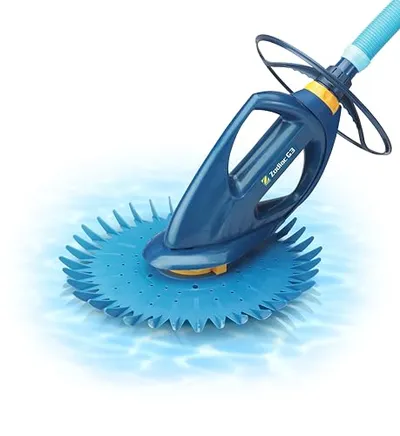
The Zodiac G3 gets my vote because simplicity is one of the strongest reasons to buy a suction cleaner in the first place.
Its diaphragm is the single operational moving part. You don't have a tracked drivetrain to maintain, and the quick-release cassette makes the diaphragm accessible. Zodiac includes a 39-foot hose and a FlowKeeper valve to regulate flow.
It's designed for small and medium debris and supports gunite, tile, vinyl, and fiberglass inground pools. It also works with low-speed pumps, so the MX6 isn't your only option with a variable-speed system.
I like the G3 for everyday dirt and light leaf pickup. For a pool that regularly fills with large leaves, I'd prioritize debris capacity and consider a robot with a leaf bag or an oversized basket, like the Dolphin Premier.
Pros: Simple mechanism; broad surface compatibility; accessible diaphragm; low-flow compatibility.
Cons: Diaphragm and disc remain wear items; obstacles can interrupt coverage; limited appeal for heavy leaf loads.
Who should buy it: Someone replacing a basic suction cleaner whose existing setup already provides reliable flow.
Zodiac MX6: Best Compact Tracked Cleaner
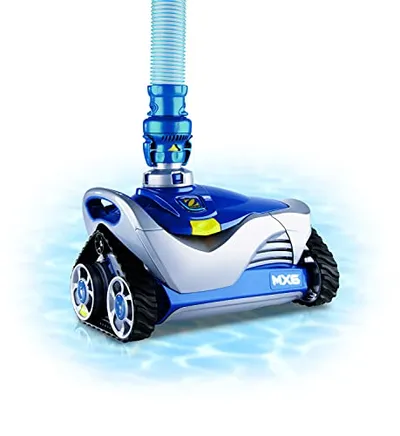
The Zodiac MX6 adds tracks and mechanical direction changes to the suction-cleaner formula. Its cyclonic intake and X-Trax traction help it move across the pool and climb walls.
Zodiac specifically designs it around lower-flow operation with two-speed and variable-speed pumps. Its regulator manages excess flow, but you still need to calibrate it for your pool. "Variable-speed compatible" doesn't mean it will work at your pump's lowest setting.
The standard MX6 also differs from the MX6 Elite. Don't assume you're getting the Elite's active scrubbing brushes when buying the regular model.
This is my pick when someone specifically wants a compact tracked suction cleaner. I wouldn't choose it solely because their pump has variable speeds; the G3 and MAXX also accommodate that type of setup.
Pros: Compact body; tracked traction; wall-climbing capability; designed for reduced-flow operation.
Cons: Tracks and internal drive components add maintenance; lodged debris can stop movement; requires flow adjustment.
Who should buy it: Owners who prefer tracked movement and are comfortable maintaining the cleaner's mechanical parts.
Hayward The PoolCleaner 4-Wheel: Best for Larger Pools
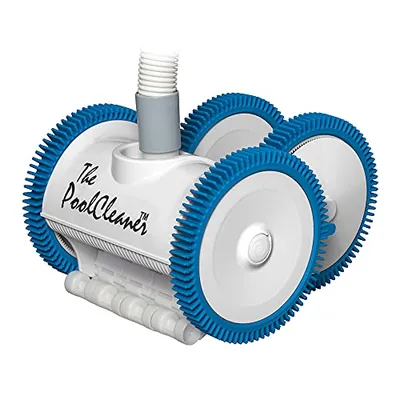
You'll also see this cleaner associated with the Poolvergnuegen name. The four-wheel version is the one I'd consider for a larger pool, with Hayward rating it for pools up to 20 by 40 feet.
Its flexible turbine vanes help debris pass through, while interchangeable throats let you match the intake to flow and debris conditions. The roller skirt helps maintain contact over uneven surfaces, and the package includes 40 feet of hose.
Those are useful features for a pool with slopes and transitions. They don't guarantee it will navigate every drain cover, ledge, or step.
This is a stronger fit than a basic disc cleaner when wheeled traction matters. Once the purchase price approaches a suitable robot, though, I'd compare the complete cleaning package before buying. My best robots for large pools guide covers the models rated for that footage.
Pros: Four-wheel traction; adaptable intake; flexible turbine vanes; suitability for larger residential pools.
Cons: More mechanical components; still dependent on circulation flow; debris continues toward the pool's filtration system.
Who should buy it: An inground owner who wants a capable wheeled suction cleaner and already has a well-matched suction connection.
Hayward PoolVac XL and Navigator Pro: Best for Gunite Pools
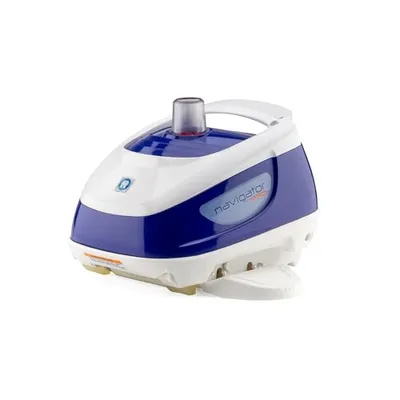
Hayward Navigator Pro
Hayward's AquaPilot Suction Cleaner for Inground Pools up to 20 by 40 Feet
The PoolVac XL is a sensible choice for a conventional gunite pool where routine floor and cove vacuuming is the main job. Hayward sells the same AquaPilot design as the Navigator Pro, which is the listing I link here and the one I'd compare prices on. Whichever name is on the box, match the surface version in the product title to your pool finish.
Hayward's AquaPilot steering changes its path mechanically. The cleaner is rated for pools up to 20 by 40 feet and includes a 40-foot hose. Hayward offers different versions and shoes for different surfaces, so match the exact model to your finish.
It can climb walls under suitable conditions, but Hayward specifically qualifies that capability by pool shape and surface. I wouldn't buy it expecting guaranteed waterline coverage.
Its quiet operation is appealing. Just understand what "no debris bag" means: the debris is collected elsewhere in your pool system, leaving you with baskets and filter maintenance. If your plaster pool needs real wall and waterline scrubbing, my best robots for gunite pools guide is the better starting point.
Pros: Quiet operation; programmed steering; established design; surface-specific options.
Cons: Shoes, wings, and other contact parts wear; wall coverage varies; buying the wrong version creates avoidable problems.
Who should buy it: A gunite pool owner who wants straightforward suction vacuuming and values a familiar, serviceable design.
Polaris MAXX: Best Premium Scrubber
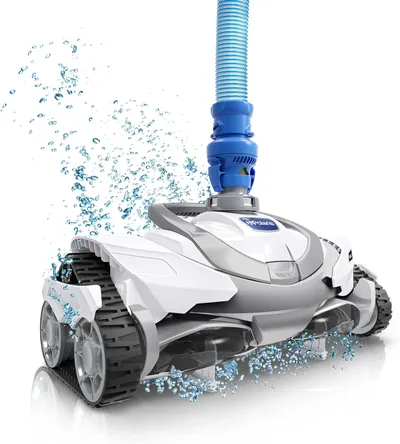
The Polaris MAXX is the suction cleaner I'd consider for an inground pool when active scrubbing is a priority. Shoppers often lump it in with Polaris's pressure cleaners, which is why it also gets a mention in my pressure-side guide, but it runs off your suction line.
It has spinning brushes, tracked movement, and HALO technology designed to help debris pass through and reduce clogging. Polaris lists floor, wall, and tile-line cleaning, along with compatibility with low-flow pumps and a 39-foot twist-lock hose.
That matters because some suction cleaners do considerably more than drag an intake across the floor. The MAXX deserves credit for offering brushing and climbing.
The purchase decision comes down to price and how much independence you want. Its brushes don't change the fact that your pool pump drives it and your filtration system receives the debris.
Pros: Active scrubbing; floor-to-tile-line capability; improved debris passage; regulated flow.
Cons: Premium purchase; brushes and tracks need maintenance; climbing still depends on conditions; no onboard debris collection.
Who should buy it: Someone committed to suction-side cleaning who wants more brushing capability. I'd compare it with the Dolphin Cayman or Dolphin Quantum before checking out.
Pentair Kreepy Krauly Kruiser: Best Simple Pentair Pick
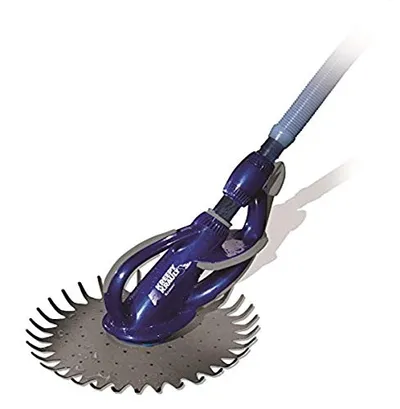
The Kruiser is the Kreepy Krauly model with the extra-wide mouth described in many product listings. It's a distinct model from the standard Kreepy Krauly.
A flapper provides its single operational moving part. The flexible seal and bumper help it work around pool features, while the wider intake accommodates a range of debris sizes. It connects to the skimmer or a compatible vacuum line.
The appeal is similar to the G3: fewer drive components and a straightforward cleaning mechanism.
A wide mouth doesn't make the entire suction path clog-proof. Large debris still needs to pass through the cleaner and hose, and a compatible inline leaf canister can be useful around trees.
Pros: Simple flapper mechanism; wide intake; no geared wheel drive; straightforward connection.
Cons: Flow and hose setup affect coverage; seals and contact parts still wear; heavy debris can require extra attention.
Who should buy it: Someone who prefers Pentair's simple mechanical approach and primarily needs routine inground vacuuming.
Zodiac Ranger: Best for Above-Ground Pools
The Ranger is where I'd start for an above-ground vinyl pool with a compatible skimmer and enough pump flow.
It uses a single moving diaphragm, includes a 32-foot hose, and has a deflector wheel to help it negotiate obstacles. Its FlowKeeper valve regulates water flow.
Treat it as a floor cleaner. Although some marketing language mentions the pool sides, the owner's manual specifically says the Ranger isn't designed to climb walls.
My biggest buying concern is the pump. An above-ground pool may have a smaller filtration system, so don't assume a cleaner will work simply because the listing says "above-ground." If your pump is marginal, read my best above-ground pool pumps guide before you buy any cleaner that depends on it.
Pros: Simple mechanism; designed for above-ground vinyl pools; included flow regulation; no separate power supply.
Cons: Floor-focused cleaning; pump compatibility is essential; ladders and hose positioning can interrupt coverage.
Who should buy it: An above-ground owner with a suitable skimmer connection who wants basic automatic vacuuming at a manageable purchase price. If you'd rather not depend on the pump at all, the best above-ground robotic pool cleaners are the alternative.
Pentair Kreepy Krauly Lil Shark: Best Above-Ground Alternative
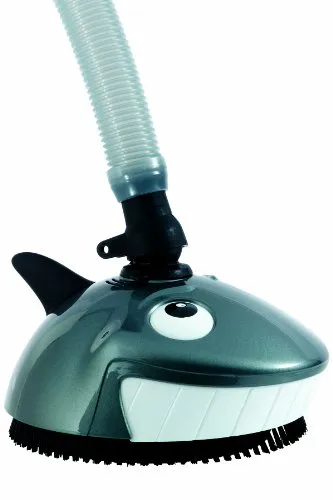
The Lil Shark combines suction pickup with two bands of bristles and a 10-inch cleaning path. Pentair also gives it programmed movement to improve coverage.
I'd consider it for an uncomplicated above-ground pool when loosening everyday floor debris is the priority. Verify the hose connection, liner compatibility, and pump requirements before ordering.
Pros: Bristles help loosen debris; compact cleaning head; straightforward above-ground application.
Cons: Still relies on your pump and filter; floor-focused purpose; pool shape and flow affect results.
Who should buy it: Someone comparing basic above-ground suction cleaners who wants bristles as part of the cleaning head.
What about the Pentair E-Z Vac?
Pentair's Kreepy Krauly E-Z Vac is discontinued. It remains relevant if you're comparing leftover stock or replacing an existing unit.
It uses one moving flapper, includes a 32-foot hose, and was designed for flat-bottom or dish-shaped above-ground pools with a rounded or banked cove. Its manual recommends a cove at least six inches high and advises against a sharp 90-degree floor-to-wall transition. Confirm fit, parts, and warranty support before considering leftover stock.
Why I Usually Recommend a Robotic Pool Cleaner Instead
Suction cleaners can be useful, especially when the pool already has a suitable connection and the budget is tight.
For most owners buying a complete cleaning solution, I'd start by comparing a corded robotic pool cleaner.
| What matters | Suction-side cleaner | Suitable corded robot |
|---|---|---|
| Cleaning power | Depends on circulation pump flow | Uses its own motors |
| Debris collection | Pool baskets and main filter, with an optional leaf canister | Onboard bag, basket, or cartridges |
| Setup | Hose, connection, and flow adjustment | Power supply and cable |
| Brushing | Varies; some have active brushes | Powered brushes on the recommended models |
| Walls and waterline | Model and pool dependent | Available on designated models |
| Scheduling | Follows the pool pump's operation | Independent timer on equipped models |
| Routine care | Baskets, main filter, hoses, and wear parts | Empty filters, handle cable, maintain wear parts |
| Typical tradeoff | Lower initial cost and simpler repairs | More independence, with a higher purchase price |
Separate filtration is a practical advantage
A robot captures the debris it collects inside the cleaner. You remove that material by emptying its filter instead of sending it through your pool's suction plumbing.
That can reduce the cleaning load on the main filtration system. It also leaves the skimmer connection available for surface debris. A robot's filter still needs regular rinsing.
Your pump schedule can follow the pool's needs
A suction cleaner may require more flow than your normal filtration setting provides. A robot lets you choose the main pump's schedule around circulation and your other equipment.
The energy benefit depends on the extra pump speed or runtime you avoid. If your suction cleaner already works during necessary filtration hours, the savings may be modest. Your pool still needs its circulation pump.
You can choose the coverage and filtration you need
For a dirty tile line, choose a robot specifically rated for waterline cleaning. For sand and fine dust, look for suitable fine or ultra-fine filters, including NanoFilters where offered in the exact package.
A basic mesh basket and an ultra-fine filter serve different purposes. Neither category automatically guarantees better particle filtration than your existing pool filter.
Corded models avoid the charging routine
My preference is a corded robot with a weekly timer when available. It can start scheduled cycles without needing a battery recharge between them.
You'll still empty its filters, manage the cable, and follow its storage and swimming instructions. Robots also have motors, electronics, and power supplies that can make major repairs more expensive than replacing a simple suction-cleaner part.
For the full comparison, see my best robotic pool cleaners guide.
The Robots I Would Compare Before Buying
| Robot | Best reason to choose it | Know before buying |
|---|---|---|
| Dolphin Escape | My above-ground and small-pool floor-cleaning pick; rated to 30 feet | Floor only; no weekly timer |
| Dolphin Cayman | My value upgrade for pools to 40 feet; floor and wall cleaning with a weekly timer | No dedicated waterline cleaning; confirm any fine-filter upgrades |
| Dolphin Quantum | Waterline cleaning, top-access filtration, and a weekly timer; rated to 50 feet | Confirm the exact filter package; current official specifications include an ultra-fine kit |
| Dolphin Premier | My overall inground preference, especially with leaves; interchangeable bag and cartridge filtration, waterline cleaning, and a timer | Rated to 50 feet; bottom-access filtration; no app |
| Dolphin Sigma | App control, waterline cleaning, top-access filters, and scheduling; rated to 50 feet | Higher-tier purchase; app features matter most if you'll use them |
Check current prices: Dolphin Escape, Dolphin Cayman, Dolphin Quantum, Dolphin Premier, and Dolphin Sigma.
For an above-ground pool, compare the Ranger against the Escape. For a more expensive inground suction cleaner, compare the Cayman and Quantum. For heavy leaves and filtration flexibility, the Premier is where I'd focus.
How to Choose the Right Suction Side Pool Cleaner
Match actual flow to the cleaner
Pump horsepower alone doesn't tell you whether a cleaner will work. Plumbing resistance, valve positions, hose length, and filter condition all affect available flow.
Use the manufacturer's flow gauge or wheel-speed procedure. There isn't one universal RPM that works for every pool. If you're not sure what your pump actually delivers, my pool pump size calculator will put a number on your system's flow and head.
Match the surface and pool shape
Confirm compatibility with vinyl, fiberglass, plaster, pebble, or tile. Check the required shoes or discs, particularly on the PoolVac XL. Smooth fiberglass and vinyl surfaces are the ones where I most often see suction cleaners lose traction.
Sharp floor-to-wall transitions, safety ledges, ladders, and unusual drains can affect coverage. No automatic cleaner should be assumed to handle every step or sun shelf.
Check hose reach from the connection
Measure from the skimmer or suction port to the farthest point, following the manual's allowance for extra hose. A 39-foot hose doesn't automatically mean the cleaner suits every 39-foot pool.
Budget for the whole setup
Compare the cleaner, any needed hose or adapters, a leaf canister, replacement wear parts, and additional pump operation. Then compare that total with a robot offering the coverage you want. My best robotic pool cleaners under $500 list is the honest price comparison for most suction buyers.
Set it up and maintain it properly
Start with clean baskets and a clean filter. Fill the hose with water as the manual directs, then check flow after installation and whenever performance changes.
Inspect worn shoes, discs, seals, and tires before blaming the cleaner. Store hose sections straight to avoid persistent bends. Remove the cleaner and hose before swimming, and ensure an unused dedicated suction port has the correct safety cover.
Read the exact warranty
Warranty terms can change with the model, seller, and purchase channel.
For example, Zodiac's current U.S. G3 page lists 90 days, while Hayward's 2026 Open Line terms generally give W3 cleaner models one year of parts coverage, subject to stated exceptions. Don't assume a listing's "two-year warranty" includes labor or applies to the version in your cart.
Frequently Asked Questions
Do suction side pool cleaners need a booster pump?
No. They use the suction generated by your existing circulation pump. Pressure-side cleaners connect to the return side, and some require a separate booster pump. A suction cleaner still needs adequate flow.
Can a suction cleaner run with the pool pump off?
No. The pump supplies the flow that powers it. A robotic cleaner has its own power source, although the pool still needs its normal circulation and filtration schedule.
Why does my suction cleaner keep stopping?
Check baskets and filter condition, flow calibration, hose leaks, debris lodged in the cleaner, and worn moving parts. Turn the pump off before disconnecting or servicing equipment. Follow the cleaner's manual instead of simply increasing suction until it moves.
Are suction cleaners good for leaves?
They can handle leaves, but intake size, leaf shape, hose passage, and basket capacity matter. A compatible inline leaf canister can intercept debris before it reaches your equipment. For recurring heavy leaf loads, I prefer a robot with a large basket or a dedicated leaf bag, like the Dolphin Premier.
My Final Verdict
The Zodiac G3 is my best overall suction-side pool cleaner for a typical inground pool. Its simple design is the main attraction. Choose the Hayward The PoolCleaner 4-Wheel for larger inground applications, the MX6 for compact tracked cleaning, or the Polaris MAXX when active suction-side scrubbing matters most.
For above-ground pools, the Zodiac Ranger is my first suction-side consideration, with the Pentair Lil Shark as another option.
But before buying any of them, compare a suitable robot. The Dolphin Escape is my starting point for above-ground floor cleaning, the Cayman for value, and the Premier for an inground pool where debris collection and filtration flexibility matter.
Buy the cleaner that reduces the work you actually do. For most pool owners, that's why I'd put a good corded robot at the top of the shopping list.
If you wanna keep nerding out over your pool, head on over to ThePoolNerd.com/deals where I post the best deals, news, reviews, and comparisons on the top robotic pool cleaners and other pool equipment.



Comments
Loading comments…