
 Justin D.
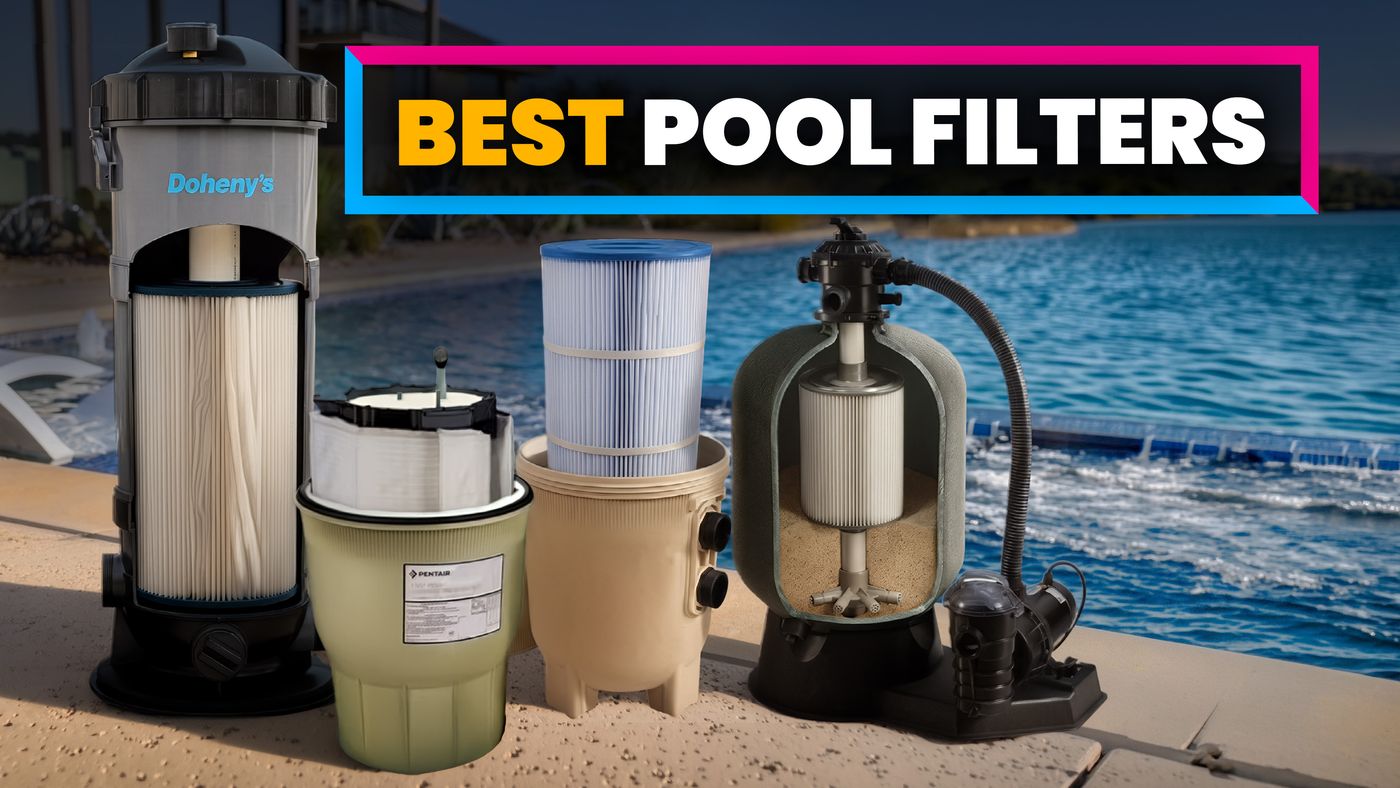
My pick for most inground pools is the Pentair Clean & Clear Plus 420. Its generous cartridge area makes it a strong starting point for homeowners who want good filtration without backwashing. For a compatible above-ground frame pool, the Intex Krystal Clear 2,800 GPH Sand Filter Pump is my first choice when the pool falls within its size range.
But a small summer pool, a permanent above-ground pool, and a large inground pool need different equipment. Buying the wrong filter can leave you with incompatible connections, frequent cleaning, or a tank that still needs a separate pump.
I've narrowed the choices to eight main picks. Here's how I'd choose between them. If you want the background on how sand, cartridge, and DE filtration actually differ, read my complete guide to pool filters first.
The Best Pool Filters at a Glance
Best Pool Filters at a Glance




| Your pool or priority | My pick | Pump included |
|---|---|---|
| Best overall for inground pools | Pentair Clean & Clear Plus 420 | No |
| Smaller inground pools | Pentair Clean & Clear 200 | No |
| Inground pools with sand filtration | Hayward ProSeries W3S244T2 | No |
| Finest filtration for inground pools | Hayward ProGrid W3DE6020 | No |
| Permanent above-ground pools | Hayward ProSeries W3S180T | No |
| Larger compatible frame pools | Intex 2,800 GPH Sand Filter Pump | Yes |
| Small seasonal above-ground pools | Intex C1000 | Yes |
| Compatible above-ground saltwater setup | Intex Sand Filter and Saltwater System 26675EG | Yes |
The Pentair and Hayward picks need a separate circulation pump. The Intex picks combine the pump and filter; the 26675EG also includes salt chlorine generation. Check the exact model number when shopping because similar product names can describe different packages.
MY QUICK VERDICT
For a medium or large inground pool, start with the Pentair Clean & Clear Plus 420 and compare everything else against it. For a compatible Intex frame pool, the 2,800 GPH sand filter pump is the complete package I would buy first. Choose sand or DE only when you specifically want backwash-style cleaning or the finest possible filtration.
How to Choose the Right Pool Filter
Start With Your Pool Type and Size
Small seasonal above-ground pools: Start with the Intex C1000 for a compatible pool up to 6,000 gallons. It's the simplest pick here for a modest pool with matching hose connections.
Larger frame pools: The Intex 2,800 GPH sand system covers a manufacturer-listed range of 5,500–17,200 gallons. Above that range, move to a properly sized separate pump-and-filter setup.
Permanent above-ground pools: Start with the Hayward S180T, then verify the pump's flow. A large oval pool or a powerful existing pump may need a larger filter. Permanent above-ground pools deserve the same sizing attention as inground pools.
Small and medium inground pools: I'd compare the Clean & Clear 200 with the larger Plus 420. The 200 makes sense when debris loading is modest and you prefer handling one cartridge. The 420 gives you more capacity for dirt.
Large inground pools: I'd start with the Plus 420 or ProGrid DE6020. For pools around 30,000–40,000 gallons and above, confirm the circulation design instead of relying on a generic "large pool" label. These are shopping starting points, not guaranteed gallon limits.
Fiberglass, vinyl, concrete, and gunite pools: The surface doesn't require its own filter category. Water volume, plumbing, debris, and your maintenance preferences matter more. The same applies to round, oval, and rectangular pools.
Choose Between Cartridge, Sand, and DE
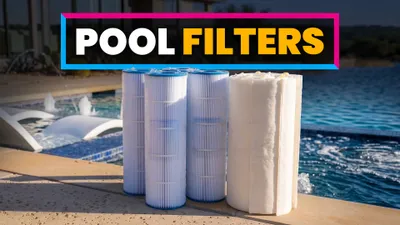
Cartridge is my default for most inground owners. Pleated elements trap debris, and you remove and rinse them when they need cleaning. There's no backwash cycle draining water from the pool, although rinsing still uses water. The tradeoff is handling the cartridges and eventually replacing them.
Sand is my pick for straightforward routine cleaning. You backwash and rinse through a valve instead of regularly removing filter elements. Conventional sand generally captures coarser particles than cartridge or DE media. Backwashing also means replacing lost pool water. My full sand lineup, including more above-ground packages, is in the best sand pool filters guide.
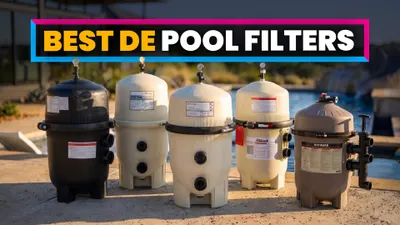
DE is my pick when fine filtration comes first. Diatomaceous earth coats internal grids and captures very small particles. It generally provides the finest filtration of these three types, but you must handle DE powder, service the grids, and recharge the filter as instructed after cleaning. I compare all three Hayward DE models in the best DE pool filters guide.
Compare filtration area within the same filter type. A 60-square-foot DE filter and a 420-square-foot cartridge filter use different media and loading rates, so their area numbers aren't a direct performance comparison.
Size the Filter to the Actual Flow
Pool gallons are only part of the calculation. The filter must also accommodate the water your pump pushes through it, including higher programmed speeds.
A useful planning calculation is:
Pool gallons ÷ circulation hours ÷ 60 = gallons per minute
For illustration, circulating a volume equivalent to a 20,000-gallon pool over eight hours takes about 42 GPM. A 30,000-gallon pool takes about 63 GPM; a 40,000-gallon pool takes about 83 GPM.
Eight hours is an example, not a universal runtime recommendation. One theoretical turnover doesn't guarantee that every drop has been filtered. Actual flow depends on the pump, plumbing, filter resistance, and other equipment. Check the manufacturer's recommended flow and operating limits before buying.
Here's how that affects the shortlist: the 40,000-gallon example needs about 83 GPM, exceeding the Hayward S244T2's 62 GPM design flow. For that circulation plan, I'd compare a suitably sized cartridge or DE filter instead.
Also distinguish pump flow from system flow. The Intex "2,800 GPH" pump is rated at 2,150 GPH through its complete system. That distinction matters when comparing packages.
I generally favor extra filter capacity when space and budget allow. More filtration area can give dirt more room to accumulate between cleanings. That doesn't mean you need a larger pump. My pool filter size calculator converts your flow into a minimum filter area for each media type, and the pool pump size calculator gives you the flow number to start from.
Check Connections and Ongoing Costs
Confirm hose or pipe size, valve compatibility, and enough clearance to remove the lid and cartridges. Include installation, required sand or DE, replacement elements, and backwash water in your budget.
For saltwater pools, confirm that the pool and equipment support the intended salinity. Saltwater sanitation and filtration are separate jobs: the salt cell generates chlorine, while the filter removes debris.
Pentair Clean & Clear Plus 420: Best Overall for Inground Pools
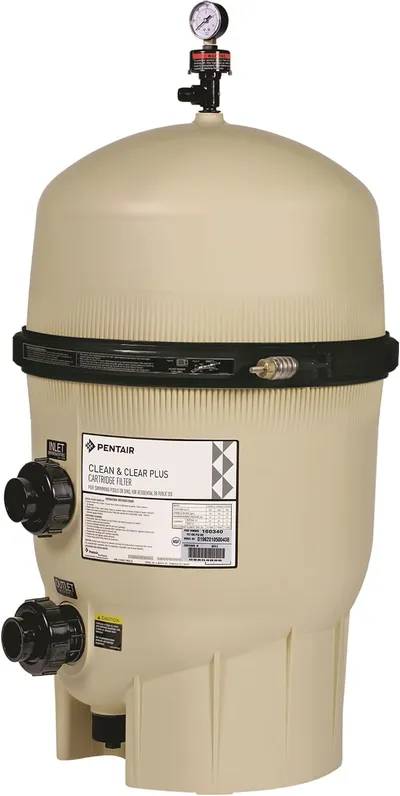
The Pentair Clean & Clear Plus 420, model EC-160301, is the filter I'd put at the top of the list for medium and large residential inground pools.
It uses four cartridges with 420 square feet of filtration area, has 2-inch plumbing connections, and doesn't require backwashing. That large surface area provides room to hold dirt between cleanings.
That matters if your pool gets frequent use or collects plenty of windblown debris. A larger cartridge filter can also make sense on a smaller pool when reducing cleaning frequency is a priority.
The ownership tradeoff is straightforward: you have four elements to rinse and eventually replace. Check the price of a complete replacement set, and make sure the installation leaves enough room to lift out the cartridges.
I'd choose the 420 when I want substantial dirt capacity and prefer cartridge maintenance. It's also where I'd start for an inground saltwater pool with compatible equipment. The circulation pump and salt system remain separate purchases.
Check the Pentair Clean & Clear Plus 420 on Amazon.
Pentair Clean & Clear 200: Best for Smaller Inground Pools
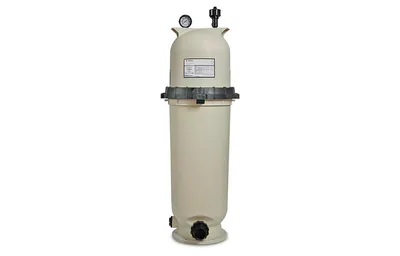
The Pentair Clean & Clear 200, model EC-160318, is my smaller-pool cartridge pick. It provides 200 square feet of filtration area in a single-cartridge design with 2-inch plumbing connections.
The appeal is having one element to remove, rinse, and reinstall. For a smaller inground pool with manageable debris, that can be a practical balance between capacity and maintenance.
The main compromise versus the Plus 420 is dirt capacity. With less filter area, I would expect more frequent cleaning under comparable conditions. I wouldn't automatically choose it just because the pool is small if nearby trees create a constant mess.
Don't treat the 200 and 420 model numbers as gallon ratings or compare them as pump sizes. They're filter-area designations. Choose the 200 when its capacity suits your pool and you prefer the single-element arrangement; step up to the 420 when extra room for debris is worth the added cost.
Check the Pentair Clean & Clear 200 on Amazon.
Hayward ProSeries W3S244T2: Best Sand Filter for Inground Pools
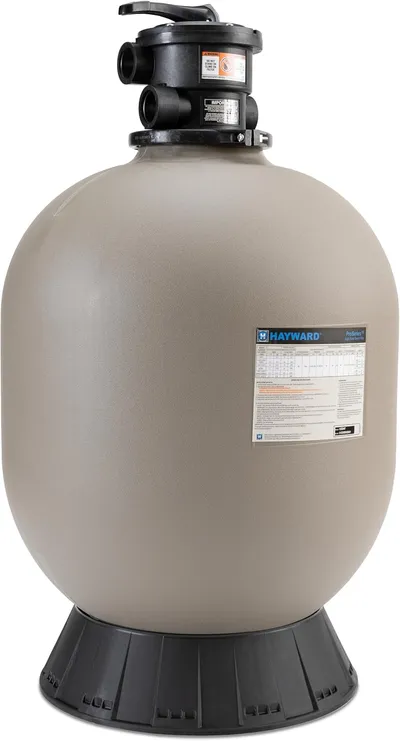
The Hayward ProSeries W3S244T2 is my inground sand pick for owners who prefer backwashing to rinsing cartridges.
This nominal 24-inch filter uses 300 pounds of No. 20 pool-filter sand, has a 2-inch top-mounted valve, and carries a 62 GPM design flow rating. It's a filter-and-valve purchase; you'll need a separate pump.
The attraction is the cleaning routine. When the filter needs service, the valve directs water through backwash and rinse cycles. You aren't routinely pulling out a set of pleated elements.
The tradeoffs are coarser particle capture and water lost during backwashing. Conventional sand is a less appealing choice if capturing the smallest particles is your main priority.
Pay attention to the 62 GPM design figure. A large pump doesn't automatically make this filter perform better. I'd choose it for a correctly matched inground system where uncomplicated routine maintenance matters more than getting the finest filtration available.
Check the Hayward ProSeries W3S244T2 on Amazon.
Hayward ProGrid W3DE6020: Best for Fine Filtration
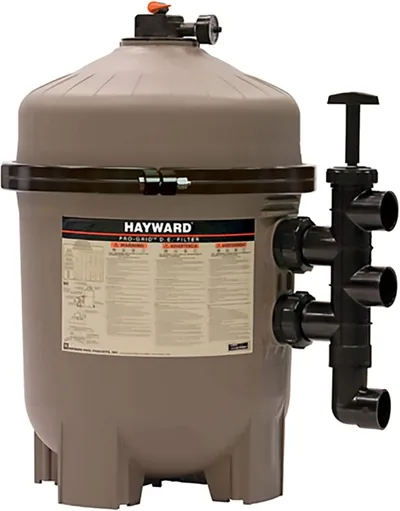
The Hayward ProGrid W3DE6020 is my pick for owners who prioritize capturing fine particles and accept the maintenance that comes with DE.
It provides 60 square feet of DE filtration area and a 120 GPM design flow rating. Budget for a separate pump and compatible backwash valve unless your chosen bundle explicitly includes them.
The reason to choose it is the DE filtration process. A layer of DE coats the grids and provides finer particle capture than conventional sand. For someone willing to service the system carefully, that's a worthwhile benefit.
But DE adds work. The grids need cleaning, and the powder must be replenished according to the manual. Don't assume the recharge amount after backwashing equals the initial full charge.
For a smaller system, the ProGrid W3DE3620 is the alternative I'd consider within this family. It has 36 square feet of filtration area and a 72 GPM design flow rating.
I'd choose either ProGrid for filtration performance first. If easy ownership is my priority, I'd lean toward the Pentair cartridges.
Check the Hayward ProGrid W3DE6020 on Amazon.
Hayward ProSeries W3S180T: Best for Permanent Above-Ground Pools
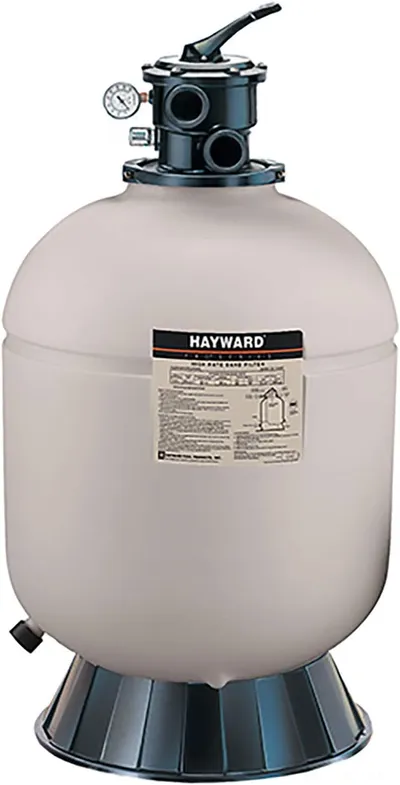
The Hayward ProSeries W3S180T is my pick for a permanent above-ground pool with a separately matched circulation pump.
Its 18-inch tank uses 150 pounds of No. 20 sand, with a 1.5-inch multiport valve. Hayward lists a 35 GPM design flow, which corresponds to 16,800 gallons circulated over eight hours. That is turnover arithmetic at the rated flow, not an unconditional maximum pool size.
I like this option for owners who want sand filtration with a conventional valve-based cleaning routine and already have suitable equipment.
The exact package matters. W3S180T does not include a pump. Hayward sells similarly named complete systems, so confirm the full model number instead of shopping from a picture.
For a larger permanent pool, verify that the filter and pump can deliver the intended circulation without exceeding the filter's limits. A bigger oval pool may justify a larger filter. I'd choose the S180T when its flow and capacity fit, rather than treating it as a universal upgrade for every above-ground pool.
Check the Hayward ProSeries W3S180T on Amazon.
Intex Krystal Clear 2,800 GPH Sand Filter Pump: Best for Larger Above-Ground Frame Pools
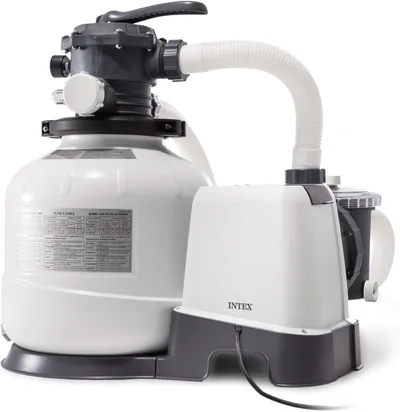
Intex Krystal Clear 2,800 GPH Sand Filter Pump
Best Complete Sand Filter Package for Larger Frame Pools
The Intex Krystal Clear 2,800 GPH Sand Filter Pump, model 26647EG, is my preferred complete sand-filter package for compatible frame pools in its 5,500–17,200-gallon range.
Its rated system flow is 2,150 GPH. It combines the pump, a 14-inch sand tank, a timer, and a multi-function valve, with two 1.5-inch hoses. The tank takes 77 pounds of No. 20 silica sand.
The main benefit is moving to sand filtration without assembling a separate pump-and-filter combination. It's a sensible option when you're tired of tending small replacement cartridges and your pool supports the connections.
Check the fittings carefully. Intex says plunger valves and 1.5-inch outlet fittings aren't included. A different brand's frame pool may require approved adapters; matching the hose diameter alone doesn't establish compatibility.
You'll still need to backwash, rinse, and clean the pump basket. I'd choose this when I want the convenience of a complete sand system and fewer small cartridges to replace. If you are still shopping for the pool itself, my best above-ground pools guide covers the Intex frame pools this pairs with.
Check the Intex Krystal Clear 2,800 GPH Sand Filter Pump on Amazon.
Intex C1000 Krystal Clear Cartridge Filter Pump: Best for Small Seasonal Above-Ground Pools
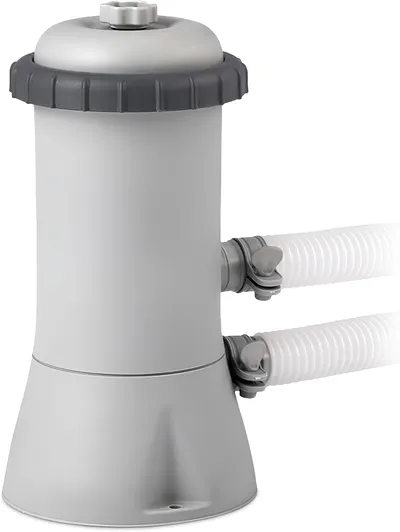
Intex C1000 Krystal Clear Cartridge Filter Pump
Best Filter Pump for Small Seasonal Above-Ground Pools
The Intex C1000 is my pick for a small compatible pool where a simple cartridge-and-pump package is enough.
Intex lists it for pools up to 6,000 gallons with 1.25-inch hose fittings. Its pump rating is 1,000 GPH, while its system flow is 750 GPH. It uses Type A replacement cartridges.
For a modest seasonal pool, I like the straightforward arrangement. There isn't a large sand tank to fill, and cartridge replacement is easy to understand.
The limitation is ongoing cartridge attention. Debris can load a small element quickly, so check it regularly and follow the cleaning and replacement instructions. Include replacement cartridges in the ownership cost.
I wouldn't use the C1000 to stretch the limits of a larger pool or compensate for heavy debris with a restrictive little cartridge. When a compatible pool falls into the larger Intex sand system's range, that's the upgrade I'd compare. For a small seasonal pool, the C1000 keeps the equipment choice simple.
Check the Intex C1000 on Amazon.
Intex Sand Filter Pump and Saltwater System 26675EG: Best Above-Ground Filter and Saltwater Combo
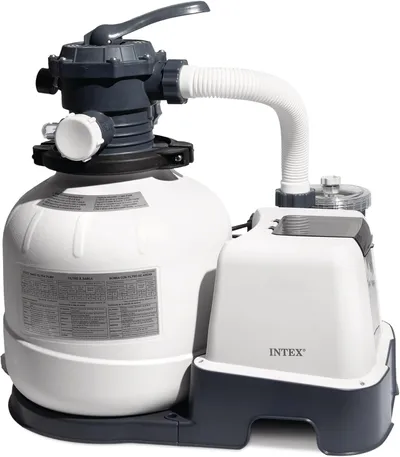
Intex Sand Filter Pump and Saltwater System 26675EG
Best Above-Ground Filter and Salt Chlorinator Package
The Intex Sand Filter Pump and Saltwater System 26675EG combines a circulation pump, sand filtration, and salt chlorine generation for compatible above-ground pools.
Intex specifies a 2,600–8,500-gallon pool range. That's a different application from the larger 2,800 GPH sand-only package, so don't assume the two cover the same pool sizes.
I'd choose this when I specifically want both filtration and salt chlorination in one package. If the pool already has suitable sanitation equipment, the sand-only unit may be the more useful purchase.
Saltwater still contains chlorine. This unit generates it from dissolved salt, so you still need to test the water, adjust output, maintain chemistry, and care for the cell. You'll also maintain the sand filter. My saltwater pools guide covers what that routine looks like.
Confirm that your pool manufacturer permits saltwater use, particularly with metal components. I'd choose this package when I want to add salt chlorination at the same time as replacing the filter.
Check the Intex 26675EG on Amazon.
Getting the Most From Your Filter
Record the clean starting pressure and compare readings at the same pump speed. Follow your model's cleaning threshold. For example, Pentair specifies cleaning the Clean & Clear Plus when pressure rises 10 PSI above its starting pressure; the Hayward sand manual specifies an 8–10 PSI rise.
Before opening a filter, shut off power and fully relieve pressure according to its manual. Always stop the pump before changing a multiport valve's position.
If you only need a replacement cartridge or DE grid, match the existing filter's exact model and specified part number. A complete new tank isn't automatically necessary because the internal media is worn.
Finally, filtration works alongside sanitation and physical cleaning. Keep skimmer and pump baskets clear, remove settled debris, brush as needed, and maintain water chemistry. A new filter alone won't solve every case of green or cloudy water. The full cleaning procedures for each filter type are in my complete guide to pool filters.
My Final Verdict
For most inground owners, I'd start with the Pentair Clean & Clear Plus 420. The Clean & Clear 200 is my smaller-pool alternative, while the Hayward W3S244T2 suits owners who prefer sand and the ProGrid DE6020 suits those who prioritize fine filtration.
For above-ground pools, I'd choose the Intex C1000 for a small seasonal setup, the Intex 2,800 GPH sand system for a compatible larger frame pool, or the Hayward S180T for a properly matched permanent installation. The Intex 26675EG earns its place when you also want salt chlorine generation.
Choose the category that fits your pool, verify the flow and connections, and buy enough filter capacity for the debris you actually deal with. That's what turns a good filter into the right filter for your pool.
This article contains Amazon affiliate links. The Pool Nerd may earn a commission on qualifying purchases at no extra cost to you. Product specifications, prices, and availability can change; verify the exact model before ordering.
Related Reading
- Pool Filters: The Complete Guide
- Best Sand Pool Filters
- Best DE Pool Filters
- Pool Filter Size Calculator
- Pool Pump Size Calculator
- Best Pool Pumps
- Best Above-Ground Pools

Comments
Loading comments…