
 Justin D.
Welcome back to The Pool Nerd. I'm Justin, your resident pool aficionado. Today, we're tackling the one thing every pool owner hates walking out to: a green pool.
Here's the thing: most people treat algae like a chlorine problem. They panic, drive to the pool store, and walk out with a bag of five different products. That is the wrong way to handle it. An algae bloom means your water lost enough sanitizing power for algae to take hold. Restore that power, physically remove the algae, and the pool can recover fast.
Let me show you exactly what to buy, how much you may need, and the ORP-first method I use to clear a green pool without the chemical circus.
Products and Tools Mentioned in This Guide


The Short Version
To clear a green pool fast, brush every surface and lower the pH to 7.0–7.4, depending on your pool type, so chlorine can work efficiently. Then add liquid chlorine, watch the ORP response, and maintain strong sanitizing power until the water shifts from green to cloudy gray-blue to clear.
Run the pump continuously during the recovery, vacuum heavy dead algae to waste, clean the filter as needed, retest, and rebalance. In a typical bloom where the rest of the water is in range, the two treatment chemicals doing the work are liquid chlorine and muriatic acid.
If you do not know your pool volume, calculate it first with the pool volume calculator. For a broader four-step recovery overview, see my guide to cleaning a green swimming pool.
What Sets Off an Algae Bloom
Algae spores are always finding their way into your pool. Rain, wind, and dirt carry them in constantly, and a swimsuit that went into a lake last weekend can bring in plenty more. That is the part you cannot stop.
What you can control is whether those spores get a foothold, and that comes down to sanitizing power. When the water oxidizes contaminants faster than they arrive, spores die before they multiply. When it cannot keep up, they bloom—and a bloom multiplies fast. A little green haze on Monday can become a full swamp by Friday.
Low chlorine, high pH, excessive CYA, a dirty filter, and weak circulation can all drag sanitizing performance down. Here is the kicker: chlorine concentration alone does not tell you whether the water is winning that fight. You can read a seemingly normal chlorine number and still have poor performance. That is where ORP monitoring is useful.
Read Your ORP, Not Just Your Chlorine
ORP stands for oxidation-reduction potential, measured in millivolts. It is a real-time indication of how strongly the water is oxidizing—not simply how much chlorine is present, but how the sanitizer is performing under the pool's current conditions.
Commercial aquatic facilities use ORP because it provides a fast operational signal alongside routine disinfectant and pH testing. It does not replace those tests or prove by itself that water is safe to swim in. Probe condition, calibration, pH, CYA, temperature, and contaminants can all affect the reading.
| ORP Reading | What It Usually Means |
|---|---|
| Above 700 mV | Strong sanitizing performance in a properly balanced pool. |
| 650–700 mV | A generally useful operating range; watch the trend and confirm pH and free chlorine. |
| Under 650 mV | Sanitizing power is slipping. Check pH, chlorine, CYA, debris, and circulation before deciding what to add. |
| Under 600 mV | Treat this as urgent. Diagnose and correct the cause before anyone swims. |
A green pool is commonly sitting well below its normal ORP trend. Your job is to correct the cause, drive the water back into a strong sanitizing range, and keep it there long enough to finish the algae off. I explain the measurement and its limitations in my full guide to ORP in swimming pools.
What You'll Need
Forget the oversized pool-store haul. Here is the short list:
- Liquid chlorine (12.5% sodium hypochlorite): The workhorse. Buy it fresh, confirm the strength on the label, store it as directed, and use it promptly because it degrades with heat and time.
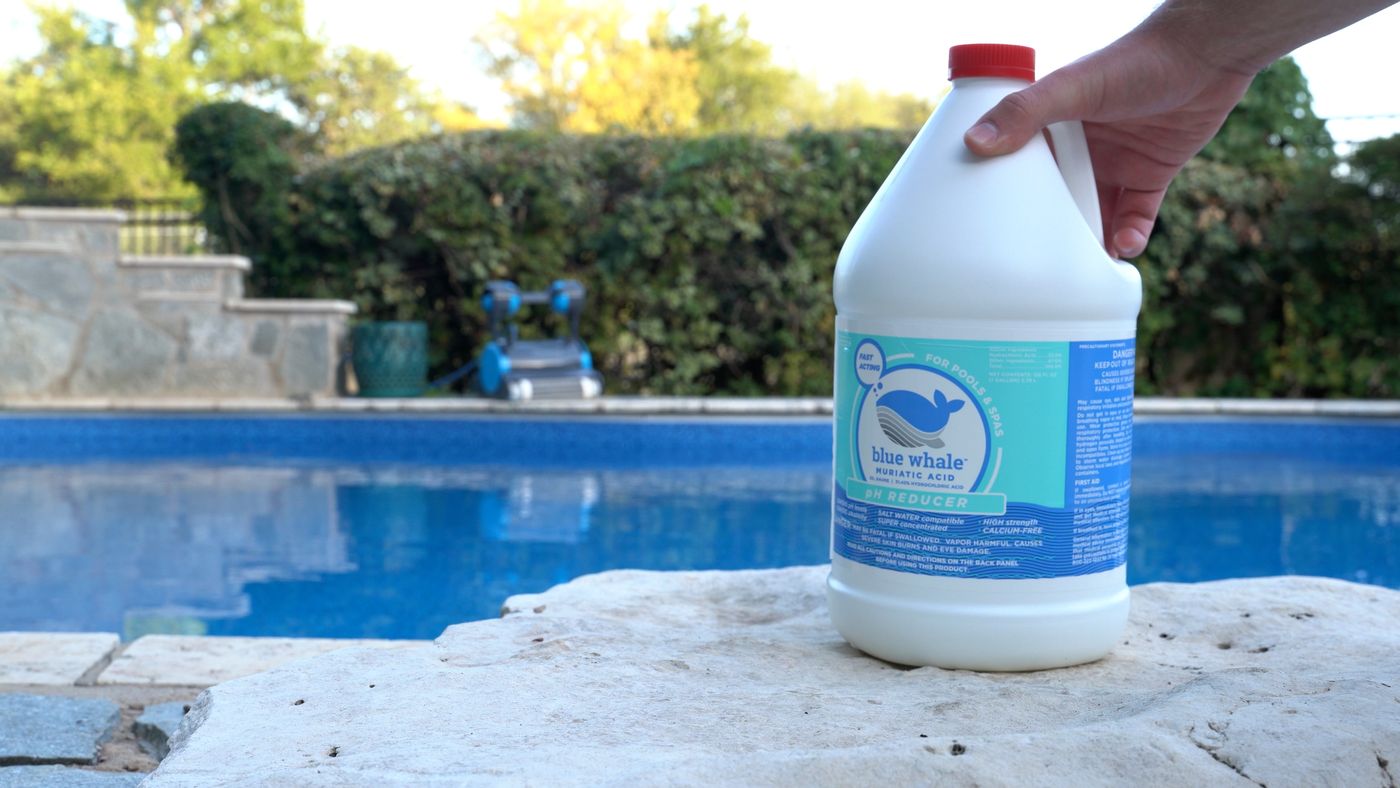
- Muriatic acid: Used only when testing shows that pH needs to come down before chlorination.
- A stiff pool brush: Use nylon bristles for vinyl and fiberglass. Use a surface-appropriate brush for plaster or gunite; follow the surface manufacturer's guidance before using stainless steel.
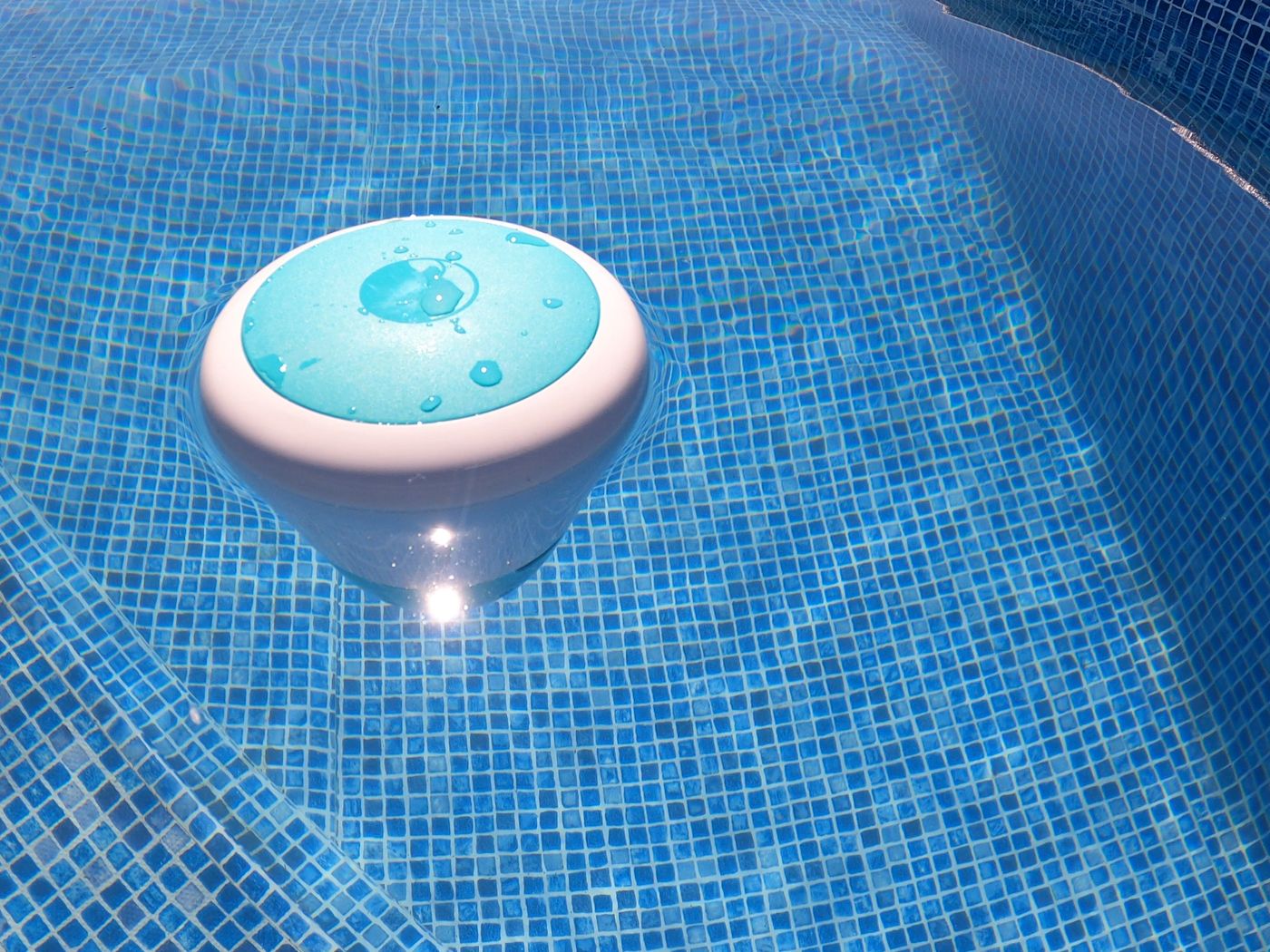
- A way to read ORP: A smart monitor such as the Ondilo ICO, or a calibrated handheld ORP/pH meter for spot checks.
- A reliable chlorine and pH test kit: ORP supplements—not replaces—manual testing. See my guide to the best way to test pool water.
- Chemical-resistant gloves and splash goggles: Non-negotiable when handling acid and concentrated chlorine.
- A manual vacuum with a vacuum-to-waste setup: The right tool for removing a heavy layer of dead algae without sending it back through the filter.
Step-by-Step: Clear the Green the ORP Way
1. Brush every surface
Grab your brush and hit the walls, floor, steps, ladders, and especially the shady corners where algae digs in. Brushing breaks up the protective film and knocks algae into suspension so chlorine can reach it and the filter or vacuum can remove it. The water may cloud up as you go, so start with the tough spots while you can still see them.
2. Drop your pH first
This is the step many pool owners skip, and it is one reason they burn through chlorine. Chlorine's unstabilized active fraction changes sharply with pH. At a pH of 7.2, roughly two-thirds is in the more active hypochlorous-acid form; at 8.0, that fraction is closer to one-fifth. CYA changes the real-world chemistry, but the operating lesson is the same: do not ignore high pH.
Use muriatic acid only if testing shows it is needed. I generally target 7.0–7.4 for vinyl or fiberglass and 7.2–7.4 for gunite during recovery. Add less than the calculated amount, circulate, and retest before adding more.
For exact dosing, use the pool pH calculator or pool acid calculator. If you need the complete process, read how to lower pool pH.
3. Superchlorinate with liquid chlorine
Now drive the sanitizing power up. With the pump running, add liquid chlorine exactly as its label directs, distributing it in moving water and keeping it away from any area where acid was recently added. Do this at dusk when possible so ultraviolet light does not burn through the dose before it has time to work.
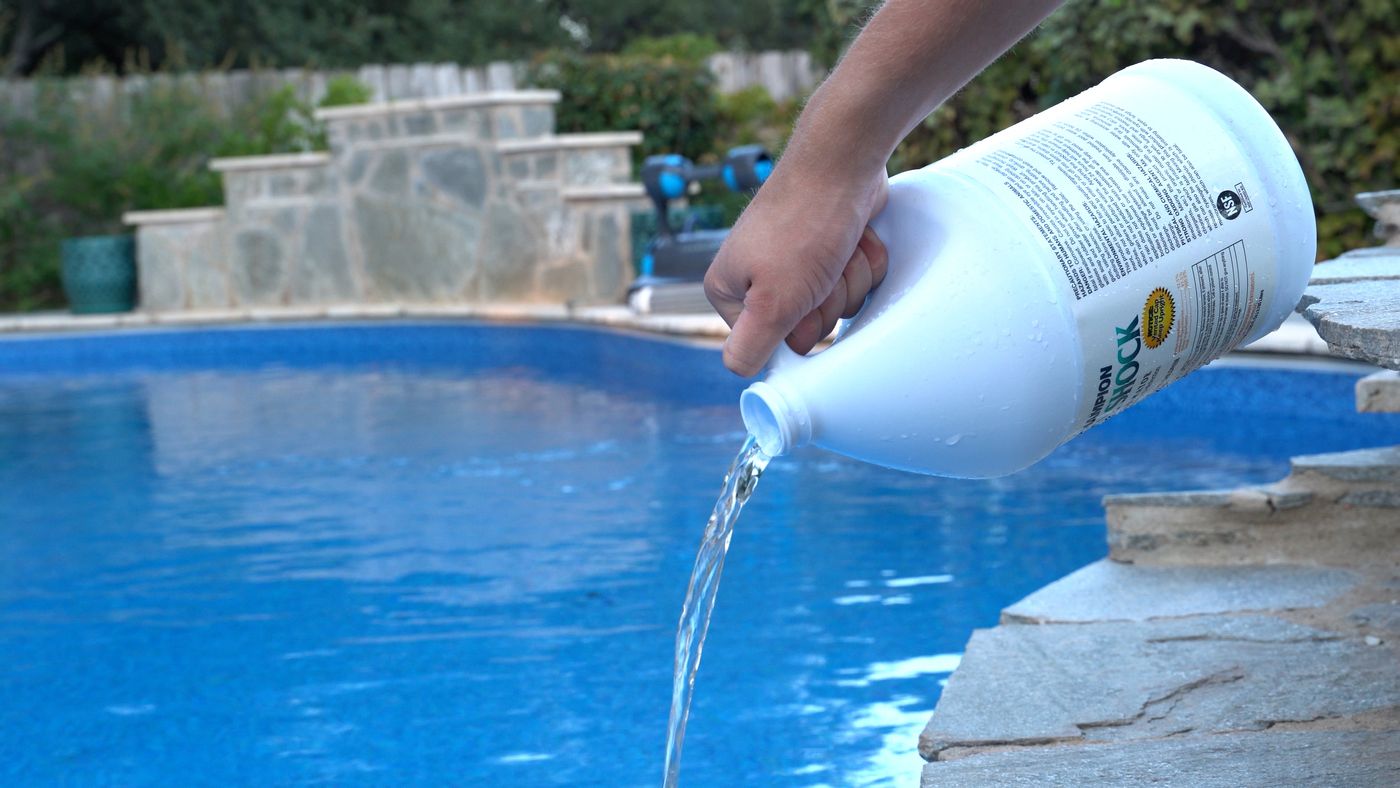
How much you need depends on the pool volume, product strength, CYA, and how severe the bloom is. The starting amounts below are a practical severity guide, not a substitute for testing. Check the pool shock calculator and my guide to adding liquid chlorine safely before dosing.
4. Run the pump and vacuum to waste
Keep the pump running continuously during the active recovery unless your equipment manufacturer says otherwise. Circulation carries sanitizer to the algae and moves suspended debris toward removal.
If you have a heavy bloom, set a compatible multiport filter to Waste and vacuum the sludge out manually. This bypasses the filter so dead algae does not immediately load it up or return to the pool. Watch the water level, top off as needed, and never run the pump dry. If your system does not have a waste setting, follow the filter manufacturer's removal procedure.
5. Hold strong ORP until the water clears
This is where patience pays off. As chlorine kills the algae, the water often shifts from green to cloudy gray-blue. That gray haze is dead algae—not a reason to stop.
Keep checking pH, free chlorine, and ORP. Re-dose only from actual test results and the product label, then keep filtering until the water clears. A bad bloom can take several rounds over multiple days. Repeat the pH and chlorine checks until the ORP trend holds and sanitizer demand no longer crashes overnight.
If the water remains cloudy after sanitation is stable, follow my guide to clearing cloudy pool water.
6. Retest and rebalance
Once the water is visibly clear, verify that ORP has returned to the pool's stable operating trend and confirm free chlorine and pH with a reliable test kit before anyone swims. Because vacuuming to waste adds fresh fill water, recheck CYA, total alkalinity, and calcium hardness too.
If chlorine is present but ORP still refuses to recover, high CYA may be part of the problem. Read my guide to chlorine lock and high CYA before adding more sanitizer.
7. Clean your filter
Your filter just caught a pool's worth of dead algae. Hose off cartridge elements and use a manufacturer-approved cartridge cleaner. Do not acid-soak a cartridge unless its manufacturer specifically allows it; acid can set oils into the media and can damage some elements. Backwash sand or D.E. filters according to the equipment instructions, and recharge D.E. only as directed.
How Much Chlorine Do You Need?
This scales with the bloom and the number of gallons you are treating. Here is where I start with fresh 12.5% liquid chlorine, assuming the pool volume is accurate and pH has already been checked:
| Algae Severity | Liquid Chlorine (12.5%) | What To Expect |
|---|---|---|
| Light green haze | 2 gallons per 10,000 gallons | One round may be enough, but retest rather than assuming. |
| Full green | 3 gallons per 10,000 gallons | Expect to re-dose as the bloom consumes sanitizer. |
| Dark green or swamp-like | 4+ gallons per 10,000 gallons | Plan on multiple test-and-dose rounds over several days. |
These are aggressive starting points, not a finish line and not a universal prescription. Product strength, CYA, sunlight, temperature, and organic load all change the result. Use the pool shock calculator, follow the chlorine label, and add in measured rounds.
The real endpoint is clear water, a stable sanitizer residual, and an ORP trend that no longer collapses overnight. Holding chlorine overnight suggests that the heavy oxidizer demand has been largely satisfied; it is still important to verify free and combined chlorine with a proper test kit.
If you prefer cal-hypo granular shock, about 1–4 pounds per 10,000 gallons covers a broad light-to-severe starting range depending on product concentration. Cal-hypo adds calcium, so check hardness first. Most importantly, follow that specific product's label exactly—some labels direct broadcasting and warn against pre-dissolving. Never improvise a mixing method.
Where I can, I stick with liquid chlorine because it adds neither calcium nor CYA. My liquid chlorine vs. pool shock guide explains the tradeoffs.
Where the Tech Earns Its Keep
Clearing a green pool is a pain. The smarter play is catching the problem early, and three pieces of equipment can make that easier.
The Ondilo ICO: your early-warning system
Blooms sneak up on people because they test once a week, if that. The ICO pool water monitor samples ORP and pH throughout the day and can alert you when the trend slips—often before the water turns green. Think of it as the canary in the coal mine for your pool, with manual testing still used to confirm what to add.
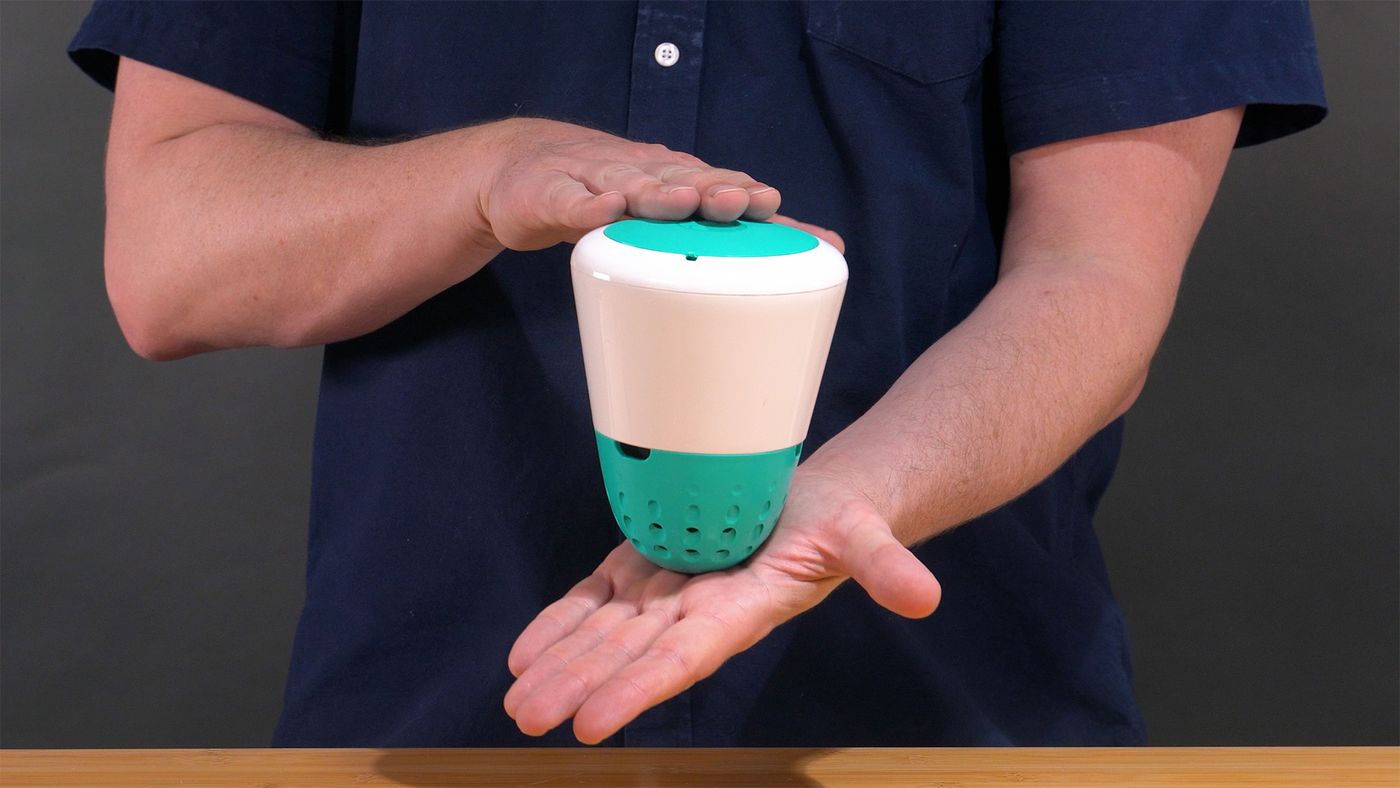
You can compare it with other options in best pool water monitors or learn more at mysmartpool.com.
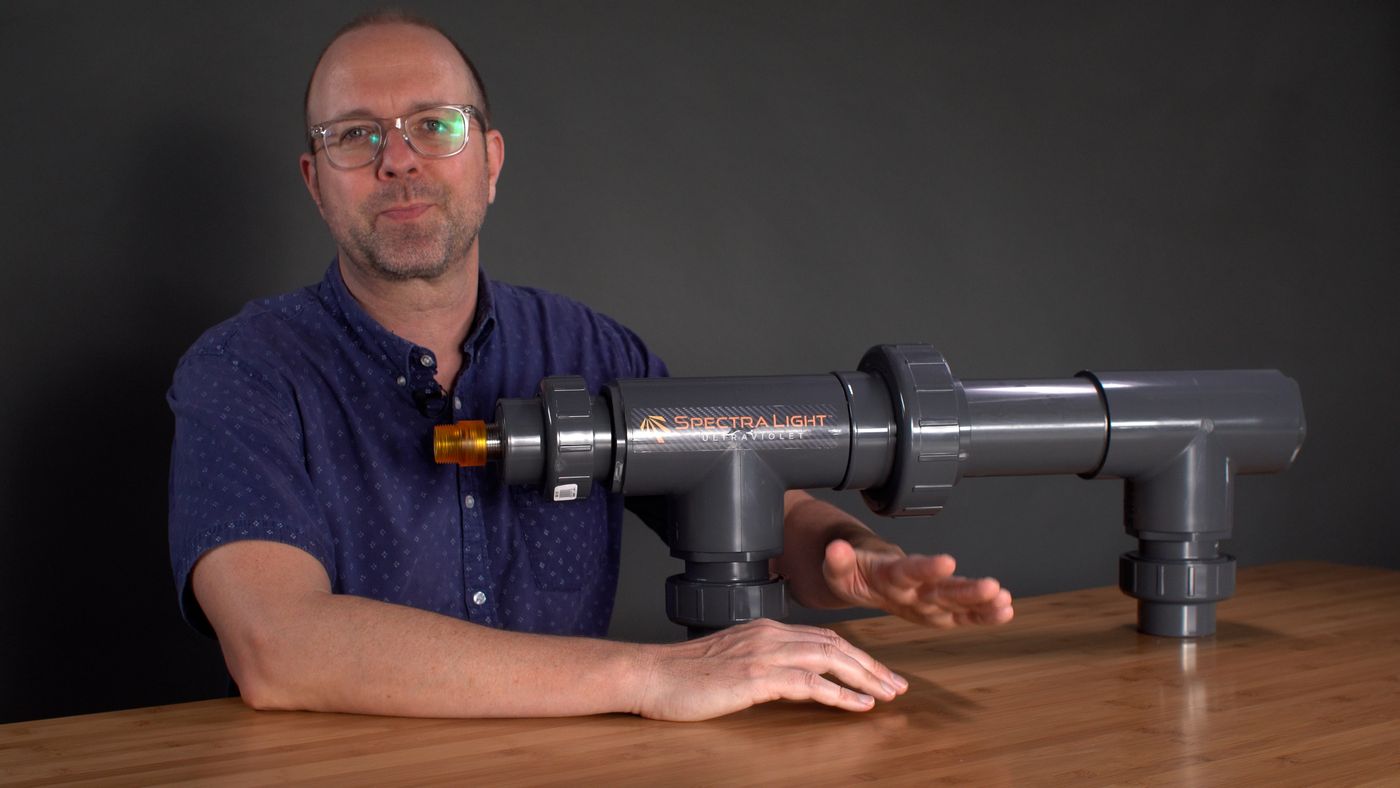
A UV system: supplemental sanitation as water passes through
A SpectraLight UV system installs inline after the filter and exposes passing water to germicidal ultraviolet light. It can inactivate algae and microorganisms in the water that actually passes through the chamber and can help break down chloramines.
UV is supplemental. It does not treat algae attached to pool surfaces and does not replace a maintained chlorine residual. Used correctly, however, it can reduce the load on the sanitizer.
A pool robot: prevention rather than heavy-bloom cleanup
During a heavy active bloom, a robot is not my first tool. Vacuuming to waste removes dead algae from the system instead of loading a small onboard filter. Between blooms, though, a quality robot is one of the best preventive tools you can own.
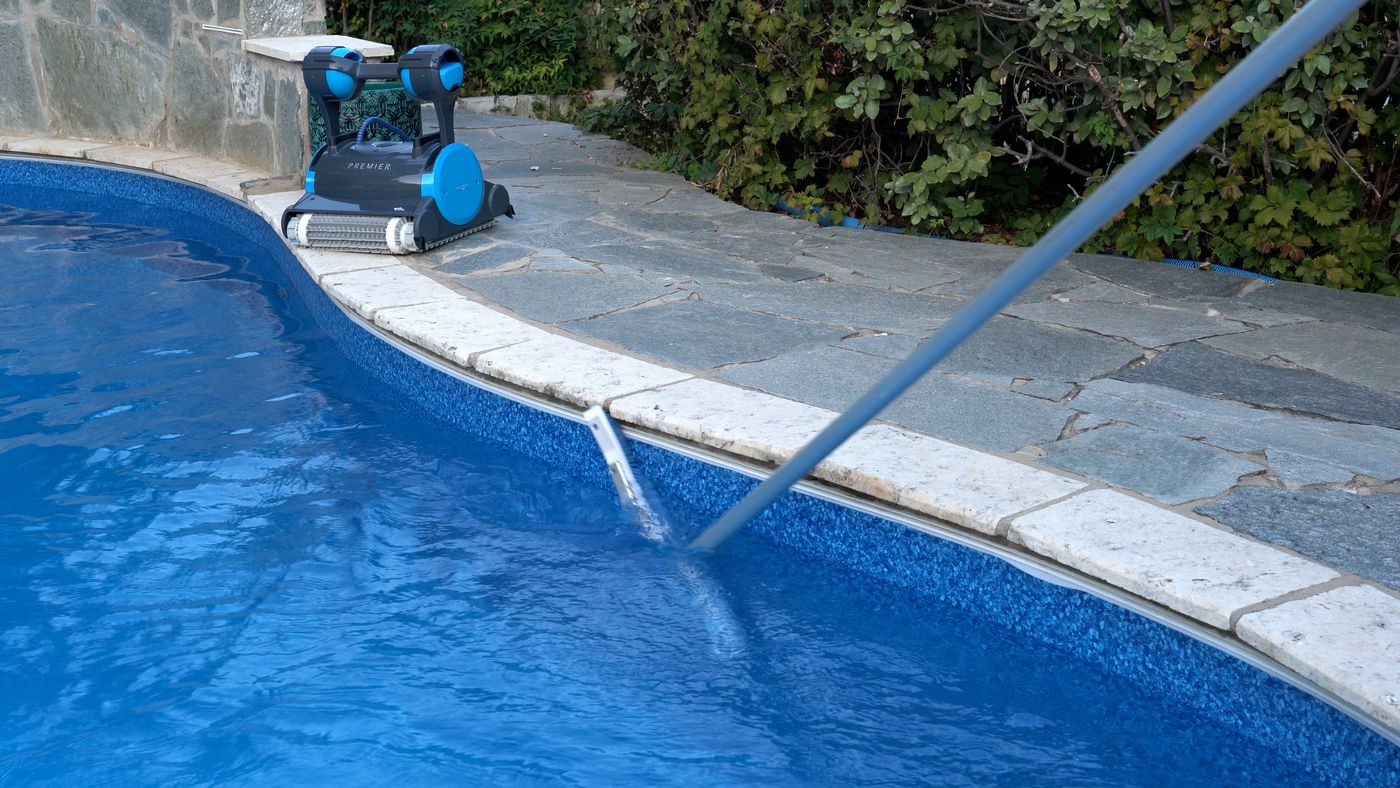
A corded Dolphin Premier with NanoFilters, run on a weekly schedule, scrubs the floor and walls and traps the fine debris that feeds sanitizer demand. Corded power, fine filtration, and scheduling are my three non-negotiables. Compare the current field in my guides to the best robotic pool cleaners and best corded robotic pool cleaners.

A Few Quick Answers
Can you swim in a pool with algae?
I would not. Algae itself is not the only concern: water with enough sanitizer failure to support a bloom can also support harmful microorganisms. Cloudy water that hides the bottom is a drowning hazard. Keep everyone out until the water is clear and reliable testing confirms that sanitizer and pH are in range.
Is a saltwater pool any different?
No. A saltwater pool is still a chlorine pool—the cell simply makes chlorine from salt. The same pH, testing, brushing, circulation, and filtration principles apply. Liquid chlorine can provide a temporary boost when the cell cannot keep up, but follow the cell manufacturer's guidance. See my saltwater pool maintenance guide for the normal routine.
Will my robot clean up the algae?
For a heavy active bloom, use a manual vacuum to waste when your plumbing allows it. A robot's small filter can clog quickly and cannot send waste out of the pool. For prevention and light debris between blooms, a good robot is one of the best tools you can use.
What about a phosphate remover?
Usually, skip it during recovery. Phosphates are one nutrient source for algae, but removing them does not correct weak sanitation. Restore and maintain effective sanitizer first. Treat phosphate control as an optional secondary strategy, not a substitute for chlorine.
My Final Verdict
So what is my final verdict on getting rid of pool algae?
A green pool looks like a disaster, but the core fix is simple once you stop thinking like a pool store. For a typical bloom, the two treatment chemicals doing the heavy lifting are liquid chlorine and muriatic acid: lower high pH when testing calls for it, restore strong sanitizing power, hold it until the water clears, and clean the filter.
Then let continuous monitoring, supplemental UV, and a good robot help keep the pool from getting there again. Build those tools around consistent weekly pool maintenance, not in place of it.
Do that, and you will spend less time chasing chemicals and more time in the water. Keep nerding out, and enjoy that pool.
This information is for educational purposes only. Handling pool chemicals—especially muriatic acid and chlorine—involves significant risk of injury or property damage. Always follow the manufacturer's label and current safety data sheet (SDS), use the required protective equipment, and never mix pool chemicals. Use this information at your own risk.
Want to compare the ICO, SpectraLight UV, or a Dolphin robot? Head to ThePoolNerd.com/deals, where I post current deals on pool equipment I have vetted.


Comments
Loading comments…