
 Justin D.
A variable-speed pool pump is one of the few upgrades that can make a pool quieter, improve circulation, and lower electricity use at the same time. But the best variable speed pool pump is not automatically the model with the largest horsepower number.
The right pump must handle your filter, heater, sanitizer, spa, cleaner, and water features at their highest required flow. It should then spend most of the day running at the lowest speed that still provides reliable skimming, circulation, and sanitation.
I compared the current Pentair, Hayward, Jandy, and BLACK+DECKER lineups for hydraulic range, voltage, plumbing fit, controls, automation, efficiency, and support status. Model availability and specifications were checked on October 9, 2026.
START WITH YOUR SYSTEM, NOT HORSEPOWER
Read my complete Pool Pump Guide, learn the circulation math in the Pool Pump Turnover Guide, estimate required flow with the Pool Pump Size Calculator, and build a daily plan with the free Variable-Speed Pool Pump Schedule Calculator.
Quick Comparison
Best Variable-Speed Pool Pumps at a Glance
| Pick | Rated output | Voltage | WEF* | Best fit |
|---|---|---|---|---|
| Pentair IntelliFlo3 VSF | 3.0 THP | 208–230V | 7.1 | Pool/spa systems and water features |
| BLACK+DECKER Above-Ground VS | 1.5 HP | Verify nameplate | Conflicting records | Fixed above-ground installations |
| Pentair SuperFlo VST | 2.2 THP | 115/208–230V | 7.3/9.0 | Smaller inground pools and retrofits |
| Hayward Super Pump VS 700 OmniX | 1.65 HP | 115/230V | 11.7/8.6 | Existing Super Pump plumbing |
| Hayward TriStar VS 900 | 1.85 HP | 115/230V | 12.9/8.3 | Medium-to-large inground pools |
| Pentair WhisperFlo VST | 2.6 THP | 115/208–230V | 8.4 | Existing WhisperFlo plumbing |
| Hayward TriStar VS 950 | 2.7 HP | 115/230V | 10.1/7.3 | Large or demanding systems |
| Jandy VS FloPro | 1.85 HP | 115/208–230V | 8.5 | Tight pads and AquaLink systems |
| Jandy ePump | 2.7 HP | 115/208–230V | 9.3/7.5 | Integrated pool-and-spa systems |
| Pentair IntelliFlo VS+SVRS | 3.95 THP | 230V | 6.9 | Systems that specifically require SVRS |
*WEF is model- and voltage-specific; a higher number means more water moved per unit of energy under the federal test procedure. The table uses manufacturer-published values, but current ENERGY STAR records differ for some models. Confirm the exact SKU, nameplate, pump curve, and Product Finder record before purchase.
My quick verdict
- Best overall inground pump: Pentair IntelliFlo3 VSF 3.0 HP
- Best above-ground pump: BLACK+DECKER 1.5 HP Above-Ground Variable-Speed Pump
- Best value for a straightforward inground pool: Pentair SuperFlo VST
- Best Hayward retrofit: Hayward Super Pump VS 700 OmniX
- Best high-flow Hayward: TriStar VS 950
- Best Jandy retrofit: VS FloPro 1.85 HP
- Best specialized safety pick: Pentair IntelliFlo VS+SVRS
Why Buy a Variable-Speed Pool Pump?
A single-speed pump runs at full speed whether it is filtering water, operating a heater, or powering spa jets. A variable-speed pump lets you use low speed for everyday circulation and temporarily increase speed only when a specific task needs more flow.
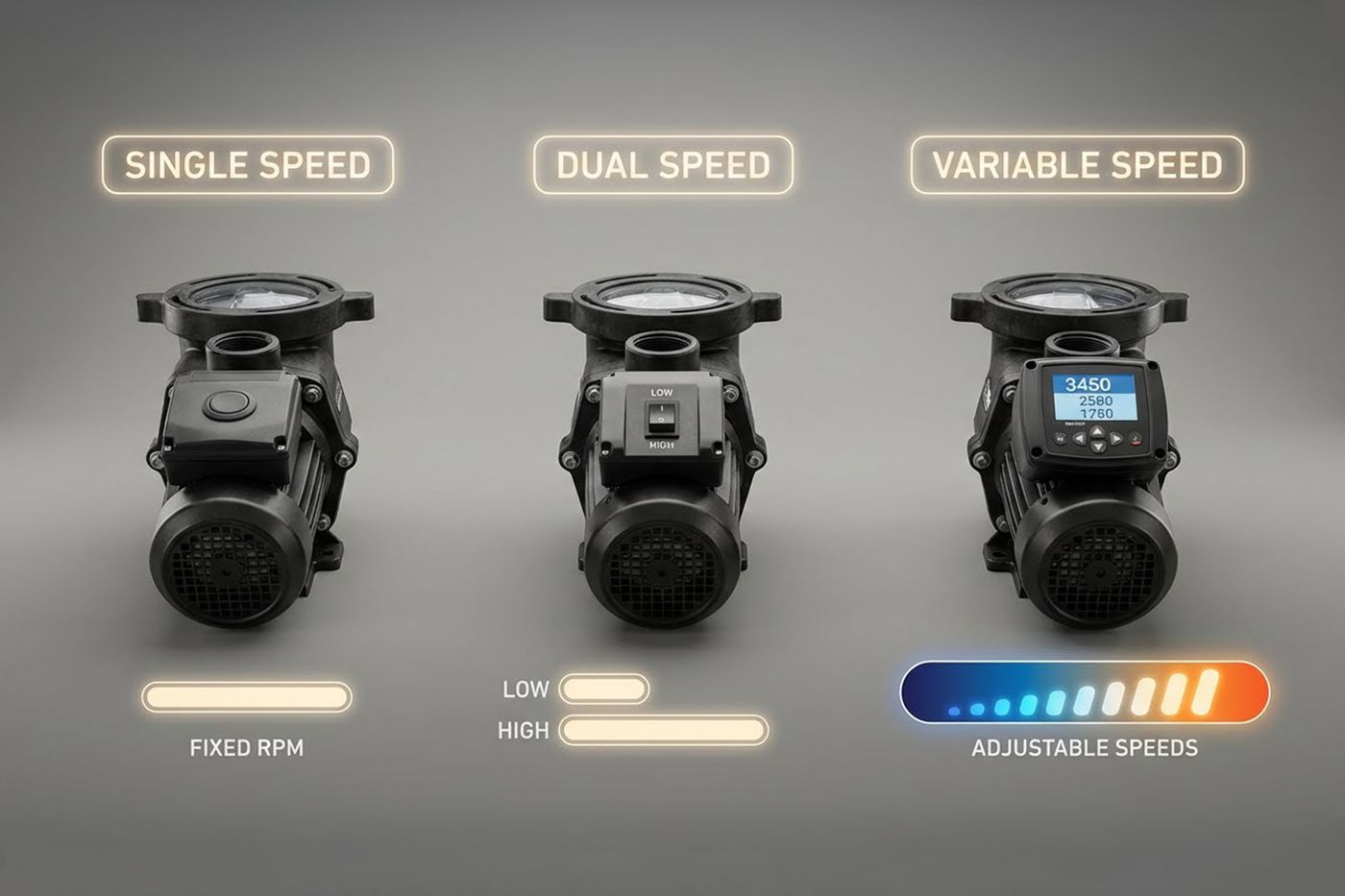
Under the pump affinity laws, cutting pump speed in half can reduce theoretical power demand to roughly one-eighth. Real pools do not follow the ideal calculation perfectly because static lift, plumbing resistance, and equipment requirements matter, but the direction is reliable: small speed reductions can produce large power reductions.
Savings claims depend on the comparison baseline. Current ENERGY STAR consumer guidance estimates about 20% less energy for certified inground pumps and 11% less for certified above-ground pumps than current standard models. Older DOE guidance estimated roughly 50%–75% when replacing traditional single-speed operation, while manufacturers advertise “up to 80%–90%” under selected assumptions. Those figures are not interchangeable or guaranteed.
The key is correct sizing and programming. Buying a variable-speed pump and leaving it at 3,450 RPM all day defeats the point.
An illustrative energy-cost calculation
Using a 24-hour variable-speed schedule that consumes 6.95 kWh per day as an example, at $0.155 per kWh the arithmetic is:
| Schedule | Daily energy | Daily cost | Annual cost |
|---|---|---|---|
| Illustrative variable-speed schedule | 6.95 kWh | $1.08 | About $393 |
| 1.8 kW single-speed pump for 8 hours | 14.4 kWh | $2.23 | About $815 |
| Difference | 7.45 kWh | $1.15 | About $422 |
This calculation assumes the same schedule every day for a year and does not establish equivalent hydraulic work between the two examples. Your result will depend on electricity rates, plumbing, pump size, flow requirements, climate, and schedule. Use the Pool Pump Runtime and Energy Calculator with measured watts instead of treating these numbers as a savings promise.
Running longer does not necessarily mean paying more. Eighteen to 24 hours of low-speed circulation can use less electricity than six to eight hours at full speed when the lower power draw more than offsets the added hours and all equipment still receives adequate flow.
How I Ranked the Pumps
I prioritized:
- Current, supported models from established manufacturers
- ENERGY STAR eligibility and Weighted Energy Factor
- Enough hydraulic range for the pump's intended pool type
- Voltage flexibility and realistic electrical requirements
- Plumbing footprint, port size, and retrofit compatibility
- Onboard scheduling, diagnostics, app control, and automation support
- Parts, warranty, and service availability
- A clear use case that separates each pick from the others
I did not rank pumps by horsepower alone. Two pools with the same gallon capacity can need very different pumps because of pipe size, total dynamic head, filter and heater restrictions, equipment-pad location, spa jets, solar heating, cleaners, and water features.
The rankings also separate current models from old inventory. A discontinued pump can still appear on Amazon for years. That does not make it the best foundation for a new equipment pad.
Best Overall Inground: Pentair IntelliFlo3 VSF 3.0 HP
BEST OVERALL INGROUND: The broadest performance range here, with flow-based control, connected scheduling, and enough headroom for pool-and-spa systems.
Pentair IntelliFlo3 VSF 3.0 HP
Best Overall for Inground Pools
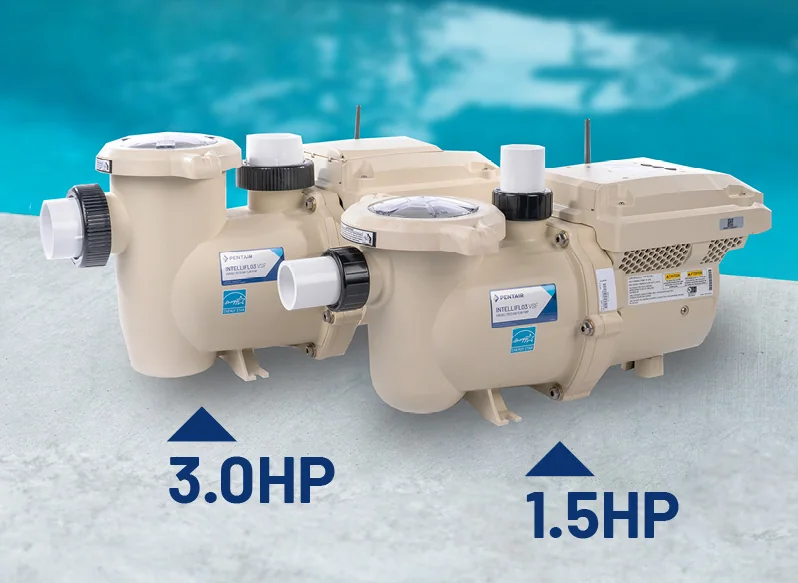
The IntelliFlo3 VSF is my best overall inground pick because it combines high-flow capability, speed or flow programming, app scheduling, and flexible plumbing options. The 3.0 HP model runs on 208–230V and supports 2-inch, 2.5-inch, or optional 3-inch connections.
Flow-based control is the differentiator. Instead of holding only an RPM, the pump can adjust speed to maintain a selected flow as system resistance changes. That can help a heater, salt system, or other flow-sensitive equipment stay within its operating range as a filter becomes dirty or valves move.
Pentair also offers a smaller 1.5 HP IntelliFlo3 for less demanding systems, with 115V or 208–230V support. For a simple pool with 1.5-inch plumbing, however, the SuperFlo VST will often be the more economical fit.
Best for: Medium-to-large inground pools, attached spas, automation, long plumbing runs, and water features.
Skip it when: The system is a basic small pool with modest flow needs. Extra pump capacity does not improve filtration by itself.
Current-model warning: The older IntelliFlo VS 011028 still appears in guides and marketplace listings, but Pentair marks it discontinued and identifies IntelliFlo3 VSF as the recommended replacement. I have not attached an Amazon button to IntelliFlo3 because I could not verify an exact affiliate listing; the available listing resolves to the different IntelliFlo VS+SVRS model.
Best Above-Ground: BLACK+DECKER 1.5 HP
BEST ABOVE-GROUND: Variable-speed scheduling, Wi-Fi, and standard above-ground plumbing—but confirm the delivered unit's nameplate because current voltage and priming documentation conflicts.
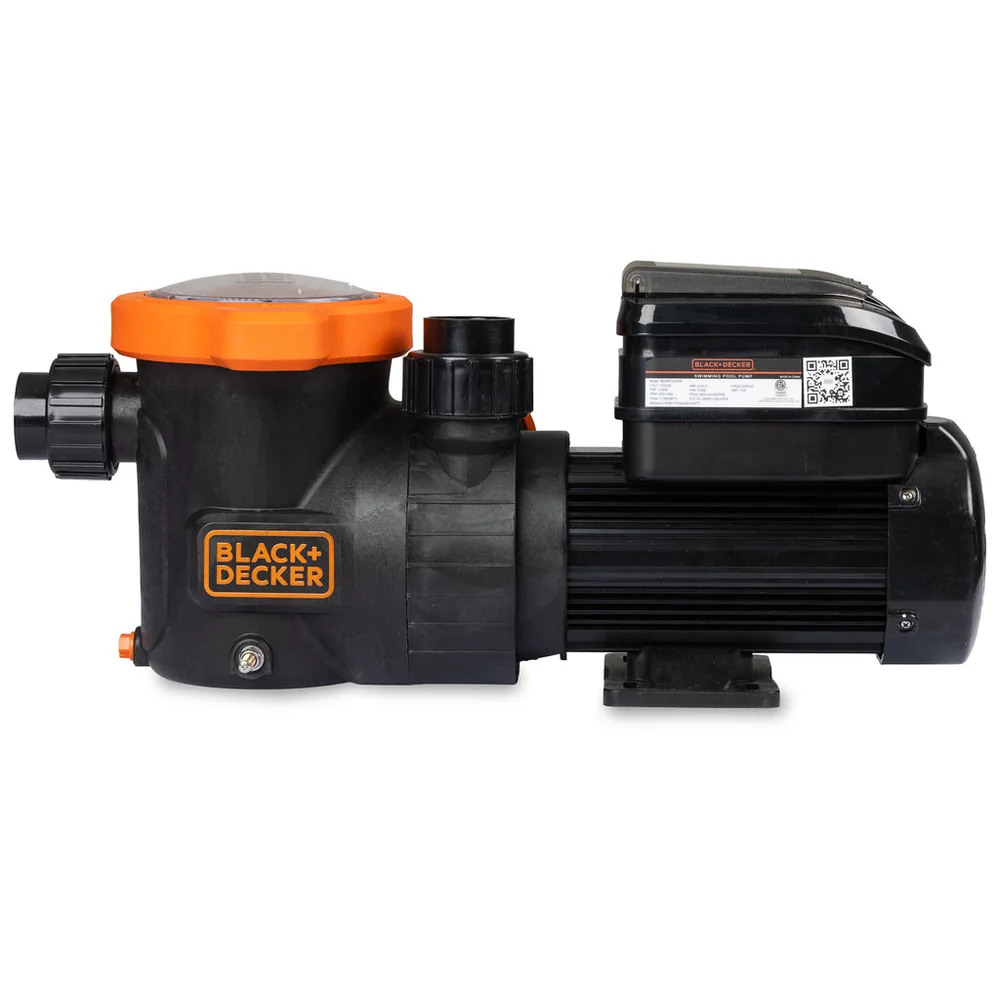
For an above-ground pool, I prefer a purpose-built above-ground pump over adapting a large inground model. The current BLACK+DECKER 1.5 HP model is marketed as ENERGY STAR certified, Wi-Fi enabled, and backed by a five-year warranty. Its 2026 manual describes a permanent-magnet TEFC motor, 1.5-inch plumbing, and a 1,000–3,450 RPM range.
The documentation is not internally consistent. The BDXBTV24333 manual says 115/230V, WEF 10.8, and self-priming operation; the current sales page says 115V; and the near-matching ENERGY STAR record lists WEF 10.2 and classifies the pump as non-self-priming. Treat voltage, WEF, and priming capability as unresolved until the seller confirms the exact SKU and you inspect the delivered nameplate and manual.
Best for: Fixed above-ground installations whose delivered model, voltage, pump curve, and priming classification match the system.
Skip it when: The pool is portable or storable, the equipment pad needs a verified self-priming lift rating, or the system has an attached spa or demanding water features. The current manual excludes storable pools, and those higher-demand applications are inground-pump jobs.
Check the current BLACK+DECKER listing on Amazon.
Best Small-to-Medium Inground: Pentair SuperFlo VST
BEST FOR STRAIGHTFORWARD INGROUND POOLS: Dual-voltage flexibility, simple onboard scheduling, and a retrofit-friendly footprint.
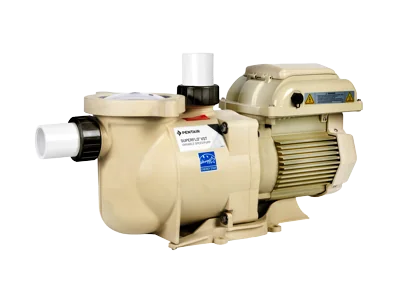
Pentair SuperFlo VST
Simple Dual-Voltage Inground Upgrade
The SuperFlo VST is the practical choice for a straightforward residential pool. Pentair positions it for systems replacing pumps up to 1.5 HP, although the current pump is rated at 2.2 THP.
It automatically adapts to 115V or 208–230V power, provides three programmable speeds, has a built-in 24-hour clock, and includes RS-485 connectivity. It is also designed as a drop-in replacement for existing Pentair SuperFlo and Hayward Super Pump installations, potentially reducing replumbing.
Pentair publishes WEF 7.3 at 115V and 9.0 at 230V, while the current ENERGY STAR record reports 8.6. Use the exact certified SKU and test record when comparing rebates or efficiency.
Best for: Smaller inground pools, standard retrofits, and homes that still have 115V at the equipment pad.
Watch the model number: Pentair marks the older SuperFlo VS 342001 discontinued. The current recommendation is SuperFlo VST 342002. The available affiliate listing points to the discontinued 342001, so I left the shopping button off instead of linking the wrong pump.
Best Hayward Retrofit: Super Pump VS 700 OmniX
BEST HAYWARD RETROFIT: A familiar Super Pump footprint with a 1.65 HP permanent-magnet motor and Hayward's current OmniX controls.
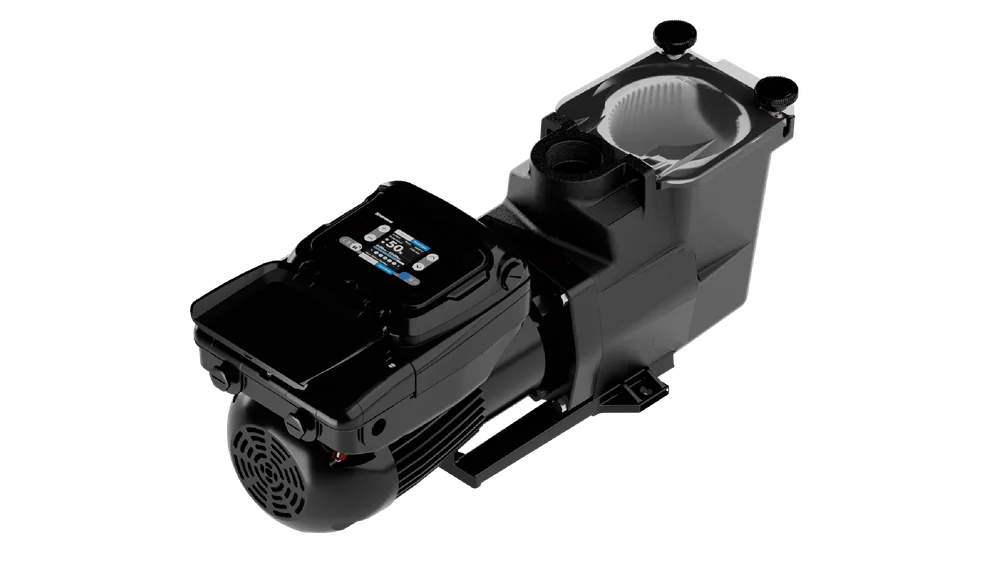
Hayward Super Pump VS 700 OmniX
Best Retrofit for Existing Super Pump Plumbing
The current Super Pump VS 700 OmniX combines the familiar Super Pump footprint with a 1.65 HP variable-speed motor, updated controls, diagnostics, and wider automation compatibility. Model SP2670020VSPX1 supports 115V or 230V operation.
That makes it a logical upgrade when an older Hayward Super Pump is already plumbed into the equipment pad. Its strongest selling point is not maximum flow; it is a lower-friction retrofit for a common installation.
Best for: Existing Hayward Super Pump owners who want to minimize plumbing changes.
Step up when: The system has a large attached spa, several waterfalls, an in-floor cleaner, or long restrictive plumbing runs.
The existing Amazon affiliate listing in this site catalog is for W3SP2603VSP, the 230V open-line model—not the dual-voltage SP2670020VSPX1 OmniX model shown above. If 230V and the non-OmniX controls fit your installation, you can check that specific W3 model on Amazon. Do not assume the two SKUs have identical voltage, controls, or warranty terms.
Best Hayward for Medium-to-Large Pools: TriStar VS 900
BEST MIDRANGE HAYWARD: More hydraulic capability than the Super Pump platform without automatically jumping to the 2.7 HP model.
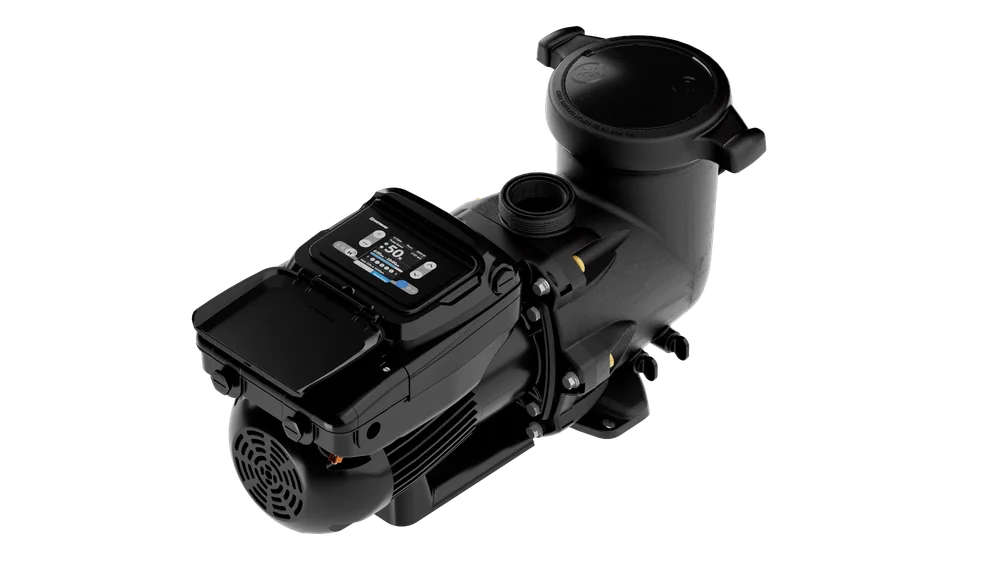
Hayward TriStar VS 900
1.85 HP for Medium-to-Large Inground Pools
The 1.85 HP TriStar VS 900 is my Hayward choice when a pool needs more hydraulic performance than the Super Pump platform provides. The current OmniX model, SP32900VSPX1, adds updated programming, diagnostics, and optional remote connectivity through the OmniX ecosystem.
The TriStar platform also posts strong WEF results: the current dual-voltage model is listed at 12.9 on 115V and 8.3 on 230V. That does not mean every pool should use 115V; WEF test results and electrical design are separate decisions.
Best for: Medium-to-large pools, 2-inch plumbing, heaters, and modest water features.
Choose it over the VS 950 when: Its pump curve already meets the highest-flow task at the system's measured total dynamic head.
The existing affiliate listing is for W3SP3202VSP, a 230V open-line TriStar VS 1.85 HP—not the current dual-voltage OmniX SKU. If that exact W3 model is what you need, check it on Amazon.
Best WhisperFlo Replacement: Pentair WhisperFlo VST
BEST WHISPERFLO REPLACEMENT: A current 2.6 THP drop-in option with more hydraulic headroom than SuperFlo VST.
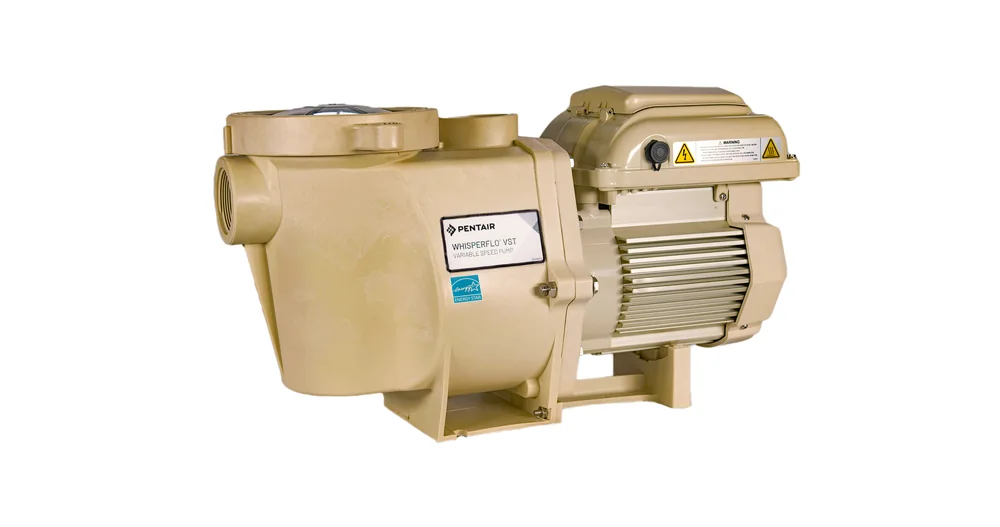
If the equipment pad already has a WhisperFlo, this is usually the cleanest upgrade. The WhisperFlo VST is rated at 2.6 THP and WEF 8.4, supports 115/208–230V power, and uses 2-inch ports.
It provides more hydraulic headroom than SuperFlo without moving into the connected, flow-based IntelliFlo3 platform.
Best for: Medium-to-large inground pools replacing an existing WhisperFlo or a similar high-performance pump.
Choose IntelliFlo3 instead when: Flow-based programming, built-in connected control, or a more demanding pool-and-spa system is the priority.
Check the current WhisperFlo VST listing on Amazon.
Best Hayward for Large Pools: TriStar VS 950
BEST LARGE-POOL HAYWARD: A 2.7 HP platform for attached spas, longer plumbing runs, and systems with heavier feature demand.
Hayward TriStar VS 950
2.7 HP for Large or Hydraulically Demanding Pools
The TriStar VS 950 is the higher-flow Hayward choice for large pools, attached spas, longer plumbing runs, and systems with heavier water-feature demands. The current SP32950VSPX1 OmniX model is dual-voltage and uses a documented 137-cubic-inch no-rib debris basket.
Its size only produces meaningful energy savings when the schedule keeps it at low speed for ordinary filtration. Do not install a large variable-speed pump and leave it running near maximum speed all day.
Best for: Large or hydraulically demanding inground systems.
Skip it when: The VS 900 pump curve already satisfies the heater, cleaner, spa, and feature requirements. Buying a larger pump does not automatically improve water quality.
The available affiliate listing is the W3SP3206VSP 2.7 HP open-line model rather than SP32950VSPX1 OmniX. If that exact W3 pump fits your controls and warranty plan, check it on Amazon.
Best Jandy Retrofit: VS FloPro 1.85 HP
BEST JANDY RETROFIT: Compact dimensions, an adjustable base, dual voltage, and natural integration with Jandy controls.
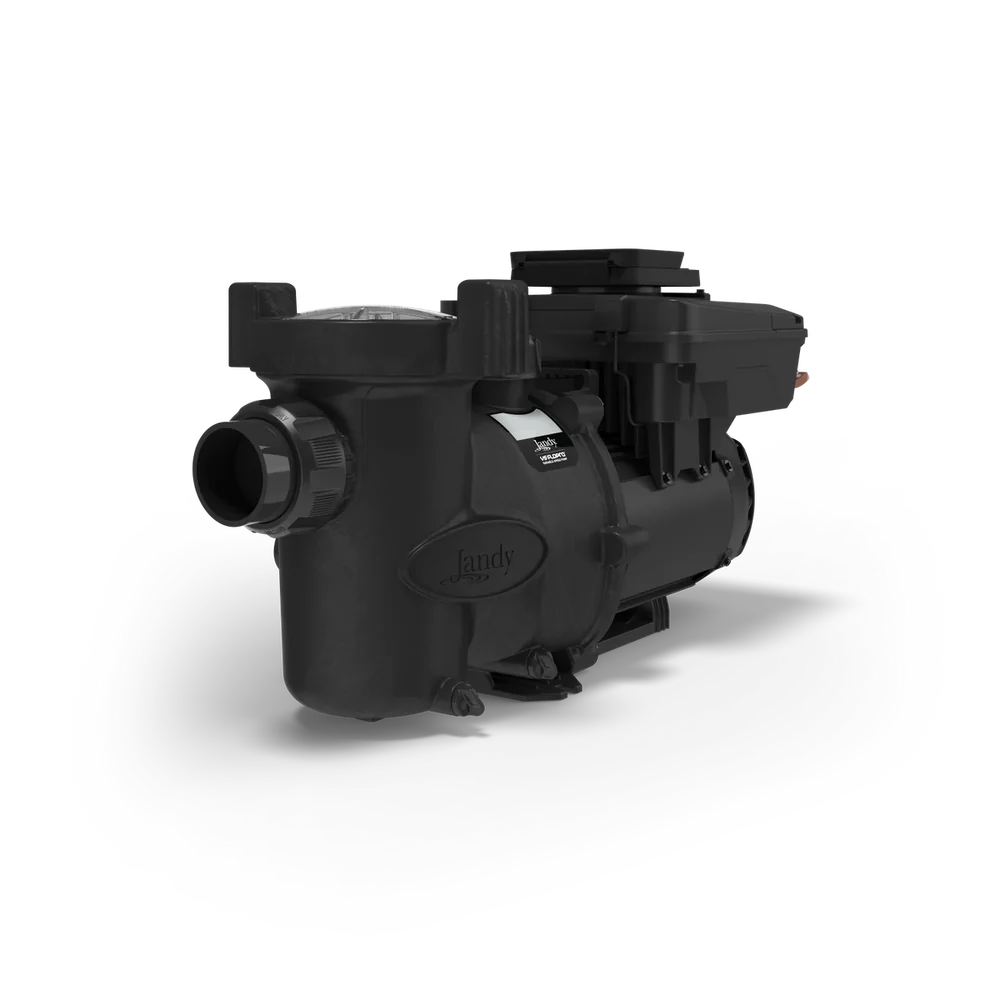
Jandy VS FloPro 1.85 HP
Compact Dual-Voltage Retrofit Pump
The VS FloPro 1.85 is an excellent retrofit when equipment-pad space or plumbing alignment is the main concern. The current dual-voltage platform supports 115/208–230V, includes an adjustable base, and is intended for medium-size pools or small-to-medium water features.
Depending on the exact SKU, it can include SpeedSet controls and two auxiliary relays. It also works with iQPUMP01 and AquaLink automation. Compare the complete model number—such as VSFHP185DV, DVS, DV2A, or DV2AS—because the included controller and relays can differ.
Best for: Tight equipment pads and pool owners already using Jandy or AquaLink controls.
Jandy's official policy prohibits online equipment sales and states that online purchases do not receive the manufacturer warranty. Buy through an authorized local pool professional if warranty coverage matters.
No Amazon button: I could not verify an Amazon affiliate URL for this exact pump, so I left it unlinked rather than send readers through a different or untracked listing.
Best Jandy Pool-and-Spa Pump: ePump 2.7 HP
BEST JANDY POOL-AND-SPA PUMP: A large-body platform with dual voltage, auxiliary relays, quieter hydraulics, and a high-capacity basket.
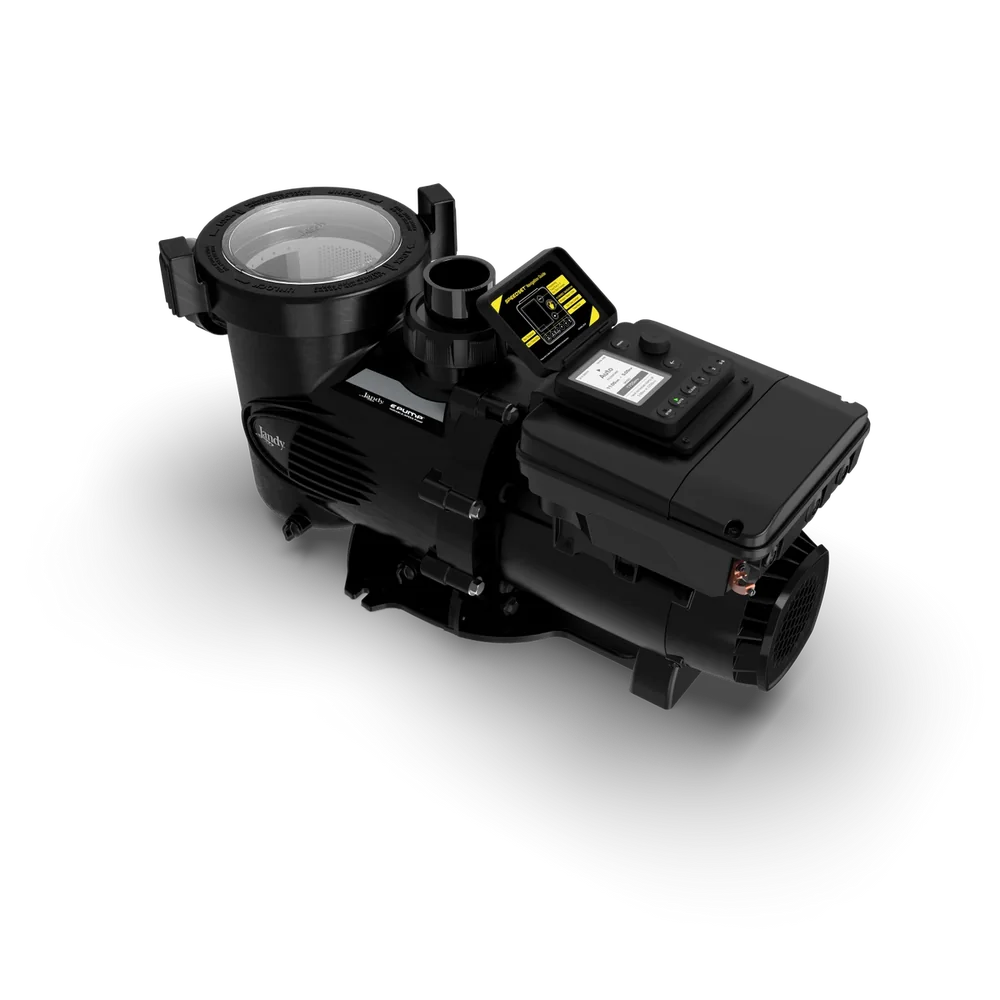
Jandy ePump 2.7 HP
Large-Body Pump for Integrated Pool-and-Spa Systems
The ePump 2.7 is Jandy's large-body, high-performance option. Current VSSHP270DV2A-series models support 115/208–230V, include two auxiliary relays, use Jandy's noise-reducing hydraulic design, and have a large smooth-surface strainer basket.
Best for: Larger pools, attached spas, and integrated Jandy equipment pads.
Jandy's official policy prohibits online equipment sales and states that online purchases do not receive the manufacturer warranty. Compare the installed price, exact controller package, local parts availability, and the installer's familiarity with AquaLink—not just the bare-pump price.
No Amazon button: I could not verify an affiliate URL for the exact current 2.7 HP ePump, so I left it unlinked.
Best with Built-In SVRS: Pentair IntelliFlo VS+SVRS
SPECIALIZED SAFETY PICK: This is for a suction design, code requirement, or risk assessment that specifically calls for a safety vacuum release system.
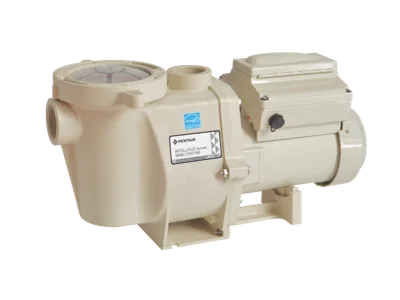
SVRS stands for Safety Vacuum Release System. The IntelliFlo VS+SVRS detects a blocked suction condition and automatically shuts down. Pentair states that the built-in system complies with the current ASME A112.19.17 standard and cannot be user-disabled during normal operation. The SVRS function is inactive during the pump's priming cycle.
The current model is rated at 3.95 THP, WEF 6.9, and 230V—not merely “a 3 HP pump” in the simple shopping sense.
This is not the default best pump for a very large pool. It is a specialized safety choice. Have a qualified pool professional inspect the suction system, drain covers, plumbing configuration, and applicable local code before selecting it.
Check the IntelliFlo VS+SVRS listing on Amazon.
What about the Hayward TriStar VS SVRS?
I left the SP3206VSPVR TriStar VS SVRS out of the main rankings. It is listed as obsolete with no superseding product shown. Old inventory may still appear online, but I would not build a new equipment pad around it without written confirmation of warranty coverage, parts, and support for that exact model.
Pool Pump Sizing Guide
Do not size a pool pump from gallons or horsepower alone. Start with four factors:
-
Required flow: Pool volume multiplied by a planning turnover target, divided by total runtime in minutes.
-
Total dynamic head: Resistance from pipe diameter, pipe length, fittings, elevation, filter, heater, valves, and other equipment.
-
Equipment limits: Minimum and maximum flow for the filter, heater, salt system, UV system, flow switches, and suction outlets.
-
High-flow tasks: Spa jets, waterfalls, in-floor cleaners, solar heating, and backwashing may determine the top of the pump curve.
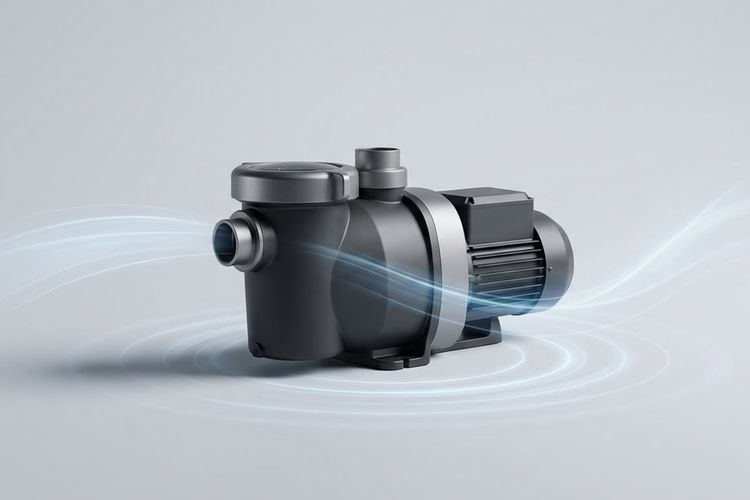
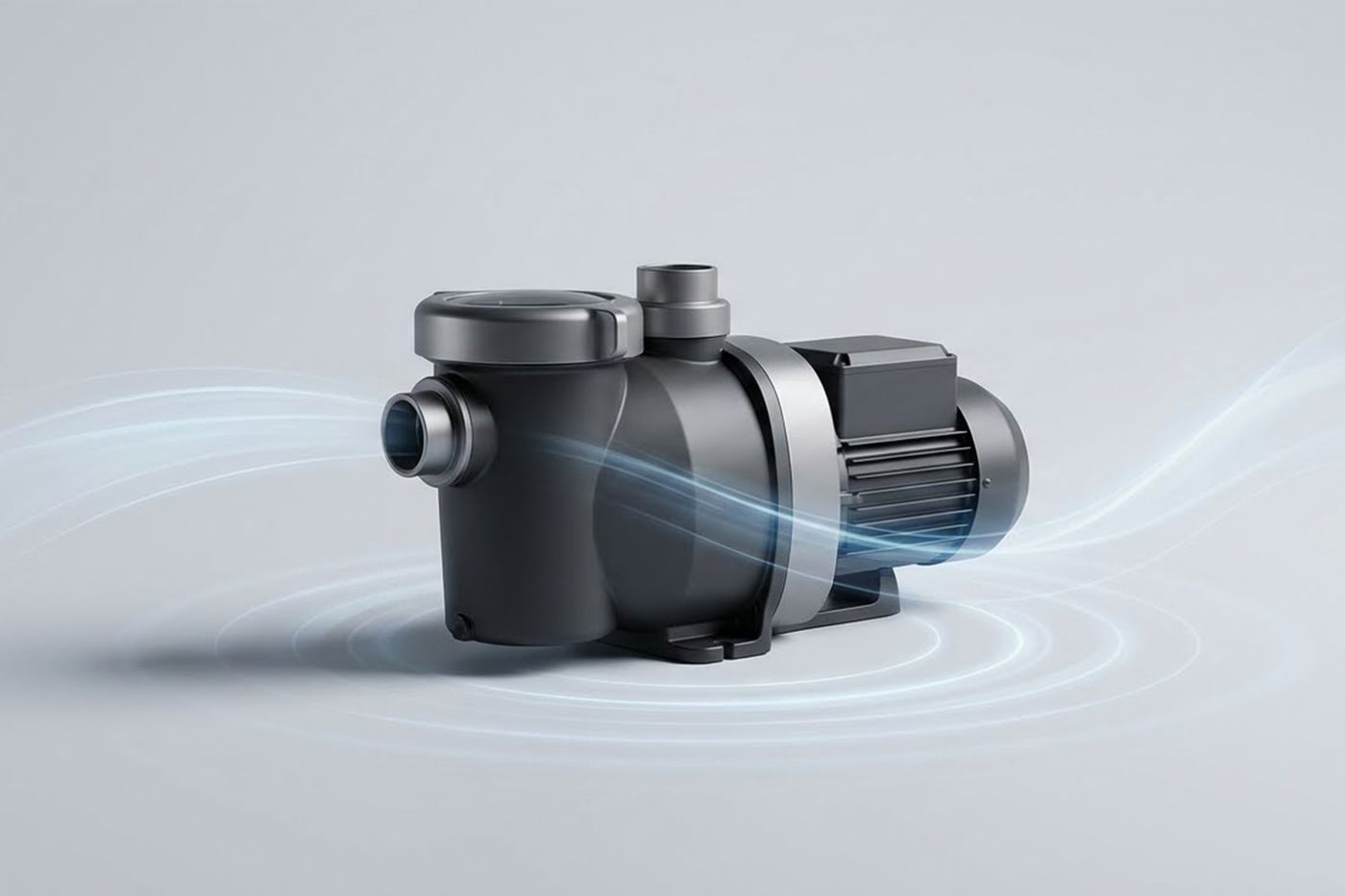
Pool pump horsepower is only one input when sizing a variable-speed pump // The Pool Nerd
A useful starting formula is:
Required GPM = Pool gallons × target turnovers ÷ runtime in minutes
For a 20,000-gallon pool targeting 1.5 theoretical turnovers over 20 hours:
20,000 × 1.5 ÷ 1,200 = 25 GPM
That does not prove 25 GPM is sufficient. The skimmer and sanitizer still have to function, every flow switch must remain closed, and high debris or bather loads can require a different schedule. Turnover is a planning tool—not a direct measure of sanitation.
Rough shopping guide
| Pool and system | Starting class—not final sizing |
|---|---|
| Typical above-ground pool | Dedicated 1–1.5 HP above-ground variable-speed pump |
| Simple small-to-medium inground pool | Roughly 1.5–2.2 THP class |
| Medium-to-large inground pool with heater or modest features | Roughly 1.85–2.7 HP class |
| Large pool, attached spa, long plumbing, or major features | Roughly 3.0–3.95 THP class |
The pump curve, measured or calculated total dynamic head, suction safety, and equipment flow limits always override this shortcut.
An oversized pump can be efficient at low speed, but incorrect maximum-speed settings can exceed what the filter, heater, plumbing, or suction system can safely handle. The best choice is usually the smallest current pump that can satisfy the highest-flow task at the system's actual head.
Variable-Speed Pump Schedule
My general approach is simple: run slower and longer.
- Use a brief higher-speed period for priming.
- Find the lowest speed that provides reliable skimming and keeps every required flow switch activated.
- Run that filtration speed long enough to maintain clarity and sanitizer distribution.
- Add one or two short higher-speed blocks for stronger skimming after wind, storms, or heavy swimming.
- Increase flow only when the heater, spa, cleaner, solar system, backwash cycle, or water feature needs it.
A starting schedule—not a universal prescription
| Task | Starting RPM range | Typical duration | What decides the final setting |
|---|---|---|---|
| Prime | 2,500–3,000 | 3–10 minutes | Lift, plumbing, and pump manual |
| Low-speed filtration | 1,200–1,800 | 12–24 hours | Flow switches, skimming, clarity, watts |
| Stronger skimming | 2,000–2,600 | 1–3 hours | Debris load and surface movement |
| Heater or salt cell | Equipment-specific | As needed | Minimum required GPM |
| Spa, cleaner, or water feature | System-specific | As used | Pump curve and feature performance |
RPM is not flow. Two pools running at 1,500 RPM can have very different GPM because their plumbing resistance is different. A flow meter—or a pump that can manage flow directly—is more useful than copying another owner's schedule.
Follow the complete variable-speed pool pump schedule guide to calculate turnover, find each equipment minimum, and test a starting program. Then use the Variable-Speed Pool Pump Schedule Calculator to estimate runtime, turnover, and energy cost before fine-tuning from actual skimming, clarity, sanitizer performance, equipment requirements, and measured watts.
Pentair vs. Hayward vs. Jandy
| Brand | Strongest reason to choose it | Best fits in this guide | Main watch-out |
|---|---|---|---|
| Pentair | Broad range from simple dual-voltage retrofits to connected flow control | SuperFlo VST, WhisperFlo VST, IntelliFlo3 VSF | Online and professional-install warranty terms can differ |
| Hayward | Strong retrofit paths for existing Super Pump and TriStar plumbing | Super Pump VS 700, TriStar VS 900/950 | Open-line, Expert Line, Omni, and OmniX SKUs are not interchangeable |
| Jandy | Natural integration with AquaLink and flexible retrofit bases | VS FloPro, ePump | Online equipment sales are prohibited by policy and lack manufacturer warranty |
Pentair has the broadest range in this guide: SuperFlo for simpler systems, WhisperFlo for conventional high-performance retrofits, and IntelliFlo3 for advanced flow control and connected operation.
Hayward is especially strong when replacing an existing Super Pump or TriStar. The newer OmniX versions make the most sense when you want Hayward-wide control, while W3 open-line models can differ in voltage, controls, and warranty.
Jandy is my first look when the pool already uses AquaLink or the installer strongly supports Jandy. FloPro is excellent for retrofit flexibility; ePump better suits a larger integrated pool-and-spa system. Plan on buying through an authorized local professional rather than online.
The best brand is often the one a trusted local installer can size correctly, integrate with the existing equipment, and service several years from now.
Rebates and Warranty
Many utilities offer rebates for qualifying ENERGY STAR variable-speed pumps, but eligibility is usually based on an exact certified model number, installation date, service address, and proof of purchase—not the brand name alone.
Before ordering:
- Search the current ENERGY STAR certified-product list by exact model.
- Check your utility's ZIP-code rebate rules and installation deadline.
- Confirm whether professional installation is required.
- Save the invoice, model/serial photo, and installation receipt.
- Submit promptly; rebate programs can close when annual funds run out.
Warranty terms can also change by seller and installation channel. Pentair generally gives authorized e-commerce purchases one-year parts-only coverage, while some online TradeGrade or unauthorized purchases may receive only a 60-day limited warranty. Hayward distinguishes open-line products from professionally installed dealer products. Jandy prohibits online equipment sales and denies manufacturer warranty coverage for online purchases. Read the current warranty for the exact SKU and seller before purchase.
Every shopping link on this page uses a verified Amazon affiliate URL. When I cannot verify an exact affiliate listing, I leave the buy button off rather than substitute a non-affiliate or different product.
Frequently Asked Questions
Is a variable-speed pool pump worth it?
Usually, yes—especially when replacing an older single-speed pump that runs several hours per day. The savings come from lowering speed and matching flow to each task, not merely buying a pump labeled variable speed. Compare the installed price and expected annual kWh with the Pool Pump Runtime Calculator.
What size variable-speed pool pump do I need?
Choose the smallest pump whose published curve can satisfy your highest required flow at the system's total dynamic head. Check the filter, heater, sanitizer, suction outlets, pipe size, spa jets, cleaner, and water features. Gallons and horsepower alone are not enough.
How long should I run a variable-speed pool pump?
There is no universal number. Many pools do well with 12–24 hours of low-speed circulation plus short higher-speed blocks. The correct schedule maintains skimming, sanitation, and clarity while meeting every equipment flow requirement at the lowest practical energy use.
What RPM should I run my variable-speed pool pump?
Roughly 1,200–1,800 RPM is a reasonable filtration experiment for many pools, with 2,000–2,600 RPM used temporarily for stronger skimming. Do not copy those numbers blindly: RPM is not GPM, and every plumbing system has different resistance.
Is a 230V pool pump more efficient than a 115V pump?
Not automatically. For the same hydraulic work, total energy use can be similar. A 230V circuit reduces current and is often appropriate for larger motors or longer wiring runs, while a dual-voltage pump can avoid an electrical conversion. Have a qualified electrician verify the circuit, breaker, GFCI protection, bonding, conductor size, and local code.
How much electricity does a variable-speed pool pump use?
It depends on speed, system resistance, and runtime. The 6.95 kWh-per-day schedule above is an illustrative calculation, not a universal measured result. Read the pump's live watt display or use a properly installed energy meter, then multiply kW by runtime hours and your utility rate.
Can a variable-speed pump be too large?
Yes. A larger pump can operate efficiently at low speed, but it costs more upfront and can exceed the safe flow rating of the filter, heater, plumbing, or suction system if programmed incorrectly. Set maximum speed or flow limits during commissioning.
Should I buy a pool pump online?
Check the exact SKU, seller, included controller, voltage, and warranty first. Marketplace titles often combine related models, and an online SKU may have different warranty coverage from a dealer-installed model. Professional installation may also be required by the manufacturer or local electrical code.
Final Verdict
For most medium-to-large inground pools, the Pentair IntelliFlo3 VSF 3.0 HP is my best overall pick. It has the widest performance range in this group, flow-based control, and enough headroom for an attached spa or water features.
For above-ground pools, the BLACK+DECKER 1.5 HP Above-Ground Variable-Speed Pump is my category winner, provided its 115V requirement and pump curve fit the system.
For a simpler inground pool, I would save money with the Pentair SuperFlo VST. If the equipment pad already has WhisperFlo plumbing, choose the WhisperFlo VST.
If the pad already has Hayward plumbing, choose the current Super Pump VS 700 OmniX or TriStar VS 900/950 based on the required flow. If the pool already runs AquaLink, the Jandy VS FloPro or ePump will usually integrate more naturally.
Do not buy the biggest pump simply because it sounds better. Buy the smallest current model that can satisfy your highest-flow task at the system's actual total dynamic head—then program it to spend most of its life running slowly.
BUILD YOUR SCHEDULE BEFORE YOU BUY
Use the free Pool Pump Size Calculator to estimate required flow, then compare schedules and electricity cost with the Variable-Speed Pump Schedule Calculator.
This article contains Amazon affiliate links. The Pool Nerd may earn a commission on qualifying purchases at no extra cost to you. Product specifications, certifications, prices, availability, rebate eligibility, and warranty terms can change; verify the exact model before ordering.
Related Reading
- Best Pool Pumps — Compare variable-speed, above-ground, and specialty pump types
- Pool Pump Size Calculator — Estimate target flow before selecting a pump curve
- Variable-Speed Pump Schedule Calculator — Build a custom 24-hour schedule
- Pool Pump Runtime and Energy Calculator — Compare measured watts and annual operating cost
- Pool Pump Turnover Guide — Calculate daily circulation from pool volume and actual GPM
- How Long to Run a Pool Pump — Tune runtime from actual pool conditions
- Pool Filter Size Calculator — Confirm the filter can handle the selected flow



Comments
Loading comments…