
 Justin D.
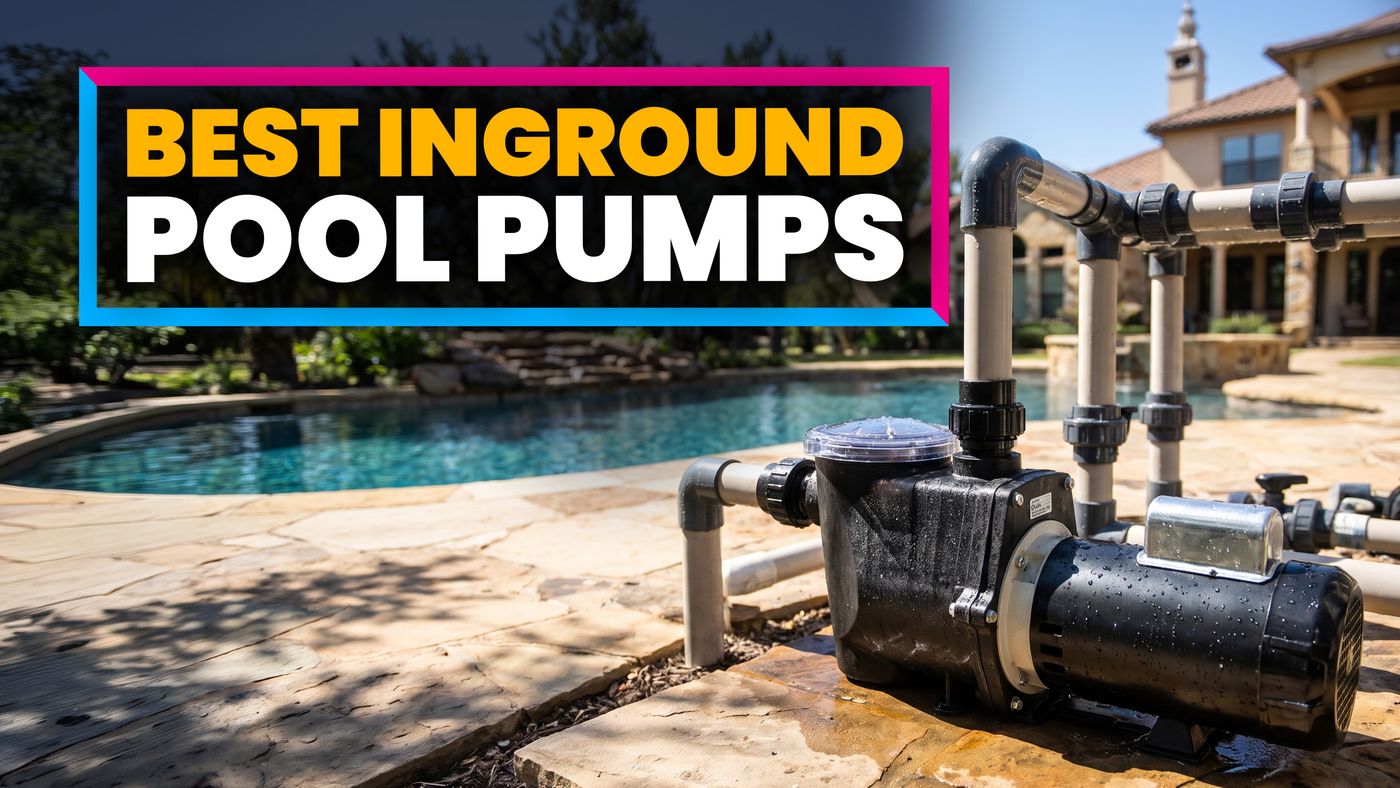
A pool pump shouldn't drown out a conversation on the patio or leave you wondering why your electric bill jumped. But replacing it gets confusing fast. One listing says 1.5 HP. Another says 2.6 THP. Both promise quiet operation, and both claim they'll save you money.
Here's where I'd start: buy a variable speed pump that can deliver the flow your pool needs at a sensible operating speed. The pump, plumbing, filter, and other equipment have to work together. Spending more on a bigger motor doesn't automatically improve that system.
Among the Hayward and Pentair pumps below, the Hayward TriStar VS 1.85 THP is my starting pick for a typical residential inground pool, subject to proper sizing. The Pentair WhisperFlo VST is my strongest current Pentair pick, especially when replacing an existing WhisperFlo.
I'll also cover the SuperFlo VS, both older IntelliFlo options, the TriStar VS 950, and three single-speed alternatives. Each has a place, but some deserve a closer look before you order. If you want the wider field, including above-ground and budget pumps, start with my complete pool pump guide.
If you already know variable speed is the right motor type, my best variable-speed pool pumps guide compares current inground and above-ground models across brands.
Best Inground Pool Pumps at a Glance
Best Inground Pool Pumps at a Glance


| Pool pump | My pick for | Main consideration |
|---|---|---|
| Hayward TriStar VS 1.85 THP | Balanced choice for many residential pools | Confirm production revision and voltage |
| Pentair SuperFlo VS EC-342001 | Simple, compact retrofit candidate | Discontinued; compare with SuperFlo VST |
| Pentair WhisperFlo VST 011533 | Upgrading an existing WhisperFlo | Check available output at your voltage |
| Hayward TriStar VS 950 SP32950VSP | Higher flow demands and pool/spa systems | Requires plumbing that supports its output |
| Pentair IntelliFlo VS 011028 | Matching an existing Pentair system | Discontinued; compare with IntelliFlo3 VSF |
| Pentair IntelliFlo VS+SVRS EC-011057 | Professionally specified SVRS applications | Suction-system compatibility is essential |
| Hayward Super Pump 1 HP | Straightforward Super Pump replacement | Single speed limits operating flexibility |
| Pentair SuperFlo 348190 | Compact single-speed replacement | Compare lifetime electricity costs |
| Pentair WhisperFlo 1 HP EC | Matching an existing WhisperFlo installation | Confirm exact SKU and performance curve |
Check the model number carefully. Pentair officially identifies the listed SuperFlo VS and IntelliFlo VS as discontinued. Remaining inventory can still be worth considering, but I wouldn't pay current-generation money without comparing the recommended replacements.
MY QUICK VERDICT
Start with the Hayward TriStar VS 1.85 THP for an ordinary residential inground pool, or the Pentair WhisperFlo VST if you're replacing a WhisperFlo. Step up to the TriStar VS 950 only when a spa, water feature, or heater gives you a demonstrated reason for the extra flow. Buy a single-speed pump only after you've priced a season of electricity against the variable-speed alternative.
Why I Recommend Variable Speed for Most Inground Pools
A single-speed pump runs at one motor speed whenever it's on. A two-speed pump gives you high and low settings. A variable speed pump lets you adjust the speed much more precisely.
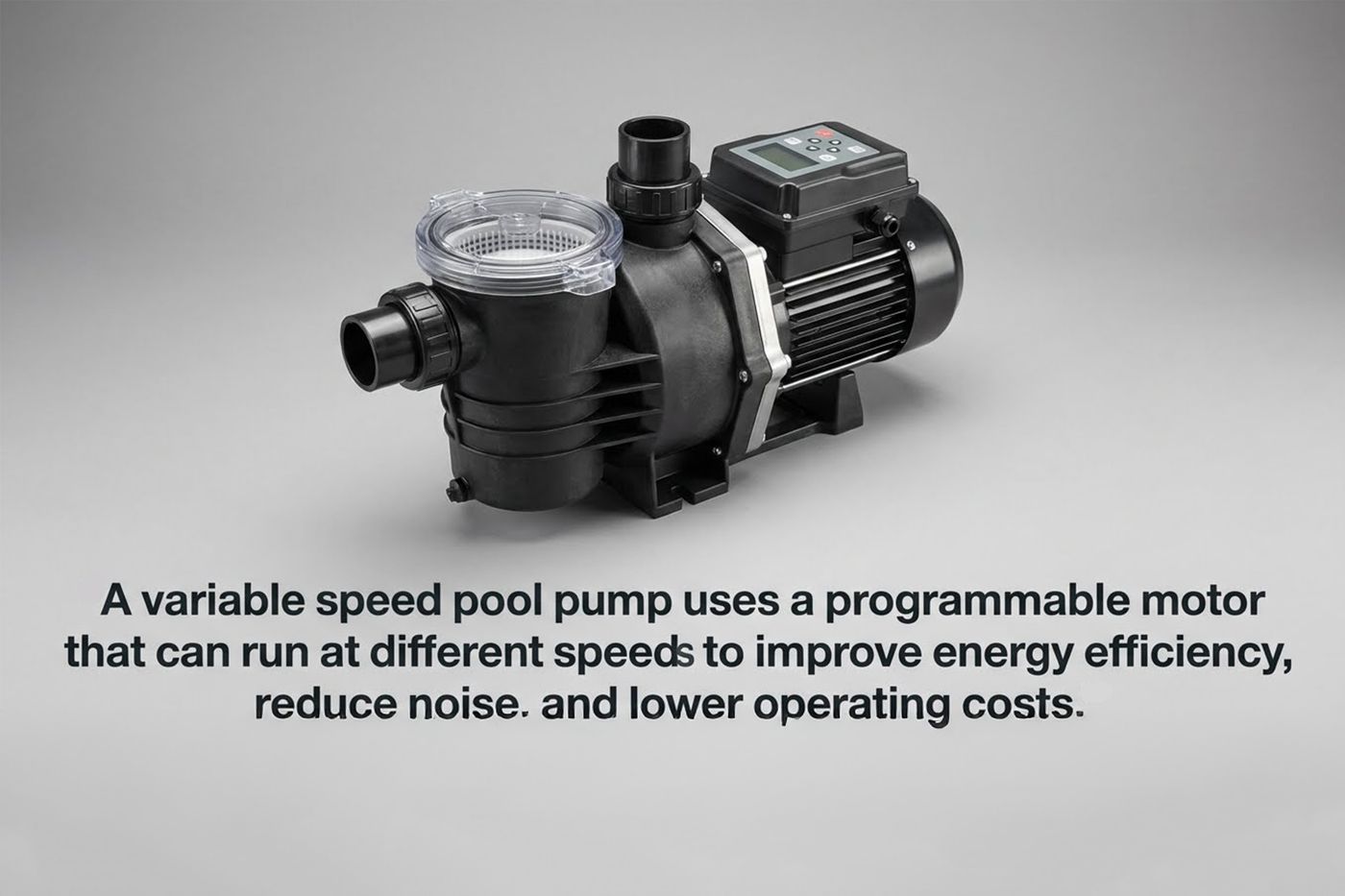
That matters because routine circulation, heating, vacuuming, and running a waterfall can require different amounts of water movement. With variable speed, you can program a quieter circulation setting and increase speed when another task needs it.
The energy benefit comes largely from slowing the pump down. Under the conditions described by pump affinity laws, reducing speed by half reduces theoretical power demand to about one-eighth. Actual electrical savings depend on the installation, motor efficiency, and runtime, so I wouldn't turn that into a guaranteed percentage off your bill. My variable speed pool pump schedule guide shows what a realistic day looks like.
What the savings can look like
Here's an illustrative calculation, using assumed power draws and electricity at $0.15 per kWh. These aren't measured results from the pumps in this guide.
| Example operating schedule | Daily electricity use | Daily cost | Cost over 30 days |
|---|---|---|---|
| 1,800 watts for 8 hours | 14.4 kWh | $2.16 | $64.80 |
| 300 watts for 12 hours | 3.6 kWh | $0.54 | $16.20 |
In this example, the longer-running schedule costs $48.60 less over 30 days. The comparison is useful only if both schedules satisfy the same pool's circulation, filtration, and treatment needs. A low wattage reading isn't useful if the salt cell stops producing chlorine or the skimmers stop collecting debris.
For your own calculation, use:
Daily cost = watts ÷ 1,000 × operating hours × electricity price per kWh
If the pump uses several speeds, calculate each period separately and add them together. Compare that number with the installed cost of the upgrade.
Hayward TriStar VS: Best Balanced Choice for Many Residential Inground Pools
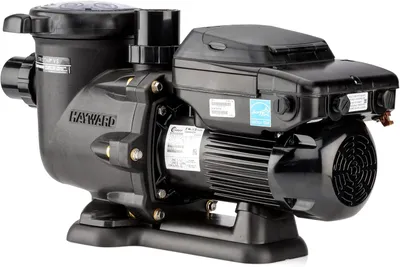
The TriStar VS 1.85 THP is where I'd begin for a pool that needs adjustable daily circulation and some extra capacity for equipment operation. It gives you a useful middle ground before stepping up to the larger TriStar VS 950.
Hayward's newer SP3202VSP literature lists a permanent-magnet motor, 115/230-volt compatibility, and unions accommodating 2-inch and 2.5-inch plumbing. Earlier versions were 230 volts only, so the nameplate on the actual unit matters. On newer dual-voltage versions, maximum performance is lower at 115 volts. Size it using the curve for your actual voltage.
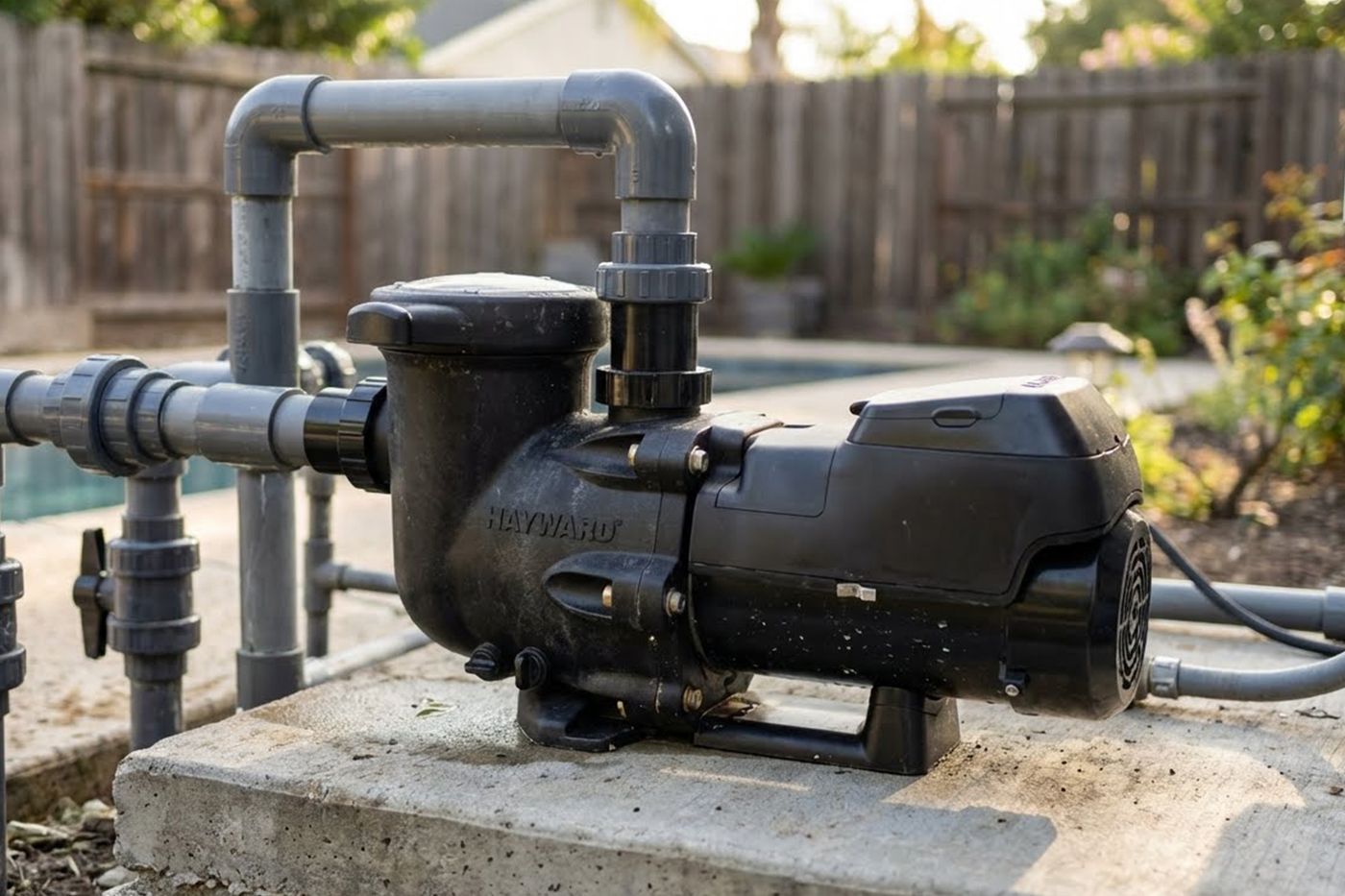
The practical appeal is control. You can build the schedule around what your pool needs during the day, then use a higher setting for a job that requires it. That suits my approach to pool equipment: establish the required flow, then find an efficient setting that delivers it.
I would check automation compatibility before choosing it for an existing Hayward system. A familiar brand name doesn't guarantee that every controller and pump revision communicate the same way.
Pros: Adjustable circulation, useful residential capacity, and larger union connections.
Cons: Revision-dependent electrical specifications; the correct size still depends on the pump curve.
My take: This is my first comparison point for an ordinary inground pool, provided its performance curve fits the installation.
Check the Hayward TriStar VS on Amazon.
Pentair SuperFlo VS: Best Simple Retrofit Candidate With an Older-Model Caveat
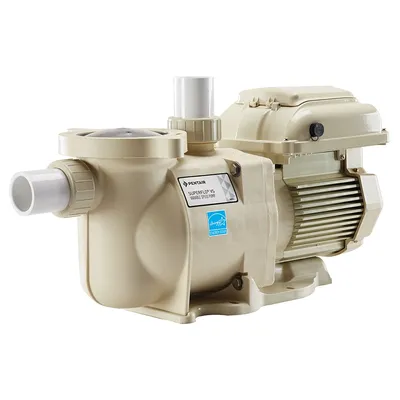
The SuperFlo VS has the features many homeowners actually need: three programmable speeds, an override, and an onboard timer. Pentair's literature supports 115/230-volt operation and positions the platform as a replacement candidate for existing SuperFlo and Hayward Super Pump installations. Measure the connections and available space before assuming a direct fit.
There's also a horsepower detail worth catching. The familiar "1.5 HP" listing doesn't tell the whole story: Pentair publishes 2.2 total horsepower for this model. That's one reason I don't compare pumps using the biggest number in the product title.
For a straightforward pool, three programmed settings can cover ordinary circulation, a stronger skimming period, and an equipment setting without making operation complicated.
The catch is age. EC-342001 is a discontinued SuperFlo VS model. Pentair recommends the SuperFlo VST as its replacement. I would compare both before buying and ask what warranty applies to the exact stock being sold.
Pros: Simple scheduling, dual-voltage capability, and a practical retrofit format.
Cons: Discontinued model; don't assume it includes the controls or connectivity of its successor.
My take: Worth considering at the right installed price, with the current SuperFlo VST alongside it in your comparison.
Check the Pentair SuperFlo VS on Amazon.
Pentair WhisperFlo VST: Best Upgrade for an Existing WhisperFlo Installation
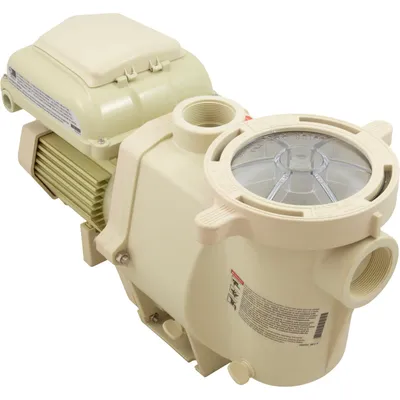
If you're replacing a WhisperFlo, this is the first pump I'd investigate. Pentair designed the 011533 WhisperFlo VST as a replacement for existing WhisperFlo pumps, and it brings variable speed operation to that familiar installation format. Its published rating is 2.6 THP.
It has three programmable speed settings plus an override and supports compatible Pentair automation. Its 2-inch connections make it a natural candidate for many existing WhisperFlo pads, although the installer should still confirm dimensions and fittings.
Electrical compatibility deserves attention. The pump supports 115/208–230 volts, but lower-voltage operation limits available performance. If you need substantial flow for heating, cleaning, or features, use the performance curve for the voltage you actually have.
I like this option because the upgrade can improve the daily operating schedule while retaining a familiar pump layout. I wouldn't call it the quietest pump without comparable measurements, but slowing it down for routine circulation is the useful noise-reduction strategy.
Pros: Current Pentair option, established WhisperFlo fit, adjustable speeds, and automation support.
Cons: Maximum output depends on voltage; its capacity may exceed what a simple pool needs.
My take: My strongest Pentair choice from this list for a properly sized replacement, especially on an existing WhisperFlo pad.
Check the Pentair WhisperFlo VST on Amazon.
Hayward TriStar VS 950: Best Hayward Option for Higher Flow Demands
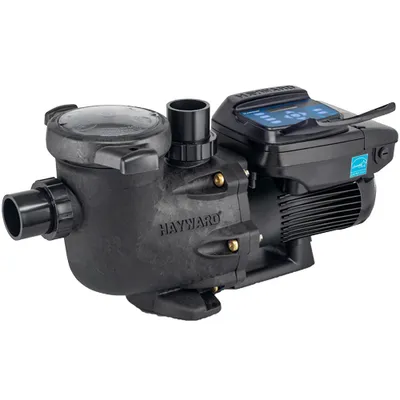
The SP32950VSP TriStar VS 950 is the model I'd investigate when the ordinary circulation pump also has to serve more demanding equipment or a pool/spa combination.
Hayward's recent specifications list 2.7 THP, unions for 2-inch and 2.5-inch plumbing, and a newer 115/230-volt drive. The manufacturer provides different performance curves for the two voltages. Older listings and units can have different electrical specifications.
The reason to move up is a demonstrated flow requirement. A larger pool may need more circulation, but a smaller pool with demanding spa jets or a particular cleaning system can also require substantial capacity.
I wouldn't choose the 950 simply because it sounds more premium. The installer should show where the required operating points fall on its curves, including the lower speed used most often. Buying capacity you'll rarely use deserves a cost comparison.
Pros: Capacity for demanding installations, variable speed control, and generous union connections.
Cons: More capacity than some pools need; voltage, plumbing, and purchase-channel warranty terms require attention.
My take: A good candidate for a system with a reason to need the extra output. Pool gallons alone aren't that reason.
Check the Hayward TriStar VS 950 on Amazon.
Pentair IntelliFlo VS: Best Considered as a Match for an Existing Pentair System
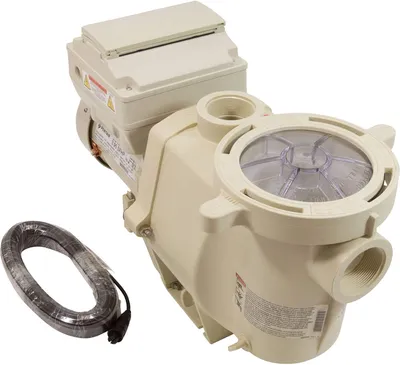
The 011028 IntelliFlo VS offers eight programmable speeds and integration with compatible Pentair automation. It is a 230-volt pump with 2-inch ports. Pentair lists it as 3 HP with 3.95 service-factor horsepower, illustrating how misleading a simple HP comparison can become.
This model makes the most sense to investigate when compatibility with an existing Pentair installation is a major part of the decision. Matching controls and plumbing can affect the total replacement cost.
However, it is discontinued, and Pentair points buyers toward the IntelliFlo3 VSF. The older VS model shouldn't be presented as though it has all the features of the newer VSF platform.
If the prices are close, I would want a clear installation or compatibility advantage before choosing remaining stock. A recognizable product name and years of reviews aren't enough by themselves.
Pros: Detailed scheduling and compatible Pentair automation support.
Cons: Discontinued, 230-volt requirement, and substantial capacity that still needs proper sizing.
My take: Evaluate it as a specific replacement candidate. Compare the current generation before spending premium money.
Check the Pentair IntelliFlo VS on Amazon.
Pentair IntelliFlo VS+SVRS: Best for a Professionally Specified SVRS Installation
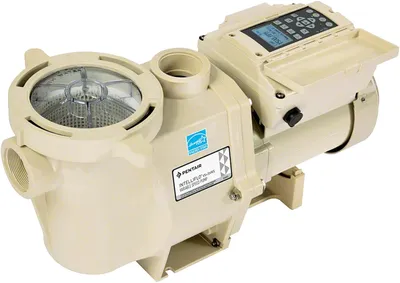
Pentair IntelliFlo VS+SVRS (EC-011057)
Best Pump for a Specified Safety Vacuum Release Installation
The EC-011057 IntelliFlo VS+SVRS deserves its own category. Its defining feature is the built-in Safety Vacuum Release System, designed to detect a suction blockage and shut the pump down. Pentair's family specifications list 3.95 THP and 230-volt operation.
I would choose this pump when a qualified pool professional has confirmed that its SVRS system fits the pool's drain and plumbing design. That decision is more specific than choosing a pump for a large pool.
SVRS has limits. It doesn't replace proper drain covers, doesn't protect against every type of entrapment, and is inactive during priming. The manual also imposes installation restrictions involving valves. Those details deserve professional review before purchase.
The pump still provides variable speed operation, but the integrated safety function is the reason to consider this particular model.
Pros: Integrated SVRS for suitable applications and adjustable operating speeds.
Cons: Specialized installation requirements; unnecessary expense if this isn't the specified solution for your pool.
My take: Buy it because the installation calls for it, with the suction system evaluated as a whole.
Check the Pentair IntelliFlo VS+SVRS on Amazon.
Hayward Super Pump: Best Straightforward Super Pump Replacement
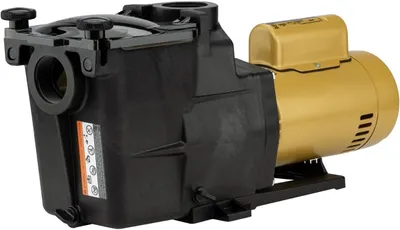
The 1 HP Hayward Super Pump appeals to homeowners who want accessible servicing and a familiar replacement layout. Hayward highlights four-bolt access to internal components, a clear strainer lid, and cover removal without tools.
The exact version matters. Recent specifications for SP2607X10 list 1.10 THP, 115/230 volts, and 2-inch ports. Older Super Pump installations and listings may use different connections. Read the actual specification sheet before ordering fittings.
Its limitation is single-speed operation. You can control when it runs, but you can't program a low-RPM filtration period. For a pool that operates through a long swimming season, I would calculate the electricity cost before treating the lower purchase price as a saving.
A small pool can benefit from variable speed too. I wouldn't automatically assign a single-speed Super Pump to every smaller inground pool. My best fixed-speed pool pumps guide goes deeper on when a single speed still makes sense.
Pros: Accessible basket and service design; useful replacement candidate for an existing installation.
Cons: No adjustable filtration speed; exact revision and local eligibility need checking.
My take: A reasonable targeted replacement, but I would price a variable speed upgrade at the same time.
Check the Hayward Super Pump on Amazon.
Pentair SuperFlo 348190: Best Compact Single-Speed Candidate
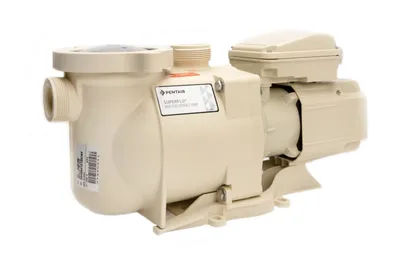
The 348190 SuperFlo is a 1.1 THP single-speed pump with a totally enclosed fan-cooled motor. Pentair lists 115/208–230-volt operation and identifies this exact model as a DOE-compliant single-speed option.
Its union arrangement accommodates 1.5-inch internal-slip or 2-inch external-slip connections. Pentair also positions the SuperFlo platform as a replacement for the Hayward Super Pump, making it worth examining when the installation footprint affects your budget.
That can make it a practical replacement candidate for a modest system. But federal compliance doesn't make its operating cost equivalent to a well-programmed variable speed pump.
I would compare the complete installation price, the electricity used over your swimming season, and the coverage provided by the actual seller. A small difference in purchase price can become less important over several years of operation.
Pros: Compact format, dual-voltage capability, and a specifically identified DOE-compliant model.
Cons: One operating speed; electricity savings depend on the alternative and operating schedule.
My take: A useful option when a single-speed replacement makes sense after the numbers are checked.
Check the Pentair SuperFlo 348190 on Amazon.
Pentair WhisperFlo 1 HP EC: Best Evaluated for an Existing WhisperFlo Installation
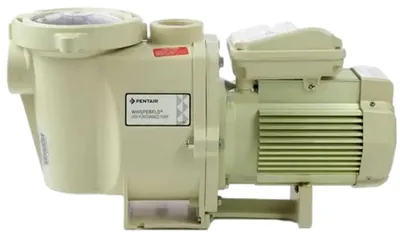
The "WhisperFlo 1 HP EC" description needs an exact model number behind it. If the listing is EC-015583, the corresponding Pentair 015583 specification is 1.1 THP, with 115/208–230-volt operation and 2-inch suction and discharge ports. Pentair identifies 015583 as a DOE-compliant single-speed option.
I would investigate it when replacing an existing WhisperFlo and trying to minimize plumbing changes. The clear basket lid and familiar layout are useful, but matching the brand name doesn't establish matching flow.
The decision I would spend the most time on is whether to move up to the WhisperFlo VST. That gives you the ability to reduce speed during routine circulation, which the single-speed model can't offer.
I also wouldn't judge this pump solely by a smaller or lower-rated retail review sample. Exact model, correct installation, and the available service support matter more to this purchase.
Pros: Familiar WhisperFlo replacement format and 2-inch connections on the specified model.
Cons: No variable speed control; "1 HP EC" alone isn't enough to identify the unit.
My take: Compare it directly with the VST upgrade before committing to another single-speed pump.
Check the Pentair WhisperFlo 1 HP EC on Amazon.
How to Size an Inground Pool Pump
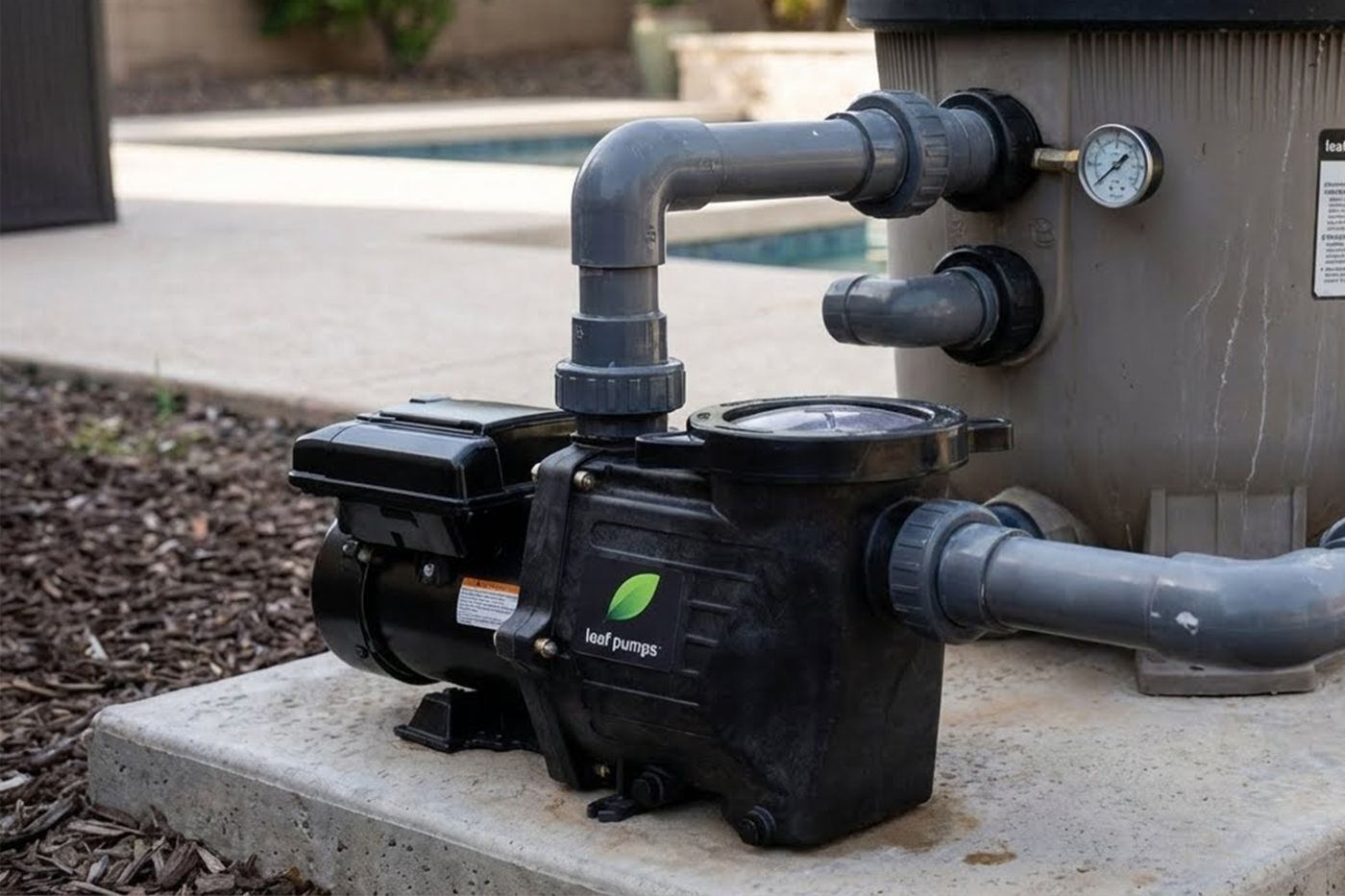
This is the part I would get right before choosing a brand. You need a pump that delivers the required gallons per minute, or GPM, against the resistance of your actual system. My pool pump size calculator runs the arithmetic below for your pool.
Start with pool volume
For a rectangular pool with a reasonably uniform floor slope, estimate gallons using:
Length × width × average depth × 7.48, with dimensions in feet.
A 30-by-15-foot pool averaging 5 feet deep holds approximately 16,830 gallons. Freeform shapes, shelves, and complex depth changes need a more careful volume estimate; my pool volume calculator handles those shapes.
Volume helps establish circulation needs, but it doesn't identify the correct horsepower.
Calculate flow for the proposed runtime
For one theoretical turnover:
Required GPM = pool gallons ÷ (operating hours × 60)
Here is the arithmetic for two possible operating periods. These are examples, not prescribed daily schedules.
| Pool volume | GPM for one turnover in 8 hours | GPM for one turnover in 12 hours |
|---|---|---|
| 10,000 gallons | 20.8 | 13.9 |
| 15,000 gallons | 31.3 | 20.8 |
| 20,000 gallons | 41.7 | 27.8 |
| 25,000 gallons | 52.1 | 34.7 |
| 30,000 gallons | 62.5 | 41.7 |
| 40,000 gallons | 83.3 | 55.6 |
For example, a 20,000-gallon pool over 10 hours works out to 33.3 GPM. That is a starting calculation for a circulation plan, not the final pump specification.
One turnover means moving a volume equivalent to the pool's capacity. Returning water mixes with the water already there, so it doesn't mean every gallon has passed through the filter exactly once. Filtration and circulation also don't replace adequate sanitizer. I explain the whole idea in my pool pump turnover article.
Account for plumbing resistance
Total dynamic head, or TDH, describes the resistance the pump works against. Pipe length and diameter, fittings, valves, the filter, and other equipment all contribute.
Two 20,000-gallon pools can need different pump settings because their plumbing layouts differ. A published maximum GPM figure won't tell you what a pump delivers on either installation.
Ask the installer to estimate or measure system head at the intended flow, then use the manufacturer's pump curve. Suppose an installation needs 40 GPM and has 40 feet of head at that flow. That's the operating point to check. The 40-foot figure is an example, and head changes with flow.
Check the plumbing beyond the pump
Matching 1.5-inch or 2-inch connections is only the first step. Larger pump ports don't enlarge the underground pipes. Multiple suction lines may also join a smaller shared section.
The whole layout, suction fittings, and equipment ratings determine the acceptable flow. I wouldn't use a universal pipe-size-to-GPM chart as a substitute for evaluating that system. Have the installer set an appropriate maximum speed so the pump's output stays within those limits.
Match the filter and other equipment
Check these requirements before settling on operating speeds:
- Filter: Stay within its flow rating. A sand or DE filter also needs adequate flow for its specified backwashing procedure. My best pool filters guide lists the design flow of each pick.
- Heater: Meet its operating flow range whenever heating is enabled.
- Salt chlorinator: Provide adequate flow and enough generating time to meet chlorine demand.
- Inline chlorinator or UV system: Respect its rated treatment flow; pushing more water through isn't automatically an improvement.
- Spa jets, water features, and cleaners: Identify the flow needed for each operating mode.
Use each component's manual. These requirements can differ substantially between models, and they may justify separate pump settings.
Understand HP and THP
Total horsepower equals rated horsepower multiplied by service factor. That's why a pump advertised as 1.5 HP can have a higher THP rating than another pump's headline number suggests. Even THP doesn't replace a pump curve when comparing delivered flow.
Also compare Weighted Energy Factor, or WEF. It measures pumping efficiency under standardized test conditions; a higher figure indicates more water moved per unit of energy in that test. Use it as a comparison tool, alongside the pump curve and your planned operation.
What RPM Should You Run Your Pool Pump?
I like around 1,600 RPM as a starting point to evaluate a low-speed filtration setting, after the pump has fully primed. It's a starting point for adjustment, not a universal rule. I go deeper on this in what RPM should I run my pool pump.
RPM tells you how fast the motor turns. It doesn't tell you the GPM your particular pool receives. Check actual flow, skimmer performance, and the equipment that needs to operate at that setting. Raise the speed when those requirements aren't met.
Think about the schedule by task:
| Operating mode | What should determine the setting |
|---|---|
| Priming | The pump manufacturer's startup procedure |
| Everyday circulation | Effective circulation and required equipment flow |
| Surface cleanup | Enough flow for satisfactory skimmer performance |
| Heating | The heater's specified flow range |
| Salt generation | Cell flow requirements and sufficient production time |
| Backwashing | The filter's required backwash flow |
| Spa jets or water features | The design flow for that feature |
I would start with a clean filter and empty baskets, then have the installer record flow and power draw at useful speeds. Recheck operation as the filter loads with debris. A schedule that barely satisfies a minimum flow requirement on day one may need adjustment later.
There isn't one correct answer to "How many hours should my pool pump run?" A longer, lower-speed schedule can cost less than a short period at full speed, but it still has to provide the circulation, skimming, and equipment runtime your pool needs.
Why I like pairing variable speed with a robotic cleaner
A robotic pool cleaner has its own pump and filtration. It doesn't need the main circulation pump to power its cleaning cycle. That's one reason I like this combination: you can choose the circulation setting around the pool's filtration and treatment needs without increasing speed just to drive a suction cleaner.
The robot doesn't eliminate the need for circulation or sanitizer. It simply removes the cleaner's hydraulic demand from the main pump's job.
Single speed and dual speed inground pool pumps
I favor variable speed for a new purchase, but a working two-speed pump deserves an operating-cost comparison before replacement. Its low setting may already provide useful savings, even though it offers less adjustment than variable speed. My best two-speed pool pumps guide covers that middle ground.
Dual-speed inground pumps do exist. Hayward lists a two-speed Super Pump in its high-efficiency range. The above-ground PowerFlo Matrix models aren't substitutes for the inground selections covered here; those are in my best above-ground pool pumps guide.
The federal rules also need to be described accurately. Efficiency standards apply to covered pumps manufactured beginning July 19, 2021. They don't require you to remove an already-installed working single-speed pump, and they don't prohibit every single-speed model.
Have the installer verify the exact replacement's compliance and the state or local requirements for your installation. A product being listed online doesn't establish that it is appropriate everywhere.
Check Warranty and Installation Costs Before Buying
Compare the installed price and the written coverage. Include plumbing changes, electrical work, automation connections, and programming in the quote.
Pentair's current online-purchase policy generally provides one year of parts-only coverage, with two years of parts-only coverage for IntelliFlo SVRS pumps. Professional installation doesn't automatically turn an online purchase into the same warranty offered through another sales channel.
Hayward also distinguishes its online-approved Open Line products, including W3 models, from Expert Line products. Its current terms provide different coverage, so don't assume every TriStar or Super Pump listing receives the same warranty.
Before ordering, I would confirm the exact SKU and revision, seller authorization, supply voltage, included fittings, control compatibility, and who handles warranty service. Have a qualified installer handle the electrical connection, bonding, required protection, and commissioning.
Frequently Asked Questions
What is the best inground pool pump?
For a typical residential inground pool, the Hayward TriStar VS 1.85 THP is my starting pick, and the Pentair WhisperFlo VST is the one I'd buy to upgrade an existing WhisperFlo pad. Both are variable speed, which is what lets you run quiet, low-cost circulation most of the day.
Is Hayward or Pentair better?
I would choose between specific pumps and installation quotes. The better fit may be the model that works with your existing automation, avoids unnecessary plumbing changes, and has dependable local service. Retail star ratings alone don't establish which pump will last longer in your pool.
Does a large inground pool need a 3 HP pump?
Not automatically. Pool volume affects circulation planning, while plumbing resistance and equipment duties determine the required operating points. A longer low-speed schedule may cover circulation; demanding features may call for additional capacity. Size both duties before choosing the motor.
Can these pumps be used with saltwater pools?
Check the exact pump's permitted water conditions and installation requirements. For a salt system, the operating schedule also has to keep the cell within its flow range and allow enough chlorine production. Simply keeping the flow light on doesn't establish that the daily generating time is sufficient.
Will a bigger pump clear cloudy water faster?
I would first check sanitizer, filter condition, actual circulation, and the cause of the cloudiness. Increasing flow beyond an equipment rating isn't a cleanup strategy. A larger motor also won't fix a blocked basket, an air leak, or a filter that needs attention.
My Final Verdict
For most homeowners comparing these pumps, I'd begin with the Hayward TriStar VS 1.85 THP and Pentair WhisperFlo VST, then choose the one whose performance curve, controls, and installation cost fit the pool.
For higher flow demands, investigate the TriStar VS 950. The older SuperFlo VS and IntelliFlo VS remain comparison candidates, but their discontinued status makes the current replacements worth pricing. The IntelliFlo VS+SVRS belongs in a professionally evaluated safety-system application.
The three single-speed pumps, the Hayward Super Pump, Pentair SuperFlo 348190, and WhisperFlo 1 HP EC, can make sense for specific replacements. I would still calculate their operating costs before buying another pump that runs at one speed all season.
My priority is an efficient everyday setting with enough capacity for the jobs that require more flow. Get the sizing right, program the pump around the equipment, and make sure the warranty matches what you're buying.
This article contains Amazon affiliate links. The Pool Nerd may earn a commission on qualifying purchases at no extra cost to you. Product specifications, prices, and availability can change; verify the exact model and revision before ordering.
Related Reading
- Best Pool Pumps: The Complete Guide
- Best Variable Speed Pool Pumps
- Best Above-Ground Pool Pumps
- Best Two-Speed Pool Pumps
- Pool Pump Size Calculator
- What RPM Should I Run My Pool Pump?
- How Long to Run a Pool Pump
- Best Pool Filters

Comments
Loading comments…