
 Justin D.
A two-speed pool pump can be a worthwhile upgrade from a single-speed pump. Instead of running at full power whenever it is on, it gives you a lower-speed setting for everyday circulation.
It also has an important limitation: when low speed is not enough, your only other option is high speed. There is nothing in between. That is why I would not buy one without first comparing it with a variable-speed pump.
For an above-ground pool with straightforward equipment, two-speed can still make sense. For an inground pool you expect to maintain for years, I would usually lean toward variable speed.
These recommendations compare published specifications, controls, installation requirements, replacement fit, and current availability. They are not presented as hands-on test results for every model.
Quick Verdict
Best Two-Speed Pool Pumps at a Glance


| Pick | Best fit | Power | Speed control | Main limitation |
|---|---|---|---|---|
| Hayward PowerFlo Matrix W3SP15932S | Above-ground pools | 115V | Manual high/low switch | Flooded-suction installation only |
| Blue Torrent Maxi 1 HP | Budget above-ground replacement | 115V | Manual high/low switch | Confirm the exact two-speed SKU and plug |
| Aquastrong PSP200ADT | Simple systems needing scheduling | 115V | Built-in high/low timer | Published maximum flow is not installed-system flow |
| VIVOHOME 2.5 HP Dual-Speed | Budget 230V inground setup | 230V | Manual high/low operation | Large motor may be a poor fit for small plumbing |
| Pentair SuperFlo SF-N2-2A | Like-for-like legacy replacement | 230V | Two fixed speeds | Discontinued; verify part number and warranty |
| Pentair SuperFlo VST | Long-term inground retrofit | 115V or 230V | Programmable variable speed | Higher initial cost |
THE SHORT ANSWER
For an appropriately plumbed above-ground pool, the Hayward PowerFlo Matrix is my first two-speed choice. For most inground replacements, price the Pentair SuperFlo VST or another properly sized variable-speed pump before committing to two fixed speeds.
What Is a Two-Speed Pool Pump?
A two-speed pump and a dual-speed pump are the same thing: a pump with two selectable motor speeds.
On many traditional models, high speed is approximately 3,450 RPM and low speed is approximately 1,725 RPM. Low is intended for circulation when less flow is sufficient; high handles priming, vacuuming, backwashing, attached equipment, or other tasks that need more flow. The federal Building America Solution Center describes the same high/low arrangement and its efficiency tradeoff.
The savings come from actually using low speed. Buying a two-speed pump and leaving it on high all day largely defeats the purpose.
Two-speed is also not the same as dual voltage:
- Dual speed means the motor has two operating speeds.
- Dual voltage means the motor can be configured for two supply voltages, commonly 115V or 230V.
- A pump can be dual voltage and still have only one speed.
Best Overall: Hayward PowerFlo Matrix W3SP15932S
POOL NERD PICK — BEST OVERALL TWO-SPEED: An established above-ground platform with a serviceable design, large basket, and flexible discharge orientation.
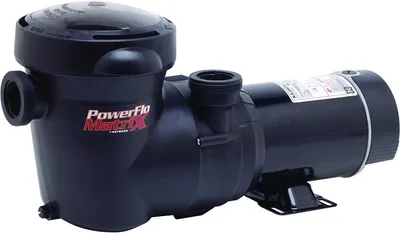
The Hayward W3SP15932S PowerFlo Matrix is where I would start for an above-ground pool owner who specifically wants a two-speed pump.
The Matrix design gets several practical things right: a large strainer basket, quick-disconnect plumbing connections, and a discharge that can be configured horizontally or vertically. Hayward also publishes a detailed replacement-parts breakdown, which matters when you are buying equipment you expect to service rather than discard.
What I like:
- Established pump platform with replacement-parts support
- 115V two-speed operation with a high/low switch
- Horizontal or vertical discharge orientation
- Large, easy-access strainer basket
What to watch: This is an above-ground pump intended for a flooded-suction installation, meaning the pool water should feed the pump by gravity. The Hayward PowerFlo Matrix manual describes priming with the water source above the pump. Do not buy it for an equipment pad above the pool's water level just because the horsepower looks sufficient.
Order the exact W3SP15932S two-speed version. Hayward sells similarly named Matrix pumps with different horsepower, speed, cord, and switch configurations.
Check the Hayward PowerFlo Matrix two-speed pump on Amazon.
Best Budget: Blue Torrent Maxi 1 HP
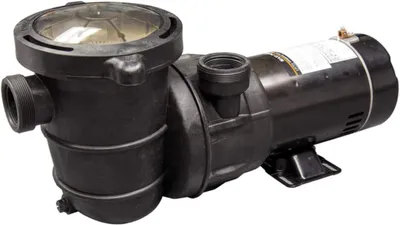
The Blue Torrent Maxi 1 HP is my budget pick for an above-ground pool that does not need a larger pump.
Blue Torrent lists the Maxi family in single- and two-speed configurations, with vertical or horizontal discharge and standard-plug or twist-lock options. That makes exact model selection important: “Maxi” alone does not identify the motor or electrical connection.
The two-speed, dual-port, standard-plug model is commonly identified as MX210DNSBS. Confirm that model number in the Amazon offer before ordering because marketplace variants can share a product family page.
What I like:
- Lower-cost route to high/low operation
- Flexible discharge configuration
- Sensible 1 HP size for many above-ground systems
What to watch: Do not confuse dual port with dual speed. Dual port describes plumbing orientation; the listing must separately specify a two-speed motor. Also confirm the plug, voltage, included fittings, and replacement-parts availability.
I would choose a correctly sized 1 HP pump over a larger bargain model when the smaller pump already meets the system's flow requirement. Extra horsepower is not automatically extra value.
Check the Blue Torrent Maxi 1 HP two-speed pump on Amazon.
Best with Timer: Aquastrong PSP200ADT 2 HP
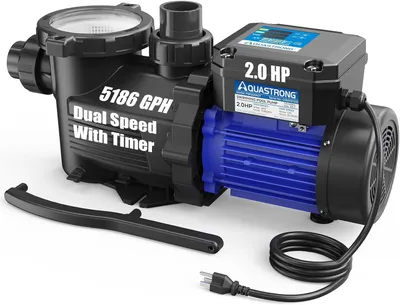
The Aquastrong PSP200ADT earns its place because its timer addresses one of the main weaknesses of a basic two-speed pump: remembering to switch between high and low.
Aquastrong specifies 115V operation, two speeds, 1.5-inch and 2-inch adapters, and a timer that can schedule runtime for each speed. The manufacturer markets it for both inground and above-ground installations.
Published high- and low-speed ratings are 5,186 GPH and 2,578 GPH. Treat those as manufacturer ratings, not guaranteed flow after connecting a filter, heater, valves, fittings, and real-world plumbing. Use the pump curve and your system resistance when deciding whether it fits.
What I like:
- Integrated high/low scheduling
- 115V corded installation
- Adapters for common plumbing sizes
- Clear-lid strainer basket
What to watch: A timer cannot fix an undersized hydraulic system. Low speed still has to satisfy the minimum flow for any heater, salt cell, or other equipment operating during that block. The 2 HP label also does not establish suitability for a large attached spa.
For a complicated inground equipment pad, I would choose a properly sized variable-speed alternative instead.
Check the Aquastrong PSP200ADT dual-speed pump with timer on Amazon.
Best 230V: VIVOHOME 2.5 HP Dual-Speed
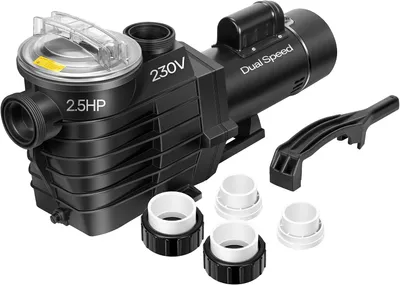
The VIVOHOME 2.5 HP dual-speed pump, model VH1165, is the budget option I would compare when the installation requires a 230V pump rather than one of the 115V models above. Its listing identifies high and low settings of approximately 3,450 and 1,725 RPM.
Its appeal is straightforward: two operating speeds for someone who does not need connected controls and is comparing lower-cost replacement options.
But I would not choose it simply because it has the largest horsepower number in this shortlist.
A larger motor can be a poor match for small plumbing, a filter with a limited flow rating, or an undersized suction system. Ask for the pump curve and compare its output at the system's actual total dynamic head—not only an advertised maximum-flow or maximum-lift number.
What I like:
- Budget-oriented 230V option
- High/low operation
- Self-priming design for an inground-style equipment pad
What to watch: Installation costs can erase the apparent bargain. Compare the complete installed price with a variable-speed pump, including electrical work, fittings, controls, and any plumbing changes.
Check the VIVOHOME 2.5 HP dual-speed pump on Amazon.
Best Legacy Replacement: Pentair SuperFlo SF-N2-2A
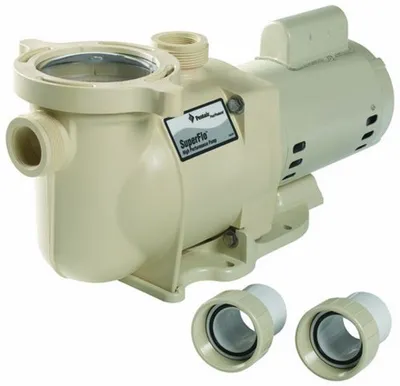
The Pentair SuperFlo SF-N2-2A, part number 340044, belongs in the legacy-replacement conversation for someone replacing an existing two-speed SuperFlo.
Pentair's archived specifications identify it as a 230V, 2 HP pump with 2.2 total horsepower and nominal speeds of 3,450 and 1,725 RPM. It is not the same pump as the current SuperFlo VST.
The important limitation is availability: this exact model is obsolete. An Amazon offer may be remaining inventory, an old listing, or a marketplace unit with inconsistent catalog data.
What I like:
- Potential like-for-like fit for an installation already designed around this pump
- Familiar SuperFlo wet end and plumbing footprint
- High and low speeds without a separate variable-speed drive
What to watch: Confirm the nameplate, part number 340044, condition, included switch, seller, warranty eligibility, and return policy before paying. I would not pay a scarcity premium just to preserve two-speed operation.
Check current Amazon availability for the legacy Pentair SuperFlo two-speed pump.
Dual Voltage Is Not Dual Speed
One commonly confused listing is an Oswerpon 2 HP, 6,900 GPH pump advertised as dual voltage. Its specifications show an operating speed of 3,450 RPM and do not establish a selectable low-speed mode, so I am excluding it from the recommendations above.
Dual voltage means electrical compatibility. Dual speed means two motor speeds.
A pump can support 115V and 230V while still running at only one speed. Changing its voltage configuration is not an energy-saving speed adjustment.
View the dual-voltage Amazon listing being excluded.
Variable Speed vs Dual Speed Pool Pumps
My winner for most long-term inground ownership is variable speed.
The advantage is not simply having more settings. It is being able to select the flow your pool actually needs. If a two-speed pump's low setting will not keep a heater operating, you have to use high even when an intermediate speed would have been sufficient. A variable-speed pump can operate between those two extremes, and many use more efficient permanent-magnet motors.
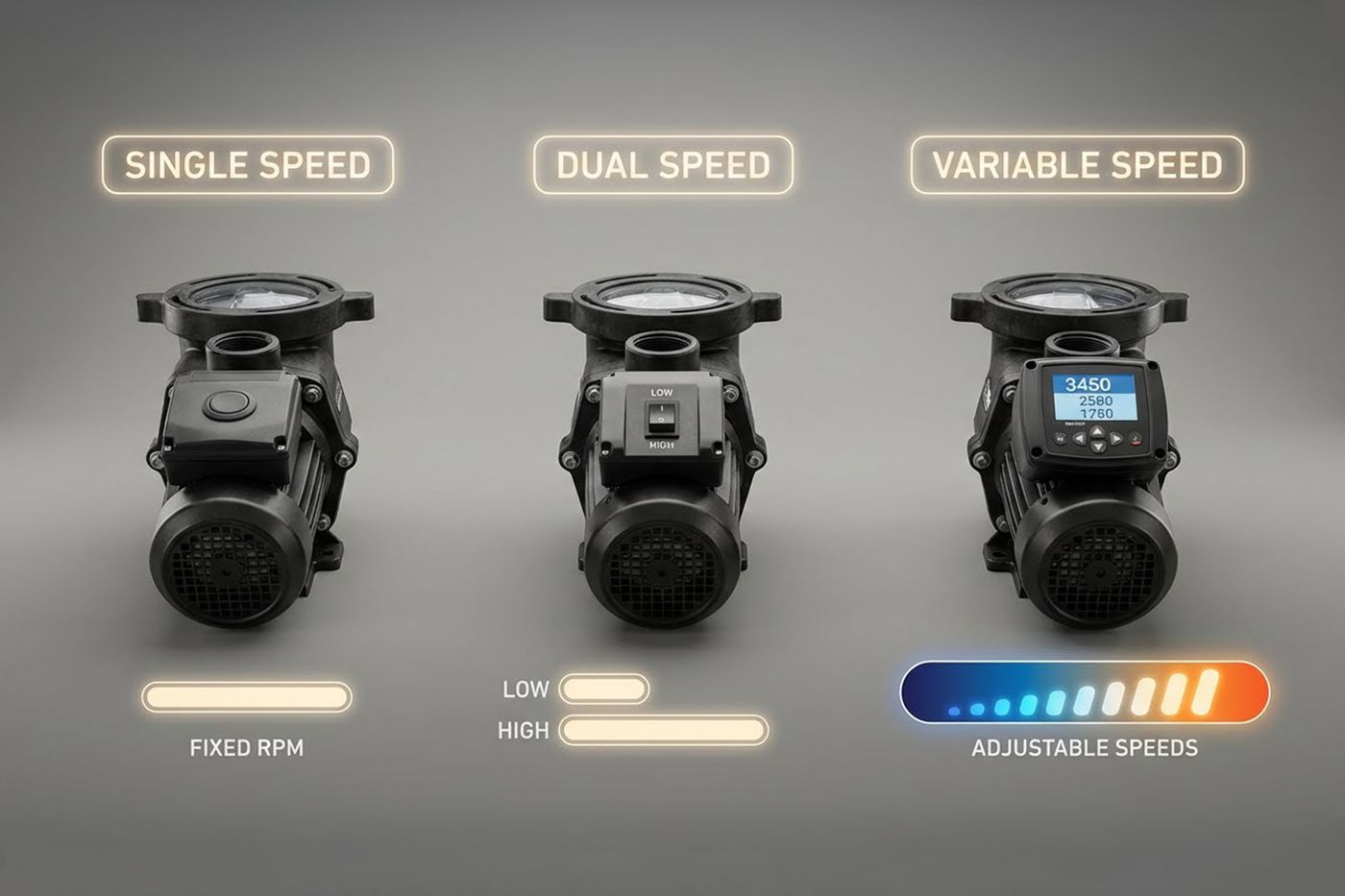
| Consideration | Two-speed / dual-speed | Variable-speed |
|---|---|---|
| Speed selection | Two fixed speeds | Adjustable within the model's operating range |
| Flow adjustment | High or low | Can be tuned to individual tasks |
| Scheduling | Manual, external, or built in depending on model | Often built into the pump |
| Typical motor | Induction motor | Often a permanent-magnet motor |
| Main appeal | Simplicity and potentially lower purchase price | Greater control over flow, noise, and operating cost |
My two-speed pick is the Hayward PowerFlo Matrix for a properly matched above-ground pool.
My variable-speed retrofit pick is the Pentair SuperFlo VST, model 342002, for a standard inground installation. Pentair specifies 115V or 230V operation, a digital keypad, three programmable speeds, override capability, a real-time 24-hour clock, and RS-485 connectivity.
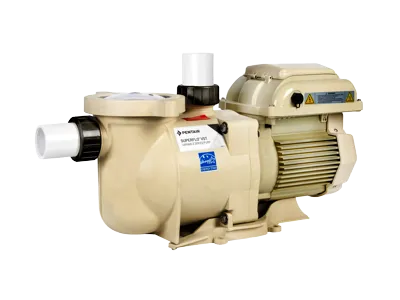
Those onboard controls also disprove the idea that an older pool automatically needs two-speed because it lacks modern automation. Existing heaters, chlorinators, and external controls still need to be integrated correctly, but you do not need a completely new smart-pool system just to operate a pump with its own scheduler.
Amazon availability for model 342002 changes, so verify the exact model number and seller before ordering.
Check Amazon listings for the Pentair SuperFlo VST 342002.
See my full best variable-speed pool pumps guide for more alternatives.
How Much Electricity Can a Two-Speed Pump Save?
There is not one honest savings percentage that applies to every pool.
Savings depend on power consumption at each speed, how long each speed runs, the flow delivered through the installed system, and whether low speed can perform useful circulation. Federal technical guidance describes potential variable-speed savings of 50%–90% against conventional single-speed setups—not a guaranteed 90% reduction against an already optimized two-speed pump.
Here is an illustrative calculation, not test data for the products above. Assume electricity costs $0.155 per kWh and the pump runs every day:
| Pump setup | Assumed daily operation | Daily energy | Estimated annual cost |
|---|---|---|---|
| Single-speed | 1,800 watts for 8 hours | 14.4 kWh | $815 |
| Two-speed | 1,800 watts for 2 hours; 400 watts for 12 hours | 8.4 kWh | $475 |
| Variable-speed | 1,500 watts for 2 hours; 250 watts for 12 hours | 6.0 kWh | $339 |
Assuming 60 GPM during each high-flow block and 30 GPM during each low-flow block, all three examples circulate 28,800 gallons per day. That keeps the theoretical water volume equal.
In this example, two-speed saves about $340 per year over single-speed. Variable speed saves another $136 per year over two-speed. A $500 additional installed cost for variable speed would therefore take about 3.7 years to recover—not automatically one or two seasons.
Different electricity rates, seasonal operation, measured wattage, and actual flow will change the answer.
Daily operating cost = total daily kWh × your electricity rate
Use the pool pump runtime calculator to compare measured wattage and runtime instead of relying on a generic savings claim.
How to Size a Two-Speed Pool Pump
Start with required flow, not horsepower.
For example, a 15,000-gallon pool targeting 1.5 theoretical turnovers over 12 hours would need an average flow of:
15,000 × 1.5 ÷ 720 = approximately 31 GPM
That is a planning calculation, not the complete sizing process.
The pump must deliver the required flow against resistance from the plumbing and equipment. Its high-speed output must also remain within the safe limits of the filter, heater, chlorinator, return fittings, and suction system.
For a two-speed pump, check both operating points:
- Low speed must provide useful routine circulation and meet the minimum flow of any equipment running with it.
- High speed must safely handle priming, vacuuming, backwashing, water features, or other high-flow tasks.
- Neither speed should exceed the filter's rated flow or create unsafe suction conditions.
Use the pool pump size calculator, then compare the result with the manufacturer's pump curve. A maximum GPH number without a head-pressure value is not enough to size an inground pool pump.
How Long Should You Run a Two-Speed Pool Pump?
My starting approach is low speed for routine circulation, with high speed reserved for tasks that need it.
Before choosing the high- and low-speed blocks, use the pool pump turnover guide to calculate how much water each setting moves from actual GPM rather than copying a generic eight-hour schedule.
A useful runtime estimate is:
Runtime in hours = target gallons ÷ (measured GPM × 60)
If a 15,000-gallon pool actually moves 30 GPM on low speed, one theoretical turnover takes about 8.3 hours. Two turnovers take about 16.7 hours. That does not mean every pool requires two turnovers, and turnover alone does not guarantee clean or sanitized water.
Prime the pump according to its manual. Then verify that low speed:
- Maintains visible circulation and skimming
- Keeps the filter within its operating range
- Satisfies the minimum flow for a heater, salt cell, or other active equipment
- Supports the pool's sanitation plan during actual weather and swimmer load
Never bypass a flow switch just to keep equipment operating at low speed.
Also, do not assume a basic on/off timer can automatically select both speeds. It may only switch power. The Aquastrong's integrated high/low scheduling is a different feature from simply turning a pump on and off.
The free variable-speed pool pump schedule calculator can also compare high- and low-speed blocks when you enter their actual flow and wattage.
Rules, Rebates, and Safety
Are two-speed pool pumps being phased out?
Some legacy models have been discontinued, but two-speed pumps are not universally banned.
The federal standards for covered pumps manufactured beginning July 19, 2021 set efficiency requirements based on pump classification, hydraulic horsepower, and Weighted Energy Factor. They are not a simple ban on every pump advertised above 1.1 HP. Self-priming and non-self-priming filter pumps have different requirements under 10 CFR 431.465.
Check the exact model's compliance information and applicable state or local requirements. Neither a “two-speed” label nor a “variable-speed” label alone proves compliance.
ENERGY STAR certification is separate. Use the official ENERGY STAR pool pump finder and rebate finder to check eligible products and local utility programs.
Installation safety
Have a qualified professional confirm circuit capacity, GFCI protection, grounding, bonding, wire size, disconnect requirements, and control compatibility.
Never:
- Run the pump dry
- Use an extension cord as a permanent installation
- Open a pump or filter while the system is running or pressurized
- Reconfigure a motor's voltage without following its wiring diagram
- Assume an existing breaker and wiring are correct for a larger replacement pump
Follow the manufacturer's shutdown, lockout, and pressure-relief procedure before service.
Frequently Asked Questions
What is the best two-speed pool pump?
The Hayward PowerFlo Matrix W3SP15932S is my best overall two-speed pick for a correctly configured above-ground pool. It combines a proven serviceable design, flexible discharge orientation, and 115V high/low operation. It is not the right choice for an elevated inground equipment pad because it relies on flooded suction.
Are two-speed pool pumps worth it?
They can be worth it for a simple above-ground pool, a compatible legacy replacement, or a buyer who values straightforward high/low controls. For most long-term inground replacements, compare the installed cost and projected energy use with a variable-speed pump first.
Is a two-speed pump better than a single-speed pump?
Usually, yes. A two-speed pump can use low speed for routine filtration and reserve high speed for demanding tasks. A single-speed pump runs at one fixed speed whenever it is on, so it cannot reduce speed when the pool needs less flow.
What is the difference between dual voltage and dual speed?
Dual voltage describes electrical compatibility, such as 115V or 230V. Dual speed describes two selectable motor speeds. A dual-voltage pump may still be single-speed, and a two-speed pump may support only one voltage.
Can I run a two-speed pool pump on low all day?
You can run low speed for long circulation periods if it maintains adequate flow through the filter and any operating heater, chlorinator, or other equipment. Confirm actual flow and never bypass a flow switch. Use high speed only when a task requires it.
How long should a two-speed pool pump run?
Divide the target water volume by measured low-speed GPM and then by 60. A 15,000-gallon pool moving 30 GPM needs about 8.3 hours for one theoretical turnover. Adjust for skimming, sanitation, weather, swimmer load, and equipment requirements.
Can a regular pool timer switch both speeds?
Not necessarily. A basic timer may only turn power on and off. Automatically selecting high and low can require a two-speed-compatible control, relay arrangement, or a pump with integrated scheduling such as the Aquastrong PSP200ADT.
Should I choose a 115V or 230V two-speed pump?
Choose the voltage required by the exact pump and supported by a properly sized circuit. Voltage does not determine whether a pump is more suitable hydraulically. A qualified installer should verify wiring, breaker, GFCI, grounding, and bonding requirements.
My Final Verdict
The Hayward PowerFlo Matrix W3SP15932S is my first choice for an above-ground owner specifically shopping for two-speed. The Blue Torrent Maxi is the budget alternative, while the Aquastrong PSP200ADT stands out for built-in high/low scheduling.
The VIVOHOME 2.5 HP is worth comparing for a budget 230V installation, but only when its pump curve and electrical requirements fit the system. The Pentair SuperFlo SF-N2-2A belongs in the legacy-replacement conversation—not at the top of a current-generation buying list.
For most inground owners replacing a failed pump, I would compare a Pentair SuperFlo VST or another properly sized variable-speed model before committing to two fixed speeds.
Start with my best pool pumps guide, then compare the best variable-speed pool pumps, installed cost, and expected electricity use.
Buy the pump that meets your pool's flow requirements at the lowest practical operating cost—not the pump with the largest horsepower number.
Primary sources
- Building America Solution Center: Variable-Speed Pool Pumps
- Hayward PowerFlo Matrix installation and operation manual
- Pentair SuperFlo VS/VST installation and user's guide
- Federal dedicated-purpose pool pump efficiency standard
- ENERGY STAR certified pool pump finder




Comments
Loading comments…