
 Justin D.
This is every chemical my pool needs all summer: two jugs. Liquid chlorine and muriatic acid. The pool store wants you to buy fifteen products — stick around and I'll show you why you'll never need them.
Hey everybody — I'm Justin, your resident pool aficionado. In this article I'm going to show you exactly how I keep my pool water crystal clear blue all summer long. We have a 20-foot Ecopool that we test all the top pool products in, and a question I get all the time is "how do you keep your water so clear?"
Pool stores will try to sell you a bunch of unnecessary chemicals that are a waste of money. To keep my water fresh and clean, I use only a few simple, affordable chemicals you can pick up on Amazon or at Walmart that won't break the bank. And before we're done, I'll show you the one number I watch that tells me my water is safe before my eyes ever could — the same number Olympic and commercial pools rely on. Let's get into it.
Crystal Clear Water: What You Need Checklist
Two jugs do the heavy lifting—liquid chlorine and muriatic acid—plus grocery-aisle baking soda, a live ORP monitor, and a drop kit to confirm it. That's the whole shelf.

Champion Pool Shock (4 Pack)
What it is: A case of liquid pool chlorine (sodium hypochlorite)—not cal-hypo granules. Confirm strength on the listing and jug label (often around 10–12.5%).
Why you need it: Same upside as other liquid shock: no CYA from the product, easy to pour with the pump running—useful to keep stocked for openings, algae pushes, storms, or parties.
How to use: Treat it like any liquid shock (pour with circulation; big doses still work best at dusk). Store cool and shaded; opened jugs lose strength over time—plan to use them within a few weeks.

Champion Muriatic Acid
What it is: Dilute hydrochloric acid—standard for lowering pH and, with the right method, total alkalinity.
Why you need it: High pH destroys chlorine efficiency. Always follow the label; never mix acid with chlorine.

Baking soda (alkalinity increaser)
What it is: Sodium bicarbonate—the same compound as pool-store “alkalinity increaser.” Arm & Hammer 15 lb is a practical mid-size bag; USP pure 50 lb bucket is the usual pick when you want the lowest $/lb; grocery or pool-store bags work if the label is plain bicarbonate.
Why you need it: It raises total alkalinity with a gentler pH bump than soda ash. Do not use soda ash here if you only need TA up.

Pool Mate 7 lb Cyanuric Acid Stabilizer
What it is: Granular CYA (chlorine stabilizer)—protects free chlorine from sunlight.
Why you need it: New fills, heavy rain dilution, or unstabilized liquid programs often land below ~30–50 ppm CYA; without it, the sun burns chlorine fast. Add slowly per label (skimmer or predissolve) and retest after circulation.

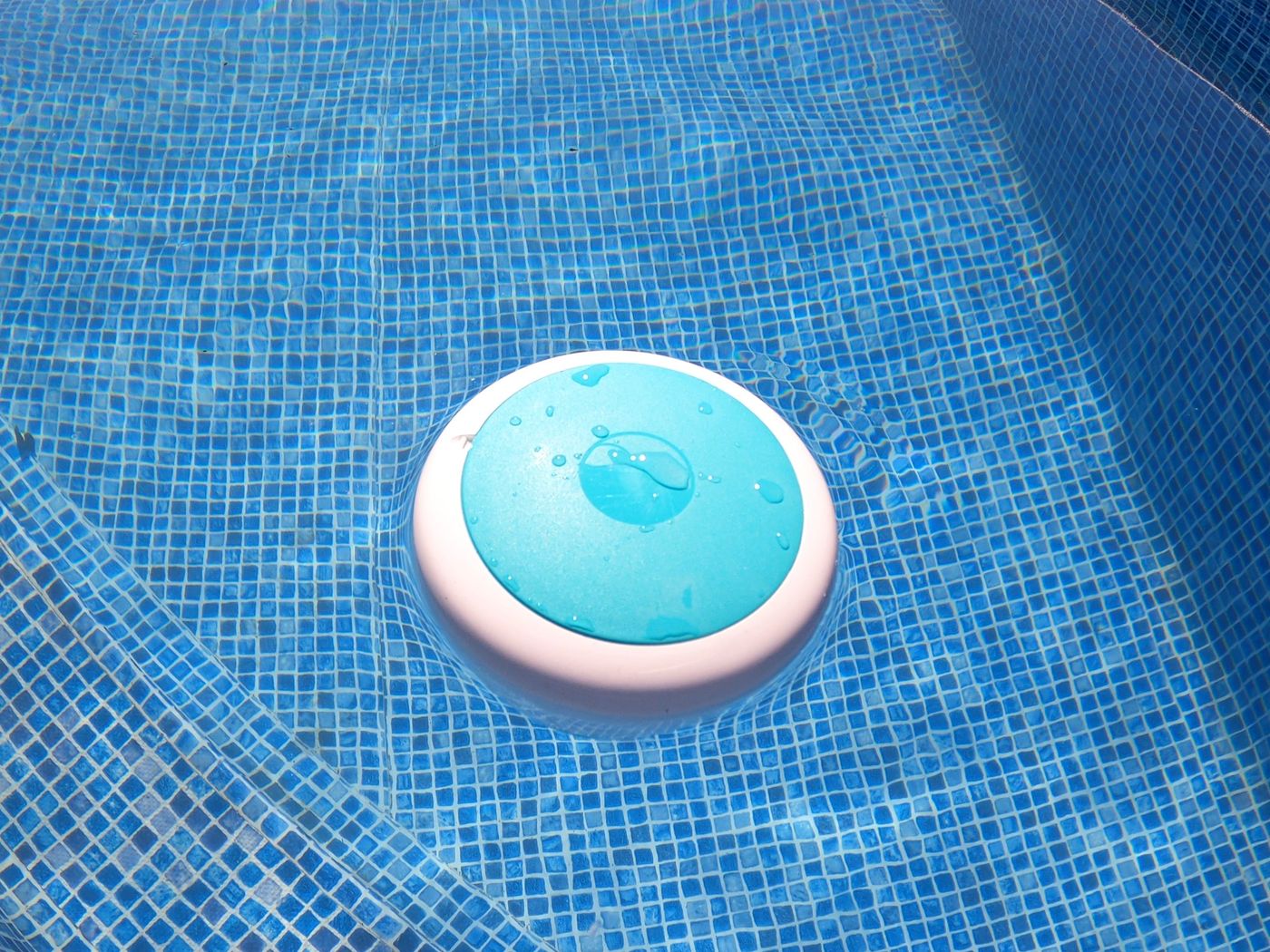
Ondilo ICO Pool Water Monitor
What it is: A floating smart monitor that samples pH, ORP (sanitizer effectiveness), and temperature on a schedule and sends trends to your phone.
Why you need it: You still need a real drop kit for parameters the ICO doesn’t replace (like TA and CYA), but hourly ORP/pH catches drift and dosing mistakes long before weekly strip checks do.
Read the full ICO review — Shop ICO direct (no Amazon listing for the hardware we run).

Taylor K-2006 Test Kit
What it is: The FAS-DPD drop kit the pros carry—free and combined chlorine, pH, alkalinity, calcium hardness, and CYA, all from drops instead of guess-strips.
Why you need it: Use it every few weeks to confirm your smart monitor, and a couple times a season to check CYA—the one number the float doesn't track. Drops over strips, every time.
Pick your version: Taylor K-2006 (chlorine pools) or the K-2006 Salt (salt pools)—same kit, the salt version adds a salinity test.

Dolphin Premier
What it is: A corded robotic cleaner with dual scrubbing brushes and strong filtration—built to pull debris and biofilm off surfaces so your sanitizer is not fighting mulch and leaves first.
Why you need it: Shock oxidizes what is in the water—leaves, pollen, and biofilm burn sanitizer too. A strong robot pulls debris off surfaces and into the filter so your chlorine works on algae and organics, not mulch. See the Dolphin Premier review for why it is our test-pool scrubber of choice.
The Pool Store Problem
Let's talk about the pool store for a second. When you walk in with a water sample, you're not getting a science consult — you're getting a sales funnel.
Clarifier, algaecide, phosphate remover, enzyme treatment, shock in a bag, alkalinity increaser, stabilizer. Every one of those products exists to solve a problem that proper sanitation would have prevented for pennies.
Here's the thing: clear water is not complicated. Water turns green when chlorine loses the fight against the organics coming in — sweat, sunscreen, pollen, leaves, rain. Keep chlorine winning that fight, and keep your pH in the range where chlorine stays potent, and most of that pool store shelf becomes decoration.
Those are the only two jobs. Everything I'm about to show you flows from them.
The Two-Jug Method
So here's my entire lineup.
Jug #1: Liquid Chlorine
Liquid chlorine — 10 to 12.5 percent sodium hypochlorite. Same active ingredient as household bleach, just stronger and without the additives. It sanitizes, it oxidizes, and it adds nothing to your water long-term. No calcium, no stabilizer, no mystery fillers.
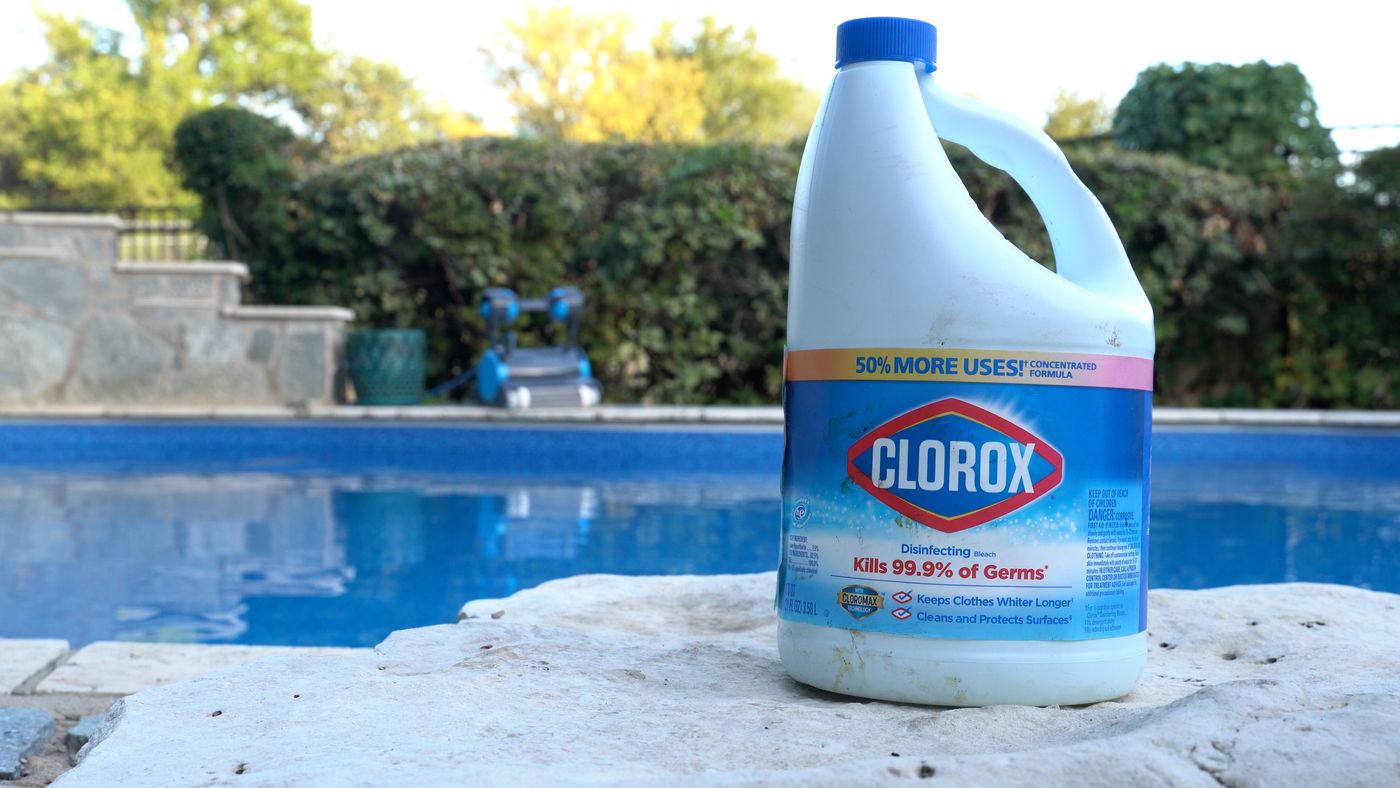
When my pool needs a shock after a storm or a pool party, it gets the same jug — just a bigger, measured dose. One product covers daily sanitation and shock duty. If you're still shocking on a weekly calendar, read why you should stop shocking your pool every week.
Jug #2: Muriatic Acid
Muriatic acid is my pH control — and pH is where most pool owners are quietly bleeding money. Chlorine's power is tied directly to pH. Move from 7.0 to 7.5 and your chlorine loses roughly half its sanitizing power. Drift up to 8.0 and it loses up to 90 percent. Same chlorine reading on the test strip, almost none of the killing power.
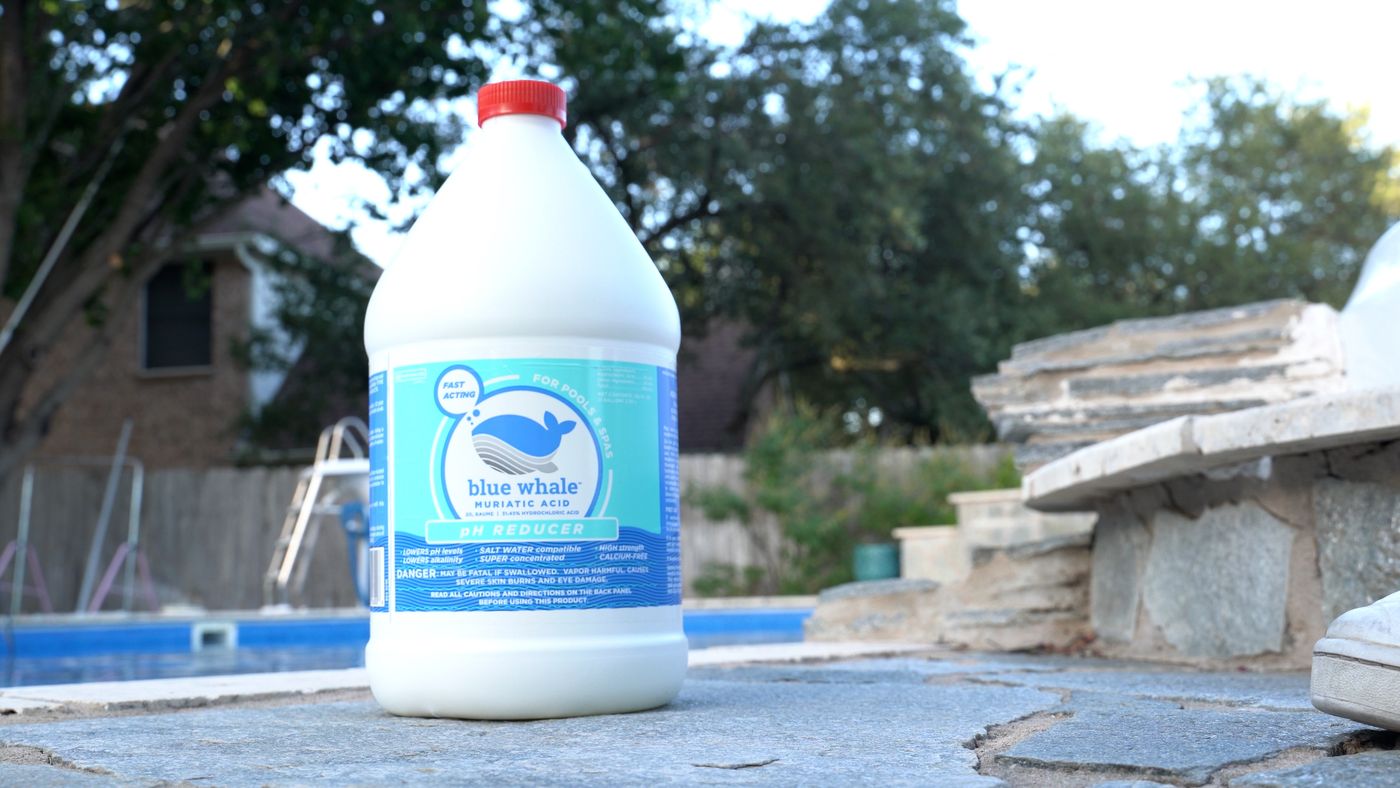
So I hold my pH between 7.0 and 7.2 — I call it the Power Zone — and a small, measured shot of muriatic acid is how I keep it there. If your pH is riding high right now, my guide on how to lower pool pH walks you through it step by step.
Quick Safety Note
Because we're talking about acid: gloves and glasses on, always add acid to water and never water to acid, and pour with the wind at your back while the pump is running.That's the whole core system. Two jugs. Chlorine kills, and acid keeps the chlorine strong.
The Grocery Aisle Backup: Baking Soda
There's one backup player, and it lives in the grocery aisle: baking soda. Total alkalinity is your water's shock absorber — it keeps pH from bouncing around. When mine drifts below the healthy range of about 80 parts per million, baking soda brings it right back up.
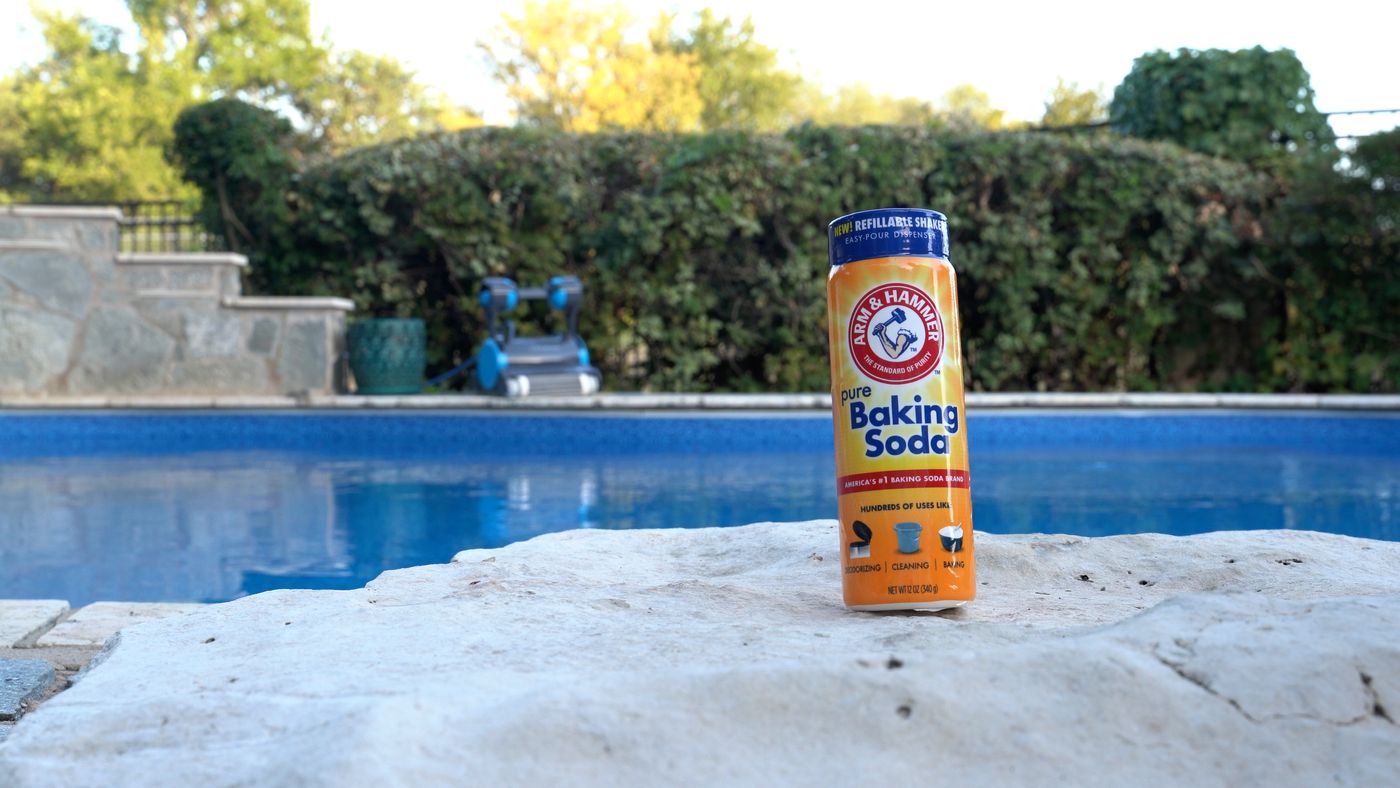
Now walk into the pool store and look at the bucket labeled alkalinity increaser. Flip it over and read the ingredient: sodium bicarbonate. That is baking soda in a fancier costume at several times the price. Same molecule, same result. Buy the big bag at Walmart and pocket the difference.
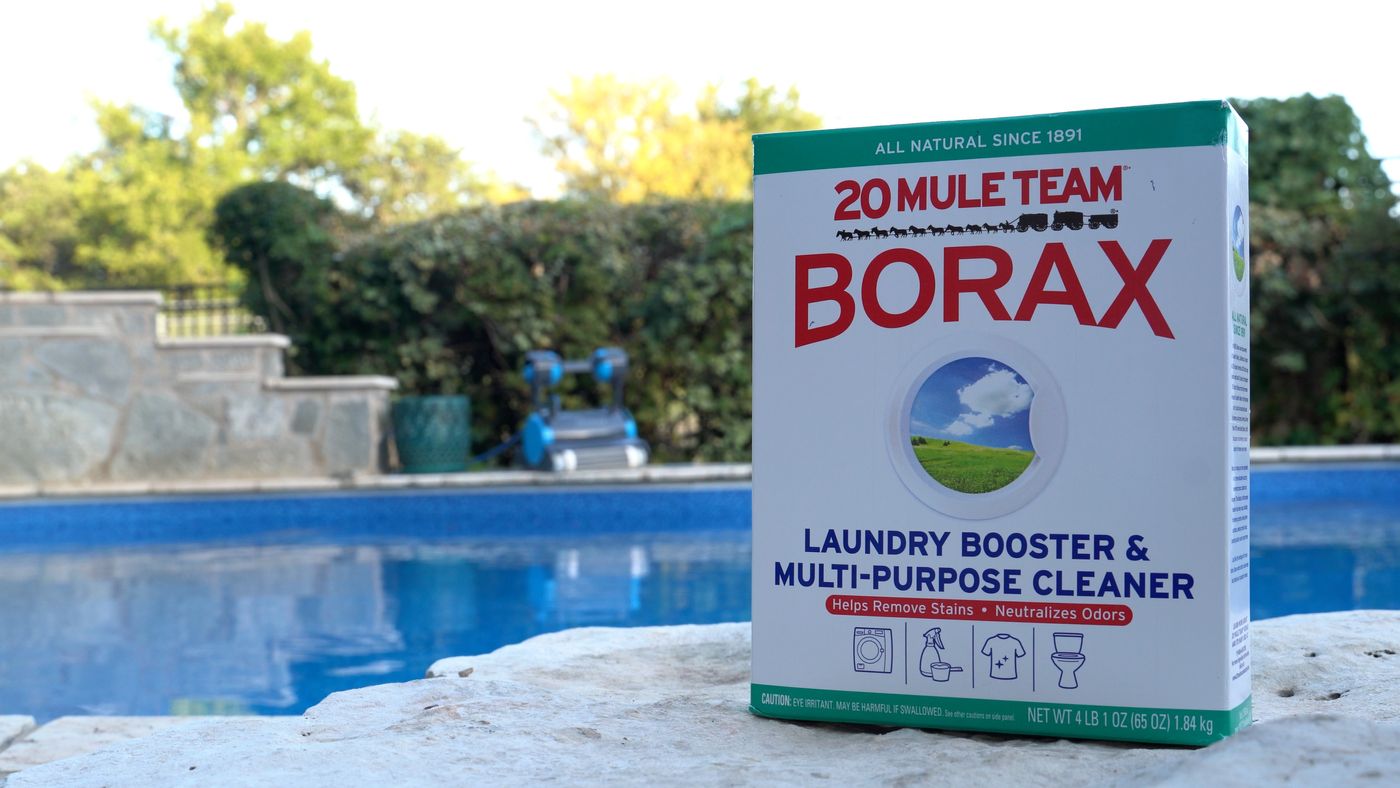
And if you ever overshoot your acid and need to nudge pH up without touching alkalinity, plain 20 Mule Team Borax from the laundry aisle does the job — another pool store product you never have to buy at pool store prices.
What I Refuse to Put in My Water
Now the list of what's not in my lineup, because this matters even more.
Trichlor Tablets
I know they're convenient — toss them in the floater and forget about them. Here's the kicker: every tablet is roughly half stabilizer by weight. That's cyanuric acid — CYA. The chlorine gets used up and leaves. The CYA stays, and it builds week after week.
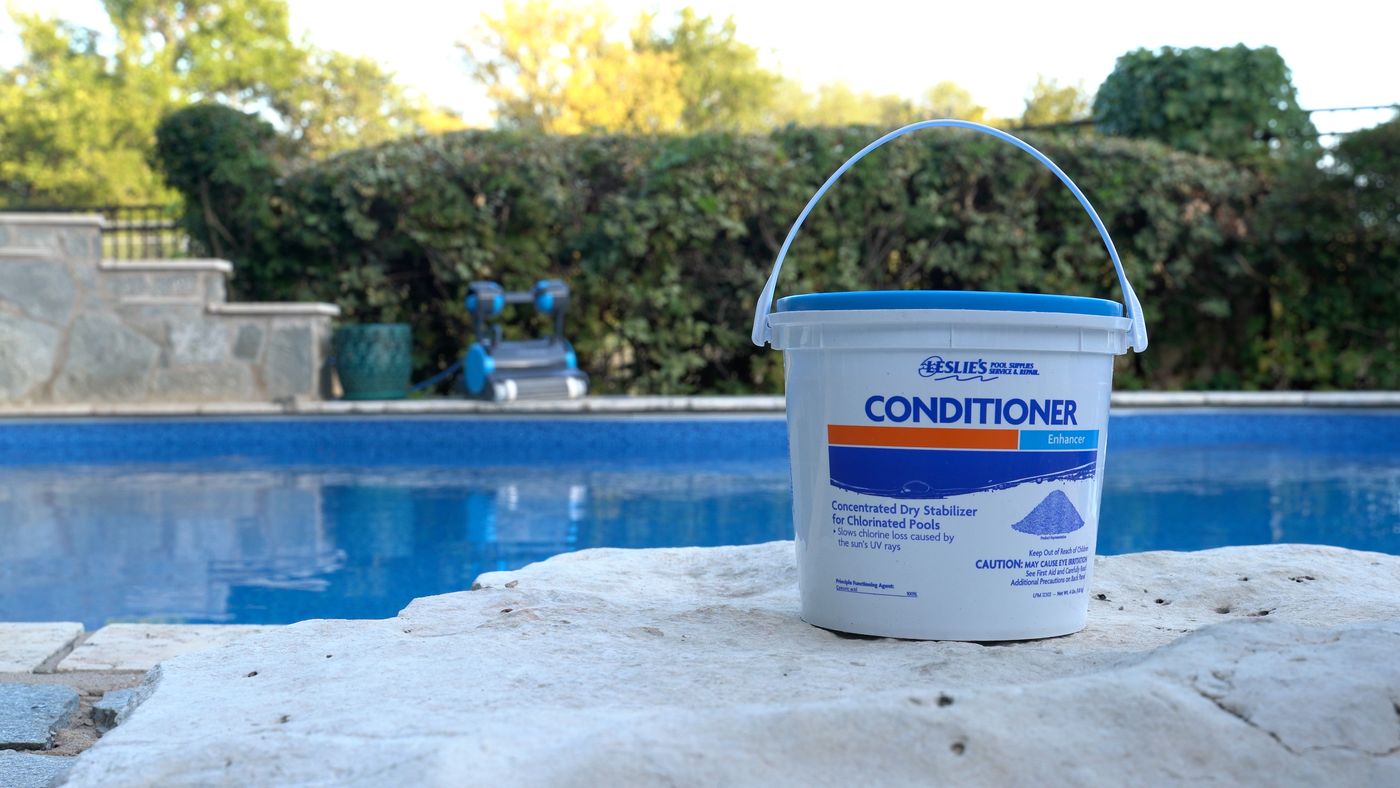
And CYA handcuffs your chlorine. The rule I run my pool by is the golden ratio: your free chlorine needs to be about 7.5 percent of your CYA number to sanitize properly.
| CYA Level | Free Chlorine Needed | Realistic? |
|---|---|---|
| 30 ppm | 2–3 ppm | Easy |
| 70 ppm | 5–6 ppm | Getting expensive |
| 150 ppm | 11+ ppm | You've lost the plot |
At a CYA of 30, that's an easy 2 to 3 parts per million of chlorine. Let tablets push your CYA to 150 by August — and they will — and now you need more than 11 parts per million just to break even. That's why so many pools turn green in late summer while the test strip swears the chlorine is fine. It's the exact mechanism behind chlorine lock. If anybody tells you tablets are a year-round plan, they're wrong. For me, tablets are a vacation tool and nothing more.
One important note: you do want some CYA in an outdoor pool — around 30 parts per million — or sunlight will burn off your chlorine by lunchtime. Add it once, on purpose, at opening. The problem was never stabilizer. The problem is stabilizer on autopilot.
Salt Systems
Salt systems are a good alternative for lower maintenance, but you need to know what you're getting into — I have a full deep-dive in my saltwater pools guide. The cell produces chlorine along with sodium hydroxide, which drags your pH upward constantly — so you're pouring in acid constantly — while the salt slowly works on your metal hardware.
Everything Else on the Shelf
The clarifiers, algaecides, phosphate removers, and flocculants? Skip them. Liquid chlorine at the right pH already does every one of those jobs. The pros will tell you chlorine is the best algaecide ever invented.
The ORP Method: How I Barely Test
Alright, here's where the nerd part earns its keep, because this is the piece that separates my method from every other simple pool care system out there.
Other guys will tell you to test pH, alkalinity, and chlorine once a month. I'm giving you something better: a live readout that tells you whether your water is safe right now, around the clock. It's called ORP — oxidation-reduction potential — measured in millivolts.
Think of it as your water's killing power. A chlorine test tells you how much chlorine is floating around. ORP tells you whether that chlorine is winning. Two pools can both read 3 parts per million, and one of them is a swamp waiting to happen because the pH or CYA is off, while the other is bulletproof. ORP catches the difference instantly. It's the gold standard in Olympic facilities and commercial aquatic centers, and it's the number I run my backyard on.
My targets are simple:
| ORP Reading | What It Means | What I Do |
|---|---|---|
| Above 700 mV | Contaminants destroyed in seconds | Nothing |
| 650–700 mV | Acceptable | Keep an eye on it |
| Below 650 mV | Sanitizer is losing | Add chlorine or fix pH that same day |
Below 650, I don't wait for cloudy water. I fix it that day.
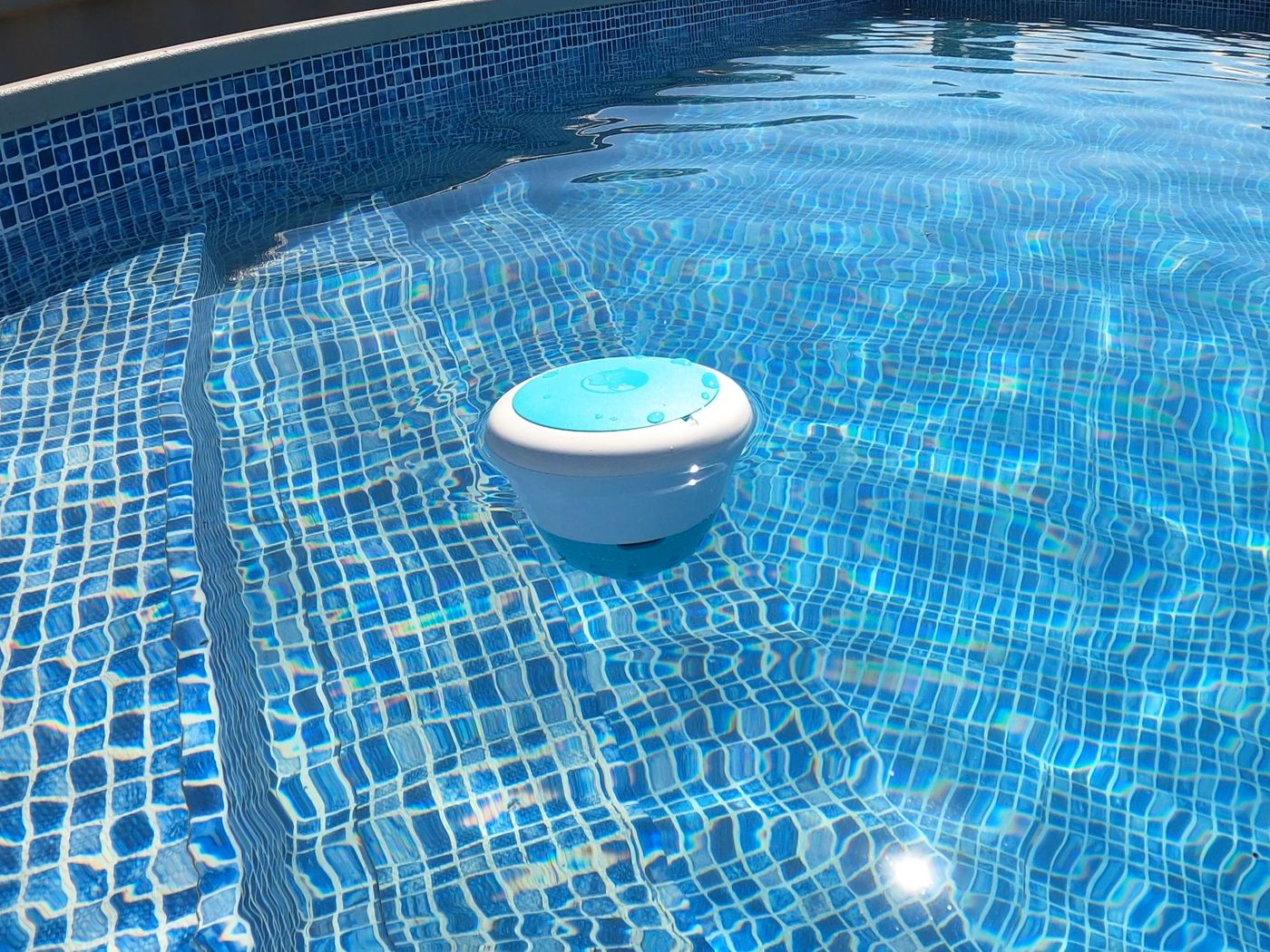
So how do I watch a lab-grade number without playing chemist? A smart water monitor. There are a few brands out there — I rank them all in my guide to the best pool water monitors — but my favorite right now is the ICO.
It sits in the water, reads ORP, pH, and temperature every hour, and sends everything to my phone. My daily water test is glancing at an app over coffee. ORP above 700, pH between 7.0 and 7.2 — I do nothing. That is the entire routine most days: nothing. If you want the deep dive on ORP and the ICO, their website at mysmartpool.com has a ton of good information.
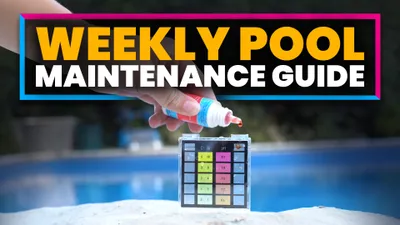
I do still keep a Taylor K-2006 drop kit on the shelf (salt pool owners want the K-2006 Salt) — the same kit the pros carry. Every few weeks I use it to confirm the sensor, and a couple times a season I check CYA, since stabilizer is the one number the float doesn't track.
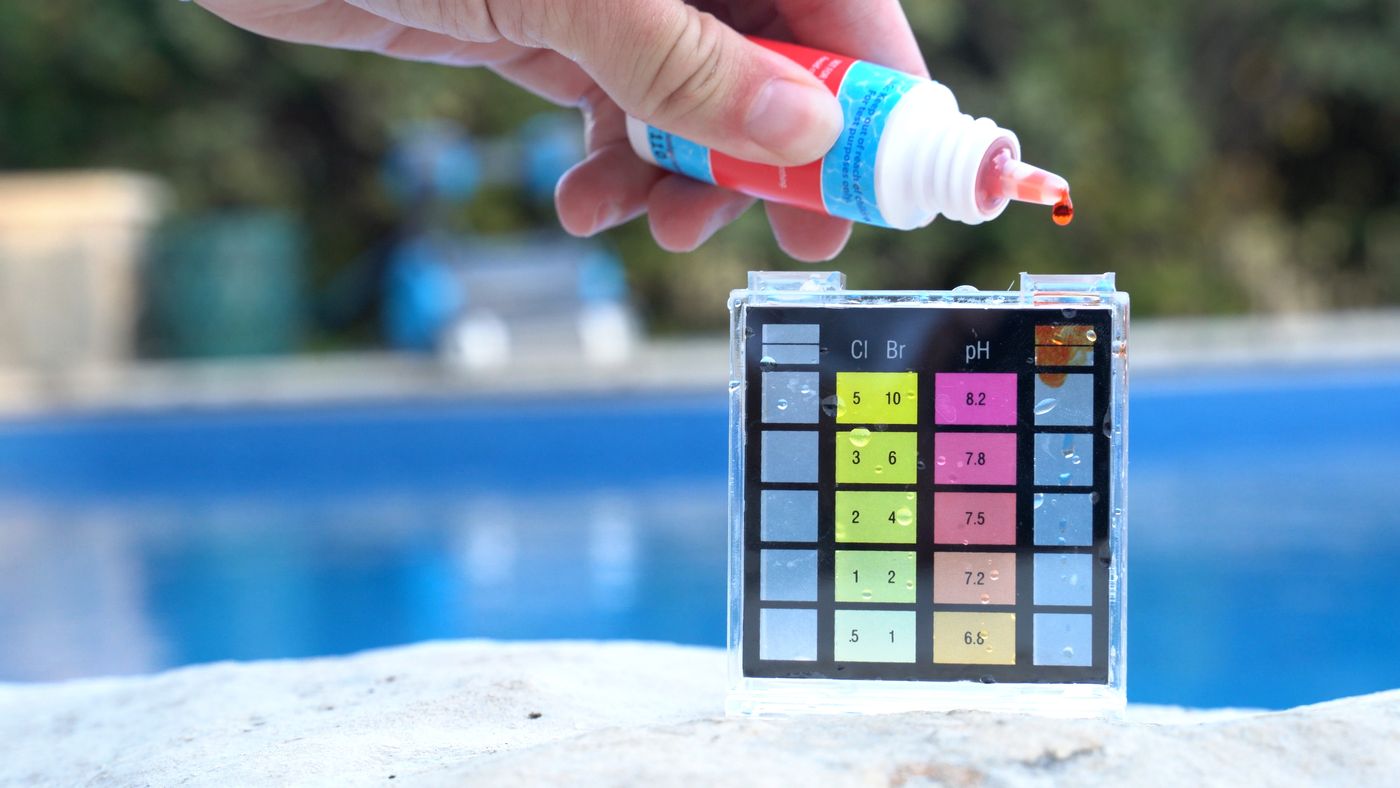
Drops over strips, every time. Strips are guessing with extra steps.
Dose by Data, Not by Vibes
When the water does ask for something, I never eyeball it. Nerds measure.
Step one: know your gallons. My 20-foot Ecopool holds right around 5,000 gallons, and that one number drives every dose I add. If you don't know yours, the math is simple:
- Round pool: diameter × diameter × average depth × 5.9
- Rectangle: length × width × average depth × 7.5
Or skip the mental math and use my free pool volume calculator — punch in your dimensions and it hands you the number. Write it on the inside of your equipment lid, because you'll use it forever.
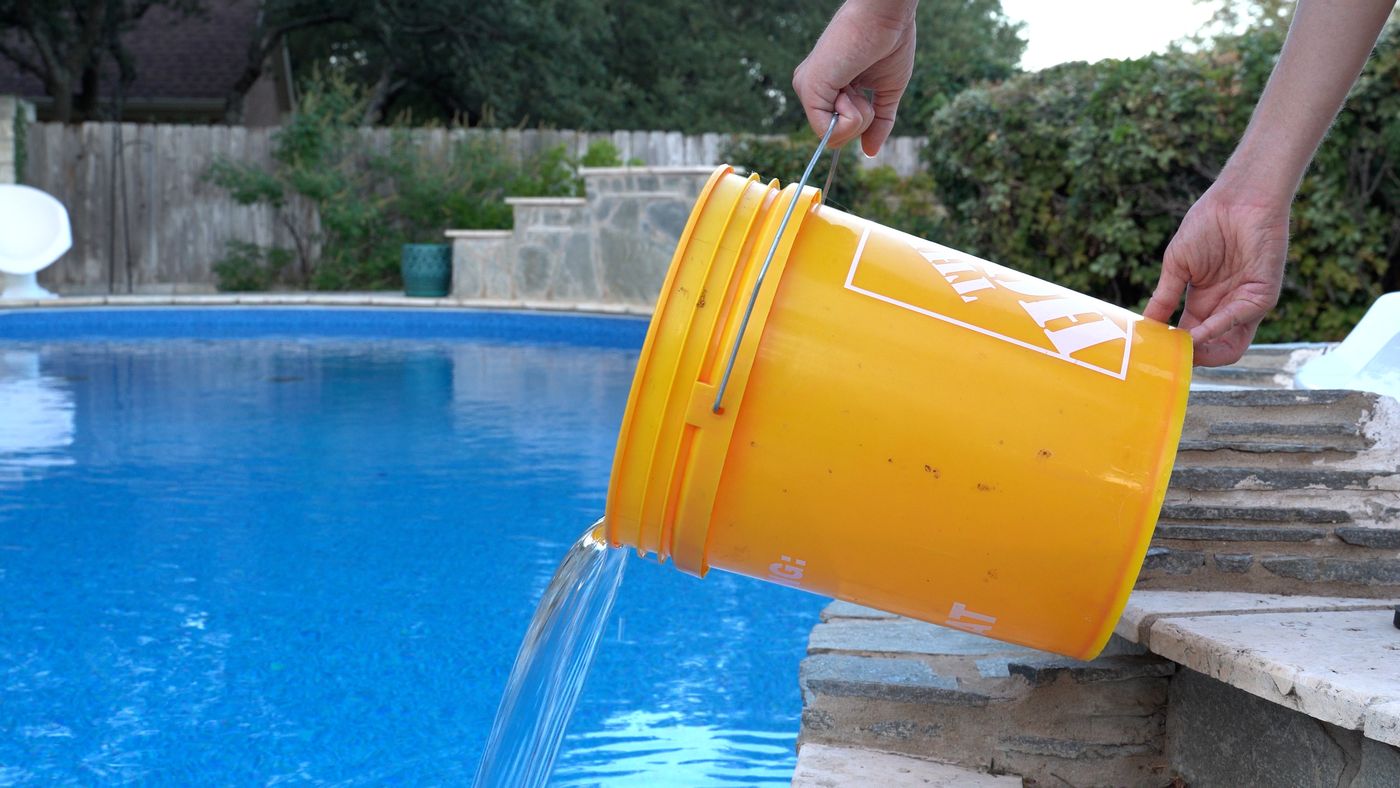
Step two: dose off your reading, not your gut. The ICO app recommends amounts based on your pool size and your current numbers, and my pool chemistry calculator works the same way. Exact ounces in, predictable result out. No scooping powder by feel, no glug of acid, and no more paying for chemicals your pool never asked for. This is how you cut the chemical bill — most pool owners over-chlorinate by 200 to 300 percent without ever knowing it. I broke down the full budget math in how I cut my pool costs by over 70%.
Keeping the Floor Clean
Chemistry keeps water clear. Circulation and cleaning keep it that way.
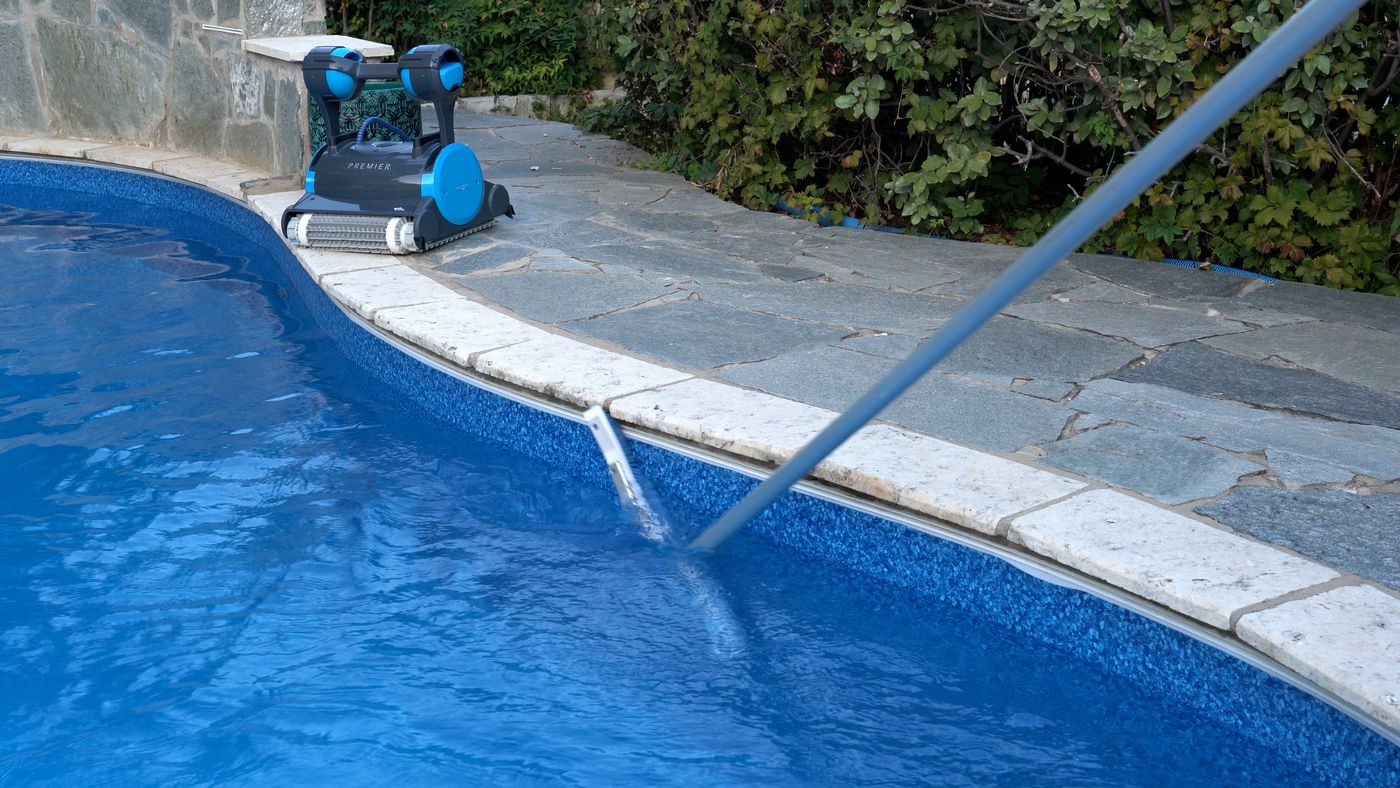
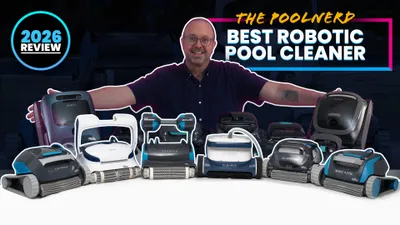
I brush the walls and waterline once a week — two minutes, and biofilm never gets a foothold. For the floor, I'm not going to pretend I hand-vacuum, because I test robotic pool cleaners for a living, and a corded robot on a weekly timer is the best quality-of-life upgrade in all of pool ownership. My current picks are in the best robotic pool cleaners guide, and here's why corded beats cordless for a low-maintenance pool.

It also saves water. Old-school vacuuming to waste throws hundreds of gallons of balanced, treated water onto your lawn — water you paid to fill and paid again to treat. A robot with a fine filter catches the same dust and dead algae and gives the water right back.
My Week, Start to Finish
So here's the whole system in real life:
- Every morning: glance at the app. ORP above 700, pH holding in the Power Zone — done, go enjoy your day.
- A couple times a week: the pool asks for chlorine, so it gets a measured pour from the jug.
- About once a week: the pH creeps up and gets a small shot of acid.
- Saturday: brush the walls, empty the robot's filter, confirm the timer is set.
- Every few weeks: a Taylor test to verify the sensor.
That's maybe fifteen minutes of hands-on time a week, my chemical shelf holds two jugs and a bag of baking soda, and the water stays crystal clear blue from opening day to closing.
Frequently Asked Questions
Do you really only use two chemicals?
For day-to-day maintenance, yes — liquid chlorine and muriatic acid. Baking soda comes off the bench when alkalinity drifts below about 80 ppm, and CYA gets added once at opening to hit roughly 30 ppm. That's the entire shelf. No clarifiers, no algaecides, no phosphate removers.
What ORP number should I target?
Above 700 millivolts, your water is in great shape and contaminants are being destroyed in seconds. 650 to 700 is acceptable — keep an eye on it. Below 650, don't wait for cloudy water: add chlorine or fix your pH that same day.
Are chlorine tablets really that bad?
As a year-round plan, yes. Every trichlor tablet is roughly half CYA by weight, and CYA builds forever. Once it climbs, your chlorine needs climb with it — the 7.5 percent golden ratio — and that's how pools turn green in August with "fine" chlorine readings. Tablets are a vacation tool, nothing more.
Do I need a smart monitor, or can I get by with a test kit?
You can absolutely run this method with a Taylor K-2006 and discipline — test a few times a week and dose off the numbers. The monitor just removes the discipline requirement: it reads ORP, pH, and temperature every hour and tells you the moment your water needs something. I compare the options in my best pool water monitors guide.
Final Verdict
So what's my final verdict on keeping your pool water crystal clear?
Where I land is simple. Crystal clear water was never a product problem — it's a process problem, and the process is short. Liquid chlorine to sanitize and to shock. Muriatic acid to hold pH between 7.0 and 7.2 so that chlorine hits at full strength. Baking soda on standby for alkalinity. Keep CYA low — around 30 — and hold free chlorine at 7.5 percent of it. Watch ORP and live above 700 millivolts. Dose by your gallons, brush weekly, and let a robot own the floor.
No clarifier, no algaecide, no eighty-dollar pool store visits. Two jugs, a grocery bag, and one number on your phone.
If this saves you money this summer, everything I use is linked above — the ICO monitor, the Taylor K-2006, and my robot picks — and I post all the best deals on top pool equipment at ThePoolNerd.com/deals. Until then: keep nerding out, and enjoy that pool. I'll see you next time.

Comments
Loading comments…