
 Justin D.
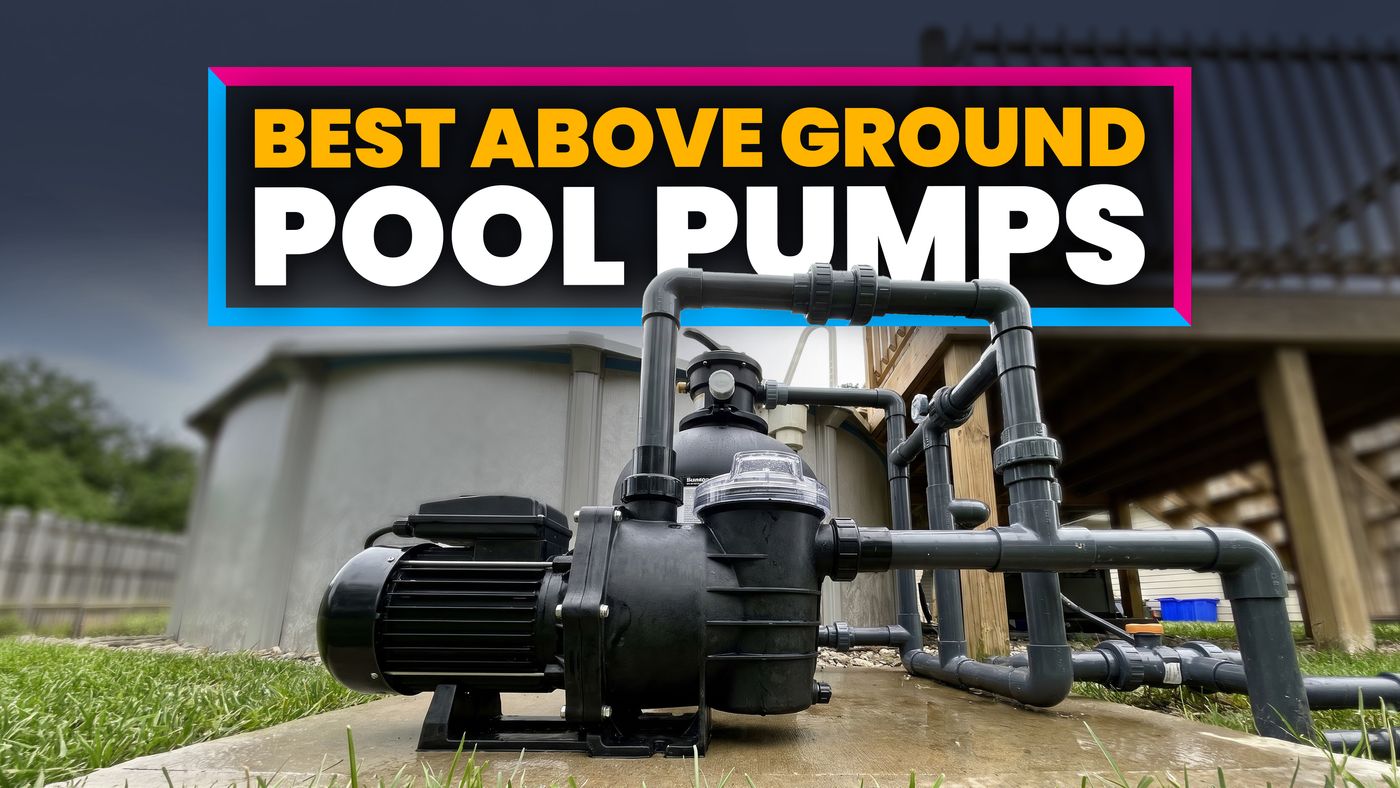
A loud motor. Weak circulation. An electric bill that jumps as soon as pool season starts. Replacing an above-ground pool pump should solve those problems, but shopping for one can leave you staring at horsepower numbers that don't even seem to agree with each other.
One listing says 1 HP. Another says 0.85 HP. Both look like the same Hayward pump. Then there's a variable-speed model that costs more upfront and an Intex system that includes the filter, too.
Here's where I'd start: the Hayward PowerFlo LX is my best overall replacement pick for a compatible, permanently installed above-ground pool. It's a straightforward choice when your existing filter works and you want to replace the pump without adding complicated controls.
If reducing operating costs is the priority, the BLACK+DECKER variable-speed above-ground pump is my first upgrade to consider. For a compatible soft-sided Intex pool, the Intex Krystal Clear 3,000 GPH sand filter pump is my favorite complete system.
The right choice depends on what you're connecting it to. Let's make that decision easier.
The Best Above-Ground Pool Pumps at a Glance
Best Above-Ground Pool Pumps at a Glance


| Category | My pick | Why I'd choose it |
|---|---|---|
| Best overall replacement | Hayward PowerFlo LX 1.1 HP | Straightforward single-speed operation for a compatible permanent pool |
| Best variable-speed upgrade | BLACK+DECKER 1.5 HP variable speed | Adjustable speeds, scheduling, and WiFi control |
| Best premium option for rigid plumbing | Pentair SuperFlo VS EC-342001 | Programmable speeds and flexible electrical compatibility, with a discontinued-model caveat |
| Best single-speed pump for flexible plumbing | Hayward PowerFlo Matrix 1.1 HP | Configurable discharge orientation and convenient connections |
| Matrix option for an existing SP1592 installation | Hayward PowerFlo Matrix 0.85 HP | Worth comparing with older 1 HP listings when matching an existing system |
| Best dual-speed option | Hayward PowerFlo Matrix dual speed | High and low settings on the Matrix platform |
| Best budget dual-speed candidate | Aquastrong 1.5 HP with timer | Two operating speeds and built-in scheduling |
| Best sand filter and pump combo | Intex Krystal Clear 3,000 GPH | A matched filtration system for compatible Intex pools |
| Best cartridge filter and pump combo | Intex C2500 | Accessible cartridge maintenance without backwashing |
These are buying recommendations based on features, installation requirements, and ownership tradeoffs. The horsepower labels alone don't establish which pump will move the most water through your particular filter.
MY QUICK VERDICT
Keeping your existing filter on a permanent above-ground pool? Buy the Hayward PowerFlo LX. Want a lower electric bill over a long season? Start with the BLACK+DECKER variable-speed pump. Replacing the whole filtration setup on a compatible Intex pool? The Krystal Clear 3,000 GPH sand filter pump is the complete package I'd buy first.
Start With Your Pool Type
Before comparing motors, answer one question: are you replacing a standalone pump, or do you need the pump and filter together?
On a permanently installed above-ground pool, a Hayward PowerFlo or another compatible standalone pump sends water through a separate sand, cartridge, or DE filter. The basket attached to the pump catches larger debris. It doesn't replace that filter.
An Intex filter pump combines the circulation pump and filtration equipment into one matched system. That makes it a different purchase, even when an online store puts both products in the same category.
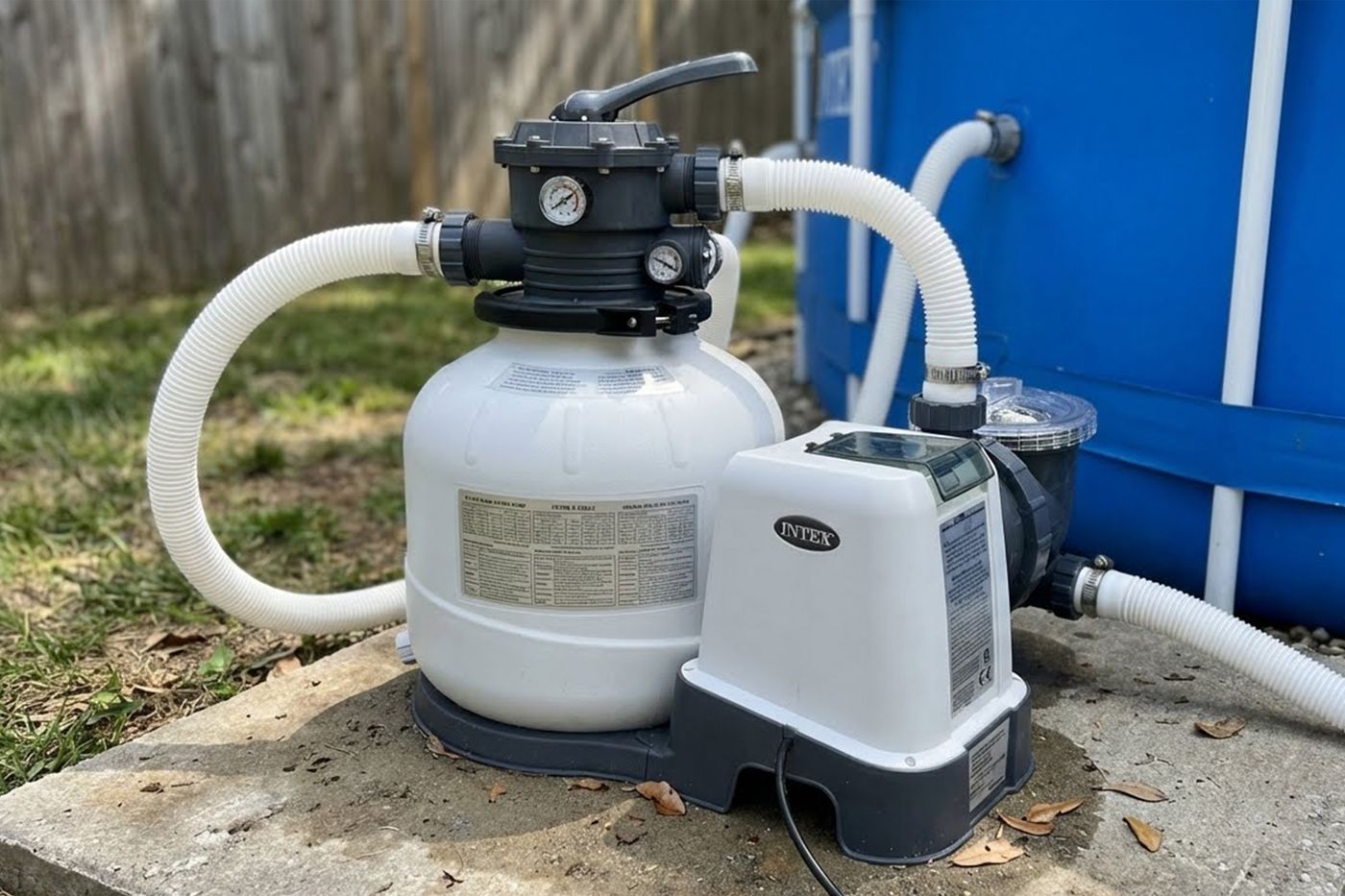
There's also a compatibility distinction that gets overlooked. The Hayward Matrix, Pentair SuperFlo VS, and current BLACK+DECKER variable-speed manuals specify permanent pools and exclude storable pools. A seasonal frame pool doesn't become a compatible installation just because an adapter lets the hoses connect. For a soft-sided pool, start with equipment approved for that pool model. If you're still shopping for the pool itself, my best above-ground pools guide covers the Intex and Bestway frame pools these systems pair with.
Single Speed vs Dual Speed vs Variable Speed
| Pump type | Main advantage | Main compromise |
|---|---|---|
| Single speed | Simple operation and often a lower purchase price | Runs at one speed whenever it's on |
| Dual speed | Lower-speed circulation plus a higher-speed setting | Only two choices; automatic speed scheduling depends on the model |
| Variable speed | Fine control over speed and operating schedules | Higher upfront cost and more settings to configure |
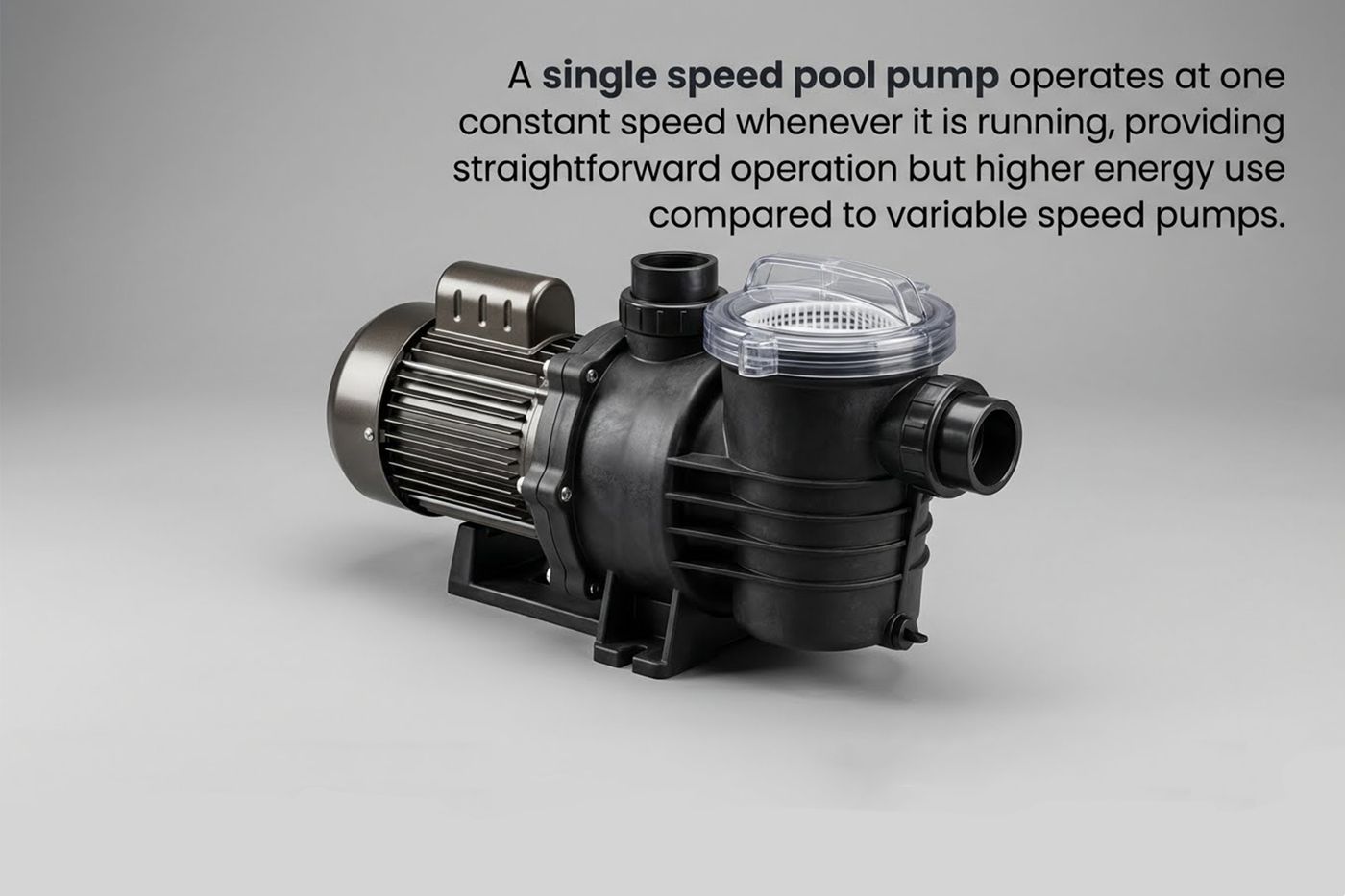
Variable speed gives you the most flexibility to reduce energy use. You can run routine filtration at a suitable lower speed, then increase flow when another task requires it. Lower-speed operation can also make the equipment area quieter. The savings depend on the speed, runtime, and demands of your system.
Dual speed is a useful middle ground. It gives you a low setting without requiring a full variable-speed controller. Single speed still has a place when simplicity and the initial purchase price matter most. I compare the three approaches across inground and above-ground pumps in my variable speed, two-speed, and fixed-speed guides.
For a cross-category starting point before narrowing the choice to an above-ground installation, use my complete pool pump guide.
My preference is to price the entire installation and consider the length of your swimming season. A pump that runs for many months deserves more attention to operating costs than one serving a lightly used seasonal pool.
Hayward PowerFlo LX: Best Overall Replacement Pump for a Compatible Permanent Above-Ground Pool
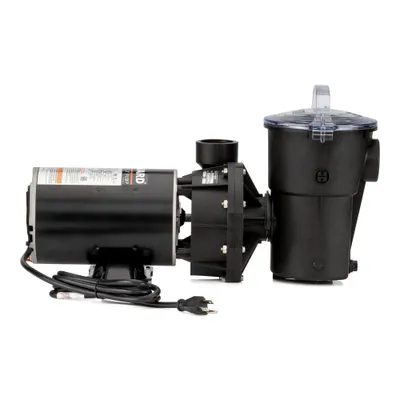
The PowerFlo LX is the pump I'd put at the top of the list when the job is straightforward: keep the existing filter, replace a correctly sized pump, and get the pool circulating again.
The current W3SP1580X15 is listed by Hayward as a 115V, single-speed pump with 1.1 total HP. Its familiar strainer housing, clear lid, and drain arrangement keep routine maintenance accessible. Hayward also publishes parts information, which is useful when you're deciding whether to repair an existing unit or replace it.
What I like here is the simplicity. There's no speed schedule to configure. If the LX matches the flow requirements and connection layout of your existing system, it can be a sensible replacement without a broader equipment upgrade.
The tradeoff is energy flexibility. Once it's running, you can't dial the motor down for lighter circulation. If your pool operates through a long season, compare its installed cost with a variable-speed option before deciding that the lower purchase price makes it the better value.
I also wouldn't buy it because a listing advertises an impressive maximum GPM. The useful number is the flow it can deliver against the resistance of your plumbing and filter.
What I like
- Straightforward operation for owners who want simple equipment.
- Accessible basket and published replacement-parts information.
- A sensible starting point for a compatible existing PowerFlo installation.
What I'd consider
- Single-speed operation limits opportunities to reduce running power.
- Connection dimensions and filter capacity still need to match.
- Online warranty coverage may differ from dealer-model coverage.
My take: Choose the LX for a straightforward replacement. If reducing the electric bill is the main reason you're upgrading, move the variable-speed options higher on your list.
Check the Hayward PowerFlo LX 1.1 HP on Amazon.
BLACK+DECKER Variable Speed Above-Ground Pool Pump: Best Variable-Speed Upgrade
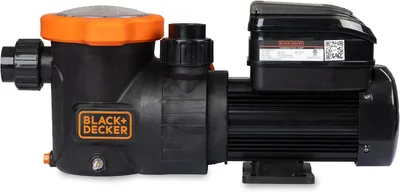
The BLACK+DECKER is the option I'd look at first when I want adjustable speeds on a compatible permanent above-ground pool.
The appeal is practical. You can program circulation periods, change speed for different jobs, and use the onboard controls or app. The current BDXBTV24333 documentation includes four speed periods, WiFi and Bluetooth control, and a five-year limited warranty administered by Blue Torrent Pool Products.
That gives you room to tune the pump around your pool. A useful schedule might provide sufficient lower-speed filtration for most of the day, with a faster period when more skimming or equipment flow is needed. The settings have to maintain the flow required by your heater, chlorinator, and other connected equipment. My variable speed pool pump schedule guide walks through building that day.
For me, the speed control matters more than the app. Phone access is convenient, but the real value comes from setting a schedule that does the job efficiently.
There are a couple of purchase details to check. The supplier advertises a 115V version, while the current manual describes a dual-voltage model. Confirm the exact SKU and nameplate for the unit you're ordering. The supplier also advertises ENERGY STAR certification; verify the exact model's eligibility before counting a utility rebate in your budget.
What I like
- Adjustable speed instead of one fixed operating setting.
- Built-in scheduling and optional app control.
- A five-year limited warranty, subject to its service terms.
What I'd consider
- The schedule needs to be configured for your system.
- A long warranty doesn't necessarily include free onsite service.
- This permanent-pool model isn't a universal Intex replacement.
My take: This is my preferred variable-speed starting point from this list. I'd choose it over a single-speed pump when the installation fits and the expected running-cost savings justify the upgrade.
Check the BLACK+DECKER variable-speed pump on Amazon.
Pentair SuperFlo VS: Best Premium Option for a Professionally Configured Permanent Above-Ground Pool
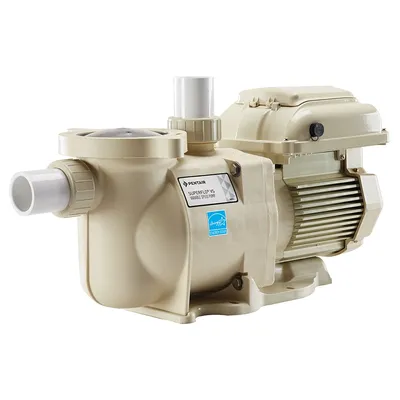
Pentair SuperFlo VS (EC-342001)
Best Premium Variable Speed Pump for a Permanent Above-Ground Pool
The SuperFlo VS deserves a place in the conversation, but it needs more explanation than most listings give it.
Although it's commonly sold for inground pools, its manual allows permanent swimming-pool installations. That can include a properly configured permanent above-ground pool. It isn't designed as a direct replacement for a seasonal pool's small filter-pump assembly.
The SuperFlo VS offers three programmable operating-speed settings plus an override, a built-in clock, and a display that shows power use. Its documentation covers 115V and 208–230V supplies, along with unionized connections for 1.5-inch and 2-inch plumbing. Those features make it worth considering when you're upgrading a conventional equipment pad.
I particularly like being able to see watt consumption while adjusting speed. That makes it easier to understand what a schedule change means for electricity use.
The catch is that Pentair now lists the SuperFlo VS as discontinued and identifies the SuperFlo VST as its replacement. The linked EC-342001 can still be worth evaluating if available, but compare the exact version, installed price, and support with the replacement model. Don't assume VS and VST listings are interchangeable.
Warranty is another detail to check carefully. Pentair's current online-purchase policy provides one year of parts-only coverage for this category, rather than the blanket two-year warranty sometimes repeated in shopping guides.
What I like
- Programmable speeds and a useful power display.
- Electrical and plumbing flexibility for an appropriate installation.
- A documented option for a more involved equipment upgrade.
What I'd consider
- The VS is a discontinued model.
- Professional installation and plumbing work can change the total cost.
- It isn't approved for storable pools, including seasonal pools designed for disassembly.
My take: Keep the SuperFlo VS on the shortlist for a permanent pool with a conventional equipment pad. I wouldn't make it the default purchase for every above-ground pool.
Check the Pentair EC-342001 SuperFlo VS on Amazon.
Hayward PowerFlo Matrix Single-Speed Pumps: Best Single-Speed Choice When Plumbing Layout Matters
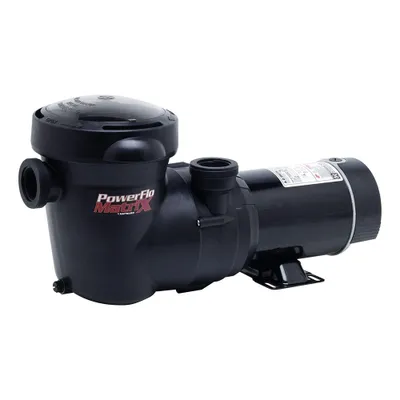
The Matrix is worth a closer look when the physical arrangement of the pump and filter makes replacement awkward.
Its discharge can be configured vertically or horizontally, and Hayward provides quick-disconnect intake and discharge connections. The large strainer basket and removable housing also make it an appealing design for routine servicing.
That flexibility can matter more than a small difference in the price of two pumps. If one layout requires extra fittings or forces a hose into an awkward bend, I'd factor that into the buying decision.
The discharge-conversion feature is an installation adjustment. You shut down and disconnect the relevant components before repositioning the housing; it isn't something to change while the connected system is operating.
PowerFlo Matrix 1.1 HP
The current SP1593/W3SP1593 family is the 1.1 total-HP option. I'd consider it when its performance curve fits the required flow and the Matrix connection layout simplifies the installation. Its larger rating doesn't automatically make it a better choice for a particular pool diameter.
Check the Hayward PowerFlo Matrix 1.1 HP on Amazon.
PowerFlo Matrix 0.85 HP
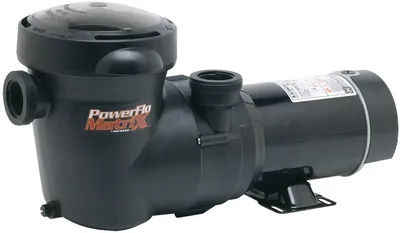
The current SP1592 page identifies this model as 0.85 total HP and 115V. I'd compare this version when replacing an existing SP1592, while still checking the current performance curve and filter requirements. There's no reason to move to a larger model unless your system needs it.
Check the Hayward PowerFlo Matrix 0.85 HP on Amazon.
PowerFlo Matrix 1 HP listings
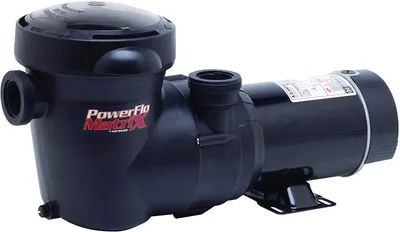
This is where shopping gets confusing. Hayward's 2026 catalog describes W3SP1592 as a 1 HP pump, while its current SP1592 product page shows 0.85 total HP. An older 1 HP listing and a newer 0.85 HP listing may refer to the same model family. Compare the complete SKU and current specifications before treating them as different performance upgrades.
Check the Hayward PowerFlo Matrix 1 HP listing on Amazon.
What I like: Flexible discharge orientation, accessible connections, and different configurations for matching an existing system.
What I'd consider: These particular versions are single speed. Check the exact SKU, sizing, and sales-channel warranty instead of choosing by the listing's horsepower headline.
My take: I'd pay attention to the Matrix when its plumbing flexibility makes the replacement cleaner and easier. The LX remains my straightforward overall replacement pick; the Matrix earns its place through installation convenience.
Hayward PowerFlo Matrix Dual Speed: Best Dual-Speed Option
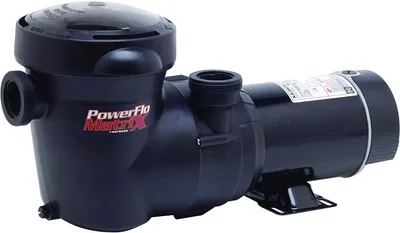
If you want a Hayward pump with a lower-speed circulation setting, the dual-speed Matrix is the version to investigate.
The model commonly listed as the 1.5 HP dual-speed Matrix is SP15932S or W3SP15932S. Hayward's catalog identifies it as a two-speed pump, and its support documentation describes a rear high/low switch. Don't confuse it with the single-speed SP1593.
The benefit is simple: use the lower setting when it supplies enough flow for routine filtration, then use the higher setting when the system needs more. Vacuuming through the filtration system or backwashing a compatible sand filter may require that higher setting.
What you give up compared with variable speed is precision. You have two motor settings, so you can't choose a speed between them. Also, a high/low switch doesn't automatically give you a programmable daily speed schedule. Check the controls supplied with the exact model.
What I like
- A lower-speed operating option on the Matrix platform.
- Straightforward high/low control.
- A useful alternative when a full variable-speed upgrade doesn't fit the budget.
What I'd consider
- Two speeds provide less flexibility than variable speed.
- Low speed must still meet connected equipment's flow requirements.
- Similar model names make it easy to order the wrong version.
My take: This is my first dual-speed choice from the list. Compare its full installed price with the BLACK+DECKER before buying, especially if automatic scheduling is important to you.
Check the Hayward PowerFlo Matrix dual speed on Amazon.
Aquastrong 1.5 HP Dual Speed Pool Pump With Timer: Best Budget Dual-Speed Candidate
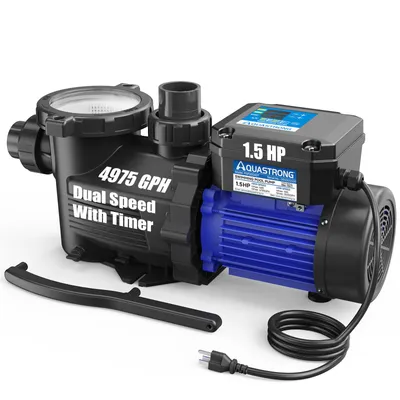
The Aquastrong makes sense when you want high/low operation and a timer without immediately moving to a premium variable-speed pump.
The model to match is PSP150ADT, the 115V dual-speed version with a built-in timer. Aquastrong advertises adjustable run periods for the two speeds and includes adapters for 1.5-inch and 2-inch connections. Check the full model number because similarly named Aquastrong pumps have different controls.
The timer is the feature that stands out to me. A lower-speed mode becomes more useful when you can include it in a repeatable schedule. If the pump suits your plumbing and filter, that offers a practical step up from basic single-speed operation.
I'd be more cautious about buying it on the strength of a maximum-flow claim. Aquastrong's published flow figures aren't consistent across its own product description and specifications. I would ask for the correct performance curve if sizing depends on a particular flow at a particular resistance.
The manufacturer advertises a two-year warranty and offers an additional year through registration. Confirm the registration terms and coverage for your seller before treating that as part of the value.
What I like: Two operating speeds, built-in timing, and supplied connection options.
What I'd consider: Less speed flexibility than a variable-speed pump, plus technical specifications that deserve confirmation before a demanding installation.
My take: The Aquastrong is worth considering when the actual price is meaningfully lower than the alternatives. I'd confirm parts availability and the warranty process before letting the initial savings decide the purchase.
Check the Aquastrong dual-speed pump with timer on Amazon.
Intex Krystal Clear 3,000 GPH Sand Filter Pump: Best Pump-and-Filter Combo for a Compatible Intex Pool
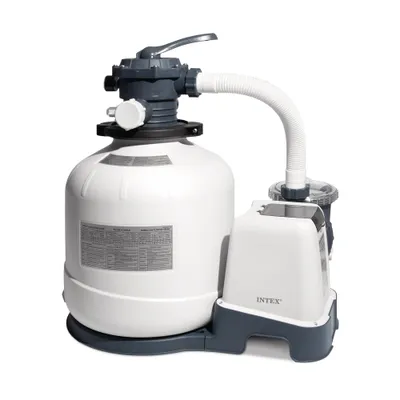
Intex Krystal Clear 3,000 GPH Sand Filter Pump
Best Sand Filter and Pump Combo for Intex Pools
For an Intex owner replacing an entire filtration setup, this is the system I'd look at first if the pool falls within its approved range.
The SX3000, model 26651EG, pairs the pump with a 16-inch sand filter. Intex specifies a pool-water capacity range of 5,500 to 19,600 gallons, along with 110–120V power, included 1.5-inch connector hoses, and a built-in daily timer.
The distinction to understand is flow. 3,000 GPH is the pump-flow rating; the rated system flow is 2,450 GPH. The system figure accounts for the matched filtration assembly and is more useful than the larger number in the title when comparing these Intex packages.
Why would I choose it? I like the maintenance approach for someone who doesn't want to keep removing and replacing small cartridges. With a sand system, you backwash the filter when required, rinse it, and return it to filtration. That also means planning where the discharged water will go.
The SX3000 requires the specified filter media. Intex lists 120 pounds of No. 20 silica sand, so budget for the media and the space needed for the assembled equipment. The smaller 2,800 GPH and saltwater-combo versions are in my best sand pool filters guide.
What I like
- A matched pump and sand filter in one package.
- Timer-controlled operation.
- Backwashing instead of routinely replacing filter cartridges.
What I'd consider
- Its size range won't suit every small seasonal pool.
- Backwashing uses water and needs an appropriate discharge route.
- Smaller pool connections may need approved adapters.
My take: This is my favorite complete system here for an appropriately sized Intex pool. Just remember that a sand filter still needs maintenance, and the pump doesn't replace proper sanitation.
Check the Intex 3,000 GPH sand filter pump on Amazon.
Intex C2500 Cartridge Filter Pump: Best Cartridge Pump-and-Filter Combo
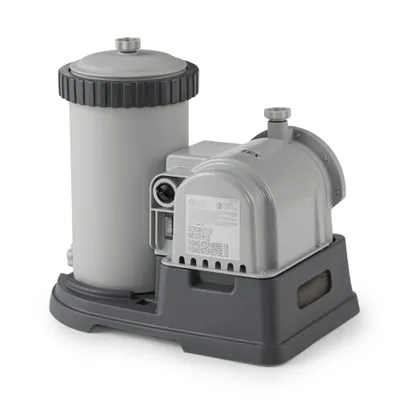
The C2500 is the option I'd consider when I want a compatible Intex filtration package with straightforward cartridge access and no backwash discharge to manage.
Its maintenance routine is easy to understand: shut the system down as directed, remove the cartridge, clean or replace it when needed, and restore operation. You're trading sand-filter backwashing for hands-on cartridge care.
The C2500 is advertised at 2,500 GPH pump flow. For the older 28633EG version, Intex's catalog specifies 1,900 GPH system flow. As with the sand system, those two figures describe different things.
Check the exact model before buying. Intex's current C2500 is 26633EG; older 28633EG listings can differ in features. Confirm the hose fittings, approved pool size, and whether the cartridge-condition indicator is included.
I would also compare the cost and availability of replacement cartridges before buying. A lower purchase price is less attractive if maintenance becomes a constant chore during a busy swimming season.
What I like
- An integrated pump and cartridge filter.
- Accessible cartridge maintenance.
- No backwashing routine or sand-media loading.
What I'd consider
- Cartridges require cleaning and eventual replacement.
- Restricted cartridges reduce circulation.
- Model generation, hose fittings, and approved pool size need checking.
My take: Choose the C2500 when cartridge maintenance suits you and it's approved for your pool. I'd lean toward the SX3000 for a compatible larger setup when avoiding frequent cartridge handling matters more.
Check the Intex C2500 cartridge filter pump on Amazon.
How to Choose the Right Above-Ground Pool Pump
Match the filter before chasing horsepower
Start with your existing filter's model number and design flow. Then check the pump's performance curve, which shows how much water it moves against different amounts of resistance from the plumbing and equipment.
The selected flow must suit the filter, suction fittings, hoses or pipes, and any connected heater or inline chlorinator. A bigger motor can be the wrong answer when another component limits the system. Manufacturers specifically warn that high-flow pumps must be matched to the equipment around them.
Pool gallons help establish circulation needs, but they don't tell the whole story. Two pools holding the same amount of water can need different pump setups because one has short hoses while the other has longer plumbing and additional equipment. My pool pump size calculator turns your pool volume and runtime into a starting flow number.
Understand the Hayward horsepower labels
Older marketed horsepower and current total-horsepower descriptions don't always match. The SP1592/W3SP1592 Matrix family is a good example: you can encounter both 1 HP and 0.85 HP descriptions.
Compare complete model numbers and performance curves before concluding that the lower printed number means weaker circulation. A headline horsepower change by itself doesn't establish a change in delivered flow.
Check voltage, position, and connections
Check the pump's position, too. The Hayward PowerFlo LX and Matrix need a flooded water supply, with the pump below the pool's waterline. They aren't the choice for a setup that requires lifting water up from the pool. Confirm that requirement before assuming a replacement will work in a new location.
Verify the actual electrical supply, plug or wiring arrangement, and pump nameplate. Many above-ground pumps are 115V, but you shouldn't assume every product with a similar name uses the same connection.
Also measure the plumbing. A threaded 1.5-inch Intex hose connection, a clamp-on hose, and a 1.5-inch PVC connection aren't automatically interchangeable. Check the fitting style, required adapters, and discharge orientation before ordering.
Permanent-pool electrical installation must follow the pump manual and applicable requirements for GFCI protection, grounding, and bonding. Have a qualified installer handle electrical changes; an extension cord isn't a substitute for the correct pool circuit.
Compare the full cost
Include the pump, necessary fittings, installation, and ongoing electricity use. For a combo system, include media or replacement cartridges, too.
You can estimate electricity cost with a simple calculation:
Daily cost = watts ÷ 1,000 × operating hours × electricity price per kWh
For illustration, a pump drawing 1,000 watts for eight hours daily costs about $38.40 over 30 days at $0.16 per kWh. A hypothetical schedule drawing 250 watts for 12 hours daily costs $14.40. Those aren't measured results for these pumps; each schedule would still have to meet the pool's circulation and equipment requirements.
Read the warranty for the exact purchase
Hayward's current W3 Open Line terms provide one year of parts coverage through authorized sellers. Don't transfer the warranty from a different dealer SKU to an online listing. Pentair also has separate online-purchase terms, while BLACK+DECKER's limited warranty follows its own service process.
The useful question is how your exact purchase will be supported if something fails.
Frequently Asked Questions
What is the best above-ground pool pump?
For a compatible permanent above-ground pool that keeps its existing filter, the Hayward PowerFlo LX is my best overall replacement. For a lower electric bill, the BLACK+DECKER variable-speed pump is my first upgrade, and for a compatible Intex pool the Krystal Clear 3,000 GPH sand filter pump is my favorite complete system.
What size pump does an above-ground pool need?
Choose from the pool volume, plumbing resistance, filter design flow, and connected equipment requirements. A recommendation based only on a 15-foot, 24-foot, or 30-foot pool diameter leaves out too much. For example, circulating the equivalent of 10,000 gallons in eight hours requires about 20.8 GPM mathematically. That is a sizing illustration, not a universal eight-hour operating rule or a guarantee that every gallon has passed through the filter.
Is a variable speed pump worth it on an above-ground pool?
It can be, especially with a longer swimming season or substantial daily runtime. Its value comes from operating at an efficient speed that still meets the system's needs. Leaving it at a high setting all day gives up much of the reason to buy one.
Can I put a more powerful pump on my Intex pool?
Only use a system compatible with the exact pool, fittings, and filtration setup. Increasing horsepower alone isn't a sound upgrade plan. For these pools, I'd start with an approved Intex pump-and-filter combination and its capacity range.
How long should an above-ground pool pump run?
Follow the system manufacturer's operating guidance, then account for debris, swimming activity, skimming, and connected equipment. Salt chlorinators and heaters can require sufficient flow for their own operating periods. A variable-speed schedule may run longer at lower power; runtime alone doesn't reveal electricity use. My how long to run a pool pump article covers the math.
Are single speed above-ground pumps banned?
There isn't a useful blanket answer based only on speed type. Federal efficiency rules distinguish equipment classes, and Hayward currently identifies the single-speed LX and Matrix models discussed here as DOE compliant. Confirm the current model's compliance and your installation's local requirements.
Will a better pump fix a green pool?
A properly matched pump can improve circulation and filtration, but it doesn't sanitize the water. Green water also requires addressing the underlying water-care problem. Before replacing equipment, check for a dirty filter, blocked basket, air leak, or other restriction that could be limiting circulation.
My Final Verdict
The Hayward PowerFlo LX is my best overall replacement pick for a compatible permanent above-ground pool. I'd choose it when the existing filter is staying, the sizing checks out, and straightforward operation is the priority.
For a variable-speed upgrade, I'd start with the BLACK+DECKER. Adjustable speeds and scheduling make it the more appealing choice when reducing operating power matters. The Pentair SuperFlo VS remains a conditional premium option, but its discontinued status belongs in the purchase decision.
The PowerFlo Matrix earns its place when discharge flexibility makes installation easier, and its dual-speed version is my first high/low alternative. The Aquastrong is the budget candidate I'd consider after confirming the exact specifications and support.
For a compatible soft-sided pool, the Intex SX3000 sand filter system is my favorite complete package, while the C2500 suits owners who prefer cartridge maintenance.
My advice is to buy the pump that fits your pool's entire system. Match the flow, filter, plumbing, and voltage first. Then choose the controls and operating costs you want to live with every swimming season.
This article contains Amazon affiliate links. The Pool Nerd may earn a commission on qualifying purchases at no extra cost to you. Product specifications, prices, and availability can change; verify the exact model and revision before ordering.
Related Reading
- Best Pool Pumps: The Complete Guide
- Best Inground Pool Pumps
- Best Two-Speed Pool Pumps
- Best Variable Speed Pool Pumps
- Best Above-Ground Pools
- Best Sand Pool Filters
- Pool Pump Size Calculator
- Best Inline Pool Chlorinators

Comments
Loading comments…