
 Justin D.
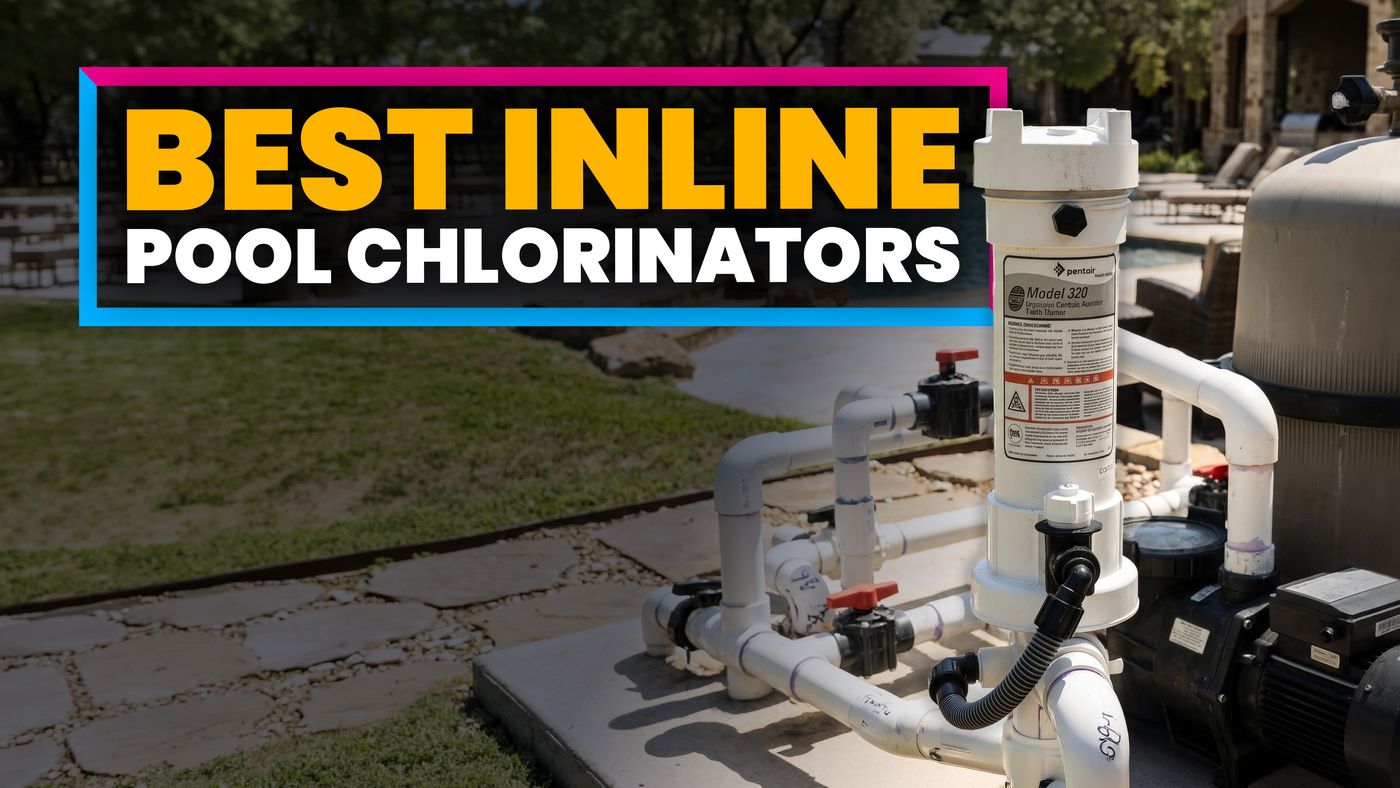
An empty chlorine floater is an easy thing to overlook. So is remembering to add sanitizer when work gets busy or the pool gets more use than usual.
An inline pool chlorinator takes one recurring job off your hands: dispensing tablets. Installed in your return plumbing, it feeds sanitizer gradually into circulating water instead of leaving you to manage a floating dispenser. You still test the water, adjust the output, and refill the chamber, but the delivery happens through your pool's circulation system. That's the appeal: less manual dosing without turning your equipment pad into a complicated electronics project.
My overall pick is the Pentair Rainbow 320. For a smaller, permanently plumbed above-ground pool, I'd start with the Hayward CL100. For a compatible bromine-treated spa, the Rainbow 320 with its optional spa chamber is the option I'd investigate from this list.
But the right purchase depends on more than the brand. Pipe connections, tablet capacity, operating flow, and chemical compatibility matter more than a long list of marketing claims. Here's how I'd choose.
The Best Inline Chlorinators at a Glance
Best Inline Pool Chlorinators at a Glance


| Product or listing | My recommendation | Main reason to consider it |
|---|---|---|
| Pentair Rainbow 320 R171096 | Best overall for inground pools | Adjustable feeding with provisions for 1.5-inch or 2-inch PVC |
| Hayward CL200EF 9 lb Feeder | Best high-capacity Hayward option | A larger tablet reservoir for owners who prioritize refill capacity |
| Hayward CL100 | Best for smaller, hard-plumbed above-ground pools | A 4.2-pound chamber and 1.5-inch threaded connections |
| Hayward CL2002S | Best for compatible 2-inch plumbing | A 9-pound chamber with 2-inch socket connections |
| Hayward CL200 | Best listing to compare for a CL200 replacement | The familiar 9-pound, 1.5-inch threaded configuration |
| Pentair Rainbow 320, second listing | Best option here for a compatible bromine spa | Accepts approved bromine tablets; spa use calls for the optional spa chamber |
Connection sizes and capacities come from the manufacturers' documentation. The spa recommendation is conditional on the spa manufacturer's approval and a suitable installation.
These are six purchase listings, not six fundamentally different chlorinators. Compare the two Pentair offers directly, and treat the Hayward CL200 and CL200EF as closely related shopping options rather than assuming one delivers dramatically better sanitation.
MY QUICK VERDICT
For most inground pools, buy the Pentair Rainbow 320 and compare everything else against it. Choose a Hayward CL200-series feeder when you want the biggest tablet reservoir or you're replacing an existing Hayward unit, and the CL100 when a smaller hard-plumbed above-ground pool doesn't need nine pounds of tablets. Whatever you buy, keep testing the water: a feeder changes how chlorine is delivered, not how much your pool needs.
Why Buy an Inline Pool Chlorinator?
The strongest reason is convenience, not a promise of maintenance-free water.
A tablet feeder stores sanitizer and lets you adjust its delivery through a control valve. Pentair specifically positions its feeders as a way to reduce manual chemical handling, with the inline model dispensing downstream of the pool's equipment. That makes it an appealing permanent alternative to managing tablets in a floating dispenser. If you're still deciding whether tablets belong in your routine at all, my guide to chlorine tablets covers the tradeoffs.
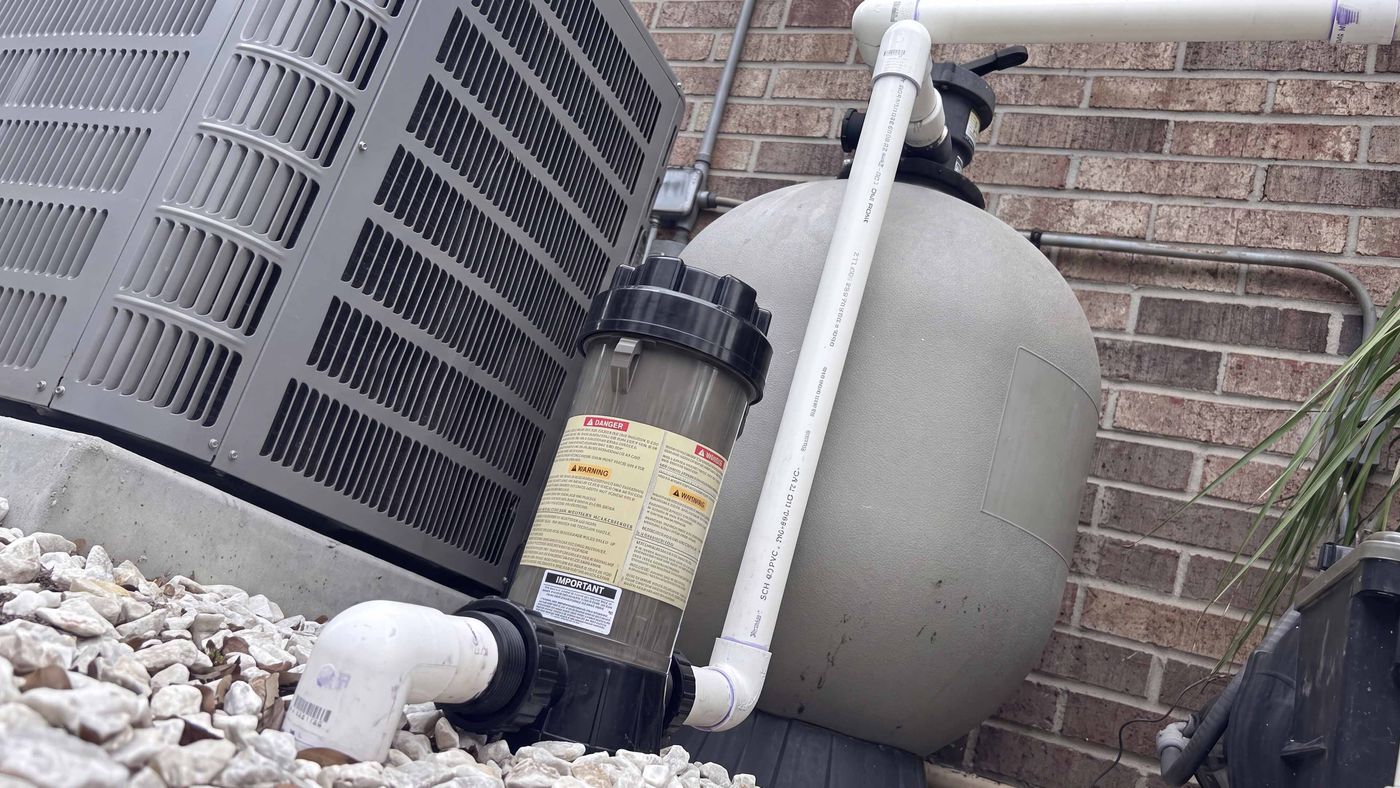
You get a dedicated place to dispense tablets
I prefer equipment that has a clear job. The filter removes particles. The pump circulates water. The chlorinator holds and feeds the sanitizer.
A properly installed feeder also puts the concentrated sanitizer solution downstream of the heater and filter rather than intentionally sending it through those components. Installation and backflow protection still matter; the feeder itself is not a guarantee against equipment damage.
You can reduce how often you refill
A larger reservoir gives you more room for tablets. That can be useful during busy weeks or periods of higher demand, although actual refill intervals depend on how quickly your system consumes them.
I would buy extra capacity to reduce refill chores, not as permission to stop checking the water.
You automate delivery without surrendering control
You decide the setting based on water-test results. That's useful, but it's also the limitation: these feeders don't independently detect that a storm, pool party, or hotter weather has changed your sanitizer demand. Their operating instructions still require testing and adjustment.
Who benefits most? Someone already using compatible chlorine tablets who wants a permanent, adjustable dispensing system. Someone satisfied with an existing sanitation system, such as a salt chlorine generator or a liquid chlorine injection system, doesn't need another feeder simply because it appears on a "best pool equipment" list.
Pentair Rainbow 320: Best Overall Inline Pool Chlorinator
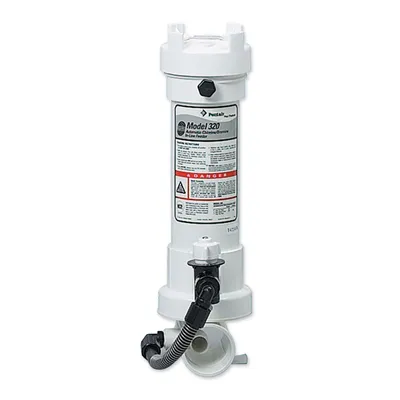
The Pentair Rainbow 320, model R171096, would be my starting point for an inground pool.
Its appeal is practical: an externally adjustable feed valve, a serviceable design, and installation provisions for both common residential PVC sizes. Pentair specifies a capacity of 11 large tablets or 98 small tablets for the R171096.
I like that combination because choosing a feeder shouldn't force you to prioritize one impressive specification while ignoring installation and future maintenance.
The Rainbow 320 also accepts approved slow-dissolving trichlor or bromine tablets. Those are alternative sanitation applications, not chemicals to mix together in the chamber. Its manual provides for 2-inch PVC installation and includes reducer bushings for 1.5-inch PVC.
Where it stands out
The Rainbow's configuration flexibility is useful, but don't read its largest advertised pool rating as a universal guarantee.
Pentair lists different treatment ranges for bottom-feed and top-feed configurations. That means the installation configuration matters, not just the number printed next to "gallons." For a large pool, I'd have the installer confirm that the intended setup can deliver enough sanitizer under actual operating conditions.
Pros: Its connection flexibility makes it a sensible starting point when comparing equipment-pad layouts. Adjustable feeding and documented replacement components also give me more confidence in choosing it as a long-term installation.
Cons: It requires plumbing work, and a suitable configuration still needs to be chosen. It is not a water-testing device or a self-adjusting chemical controller.
My take: Choose the Rainbow 320 for a balanced combination of installation flexibility, adjustable delivery, and serviceability, not because it eliminates pool care.
Check the Pentair Rainbow 320 on Amazon.
Hayward CL200EF 9 lb Automatic Feeder: Best High-Capacity Pick for Inground Pools
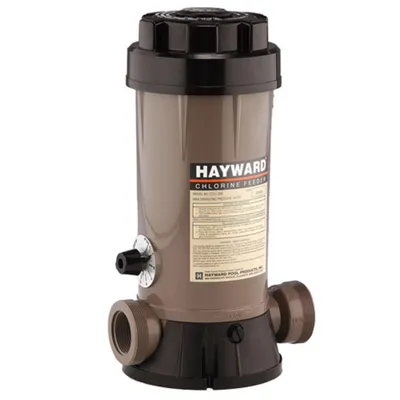
The Hayward listing titled "Automatic Pool Chlorine Feeder 9 lb Capacity In-Ground Pools" identifies the CL200EF. Its central selling points are the larger tablet reservoir and adjustable feed control.
This is the option I'd compare closely when refill capacity is the priority.
A larger chamber is useful when you already know that a smaller feeder is inconvenient for your maintenance routine. It gives you more storage, not an automatic reason to run a higher chlorine level.
That distinction matters. Tablet capacity and sanitizer output are different things. Buying a bigger reservoir does not mean filling it completely or turning the dial all the way up is appropriate for your pool. If you're unsure how many tablets your pool actually consumes, start with my how many chlorine tablets breakdown.
Why I'd consider it
For an inground pool owner who prefers a straightforward mechanical feeder, the CL200EF has a clear purpose: hold a substantial tablet supply and provide adjustable delivery without requiring app-based operation.
It is also worth comparing against the CL200 listing later in this guide. I wouldn't pay a large premium for one without checking the exact model, included fittings, seller, and installed cost.
Pros: The listed 9-pound capacity provides substantial refill flexibility. The adjustable control gives you a way to change feeding as your pool's requirements change.
Cons: A large reservoir does not establish how many days it will last or prove suitability for a particular pool volume. The Amazon description also mixes inline and offline terminology, so use the model-specific installation documentation, not that wording, to plan the installation.
My take: A strong candidate for inground pool owners who value capacity, provided the exact configuration fits the equipment pad.
Check the Hayward 9 lb CL200EF feeder on Amazon.
Hayward CL100: Best Inline Chlorinator for Smaller Above-Ground Pools
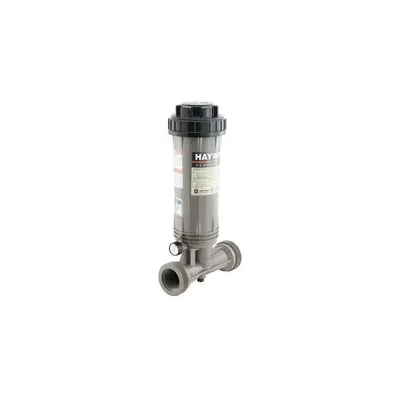
For a smaller, permanently plumbed above-ground pool, I'd start with the Hayward CL100.
Hayward lists it as an inline chlorinator with a 4.2-pound chemical capacity and 1.5-inch female-threaded connections. It is not the tubing-connected offline model; that distinction matters when ordering.
This is a more restrained choice than immediately buying the largest feeder available.
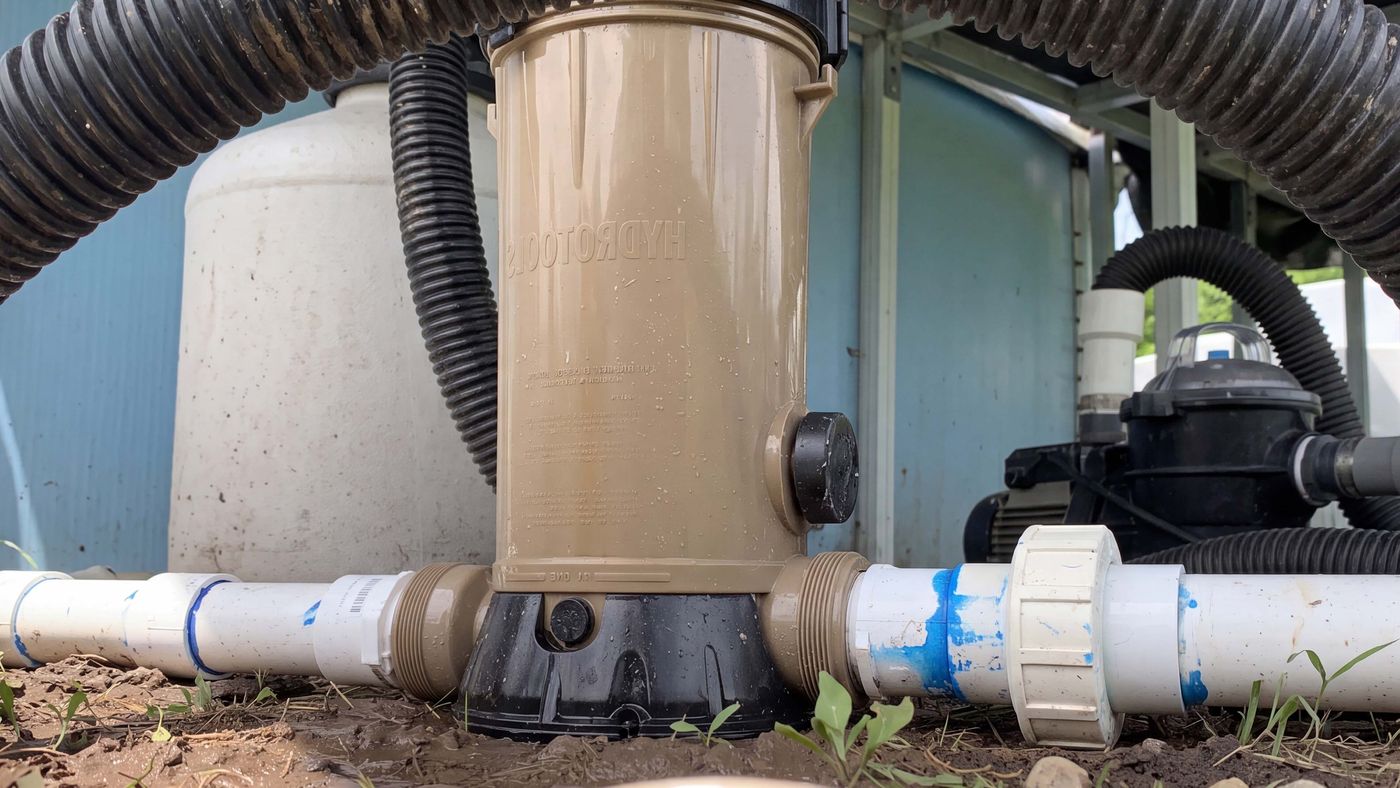
Why it makes sense for an above-ground pool
I'd consider the CL100 when the pool already has a suitable permanent equipment setup and there is no clear need for a 9-pound reservoir.
The important qualification is plumbing compatibility. A feeder with threaded pipe connections is not automatically a direct fit for a pool using proprietary flexible hoses.
Before ordering, verify the return-line arrangement and whether the pool equipment manufacturer permits the proposed installation. Don't assume an adapter advertised for "above-ground pools" makes every combination appropriate. If the pool's pump and filter are also due for replacement, my best above-ground pool pumps guide covers the hard-plumbed options that pair well with a feeder like this.
Pros: The smaller reservoir makes it a sensible option to assess before committing to a larger feeder. Its inline arrangement is appropriate for compatible permanent return plumbing.
Cons: It stores less chemical than the 9-pound Hayward alternatives. It also isn't a universal plug-in accessory for every portable or hose-connected above-ground pool.
My take: The CL100 is my above-ground pick for the right plumbing setup. For a pool with a very different equipment arrangement, compatibility comes before the recommendation.
Check the Hayward CL100 on Amazon.
Hayward CL2002S: Best Inline Chlorinator for 2-Inch Plumbing
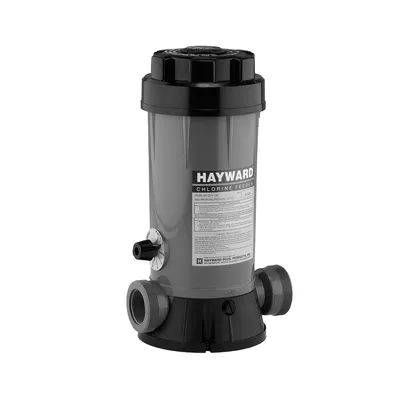
The Hayward CL2002S is the one I'd investigate first when the installation calls for a Hayward feeder with 2-inch socket connections.
It pairs those connections with a 9-pound chamber. The main distinction from the standard CL200 configuration is the plumbing interface, not a special type of chlorine treatment.
That makes this a fit-driven purchase.
Why the connection type matters
"Two-inch plumbing" and "1.5-inch threaded connections" are not interchangeable descriptions. The necessary fittings, available space, and installation work can differ.
I'd rather select a feeder around a confirmed plumbing plan than buy the cheapest listing and discover afterward that adapting it adds unnecessary work.
There's also an operating-flow detail worth checking: Hayward's specification sheet describes the CL2002S for applications with 50–90 gallons per minute of flow. Have the installer verify suitability at the flow rates your system actually uses, particularly with a variable-speed pump running a low daily schedule.
Pros: It combines a large reservoir with the 2-inch socket arrangement some installations need. That gives it a specific, useful reason to exist beside the other Hayward options.
Cons: It isn't automatically the best choice for a low-flow system merely because the pipe measures 2 inches. It also shouldn't be treated as an identical replacement for a threaded model.
My take: Buy the CL2002S because its connections and operating requirements fit your system, not because the larger connection must mean better chlorination.
Check the Hayward CL2002S on Amazon.
Hayward CL200 Inground/Above-Ground Feeder: Best for Comparing a Hayward Replacement
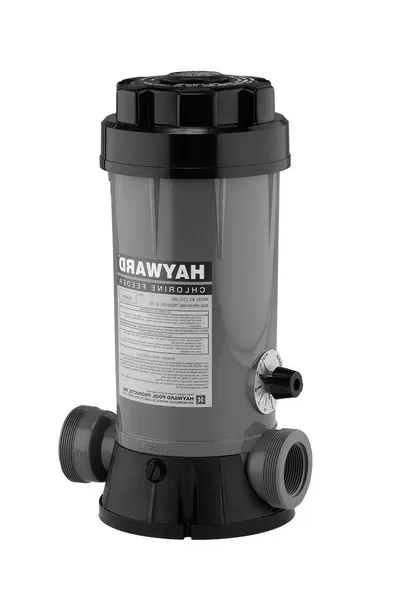
The listing titled "Hayward Automatic Chlorine Chemical Feeder In-Ground and Above Ground Pools" identifies the CL200.
Its listing describes an adjustable dial, an Easy-Lok cover, a finger-release catch, an ABS body, and a Viton seal.
I'd put this on the shortlist when replacing an existing CL200 or comparing a familiar Hayward configuration against the CL200EF offer.
Don't overpay for a different listing title
The CL200 and CL200EF occupy a very similar place in this comparison. I wouldn't present them as dramatically different levels of performance.
Instead, compare the actual offer: model identification, included installation hardware, seller support, return terms, and total cost.
For a replacement, ask the installer to confirm the dimensions and connections rather than assuming every version will drop into the existing space unchanged.
Pros: The accessible cover and adjustable feed control are useful everyday features. This is also a relevant listing for owners already planning around the CL200 configuration.
Cons: The broad "inground and above-ground" title doesn't establish compatibility with every pool. Nor is the different listing name a good reason to pay substantially more than a comparable CL200EF package.
My take: Compare this listing directly with the 9-pound Hayward offer. Choose the better verified fit and package rather than the more persuasive product title.
Check the Hayward CL200 on Amazon.
Pentair Rainbow 320 Spa Setup: Best Option Here for a Compatible Bromine Spa
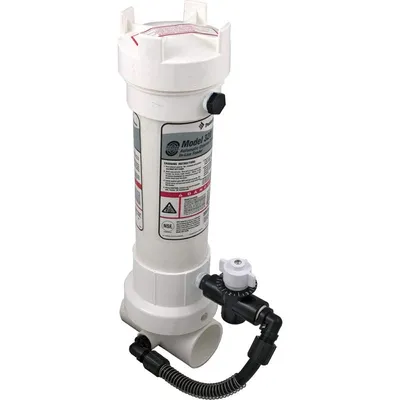
This second Pentair listing is the same Rainbow 320 R171096 covered above. Its inclusion here highlights a different application, not upgraded hardware.
For a suitable residential spa using an approved bromine sanitation program, it is the option from this selection I'd investigate.
Pentair's instructions specify 1-inch tablets in the optional spa chamber, identified in its parts diagram as R172037. Do not assume that accessory is included in an ordinary R171096 purchase.
The spa qualification is important
A pool feeder is not automatically appropriate for a portable hot tub.
The spa manufacturer must approve the sanitation method and installation. A shared pool-and-spa system also needs to be assessed as one system rather than casually introducing a different sanitizer through the same plumbing.
For hot tubs, I would not recommend loading this feeder with ordinary stabilized pool chlorine tablets. The CDC advises against cyanuric acid and chlorine products containing it in hot tubs, which includes trichlor.
Pros: The Rainbow has a documented spa configuration and supports approved bromine-tablet use.
Cons: The spa chamber is an additional consideration, plumbing compatibility is essential, and this is not a universal aftermarket hot-tub accessory.
My take: A conditional recommendation for an appropriate bromine spa, not a blanket recommendation for every spa owner.
Check the second Pentair Rainbow 320 listing on Amazon.
How to Choose the Right Inline Pool Chlorinator
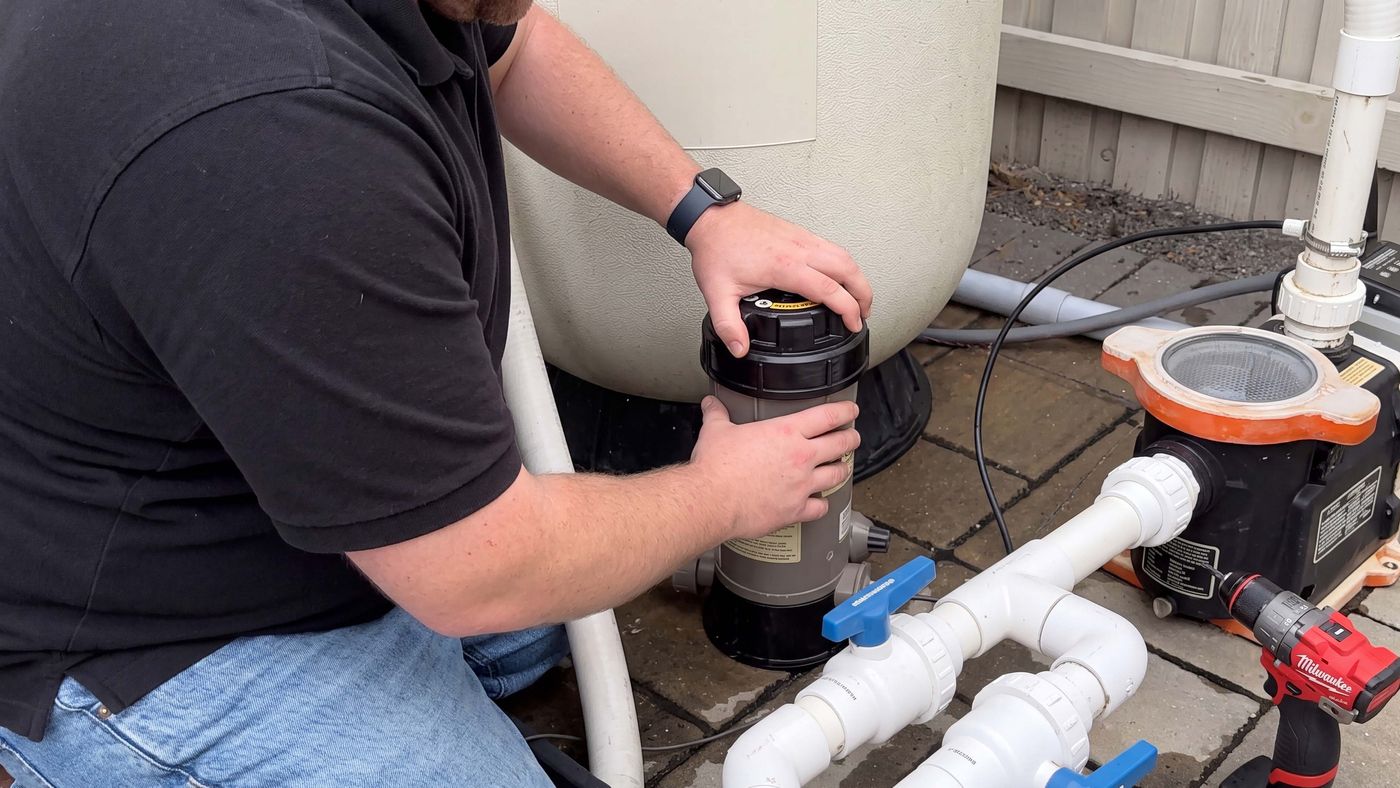
Start with the plumbing, not the advertised pool size
Confirm the connection diameter and whether the feeder uses threaded or socket connections.
Also distinguish inline from offline. An inline unit becomes part of the main return pipe. An offline feeder sits beside the plumbing and connects through smaller feed lines. Hayward offers both arrangements; they should not be confused when ordering.
For a replacement, a photograph and the existing model number are useful starting points for your installer.
Separate storage capacity from feeding capacity
A larger reservoir can hold more tablets. It does not, by itself, prove that the unit can satisfy your pool's daily sanitizer demand.
Pentair's Rainbow specifications illustrate this clearly: the same chamber has different rated delivery performance depending on its feed configuration. Size the installation around demand and operating conditions, not just how much chemical fits inside.
Check operation at your normal pump settings
A feeder needs suitable circulation to work as intended.
For a variable-speed system, ask whether the feeder will operate adequately during the normal daily schedule, not only when the pump is temporarily running at high speed. Pentair's instructions specifically discuss installation changes when adequate flow or pressure is not available. My pool pump size calculator gives you a realistic flow number to start that conversation with. If the circulation pump is also due for replacement, compare models and operating ranges in my best inground pool pumps guide.
Compare the total installed cost
I'd compare the feeder, required fittings, service access, any necessary backflow protection, and installation labor together.
A lower purchase price loses its appeal when it requires avoidable plumbing changes. Likewise, a feeder that is awkward to reach is not the one I'd choose simply to save a little on installation.
The Disadvantages of Inline Chlorinators You Should Know
Trichlor tablets add stabilizer
Trichlor adds cyanuric acid, or CYA, along with chlorine. The Pool & Hot Tub Alliance's technical guidance states that each 1 ppm of chlorine added through trichlor also adds approximately 0.6 ppm of CYA. In other words, supplying 10 ppm of chlorine over time adds about 6 ppm of CYA before accounting for water replacement or other losses.
That's a reason to monitor CYA, not to keep refilling indefinitely because the water looks clear.
When CYA is already excessive, a larger tablet feeder isn't the solution. Address the water chemistry and review the sanitation approach. My how to lower CYA guide explains what to do when the number climbs.
Tablets can push pH and alkalinity downward
Trichlor use can lower both pH and alkalinity. A convenient dispensing system does not eliminate that chemistry, so those measurements still belong in your maintenance routine.
"Automatic" does not mean self-adjusting
The control dial sets feeding; it does not measure your water and make decisions for you.
These are products for reducing a dosing chore, not replacing routine sanitizer and pH testing. The CDC continues to recommend regular testing for home pools and hot tubs, and a pool water monitor can help you catch demand changes between manual tests.
Installation and Chemical Safety: Don't Skip These Details
Have the feeder installed in the correct location. Hayward specifies installation after the heater, or after the filter when no heater is present, and calls for appropriate corrosion-resistant backflow protection. Follow the exact equipment instructions rather than treating a simplified plumbing diagram as a complete installation plan.
Use only chemicals approved for the exact feeder. The Hayward CL-series manual specifies slow-dissolving trichlor tablets. Pentair's Rainbow instructions permit specified slow-dissolving trichlor or bromine products. Neither is a general-purpose container for whatever chlorine is on sale.
Never mix concentrated chemicals. Do not put calcium hypochlorite, liquid chlorine, pool shock, acid, or other incompatible products into these tablet feeders. Do not casually change chemical types in a used chamber; follow manufacturer guidance. Chemical incompatibility can cause fire, explosion, or hazardous gas release.
Never open a pressurized feeder. Follow its specific shutdown, pressure-relief, and refilling procedure. Wear the required eye and skin protection, avoid breathing fumes, and keep chemicals secured away from children. The CDC's chemical-safety guidance also emphasizes following labels and using appropriate protective equipment.
Frequently Asked Questions About Inline Pool Chlorinators
What is the best inline pool chlorinator?
For most inground pools, the Pentair Rainbow 320 is my pick because it adapts to 1.5-inch or 2-inch PVC, has an externally adjustable feed valve, and is easy to service. For a smaller hard-plumbed above-ground pool, I'd start with the Hayward CL100.
How long will a full chlorinator last?
There is no dependable universal refill interval. Pump operation, feeder setting, tablet characteristics, temperature, and sanitizer demand all affect consumption. Establish your own interval through testing and observation rather than relying on a "lasts several weeks" claim.
Will an inline chlorinator save chlorine?
Not necessarily. I'd purchase one to make delivery more convenient and manageable, not on an unverified promise of lower chemical consumption. The amount your pool needs still has to be established through testing.
What is the difference between an inline and an offline chlorinator?
An inline chlorinator is plumbed directly into the main return pipe, so all of the returning water passes through it. An offline chlorinator sits beside the plumbing and connects through small feed tubes, which makes it easier to retrofit where there is no straight run of pipe. Every feeder in this guide is the inline type.
Is a larger chlorinator always better?
No. Extra storage is useful only when it solves a refill problem. The better purchase is the feeder that meets the pool's delivery requirements, fits the plumbing, and is easy to maintain.
Can I stop testing once the feeder is adjusted?
No. Water conditions change, and a dial-operated feeder does not independently compensate for those changes. Keep testing even when the system appears to be running normally.
My Final Verdict
For most inground pool owners shopping this selection, I'd start with the Pentair Rainbow 320. It offers the combination I value most: installation flexibility, adjustable feeding, and a documented serviceable design.
For a smaller, hard-plumbed above-ground pool, the Hayward CL100 is the first one I'd assess. For greater tablet storage, compare the CL200EF and CL200 offers. Choose the CL2002S when its 2-inch socket configuration and operating requirements suit the installation.
For a compatible bromine spa, consider the Rainbow 320's spa configuration only after confirming approval and the required accessory.
The best inline chlorinator is the one that removes a recurring chore without hiding what still needs your attention. Buy it for easier sanitizer delivery. Keep testing, maintain the equipment, and let the water, not the position of the dial, tell you whether the setting is right.
This article contains Amazon affiliate links. The Pool Nerd may earn a commission on qualifying purchases at no extra cost to you. Product specifications, prices, and availability can change; verify the exact model before ordering.
Related Reading
- Chlorine Tablets: What Every Pool Owner Should Know
- How Many Chlorine Tablets Does Your Pool Need?
- Best Salt Chlorine Generators
- Best Liquid Chlorine Injection Systems
- Best Pool Shock
- Best Variable Speed Pool Pumps
- Weekly Pool Maintenance Guide


Comments
Loading comments…