
 Justin D.
If you're tossing chlorine pucks in a floater every week, you're likely slowly killing your pool's water chemistry — and your chlorine test won't warn you.
Here's the crazy part: your pool's chlorine looks like it's in range. Three parts per million, right where the label says. But the water is losing killing power week after week, and come August the pool turns green anyway — while the test strip swears everything is perfect.
Chlorine tablets are a tool, but they're overused by pool owners everywhere.
By the end of this article, you'll know the one number that explains it, when you should use chlorine tablets, the five kinds of tablets on the shelf and the only one I'd run long-term, and the exact setup I use in our test pool.
Hey there, I'm Justin, your resident pool aficionado. And today we're talking chlorine tablets. There are a few situations where I'd hand you a tablet myself, and we'll cover every one of them. But before you drop another puck in that floater, you need to know what's riding along with it.
Chlorine Tablets: What You Need Checklist
Tabs for backup + a floater-safe plan, but the real fix is liquid chlorine, ORP/pH monitoring, and acid for pH control—test before you dump.

In The Swim 3" Chlorine Tablets
What it is: Slow-dissolving sanitizer pucks (usually trichlor) for feeders/floaters—adds CYA over time.
Why you need it: Fine for steady maintenance when CYA isn’t already high; back off if CYA creeps up.
HTH 1" Chlorine Tablets
What it is: Smaller tablets for compact feeders or finer dosing control.
Why you need it: Same CYA rules as 3" tabs—pick the size that matches your chlorinator.

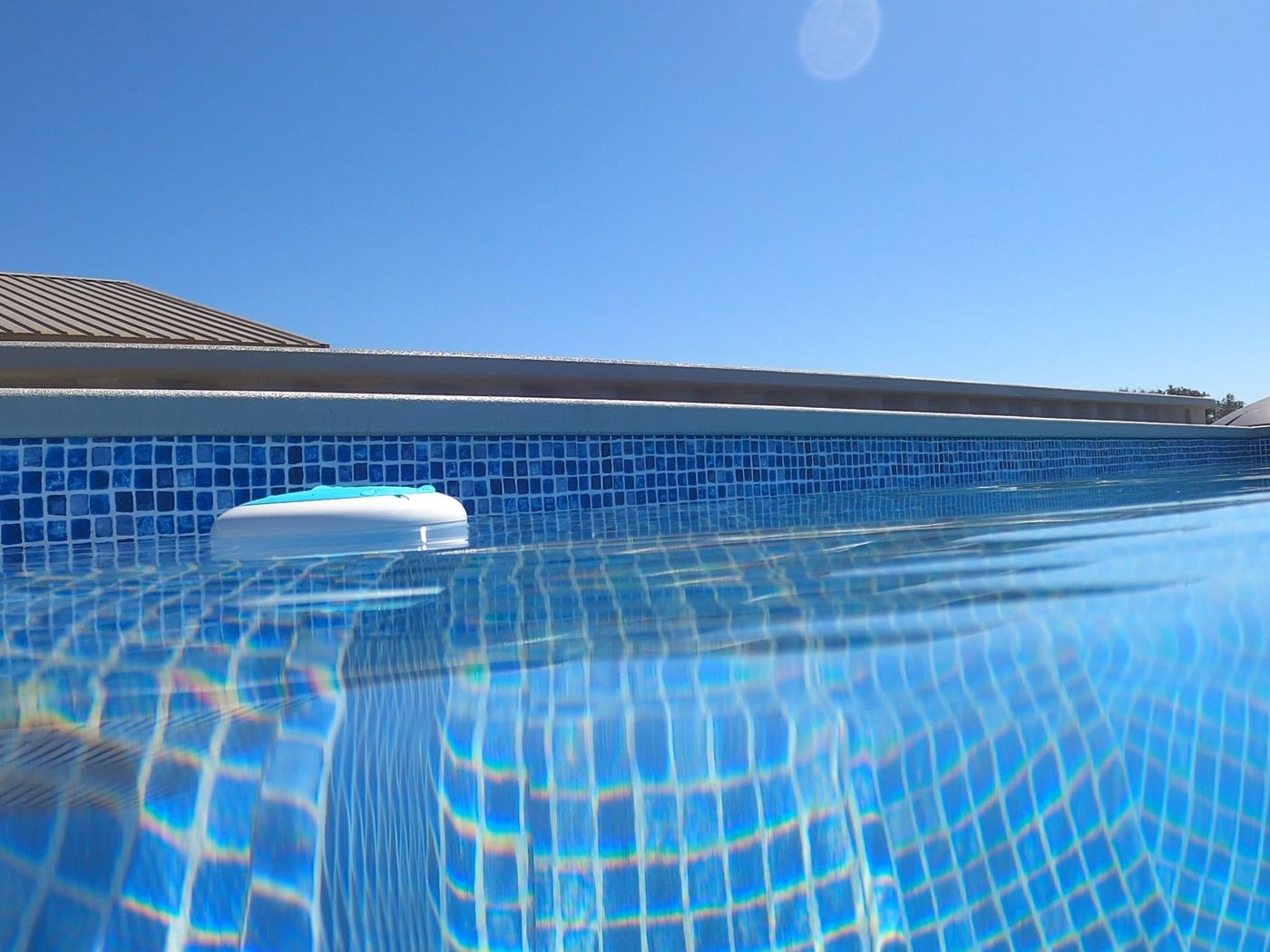
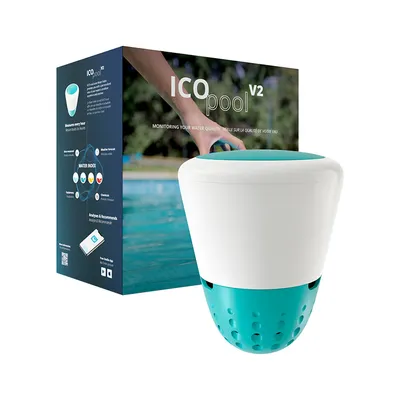
Ondilo ICO Pool Water Monitor
What it is: A floating smart monitor that samples pH, ORP (sanitizer effectiveness), and temperature on a schedule and sends trends to your phone.
Why you need it: You still need a real drop kit for parameters the ICO doesn’t replace (like TA and CYA), but hourly ORP/pH catches drift and dosing mistakes long before weekly strip checks do.
Read the full ICO review — Shop ICO direct (no Amazon listing for the hardware we run).

Champion Pool Shock (4 Pack)
What it is: A case of liquid pool chlorine (sodium hypochlorite)—not cal-hypo granules. Confirm strength on the listing and jug label (often around 10–12.5%).
Why you need it: Same upside as other liquid shock: no CYA from the product, easy to pour with the pump running—useful to keep stocked for openings, algae pushes, storms, or parties.
How to use: Treat it like any liquid shock (pour with circulation; big doses still work best at dusk). Store cool and shaded; opened jugs lose strength over time—plan to use them within a few weeks.

Champion Muriatic Acid
What it is: Dilute hydrochloric acid—standard for lowering pH and, with the right method, total alkalinity.
Why you need it: High pH destroys chlorine efficiency. Always follow the label; never mix acid with chlorine.

Taylor K-2005 Test Kit
What it is: A professional drop (titration) kit for chlorine, pH, alkalinity, calcium hardness, and cyanuric acid.
Why you need it: You can’t SLAM or balance blind—especially CYA, which handcuffs chlorine. This kit gives numbers you can trust, not strip guesswork.

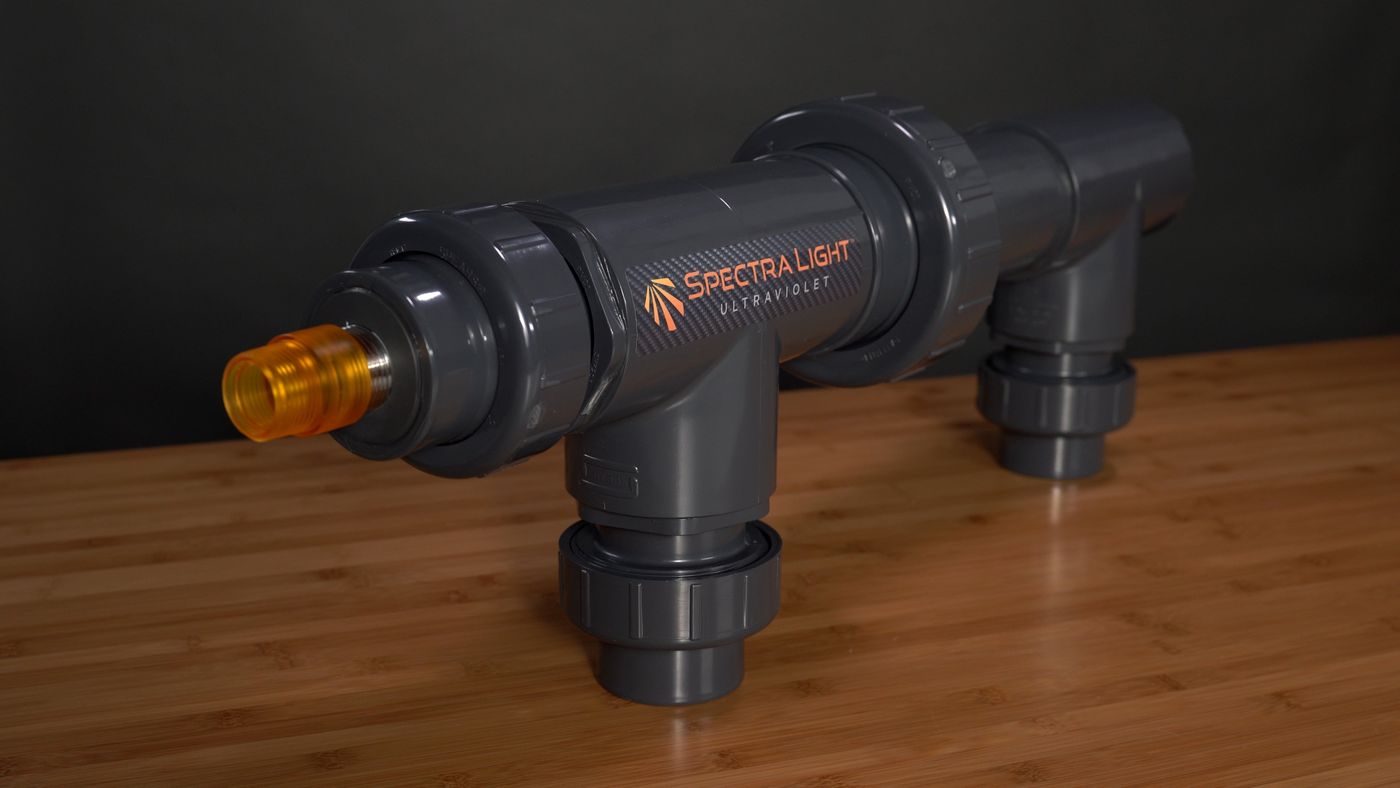
SpectraLight UV
What it is: Inline UV-C on the return line—knocks down pathogens and helps with chloramines as water passes the lamp.
Why you need it: Cleaner water with less organic load means you reach for shock less often while staying comfortable. Read the full SpectraLight review for sizing and install notes.
What's Inside That Puck
That white hockey puck is trichlor — trichloro-isocyanuric acid, if you want the tongue-twister. It's about ninety percent available chlorine, it dissolves slowly, and it's stabilized. That word "stabilized" is doing a lot of heavy lifting, because every puck is chlorine chemically bonded to cyanuric acid — CYA for short.
These things are also aggressively acidic. We're talking a pH around 2.8 in solution. They're acid bombs, and they drag your pH and alkalinity down every day they're in the water.
Here's the thing — every tablet delivers two things at once: chlorine that burns off in days, and CYA that never leaves. One sanitizes. One accumulates. And nobody at the pool store mentions the second one.
What Is CYA?
CYA is sunscreen for your chlorine. A little shields it from burning off in the sun. Too much smothers it.
The CYA Problem: Chlorine's Kryptonite
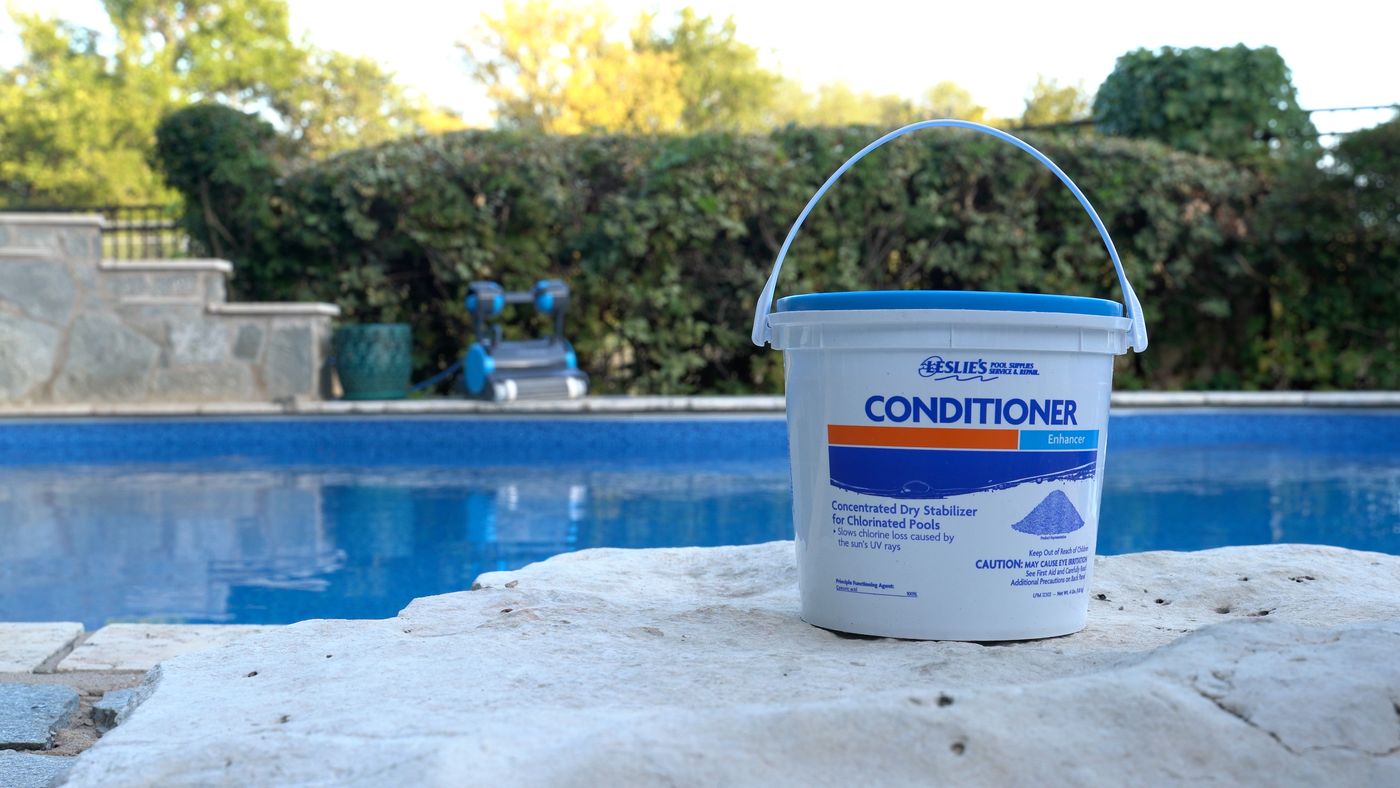
So what's wrong with CYA? In moderation, nothing — you actually want some in your pool. At 30 to 50 parts per million, it's your friend — it shields chlorine from UV so you're not burning through a gallon a day.
Past that range, CYA flips on you. It binds up your chlorine and cuts its killing power. It is the kryptonite of chlorine.
There's a rule of thumb pool chemists use that's worth memorizing: to keep algae out, your free chlorine needs to be at least 7.5 percent of your CYA level. At 40 CYA, that's 3 ppm. Easy. At 100 CYA, you need 7.5 ppm just to tread water. And here's the trap — almost nobody raises their chlorine as CYA climbs. They hold at 3 ppm while the requirement runs away from them, and the gap gets wider every single week.
| CYA Level | Free Chlorine You Need | What That Feels Like |
|---|---|---|
| 40 ppm | ~3 ppm | Easy. Right where you want to be. |
| 70 ppm | ~5.5 ppm | Constantly dosing to keep up |
| 100 ppm | 7.5+ ppm | Treading water |
| 150 ppm | 11+ ppm | Green pool with "perfect" readings |
This is exactly why I preach ORP over chlorine ppm. A chlorine test tells you what's floating around in the water. ORP — the sanitizing power — tells you what's working. The target is 650 to 700 millivolts, and in my experience, high CYA drags ORP down even while the chlorine number looks perfect. It's the same mechanism behind chlorine lock.
Here's the kicker: nothing removes CYA. No chemical, no filter, no shock treatment. It only leaves when water leaves. Every puck is a deposit into an account you can't withdraw from easily.
The Season-Long Math
Let me put numbers on it. Take a 15,000-gallon pool running two pucks a week — a common setup. Each week, those tablets add roughly 4 to 5 ppm of CYA. Run that from Memorial Day to Labor Day and you're sitting somewhere between 60 and 90-plus ppm by the end of the season.
And summer speeds it up. Tablets are sold as "slow dissolve," but water temperature sets the pace. In a 95-degree August pool, those pucks melt like butter — dumping CYA fastest right when algae pressure is at its peak.
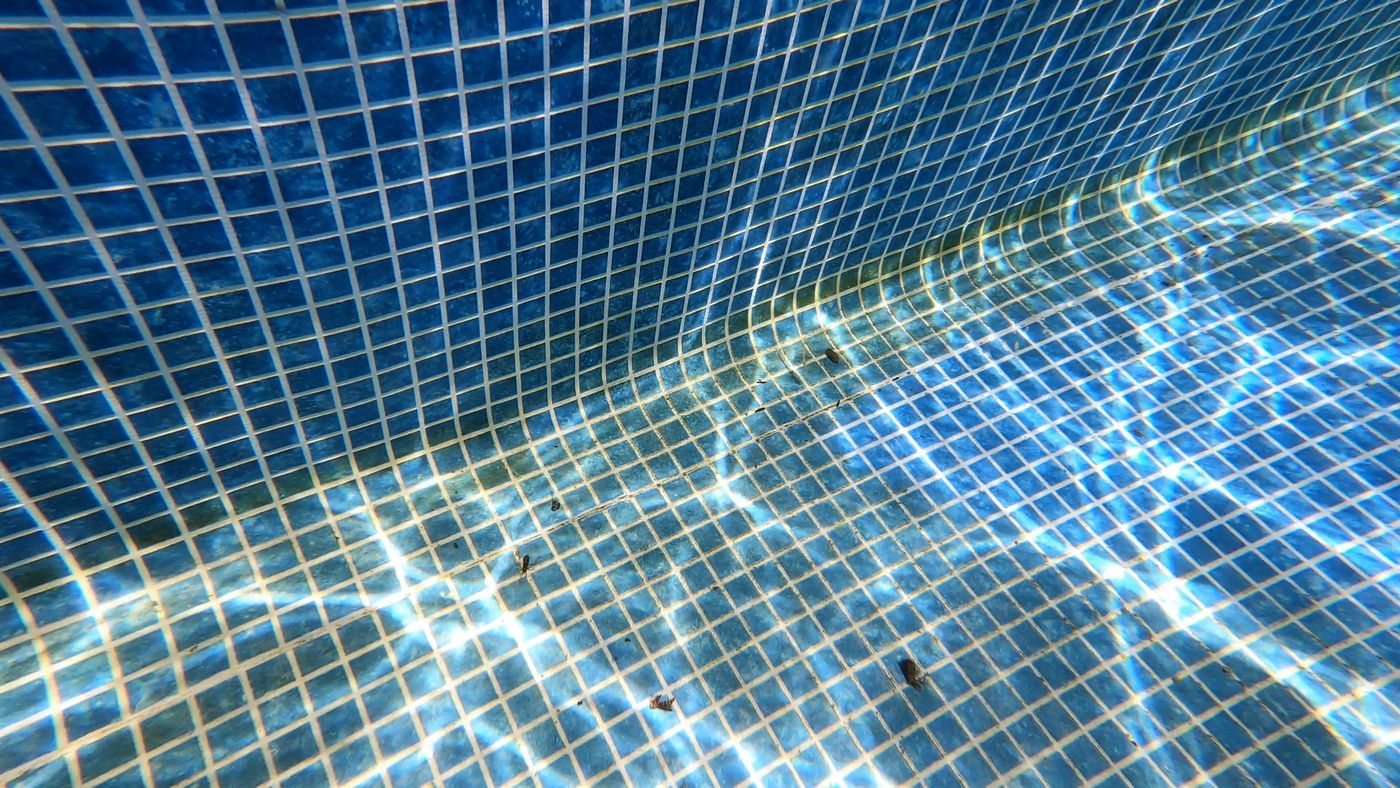
So the timeline goes like this. May: the pool sparkles. July: it "needs more chlorine." August: it's green with the chlorine sitting at 3 ppm — because 3 ppm is useless at 90 CYA.
The Pool Store Spiral
Let's get real about how this plays out at the pool store. They sold you the bucket of tabs. Then, when the water turns, they sell you the cure: shock. Then algaecide. Then clarifier. Then phosphate remover. And when none of it holds, you get the big one — "you'll need to drain it."
Every product on that receipt is treating a symptom the tablets caused.
I'm not accusing anyone of running a conspiracy. Tabs are just one of the highest-margin, lowest-education products on the shelf. Tablets are the fast food of pool care — cheap, convenient, and a problem when they become the whole diet. It's the same trap I break down in why you should stop shocking your pool: treating symptoms instead of causes.
Why Tablets Are Everywhere
Now let me be fair, because tablets are popular for a reason. They're cheap per pound of chlorine. They're zero effort. No jugs to haul, no daily dosing, and for a week or two, they're forgiving.
The problem was never the puck. The problem is the puck as a year-round primary sanitizer with nobody testing CYA. That's the setup that fails every time.
Know Your Tablets: The Five Types
Here's where most guides stop and mine doesn't — because "chlorine tablet" isn't one thing. There are five types on the shelf, and the differences decide whether your water thrives or spirals.
| Type | Chlorine | What It Adds | pH Effect | Verdict |
|---|---|---|---|---|
| Trichlor (3″ puck) | ~90% | CYA — ~0.6 ppm per 1 ppm FC | Very acidic (~2.8) | Situational only |
| Dichlor (granular / tabs) | ~56–62% | CYA — ~0.9 ppm per 1 ppm FC | Near-neutral | Not for routine sanitizing |
| Cal-hypo tablets | ~65–75% | Calcium — ~0.7 ppm CH per 1 ppm FC; zero CYA | Raises pH | The only tablet worth running long-term |
| Multifunction "4-in-1" tabs | Varies | CYA + copper algaecide, clarifier | Acidic | Hard no — copper stains |
| Bromine tabs | n/a | No CYA — and CYA can't protect bromine from sunlight | — | For spas — wrong tool outdoors |
Trichlor is the standard three-inch puck — ninety percent available chlorine, roughly 0.6 ppm of CYA for every 1 ppm of chlorine it delivers, and acidic enough to drag pH and alkalinity down along the way. Verdict: situational only.
Dichlor usually shows up granular, sometimes pressed into tabs, and it's often sold as "shock." Lower strength, near-neutral pH — sounds gentler, right? Wrong. Dichlor adds even more CYA per ppm of chlorine than trichlor does. It's the sneakiest stabilizer source on the shelf, and I don't recommend it as a routine sanitizer.
Cal-hypo tablets are the outlier — calcium hypochlorite, sixty-five to seventy-five percent available chlorine, and zero CYA. The trade: they raise pH and add calcium, roughly 0.7 ppm of calcium hardness per ppm of chlorine, and they require their own specialized, vented feeder. In my opinion, this is the only tablet worth running long-term.
Multifunction tabs — the "4-in-1" pucks with algaecide and clarifier baked in — are a hard no. That algaecide is usually copper, and copper is how blonde hair turns green and plaster picks up permanent stains.
And bromine tabs? Spa territory. CYA can't protect bromine from sunlight, so outdoors it burns off almost as fast as you add it. Wrong tool for a pool.
Critical Warning: Feeders
NEVER mix chemistries in a feeder. Cal-hypo in a trichlor feeder — or the reverse — can ignite or explode. One chemistry per feeder, labeled, forever.
Skimmers
Never put tablets in the skimmer. When the pump shuts off, acidic water sits in your plumbing and heater, corroding the heat exchanger — and it can void your heater warranty.
When To Use Chlorine Tablets
So when do tablets earn a spot? Four situations.
One: a fresh fill or spring opening with CYA at zero. Trichlor pulls double duty here — it chlorinates while building your CYA toward 30 to 40. Completely legit. The catch is the hard stop: test weekly, and the moment CYA lands between 30 and 40, pull the tabs and switch to liquid.
Two: vacation mode. A floater or an inline chlorinator for one to two weeks beats coming home to a green swamp, and the CYA cost of two weeks is trivial. Just tie the floater off away from the walls so it can't park in one spot and bleach your liner.
Three: a second home or a rental you can't visit every day. Tablets are an acceptable bridge until you install dosing automation. The tab is the band-aid. A liquid chlorine injection system or a salt chlorine generator is the better fix.
Four: the cal-hypo feeder route, for folks who insist on hands-off tablets. Zero CYA — but now you're managing calcium and pH instead. That's a fair trade for some pools. Just watch your calcium hardness if your fill water already runs hard.
The rule of thumb: tablets are a two-week tool, not a twelve-month plan. And if you do run them, my guide on how many chlorine tabs to use covers the dosing.
For a side-by-side comparison with liquid chlorine, cal-hypo, and dichlor—and the safe application steps for each—read how to add chlorine to your pool. When you switch away from routine tablets, use the five-step guide to adding liquid chlorine to your pool.
Is Your CYA Too High? Here's How To Fix It
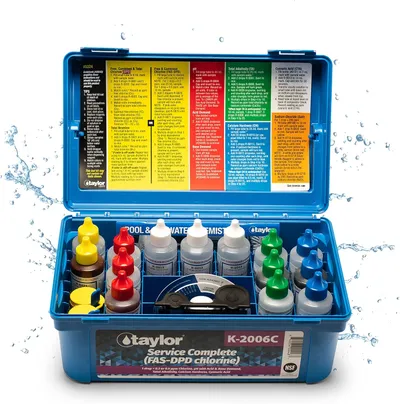
If you've been on pucks for a season or three, step one is getting a real number. I use the Taylor K-2006 (or the K-2006 Salt if you're on a salt pool) — and if the CYA reading maxes out the test, dilute the sample fifty-fifty with tap water, run it again, and double the result.
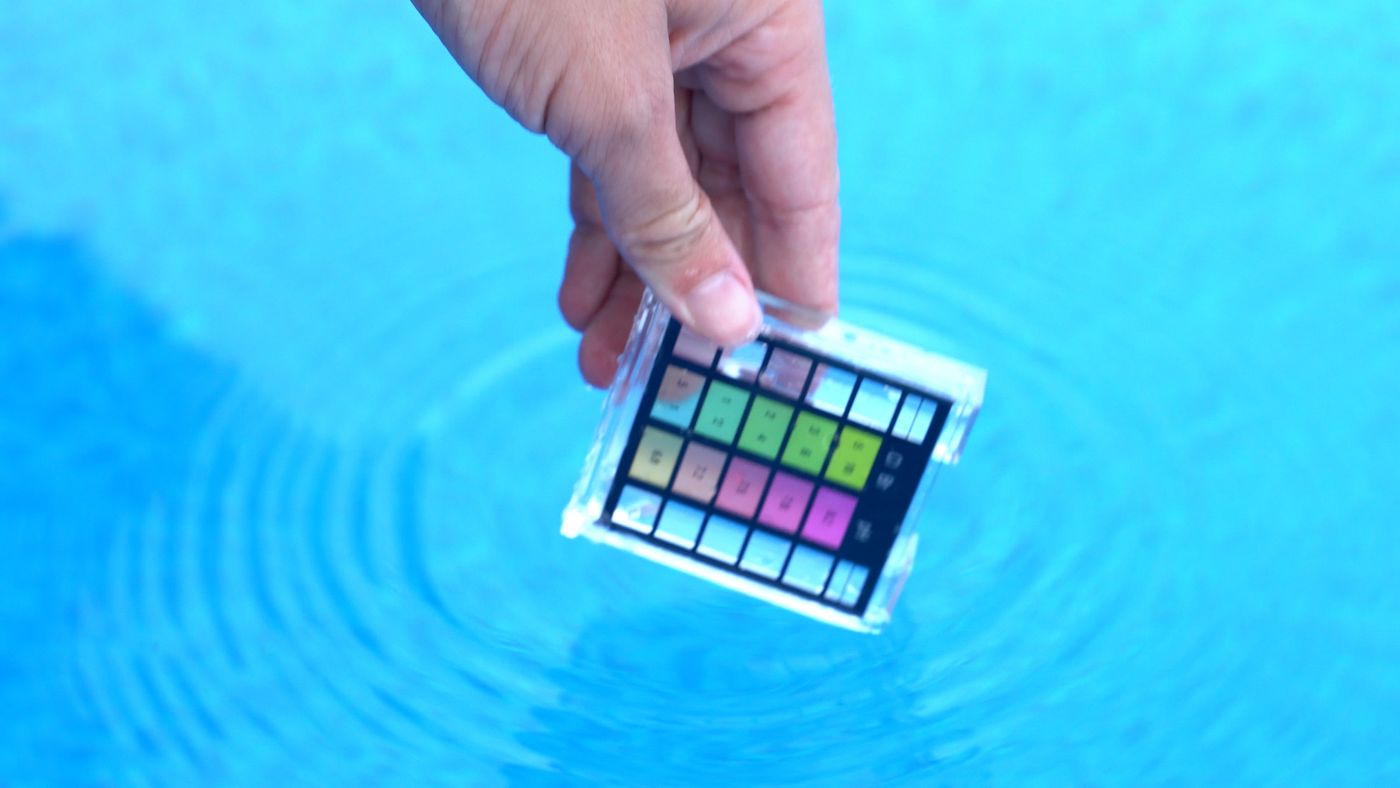
From there, the only reliable remedy is a partial drain and refill. The math is simple: replace 30 percent of the water, drop the CYA by about 30 percent. My how to lower CYA guide walks through the dilution math step by step.
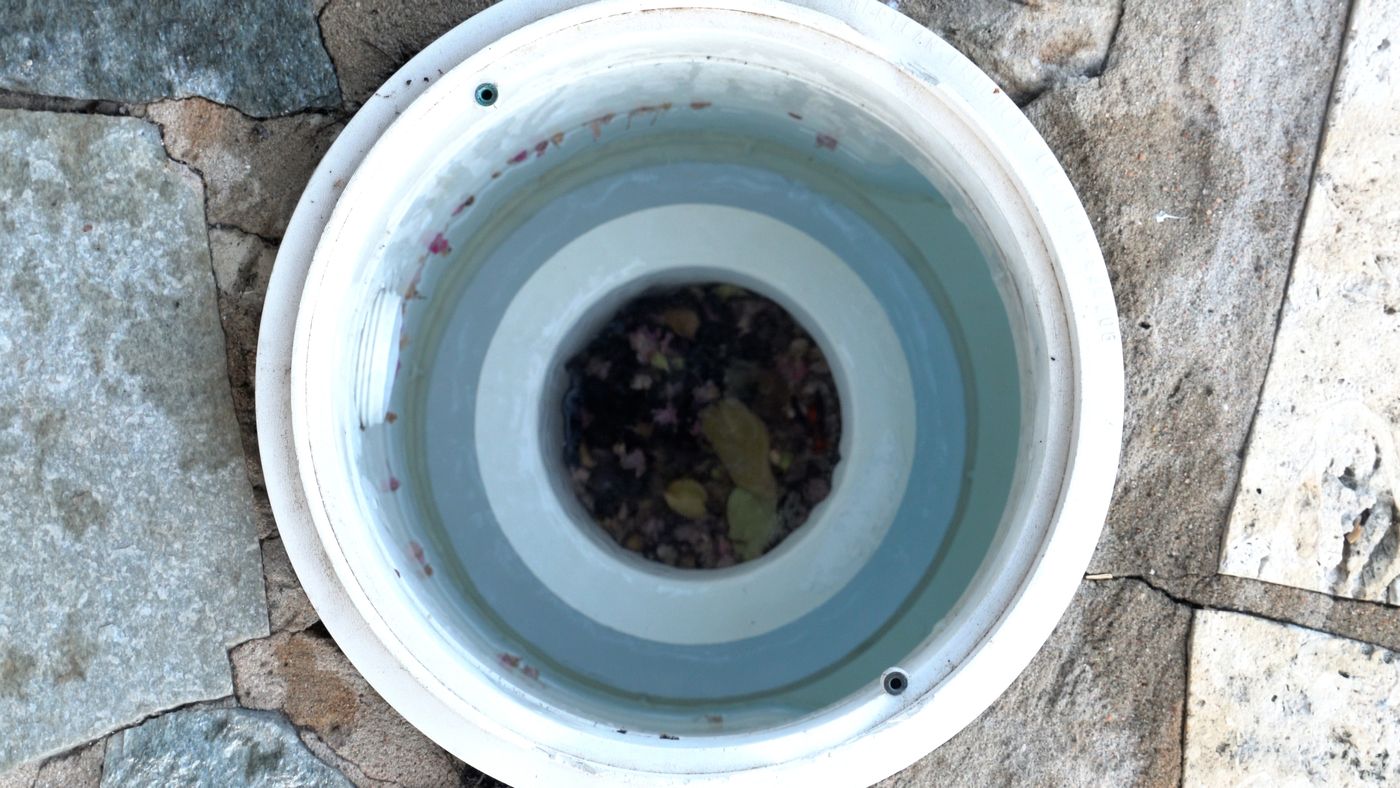
If water is restricted or expensive in your area, there's a premium option: reverse-osmosis filtration trucks can strip CYA out of your existing water without dumping the pool. Not cheap, but it exists.
And skip the bottled "CYA reducers." In my experience, they're unreliable at best. Save the money for chlorine.
Draining
Never fully drain a vinyl-liner or fiberglass pool. Hydrostatic pressure can lift a fiberglass shell out of the ground, and an empty liner can shrink and wrinkle beyond saving. Drain in stages — and when in doubt, call a pro.
The Pool Nerd Method
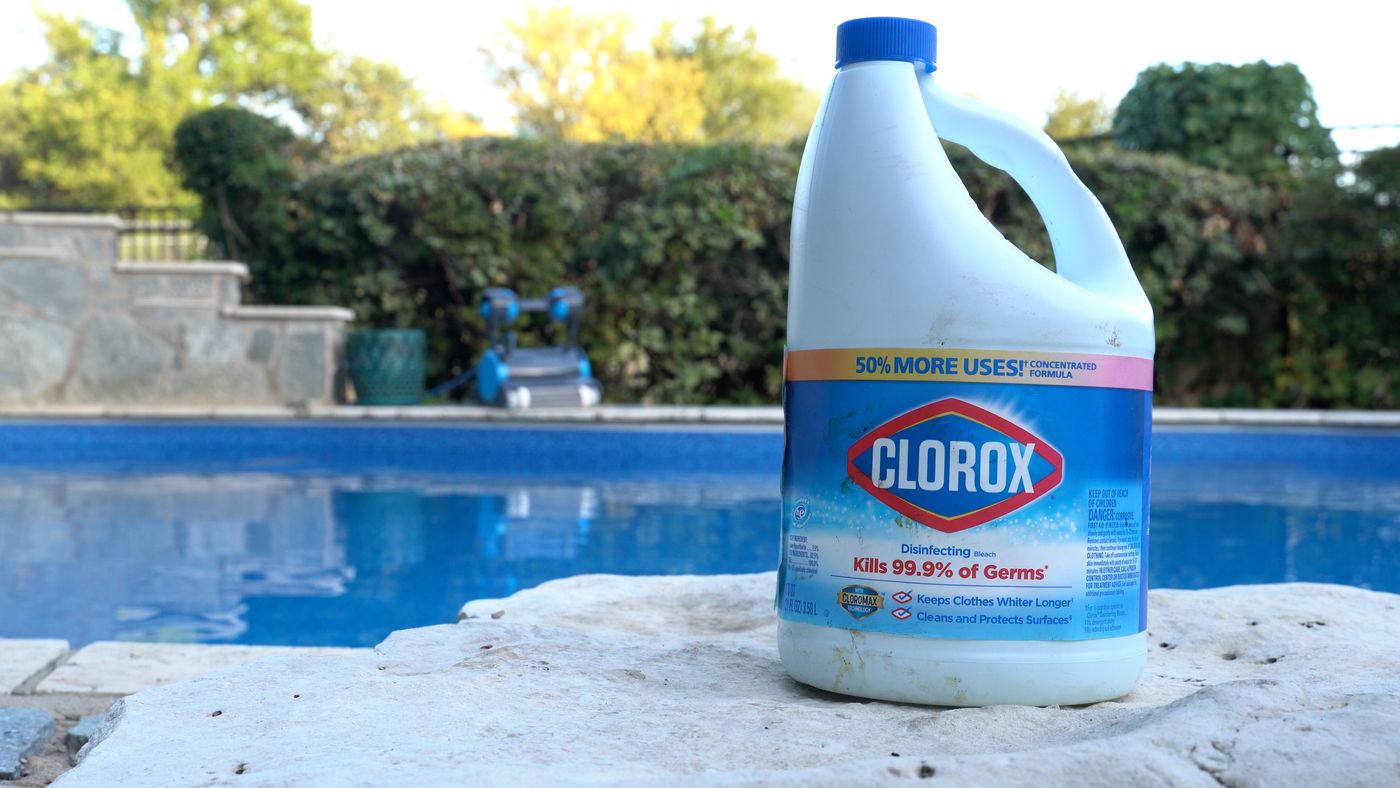
So what do I run instead? Two chemicals: liquid chlorine at 10 to 12.5 percent, and muriatic acid. That's it. That combination covers most pools, most of the time, for less money than the tablet-and-rescue-chemical cycle. It's the same two-jug system I use to keep my pool crystal clear all summer.
My targets:
- ORP between 650 and 700 millivolts — ideally north of 700
- pH 7.0 to 7.2 for vinyl and fiberglass, 7.2 to 7.4 for gunite — here's why in my ideal pool pH guide
- CYA parked at 30 to 50
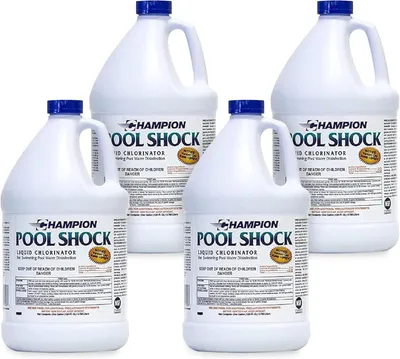
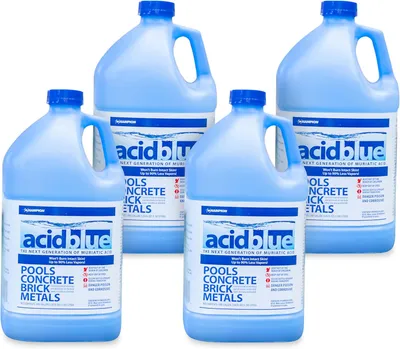
Now, I can hear it already — "Justin, I don't want to haul jugs every day." You don't have to. Automate it. A liquid chlorine injection system like the Stenner doses liquid chlorine on a schedule — set it, check it weekly, done. My full rankings are in my best chlorine injection systems guide.
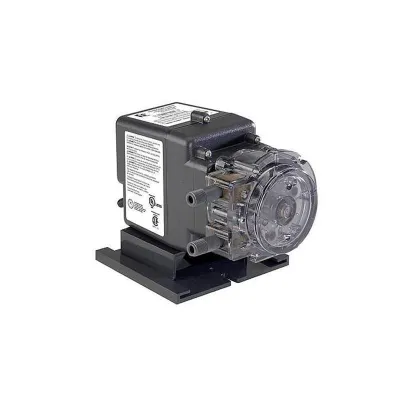
Stenner Classic 45 Series Pump
Automated Liquid Chlorine Dosing — Set It and Check It Weekly
For monitoring, the Ondilo ICO sits in the water and sends ORP and pH straight to your phone around the clock. If you want the deep dive, their website at mysmartpool.com has a ton of good information.
Quick aside for the salt crowd: salt cells trickle chlorine in constantly, so those pools run better at a higher CYA — usually 70 to 80. Different math, and I cover it in my saltwater pool maintenance guide.
One more force multiplier: a UV system kills pathogens with light, which means you hold the same ORP with far less chlorine demand.
SpectraLight UV
Shock Less, Swim Cleaner
UV on the return line cuts chloramines and organic load so you pour less chlorine and shock over the season—not a sanitizer replacement, but a serious upgrade next to good circulation and testing.
The Stack
Liquid chlorine (10–12.5%) + muriatic acid • Stenner Classic 45 for automated dosing • Ondilo ICO for round-the-clock ORP + pH • Taylor K-2006 for verification testing • UV to cut chemical demand.
My Final Verdict
So what's my final verdict on chlorine tablets?
Where I land is this: tablets aren't the villain. Unmonitored, year-round tablets are. If a floater is your entire chemistry plan, that plan is flat-out wrong — but the fix costs less than one pool-store rescue run.
Two non-negotiables going forward. Know your CYA number. And judge your water by ORP — by its sanitizing power — not by how much chlorine you dumped in.
If you're ready to make the switch, I've got links to liquid chlorine injection setups, the Ondilo ICO, the SpectraLight UV, and the Taylor K-2006 over at ThePoolNerd.com/deals — that's where I post the best deals on the gear I trust.
And if you want to go deeper, check out my guides on how to shock your pool, how to lower your pH, and my full ICO review.
Until next time — keep nerding out, and enjoy that pool.
Related Reading
- Chlorine Lock — Why your chlorine reads fine but your pool is still green
- How To Lower CYA — The dilution math and drain method, step by step
- How Many Chlorine Tabs Should You Use? — Dosing for the times tablets make sense
- How I Keep My Pool Crystal Clear — The full two-jug ORP method, start to finish
- Best Chlorine Injection Systems — Automate liquid chlorine dosing
- How To Shock Your Pool — Which shock to use, and exactly when to shock
- How To Lower pH In Your Pool — Safe muriatic acid dosing
- ICO Pool Water Monitor Review — The ORP and pH monitor I use
- SpectraLight UV Review — My full review of the UV system
This article is for educational purposes only. Handling pool chemicals — especially muriatic acid and chlorine — carries a real risk of injury or property damage. Always read the manufacturer's labels and SDS sheets, and use this information at your own risk.


Comments
Loading comments…