
 Justin D.
You've shocked the pool, the water is still cloudy, and now you're standing in the backyard wondering what to add: liquid chlorine, chlorine tablets, or granular chlorine.
Before you do, you need to know what you're actually adding and, more importantly, why.
Because that bag of chlorine might be raising your calcium. Those tablets might be pushing your stabilizer higher. And adding more of the wrong product can make your water harder to manage. So today we're going to make it super simple for you.
Welcome back to The Pool Nerd. I'm Justin, your resident pool aficionado.
Today, I'm going to show you which chlorine to use, how much to add to your pool, and how to do it safely—without turning pool care into a chemistry class. So let's dive in.

Adding Chlorine: What You Need Checklist
Test first, then choose the chlorine that fits your water. Liquid adds no CYA or calcium; cal-hypo adds calcium; dichlor and trichlor add CYA. Acid products are separate pH corrections—never mix them with chlorine.

Taylor K-2006 Salt Test Kit
What it is: The K-2006 line for salt pools—salt level plus the core tests you still need.
Why you need it: Wrong salinity means weak chlorine, cell alarms, and shortened cell life. Confirm salt and balance on paper, not vibes.
Pick your version: K-2006 Salt (salt pools) or the standard K-2006 (chlorine pools) if you don't need the salt test.

Liquid chlorine (10–12.5%)
What it is: 10–12.5% liquid shock/sanitizer—sold by the jug; shipping availability depends on seller and hazmat rules in your area.
Why you need it: For many SLAMs it’s the workhorse: no extra CYA from the sanitizer itself, fast, easy to pour. Grab fresh jugs; heat and age weaken it.

In The Swim Cal-Hypo Pool Shock
What it is: Calcium hypochlorite granular shock—high chlorine, adds calcium, no CYA.
Why you need it: Strong oxidizer for recovery and breakpoint; pre-dissolve; watch calcium if hardness is already high.

Sodium dichlor (stabilized granular)
What it is: Stabilized chlorine shock—each dose adds CYA along with chlorine.
Why you might use it: Spas, very low-CYA pools, or occasional small doses when you want granules that dissolve fast.
Why to limit it: On a tab-fed or already-stabilized pool, dichlor stacks CYA fast—often you should prefer liquid or cal-hypo for shock instead.

In The Swim 3" Chlorine Tablets
What it is: Slow-dissolving sanitizer pucks (usually trichlor) for feeders/floaters—adds CYA over time.
Why you need it: Fine for steady maintenance when CYA isn’t already high; back off if CYA creeps up.

Champion Muriatic Acid
What it is: Dilute hydrochloric acid—standard for lowering pH and, with the right method, total alkalinity.
Why you need it: High pH destroys chlorine efficiency. Always follow the label; never mix acid with chlorine.

In The Swim pH Reducer (dry acid)
What it is: Sodium bisulfate (dry acid)—lowers pH (and can pull TA down when used in controlled steps).
Why you need it: Easier to handle and store than jugs of muriatic acid for small, precise corrections; still an acid—never mix with chlorine, follow the label, and retest after circulation.

Ondilo ICO Pool Water Monitor
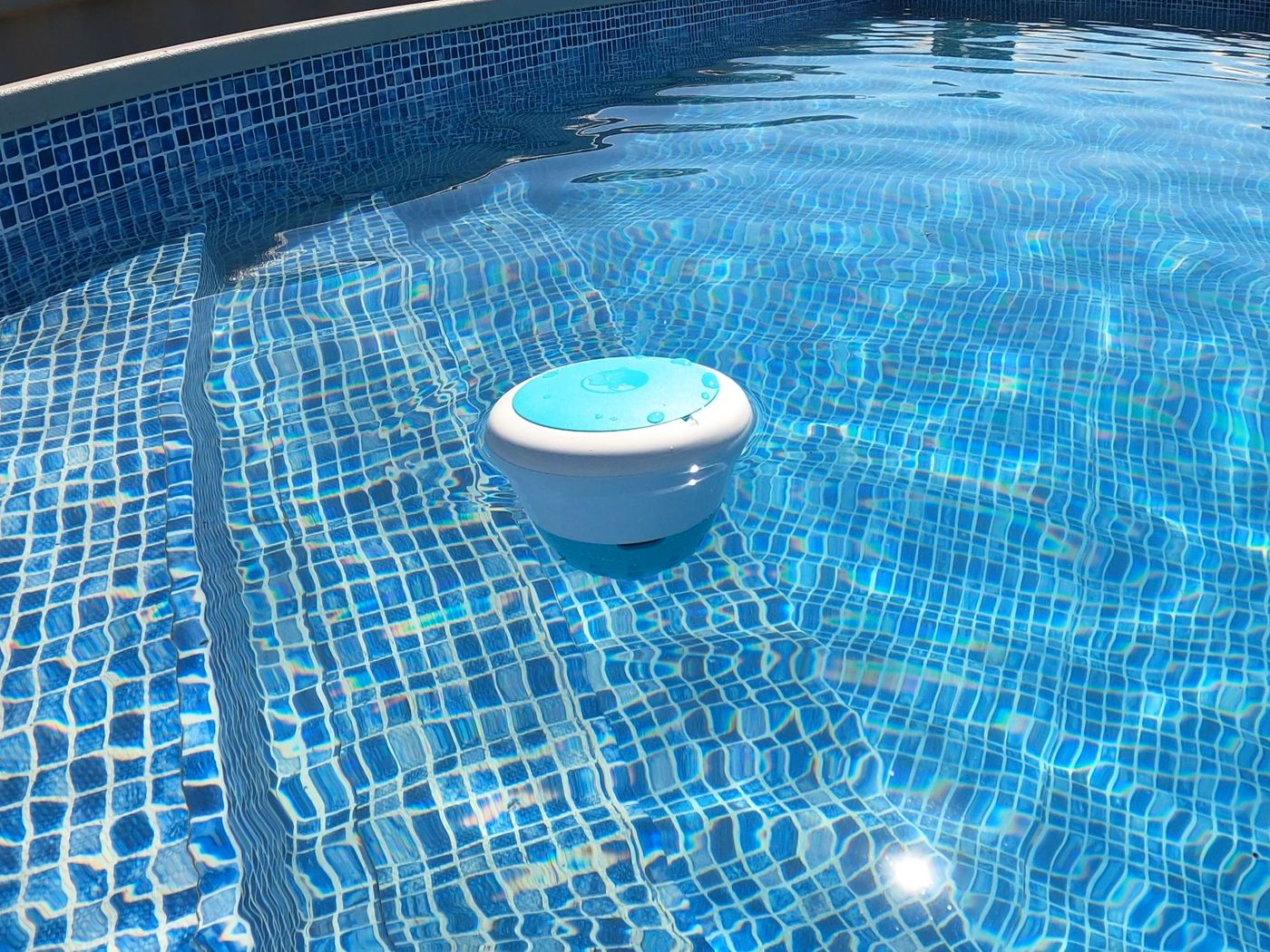
What it is: A floating smart monitor that samples pH, ORP (sanitizer effectiveness), and temperature on a schedule and sends trends to your phone.
Why you need it: You still need a real drop kit for parameters the ICO doesn’t replace (like TA and CYA), but hourly ORP/pH catches drift and dosing mistakes long before weekly strip checks do.
Read the full ICO review — Shop ICO direct (no Amazon listing for the hardware we run).

SpectraLight UV
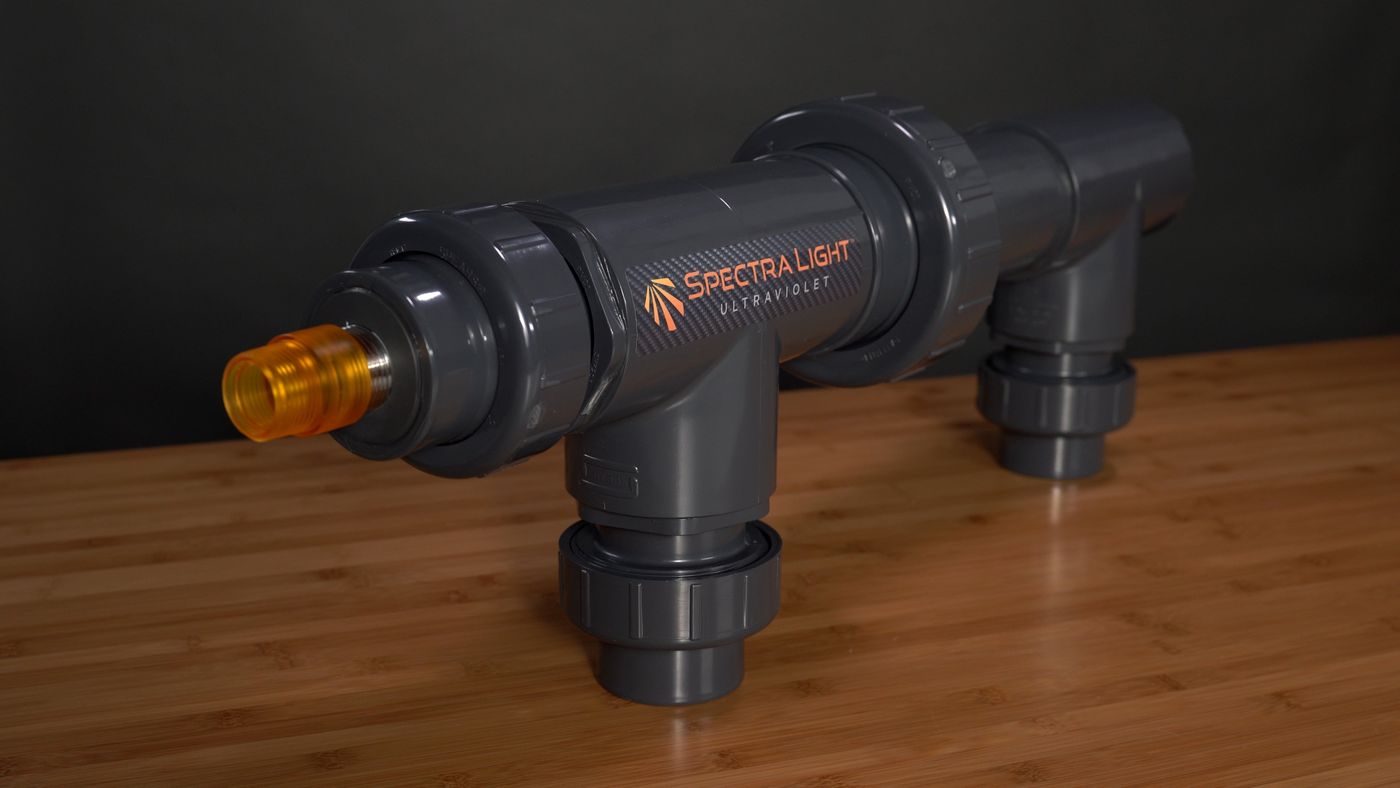
What it is: Inline UV-C on the return line—knocks down pathogens and helps with chloramines as water passes the lamp.
Why you need it: Cleaner water with less organic load means you reach for shock less often while staying comfortable. Read the full SpectraLight review for sizing and install notes.
The table covers every chlorine, testing, pH-control, monitoring, and UV product mentioned in this guide. Also have these basics ready:
- Your pool's water volume.
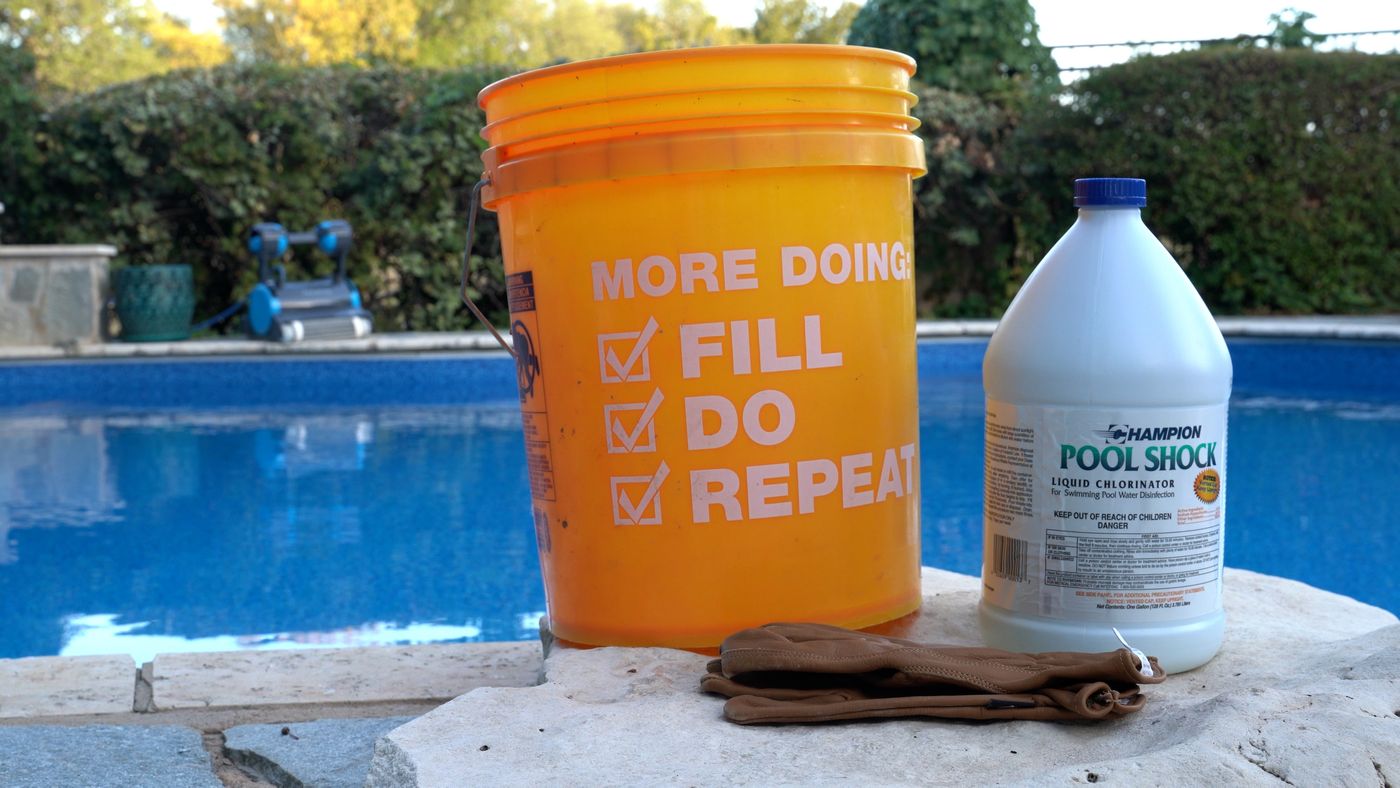
- Chemical-resistant gloves and splash goggles, plus any additional protection required by the label.
- A pool brush and clean measuring equipment dedicated to that chemical.
You don't need liquid, tablets, and three different powders sitting beside the pool. Pick the product that fits your water.
First, Stop Shopping by the Word “Shock”
Chlorine helps control algae, kill germs, and break down contaminants. Your pool needs an appropriate amount in the water consistently, not just a big treatment when something goes wrong.
“Shock” isn't one specific type of chlorine. Liquid chlorine can handle everyday sanitation or a larger treatment. What changes is the dose and the problem you're treating. My pool shock vs. chlorine guide explains that distinction in more detail.
The more useful question is: What else does this product add to my water?
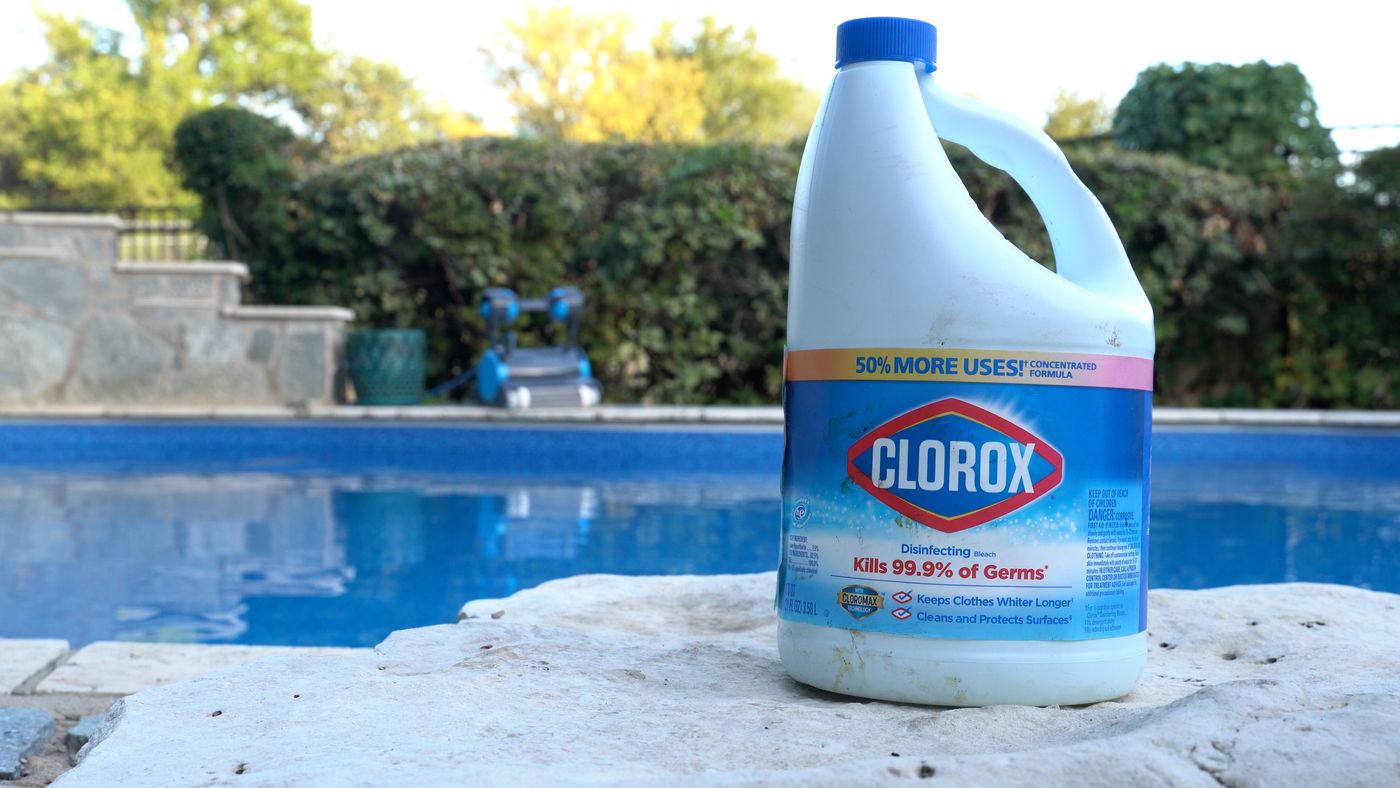
Liquid chlorine adds no stabilizer or calcium. That's why it's my first choice for routine manual chlorination. I can adjust those other levels separately instead of changing them every time the pool needs chlorine.
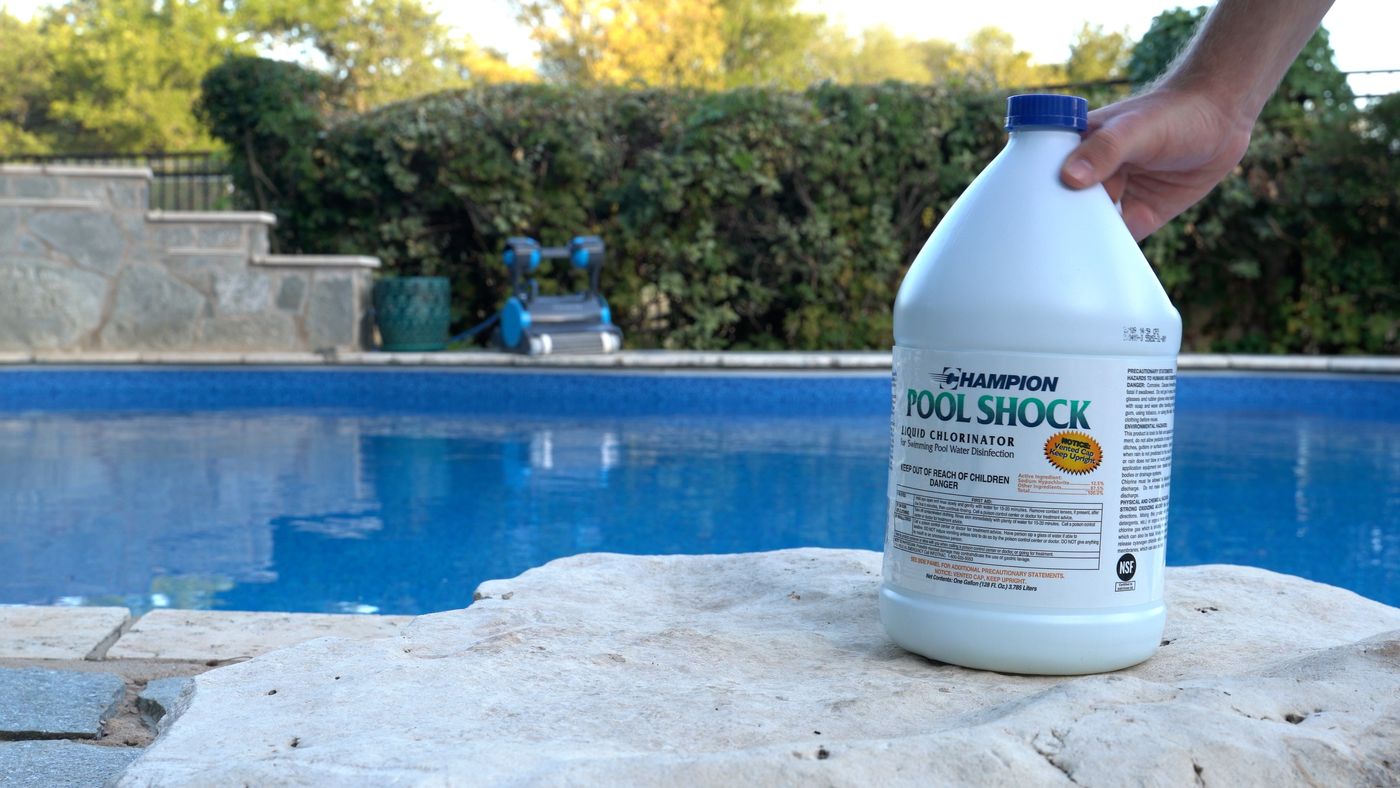
Cal-hypo granular chlorine adds calcium. That can be useful when additional calcium suits your water. When calcium is already high, repeatedly adding more can contribute to cloudiness or scale if the overall water balance is wrong.
Dichlor granular chlorine adds stabilizer, also called cyanuric acid, or CYA. Useful when you need it. Not something to keep adding without checking.
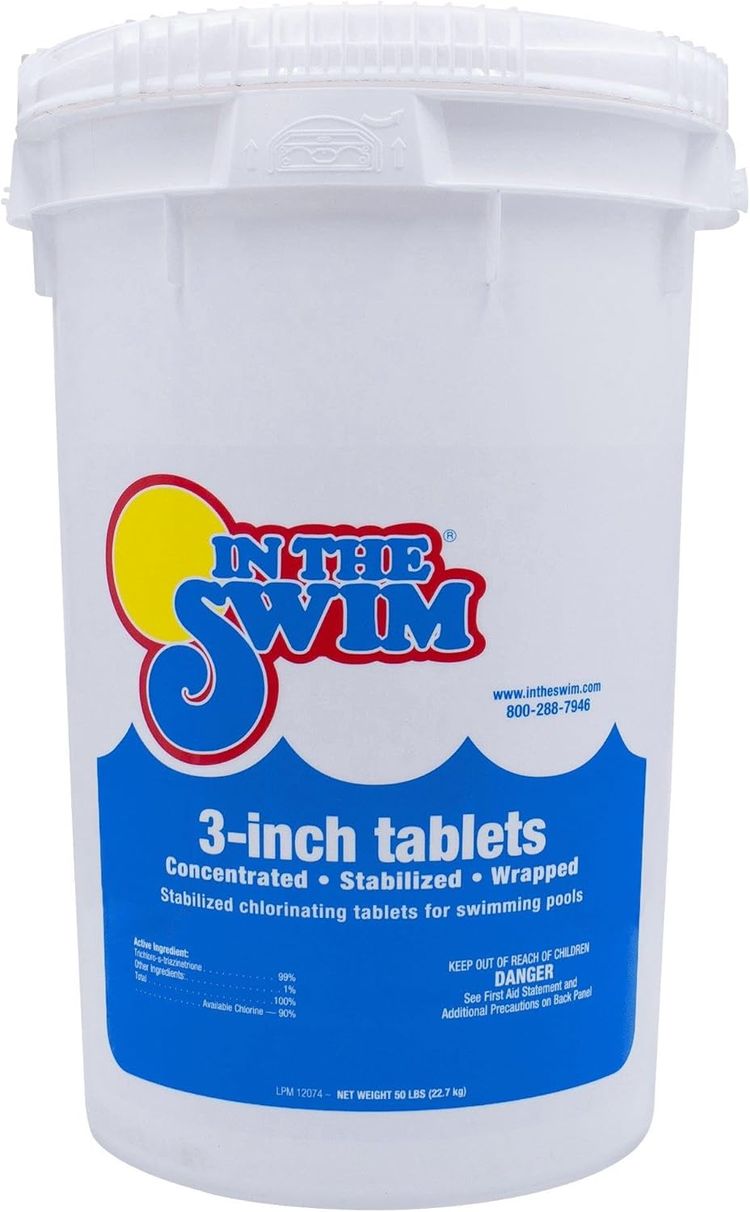
Then there are trichlor tablets, and this is where convenience can get expensive.
Every tablet adds chlorine and stabilizer. Trichlor is also acidic, so continued use can lower pH and alkalinity.
You keep refilling the floater because the pool needs chlorine. Meanwhile, stabilizer keeps climbing—even though your water stopped needing more of it weeks ago.
People often call the resulting problem “chlorine lock.” The chlorine hasn't mysteriously switched off; too much CYA means the same free-chlorine reading provides less active chlorine.
That's why I wouldn't make trichlor tablets the backbone of your routine. I'd reserve them for occasional backup, such as a vacation, and only when the CYA level and equipment allow it. Read my complete chlorine tablet guide before making pucks your primary sanitizer.
The mistake isn't owning tablets. It's using them every day without tracking what they leave behind. And it is one of the biggest mistakes I see pool owners make.
Before you calculate a dose, open the pool chlorine calculator. Enter your pool's water chemistry and volume to calculate how much chlorine to add and compare the available chlorine types. A proper drop-test kit such as the Taylor K-2006 measures free chlorine, pH, CYA, alkalinity, and calcium hardness; my guide to the best way to test pool water explains why a drop kit is the manual-testing standard.
Step 1: Test Before You Pour
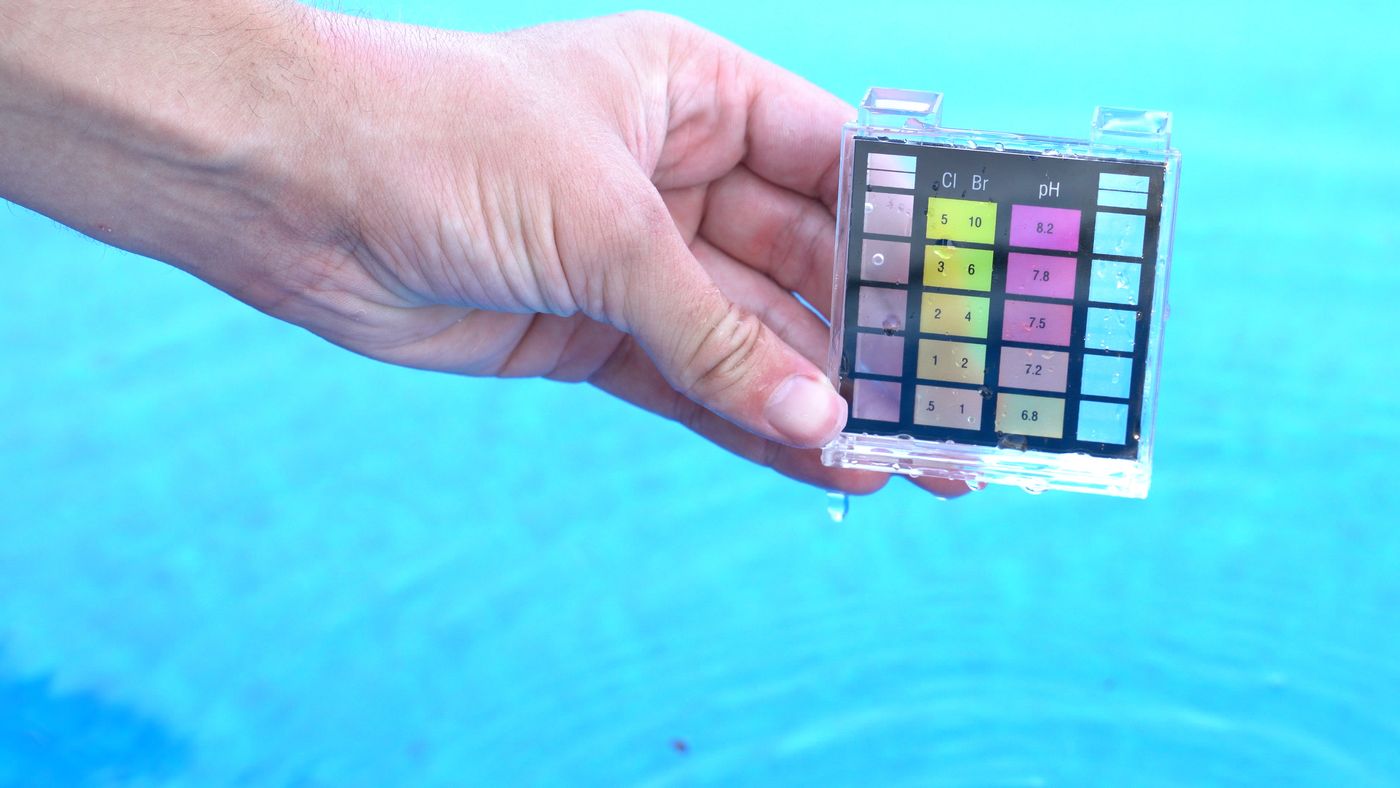
Start with free chlorine, pH, and a recent CYA reading.
Free chlorine is the number you use to work out whether you need more sanitizer. Total chlorine alone doesn't give you that answer. Your CYA reading helps put the chlorine number into context.
For manually chlorinated outdoor pools, a commonly used algae-prevention guideline is to keep free chlorine above roughly 7.5% of CYA. That's an approximate minimum—not a universal swimming-safety guarantee.
For example, 40 ppm CYA means roughly 3 ppm free chlorine as a minimum under that guideline.
But a minimum isn't your daily target. You need room for chlorine to be used up before the next test.
Use a chlorine/CYA guide to choose a higher daily target that also fits your product's directions. When high CYA makes that impractical, address the stabilizer problem rather than endlessly increasing chlorine. My guides to how much chlorine should be in your pool and how to lower CYA cover both situations.
Also check alkalinity before adjusting pH, and calcium hardness before choosing cal-hypo.
Step 2: Correct pH—Only When It Needs Correcting
Check pH before adding chlorine, especially before a larger treatment.
For this routine, 7.2–7.6 is a practical starting range, subject to your product and pool-finish instructions.
If pH is already in range, leave it alone. Adding chlorine does not automatically mean you need acid first.
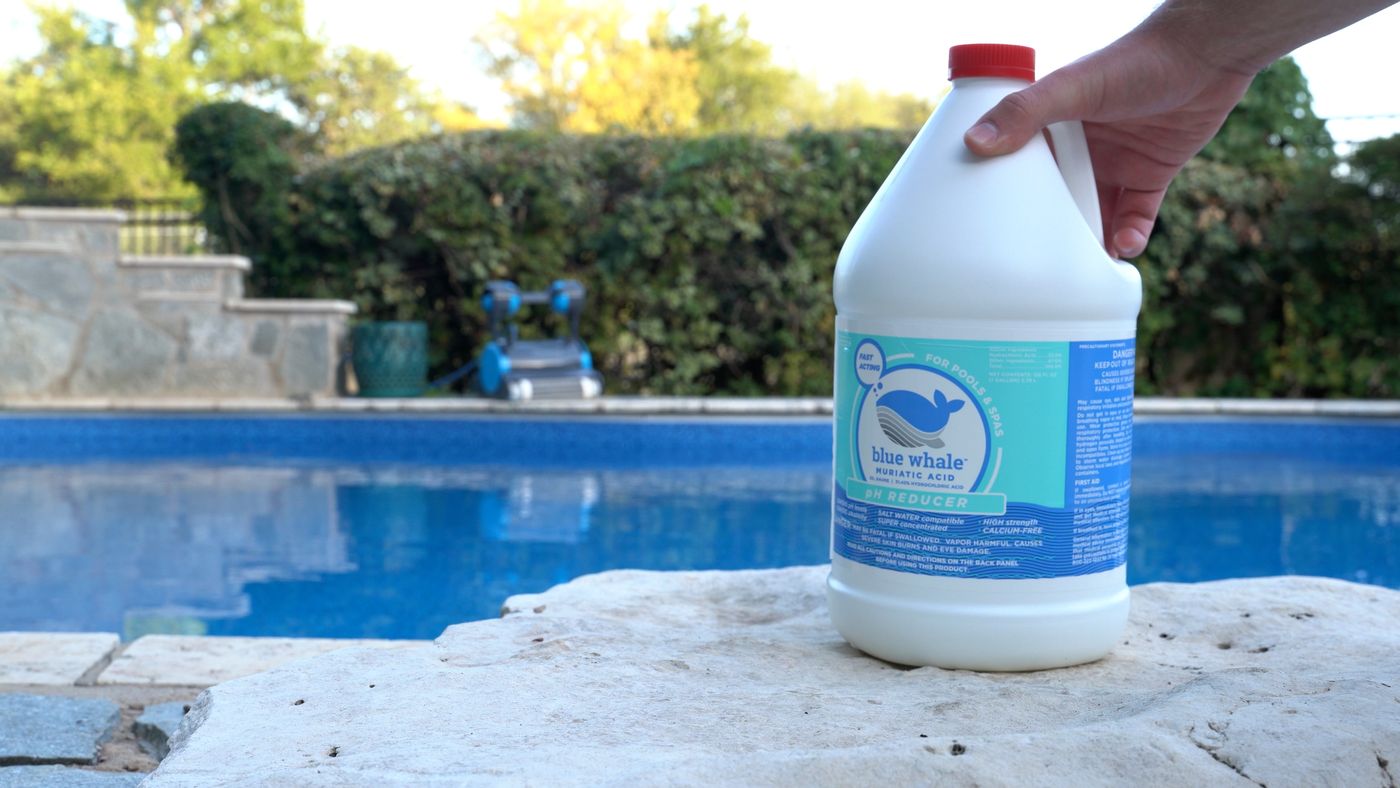
If pH is high, use a calculated dose of muriatic acid or a suitable dry-acid pH reducer. If pH is low, acid would make it worse. Use the pool pH calculator, then follow the appropriate guide for lowering pool pH or raising pool pH.
Run the circulation system and follow the acid's application instructions. The amount depends on your pool volume, alkalinity, current pH, and product strength.
Here's the warning worth remembering:
Critical Chemical Safety Warning
Never mix acid and chlorine. They can release poisonous chlorine gas that can seriously injure your lungs. Never combine them in a bucket, use the same measuring container, or pour them into the same spot together.
Let the acid disperse thoroughly, follow both labels' separation instructions, and retest pH before adding chlorine separately.
Saving a few minutes is not worth a chemical accident. Always be careful.
Step 3: Calculate the Dose, Not the Number of Jugs
“How much chlorine do I add?” depends on three things: your pool's gallons, your current free chlorine, and where it needs to be.
Then you account for the product's strength.
Use the pool chlorine calculator and check its result against your container's instructions. Enter the actual concentration—not whatever strength the calculator happens to have selected.
A gallon of weaker liquid chlorine isn't equivalent to a gallon of stronger liquid chlorine.
You can use the pool volume calculator to estimate your gallons.
Measure the calculated dose. Don't round everything up to another jug.
Step 4: Add Your Chlorine Correctly
For Liquid Chlorine
Keep swimmers and pets away and out of the water, put on your protective equipment, and make sure the pump is circulating water.
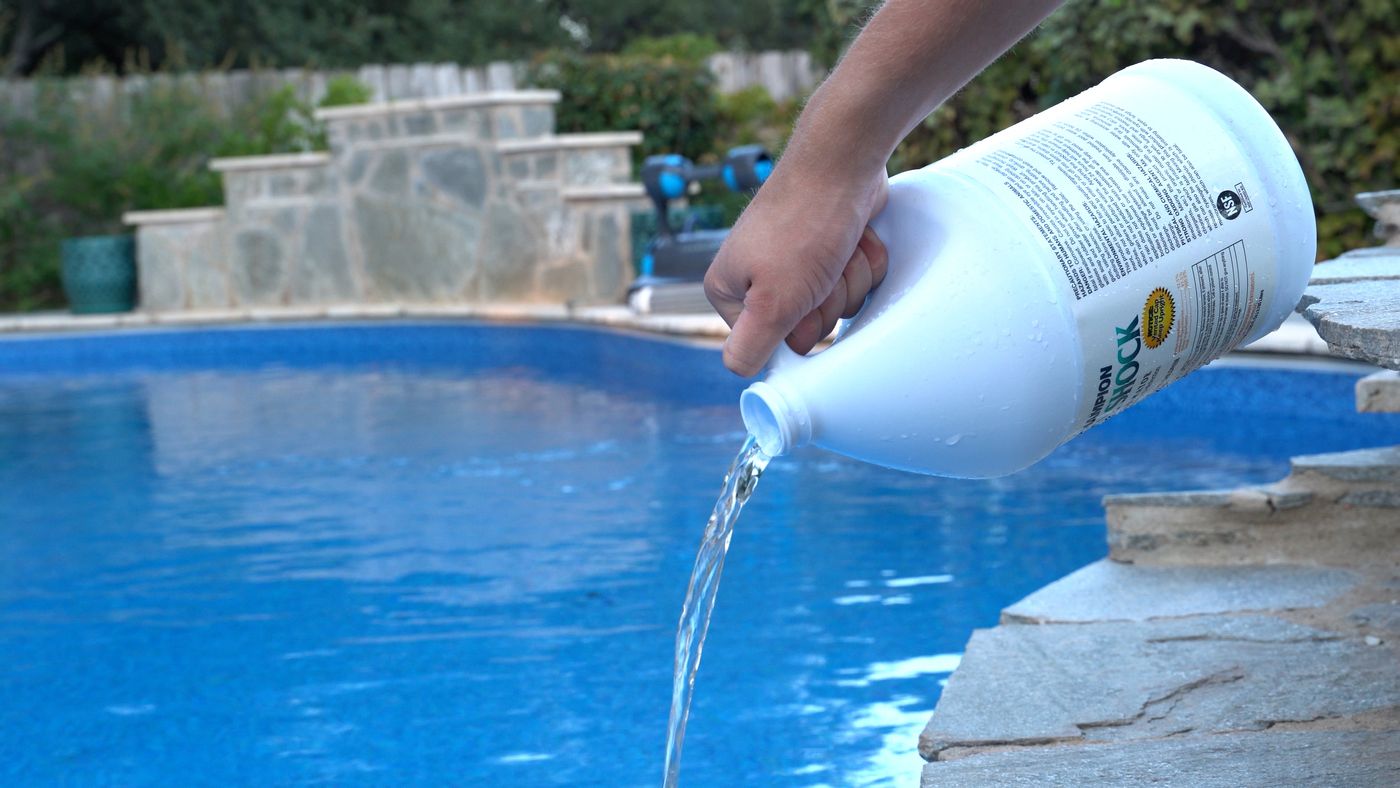
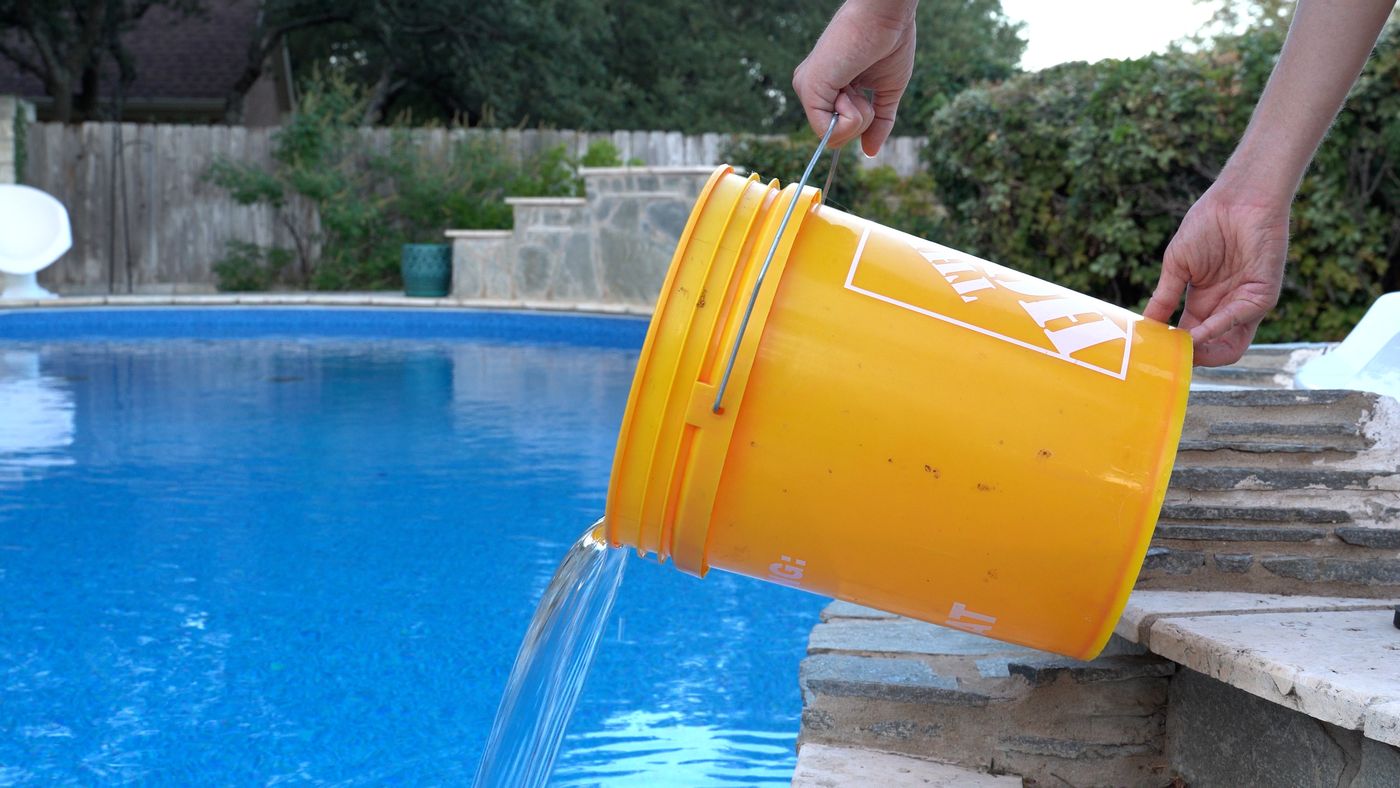
For a product labeled for direct addition, slowly pour the measured amount close to the water surface in the location the bottle specifies—commonly near a return jet.
Keep it off the coping, your clothes, and the exposed pool finish. Don't dump it into the skimmer or a tablet feeder.
Evening dosing can reduce immediate sunlight loss. But don't leave the pool underchlorinated all afternoon just because sunset is your preferred dosing time.
Liquid chlorine also loses strength in storage, especially in heat. Buy quantities you'll use promptly and store them in their original containers, away from sunlight and incompatible chemicals, as the label directs.
For a liquid-only walkthrough, see how to add liquid chlorine to your pool.
For Granular Chlorine
Measure the dose and follow that specific product's instructions with the pump running.
Some products call for direct addition. Others require predissolving. Don't assume every bag gets the same treatment.
Only predissolve when the label tells you to. When required, add the chemical to the specified amount of water—never pour water onto a pile of chlorine.
Follow the instructions for brushing settled granules and protecting your pool finish.
For Trichlor Tablets
Use a compatible, dedicated feeder or floating dispenser.
Don't put tablets on the pool floor or in the skimmer. Don't crush them to raise chlorine faster.
And never put cal-hypo or another chlorine chemistry into a trichlor feeder, even when it looks empty. Leftover residue can still react dangerously.
Tablets release chlorine gradually. They are not the tool for quickly correcting a low reading. If the test shows low chlorine now, follow the calculated dosing process in my guide to raising free chlorine.
Step 5: Circulate, Retest, and Keep It Consistent
Leave the pump running for the treatment's required circulation period, then retest.
The calculation estimates what the dose should add. The test tells you what actually remains.
Before swimming, meet the product's waiting requirements and confirm that chlorine and pH are within its swimming range. Any granules must be fully dissolved or dispersed as directed.
Don't use “it's been 15 minutes” as your entire safety check.
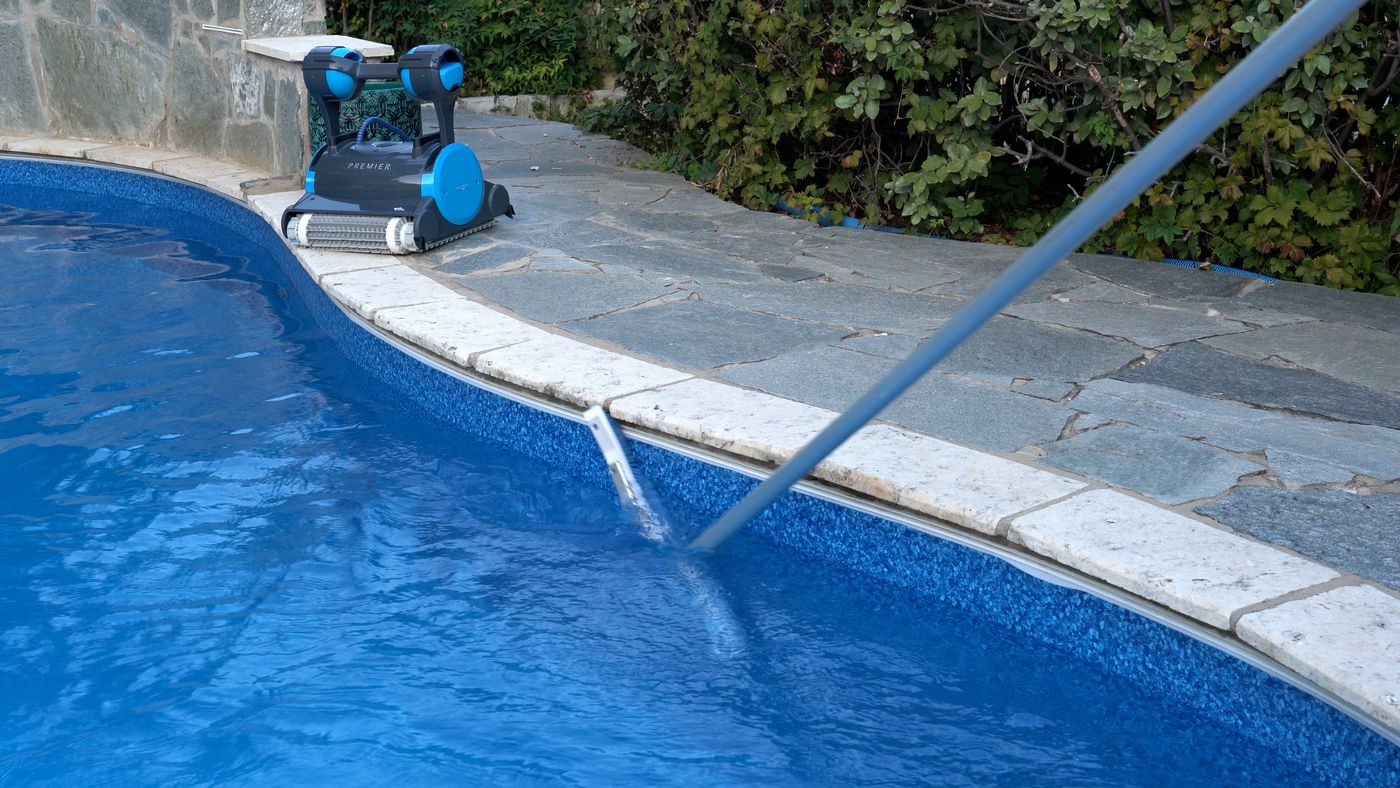
During swimming season, make morning and evening chlorine and pH checks part of the routine, with additional testing during heavy use.
Add chlorine when testing shows it's needed. Your pool's demand changes with sunlight, swimmers, and contamination, so a fixed weekly dose won't always keep up.
And when algae is already present, one routine dose may not solve it. That becomes an algae-treatment job involving sustained treatment, brushing, and filtration—not randomly adding another bag every day. Follow the SLAM pool guide or the guide to cleaning a green pool instead.
Upgrades You Will Want
Once you've got the basics down, there are two upgrades worth looking at: a pool water monitor and a UV system.
What I like about a pool water monitor like the ICO is being able to open the app and see how pH, ORP, and temperature are changing—not just what the water looked like at your last test. It gives you a heads-up when something needs attention, while your test kit helps you confirm what to do next.
A UV system like SpectraLight handles a different job, using ultraviolet light to disinfect water as it passes through its treatment chamber—which can reduce how much chlorine you'll need. Think of it as additional support for your chlorine, not permission to stop chlorinating.
Neither is essential to getting started, but both are worth exploring if you want to make owning your pool easier.
My Final Verdict
So what's my final verdict on how to add chlorine to your pool?
Make sure to do it safely.
For routine manual chlorination, liquid chlorine is my starting choice because it lets you add sanitizer without also adding calcium or stabilizer.
Use tablets and powders deliberately—not simply because that's what you bought last time.
Test first. Correct pH when necessary. Calculate the dose. Add chemicals separately. Circulate and retest.
Once you build that routine, you stop asking how many bags the pool needs and start knowing what the water needs.
If you want to look into a pool water monitor like the ICO or a UV system like SpectraLight, head over to my deals page, where I post the best deals on top pool equipment and more.
Until next time, keep nerding out and enjoy that pool. I'll see you next time.
Related Reading
- How to Add Liquid Chlorine to Your Pool — The liquid-only five-step walkthrough
- Pool Chlorine Calculator — Calculate the dose for your volume, target, and product strength
- How Much Chlorine Should Be in Your Pool? — Choose a target based on your water
- How to Raise Free Chlorine — Correct a low free-chlorine reading
- Chlorine Tablets — What trichlor leaves behind and when tablets make sense
- Pool Shock vs. Chlorine — The same sanitizer used for two different jobs
- How to Shock a Pool — The full recovery-treatment walkthrough
- Chlorine Lock — How high CYA changes chlorine performance
This article is for educational purposes only. Handling pool chemicals—including chlorine and muriatic acid—carries a risk of serious injury or property damage. Always follow the product label and safety data sheet, keep incompatible chemicals separate, and use this information at your own risk.


Comments
Loading comments…