
 Justin D.
Hey there and welcome back to The Pool Nerd. I'm Justin, your resident pool aficionado. Over five-plus years of testing pools and equipment out of my own test pool here in Texas, I've watched countless owners panic over a low chlorine reading and do exactly the wrong thing—dump in tablets, scoop in granular shock, and make the problem worse.
So this is the complete, simple, no-nonsense guide to raising free chlorine in your pool.
Low free chlorine is one of the easiest things to fix in a pool. You don't need a chemistry degree, and you don't need to hand your wallet to the pool store. You need the right product, the right amount, and about ten minutes. Let's dive into how to raise your free chlorine.
Raising Free Chlorine: What You Need Checklist
Test first, fix pH if it's high, then raise free chlorine with liquid chlorine (or cal-hypo)—plus the gear that keeps your chlorine demand low.

Taylor K-2005 Test Kit
What it is: A professional drop (titration) kit for chlorine, pH, alkalinity, calcium hardness, and cyanuric acid.
Why you need it: You can’t SLAM or balance blind—especially CYA, which handcuffs chlorine. This kit gives numbers you can trust, not strip guesswork.

Ondilo ICO Pool Water Monitor
What it is: A floating smart monitor that samples pH, ORP (sanitizer effectiveness), and temperature on a schedule and sends trends to your phone.
Why you need it: You still need a real drop kit for parameters the ICO doesn’t replace (like TA and CYA), but hourly ORP/pH catches drift and dosing mistakes long before weekly strip checks do.

Champion Pool Shock (4 Pack)
What it is: A case of liquid pool chlorine (sodium hypochlorite)—not cal-hypo granules. Confirm strength on the listing and jug label (often around 10–12.5%).
Why you need it: Same upside as other liquid shock: no CYA from the product, easy to pour with the pump running—useful to keep stocked for openings, algae pushes, storms, or parties.
How to use: Treat it like any liquid shock (pour with circulation; big doses still work best at dusk). Store cool and shaded; opened jugs lose strength over time—plan to use them within a few weeks.

In The Swim Cal-Hypo Pool Shock
What it is: Calcium hypochlorite granular shock—high chlorine, adds calcium, no CYA.
Why you need it: Strong oxidizer for recovery and breakpoint; pre-dissolve; watch calcium if hardness is already high.

Champion Muriatic Acid
What it is: Dilute hydrochloric acid—standard for lowering pH and, with the right method, total alkalinity.
Why you need it: High pH destroys chlorine efficiency. Always follow the label; never mix acid with chlorine.

SpectraLight UV
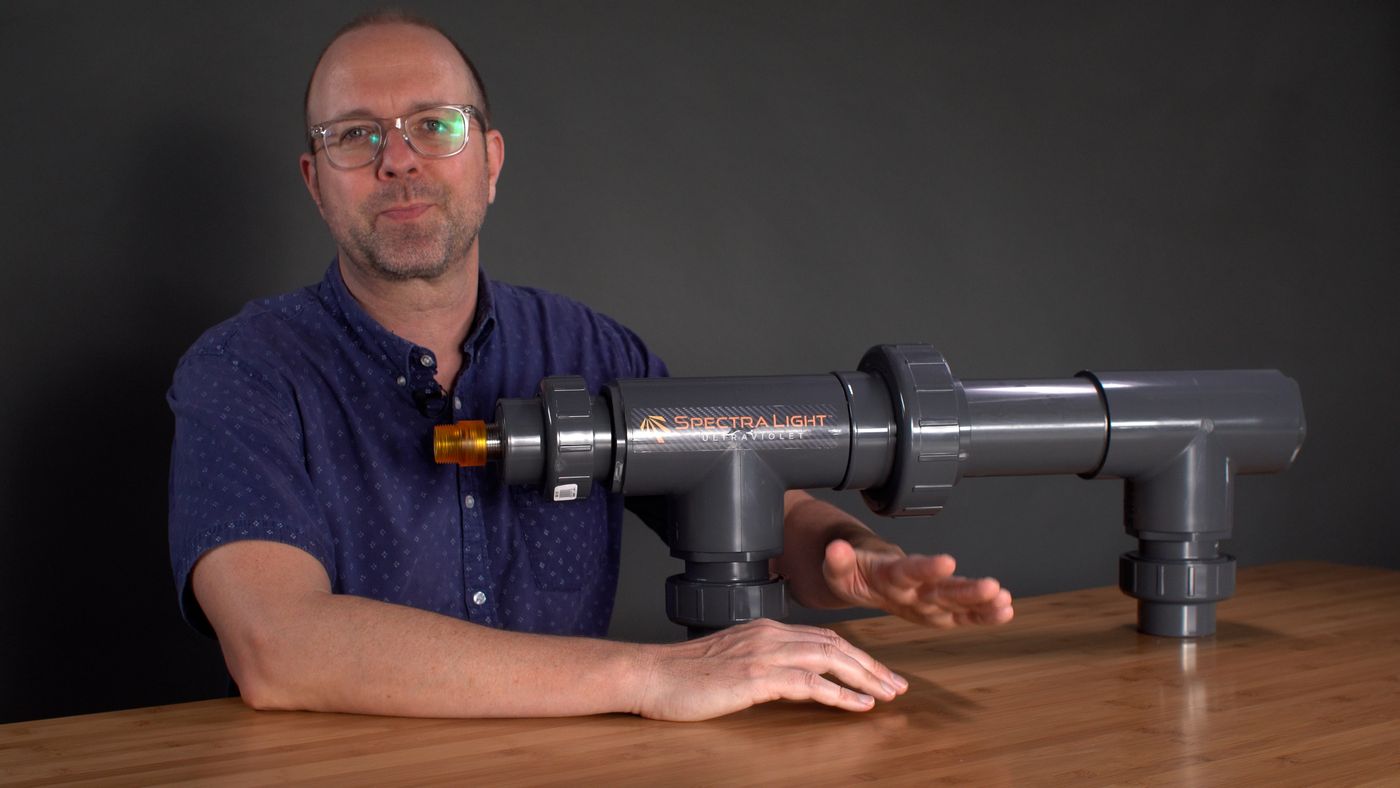
What it is: Inline UV-C on the return line—knocks down pathogens and helps with chloramines as water passes the lamp.
Why you need it: Cleaner water with less organic load means you reach for shock less often while staying comfortable. Read the full SpectraLight review for sizing and install notes.

Dolphin Premier
What it is: A corded robotic cleaner with dual scrubbing brushes and strong filtration—built to pull debris and biofilm off surfaces so your sanitizer is not fighting mulch and leaves first.
Why you need it: Shock oxidizes what is in the water—leaves, pollen, and biofilm burn sanitizer too. A strong robot pulls debris off surfaces and into the filter so your chlorine works on algae and organics, not mulch. See the Dolphin Premier review for why it is our test-pool scrubber of choice.
The Short Answer
To raise free chlorine, add liquid chlorine (sodium hypochlorite) to your pool with the pump running, then retest. For most pools, roughly one quart of 12.5% liquid chlorine per 10,000 gallons raises free chlorine by about 3 ppm. Add it in the evening, let it circulate, and check again in the morning.
That's the whole job. But there's one number that decides whether your chlorine works at all—and almost nobody at the pool store will tell you about it.
What Free Chlorine Is And Why It Matters
Free chlorine (FC) is the chlorine in your water that's available to sanitize—the part that kills algae, bacteria, and the organic gunk swimmers bring in. When FC drops too low, your pool loses its protection, and that's when water goes cloudy, then green.
Here's the thing: a free chlorine number on its own is almost meaningless. What matters is how that number relates to your stabilizer.
The CYA Connection (The Number Nobody Mentions)
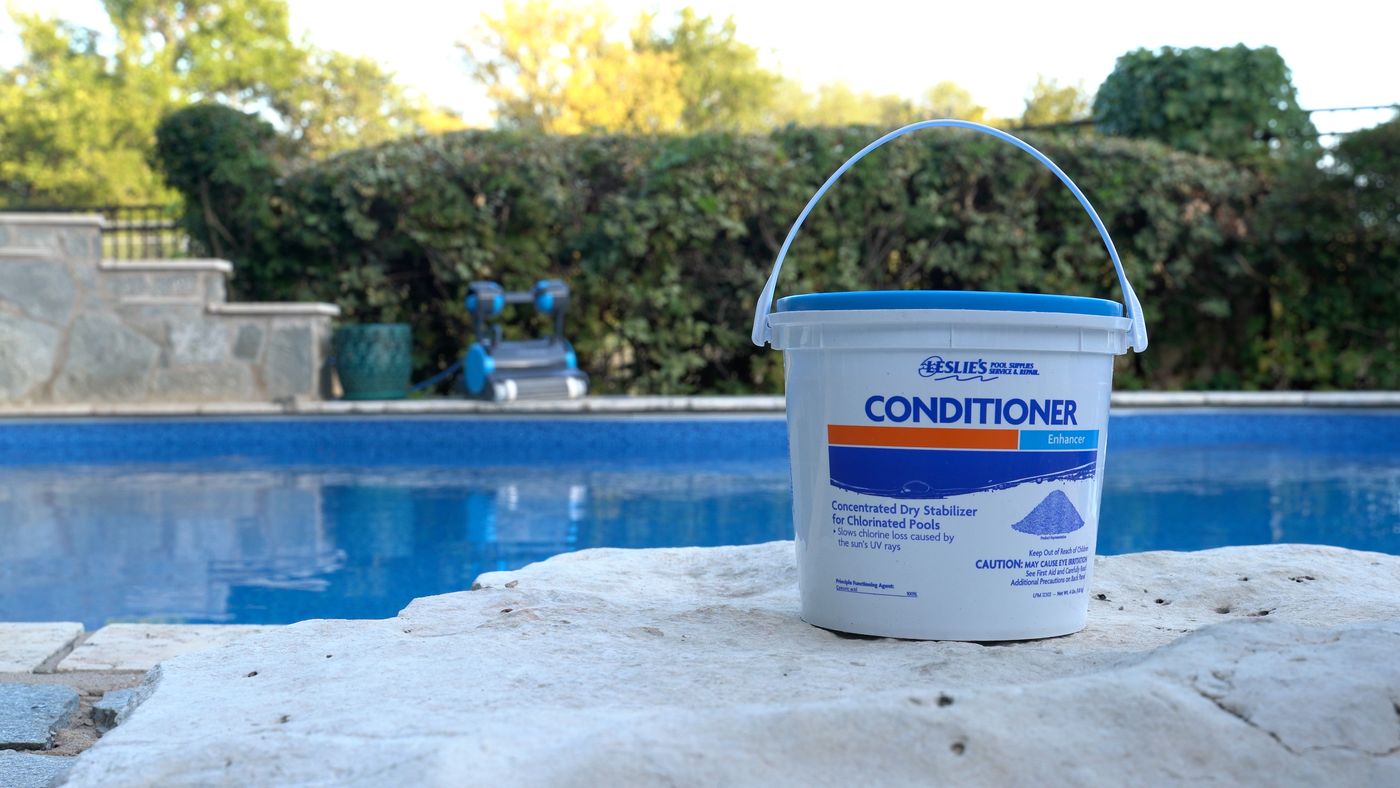
Cyanuric acid (CYA)—also called stabilizer or conditioner—protects chlorine from the sun. Without it, UV burns off your chlorine in hours. With too much of it, your chlorine gets sluggish and weak. CYA and chlorine are a package deal.
The pool store calls this "chlorine lock" and sells you a magic "fix." In my opinion, that's dead wrong. There's no such thing as chlorine lock. What's happening is your free chlorine is simply too low for your CYA level.
The professional rule is dead simple: your free chlorine should sit around 7.5% of your CYA. I call it the golden ratio. Use this chart to find your target:
| Your CYA Level | Minimum FC | Target FC |
|---|---|---|
| 30 ppm | 2 ppm | 3 ppm |
| 40 ppm | 3 ppm | 4 ppm |
| 50 ppm | 4 ppm | 5 ppm |
| 60 ppm | 4–5 ppm | 6 ppm |
| 70–80 ppm (salt) | 5–6 ppm | 6–8 ppm |
This is why raising free chlorine sometimes feels like it "doesn't work." If your CYA is 80 and your FC is 3, you're under-protected—even though 3 ppm sounds fine on paper. Raise the FC to match the CYA, and the water clears up. The chlorine was never locked. It was just outnumbered.
And if your CYA has crept too high to manage (over 80 ppm), no amount of chlorine fixes it—the only cure is a partial drain and refill to lower CYA.
Check Your pH First (Or You're Wasting Money)
Before you raise free chlorine, check your pH. Chlorine's killing power is tied to pH, and the drop-off is steep.
At a pH of 7.0, about 80% of your free chlorine is in the active, germ-killing form. At 7.5, you're down to roughly 50%. At 8.0, only about 20% is doing anything. You can have a "perfect" chlorine reading and still have water that refuses to clear.
Fix High pH First
If your pH is above 7.6, lower it before you add chlorine. Otherwise you're paying for sanitizer that's mostly asleep. Aim for a pH of 7.0–7.4. My how to lower pool pH guide walks you through the safe way to do it.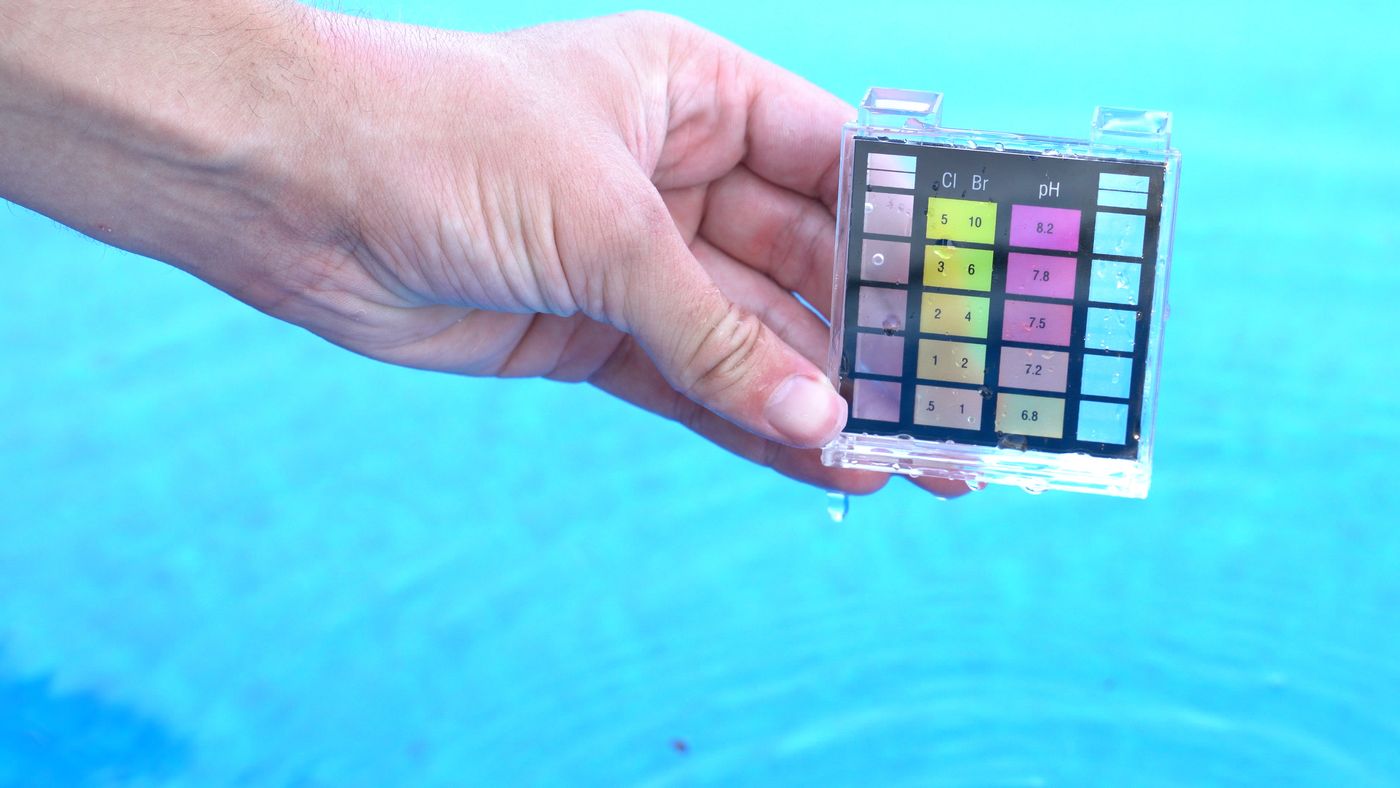
What You Need
Keep it simple. Here's the entire shopping list—the what you need checklist earlier on this page has the shop links.
A chlorine source (pick one):
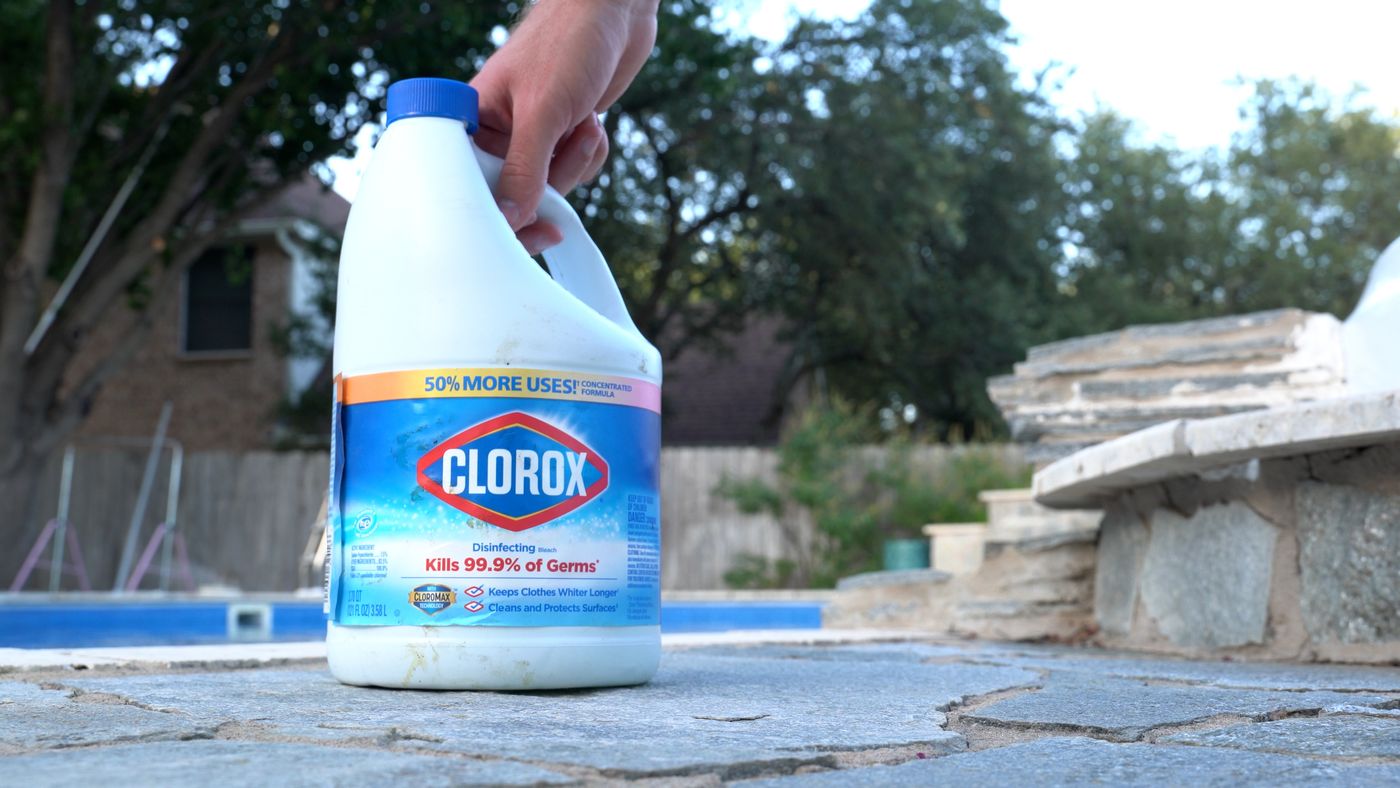
- Liquid chlorine (sodium hypochlorite, 10–12.5%)—my pick for almost everyone. No calcium, no CYA, fast-acting, and the cheapest option gallon for gallon.
- Cal-hypo (calcium hypochlorite, 65–73%)—works fine, but it adds calcium to your water and must be pre-dissolved in a bucket before adding.
A way to test:
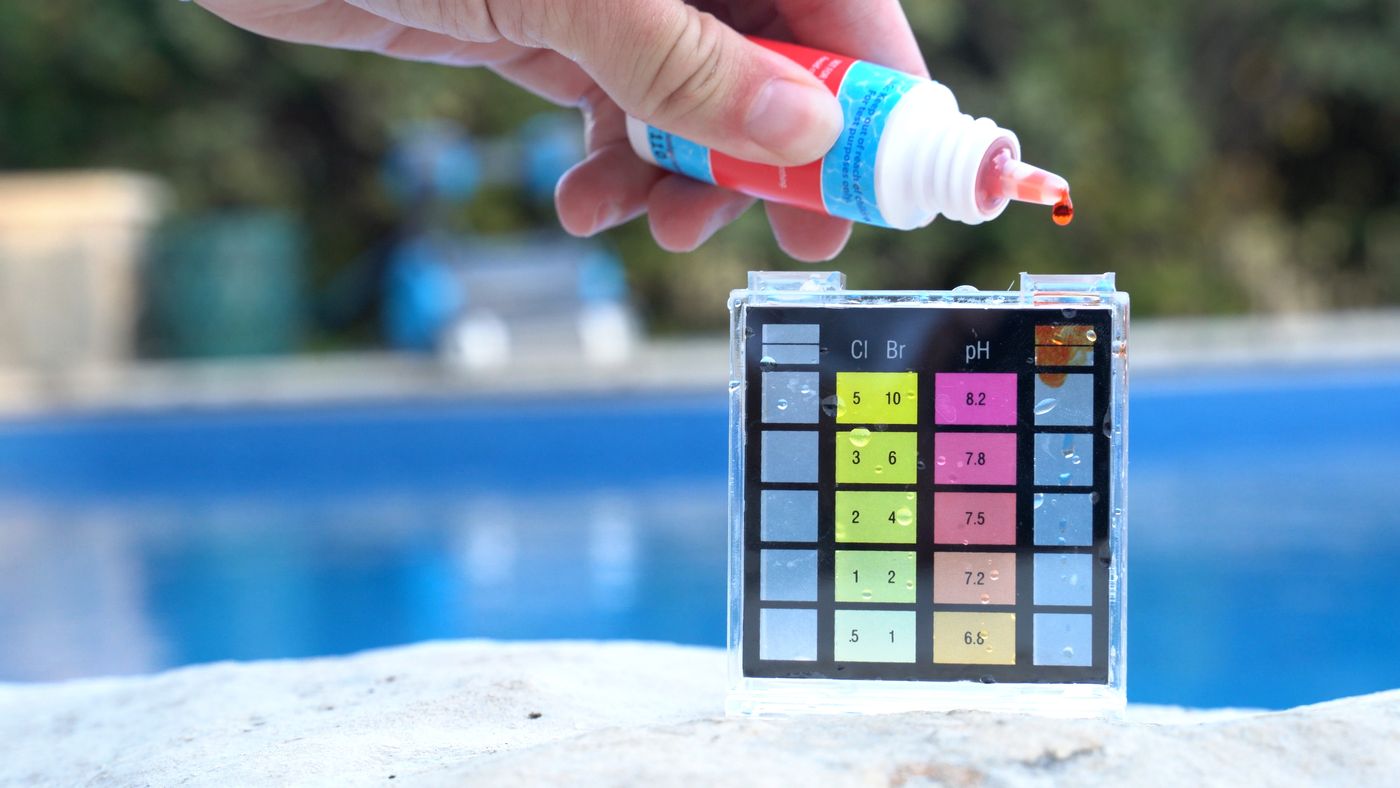
- A liquid test kit like the Taylor K-2005 or K-2006 (salt pools: the K-2006 Salt)—the gold standard for accurate FC and CYA readings.
- A smart monitor like the ICO—this is what I run in my own test pool. It tracks ORP and pH around the clock and pings my phone before anything goes sideways.
The info you'll need:
-
Your pool's volume in gallons (use our pool volume calculator)
-
Your current free chlorine reading
-
Your current CYA reading
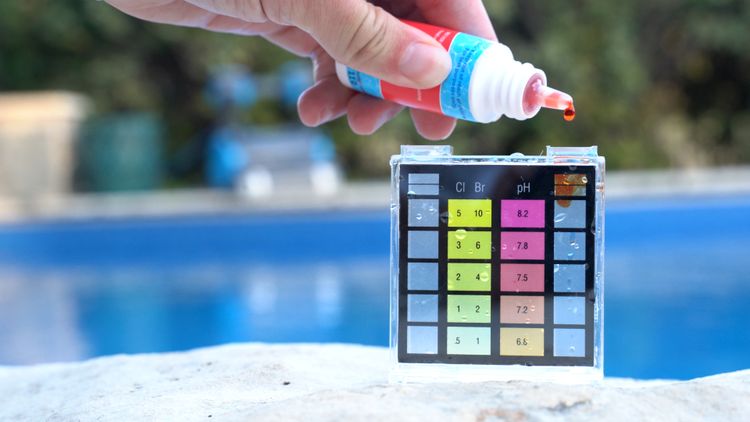
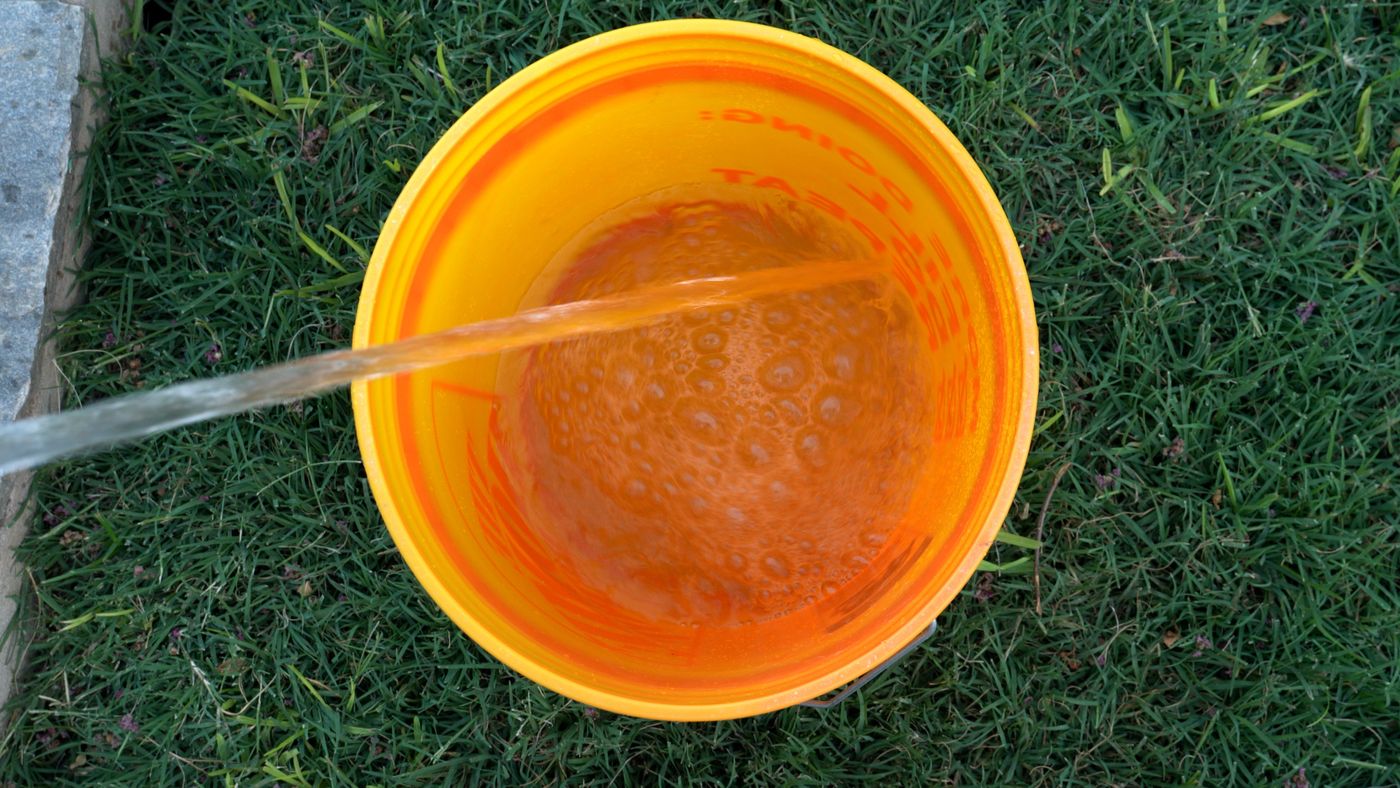
A liquid test kit gives you accurate FC and CYA readings before you dose // The Pool Nerd
How Much To Add
Liquid chlorine is the easiest product to dose. As a starting point, here's how much 12.5% liquid chlorine it takes to raise free chlorine by about 3 ppm:
| Pool Size | 12.5% Liquid Chlorine (to raise FC ~3 ppm) |
|---|---|
| 10,000 gallons | ~1 quart (32 oz) |
| 15,000 gallons | ~1.5 quarts (48 oz) |
| 20,000 gallons | ~2 quarts / half gallon (64 oz) |
| 25,000 gallons | ~2.5 quarts (80 oz) |
Rule of thumb: one full gallon of 12.5% liquid chlorine per 10,000 gallons raises FC by about 12 ppm—that's shock territory, not a routine top-off. For precise per-ppm dosing across every chlorine type, see my full breakdown on how much chlorine to add.
How To Raise Free Chlorine — Step By Step
- Test first. Know your free chlorine, pH, and CYA before you add anything.
- Fix pH if needed. Get it into the 7.0–7.4 range so your chlorine can actually work.
- Turn on your pump. You want full circulation before, during, and after.
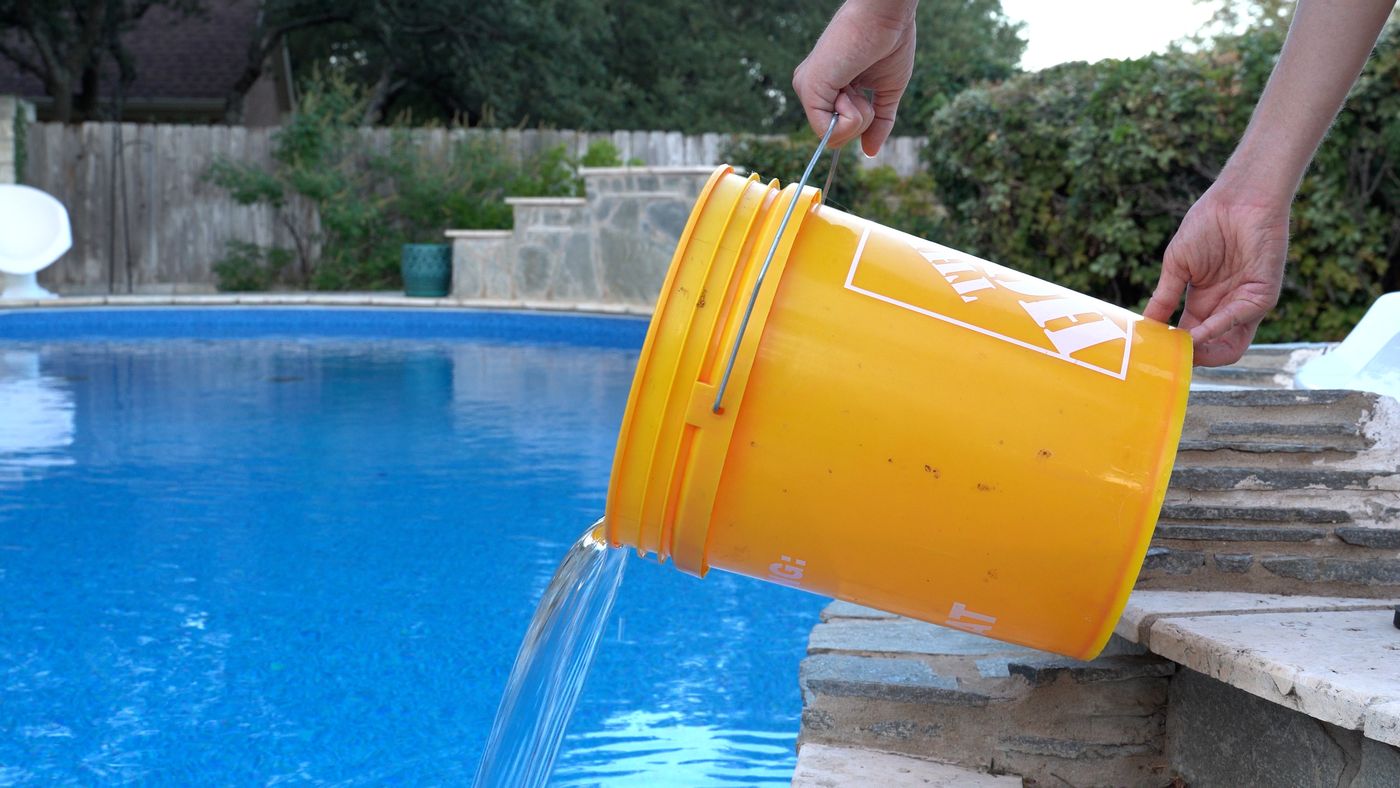
- Add liquid chlorine near a return jet. Pour slowly and walk the perimeter for even distribution. Keep it off the liner and away from metal fixtures.
- Wait until evening if you can. Sunlight burns off chlorine fast; dosing at dusk gives it all night to work.
- Let it circulate overnight.
- Retest in the morning and top off if you're still under your target.
That's it. No magic, no mystery buckets, no second trip to the pool store.
Need to compare liquid chlorine with cal-hypo, dichlor, or tablets before you choose? My complete guide to adding chlorine to your pool explains what each product leaves behind. Once you choose liquid, follow the focused guide to adding liquid chlorine safely.
The Real Measure: ORP
Free chlorine in ppm tells you how much sanitizer is in the water. It doesn't tell you how well it's working. That's where ORP comes in.
ORP (oxidation-reduction potential) measures your water's true sanitizing power in millivolts. It's the standard in Olympic pools and commercial aquatic centers, and it's what I rely on to manage my own pool. Target 650–700 mV. Above 700 is excellent. Below 650 means your water needs help—even if your chlorine number looks fine.
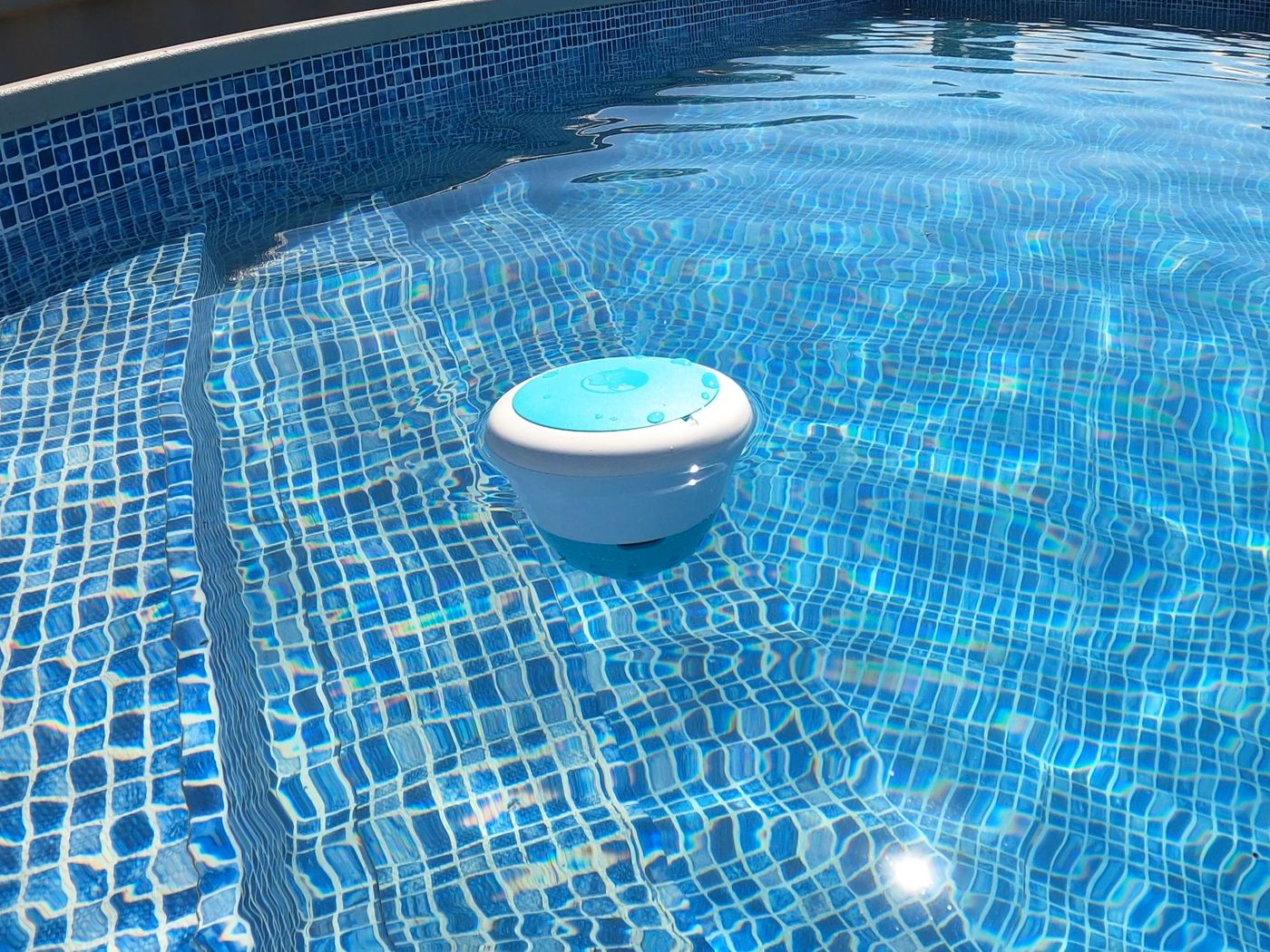
The ICO tracks ORP and pH hourly and sends it to your phone—no subscription, rechargeable battery. It takes the guesswork out of "is my chlorine doing its job." Once you've watched ORP move in real time, basic test strips feel like guessing.
Read our full review: ICO Pool Water Monitor Review
Want To Use Less Chlorine? (My Favorite Upgrade)
Here's the kicker: if you're constantly chasing low chlorine, the smartest fix isn't more chlorine—it's less demand.
A SpectraLight UV system installs inline after your filter and destroys pathogens, algae, and chloramines with ultraviolet light—the same technology used in Olympic pools and over 200 commercial aquatic centers. In my experience, it can cut chlorine demand by 80–90%. Lower demand means your free chlorine holds steady instead of crashing every few days.
Pair that with a quality robotic cleaner like the Dolphin Premier or the new Clear UV pulling organic debris out of the water before it breaks down, and you remove the root cause of most chlorine problems before they ever start.
Read our full review: SpectraLight UV Review
Common Mistakes To Avoid
-
Chasing the FC number while ignoring CYA. Match free chlorine to your stabilizer using the golden ratio.
-
Adding chlorine with high pH. Above 7.6, most of it does nothing. Fix pH first.
-
Dosing at noon. The sun eats it. Dose at dusk.
-
Reaching for tablets. CYA creep will eventually cost you a full drain-and-refill.
-
Not running the pump. Chlorine that doesn't circulate doesn't distribute.
Ignore the CYA-to-chlorine ratio and a low-FC pool turns green fast // The Pool Nerd
Frequently Asked Questions
How fast does liquid chlorine raise free chlorine?
Almost immediately. It's already in liquid form, so it disperses and starts working within minutes of circulating. You'll see the change on a test within an hour or two.
My chlorine reads fine but the water's still cloudy—why?
Two usual suspects: your pH is too high (chlorine is asleep), or your free chlorine is too low for your CYA. Check both before adding more chlorine. My guide on how to clear cloudy pool water covers the full fix.
Can I just use more tablets to keep chlorine up?
You can, but you'll pay for it. Every tablet adds CYA, and once CYA climbs too high, your chlorine has to climb with it. Liquid chlorine keeps your stabilizer flat.
How often should I check free chlorine?
Twice a week minimum during swim season—more in heat or after heavy use. A continuous monitor like the ICO beats spot-checking every time.
Is shocking the same as raising free chlorine?
Same chemical, bigger dose. Shocking is a large, deliberate spike to blast through contaminants; raising FC is the routine bump to hit your target. See my how to shock a pool guide for the full breakdown.
My Final Verdict
So what's my final verdict on raising free chlorine in your pool?
- Use liquid chlorine. No CYA, no calcium, fast and cheap.
- Match FC to CYA with the 7.5% golden ratio.
- Keep pH at 7.0–7.4 so your chlorine actually works.
- Monitor ORP (650–700 mV) for the real picture of your water.
- Cut demand with UV and a good robot, and you'll barely think about chlorine again.
Raising free chlorine is one of the simplest jobs in pool care once you know the secret: it's not about the chlorine number alone—it's about matching free chlorine to your CYA and keeping pH in line. Get those two right, and your pool stays clear with a fraction of the effort and cost. Use the pool chlorine calculator for the exact maintenance dose, or run the full water test through the pool chemistry calculator.
This information is for educational purposes only. Handling pool chemicals carries a risk of injury or property damage. Always read manufacturer labels and safety data sheets, and use this information at your own risk.
If you want to look into a smart monitor like the ICO or a UV system like the SpectraLight, head over to my deals page, where I post the best deals on top pool equipment.
Until then, enjoy that pool—I'll see you next time.

Comments
Loading comments…