
 Justin D.
A fixed speed pool pump can look like an easy way to save money. The controls are simple, the purchase price is often lower, and you do not have to program different speeds.
But I would compare variable speed before buying one. For a pool that runs daily, electricity costs can matter more than the initial discount. Depending on the pump and your location, a new single-speed installation may not be permitted.
Here are the options I would compare, what their specifications actually mean, and what to check before ordering.
Best Fixed Speed Pool Pumps at a Glance
These are specification-based shopping categories for installations where the exact pump is permitted and suitable.
Best Fixed Speed Pool Pumps at a Glance


| Best for | Pump | Listed voltage | Advertised maximum flow |
|---|---|---|---|
| Inground pools | Aquastrong PSP200-HV 2 HP | 220V | 8,917 GPH |
| Permanent above-ground pools | VIVOHOME 1.5 HP | 115V | 6,027 GPH |
| 2 HP dual-voltage setups | VIVOHOME 2 HP | 115V/230V | 6,800 GPH |
| 1.5 HP dual-voltage setups | Oswerpon 1.5 HP | 115V/230V | 6,600 GPH |
| Existing 220V setups | Aquastrong Riptide 2 HP | 220V | 8,586 GPH |
All flow figures are advertised maximums. Your filter, plumbing, valves, and other equipment determine actual operating flow.
MY QUICK VERDICT
If a fixed speed pump is permitted and properly sized for the installation, start with the Aquastrong PSP200-HV for an inground 220V setup or the VIVOHOME 1.5 HP for a suitable permanent above-ground pool. For most daily-use filtration systems, I would still compare a properly sized variable-speed pump first.
Fixed Speed vs Two Speed vs Variable Speed Pool Pumps
In this guide, fixed speed means single speed.
| Pump type | How it operates | Main tradeoff |
|---|---|---|
| Single speed | One operating speed whenever it runs | Simple controls, but no low-speed filtration |
| Two speed | Two preset speeds, usually high and low | Lower-speed savings, with limited adjustment |
| Variable speed | Adjustable speeds for different jobs | More control and potential savings, usually higher upfront cost |
A two-speed pool pump can reduce energy use when its low setting meets your circulation needs. If low is insufficient, you may end up using high most of the time. Variable speed gives you more room to match the flow to your pool.
Dual voltage is different from dual speed. A 115V/230V pump can be configured for either listed voltage; that does not give it two operating speeds.
My preference for most daily-use pools is variable speed. Start with my best variable speed pool pumps guide if you are deciding between them.
Are Fixed Speed Pool Pumps Legal in Your Area?
There is not a blanket nationwide ban on running an existing single-speed pool pump. Federal efficiency standards concern covered equipment and manufacture dates; they do not automatically require removal of a working, lawfully installed pump.
However, current federal rules require covered dedicated-purpose pool-pump motors rated 1.15 through 5 total horsepower, manufactured on or after September 29, 2025, to use variable-speed control. This includes motors inside complete pumps and separately sold replacement motors. Two speed does not satisfy that requirement.
That makes the advertised 1.5 HP and 2 HP models below worth checking carefully. Older inventory and excluded equipment categories need individual verification. Above-ground pools are not automatically exempt.
State requirements and city codes matter, too. California's current guidance requires applicable pumps and replacement motors to meet state and federal standards and appear in its certified-equipment directory.
Before buying, ask your city or county building department:
- Is this exact model permitted for my pool and replacement project?
- Do I need a permit or inspection?
- What efficiency documentation and electrical protections are required?
Have a qualified installer verify the motor label, total horsepower, manufacture information, circuit, grounding, bonding, and required GFCI protection.
An online listing or electrical safety mark alone does not establish compliance with every applicable rule.
Best for Inground Pools: Aquastrong 2 HP
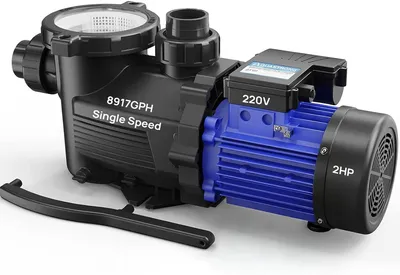
The Aquastrong PSP200-HV is a candidate for a compatible inground installation with 220V service. It advertises up to 8,917 GPH and includes a large strainer basket with a clear lid.
I like being able to check the basket without opening it. But I would not choose this pump simply because it has the highest advertised flow here. Your system needs to support the pump's actual operating flow, and the fittings need to match.
Best fit: A properly sized inground replacement where this exact model is approved.
Check the Aquastrong PSP200-HV on Amazon.
Best for Above-Ground Pools: VIVOHOME 1.5 HP
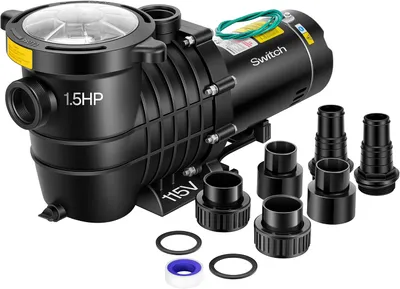
For a compatible permanent above-ground installation, this VIVOHOME 1.5 HP is the 115V option I would compare first. It advertises up to 6,027 GPH, with an on/off switch, removable basket, clear lid, and drain plug.
Those features make everyday access straightforward. However, 115V does not mean any nearby outlet is suitable, and 1.5 HP can still be excessive for a small filter.
Best fit: A permanent above-ground pool with appropriately sized equipment. Confirm explicit compatibility before considering it for a soft-sided or storable pool.
Check the VIVOHOME 1.5 HP pump on Amazon.
Best 2 HP Dual Voltage Pool Pump: VIVOHOME
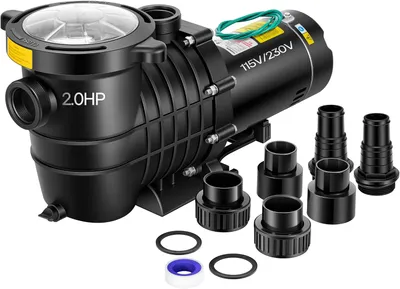
This model's main distinction is its 115V/230V configuration, with an advertised maximum of 6,800 GPH. It also has a removable basket, transparent lid, and thermal overload protection.
I would compare it when matching an existing electrical setup matters. Have the installer confirm the correct voltage configuration and circuit capacity before powering it.
Best fit: A compatible 2 HP replacement application needing voltage flexibility. It still operates at a single speed. The manufacturer excludes storable pools.
Check the VIVOHOME 2 HP pump on Amazon.
Best 1.5 HP Dual Voltage Pool Pump: Oswerpon
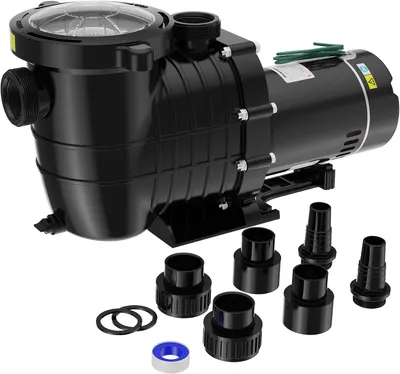
The Oswerpon 1.5 HP offers 115V/230V operation and an advertised maximum of 6,600 GPH. Its listing includes a strainer basket, drain plug, and several connector sizes.
The attached manual limits use to permanently installed pools. Also verify the selected motor's label: the listing contains mixed horsepower descriptions across its content.
Best fit: A verified, compatible 1.5 HP dual-voltage replacement. I would confirm the exact model and documentation before ordering.
Check the Oswerpon 1.5 HP pump on Amazon.
Best for Existing 220V Setups: Aquastrong Riptide
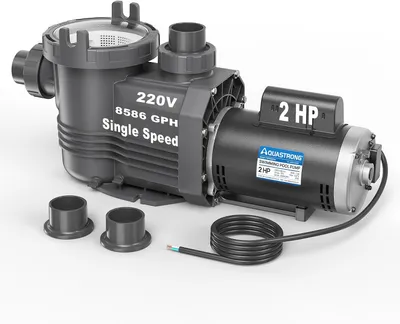
The Riptide single-speed model advertises up to 8,586 GPH on 220V, with a strainer basket and 1.5-inch and 2-inch adapter options.
I would compare its plumbing fit, documentation, and current price with the standard Aquastrong. The two maximum-flow ratings do not establish which pump will work better in your particular pool.
Best fit: An approved replacement for a correctly sized 220V system. Check the selected variant because the Riptide range also includes a two-speed model.
Check the Aquastrong Riptide 2 HP pump on Amazon.
Pros and Cons of Fixed Speed Pool Pumps
Pros
- Often a lower purchase price
- Straightforward operation with fewer settings
- Can work with a compatible external timer
- May suit a permitted replacement with modest operating hours
Cons
- No low-speed setting for ordinary filtration
- Electricity costs can outweigh the purchase savings
- Usually louder than variable speed running at low RPM
- Limited ability to adjust for different equipment needs
- Compliance can restrict new purchases and installations
What Does a Fixed Speed Pool Pump Cost to Run?
Use the pump's actual electrical draw, not its advertised horsepower.
For illustration, a pump drawing 1.5 kW, running 8 hours daily, at $0.15 per kWh, costs:
1.5 kW × 8 hours × 30 days × $0.15 = $54 per 30 days
A different setup drawing 0.35 kW for 12 hours daily costs:
0.35 kW × 12 hours × 30 days × $0.15 = $18.90 per 30 days
Those are example calculations, not measurements of these pumps or a promise of equivalent circulation. A variable-speed schedule must still provide the flow your pool equipment needs.
Use the pool pump runtime and energy calculator to compare measured wattage, runtime, and your local electricity rate.
How to Choose the Right Pool Pump
Match the whole system
Pool volume matters, but so do plumbing resistance, filter capacity, heater requirements, and suction-fitting ratings. Ask for the pump curve showing flow at your system's resistance.
Use the pool pump size calculator for a starting flow estimate, then compare that result with the exact pump curve and equipment limits.
Compare installed cost
Include electrical work, plumbing changes, fittings, permits, and ongoing energy use—not only the pump's purchase price.
Check replacement parts
Before choosing a cheap pool pump, look for available seals, baskets, lids, and clear warranty support.
Prime it correctly
Self-priming does not mean safe to run dry. Follow the manual's filling and startup instructions.
Common Questions
Is a 2 HP pool pump better than a 1.5 HP pump?
Only if your system needs and supports its performance. More horsepower alone does not make it the better match.
Can I put a single-speed pool pump on a timer?
Yes, with a correctly rated, compatible control. A timer changes when it runs; it does not reduce motor speed or establish code compliance.
What is best for energy savings?
For most pools needing daily circulation, I would choose a properly sized variable-speed pump and program it for the required flow.
My Final Verdict
If a fixed speed pump is permitted for your installation, start with compatibility: Aquastrong for an inground 220V setup, VIVOHOME 1.5 HP for a suitable permanent above-ground pool, and the dual-voltage options when that flexibility matters.
For most homeowners replacing their main filtration pump, I would put variable speed first. Compare the installed price and ongoing electricity costs using my best variable speed pool pumps guide.
Do not choose from horsepower or advertised maximum flow alone. Confirm the exact model, manufacture date, legal eligibility, voltage, pump curve, plumbing fit, and safe operating range before ordering.
This article contains Amazon affiliate links. The Pool Nerd may earn a commission on qualifying purchases at no extra cost to you. Product specifications, prices, availability, and legal requirements can change; verify the exact model before ordering.
Related Reading
- Best Pool Pumps
- Best Variable Speed Pool Pumps
- Best Two-Speed Pool Pumps
- Pool Pump Size Calculator
- Pool Pump Runtime and Energy Calculator
- Pool Pump Turnover Guide



Comments
Loading comments…