
 Justin D.
Most people use their pool pump the wrong way. Running a pump on high all day usually wastes electricity. You want it working harder when you're collecting leaves or running flow-dependent equipment, then backing off for the long filtration hours.
But how fast should your pump run in the first place?
Hey, I'm Justin, your resident pool aficionado. If you're staring at the pump screen wondering what numbers to enter, here's where I'd start: 1,600 RPM for everyday filtration and about 2,400 RPM for a short skimming boost.
Those numbers still need a schedule. When do you turn the pump up? When do you bring it back down? And what if your pump only has high and low settings?
Let's program a full day so you can see how it works.
If you're choosing a pump, see my best pool pumps for the top options by pool type and size.
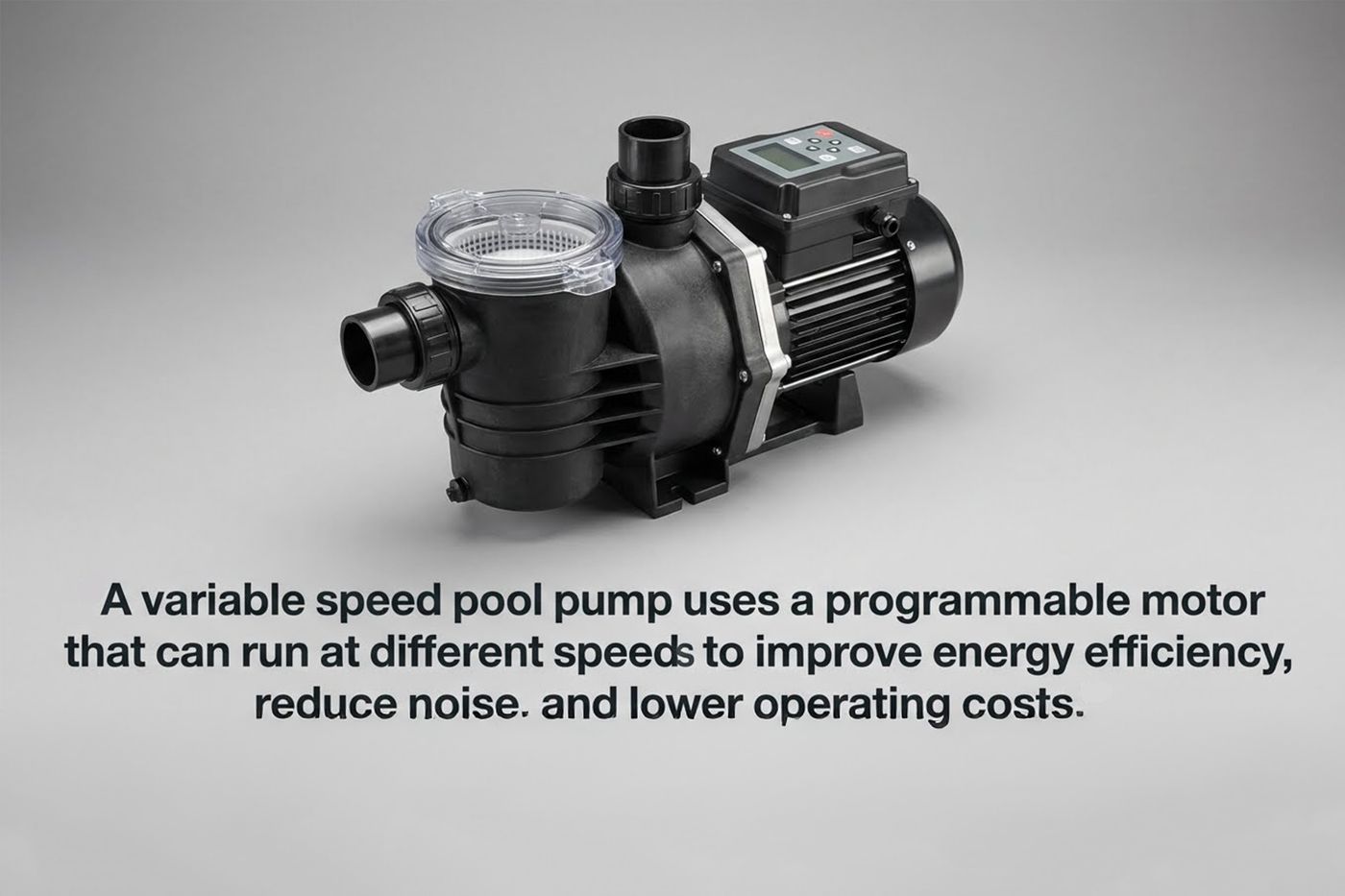
The Quick Answer
- Variable-speed pump: Start around 1,600 RPM for the long filtration period and about 2,400 RPM for short skimming periods.
- Two-speed pump: Run a long period on low with one or two shorter high-speed periods.
- Single-speed pump: Use the pump's actual GPM and the pool's volume to choose the runtime.
These are starting points for a residential pool—not universal settings. Confirm the actual flow and make sure every connected device works at the selected speed.
Pool Pump Quick Guide
| Your pump | What you control | Where to start |
|---|---|---|
| Variable speed | RPM and hours | 1,600 RPM for filtration; about 2,400 RPM for skimming |
| Two speed or dual speed | High, low, and hours | A long run on low with short high-speed periods |
| Single speed | Hours | Enough runtime for the pool's daily circulation needs |
The schedules below are starting examples for a 20,000-gallon residential pool. We'll check the water flow afterward to see whether the hours work.
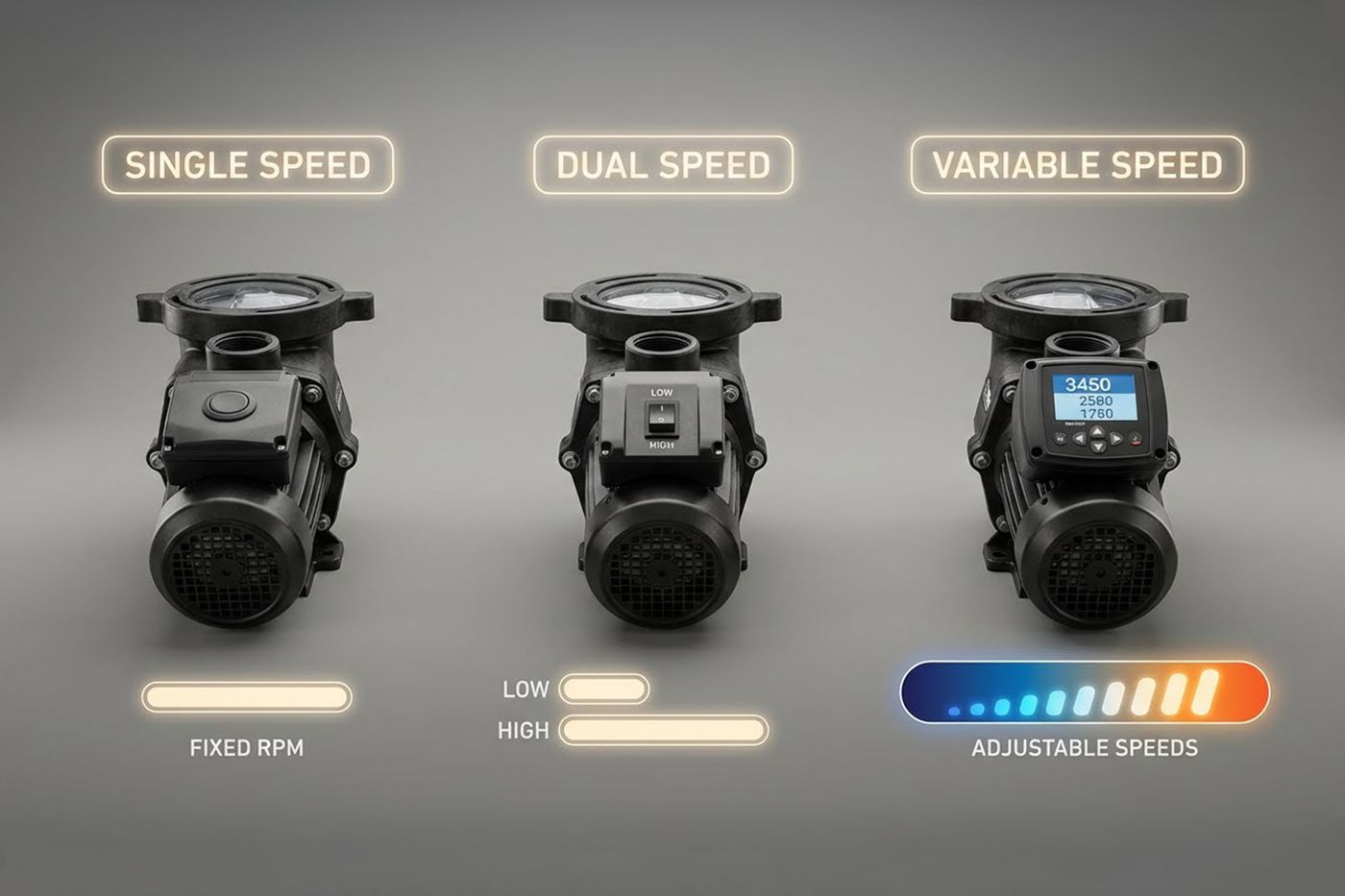
1. Variable-Speed Pumps Should Rise and Fall Throughout the Day
Think of the daily speed curve as a short higher section, a long lower section, and another boost only when needed. Your controller creates that curve with a few programmed steps. You don't need to keep changing the speed yourself throughout the day.
First, Let the Pump Prime
At startup, let the pump complete its normal priming cycle, which establishes steady water flow. It may briefly run faster than your scheduled setting. Don't force it down to 1,600 RPM before it has primed, and never run it dry.
Then Follow a Simple Daily Schedule
Here's one example to program into the timer:
| Time | Setting | What it does |
|---|---|---|
| 7–8 a.m. | About 2,400 RPM for 1 hour | Morning skimming after startup and priming |
| 8 a.m.–8 p.m. | About 1,600 RPM for 12 hours | The long, slower filtration period |
| 8–9 p.m. | About 2,400 RPM for 1 hour | An evening skim if debris has collected |
| 9 p.m.–7 a.m. | Off | A rest period if circulation and equipment needs are satisfied |
That gives you 12 hours of slower filtration and two hours of faster skimming. The evening boost is optional. If the surface is already clear, you can stay low or finish for the day once the pool's needs are met.
With both boosts, the pump runs for about 14 hours. Program the changes once and let the controller raise and lower the speed for you. Start with the pattern above, then adjust the hours using your measured flow and equipment needs.
When Should I Ramp It Up?
Raise the speed for a specific job:
- Stronger skimming
- Heating
- A suction cleaner
- A water feature
A heater may need the higher setting for its entire heating period—not just the one-hour skimming window.
Bring the speed back down when that job ends. A faster cleaning period doesn't mean the rest of the day needs the same speed.
If 1,600 RPM leaves everyday circulation weak, first check the baskets, filter, valves, and water level. Then raise the setting in 100–200 RPM steps until the system works properly. If everything works comfortably, you can try small reductions later.
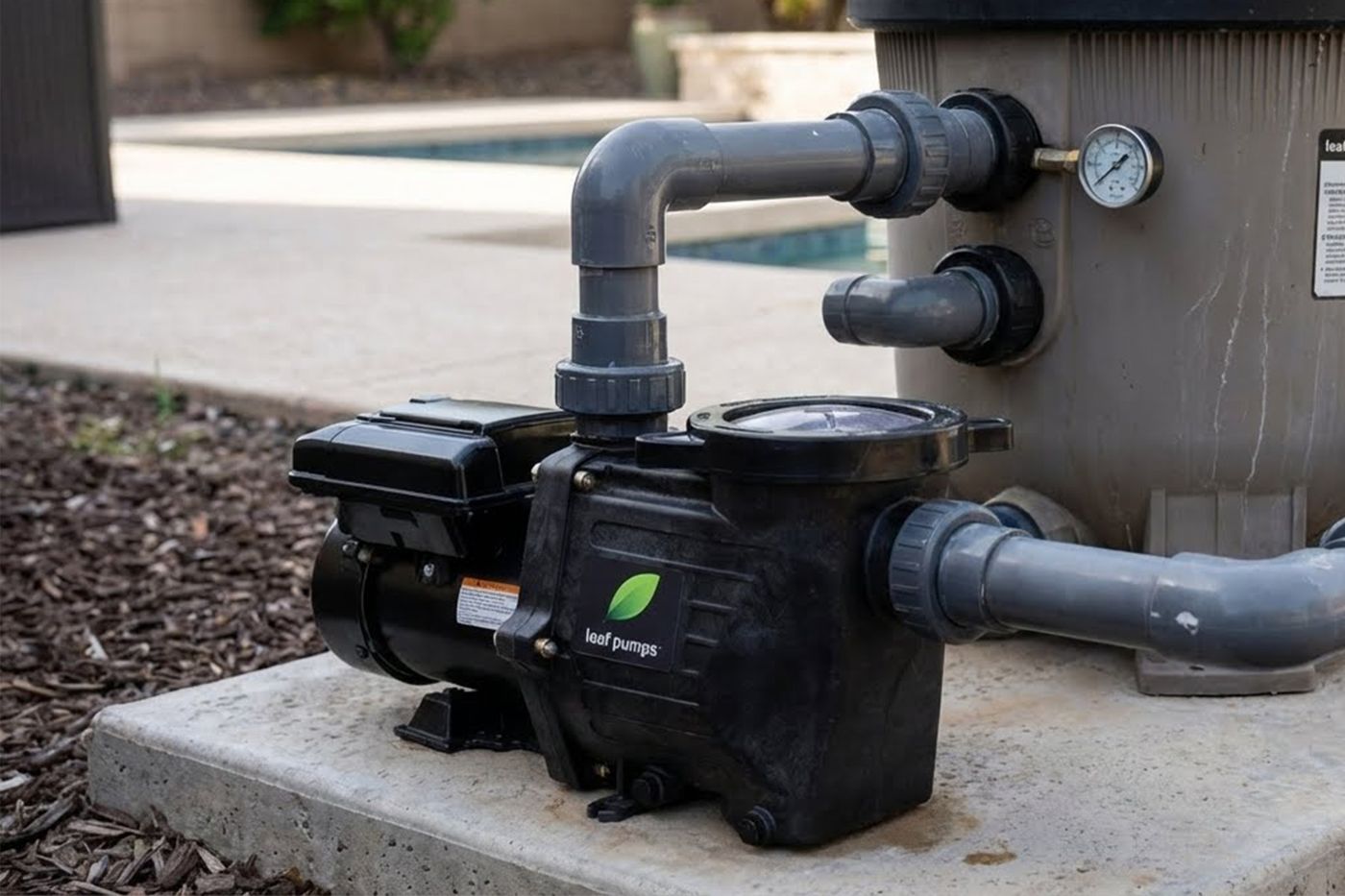
2. Two-Speed Pumps Need Separate High and Low Periods
A two-speed pump uses the same basic idea, but you get two choices instead of entering any RPM you want.
Common U.S. models run around 1,725 RPM on low and 3,450 RPM on high. Check your motor's label for its actual speeds.
For a two-speed pump, start with 12 hours on low and up to two hours on high:
- 7–8 a.m.: High, following the pump's startup and priming instructions
- 8 a.m.–8 p.m.: Low for routine filtration
- 8–9 p.m.: High if you need another skimming period
- Overnight: Off once circulation and equipment needs are covered
If the evening boost isn't needed, that becomes one hour on high and 12 hours on low.
Use a compatible two-speed timer or controller to make those changes automatically. A basic on/off timer may not switch between high and low.
If your heater or suction cleaner needs high speed, schedule enough high-speed time for that equipment to do its job. Don't limit heating to one hour just because that's what the skimming example uses.
3. Single-Speed Pumps Are All About Runtime
A single-speed pump gives you one operating speed. There's no low setting to select, so you control how long it runs.
For example, a 20,000-gallon pool with an actual flow of 50 GPM needs about six hours and 40 minutes for one calculated turnover. Seven hours would be a rounded starting point for that example.
The same pool at a lower flow needs more hours. That's why copying someone else's eight-hour timer setting can miss the mark.
4. Check That Your Schedule Moves Enough Water
I recommend roughly one to two daily turnovers as a starting range for a typical residential pool. One turnover means circulating an amount of water equal to the pool's volume through the main filtration system.
You don't need to do the math yourself. You just need your pool size and GPM, or gallons per minute. Get the flow from a properly installed meter; some pumps also display a GPM estimate.
Runtime Cheat Sheet for One Turnover
| Pool size | At 30 GPM | At 50 GPM |
|---|---|---|
| 10,000 gallons | About 6 hours | About 3½ hours |
| 15,000 gallons | About 8½ hours | About 5 hours |
| 20,000 gallons | About 11½ hours | About 7 hours |
| 25,000 gallons | About 14 hours | About 8½ hours |
These are times at one steady flow, rounded up to the next half hour. For several speed periods, count the water moved during all of them.
Here's how the example schedules work:
- Variable speed: If 1,600 RPM delivers 30 GPM and 2,400 RPM delivers 50 GPM, the 12-hour-plus-two-hour schedule moves about 27,600 gallons.
- Two speed: If low delivers 30 GPM and high delivers 60 GPM, that schedule moves about 28,800 gallons.
Both are around 1.4 calculated turnovers in a 20,000-gallon pool. Those flow readings are examples—not a conversion chart for every pump.
Not moving enough water? Extend the low-speed period first, provided that setting supplies useful flow and supports the equipment that's running. If you run out of available hours, increase the filtration speed or add suitable higher-flow time.
Use the free pool pump runtime calculator to work out the hours. For several speed periods, use the variable-speed pool pump schedule calculator.
Turnover doesn't mean every drop passed through the filter exactly once, and it doesn't replace chlorine and pH testing.
Does This Change for Inground and Above-Ground Pools?
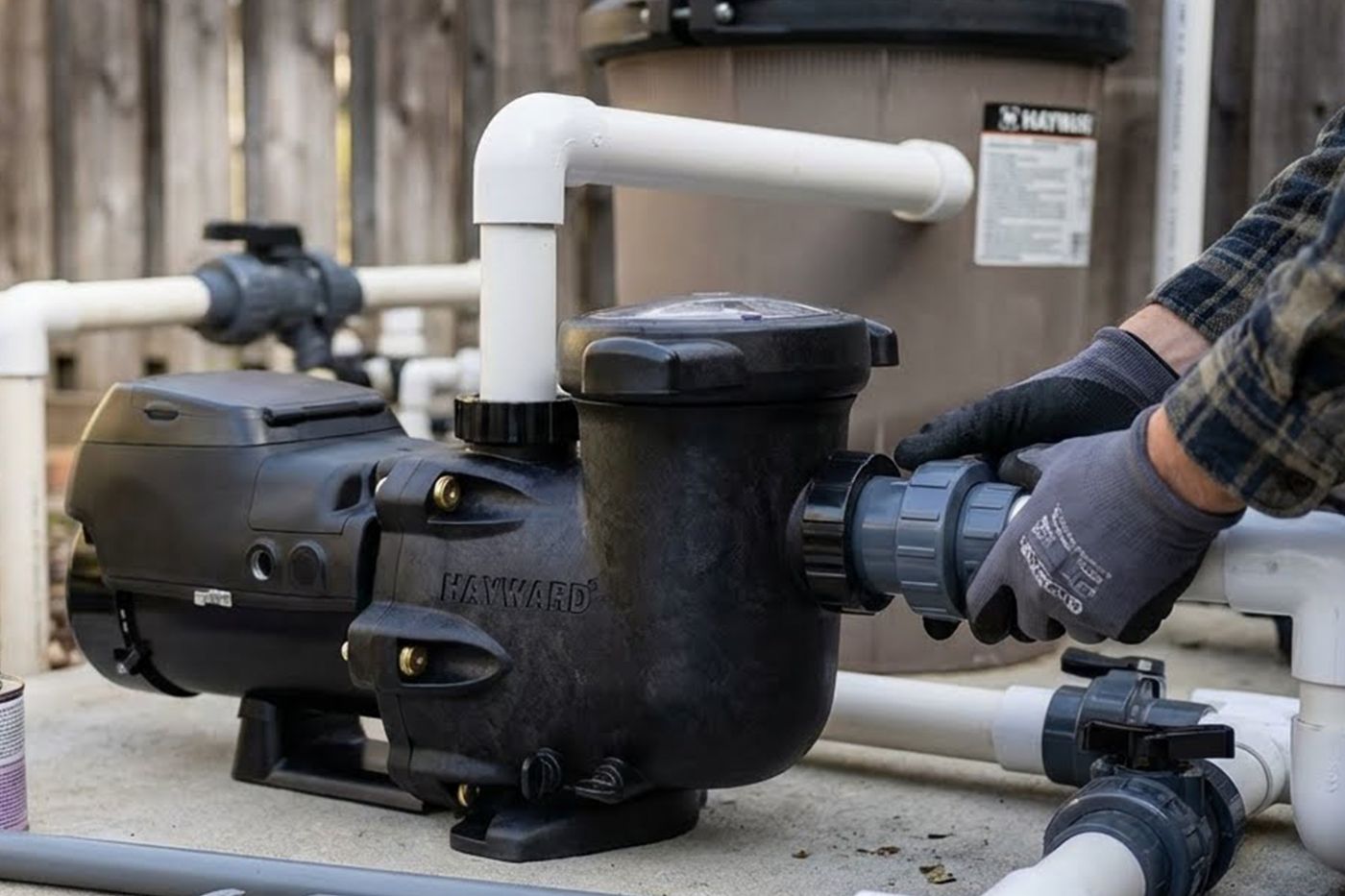
Inground pools: Use the same schedule approach, with separate settings for an attached spa, heater, or water features. Time spent circulating only an isolated spa doesn't count toward the main pool's turnover.
Above-ground pools: Check the pump type first. Fixed speed means adjusting hours; variable or two speed means scheduling the available speeds. A smaller pool often needs fewer gallons circulated, but smaller pumps and narrow hoses also affect flow.
Fiberglass, vinyl, and gunite surfaces don't need their own RPM rules. Pump type, water volume, plumbing, and connected equipment do the deciding.
A Few Checks Before You Save the Schedule
- Saltwater pool: The cell needs enough flow and enough operating time to make the chlorine your pool uses. A flow warning needs attention; never bypass the flow switch.
- Heater or cleaner: Follow its specified flow range, including maximum limits. A self-contained robotic cleaner runs its own cleaning system, so its cycle doesn't require you to raise the main pump's speed.
- Running overnight: A variable-speed pump can run continuously if that suits the pool. You don't have to use the off period above. Compare total daily electricity use and account for heating and chlorination.
- Backwashing: Use the filter's required flow and turn the pump off before moving a multiport valve.
- Freezing weather: Use a proper freeze-protection or winterization plan. A low-speed overnight setting cannot guarantee every pipe is protected.
Frequently Asked Questions
Is 1,600 RPM Enough for a Pool Pump?
It can be a good starting point for everyday filtration on a variable-speed pump, but RPM alone doesn't establish flow. Confirm that water circulates properly and that the skimmers, salt cell, heater, and other active equipment receive the flow they require.
Should I Run My Pool Pump on High or Low?
Use low or moderate speed for the long filtration period, then use high speed for a specific job such as priming, stronger skimming, heating, a suction cleaner, or a water feature. Bring the speed back down when that job ends.
Can I Run a Variable-Speed Pump 24 Hours a Day?
Yes. Continuous low-speed operation can be efficient when the setting provides useful circulation and supports active equipment. Compare the complete schedule's daily electricity use with a schedule that includes an off period.
How Long Should a Single-Speed Pool Pump Run?
Divide the pool's volume in gallons by the pump's actual GPM, then divide by 60 to calculate the hours required for one turnover. Adjust from there for water quality, debris, sanitizer production, and equipment requirements.
My Final Verdict
So what's my final verdict on what RPM your pool pump should run at?
For a variable-speed pump, start around 1,600 RPM for the long filtration run and about 2,400 RPM for short skimming periods. Let the controller handle priming and the scheduled changes.
For a two-speed pump, the example is 12 hours on low and one to two hours on high. For a single-speed pump, choose the hours using its actual flow.
Check the schedule against roughly one to two daily turnovers, add any equipment time needed, and keep testing the water.
You're giving the pump a routine: work harder when there's a reason, slow down for the long run, and let the timer take care of it.
If this helped you, make sure to subscribe. I test pool gear, review what's actually worth buying, and help you avoid wasting money on junk.
For my current best picks and deals on pool equipment and chemicals, head to The Pool Nerd deals page.
Until next time, keep nerding out and enjoy that pool.
Related Reading
- Variable-Speed Pool Pump Schedule
- Pool Pump Turnover
- How Long to Run a Pool Pump
- Best Pool Pumps
- Best Variable-Speed Pool Pumps
- Best Two-Speed Pool Pumps



Comments
Loading comments…