
 Justin D.
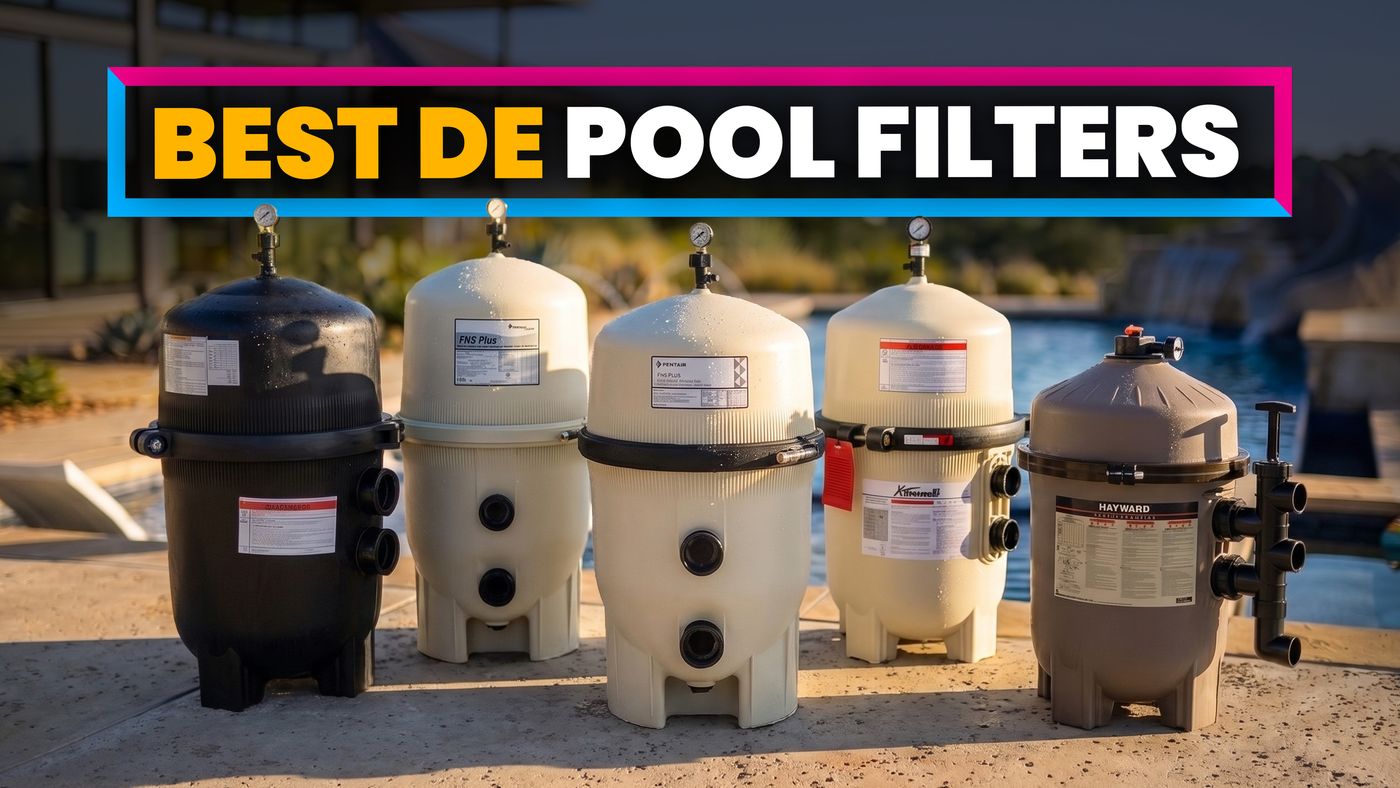
My top pick for a larger inground pool is the Hayward ProGrid W3DE6020. Its 60-square-foot filtration area gives it more room to collect dirt, making it the upgrade I'd consider when a smaller filter needs frequent cleaning. For a moderate-size pool, I'd start with the ProGrid W3DE3620. For a smaller installation where I want a bump-handle cleaning system, I'd look at the Perflex W3EC65A.
Above-ground owners need one extra check. Hayward markets all three models for inground pools, so a conversion requires confirmation that the filter suits your entire system.
Here's how I'd narrow down the choices, size the equipment, and decide whether DE is worth the maintenance. If you are still weighing DE against cartridge and sand, my complete guide to pool filters covers the differences in depth.
Why Choose a DE Pool Filter
DE stands for diatomaceous earth, a fine filtration powder that coats the filter's internal elements. Water passes through that coating, which captures small suspended particles.
Fine filtration is the main attraction. Manufacturer claims commonly place DE filtration around 2–5 microns, depending on the design. That helps explain why DE appeals to owners who want to remove fine dust and polish their pool water. The rating describes particle capture; it doesn't guarantee how quickly an entire pool will clear.
The tradeoff is handling powder and maintaining the filter. A cartridge filter avoids DE dosing, while a conventional sand filter generally offers coarser filtration. I'd choose DE when fine filtration matters enough to justify the extra upkeep.
Best DE Filters by Pool Size
Best DE Pool Filters at a Glance


These are my shopping starting points, not manufacturer gallon limits. Pump flow, plumbing, operating time, and debris load determine the final fit.
| Pool size or installation | My starting pick | Filter area |
|---|---|---|
| Smaller inground pools, roughly 5,000–15,000 gallons | Hayward Perflex W3EC65A | 27 sq. ft. |
| Medium inground pools, roughly 15,000–25,000 gallons | Hayward ProGrid W3DE3620 | 36 sq. ft. |
| Large inground pools, roughly 25,000–40,000 gallons | Hayward ProGrid W3DE6020 | 60 sq. ft. |
| Medium pools with heavy debris or frequent filter cleaning | Hayward ProGrid W3DE6020 | 60 sq. ft. |
| Permanent above-ground pools | Evaluate the W3EC65A only after installer confirmation | 27 sq. ft. |
Filter areas are Hayward's published specifications. The gallon bands are editorial recommendations.
For pools over 40,000 gallons, get a system-specific sizing calculation. A filter's advertised turnover volume alone isn't enough to choose it. My pool filter size calculator will give you a minimum DE filter area from your pump's actual flow.
MY QUICK VERDICT
Start with the ProGrid W3DE6020 for a large inground pool or any pool where the current filter needs cleaning too often. The ProGrid W3DE3620 is the sensible medium-pool choice, and the Perflex W3EC65A fits smaller inground pools where bump-handle regeneration between full cleanings appeals to you.
Hayward ProGrid W3DE6020: Best for Large Inground Pools
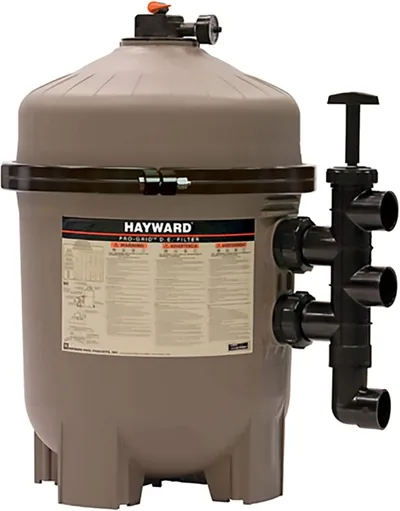
The W3DE6020 is the filter I'd put first on the shortlist for a 30,000-gallon inground pool. I'd also consider it for a smaller pool that collects substantial dust or needs its existing filter cleaned too often.
Its 60 square feet of filtration area is about 67% more than the 36-square-foot ProGrid. Within the same filter family, that additional area gives incoming dirt more surface to spread across. I see that as the main reason to upgrade: more capacity before accumulated debris restricts flow. It doesn't mean the larger model has a finer micron rating.
Hayward uses a reinforced polymer tank and a clamp that allows access to the internal grid assembly without disconnecting the plumbing. The filter supports backwashing through a compatible control valve, with periodic grid cleaning still part of ownership.
The tradeoff is size. The tank is approximately 46.5 inches tall, compared with 34.5 inches for the W3DE3620. You'll also need working clearance to remove and service the elements. Measure the equipment area before ordering.
What I'd check before buying: The W3DE6020 listing does not include a control valve. Budget for a compatible DE backwash valve, plumbing, and installation, and confirm whether your existing valve can be reused.
I'd choose this model when the additional capacity solves a maintenance problem or gives a large pool a better margin. A small pool with modest debris may not need it.
Check the Hayward ProGrid W3DE6020 on Amazon.
Hayward ProGrid W3DE3620: Best for Medium Inground Pools
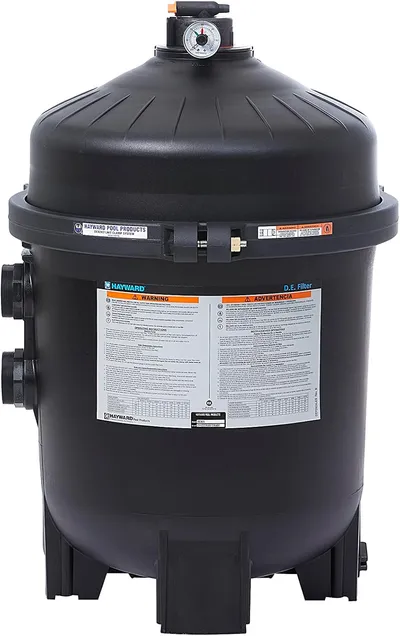
The W3DE3620 is my starting pick for a conventional DE setup on a roughly 15,000–25,000-gallon inground pool, provided the pump and plumbing are properly matched.
It has 36 square feet of filtration area and uses the same basic vertical-grid design as the larger ProGrid. That makes it a sensible option when you want DE filtration and conventional backwashing without the taller 60-square-foot tank.
I'd favor this model for a moderately used pool with manageable debris. If the pool sits under trees, collects frequent windblown dirt, or already needs constant filter attention, I'd price the W3DE6020 alongside it. The larger filter may be worthwhile even when the smaller one can handle the required flow.
Be careful when comparing package prices. This model also comes without the control valve, and it needs a separate circulation pump. A low tank price doesn't tell you the total installed cost.
The decision is straightforward: choose the W3DE3620 when its capacity fits your pool and cleaning routine. Move up to the W3DE6020 when additional area is worth the space and expense.
Check the Hayward ProGrid W3DE3620 on Amazon.
Hayward Perflex W3EC65A: Best for Smaller Inground Pools and Bump-Handle Maintenance
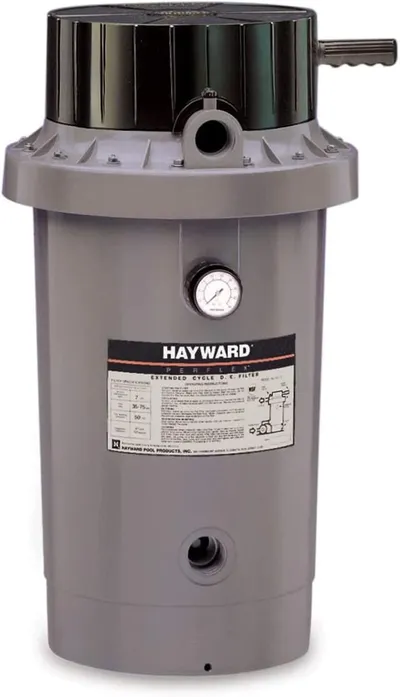
The Perflex W3EC65A approaches DE filtration differently. It uses DE-coated Flex-Tubes and a bump handle that redistributes the existing powder and collected dirt to restore filtering surfaces. It has 27 square feet of filtration area; the "65" in the model number doesn't mean 65 square feet.
This is the model I'd evaluate for a smaller inground pool when I prefer the Perflex maintenance routine. Ordinary regeneration doesn't require conventional backwashing, which can reduce water loss between full cleanings.
The distinction between bumping and cleaning matters. Bumping doesn't remove the dirt from the tank. Eventually, the filter needs draining, flushing, and fresh DE. It also needs deeper element cleaning when deposits build up. Don't add a full new charge of powder after every bump.
I wouldn't choose it just because the smaller tank looks convenient. A heavily used pool or one with a large debris load may benefit more from the additional area of a ProGrid.
For a permanent above-ground pool, this is the model I'd have an installer evaluate first. Hayward lists it for inground pools, so confirm the complete installation before ordering.
Check the Hayward Perflex W3EC65A on Amazon.
Choosing a DE Filter for an Above-Ground Pool
Above-ground pools include permanent installations with substantial equipment and small pools designed to be dismantled. The right recommendation depends on which one you own.
For a permanent above-ground pool, the Perflex manual's flexible-hose and below-waterline provisions make some retrofits plausible. That is an inference, not an explicit above-ground designation. Have the installer verify pump flow, connections, equipment placement, and the isolation valves required for below-waterline servicing.
For a small seasonal or soft-sided pool, I wouldn't buy one of these standalone filters assuming it will connect to the original pump. The Perflex manual specifies permanently installed pools for the associated Hayward pumps and excludes storable pools.
If you want an uncomplicated replacement, choose a complete filtration system explicitly approved for your pool. The Intex and Hayward above-ground packages in my best pool filters and best sand pool filters guides are the kind of system I mean. The DE models covered here don't provide a universal above-ground solution. Pool volume alone can't establish compatibility.
How to Choose the Right DE Pool Filter
Start With Pool Volume
Use the pool builder's volume estimate when available. For a rectangular pool, multiply length by width by average water depth, all in feet, then multiply by approximately 7.48 to estimate gallons. My pool volume calculator handles the odd shapes.
For example, a 16-by-32-foot pool averaging 4.5 feet deep holds roughly 17,200 gallons. I'd compare the W3DE3620 and W3DE6020, with debris load and cleaning preferences helping decide between them.
Check Actual Pump Flow
Filter sizing depends on gallons per minute, not pump horsepower alone. The pump's operating speed and resistance through the plumbing determine actual flow. Hayward's ProGrid specifications specifically tie performance to pump and piping hydraulics.
As a planning example, circulating a volume equal to a 20,000-gallon pool over eight hours averages approximately 42 GPM: divide 20,000 by 480 minutes.
That calculation doesn't prescribe an eight-hour schedule or prove every drop has been filtered. Actual operation must also support the pool's skimming, sanitation equipment, and other circulation needs.
Have the installer check the pump's flow across the settings you'll use against the exact filter's label and manual. A large filter doesn't automatically require a larger pump. If you are sizing both at once, start with the pool pump size calculator.
Allow Room for Debris
Two pools with the same volume can have very different maintenance demands. An open backyard pool used occasionally may place less demand on its filter than one exposed to windblown dirt and heavy swimming traffic.
I'd lean toward extra filtration area when cleaning frequency is already a frustration. Keep skimmer and pump baskets clean, and remove large debris before it reaches the filter.
Check Plumbing and Service Space
Confirm the connections for the selected valve and filter, plus enough clearance to remove the lid and elements. ProGrid's 2-inch internal piping doesn't mean every available valve has identical external connections.
For a replacement, have the installer check the existing valve and plumbing before assuming they're reusable. Buying the same brand doesn't establish compatibility.
Compare the Complete Ownership Cost
Include the filter, valve where required, installation, powder, replacement elements, and the water used during cleaning. Compare actual quotes instead of assuming the smallest tank is the best value.
Also choose a maintenance routine you'll follow. I'd rather have a correctly sized filter that's serviced consistently than extra capacity with neglected elements.
DE Filter Maintenance
Record the clean pressure after the correct DE charge has been added. On a variable-speed pump, compare readings at the same speed.
For ProGrid, Hayward calls for backwashing when pressure rises 8–10 PSI above the clean baseline. Shut off the pump before changing valve positions, then follow the valve-specific cleaning and DE recharge instructions.
For Perflex, the manual calls for regeneration when pressure rises 7–10 PSI above its clean baseline. Stop the pump before using the bump handle and follow the manual's procedure. If regeneration no longer restores useful operation, the filter needs cleaning.
The specified full charges are 4.5 pounds for W3DE3620, 7.5 pounds for W3DE6020, and 6 pounds for W3EC65A. Follow the exact model's instructions for startup, full cleaning, and replenishment; don't assume one dosing shortcut applies to every DE filter.
Use powder intended for pool DE filtration and follow its handling directions to avoid breathing dust. Plan for collecting and disposing of used DE according to local requirements. Before opening any filter, shut off power, prevent an automatic restart, and release pressure according to its manual. Never loosen a pressurized tank clamp. The general cleaning procedure, and the safety steps that go with it, are in my complete guide to pool filters.
Common Questions About DE Pool Filters
Can I use a DE filter with a saltwater pool?
A compatible DE filter can be used with saltwater. The Perflex manual expressly covers fresh and saltwater pools. The filter removes suspended particles; the salt chlorine generator provides sanitizer.
Does a bigger DE filter make the water clearer?
Additional area can improve dirt-holding capacity and extend the interval between cleanings. Within the ProGrid family, moving from 36 to 60 square feet mainly buys capacity. It doesn't establish a finer filtration rating.
Does DE filtration replace chlorine?
DE filtration doesn't replace chlorine. Keep testing the water, maintaining the appropriate sanitizer level, and managing water balance. Clear-looking water alone doesn't establish that a pool is properly sanitized.
My Final Verdict
The Hayward ProGrid W3DE6020 is my strongest pick for large inground pools and for owners who want additional filtration capacity. I'd also consider it on a medium pool when frequent cleaning makes the smaller option less attractive.
The ProGrid W3DE3620 is the sensible starting point for a medium inground pool with moderate debris. The Perflex W3EC65A earns its place for smaller inground installations and owners who prefer bump-handle regeneration between full cleanings.
For a permanent above-ground pool, I'd evaluate the Perflex with an installer before buying. For a small seasonal pool, I'd choose equipment explicitly approved for that pool rather than force one of these filters into the setup.
I'd choose the filter that matches your pump, has enough area for your pool's debris, and fits a cleaning routine you'll actually follow. If DE sounds like more upkeep than you want, the cartridge picks in my best pool filters guide are where I would look next.
This article contains Amazon affiliate links. The Pool Nerd may earn a commission on qualifying purchases at no extra cost to you. Product specifications, prices, and availability can change; verify the exact model before ordering.
Related Reading
- Pool Filters: The Complete Guide
- Best Pool Filters
- Best Sand Pool Filters
- Pool Filter Size Calculator
- Pool Volume Calculator
- Pool Pump Size Calculator
- Best Pool Pumps

Comments
Loading comments…