
 Justin D.
Most pool maintenance companies are quietly ruining your water — and you're paying them two hundred bucks a month to do it.
If you're wondering whether hiring a pool service is actually worth the money, or if you should just learn to do it yourself, you're in the right place. Because the answer depends on a few things that most pool guys hope you never ask them about.
Hey there, and welcome back to The Pool Nerd. I'm Justin, your resident pool aficionado. Today we're covering pool maintenance companies: whether they're worth the money, how to find one that isn't going to wreck your chemistry, and how to easily do it yourself. We're going to cover typical prices, the massive red flags that should send you running, and the exact interview questions I would ask before letting anyone near my water.
Cut Pool Costs: What You Need Checklist
Two chemicals do the heavy lifting—liquid chlorine and acid—then a real monitor, a strong corded robot, and UV keep your sanitizer from working overtime so you buy less of everything.
Primary sanitizer — liquid, multipack shipped Champion Pool Shock (4 Pack Liquid Chlorine)

Champion Pool Shock (4 Pack)
What it is: A case of liquid pool chlorine (sodium hypochlorite)—not cal-hypo granules. Confirm strength on the listing and jug label (often around 10–12.5%).
Why you need it: Same upside as other liquid shock: no CYA from the product, easy to pour with the pump running—useful to keep stocked for openings, algae pushes, storms, or parties.
How to use: Treat it like any liquid shock (pour with circulation; big doses still work best at dusk). Store cool and shaded; opened jugs lose strength over time—plan to use them within a few weeks.

Champion Muriatic Acid
What it is: Dilute hydrochloric acid—standard for lowering pH and, with the right method, total alkalinity.
Why you need it: High pH destroys chlorine efficiency. Always follow the label; never mix acid with chlorine.

Ondilo ICO Pool Water Monitor
What it is: A floating smart monitor that samples pH, ORP (sanitizer effectiveness), and temperature on a schedule and sends trends to your phone.
Why you need it: You still need a real drop kit for parameters the ICO doesn’t replace (like TA and CYA), but hourly ORP/pH catches drift and dosing mistakes long before weekly strip checks do.

Dolphin Premier
What it is: A corded robotic cleaner with dual scrubbing brushes and strong filtration—built to pull debris and biofilm off surfaces so your sanitizer is not fighting mulch and leaves first.
Why you need it: Shock oxidizes what is in the water—leaves, pollen, and biofilm burn sanitizer too. A strong robot pulls debris off surfaces and into the filter so your chlorine works on algae and organics, not mulch. See the Dolphin Premier review for why it is our test-pool scrubber of choice.

SpectraLight UV
What it is: Inline UV-C on the return line—knocks down pathogens and helps with chloramines as water passes the lamp.
Why you need it: Cleaner water with less organic load means you reach for shock less often while staying comfortable. Read the full SpectraLight review for sizing and install notes.

Taylor K-2005 Test Kit
What it is: A professional drop (titration) kit for chlorine, pH, alkalinity, calcium hardness, and cyanuric acid.
Why you need it: You can’t SLAM or balance blind—especially CYA, which handcuffs chlorine. This kit gives numbers you can trust, not strip guesswork.
The Short Answer
Here's the bottom line: a good pool service is worth every single penny if you highly value your time, you travel often, or you just want nothing to do with weekly pool chores. Expect to pay somewhere between $150 and $300 a month for full weekly service in most parts of the country.
But a bad pool service is significantly worse than having no service at all. You will pay them every single month while your water quietly drifts toward a massive chemistry problem that will cost you hundreds of dollars to fix. The difference between the two comes down to a few interview questions you'll know exactly how to ask by the end of this article.
For a personalized DIY-versus-service budget, use the pool maintenance cost calculator. It adds chemicals, pump electricity, heating, water, seasonal work, service, and an equipment reserve instead of comparing the service fee in isolation.
What a Pool Service Does (and What It Costs)
First, what are you actually paying for?
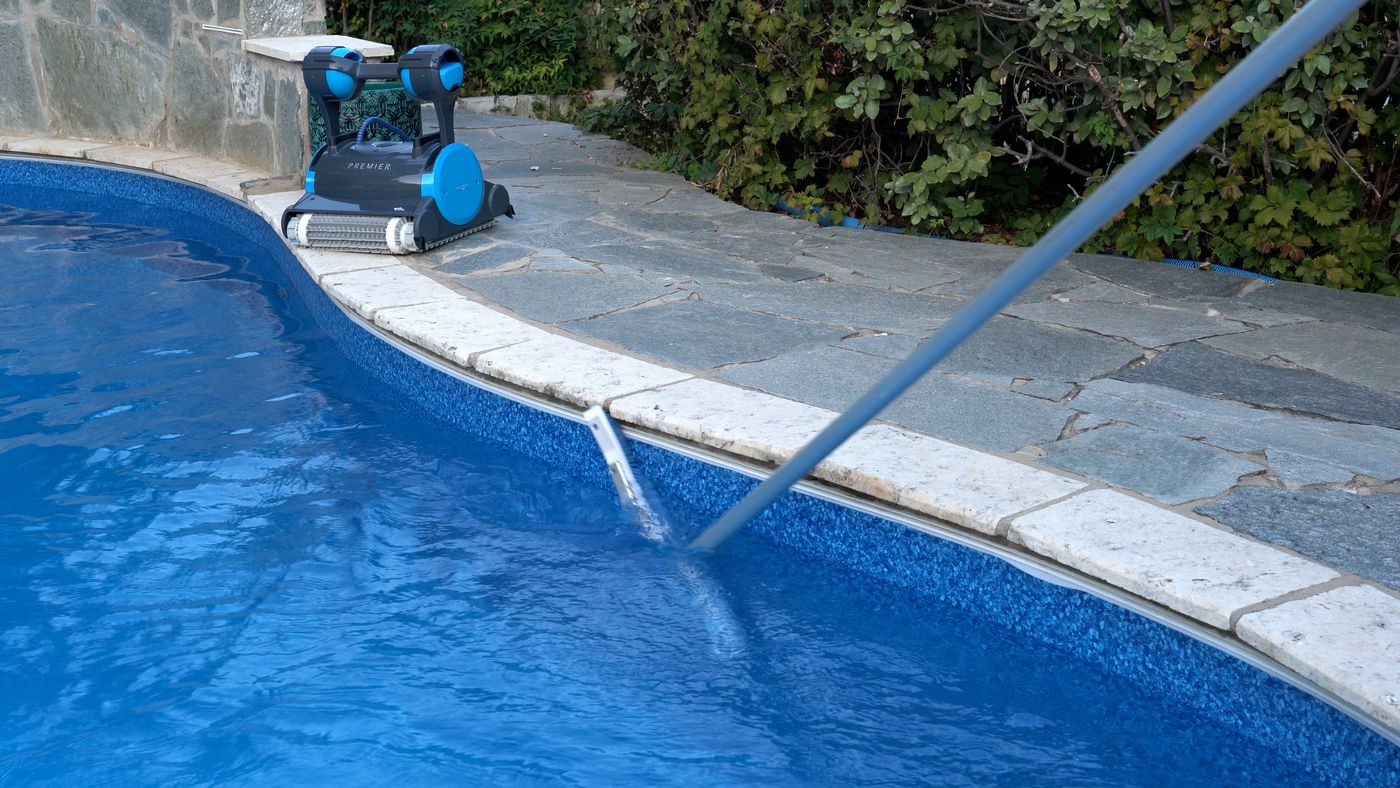
A full-service weekly visit should include testing the water, balancing the chemicals, emptying the skimmer and pump baskets, skimming the surface, brushing the walls and steps, vacuuming or checking your robotic cleaner, and giving the equipment pad a quick visual inspection.
This may or may not include the cost of chemicals. Some companies supply the chemicals and bake it into the monthly fee, while others let you buy your own and just add them for you. Also, filter cleanings and seasonal openings and closings are almost always separate line items, so be sure to ask.
There's also a cheaper tier called "chemical-only" service, where a tech just tests your water, doses it, and leaves the actual cleaning to you. That usually runs about $80 to $150 a month. It's a really smart middle ground if you don't mind brushing and skimming, but you hate doing math. When combined with a robotic pool cleaner and a solar skimmer like the Betta SE, it's a great option if a local company offers it.
Here's what typical pricing looks like:
| Service | What You Get | Typical Cost |
|---|---|---|
| Full weekly service | Testing, chemicals, skimming, brushing, baskets, equipment check | $150–$300/month |
| Chemical-only service | Testing and dosing — cleaning is on you | $80–$150/month |
| Green-to-clean recovery | One-time rescue of a swampy pool | $150–$750 |
| Deep filter clean | Full teardown and cleaning | $75–$150 |
| DIY | Liquid chlorine + muriatic acid, 30–45 min/week | $20–$50/month |
High-cost metros can easily push past the top of those ranges.
Get the Chemical Pricing in Writing
Here's the detail that bites people in July: "chemicals included" with a tiny asterisk is exactly where surprise summer invoices are born. Before you sign anything, get the chemical pricing — and what happens during peak summer demand — in writing.Are They Worth It?
Once your water is dialed in, do-it-yourself maintenance takes maybe 30 to 45 minutes a week. The chemicals you actually need — liquid chlorine and muriatic acid — cost maybe $20 to $50 a month depending on your pool size.
A full-service company will run you roughly $2,000 to $3,500 a year. So you're paying a couple of thousand dollars a year to buy back about thirty hours a season, plus the mental relief of never having to think about it.
For some of you, that trade is an absolute no-brainer. If you travel, own a rental property, or you just know deep down you're going to ignore the pool, hire it out. A neglected pool costs far more than a serviced one when you factor in algae recovery, wrecked pumps, and a plaster finish that ages out a decade early.
But if you have forty minutes a week and a little curiosity, keep your money. I'll show you the DIY route in a minute — and if you want proof of how cheap a well-run pool can be, check out how I cut my pool costs by over 70%.
The Dirty Little Secret
Before you call anyone, you need to know the industry's dirty little secret. The biggest problem with pool services isn't the price tag. It's the tablets.
Most route companies run trichlor tablets in a floater because they're cheap, and they keep feeding chlorine into the water between their weekly visits. Sounds great, right?
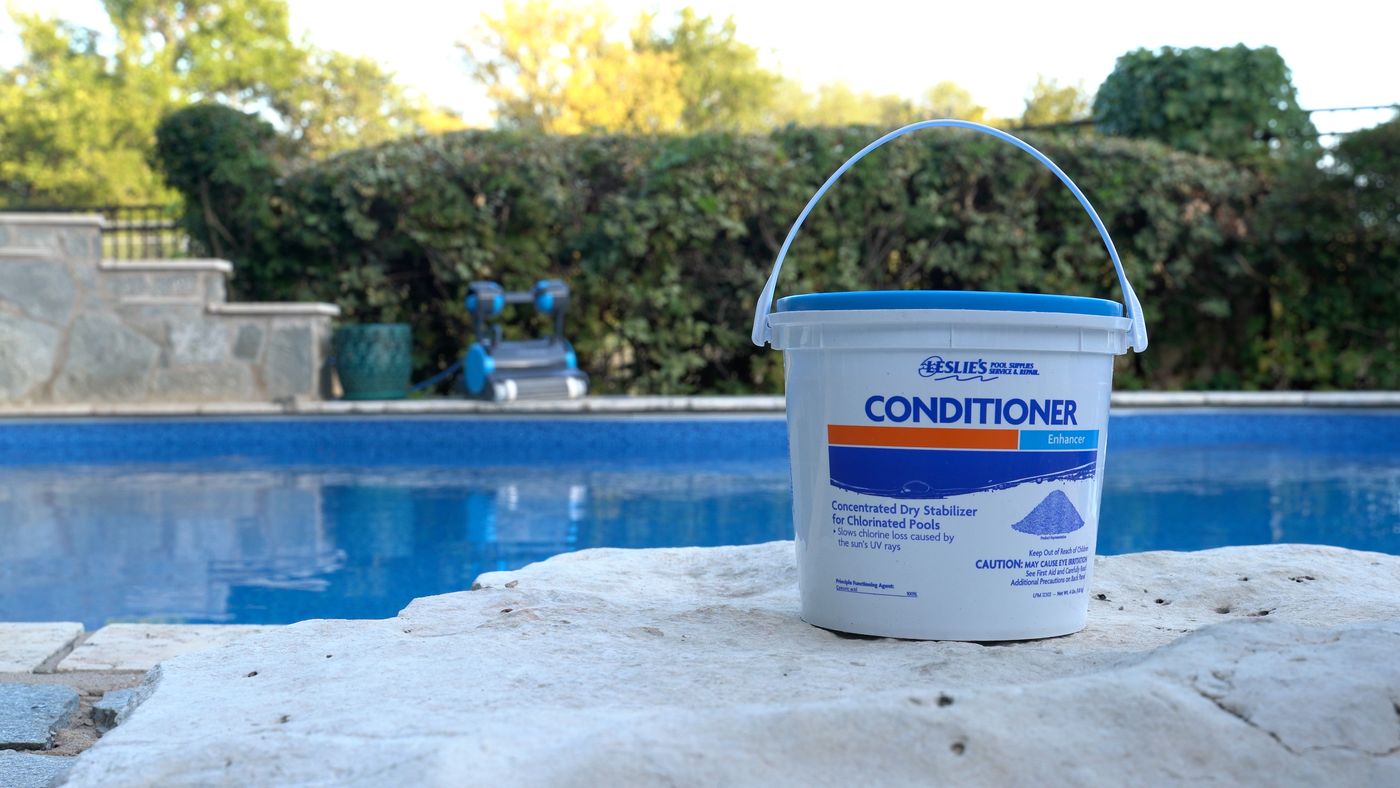
Here's the catch: every single tablet also adds Cyanuric Acid — or stabilizer — to your water. And stabilizer never leaves on its own. Month after month, especially in long, hot seasons down here in Texas, that CYA level climbs. And as it climbs, your chlorine gets weaker and weaker. So they start adding more and more chlorine to get to the same levels of sanitation — all while charging you more.
The 7.5% Rule
The golden rule I run on my own test pool is that your free chlorine needs to sit at roughly 7.5 percent of your stabilizer level to actually sanitize. If a pool guy pushes your CYA up to 100, you need 7 to 8 parts per million of chlorine just to keep the water safe. Most services blindly hold it at 3. Run your own numbers with my pool chemistry calculator.So the water looks clear, but the sanitizer has quietly stopped working. The idea that clear water means safe water is wrong. Then, one day in August, you get an algae bloom that won't die, and the exact same company that caused the problem sells you the fix: an expensive drain and refill. If you're already there, my guide on how to lower CYA walks you through it.
Red Flags to Watch For
Beyond the tablet trap, watch for these warning signs:
- The "splash-and-dash" visit — the tech is gone in five minutes. There's no way to test, dose, brush, and empty baskets that fast.
- Techs who never share test readings with you — if they won't show you the data, they're hiding from it.
- Mystery powders from unlabeled buckets — you should know exactly what's going into your water.
- No license or insurance — guys working out of a truck with no paper trail leave you holding the bag when something breaks.
How to Find a Good One
The good news is that great companies absolutely exist, and they're easy to spot if you interview them like a pool nerd. Ask these seven questions before you sign anything:
- What sanitizer do you use? The answer you want is liquid chlorine as the primary, with tablets used very sparingly, if at all.
- Do you test and log stabilizer? The best companies text or email a digital report with exact numbers after every single visit.
- Are you licensed and insured, and are your techs Certified Pool Operators?
- What exactly is included? Brushing, baskets, filter cleans? Get the list in writing.
- How do you handle chemical costs during peak summer demand?
- Is this month-to-month, and what does cancellation look like?
- When my pump dies on a Friday, who do I call and what is your service rate?
A company that shares its numbers and shows up on the same day every week is a keeper.
When you're ready to start your search, I highly recommend checking out PoolPad.com — its pool service directory ranks vetted, top-rated pool companies in over 600 cities, with real homeowner ratings and typical weekly rates for your area.
If you're hunting locally, jump into your neighborhood Facebook group or run a quick Google search. Just remember: no matter who your neighbors recommend, you still need to put them through those interview questions before you let them anywhere near your water.
How to Do It Yourself
If you would rather keep that two grand in your pocket, I have great news: this is so much easier than the industry wants you to believe.
Your weekly routine looks like this:
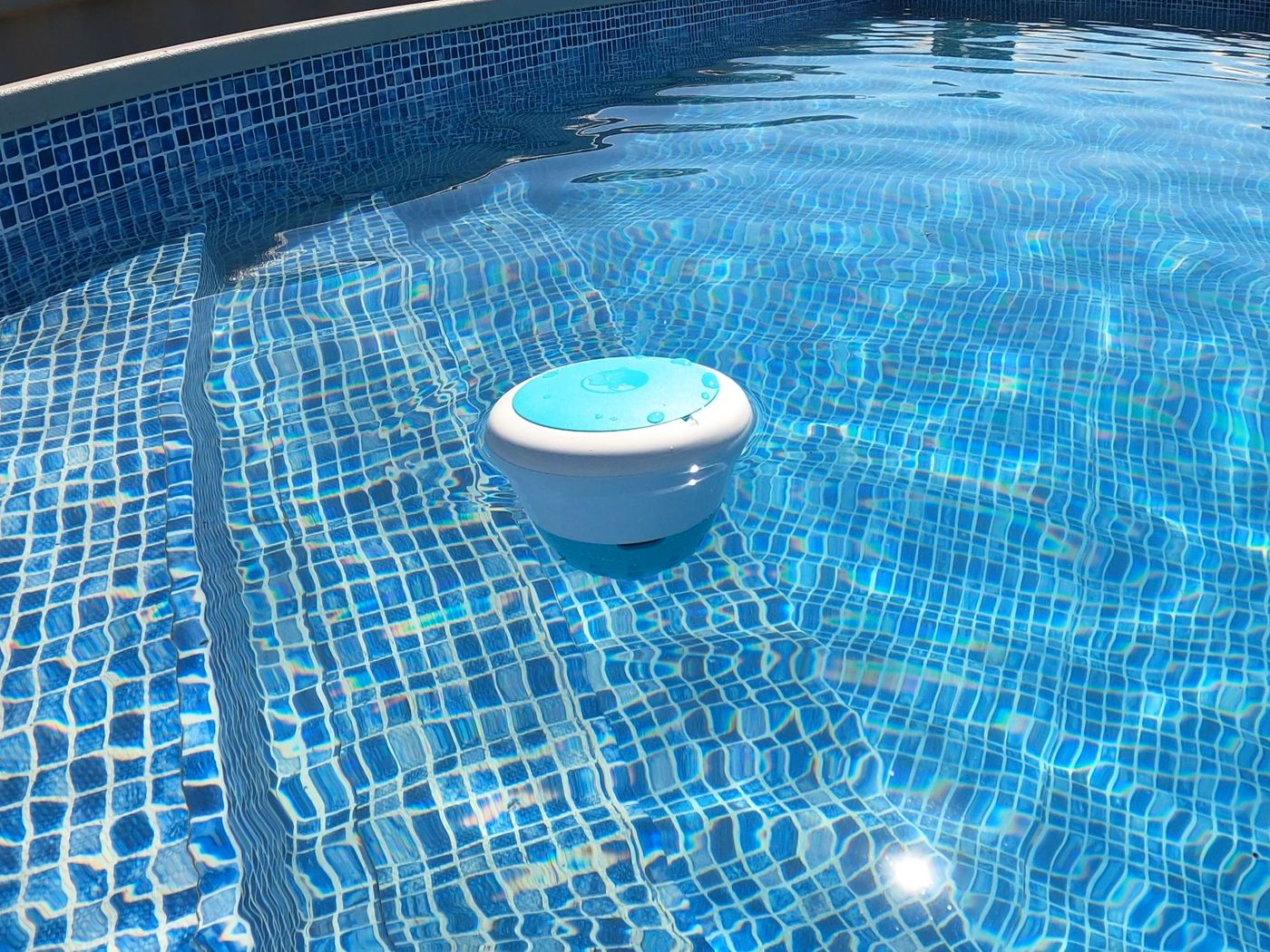
Step 1: Test your water. I recommend a quality drop kit like the Taylor K-2006 (or the K-2006 Salt for salt pools), or better yet, a smart monitor like the Ondilo ICO that tracks your ORP around the clock so you know exactly how effective your sanitizer is. If you want to compare options first, I rank them all in my guide to the best pool water monitors.
Step 2: Dose liquid chlorine to hit the 7.5% ratio for your stabilizer level.
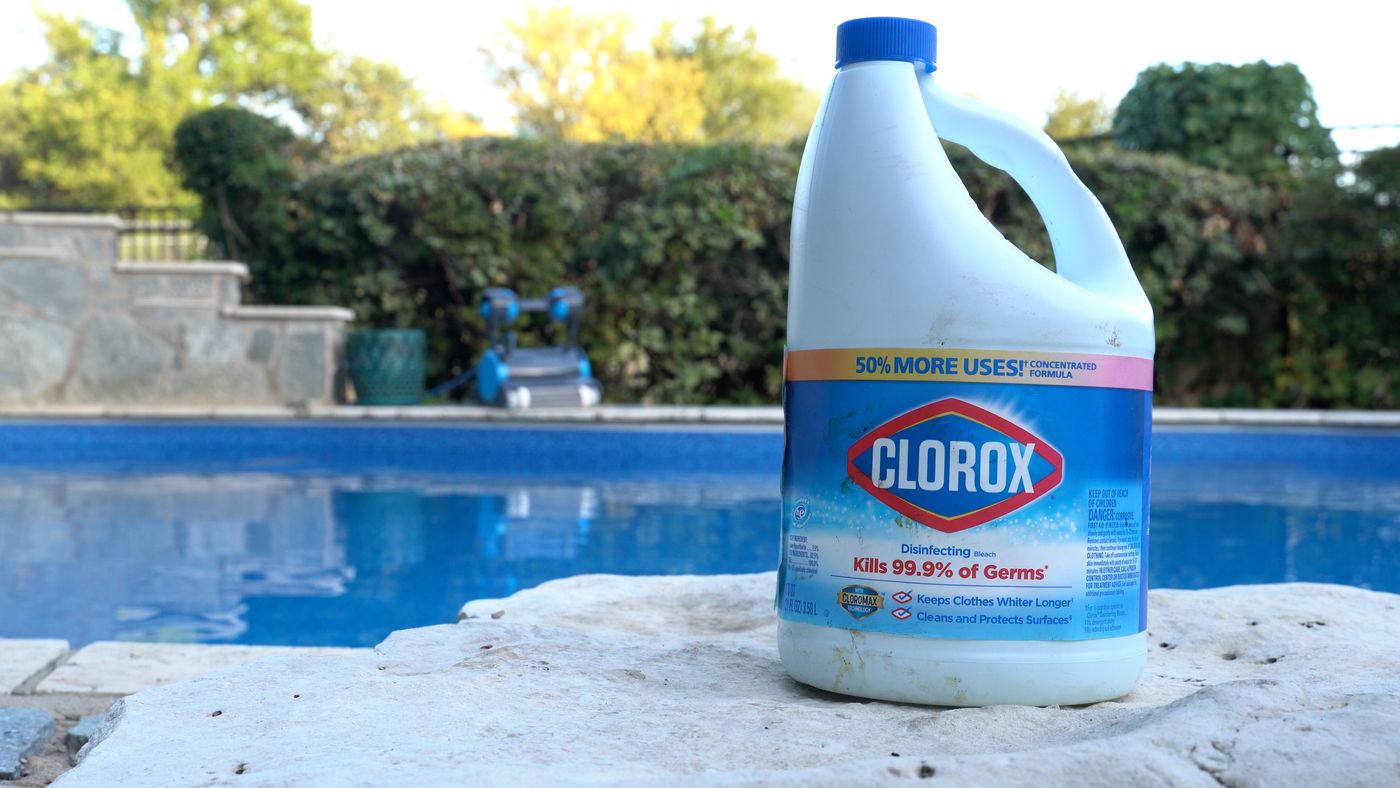
Step 3: Use a splash of muriatic acid to hold your pH in range. My guide on how to lower pool pH covers the exact targets.
Step 4: Empty your baskets, brush the walls, and drop a robotic cleaner in the water to handle the floors while you drink something cold.

That's 30 to 45 minutes a week, two chemicals, and you're done. No potions, no constant tablets, no mystery buckets.
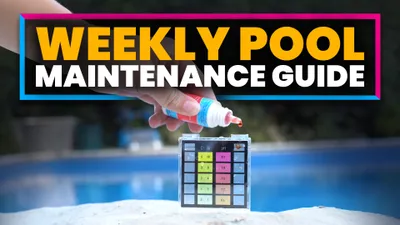
I wrote up my exact weekly routine — every step, every target, in order — and you can grab it for free in my weekly pool maintenance guide. I even have handy pool chemical calculators as well.
The Hybrid Path
There's also a middle route I highly recommend: handle the easy weekly chemistry yourself, but hire a pro once or twice a year for the nasty filter teardowns or any equipment repairs. You keep total control of your water, but you skip the jobs that require wrenches.Frequently Asked Questions
How much does a pool service cost per month?
Full weekly service runs $150 to $300 a month in most of the country, with high-cost metros pushing past that. Chemical-only service — where a tech tests and doses but doesn't clean — runs about $80 to $150 a month. Filter cleans and seasonal openings and closings are almost always billed separately.
Why are chlorine tablets a problem?
Every trichlor tablet adds cyanuric acid (stabilizer) to your water, and stabilizer never leaves on its own. As CYA climbs, your chlorine gets weaker, so the same 3 ppm that used to sanitize your pool quietly stops working. Eventually the only fix is a partial drain and refill. See my guide on how many chlorine tabs you should actually use — the answer is far fewer than most services run.
Is DIY pool maintenance hard?
Not once your water is dialed in. It's 30 to 45 minutes a week: test, dose liquid chlorine, hold your pH with muriatic acid, empty baskets, brush, and let a robot handle the floors. Chemicals cost $20 to $50 a month. My weekly pool maintenance guide has the full routine.
When should I hire a pool service?
Hire one if you travel often, own a rental property, highly value your weekends, or know the pool will get neglected. A neglected pool costs far more than a serviced one once you factor in algae recovery, wrecked pumps, and a plaster finish that ages out early. Just interview the company first — make them commit to liquid chlorine, monthly CYA checks, and shared test data.
Final Verdict
So, what's my final verdict on pool maintenance companies?
If your time is money, or if you know the pool will get neglected, hire a company. Start with PoolPad to find a top-rated pool service near you, then interview them like it's a job application — because it is. Make them commit to liquid chlorine, monthly CYA checks, and shared data readings. If you do that, you'll be in the top one percent of pool owners.
But if you've got thirty minutes a week, do it yourself. Grab some liquid chlorine, some muriatic acid, and a good test kit. Keep your two thousand dollars and put it toward something significantly more fun than pool shock.
Either way, the goal is exactly the same: safe, clear water without the drama.
My full weekly maintenance walkthrough is at ThePoolNerd.com/weekly-pool-maintenance. And if you want to see all the gear I use to keep my pool clean, head on over to my deals page, where I post the best deals on top pool equipment and more. Until next time: keep nerding out, and enjoy that pool.


Comments
Loading comments…