
 Justin D.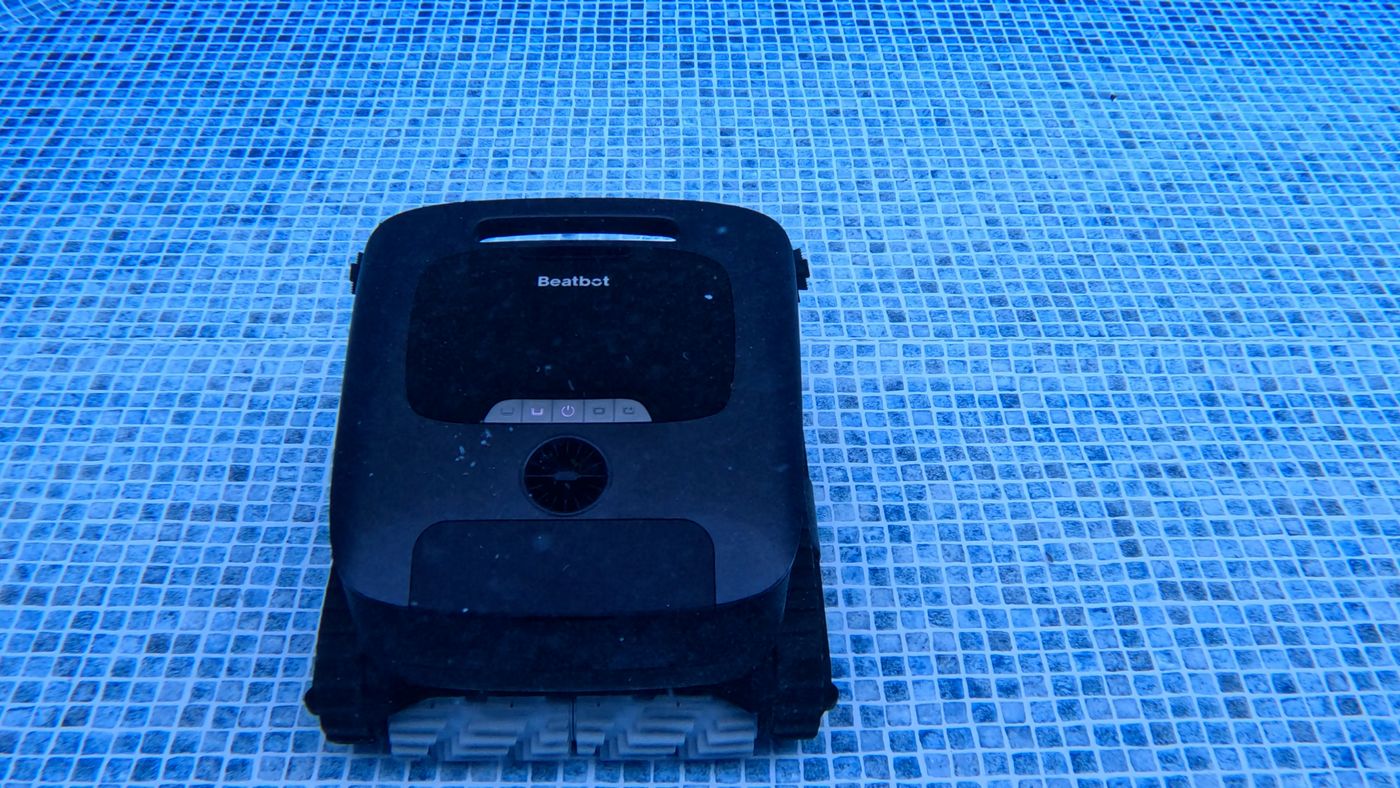
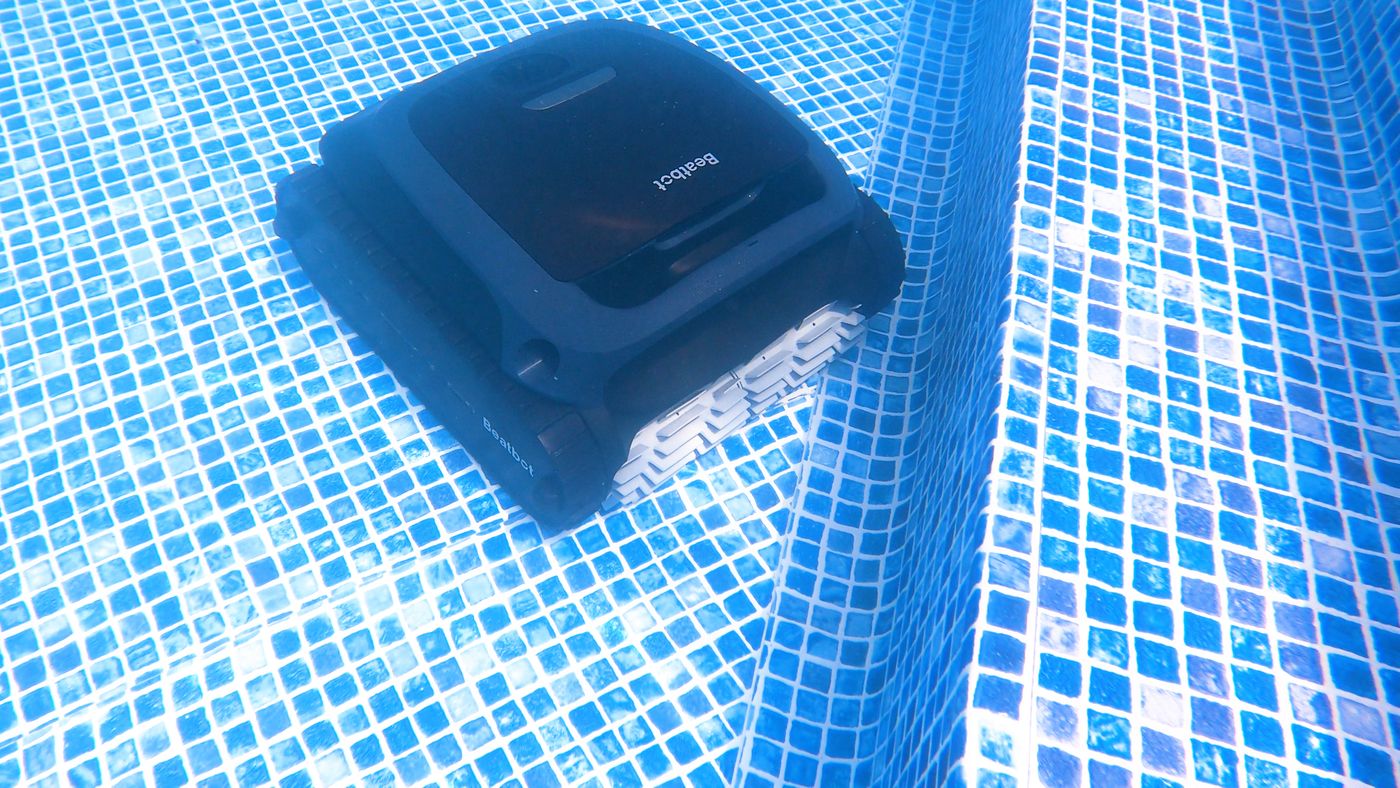
Today, we're breaking down the Beatbot AquaSense 2 Ultra vs Beatbot AquaSense 2.
On one side, you've got the Beatbot AquaSense 2 Ultra — loaded with AI cameras, debris recognition that claims to identify 40+ types of debris, eleven motors, surface skimming, AND over $3,000 price tag.
On the other side? The Beatbot AquaSense 2 — way simpler, way cheaper… and on paper, way less impressive. With a $1,000 price tag, it begs the question:
Which is better?
Hey there, I'm Justin, your resident pool aficionado.
And after testing over 40 robotic pool cleaners in our test pool, I'm going to dive into the differences, what it's like to use each of them, and even dive into some alternatives that fix a lot of my problems I have with these robots.
I'm putting these robots side by side to answer: is the Ultra worth nearly three times the price and which is the right robot for my pool?
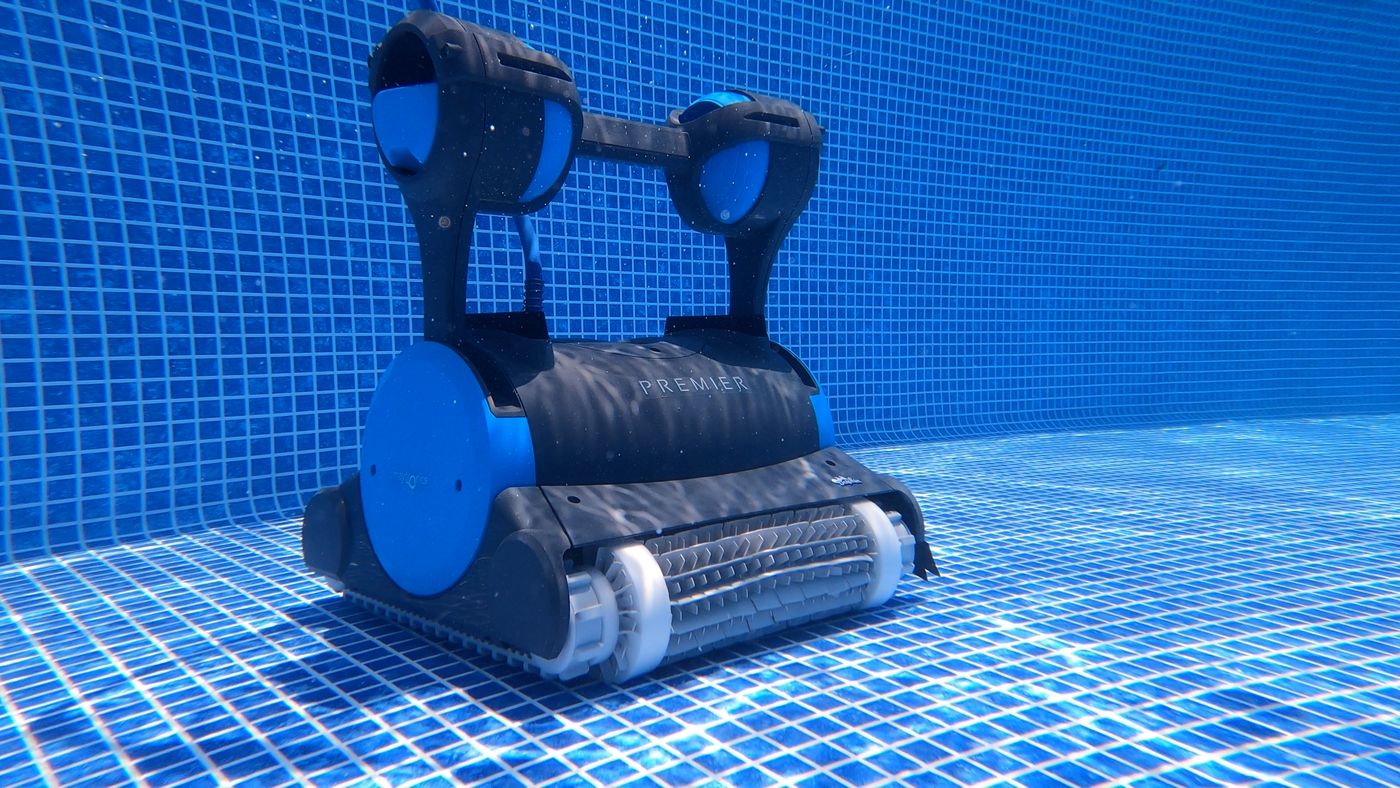
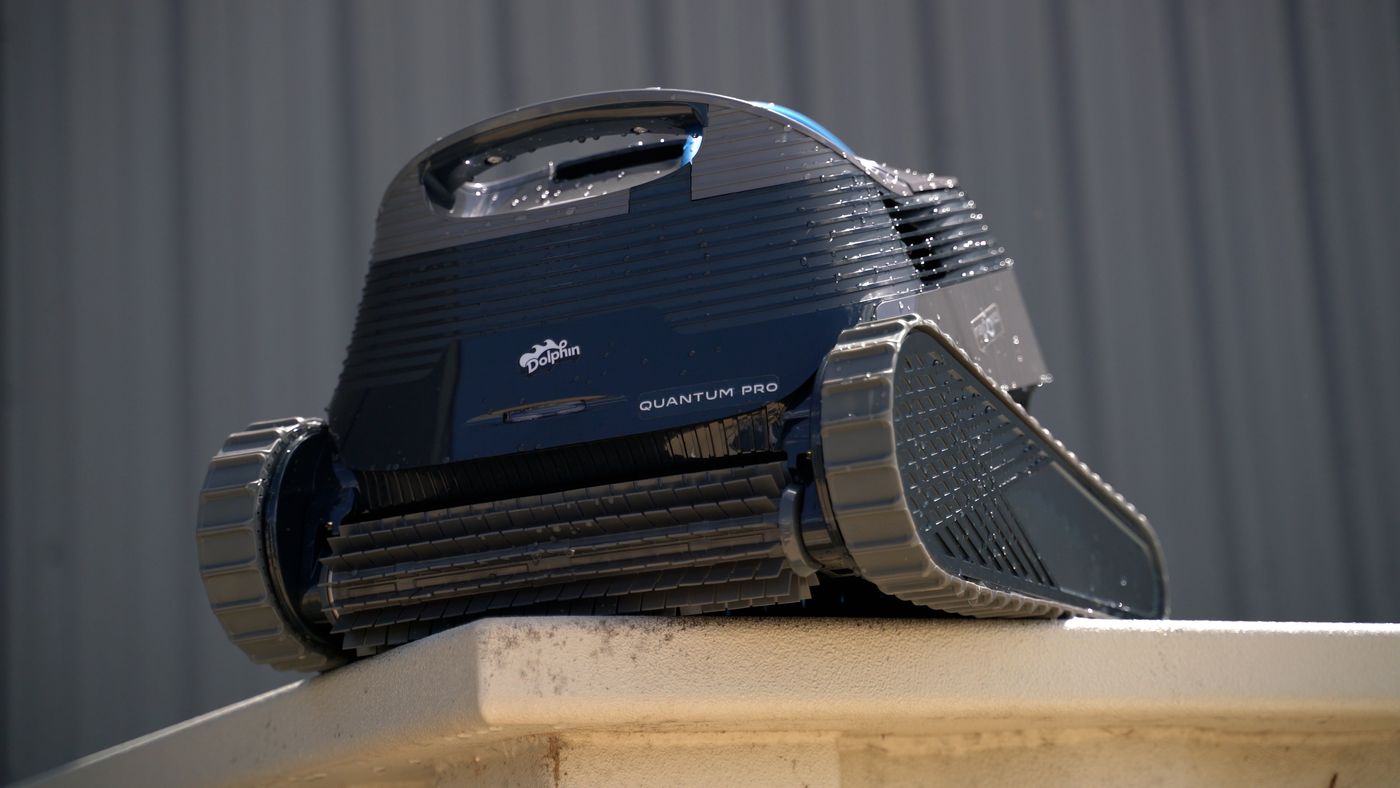
Bottom Line: Both the Beatbot AquaSense 2 Ultra and AquaSense 2 are Pool Nerd Disapproved. The Ultra's extra tech didn't translate to dramatically better cleaning in our testing. For the same money (or less), corded robots like the Dolphin Premier, Dolphin Sigma, or Dolphin Quantum deliver stronger suction, superior filtration, and true automation.
The Spec Sheets
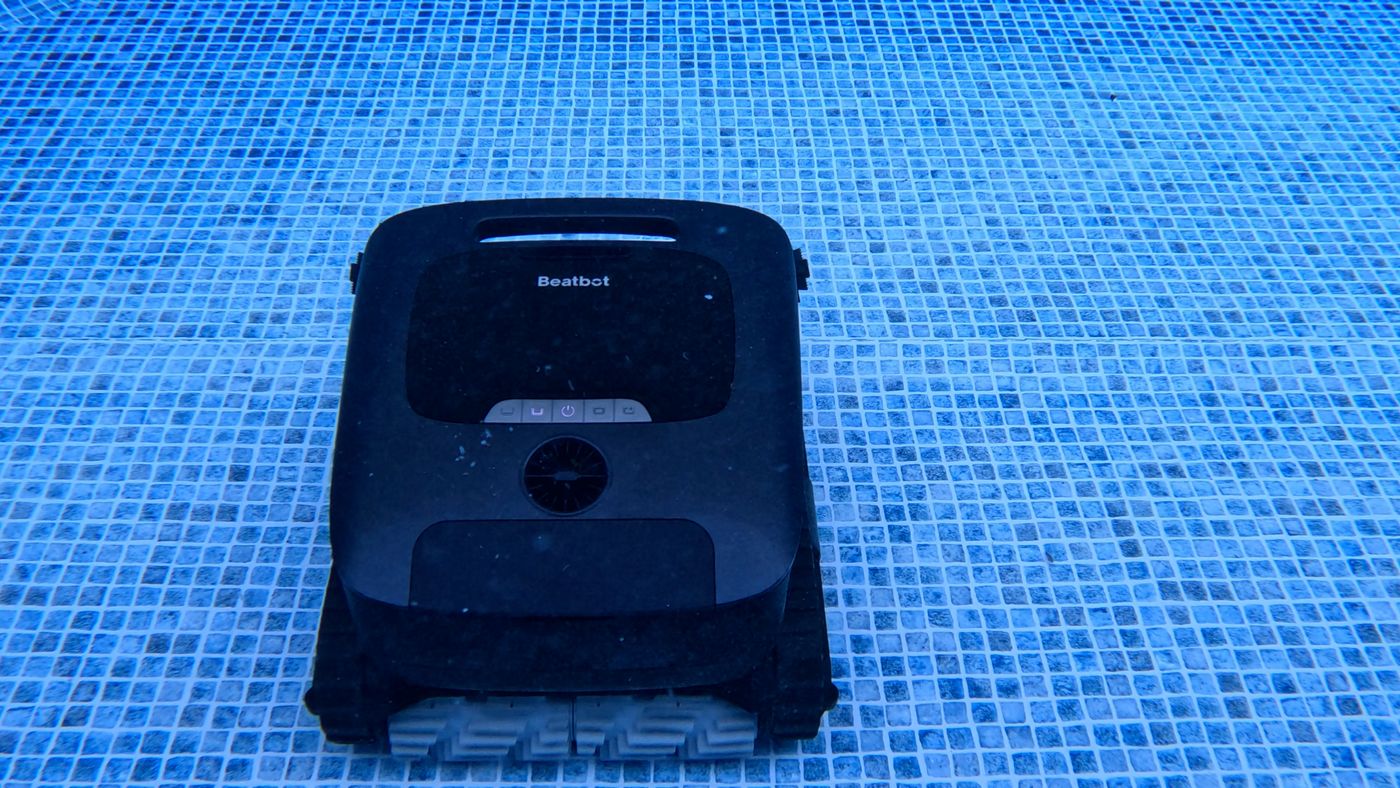
The AquaSense 2 is Beatbot's entry point at around $1,200. It's a cordless robot that cleans your floors, walls, and waterline. Under the hood you get 4 motors, a single filter basket with about 2 liters of capacity and CleverNav™ + SonicSense™ navigation. The battery is 10,000 mAh with roughly 4 hours of floor runtime and about a 4-hour charge. It weighs 23 pounds, and there's no surface skimming, no water clarification — just the basics.
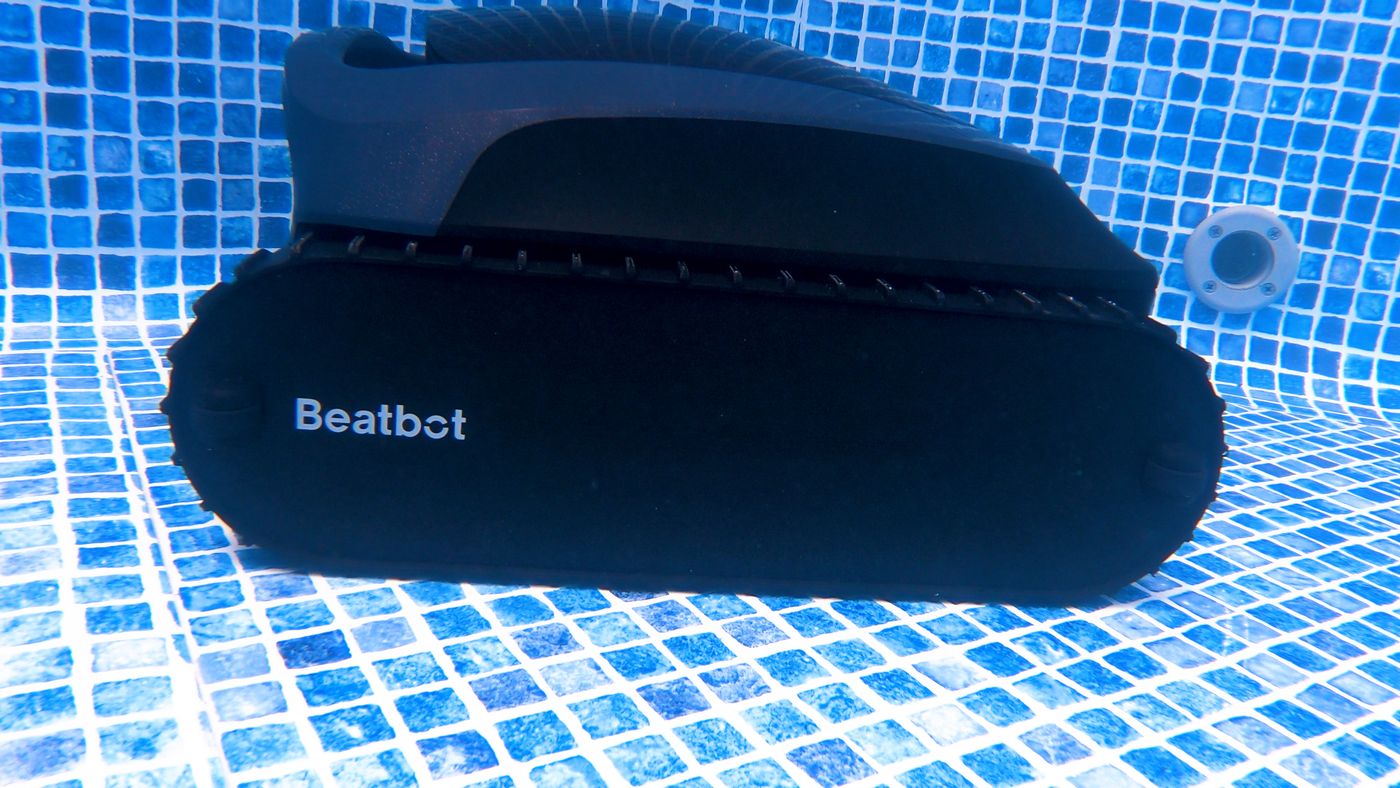
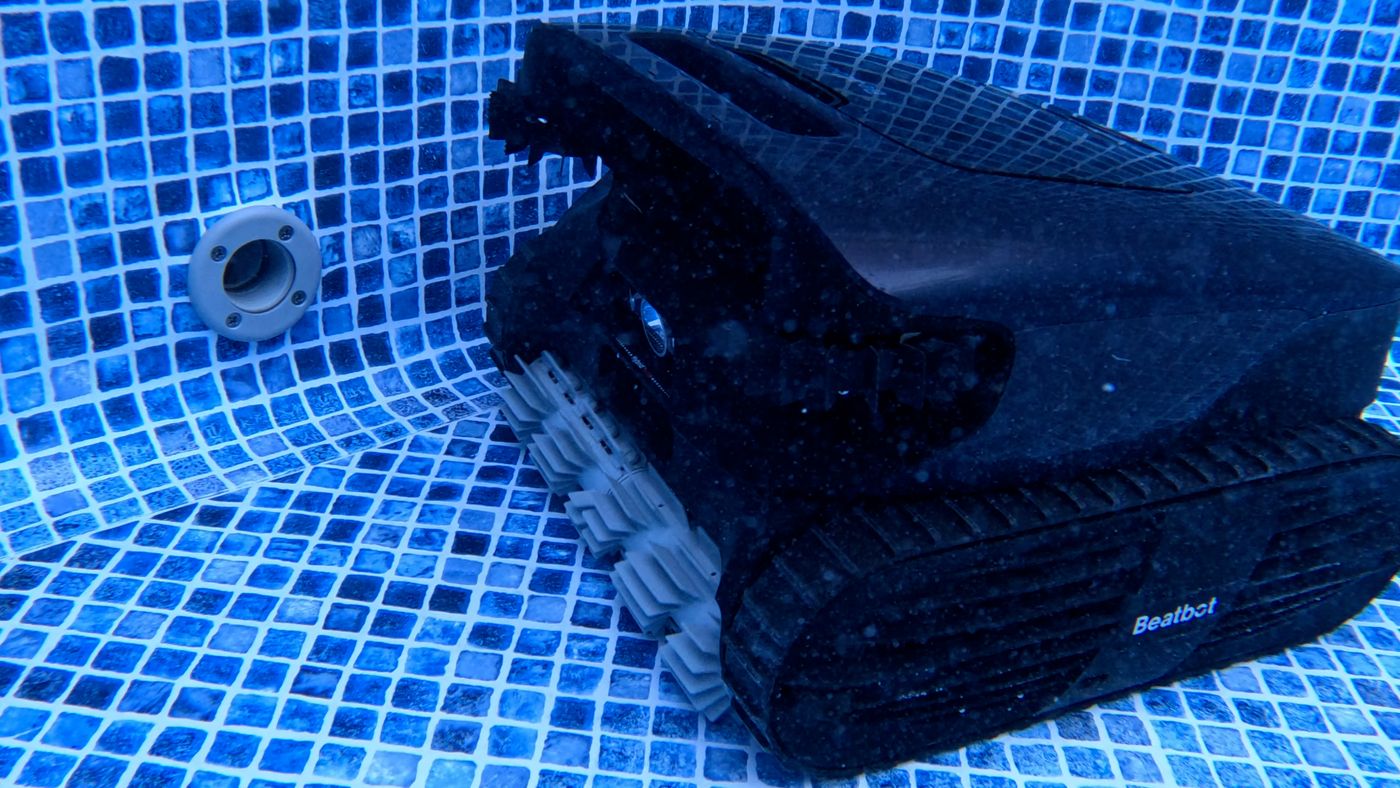
The AquaSense 2 Ultra steps up significantly — at least on the spec sheet. You're looking at 11 motors, HybridSense® AI + CleverNav™ navigation with AI cameras, and AI debris detection. It cleans floors, walls, waterline, and the water surface. The dual filter basket holds up to 4 liters, and suction is rated at 5,500 GPH — which interestingly is the same number as the base model.
It does have a larger battery at 13,400 mAh with about 5 hours of floor runtime, up to 10 hours of surface skimming, and a 4.5-hour charge time. You also get the ClearWater™ clarification system, and it weighs in at a hefty 29 pounds.
| Feature | Beatbot AquaSense 2 | AquaSense 2 Ultra |
|---|---|---|
| Price | ~$1,200 | ~$3,000+ |
| Motors | 4 | 11 |
| Pool Coverage | Floor + Walls + Waterline | Floor + Walls + Waterline + Surface |
| Navigation | CleverNav™ + SonicSense™ | HybridSense® AI + CleverNav™ + AI Cameras |
| Suction (GPH) | 5,500 GPH | 5,500 GPH |
| Filter Capacity | 2L (single basket) | 4L (dual basket) |
| Battery | 10,000 mAh (~4 hrs floor) | 13,400 mAh (~5 hrs floor) |
| Surface Skimming | No | Yes (up to 10 hrs) |
| ClearWater™ | No | Yes |
| Weight | 23 lbs | 29 lbs |
So on paper, the Ultra has more of everything. More motors. More tech. More capability. More weight. The question is whether all of that translates into a better pool cleaning experience — and whether it justifies the price gap. Let's break it down.
Suction Power — Same Rating, Different Price Tag
Here's something that jumped out immediately. Both robots are rated at 5,500 GPH suction. The Ultra has 11 motors to the AquaSense 2's 4 — and yet Beatbot rates them at the same flow rate. That raised an eyebrow for me right away. I think it is because the extra motors seem to be driving the surface skimming and navigation features rather than delivering stronger suction at the floor level.
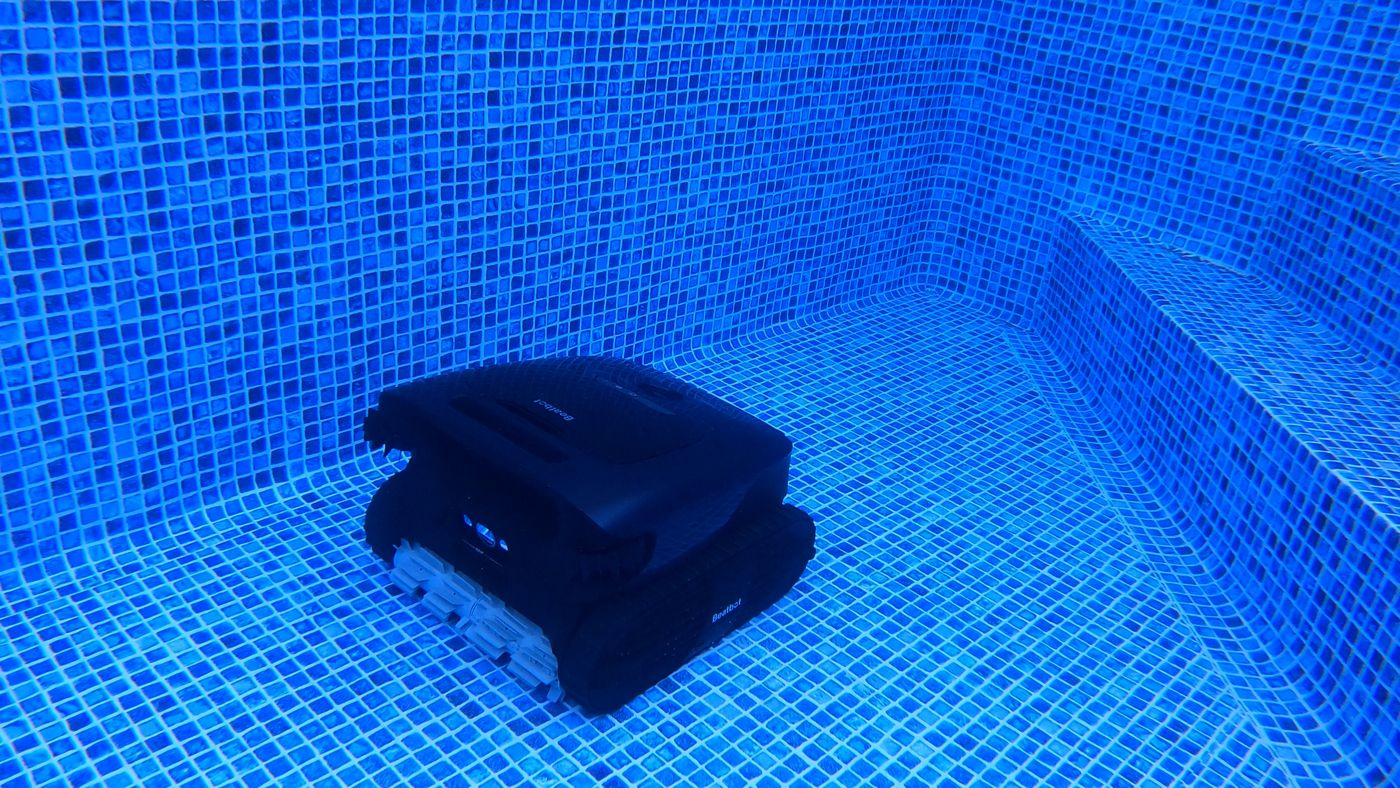
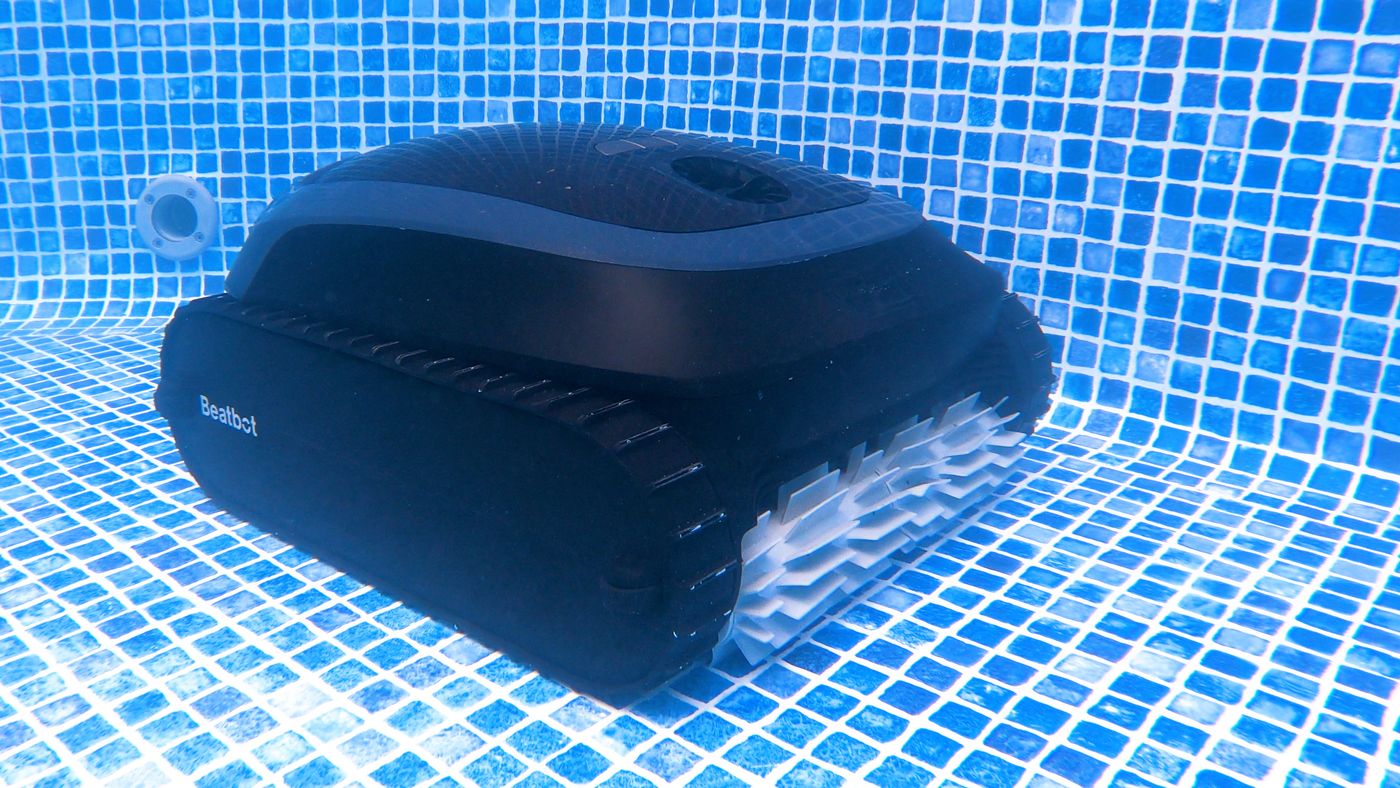
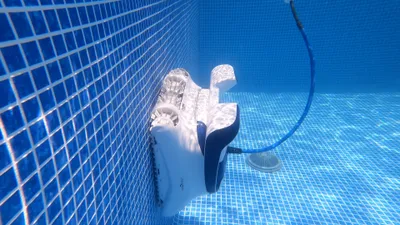
Both cleaners seemed to move super slow compared to every other brand I've tested. The Ultra — despite all those extra motors, it didn't seem to be that much more powerful when it came to debris pickup in my testing.
Filtration — Bigger Baskets, Same Limitations
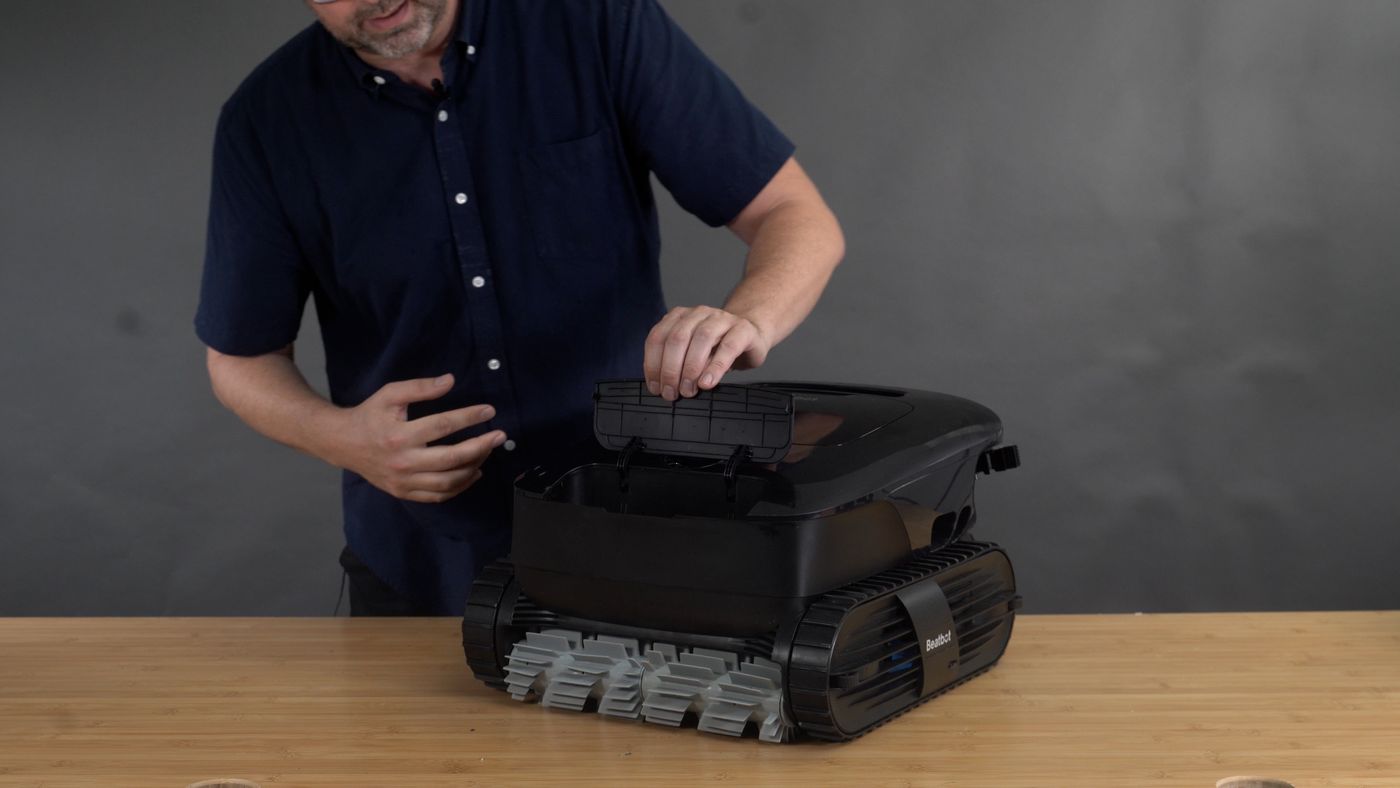
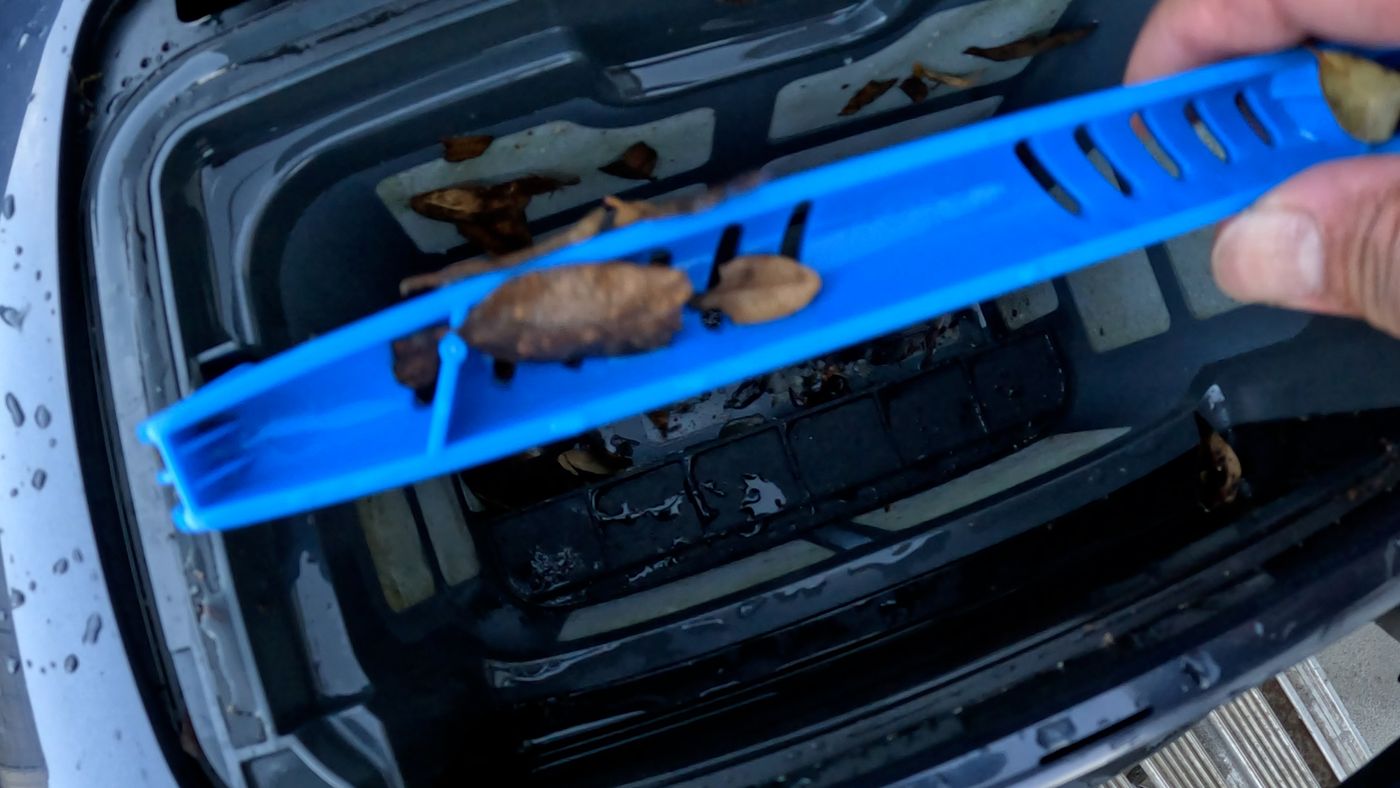
The AquaSense 2 has a single basket with 2 liters of capacity and basic fabric. The Ultra upgrades to a dual basket at 4 liters. So yes, the Ultra holds more, and the dual layer design is a nice choice — the coarser screen handles larger debris while the finer cotton-like mesh catches smaller stuff, which is an improvement on the AquaSense 2.
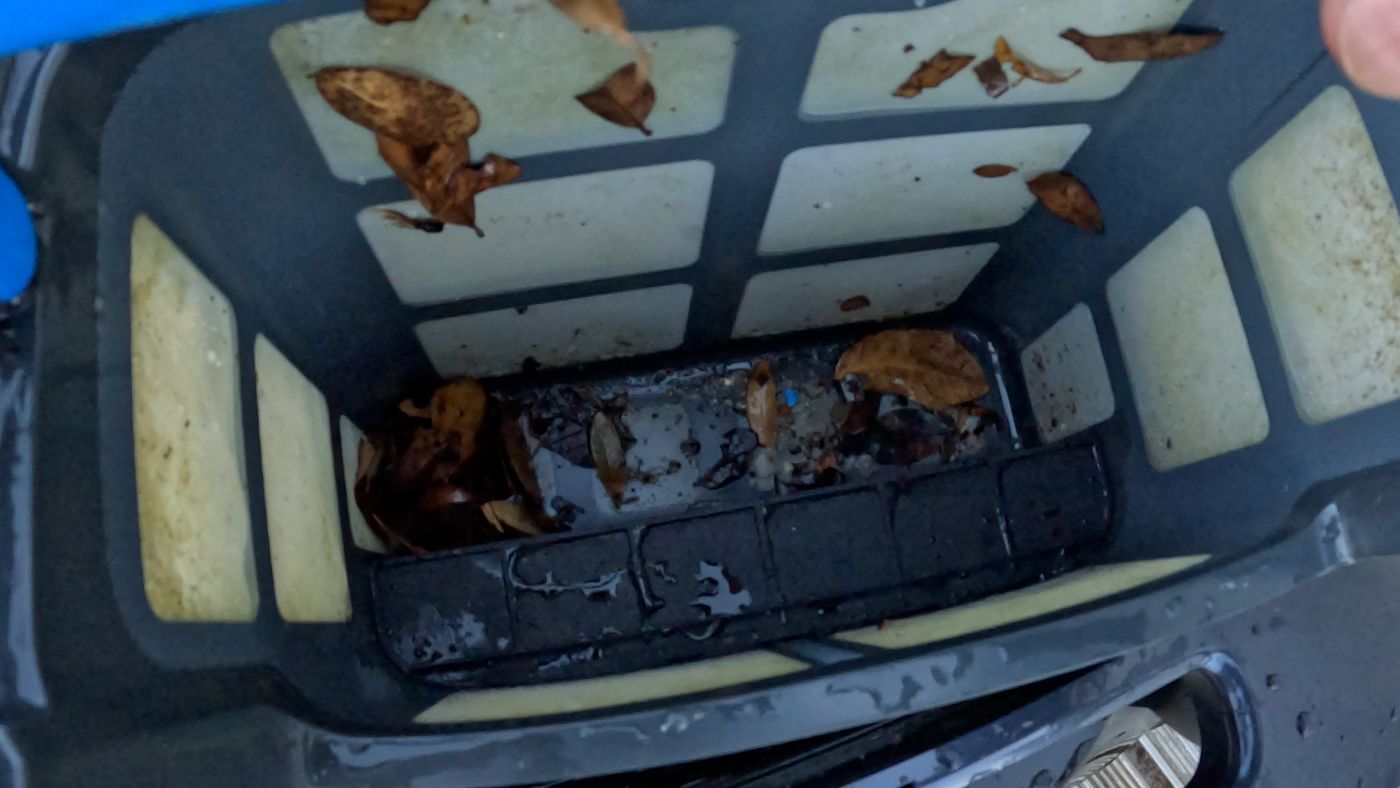
But both are still mesh-based systems. No pleating. No advanced filter materials. Which at this price point, especially with the Ultra, is kinda disappointing.
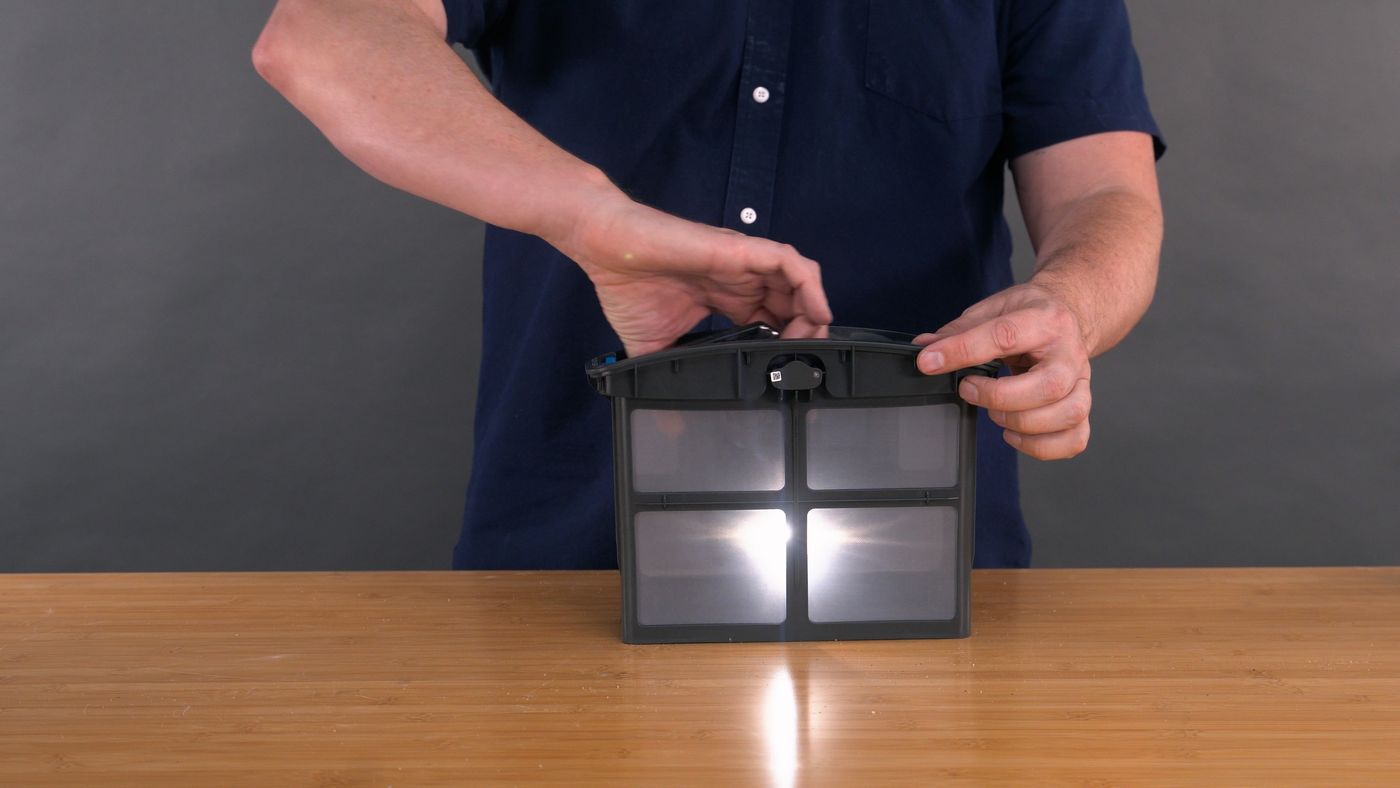
Compare that to Dolphin's NanoFilters — rigid, pleated cartridges that trap particles you can't even see. The Dolphin Premier's Multi-Media system lets you swap between NanoFilters, fine cartridges, and an oversized leaf bag. That kind of versatility doesn't exist in either Beatbot.
The Cordless Problem — 14 Interactions vs. 1
This is the thing that nobody talks about before you buy a cordless robot, and it's the thing that matters most once you're living with one.
Both the AquaSense 2 and the Ultra follow the same daily routine: go outside, fish the robot out of the pool, clean the filter, haul it over to the charging dock, wait 4 to 4.5 hours, go back outside, and drop it back in. That's two trips per day.
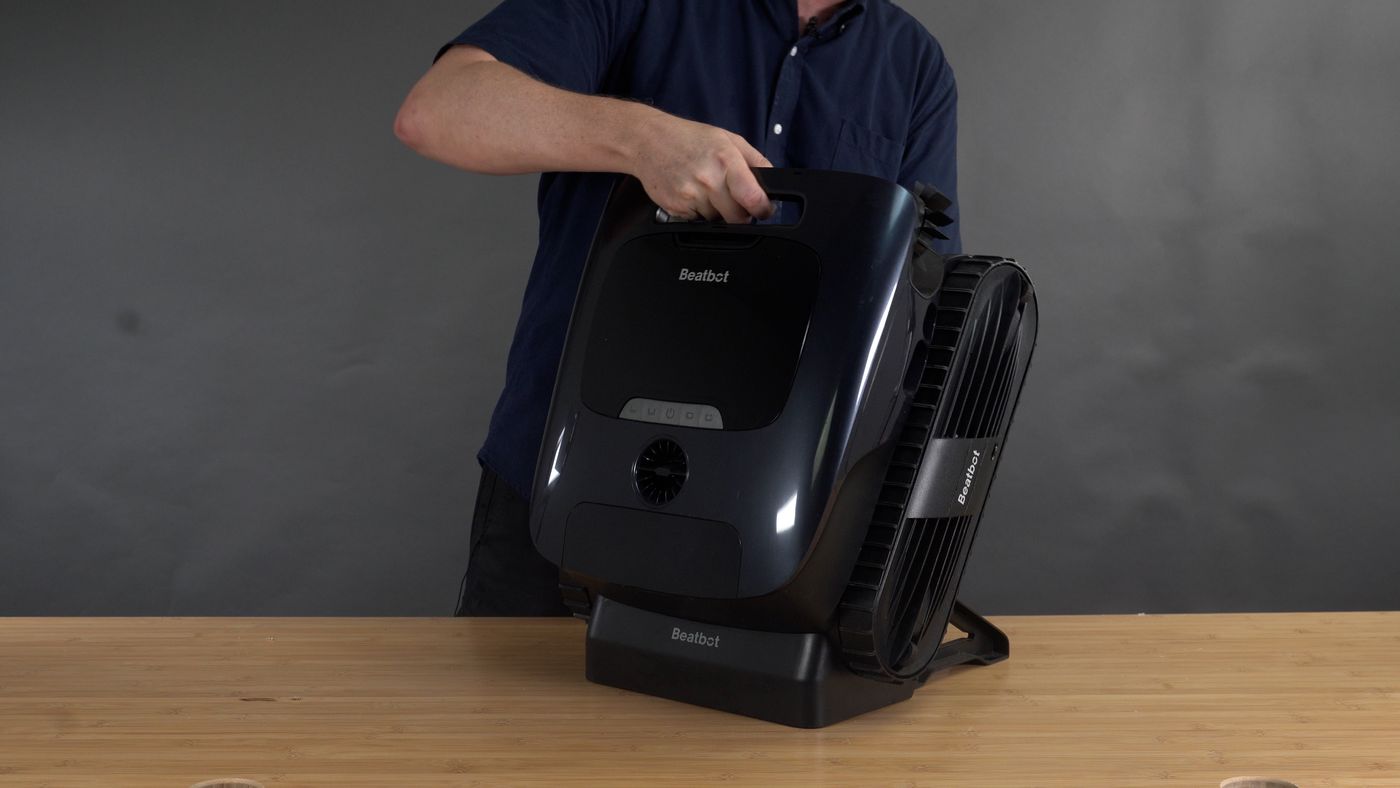
Over a week, that's 14 interactions just to keep the thing running. And it doesn't matter if you spent $1,200 or nearly $3,000 — the daily hassle of a cordless robot is the same.
Factor in the weight. The Ultra is 29 pounds dry. Waterlogged, you're hauling a 30+ pound pool robot in and out of the pool to its charging station. Every single day. The base model at 23 pounds is lighter, but it still gets old fast.
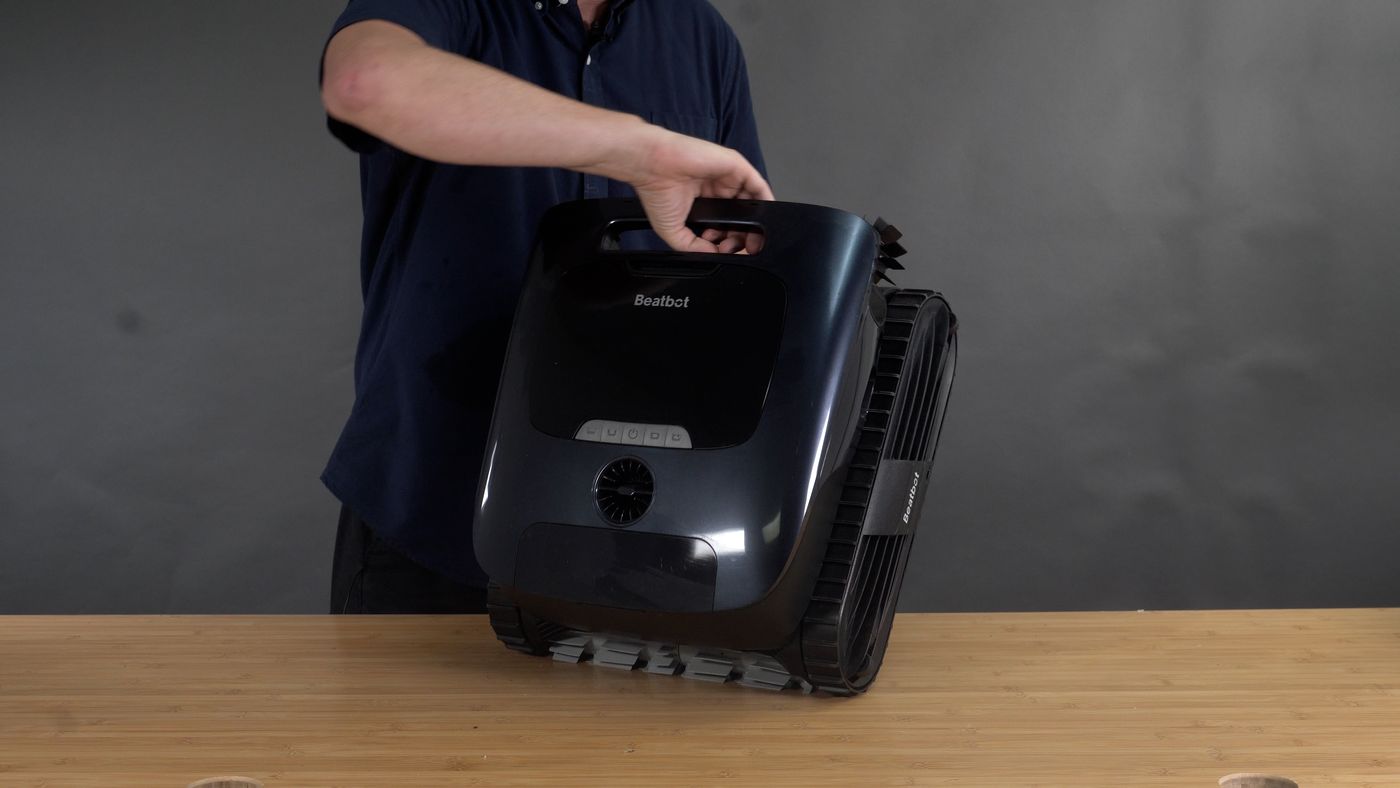
Compare that to a corded robot with a weekly timer. You drop it in, set the schedule, and it runs automatically every day. You come back once a week to rinse the filter. That's 1 interaction per week versus 14. I call this the interaction math, and it's the reason I keep coming back to corded robots.
And that is what is missing with the Beatbot AquaSense 2 Ultra and Beatbot AquaSense 2: automation.
It's something you probably wouldn't be thinking about when comparing cordless vs corded pool robots, but it makes a huge deal. After using a corded robot with a weekly timer, I wouldn't go back to a cordless robot.
App & Connectivity — Smart on the Surface
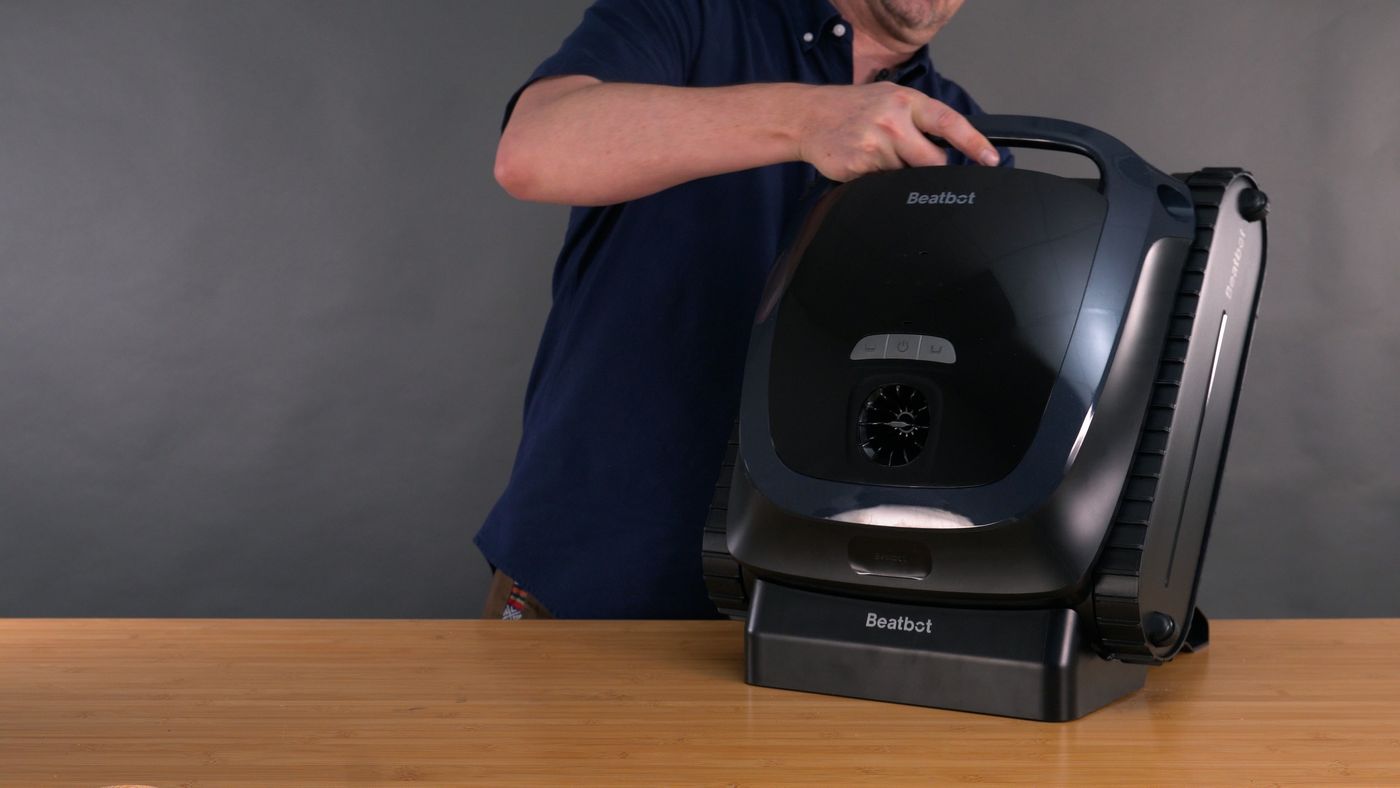
Both robots come with app control.
But there's a catch — both robots lose their connection the instant they go underwater. Wi-Fi doesn't travel through water. You can't steer it, check progress, switch modes, or even tell it to stop while it's cleaning. You're blind until the robot surfaces.
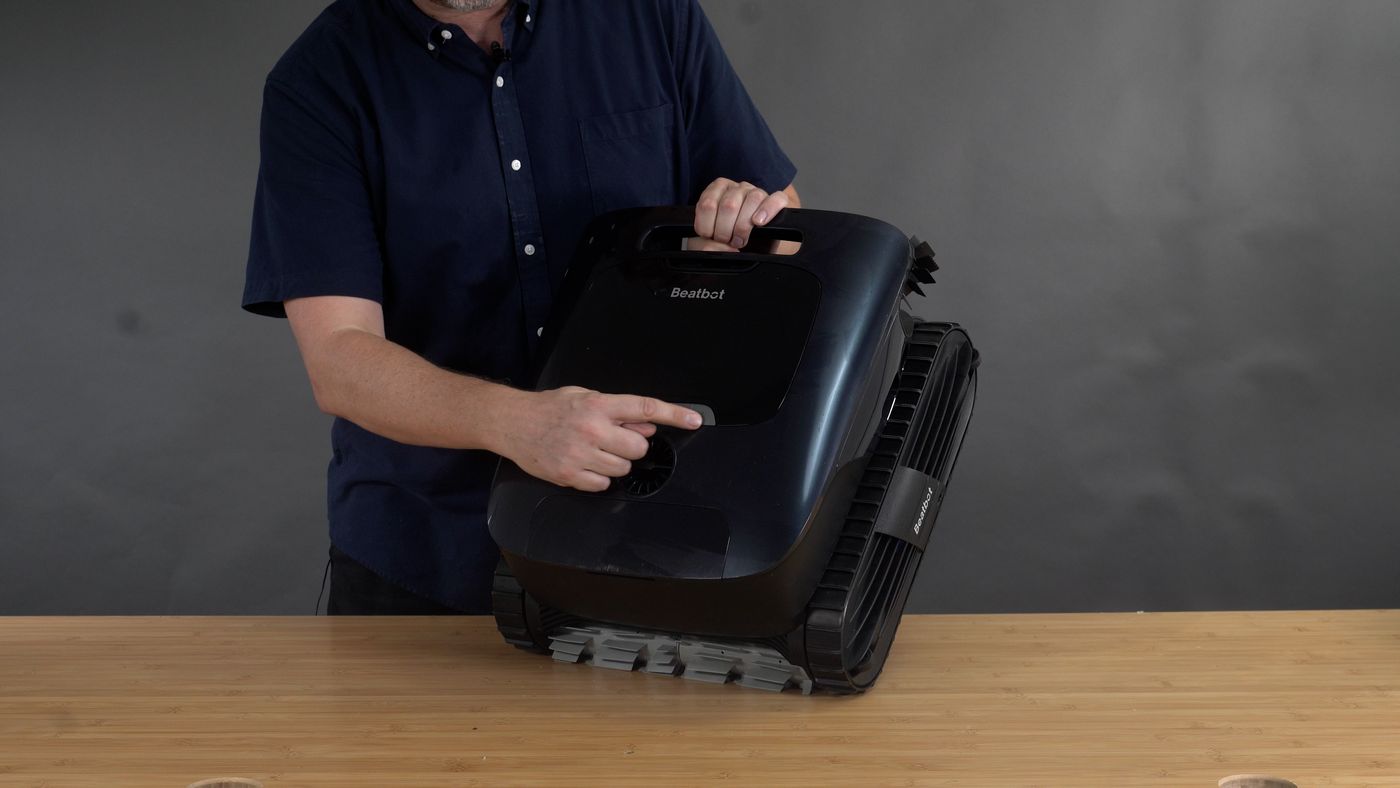
For a $3,000 robot marketed as "smart," that's a real limitation. The base AquaSense 2 has the exact same constraint — so you're paying a premium for features that only work when the robot isn't actively cleaning underwater. This was a shock to me. As corded robots maintain their connection and let you control them in real time, so when we weren't able to do that, it was a big disappointment.
What Does the Extra $1,800 Actually Get You?
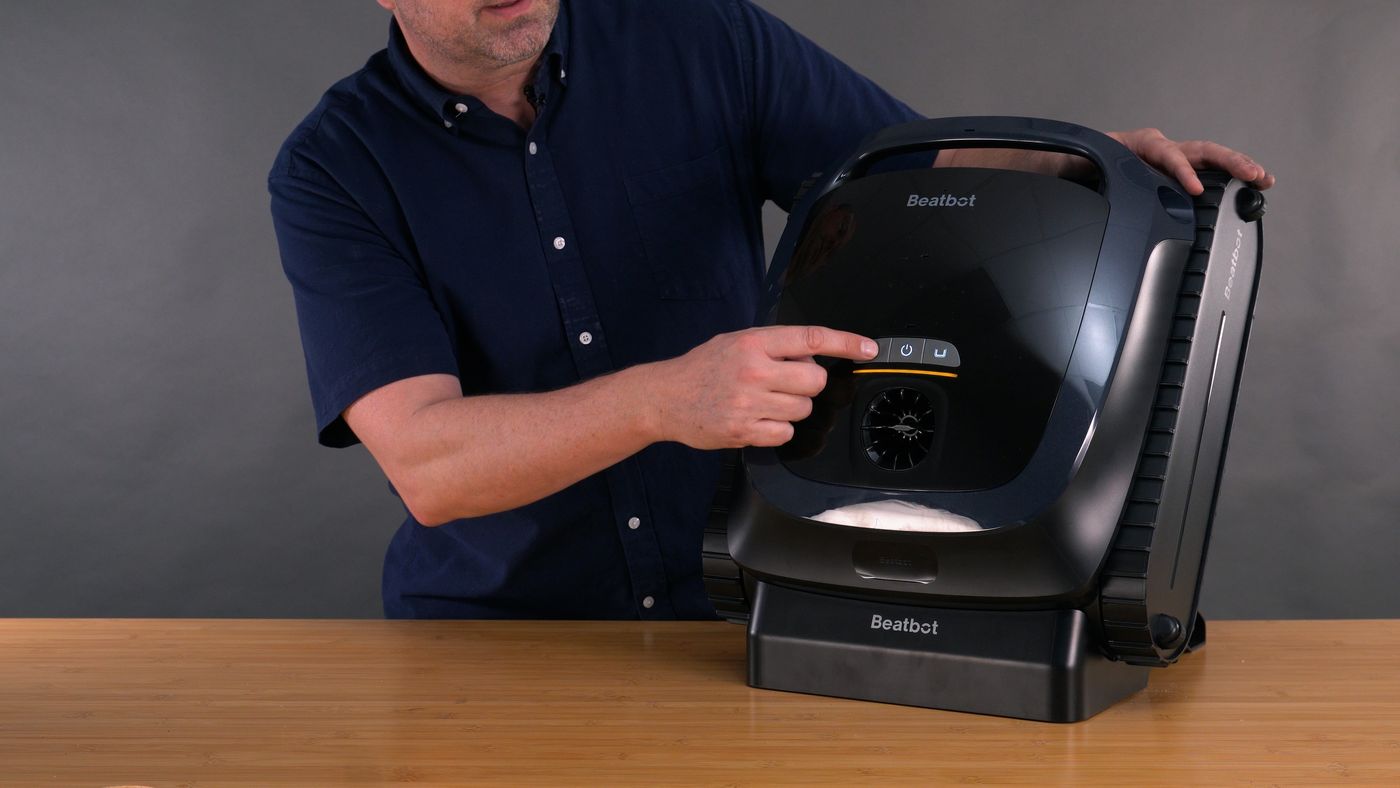
Let me be fair. The Ultra does bring things to the table that the base model doesn't. The AI camera and mapping are genuinely cool to watch — it creates deliberate patterns instead of bumping around randomly. The surface skimming is a nice addition. And the ClearWater™ clarification system is a unique concept.
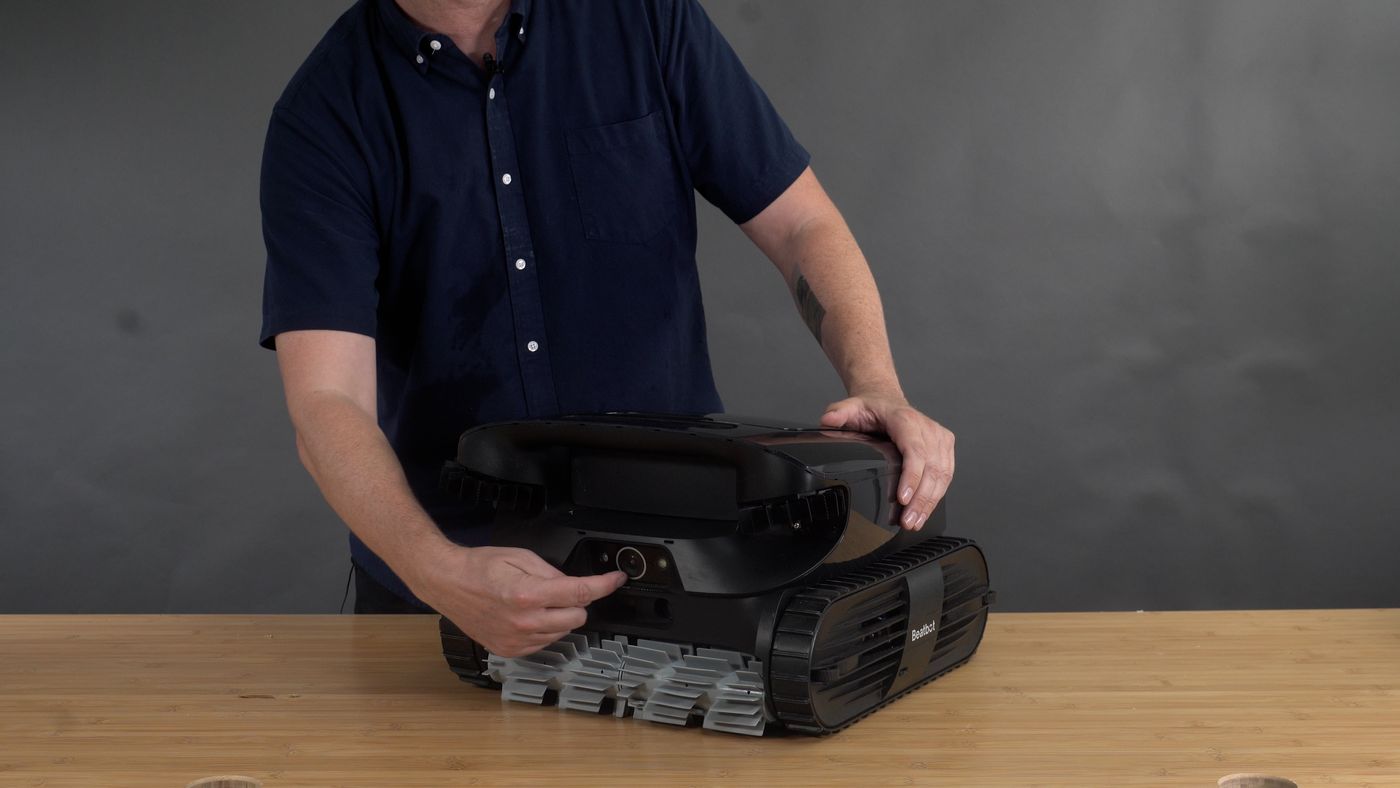
The ClearWater system uses cartridges made from recycled crab shells to help improve water clarity. And while this isn't anything new to the pool industry, it is a new feature inside a pool robot. At around $25 per cartridge and they're supposed to last a month each — that's $300+ per year if you use it. So, they are on the pricer side. I didn't find myself using them, but it is a neat feature you don't normally see on a robot.
But let me tell you a Pool Nerd Tip you may want to know: In my experience, a standard bottle of pool clarifier does the same job for $15–$20 and lasts months. And the surface skimming? A dedicated solar-powered skimmer like the Betta SE does that job better and all day long, and can work parallel to a robot.
The Ultra can climb onto your sunledge and steps, but for $1,800 extra, I'd rather spend 30 seconds brushing that ledge manually and keep the cash.
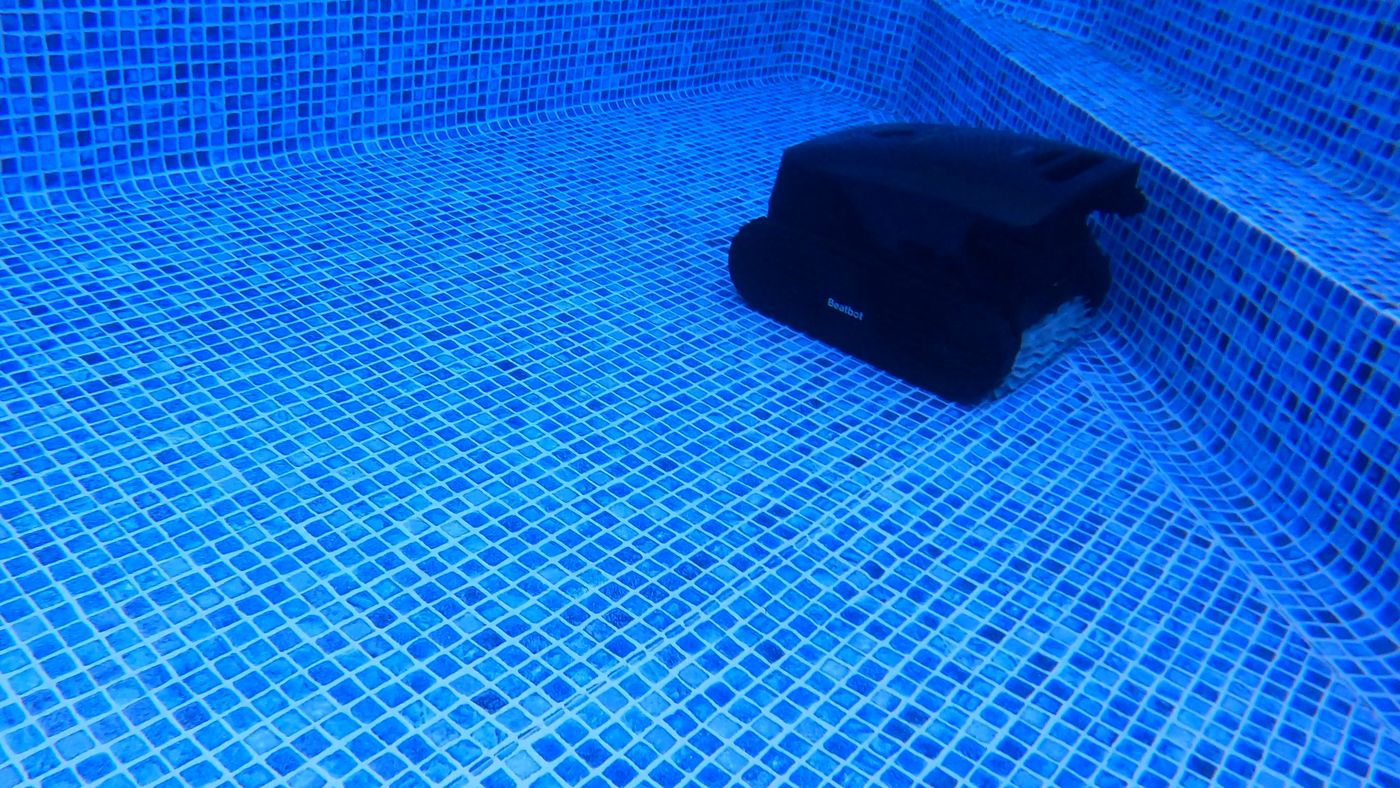
So the Ultra gives you more features — but in my testing, it didn't give you a significantly better cleaning performance to justify over $3000. And at the end of the day, that's what you're buying a pool robot for.
What I'd Actually Buy Instead
After testing both of these robots, my honest recommendation is the same one I give every time: go corded. And you don't have to spend anywhere near $3,000 to get something dramatically better.
The Dolphin Premier runs about $1,500 — half the price of the Ultra. It has commercial-grade dual motors delivering stronger, more consistent suction than anything battery-powered. The Multi-Media filtration system lets you swap between a leaf bag, fine cartridges, or NanoFilters. And the weekly timer means genuine set-it-and-forget-it automation. No daily recharging. No hauling 29 pounds out of the pool.

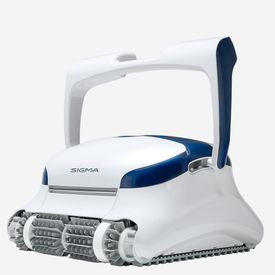
The Dolphin Sigma runs three commercial-grade motors with gyroscope-enhanced SmartNav 3.0 navigation. The MyDolphin Plus app works while the robot is cleaning — scheduling, real-time control, even Siri voice commands. NanoFilters come standard, and the weekly scheduler gives you one interaction per week instead of fourteen.
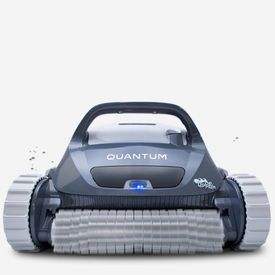
The Dolphin Quantum at around $1,200 — the same price as the base AquaSense 2 — gives you PowerJet 3D Mobility, the XXL MaxBin that holds far more debris, NanoFilters, and a weekly timer. Same money, dramatically better experience.
Here's the math: buy a Dolphin Premier, add a Betta SE solar skimmer for surface cleaning, and you'd still have over $1,000 left compared to the AquaSense 2 Ultra. In my opinion, that combination would outperform the Ultra and save you money.
Final Verdict
So, what's my final verdict?
If you're dead set on cordless and choosing between these two, the base AquaSense 2 gives you similar cleaning at a fraction of the price. The suction ratings are the same, the daily recharging routine is identical, and the extra $1,800 didn't meaningfully change the cleaning results in my testing. The Ultra has cooler tech, but cooler tech didn't translate to a dramatically cleaner pool.
But if you're asking me what I'd recommend? Skip both. Go corded. The Dolphin Premier, Sigma, and Quantum deliver stronger suction, superior filtration, true automation, and apps that work while the robot is cleaning — all at equal or lower prices. After testing over 40 pool robots, corded models outperform cordless in every area that matters.
| Category | Winner |
|---|---|
| Suction Power | Tie (both rated 5,500 GPH) |
| Filtration | AquaSense 2 Ultra (larger basket) |
| Daily Hassle | Tie (both require daily charging) |
| App Connectivity | Tie (both lose connection underwater) |
| Extra Features | AquaSense 2 Ultra |
| Value | AquaSense 2 |
| Overall Recommendation | Skip both — go corded |
Both the Beatbot AquaSense 2 Ultra and the AquaSense 2 are Pool Nerd Disapproved.
Make sure to check out my videos on the best corded pool cleaners if you want to make the switch. And as always, if you wanna keep nerding out over your pool, head on over to my deals page at ThePoolNerd.com/deals where I post the best deals on robotic pool cleaners and other top pool equipment.
Related Reading
- Beatbot AquaSense 2 vs Dolphin Quantum — Another head-to-head comparison
- Dolphin Premier Review — Our full in-depth review
- Dolphin Sigma Review — Our full in-depth review
- Dolphin Quantum Review — Our full in-depth review
- Best Robotic Pool Cleaners — Our top picks after testing 40+ robots
- All Robotic Pool Cleaner Reviews — Every robot we've tested

Comments
Loading comments…