
 Justin D.
Hey there and welcome back to the Pool Nerd. I'm Justin, your resident pool aficionado. And today, I'm covering the flagship models from two of the most popular brands, the Dolphin Sigma vs the Beatbot AquaSense 2 Ultra.
On one side, you have a robot that looks like it drove straight out of a sci-fi movie, boasting AI, cameras, and a cordless design from a newer company. On the other, you have the flagship model from Maytronics, a brand that has been in the industry for decades.
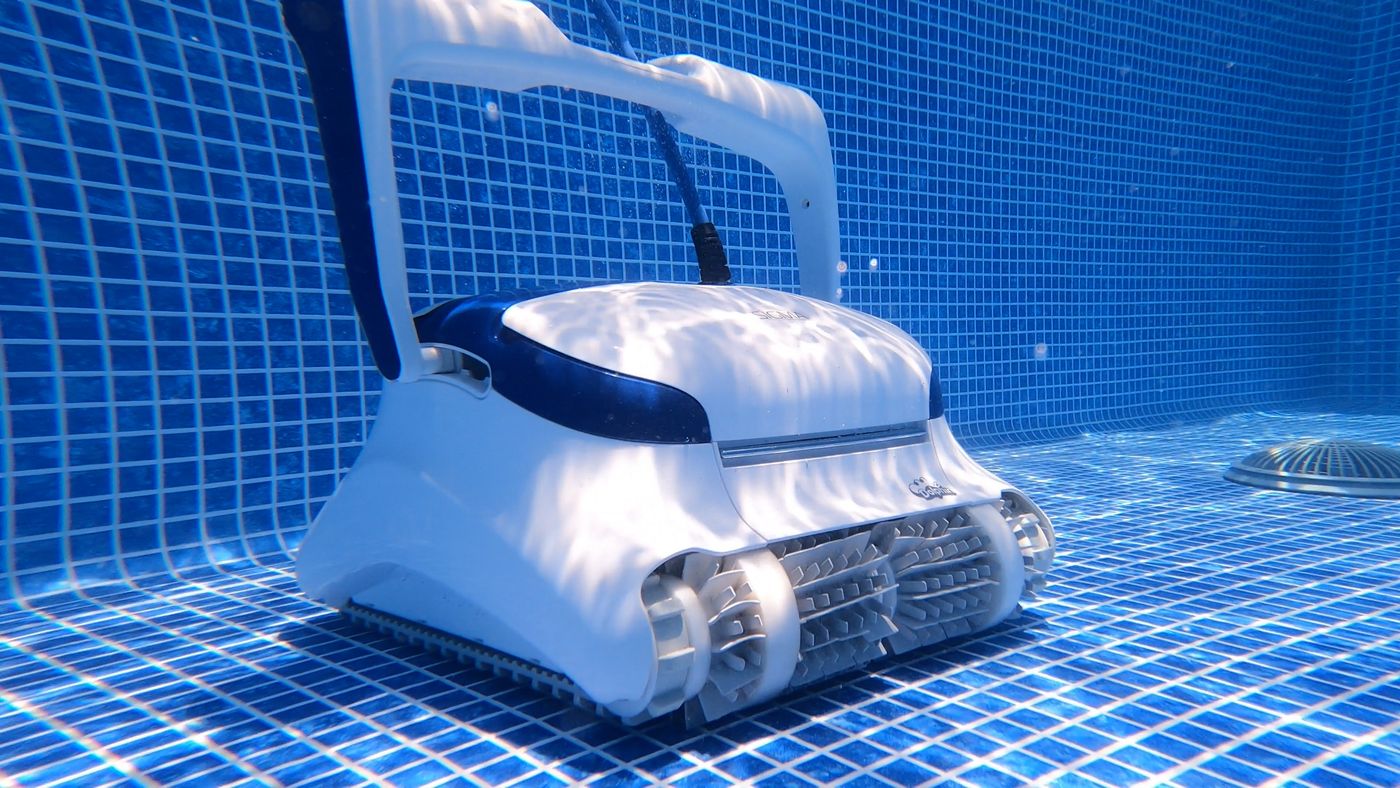
Both are flagship models from their respective brands. But each has a completely different user experience. One is cordless, and one is corded. So, which one should you get for your pool?
The Dolphin Sigma is around $1,500 — traditionally the upper end for robotic pool cleaners. But the Beatbot? It comes in around $3,000, nearly double the price.
So, the burning question isn't just "which one is better?" The real question is: Is the Beatbot AquaSense 2 Ultra worth double? I don't think so. Here's why.
Bottom Line: The Dolphin Sigma delivers better filtration, true set-it-and-forget-it automation, always-on Wi-Fi connectivity, and stronger long-term value — all at around half the price. The Beatbot AquaSense 2 Ultra has cool tech, but it didn't outperform the Sigma in our testing.
Comparing Prices
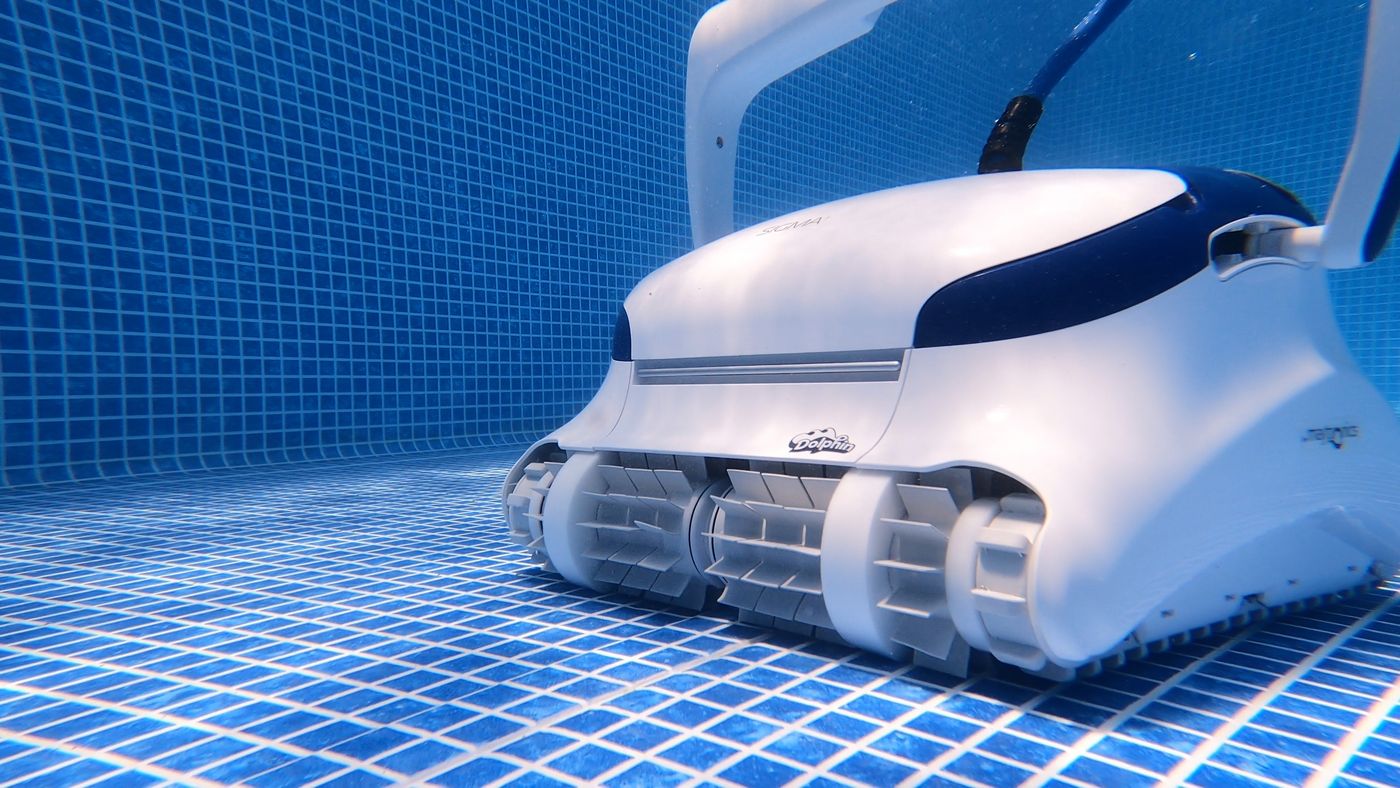
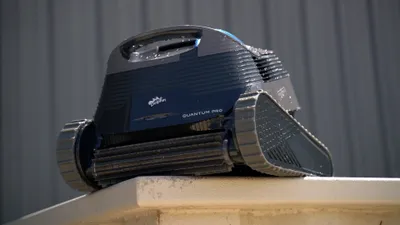
When you buy the Dolphin Sigma, you're buying a top-tier commercial-grade cleaner with three commercial-grade motors, NanoFilters, smartphone app, and more.
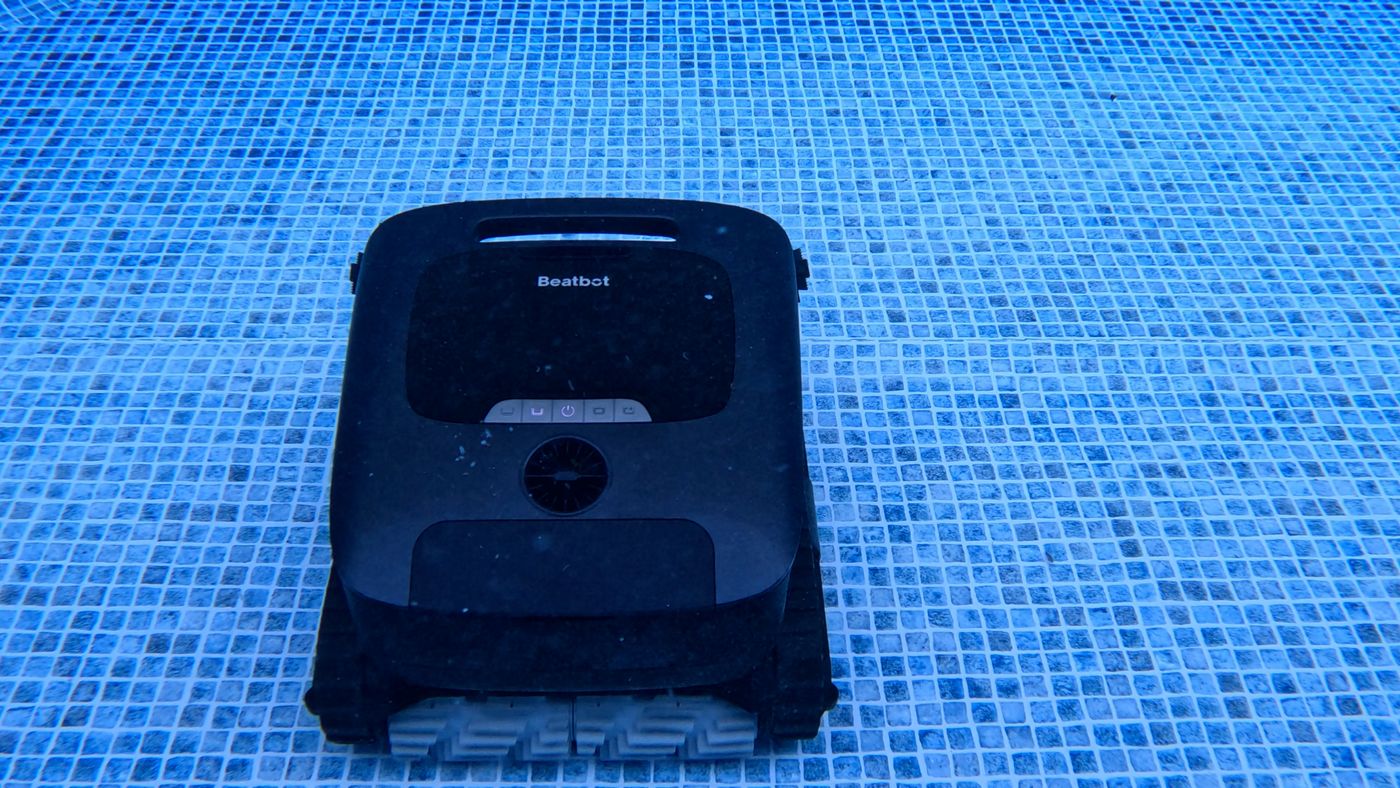
When you look at the Beatbot, it feels like you're paying a heavy early-adopter premium — mostly for the new tech, the cameras, and the novelty of being the latest gadget on the market. When in my testing, I didn't feel like it performed better than the Sigma. In fact, I preferred the Sigma.
Think about what you could do with that $1,500 difference:
- Buy a second Dolphin Sigma as a backup
- Upgrade your pool pump to a high-end variable speed unit
- Stock your shed with a supply of premium chemicals and filters
For me personally, at double the price, I would need it to clean faster, last longer, or be significantly easier to use.
In several key categories that I think matter most, the Sigma outperforms the Beatbot.
The Corded vs. Cordless Debate
This is Beatbot's biggest selling point and ironically its biggest weakness in my opinion. The marketing pitch for cordless robots is: "No cables! Total freedom!" It sounds amazing until you realize you are constantly charging the cordless robot daily for it to clean every day.
On the other hand, a corded robot is "Always Cleaning. Never charging."
The Reality of a Cordless Pool Robot
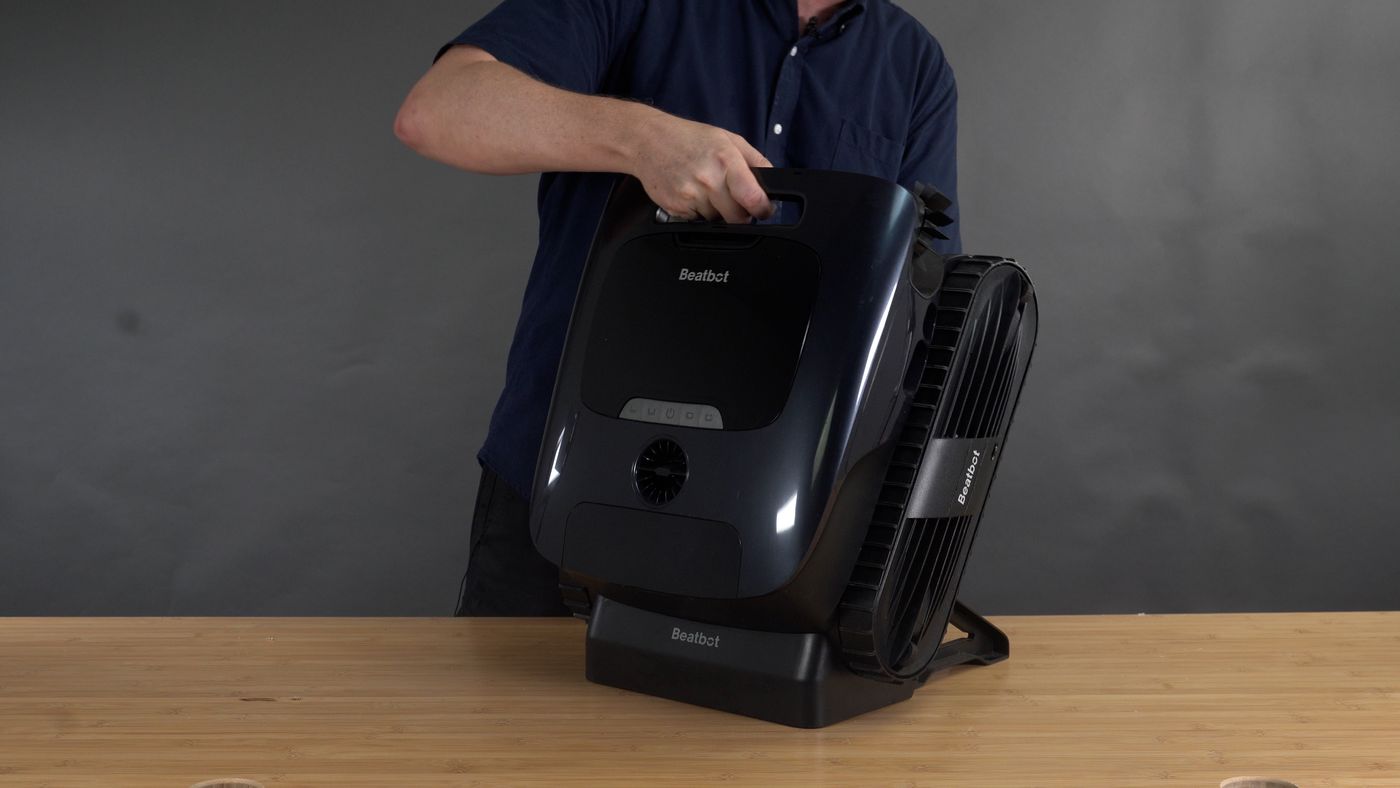
The Beatbot runs on a battery that delivers up to 5 hours of runtime cleaning the floors and walls on a good day – which is significantly longer than other cordless cleaners.
Let's say it's Saturday morning. You want to swim at noon. There are leaves on the bottom. You grab your Beatbot, but—oops—you forgot to charge it after the last cycle. Now you're stuck waiting hours before it can clean your pool.
The Sigma's "Set It and Forget It"
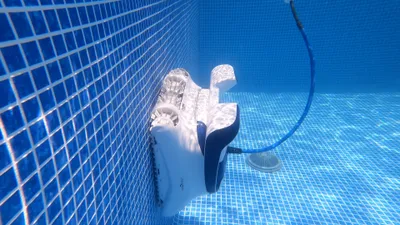
The Dolphin Sigma has a cord. Some people fear cords because they remember tangling messes from old cleaners. But the Sigma uses a 360-degree anti-tangle swivel. The cord floats on the surface and won't get tangled.
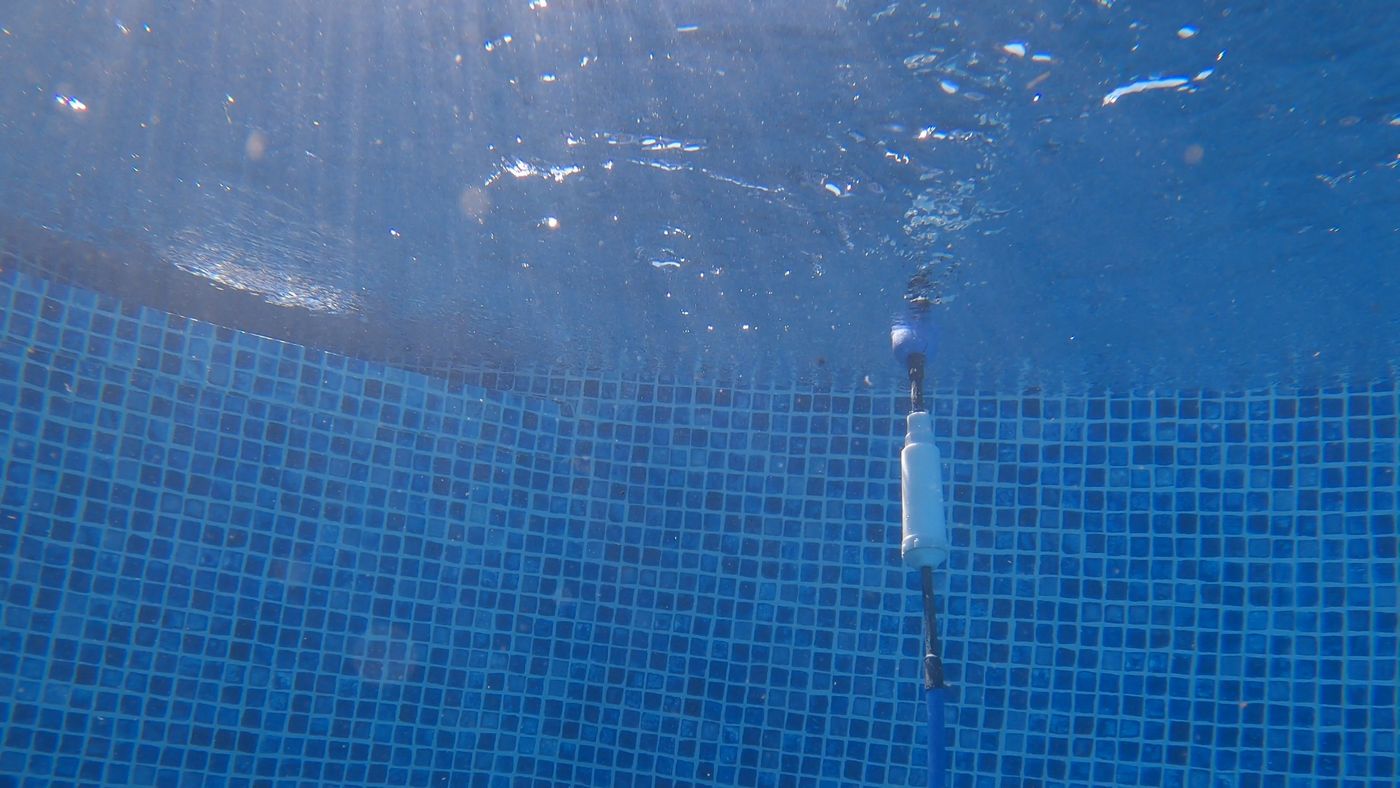
Because it draws power from your outlet, you can run the Sigma whenever. But the real magic is the automation. You plug the Sigma in and set a weekly schedule on the app. That's it. The Sigma wakes up every day, at the time you set, cleans, and goes back to sleep. It wakes up tomorrow and does it again.
You can set specific days and times you want it to run to. 5pm on Friday and 10am on Saturday? No problem.

Beatbot's EcoMode vs Sigma's Weekly Timer
Now, the Beatbot does have an "Eco" mode, where you can set it to run every other day for up to five days. But here's the catch: it only cleans for a short, lightweight maintenance cycle — not a full cycle. Eco Mode is essentially a low-power clean of the pool designed to stretch the battery and cleaning cycle over a few days, not a proper multi-hour cleaning session of your pool's floor, walls, and waterline.
Here's how it works when we tested it:
It wakes up automatically, runs a quick, reduced-power cleaning pass, and then shuts itself back down.
It does NOT perform a full floor, walls, and waterline clean like a normal cycle.
Each "clean" is only a fraction of the robot's full run, because it has to conserve battery for the next scheduled wake-up.
And since it can't return to a charger on its own, Eco Mode is capped on how long it can run.
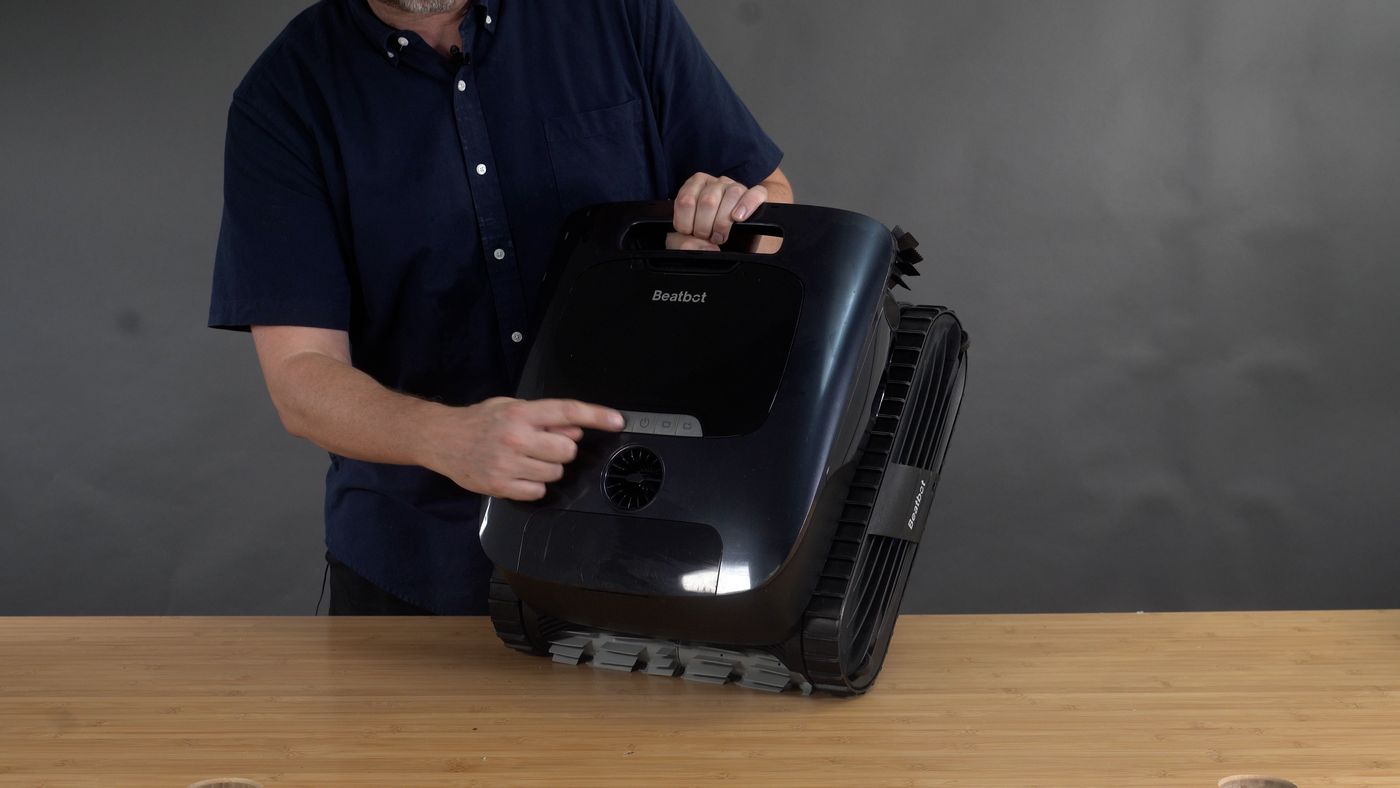
So, while Beatbot advertises Eco Mode as a kind of "set-it-and-forget-it" automation, in our testing it functioned more like a battery-saving mode. It seems to give you a full cleaning cycle broken down over a few days instead of a full cleaning cycle at once.
By comparison, a corded robot like the Dolphin Sigma can run a full, powerful three-hour cycle every single day, automatically, without you touching anything or compromising on the cleaning quality.
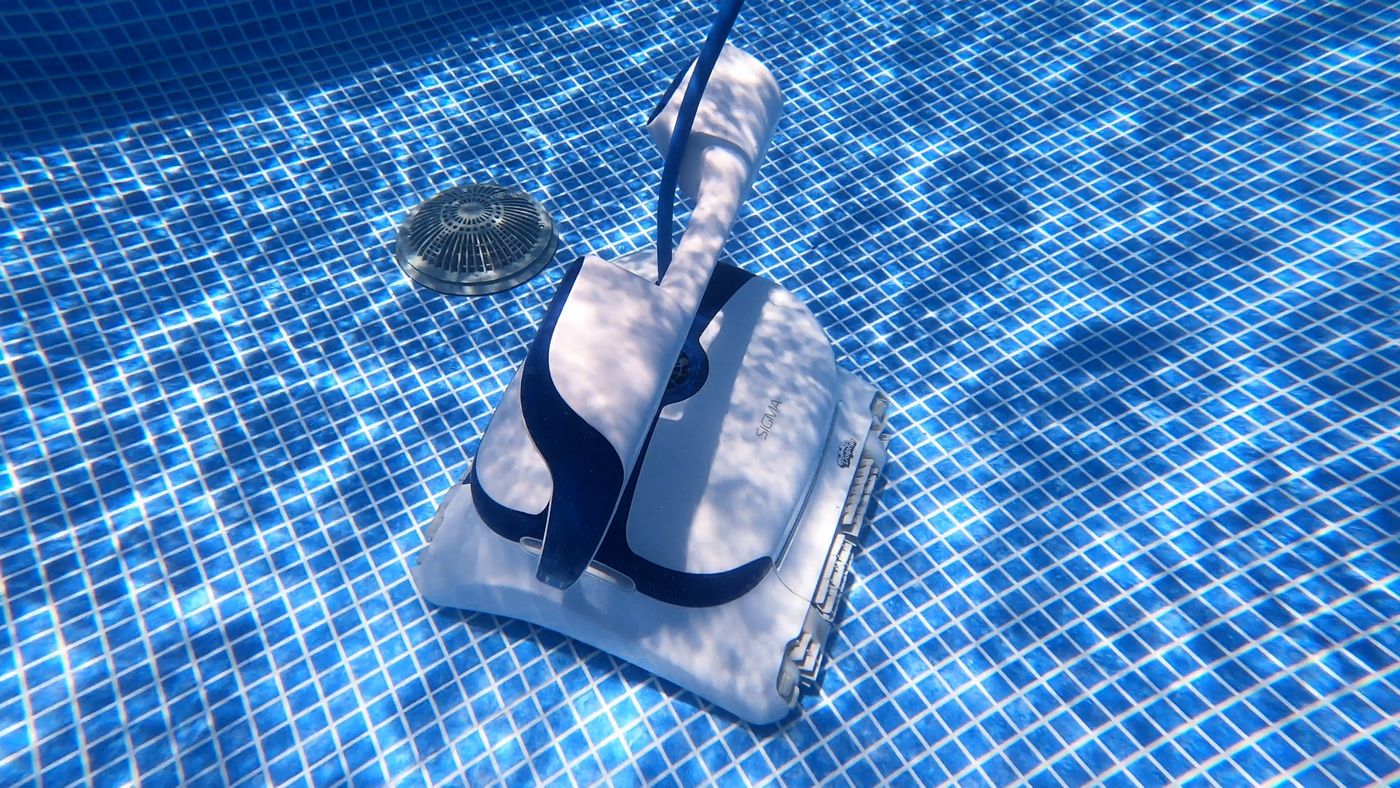
For me, true automation removes you from the equation. The Beatbot requires you to shuttle it between pool and charger every single day if you want to run the full cleaning cycle. The Sigma stays in the pool and cleans every day without you having to take it out of the pool.
Winner: Dolphin Sigma (true automation beats daily charging)
Connectivity: Why Your "Smart" Robot Gets Dumb Underwater
Both units have apps, but there's a fundamental law of physics Beatbot can't engineer around: Water blocks radio signals.
The Beatbot's Underwater Blackout
The Beatbot has a slick app—when the robot is on deck. The second it submerges, it goes dark. You lose contact. You cannot see what it's doing or steer it. It's effectively a submarine running silent.
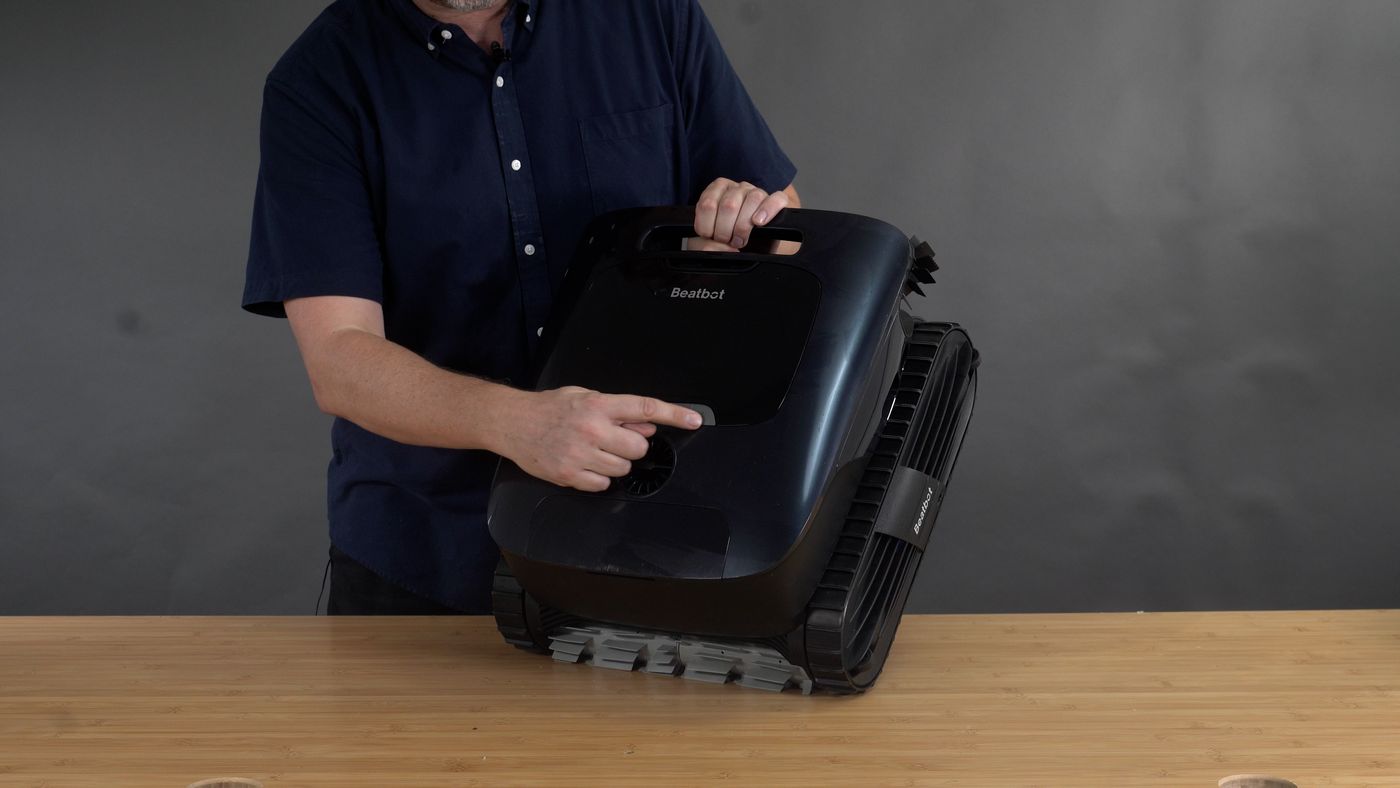
If the robot gets stuck or misses a spot, you can't grab your phone and joystick it over. You wait for it to surface or physically fish it out.
And this was one of the largest frustrations for us while testing it. You're paying all this money for a pool robot and an app – that doesn't work while it is underwater? It just doesn't make sense.
The Sigma's App
The Dolphin Sigma turns its cord into an advantage. That cable isn't just delivering power; it's a hardwired data connection to the power supply, which connects to your Wi-Fi.
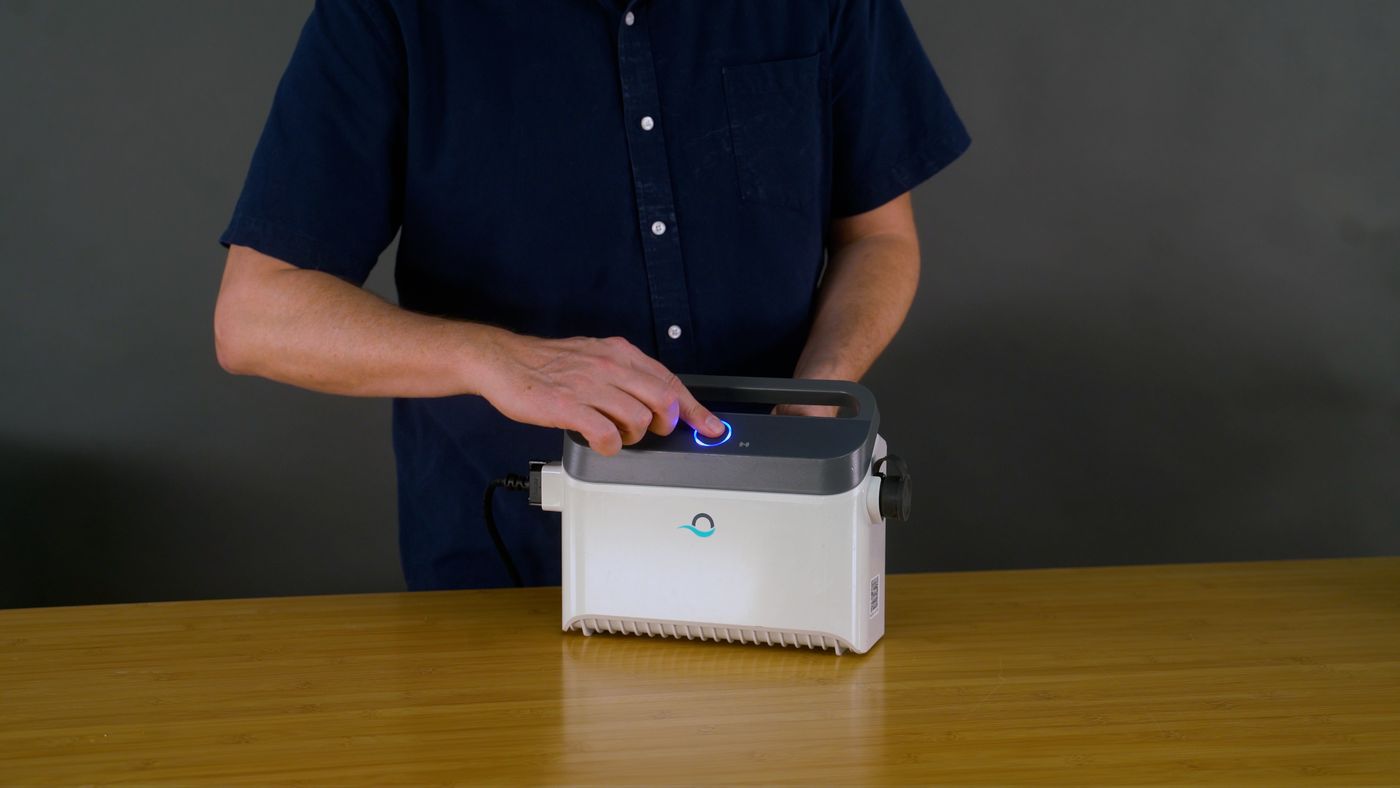
This means the Sigma is always online. Even 8 feet deep, you can pull up the MyDolphin Plus app and see exactly what it's doing. Want to drive it manually to pick up leaves near the drain? You can do that in real-time with the virtual joystick.
This continuous connection offers peace of mind that cordless robots simply cannot provide.
Winner: Dolphin Sigma (always-on connectivity beats underwater blackouts)
Filtration
Ask any pool pro the most important part of a robot, and they won't say "AI navigation." They'll say "filtration."
The Beatbot's Basket
The Beatbot uses a debris basket with a dual-layer mesh screen. This type of filtration is effective for large debris like leaves, but in testing, it allowed finer particles—such as dust and small dirt—to remain in our test pool.
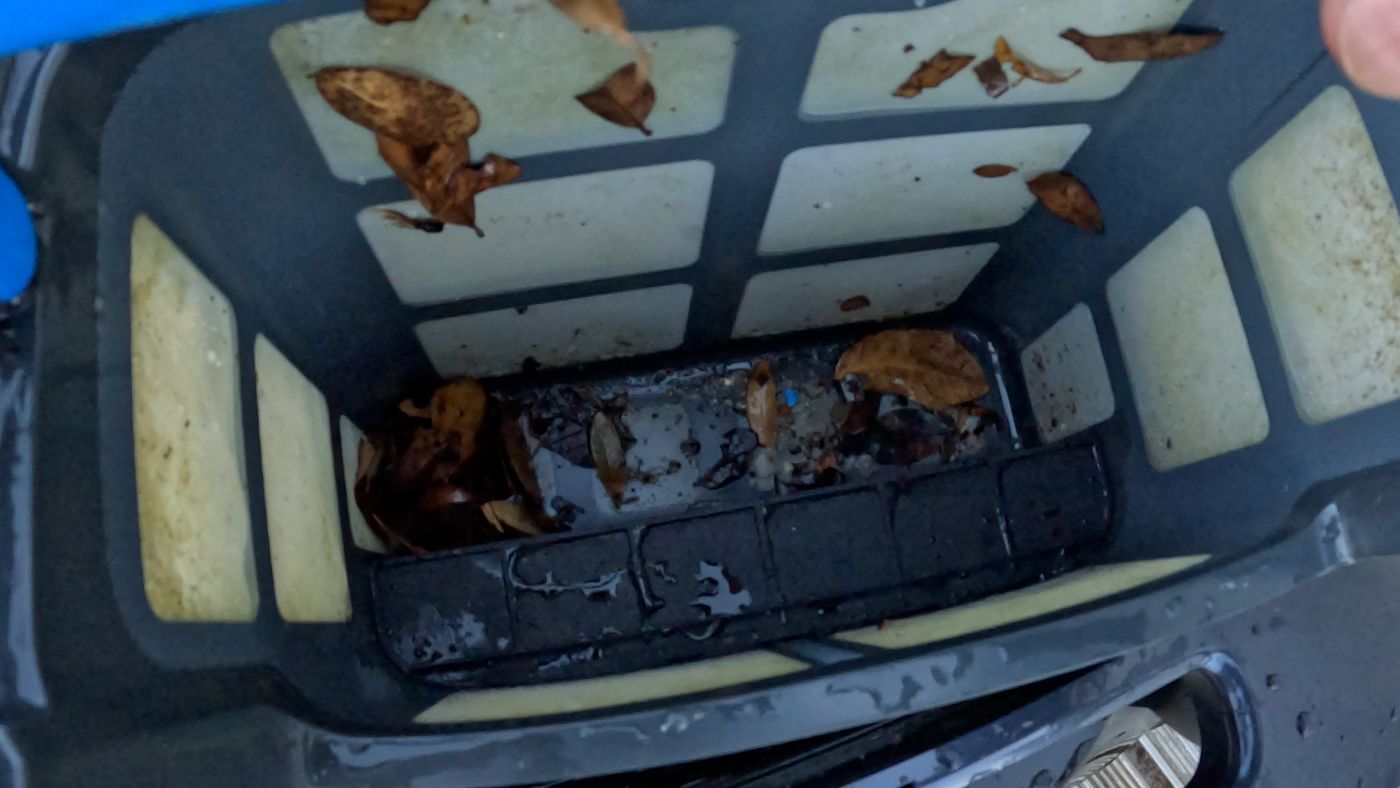
In my testing, mesh filtration also has limitations when it comes to ultra-fine material. Particles like dead algae, pollen, and silt are small enough to pass through typical mesh screens, meaning they may remain suspended in the water even after a full cleaning cycle.
The Sigma's NanoFilters
The Dolphin Sigma uses dual, top-loading NanoFilter cartridges. Unlike basic mesh screens, these are pleated filtration cartridges similar in structure to high-end pool filters.
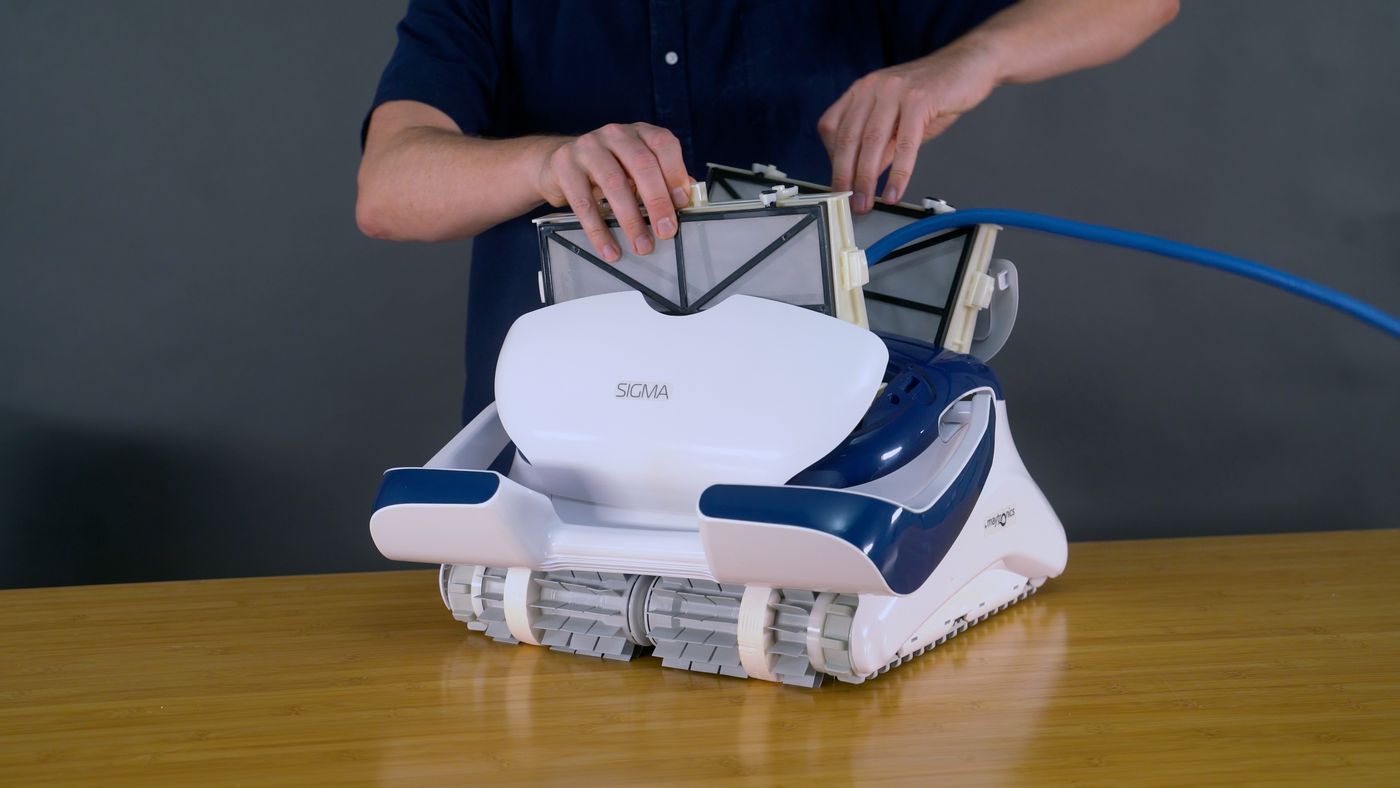
Because the media is pleated, the surface area is significantly increased, allowing the filters to trap far more debris without restricting water flow. The "Nano" designation refers to the microscopic pore structure, which is designed to capture ultra-fine material such as dust, silt, and other particles that typically cause cloudy water.
When the Sigma is lifted out of the pool, the pleated cartridges hold debris securely inside the filter media. As the robot drains, the water that exits is clean rather than carrying dirt back into the pool. This containment is a key reason NanoFilters produce noticeably clearer water compared to mesh filters.
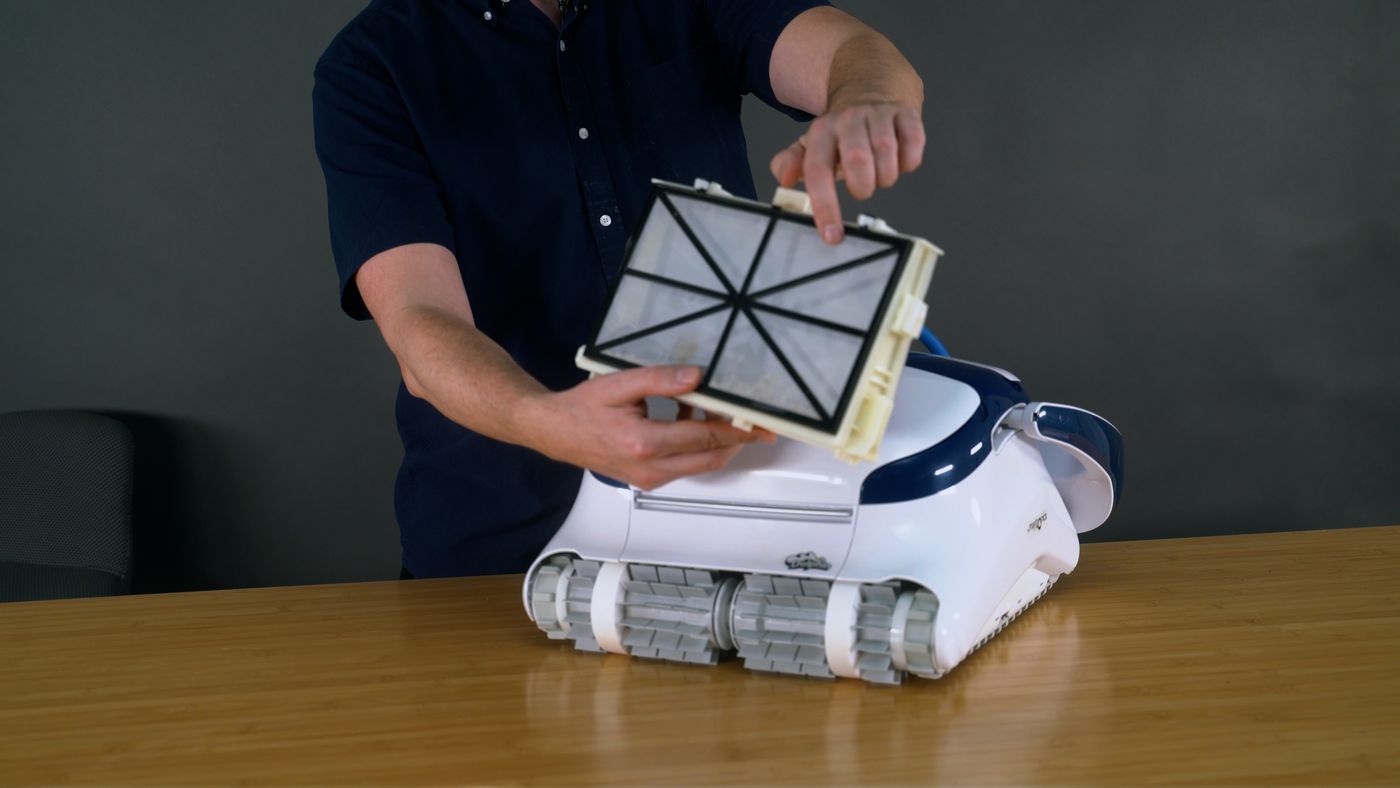
The Sigma also ships with a standard mesh filter set, which can be swapped in for larger debris. However, for general use and the best water clarity, the NanoFilters provide the strongest performance.
Winner: Dolphin Sigma (NanoFilters beat mesh baskets)
Navigation and Handling
The Beatbot packs in cameras and sensors to map your pool. It's cool tech, no doubt. But in my experience, it feels like overkill for most people. You don't need AI vision to vacuum a standard pool.
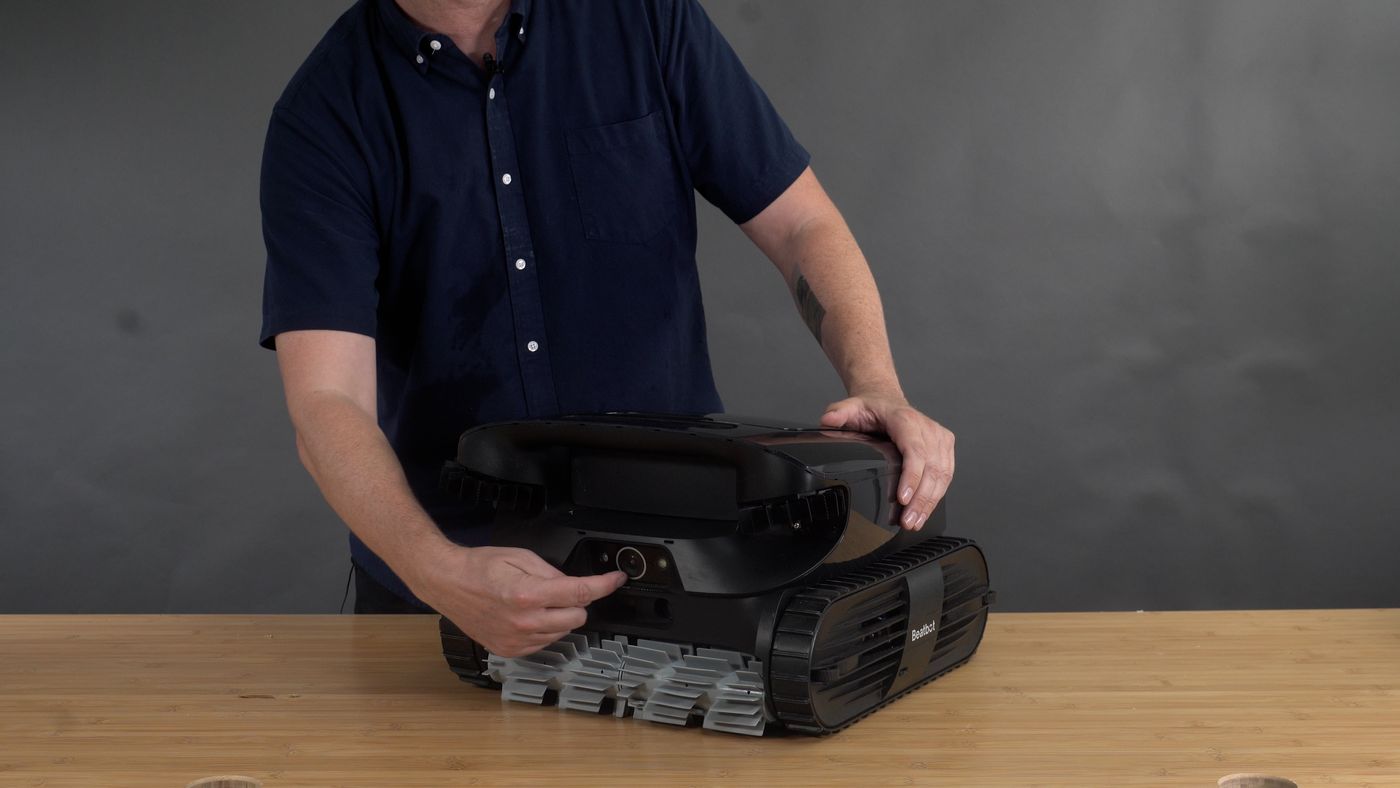
The Dolphin Sigma uses SmartNav 3.0 and a gyroscope, which seemed to do just as good as a job in our testing.
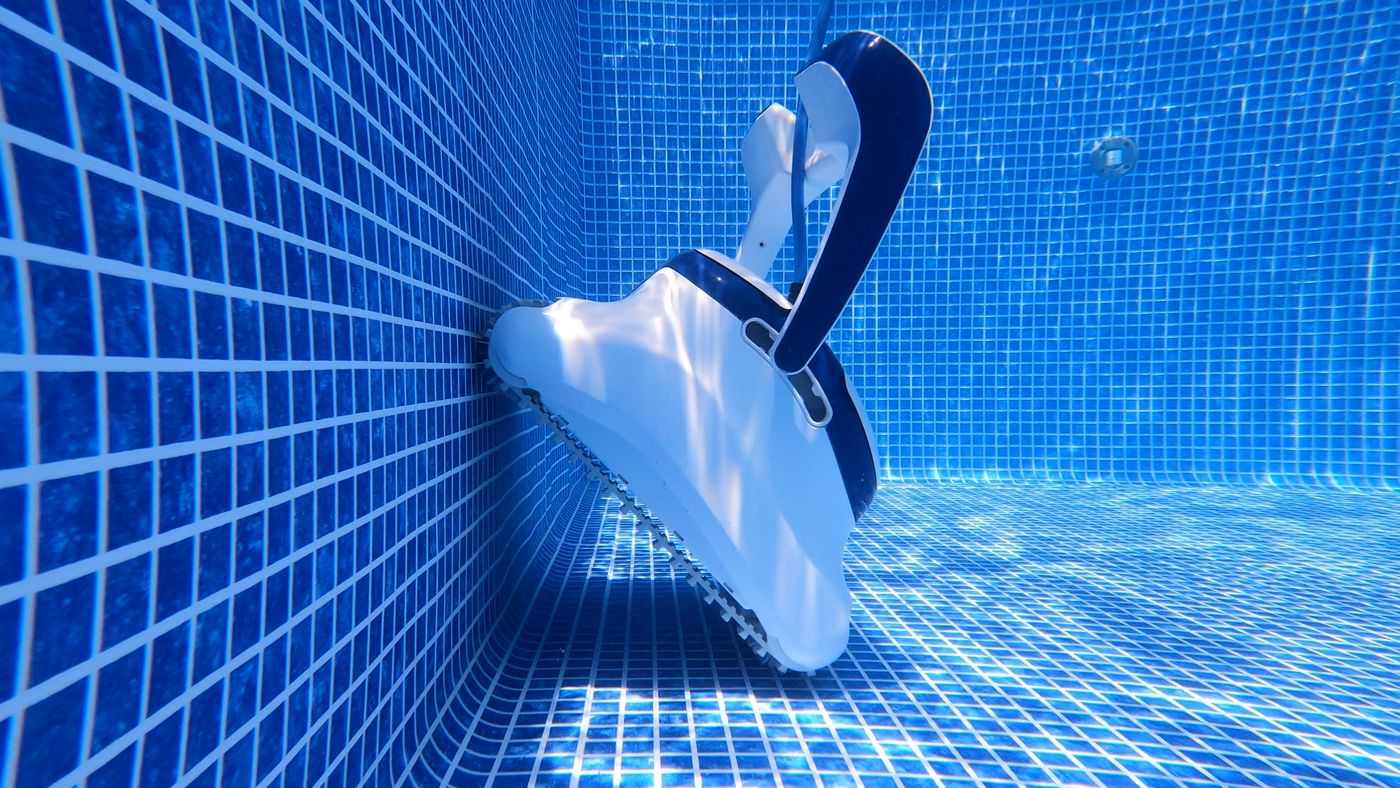
I'm not saying camera navigation is bad — it's definitely innovative. But, it didn't seem to add a whole lot to the cleaning ability of the robot.
Handling
Now, let's talk about something you definitely notice: the weight.
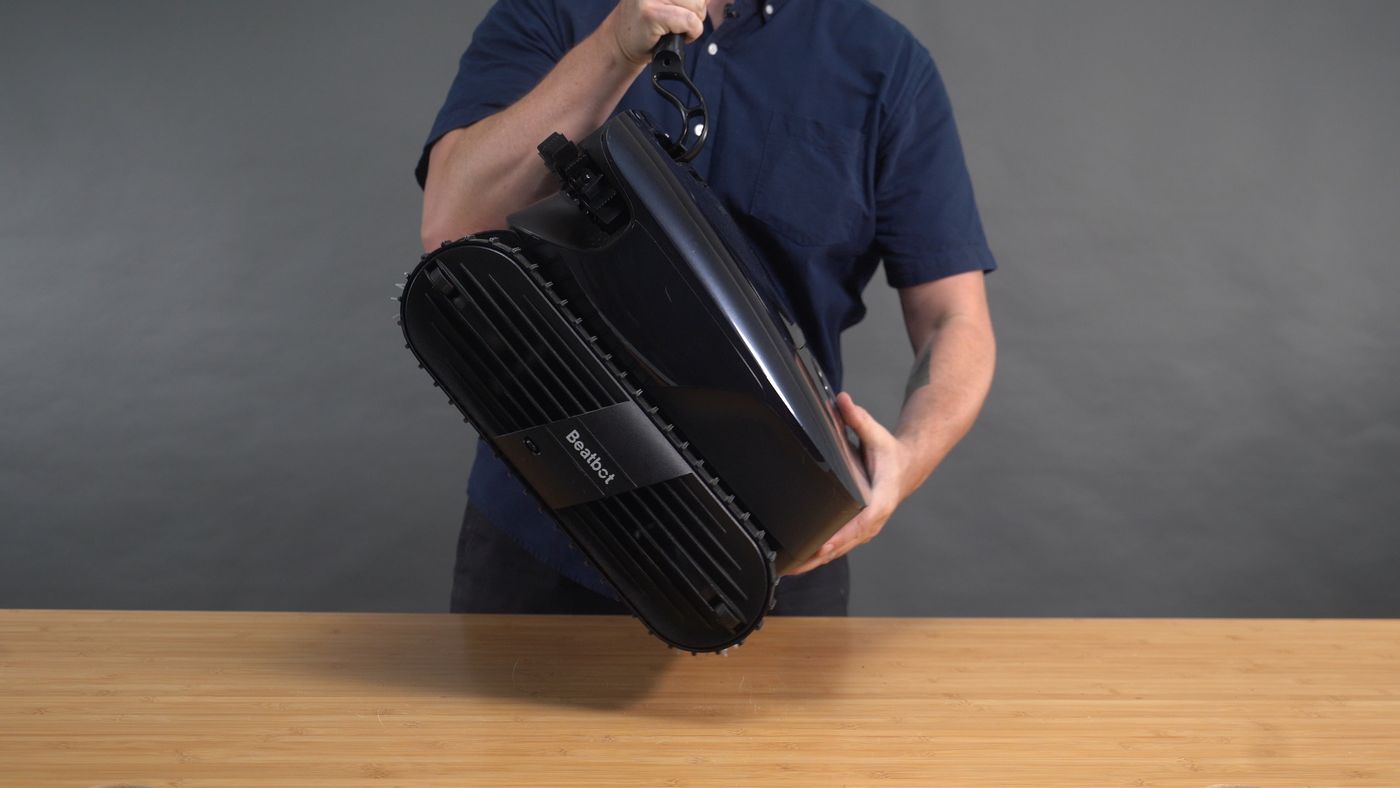
The Beatbot is heavy. You're hauling close to 30 pounds out of your pool with the included plastic hook, and because it's cordless, you're doing that every single day to recharge it. In my experience, that gets old fast.
The Sigma is a little bit lighter — at around 24 pounds — but it is easier to grab, as you can gently tug on its cord. And it drains water instantly thanks to its Quick-Drain flaps. That makes it feel significantly lighter the moment you start lifting it. For me, that made a huge difference.
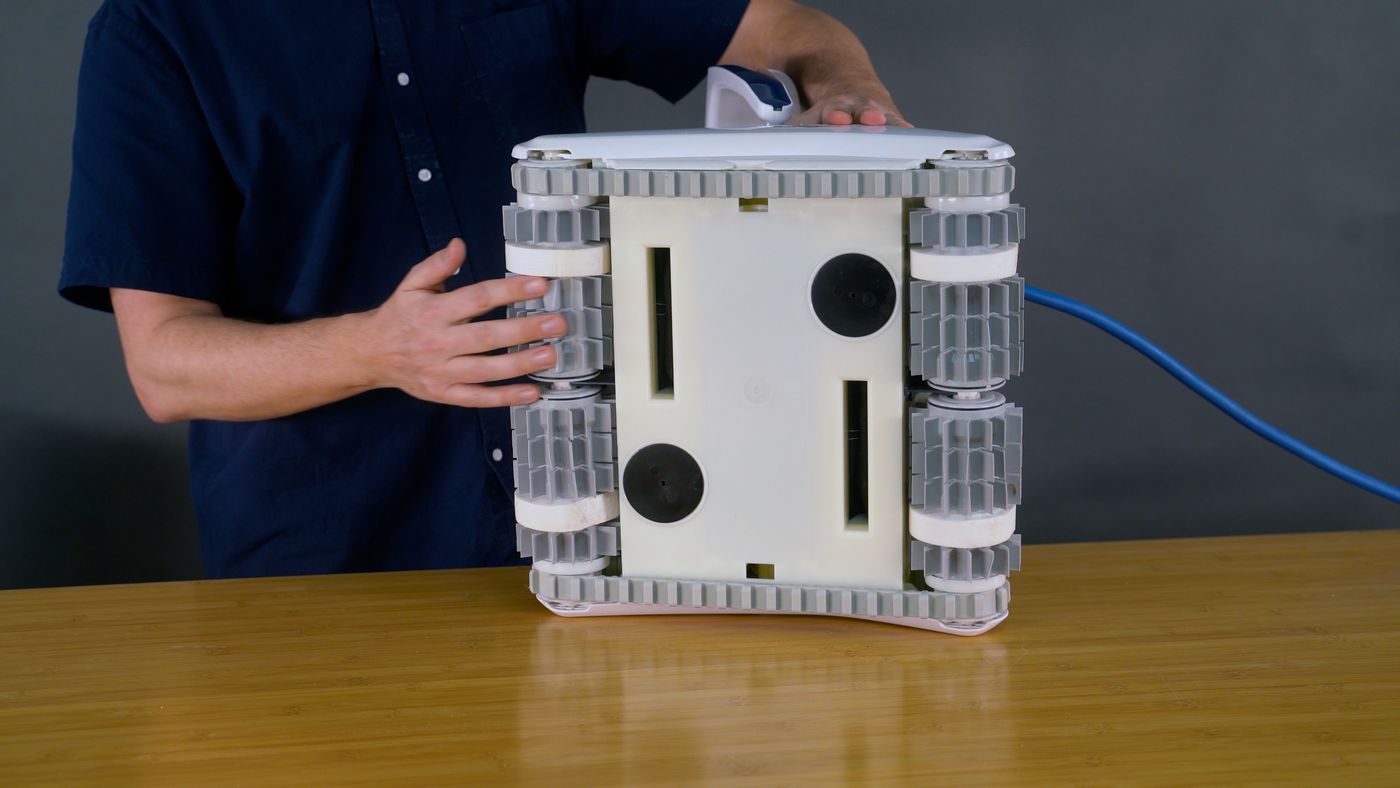
Winner: Dolphin Sigma (lighter, easier handling with less daily hassle)
Long-Term Ownership: The Battery Trap
This makes the $3,000 price truly scary. Every lithium-ion battery dies. Your phone battery degrades after two years. The Beatbot's battery sits in pool chemicals enduring extreme temperature cycles.
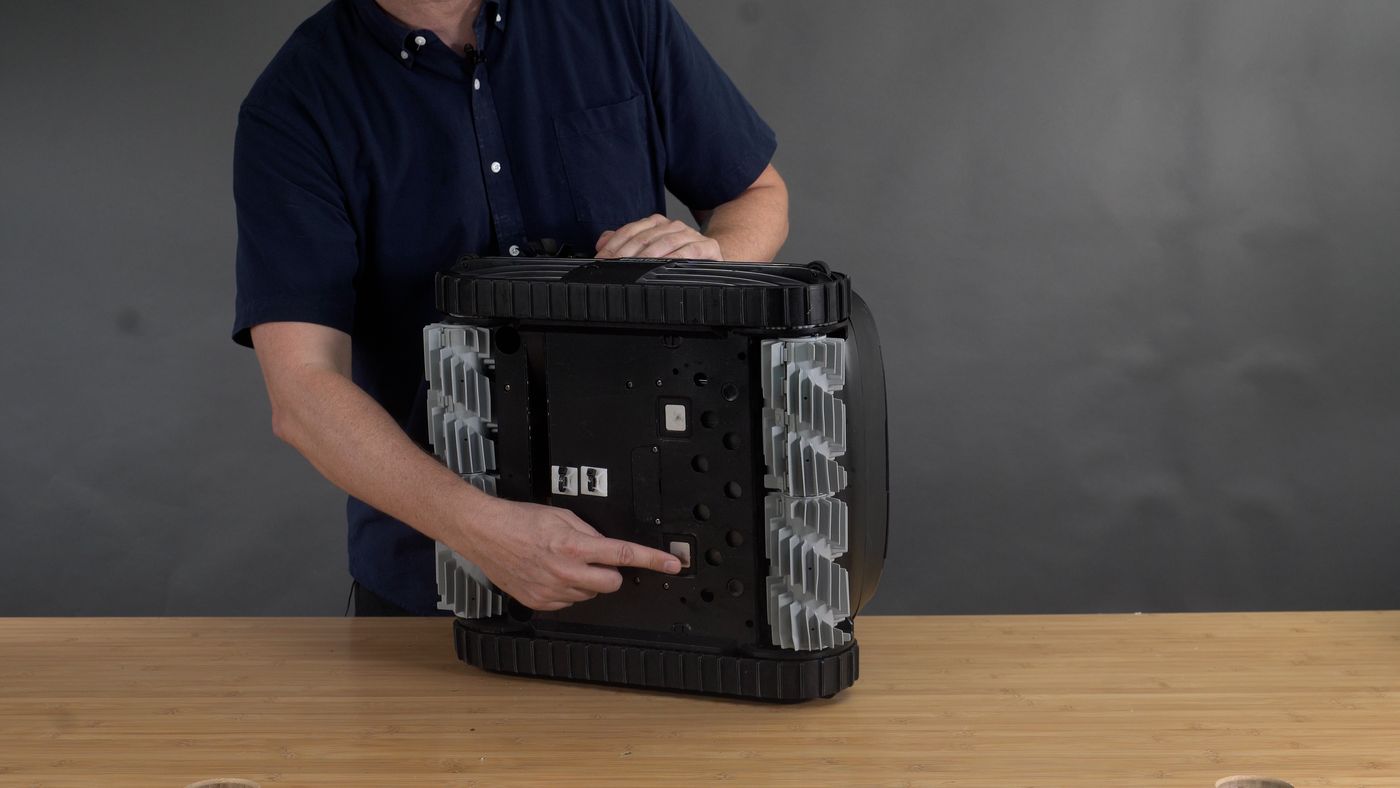
And I couldn't find any replacement batteries for sale on Beatbot's website at the time of making this review – which is a big concern for me if I am a pool owner paying over $3,000 for this robot and wanted to replace the battery myself.
The Dolphin Sigma has no battery to die. And it has a 3 year warranty. If a motor eventually fails in year 7, you buy a replacement part online and swap it – which gives me a little more ease knowing I can easily fix it, rather than have to buy a new one.
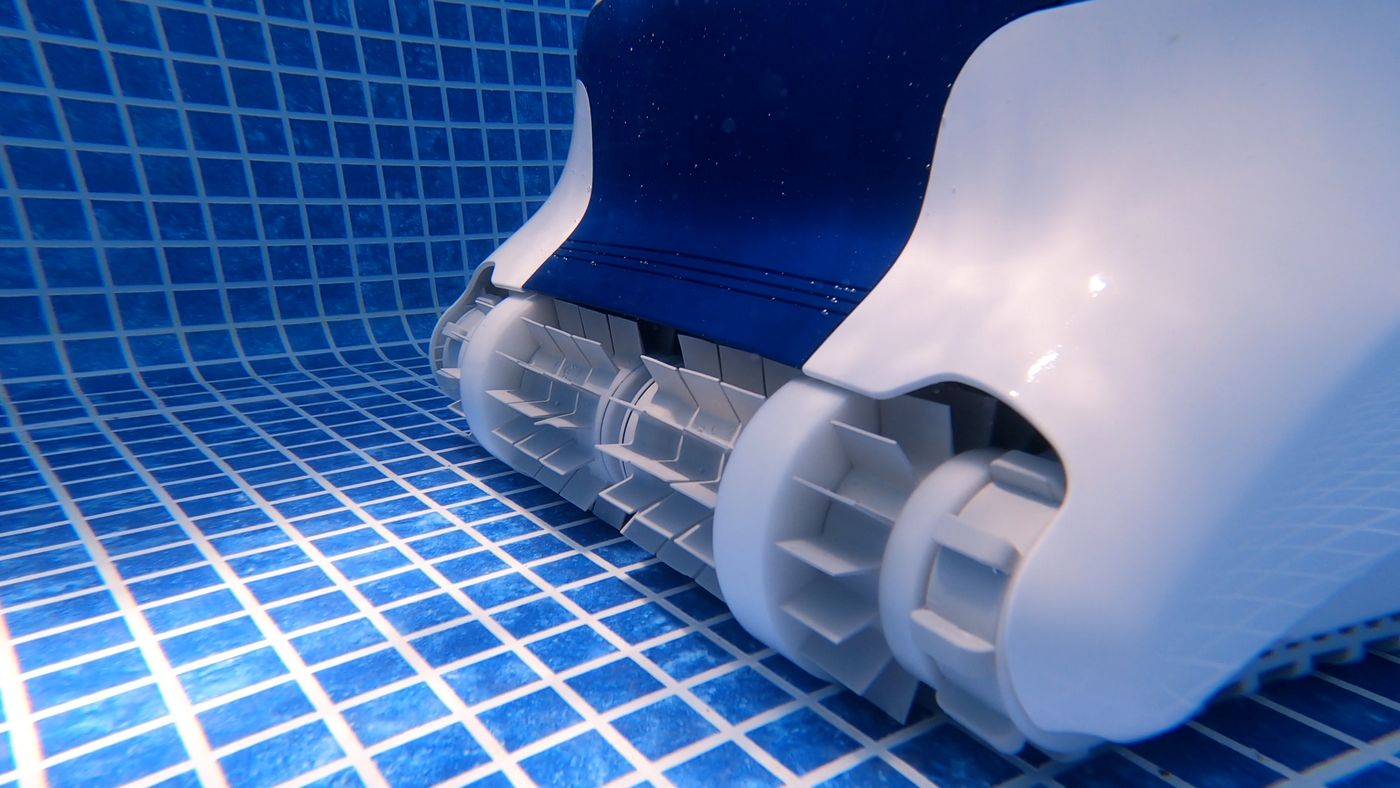
Winner: Dolphin Sigma (no battery to replace, serviceable parts)
The Final Verdict
So what's my final verdict?
Go with the Dolphin Sigma.

The Beatbot isn't bad. And if money is no object, you love cutting-edge tech, and you're ok recharging it every day, go for it.
But if you want a sparkling clean pool that cleans itself, the choice is simple.
The Dolphin Sigma delivers:
- Better Filtration: NanoFilters beat mesh baskets
- Better Usability: True "set it and forget it" scheduling
- Better Connectivity: Always-on Wi-Fi underwater
- Better Value: At around half the price
| Category | Winner |
|---|---|
| Price / Value | Dolphin Sigma |
| Corded vs Cordless | Dolphin Sigma |
| Connectivity | Dolphin Sigma |
| Filtration | Dolphin Sigma |
| Navigation | Tie |
| Handling | Dolphin Sigma |
| Long-Term Ownership | Dolphin Sigma |
| Overall | Dolphin Sigma |
Save your money. Buy the Sigma. Spend that extra $1,500 on a killer pool party to show off your crystal-clear water.
If you wanna keep nerding out over your pool, head on over to my deals page at ThePoolNerd.com/deals where I post the best deals on robotic pool cleaners and other pool equipment.
Related Reading
- Dolphin Sigma Review — Our full in-depth review
- Beatbot AquaSense 2 Ultra vs AquaSense 2 — Another head-to-head comparison
- Beatbot AquaSense 2 vs Dolphin Quantum — Beatbot vs another Dolphin flagship
- Compare Every Dolphin Model — Side-by-side breakdown of all Dolphin pool cleaners
- Best Robotic Pool Cleaners — Our top picks after testing 40+ robots
- All Robotic Pool Cleaner Reviews — Every robot we've tested

Comments
Loading comments…