
 Justin D.
There's a fitting on your pool wall smaller than a hockey puck, and it's quietly deciding how much acid you buy, how warm your water is, how hard your heater works, and whether that back corner grows algae. Most pool owners have never touched it. Today, we fix that — in about thirty seconds.
Hey there, I'm Justin, your resident pool aficionado. And today, we're settling one of the most overlooked questions in pool ownership: should your return jets point up, or down?
I know. It sounds like a tiny question. It's not. That little eyeball fitting controls your pool's entire circulation pattern, and circulation touches everything — your heat, your chemistry, your skimmer, your filter, even how hard your robot has to work. By the end of this article, you'll know exactly which way to aim your returns, at what angle, which direction to spin the water, and the two times a year you should break the rule on purpose.
Let's break it down.
Pool Returns: What You Need Checklist
Aiming your returns costs nothing — but these are the tools that let you see the payoff: a drop kit to confirm pH and TA, a live monitor to watch the aeration trick work, acid for the pH creep you're about to prevent, and a robot for whatever the current misses.

Taylor K-2005 Test Kit
What it is: A professional drop (titration) kit for chlorine, pH, alkalinity, calcium hardness, and cyanuric acid.
Why you need it: You can’t SLAM or balance blind—especially CYA, which handcuffs chlorine. This kit gives numbers you can trust, not strip guesswork.

Ondilo ICO Pool Water Monitor
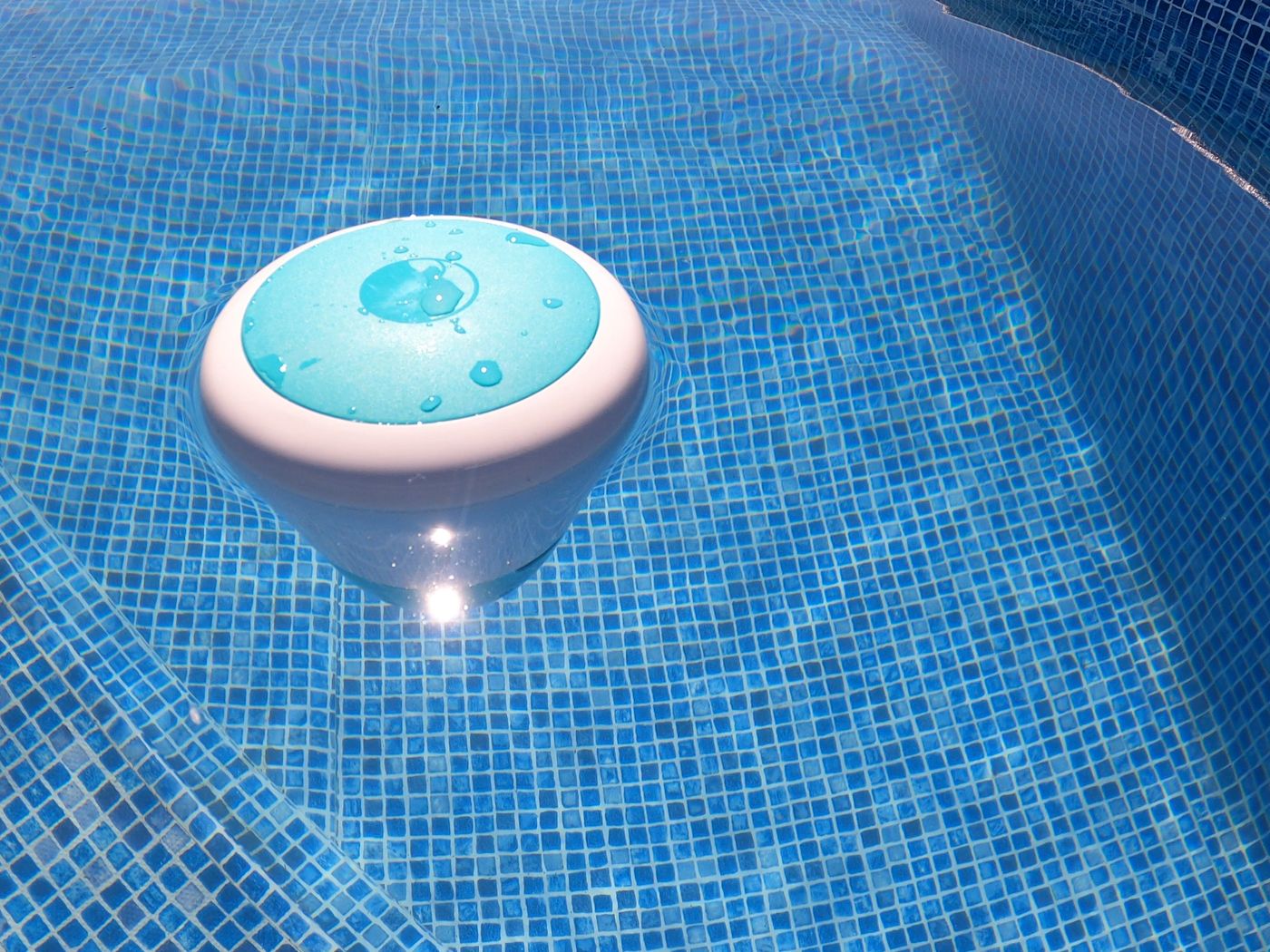
What it is: A floating smart monitor that samples pH, ORP (sanitizer effectiveness), and temperature on a schedule and sends trends to your phone.
Why you need it: You still need a real drop kit for parameters the ICO doesn’t replace (like TA and CYA), but hourly ORP/pH catches drift and dosing mistakes long before weekly strip checks do.

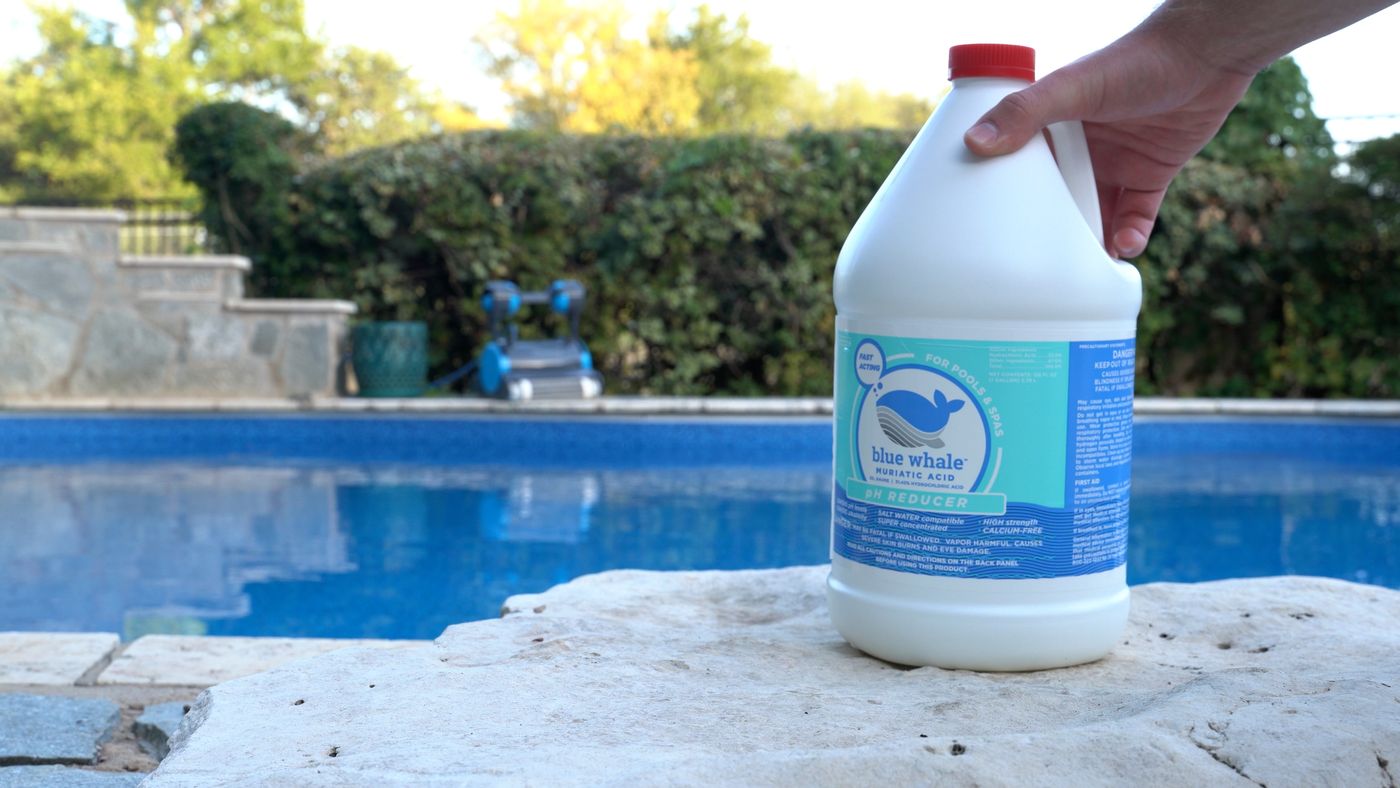
Champion Muriatic Acid
What it is: Dilute hydrochloric acid—standard for lowering pH and, with the right method, total alkalinity.
Why you need it: High pH destroys chlorine efficiency. Always follow the label; never mix acid with chlorine.

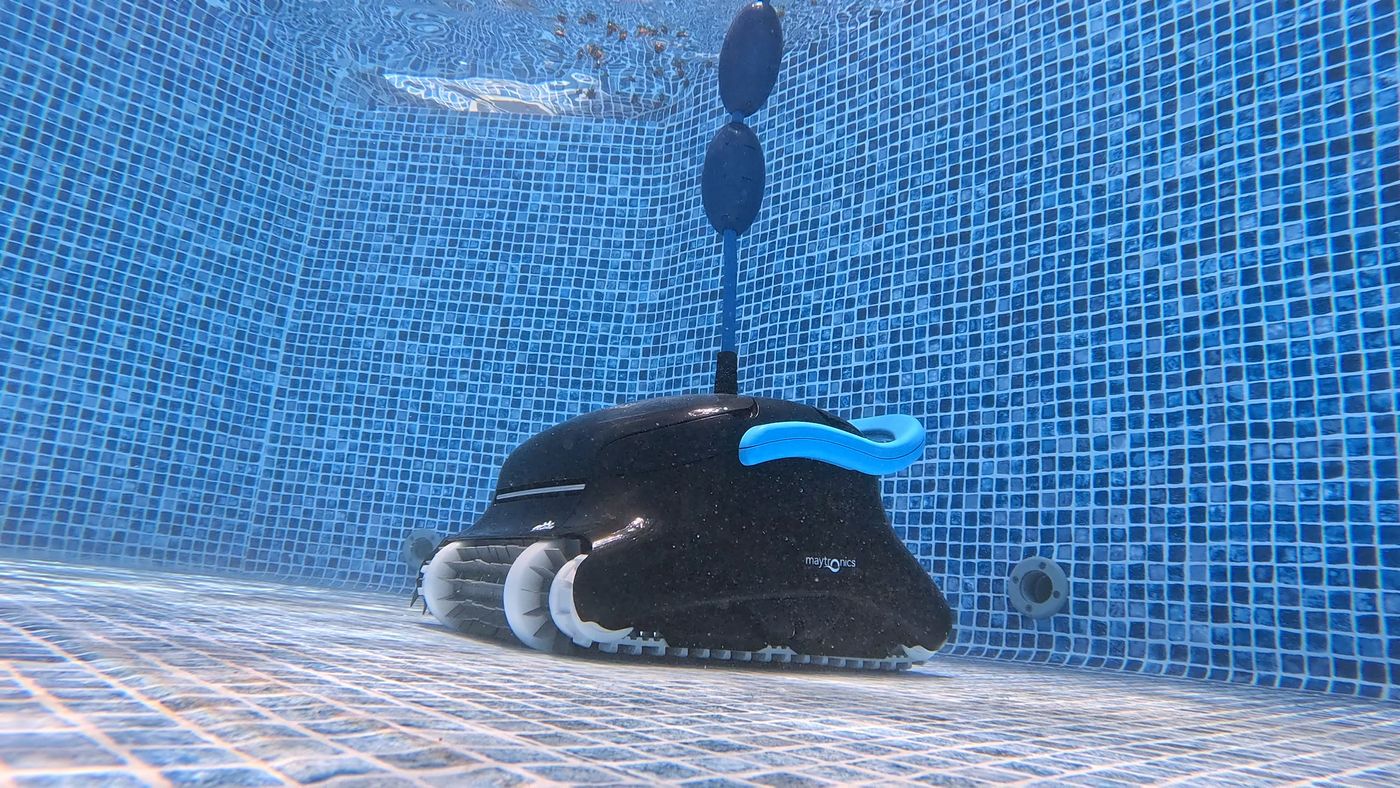
Dolphin Premier
What it is: A corded robotic cleaner with dual scrubbing brushes and strong filtration—built to pull debris and biofilm off surfaces so your sanitizer is not fighting mulch and leaves first.
Why you need it: Shock oxidizes what is in the water—leaves, pollen, and biofilm burn sanitizer too. A strong robot pulls debris off surfaces and into the filter so your chlorine works on algae and organics, not mulch. See the Dolphin Premier review for why it is our test-pool scrubber of choice.
Why Your Returns Run Your Whole Pool
Here's the thing about your pool: the pump moves the water, but the returns steer it. Every gallon your pump pushes gets fed back into the pool through those eyeball fittings, and the direction they point sets the current for the entire body of water.
And that current is doing more jobs than you think. Chlorine doesn't swim — circulation carries it. Heat doesn't spread itself — circulation mixes it. Leaves don't walk to the skimmer — circulation delivers them.
Aim your returns well, and your sanitizer reaches every corner, your heat stays in the water, and your skimmer eats debris all day long. Aim them poorly — or never aim them at all — and you get warm spots, cold spots, dead corners where algae may grow nonstop, and a heater bill that makes you wince.
If you've read my chemistry guides, you know I judge water by ORP — the killing power of the water, not just how much chlorine is floating in it. Circulation is half of that battle. Your water can test perfect at the steps and still have a dead corner doing a fraction of the work, and the only difference between the two is water movement.
The Physics, Made Simple
You only need three facts, and everything else stems from those.
Fact one: warm water rises. Left alone, your pool separates into layers — a warm blanket on top, cold water underneath. Anyone who's cannonballed into the deep end in April has felt this personally.
Fact two: your pool loses most of its heat off the surface, and evaporation is the thief. The U.S. Department of Energy calls evaporation by far the largest source of pool energy loss — its program materials peg it at roughly seventy percent of total heat loss. Every pound of eighty-degree water that evaporates carries over a thousand BTUs out of your pool with it. Ripples speed evaporation up. A calm surface slows it down.
Fact three: churning the surface off-gasses carbon dioxide, and when CO2 leaves the water, pH rises.
Now put it together. A rippling surface loses heat, loses water, and pushes your pH upward — which means more muriatic acid is needed to lower it. Which results in a larger monthly chemical bill. A calm surface holds heat, holds water, and holds pH steady. Which pool you own gets decided by a plastic eyeball you can turn by hand.
How to Set Your Returns
So here's the default setting, and it covers ninety percent of pools, ninety percent of the year: point every return down at about forty-five degrees, and rotate them all in the same direction — down and to the side. Think of the eyeball like a clock face: you're aiming at four o'clock or eight o'clock. Not straight down at six, and definitely not up at twelve.
The forty-five down handles depth. It drives return water below the surface, folds the warm top layer into the cool bottom layer, and carries your liquid chlorine to the deep-end floor instead of letting it lounge in the shallow end.
The sideways part handles the loop. When every return pushes in the same rotational direction, you build one slow whirlpool around the pool. That wall-hugging surface current is your skimmer's delivery service — floating debris rides the wall like a lazy river and gets dropped off right at the skimmer's mouth.
Which way should the loop spin? Whichever direction sends the surface flow along the walls toward your skimmer. The return closest to the skimmer should feed water past its opening — not blast straight into its face. Fire a jet head-on at a skimmer and you create chop right in front of the opening that bounces leaves past it.
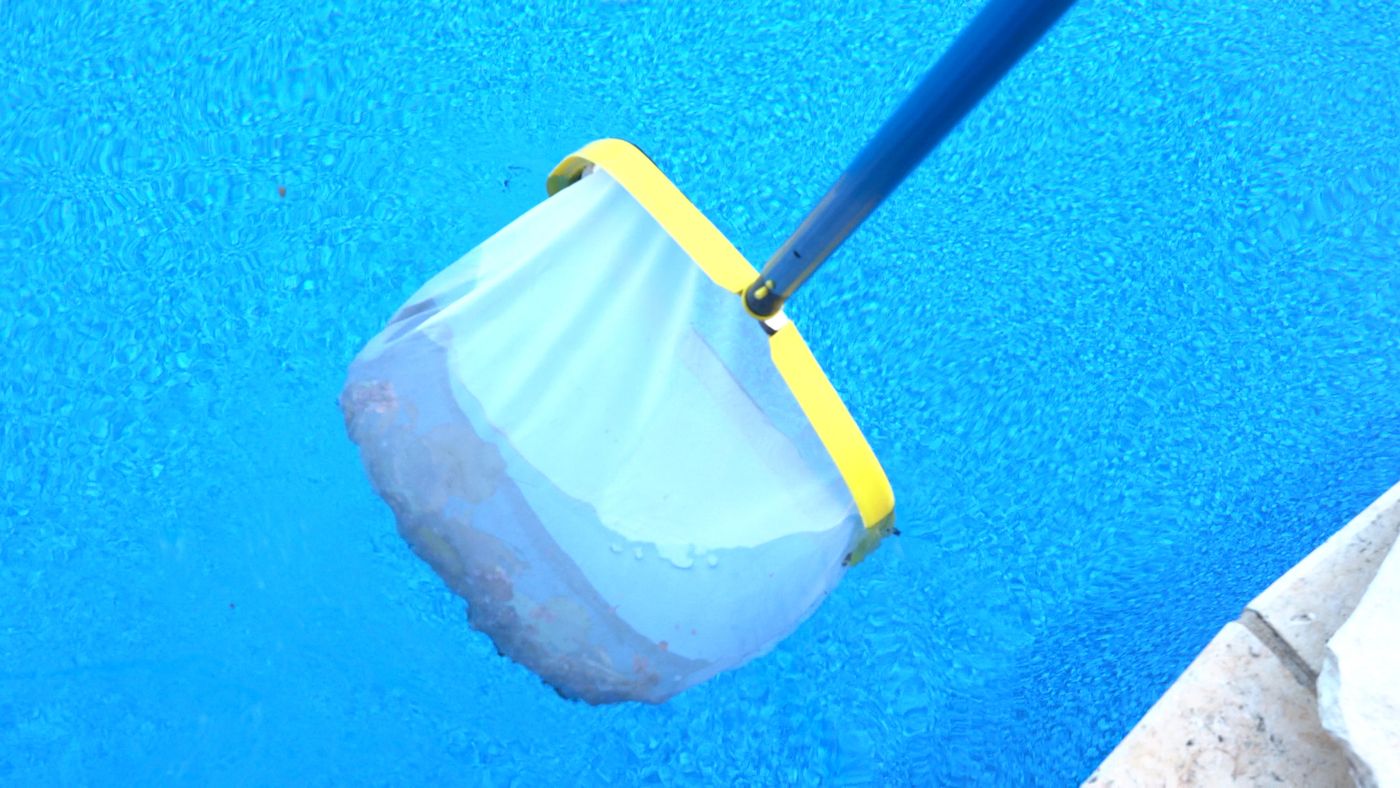
A few special cases:
- Dedicated deep-end return low on the wall or in the floor? Aim it down and across the deep floor — that's your mixing engine.
- Above-ground pool with a single return? Same rule, one jet: forty-five down, angled to one side, and let that one jet spin the whole pool.
- Spa spillovers and water features? Those count as aeration — more on that in a minute.
And adjusting takes seconds. The eyeball swivels inside its collar; some have a lock ring you loosen a quarter turn first. If yours is frozen solid from years of neglect, replacement eyeball fittings are a few bucks at any pool supplier — one of the cheapest upgrades in the entire pool industry.
The Ping-Pong Ball Test
Toss a ping-pong ball into the pool. Within a few minutes it should ride the wall current and arrive at the skimmer. If it stalls in a corner, you found a dead spot — re-aim the nearest return a few degrees and run the test again.When to Point Your Returns Up
If down is the default, why would anyone point their returns up? Two reasons — and the first one is my favorite trick in all of pool chemistry.
Reason One: Raising pH for Free
Walk into a pool store with low pH and they'll hand you a bag of pH increaser — soda ash. And look, soda ash has its place: when your pH and your total alkalinity are both low, it fixes both at once. But here's the kicker: soda ash raises pH and alkalinity together, every single time.
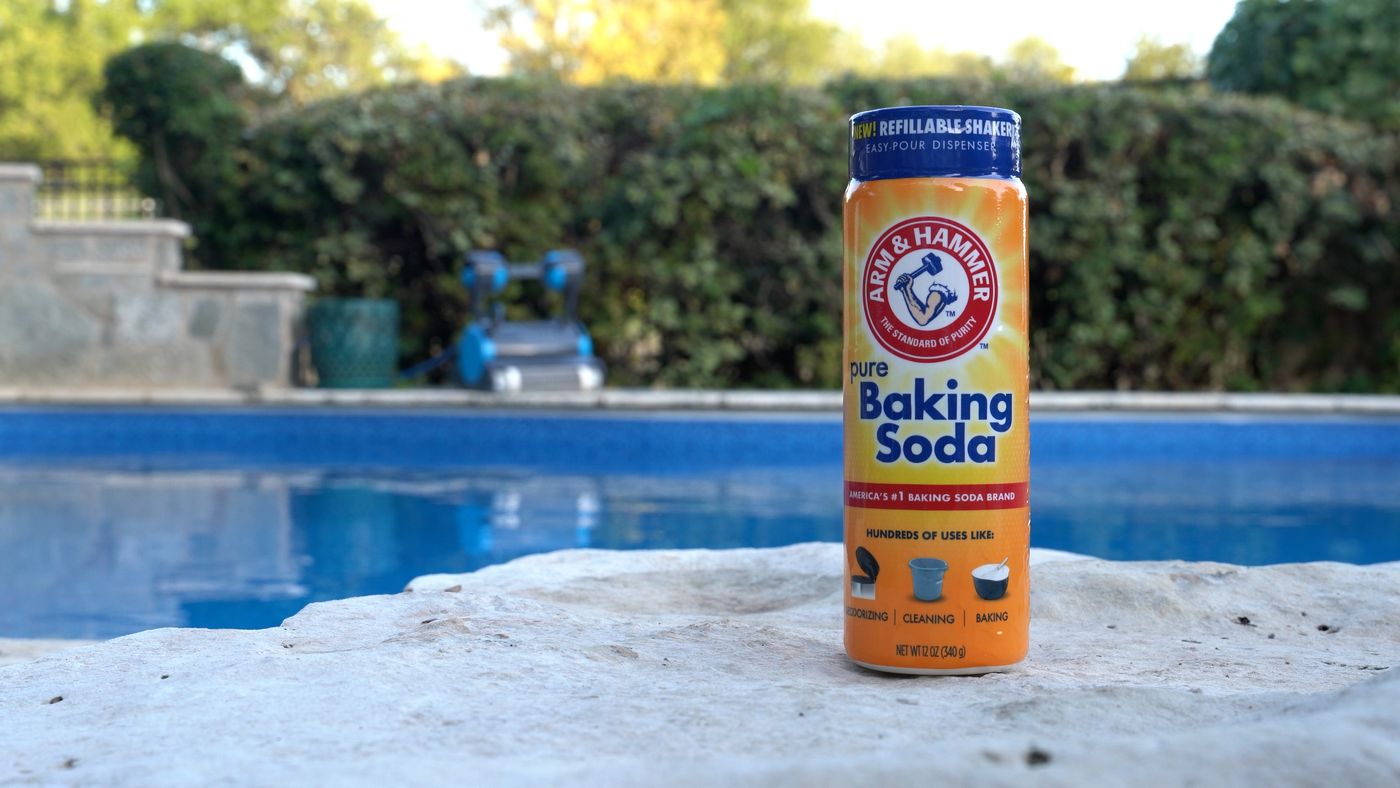
If your TA is already sitting where you want it — say 80 to 120 — that bag just broke something that wasn't broken. Now your TA is high, your pH wants to climb on its own, and you're buying muriatic acid to fix the fix. The store wins twice.
Aeration raises pH without touching alkalinity. Point your returns up so the jets break the surface and churn, run the pump, and let physics do the work. The turbulence off-gasses CO2, and as the CO2 leaves, pH drifts up — without a single chemical hitting the water. Depending on your alkalinity and how much surface action you create, you can move pH a couple tenths over a day or two. When it lands in the Power Zone — 7.0 to 7.2 for vinyl and fiberglass, 7.2 to 7.4 for gunite — aim the returns back down, and it holds. I cover the full range of options in my guide on how to raise your pool's pH.
One caveat, and it matters: aeration needs healthy alkalinity to push against. If your TA is crashed, you can churn that water for a week and barely move the needle. Fix alkalinity first, then aerate.
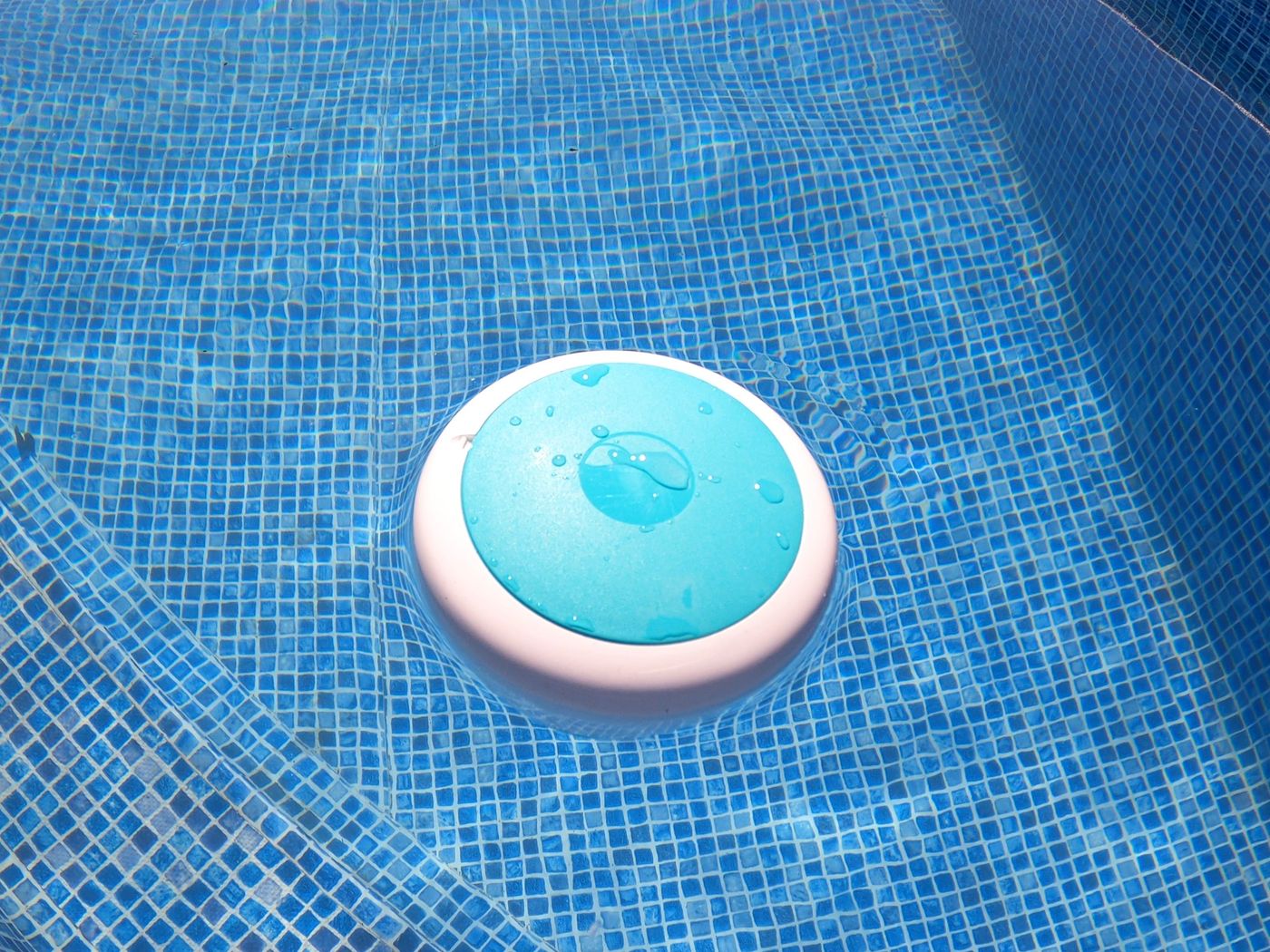
And if you run a smart monitor like the ICO, this trick becomes weirdly fun. You sit on the couch and watch the pH line climb on the graph in near real time while your returns churn away. Chemistry you can watch from your phone.
This same move — acid to drop pH, aeration to bring pH back up without the alkalinity coming along — is one half of how you lower total alkalinity on purpose.
Reason Two: Summer Cooling
When August turns your pool into bath water, evaporation stops being the enemy and becomes the air conditioner. Point the returns up, run the pump overnight, and evaporative cooling pulls heat out of the water while you sleep. In my experience, it's the cheapest pool chiller money doesn't buy — a few degrees by morning, in dry climates especially.
That's the whole list. Raise pH. Cool water. Every other week of the year: down.
Up vs. Down: What Each Setting Does to Your Pool
Let's stack the two settings side by side.
Returns up: heat leaves faster, water evaporates faster, pH climbs, mixing concentrates near the surface, and heavy chop can make your skimmer erratic. In exchange, you get aeration and cooling — useful on demand, expensive as a lifestyle.
Returns down at forty-five: heat stays in the pool, evaporation drops, pH holds steady, chemicals mix from floor to surface, and the skimmer gets fed by one smooth, consistent current. Your heater cycles less. Your acid bottle lasts longer, because every point of pH creep you prevent is acid you never pour.
One more benefit of down that nobody mentions: a gentle current along the floor keeps fine debris moving instead of letting it hide in still corners — which means your filter and your robot see more of it.
| Factor | Returns UP | Returns DOWN (45°) |
|---|---|---|
| Heat retention | Loses heat fast — evaporation accelerates | Holds heat — surface stays calm |
| Water loss | Higher — more evaporation, more top-offs | Lower |
| pH behavior | Drifts upward (CO2 off-gassing) | Stays stable |
| Chemical mixing | Concentrated near the surface | Full depth, floor to surface |
| Skimmer action | Erratic in heavy chop | Steady wall current feeds it |
| Best for | Raising pH, summer cooling | Everything else, all season |
Three Mistakes I See Constantly
Mistake one: returns up all season because the ripples look nice. Let's get real — that sparkle is your heating bill evaporating in public. If you're paying to heat water while your returns point up, you are warming the sky over your backyard. And even on an unheated pool, you're signing up for pH creep and extra acid runs.
Mistake two: every return pointed a random direction. One aims left, one aims right, one aims wherever the last pool guy left it. The currents cancel each other into a stalemate — the middle swirls, the corners die, and the algae picks a corner. Same direction, every return. One loop.
Mistake three: splitting the difference and leaving them dead horizontal. It feels like a compromise. It performs like one. You get enough surface disturbance to lose heat, without enough downward push to mix the deep water — in my testing, the worst of both settings. Pick down, and commit.
And if anyone tells you return direction doesn't matter — that it's all the same water anyway — they're wrong. Ten minutes with a ping-pong ball and a pool thermometer will settle the argument.
Frequently Asked Questions
Should pool return jets point up or down?
Down, at about forty-five degrees, angled to one side — that's the right setting for ninety percent of pools, ninety percent of the year. It keeps heat in the water, holds pH steady, mixes chemicals from floor to surface, and builds the wall current that feeds your skimmer. Point them up only for a day or two of aeration or overnight summer cooling, then put them back.
Which direction should the jets spin the water?
Whichever direction sends the surface flow along the walls toward your skimmer. Every return should push in the same rotational direction, and the return closest to the skimmer should feed water past its opening — never straight into its face. If you're not sure it's working, toss in a ping-pong ball and watch where it goes.
Does pointing pool returns up really raise pH?
Yes — the surface turbulence off-gasses CO2, and as CO2 leaves the water, pH rises. It works without touching your total alkalinity, which makes it better than soda ash when your TA is already in range. The catch: it needs healthy alkalinity (80–120 ppm) to push against. If your TA is crashed, fix that first or you'll churn water for a week with nothing to show for it.
What about an above-ground pool with only one return?
Same rule, one jet: forty-five degrees down, angled to one side, and let that single jet spin the whole pool. One well-aimed return can absolutely build a full circulation loop in a round above-ground pool — it just takes a little longer to establish.
Final Verdict
So, what's my final verdict on which way to point your pool returns?
Forty-five degrees down. Every return spinning the same direction. Surface current feeding the skimmer, not fighting it. That's the setting for ninety percent of pools, ninety percent of the year — heated or not, chlorine or saltwater, gunite or vinyl.
Break the rule on purpose, exactly twice: point them up for a day or two when pH sits low and your alkalinity is healthy, and point them up overnight when late summer turns your pool into soup. Then put them back.
This adjustment costs nothing, takes thirty seconds, and touches your heat, your chemistry, your skimming, and your water clarity all at once. Fixes with that kind of return on effort don't come along often — take this one.
Want to watch your circulation and chemistry work together? The Ondilo ICO tracks pH, ORP, and temperature around the clock — you can watch the aeration trick raise your pH in real time from your phone. Find my current deals on the ICO, robotic pool cleaners, and more at ThePoolNerd.com/deals.
If this saves you a few bucks on heat or acid, keep nerding out with my guide on how to raise your pool's pH next — it pairs with this one. Until then, enjoy that pool — I'll see you next time.


Comments
Loading comments…